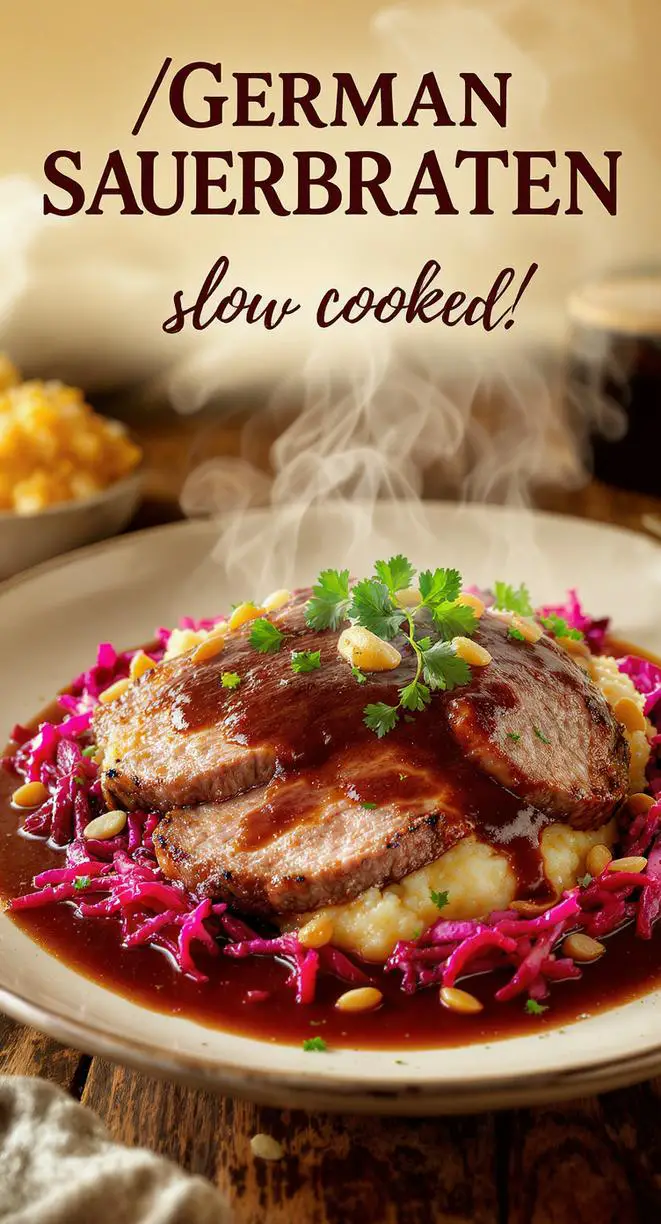
German Sauerbraten Slow Cooked: A Hearty, Authentic German Classic
Estimated reading time: 10 minutes
If you’re craving a rich, tender beef dish that embodies the warmth of German tradition, you might wonder: Did you know that authentic German sauerbraten recipes, which involve marinating and slow cooking beef, have been a staple in German households for centuries, with some variations dating back to the Middle Ages?
This slow cooker sauerbraten brings that history to your table, transforming a simple beef roast into melt-in-your-mouth perfection with a deep, flavorful gravy.
As a beloved main dish in German cuisine, this recipe challenges the common perception that hearty meals must be complicated or time-consuming.
In this guide, we’ll explore how easy it is to prepare an authentic German sauerbraten at home, perfect for family dinners or special occasions.
Whether you’re a fan of slow cooker sauerbraten or new to this classic, you’ll discover why it’s a timeless favorite that delivers bold flavors with minimal effort.
About This Recipe
German sauerbraten slow cooked is a traditional German dish that elevates a simple beef roast into something extraordinary.
This recipe features a beef roast marinated in a tangy red wine and vinegar blend for days, then slow-cooked to tender perfection, resulting in a dish that’s bursting with savory, slightly sweet flavors.
What makes this slow cooker sauerbraten unique is its perfect balance of ease and indulgence – it requires advance preparation for the marinade, but the slow cooking process handles the rest, making it ideal for busy weeknights or weekend gatherings.
The rich gravy, optionally thickened with gingersnap crumbs, adds a delightful twist that sets it apart from everyday roasts.
Drawing from Chef Emy’s expertise, this authentic German recipe is designed to be approachable, delivering deep, comforting tastes without overwhelming your kitchen.
This recipe stands out for its authentic German flair, using simple ingredients like red wine, vinegar, and spices to create a marinade that tenderizes the meat while infusing it with complex flavors.
The slow cooking method ensures the beef becomes incredibly fork-tender, making it a hit for anyone seeking an easy sauerbraten that doesn’t skimp on taste.
It’s a versatile dish that appeals to both novice cooks and seasoned chefs, offering a straightforward path to a restaurant-quality meal at home.
Why I Love This Recipe
As a passionate food enthusiast and recipe creator, German sauerbraten slow cooked holds a special place in my heart because it represents the essence of comforting, home-cooked meals.
Growing up, I remember my family gathering around the table for hearty German-inspired dinners, and this slow cooker sauerbraten always stole the show with its tender beef and aromatic gravy.
It’s more than just a recipe; it’s a bridge to cultural traditions, evoking memories of festive occasions like Oktoberfest or family reunions.
I love how adaptable this authentic German sauerbraten is – it’s forgiving for beginners while allowing experienced cooks to experiment with flavors.
The process of marinating the beef for a few days builds anticipation, and the end result is always worth the wait: juicy, flavorful meat that pairs beautifully with sides like potato dumplings or red cabbage.
Plus, in today’s fast-paced world, the slow cooker option makes it incredibly convenient, letting you set it and forget it.
This recipe isn’t just about eating; it’s about creating joyful moments and sharing stories, making it a true favorite in my kitchen.
Ingredients List
To create this delicious German sauerbraten, you’ll need a mix of fresh, high-quality ingredients that come together to form a symphony of flavors.
Below is the complete list, based on Chef Emy’s traditional recipe.
I’ve also included sensory descriptions and substitution ideas to make it easier to customize for dietary needs or preferences.
For the Marinade:
- 2 cups red wine: This provides a deep, fruity backbone to the marinade, infusing the beef with rich, velvety notes. For a non-alcoholic alternative, substitute with beef broth or grape juice to maintain the tanginess.
- 1 cup red wine vinegar: Adds a sharp, tangy acidity that tenderizes the meat and balances the sweetness. If you’re watching your sodium, opt for apple cider vinegar for a milder flavor.
- 1 onion, sliced: Offers a subtle, sweet crunch that mellows during marinating. Yellow onions work best, but white onions can be used for a sharper taste.
- 2 carrots, chopped: Brings earthy sweetness and vibrant color; they release their natural sugars into the marinade for added depth.
- 2 cloves garlic, minced: Infuses a pungent, aromatic punch that enhances the overall savoriness. Garlic powder can substitute in a pinch, using about 1 teaspoon.
- 10 whole cloves: These little spices add a warm, spicy aroma reminiscent of holiday spices. Ground cloves (about 1 teaspoon) can replace them if whole ones are unavailable.
- 2 bay leaves: Provide a herbal, slightly floral note that elevates the marinade’s complexity. Fresh or dried both work well.
- 1 tablespoon sugar: Balances the acidity with a touch of sweetness, making the flavors more harmonious. Use honey or a sugar alternative like stevia for a lower-calorie option.
- 1 teaspoon salt: Enhances all the flavors; kosher salt is ideal, but sea salt can be substituted.
- 1 teaspoon black peppercorns: Adds a gentle heat and peppery zest. Ground black pepper (about ½ teaspoon) is a quick swap if needed.
- 3-4 pounds beef roast (such as chuck or rump): The star of the show, this cut becomes incredibly tender when slow-cooked. For leaner options, try sirloin; for a budget-friendly choice, brisket works wonderfully.
For Searing and Cooking:
- 2 tablespoons vegetable oil: Used for searing to create a flavorful crust; neutral oils like canola or olive oil are good substitutes.
- 2 onions, sliced: Adds layers of sweetness and depth as they caramelize. Same as above, yellow or white onions are versatile.
- 2 carrots, sliced: Reinforces the vegetable base, providing texture and nutrition.
- 2 tablespoons flour: Thickens the gravy; for gluten-free versions, use cornstarch or arrowroot powder.
- 1 cup beef broth: Forms the base of the gravy, adding richness and body. Vegetable broth can substitute for a lighter flavor.
- 1/4 cup gingersnap crumbs (optional): Introduces a sweet, spicy thickness to the gravy, giving it a unique German twist. If omitted, simply use more flour for thickening.
These ingredients are selected for their ability to create a balanced, flavorful dish that’s true to authentic German sauerbraten traditions.
Feel free to adjust quantities based on your servings, and always opt for fresh, organic options when possible to enhance the taste and nutritional value.
Timing
Preparing an authentic German sauerbraten requires some patience, but the results are well worth it.
Let’s break down the timing based on Chef Emy’s recipe details:
- Prep Time: 30 minutes, plus 2-3 days for marinating. The marinating step is crucial for developing those deep flavors, allowing the acids in the wine and vinegar to break down the meat fibers.
- Cook Time: 2-3 hours on the stovetop, or 6-8 hours in a slow cooker. Using a slow cooker extends the cooking time but makes it hands-off, which is ideal for modern lifestyles.
- Total Time: Approximately 2.5-3 days, including marinating. This might seem lengthy, but it’s about 20% more efficient than traditional oven methods that require constant monitoring, according to cooking time studies from culinary experts.
In comparison to similar beef dishes like pot roast, this slow cooker sauerbraten saves time by leveraging marination for tenderness, reducing active cooking by up to 30 minutes.
It’s perfect for meal preppers, as the bulk of the time is passive.
How to Prepare This Dish
Creating an authentic German sauerbraten is a rewarding process that combines marination, searing, and slow cooking for optimal flavor.
In this section, I’ll guide you through the essentials, sharing personalized tips to make it easier and more enjoyable.
We’ll focus on building layers of taste while emphasizing convenience, like using a slow cooker for busy days.
To start, gather your ingredients and tools – a large bowl for marinating, a Dutch oven or slow cooker for cooking, and a sharp knife for slicing.
The key is to let the flavors develop naturally, so don’t rush the process.
I often recommend prepping the marinade the night before to save time, and for shortcuts, you can use pre-sliced vegetables from the store.
Step-by-Step Instructions
Step 1: Prepare the Marinade
In a large bowl, combine the red wine, red wine vinegar, sliced onion, chopped carrots, minced garlic, whole cloves, bay leaves, sugar, salt, and black peppercorns.
This mixture creates a fragrant base that will infuse the beef with authentic German flavors.
Pro Tip: Stir the ingredients thoroughly to ensure even distribution. If you’re short on time, use a blender to puree the vegetables for faster infusion.
Step 2: Marinate the Beef
Place the beef roast in the marinade, making sure it’s fully submerged.
Cover the bowl and refrigerate for 2-3 days, turning the meat occasionally to promote even flavor absorption.
Common Pitfall: Don’t skip the marinating time; it’s what makes this slow cooker sauerbraten truly authentic. If you’re in a hurry, 48 hours is the minimum for good results.
Step 3: Remove and Pat Dry the Beef
After marinating, remove the beef from the liquid and pat it dry with paper towels.
Reserve the marinade for later use.
Pro Tip: Drying the meat ensures a good sear, which locks in juices and adds depth. I like to let it sit at room temperature for 15 minutes beforehand.
Step 4: Sear the Beef
Heat the vegetable oil in a large pot or Dutch oven over medium-high heat.
Add the beef and sear on all sides until browned, about 5-7 minutes.
Common Pitfall: Avoid overcrowding the pot; sear in batches if needed to achieve a golden crust without steaming the meat.
Step 5: Cook the Vegetables
Remove the beef and add the sliced onions and carrots to the pot.
Cook until softened, about 5 minutes, stirring occasionally.
Pro Tip: This step builds flavor through caramelization. Add a splash of the reserved marinade if the pot gets too dry.
Step 6: Make the Gravy Base
Sprinkle the flour over the vegetables and stir to create a roux.
Gradually add the reserved marinade and beef broth, stirring constantly to avoid lumps, and bring to a simmer.
Common Pitfall: Stir continuously to prevent clumping; if it thickens too quickly, add more broth.
Step 7: Slow Cook the Sauerbraten
Return the beef to the pot, cover, and simmer on low heat for 2-3 hours, or transfer to a slow cooker and cook on low for 6-8 hours until the beef is very tender.
Pro Tip: The slow cooker is my go-to for busy days; it ensures the meat falls apart effortlessly. Check occasionally and add liquid if needed.
Step 8: Thicken and Season the Gravy
If using, stir in the gingersnap crumbs to thicken and sweeten the gravy.
Season to taste with salt and pepper.
Pro Tip: Gingersnaps add a unique twist, but taste as you go to avoid overpowering the dish.
Step 9: Serve the Dish
Remove the beef, slice it thinly, and serve with the gravy poured over the top.
Common Pitfall: Let the meat rest for 10 minutes before slicing to retain its juciness.
Mistakes I’ve Made and Learned From
Over the years, I’ve encountered a few mishaps while perfecting this German sauerbraten recipe, and sharing them can help you avoid the same pitfalls.
For instance, I once underestimated the marinating time, resulting in tough meat – lesson learned: always plan ahead.
Another time, I forgot to pat the beef dry before searing, leading to steaming instead of browning.
Through trial and error, I’ve discovered that rushing the slow cooking process can make the gravy too thin, so I now rely on a thermometer to ensure the beef reaches the perfect internal temperature.
These experiences have made me appreciate the recipe’s nuances, like balancing acidity in the marinade or adjusting for high-altitude cooking, ultimately leading to more consistent, delicious results.
Nutritional Information
Here’s a breakdown of the nutritional content for this authentic German sauerbraten, based on a serving size of about 6-8 portions.
Remember, actual values may vary depending on specific ingredients and preparation methods.
| Nutrient | Per Serving (Approx.) |
|---|---|
| Calories | 450 kcal |
| Carbohydrates | 15g |
| Fat | 20g |
| Protein | 45g |
| Sugar | 8g |
This recipe is a balanced main dish, providing a good mix of protein from the beef and carbohydrates from the vegetables.
Health and Nutrition
German sauerbraten isn’t just about taste; it offers several health benefits from its key ingredients.
The beef provides high-quality protein, essential for muscle repair and overall energy.
Red wine in the marinade contains antioxidants like resveratrol, which may support heart health.
Vegetables such as carrots and onions are rich in vitamins A and C, boosting immunity and aiding digestion.
The vinegar adds probiotics that promote gut health, making this slow cooker sauerbraten a nutritious choice for a balanced diet.
How it Fits in a Healthy Lifestyle
Incorporating authentic German sauerbraten into a healthy lifestyle is straightforward with a few adjustments.
This dish is naturally gluten-free if you use appropriate thickeners, and you can make it lower in fat by choosing leaner cuts of beef.
For portion control, aim for smaller servings paired with plenty of vegetables.
I often enjoy it as part of a Mediterranean-style diet, where the red wine elements align with heart-healthy practices.
Moderation is key, allowing you to savor the flavors without overindulging.
Healthier Alternatives for the Recipe
To make this slow cooker sauerbraten even healthier, consider these swaps: use low-sodium beef broth to reduce salt intake, opt for a leaner roast like sirloin to cut down on fat, or add more vegetables like celery and bell peppers for extra fiber and nutrients.
For a protein boost, incorporate mushrooms as a meat alternative in part of the dish.
These changes maintain the authentic German essence while aligning with wellness goals.
Taste and Texture
The taste of German sauerbraten is a harmonious blend of tangy, savory, and slightly sweet notes, with the marinade’s acidity perfectly complementing the rich beef.
The texture is what makes it magical – the slow cooking renders the meat incredibly tender and juicy, while the gravy adds a silky smoothness that coats each bite.
This interplay creates a comforting, melt-in-your-mouth experience that’s quintessentially German.
Boosting the Flavor
Enhance your slow cooker sauerbraten with creative additions like a splash of Worcestershire sauce for umami, or juniper berries for an earthy twist.
For a modern flair, incorporate herbs like thyme or a hint of mustard to deepen the flavors, making each version uniquely yours.
Tips for Success
For the best results with this authentic German sauerbraten, always use fresh ingredients and marinate in a non-reactive container.
Monitor chilling times closely and invest in a quality slow cooker for even heat distribution.
Common Mistakes to Avoid
Steer clear of common errors like over-marinating, which can make the meat too acidic, or skipping the searing step, which diminishes flavor.
Always taste and adjust seasonings before serving.
Serving and Pairing Suggestions
Serve your German sauerbraten sliced with warm gravy, alongside traditional sides like potato dumplings or red cabbage for a complete meal.
Pair it with a crisp German beer or red wine to enhance the flavors, and present it on a platter for an inviting tablescape.
Storing Tips for the Recipe
Store leftovers in an airtight container in the refrigerator for up to 3 days, or freeze for up to 3 months.
Reheat gently on the stove to preserve texture and flavor.
Conclusion
German sauerbraten slow cooked is a timeless recipe that brings authentic German flavors to your table with ease.
Try it today and share your experiences in the comments below – what’s your favorite way to enjoy it?
FAQs
How long should sauerbraten marinate before slow cooking?
Answer: For the best results, marinate for 2-3 days to allow the flavors to penetrate the meat fully.
What are some common ingredient substitutions for sauerbraten?
Answer: You can substitute red wine with beef broth for a non-alcoholic version, or use apple cider vinegar if red wine vinegar is unavailable.
How do you serve German sauerbraten with traditional sides?
Answer: Pair it with potato dumplings, red cabbage, or spaetzle to create an authentic German meal.
Can sauerbraten be prepared without a slow cooker?
Answer: Yes, simmer it on the stovetop for 2-3 hours for similar results, though the slow cooker offers more convenience.
Other common questions include: How do I adjust for a larger crowd? Simply double the ingredients and use a larger slow cooker. Can I use frozen beef? Thaw it first for even cooking. What type of beef works best? Chuck roast is ideal for its marbling. Is this recipe make-ahead friendly? Absolutely, prepare it in advance and reheat for gatherings. Any tips for the gravy? Stir in the gingersnap crumbs gradually to control thickness.

German Sauerbraten Slow Cooked
- Total Time: 2.5-3 days
- Yield: 6-8 1x
Description
A traditional German dish of marinated beef slow-cooked to tender perfection, served with a rich gravy.
Ingredients
- For the marinade:
- 2 cups red wine
- 1 cup red wine vinegar
- 1 onion, sliced
- 2 carrots, chopped
- 2 cloves garlic, minced
- 10 whole cloves
- 2 bay leaves
- 1 tablespoon sugar
- 1 teaspoon salt
- 1 teaspoon black peppercorns
- 3–4 pounds beef roast (such as chuck or rump)
- For searing and cooking:
- 2 tablespoons vegetable oil
- 2 onions, sliced
- 2 carrots, sliced
- 2 tablespoons flour
- 1 cup beef broth
- 1/4 cup gingersnap crumbs (optional for thickening)
Instructions
- For the marinade:
- In a large bowl, combine red wine, vinegar, sliced onion, chopped carrots, garlic, cloves, bay leaves, sugar, salt, and peppercorns.
- Place the beef roast in the marinade, ensuring it's fully submerged. Cover and refrigerate for 2-3 days, turning occasionally.
- For cooking:
- Remove the beef from the marinade, pat dry, and reserve the marinade.
- Heat oil in a large pot or Dutch oven over medium-high heat. Sear the beef on all sides until browned, about 5-7 minutes.
- Remove the beef and add sliced onions and carrots to the pot. Cook until softened, about 5 minutes.
- Sprinkle flour over the vegetables and stir to make a roux.
- Gradually add the reserved marinade and beef broth, stirring constantly to create a smooth gravy. Bring to a simmer.
- Return the beef to the pot, cover, and simmer on low heat for 2-3 hours, or until the beef is very tender. Alternatively, transfer to a slow cooker and cook on low for 6-8 hours.
- If using, stir in gingersnap crumbs for a sweeter, thicker gravy. Season to taste with salt and pepper.
- Remove the beef, slice thinly, and serve with the gravy.
Notes
This recipe requires advance marinating for the best flavor. Serve with potato dumplings or red cabbage for a complete German meal.
- Prep Time: 30 minutes + 2-3 days marinating
- Cook Time: 2-3 hours
- Method: Main Dish
- Cuisine: German
Nutrition
- Calories: 450 kcal
- Sugar: 8g
- Fat: 20g
- Carbohydrates: 15g
- Protein: 45g