“`html
Table of Contents
Barbecue Apricot Chicken Recipe
Introduction
Did you know that over 75% of home cooks are looking for ways to add more fruit to their savory dishes for a natural sweetness and nutritional boost? This Barbecue Apricot Chicken recipe is the perfect answer, masterfully blending the tangy, smoky notes of classic barbecue with the lush, honeyed flavor of ripe apricots. The result is a dish that’s not just a meal, but an experience—a sticky, caramelized, and utterly irresistible centerpiece that will have everyone asking for seconds. Whether you’re firing up the grill for a summer cookout or using your oven for a cozy family dinner, this recipe delivers maximum flavor with surprisingly minimal effort. Let’s dive into how you can create this sweet-and-savory masterpiece that promises to become a new favorite in your culinary repertoire.
Ingredients List
Gather these simple ingredients to create a symphony of sweet, tangy, and savory flavors. I’ve included sensory notes and easy substitutions to make this recipe work for you.
- For the Chicken & Marinade:
- 4 boneless, skinless chicken breasts (about 1.5 lbs): Look for plump, even-sized pieces for uniform cooking. Substitution: Chicken thighs offer richer, more forgiving dark meat.
- 2 tablespoons olive oil: For a golden sear and to carry flavors.
- 1 teaspoon smoked paprika: Provides a deep, woodsy aroma and a hint of smokiness.
- 1 teaspoon garlic powder & 1 teaspoon onion powder: The dynamic duo for foundational savory depth.
- 1/2 teaspoon salt & 1/4 teaspoon black pepper: Essential for seasoning the meat itself.
- For the Apricot Barbecue Glaze:
- 1 cup apricot preserves or jam: The star! Seek out preserves with visible fruit pieces for the best texture and authentic apricot flavor. Substitution: Peach or mango preserves work beautifully.
- 1/2 cup your favorite barbecue sauce: Choose a smoky, tangy, or spicy variety based on your preference. This is where you can personalize the dish!
- 2 tablespoons apple cider vinegar: Adds necessary acidity to cut through the sweetness and brighten the glaze.
- 1 tablespoon soy sauce or tamari: The secret umami booster that makes the flavor “pop.” Substitution: Coconut aminos for a soy-free option.
- 1 tablespoon Dijon mustard: Adds a subtle sharpness and helps emulsify the glaze.
- 2 cloves garlic, minced: Fresh garlic brings a pungent, aromatic kick that powder can’t match.
- Optional Garnish: Fresh chopped parsley or cilantro and thinly sliced green onions for a fresh, colorful finish.
Timing
Compared to many marinated chicken dishes that require hours of waiting, this Barbecue Apricot Chicken is remarkably quick. The active prep is under 15 minutes, and the cooking process is straightforward. While a 30-minute marinate is ideal, the potent glaze ensures incredible flavor even if you cook immediately—making it a fantastic “I-need-dinner-now” solution that doesn’t sacrifice taste.
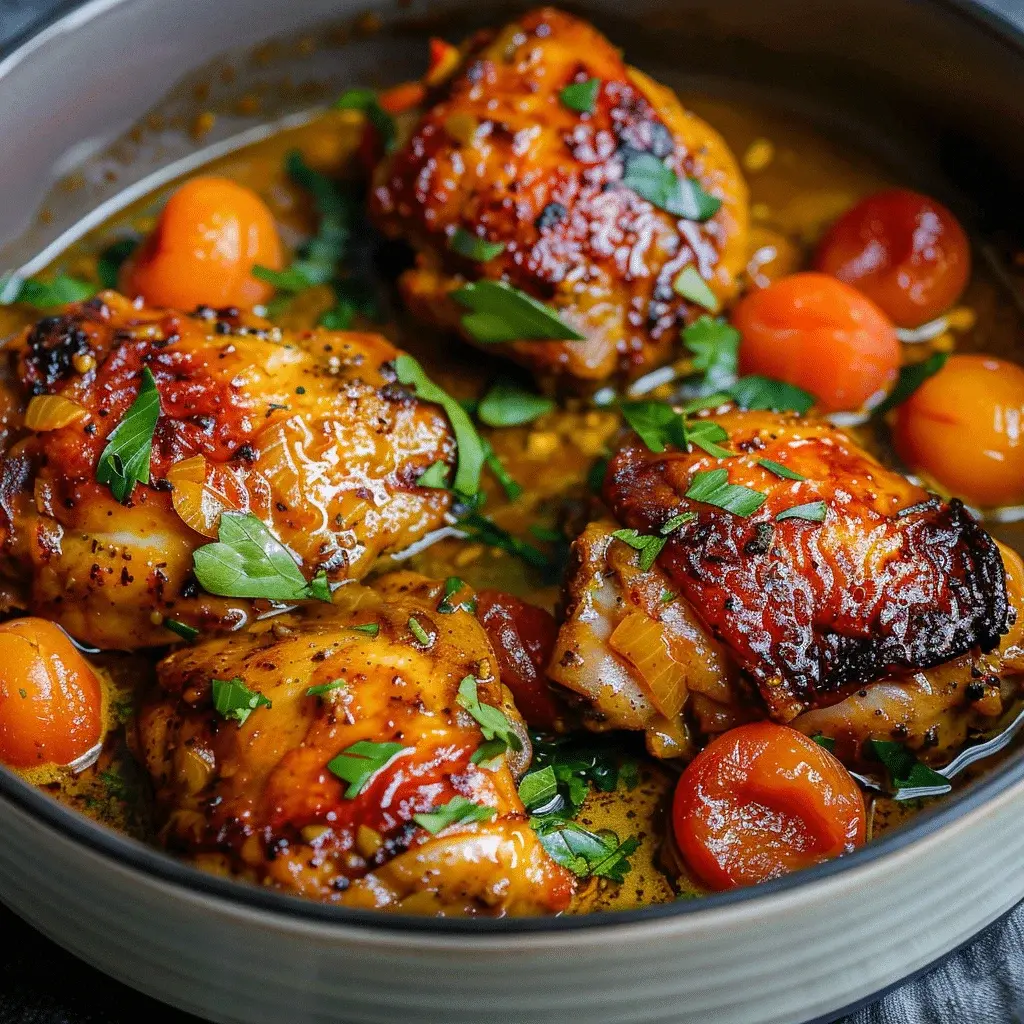
This sticky, caramelized glaze is the hallmark of perfect Barbecue Apricot Chicken.
Step-by-Step Instructions
Step 1: Prepare the Apricot Barbecue Glaze
In a medium saucepan, combine the apricot preserves, barbecue sauce, apple cider vinegar, soy sauce, Dijon mustard, and minced garlic. Whisk everything together over medium-low heat until the mixture is smooth and begins to bubble gently. Let it simmer for 5-7 minutes, stirring occasionally. You’ll see it thicken slightly and become wonderfully fragrant—the sweet apricot scent will mingle with the smoky barbecue notes. Once done, remove from heat and set aside. I like to reserve about 1/3 cup of this glaze in a separate small bowl for serving later.
Step 2: Season and Marinate the Chicken
Pat your chicken breasts completely dry with paper towels; this is crucial for getting a good sear. Place them in a shallow dish or a large zip-top bag. Drizzle with olive oil, then sprinkle evenly with smoked paprika, garlic powder, onion powder, salt, and pepper. Rub the seasonings all over the chicken until each piece is evenly coated. For maximum flavor infusion, pour about half of the warm apricot barbecue glaze over the chicken, turning to coat. Let it marinate at room temperature for 15-30 minutes. If you’re short on time, even 5 minutes will help!
Step 3: Cook the Chicken to Perfection
Heat a large skillet, grill pan, or outdoor grill to medium-high heat. If using a skillet, add a light drizzle of oil. Remove the chicken from the marinade, letting any excess drip off. Place the chicken on the hot cooking surface. Cook for 6-8 minutes on the first side, without moving it, until you get a beautiful golden-brown sear with visible grill marks if using a grill. Flip the chicken and cook for another 5-7 minutes on the second side. The chicken is done when it reaches an internal temperature of 165°F (74°C) at the thickest part. Use a meat thermometer for perfect results every time.
Step 4: Glaze and Finish
During the last 2-3 minutes of cooking, brush the cooked side of the chicken generously with more of the apricot barbecue glaze. Flip, brush the other side, and let it cook for a final minute so the glaze can caramelize and become sticky. Be watchful here, as the sugars in the glaze can burn quickly. Once done, transfer the chicken to a clean plate or cutting board. Let it rest for 5 minutes—this allows the juices to redistribute, ensuring moist, tender chicken. Slice against the grain, drizzle with the reserved fresh glaze, and garnish with fresh herbs and green onions.
Nutritional Information
(Per serving, based on 4 servings with glaze)
- Calories: ~380 kcal
- Protein: 36g
- Carbohydrates: 32g (primarily from the natural fruit sugars and barbecue sauce)
- Fat: 12g
- Fiber: 1g
- Sugar: 24g
- Sodium: ~850mg (varies based on barbecue sauce and soy sauce used)
Healthier Alternatives
You can easily lighten up this dish without losing its signature sweet-and-tangy character:
- Reduce Sugar: Use a “no sugar added” apricot fruit spread and a low-sugar or sugar-free barbecue sauce. The flavor profile remains tangy and fruity.
- Boost Protein & Reduce Fat: Swap chicken breasts for lean chicken tenderloins. They cook faster and are incredibly tender.
- Grill or Bake: Instead of pan-searing with oil, cook the chicken on an outdoor grill for fat to drip away, or bake on a parchment-lined sheet at 400°F (200°C) for 18-22 minutes, brushing with glaze at the end.
- Add Veggies: Thread chunks of bell peppers, onions, and pineapple onto skewers with the chicken for a complete, fiber-rich meal cooked in the same glaze.
Serving Suggestions
This versatile chicken is the star of any plate. Here’s how to build a memorable meal around it:
- For a Summer BBQ: Serve alongside classic potato salad, grilled corn on the cob slathered with herb butter, and a crisp, cool coleslaw to balance the sweetness.
- For a Cozy Dinner: Pair with creamy mashed potatoes or cauliflower mash to soak up the extra glaze, and simple steamed green beans or roasted broccoli.
- For a Lighter Meal: Serve over a bed of quinoa or brown rice with a big, colorful salad dressed with a lemony vinaigrette.
- Get Creative: Shred the leftover chicken and use it as a filling for tacos with cabbage slaw, or pile it onto a bun with pickles for an incredible sandwich.
Common Mistakes
- Not Drying the Chicken: Wet chicken steams instead of sears, preventing that beautiful caramelization on the glaze.
- Overcooking the Chicken: Chicken breasts dry out quickly. Use a meat thermometer and pull them at 165°F. They will continue to cook slightly while resting.
- Adding Glaze Too Early: Brushing on the sugary glaze at the beginning of cooking will cause it to burn. Apply it only during the last few minutes.
- Using a Jarred “Apricot BBQ Sauce”: The magic is in the homemade blend of separate preserves and barbecue sauce. This allows you to control the sweetness, tang, and texture perfectly.
Storing Tips
- Refrigeration: Store leftover chicken in an airtight container for up to 3-4 days. The glaze will solidify when cold but will re-liquify when reheated.
- Freezing: Freeze cooked, cooled chicken (without fresh garnish) in a freezer-safe container or bag for up to 2 months. Thaw overnight in the refrigerator before reheating.
- Reheating: For best results, reheat gently in a covered skillet over low heat with a splash of water or chicken broth to keep it moist. You can also use the microwave at 50% power in 30-second intervals.
- Make-Ahead Glaze: The apricot barbecue glaze can be made up to 5 days in advance and stored in the fridge. Simply warm it slightly before using.