“`html
Table of Contents
Huli Huli Chicken Recipe
Introduction
Did you know that the term “Huli Huli” means “turn turn” in Hawaiian, perfectly describing the cooking method for this iconic dish? This isn’t just another grilled chicken recipe; it’s a culinary journey to the islands. With over 60 years of history since its creation by Ernest Morgado in 1955, the Huli Huli Chicken recipe has become a staple at Hawaiian luaus and backyard barbecues worldwide. What makes this dish so irresistibly popular, garnering millions of searches annually? The secret lies in its magical marinade—a perfect, sticky-sweet symphony of pineapple juice, soy sauce, ginger, and garlic that caramelizes into a glossy, flavor-packed glaze on the grill. This recipe delivers that authentic, tropical taste explosion right to your table, transforming simple chicken into a memorable centerpiece perfect for any family dinner or festive gathering.
Ingredients List
Gather these fresh, vibrant ingredients to create the signature sweet, savory, and tangy profile of Huli Huli Chicken. The quality of your base ingredients directly impacts the depth of flavor.
- For the Chicken & Marinade:
- 3-4 lbs chicken thighs and drumsticks (skin-on, bone-in for maximum juiciness and crispy skin). Substitution: Boneless, skinless chicken breasts or thighs for a leaner option, but reduce grilling time to prevent dryness.
- 1 cup unsweetened pineapple juice (The enzymatic bromelain tenderizes the chicken while adding a bright, tropical sweetness). Substitution: Orange juice or apple juice mixed with 1 tbsp apple cider vinegar for tang.
- 1/2 cup soy sauce (Provides the essential umami and salty backbone. Use low-sodium to control saltiness). Substitution: Tamari (gluten-free) or coconut aminos for a slightly sweeter, soy-free version.
- 1/2 cup ketchup (Adds body, a touch of sweetness, and helps create that iconic glossy glaze).
- 1/3 cup brown sugar (Dark brown sugar preferred for its rich molasses notes that caramelize beautifully). Substitution: Honey, maple syrup, or coconut sugar.
- 1/4 cup rice vinegar or apple cider vinegar (The crucial acidic component that balances the sweetness and adds a pleasant tang).
- 3-4 cloves garlic, minced (Fresh is best for a pungent, aromatic kick).
- 1 tbsp fresh ginger, grated (Provides a warm, spicy zing that is irreplaceable). Substitution: 1 tsp ground ginger (use sparingly, as it’s more potent).
- 1 tbsp sesame oil (A few drops of this nutty, fragrant oil elevate the entire flavor profile).
- 1 tsp Sriracha or red pepper flakes (optional) (For a subtle hint of heat that lingers pleasantly).
Timing
20 minutes
30-40 minutes
2 hours to overnight
3+ hours
While the active hands-on time for this Huli Huli Chicken recipe is relatively short (about 20 minutes), the magic happens during the marinating period. Compared to average grilled chicken recipes that call for a 30-minute marinade, the 2-hour minimum for Huli Huli is non-negotiable. This extended time allows the pineapple juice to tenderize the meat and the complex flavors to penetrate deeply, resulting in a far more succulent and flavorful outcome. Planning for the marinating time is the key to success.
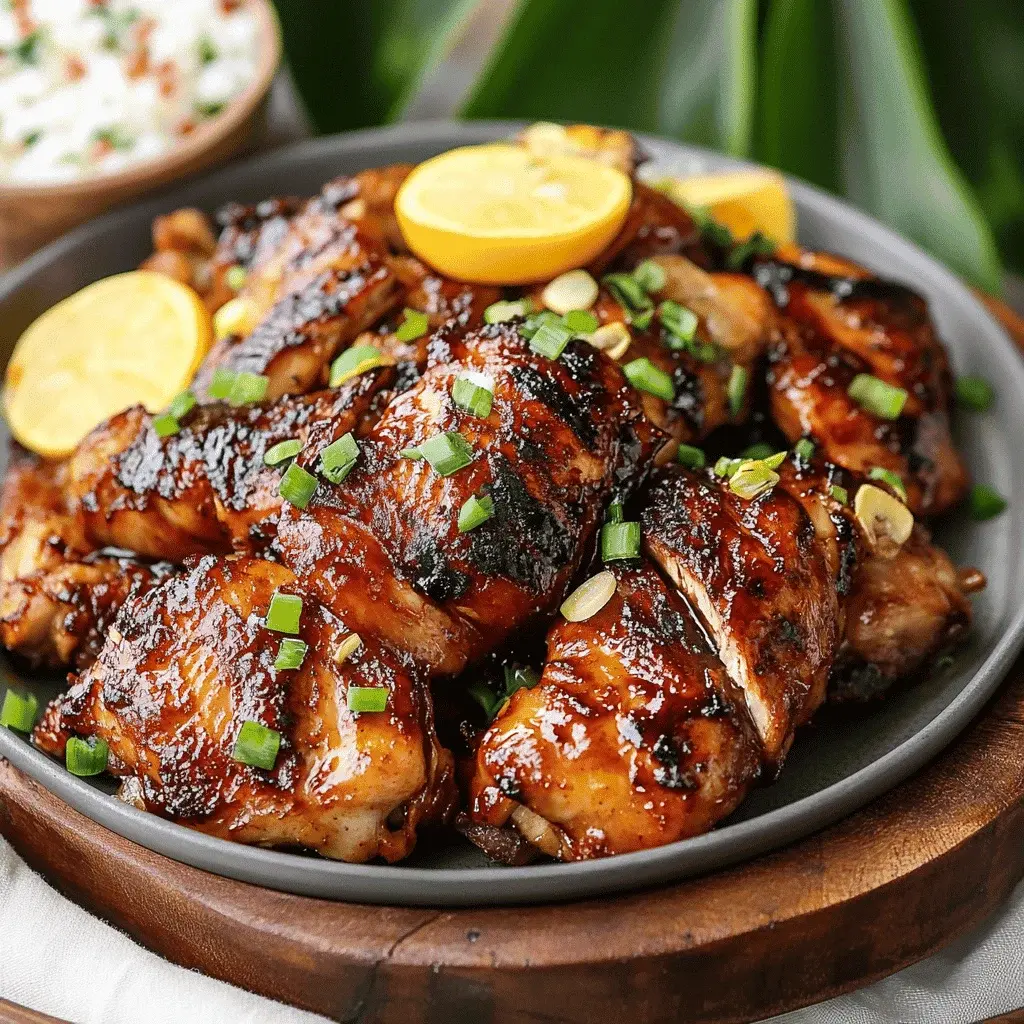
The key to incredible flavor: letting the chicken bathe in the sweet and savory marinade.
Step-by-Step Instructions
Step 1: Prepare the Marinade
In a medium-sized mixing bowl, combine the pineapple juice, soy sauce, ketchup, brown sugar, vinegar, minced garlic, grated ginger, sesame oil, and Sriracha (if using). I like to use a whisk here to ensure the brown sugar dissolves completely and everything emulsifies into a smooth, fragrant, reddish-brown liquid. Take a moment to smell it—you should get hits of sweet pineapple, salty soy, and sharp ginger. This is the heart of your dish.
Step 2: Marinate the Chicken
Place your chicken pieces in a large, resealable plastic bag or a non-reactive glass or ceramic dish. Pour about two-thirds of the marinade over the chicken, ensuring every piece is thoroughly coated. Seal the bag or cover the dish tightly. Reserve the remaining one-third of the marinade in a separate container—this will be your basting sauce later, and it’s crucial for food safety not to cross-contaminate. Refrigerate the chicken for at least 2 hours, but for the best results, let it marinate overnight. The longer it sits, the more tender and flavorful it becomes.
Step 3: Prepare the Grill
About 30 minutes before you’re ready to cook, remove the chicken from the fridge to take the chill off. Preheat your grill to a medium heat (around 375°F). We’re aiming for two-zone cooking if possible: direct heat for searing and indirect heat for finishing. Oil the grates thoroughly with a high-smoke-point oil like canola or avocado oil to prevent sticking. Bring your reserved, untouched marinade to a boil in a small saucepan and let it simmer for 5 minutes to kill any bacteria. This is now your safe basting glaze.
Step 4: Grill the Chicken
Remove the chicken from the marinade and let the excess drip off. Discard the used marinade. Place the chicken pieces skin-side down on the direct heat side of the grill. Grill for 5-7 minutes until you get a nice, dark sear and grill marks. This initial sear locks in juices. Then, flip the chicken and move it to the indirect heat side of the grill. Cover the grill and cook for 20-25 minutes, turning and basting with the sanitized glaze every 5-7 minutes. This frequent turning and basting is the true “huli huli” action, building up layers of that sticky, caramelized coating. The chicken is done when it reaches an internal temperature of 165°F in the thickest part.
Step 5: Serve and Enjoy
Once cooked, transfer the chicken to a clean platter. Let it rest for 5-10 minutes. This allows the juices to redistribute, ensuring every bite is moist. For a final flavor boost, brush with one last layer of the warm glaze before serving. The chicken should be glossy, deeply caramelized, and smell incredibly of pineapple, ginger, and smoke.
Nutritional Information
(Per serving, based on one chicken thigh with skin, using all marinade.)
- Calories: ~320 kcal
- Protein: 22g
- Total Fat: 18g (Saturated Fat: 5g)
- Carbohydrates: 15g (Sugars: 12g from natural pineapple juice and brown sugar)
- Sodium: ~900mg (Can be reduced by 30% using low-sodium soy sauce)
Healthier Alternatives
You can easily adapt this Huli Huli Chicken recipe for dietary preferences without sacrificing the iconic flavor:
- Lower Sugar: Replace brown sugar with a monk fruit sweetener blend or reduce the amount by half. The pineapple juice provides natural sweetness.
- Lower Sodium: Use low-sodium soy sauce or coconut aminos, which have about 60% less sodium.
- Leaner Protein: Opt for skinless, boneless chicken breasts. To prevent dryness, marinate overnight and cook to 160°F, allowing carryover cooking to reach 165°F. Consider brining the breasts for 30 minutes in saltwater before marinating for extra juiciness.
- Keto/Paleo: Use coconut aminos, substitute sugar with a sugar-free syrup like Sukrin Gold, and ensure the ketchup is sugar-free.
Serving Suggestions
Huli Huli Chicken is incredibly versatile. Serve it with sides that complement its tropical, sweet-savory profile:
- Classic Luau Style: Steamed white rice (or coconut rice) to soak up the extra glaze, and a simple macaroni salad.
- Fresh & Light: A vibrant Hawaiian-style pineapple-cucumber salad or a tangy coleslaw with a rice vinegar dressing.
- Grilled Veggies: Skewers of bell peppers, onions, and pineapple chunks grilled alongside the chicken.
- In a Bowl: Shred the grilled chicken over a bed of greens, quinoa, black beans, and mango salsa for a healthy power bowl.
Common Mistakes
- Skipping the Long Marinate: This is the #1 mistake. Rushing this step results in chicken that’s flavorful only on the surface, not throughout.
- Grilling on Too High Heat: The sugar in the marinade burns easily. Medium heat is key for caramelization without charring.
- Basting with Raw Marinade: Never baste with the marinade that touched raw chicken without boiling it first. This is a major food safety risk.
- Not Letting it Rest: Cutting into the chicken immediately lets all the precious juices run out, leading to drier meat.
Storing Tips
- Refrigeration: Store leftover chicken in an airtight container for up to 3-4 days. The flavor often intensifies the next day.
- <