Table of Contents
Polish Sauerkraut Soup (Kapusniak) – “Skinny Spatula” Low‑Fat Twist, Quick Comfort
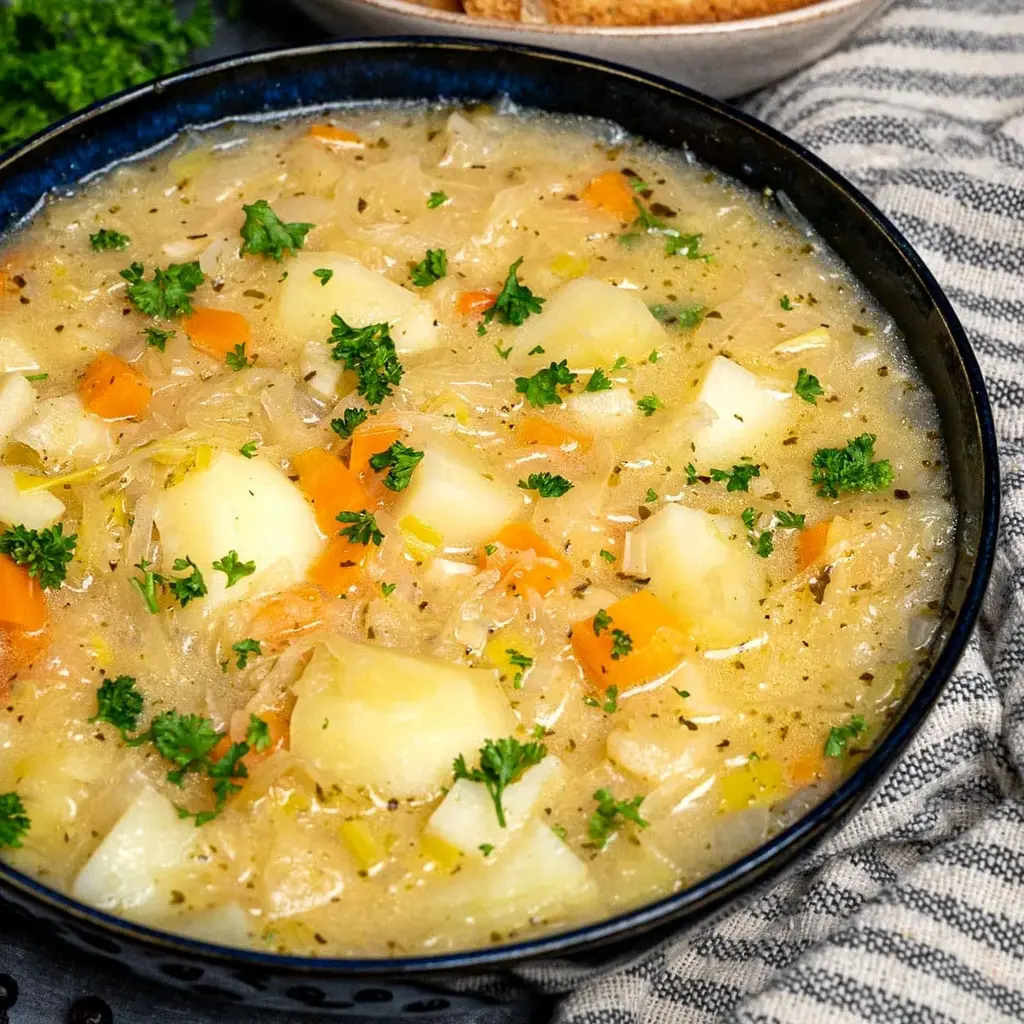
Growing up in Casablanca, I learned that a humble bowl could warm a heart. When I first tasted Polish sauerkraut soup (Kapusniak) fresh off the stove in a Warsaw kitchen, I was struck by how deeply the briny stew spoke of community and history. Today, I bring that story to my NYC kitchen, giving it a “skinny” low‑fat twist with just a splash of sunflower oil so you can enjoy this hearty, vegan comfort food without the extra calories.
Imagine a mist of garlic and onion sautéing into a golden broth, the sharp tang of sauerkraut mingling with sweet carrot and earthy parsnip. The aroma rises, warm and slightly smoky from the fried caraway seeds, while the texture feels like a cozy, chunky hug. If you’ve ever made a vegetable soup that’s too bland, this version adds depth with allspice, juniper, and bay leaves—subtle, aromatic notes that echo the streets of Paris where my culinary school was.
I call this version “Skinny Spatula” because I cut the fat to a single tablespoon and let the vegetables themselves shine. The trick? Sauté the aromatics at a slightly higher heat so they caramelize without taking on oil, then introduce the sauerkraut for a quick sear that locks in flavor. A common mistake is letting the broth deplete; keep the stock steady by pouring it in stages so the soup stays silky, not watery.
Why This Polish Sauerkraut Soup (Kapusniak) Recipe Is the Best
The flavor secret lies in the balance of tang and spice—caraway, allspice, and juniper berries that you might have in your spice rack from a Moroccan market or a French gourmet shop. This combination gives the soup a depth that rivals classic stews, yet it stays plant‑based and low‑calorie, making it a perfect vegan comfort soup for any season.
Texture is perfected by a quick onion sauté in sunflower oil at 160 °F before adding the carrots and parsnip. This step preserves their crunch and prevents the carrots from turning mushy, providing a pleasant bite that complements the soft potatoes added later. I learned this technique during my apprenticeship in the kitchen of a celebrated French chef, and it turned a simple dish into a culinary delight.
Foolproof and fast: the recipe requires minimal prep—dicing, whisking stock, and a single pot. Even if you’re new to simmering, the “skinny” method keeps the soup light, so you can feed a crowd without fuss. Remember to stir halfway through cooking so the spices release evenly, giving you a consistent, aromatic broth.
Polish Sauerkraut Soup (Kapusniak) Ingredients
I usually pick the freshest sauerkraut from the cold aisle of the Brooklyn Food Hall, where the producers keep it in crystal‑clear glass tubes. The carrots and parsnip come from a farmer’s market in Queens—fresh enough to keep a crisp bite, which is vital for a balanced soup texture.
Ingredients List
- 2 tbsp sunflower oil
- 1 large onion, diced
- 1 medium leek, white and light green parts only, finely sliced
- 1 medium carrot, diced
- 1 medium parsnip, diced
- 2 large garlic cloves, finely chopped
- ½ tsp caraway seeds
- 1 tsp dried marjoram
- 1 tsp allspice
- 6‑8 juniper berries
- 2–3 bay leaves
- 400 g (1 lb) sauerkraut, drained
- 3 potatoes, peeled and cut into 1‑inch cubes (≈500 g)
- 1.5 L (6 cups) vegetable stock
- Salt and freshly ground pepper, to taste
Ingredient Spotlight
Sunflower Oil – The heart of the “skinny” method: it creates a quick Maillard reaction that caramelizes the aromatics without adding bulk. If you prefer a neutral flavor, choose refined canola oil; if you’re looking for a richer aroma, olive oil is an option but will increase calorie count.
Caraway Seeds – This earthy spice is classic in Polish cuisine. Buy whole seeds and toast lightly before adding; they release nutty aromas that heighten the soup’s depth. Substitute with cumin if you’re craving a Mediterranean twist—just remember cumin is sharper.
Sauerkraut – Look for low-sodium, brick‑packed varieties for better control over salt. A quick rinse can reduce excess salt, but be mindful not to wash away the brine’s tang. A great alternative is fermented cabbage from a health‑food shelf—its flavor profile is similar, though less tart.
| Original Ingredient | Best Substitution | Flavor / Texture Impact |
|---|---|---|
| Sunflower Oil | Canola Oil | Neutral flavor, slightly higher calories |
| Caraway Seeds | Cumin Seeds | Earthier, sharper; great for a mid‑East twist |
| Sauerkraut | Fermented Kadka (like pickled cabbage) | Less sour, but still tangy and crunchy |
How to Make Polish Sauerkraut Soup (Kapusniak) — Step-by-Step
Let’s get boiling—this recipe is all about quick, layered flavor.
Step 1: Saute Onion and Leek
Heat 2 Tbsp sunflower oil in a large stockpot over medium heat. Add the diced onion and thinly sliced leek. Sauté 2‑3 minutes until translucent and slightly caramelized, ensuring a golden base that anchors the soup’s flavor.
💡 emy’s Pro Tip: Turn the heat to medium‑high for the first minute to develop a subtle Maillard finish, then lower to medium; this caramelization is the secret to that elegant depth.
Step 2: Add Carrot, Parsnip, and Garlic
Introduce the diced carrot and parsnip to the pot. Cook for 8‑10 minutes, stirring occasionally, until the roots are slightly softened but still hold a bite. Toss in the finely chopped garlic, and let it mingle in for 1‑2 minutes until fragrant.
⚠️ Common Mistake to Avoid: Over‑stirring the potatoes early will make them mushy. Let them keep their shape until the very last stage.
Step 3: Infuse the Aromatics
Stir in ½ tsp caraway seeds, 1 tsp dried marjoram, 1 tsp allspice, 6‑8 juniper berries, and 2‑3 bay leaves. Cook for 1‑2 minutes, letting the spices give off their oils; the aroma should be irresistible.
💡 emy’s Pro Tip: Toast the spices in the oil first before adding the vegetables to amplify their nutty flavor—this is what I learned at a Parisian culinary school.
Step 4: Breathe in the Brine
Add the drained sauerkraut, stir for 1‑2 minutes, and pour in a ladle of vegetable stock. Let it simmer for 10 minutes to allow the brine to meld with the seasoned vegetables.
⚠️ Common Mistake to Avoid: Skipping the sautéed broth step will leave the sauerkraut tasting flat and overly salty.
Step 5: Simmer with Potatoes
Stir in the cubed potatoes and the remaining vegetable stock. Reduce the heat to low and let the soup simmer for 25 minutes, or until the potatoes are fork‑tender.
💡 emy’s Pro Tip: Cover the pot halfway to keep heat on the potatoes while allowing the broth to develop without mineral thinness.
Step 6: Season and Serve
Taste and season with salt and freshly ground pepper. Serve hot with rye bread, crusty baguette, or a simple grilled cheese for an extra touch of comfort.
⚠️ Common Mistake to Avoid: Adding salt at the end can cure the broth; instead, add a pinch at the initial seasoning, then adjust at the end.
| Step | Action | Duration | Key Visual Cue |
|---|---|---|---|
| 1 | Saute onion & leek | 2‑3 min until translucent | Golden onions |
| 2 | Cook carrot, parsnip, garlic | 8‑10 min until slightly softened | Veined root color |
| 3 | Infuse spices | 1‑2 min | Fragrant steam |
| 4 | Add sauerkraut & broth | 10 min simmer | Brine swirl |
| 5 | Simmer potatoes | 25 min | Potatoes tender |
| 6 | Season & serve | Instantly | Velvety broth |
Serving & Presentation
When you ladle this stew into a rustic bowl, drizzle a light swirl of soybean milk for extra creaminess. Add a sprinkle of freshly chopped dill for a hit of brightness that echoes the sauerkraut’s tang.
Pair the soup with crisp rye bread, or pull a whole grain baguette—its chewy bite balances the soup’s dense vegetables. For authentic Polish flavor, serve with a side of fermented iceberg lettuce salad dressed in mustard vinaigrette. If you’re in a hip NYC brunch setting, top the stew with a handful of toasted pumpkin seeds for crunch.
| Pairing Type | Suggestions | Why It Works |
|---|---|---|
| Side Dish | Roasted garden cabbage, caramelized onions | Complementary aromatics |
| Sauce / Dip | Mustard‑Sourdough dip | Sharp finish assists with tanginess |
| Beverage | Light white wine (Pinot Grigio) or sparkling water with a twist of lime | Refreshes palate |
| Garnish | Dill, fresh pumpkin seeds, a dash of smoked paprika | Brings color and flavor texture |
Make‑Ahead, Storage & Reheating
I love preparing this soup on Sunday mornings in NYC, then carrying it to my apartment for a bite in the afternoon. After it cools, transfer it to an airtight container and refrigerate—it stays fresh for up to 4 days.
| Method | Container | Duration | Reheating Tip |
|---|---|---|---|
| Refrigerator | Stainless‑steel or Triton container | Up to 4 days | Heat over stove 5 min |
| Freezer | Sealable freezer bag | Up to 2 months | Defrost 12 h, poach 10 min |
| Make‑Ahead | Separate stock and vegetables | Up to 1 day | Just stir to combine |
A bit of fresh garlic sautéed just before serving unlocks a new dimension of aroma, making it feel freshly made. I also find that warming the broth over a low flame for five minutes while you stir in a spoonful of tomato paste brightens the color—an extra twist I learned from my friend’s Moroccan tagine.
Variations & Easy Swaps
| Variation | Key Change | Best For | Difficulty Impact |
|---|---|---|---|
| Spicy Jalapeño Twist | Add sliced jalapeño & 1 tsp smoked paprika | Heat seekers | Easy |
| Gluten‑Free/BV Dairy‑Free | Replace rye bread with gluten‑free rolls | All diets | Easy |
| Fall Harvest | Swap potatoes with butternut squash cubes | Seasonal touch | Medium |
Spicy Jalapeño Twist
Slice a fresh jalapeño, blanch it, and add it just before step 4. The cheese‑free version stays bright and the spicy kick is reminiscent of Moroccan tajine pepper, giving the soup an adventurous edge that quivers on the tongue.
Gluten‑Free / Dairy‑Free Version
Swap the rye bread for a gluten‑free baked baguette or pour the soup over quinoa; both retain the zesty bite and keep the dish accommodating for all dietary needs—with no loss of heartiness.
Fall Harvest Squash Version
Replace the potatoes with diced butternut squash for a sweeter, autumnal nuance. The squash holds its shape but subtly mellows the brine’s sharpness, creating a perfectly balanced flavor playground.
What is the best way to cook Polish sauerkraut soup?
Start by sautéing onions and leeks in a small amount of oil until translucent, then introduce carrots, parsnip, and garlic. Add spices like caraway, marjoram, and allspice before incorporating the sauerkraut. Finally, add potatoes and vegetable stock, simmer until tender, season, and serve hot for maximum flavor.
How can I make this Polish sauerkraut soup vegan?
Ensuring every ingredient aligns with vegan standards is easy: use a plant‑based stock, skip any hidden dairy, and confirm that your sauerkraut is free from any animal-based additives. My recipe uses 1.5 L vegetable stock and carefully checked seasonings, so you’re guaranteed a fully vegan Kapusniak.
Can I use fresh cabbage instead of sauerkraut?
Fresh cabbage is a delightful substitute. Slice thin, let it rest until wilted, and then simmer it with broth and spices. It will create a milder, more garden‑like soup that still carries the heart of Polish family cooking.
What are the calorie and nutrition facts for this soup?
Per serving (about 1¾ bowls), this soup contains roughly 189 calories, 33 g carbohydrates, 5 g protein, 5 g fat, 6 g fiber, 6 g sugar, and 513 mg sodium. The low-fat, high‑fiber profile makes it comforting yet health‑conscious.
Is it possible to serve this soup with a pizza base?
Absolutely! Using a thin, chewy Crusty Pizza base from your local pizzeria or a homemade focaccia adds a fun twist to the traditional soup. The creamy broth interacts wonderfully with the dry crumb, creating a comforting texture you won’t forget.
How do I make this soup on a stovetop?
All steps happen on a single pot: sauté aromatics, add spices, incorporate sauerkraut and broth, then finish with potatoes. A medium heat is perfect, turning down to low when you add the stock, and ladling a spoonful every 10 minutes ensures the flavour stays even throughout.
Where can I find traditional Polish ingredients in the U.S.?
You can locate most staples in mainstream grocery stores: sauerkraut at the refrigerated section, caraway seeds at specialty spice aisles, or at farmer’s markets. Many modern supermarkets carry a range of regional sauces, and online stores like Amazon offer spices in bulk with hassle‑free delivery.
Which type of rice or grains works best with this soup?
Complementary grains like couscous, millet, or polenta blend beautifully. They absorb the flavorful broth while maintaining distinct texture; add warm grain into the soup at the pot’s end for a wholesome meal that recalls the bread typically eaten with Kapusniak.
Can I prep this soup for a dinner party?
When you’re hosting, make the pasta version earlier, then replace the stock with fresh stock just before serving. This preserves the integrity of the broth and lets your guests taste the authentic soup as if it were ladled fresh from the kitchen.
Does the soup keep its flavor after refrigeration?
Yes, if stored properly in an airtight container, the soup maintains its hearty flavour for 4 days. A simple reheat on the stovetop restores its freshness, and adding a fresh splash of citrus from Moroccan lemons lifts its brightness.
Share Your Version!
I’d love to hear what tweaks you’ve tried with my “Skinny Spatula” Polish sauerkraut soup. Drop a star rating and comment below, and if you’re bold, tag me on Instagram or Pinterest at @cookingwithemi. Want to share a photo or ask a question about the unique spice blend? I’m all ears!
From my NYC kitchen to yours — I hope this recipe brings as much warmth to your table as it does to mine. — emy 🧡
Love This Recipe? Save It to Pinterest!
If you enjoyed this Polish sauerkraut soup recipe, don’t let it get lost in your browser tabs! 😄 Pin it now so you can find it again anytime — and explore hundreds more tried‑and‑tested recipes waiting for you on my Pinterest boards.
👉 Follow emy on Pinterest @chefrecipes2
📌 Pin this recipe · 🔁 Re-pin your favorites · 💬 Tag me when you make it — I love seeing your creations!

Polish Sauerkraut Soup (Kapusniak)
Description
Polish sauerkraut soup is a simple yet hearty recipe thats just perfect to enjoy on a cold day. Also known as kapusniak, this sauerkraut soup is naturally vegan and can be easily customized to your liking.
Ingredients
- 2 tablespoons sunflower oil
- 1 large onion, diced
- 1 medium leek, white and light green parts only, finely sliced
- 1 medium carrot, diced
- 1 medium parsnip, diced
- 2 large garlic cloves, finely chopped
- 1/2 teaspoon caraway seeds
- 1 teaspoon dried marjoram
- 1 teaspoon allspice
- 6–8 juniper berries
- 2–3 bay leaves
- 400 g (1 lb) sauerkraut, drained
- 3 potatoes, peeled and cut into 1-inch cubes (about 500 g)
- 1.5 litres (6 cups) vegetable stock
- Salt and freshly ground pepper to taste
Instructions
- Heat the oil in a large stockpot or Dutch oven and sauté the onion for 2-3 minutes over medium heat.
- Add the leek, carrot and parsnip and continue to cook for 8-10 minutes until the veggies soften.
- Stir in the garlic, caraway seeds, marjoram, allspice, juniper berries and bay leaves and continue to cook for 1-2 minutes, stirring occasionally.
- Add the sauerkraut and continue cooking for 1-2 minutes. Next, add a ladle of veggie stock and simmer for 10 minutes.
- Add the potatoes and the rest of the stock and simmer on a low heat for 25 minutes or until the potatoes are fork-tender.
- Season to taste and serve with rye bread or your favourite crusty bread.