Table of Contents
Easy Homemade Hoisin Sauce Recipe – A Sweet, Salty, and Spicy Pantry Staple
My mom’s kitchen in Morocco always smelled like slow-cooked tagines and earthy spices, but when I moved to New York for culinary school, I fell hard for the bold, sticky-sweet sauces of Chinatown. This easy homemade hoisin sauce recipe is my love letter to that pantry staple. I wanted a version that I could whip up in minutes with ingredients I always have on hand—soy sauce, peanut butter, honey, and a splash of rice vinegar. The unique angle here is that I add a bit of Sriracha for heat, making it as spicy as you like. It’s sweet, salty, and infinitely customizable, just like the sauces I used to dream about during my pastry classes in Paris.
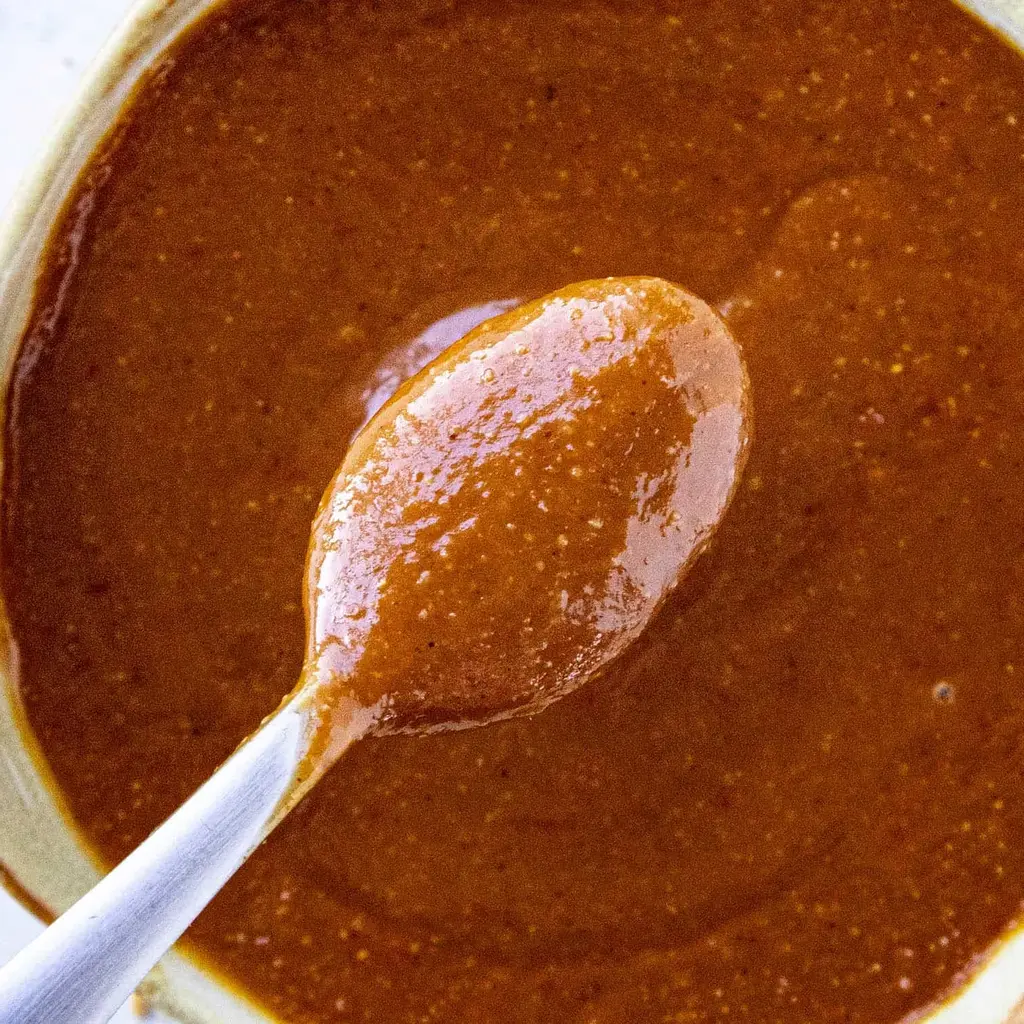
Imagine the deep, savory aroma of soy sauce mingling with the nutty richness of peanut butter, all balanced by the floral notes of Chinese five spice powder. A hint of garlic cuts through the sweetness of honey, while the rice vinegar adds a bright tang that wakes up your taste buds. The sauce is glossy and thick, perfect for glazing ribs, coating stir-fried noodles, or dipping spring rolls. I love how the Sriracha (or your favorite chili paste) gives it a slow-building warmth that makes you want to keep tasting. It’s a sauce that transforms simple dishes into something magical.
As a trained chef who has spent years perfecting sauce work in Paris and now cooks daily for my NYC family, I can tell you that this recipe is a game-changer. Most store-bought hoisin sauces are loaded with preservatives and high-fructose corn syrup—my version uses real ingredients and lets you control the spice level entirely. 💡 emy’s Pro Tip: The secret is to thicken the sauce with a cornstarch slurry, which gives it that perfect cling without being gluggy. Avoid the common mistake of simmering it too high and too fast—that will make the cornstarch clump. This recipe is foolproof and fast, ready in just 10 minutes.
Why This Homemade Hoisin Sauce Recipe Is the Best
The flavor secret is in the balance. Growing up in Morocco, I learned to layer spices with patience—a philosophy I brought to my Parisian training and now to my NYC kitchen. Here, the Chinese five spice powder (cinnamon, cloves, fennel, star anise, and Szechuan peppercorns) dances with the umami of soy sauce and the natural sweetness of honey. Peanut butter adds a creamy, nutty depth that traditional hoisin sauce gets from fermented soybean paste, but without needing hard-to-find ingredients. This unique twist makes it both accessible and unforgettable.
Perfected texture comes from a chef’s trick: the cornstarch slurry. I whisk a teaspoon of cornstarch with cold water and stir it into the warm sauce. This technique, which I learned in a Parisian pastry kitchen for thickening fruit coulis, creates a silky, glossy finish that clings beautifully to food. Unlike store-bought sauces that can be runny or pasty, this homemade version is just right—lush and pourable. It’s the same precision I use when making a classic French beurre blanc.
This recipe is foolproof and fast, making it ideal for busy weeknights. You don’t need to hunt for obscure ingredients or slave over a hot stove. With just 10 minutes and common pantry items (soy sauce, peanut butter, honey, garlic, rice vinegar, Chinese five spice, Sriracha, and cornstarch), you have a versatile sauce that beats any jarred version. It’s also naturally gluten-free if you use tamari, and easily vegan with maple syrup. Whether you’re a beginner or a seasoned cook, this is a recipe you’ll turn to again and again.
Homemade Hoisin Sauce Ingredients
I love shopping for these ingredients at the Union Square Greenmarket or my local Asian market in Chinatown. There’s something special about picking up fresh garlic and a good soy sauce—it reminds me of the spice markets in Marrakech where my mom would haggle for the best cinnamon. You don’t need anything fancy, just a well-stocked pantry.
Ingredients List
- 4 tablespoons soy sauce
- 2 tablespoons rice vinegar
- 2 tablespoons peanut butter (or try it with tahini or black bean sauce)
- 3 cloves garlic, minced (or 1 teaspoon garlic powder)
- 2 tablespoons honey (or brown sugar)
- ½ teaspoon Chinese five spice powder (use more as desired)
- 2 teaspoons Sriracha (or any Chinese hot sauce, chili paste, or your favorite hot sauce)
- 1 teaspoon cornstarch
Ingredient Spotlight
Soy Sauce: This provides the salty, umami backbone. I recommend using naturally brewed soy sauce like Kikkoman or San-J—avoid the cheap imitation stuff that’s just salt and color. For a gluten-free version, swap in tamari or coconut aminos. The flavor will be slightly milder but still delicious.
Peanut Butter: This is my favorite shortcut for richness. Using creamy peanut butter (not the chunky kind) gives the sauce a smooth, luscious texture. If you’re allergic to peanuts, try tahini (sesame paste) or Chinese black bean sauce. Tahini adds a nutty, slightly bitter note that works beautifully with the honey. Black bean sauce will make it saltier, so go easy on the soy sauce.
Chinese Five Spice Powder: This blend is the soul of the sauce. It combines star anise, cloves, cinnamon, Szechuan peppercorns, and fennel seeds. You can find it in any supermarket’s spice aisle, but for the freshest flavor, try a specialty spice shop in NYC like Kalustyan’s. Start with ½ teaspoon and adjust—too much can be overpowering.
| Original Ingredient | Best Substitution | Flavor / Texture Impact |
|---|---|---|
| Soy Sauce | Tamari or coconut aminos | Less salty, slightly sweeter; gluten-free option |
| Peanut Butter | Tahini or black bean sauce | Tahini: nuttier, slightly bitter. Black bean sauce: saltier, fermented flavor |
| Honey | Brown sugar or maple syrup | Brown sugar: deeper molasses note. Maple syrup: thinner, woodsy sweetness |
| Sriracha | Chili garlic sauce, sambal oelek, or gochujang | Chili garlic sauce: more garlicky. Gochujang: sweeter, fermented heat |
How to Make Homemade Hoisin Sauce — Step-by-Step
Making this sauce is so easy, you’ll wonder why you ever bought it from a jar. Just follow these simple steps, and you’ll have a thick, glossy, and deeply flavorful sauce in under 10 minutes.
Step 1: Combine the Base
Add all of the ingredients to a small pot, except for the cornstarch. That means the soy sauce, rice vinegar, peanut butter, minced garlic, honey, Chinese five spice powder, and Sriracha. Use a small whisk to stir everything together until the peanut butter is mostly incorporated. It’s okay if there are a few tiny lumps—they’ll melt as it heats.
💡 emy’s Pro Tip: For a deeper flavor, let the garlic sit in the soy sauce for a minute before heating—it will bloom the aroma.
Step 2: Warm It Up
Place the pot on the stove over medium heat. Warm the mixture, stirring constantly, until the peanut butter fully melts and the sauce comes together into a smooth, fragrant liquid. This should take about 2–3 minutes. Don’t let it boil—just a gentle simmer. Watch for small bubbles around the edges, which is your cue that it’s ready for the next step.
⚠️ Common Mistake to Avoid: If you heat the sauce too high, the honey can burn and the garlic can become bitter. Keep it at medium heat and stir frequently.
Step 3: Make the Cornstarch Slurry
In a small bowl, whisk the cornstarch with 2 tablespoons of cold water until the cornstarch completely dissolves. You’re looking for a milky, white liquid with no lumps. This slurry is what will give your hoisin sauce that gorgeous, glossy thickness.
💡 emy’s Pro Tip: Use cold water, not hot—hot water will cause the cornstarch to clump immediately. Whisk vigorously until it’s smooth like cream.
Step 4: Thicken the Sauce
Pour the cornstarch and water mixture into the hoisin sauce pot while whisking constantly. Keep whisking for about 30 seconds until the slurry is fully incorporated. You’ll see the sauce start to thicken and become more viscous almost immediately.
⚠️ Common Mistake to Avoid: Pouring the slurry in all at once without stirring can create lumps. Slowly stream it in while whisking to ensure a silky-smooth texture.
Step 5: Simmer and Serve
Heat the sauce for another 1–2 minutes, continuing to stir, until it reaches your desired thickness. The sauce should coat the back of a spoon—think thick maple syrup consistency. Remove it from the heat immediately to prevent over-thickening. Taste and adjust: add more Sriracha for heat, or a pinch of salt for saltiness. Serve warm or at room temperature.
💡 emy’s Pro Tip: The sauce will continue to thicken slightly as it cools. If it becomes too thick, whisk in a teaspoon of warm water to loosen it up.
| Step | Action | Duration | Key Visual Cue |
|---|---|---|---|
| 1 | Combine all ingredients except cornstarch | 1 min | Peanut butter partially mixed in; small lumps visible |
| 2 | Heat over medium, stirring | 2–3 mins | Smooth, fragrant liquid with small bubbles at edges |
| 3 | Whisk cornstarch with cold water | 30 secs | Milky white, lump-free slurry |
| 4 | Add slurry, whisk constantly | 30 secs | Sauce begins to thicken visibly |
| 5 | Simmer until thickened | 1–2 mins | Coats back of spoon; glossy, thick maple syrup consistency |
Serving & Presentation
This homemade hoisin sauce is incredibly versatile. Brush it on grilled chicken thighs or pork ribs during the last few minutes of cooking for a sticky, caramelized glaze. I love drizzling it over a bowl of steaming ramen or soba noodles, topped with scallions and sesame seeds. It also makes a fantastic dipping sauce for spring rolls, dumplings, or roasted cauliflower. For a Moroccan twist, try it with lamb meatballs—the sweetness and spice pair beautifully with harissa.
When I’m hosting a dinner party in my NYC apartment, I serve this sauce in a small, rustic bowl alongside a platter of crispy tofu and vegetable skewers. The deep brown color and glossy sheen catch the light, and the aroma of Chinese five spice fills the room. I like to garnish with a sprinkle of sesame seeds and a few thin slices of red chili. It’s simple, elegant, and always gets compliments.
| Pairing Type | Suggestions | Why It Works |
|---|---|---|
| Side Dish | Steamed jasmine rice, stir-fried bok choy, roasted broccoli | Absorbs sauce well; neutral base for bold flavors |
| Sauce / Dip | Spring rolls, dumplings, chicken skewers, egg rolls | Sticky, flavorful coating; a perfect balance of sweet and salty |
| Beverage | Crisp lager like Sapporo, dry Riesling, iced green tea | Cuts through richness; refreshes the palate between bites |
| Garnish | Toasted sesame seeds, finely sliced scallions, fresh cilantro, red chili flakes | Adds texture, freshness, and visual pop |
Make-Ahead, Storage & Reheating
As a busy NYC professional cook, I often double this recipe on Sunday so I have hoisin sauce ready for the week. It stores beautifully and actually develops more depth of flavor overnight as the spices meld. It’s a total game-changer for meal-prepping everything from weekday stir-fries to last-minute glaze for salmon.
Easy Homemade Hoisin Sauce Recipe
Description
This homemade hoisin sauce recipe is easy to whip together with common pantry ingredients. It’s sweet and salty and you can make it as spicy as you want it.
Ingredients
- 4 tablespoons soy sauce
- 2 tablespoons rice vinegar
- 2 tablespoons peanut butter ((Or try it with tahini or black bean sauce – peanut butter is more readily available and easier))
- 3 cloves garlic (minced – 1 teaspoon garlic powder is good instead)
- 2 tablespoons honey ((you can use brown sugar instead))
- 1/2 teaspoon Chinese Five Spice Powder (use more as desired)
- 2 teaspoons Sriracha ((or use any Chinese hot sauce, red chili sauce, chili paste or try your favorite hot sauce))
- 1 teaspoon cornstarch
Instructions
- Add all of the ingredients to a small pot, except for the cornstarch.
- Heat to medium heat and warm through, stirring, until the ingredients combine.
- In a small bowl, whisk the cornstarch with 2 tablespoons of cold water, until the cornstarch dissolves.
- Pour the cornstarch and water mixture into the hoisin sauce pot and whisk until well combined.
- Heat for another 1-2 minutes, until the hoisin sauce thickens.
- Serve!

| Method | Container | Duration | Reheating Tip |
|---|