Table of Contents
Fluffy Japanese Soufflé Pancakes with Lemon Zest – The Secret to Jiggly Perfection
I still remember the first time I bit into a perfect Japanese soufflé pancake. It was at a tiny café in Tokyo’s Harajuku district, and I was instantly transported back to my childhood in Morocco, where my mother would make delicate, airy msemmen that seemed to float off the plate. These fluffy Japanese soufflé pancakes are my love letter to that memory — combining the cloud-like lift of a French meringue with a whisper of lemon zest that brightens every bite. This Japanese soufflé pancake recipe is the one I make for special weekend brunches in my NYC apartment, and it never fails to draw gasps of delight.
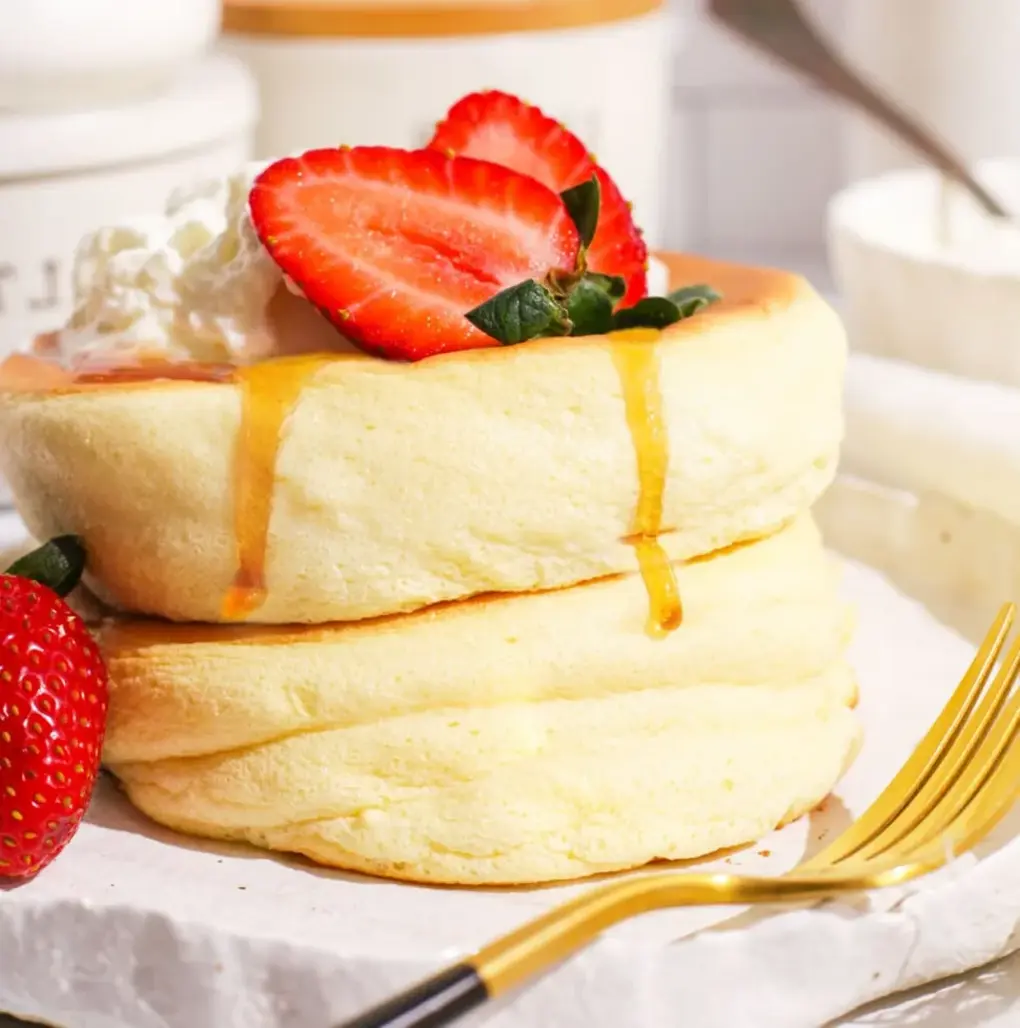
Imagine this: you lift the lid of the pan, and a gentle steam escapes to reveal pancakes that are tall, golden, and jiggling like they’re alive. The first forkful gives way with a soft resistance, then melts into a pillow of vanilla-scented sweetness. The acidity from the lemon zest and a touch of vinegar in the meringue create a bright finish that balances the richness of the whipped cream and fresh berries. Each pancake is a study in contrast — crisp edges, tender crumb, and a center so airy it almost dissolves.
After years of perfecting this recipe — first in my French pastry classes at Le Cordon Bleu Paris, and later at farmers’ markets across New York — I’ve cracked the code for consistent, foolproof results. The secret? A stabilized meringue with a drop of vinegar (no cream of tartar needed) and a super-gentle folding technique that keeps every bubble intact. In this guide, I’ll walk you through how to make soufflé pancakes with restaurant-quality height and texture, plus my best tip to avoid the dreaded deflation. Let’s make your kitchen smell like a Tokyo café.
Why This Fluffy Japanese Soufflé Pancakes Recipe Is the Best
The Flavor Secret: Most recipes rely on vanilla alone, but I add a teaspoon of fresh lemon zest — a trick I picked up in Paris. The citrus cuts through the sweetness and amplifies the eggy richness, making each pancake taste brighter and more complex. It’s a subtle touch, but it elevates these pancakes from simple to sublime.
Perfected Texture: My technique uses a classic French meringue where I beat the egg whites with a splash of white vinegar. This stabilizes the foam without cream of tartar, giving you stiff peaks that hold their shape even after folding. The result is a pancake that rises tall in the pan and stays pillowy long after you plate it.
Foolproof & Fast: I’ve streamlined the steps to work for home cooks. No special equipment beyond a hand mixer and a nonstick skillet. I also share the exact heat level and lid-on timing so you get that perfectly set center without burning the bottom. Even first‑timers can nail these.
Fluffy Japanese Soufflé Pancakes Ingredients
Every ingredient plays a role in creating that cloud-like texture. I source my eggs from the Union Square Greenmarket — fresh, pasture‑raised eggs give the best volume. The lemon zest comes from a tree a neighbor grows on her fire escape; it’s a little New York magic. Here’s everything you need.
Ingredients List
- 2 large eggs
- 2 tablespoons milk
- ½ teaspoon vanilla extract
- 1 teaspoon lemon zest (optional – but recommended)
- ¼ cup all-purpose flour (fluffed, spooned, and leveled)
- ¼ teaspoon baking powder
- ½ teaspoon white vinegar (or lemon juice)
- 2 tablespoons granulated sugar
- Oil (any neutral oil – for cooking)
- Sweetened whipped cream
- Assorted berries
- Powdered sugar
- Maple syrup
- For the whipped cream: ½ cup heavy cream (cold), 1 tablespoon granulated sugar (more to taste), ½ teaspoon vanilla
Ingredient Spotlight
Eggs: The foundation of the structure. Egg whites form the meringue that lifts the pancakes; yolks provide richness. Use fresh, room‑temperature eggs for maximum volume. Organic or pasture‑raised make a noticeable difference in color and taste.
All‑purpose flour: Fluff, spoon, and level — never scoop directly from the bag. Too much flour will weigh down the batter. A light hand ensures a tender crumb. You can substitute cake flour for an even softer result, but AP works perfectly.
White vinegar: This is my secret weapon. A tiny splash lowers the pH of the egg whites, stabilizing the meringue without any metallic aftertaste. Cream of tartar works too, but vinegar is something every kitchen has.
Lemon zest: Optional but transformative. It adds a floral, citrusy note that cuts through the richness and makes the pancakes taste alive. I prefer organic lemons for the zest.
| Original Ingredient | Best Substitution | Flavor / Texture Impact |
|---|---|---|
| All‑purpose flour | Cake flour | Slightly softer, more delicate crumb |
| White vinegar | Lemon juice or cream of tartar (¼ tsp) | Lemon juice adds slight flavor; cream of tartar is neutral |
| Granulated sugar | Caster sugar (superfine) | Dissolves faster, smoother meringue |
How to Make Fluffy Japanese Soufflé Pancakes — Step-by-Step
Follow these steps carefully, and you’ll have jiggly, tall pancakes that rival any café. I’ve broken each down with visual cues and my best tips.
Step 1: Separate Eggs
Crack the eggs carefully — any yolk in the whites will prevent them from whipping. Separate yolks into a medium bowl, whites into a large, clean bowl. Keep whites chilled while you work with the yolks.
⚠️ Common Mistake to Avoid: Even a tiny speck of yolk can ruin meringue. If you get any, use an eggshell to scoop it out.
Step 2: Make Yolk Batter
Add milk, vanilla, and lemon zest to the yolks. Whisk until combined. Sift in the flour and baking powder — sifting is crucial to avoid lumps. Whisk until smooth and no dry spots remain. Set aside.
💡 emy’s Pro Tip: Use a fine-mesh strainer for sifting. This aerates the flour and ensures a silky batter.
Step 3: Whip Meringue
Add vinegar to the egg whites. Beat with a hand mixer on medium speed until frothy. Gradually add sugar, a spoonful at a time, then increase speed to medium-high. Whip until stiff peaks form — the bowl can be held upside down without the meringue sliding.
⚠️ Common Mistake to Avoid: Over‑whipping makes meringue dry and grainy. Stop the moment peaks stand upright with a slight bend at the tip.
Step 4: Fold Meringue
Add ⅓ of the meringue to the yolk batter. Using a rubber spatula, fold gently — cut through the center, then sweep around the bowl. Once combined, add the remaining meringue and fold until no streaks remain. DO NOT overmix; batter should be light and airy.
💡 emy’s Pro Tip: Fold with a light, slow hand. Imagine you’re cradling a cloud – that’s how delicate this batter is.
Step 5: Prepare Pan
Heat a large nonstick skillet over low heat. Lightly grease with neutral oil, then wipe away excess with a paper towel. An electric stovetop gives the most even low heat — gas can be tricky.
Step 6: Portion Batter
You can use a large spoon, a big cookie scoop, or a piping bag with a ½‑inch round tip. Portion 2–3 mounds per batch, making each mound as tall as possible. This height is what gives you those dramatic, tall pancakes.
💡 emy’s Pro Tip: If using a piping bag, hold it perpendicular and squeeze from the bottom to build height.
Step 7: Cook First Side
Cover the pan with a lid. Cook for 7–8 minutes. The bottoms should be golden brown and the tops should appear set around the edges but still wobbly in the center.
Step 8: Flip and Finish
Gently flip each pancake using a thin spatula. Recover the lid and cook for another 5–6 minutes until golden on both sides and cooked through. The pancakes should spring back when lightly pressed.
⚠️ Common Mistake to Avoid: Flipping too soon or with too much force will deflate them. Be patient and use a gentle, swift motion.
Step 9: Serve Immediately
Transfer pancakes to plates. Top with sweetened whipped cream, berries, a dusting of powdered sugar, and a drizzle of maple syrup. Eat right away — soufflé pancakes are best fresh and warm.
Step 10: Make Whipped Cream (optional, but not when making batter)
In a cold bowl, combine heavy cream, 1 tablespoon sugar, and ½ teaspoon vanilla. Whisk by hand or with a mixer until firm peaks form. Keep refrigerated until serving.
| Step | Action | Duration | Key Visual Cue |
|---|---|---|---|
| 1 | Separate eggs | 2 min | Clean whites, no yolk specks |
| 2 | Mix yolk batter | 3 min | Smooth, no lumps |
| 3 | Whip meringue | 5–7 min | Stiff peaks, glossy |
| 4 | Fold meringue | 2 min | No white streaks, airy batter |
| 5–6 | Portion & cook first side | 7–8 min | Golden bottom, set edges |
| 7–8 | Flip & cook second side | 5–6 min | Springy when pressed |
Serving & Presentation
These pancakes are a showstopper. I like to stack two or three on a plate, then add a generous dollop of sweetened whipped cream. Scatter fresh berries — raspberries and blueberries are my favorite — and dust with powdered sugar. A drizzle of warm maple syrup finishes it off. The contrast of the pillowy pancake with the tart berries and creamy topping is pure magic.
For a Moroccan‑French twist, sometimes I add a spoonful of orange blossom honey to the whipped cream and top with toasted almonds. It’s a nod to the morning pastries my mother made. In summer, I use peaches from the Union Square farmers’ market; in winter, blood oranges and pomegranate seeds.
These pancakes also make a stunning dessert. Serve them with a dollop of mascarpone and a drizzle of passion fruit sauce — that’s the Parisian pastry chef in me.
| Pairing Type | Suggestions | Why It Works |
|---|---|---|
| Side Dish | Mixed berry salad, fresh mint | Adds freshness and acidity to balance sweetness |
| Sauce / Dip | Maple syrup, chocolate sauce, citrus curd | Enhances flavor profile – choose sweet or tangy |
| Beverage | Matcha latte, black coffee, fresh orange juice | The bitterness of coffee or matcha contrasts the sweetness |
| Garnish | Powdered sugar, edible flowers, toasted coconut | Adds visual appeal and a touch of elegance |
Make-Ahead, Storage & Reheating
Soufflé pancakes are best eaten fresh, but I’ve developed a system for busy mornings. I often make the batter ahead (without the meringue) and store the yolk mixture in the fridge, then whip the whites fresh. For fully cooked pancakes, here’s how to keep them.
| Method | Container | Duration | Reheating Tip |
|---|---|---|---|
| Refrigerator | Airtight container with parchment between layers | Up to 2 days | Steam 1 minute in a covered pan over low heat |
| Freezer | Freezer‑safe bag or container, wax paper between | Up to 1 month | Thaw in fridge, then reheat in a toaster oven at 300°F for 3–4 minutes |
| Make-Ahead | Yolk mix in fridge; whites at room temp | Yolk mix up to 1 day | Whip whites fresh just before cooking |
For reheating, avoid the microwave — it turns them rubbery. Instead, place pancakes in a skillet over low heat with a lid and a splash of water (or butter) for 1–2 minutes. They’ll steam back to life. For frozen pancakes, a brief toast in the oven at 300°F works wonders. I always make a double batch so I can freeze half for those busy weekday mornings when I crave a taste of Tokyo.
Variations & Easy Swaps
| Variation | Key Change | Best For | Difficulty Impact |
|---|---|---|---|
| Matcha Soufflé Pancakes | Add 1 tsp matcha powder to flour | Earthy green tea lovers | Easy (no extra steps) |
| Gluten-Free | Use ¼ cup gluten‑free 1:1 flour blend | Celiac or gluten sensitivity | Medium (texture slightly denser) |
| Chocolate Soufflé Pancakes | Replace 1 tbsp flour with cocoa powder | Decadent dessert variation | Easy (watch for sweetness) |
Matcha Soufflé Pancakes
Sift 1 teaspoon of culinary‑grade matcha powder with the flour and baking powder. The earthy, slightly bitter matcha balances the sweetness beautifully. I love serving these with red bean paste and a dollop of whipped cream — a classic Japanese pairing that reminds me of afternoon tea in Kyoto.
Gluten-Free Soufflé Pancakes
The best substitute is a good quality 1:1 gluten‑free flour blend (like Bob’s Red Mill). The texture comes out slightly more tender but still wonderfully fluffy. Avoid coconut flour — it absorbs too much moisture and makes dense pancakes. My NYC gluten‑free friends swear by this version.
Chocolate Soufflé Pancakes
Replace 1 tablespoon of the flour with unsweetened cocoa powder. Use a little less sugar in the meringue (1½ tablespoons) to keep it balanced. Serve with a drizzle of warm chocolate sauce and fresh raspberries — pure indulgence. My daughter requests these every birthday.
FAQ
What is the secret to making Japanese soufflé pancakes extra fluffy?
The secret lies in three things: a stable meringue, gentle folding, and low, even heat. Use a small amount of white vinegar or lemon juice in the egg whites — it stabilizes the foam without altering flavor. Beat to stiff peaks but not dry. When folding, use a light hand and stop as soon as no white streaks remain. Finally, cook on the lowest heat possible with a lid to trap steam. Electric stovetops give the most consistent low heat. My French training taught me that respecting the meringue is key — no slamming bowls or aggressive stirring.
Can I make Japanese soufflé pancakes without cream of tartar?
Absolutely. I actually prefer using white vinegar or lemon juice because they’re staples in every kitchen. Use ½ teaspoon of either for this recipe. The acid helps the egg whites hold their structure, giving you those lofty peaks. If you have cream of tartar, use ¼ teaspoon — but don’t buy it just for this. Vinegar adds no detectable flavor once the pancakes are cooked; lemon juice adds a faint citrus note that complements the zest beautifully.
How long do you cook Japanese soufflé pancakes on each side?
The first side takes 7–8 minutes covered over low heat. You’ll know it’s ready when the bottom is golden brown and the edges look set but the center still jiggles slightly. After flipping, cook the second side for 5–6 minutes uncovered or covered? Covered again — yes, keep the lid on. The steam circulates and cooks the interior without burning the outside. Total cook time per batch is about 13–14 minutes. Resist the urge to peek too often; it lets out steam and slows cooking.
What kind of pan is best for making Japanese soufflé pancakes?
A large, heavy‑bottomed nonstick skillet with a tight‑fitting lid is ideal. I use a 10‑inch nonstick pan with a glass lid. Nonstick is essential — the delicate batter will stick to stainless steel or cast iron. The lid must fit well to trap steam. If your lid is loose, you can cover the pan with a large piece of foil. An electric stovetop provides the most even low heat; gas can be tricky because of hot spots. If using gas, keep the flame as low as possible and use a heat diffuser if you have one.
Why did my soufflé pancakes deflate after flipping?
Deflation usually happens for two reasons: the meringue wasn’t stiff enough when folded, or the pan temperature was too high. If the meringue is under‑whipped, the air bubbles collapse during cooking. Always test for stiff peaks — the tip holds its shape without drooping. Another culprit is heat: if the pan is too hot, the outside sets before the inside is cooked, and the sudden change in temperature when flipping causes collapse. Keep heat at the lowest setting and use a lid to ensure even cooking.
Can I make the batter ahead of time?
You can prepare the yolk batter (step 2) up to 24 hours in advance and keep it covered in the refrigerator. The meringue, however, must be whipped fresh — it won’t hold its structure for more than a few minutes. On busy mornings, I measure the dry ingredients and separate the eggs the night before. Then it takes just 10 minutes to whip the whites, fold, and cook. The results are still remarkably fluffy.
Can I use a hand whisk instead of an electric mixer for the meringue?
It’s possible but not recommended unless you have strong arm muscles and a lot of patience. Whipping egg whites to stiff peaks by hand takes 10–15 minutes of continuous whisking. The risk of under‑whipping is high, which will ruin the texture. A hand mixer or stand mixer is far more reliable and consistent. If you really want to do it by hand, use a large balloon whisk and a copper or metal bowl — the slight reaction with copper helps stabilize the foam.
How do I keep the pancakes tall after cooking?
Serve them immediately — soufflé pancakes are at their tallest and fluffiest right off the pan. If you need to hold them, place them on a wire rack in a 200°F oven for up to 10 minutes, but don’t stack them or they’ll compress. The steam inside gradually escapes, so they will shrink a little. To maximize height, make the batter as tall as possible when you portion it, and resist opening the lid during cooking. I also recommend using a piping bag for precise, tall dollops.
Can I use milk alternatives like almond milk?
Yes, but with caution. Almond milk and oat milk work, but they have lower protein content than dairy milk, which can result in a slightly less tender crumb. I recommend unsweetened oat milk for the closest consistency. Avoid coconut milk from a can — it’s too thick and fatty. If using a plant‑based milk, add just 1½ tablespoons instead of 2, as they tend to be thinner. The pancakes will still be fluffy, but the flavor and texture will differ slightly.
What toppings go best with these pancakes?
The classic Japanese pairing is sweetened whipped cream, fresh berries (strawberries, blueberries, raspberries), a dusting of powdered sugar, and a drizzle of maple syrup. For a more decadent treat, add a scoop of vanilla ice cream or a dollop of mascarpone. My Moroccan‑French twist: a spoonful of orange blossom honey and toasted slivered almonds. In fall, try sautéed apples with cinnamon. The possibilities are endless — these pancakes are a canvas for your favorite flavors.
Share Your Version!
I can’t wait to see how your fluffy Japanese soufflé pancakes turn out! Did you try the lemon zest? Swirl in some matcha? Drop a comment and star rating below — your feedback helps other home cooks discover this recipe. Snap a photo of your stack and tag me on Instagram or Pinterest at @cookingwithemy. I read every comment and love hearing about your kitchen adventures.
What’s the one question you still have about making soufflé pancakes? Ask me below and I’ll answer personally. From my NYC kitchen to yours — I hope this recipe brings as much warmth to your table as it does to mine. — emy 🧡
Love This Recipe? Save It to Pinterest!
If you enjoyed this Fluffy Japanese Soufflé Pancakes recipe, don’t let it get lost in your browser tabs! 😄 Pin it now so you can find it again anytime — and explore hundreds more tried-and-tested recipes waiting for you on my Pinterest boards.
👉 Follow emy on Pinterest @cookingwithemy
📌 Pin this recipe · 🔁 Re-pin your favorites · 💬 Tag me when you make it — I love seeing your creations!
Did You Try These Fluffy Japanese Soufflé Pancakes?
⭐ Rate the recipe below! Your star rating helps other home cooks find the best recipes. And if you added your own twist, share it in the comments — I’d love to hear about it!
Fluffy Japanese Soufflé Pancakes
Description
These Japanese soufflé pancakes are super fluffy, jiggly, and pillowy soft! They are a delight to have for breakfast, snack, or dessert and will wow any lucky guests you invite for brunch!
Ingredients
- 2 large eggs
- 2 tablespoons milk
- ½ teaspoon vanilla extract
- 1 teaspoon lemon zest ((optional))
- ¼ cup all-purpose flour ((fluffed, spooned, and leveled))
- ¼ teaspoon baking powder
- ½ teaspoon white vinegar ((or lemon juice))
- 2 tablespoons granulated sugar
- Oil (any neutral oil (for cooking))
- Sweetened whipped cream
- Assorted berries
- Powdered sugar
- Maple syrup
- ½ cup heavy cream (cold)
- 1 tablespoon granulated sugar (more or less to your preference)
- ½ teaspoon vanilla
Instructions
- Separate the egg whites and egg yolks into separate mixing bowl. Make sure to not break the yolk!
- Into the egg yolks, add the milk, vanilla, and lemon zest and whisk briefly until combined. Then, sift in the flour and baking powder. Whisk until smooth and no more dry flour is visible. Set aside until needed.
- Into the egg whites, add the vinegar or lemon juice. With a hand mixer, beat on medium speed until completely frothy. Then, gradually add the sugar a little at a time.
- Once all the sugar has been added, increase the speed to medium high and beat the egg white until it reaches stiff peak.
- Add 1/3 of the stiff peak meringue into the egg yolk batter. Use a rubber spatula to gently fold the meringue into the batter until evenly combined and no more streaks are visible.
- Add the remaining meringue to the batter and gently fold until combined and no more streaks are visible. DO NOT over mix or the batter or the meringue will deflate and the batter will become too loose.
- Either prepare a large spoon, a large cookie scoop, or transfer the pancake batter into a pipping bag fitted with a large round tip.
- Heat a large nonstick pan over low heat and lightly grease the pan with oil. Make sure to wipe away excess oil. *Electric stovetop works the best.*
- Portion the batter into the pan to make 2 to 3 pancakes by either scooping the batter with the spoon or cookie scoop or pipping the batter into a mound with the pipping bag.*Try your best to keep the batter tall, whether if you're using a spoon, scoop, or pipping it. This will help your pancakes look tall.*
- Cover the pan with a lid and let the pancakes cook for about 7 to 8 minutes, until the bottom side is golden brown. Gently flip the pancakes and recover the lid. Let the pancakes cook for another 5 to 6 minutes until golden brown and cooked through.
- Serve the pancakes immediately with sweetened whipped cream, assorted fruits, powdered sugar, and/or maple syrup.
- In a mixing bowl, combine the heavy cream, sugar, and vanilla. Whisk by hand or use a hand mixer and mix the cream until firm peak or your desired thickness. Keep refrigerated until needed.*If using hand mixer, make sure to start on low or medium low speed to prevent splashing.*
Nutrition
- Calories: 375.3 kcal
- Sugar: 26.2 g
- Fat: 10.9 g
- Carbohydrates: 50.9 g
- Protein: 16.8 g
Tried This Recipe? Leave a Comment!
Did you make this recipe? I’d love to hear how it turned out! Please leave a comment and a rating below. Your feedback helps other home cooks and supports cheerychop.com!
For more delicious inspiration, follow me on Pinterest!