Table of Contents
Coq au Vin Recipe – Classic French Chicken Stew Made Simple (No Marinating Needed!)
I still remember the first time I made this Coq au Vin recipe in my tiny Parisian kitchen during culinary school. The landlord’s cat practically moved in with me, drawn by the incredible aromas of red wine, thyme, and bacon simmering for hours. Now, living in New York City, this classic French chicken stew has become my go-to for cold nights when I want to impress guests without spending all day in the kitchen. My version skips the overnight marinating but delivers every bit of the deep, complex flavor you expect from a traditional Coq au Vin recipe.
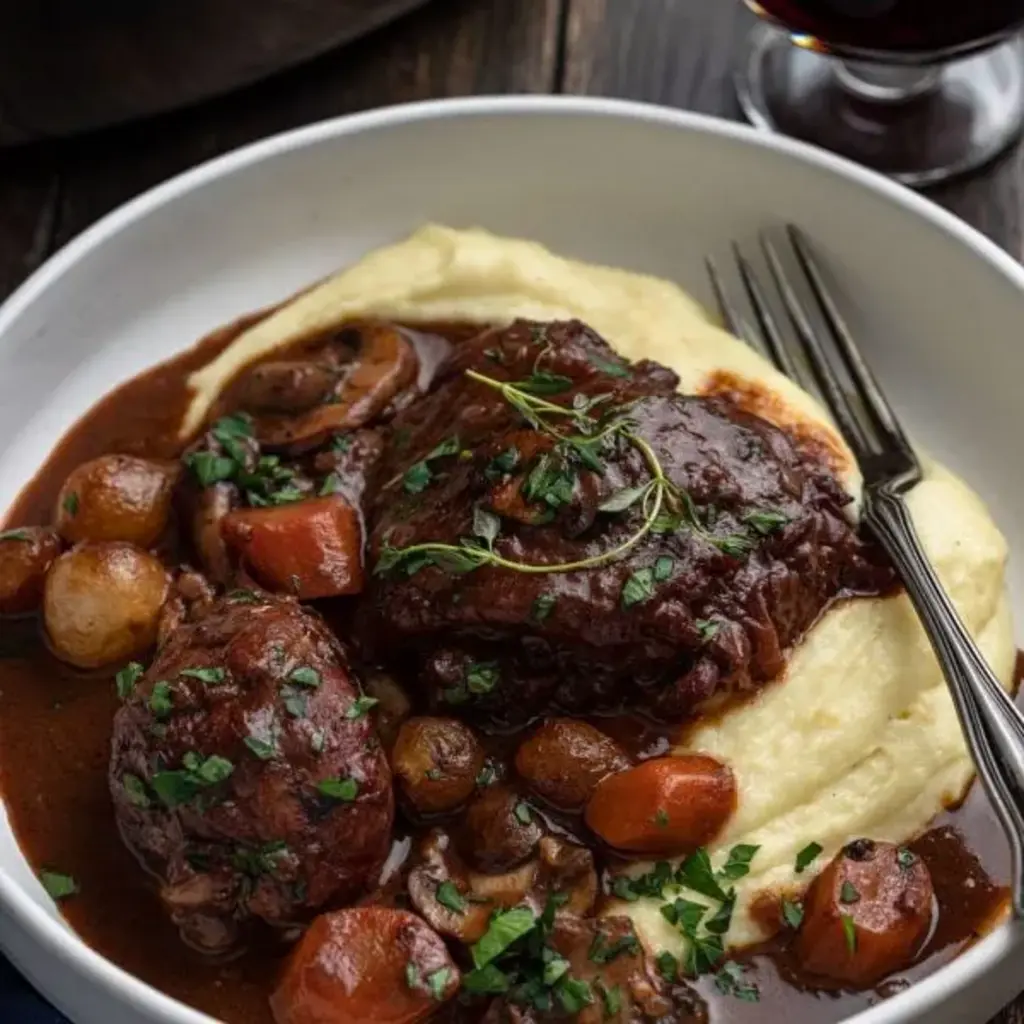
The first bite is pure comfort: tender, fall-off-the-bone chicken bathed in a velvety wine sauce that’s rich with umami from the mushrooms and lardons. Pearl onions add little bursts of sweetness, while fresh thyme and bay leaf lend an earthy, aromatic backbone. The sauce itself is a deep ruby red, glossy and thick enough to coat a spoon — exactly what you want to soak up with crusty bread or mashed potatoes.
As a professionally trained cook who spent years mastering French sauce work in Paris, I’ve developed a foolproof method for Coq au Vin that eliminates the traditional overnight marinade without sacrificing flavor. The secret? Proper browning and a clever use of tomato paste and flour to build depth quickly. Plus, I’ll share my pro tip for making beurre manié — the French butter-flour mixture that instantly thickens your sauce to perfection.
Why This Coq au Vin Recipe Is the Best
The Flavor Secret. Most home cooks think you need to marinate chicken overnight to get that deep, complex wine flavor. But in my years cooking in Paris, I learned that proper browning — getting that deep golden crust on the chicken and lardons — builds more flavor in 10 minutes than a 24-hour marinade ever could. My technique also uses tomato paste and a touch of flour cooked into the base, which amplifies the richness so your final sauce tastes like it’s been simmering all day.
Perfected Texture. A common problem with Coq au Vin is dry breast meat or a watery sauce. I solve this by using only bone-in, skin-on thighs and drumsticks — they stay incredibly moist during the long braise, and the skin adds body to the sauce. The oven braising method (not stovetop) ensures even, gentle heat so every piece of chicken comes out fork-tender without ever boiling or toughening.
Foolproof & Fast. When I teach this Coq au Vin recipe to my NYC cooking class students, they’re always surprised at how straightforward it is. No complicated techniques, no special equipment — just a good Dutch oven and about 2 hours from start to finish. I’ve broken each step down with clear visual cues so even a first-timer can serve a bistro-quality meal that looks and tastes like you spent hours in the kitchen.
Coq au Vin Recipe Ingredients
I buy my chicken from the farmers market at Union Square and my wine from a small shop in the West Village. When I was growing up in Morocco, my mother taught me that the quality of your base ingredients makes or breaks a braise — and that lesson has stayed with me through every kitchen I’ve cooked in, from Paris to New York.
Ingredients List
- 4 bone-in, skin-on chicken thighs
- 4 chicken drumsticks
- Salt and freshly ground black pepper (to taste)
- 2 ½ tablespoons vegetable oil
- 4 ounces lardons or slab bacon (diced)
- 1 large yellow onion (chopped)
- 2 large carrots (peeled and cut diagonally in 1-inch pieces)
- 4 cloves garlic (minced)
- 1 tablespoon tomato paste
- 1 tablespoon all-purpose flour
- 1 bottle (750ml) red wine (preferably a Burgundy or Pinot Noir)
- 1 bay leaf
- 5 sprigs fresh thyme (tied with kitchen twine)
- 3 cups chicken stock (homemade or store-bought)
- 4 tablespoons unsalted butter
- 8 ounces peeled pearl onions
- 8 ounces cremini mushrooms (sliced)
- Beurre manié: 1 tablespoon flour and 1 tablespoon softened butter (optional)
- ¼ cup chopped parsley (plus more for garnish)
Ingredient Spotlight
Red Wine. The soul of this dish. Use a Burgundy or Pinot Noir for the classic floral, earthy notes. In a pinch, a good Merlot or Côtes du Rhône works beautifully. Avoid anything labeled “cooking wine” — the salt and preservatives will ruin the sauce. I always use a bottle I’d happily drink, because the wine’s character directly shapes the stew’s depth.
Chicken. Bone-in, skin-on thighs and drumsticks are non-negotiable here. The bones add collagen that thickens the sauce naturally, and the skin renders fat that carries flavor. If you try to use boneless skinless breasts, you’ll end up with dry meat and a thin sauce. For a party, you can add a couple of bone-in breast halves cut in half, but always keep the skin on.
Lardons or Slab Bacon. This is your umami anchor. Lardons are thick-cut strips of pork belly or fatback, but thick-cut slab bacon diced into 1-inch pieces is a perfect substitute available at any US grocery store. The fat renders out during browning and becomes the foundation for the entire stew. If you can find smoked lardons, even better — they add another layer of complexity.
Pearl Onions. These tiny onions add a sweet, mild flavor and a lovely visual pop. You can buy them pre-peeled in the freezer section of most grocery stores (frozen pearl onions are actually easier to work with than fresh!). If you can’t find them, substitute with cipollini onions or shallow shallots, but avoid regular chopped onions — the texture and sweetness are different.
| Original Ingredient | Best Substitution | Flavor / Texture Impact |
|---|---|---|
| Burgundy / Pinot Noir | Merlot or Côtes du Rhône | Slightly darker fruit notes, still elegant |
| Lardons | Thick-cut slab bacon (diced) | Slightly smokier, equally rich |
| Bone-in chicken thighs | Bone-in chicken legs or whole legs | Same texture, slightly different portion size |
| Pearl onions | Cipollini onions or frozen pearl onions | Frozen are easier; cipollini are slightly sweeter |
How to Make Coq au Vin — Step-by-Step
Follow these steps and you’ll have a restaurant-quality Coq au Vin on your table. I’ve included my best pro tips and common mistakes to watch for at every stage.
Step 1: Brown the Lardons
Preheat your oven to 350°F. Pat the chicken pieces dry with paper towels and season generously on all sides with salt and pepper. Set them aside. In a large Dutch oven or heavy-bottomed pot, heat 1 teaspoon of vegetable oil over medium-high heat. Add the diced lardons or bacon and cook, stirring occasionally, until golden and crispy — about 6 to 8 minutes. Use a slotted spoon to transfer the lardons to a plate, leaving the rendered fat in the pot.
💡 emy’s Pro Tip: Don’t rush the browning! Those golden bits stuck to the bottom of the pot (the fond) are pure flavor. Slow, steady heat gives you the deepest color and the richest sauce.
Step 2: Brown the Chicken
Add a little more oil to the pot if needed. Working in batches to avoid overcrowding, add the chicken pieces skin-side down and cook until deep golden brown on all sides — about 8 to 10 minutes total per batch. Transfer the browned chicken to the plate with the lardons. If the pot has excess fat, spoon off all but about 1 tablespoon, being careful to leave the browned bits intact.
⚠️ Common Mistake to Avoid: Crowding the pan. If you add too many chicken pieces at once, the temperature drops and they steam instead of browning. You’ll lose all that beautiful color and flavor.
Step 3: Sauté the Aromatics
Lower the heat to medium. Add the chopped onion and carrots to the pot and cook, stirring often, until the onion softens — about 3 minutes. Stir in the minced garlic and cook for 1 minute more until fragrant. Add the tomato paste and cook for another minute, stirring constantly, then sprinkle the flour over the vegetables and cook for 1 minute to remove the raw flour taste.
💡 emy’s Pro Tip: Cooking the tomato paste until it darkens slightly (just a shade or two) develops a deeper, more concentrated flavor. This is a trick I learned from a saucier in Paris — it makes a huge difference in the final sauce.
Step 4: Deglaze and Build the Broth
Pour in the full bottle of red wine and add the tied thyme sprigs and bay leaf. Using a wooden spoon, scrape up every browned bit from the bottom of the pot. Bring the wine to a boil and let it reduce by half — about 10 minutes — skimming off any foam that rises to the surface. Add the chicken stock and season with a pinch of salt and pepper. Once the liquid returns to a boil, gently return the chicken pieces and lardons (along with any accumulated juices) to the pot.
⚠️ Common Mistake to Avoid: Skipping the skimming. The foam that rises during the wine reduction is impurities and coagulated protein. If you don’t skim it off, your final sauce will look dull and cloudy instead of glossy and clear.
Step 5: Braise in the Oven
Cover the pot with a tight-fitting lid and transfer it to the preheated oven. Braise for 45 minutes, or until the chicken is very tender and nearly falling off the bone. While the stew cooks, prepare the pearl onions and mushrooms (next step). The gentle, even heat of the oven is far more forgiving than the stovetop — the chicken stays moist and the flavors meld beautifully without any risk of scorching.
💡 emy’s Pro Tip: About 15 minutes before the chicken is done, start the pearl onions and mushrooms. That way, everything finishes at the same time and you can serve immediately while it’s piping hot.
Step 6: Prepare the Pearl Onions and Mushrooms
While the stew is in the oven, heat 1 tablespoon of oil and 2 tablespoons of butter in a large sauté pan over medium-high heat. Add the pearl onions with a pinch of salt and cook until nicely browned all over — about 5 to 8 minutes. Transfer them to a plate. Add another tablespoon of oil and the remaining 2 tablespoons of butter to the pan, then add the sliced cremini mushrooms. Sauté until golden brown and their liquid has evaporated — about 8 to 10 minutes. Season with salt and pepper, then set them aside with the onions.
⚠️ Common Mistake to Avoid: Overcrowding the mushrooms. Give them space in the pan so they brown instead of steam. If they release too much liquid and look watery, let them cook a few more minutes until the liquid evaporates and they start to sizzle again.
Step 7: Finish the Sauce and Serve
Once the stew is done, carefully remove the pot from the oven. Transfer the chicken pieces to a serving platter or plate and tent loosely with foil to keep warm. Discard the bay leaf and thyme sprigs. If you’d like a thicker sauce, prepare the beurre manié by mashing 1 tablespoon of softened butter with 1 tablespoon of flour into a paste. Set the pot over medium-high heat, whisk in the beurre manié, and let the sauce simmer for 2 to 3 minutes until thickened. Taste and adjust seasoning with salt and pepper. Stir in ¼ cup of chopped parsley, then add the reserved pearl onions and mushrooms and warm through. Return the chicken to the pot or arrange it on a serving platter and ladle the sauce over the top. Garnish with the remaining parsley and serve immediately.
💡 emy’s Pro Tip: Beurre manié is a French chef’s secret weapon. Unlike a cornstarch slurry, it adds a silky richness to the sauce without any starchy aftertaste. Use it sparingly — you can always make more if you want a thicker consistency.
| Step | Action | Duration | Key Visual Cue |
|---|---|---|---|
| 1 | Brown lardons | 6–8 min | Golden and crispy |
| 2 | Brown chicken | 8–10 min per batch | Deep golden crust |
| 3 | Sauté aromatics | 5–6 min | Onion softened, tomato paste darkens |
| 4 | Deglaze & reduce wine | 10 min | Wine reduced by half, foam skimmed |
| 5 | Braise in oven | 45 min | Chicken very tender, nearly falling off bone |
| 6 | Cook pearl onions & mushrooms | 13–18 min | Onions browned, mushrooms golden |
| 7 | Finish sauce & serve | 5–7 min | Sauce thickened, glossy, coats a spoon |
Serving & Presentation
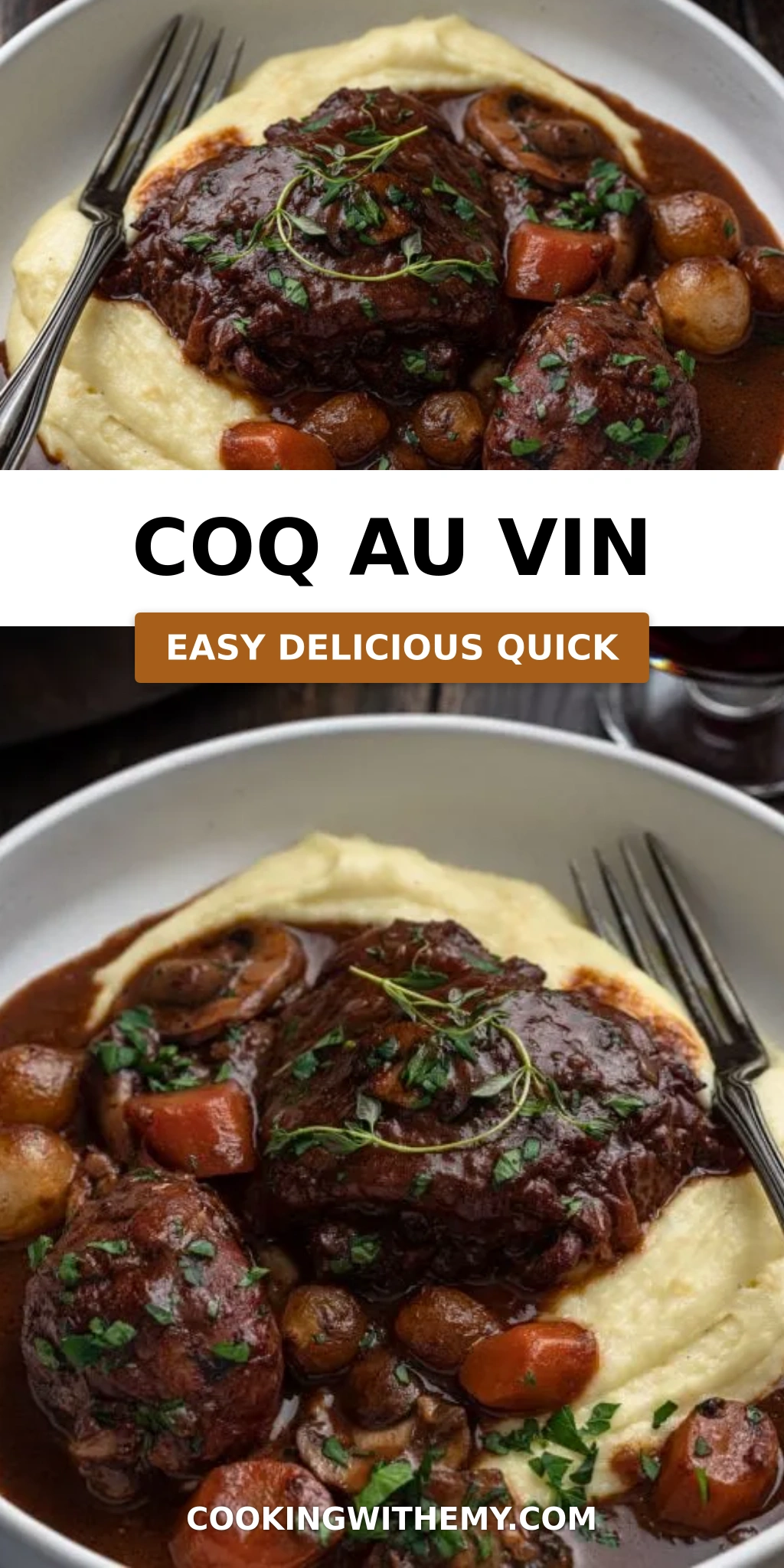
This Coq au Vin is a showstopper served straight from the Dutch oven at the center of your table — rustic and inviting. I like to spoon the chicken, mushrooms, and pearl onions onto a wide, shallow serving bowl and ladle the sauce generously over everything. A final shower of fresh parsley adds a bright green pop that contrasts beautifully with the deep mahogany sauce. My grandmother in Morocco always served braised dishes with crusty bread for dipping, and I do the same here — a good baguette or sourdough is essential for sopping up every last drop.
For a complete French bistro experience at home, pair this stew with buttery mashed potatoes (I use Yukon Gold potatoes with plenty of cream), a simple green salad with a sharp vinaigrette to cut the richness, and a glass of the same wine you used for cooking — it’s a classic pairing for a reason. When I serve this to friends in my NYC apartment, I always light a candle at the table and put on some old French jazz. The meal becomes an experience, not just dinner.
| Pairing Type | Suggestions | Why It Works |
|---|---|---|
| Side Dish | Buttery mashed potatoes, crusty baguette, egg noodles | Soak up the rich wine sauce perfectly |
| Sauce / Dip | Extra sauce from the pot, Dijon mustard on the side | Mustard adds a sharp contrast to the rich stew |
| Beverage | Pinot Noir, Burgundy, or a light Côtes du Rhône | Matches the wine in the stew for a seamless pairing |
| Garnish | Fresh parsley, flaky sea salt, a drizzle of olive oil | Brightens the dish and adds final polish |
Make-Ahead, Storage & Reheating
In my busy NYC life, I often make this Coq au Vin a day ahead on Sunday to enjoy after a long work week. The flavors actually deepen and improve overnight in the fridge — it’s one of those dishes that tastes even better the next day. Here’s how to store and reheat it safely and deliciously.
| Method | Container | Duration | Reheating Tip |
|---|---|---|---|
| Refrigerator | Airtight container, chicken submerged in sauce | Up to 4 days | Reheat gently in a covered pot over low heat, adding a splash of stock or wine if needed |
| Freezer | Freezer-safe container or zip-top bag | Up to 3 months | Thaw overnight in the fridge, then reheat gently as above |
| Make-Ahead | Complete the recipe fully, then cool and refrigerate | 1–2 days in advance | Reheat in a low oven (300°F) for 20–25 minutes for best texture |
When reheating, avoid the microwave — it will toughen the chicken and make the sauce greasy. Instead, transfer the stew to a covered pot and warm it over the lowest possible heat, stirring occasionally, for 15 to 20 minutes. If the sauce has thickened too much in the fridge, stir in a splash of chicken stock or leftover wine to loosen it back to a silky consistency. One of my favorite tricks: reheat in a 300°F oven for 20 minutes — the gentle heat brings everything back to life without any risk of overcooking.
Variations & Easy Swaps
Over the years, I’ve played with this Coq au Vin recipe to suit different diets, seasons, and cravings. Here are my favorite twists — each one tested in my own NYC kitchen.
| Variation | Key Change | Best For | Difficulty Impact |
|---|---|---|---|
| Moroccan-Spiced Coq au Vin | Add cinnamon stick, cumin, and preserved lemon | A warm, aromatic North African twist | Easy — just add spices with the tomato paste |
| Gluten-Free Coq au Vin | Swap flour for cornstarch or arrowroot | Celiac or gluten-sensitive diets | Easy — use cornstarch slurry or omit flour entirely |
| White Wine Coq au Vin | Use a dry white wine (like Chardonnay) instead of red | A lighter, spring-friendly version | Easy — flavor is more delicate, reduce cooking time slightly |
Moroccan-Spiced Coq au Vin
This is my personal tribute to my Moroccan roots. When I add the tomato paste, I also stir in 1 teaspoon of ground cumin, a 3-inch cinnamon stick, and a strip of preserved lemon rind (rinsed well). The warm spices complement the red wine beautifully, and the preserved lemon adds a bright, salty tang that cuts through the richness. Finish with a handful of cilantro instead of parsley for a truly North African feel. My mother always served this with couscous, and it’s still one of my favorite comfort meals.
Gluten-Free Coq au Vin
The only gluten in this recipe is the flour used for thickening. To make it gluten-free, simply omit the flour in the sauté step and skip the beurre manié. Instead, at the end of cooking, mix 2 teaspoons of cornstarch or arrowroot powder with 2 tablespoons of cold water to form a slurry. Stir it into the simmering sauce and cook for 2 minutes until thickened. The texture will be slightly glossier than the original but just as delicious. Make sure your chicken stock is certified gluten-free, as some store-bought brands contain additives.
White Wine Coq au Vin
In late spring when I start craving lighter meals, I make this variation with a dry Chardonnay or Sauvignon Blanc. The flavor is more delicate and the sauce takes on a lovely golden hue. Reduce the oven braising time to about 35 minutes since white wine doesn’t need as long to meld. I love serving this version with steamed asparagus and new potatoes — it feels like a completely different dish but follows the exact same technique. When I find beautiful ramps at the Union Square farmers market, I swap the pearl onions for those instead.
What is the best type of wine to use for Coq au Vin?
The best wine for Coq au Vin is a dry red Burgundy or Pinot Noir from the Burgundy region of France. These wines have bright acidity, earthy undertones, and delicate fruit flavors that complement the chicken and mushrooms without overwhelming them. If you can’t find a Burgundy, a good-quality Pinot Noir from California or Oregon works beautifully. You can also use a Merlot or a Côtes du Rhône for a slightly bolder, fruitier sauce. The most important rule: never use “cooking wine” from the grocery store — it’s loaded with salt and preservatives that will ruin your dish. Always use a wine you’d be happy to drink.
Can I make Coq au Vin without bacon or lardons?
Yes, you can make Coq au Vin without bacon or lardons, though the flavor will be less rich and smoky. The lardons add a deep savory note (umami) that’s hard to replicate perfectly. Your best substitute is thick-cut smoked ham, diced small and rendered until crispy. Alternatively, you can use 2 tablespoons of olive oil or butter with a teaspoon of smoked paprika stirred into the base to mimic that smoky depth. If you’re making a vegetarian version, try using smoked mushrooms (like shiitake or portobello) and a splash of liquid smoke — the result won’t be traditional, but it will be delicious in its own right.
How long should you marinate the chicken in wine for Coq au Vin?
Traditional recipes often call for marinating the chicken in wine overnight, but my tested version skips this step entirely without sacrificing flavor. The key is proper browning and a thorough wine reduction — those two steps build as much depth as a 12-hour marinade. That said, if you want to marinate for extra flavor, 4 to 8 hours in the refrigerator is plenty. Any longer than 24 hours and the wine’s acidity can start to toughen the chicken meat. If you do marinate, pat the chicken very dry before browning, or it will steam instead of sear. Personally, I prefer the simplicity of the no-marinate method — it saves time and delivers consistently excellent results.
What is the traditional way to serve Coq au Vin?
In France, Coq au Vin is traditionally served family-style, straight from the pot or in a deep serving dish with the chicken pieces arranged on top and the sauce spooned generously over them. It’s always accompanied by something to soak up the sauce — crusty French bread, boiled or steamed potatoes, buttered egg noodles, or mashed potatoes. A simple green salad with a sharp vinaigrette is served on the side to balance the richness. The wine used in the stew is almost always poured at the table as well. In my home, I like to garnish the dish with plenty of fresh parsley and a sprinkle of flaky sea salt just before serving.
Can I use chicken breasts instead of thighs and drumsticks?
I don’t recommend using boneless skinless chicken breasts for Coq au Vin — they will almost certainly dry out during the 45-minute oven braise. Bone-in, skin-on thighs and drumsticks are ideal because they stay moist and tender, and the bones add natural collagen that thickens the sauce. If you absolutely must use breast meat, choose bone-in, skin-on breasts and cut the braising time to about 25 to 30 minutes. Check for doneness with a meat thermometer (165°F). The sauce won’t be as rich because you lose the collagen from the bones, so you may want to add a bit more beurre manié to compensate.
What should I serve with Coq au Vin?
Coq au Vin pairs beautifully with a variety of sides. My top recommendations are buttery mashed potatoes (Yukon Golds work best), which soak up the luxurious wine sauce perfectly. Crusty bread like a baguette or sourdough is essential for dipping. For a lighter option, try buttered egg noodles or a simple side of steamed green beans with a squeeze of lemon. A crisp green salad with a Dijon vinaigrette cuts through the richness and adds a fresh element to the meal. And of course, pour a glass of the same wine you used in the stew — it’s the most natural and satisfying pairing possible.
Can I make Coq au Vin in a slow cooker?
Yes, you can adapt this Coq au Vin recipe for a slow cooker, but you’ll need to make a few adjustments for the best results. First, you still need to brown the lardons and chicken in a skillet on the stovetop — this step is non-negotiable because it builds the deep flavor that makes the dish special. After deglazing the skillet with wine and reducing it, transfer everything to the slow cooker with the remaining liquid. Cook on low for 5 to 6 hours or on high for 3 to 4 hours. Add the sautéed pearl onions and mushrooms during the last 30 minutes so they don’t turn to mush. The sauce may be thinner than the oven version, so you’ll likely need a beurre manié or cornstarch slurry at the end.
How do I thicken Coq au Vin sauce?
There are two excellent ways to thicken Coq au Vin sauce, both rooted in French cooking techniques. The first is beurre manié — a paste made by mashing equal parts softened butter and flour together. Whisk it into the simmering sauce a little at a time until you reach your desired consistency. It adds a silky richness without any starchy aftertaste. The second method is a cornstarch slurry (1 tablespoon cornstarch mixed with 2 tablespoons cold water) for a gluten-free option. If your sauce is already thick enough from the natural reduction during braising, you don’t need to thicken it at all. Trust your eyes — a properly reduced sauce should coat the back of a spoon.
Can I freeze Coq au Vin?
Absolutely — Coq au Vin freezes beautifully and actually tastes even better after being frozen as the flavors continue to meld. To freeze, cool the stew completely at room temperature (but no longer than 2 hours for food safety). Transfer to a freezer-safe container or heavy-duty zip-top bag, making sure the chicken is fully submerged in the sauce to prevent freezer burn. It will keep for up to 3 months. To thaw, place the container in the refrigerator overnight. Reheat gently in a covered pot over low heat, adding a splash of chicken stock or wine if the sauce has thickened too much. Avoid microwaving, as it can make the chicken tough.
What mushrooms are best for Coq au Vin?
Cremini mushrooms (also called baby bella mushrooms) are my top choice for Coq au Vin — they have a firm texture and earthy flavor that holds up well during cooking without turning mushy. You can also use white button mushrooms if that’s all you have, though they’re milder in flavor. For a more upscale version, try a mix of cremini, shiitake (stems removed), and a few dried porcini mushrooms rehydrated in warm water. The porcini soaking liquid can be added to the sauce for an extra layer of umami. Avoid pre-sliced mushrooms if possible; they tend to be drier and less flavorful than whole mushrooms you slice yourself.
Share Your Version!
I hope this Coq au Vin recipe becomes a beloved staple in your home the way it has in mine. There’s something truly special about a dish that brings people together around the table — especially on a cold evening when all you want is warmth, good food, and great company. If you try this recipe, I’d love to hear how it turned out. Leave a star rating and a comment below to tell me about your experience. Did you try one of the variations? Did your family fight over the last bit of sauce?
Your feedback helps me create better recipes for you, and it also helps other home cooks discover this classic French chicken stew. Share a photo on Instagram or Pinterest and tag me @cookingwithemy — I love seeing your beautiful creations and featuring them in my stories. And if there’s one question I want you to answer, it’s this: What side dish did you serve to soak up all that incredible sauce? I’m always looking for new ideas!
From my NYC kitchen to yours — I hope this recipe brings as much warmth to your table as it does to mine. — emy 🧡
Love This Recipe? Save It to Pinterest!
If you enjoyed this Coq au Vin recipe, don’t let it get lost in your browser tabs! 😄 Pin it now so you can find it again anytime — and explore hundreds more tried-and-tested recipes waiting for you on my Pinterest boards.
👉 Follow emy on Pinterest @cookingwithemy
📌 Pin this recipe · 🔁 Re-pin your favorites · 💬 Tag me when you make it — I love seeing your creations!
💬 I’d love to hear from you!
Did you make this Coq au Vin recipe? Leave a star rating and share your experience in the comments below. Your feedback helps other home cooks discover how satisfying this classic French chicken stew can be!
⭐ Don’t forget to rate this recipe — it means the world to me!
Coq au Vin
Description
Coq au Vin is a traditional French stew where chicken is slowly braised in red wine and garnished with mushrooms and pearl onions. Nourishing and comforting, it is easy enough to serve to your family on a cold night, but also so rich and decadent that it will definitely impress friends at a dinner party.
Ingredients
- 4 bone-in, skin-on chicken thighs
- 4 chicken drumsticks
- Salt and freshly ground black pepper (to taste)
- 2 ½ tablespoons vegetable oil
- 4 ounces lardons or slab bacon (diced)
- 1 large yellow onion (chopped)
- 2 large carrots (peeled and cut diagonally in 1-inch pieces)
- 4 cloves garlic (minced)
- 1 tablespoons tomato paste
- 1 tablespoon all-purpose flour
- 1 bottle (750ml) red wine (preferably a Burgundy or Pinot Noir)
- 1 bay leaf
- 5 sprigs fresh thyme (tied with kitchen twine)
- 3 cups chicken stock (homemade or store-bought)
- 4 tablespoons unsalted butter
- 8 ounces peeled pearl onions ((see notes))
- 8 ounces cremini mushrooms (sliced)
- Beurre manié: 1 tablespoon flour and 1 tablespoon softened butter (optional)
- cup chopped parsley
Instructions
- Preheat oven to 350ºF.
- Pat dry the chicken pieces with a paper towel and season generously with salt and pepper. Reserve.
- In a large Dutch oven or heavy-bottomed pot, heat 1 teaspoon vegetable oil, over medium-high heat. Add the lardons or bacon and cook until golden, about 6-8 minutes. Remove the lardons with a slotted spoon and reserve, leaving the drippings in the pot.
- Add more oil if needed, then add the chicken, without overcrowding the pot. Depending on the size of your pot, you might need to work in batches. Brown the chicken on all sides until golden brown, about 8-10 minutes. Remove the chicken to the plate with the lardons and reserve.
- If the chicken has rendered a lot of fat, drain or wipe off the excess (being careful not to disturb the browned bits from the bottom of the pot), leaving about 1 tablespoon in the pot.
- Lower heat to medium, then add the chopped onion and carrots. Cook until the onions have softened, about 3 minutes. Then, stir in the garlic and cook for a minute to release its aroma.
- Stir in the tomato paste and cook for about a minute, then add the flour and cook for another minute, to get rid of the raw flour taste.
- Pour in the red wine and add the thyme sprigs and bay leaf, scraping the browned bits from the bottom of the pot with a wooden spoon. Cook until the wine has reduced by half, about 10 minutes, skimming off the foam that rises to the surface.
- Add the chicken stock and season with salt and pepper. Once boiling, add back the chicken pieces, lardons and any juices that have collected on the plate.
- Cover and transfer to the oven. Cook for 45 minutes or until the chicken is very tender.
- Once there's about 15 minutes left for the chicken to be ready, prepare the pearl onions and mushrooms. Heat 1 tablespoon oil and 2 tablespoons butter in a sauté pan or skillet, over medium-high heat. Add the pearl onions and a pinch of salt, and cook until nicely browned, about 5-8 minutes. Remove to a plate and reserve.
- Add another tablespoon of oil and 2 tablespoons butter, then sauté the mushrooms until browned, about 8-10 minutes. Season with salt and pepper. Remove and reserve with the pearl onions.
- Once the stew has finished cooking, carefully remove the chicken pieces to a plate or serving vessel, tenting with foil to keep them warm. Also, remove and discard the bay leaf and thyme sprigs.
- Optional: Make beurre manié by mixing one tablespoon of softened butter with one tablespoon of flour.
- Return the pot to the stove, over medium-high heat, and – if using – add the beurre manié to thicken the sauce. If the sauce is not thick enough to your liking, make more beurre manié. If too thick, you can thin it out with more chicken stock or wine.
- Taste the sauce and adjust seasoning. Then, add 1/4 cup parsley, reserving the rest to garnish the dish.
- Stir in the reserved pearl onions and mushrooms.
- If serving in the pot, return chicken to the pot, garnish with the remaining parsley, and serve. If serving on a serving vessel, pour the sauce over the chicken, then garnish with parsley and serve.
Nutrition
- Calories: 994 kcal
- Sugar: 11 g
- Fat: 59 g
- Carbohydrates: 32 g
- Protein: 49 g
Tried This Recipe? Leave a Comment!
Did you make this recipe? I’d love to hear how it turned out! Please leave a comment and a rating below. Your feedback helps other home cooks and supports cheerychop.com!
For more delicious inspiration, follow me on Pinterest!