Table of Contents
Salmon Cakes with Chive and Garlic Sauce – Soft, Crispy & Budget-Friendly
I still remember the first time I made these salmon cakes with chive and garlic sauce in my tiny Parisian kitchen during culinary school. I was homesick for Morocco, missing my mother’s fragrant tagines and the way she’d stretch every ingredient to feed our family. That night, with a can of salmon and some leftover mashed potatoes, I created something that tasted like home — but with a French twist. These salmon cakes are soft and fluffy on the inside, crispy and golden on the outside, and they come together in under 30 minutes using pantry staples. The bright, tangy chive and garlic sauce is the perfect finishing touch, cutting through the richness and adding a fresh, herbaceous pop. This recipe has been a weeknight hero in my NYC kitchen ever since.
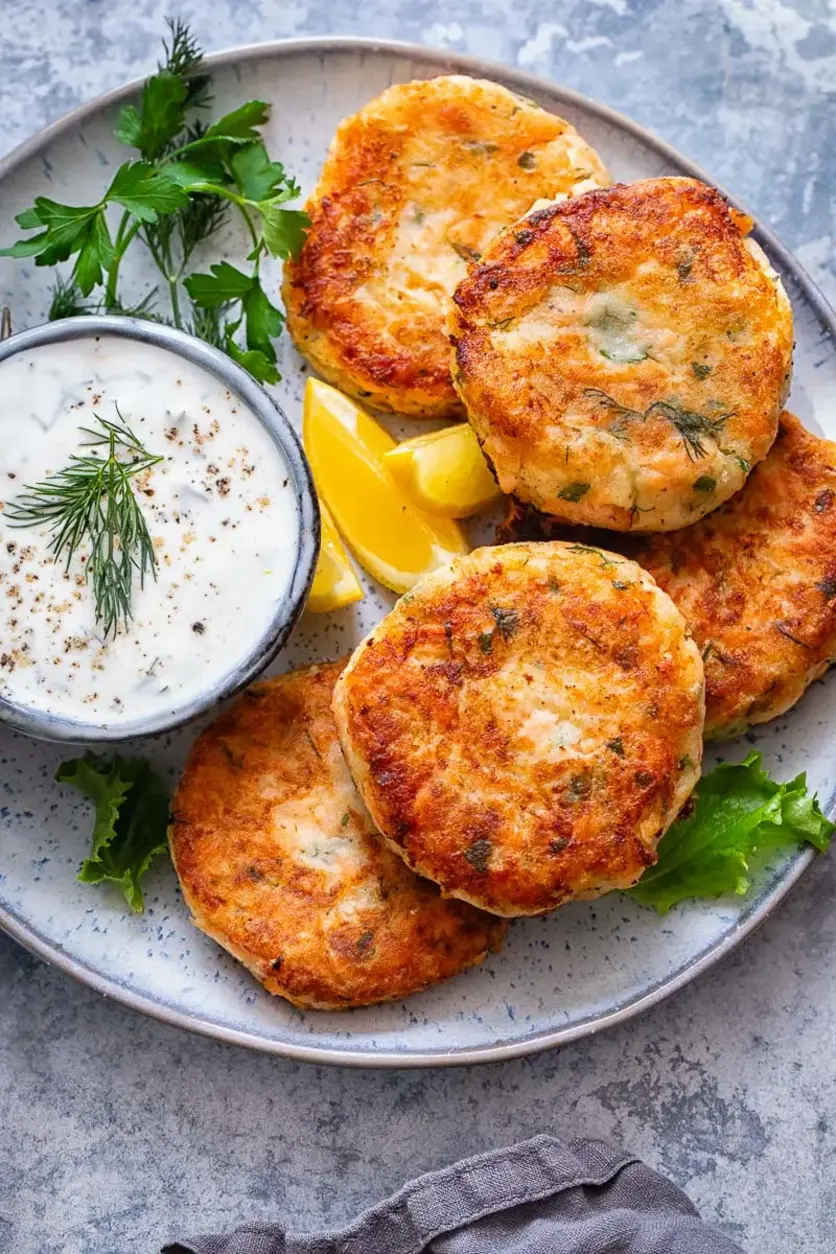
Let me paint you a picture: the first bite gives you that satisfying crunch — a thin, golden crust that shatters just slightly to reveal a tender, almost creamy interior. The mashed potatoes keep the cakes incredibly light and moist, while the salmon flakes throughout in savory bites. Lemon zest and parsley brighten every mouthful, and then you dip it into that cool, garlicky yogurt sauce flecked with fresh chives. It’s the kind of meal that feels both comforting and elegant, like something you’d serve at a casual dinner party or eat straight from the skillet on a busy Tuesday. The aroma alone — warm, savory, zesty — will draw everyone into the kitchen.
What makes my version different? I trained in classic French sauce work at Le Cordon Bleu, and I’ve brought that precision to this simple home recipe. The key is using properly seasoned mashed potatoes as the base — not too wet, not too dry — and getting the pan hot enough to create that perfect crust without overcooking the salmon. I’ll show you exactly how to nail the texture, plus a common mistake that makes salmon cakes fall apart (and how to avoid it). Whether you pan-fry or use an air fryer, these cakes are foolproof, budget-friendly, and endlessly adaptable. Let’s get cooking!
Why This Salmon Cakes Recipe Is the Best
The Flavor Secret — Most salmon cake recipes rely on breadcrumbs or flour as a binder, which can dilute the flavor. I use mashed potatoes instead, a trick I learned from my mother’s Moroccan kitchen where leftover vegetables were never wasted. The potatoes add a subtle sweetness and a velvety texture that lets the salmon shine. Pair that with fresh lemon zest, parsley, and my chive and garlic sauce — inspired by a classic French sauce gribiche but lightened with Greek yogurt — and every bite is balanced, bright, and deeply satisfying.
Perfected Texture — The biggest challenge with salmon cakes is keeping them tender inside while getting a crispy exterior. My Paris training taught me the importance of moisture control: too much and the cakes fall apart, too little and they’re dry. By using cold mashed potatoes and a single egg, I’ve found the ideal ratio. Plus, a light dusting of flour before frying creates a delicate, lacy crust that stays crunchy for hours. No soggy bottoms here!
Foolproof & Fast — This recipe works for everyone, from beginners to seasoned cooks. You can use canned salmon (I often grab wild-caught from Trader Joe’s) or leftover cooked salmon. The air fryer option makes it even easier — no standing over a hot skillet. And the sauce comes together in two minutes flat. It’s the kind of recipe that saves dinner on a hectic weeknight but impresses guests on the weekend.
Salmon Cakes with Chive and Garlic Sauce Ingredients
I source most of my ingredients from the Union Square Greenmarket in NYC — the potatoes are always earthy and starchy, the herbs are impossibly fresh, and the yogurt comes from a local dairy farm. But everything here is available at any US grocery store. Here’s what you’ll need:
Ingredients List
- 4-5 potatoes (I used 3 cups of mashed potatoes)
- 450g / 2 cups canned or fresh cooked salmon
- 1 large egg
- 1 lemon, juice and zest of
- 1 tbsp all-purpose flour, plus extra for dusting
- 2 tbsp fresh parsley or dill, chopped
- Salt and pepper to taste
- 2 tbsp olive oil (for frying)
- 125ml / ½ cup Greek yogurt (full-fat or 2%)
- 1 tbsp fresh chives, chopped
- 1 clove garlic, pressed or minced
- 1 tsp lemon juice
- Salt and pepper to taste (for sauce)
Ingredient Spotlight
Potatoes (mashed) — The foundation of these cakes. Use starchy potatoes like Russet or Yukon Gold for the fluffiest texture. Leftover mashed potatoes work perfectly — just make sure they’re not too buttery or creamy, or the cakes may be loose. If making fresh, mash them with a fork and let them cool completely before mixing.
Salmon — Canned salmon (wild-caught, skinless and boneless if possible) is my go-to for convenience and affordability. Drain it well and flake it with a fork. If using fresh, poach or bake it until just cooked, then cool and flake. Smoked salmon can also work, but reduce the salt and expect a stronger flavor.
Greek yogurt — Thick, tangy, and high in protein. It creates a luscious sauce without being heavy. I prefer full-fat for richness, but 2% works too. Regular yogurt will make the sauce thinner, so drain it briefly in a paper towel if using.
Chives and garlic — Fresh chives add a mild oniony brightness that’s irreplaceable. Garlic should be fresh-pressed for maximum punch. Let the sauce rest for 15 minutes so the flavors meld — this step is non-negotiable in my kitchen.
| Original Ingredient | Best Substitution | Flavor / Texture Impact |
|---|---|---|
| Russet potatoes | Yukon Gold or sweet potatoes | Slightly creamier or sweeter; sweet potatoes add color and beta-carotene |
| Canned salmon | Fresh cooked salmon or canned tuna | Tuna is milder and less oily; fresh salmon gives a more delicate texture |
| Greek yogurt | Sour cream or labneh | Labneh is thicker and tangier; sour cream is less tangy but still creamy |
| Fresh chives | Green onions (scallions), finely chopped | Slightly stronger onion flavor; use only the green parts for milder taste |
| Fresh parsley | Fresh dill or cilantro | Dill is herbal and slightly anise-like; cilantro adds a bright, citrusy note |
How to Make Salmon Cakes — Step-by-Step
Follow these steps and you’ll have perfectly golden, tender salmon cakes every time. I’ve included both pan-frying and air fryer methods so you can choose your adventure.
Step 1: Prepare the Mixture
In a large mixing bowl, combine 3 cups of cold mashed potatoes and 2 cups of flaked salmon. Make sure no skin or bones make it into the bowl — take a moment to pick through if needed. Crack in 1 egg, add the zest of 1 lemon, the juice of that same lemon, 2 tablespoons of chopped parsley, and 1 tablespoon of flour. Season with a generous pinch of salt and pepper. Mix everything gently with a fork until just combined — overmixing will make the cakes dense.
💡 emy’s Pro Tip: Use cold mashed potatoes straight from the fridge. They hold together much better than warm ones, which can make the mixture sticky and hard to shape.
Step 2: Shape and Dust
Using an ice cream scoop (the best tool for even-sized cakes), scoop the mixture onto a lightly floured board or plate. Roll each scoop gently in the flour to coat all sides, then flatten slightly into a patty about ½-inch thick. The flour coating is what gives you that gorgeous golden crust, so don’t skip it.
⚠️ Common Mistake to Avoid: Don’t press the patties too thin — they’ll cook too quickly and dry out. Aim for ½ inch thick so the inside stays tender and fluffy while the outside gets crispy.
Step 3: Pan-Fry to Golden
Heat 2 tablespoons of olive oil in a large non-stick or cast-iron skillet over medium-high heat until shimmering. Carefully place the salmon cakes in the pan in a single layer — don’t overcrowd. Fry for 3-4 minutes per side until deep golden brown and crunchy on the outside. Transfer to a paper towel-lined plate and repeat with the remaining cakes.
💡 emy’s Pro Tip: Let the cakes sizzle undisturbed for the first 3 minutes. If you try to flip too early, the crust will stick and tear. Wait until the edges look golden and set.
Step 4: Air Fryer Option
Preheat your air fryer to 240°C / 500°F. Lightly spray the salmon cakes with cooking oil spray and arrange them in a single layer in the basket (you’ll need 2-3 batches depending on size). Cook for 8-9 minutes, flipping halfway through, until golden and crispy on the outside. No need to add extra oil — the spray is enough.
⚠️ Common Mistake to Avoid: Don’t stack the cakes in the air fryer basket. They need hot air circulating around each one to crisp evenly. Work in batches — it’s worth the extra few minutes.
Step 5: Make the Sauce
While the cakes cook, whisk together ½ cup Greek yogurt, 1 teaspoon lemon juice, 1 tablespoon chopped chives, and 1 pressed garlic clove in a small bowl. Season with salt and pepper to taste. Let the sauce sit at room temperature for at least 15 minutes before serving — this resting time allows the garlic and chives to infuse the yogurt, creating a sauce that’s creamy, tangy, and packed with fresh flavor.
💡 emy’s Pro Tip: Make the sauce first — it only takes 2 minutes. Letting it rest while you cook the cakes transforms it from good to exceptional. The garlic mellows slightly and the chives release their subtle onion essence.
| Step | Action | Duration | Key Visual Cue |
|---|---|---|---|
| 1 | Mix potatoes, salmon, egg, lemon, parsley, flour | 5 mins | Mixture holds together when pressed |
| 2 | Scoop, roll in flour, flatten into patties | 5 mins | Even ½-inch thick patties with light flour coating |
| 3 | Pan-fry in hot olive oil | 3-4 mins per side | Deep golden brown and crispy edges |
| 4 | Air fry at 500°F | 8-9 mins | Golden and crisp, no greasy spots |
| 5 | Mix yogurt sauce and rest | 2 mins + 15 mins rest | Sauce thickens slightly, garlic aroma mellows |
Serving & Presentation
I love serving these salmon cakes on a bed of arugula dressed with lemon juice and olive oil — the peppery greens contrast beautifully with the rich cakes. Arrange 3-4 cakes per plate, dollop the chive and garlic sauce generously on top or serve it on the side for dipping. A sprinkle of extra fresh chives and a lemon wedge on the plate adds a restaurant-quality finish. For a Moroccan touch, I sometimes add a pinch of smoked paprika or cumin to the sauce — it’s not traditional to the recipe, but it reminds me of home.
These cakes pair wonderfully with a simple cucumber salad, roasted asparagus, or even a warm pita bread. If you’re feeding a crowd, serve them as appetizers — make them slightly smaller and top each with a tiny spoonful of sauce. They’re also fantastic for brunch alongside a poached egg and hollandaise (a little French flair from my Paris days).
| Pairing Type | Suggestions | Why It Works |
|---|---|---|
| Side Dish | Arugula salad, cucumber yogurt salad, roasted green beans | Fresh, crunchy sides balance the richness of the cakes |
| Sauce / Dip | Chive and garlic sauce, tartar sauce, harissa yogurt | Tangy and creamy sauces complement the savory salmon |
| Beverage | Crisp white wine (Sauvignon Blanc), light lager, mint iced tea | Bright, acidic drinks cut through the richness |
| Garnish | Fresh chives, lemon wedges, microgreens, sumac sprinkle | Adds color, freshness, and a pop of acidity |
Make-Ahead, Storage & Reheating
As a busy NYC cook, I’m all about smart meal prep. These salmon cakes are perfect for making ahead — they store and reheat beautifully, which is a lifesaver on hectic weeknights. Here’s my tested system for keeping them fresh and crispy.
| Method | Container | Duration | Reheating Tip |
|---|---|---|---|
| Refrigerator | Airtight container, layers separated by parchment | Up to 4 days | Reheat in a 375°F oven or air fryer for 5-6 mins to restore crispiness |
| Freezer | Freezer-safe bag or container, parchment between layers | Up to 2 months | Thaw in fridge overnight, then reheat in a 375°F oven or air fryer for 8-10 mins |
| Make-Ahead (uncooked) | Covered plate or tray in fridge | Up to 24 hours in advance | Cook directly from fridge — no need to bring to room temp; add 1 minute per side |
My favorite reheating method is the air fryer at 375°F for 5-6 minutes — the cakes come out nearly as crispy as the day they were made. Avoid the microwave if you can; it softens the crust and makes the cakes soggy. If you’re meal-prepping, I recommend storing the uncooked patties in the fridge and cooking them fresh each night — it only takes 10 minutes and the texture is unbeatable. The sauce keeps well in the fridge for up to 5 days in a sealed jar.
Variations & Easy Swaps
| Variation | Key Change | Best For | Difficulty Impact |
|---|---|---|---|
| Moroccan Spiced | Add 1 tsp cumin, ½ tsp paprika, ¼ tsp cinnamon | Warm, aromatic flavor that pairs with harissa | No change — just add spices |
| Gluten-Free | Use almond flour or gluten-free all-purpose for dusting | Celiac or gluten-sensitive diets | No change — same technique |
| Dairy-Free Sauce | Use coconut yogurt or cashew cream | Dairy-free, vegan option | Slightly thinner sauce; add 1 tsp nutritional yeast for tang |
Moroccan Spiced Salmon Cakes
This is my favorite variation — it brings the flavors of my childhood into the mix. Simply add 1 teaspoon ground cumin, ½ teaspoon sweet paprika, and a pinch of cinnamon to the cake mixture. The cumin adds an earthy warmth, the paprika gives a subtle sweetness, and the cinnamon (just a whisper!) adds depth without being sweet. Serve with a side of harissa yogurt instead of the chive and garlic sauce, and you’ll feel like you’re eating in a Marrakech riad.
Gluten-Free Version
For a gluten-free option, replace the all-purpose flour with almond flour or a gluten-free all-purpose blend for dusting the cakes. The almond flour adds a slightly nutty flavor and crisps up beautifully in the pan. If using gluten-free flour, look for one with xanthan gum for better binding. The texture will be very similar to the original — just as tender inside and crispy outside.
Dairy-Free Sauce Variation
If you’re avoiding dairy, swap the Greek yogurt for full-fat coconut yogurt or a thick cashew cream. Coconut yogurt will give the sauce a subtle tropical note that pairs surprisingly well with salmon. Add a teaspoon of nutritional yeast and an extra squeeze of lemon to mimic the tanginess of yogurt. The sauce will be slightly thinner, so if you want it thicker, stir in a teaspoon of chia seeds and let it sit for 10 minutes.
Can I use fresh salmon instead of canned for salmon cakes?
Absolutely! Fresh salmon works beautifully in this recipe. Simply poach, bake, or pan-sear about 2 cups of fresh salmon fillet until just cooked through, then let it cool completely before flaking. I recommend wild-caught salmon for the best flavor and texture — it’s less fatty than farmed salmon and flakes more cleanly. Just be sure to remove any skin and check for pin bones. The rest of the recipe stays exactly the same. Fresh salmon will give you a slightly more delicate, moist cake, so handle the patties gently when flipping.
How do I keep salmon cakes from falling apart?
The secret is in the binder and the resting time. First, make sure your mashed potatoes are cold and not too wet — if they’re loose, the cakes won’t hold. Use a single egg as the binder, and don’t skip the tablespoon of flour in the mixture. Chill the shaped patties in the fridge for 15-20 minutes before frying if you have time; this firms them up significantly. When pan-frying, let the cakes cook undisturbed for the first 3-4 minutes until the crust is set and golden. Trying to flip too early is the #1 reason they fall apart. Finally, use a thin, wide spatula for flipping.
Can I make salmon cakes in the air fryer?
Yes, and it works wonderfully! Preheat your air fryer to 500°F (240°C). Lightly spray the salmon cakes with cooking oil spray and arrange them in a single layer in the basket — do not overcrowd. Cook for 8-9 minutes, flipping halfway through, until they’re golden and crispy on the outside. You’ll need to work in 2-3 batches depending on the size of your air fryer. The air fryer produces a slightly lighter, less greasy cake than pan-frying, while still delivering that satisfying crunch. I actually prefer it for meal prep because the cakes reheat beautifully.
What can I use instead of mashed potatoes in salmon cakes?
If you don’t have mashed potatoes, you can substitute with cooked and mashed sweet potatoes, cooked quinoa (for a grain-based version), or even cauliflower mash for a low-carb option. Sweet potatoes will add a subtle sweetness and a vibrant orange color. Quinoa gives a nutty flavor and a slightly firmer texture — use 1½ cups of cooked quinoa for the same binding effect. Cauliflower mash is lighter and less starchy, so add an extra egg or a tablespoon of almond flour to help the cakes hold together. Each substitution will change the flavor and texture, but all are delicious in their own way.
How long do salmon cakes last in the fridge?
Cooked salmon cakes will keep in the refrigerator for up to 4 days when stored properly in an airtight container. Place a sheet of parchment paper between layers to prevent them from sticking together. The chive and garlic sauce can be stored separately in a sealed jar for up to 5 days — give it a stir before serving. For the best texture, reheat the cakes in a 375°F oven or air fryer for 5-6 minutes rather than using the microwave, which can make them soggy. If you want to prep further ahead, freeze the uncooked patties for up to 2 months and cook them straight from frozen (add 2-3 minutes to the cooking time).
Can I use leftover mashed potatoes for this recipe?
Yes, leftover mashed potatoes are actually my preferred choice for these salmon cakes! They work beautifully as long as they aren’t too heavily loaded with butter, cream, or milk, which can make the cakes loose. If your leftover mashed potatoes are very rich, add an extra tablespoon of flour or a pinch of breadcrumbs to help absorb excess moisture. Cold mashed potatoes straight from the fridge are ideal — they hold their shape much better than warm ones. This is a fantastic way to use up leftover mashed potatoes from a Sunday roast, turning them into a completely new and delicious meal.
What’s the best way to reheat salmon cakes so they stay crispy?
The absolute best way is the air fryer — preheat to 375°F and heat the cakes for 5-6 minutes until they’re hot all the way through and the exterior is crispy again. If you don’t have an air fryer, a 375°F oven works well too: place the cakes on a wire rack set over a baking sheet (this allows air to circulate underneath) and bake for 8-10 minutes, flipping halfway. Avoid the microwave at all costs — it will steam the cakes and turn that beautiful golden crust into a sad, soggy mess. If you’re in a hurry, you can use a toaster oven on the convection setting for similar results to an air fryer.
Can I make salmon cakes without eggs?
Yes, you can make these salmon cakes egg-free with a few adjustments. The egg acts as a binder, so you’ll need to replace it with something that serves the same purpose. I recommend using 2 tablespoons of flaxseed meal mixed with 3 tablespoons of warm water (let it sit for 5 minutes until gelatinous), or 2 tablespoons of mayonnaise, which adds richness and helps hold the cakes together. You can also try ¼ cup of plain Greek yogurt (use dairy-free if needed) as a binder. The texture will be slightly more delicate, so handle the patties gently and chill them for at least 20 minutes before frying to help them firm up.
What sauces go well with salmon cakes besides chive and garlic?
While the chive and garlic sauce is my signature pairing, there are so many delicious options! A classic tartar sauce (mayonnaise, pickles, capers, lemon) is always a hit. For a French twist, try a sauce gribiche — hard-boiled egg, cornichons, capers, and herbs in a vinaigrette. If you want something spicy, mix harissa paste with Greek yogurt for a North African kick. A simple lemon-dill aioli (mayonnaise with lemon, garlic, and fresh dill) is bright and creamy. And for a lighter option, a cucumber-yogurt sauce with mint and lemon works beautifully. The key is to choose a sauce with acidity and freshness to balance the rich, savory cakes.
Are salmon cakes healthy? What’s the nutrition information?
Yes, these salmon cakes are a nutritious and balanced meal option. Each cake (based on 14 servings) contains approximately 264 calories, 22 grams of protein, 21 grams of carbohydrates, 10 grams of fat, 4 grams of fiber, and only 1.2 grams of sugar. They’re an excellent source of omega-3 fatty acids from the salmon, and the potatoes provide resistant starch (especially if you let them cool before mixing), which is great for gut health. The Greek yogurt sauce adds protein and probiotics without much fat. To make them even lighter, use the air fryer method instead of pan-frying, which reduces the oil content significantly.
Share Your Version!
I truly believe the best recipes are the ones we make our own, and I’d love to see how these salmon cakes turn out in your kitchen. Did you try the air fryer method or go classic pan-fried? Did you add a pinch of cumin for a Moroccan twist or keep it bright and simple with extra lemon? Leave a star rating and a comment below — your feedback helps other home cooks find the confidence to try this recipe themselves. And if you’re a visual person like me, snap a photo of your golden, crispy cakes and share them on Instagram or Pinterest. Tag me @cookingwithemi so I can see your creation and share it with our community. My favorite question to ask: what’s one ingredient from your heritage or childhood that you’d add to these cakes? I’m always looking for new inspiration!
From my NYC kitchen to yours — I hope this recipe brings as much warmth to your table as it does to mine. — emy 🧡
Love This Recipe? Save It to Pinterest!
If you enjoyed this Salmon Cakes with Chive and Garlic Sauce recipe, don’t let it get lost in your browser tabs! 😄 Pin it now so you can find it again anytime — and explore hundreds more tried-and-tested recipes waiting for you on my Pinterest boards.
👉 Follow emy on Pinterest @exorecipe
📌 Pin this recipe · 🔁 Re-pin your favorites · 💬 Tag me when you make it — I love seeing your creations!
🍳 What’s one ingredient you always add to your salmon cakes?
Drop a comment below — I read every single one and I’d love to hear your family’s twist!
Salmon Cakes with Chive and Garlic Sauce
Description
Soft and fluffy on the inside, crispy on the outside these salmon cakes with chive and garlic sauce is a delicious and inexpensive treat!Makes 12-14 salmon cakes
Ingredients
- 4–5 potatoes (I used 3 cups of mashed potatoes)
- 450g/2cups canned or fresh cooked salmon
- 1 egg
- 1 lemon, juice and zest of
- 1 tbsp flour, plus extra for dusting
- 2 tbsp parsley or dill
- salt and pepper to taste
- 2 tbsp olive oil
- 125ml/1/2 cup Greek yogurt
- 1 tbsp chives
- 1 clove garlic, pressed
- 1 tsp lemon juice
- salt and pepper to taste
Instructions
- In a large mixing bowl combine mashed potatoes and salmon while making sure no skin or bones end up in there as well, and break an egg into it. Add the lemon zest to the mixture, juice the lemon and pour it in as well along with chopped parsley and flour. Mix everything well, add a pinch of each salt and pepper.
- Scoop the mixture with an ice cream scoop to get even-sized cakes and roll them in the flour on your flour dusted board or plate, flatten them slightly to form a patty.
- Fry salmon cakes in hot olive oil until golden and crunchy on the outside.
- Follow the recipe up to point 3. Instead of pan frying, preheat your air fryer to 240C/500F spray the salmon cakes with an oil spray and arrange in the basket of the air fryer, cook for 8-9 minutes until golden on the outside.
- You will need to do it in 2 or 3 batches depending on the size of your air fryer.
- For the sauce mix yogurt, lemon juice, chopped chives and minced garlic in a small bowl. Add salt and pepper to taste. Let it sit for at least 15 minutes before serving for the flavours to blend.