Table of Contents
Crab Cakes Recipe: Minimal Filler, Maximum Flavor – A Maryland-Style Classic with a French-Trained Touch
There’s something about a perfectly golden, crispy-on-the-outside, tender-and-sweet-on-the-inside crab cake that takes me right back to my first visit to a Baltimore fish market after moving to the US. I grew up in Morocco eating fresh seafood from the Atlantic — my mother would simmer whole fish with saffron, tomatoes, and preserved lemons — so I know good crab when I taste it. This crab cakes recipe is my love letter to the Chesapeake Bay, filtered through years of French culinary training in Paris and my New York City kitchen. The philosophy is simple: let the crab be the star, use just enough binder to hold things together, and add a whisper of heat and citrus to wake everything up. These are the best crab cakes I’ve ever made, and I’m so excited to share them with you.
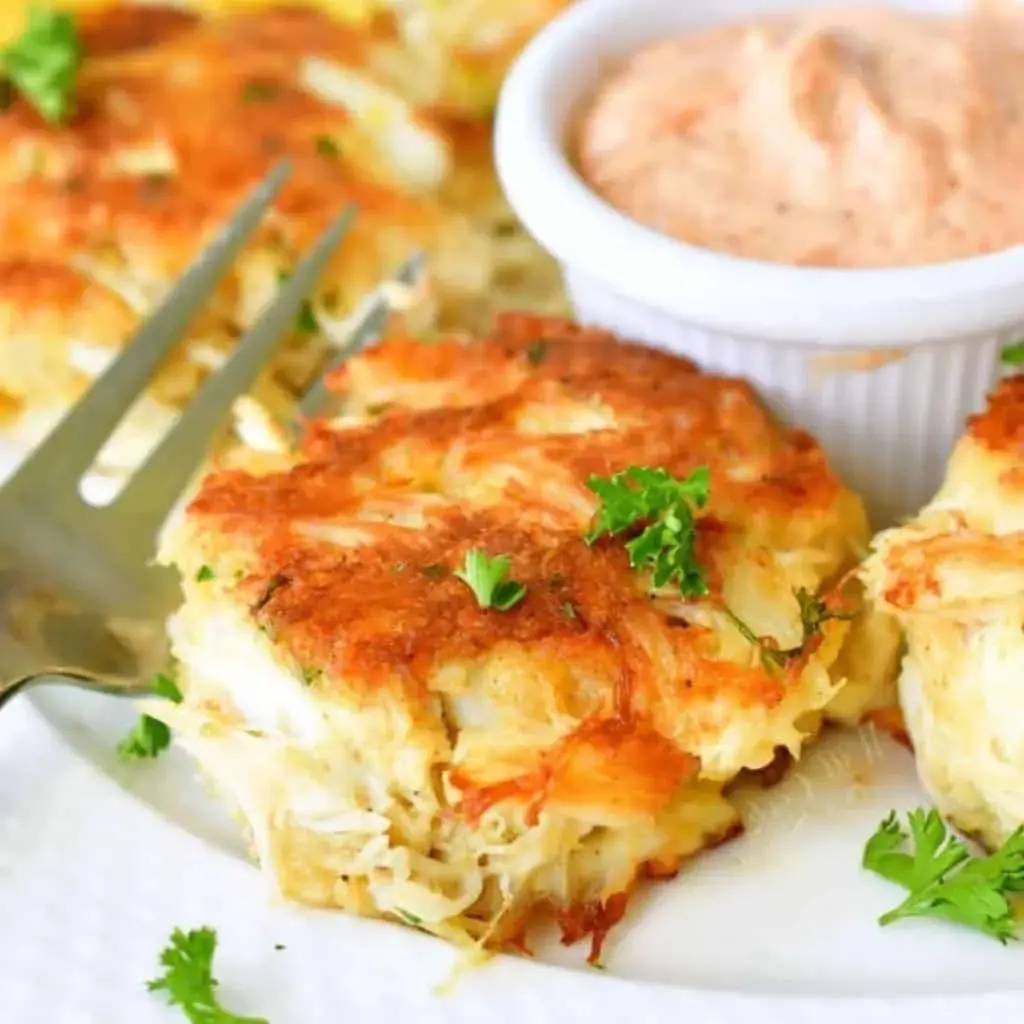
Imagine biting through that shatteringly crisp, golden-brown crust — thanks to a quick pan-fry in canola oil — and sinking into a center packed with jumbo lump crab meat that’s sweet, briny, and utterly tender. A hint of cayenne warms the back of your throat, fresh lemon zest cuts through the richness, and the optional homemade remoulade (tangy, a little spicy, utterly addictive) takes every bite over the top. I finish mine with a sprinkle of fresh parsley and a wedge of lemon on the side. These are the kind of crispy crab cakes that disappear in minutes at a dinner party — I’ve seen it happen countless times in my own NYC apartment.
What sets my version apart from other easy crab cakes recipes? It’s the technique. I trained in Paris under chefs who taught me that less is more — and that principle applies here in a big way. I use just enough Panko and egg to bind, I chill the patties so they hold their shape without becoming dense, and I never, ever overcrowd the pan. The result is a crab cake that’s all about the crab, not the filler. I’ll walk you through every detail — including how to pick through lump meat like a pro, the exact pan temperature for that perfect sear, and my foolproof method for keeping them from falling apart. Let’s make the best crab cakes of your life.
Why This Crab Cakes Recipe Is the Best
The Flavor Secret: Most crab cake recipes drown the crab in breadcrumbs and heavy seasoning. I take the opposite approach. My binding mixture — a whisper of mayonnaise, a touch of Dijon, a hit of Worcestershire, and a barely-there amount of Panko — is designed to coat the crab without masking it. A pinch of cayenne and fresh lemon zest lift the sweetness of the meat rather than competing with it. This is classic Maryland-style restraint, elevated by the French technique of building a light, flavorful base that supports the main ingredient without overwhelming it. I learned this balance in Paris pastry school: the crust should complement, not dominate.
Perfected Texture: The holy grail of a great crab cake is a crisp, golden exterior and a tender, almost creamy interior — and achieving that takes a few deliberate steps. First, I use Panko breadcrumbs instead of standard breadcrumbs; they’re larger and flakier, which creates a lighter, crunchier crust. Second, I refrigerate the formed patties for at least 30 minutes (or overnight) to let the binder set. This step is non-negotiable if you want crab cakes that hold together during cooking without turning into a crab scramble. Third, I pan-fry in canola oil over medium-high heat and resist the urge to move the patties until they release naturally from the pan. That patience pays off with a deeply golden, crispy crust every single time.
Foolproof & Fast: This recipe is designed to work for everyone — whether you’re a confident home cook or someone making crab cakes for the first time. The ingredients are straightforward, the method is clear, and I’ve included detailed visual cues so you know exactly what to look for at each stage. Plus, I’ve tested three cooking methods — pan-fried, baked, and air fryer — so you can choose the one that fits your kitchen and schedule. From start to finish, active prep is only about 15 minutes, and the pan-fry itself takes just 10 minutes. With a little advance chilling, these homemade crab cakes come together quickly and reliably.
Crab Cakes Recipe Ingredients
I buy my lump crab meat from the seafood counter at the Union Square Greenmarket in NYC when it’s in season, or from a trusted fishmonger. In Morocco, we’d use freshly caught blue crab — but here in the US, high-quality pasteurized jumbo lump crab meat works beautifully. Let’s talk through every ingredient so you know exactly what to look for.
Ingredients List
- 1 lb lump crab meat (preferably jumbo lump, hand-picked)
- 1/2 cup Panko bread crumbs (use gluten-free Panko if needed)
- 1 large egg
- 3 tbsp mayonnaise (full-fat, preferably Duke’s or Hellmann’s)
- 2 tsp Worcestershire sauce
- 1 tsp Dijon mustard
- 1 tbsp fresh minced parsley
- 1/2 tsp lemon zest (from about half a lemon)
- 1 small lemon, juiced (about 2 tbsp)
- 1 tsp kosher salt
- 1/2 tsp black pepper, freshly ground
- 1/4 tsp cayenne pepper (adjust to taste)
- 2-3 tbsp canola oil (for pan-frying)
For the Remoulade Sauce:
- 1/2 cup mayonnaise
- 1 tbsp spicy mustard (or whole-grain mustard)
- 2 tsp lemon juice
- 1 tsp pickle juice (preferably from sweet pickles)
- 1 tsp prepared horseradish
- 1 garlic clove, minced
- 2 tsp paprika
- 1 tsp Cajun seasoning
Ingredient Spotlight
Lump Crab Meat: This is the soul of the recipe. Jumbo lump crab meat comes from the two large muscles that move the swimming legs — it’s prized for its sweet flavor and large, intact chunks. Look for it pasteurized in the refrigerated section of your grocery store, or buy fresh from a seafood counter. Avoid canned crab meat (too salty and shredded). If you can’t find jumbo lump, regular lump crab meat works too, though the texture will be less chunky. For the best results, gently pick through each lump to remove any stray shell fragments — I do this by hand while watching an episode of something on Netflix. It takes 5 minutes and makes a huge difference in the eating experience.
Panko Bread Crumbs: These Japanese-style breadcrumbs are larger and flakier than standard breadcrumbs, which gives crab cakes a lighter, crunchier texture and a more delicate crust. Standard breadcrumbs can make the cakes dense and pasty. If you need a gluten-free option, gluten-free Panko works beautifully — just check the label. I’ve also tested this with almond flour (about 1/3 cup) for a keto-friendly version, and while the texture is slightly denser, the flavor is still excellent.
Mayonnaise: Mayonnaise serves a dual purpose here: it adds richness and moisture to the binder, and it helps the crab cakes develop a beautifully golden crust during frying. Use full-fat mayonnaise for the best results — Duke’s and Hellmann’s are my go-to brands. The egg works with the mayo to create a cohesive binder without making the cakes heavy. If you’re dairy-free, rest assured that mayonnaise is naturally dairy-free, so this recipe is already friendly for most dairy sensitivities.
Cayenne Pepper & Lemon Zest: This duo is my secret weapon. The cayenne adds a gentle warmth that builds slowly and never overwhelms the delicate crab flavor, while the lemon zest provides a bright, aromatic lift that makes every bite feel fresh. Together, they create a flavor profile that’s both bold and nuanced — a lesson I learned from a chef in Paris who always insisted on balancing heat with acidity. If you’re sensitive to spice, cut the cayenne to 1/8 tsp; if you love heat, go up to 1/2 tsp. The lemon zest is non-negotiable in my book — it really makes the crab sing.
| Original Ingredient | Best Substitution | Flavor / Texture Impact |
|---|---|---|
| Jumbo lump crab meat | Regular lump crab meat or chopped claw meat | Less chunky texture, still sweet; claw meat is darker and stronger in flavor |
| Panko bread crumbs | Gluten-free Panko, almond flour (1/3 cup), or crushed pork rinds (keto) | GF Panko works perfectly; almond flour yields denser cakes; pork rinds add extra crispness |
| Mayonnaise | Greek yogurt or sour cream (for less richness) | Tangier flavor, slightly less browning; use full-fat for best results |
| Cayenne pepper | Smoked paprika (1/2 tsp) or red pepper flakes (crushed, 1/4 tsp) | Smoked paprika adds depth without heat; red pepper flakes add random heat bursts |
How to Make Crab Cakes — Step-by-Step
Making homemade crab cakes is easier than you think, especially when you break it down into clear steps. I’ve tested this method dozens of times, and these are the exact techniques that yield consistently perfect, crispy crab cakes every time. Let’s cook.
Step 1: Pick Through the Crab Meat
Gently spread the lump crab meat out on a large plate or baking sheet. Using your fingertips — not a fork — carefully feel through each lump for any small pieces of shell or cartilage. You don’t need to break the lumps apart; just press lightly and remove any fragments you find. This step takes about 5 minutes and is absolutely worth it for the pleasure of a shell-free bite.
💡 emy’s Pro Tip: Place the crab meat in a single layer on a white plate — the contrast makes any dark or sharp shell fragments much easier to spot. I do this while listening to music or a podcast, and it becomes almost meditative.
Step 2: Mix the Binder
In a large mixing bowl, whisk together the egg, mayonnaise, Worcestershire sauce, Dijon mustard, fresh parsley, lemon zest, lemon juice, salt, black pepper, and cayenne pepper. Whisk until the mixture is smooth, pale, and emulsified — about 30 seconds. This binder is the flavor foundation of your crab cakes, so make sure everything is well incorporated before you add the crab.
⚠️ Common Mistake to Avoid: Don’t skip whisking the binder thoroughly — if the egg and mayo aren’t fully combined, the cakes can become greasy or unevenly seasoned. Take the extra 20 seconds to get it smooth.
Step 3: Combine and Shape
Add the picked-over crab meat and the Panko bread crumbs to the bowl with the binder. Using a rubber spatula or your hands, gently fold everything together until the crab is evenly coated. Be careful not to overmix — you want some lumps to remain intact for texture. Use a 1/3-cup ice cream scoop or measuring cup to portion out the mixture, then gently shape each portion into a patty about 1 inch thick. Don’t press them too tight; shape them just enough that they hold together.
💡 emy’s Pro Tip: An ice cream scoop with a trigger release is the best tool for perfectly even crab cakes. It portions the mixture cleanly without compressing it, and the cakes will all be the same size and thickness, so they cook evenly.
Step 4: Chill the Patties
Arrange the shaped patties on a parchment-lined baking sheet, leaving a little space between each one. Cover the sheet with plastic wrap or aluminum foil and refrigerate for at least 30 minutes, or up to a few hours (overnight is even better). Chilling firms up the binder and allows the Panko to absorb some moisture, which dramatically reduces the risk of the crab cakes falling apart during cooking.
⚠️ Common Mistake to Avoid: Skipping the chilling step is the number one reason crab cakes fall apart in the pan. I know it’s tempting to skip ahead, but trust me — those 30 minutes in the fridge make all the difference. Set a timer if you need to.
Step 5: Pan-Fry to Perfection
Heat a large, heavy-bottomed skillet (cast-iron or non-stick both work well) over medium to medium-high heat. Add 2-3 tablespoons of canola oil and let it heat until it shimmers — about 2 minutes. Carefully place the chilled crab cakes into the hot pan, leaving at least 1 inch of space between each one. Do not move them once they’re in the pan. Cook for 4-5 minutes on the first side, until deeply golden and crisp. Gently flip with a thin metal spatula and cook for another 4-5 minutes on the second side. Transfer to a paper-towel-lined plate to drain briefly.
💡 emy’s Pro Tip: To test if the pan is hot enough, flick a drop of water into the oil — if it sizzles immediately and evaporates, you’re ready. If the water sits and bubbles without sizzling, the pan isn’t hot enough yet. Getting the pan temperature right is the key to that beautiful golden crust.
Step 6: Make the Remoulade
While the crab cakes are cooking — or up to a day ahead — make the remoulade. In a small bowl, stir together the mayonnaise, spicy mustard, lemon juice, pickle juice, horseradish, minced garlic, paprika, and Cajun seasoning. Taste and adjust: add more horseradish for heat, more lemon for brightness, or a pinch of salt to balance. Refrigerate until ready to serve. This sauce can be made up to 3 days in advance and only gets better as the flavors meld.
⚠️ Common Mistake to Avoid: Don’t use pre-minced garlic from a jar for the remoulade — it has a sharper, more metallic flavor that throws off the balance. Freshly minced garlic is quick to prep and tastes infinitely better.
Step 7: Baked Option
Preheat your oven to 425°F. Line a large baking sheet with parchment paper. Place the chilled crab cakes on the sheet, leaving a little space between each one. Bake for 15-20 minutes, depending on thickness, until the crab cakes are golden brown on the outside and heated through. No need to flip — the hot oven does the work. The baked version is slightly less crispy than pan-fried but still delicious, and it’s a great hands-off option when you’re cooking for a crowd.
💡 emy’s Pro Tip: For a crisper baked crab cake, lightly brush or spray the tops with a little canola oil before baking. This helps the surface brown more evenly and adds a touch of crunch that mimics pan-frying.
Step 8: Air Fryer Option
I highly recommend lining your air fryer basket with perforated parchment paper liners (they’re designed for air fryer use and allow air to circulate). Or lightly grease the basket before adding the crab cakes. Place them in a single layer with a little space between each one. Cook at 375°F for 10-12 minutes, carefully flipping halfway through. The air fryer produces crab cakes that are almost as crispy as pan-fried, with no stovetop splatter — perfect for a quick weeknight dinner.
⚠️ Common Mistake to Avoid: Overcrowding the air fryer basket is a common mistake — if the cakes are too close together, they’ll steam rather than crisp. Cook in batches if needed. The extra 5 minutes is worth it for that perfect texture.
| Step | Action | Duration | Key Visual Cue |
|---|---|---|---|
| 1. Pick crab meat | Hand-check for shells | 5 min | Meat feels smooth, no sharp fragments |
| 2. Mix binder | Whisk wet ingredients + seasonings | 1 min | Smooth, pale yellow, emulsified |
| 3. Shape patties | Fold gently, form 1-inch patties | 3-4 min | Uniform size, holds shape without pressing |
| 4. Chill | Refrigerate covered | 30 min – overnight | Firm to the touch, holds shape |
| 5. Pan-fry | Sear in hot oil, flip once | 8-10 min total | Deep golden crust, releases easily |
| 6. Make sauce | Stir remoulade ingredients | 3 min | Smooth, creamy, paprika-tinted |
| 7. Bake (optional) | Oven at 425°F | 15-20 min | Golden brown tops |
| 8. Air fry (optional) | Air fryer at 375°F | 10-12 min | Crisp, golden, flip halfway |
Serving & Presentation
I love serving these crab cakes on a large white platter, arranged in a single layer with plenty of space around each one so the golden crust stays crisp. A generous dollop of the homemade remoulade on the side — or drizzled artfully across the plate — adds a beautiful pop of color and flavor. I finish with a scatter of fresh parsley and a few lemon wedges for squeezing. In my NYC apartment, I often serve these as a starter for a dinner party, or as the main event alongside a crisp green salad and a cold glass of Sauvignon Blanc.
For a more substantial meal, I’ll pair them with a simple arugula salad dressed with lemon vinaigrette — the peppery greens and bright acidity cut through the richness of the crab cakes beautifully. Sometimes I add a side of roasted potatoes or a light corn relish, especially in the summer when corn is at its peak at the Union Square market. The remoulade also works beautifully as a dip for the crab cakes, or you can offer tartar sauce or cocktail sauce for variety. However you serve them, these crab cakes are meant to be enjoyed with good company and a glass of something cold.
| Pairing Type | Suggestions | Why It Works |
|---|---|---|
| Side Dish | Arugula salad with lemon vinaigrette, roasted asparagus, corn relish | Bright, acidic sides cut through the richness of the crab cakes and remoulade |
| Sauce / Dip | Homemade remoulade, tartar sauce, cocktail sauce, aioli | Tangy, creamy sauces complement the sweet crab and add moisture |
| Beverage | Sauvignon Blanc, dry Riesling, light lager, sparkling water with lemon | Crisp, acidic drinks refresh the palate and mirror the lemon notes in the cakes |
| Garnish | Fresh parsley, lemon wedges, microgreens, a sprinkle of paprika | Adds color, freshness, and a visual pop that makes the dish feel special |
Make-Ahead, Storage & Reheating
This crab cakes recipe is a dream for meal prep. I often shape the patties the night before a dinner party and refrigerate them covered with plastic wrap — they actually get better as the flavors meld and the binder firms up. Cooked crab cakes also freeze beautifully, so I always make a double batch to stash away for busy weeknights when I need something quick and satisfying.
| Method | Container | Duration | Reheating Tip |
|---|---|---|---|
| Refrigerator | Airtight container, layered with parchment | 3-4 days | Reheat in a 350°F oven or air fryer for 5-7 min to re-crisp the exterior |
| Freezer | Flash-freeze on a sheet, then transfer to a freezer bag | Up to 3 months | Thaw overnight in the fridge, then reheat at 375°F in oven or air fryer for 8-10 min |
| Make-Ahead | Shaped, uncooked patties on a parchment-lined sheet, covered | Up to 24 hours in advance | Cook directly from the fridge — no need to bring to room temperature |
When reheating, the key is to restore that crispy crust without drying out the interior. The oven or air fryer works much better than the microwave, which can make the crab cakes soggy. I place them on a wire rack set over a baking sheet so hot air circulates all around — this keeps the bottom crisp, too. If I’m reheating from frozen, I thaw them overnight in the fridge first, then follow the same method. The remoulade keeps beautifully in the fridge for up to a week, so I always make extra.
Variations & Easy Swaps
One of the things I love most about this crab cakes recipe is how adaptable it is. Whether you’re cooking for dietary needs, seasonal cravings, or just a change of pace, these variations all deliver delicious results. I’ve tested each one in my own kitchen, so you can swap with confidence.
| Variation | Key Change | Best For | Difficulty Impact |
|---|---|---|---|
| Moroccan-Spiced Crab Cakes | Add 1 tsp ras el hanout + 1/4 tsp harissa paste to the binder | Adventurous palates, fusion dinner parties | No change (same technique) |
| Gluten-Free Crab Cakes | Use gluten-free Panko or 1/3 cup almond flour | Gluten-sensitive diets | No change (same technique) |
| Lemon-Herb Crab Cakes | Add 1 tbsp fresh dill + 1 tbsp fresh chives, double the lemon zest | Spring and summer gatherings | No change (same technique) |
Moroccan-Spiced Crab Cakes
This variation is near and dear to my heart — it’s the flavor of my childhood meeting my adopted home. Ras el hanout, the classic Moroccan spice blend (which means “head of the shop” — the best the spice merchant has to offer), adds warm, complex notes of cumin, coriander, cinnamon, and cardamom. A small spoonful of harissa paste in the binder brings a gentle, smoky heat that pairs beautifully with the sweet crab. I sprinkle a little extra ras el hanout on top before pan-frying for a fragrant, crusty finish. Serve with a yogurt-tahini sauce instead of remoulade, and you’ll have a crab cake that tells a story of two continents.
Gluten-Free Crab Cakes
This easy crab cakes adaptation is naturally gluten-friendly. Simply swap the Panko bread crumbs for gluten-free Panko (available at most major grocery stores) or use 1/3 cup of almond flour. Almond flour creates a slightly denser, more delicate cake with a subtle nuttiness that complements the crab beautifully. If using almond flour, reduce the amount slightly — you want just enough to bind, not to dominate. The rest of the recipe remains the same, including the chilling step, which is even more important with gluten-free binders as they can be more delicate. I’ve served these to gluten-free friends who couldn’t tell the difference — high praise indeed.
Lemon-Herb Crab Cakes
In the warmer months, when I’m shopping at the Union Square Greenmarket and fresh herbs are abundant, I love this bright, summery variation. Add a tablespoon each of fresh dill and fresh chives to the binder, and double the lemon zest. The result is a crab cake that tastes like sunshine — bright, herbaceous, and incredibly fresh. I serve these with a simple yogurt-dill sauce (Greek yogurt, lemon juice, fresh dill, salt, and pepper) and a side of heirloom tomato salad. It’s the perfect meal for a long, lazy summer evening on my fire escape, watching the city light up.
How do you keep crab cakes from falling apart when cooking?
The single most important step is chilling the formed patties for at least 30 minutes (and up to overnight) before cooking. This firms up the binder — the egg, mayonnaise, and Panko — so the cakes hold their shape beautifully in the pan. A few other critical tips: use just enough binder to coat the crab without drowning it, handle the mixture gently so you don’t break up the lumps, and make sure your pan is hot enough (medium to medium-high heat) before adding the cakes. When you place them in the pan, resist the urge to move them for the first 4-5 minutes — they’ll release naturally when the crust is set. Using a thin metal spatula for flipping also helps keep them intact.
What is the best binder to use for crab cakes instead of breadcrumbs?
If you’re looking for a breadcrumb substitute, my top recommendation is almond flour (about 1/3 cup instead of 1/2 cup Panko). It binds well, adds a subtle nutty flavor, and keeps the crab cakes gluten-free. Another excellent option is crushed pork rinds for a keto-friendly version — they add incredible crispness and a savory depth that pairs beautifully with crab. You can also use crushed saltine crackers or even crushed potato chips for a fun twist, though these will add more salt, so adjust your seasoning accordingly. Whatever binder you choose, the chilling step becomes even more important — give it at least 45 minutes in the fridge to set up properly.
Can you bake crab cakes instead of frying them, and what temperature and time should you use?
Absolutely — baking is a great hands-off option that still produces delicious crab cakes. Preheat your oven to 425°F and line a baking sheet with parchment paper. Place the chilled crab cakes on the sheet with a little space between each one, then bake for 15-20 minutes, depending on thickness. The cakes are done when they’re golden brown on the outside and heated through (they’ll feel firm to the touch). For a slightly crisper exterior, lightly brush or spray the tops with canola oil before baking. While the texture won’t be quite as crunchy as pan-fried, the flavor is every bit as good, and this method is perfect for feeding a crowd without being tied to the stove.
What sauce is traditionally served with crab cakes?
In Maryland and the Mid-Atlantic region, the classic accompaniment is a tangy, creamy remoulade sauce — which is exactly what I’ve included in this recipe. Traditional remoulade is made with mayonnaise, mustard, lemon juice, pickles or pickle juice, horseradish, and spices like paprika and cayenne. It’s bright, a little spicy, and cuts beautifully through the richness of the crab. Tartar sauce (mayonnaise, pickles, capers, lemon) is another classic choice, as is cocktail sauce (ketchup and horseradish) for a brighter, more acidic option. In my NYC kitchen, I serve all three when I’m hosting — guests love choosing their favorite. But the homemade remoulade is always the first to disappear.
Can I use canned crab meat for this crab cakes recipe?
I don’t recommend canned crab meat for this particular recipe. Canned crab is typically much saltier, drier, and more shredded in texture than fresh pasteurized lump crab meat, which means the cakes won’t have the same sweet, tender, chunky texture that makes a great crab cake so special. If fresh or pasteurized lump crab isn’t available in your area, look for refrigerated tubs of lump crab meat at the seafood counter of your grocery store — they’re usually found near the smoked fish. For a budget-friendly option, you can substitute with a mix of regular lump and claw meat (which has a bolder flavor), just be sure to drain it gently and pat it dry if there’s any excess liquid.
How do I make crab cakes less greasy?
The key to non-greasy crab cakes is getting your pan temperature right. Heat your oil over medium to medium-high heat until it shimmers — if the oil isn’t hot enough, the crab cakes will absorb it and become greasy. I recommend canola oil because it has a high smoke point and a neutral flavor. Additionally, make sure your crab cakes are well-chilled before frying (cold patties hit the hot oil and sear immediately, sealing the exterior). After frying, transfer them to a paper-towel-lined plate to drain for about 30 seconds. If you’re baking instead, place the cakes on a wire rack over the baking sheet so air circulates underneath — this prevents the bottoms from sitting in any rendered fat and keeps them light and crisp.
Can I make crab cakes ahead of time for a party?
Yes — this crab cakes recipe is perfect for entertaining! You can shape the patties up to 24 hours in advance and keep them covered in the refrigerator. The chilling time actually helps them hold together even better during cooking. If you want to get even more ahead, you can freeze the uncooked patties: flash-freeze them on a parchment-lined baking sheet for 1 hour, then transfer to a freezer bag for up to 3 months. Cook them directly from frozen (just add 2-3 minutes to the cooking time). For the sauce, the remoulade can be made up to 3 days ahead and refrigerated. This means you can do almost all the prep work before your guests arrive and simply pan-fry or bake the crab cakes at the last minute.
What type of crab meat is best for crab cakes — jumbo lump, lump, or claw?
For the best crab cakes, I recommend jumbo lump crab meat. It comes from the large muscles of the crab and has the sweetest, most delicate flavor with beautiful large chunks that make for a stunning presentation. Regular lump crab meat is a more affordable option and works almost as well — the chunks are smaller but still tender and sweet. Claw meat is darker, has a stronger, more distinct crab flavor, and is more economical. Many home cooks use a combination: mostly lump for texture, with a bit of claw meat mixed in for depth of flavor. Whichever you choose, look for fresh pasteurized crab meat in the refrigerated section rather than shelf-stable canned products, which tend to be saltier and less flavorful.
How long do crab cakes last in the fridge, and can I freeze them?
Cooked crab cakes will keep in the refrigerator for 3-4 days stored in an airtight container. To reheat, I recommend using the oven or air fryer rather than the microwave to restore their crispy exterior — 5-7 minutes at 350°F works perfectly. For longer storage, freezing is a great option. Freeze the uncooked patties on a parchment-lined sheet for 1 hour, then transfer to a freezer bag for up to 3 months. When you’re ready to cook them, thaw overnight in the fridge and then cook as directed. I’ve also frozen cooked crab cakes with good results: let them cool completely, wrap individually in plastic wrap, then place in a freezer bag. Reheat directly from frozen in a 375°F oven for 10-12 minutes. The remoulade sauce should not be frozen — it’s best made fresh or up to 3 days ahead.
What can I serve with crab cakes for a complete meal?
Crab cakes are wonderfully versatile and pair well with a wide range of sides. For a light, elegant meal, I love serving them with a simple arugula salad dressed with lemon vinaigrette — the peppery greens and bright acidity cut through the richness of the cakes. For something more substantial, roasted baby potatoes, a fresh corn and tomato relish, or steamed green beans with almonds are all excellent choices. If you’re going for a seafood feast, pair them with creamy coleslaw, hush puppies, or a cup of New England clam chowder. For a low-carb option, serve the crab cakes over a bed of mixed greens with extra remoulade as the dressing. And don’t forget a cold, crisp white wine or a light beer to complete the meal.
Share Your Version!
I truly hope this crab cakes recipe becomes a favorite in your kitchen — it’s one of those dishes that feels special enough for a celebration but simple enough for a Tuesday night. If you try it, I’d love to hear how it turned out. Leave a star rating and a comment below telling me which cooking method you chose, or if you added your own twist. Did you go for the Moroccan-spiced version? Or maybe you baked them for a crowd? Your feedback helps other readers — and me! — learn and improve.
And if you snap a photo of your beautiful golden crab cakes, please share it on Instagram or Pinterest and tag me @cookingwithemy. I love seeing your creations — it’s the next best thing to sitting down at the table with you. If you have any questions about the recipe, drop them in the comments and I’ll answer personally. Now go enjoy those best crab cakes — you’ve earned them!
From my NYC kitchen to yours — I hope this recipe brings as much warmth to your table as it does to mine. — emy 🧡
Love This Recipe? Save It to Pinterest!
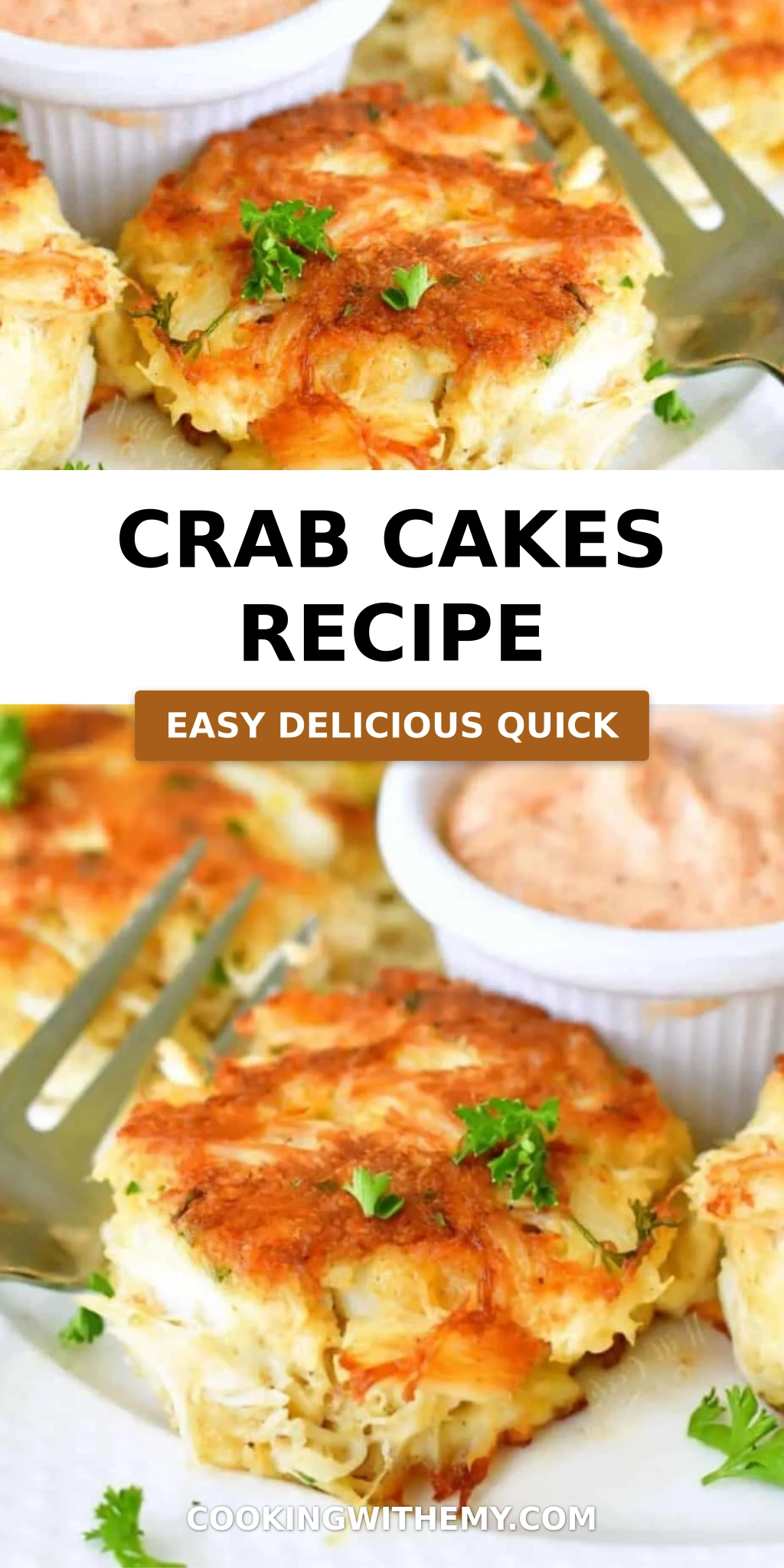
If you enjoyed this Crab Cakes Recipe, don’t let it get lost in your browser tabs! 😄 Pin it now so you can find it again anytime — and explore hundreds more tried-and-tested recipes waiting for you on my Pinterest boards.
👉 Follow emy on Pinterest @cookingwithemy
📌 Pin this recipe · 🔁 Re-pin your favorites · 💬 Tag me when you make it — I love seeing your creations!
⭐️ Loved this recipe? Leave a comment below!
Have a question or a variation you tried? I’d love to hear about it! Your star rating helps other readers find this recipe too. 💬
Crab Cakes Recipe
Description
My crab cake recipe is all about the fresh crab meat, minimal filler, and a whole lot of flavor! My recipe is inspired by classic Maryland-style crab cakes and features juicy jumbo lump crab meat, a touch of lemon, and cayenne pepper. The crabcakes are pan-fried in just 10 minutes (25 minutes total with prep) with a simple baked option and a homemade remoulade included.
Ingredients
- 1 lb lump crab meat
- 1/2 cup Panko bread crumbs (use gluten free if needed)
- 1 egg
- 3 tbsp mayonnaise
- 2 tsp Worcestershire sauce
- 1 tsp Dijon mustard
- 1 tbsp fresh minced parsley
- 1/2 lemon zest
- 1 small lemon – juice only
- 1 tsp salt
- 1/2 tsp black pepper
- 1/4 tsp cayenne pepper
- 2–3 tbsp canola oil (for cooking)
- 1/2 cup mayonnaise
- 1 tbsp spicy mustard
- 2 tsp lemon juice
- 1 tsp pickle juice (preferably from sweet pickles)
- 1 tsp horseradish
- 1 garlic clove
- 2 tsp paprika
- 1 tsp Cajun seasoning
Instructions
- Check every lump of meat by carefully feeling around for any leftover shell fragments. You dont need to break it apart, just check around the lumps.
- Mix all ingredients for crab cakes except for the crab meat in a bowl and whisk well.
- Add crab meat and mix it well. Break up some of the lumps and leave others in chunks.
- Use an ice cream scoop to spoon out equal amounts of crab mixture. Shape the patties but dont press them tight, just enough to form the shape of a patty.
- Place them all on a parchment paper covered baking sheet and cover with plastic wrap or aluminum foil. Refrigerate for 30 minutes to a couple of hours, to help firm up the binding so the crab cakes don't fall apart. (You can even refrigerate overnight)
- Preheat the pan first over medium to medium-high heat and add the oil.
- Let oil heat up until hot and add crab cakes. Do not move them after you place them in the pan until ready to flip. Cook crab cakes for 4-5 minutes per side.
- Mix all the ingredients for Remoulade sauce and serve it on the side of crab cakes. Alternatively, you can also serve them with tartar sauce or cocktail sauce.
- Preheat the oven to 425 and line a large baking sheet with parchment paper.
- Place crab cakes on the prepared baking sheet, giving them a little space in between each one. Bake the crab cakes for 15-20 minutes, depending on thickness, until golden brown.
- I highly recommend lining the air fryer basket with specialized parchment paper liners (they are perforated). Or grease it before adding the crab cakes.
- Place crab cakes into the basket in one single layer, with a little space between each one. Cook at 375 for 10-12 minutes, flipping half way through.
Nutrition
- Calories: 480 kcal
- Sugar: 2 g
- Fat: 38 g
- Carbohydrates: 9 g
- Protein: 24 g
Tried This Recipe? Leave a Comment!
Did you make this recipe? I’d love to hear how it turned out! Please leave a comment and a rating below. Your feedback helps other home cooks and supports cheerychop.com!
For more delicious inspiration, follow me on Pinterest!