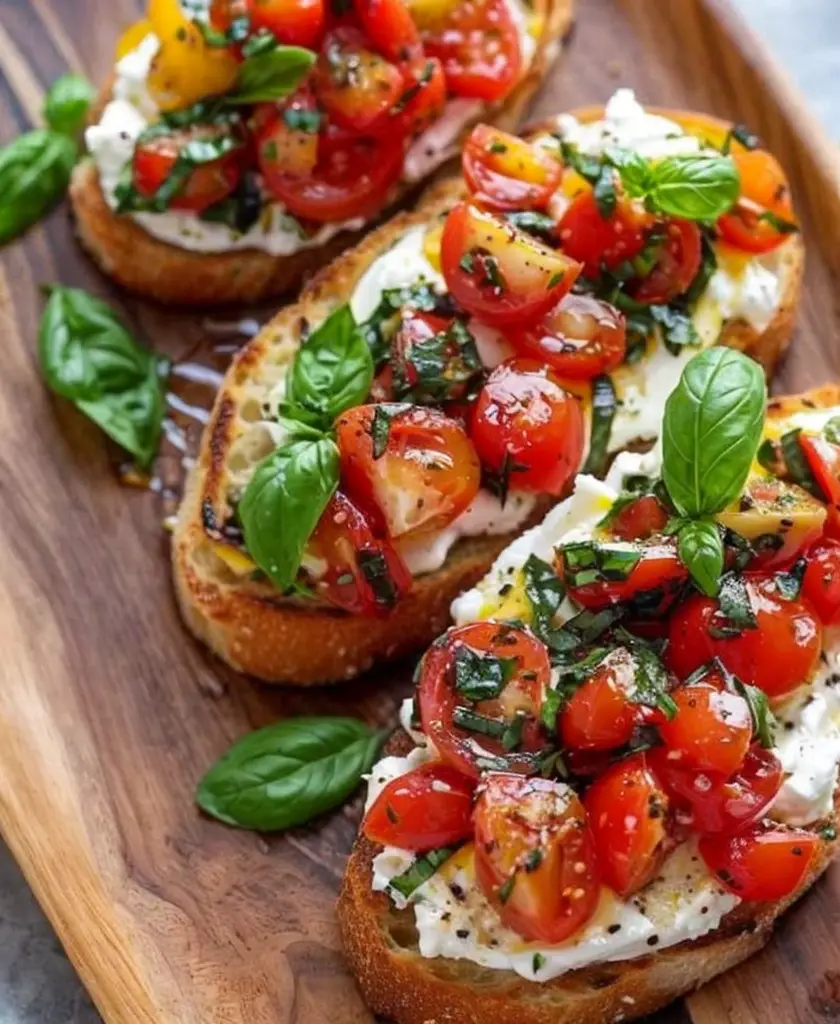
Burrata Bruschetta: A Flavorful Italian Delight
Bringing together the creaminess of burrata with the crunch of toasted bread, Burrata Bruschetta is an exquisite Italian appetizer that tantalizes taste buds with every bite. The luscious burrata, paired with vibrant tomatoes seasoned with basil and olive oil, creates a delightful juxtaposition of textures and flavors. Imagine biting into a crunchy piece of bread, only to be greeted by the soft, rich cheese melting into your mouth—it’s a culinary experience you don’t want to miss.
This dish not only looks stunning on the table, thanks to its vibrant colors, but it’s also incredibly quick and easy to prepare. Ideal for entertaining or a cozy family dinner, Burrata Bruschetta boasts a flavor profile that excites the palate with freshness and a hint of indulgence. Whether you’re hosting a gathering or treating yourself, this recipe offers a delightful taste of Italy right in your home.
Quick Recipe Highlights
- Flavor Profile: The sweet, juicy tomatoes contrast beautifully with the creamy burrata, enhanced by aromatic basil and a drizzle of olive oil.
- Texture: Crispy toasted bread pairs with the soft, gooey burrata, creating a mesmerizing mouthfeel.
- Aroma: The vibrant aromas of fresh basil and ripe tomatoes evoke the essence of Mediterranean cooking.
- Visual Appeal: The vibrant red of the tomatoes against the creamy white burrata and the golden-brown bruschetta makes for a stunning presentation.
- Skill Level Needed: This recipe is suitable for all cooking skill levels, making it accessible for novice cooks and easy for seasoned chefs.
- Special Equipment: No special equipment is needed—just a baking sheet and a knife will do!
Recipe Overview
- Difficulty Level: This recipe is labeled easy, perfect for those new to cooking or looking for a quick appetizer. The steps are straightforward, ensuring a stress-free experience.
- Category: As an appetizer, Burrata Bruschetta is perfect for gatherings, parties, or simply as a snack before the main course.
- Cuisine: Rooted in Italian culinary traditions, this bruschetta showcases the flavors of fresh, high-quality ingredients typical of Mediterranean dishes.
- Cost: This dish can be made at a reasonable cost, especially when using seasonal ingredients, making it an excellent option for budget-friendly entertaining.
- Season: Best served in warmer months when tomatoes are at their peak ripeness, offering the freshest flavor possible.
- Occasion: Ideal for summer parties, picnics, or as a starter for Italian-themed dinners, this dish is versatile enough for numerous occasions.
Why You’ll Love This Recipe
This Burrata Bruschetta will charm your senses with its delightful taste and creamy texture. The burrata cheese adds a luxurious touch that makes you savor every bite. The fresh tomatoes and fragrant basil are not just delicious; they bring an exciting burst of flavor that elevates the entire dish. This bruschetta is a perfect balance between creaminess and crunch, making it a staple at any gathering or casual dinner.
Convenience plays a huge role in the appeal of this recipe. With a prep time of just 15 minutes, Burrata Bruschetta can be ready for your guests in no time. Simply chop the tomatoes, toast your bread, and assemble the dish. This ease allows you to enjoy time with your friends and family rather than spending hours in the kitchen.
Nutritionally, you’re getting a healthy dose of vitamins and antioxidants from the tomatoes, as well as healthy fats from the olive oil. This appetizing dish not only delights the stomach but also nourishes the body, making it a wholesome choice for any meal.
The entertaining value of Burrata Bruschetta is through the roof. This appetizer is visually stunning, making it a fantastic centerpiece for any table. Additionally, it encourages sharing and conversation, bringing people together around delicious food—a true essence of dining.
Finally, it’s an economical dish that showcases how simple, quality ingredients can create remarkable flavors without breaking the bank. You can prepare this bruschetta with seasonal garden tomatoes and fresh herbs, promoting both sustainability and cost-effectiveness.
Historical Background and Cultural Significance
Burrata is a relatively recent addition to Italian cuisine, originating in the Apulia region of Southern Italy in the early 20th century. Traditionally made from buffalo milk, burrata was created to make use of leftover mozzarella scraps, offering a unique way to enjoy a rich and creamy cheese. Over the decades, this exquisite cheese has become a revered delicacy not just in Italy, but around the world.
Culturally, bruschetta has deep roots in Italian history dating back to the 15th century. The name “bruschetta” is derived from the Roman dialect verb “bruscare,” meaning “to roast over coals.” This traditional preparation method highlighted the simplicity of toasted bread topped with ripe tomatoes and olive oil, representing the essential flavors of the Mediterranean.
Today, Burrata Bruschetta is a beloved addition to Italian cuisine, often featured on tapas-style menus in restaurants around the world. With its creamy texture and vibrant flavors, it’s no wonder that this dish has become a favorite for both home cooks and professional chefs alike, embodying the principles of Italian cooking that celebrate freshness and simplicity.
As culinary trends have evolved, chefs have experimented with burrata, elevating bruschetta to new heights by incorporating various toppings and flavors. From seasonal vegetables to different pesto variations, the classic combo has continued to inspire creativity in kitchens globally.
Finally, regional variations exist throughout Italy, with each area offering unique toppings, such as grilled vegetables or cured meats, highlighting the adaptability and universality of this dish while maintaining its elegant roots.
Ingredient Deep Dive
Burrata Cheese:
Burrata cheese is celebrated not only for its rich, creamy flavor but also for its historical significance in Southern Italy. Traditionally made from buffalo milk, burrata contains a rich center of stracciatella, which is a mix of cream and shredded mozzarella. For those looking to incorporate burrata into their diet, it’s a source of high-quality protein and essential vitamins. When selecting burrata, it’s paramount to check for freshness; opt for those with a firm outer shell and a soft, creamy center. Store it in the fridge and consume it within a few days for optimal flavor.
Tomatoes:
Tomatoes are fundamental in Italian cooking, honored for their vibrant flavor, color, and nutritional benefits. Ripe tomatoes are an excellent source of vitamin C and antioxidants, particularly lycopene, known for its heart health benefits. When buying tomatoes, look for ones that are firm but slightly soft to the touch and have a deep color. Store them at room temperature to enhance their flavor, but refrigerate if they’re overripe. For variations, try heirloom tomatoes for added sweetness or plum tomatoes for a dense flavor.
Basil:
Basil is a quintessential herb in Italian cuisine, loved for its aromatic profile that complements many dishes. Historically significant, it symbolizes prosperity and love in Italian folklore. Nutritionally, basil offers anti-inflammatory properties and is rich in vitamins A and K, making it a great addition to any dish. When choosing basil, opt for fresh leaves that are vibrant in color. It’s best used fresh, but if dried, ensure it has been properly stored in a cool, dark environment away from moisture to maintain its flavor.
Olive Oil:
Olive oil is known as the cornerstone of Mediterranean diets, revered for its rich flavor and numerous health benefits. It holds historical significance, as it has been cultivated in the Mediterranean for thousands of years. Extra virgin olive oil is packed with polyphenols, which contribute to heart health and offer anti-inflammatory effects. When selecting olive oil, choose options labeled “extra virgin,” and opt for dark glass containers to shield it from light. Store in a cool, dark place to maintain its quality and longevity.
Crusty Bread:
The choice of bread can dramatically impact the overall taste of bruschetta. Traditional Italian bread, like ciabatta or baguette, offers a hearty texture that captures the essence of Italian life. When choosing bread, look for crusty varieties that are neither too hard nor too soft. It is best enjoyed fresh but can be stored in a paper bag at room temperature. For those with dietary restrictions, gluten-free options are available that can still provide that delicious crunch.
Common Mistakes to Avoid
- Using stale bread: Always use fresh, crusty bread to ensure the best texture and flavor. Stale bread can ruin the bruschetta experience.
- Over-toasting: Be careful not to over-toast the bread; it should be crispy on the outside but still tender inside to balance the burrata’s creaminess.
- Insufficient seasoning: Be generous with olive oil, salt, and pepper; these elements enhance the natural flavors of the ingredients.
- Using subpar tomatoes: The quality of tomatoes is crucial; always opt for the freshest, ripest tomatoes for maximum flavor.
- Not letting the burrata come to room temperature: Allow the burrata to sit out for about 30 minutes before serving to ensure its creamy interior is perfect for spreading.
- Assembling too early: For the best texture, assemble your bruschetta just before serving to prevent the bread from becoming soggy.
- Skipping fresh herbs: Fresh basil elevates the dish significantly; dried herbs will not provide the same aromatic quality.
- Overcomplicating toppings: Stick to simple, quality ingredients instead of overloading on toppings or sauces that mask the burrata’s flavor.
- Using too much balsamic vinegar: While balsamic can be delicious, too much can overpower the delicate flavors of burrata and tomatoes.
- Ignoring presentation: Serve the bruschetta artfully arranged, taking care to highlight the fresh ingredients and colors.
Essential Techniques
Toasting Bread: Toasting the bread correctly is crucial. It should be crisp on the outside while remaining chewy on the inside. Aim for a golden brown. The best way is to brush slices with olive oil and place them directly on a hot grill or under a broiler, watching carefully to avoid burning.
Chopping Tomatoes: Dice tomatoes uniformly for even distribution on the bruschetta. Remove seeds for a less watery topping. A sharp knife is essential here—fresh tomatoes are delicate, and you want to avoid bruising them. The final cut should aim for a bite-sized piece that bursts in your mouth.
Making Fresh Tomato Mixture: Using a bowl, combine the diced tomatoes, olive oil, salt, and chopped basil. Allow the mixture to sit for about 10 minutes to let the flavors meld together. Taste and adjust the seasoning as needed; this mixture should be bright and fresh.
Handling Burrata: To prepare burrata, gently open the cheese to reveal its creamy interior without tearing it apart. Use a spoon to scoop it onto your bruschetta, ensuring each piece gets a generous portion. This cheese deserves to be the star of the dish, so treat it delicately.
Plating: Presentation is key, especially with such visually appealing ingredients. Layer the bruschetta with dollops of burrata, scoop the tomato mixture on top, and finish with a drizzle of olive oil and a sprinkle of salt. Garnishing with whole basil leaves can add color and height to your dish.
Pro Tips for Perfect Burrata Bruschetta
1. Choose high-quality ingredients. The flavors of your bruschetta will only be as good as the ingredients you use, so always opt for fresh, high-quality tomatoes, burrata, and olive oil.
2. Prepare your tomatoes ahead. Allowing the diced tomatoes to sit with olive oil and salt helps them release their juices and enhances their natural sweetness.
3. Toast the bread right before serving. For optimal crispiness, toast your bread right before assembling to maintain the perfect crunch.
4. Don’t skimp on olive oil. A good drizzle of high-quality extra virgin olive oil not only enhances flavor but also adds a beautiful sheen to your dish.
5. Let burrata reach room temperature. Allow the burrata to soften to room temperature before serving to enjoy its full, creamy texture.
6. Experiment with toppings. Don’t be afraid to add your twist with extra toppings like prosciutto, roasted peppers, or even a layer of pesto.
7. Serve on a platter for sharing. Presenting the bruschetta on a beautiful platter invites guests to help themselves, making it a communal experience.
8. Use seasonal ingredients. Adapting the recipe according to what’s in season can elevate the taste of your bruschetta, giving it a fresh, unique flavor.
Variations and Adaptations
Burrata Bruschetta can be easily customized to fit different flavor profiles. For instance, adding roasted vegetables in the summer can provide a smoky flavor that complements the creaminess of the cheese. Another popular variation is to use heirloom tomatoes, which add a burst of flavor and color, making the dish even more visually appealing.
In autumn, consider incorporating roasted squash or pumpkin seeds for an earthy touch. You can also play with different herbs—substituting basil with arugula can provide a peppery contrast that still tallies up with burrata’s creaminess.
Additionally, dietary adaptations can include using gluten-free bread for those with gluten sensitivities or vegan burrata as a dairy-free alternative. These options ensure everyone can enjoy this delicious recipe!
For a bolder flavor, try incorporating toppings like spicy arugula or a drizzle of chili oil. On the other hand, a simple fresh pesto layer can transform the traditional approach into a delightful alternative.
Presentation alternatives may involve serving on individual plates as appetizers at a formal dinner, or stuffed as part of a wrap, appealing to a casual summer picnic style.
Serving and Presentation Guide
Presentation enhances the dining experience, especially for a dish like Burrata Bruschetta. For optimal plating, use a large, shallow platter to display the bruschetta slices, allowing for easy access and a communal feel.
Garnishing with whole basil leaves or edible flowers adds a pop of color. For added flair, consider a drizzle of high-quality balsamic reduction over the top to introduce a sweet and tangy element.
Placement matters as well; consider using a cutting board for a rustic vibe that invites guests to dive in. Cut the bruschetta into bite-sized pieces to make it easier to enjoy.
Temperature considerations are pivotal; serve the bruschetta immediately after assembly to avoid sogginess and maintain that delightful crunch. For gatherings, you can prepare the components ahead of time, letting guests assemble their own for added interaction.
Finally, be mindful of portion control. Aim for 2-3 pieces per person as an appetizer, allowing your guests to enjoy other courses without feeling overwhelmed.
Wine and Beverage Pairing
When it comes to pairing wine with Burrata Bruschetta, consider a light, crisp white wine, such as Pinot Grigio or Sauvignon Blanc. These wines enhance the fresh flavors of the tomatoes and basil without overwhelming the delicate richness of the burrata.
For a red option, a light-bodied Chianti is another excellent choice, mirroring the Italian roots of the dish. Its acidity complements the bruschetta’s components while adding depth.
If you’re looking for non-alcoholic beverages, try a sparkling water with a twist of lemon or fresh basil leaves. A refreshing herbal iced tea can also complement the dish beautifully.
Always serve wines chilled, particularly whites and rosés, to maintain their refreshing qualities during warm summer gatherings. Consider having a selection to cater to various preferences, ensuring all guests find a suitable pairing.
Storage and Shelf Life
Storing Burrata Bruschetta requires care to maintain flavor and texture. Once assembled, it’s best to consume the bruschetta immediately, as the bread can become soggy when topped with watery ingredients like tomatoes.
If you’re planning to prepare ahead, store the components separately. Keep the diced tomatoes mixed with olive oil in an airtight container in the refrigerator for up to 2 days. The burrata should also be kept in its original packaging until you’re ready to use it for optimal freshness.
Unassembled bruschetta can be stored at room temperature, but toasted bread should not be refrigerated, as it can lose its crispness. To store leftover bruschetta mix, place it in a container and consume within a couple of days.
If you happen to have leftover burrata, wrap it carefully in plastic wrap and keep it refrigerated for 2-3 days. Always check for any off smells or changes in texture before using leftovers.
Make Ahead Strategies
To save time when hosting, consider making components of Burrata Bruschetta ahead. You can prepare the tomato mixture the day before, keeping it chilled, which allows the flavors to meld beautifully. Just be sure to taste and adjust the seasoning before serving.
Another strategy is to toast the bread in advance. Let it cool completely before storing it in a sealed container to keep it fresh. You can quickly re-crisp it in an oven before assembling.
For burrata, ensure you keep it sealed until you’re ready to serve. Serve it at room temperature to allow its creamy center to shine, so leave it out for about 30 minutes before assembling the bruschetta.
Lastly, consider how you can enhance assembly by prepping a station with all ingredients laid out for guests. This interactive touch allows everything to stay fresh while providing guests with the fun of making their own bruschetta.
Scaling Instructions
Scaling Burrata Bruschetta is straightforward, whether you want to halve or triple the recipe. For smaller gatherings, simply adjust the ingredients while maintaining the same ratios—this dish scales well without losing its essence.
If you are doubling or tripling the recipe, ensure your work space is large enough to accommodate the increased quantity, especially for the tomato mixture. Use larger mixing bowls and spread across multiple baking sheets if necessary.
With larger servings, timing is crucial; prepare your bread in batches to ensure even toasting. Avoid overcrowding the baking sheet to maintain optimal toast quality.
In terms of storage, simply use larger containers to hold your tomato mixture and cheese. When applying proportions to larger parties, consider offering a variety of toppings to keep the buffet exciting and flavorful.
Nutritional Deep Dive
From a nutritional perspective, Burrata Bruschetta offers a delightful balance. Each serving is rich in healthy fats from burrata and olive oil, while the tomatoes contribute a healthy dosage of vitamin C, fiber, and antioxidants.
In terms of macronutrients, the combination yields a fairly balanced profile of carbohydrates from the bread, proteins from the cheese, and fats from the olive oil. Depending on the portion size, it can fit into light meals or be paired with other dishes for heartier options.
Micronutrient analysis shows that tomatoes are particularly high in potassium, essential for heart health, while basil provides vitamin K, which is vital for bone health.
For those managing their diets, the key is moderation; a couple of pieces of bruschetta can fit well into many dietary plans. Paired with fresh vegetables or salads enhances the meal’s fiber content, making it more satisfying.
All in all, Burrata Bruschetta is a deliciously satisfying option that can easily complement a variety of dietary preferences while remaining indulgent yet healthy.
Dietary Adaptations
– Gluten-Free: Use gluten-free bread options which can still hold the toppings well without sacrificing flavor. Many varieties available in stores today mimic traditional textures.
– Dairy-Free: Look for vegan burrata options made from cashews or almond milk to provide a similar creamy experience without dairy.
– Vegan: By substituting the cheese with vegan burrata, this dish can be entirely plant-based without compromising taste.
– Low-Carb: Use cauliflower bread or other low-carb options to replace traditional bruschetta bread while maintaining texture.
– Keto: For a keto-friendly version, focus on low-carb toppings like avocados or meat options instead of the bread, enhancing nutrition value.
– Paleo: Opt for fresh vegetables and nuts as a topping base to ensure it fits within Paleo guidelines, offering fresh flavors and satisfying crunch.
– Low-FODMAP: Avoid using garlic or onions in your toppings, utilizing fresh herbs and simpler flavor combinations for a low FODMAP approach.
Troubleshooting Guide
When making Burrata Bruschetta, ensuring the right texture is key. If your tomatoes result in a watery mixture, remove seeds before chopping and lightly salt them to draw out excess liquid.
Flavor balance can be a challenge; if too bland, consider a pinch of sea salt or freshly cracked black pepper to enhance flavors. Conversely, if it’s too salty, add more tomatoes or burrata to neutralize the flavor.
Temperature issues can arise; if your bread cools too quickly and loses crispness, place it in a low-temperature oven to refresh the texture without browning it further.
If you encounter equipment challenges, ensure your knife is sharp when cutting the tomatoes, as a dull knife can crush them, leading to an uneven mixture.
For ingredient substitutions, keep in mind that flavor will change based on what’s used, so tasting and adjusting is critical when throwing in variations at the last moment.
Finally, timing is essential; work quickly when assembling to serve this dish warm and fresh so that all components harmonize deliciously.
Recipe Success Stories
Readers have shared numerous successful adaptations of Burrata Bruschetta, showcasing their unique twists. One community member noted their success substituting goat cheese for burrata, adding a tangy layer of flavor that emerged delightful feedback from guests.
Many swore by the heirloom tomato variant, claiming it provided a burst of sweetness that complemented the rich creaminess beautifully, often capturing stunning photographs that highlighted the dish’s visual appeal.
Adaptation stories highlight using grilled peaches in place of tomatoes during summer for an unexpected twist that delighted family and friends, providing a perfect balance of sweetness against the cheese’s texture.
Readers have also shared their techniques for perfecting the toasted bread, often emphasizing the importance of oiling the bread beforehand to achieve a consistent golden-brown crunch worthy of any gathering.
Photography tips and sharing visuals of their successfully plated bruschettas on social media have sparked engaging conversations, inviting others to join in while sharing their versions of this classic Italian dish.
Frequently Asked Questions
1. Can I make Burrata Bruschetta ahead of time?
While the components can be prepared ahead, it’s best to assemble just before serving to maintain the freshness and texture of the bread. Preparing tomato mixtures a few hours in advance is fine, but avoid topping the bread too early.
2. What type of bread works best for bruschetta?
Crusty Italian bread, ciabatta, or baguette make ideal choices for bruschetta due to their sturdy texture, allowing them to hold the toppings well without becoming soggy.
3. Can I use other cheeses besides burrata?
Certainly! While burrata is the star, you can substitute with fresh mozzarella or even ricotta for a different but still delicious flavor and texture profile.
4. How can I add a kick to my bruschetta?
Incorporating sliced jalapeños or a drizzle of chili oil can elevate the spice level, making it an exciting variation. Experimenting with pepper oils can also provide a flavorful punch.
5. Can I use canned tomatoes?
For best results, use fresh tomatoes when possible, but in a pinch, quality canned tomatoes can work. Just drain excess liquid before using them in the topping mix.
6. What can I substitute for basil?
If basil is unavailable, fresh parsley or arugula can provide alternative herbal notes. Consider rosemary for a more robust flavor, keeping in mind it’s stronger than basil.
7. How do I prevent the bread from getting soggy?
To prevent sogginess, toast the bread until golden brown and assemble the bruschetta right before serving. Leaving the topping separate until just before consumption allows for the best texture.
8. Can I prepare a vegan version?
Absolutely! Substitute burrata with a vegan cheese option that suits your dietary needs, and keep the other ingredients fresh and vibrant to complement it.
9. How can I enhance the presentation?
Drizzling high-quality olive oil and balsamic reduction artfully over the assembled bruschetta can enhance both the flavor and visual appeal. Consider garnishing with fresh herbs for color.
10. Is Burrata Bruschetta gluten-free?
It is not inherently gluten-free, but you can opt for gluten-free bread options available in stores, ensuring that everyone can enjoy this delicious appetizer.
Additional Resources
To expand your culinary skills and explore variations, check out related recipes like Caprese Salad or Tomato Basil Pasta. Each offers a unique twist on the classic Italian flavors found in Burrata Bruschetta.
Additionally, consider diving into technique guides for perfecting homemade pesto, which pairs excellently with many Italian dishes, or explore ingredient information that further enhances your understanding of quality ingredients.
Equipment recommendations for kitchen tools that elevate your cooking experience can also be beneficial. Invest in a good set of knives and cutting boards, which are essential for slicing tomatoes and preparing fresh herbs.
Lastly, seasonal variations can enhance your cooking repertoire, encouraging you to adapt recipes based on local produce availability, optimizing taste and freshness.
Join the Conversation
We invite you to share your experiences with Burrata Bruschetta, whether it’s feedback on the recipe, your own variations, or beautiful photos of your creations on social media. Your insights foster community engagement, inspiring others to explore Italian cuisine.
Engage with fellow food lovers and share your culinary journey. Connect with us on social platforms where you can discover new tips, techniques, and delightful recipes.
Let’s celebrate the joy of cooking together, exploring how we can interpret classic dishes to express our unique flavors and styles in the kitchen. Your creativity and passion for food create a vibrant community, and we welcome you to be a part of it!
The Recipe
Burrata Bruschetta
Serves: 4
Prep Time: 15 mins
Cook Time: 10 mins
Total Time: 25 mins
Kitchen Equipment Needed
- Baking sheet
- Sharp knife
- Mixing bowl
- Spatula
Ingredients
- 1 loaf of crusty Italian bread
- 8 oz burrata cheese
- 2 cups ripe cherry tomatoes, diced
- 1/4 cup fresh basil, chopped
- 2 tablespoons extra virgin olive oil
- Salt and pepper to taste
Directions
- Preheat the oven to 400°F (200°C) and slice the bread into 1-inch thick pieces.
- Place the slices on a baking sheet and brush them lightly with olive oil.
- Toast the bread in the oven for about 5-7 minutes, or until golden brown and crispy.
- In a mixing bowl, combine the diced tomatoes, chopped basil, olive oil, salt, and pepper. Allow to sit for about 10 minutes.
- Once the bread is toasted, remove it from the oven and let it cool slightly.
- Assemble the bruschetta by placing a slice of burrata on each piece of toasted bread, followed by a spoonful of the tomato mixture on top.
- Drizzle with additional olive oil and sprinkle with more fresh basil if desired.
- Serve immediately and enjoy!
Recipe Notes
- Feel free to experiment with different toppings for personalized bruschetta.
- Make sure to use the freshest tomatoes you can find for the best flavor.
- Any leftovers can be stored separately in the fridge and assembled just before serving.