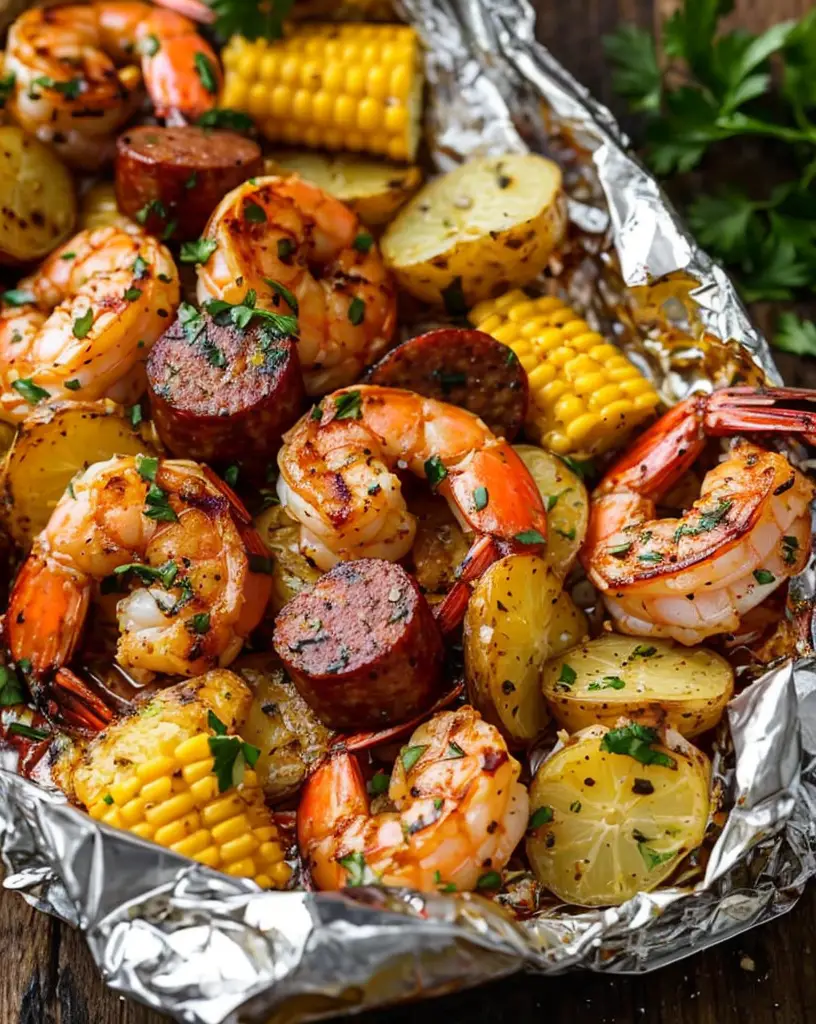
Grilled Shrimp and Sausage Foil Packets: A Simple and Flavorful Delight
Grilled Shrimp and Sausage Foil Packets are the perfect solution for a delicious and hassle-free meal. This recipe combines marinated shrimp and smoky sausage with fresh vegetables, all enclosed in a convenient foil packet that locks in flavor and moisture. Imagine pulling back the foil and being greeted by a mouthwatering aroma as the shrimp glistens and the sausage sizzles, evoking the irresistible appeal of summer grilling any time of the year. Whether you are hosting a backyard barbecue or just cooking dinner for the family, these foil packets promise to deliver a burst of grilled flavor in every bite.
One of the standout features of this dish is its versatility. You can easily customize the ingredients based on your preferences, dietary restrictions, or whatever you have on hand. The ease of preparation and cleanup makes it ideal for busy weeknights or casual gatherings. Just toss everything together, seal in the foil, and let the oven or grill do all the work. Not only will you enjoy a plateful of savory shrimp and sausage, but you’ll also appreciate the beautiful medley of colors from the veggies, making it visually enticing.
Quick Recipe Highlights
- Flavor Profile: This dish marries the sweetness of shrimp with the spicy, smoky essence of sausage, complemented by a medley of herbs and spices.
- Texture: Expect a delightful combination of tender shrimp, juicy sausage, and crisp-tender vegetables for a satisfying mouthfeel.
- Aroma: As you grill or bake, the fragrant combination of garlic, herbs, and smoky sausage will fill the air and entice your senses.
- Visual Appeal: Beautiful hues of pink from the shrimp, golden-brown sausage, and vibrant veggies make for an eye-catching presentation.
- Skill Level Needed: Even beginner cooks can master this simple recipe, requiring only basic food prep skills and a willingness to experiment.
- Special Equipment: All you need is aluminum foil and either a grill or an oven to prepare this delightful dish.
Recipe Overview
- Difficulty Level: This easy recipe is perfect for cooks of all levels, making it approachable for those new to meal prep.
- Category: This dish fits well into the dinner category, especially for outdoor cooking or as a fun weekend meal.
- Cuisine: Drawing influences from Southern and coastal cuisines, this recipe embodies the spirit of leisure and flavorful gatherings.
- Cost: A budget-friendly meal, the ingredients can typically be found at reasonable prices, especially in sets or sales.
- Season: It shines in the summer months but can be enjoyed year-round, making it a versatile choice for any occasion.
- Occasion: Ideal for warm weather cookouts, family dinners, or even meal prep for busy weeks ahead.
Why You’ll Love This Recipe
The taste and texture of Grilled Shrimp and Sausage Foil Packets create a fantastic experience for your palate. The succulent shrimp paired with the hearty sausage results in an extraordinary flavor explosion, while the vegetables add a satisfying crunch. Every bite invites a burst of juiciness, making it a memorable meal that you’ll want to recreate again and again.
Another reason to love this recipe is its convenience. Preparation is as simple as mixing ingredients into packets, which can be made in advance for added ease during busy days. Cleanup is a breeze, with no dishes to scrub after dinner. Not only does this save you valuable time in the kitchen, but it also allows for spontaneous dining outdoors, where picnic-style eating reigns supreme.
Moreover, this dish boasts nutritional advantages. Shrimp provide high-quality protein and essential omega-3 fatty acids, while sausage adds additional flavor and protein. When combined with a variety of colorful vegetables, this meal becomes packed with vitamins and minerals, making it suitable for a balanced diet.
From a social perspective, Grilled Shrimp and Sausage Foil Packets are perfect for entertaining. They spark conversation and can be served directly in their foil packets as a fun twist on traditional serving methods. Sharing such a comfortable and casual meal with friends and family encourages laughter, storytelling, and cherished moments around the table.
Lastly, this recipe is cost-effective. The ingredients can easily be found in most grocery stores at an affordable price, allowing you to feed a crowd without breaking the bank. This accessibility and flavor combination ensure that Grilled Shrimp and Sausage Foil Packets are a winning choice for any amateur home chef.
Historical Background and Cultural Significance
The origins of foil packet cooking can be traced back to the methods of ancient cooking techniques where food was wrapped in leaves or animal skins. In modern times, aluminum foil has made it possible to deliver this cooking style to a wider audience. Foil packets provide an efficient way to cook seafood, which has long been a staple for coastal communities. They encapsulate flavors and retain moisture, making them perfect for grilling or baking.
Culturally, the combination of shrimp and sausage often represents a fusion of coastal and Southern barbecue traditions. Dishes featuring shrimp are prevalent in the cuisines of Louisiana and the Gulf Coast, where the seafood bounty inspires a vibrant culinary heritage. Combining sausage with shrimp reflects the essence of comfort food, inviting gatherings that celebrate the richness of regional flavors.
Over time, this recipe has evolved, showcasing various ingredients based on local products and personal preferences. From vegetables to seasonings, we’ve seen adaptations that bring global influences into this classic combo. Each cook adds their own twist, creating a unique representation of their culinary identity while honoring tradition.
Regional variations abound, from shrimp skewers to jambalaya-inspired foil packets. Each adaptation reflects the community’s tastes and resources, whether it’s incorporating local herbs or seasonal vegetables. This practice highlights how food can serve as a canvas for creativity and expression while still maintaining its historical roots.
Ingredient Deep Dive
Shrimp play an integral role in this recipe, showcasing not only their popularity in coastal cuisines but also their nutritional benefits. Packed with protein, shrimp are low in calories and high in essential nutrients such as selenium and vitamin B12. When selecting shrimp, look for ones that are firm with a fresh ocean scent. Store them in the coldest part of the refrigerator and use them within a day or two for the best quality. If substituting, consider scallops or firm fish for a similar seafood experience.
The sausage adds a hearty depth of flavor that complements the sweetness of the shrimp. Depending on personal taste, you can choose from a variety of sausages, including andouille, chorizo, or even chicken sausage for a lighter option. Look for sausages that are free of fillers and artificially derived ingredients to enhance your dish’s quality. Store opened sausage in the fridge and use within a few days or freeze for longer shelf life.
Fresh vegetables enhance the overall flavor and texture of your foil packets. Bell peppers, zucchini, and corn are ideal choices that cook well when wrapped tightly in foil. These vegetables not only provide vibrant colors but are also packed with vitamins and fiber. When selecting vegetables, opt for those with a firm texture. Store fresh produce in the crisper drawer of your refrigerator to prolong freshness. If you’re looking to substitute, consider using broccoli or asparagus for an equally delightful crunch.
Common Mistakes to Avoid
- Not sealing the foil packets tightly enough can lead to steam escape, resulting in dry shrimp.
- Using frozen shrimp without thawing may lead to uneven cooking and rubbery texture.
- Overcrowding the foil packet prevents even cooking; be sure to leave some space for heat circulation.
- Skipping the marination step can reduce flavor; take time to marinate the shrimp and sausage properly.
- Using low-quality sausage can overpower the dish; opt for premium ingredients for the best results.
- Neglecting to check for doneness can result in overcooked shrimp, turning them tough; always check visually.
- Forgetting to preheat the grill or oven can lead to longer cooking times and uneven results.
- Not using enough seasoning can result in bland flavors; always taste and adjust as needed.
- Cooking too quickly on high heat might char the outside without cooking the inside properly; maintain a moderate heat.
- Failing to arrange ingredients properly can lead to uneven cooking; place denser items like sausage on the bottom.
Essential Techniques
Wrapping food in foil packets is essential to the success of this dish. Proper wrapping ensures the steam circulates, keeping the ingredients moist while they cook. To master this technique, make sure to fold the edges of the foil tightly but don’t crush it. Leave enough space for the food to expand without bursting. If made correctly, you should see a puff forming as steam builds.
Grilling shrimp and sausage requires attention to heat levels. Avoid the common pitfall of using excessive heat, which can lead to charring and dryness. Aim for a medium heat setting, providing a more controlled cooking environment. Use a grill thermometer if necessary to maintain optimal cooking conditions for even results.
Bringing the ingredients to room temperature before cooking can also greatly enhance the outcome. If shrimp are too cold, they may cook unevenly, leading to a lesser quality final product. Allowing them to sit out for about 15 minutes before grilling ensures they heat evenly, maximizing flavor as they interact with the marinade.
Pro Tips for Perfect Grilled Shrimp and Sausage Foil Packets
– Always use fresh ingredients for the best flavors and nutrients; fresh shrimp and seasonal vegetables make a significant difference in taste.
– Marinate the shrimp for at least 30 minutes before cooking, but not more than two hours to avoid over-absorption of flavors.
– Experiment with different marinades or seasoning blends, such as Cajun or Mediterranean, to add and explore various flavor profiles.
– Use heavy-duty aluminum foil to avoid tearing and ensuring a tight seal, which helps retain moisture and flavors.
– Consider adding a splash of lemon or lime juice just before sealing to enhance flavor and provide acidity that balances the richness of the sausage.
– Rotate the foil packets halfway through the cooking time to ensure even exposure to heat, resulting in uniformly cooked seafood and sausage.
– To create a stunning visual effect, layer colorful vegetables and arrange them neatly in the packets, showcasing a medley of colors.
– Pair your foil packets with a refreshing side salad or rice for a more filling meal option that complements the dish beautifully.
Variations and Adaptations
Explore regional variations by incorporating local spices or sausages unique to different culinary traditions. For instance, try using Spanish chorizo for a spiced-up version or adding Cajun seasonings to elevate the Southern appeal. Seasonal adaptations can include using zucchini and corn in the summer, while root vegetables like sweet potatoes and carrots may be more suitable during fall or winter.
If you need to accommodate dietary modifications, consider opting for turkey or vegan sausage as a substitute, appealing to those who prefer a plant-based diet. The flavor still shines, especially when combined with robust herbs and spices. Additionally, for a low-carb or keto approach, simply increase the amount of shrimp and omit starchy vegetables.
For flavor variations, you might experiment with different marinades, using teriyaki or garlic butter for distinct tastes. Texture modifications can be played with by adding cubed potatoes or using larger shrimp or lobster pieces for a luxe twist. Presentation alternatives could include plating the contents on a colorful platter, garnishing with fresh herbs, or serving with extra lemon wedges for a pop of freshness.
Serving and Presentation Guide
When serving Grilled Shrimp and Sausage Foil Packets, consider using rustic wooden boards or colorful platters to create an inviting display. Plating techniques can enhance presentation; for instance, you might layer the shrimp and sausage over a bed of rice or grains. Garnishing with fresh herbs such as parsley or cilantro can elevate the visual appeal while providing an aromatic boost.
Accompany your meal with traditional sides such as crusty bread or a light salad drizzled with vinaigrette. For a modern touch, you might include dipping sauces like a spicy aioli or chimichurri to complement the flavors of shrimp and sausage. Temperature plays a crucial role; serve immediately while hot for the best experience.
Finally, consider portion control by preparing individual foil packets, allowing guests to take only what they will enjoy. This not only keeps servings organized but also adds to the fun of dining al fresco or during casual gatherings.
Wine and Beverage Pairing
For wine pairings, a refreshing Sauvignon Blanc or a zesty Pinot Grigio enhances the dish’s seafood elements wonderfully, providing a bright contrast to the richness of the sausage. For red wine lovers, a light-bodied Grenache or Pinot Noir can also complement the flavors without overpowering them.
When looking for non-alcoholic alternatives, a sparkling water with citrus slices offers a light, refreshing accompaniment that mirrors the flavors present in the dish. If coffee or tea is more your style, consider herbal varieties, such as chamomile or lemon verbena, which can round out the meal beautifully. Temperature is key here; serve wines chilled and non-alcoholic drinks cold to offset the dish’s warmth.
In more casual settings, consider serving this delightful dish with summer cocktails or iced teas featuring fresh fruits, reflecting the lightness and vibrancy of grilled flavors.
Storage and Shelf Life
To store leftovers, transfer them to an airtight container and refrigerate them within two hours of cooking. Foil packets can keep well in the fridge for 2-3 days. If you wish to prolong their life, consider freezing the packets to maintain freshness—just ensure they are well-wrapped to prevent freezer burn, which can last for up to 2 months.
Always check for signs of spoilage before consuming stored delicacies. If the shrimp smells off or the texture becomes slimy, it’s best to discard it. Reheating should be done gently; consider using an oven or microwave until heated through.
When reheating, ensure the dish reaches an internal temperature of 165°F to ensure safety. Foil packets can easily be put back on the grill or into a warm oven, allowing them to steam gently until the contents are hot once more.
Make Ahead Strategies
To make this dish ahead of time, you can prep all ingredients and assemble the foil packets a few hours in advance. Keep them in the refrigerator until you’re ready to cook, ensuring the shrimp remains fresh and flavorful. Optionally, marinate shrimp and sausage overnight to develop even richer flavors.
When preparing packets, consider laying everything flat on a baking sheet in the cooler part of your fridge to keep contents stable. Before reheating, allow the packets to come to room temperature for optimal cooking results, as placing cold food directly on heat can lead to uneven cooking and texture concerns.
Reheating leftovers is straightforward; for the best taste, add fresh elements like a sprinkle of herbs or a squeeze of lemon right before serving. This not only revitalizes the dish but also enhances its overall flavor, providing that fresh, bright taste.
Scaling Instructions
When scaling this recipe, consider how many servings you need. Halving the recipe is easy—just adjust the quantities of shrimp, sausage, and vegetables accordingly while maintaining the same marinade ratios. If you’re doubling or tripling, ensure you have enough foil and baking space available.
For equipment adjustments when increasing the recipe, use multiple baking sheets or larger grill surfaces to accommodate all packets evenly. Timing may need to be adjusted as well; providing ample space and ensuring all packets are exposed to heat may result in faster cook times.
Additionally, monitor the internal temperature for larger batches; they may cook at different rates. Consider making one or two test packets to gauge cooking times and adapt as necessary.
Nutritional Deep Dive
A serving of Grilled Shrimp and Sausage Foil Packets offers a well-rounded meal with a favorable macro breakdown. Each serving is likely to contain a healthy amount of protein, thanks to shrimp and sausage, providing energy and supporting muscle repair. Additionally, the inclusion of vegetables contributes valuable fiber and essential vitamins that bolster overall well-being.
Micronutrient analysis highlights shrimp as an excellent source of selenium and vitamin B12, which are crucial for DNA synthesis and nerve health, while vegetables provide an assortment of important nutrients such as vitamin C and potassium. This balance supports immune function and maintains overall health.
The health benefits extend to improved cardiovascular health, as shrimp supply heart-healthy omega-3 fatty acids. Furthermore, the presence of colorful veggies enhances antioxidant intake, making this a nutrient-conscious choice.
Always consider dietary patterns, especially for those with specific health needs. Adjusting sausage selections or portion sizes based on individual requirements will contribute to overall nutritional management and healthy eating habits.
Dietary Adaptations
For those adhering to a gluten-free lifestyle, ensure that all ingredient labels read gluten-free, particularly with sauces or marinades. Choosing gluten-free sausages or avoiding them altogether can keep this dish suitable for your needs.
Vegetarians or vegans may swap shrimp and sausage for hearty replacements such as chickpeas or plant-based sausages. Combining these proteins with the same seasonings rewards you with satisfying alternatives that are still bursting with flavor.
Low-carb and keto enthusiasts can embrace more shrimp while substituting starchy vegetables with options like cauliflower or zucchini noodles for a complete meal mirroring the textures and flavors of the original recipe.
Paleo followers can stick to whole food guidelines by utilizing only fresh meats and vegetables, ensuring zero processed items, which naturally aligns this dish into their dietary preferences.
Finally, low-FODMAP dieters may choose lower-garlic marinades or omit garlic altogether, adjusting seasoning to maintain flavor without causing discomfort.
Troubleshooting Guide
If you encounter texture issues such as rubbery shrimp, this often indicates overcooking; ensure monitoring cooking time closely, as shrimp only need a few minutes to become tender and juicy.
Flavor balance discrepancies can arise from either too little seasoning or not marinating adequately; always taste as you go and adjust seasonings for personal preference.
In cases of temperature concerns, using a probe thermometer can help you reach the perfect internal temperature of shrimp (145°F) without guesswork.
Equipment challenges, like inadequate grilling space, can be alleviated by adjusting packet size or cooking in manageable batches to ensure even cooking across all packets.
Ingredient substitutions that alter flavor must be approached cautiously. If using a different sausage, be mindful of the spice intensity to ensure it complements rather than overwhelms the shrimp.
Timing concerns can often be resolved by preheating the grilling surface and properly spacing packets during cooking for evenly distributed heat, ensuring consistent quality throughout.
Recipe Success Stories
Community feedback around Grilled Shrimp and Sausage Foil Packets has been overwhelmingly positive, with many homing in on the versatility as a key success factor. Adaptations shared among home cooks highlight how everyone can personalize their packets based on season and available produce, helping them feel connected to the recipe.
Variation successes include introducing different spice blends from various cuisines, showing great examples of how this dish can seamlessly fit into diverse culinary traditions while still being rooted in its original appeal.
Reader suggestions often center around optimizing steps or substituting for dietary needs. These shared experiences create a communal cooking bond, where inspiration builds from one cook to another.
Photography tips shared in comments emphasize capturing the vibrant colors and steam-emitting presentation, encouraging others to share their results on social platforms and celebrate their cooking journeys.
Overall, the ease of preparation and positive community confirmation reinforces the recipe’s creativity and adaptability, encouraging more individuals to try their hand at this delightful dish.
Frequently Asked Questions
Can I use frozen shrimp for this recipe?
Yes, but it’s essential to thaw the shrimp thoroughly for even cooking. Frozen shrimp can become rubbery if cooked directly from frozen. It’s best to purchase shrimp that is already peeled and deveined for ease of preparation.
How can I make this dish more spicy?
To add heat, consider using spicy sausage or include red pepper flakes, jalapeños, or hot sauce in your marinade. Adjusting these elements will enhance the flavor profile while providing additional kick.
Can I cook these packets in the oven?
Absolutely! Preheat your oven to 400°F (200°C) and place the foil packets on a baking sheet. Bake for about 20-25 minutes or until the shrimp are pink and opaque.
What vegetables work best in this recipe?
You can use a variety of vegetables, such as bell peppers, zucchini, corn, or even cherry tomatoes. The key is to choose vegetables that cook well together and offer a balance of textures and flavors.
Can I prepare these packets ahead of time?
Yes! You can assemble the foil packets a few hours in advance and keep them in the refrigerator until ready to cook. This makes it an excellent option for meal prep or quick dinner solutions.
What’s the best way to store leftovers?
Transfer any leftovers to an airtight container and refrigerate. They will keep well for up to 3 days. Just be sure to check for any spoilage before reheating.
Can I use other types of seafood?
Certainly! Feel free to substitute shrimp with scallops, fish fillets, or even lobster for a different seafood experience that’s still flavorful and satisfying.
How do I know when the shrimp are done?
The shrimp are cooked when they turn pink and opaque. An internal temperature of 145°F is recommended to ensure they are thoroughly cooked without being overdone.
Is this recipe suitable for kids?
Yes, it’s both nutritious and customizable, making it kid-friendly. You can adjust the seasoning to keep it mild or include favorite vegetables to encourage healthy eating.
What can I serve with these foil packets?
Pairing this dish with a fresh salad, crusty bread, or a serving of rice or quinoa can create a more rounded meal. For a lighter option, consider serving it alongside grilled vegetables or a light dressing.
Additional Resources
If you enjoyed Grilled Shrimp and Sausage Foil Packets, be sure to explore our related recipes featuring seafood and grilling techniques. Feel free to browse our collection of summer barbecue recipes, perfect for upcoming gatherings. Additionally, check out our kitchen technique guides to master everything from grilling to foil wrapping effectively. Seasoning options can also expand your culinary repertoire, so explore spice blends that can lift your dishes to new heights.
Join the Conversation
We love hearing from our readers! Share your experiences with Grilled Shrimp and Sausage Foil Packets on social media by tagging us in your cooking adventures. We encourage you to post your version of this delightful recipe, along with any adaptations you made to personalize it further. If you have photography tips or suggestions, drop them in the comments; we’re always looking to improve our recipe presentations and community engagement.
The Recipe
Grilled Shrimp and Sausage Foil Packets
Serves: 4
Prep Time: 15 mins
Cook Time: 20 mins
Total Time: 35 mins
Kitchen Equipment Needed
- Aluminum foil
- Grill or oven
- Baking sheet (if using the oven)
- Mixing bowl
- Measuring spoons
Ingredients
- 1 pound large shrimp, peeled and deveined
- 1 pound smoked sausage, sliced
- 2 cups assorted vegetables (bell peppers, zucchini, corn)
- 3 tablespoons olive oil
- 2 teaspoons minced garlic
- 1 teaspoon old bay seasoning
- Salt and pepper to taste
Directions
- Preheat the grill to medium-high heat or preheat the oven to 400°F (200°C).
- In a mixing bowl, combine shrimp, sausage, and vegetables.
- Drizzle olive oil over the mixture; add garlic, old bay seasoning, salt, and pepper. Toss to coat evenly.
- Cut pieces of aluminum foil large enough to hold the mixture. Place equal portions of the shrimp and sausage mixture in the center of each piece of foil.
- Fold the edges of the foil over to seal tightly, creating a packet.
- Place the foil packets on the grill or in the oven and cook for 20-25 minutes, turning halfway through if grilling.
- Carefully open the packets, avoiding steam, and serve the contents warm.
Recipe Notes
- Feel free to experiment with different seasoning blends or vegetables based on seasonal availability.
- If preferred, you can substitute sausage with a meat of your choice or use plant-based options.
- These packets can be assembled ahead of time for convenient meal prep.