“`html
Homemade Sourdough Bread Recipe
Table of Contents
- Introduction: The Art of No-Yeast Bread
- Ingredients for Artisan Sourdough
- Timing and Schedule
- Step-by-Step Sourdough Instructions
- Nutritional Information
- Healthier Alternatives and Flavor Swaps
- Serving Suggestions
- Common Mistakes and How to Avoid Them
- Storing and Freezing Tips
- Conclusion: Your Sourdough Journey Begins
- Frequently Asked Questions (FAQs)
Introduction: The Art of No-Yeast Bread
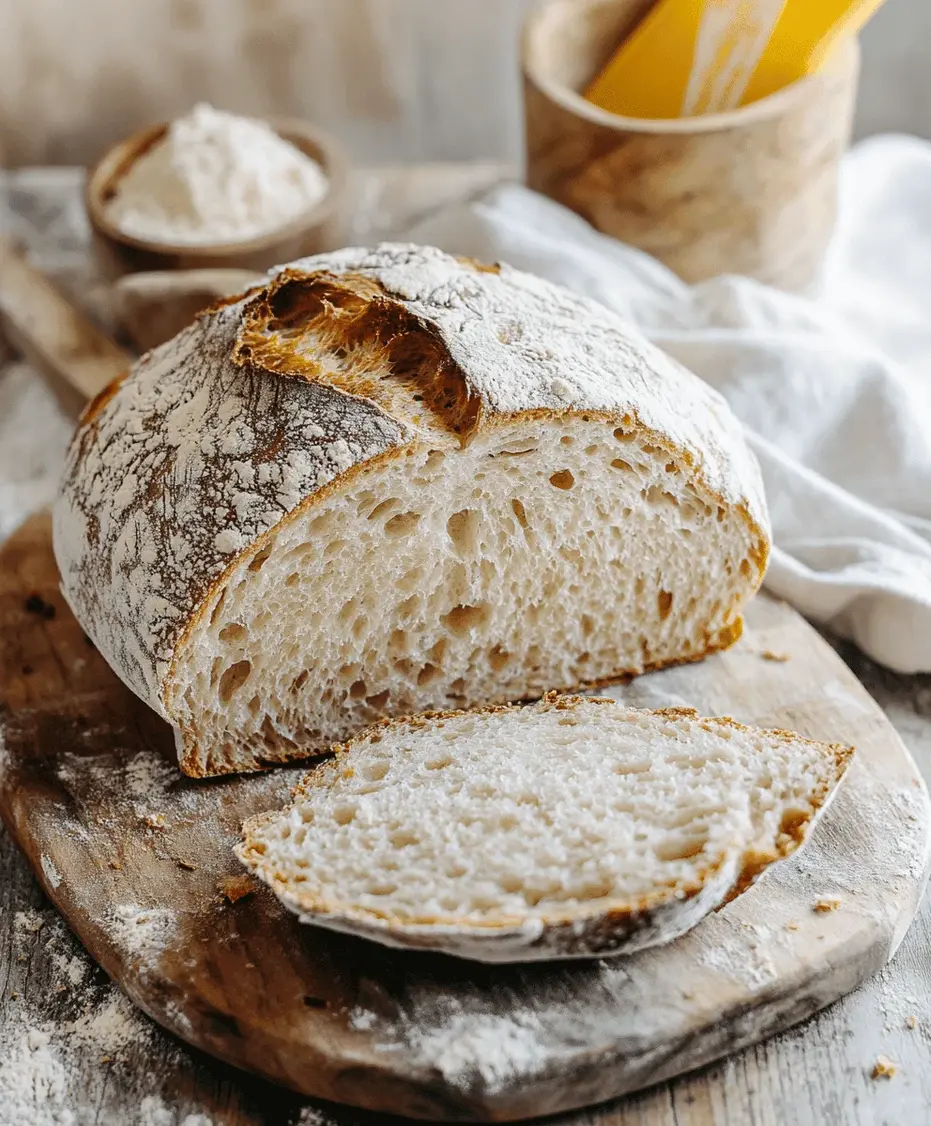
Did you know that over 60% of home bakers who try sourdough bread report a significant improvement in their baking confidence and a deeper appreciation for fermentation? Welcome to the world of homemade sourdough, where flour, water, salt, and a living starter combine to create something truly magical. This guide is designed to demystify the process, proving that you don’t need commercial yeast or fancy equipment to bake a loaf with a crisp, golden crust and a tangy, chewy interior that rivals any artisan bakery. Whether you’re nurturing your first starter or looking for a reliable, no-fail recipe, this step-by-step walkthrough will equip you with the knowledge to bake with confidence.
Ingredients for Artisan Sourdough
The beauty of this no yeast bread lies in its simplicity. Here’s what you’ll need, with notes on substitutions and the sensory role of each ingredient:
- 500g Bread Flour (or Strong White Flour): The backbone of your loaf. This high-protein flour (12-14%) creates the strong gluten network needed for that iconic chewy, open crumb. Substitution: You can substitute up to 100g with whole wheat or rye flour for a nuttier flavor and denser texture.
- 350g Warm Water (70°F / 21°C): Not just a hydrator, but the medium for fermentation. The warmth encourages starter activity. The dough will feel shaggy and sticky at first—this is perfect.
- 100g Active Sourdough Starter: Your leavening agent. It should be bubbly, float in water, and have a pleasantly sour, yogurt-like aroma. This is the “heart” of your sourdough bread.
- 10g Fine Sea Salt: More than just a flavor enhancer. Salt tightens the gluten structure, regulates yeast activity for a controlled rise, and draws out subtle sweetness from the flour.
Timing and Schedule
Unlike quick-rise commercial yeast recipes, authentic homemade sourdough is a lesson in patience. The extended fermentation (often 18+ hours) is what develops the complex flavor and digestibility. While a standard yeast bread might be ready in 3 hours, this slow process is what defines true artisan bread.
Step-by-Step Sourdough Instructions
Step 1: Mixing the Dough
In a large bowl, combine the warm water and active starter. Use your fingers or a whisk to dissolve the starter completely—you should see a cloudy mixture. Add all the flour and mix with a sturdy spatula or your hands until no dry bits remain. This initial mix, called the “autolyse,” lets the flour fully hydrate. Cover the bowl and let it rest for 30 minutes. After resting, sprinkle the salt over the dough. Wet your hand to prevent sticking, and gently fold and pinch the salt into the dough until fully incorporated.
Step 2: Bulk Fermentation and Folds
This is where the magic happens. Cover the bowl with a damp towel or plastic wrap. Let it sit at room temperature (70-75°F is ideal) for 4-6 hours. During this time, perform a series of “stretch and folds” every 30 minutes for the first 2 hours. To do this: wet your hand, grab one side of the dough, stretch it upwards, and fold it over the center. Rotate the bowl a quarter turn and repeat 3-4 more times. This gentle technique builds gluten strength without kneading. You’ll feel the dough transform from sticky and slack to smooth, elastic, and airy.
Step 3: Shaping the Loaf
Lightly flour your work surface. Gently turn the dough out. Using a bench scraper, fold the sides into the center to create a round or oval shape, creating surface tension on top—this is crucial for a good rise. Let the shaped dough rest, seam-side up, in a floured proofing basket (banneton) or a bowl lined with a heavily floured kitchen towel.
Step 4: Cold Proof (Overnight)
Place the entire basket, covered with a bag, into the refrigerator for 12-16 hours (overnight). This slow, cold fermentation deepens the sour flavor and makes the dough easier to score and handle before baking.
Step 5: Scoring and Baking
Preheat your oven to 450°F (230°C) with a Dutch oven inside for at least 45 minutes. Carefully remove the cold dough from the fridge. Place a piece of parchment paper over the basket, flip it over, and let the dough drop onto the paper. Using a razor blade or sharp knife, make one confident, shallow slash (about ¼ inch deep) across the top. This “score” controls where the bread expands. Carefully transfer the dough (with parchment) into the screaming-hot Dutch oven, cover with the lid, and bake for 25 minutes.
Step 6: Cooling the Bread
After 25 minutes, remove the lid. The loaf will be pale but risen. Continue baking, uncovered, for another 20-25 minutes until it achieves a deep, golden-brown crust. Remove from the oven and transfer the loaf to a wire cooling rack. This is the hardest part: let it cool completely for at least 2 hours. Cutting into hot bread releases steam and results in a gummy crumb.
Nutritional Information
(Per 1/12th of the loaf, approximate values)
- Calories: 180 kcal
- Carbohydrates: 37g
- Protein: 6g
- Fat: 1g
- Fiber: 2g
- Sodium: 325mg
The long fermentation process pre-digests some starches, making the nutrients more bioavailable and often easier to digest than commercial bread.
Healthier Alternatives and Flavor Swaps
- Whole Grain Boost: Swap 150g of bread flour for whole wheat or spelt flour. Add 15g extra water to compensate for the flour’s thirst. The flavor becomes heartier and nuttier.
- Seeded Power Loaf: During the initial mix, add 50g of a seed blend (sunflower, pumpkin, flax, sesame). Toast the seeds first for maximum flavor.
- Lower-Sodium Option: Reduce salt to 8g. The flavor will be milder, and the crust slightly less crisp, but still delicious.
- Herb & Garlic Infusion: Add 2 tbsp of finely chopped fresh rosemary and 3 cloves of minced roasted garlic during the folding stage for a savory twist.
Serving Suggestions
A fresh slice of homemade sourdough is a canvas for countless meals.
- Classic: Thickly sliced, toasted, and slathered with high-quality butter and a sprinkle of flaky sea salt.
- Avocado Toast: Top with smashed avocado, red pepper flakes, and a soft-boiled egg.
- Soup Companion: The perfect tool for scooping up the last bits of a hearty tomato soup or stew.
- Epic Sandwich: Its sturdy crumb holds up to robust fillings like roasted vegetables, cured meats, and cheeses without getting soggy.
Common Mistakes and How to Avoid Them
- Dense, Gummy Loaf: Usually caused by under-fermentation or cutting while hot. Ensure your starter is active and respect the full cooling time.
- Pale, Soft Crust: Oven wasn’t hot enough, or steam was insufficient. Preheating the Dutch oven is non-negotiable for that professional “oven spring” and crisp crust.
- Loaf Spreads Flat: The dough lacked strength, often from insufficient stretching/folding or over-hydration for your flour. Adjust water slightly next time or be more diligent with folds.
- Not Sour Enough: For a more pronounced tang, extend the cold proof in the fridge by 6-12 hours, or use a starter that’s been unfed for longer (more “ripe”).
Storing and Freezing Tips
- Room Temperature: Store the cooled loaf cut-side down on a cutting board for up to 2 days. The crust will soften, but it’s still delicious.
- Freezing for Longevity: Slice the completely cooled loaf. Place slices in a single layer on a baking sheet to freeze solid, then transfer to a freezer bag for up to 3 months. Toast directly from frozen.
- Reviving Stale Bread: Briefly run the whole loaf under tap water and bake at 350°F for 10-15 minutes. It will revive the crust and soften the interior.