“`html
Table of Contents
Avgolemono Greek Lemon Chicken Soup – Silky, Citrusy Comfort with a Chef’s Touch
I’ll never forget the first time I made avgolemono soup recipe in my own NYC kitchen. It was a gray, drizzly afternoon — the kind that makes you crave something yellow and bright — and I wanted the Greek lemon chicken soup my friend’s yiayia used to make. But I also wanted to bring something of myself to it. So I stood there, whisk in hand, thinking about my mother in Morocco, who taught me how to temper eggs with hot liquid for her famed harira. And I thought about my years in Paris, learning how liaison — the classic French technique of thickening sauces with egg yolks and cream — works on a molecular level. Right there, between three continents and a lifetime of kitchen memories, this traditional avgolemono was born. It’s silky, it’s tangy, it’s deeply comforting, and it’s absolutely foolproof when you know the right technique.
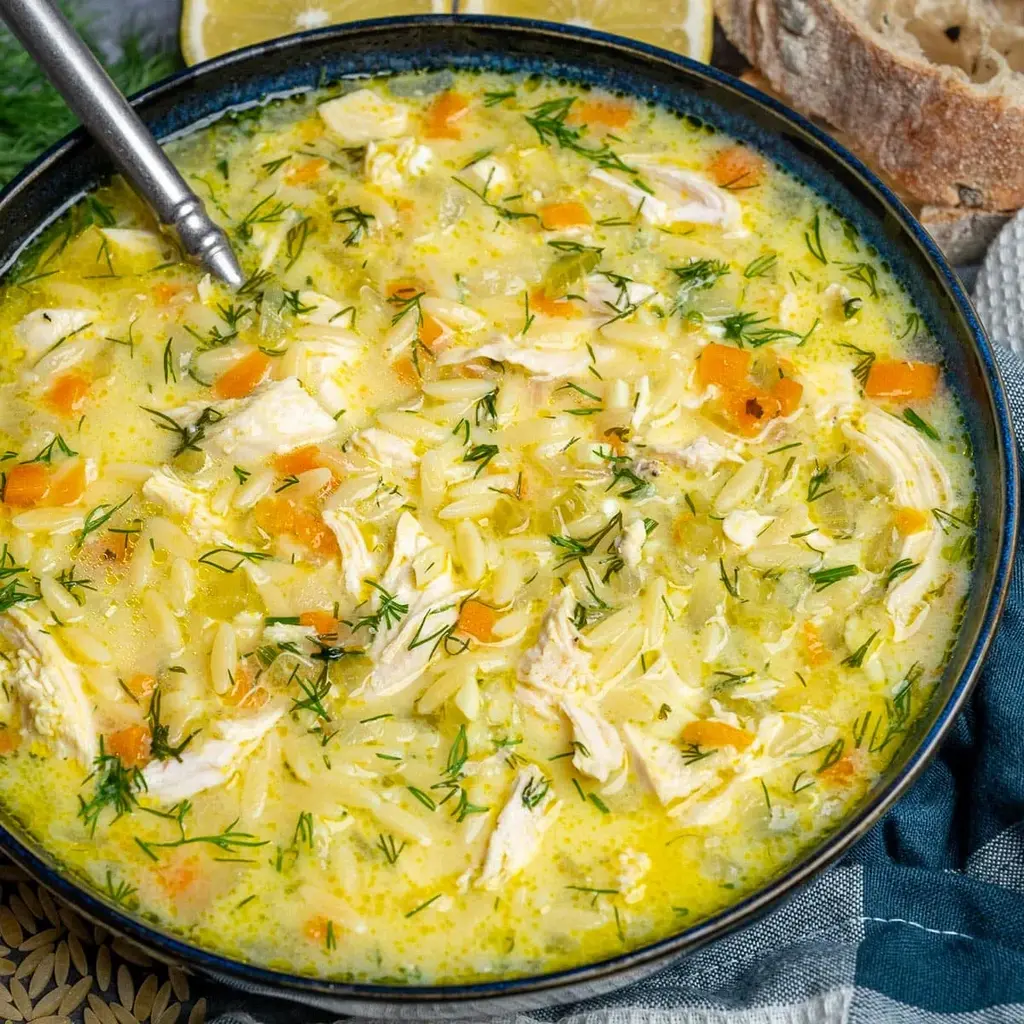
Imagine a bowl of soup that’s simultaneously bright and cozy — the lemon hits you first, clean and cheerful, followed by a rich, velvety mouthfeel that only egg yolks can provide. The tender shreds of chicken nestle among tiny orbs of orzo, while fresh dill adds a delicate, anise-like lift. Every spoonful is a study in contrasts: sharp and mellow, brothy and creamy, simple yet sophisticated. The broth itself is pale gold, almost glowing, with a texture that’s neither thin nor heavy but somewhere in between — like liquid sunshine you can eat with a spoon. When I serve this lemon chicken soup with rice (or orzo, in this case) at my table, I watch faces soften, shoulders drop, and suddenly everyone is talking a little slower, smiling a little more.
What makes my version of Greek chicken soup different from the rest? It’s the technique. I spent years perfecting the tempering process — that crucial moment when hot broth meets whisked egg yolks and lemon juice — so you never end up with scrambled eggs floating in your soup. I also insist on using orzo instead of rice because I love how it catches the broth in its tiny curves, and I finish every batch with a generous handful of fresh dill, which brightens the whole dish. In this post, I’ll share my best pro tip for avoiding curdling, the one common mistake I see home cooks make, and a few easy swaps so you can make this soup your own. Let’s dive in.
Why This Avgolemono Soup Recipe Is the Best
The Flavor Secret — Most avgolemono recipes rely on just lemon and egg, and that’s lovely, but I layer in a deeper savory note by browning the vegetables in olive oil until they’re deeply softened and barely caramelized. This is a trick I picked up in Paris: building a fond (that’s the French term for the browned bits on the bottom of the pot) even for a soup. It adds a subtle richness that makes the lemon taste brighter by contrast. I also finish with both dill and a crack of black pepper — a combination that feels unmistakably Greek yet universally comforting.
Perfected Texture — The texture of traditional avgolemono is everything. Too thin and it’s just lemon water; too thick and it’s more like a sauce. My version hits the sweet spot thanks to two things: first, I cook the orzo directly in the broth so it releases just enough starch to give the soup body without making it gummy. Second, I temper the egg-lemon mixture slowly and patiently, adding hot broth in a thin stream while whisking constantly. This is the same technique I used in pastry school for crème anglaise — and it works every single time. The result is a soup that’s luscious but not heavy, with a satiny finish that clings to the back of a spoon.
Foolproof & Fast — I know that the idea of adding eggs to hot soup makes some people nervous, but I promise you: if you follow the steps — especially the tempering — you will get a perfect result on your first try. The hands-on time is about 15 minutes, and the total time is under an hour. This Greek lemon chicken soup is forgiving, adaptable, and deeply satisfying. Whether you’re cooking for a weeknight dinner or a Sunday meal prep, it’s the kind of recipe that makes you look like you spent all day in the kitchen — when really, you had plenty of time to put your feet up.
Avgolemono Soup Recipe Ingredients
I pick up my vegetables for this avgolemono soup recipe at the Union Square Greenmarket — the carrots are so sweet this time of year, and the dill is always fragrant. In my mother’s kitchen in Morocco, we used similar aromatics for our soups, though we’d add turmeric and ginger. For this Greek lemon chicken soup, I keep the ingredient list simple and let each component shine. Here’s everything you’ll need:
Ingredients List
- 1 tablespoon olive oil
- 1 medium onion, diced
- 1 medium carrot, diced
- 2-3 celery stalks, diced
- 2-3 garlic cloves, finely chopped
- 2 bay leaves
- 2 chicken breasts (about 12 oz / 350 g total)
- 6 cups (1.5 liter) chicken stock
- 3/4 cup (175 g) orzo
- Juice of 1 lemon
- 2 egg yolks
- A handful fresh dill
- Salt and freshly ground black pepper to taste
Ingredient Spotlight
Lemon — Use a medium, heavy lemon with bright yellow skin. You’ll want about 3 tablespoons of fresh juice. Never use bottled lemon juice here — it has a flat, metallic taste that will dull the whole soup. A good lemon should feel firm but give slightly when pressed. If you want extra lemon flavor, add a strip of lemon zest with the bay leaves and remove it before serving.
Egg Yolks — The yolks are what give this Greek chicken soup its signature velvety texture. Use large eggs from a trusted source. Separate the eggs while they’re cold straight from the fridge, but let the yolks come to room temperature before whisking with the lemon juice — this helps them incorporate more smoothly. Save the whites for an omelet or meringue.
Orzo — This small rice-shaped pasta is my preferred starch for lemon chicken soup with rice vibes, but it’s actually pasta. It absorbs broth beautifully and holds its shape without turning mushy. You can substitute with arborio rice or even pastina. If using rice, be aware that it may absorb more liquid, so you might need to add a splash of extra broth when reheating.
Chicken Stock — A good stock makes all the difference. I use a low-sodium store-bought brand (I like Kitchen Basics or homemade when I have it) so I can control the salt. If you’re using homemade stock that’s already salted, be careful with additional salt. The stock is the backbone of this traditional avgolemono, so don’t skimp on quality.
| Original Ingredient | Best Substitution | Flavor / Texture Impact |
|---|---|---|
| Chicken breast | Chicken thighs (boneless, skinless) | Richer flavor, slightly more fat, stays juicier |
| Orzo | Arborio rice, pastina, or gluten-free orzo | Rice absorbs more liquid; pastina looks like little stars |
| Fresh dill | Fresh parsley + 1 tsp dried dill | Less anise flavor but still fresh and herbal |
| Chicken stock | Vegetable stock or mushroom broth | Lighter flavor, less savory depth |
| Egg yolks | 1 whole egg + 1 extra yolk (for richer texture) | Slightly more body, similar richness |
How to Make Avgolemono Greek Lemon Chicken Soup — Step-by-Step
Making this avgolemono soup recipe is a beautiful, calming process. I’ll walk you through each step with the exact cues I use in my own kitchen. Trust the process — especially the tempering — and you’ll be rewarded with the most luxurious bowl of Greek lemon chicken soup.
Step 1: Sauté the Vegetables
Heat the olive oil in a large stock pot or Dutch oven over medium heat. Add the diced onion, carrot, and celery. Cook for 8-10 minutes, stirring occasionally, until the vegetables are softened and the onion is translucent. The edges of the carrot should just start to take on a tiny bit of golden color — that’s where the flavor lives. Add the chopped garlic and cook for another minute, just until fragrant. Be careful not to brown the garlic; it should taste sweet, not bitter.
⚠️ Common Mistake to Avoid: Don’t rush the vegetable sauté. If you undercook the aromatics, the soup will lack depth. Those 8-10 minutes are where the flavor foundation is built. If the pot starts to look dry, add a splash of stock instead of more oil.
Step 2: Simmer the Chicken
Add the bay leaves, chicken breasts, and chicken stock to the pot. Bring to a boil over high heat, then immediately lower the heat to medium-low. Cover with a lid and let it simmer gently for 15 minutes. The surface should show small, lazy bubbles — no roaring boil. This gentle cooking keeps the chicken tender and the broth clear. After 15 minutes, the chicken should be cooked through and easily liftable with tongs.
💡 emy’s Pro Tip: If you have extra time, use bone-in chicken thighs instead of breasts. Simmer them for 25 minutes, then shred. The cartilage adds even more body to the stock. Just remove the bones before shredding.
Step 3: Shred and Cook the Orzo
Remove the chicken breasts and bay leaves from the pot with tongs. Discard the bay leaves. Place the chicken on a cutting board and, when cool enough to handle, shred it with two forks. While you’re shredding, add the orzo to the pot and increase the heat slightly to maintain a gentle simmer. Cook the orzo for 10 minutes, stirring occasionally to prevent sticking. The orzo should be tender but still have a tiny bite in the center — al dente.
⚠️ Common Mistake to Avoid: Don’t overcook the orzo! It will continue to soften slightly after you add the egg-lemon mixture and during reheating. Cook it just to al dente — about 1 minute less than the package directions — so it stays pleasant in the finished soup.
Step 4: Temper and Finish
While the orzo cooks, whisk the egg yolks and lemon juice together in a medium bowl until smooth and slightly pale. This is the magic step. Just before the orzo is done, take out 1-2 ladles of hot broth from the pot. Very slowly — in a thin, steady stream — pour the hot broth over the egg-lemon mixture while whisking constantly. This is called tempering, and it gently raises the temperature of the eggs so they don’t scramble when you add them to the pot. Pour the tempered mixture back into the pot, stir well, and cook for 5 more minutes over low heat. Do not let it boil after adding the eggs, or you’ll end up with lemony scrambled eggs.
💡 emy’s Pro Tip: If you’re nervous about curdling, strain the tempered egg-lemon mixture through a fine-mesh strainer before adding it to the pot. This catches any tiny bits of cooked egg that might have formed and gives you a perfectly silky texture every time.
Step 5: Finish and Serve
Stir in the shredded chicken and most of the fresh dill, reserving a little for garnish. Taste and adjust the seasoning with salt and freshly ground black pepper. I usually find this Greek chicken soup needs a surprising amount of salt — about 1 teaspoon, depending on your stock — so taste carefully. Serve immediately in warm bowls, topped with the remaining fresh dill. This is a soup that waits for no one; it’s at its absolute best right after it’s made.
⚠️ Common Mistake to Avoid: Don’t let the soup sit on the stove after adding the eggs. The residual heat can cause the egg-lemon emulsion to break. If you need to keep it warm, use the lowest possible heat and stir occasionally, but understand that the texture will change slightly. It’s still delicious — just not quite as silky.
| Step | Action | Duration | Key Visual Cue |
|---|---|---|---|
| 1 | Sauté onion, carrot, celery | 8–10 min | Vegetables softened, edges of carrot slightly golden |
| 2 | Add garlic, bay leaves, chicken, stock | 1 min + 15 min simmer | Small lazy bubbles at surface; chicken is firm to touch |
| 3 | Remove chicken, add orzo, cook | 10 min | Orzo is al dente — tender but with a white center dot |
| 4 | Temper egg yolks with lemon + hot broth | 2–3 min | Mixture is smooth, pale, and slightly thickened |
| 5 | Combine, add dill, season, serve | 5 min | Soup is pale gold, thick enough to coat a spoon |
Serving & Presentation
This traditional avgolemono is a star on its own, but it loves company. I like to serve it in wide, shallow bowls so the broth catches the light and the fresh dill on top stays visible. A drizzle of good olive oil — the peppery, green kind — right before serving is a lovely touch that adds richness. In my NYC apartment, I often pair this Greek lemon chicken soup with a simple side of crusty bread for dipping, or a small Greek salad with oregano and feta on the side.
The soup is also wonderful with a spoonful of yogurt swirled in just before serving — it adds another layer of tang and makes the soup even creamier. If you’re serving a crowd, set out a small dish of extra lemon wedges and a bowl of fresh dill so everyone can customize their bowl. For a truly Mediterranean spread, serve it alongside roasted vegetables, warm pita, and a glass of crisp Assyrtiko wine.
| Pairing Type | Suggestions | Why It Works |
|---|---|---|
| Side Dish | Crusty sourdough, warm pita, Greek salad, roasted lemon potatoes | Bread soaks up the silky broth; salad adds crunch and freshness |
| Sauce / Dip | Tzatziki, whipped feta dip, olive tapenade | Creamy dips complement the tangy broth; salty feta adds contrast |
| Beverage | Assyrtiko white wine, lemon-infused sparkling water, ouzo spritz | Crisp, acidic wines mirror the lemon; ouzo adds an herbal anise note |
| Garnish | Extra fresh dill, a drizzle of olive oil, lemon zest, flaky sea salt, cracked black pepper | Each garnish adds a layer of freshness, texture, and visual appeal |
Make-Ahead, Storage & Reheating
I know life in New York is busy — between work, errands, and the never-ending to-do list, dinner sometimes needs to be ready in minutes. This avgolemono soup recipe is actually wonderful for meal prep, but there’s one thing you should know: the texture is best within 2 days of making it. The orzo will continue to absorb broth as it sits, so I often cook the orzo separately and add it per serving if I’m planning to have leftovers for longer. Here’s my complete guide to storing and reheating this Greek lemon chicken soup so it stays as close to day-one perfection as possible.
| Method | Container | Duration | Reheating Tip |
|---|---|---|---|
| Refrigerator | Airtight container (glass or plastic) | 3–4 days | Reheat gently over medium-low, stirring often. Add a splash of broth or water to loosen. Do not boil. |
| Freezer | Freezer-safe container (leave 1-inch headspace) | Up to 2 months | Thaw overnight in the fridge. Reheat gently on the stovetop. The texture may be slightly grainier after freezing. Whisk in 1 tsp lemon juice and 1 egg yolk before serving to refresh. |
| Make-Ahead | Store soup base + orzo separately | Soup base: 3 days; orzo: cook fresh | Cook orzo separately, rinse with cold water, and toss with a tiny bit of olive oil. Add to individual bowls before ladling hot soup over it. |
My favorite trick for reviving leftover traditional avgolemono: bring it to a gentle simmer over medium-low heat, then whisk in a fresh egg yolk that’s been mixed with a teaspoon of lemon juice. This refreshes the silky texture and brightens the flavor as if you just made it. It’s a little extra step, but it makes leftovers taste like a brand-new pot of soup.
Variations & Easy Swaps
One of the things I love most about this Greek chicken soup is how flexible it is. Over the years, I’ve tested countless variations — some inspired by my travels, some by what I find at the farmers market, and some by readers with dietary needs. Here are my favorite ways to change it up, along with clear guidance on what to expect.
| Variation | Key Change | Best For | Difficulty Impact |
|---|---|---|---|
| Vegetarian Avgolemono | Use vegetable stock, omit chicken, add chickpeas or cannellini beans | Meatless Monday, vegetarian guests | Same difficulty; cooking time is shorter |
| Gluten-Free Avgolemono | Substitute orzo with arborio rice or gluten-free pastina | Celiac or gluten-sensitive family members | Same difficulty; rice may need 2–3 extra minutes |
| Spicy North African Twist | Add 1 tsp harissa paste, 1/2 tsp turmeric, and a cinnamon stick with the stock | Adventurous palates, North African flavor lovers | Same difficulty; adds warmth without heat |
Vegetarian Avgolemono
This version is near and dear to my heart — it reminds me of the lentil soups my mother would make in Morocco, brightened with lemon. Simply replace the chicken stock with a good-quality vegetable stock and omit the chicken. For protein, add 1 can of drained and rinsed chickpeas or cannellini beans along with the orzo. The beans add heartiness and a creamy texture that works beautifully with the egg-lemon sauce. If you want even more depth, sauté a diced potato with the vegetables — it will break down slightly and thicken the broth naturally.
Gluten-Free Avgolemono
Making this lemon chicken soup with rice (or another gluten-free grain) is incredibly simple. Use arborio rice, jasmine rice, or a gluten-free pastina in place of orzo. Arborio rice is my top pick because it releases a little starch that mimics the body orzo gives the soup. Cook the rice according to package directions in the broth before adding the egg-lemon mixture. Note that rice absorbs more liquid than orzo, so you may need to use 7 cups of stock instead of 6, or add an extra cup of water if the soup gets too thick.
Spicy North African Twist
This is my personal secret variation — the one I make when I’m craving the flavors of my childhood. Add 1 teaspoon of harissa paste (or more if you like heat), 1/2 teaspoon of turmeric, and a whole cinnamon stick to the pot along with the chicken stock. The harissa adds a gentle, smoky heat, the turmeric gives the broth a deeper golden color, and the cinnamon lends a warm, sweet note that makes the lemon taste even brighter. Remove the cinnamon stick before serving. Top with fresh cilantro instead of dill for a complete North African-Greek fusion. It’s unexpected, but absolutely magical.
FAQ
Here are answers to the most common questions I get about making this traditional avgolemono at home. If you don’t see your question here, drop it in the comments — I answer every single one! 🧡
What is the best way to keep my avgolemono soup from curdling when I add the eggs?
The most important step is tempering the eggs — and the key is patience. Whisk your egg yolks and lemon juice together in a bowl until smooth. Then, very slowly, add hot broth from the pot in a thin, steady stream while whisking constantly. This gradually raises the temperature of the eggs so they don’t shock and scramble when they hit the pot. I like to use a ladle and pour with one hand while whisking with the other. Use 1-2 ladles of broth (about 1/2 to 1 cup total), and pour slowly enough that the mixture stays smooth and doesn’t steam up. After the eggs are tempered, pour the mixture back into the pot while stirring gently, and keep the heat on low — never let it boil after adding the eggs. If you’re still nervous, strain the tempered mixture through a fine-mesh strainer before adding it to the pot for an extra layer of safety.
Can I use chicken thighs instead of chicken breast in Greek lemon chicken soup?
Absolutely! Chicken thighs are a fantastic substitute in this traditional avgolemono. They have a higher fat content than breasts, which means they stay juicier and add a deeper, richer flavor to the broth. Boneless, skinless thighs work best — use about 12-16 ounces (3-4 thighs) in place of the 2 chicken breasts. Because thighs are a bit thicker and more forgiving, you can simmer them for 18-20 minutes instead of 15 to ensure they’re tender and easy to shred. After shredding, you’ll notice the meat is darker and more flavorful. If you have bone-in thighs, even better — simmer for 25 minutes, then remove the bones before shredding. The extra collagen from the bones will make the broth even more luscious.
How do you thicken avgolemono soup without using orzo or rice?
If you want to thicken this Greek chicken soup without orzo or rice, you have several excellent options. The most straightforward method is to purée a portion of the cooked vegetables (onion, carrot, celery) with a cup of the broth before adding the egg-lemon mixture — this creates a naturally thick, creamy base without adding any extra ingredients. Alternatively, you can whisk in a slurry of 1 tablespoon cornstarch mixed with 2 tablespoons cold water after the chicken is removed, letting it simmer for 2-3 minutes until thickened. For a low-carb approach, add a small grated potato (about 1/2 cup) along with the stock — it will cook down and release starch that thickens the broth beautifully. Finally, you can simply use 1 whole egg + 2 egg yolks instead of just yolks; the extra white adds a bit more body, though the texture will be slightly less silky.
Is it better to serve avgolemono soup hot or at room temperature?
I recommend serving this avgolemono soup recipe hot — just below piping hot, actually. The ideal serving temperature is warm enough that the broth feels soothing and the lemon flavor is vibrant, but not so hot that the delicate egg emulsion breaks or that you burn your tongue. In Greece, avgolemono is traditionally served as a first course at lunch or dinner, hot from the pot. However, I’ve also enjoyed it at room temperature during the summer months, especially when I’ve added extra lemon juice and fresh herbs — it takes on a lighter, more refreshing character. If you’re serving it at room temperature, make sure it hasn’t been sitting out for more than 2 hours for food safety reasons. One thing I don’t recommend is serving it cold straight from the fridge — the texture becomes gelatinous and the flavors flatten.
Can I freeze avgolemono soup for later?
Yes, you can freeze this Greek lemon chicken soup, but with a few important caveats. The egg-lemon emulsion can become slightly grainy after freezing and thawing, and the orzo will continue to absorb broth and become quite soft. For the best results, freeze the soup base (the broth with chicken and vegetables) without the orzo and without the egg-lemon mixture. When you’re ready to serve, thaw the base in the refrigerator overnight, bring it to a gentle simmer, cook fresh orzo in the broth, and then add a freshly made egg-lemon tempering mixture. If you must freeze the fully assembled soup, expect the texture to be less silky — but it will still taste delicious. Reheat it gently over medium-low heat, and stir in a fresh egg yolk mixed with a teaspoon of lemon juice to help restore some of the velvety texture.
Can I use bottled lemon juice instead of fresh lemons?
I strongly recommend using fresh lemon juice for this avgolemono soup recipe. Bottled lemon juice has a flat, metallic, and sometimes slightly bitter taste that comes from preservatives and prolonged storage. The fresh, bright, floral quality of a real lemon is one of the defining characteristics of traditional avgolemono, and bottled juice simply can’t replicate it. That said, if fresh lemons are absolutely unavailable, look for a brand of bottled lemon juice that contains no preservatives or added sugars — but even then, use about 1 tablespoon less than the recipe calls for, and add a tiny pinch of sugar to balance the acidity. For the best flavor, always use fresh lemons and roll them firmly on the counter before juicing to get the most juice out of them.
How can I make avgolemono soup dairy-free?
This traditional avgolemono is naturally dairy-free as written! There is no milk, cream, butter, or cheese in the classic recipe — the silky texture comes entirely from the egg yolks and the natural starch from the orzo. So you can serve it to dairy-sensitive family members without any modifications. Just double-check that your chicken stock is dairy-free (some store-bought brands add cream or milk solids; read the label carefully). If you want to add a creamy element without dairy, swirl in a spoonful of full-fat coconut milk or a dollop of dairy-free yogurt (plain, unsweetened) right before serving. Both options add richness without compromising the lemon flavor.
Why does my avgolemono taste flat, even though I added enough lemon?
A flat-tasting avgolemono is almost always a salt issue, not a lemon issue. Lemon and salt work together: salt enhances and brightens acidity, while lemon cuts through richness. If you’re using low-sodium chicken stock and haven’t added enough salt, the soup will taste dull no matter how much lemon you add. I recommend tasting the soup after adding the egg-lemon mixture and the dill, then adding salt in 1/4-teaspoon increments. You’ll be surprised how much salt it needs — I often add 3/4 to 1 full teaspoon of kosher salt for a 6-cup batch. Another possible cause is using bottled lemon juice (see above). Finally, make sure your lemon is actually tart and flavorful — some lemons are sweeter than others. If your lemon is mild, squeeze half a lemon extra and add it at the end.
Share Your Version!
I absolutely love hearing from you — it’s the best part of running my little corner of the internet! If you make this avgolemono soup recipe, please leave a star rating and a comment below. Tell me: did you use orzo or rice? Did you add the North African twist with harissa? Did your family go back for seconds? Every comment makes my day.
And if you’re on Instagram or Pinterest, snap a photo of your Greek lemon chicken soup and tag me @cookingwithemy — I re-share my favorites in my stories! Seeing your beautiful bowls of traditional avgolemono from kitchens all over the world is truly the best feeling. From my NYC kitchen to yours — I hope this recipe brings as much warmth to your table as it does to mine. — emy 🧡
Love This Recipe? Save It to Pinterest!
If you enjoyed this Avgolemono Greek Lemon Chicken Soup recipe, don’t let it get lost in your browser tabs! 😄 Pin it now so you can find it again anytime — and explore hundreds more tried-and-tested recipes waiting for you on my Pinterest boards.
👉 Follow emy on Pinterest @cookingwithemy
📌 Pin this recipe · 🔁 Re-pin your favorites · 💬 Tag me when you make it — I love seeing your creations!
📸 Made this recipe? I’d love to see it!
Snap a photo, share it on Instagram with @cookingwithemy, and leave a ⭐⭐⭐⭐⭐ rating + comment below. Your feedback helps me create more recipes you’ll love!
“`
Print

Avgolemono Greek Lemon Chicken Soup
Description
Avgolemono is a traditional Greek lemon chicken soup that’s simply comfort in a bowl! It’s a gorgeous, delicious soup made with egg yolks and loads of lemon juice for a warming and satisfying meal.
Ingredients
- 1 tablespoon olive oil
- 1 medium onion, diced
- 1 medium carrot, diced
- 2–3 celery stalks, diced
- 2–3 garlic cloves, finely chopped
- 2 bay leaves
- 2 chicken breasts (about 12 oz / 350 g total)
- 6 cups (1.5 liter) chicken stock
- 3/4 cup (175 g) orzo
- Juice of 1 lemon
- 2 egg yolks
- A handful fresh dill
- Salt and freshly ground black pepper to taste
Instructions
- Heat the olive oil in a large stock pot or Dutch oven and cook the onion, carrot and celery for 8-10 minutes over medium heat until softened.
- Add the garlic and cook for another minute, then add the bay leaves, chicken and chicken stock.
- Bring to a boil, then lower the heat to medium-low, cover with a lid and simmer for 15 minutes.
- Take out the chicken breasts and bay leaves. Add the orzo to the pot and continue to cook for 10 minutes.
- Shred the chicken with two forks and add it back to the pot.
- While the orzo is cooking, whisk the egg yolks and lemon juice in a bowl. Take out 1-2 ladles of soup and pour it over the egg-lemon mixture to temper it. Add this mix to the pot and continue to cook for 5 minutes.
- Stir in the fresh dill, adjust the seasoning and serve immediately, with some extra fresh dill on top if you like.
Nutrition
- Calories: 377 calories
- Sugar: 8 grams sugar
- Fat: 13 grams fat
- Carbohydrates: 32 grams carbohydrates
- Protein: 32 grams protein
Tried This Recipe? Leave a Comment!
Did you make this recipe? I’d love to hear how it turned out! Please leave a comment and a rating below. Your feedback helps other home cooks and supports cheerychop.com!
For more delicious inspiration, follow me on Pinterest!