Crispy Fish Batter and Chips Recipe for Perfect Meals

“`html

Crispy Fish Batter and Chips Recipe for Perfect Meals

Craving That Perfect Crispy Fish and Chips?

Are you tired of soggy bottoms and bland fish when you attempt to make fish and chips at home? Do you dream of that perfect, golden-brown crunch that rivals your favorite takeaway? Many home cooks struggle to achieve the ideal crispy texture, leading to disappointing meals. This comprehensive guide is designed to help you conquer the art of making incredibly crispy fish batter and perfectly fluffy-on-the-inside, crispy-on-the-outside chips, transforming your weeknight dinners or weekend treats into something truly special. Forget the frozen options; this recipe will empower you to create a show-stopping meal that will have everyone asking for seconds. Get ready to impress!

Ingredients You’ll Need

The secret to truly exceptional fish and chips lies in the quality of your ingredients and how you prepare them. Here’s what you’ll need for that irresistible crunch and flavor:

For the Crispy Fish Batter:

  • 2 cups All-Purpose Flour: The base of our batter, providing structure. For a lighter crisp, you can substitute 1/2 cup with cornstarch or rice flour.
  • 1 tsp Baking Powder: This leavening agent is crucial for an airy, light batter that fries up extra crispy.
  • 1/2 tsp Salt: Enhances flavor and brings out the natural sweetness of the fish.
  • 1/4 tsp Black Pepper: Freshly ground for the best aromatic punch.
  • 1.5 – 2 cups Ice-Cold Lager Beer or Sparkling Water: This is the magic ingredient for crispiness! The carbonation helps make the batter light and airy, while the cold temperature aids in creating that shatteringly crisp exterior. Don’t worry, the alcohol bakes off.
  • 6-8 Fish Fillets (Cod, Haddock, or Pollock): Choose firm white fish. Haddock is traditional for its flaky texture and mild flavor, while cod is readily available and holds up well. Ensure they are dry and boneless.

For the Perfect Chips:

  • 4 large Russet Potatoes: These starchy potatoes are ideal for achieving fluffy interiors and crisp exteriors. Maris Pipers or King Edwards are also excellent choices.
  • Vegetable Oil or Peanut Oil: For deep-frying. These oils have high smoke points, crucial for safe and effective frying. You’ll need about 4-6 cups, depending on your pot size.
  • Salt: To season generously after frying.

Equipment:

  • Large deep pot or deep fryer
  • Slotted spoon or spider strainer
  • Wire rack set over a baking sheet
  • Mixing bowls
  • Sharp knife and cutting board

Perfect Timing

Prep time:
30 minutes
Cook time:
25-30 minutes
Total time:
55-60 minutes

This recipe takes approximately 30 minutes to prepare and another 25-30 minutes to cook, for a total of around 1 hour. This is slightly longer than the average quick meal, but entirely worth the effort for authentic, restaurant-quality fish and chips at home. The double-frying method for the chips adds an extra step but is key to their perfect texture, so plan accordingly!
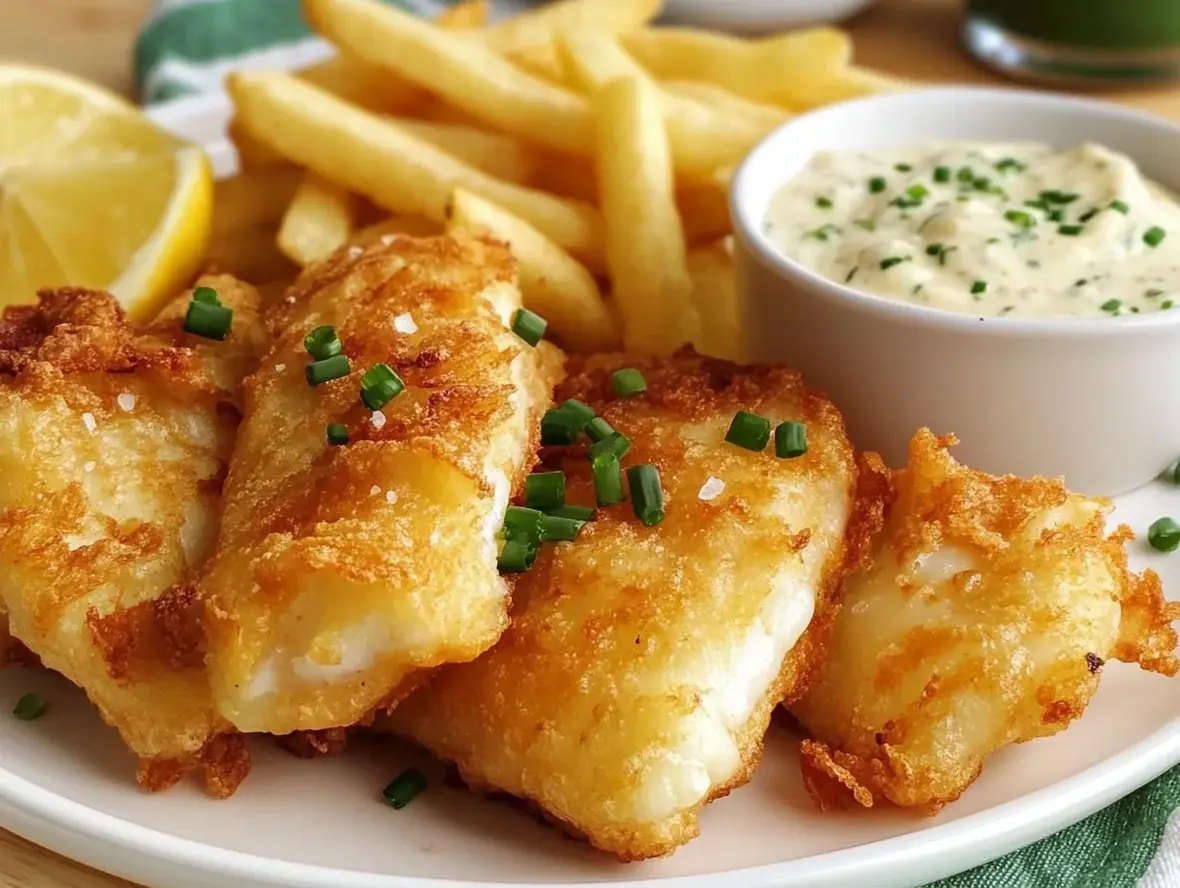
Delicious golden crispy fish and chips served with lemon wedges and tartar sauce

Step-by-Step Fish Batter & Chips Mastery

Step 1: Prep the Fish

Begin by ensuring your fish fillets are dry. Pat them thoroughly with paper towels. This is super important for the batter to adhere properly and for achieving that coveted crispiness. If your fillets are very thick, you can cut them in half horizontally to create thinner pieces that cook more evenly. Season them lightly with salt and pepper.

Step 2: Make the Batter

In a medium bowl, whisk together the flour, baking powder, salt, and pepper. Gradually pour in the ice-cold beer or sparkling water, whisking gently until you have a smooth, thick batter, about the consistency of pancake batter. Don’t overmix; a few small lumps are perfectly fine and can even contribute to a lighter texture. The colder your liquid, the crispier your batter will be, so keep it chilled until you’re ready to use it. You might not need all the liquid, or you might need a little more – aim for that perfect, coating consistency.

Step 3: Prepare the Chips

Wash and scrub your potatoes thoroughly. You can peel them if you prefer, but leaving the skin on adds texture and nutrients. Cut the potatoes into your desired chip shape. Aim for roughly 1/2-inch thick batons for the best balance of crispy exterior and fluffy interior. Rinse the cut potatoes under cold water to remove excess starch, then pat them completely dry with paper towels. This step is crucial to prevent them from sticking together and to ensure they fry up crispy.

Step 4: Fry the Chips (The Double Fry Method)

Heat your vegetable or peanut oil in a large, heavy-bottomed pot or deep fryer to 310°F (155°C). Carefully add about half of the potato chips to the hot oil, being careful not to overcrowd the pot. Fry them for about 5-7 minutes, until they are softened and just starting to turn pale golden. This is the first fry, which cooks the inside. Remove the chips with a slotted spoon and drain them on a wire rack set over a baking sheet. Let them cool for at least 10 minutes. This resting period allows steam to escape, ensuring a crispier final fry. Increase the oil temperature to 375°F (190°C) for the second fry. Fry the chips again in batches for 2-4 minutes, until they are golden brown and crispy. Drain them again on the wire rack and immediately season generously with salt. The second fry creates that wonderfully crisp exterior.

Step 5: Fry the Fish

While the chips are having their first fry or cooling, you can prepare to fry the fish. Increase the oil temperature to 375°F (190°C) (or use a separate pot if you’re doing both simultaneously). Make sure your batter is still cold. Dip each seasoned fish fillet into the batter, ensuring it’s fully coated. Let any excess batter drip off for a moment. Carefully lower the battered fish into the hot oil, frying one or two pieces at a time to avoid overcrowding and dropping the oil temperature too much. Fry for about 5-8 minutes, turning occasionally, until the batter is a deep golden brown and the fish is cooked through and flakes easily. You’ve got this!

Step 6: Serve and Enjoy

Once the fish is golden and cooked, lift it out of the oil with your slotted spoon and drain it on the wire rack alongside the chips. Season the fish with a little extra salt if desired. Serve immediately while everything is piping hot and wonderfully crispy. The contrast between the flaky fish, crispy batter, and perfectly fried chips is simply divine.
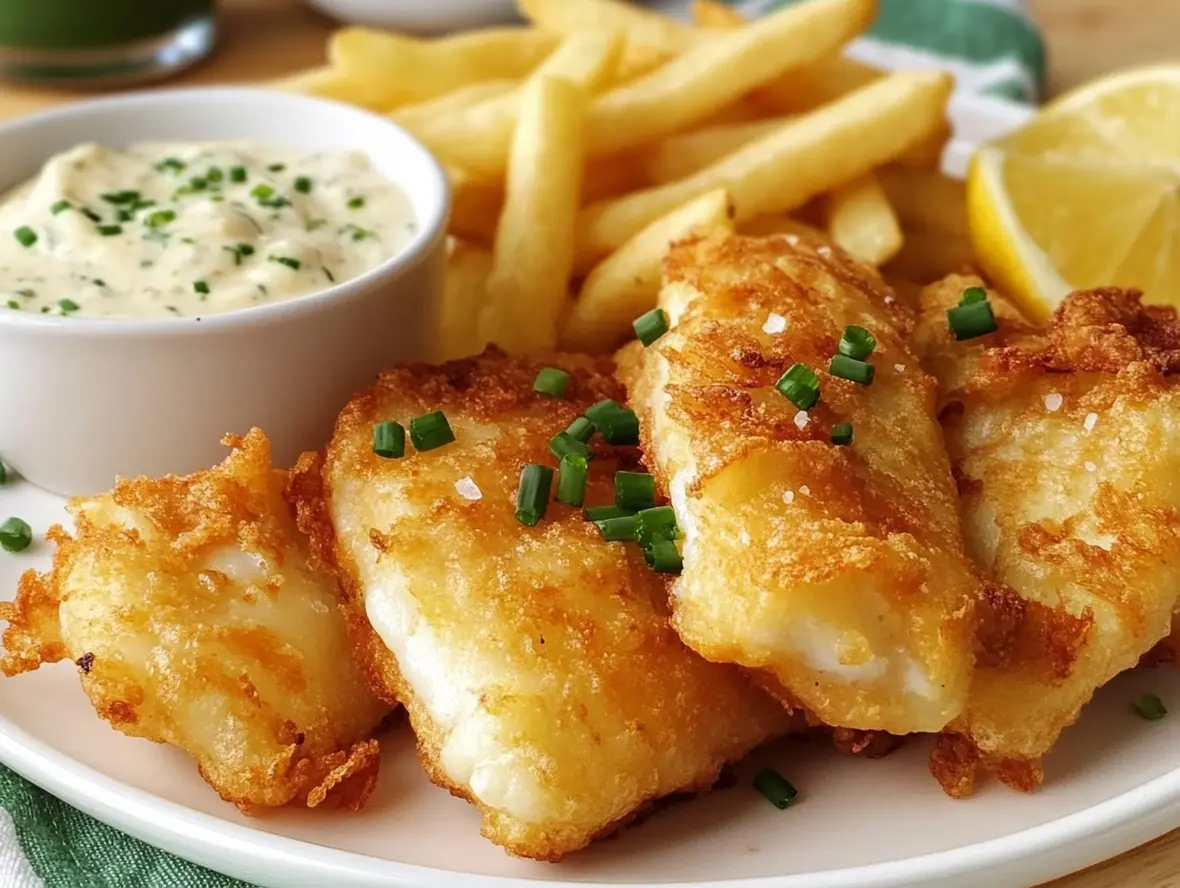
Close-up of crispy fish and chips with potato wedges and a slice of lemon

Nutritional Information (Per Serving, approximate)

Exact nutritional values can vary based on portion sizes and specific ingredients used. This is an estimate:

  • Calories: 600-750 kcal
  • Protein: 30-40g
  • Fat: 30-45g (depending on oil absorption)
  • Carbohydrates: 40-50g
  • Fiber: 4-6g
  • Sodium: 800-1200mg (highly dependent on added salt)

Healthier Alternatives

While traditional fish and chips are indulgent, there are ways to make them a bit lighter without sacrificing too much flavor or the satisfying crunch:

  • Baked Chips: Instead of frying, toss your potato wedges with a tablespoon of olive oil, paprika, and garlic powder, then bake at 400°F (200°C) until golden and tender.
  • Air-Fried Fish: Pat the battered fish very dry and spray with cooking oil. Air fry at 390°F (200°C) for about 10-15 minutes, flipping halfway, until golden and cooked through. You may need to pre-cook the fish slightly or use a thinner batter.
  • Lighter Batter: Use sparkling water instead of beer. You can also experiment with adding whole wheat flour or chickpea flour for added fiber and protein.
  • Leaner Fish: Opt for fish like tilapia or cod, which are naturally lower in fat.
  • Portion Control: Serve with a large side salad or steamed vegetables instead of exclusively relying on chips.

Serving Suggestions

Elevate your fish and chips experience with these classic and creative accompaniments:

  • Mushy Peas: A British pub classic that adds a comforting, savory element.
  • Tartar Sauce: Creamy, tangy, and filled with capers and pickles, it’s the perfect foil to rich, fried fish.
  • Malt Vinegar: A splash of malt vinegar is essential for that authentic “chippy” tang.
  • Lemon Wedges: A squeeze of fresh lemon juice brightens up the fish beautifully.
  • Coleslaw: For a refreshing crunch and creamy counterpoint.
  • Pickled Onions or Gherkins: Their sharp tang cuts through the richness of the fried components.

Common Mistakes to Avoid

Don’t let a few common pitfalls ruin your fish and chips dreams:

  • Not drying the fish or potatoes enough: This is a guaranteed path to soggy results and oil splattering. Be diligent with your paper towels!
  • Overmixing the batter: Overmixing develops gluten, leading to a tough, doughy batter instead of a light, crispy one.
  • Oil not hot enough: If your oil isn’t at the correct temperature, your food will absorb too much oil, becoming greasy and heavy. Use a thermometer!
  • Overcrowding the fryer: This drastically lowers the oil temperature, resulting in soggy, unevenly cooked food. Fry in batches!
  • Using warm batter or warm liquid: Cold is key for crispiness. Ensure your batter and its liquid components are chilled.

Storing Your Masterpiece

Fish and chips are best enjoyed fresh. However, if you have leftovers, here’s how to store them:

  • Refrigeration: Allow the food to cool completely, then store in an airtight container in the refrigerator for up to 1-2 days. The texture will degrade significantly, especially for the batter and chips.
  • Reheating: The best way to reheat is in a hot oven (around 400°F/200°C) on a baking sheet for about 5-10 minutes, or in an air fryer until crisp again. Microwaving will make them uniformly soggy.

Frequently Asked Questions

What is the best type of fish for fish and chips?
Traditionally, cod and haddock are favored for their flaky texture and mild flavor. Pollock is also a good, budget-friendly option. The key is a firm white fish that holds up well to frying.

Why is my fish batter not crispy?
Several factors can contribute to non-crispy batter: oil not hot enough, overcrowding the fryer, using a batter that’s too thick or has been overmixed, or not drying the fish properly. Make sure your liquid is ice-cold!

Can I make the batter ahead of time?
It’s best to make the batter just before you’re ready to fry. If you must make it slightly ahead, keep it in the refrigerator and give it a quick whisk if it separates. However, the crispiness is maximized when the batter is freshest.

What oil is best for frying fish and chips?
Oils with a high smoke point are essential. Vegetable oil, canola oil, or peanut oil are excellent choices. They provide a neutral flavor and can withstand high temperatures.

How can I keep my chips crispy after frying?
The double-fry method is key! Ensure the first fry is at a lower temperature and the second at a higher temperature. Drain them thoroughly on a wire rack, not paper towels, which can trap steam and make them soggy. Serve immediately after the second fry.

Print
clock clock iconcutlery cutlery iconflag flag iconfolder folder iconinstagram instagram iconpinterest pinterest iconfacebook facebook iconprint print iconsquares squares iconheart heart iconheart solid heart solid icon

Battered Fish and Chips


  • Author: Chef Emy

Description

Enjoy this classic fish and chips recipe with a crispy, golden batter that’s perfect for a family dinner or a weekend treat. No beer needed—just simple, delicious ingredients!


Ingredients

Scale
  • 1 ½lbs. White Fish Fillets (e.g., Cod, Rockling, Tilapia, or Haddock)1 ¼ cupsAll-Purpose Flour1 tspBaking Powder½ cupWhole Milk1 tspOnion Powder1 tspGarlic Powder1 ½ tspSalt½ gallon(10 cups) Neutral Frying Oil (e.g., Canola or Vegetable Oil)½lb. Frozen French Fries1Lemon, cut into wedges
  • 1 ¼ cupsAll-Purpose Flour1 tspBaking Powder½ cupWhole Milk1 tspOnion Powder1 tspGarlic Powder1 ½ tspSalt½ gallon(10 cups) Neutral Frying Oil (e.g., Canola or Vegetable Oil)½lb. Frozen French Fries1Lemon, cut into wedges
  • 1 tspBaking Powder½ cupWhole Milk1 tspOnion Powder1 tspGarlic Powder1 ½ tspSalt½ gallon(10 cups) Neutral Frying Oil (e.g., Canola or Vegetable Oil)½lb. Frozen French Fries1Lemon, cut into wedges
  • ½ cupWhole Milk1 tspOnion Powder1 tspGarlic Powder1 ½ tspSalt½ gallon(10 cups) Neutral Frying Oil (e.g., Canola or Vegetable Oil)½lb. Frozen French Fries1Lemon, cut into wedges
  • 1 tspOnion Powder1 tspGarlic Powder1 ½ tspSalt½ gallon(10 cups) Neutral Frying Oil (e.g., Canola or Vegetable Oil)½lb. Frozen French Fries1Lemon, cut into wedges
  • 1 tspGarlic Powder1 ½ tspSalt½ gallon(10 cups) Neutral Frying Oil (e.g., Canola or Vegetable Oil)½lb. Frozen French Fries1Lemon, cut into wedges
  • 1 ½ tspSalt½ gallon(10 cups) Neutral Frying Oil (e.g., Canola or Vegetable Oil)½lb. Frozen French Fries1Lemon, cut into wedges
  • ½ gallon(10 cups) Neutral Frying Oil (e.g., Canola or Vegetable Oil)½lb. Frozen French Fries1Lemon, cut into wedges
  • ½lb. Frozen French Fries1Lemon, cut into wedges
  • 1Lemon, cut into wedges

Instructions

  1. 1️⃣Prepare the fish:Cut the fish fillets into evenly sized portions. Avoid cutting them too thick to ensure they cook through completely when fried.2️⃣Cook the fries:Place the frozen French fries in the oven or air fryer and cook according to the package instructions.3️⃣Make the batter:In a large bowl, combine the flour, baking powder, milk, onion powder, garlic powder, and salt. Stir until smooth.4️⃣Heat the oil:Heat the oil in a large pot, such as a Dutch oven, until it reaches 350°F (175°C). Use a candy thermometer to monitor the temperature and maintain it consistently.5️⃣Coat and fry the fish:Dip each piece of fish into the batter, ensuring it is fully coated. Carefully place the battered fish into the hot oil. Fry in batches, cooking no more than three pieces at a time to avoid overcrowding.Fry the fish for 5 minutes, flipping once halfway through, until golden brown and fully cooked.6️⃣Drain and season:Remove the cooked fish using a strainer or slotted spoon, and place it on a wire rack to drain. Immediately season with a pinch of salt.7️⃣Serve:Serve the crispy fish alongside the cooked French fries, lemon wedges, and your favorite dipping sauces, such as tartar sauce or ketchup.
  2. Cut the fish fillets into evenly sized portions. Avoid cutting them too thick to ensure they cook through completely when fried.
  3. 2️⃣Cook the fries:Place the frozen French fries in the oven or air fryer and cook according to the package instructions.3️⃣Make the batter:In a large bowl, combine the flour, baking powder, milk, onion powder, garlic powder, and salt. Stir until smooth.4️⃣Heat the oil:Heat the oil in a large pot, such as a Dutch oven, until it reaches 350°F (175°C). Use a candy thermometer to monitor the temperature and maintain it consistently.5️⃣Coat and fry the fish:Dip each piece of fish into the batter, ensuring it is fully coated. Carefully place the battered fish into the hot oil. Fry in batches, cooking no more than three pieces at a time to avoid overcrowding.Fry the fish for 5 minutes, flipping once halfway through, until golden brown and fully cooked.6️⃣Drain and season:Remove the cooked fish using a strainer or slotted spoon, and place it on a wire rack to drain. Immediately season with a pinch of salt.7️⃣Serve:Serve the crispy fish alongside the cooked French fries, lemon wedges, and your favorite dipping sauces, such as tartar sauce or ketchup.
  4. Place the frozen French fries in the oven or air fryer and cook according to the package instructions.3️⃣Make the batter:In a large bowl, combine the flour, baking powder, milk, onion powder, garlic powder, and salt. Stir until smooth.4️⃣Heat the oil:Heat the oil in a large pot, such as a Dutch oven, until it reaches 350°F (175°C). Use a candy thermometer to monitor the temperature and maintain it consistently.5️⃣Coat and fry the fish:Dip each piece of fish into the batter, ensuring it is fully coated. Carefully place the battered fish into the hot oil. Fry in batches, cooking no more than three pieces at a time to avoid overcrowding.Fry the fish for 5 minutes, flipping once halfway through, until golden brown and fully cooked.6️⃣Drain and season:Remove the cooked fish using a strainer or slotted spoon, and place it on a wire rack to drain. Immediately season with a pinch of salt.7️⃣Serve:Serve the crispy fish alongside the cooked French fries, lemon wedges, and your favorite dipping sauces, such as tartar sauce or ketchup.
  5. 3️⃣Make the batter:
  6. In a large bowl, combine the flour, baking powder, milk, onion powder, garlic powder, and salt. Stir until smooth.4️⃣Heat the oil:Heat the oil in a large pot, such as a Dutch oven, until it reaches 350°F (175°C). Use a candy thermometer to monitor the temperature and maintain it consistently.5️⃣Coat and fry the fish:Dip each piece of fish into the batter, ensuring it is fully coated. Carefully place the battered fish into the hot oil. Fry in batches, cooking no more than three pieces at a time to avoid overcrowding.Fry the fish for 5 minutes, flipping once halfway through, until golden brown and fully cooked.6️⃣Drain and season:Remove the cooked fish using a strainer or slotted spoon, and place it on a wire rack to drain. Immediately season with a pinch of salt.7️⃣Serve:Serve the crispy fish alongside the cooked French fries, lemon wedges, and your favorite dipping sauces, such as tartar sauce or ketchup.
  7. 4️⃣Heat the oil:Heat the oil in a large pot, such as a Dutch oven, until it reaches 350°F (175°C). Use a candy thermometer to monitor the temperature and maintain it consistently.5️⃣Coat and fry the fish:Dip each piece of fish into the batter, ensuring it is fully coated. Carefully place the battered fish into the hot oil. Fry in batches, cooking no more than three pieces at a time to avoid overcrowding.Fry the fish for 5 minutes, flipping once halfway through, until golden brown and fully cooked.6️⃣Drain and season:Remove the cooked fish using a strainer or slotted spoon, and place it on a wire rack to drain. Immediately season with a pinch of salt.7️⃣Serve:Serve the crispy fish alongside the cooked French fries, lemon wedges, and your favorite dipping sauces, such as tartar sauce or ketchup.
  8. Heat the oil in a large pot, such as a Dutch oven, until it reaches 350°F (175°C). Use a candy thermometer to monitor the temperature and maintain it consistently.
  9. 5️⃣Coat and fry the fish:Dip each piece of fish into the batter, ensuring it is fully coated. Carefully place the battered fish into the hot oil. Fry in batches, cooking no more than three pieces at a time to avoid overcrowding.Fry the fish for 5 minutes, flipping once halfway through, until golden brown and fully cooked.6️⃣Drain and season:Remove the cooked fish using a strainer or slotted spoon, and place it on a wire rack to drain. Immediately season with a pinch of salt.7️⃣Serve:Serve the crispy fish alongside the cooked French fries, lemon wedges, and your favorite dipping sauces, such as tartar sauce or ketchup.
  10. Dip each piece of fish into the batter, ensuring it is fully coated. Carefully place the battered fish into the hot oil. Fry in batches, cooking no more than three pieces at a time to avoid overcrowding.Fry the fish for 5 minutes, flipping once halfway through, until golden brown and fully cooked.6️⃣Drain and season:Remove the cooked fish using a strainer or slotted spoon, and place it on a wire rack to drain. Immediately season with a pinch of salt.7️⃣Serve:Serve the crispy fish alongside the cooked French fries, lemon wedges, and your favorite dipping sauces, such as tartar sauce or ketchup.
  11. Fry the fish for 5 minutes, flipping once halfway through, until golden brown and fully cooked.
  12. 6️⃣Drain and season:Remove the cooked fish using a strainer or slotted spoon, and place it on a wire rack to drain. Immediately season with a pinch of salt.7️⃣Serve:Serve the crispy fish alongside the cooked French fries, lemon wedges, and your favorite dipping sauces, such as tartar sauce or ketchup.
  13. Remove the cooked fish using a strainer or slotted spoon, and place it on a wire rack to drain. Immediately season with a pinch of salt.7️⃣Serve:Serve the crispy fish alongside the cooked French fries, lemon wedges, and your favorite dipping sauces, such as tartar sauce or ketchup.
  14. 7️⃣Serve:
  15. Serve the crispy fish alongside the cooked French fries, lemon wedges, and your favorite dipping sauces, such as tartar sauce or ketchup.

Notes

For extra crunch, double-dip the fish in the batter before frying.Pair with a fresh salad or coleslaw for a balanced meal.Leftovers can be reheated in an air fryer to retain crispiness.
Pair with a fresh salad or coleslaw for a balanced meal.Leftovers can be reheated in an air fryer to retain crispiness.
Leftovers can be reheated in an air fryer to retain crispiness.

“`
Easy Creamy Spinach and Mushroom Lasagna Recipe

“`html

Easy Creamy Spinach and Mushroom Lasagna Recipe

What Makes This Lasagna So Special?

Are you looking for a comforting, flavorful, and surprisingly easy weeknight dinner that will wow your family or impress guests? If so, you’ve found it! This creamy spinach and mushroom lasagna recipe offers a delightful twist on a classic, packed with rich, savory flavors that will have everyone asking for seconds. Forget dry, bland lasagna; this version is decadently creamy, bursting with earthy mushrooms and vibrant spinach, all nestled between tender pasta and cheesy goodness. It’s the perfect dish for those nights when you crave something truly satisfying without spending hours in the kitchen.

Gather Your Glorious Ingredients

For the Creamy Spinach Sauce

  • 2 tablespoons unsalted butter: The foundation of creamy sauces, adding a rich, velvety texture.
  • 2 cloves garlic, minced: For that irresistible aromatic punch.
  • 1/4 cup all-purpose flour: To thicken our sauce into a luscious béchamel. (Substitute with gluten-free all-purpose flour for a GF option).
  • 2 cups whole milk: For a smooth, decadent base. (Oat milk or almond milk can be used for a dairy-free version, though the creaminess may vary).
  • 1/2 teaspoon salt: To enhance all the savory flavors.
  • 1/4 teaspoon black pepper: Freshly ground for a subtle kick.
  • 1/4 teaspoon nutmeg: A whisper of this spice elevates the creaminess and complements the spinach beautifully.
  • 5 ounces fresh spinach, roughly chopped: Provides vibrant color and a healthy dose of nutrients. (Frozen spinach, thawed and squeezed dry, is a convenient alternative).

For the Mushroom Filling

  • 1 tablespoon olive oil: To sauté the mushrooms and bring out their nutty flavor.
  • 1 pound cremini mushrooms, sliced: Their earthy, umami-rich flavor is key. (A mix of shiitake and button mushrooms would also be delightful).
  • 1 medium onion, finely chopped: Adds a sweet and savory depth. (Shallots can offer a milder, more refined onion flavor).
  • 1 clove garlic, minced: For an extra layer of aromatic complexity.
  • Salt and pepper to taste: To season the mushrooms perfectly.

For the Lasagna Assembly

  • 9-12 lasagna noodles: No-boil or regular, cooked according to package directions. (Whole wheat or gluten-free noodles can be used).
  • 15 ounces ricotta cheese: Creamy, slightly tangy, and adds wonderful texture. (Cottage cheese, drained well, can be a substitute).
  • 1 large egg, lightly beaten: Helps bind the ricotta and adds richness.
  • 1/2 cup grated Parmesan cheese: For a salty, nutty hit.
  • 1 1/2 cups shredded mozzarella cheese: For that irresistible gooey, melted topping.
  • Fresh parsley, chopped, for garnish (optional): Adds a pop of freshness and color.

Timing is Everything

Prep time: 25 minutes
Cook time: 40-45 minutes
Total time: 1 hour 5 minutes – 1 hour 10 minutes

This recipe is designed for efficiency! While the average lasagna might take closer to 1.5-2 hours total, this simplified version shaves off significant time by using no-boil noodles (if chosen) and a straightforward sauce preparation. Your active prep time is minimal, making it a fantastic option for a weeknight meal.

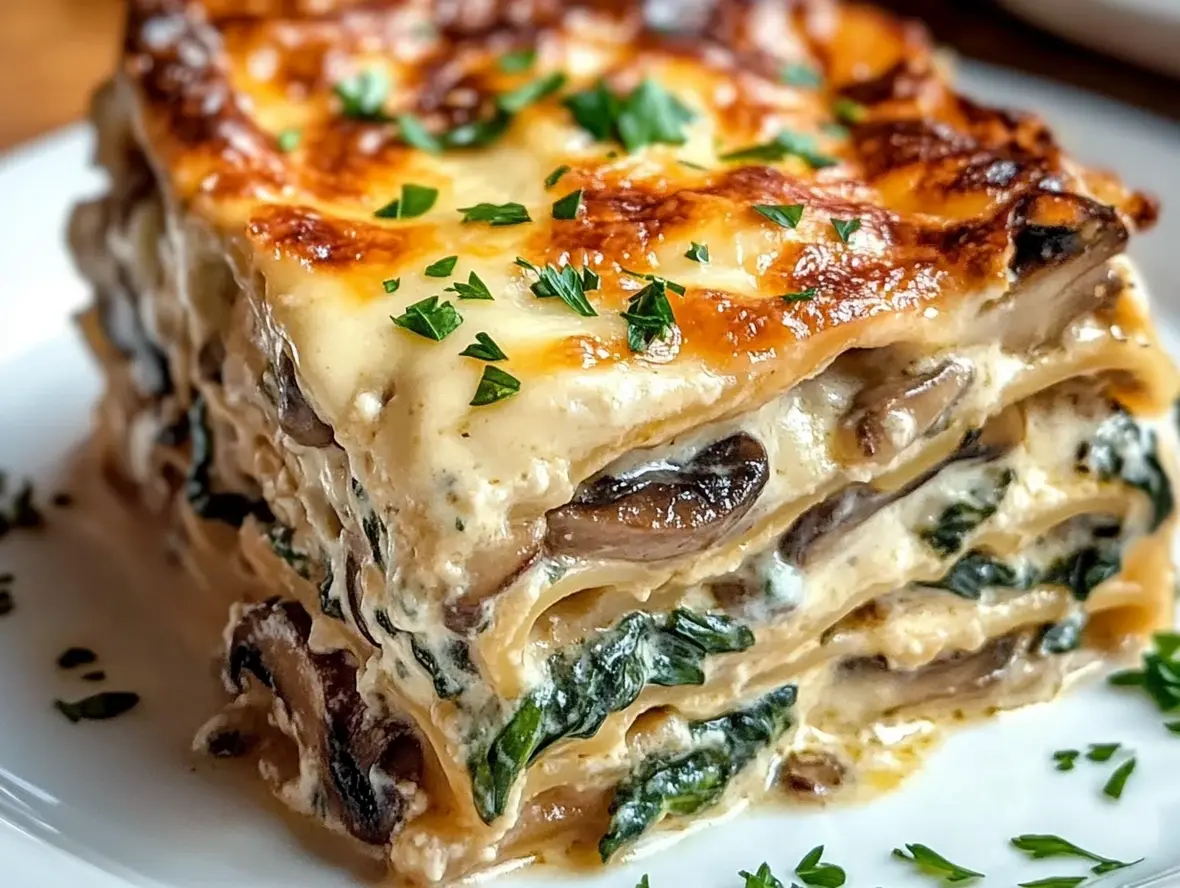
Creamy Spinach and Mushroom Lasagna assembled and ready to bake

Let’s Get Cooking!

Step 1: Prep the Vegetables

First things first, let’s get our veggies ready. Mince your garlic cloves. Slice your mushrooms thinly, aiming for consistent pieces so they cook evenly. Finely chop your onion. If you’re using fresh spinach, give it a good rinse and roughly chop it. If you’re opting for frozen, ensure it’s thawed completely and squeezed very dry to avoid a watery lasagna. Quick tip: Use a food processor to slice mushrooms and chop onions if you want to speed things up even more!

Step 2: Make the Creamy Spinach Sauce

In a medium saucepan over medium heat, melt the butter. Add the minced garlic and sauté for about 30 seconds until fragrant, being careful not to burn it. Sprinkle the flour over the butter and garlic, whisking constantly for about 1-2 minutes to create a roux. This step cooks out the raw flour taste. Gradually whisk in the milk, a little at a time, ensuring no lumps form. Continue whisking until the sauce thickens to a smooth, creamy consistency, about 5-7 minutes. Stir in the salt, pepper, and nutmeg. Finally, stir in the chopped spinach and cook until it wilts, about 2-3 minutes. Remove from heat and set aside.

Step 3: Sauté the Mushrooms

While the sauce is simmering, heat the olive oil in a large skillet over medium-high heat. Add the sliced mushrooms and chopped onion. Cook, stirring occasionally, until the mushrooms have released their liquid and started to brown, and the onions are softened and translucent, about 8-10 minutes. Add the minced garlic and cook for another minute until fragrant. Season generously with salt and pepper. Drain any excess liquid if necessary, and set the mushroom mixture aside. This browning process is crucial for developing deep, savory flavor.

Step 4: Assemble the Lasagna

Preheat your oven to 375°F (190°C). Lightly grease a 9×13 inch baking dish. You can either cook your lasagna noodles according to package directions or use no-boil noodles directly from the box. In a small bowl, mix together the ricotta cheese, beaten egg, and half of the grated Parmesan cheese. Season with a pinch of salt and pepper if desired. Spread about 1/2 cup of the creamy spinach sauce on the bottom of the prepared baking dish. Layer with lasagna noodles (3-4 noodles). Spread half of the ricotta mixture evenly over the noodles. Top with half of the sautéed mushroom mixture. Spoon about 1 cup of the spinach sauce over the mushrooms. Sprinkle with 1/2 cup of mozzarella cheese. Repeat the layers: noodles, the remaining ricotta mixture, the remaining mushrooms, another cup of spinach sauce, and another 1/2 cup of mozzarella. Finish with a final layer of noodles, the remaining spinach sauce, the remaining Parmesan cheese, and the remaining mozzarella cheese.

Step 5: Bake to Golden Perfection

Cover the baking dish tightly with aluminum foil. Bake in the preheated oven for 25 minutes. Remove the foil and continue baking for another 15-20 minutes, or until the top is golden brown and bubbly and the lasagna is heated through. Let the lasagna rest for at least 10 minutes before slicing and serving. This resting period is crucial for the layers to set, preventing a messy dish.

Nutritional Snapshot

While exact nutritional values can vary based on ingredients and portion sizes, a typical serving of this creamy spinach and mushroom lasagna contains approximately:

  • Calories: 400-550 kcal
  • Protein: 20-25g
  • Fat: 20-35g
  • Carbohydrates: 30-45g
  • Fiber: 4-6g

Note: These are estimates. For precise information, it’s recommended to use a recipe calculator with your specific ingredients.

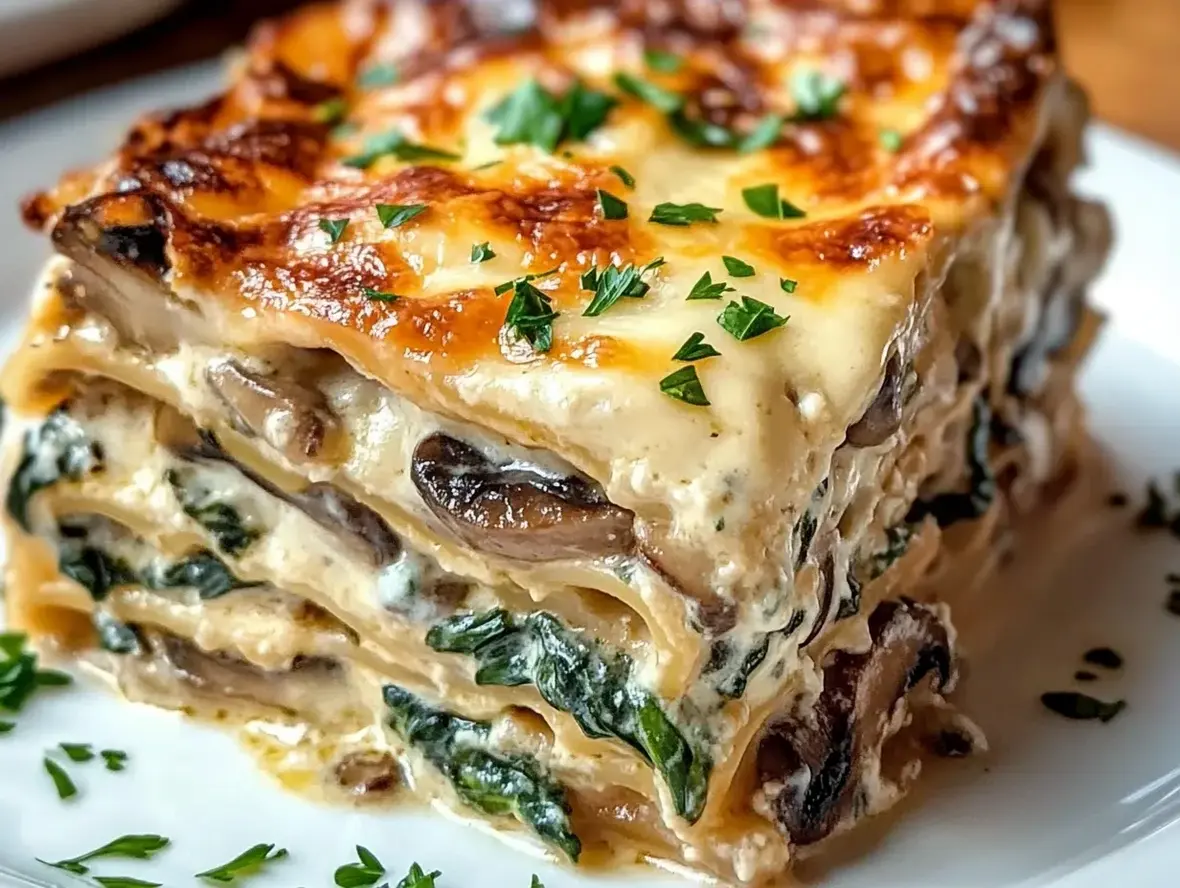
Close-up of a slice of creamy spinach and mushroom lasagna showing layers of pasta, sauce, and cheese

Healthier Twists for Lighter Indulgence

Looking to lighten up this indulgent dish without sacrificing flavor? Try these swaps:

  • Whole Wheat Noodles: Opt for whole wheat lasagna noodles for added fiber and nutrients.
  • Reduced-Fat Cheese: Use part-skim ricotta and mozzarella for a lower fat content.
  • Leafy Greens Galore: Bulk up the spinach layer, or add other greens like kale or Swiss chard for extra vitamins.
  • Leaner Protein: Add cooked lean ground turkey or chicken to the mushroom mixture for extra protein.
  • Almond Milk Béchamel: For a dairy-free option, use unsweetened almond milk and nutritional yeast for a cheesy flavor.

Serving Savvy

This rich lasagna pairs beautifully with a crisp green salad tossed with a light vinaigrette to cut through the creaminess. A side of crusty garlic bread is always a welcome addition, perfect for wiping up any leftover sauce. For a more substantial meal, simple steamed vegetables like broccoli or asparagus also complement it well.

Avoiding Common Lasagna Pitfalls

  • Watery Lasagna: Ensure your spinach is well-drained and don’t add excess liquid to the béchamel or mushroom mixture.
  • Mushy Noodles: If using regular lasagna noodles, don’t overcook them before assembly; they’ll continue to cook in the oven.
  • Under-seasoning: Lasagna needs a good amount of salt and pepper to make the flavors pop. Taste and adjust as you go.
  • Skipping the Rest: Letting the lasagna rest before serving is critical for it to hold its shape.

Storage Savvy

Leftover lasagna can be stored in an airtight container in the refrigerator for up to 3-4 days. Reheat gently in the oven (covered with foil) at 350°F (175°C) until warmed through, or microwave individual portions. For longer storage, you can freeze portions of cooled lasagna for up to 2-3 months.

Frequently Asked Questions

***Can I make this lasagna ahead of time?***

Yes! You can assemble the lasagna completely, cover it tightly, and refrigerate it for up to 24 hours before baking. You may need to add a few extra minutes to the covered baking time if baking directly from the fridge.

***Can I use different types of mushrooms?***

Absolutely! A mix of mushrooms like shiitake, porcini, or oyster mushrooms can add even more depth of flavor. Just be sure to slice them evenly.

***What if I don’t have nutmeg?***

Nutmeg is a classic addition to béchamel sauces, but if you don’t have it, you can omit it. A tiny pinch of white pepper can also provide a subtle warmth. Some people also use a pinch of ground cloves, but use very sparingly!

***Can I make this vegetarian?***

This recipe is already vegetarian! The creamy spinach and mushroom combination makes it hearty and satisfying on its own.

***How do I prevent the top from burning?***

Covering the lasagna with foil for the initial baking period is key. Remove the foil only for the last 15-20 minutes to allow the cheese to brown and bubble.

Your New Favorite Comfort Food Awaits!

This easy creamy spinach and mushroom lasagna is proof that delicious, comforting meals don’t need to be complicated. With its rich, velvety sauce, savory mushroom filling, and layers of cheesy perfection, it’s a dish that truly satisfies. Whether you’re planning a family dinner or a special occasion, this recipe is sure to become a treasured favorite. Give it a try, and let the delightful aromas and incredible flavors fill your kitchen!

Print

clock clock iconcutlery cutlery iconflag flag iconfolder folder iconinstagram instagram iconpinterest pinterest iconfacebook facebook iconprint print iconsquares squares iconheart heart iconheart solid heart solid icon

Easy Creamy Spinach Mushroom Lasagna


  • Author: Chef Emy

Description

Thiscreamy spinach mushroom lasagnais a perfect balance of cheesy comfort and hearty vegetables. Layered with a creamy béchamel sauce, tender mushrooms, spinach, and gooey cheese, it’s a crowd-pleaser that’s surprisingly simple to make!


Ingredients

  • For the vegetable filling:2 tbspolive oil3 cupsfresh spinach (roughly chopped)2 cupsmushrooms (sliced)3garlic cloves (minced)Salt and pepper to tasteFor the béchamel sauce:3 tbspbutter3 tbspall-purpose flour3 cupsmilk (warm)½ tspground nutmegSalt and pepper to tasteFor the lasagna layers:9lasagna noodles (no-boil or pre-cooked, as per package instructions)2 cupsshredded mozzarella cheese½ cupgrated Parmesan cheese1 cupricotta cheese
  • For the béchamel sauce:3 tbspbutter3 tbspall-purpose flour3 cupsmilk (warm)½ tspground nutmegSalt and pepper to tasteFor the lasagna layers:9lasagna noodles (no-boil or pre-cooked, as per package instructions)2 cupsshredded mozzarella cheese½ cupgrated Parmesan cheese1 cupricotta cheese
  • For the lasagna layers:9lasagna noodles (no-boil or pre-cooked, as per package instructions)2 cupsshredded mozzarella cheese½ cupgrated Parmesan cheese1 cupricotta cheese

Instructions

  1. 1️⃣Prepare the vegetable filling:Heat olive oil in a skillet over medium heat. Add mushrooms and sauté until softened and lightly browned, about 5 minutes.Add the spinach and garlic, cooking until the spinach wilts. Season with salt and pepper. Remove from heat and set aside.2️⃣Make the béchamel sauce:In a saucepan, melt butter over medium heat. Stir in the flour and cook for 1-2 minutes to form a paste.Gradually whisk in the warm milk, ensuring no lumps form. Bring to a gentle simmer, stirring constantly, until the sauce thickens.Season with nutmeg, salt, and pepper. Remove from heat.3️⃣Assemble the lasagna:Preheat your oven to 375°F (190°C).Spread a thin layer of béchamel sauce on the bottom of a 9×13-inch baking dish. Layer 3 lasagna noodles over the sauce.Spread ⅓ of the vegetable filling on top of the noodles, followed by dollops of ricotta, a sprinkle of mozzarella, and a spoonful of béchamel sauce.Repeat the layers twice more, finishing with béchamel sauce and the remaining mozzarella and Parmesan on top.4️⃣Bake the lasagna:Cover the dish with aluminum foil and bake for 25 minutes. Remove the foil and bake for an additional 15 minutes, or until the cheese is bubbly and golden.5️⃣Serve:Let the lasagna rest for 10 minutes before slicing. Serve warm and enjoy the creamy, cheesy goodness!
  2. Heat olive oil in a skillet over medium heat. Add mushrooms and sauté until softened and lightly browned, about 5 minutes.Add the spinach and garlic, cooking until the spinach wilts. Season with salt and pepper. Remove from heat and set aside.2️⃣Make the béchamel sauce:In a saucepan, melt butter over medium heat. Stir in the flour and cook for 1-2 minutes to form a paste.Gradually whisk in the warm milk, ensuring no lumps form. Bring to a gentle simmer, stirring constantly, until the sauce thickens.Season with nutmeg, salt, and pepper. Remove from heat.3️⃣Assemble the lasagna:Preheat your oven to 375°F (190°C).Spread a thin layer of béchamel sauce on the bottom of a 9×13-inch baking dish. Layer 3 lasagna noodles over the sauce.Spread ⅓ of the vegetable filling on top of the noodles, followed by dollops of ricotta, a sprinkle of mozzarella, and a spoonful of béchamel sauce.Repeat the layers twice more, finishing with béchamel sauce and the remaining mozzarella and Parmesan on top.4️⃣Bake the lasagna:Cover the dish with aluminum foil and bake for 25 minutes. Remove the foil and bake for an additional 15 minutes, or until the cheese is bubbly and golden.5️⃣Serve:Let the lasagna rest for 10 minutes before slicing. Serve warm and enjoy the creamy, cheesy goodness!
  3. Add the spinach and garlic, cooking until the spinach wilts. Season with salt and pepper. Remove from heat and set aside.
  4. 2️⃣Make the béchamel sauce:In a saucepan, melt butter over medium heat. Stir in the flour and cook for 1-2 minutes to form a paste.Gradually whisk in the warm milk, ensuring no lumps form. Bring to a gentle simmer, stirring constantly, until the sauce thickens.Season with nutmeg, salt, and pepper. Remove from heat.3️⃣Assemble the lasagna:Preheat your oven to 375°F (190°C).Spread a thin layer of béchamel sauce on the bottom of a 9×13-inch baking dish. Layer 3 lasagna noodles over the sauce.Spread ⅓ of the vegetable filling on top of the noodles, followed by dollops of ricotta, a sprinkle of mozzarella, and a spoonful of béchamel sauce.Repeat the layers twice more, finishing with béchamel sauce and the remaining mozzarella and Parmesan on top.4️⃣Bake the lasagna:Cover the dish with aluminum foil and bake for 25 minutes. Remove the foil and bake for an additional 15 minutes, or until the cheese is bubbly and golden.5️⃣Serve:Let the lasagna rest for 10 minutes before slicing. Serve warm and enjoy the creamy, cheesy goodness!
  5. In a saucepan, melt butter over medium heat. Stir in the flour and cook for 1-2 minutes to form a paste.Gradually whisk in the warm milk, ensuring no lumps form. Bring to a gentle simmer, stirring constantly, until the sauce thickens.Season with nutmeg, salt, and pepper. Remove from heat.3️⃣Assemble the lasagna:Preheat your oven to 375°F (190°C).Spread a thin layer of béchamel sauce on the bottom of a 9×13-inch baking dish. Layer 3 lasagna noodles over the sauce.Spread ⅓ of the vegetable filling on top of the noodles, followed by dollops of ricotta, a sprinkle of mozzarella, and a spoonful of béchamel sauce.Repeat the layers twice more, finishing with béchamel sauce and the remaining mozzarella and Parmesan on top.4️⃣Bake the lasagna:Cover the dish with aluminum foil and bake for 25 minutes. Remove the foil and bake for an additional 15 minutes, or until the cheese is bubbly and golden.5️⃣Serve:Let the lasagna rest for 10 minutes before slicing. Serve warm and enjoy the creamy, cheesy goodness!
  6. Gradually whisk in the warm milk, ensuring no lumps form. Bring to a gentle simmer, stirring constantly, until the sauce thickens.
  7. Season with nutmeg, salt, and pepper. Remove from heat.3️⃣Assemble the lasagna:Preheat your oven to 375°F (190°C).Spread a thin layer of béchamel sauce on the bottom of a 9×13-inch baking dish. Layer 3 lasagna noodles over the sauce.Spread ⅓ of the vegetable filling on top of the noodles, followed by dollops of ricotta, a sprinkle of mozzarella, and a spoonful of béchamel sauce.Repeat the layers twice more, finishing with béchamel sauce and the remaining mozzarella and Parmesan on top.4️⃣Bake the lasagna:Cover the dish with aluminum foil and bake for 25 minutes. Remove the foil and bake for an additional 15 minutes, or until the cheese is bubbly and golden.5️⃣Serve:Let the lasagna rest for 10 minutes before slicing. Serve warm and enjoy the creamy, cheesy goodness!
  8. 3️⃣Assemble the lasagna:Preheat your oven to 375°F (190°C).Spread a thin layer of béchamel sauce on the bottom of a 9×13-inch baking dish. Layer 3 lasagna noodles over the sauce.Spread ⅓ of the vegetable filling on top of the noodles, followed by dollops of ricotta, a sprinkle of mozzarella, and a spoonful of béchamel sauce.Repeat the layers twice more, finishing with béchamel sauce and the remaining mozzarella and Parmesan on top.4️⃣Bake the lasagna:Cover the dish with aluminum foil and bake for 25 minutes. Remove the foil and bake for an additional 15 minutes, or until the cheese is bubbly and golden.5️⃣Serve:Let the lasagna rest for 10 minutes before slicing. Serve warm and enjoy the creamy, cheesy goodness!
  9. Preheat your oven to 375°F (190°C).
  10. Spread a thin layer of béchamel sauce on the bottom of a 9×13-inch baking dish. Layer 3 lasagna noodles over the sauce.Spread ⅓ of the vegetable filling on top of the noodles, followed by dollops of ricotta, a sprinkle of mozzarella, and a spoonful of béchamel sauce.Repeat the layers twice more, finishing with béchamel sauce and the remaining mozzarella and Parmesan on top.4️⃣Bake the lasagna:Cover the dish with aluminum foil and bake for 25 minutes. Remove the foil and bake for an additional 15 minutes, or until the cheese is bubbly and golden.5️⃣Serve:Let the lasagna rest for 10 minutes before slicing. Serve warm and enjoy the creamy, cheesy goodness!
  11. Spread ⅓ of the vegetable filling on top of the noodles, followed by dollops of ricotta, a sprinkle of mozzarella, and a spoonful of béchamel sauce.Repeat the layers twice more, finishing with béchamel sauce and the remaining mozzarella and Parmesan on top.4️⃣Bake the lasagna:Cover the dish with aluminum foil and bake for 25 minutes. Remove the foil and bake for an additional 15 minutes, or until the cheese is bubbly and golden.5️⃣Serve:Let the lasagna rest for 10 minutes before slicing. Serve warm and enjoy the creamy, cheesy goodness!
  12. Repeat the layers twice more, finishing with béchamel sauce and the remaining mozzarella and Parmesan on top.
  13. 4️⃣Bake the lasagna:Cover the dish with aluminum foil and bake for 25 minutes. Remove the foil and bake for an additional 15 minutes, or until the cheese is bubbly and golden.5️⃣Serve:Let the lasagna rest for 10 minutes before slicing. Serve warm and enjoy the creamy, cheesy goodness!
  14. Cover the dish with aluminum foil and bake for 25 minutes. Remove the foil and bake for an additional 15 minutes, or until the cheese is bubbly and golden.5️⃣Serve:Let the lasagna rest for 10 minutes before slicing. Serve warm and enjoy the creamy, cheesy goodness!
  15. 5️⃣Serve:
  16. Let the lasagna rest for 10 minutes before slicing. Serve warm and enjoy the creamy, cheesy goodness!

Notes

For added flavor, sauté onions with the mushrooms, or add a pinch of chili flakes to the vegetable filling.Substitute whole-wheat or gluten-free lasagna noodles if needed.Leftovers reheat beautifully—store in an airtight container in the fridge for up to 3 days.
Substitute whole-wheat or gluten-free lasagna noodles if needed.Leftovers reheat beautifully—store in an airtight container in the fridge for up to 3 days.
Leftovers reheat beautifully—store in an airtight container in the fridge for up to 3 days.


“`

Easy Chicken Ham and Rice Casserole with Broccoli

“`html

Easy Chicken Ham and Rice Casserole with Broccoli

Looking for a quick and hearty dinner idea? This chicken Ham and Rice Casserole with Broccoli is a crowd-pleaser. Packed with flavor and easy to prepare, it’s perfect for family meals.

Introduction: Is Dinner a Dash to Deliciousness?

In the whirlwind of modern life, are you constantly searching for those weeknight dinner solutions that are both satisfyingly delicious and astonishingly simple? We get it. Crafting a meal that hits all the right notes – comforting, flavorful, and family-approved – can feel like a monumental task after a long day. Well, put down that stress! We’re here to introduce you to your new go-to: the Easy Chicken Ham and Rice Casserole with Broccoli. This isn’t just another casserole; it’s a symphony of tender chicken, savory ham, fluffy rice, and vibrant broccoli, all baked into a creamy, dreamy dish that practically makes itself. On average, weeknight dinners can take upwards of 45 minutes to prepare and cook, but this gem significantly cuts down on that time, proving that “quick” doesn’t have to mean “compromised.” Get ready for a recipe that will become a staple in your rotation, bringing joy and ease to your dinner table, every single time.

Gather Your Glorious Goodies! (Ingredients)

The magic of this casserole lies in its accessible ingredients that come together to create a wonderfully balanced flavor profile. Here’s what you’ll need:

  • Cooked Chicken: About 2 cups, shredded or diced. This is your protein powerhouse! Pre-cooked rotisserie chicken is a fantastic shortcut. Feel free to use leftover roasted chicken.
  • Diced Ham: 1 cup. Adds a delightful salty, smoky depth. Diced deli ham or leftover baked ham works beautifully.
  • Cooked Rice: 3 cups, a medium-grain variety like white or brown rice. Ensure it’s cooked and cooled slightly; this prevents it from becoming mushy.
  • Broccoli Florets: 2 cups, about 1 medium head. Fresh, vibrant green florets bring a delightful texture and a healthy punch. You can also use frozen broccoli, thawed and drained.
  • Cream of Chicken Soup: 1 can (10.5 oz). This is the creamy binder that ties all our wonderful ingredients together. Its rich, savory notes are essential.
  • Milk: 1/2 cup. This helps to thin out the soup slightly for a smoother, more cohesive sauce. Whole milk provides richness, but 2% or even unsweetened almond milk can be used.
  • Shredded Cheddar Cheese: 1 cup, divided. We’re using it both in the casserole for melty goodness and on top for a golden, bubbly crust. Sharp cheddar offers a tangy kick.
  • Onion: 1/2 cup, finely chopped. A subtle aromatic base that adds a layer of sweetness when cooked.
  • Butter: 2 tablespoons. For sautéing the onion and adding a touch of richness to the broccoli.
  • Salt and Black Pepper: To taste. The essential seasonings to enhance all the flavors.

The Clock is Ticking: Recipe Timing

Prep Time: 15 minutes
Cook Time: 30 minutes
Total Time: 45 minutes
Yields: 6 servings

Compared to many complex casseroles that can stretch to an hour or more of prep and cook time, this Easy Chicken Ham and Rice Casserole with Broccoli is a breath of fresh air, clocking in at a manageable 45 minutes from start to finish. This makes it perfectly suited for busy weeknights or spontaneous dinner gatherings.

A delicious-looking chicken ham and rice casserole with broccoli in a baking dish.

Let’s Get Cooking: Step-by-Step Magic

Step 1: Preheat & Prep the Pan

Begin by preheating your oven to a cozy 375°F (190°C). Grab a 9×13 inch baking dish. A light coating of cooking spray or a gentle smear of butter will ensure that no delicious bits of casserole stick to the bottom, making cleanup a breeze!

Step 2: Cook the Chicken

If you’re not using pre-cooked chicken, now’s the time to dice or shred about 2 cups of cooked chicken. If starting with raw chicken, cook it thoroughly before proceeding. The aroma of perfectly cooked chicken is the first hint of the deliciousness to come!

Step 3: Sauté the Broccoli

In a medium skillet over medium heat, melt the 2 tablespoons of butter. Add the finely chopped onion and sauté until it becomes translucent and beautifully fragrant, about 3-5 minutes. Toss in your broccoli florets and cook for another 3-4 minutes, just until they turn a vibrant green and are slightly tender-crisp. This step ensures the broccoli is cooked through and adds a lovely subtle sweetness.

Step 4: Combine the Magic

In a large mixing bowl, combine the cooked chicken, diced ham, cooked rice, and the sautéed broccoli and onion mixture. In a separate, smaller bowl, whisk together the can of cream of chicken soup and the 1/2 cup of milk until smooth. Pour this creamy mixture over the ingredients in the large bowl. Add about 3/4 cup of the shredded cheddar cheese. Gently stir everything together until all the ingredients are evenly coated in the creamy sauce. Season with salt and pepper to your liking – remember, ham can be salty, so taste before adding too much salt!

Step 5: Bake to Perfection

Pour the combined mixture into your prepared baking dish, spreading it out evenly. Sprinkle the remaining 1/4 cup of cheddar cheese over the top. This creates a glorious, golden-brown crust as it bakes. Cover the dish loosely with aluminum foil (this helps trap steam and cook evenly without drying out the top too quickly). Bake for 20-25 minutes. Then, remove the foil and bake for an additional 5-10 minutes, or until the cheese is melted and bubbly, and the edges are lightly golden.

Step 6: Rest and Serve

Once out of the oven, let the casserole rest for about 5-10 minutes. This crucial step allows the flavors to meld and the casserole to set, making it easier to serve and preventing it from falling apart. Serve hot and enjoy the delighted sighs around your dinner table!

Nutritional Nitty-Gritty

While exact nutritional values can vary based on specific ingredients and portion sizes, a typical serving of this Easy Chicken Ham and Rice Casserole with Broccoli generally provides:

  • Calories: Approximately 400-500 kcal
  • Protein: 25-30g (from chicken and ham)
  • Carbohydrates: 30-40g (primarily from rice)
  • Fat: 15-25g (from cheese, butter, and soup)
  • Fiber: 3-5g (boosted by broccoli)

(Note: These are estimates. For precise nutritional information, consult a nutrition calculator with your specific ingredients.)

Wholesome Swaps for a Healthier Bite

Looking to lighten this up without sacrificing flavor? Here are a few simple tweaks:

  • Reduce Sodium: Opt for low-sodium cream of chicken soup and low-sodium diced ham. Add extra herbs like parsley, chives, or a pinch of nutmeg for flavor.
  • Whole Grains: Swap white rice for brown rice or even quinoa for added fiber and nutrients.
  • Lighter Creaminess: Use a “light” version of cream of chicken soup, or experiment with a homemade sauce using reduced-fat milk and a roux made with whole wheat flour. Greek yogurt can also be a creamy binder, though it will slightly alter the flavor profile.
  • More Veggies: Bulk up the casserole with more broccoli, or mix in other vegetables like peas, carrots, or cauliflower.
  • Leaner Protein: Use cooked chicken breast and lean ham.

Serving Suggestions: Elevate Your Plate!

This casserole is a complete meal in itself, but here are a few ideas to make it even more special:

  • Serve alongside a fresh green salad with a light vinaigrette to add a crisp, refreshing balance.
  • A side of crusty bread for soaking up any extra creamy sauce is always a good idea.
  • For an extra burst of freshness, garnish with chopped fresh parsley or chives just before serving.

Common Culprit Mistakes to Avoid

Even simple recipes have their pitfalls! Here’s how to steer clear of soggy or bland results:

  • Overcooked Rice: Using mushy, overcooked rice will make your casserole gummy. Ensure your rice is cooked al dente.
  • Skipping the Sauté: While you can use raw broccoli, sautéing it briefly with the onion brings out more flavor and prevents it from being too crunchy or too watery.
  • Not Draining Broccoli: If using frozen broccoli, ensure it’s well-drained after thawing to avoid a watery casserole.
  • Underspicing: Always taste your mixture before baking. Ham and canned soup can be salty, but they also need balance from pepper and potentially other herbs.
  • Forgetting to Rest: Patience is a virtue! Letting the casserole rest allows it to set, making serving much easier and improving texture.

Storing Your Savory Sensation

Leftovers are a gift! Once cooled slightly, store any remaining casserole in an airtight container in the refrigerator for up to 3-4 days. Reheat gently in the oven or microwave until heated through.

Close-up of a serving of chicken ham and rice casserole with broccoli.

Frequently Asked Questions (FAQs)

***Can I use different types of meat?***

Absolutely! Cooked turkey, shredded chicken breast, or even diced sausage can be excellent substitutes for chicken and ham. Adjust seasonings as needed.

***Can I make this ahead of time?***

Yes! You can assemble the casserole completely, cover it tightly, and refrigerate it for up to 24 hours before baking. You might need to add a few extra minutes to the baking time.

***What if I don’t have cream of chicken soup?***

You can substitute with cream of mushroom soup or cream of celery soup. For a dairy-free option, use a can of diluted condensed coconut milk or a homemade dairy-free cream soup base.

***Can I freeze this casserole?***

It freezes reasonably well. Assemble and bake it, then let it cool completely before freezing. Thaw in the refrigerator overnight and reheat thoroughly.

***My casserole seems a bit dry. What did I do wrong?***

This could be due to using pre-cooked rice that was too dry, not enough liquid from the soup/milk mixture, or overbaking. Ensure your rice is moist and you’ve combined everything well before baking.

Print
clock clock iconcutlery cutlery iconflag flag iconfolder folder iconinstagram instagram iconpinterest pinterest iconfacebook facebook iconprint print iconsquares squares iconheart heart iconheart solid heart solid icon

Chicken Ham Casserole with Broccoli and Rice


  • Author: Chef Emy

Description

This creamy, cheesy casserole is a comforting dish perfect for family dinners. It combines tender chicken ham, broccoli, rice, and a crunchy Ritz cracker topping for a satisfying meal that everyone will love.


Ingredients

Scale
  • 2 tablespoonsunsalted butter½ cupyellow onion, finely diced1 tablespoonolive oil2 ½ cupslow-sodium chicken broth1 ¼ cupswhite long-grain rice, uncooked2 cupscooked chicken ham, diced2 cupsbroccoli florets10.75 ozcream of chicken soup½ cupsour cream¾ cupmilk2 ½ cupsshredded cheddar cheese, dividedSalt and pepper, optional
  • ½ cupyellow onion, finely diced1 tablespoonolive oil2 ½ cupslow-sodium chicken broth1 ¼ cupswhite long-grain rice, uncooked2 cupscooked chicken ham, diced2 cupsbroccoli florets10.75 ozcream of chicken soup½ cupsour cream¾ cupmilk2 ½ cupsshredded cheddar cheese, dividedSalt and pepper, optional
  • 1 tablespoonolive oil2 ½ cupslow-sodium chicken broth1 ¼ cupswhite long-grain rice, uncooked2 cupscooked chicken ham, diced2 cupsbroccoli florets10.75 ozcream of chicken soup½ cupsour cream¾ cupmilk2 ½ cupsshredded cheddar cheese, dividedSalt and pepper, optional
  • 2 ½ cupslow-sodium chicken broth1 ¼ cupswhite long-grain rice, uncooked2 cupscooked chicken ham, diced2 cupsbroccoli florets10.75 ozcream of chicken soup½ cupsour cream¾ cupmilk2 ½ cupsshredded cheddar cheese, dividedSalt and pepper, optional
  • 1 ¼ cupswhite long-grain rice, uncooked2 cupscooked chicken ham, diced2 cupsbroccoli florets10.75 ozcream of chicken soup½ cupsour cream¾ cupmilk2 ½ cupsshredded cheddar cheese, dividedSalt and pepper, optional
  • 2 cupscooked chicken ham, diced2 cupsbroccoli florets10.75 ozcream of chicken soup½ cupsour cream¾ cupmilk2 ½ cupsshredded cheddar cheese, dividedSalt and pepper, optional
  • 2 cupsbroccoli florets10.75 ozcream of chicken soup½ cupsour cream¾ cupmilk2 ½ cupsshredded cheddar cheese, dividedSalt and pepper, optional
  • 10.75 ozcream of chicken soup½ cupsour cream¾ cupmilk2 ½ cupsshredded cheddar cheese, dividedSalt and pepper, optional
  • ½ cupsour cream¾ cupmilk2 ½ cupsshredded cheddar cheese, dividedSalt and pepper, optional
  • ¾ cupmilk2 ½ cupsshredded cheddar cheese, dividedSalt and pepper, optional
  • 2 ½ cupsshredded cheddar cheese, dividedSalt and pepper, optional
  • Salt and pepper, optional
  • 1 cupRitz crackers, crushed into crumbs2 tablespoonsbutter, melted
  • 2 tablespoonsbutter, melted

Instructions

  1. 1️⃣Preheat the oven: Set your oven to 350°F (175°C). Lightly grease a 9×13-inch casserole dish.2️⃣Sauté onions: Melt 2 tablespoons of butter in a large saucepan over medium heat. Add the diced onions and cook for 5 minutes until softened.3️⃣Cook the rice: Add the chicken broth, olive oil, and rice to the saucepan. Bring to a boil, then reduce heat to a simmer. Cover tightly and cook for 8 minutes.4️⃣Steam the broccoli: Add the broccoli to the saucepan without stirring, cover again, and cook for an additional 7 minutes. If liquid remains in the pot and rice isn’t fully cooked, simmer for up to 5 more minutes.5️⃣Rest the rice: Remove from heat and let the pot sit, covered, for 10 minutes. This will allow any remaining liquid to absorb and loosen rice from the bottom.6️⃣Combine casserole ingredients: Stir in the diced chicken ham, cream of chicken soup, sour cream, milk, and half of the shredded cheddar cheese. Mix until well combined.7️⃣Assemble the casserole: Spread the mixture evenly into the prepared casserole dish. Top with the remaining cheddar cheese.8️⃣Bake the casserole: Cover with foil and bake for 15 minutes.9️⃣Prepare the topping: Combine the Ritz cracker crumbs with melted butter.🔟Add the topping: Remove the foil from the casserole, sprinkle the cracker topping evenly over the cheese, and bake uncovered for an additional 10 minutes until golden brown.1️⃣1️⃣Let it rest: Allow the casserole to sit for 5 minutes before serving.
  2. 2️⃣Sauté onions: Melt 2 tablespoons of butter in a large saucepan over medium heat. Add the diced onions and cook for 5 minutes until softened.3️⃣Cook the rice: Add the chicken broth, olive oil, and rice to the saucepan. Bring to a boil, then reduce heat to a simmer. Cover tightly and cook for 8 minutes.4️⃣Steam the broccoli: Add the broccoli to the saucepan without stirring, cover again, and cook for an additional 7 minutes. If liquid remains in the pot and rice isn’t fully cooked, simmer for up to 5 more minutes.5️⃣Rest the rice: Remove from heat and let the pot sit, covered, for 10 minutes. This will allow any remaining liquid to absorb and loosen rice from the bottom.6️⃣Combine casserole ingredients: Stir in the diced chicken ham, cream of chicken soup, sour cream, milk, and half of the shredded cheddar cheese. Mix until well combined.7️⃣Assemble the casserole: Spread the mixture evenly into the prepared casserole dish. Top with the remaining cheddar cheese.8️⃣Bake the casserole: Cover with foil and bake for 15 minutes.9️⃣Prepare the topping: Combine the Ritz cracker crumbs with melted butter.🔟Add the topping: Remove the foil from the casserole, sprinkle the cracker topping evenly over the cheese, and bake uncovered for an additional 10 minutes until golden brown.1️⃣1️⃣Let it rest: Allow the casserole to sit for 5 minutes before serving.
  3. 3️⃣Cook the rice: Add the chicken broth, olive oil, and rice to the saucepan. Bring to a boil, then reduce heat to a simmer. Cover tightly and cook for 8 minutes.
  4. 4️⃣Steam the broccoli: Add the broccoli to the saucepan without stirring, cover again, and cook for an additional 7 minutes. If liquid remains in the pot and rice isn’t fully cooked, simmer for up to 5 more minutes.5️⃣Rest the rice: Remove from heat and let the pot sit, covered, for 10 minutes. This will allow any remaining liquid to absorb and loosen rice from the bottom.6️⃣Combine casserole ingredients: Stir in the diced chicken ham, cream of chicken soup, sour cream, milk, and half of the shredded cheddar cheese. Mix until well combined.7️⃣Assemble the casserole: Spread the mixture evenly into the prepared casserole dish. Top with the remaining cheddar cheese.8️⃣Bake the casserole: Cover with foil and bake for 15 minutes.9️⃣Prepare the topping: Combine the Ritz cracker crumbs with melted butter.🔟Add the topping: Remove the foil from the casserole, sprinkle the cracker topping evenly over the cheese, and bake uncovered for an additional 10 minutes until golden brown.1️⃣1️⃣Let it rest: Allow the casserole to sit for 5 minutes before serving.
  5. 5️⃣Rest the rice: Remove from heat and let the pot sit, covered, for 10 minutes. This will allow any remaining liquid to absorb and loosen rice from the bottom.6️⃣Combine casserole ingredients: Stir in the diced chicken ham, cream of chicken soup, sour cream, milk, and half of the shredded cheddar cheese. Mix until well combined.7️⃣Assemble the casserole: Spread the mixture evenly into the prepared casserole dish. Top with the remaining cheddar cheese.8️⃣Bake the casserole: Cover with foil and bake for 15 minutes.9️⃣Prepare the topping: Combine the Ritz cracker crumbs with melted butter.🔟Add the topping: Remove the foil from the casserole, sprinkle the cracker topping evenly over the cheese, and bake uncovered for an additional 10 minutes until golden brown.1️⃣1️⃣Let it rest: Allow the casserole to sit for 5 minutes before serving.
  6. 6️⃣Combine casserole ingredients: Stir in the diced chicken ham, cream of chicken soup, sour cream, milk, and half of the shredded cheddar cheese. Mix until well combined.
  7. 7️⃣Assemble the casserole: Spread the mixture evenly into the prepared casserole dish. Top with the remaining cheddar cheese.8️⃣Bake the casserole: Cover with foil and bake for 15 minutes.9️⃣Prepare the topping: Combine the Ritz cracker crumbs with melted butter.🔟Add the topping: Remove the foil from the casserole, sprinkle the cracker topping evenly over the cheese, and bake uncovered for an additional 10 minutes until golden brown.1️⃣1️⃣Let it rest: Allow the casserole to sit for 5 minutes before serving.
  8. 8️⃣Bake the casserole: Cover with foil and bake for 15 minutes.9️⃣Prepare the topping: Combine the Ritz cracker crumbs with melted butter.🔟Add the topping: Remove the foil from the casserole, sprinkle the cracker topping evenly over the cheese, and bake uncovered for an additional 10 minutes until golden brown.1️⃣1️⃣Let it rest: Allow the casserole to sit for 5 minutes before serving.
  9. 9️⃣Prepare the topping: Combine the Ritz cracker crumbs with melted butter.
  10. 🔟Add the topping: Remove the foil from the casserole, sprinkle the cracker topping evenly over the cheese, and bake uncovered for an additional 10 minutes until golden brown.1️⃣1️⃣Let it rest: Allow the casserole to sit for 5 minutes before serving.
  11. 1️⃣1️⃣Let it rest: Allow the casserole to sit for 5 minutes before serving.

Notes

Chicken ham substitute: If you prefer, use diced cooked chicken instead of chicken ham.Make-ahead option: Assemble the casserole (without the cracker topping) a day in advance. Add the topping right before baking.Cheese alternatives: Swap cheddar for Monterey Jack or Gruyère for a different flavor.Veggie boost: Add diced carrots or peas for more vegetables.
Make-ahead option: Assemble the casserole (without the cracker topping) a day in advance. Add the topping right before baking.Cheese alternatives: Swap cheddar for Monterey Jack or Gruyère for a different flavor.Veggie boost: Add diced carrots or peas for more vegetables.
Cheese alternatives: Swap cheddar for Monterey Jack or Gruyère for a different flavor.Veggie boost: Add diced carrots or peas for more vegetables.
Veggie boost: Add diced carrots or peas for more vegetables.

“`

Affordable and Nutritious Poverty Meal Plan for Every Family

“`html

Affordable and Nutritious Poverty Meal Plan for Every Family

Nourishing Your Family on a Budget: Is it Possible?

Are you struggling to keep your family fed with healthy, filling meals without draining your bank account? In today’s economic climate, the question of how to achieve “affordable and nutritious” meals often feels like a distant dream, especially for families facing financial constraints. Many perceive budget-friendly eating as a compromise on health and taste. However, with strategic planning and a focus on whole, versatile ingredients, it’s entirely possible to create a poverty meal plan that not only satisfies hunger but also nourishes your loved ones. This guide aims to empower you with practical strategies and affordable recipes that prove you don’t need a large budget to eat well.

Core Ingredients: The Pillars of Budget-Friendly Nutrition

Building a nutritious and affordable meal plan starts with smart ingredient choices. The focus here is on staple foods that are inexpensive, versatile, and packed with essential nutrients. Think of these as your culinary foundation – easy to find, simple to prepare, and endlessly adaptable.

  • Legumes (Beans, Lentils, Chickpeas): These are nutritional powerhouses, rich in protein, fiber, and iron.
    • Sensory Notes: Dried beans and lentils offer an earthy, comforting aroma when cooked, their textures ranging from creamy to slightly firm. Canned varieties offer convenience with a milder, though still satisfying, bean flavor.
    • Substitutions: If dried are too time-consuming, opt for canned. If one type of bean isn’t available, another will do just fine! Even split peas can be a great stand-in for lentils in some dishes.
  • Whole Grains (Rice, Oats, Pasta, Barley): Provide complex carbohydrates for sustained energy and fiber for digestion.
    • Sensory Notes: Oats have a mild, slightly nutty flavor and a creamy or chewy texture. Rice offers a neutral base with a subtle aroma when steamed. Whole wheat pasta has a heartier texture and a more pronounced, wheaty flavor than refined pasta.
    • Substitutions: Brown rice can be substituted with white rice if time is short (though brown offers more fiber). Quinoa or couscous can also work, though they might be slightly more expensive.
  • Root Vegetables (Potatoes, Carrots, Onions): Inexpensive, versatile, and provide essential vitamins and minerals.
    • Sensory Notes: Potatoes offer a starchy, comforting base that absorbs flavors well. Carrots lend a sweet, earthy crunch when raw and a tender sweetness when cooked. Onions provide a pungent aroma and a sweet, savory depth when sautéed.
    • Substitutions: Sweet potatoes are a great alternative to regular potatoes, offering more Vitamin A. Any basic root vegetable like parsnips or turnips can be swapped in.
  • Seasonal Produce: Buying what’s in season is almost always cheaper and fresher.
    • Sensory Notes: Varies greatly! Seasonal greens might be crisp and slightly peppery, while seasonal fruits can be intensely sweet or tart.
    • Substitutions: Be flexible! If broccoli is pricey, try cabbage. If tomatoes are out of season, canned tomatoes are a surprisingly good substitute.
  • Affordable Protein Sources (Eggs, Canned Fish, Chicken Thighs): Offer necessary protein without breaking the bank.
    • Sensory Notes: Eggs have a distinct sulfurous smell when cooked, with a rich, creamy yolk and firm white. Canned tuna or sardines have a strong oceanic aroma and a distinct savory flavor. Chicken thighs are tender and flavorful with a slightly richer taste than breast meat.
    • Substitutions: Chicken thighs can be replaced with drumsticks or even inexpensive cuts of pork. Tofu can be a good vegetarian protein option.

Efficient Meal Prep: Smart Timing for Busy Families

Prep time: 20 minutes
Cook time: 45 minutes
Total time: 1 hour 5 minutes

Compared to many complex recipes that can take hours, this poverty meal plan focuses on efficiency. With an active prep time of just 20 minutes and a cook time of 45 minutes, the total time of 1 hour 5 minutes is manageable for most weeknights. This is significantly faster than many traditional recipes that require extensive chopping, marinating, or multiple cooking stages.

A spread of affordable and nutritious ingredients like beans, rice, and root vegetables.

Simple Steps to a Satisfying Meal

This recipe is designed for simplicity and maximum flavor with minimal fuss, making it ideal for any family looking for budget-friendly, nutritious meals.

Step 1: Prep Your Veggies Like a Pro

Begin by gathering your aromatics and hearty vegetables. Dice one large onion, mince two cloves of garlic, and chop two medium carrots and two medium potatoes into bite-sized pieces. If you have a bell pepper, dice half of it. Rinse and drain one can (15oz) of cannellini beans or other white beans, or if using dried, ensure they have been pre-soaked and cooked according to package directions. Having everything prepped makes the cooking process smooth and seamless.

Step 2: Build the Flavor Base

Heat about 1 tablespoon of oil (vegetable, olive, or any neutral oil you have) in a large pot or Dutch oven over medium heat. Add the diced onion and cook until it softens and becomes translucent, about 5-7 minutes. This process releases its natural sweetness. Then, add the minced garlic and chopped carrots (and bell pepper, if using) and cook for another 3-4 minutes until fragrant and slightly tender. The aroma at this stage is wonderfully inviting!

Step 3: Simmer to Perfection

Add the chopped potatoes to the pot. Pour in 4 cups of vegetable or chicken broth (or water for an even more budget-friendly option). Season with salt, black pepper, and any dried herbs you have, like thyme or rosemary (about 1 teaspoon total). Bring the mixture to a boil, then reduce the heat to low, cover, and let it simmer for about 20-25 minutes, or until the potatoes are tender when pierced with a fork. This simmering allows the flavors to meld beautifully.

Step 4: Add Protein and Finish

Once the potatoes are tender, stir in the rinsed and drained cannellini beans. If you’re adding additional protein like cooked shredded chicken or a can of drained tuna, add it now. Let the stew simmer for another 5-10 minutes, uncovered, allowing the beans and any added protein to heat through and the stew to thicken slightly. Taste and adjust seasonings if needed. A pinch of red pepper flakes can add a nice warmth if you like a little heat.

Step 5: Serve and Enjoy Your Creation

Ladle the hearty stew into bowls. Garnish with a sprinkle of fresh parsley if you have it, or a dollop of plain yogurt or sour cream for extra richness. This dish is wonderfully satisfying on its own, but also pairs well with crusty bread or a simple side salad if available. Enjoy the comforting, flavorful meal you’ve created!

Approximate Nutritional Highlights

While exact nutritional values vary based on specific ingredients and portion sizes, a typical serving of this Poverty Meal Plan Stew is:

  • Calories: Approximately 300-400 kcal
  • Protein: 15-20g (from beans)
  • Fiber: 10-15g
  • Vitamins & Minerals: Good source of Vitamin A (carrots), Potassium (potatoes, beans), Iron (beans).

Healthier Alternatives & Flavor Boosters

Making healthy choices doesn’t mean sacrificing taste. Here are some swaps and additions:

  • Swap Broth for Water: If you’re on a very tight budget, using water instead of broth significantly cuts costs. Boost flavor with extra herbs, spices, or a bay leaf.
  • Whole Grains Instead of Refined: Always opt for whole wheat pasta or brown rice over their refined counterparts for added fiber and nutrients.
  • Leaner Proteins: If budget allows, consider adding lean chicken breast pieces (often on sale) or canned fish like sardines (packed with omega-3s) for protein variety.
  • Boost Veggie Intake: Add frozen peas or corn in the last 5 minutes of cooking for extra color, texture, and nutrients. Cabbage is also incredibly inexpensive and can be added to stews for bulk.
  • Spice it Up: A pinch of cumin, coriander, or turmeric can add depth and health benefits without significant cost.

Serving Suggestions for Maximum Satisfaction

This hearty stew is a meal in itself, but here are ways to round it out:

  • With Bread: Serve with a slice of readily available, inexpensive whole-wheat bread for dipping.
  • With Rice: Serve a scoop of this stew over a bed of fluffy rice for a more substantial meal.
  • As a Side: It can also be a flavorful side dish to a simple egg or small piece of protein.
  • Toppings: A sprinkle of nutritional yeast can add a cheesy flavor and B vitamins, or a squeeze of lemon juice can brighten the flavors.

Common Mistakes to Avoid

To ensure your budget meals are always a success, steer clear of these common pitfalls:

  • Over-Salting: Broths and canned goods can be salty. Taste as you go and add salt gradually.
  • Not Pre-soaking Dried Beans: If using dried beans, proper soaking and cooking are crucial for digestibility and texture.
  • Skipping Aromatics: Onions and garlic are budget-friendly flavor builders that make a huge difference. Don’t skip them!
  • Using Only Water: While water is cheapest, a small amount of broth or bouillon cube can add significant flavor without much cost.

Storing Your Masterpiece for Later

Leftovers are your friend when cooking on a budget! Let the stew cool completely. Store it in airtight containers in the refrigerator for up to 3-4 days. This stew also freezes exceptionally well for up to 3 months. Thaw overnight in the refrigerator and reheat gently on the stovetop or in the microwave. The flavors often deepen and improve after a day or two!

A person serving a bowl of hearty, affordable stew.

Frequently Asked Questions

***What are the cheapest protein sources?***

Eggs, dried beans, lentils, and canned sardines are consistently some of the most budget-friendly protein options. Chicken thighs and drumsticks are also often cheaper than breasts.

***Can I make this recipe vegan?***

Absolutely! This recipe is easily made vegan by ensuring you use vegetable broth (or water) and omitting any non-vegan toppings. It’s naturally dairy-free and meat-free otherwise.

***How can I make this more filling?***

Increase the proportion of whole grains like brown rice or pasta, add more fiber-rich vegetables, or simply serve with a larger portion of bread. Legumes are already very filling due to their fiber and protein content.

***What if I don’t have fresh vegetables?***

Frozen vegetables (peas, corn, green beans) are an excellent, often cheaper, and equally nutritious alternative to fresh. Canned vegetables can also be used, but be mindful of added sodium. Root vegetables like potatoes and carrots often store well for extended periods.

***How can I improve the flavor if I’m using just water instead of broth?***

Adding a bay leaf to simmer, a small amount of tomato paste for umami, or a pinch of smoked paprika can significantly enhance the flavor profile when you’re on a tight budget and opt for water.

Print
clock clock iconcutlery cutlery iconflag flag iconfolder folder iconinstagram instagram iconpinterest pinterest iconfacebook facebook iconprint print iconsquares squares iconheart heart iconheart solid heart solid icon

Easy 20-Minute Poverty Meal


  • Author: Chef Emy

Description

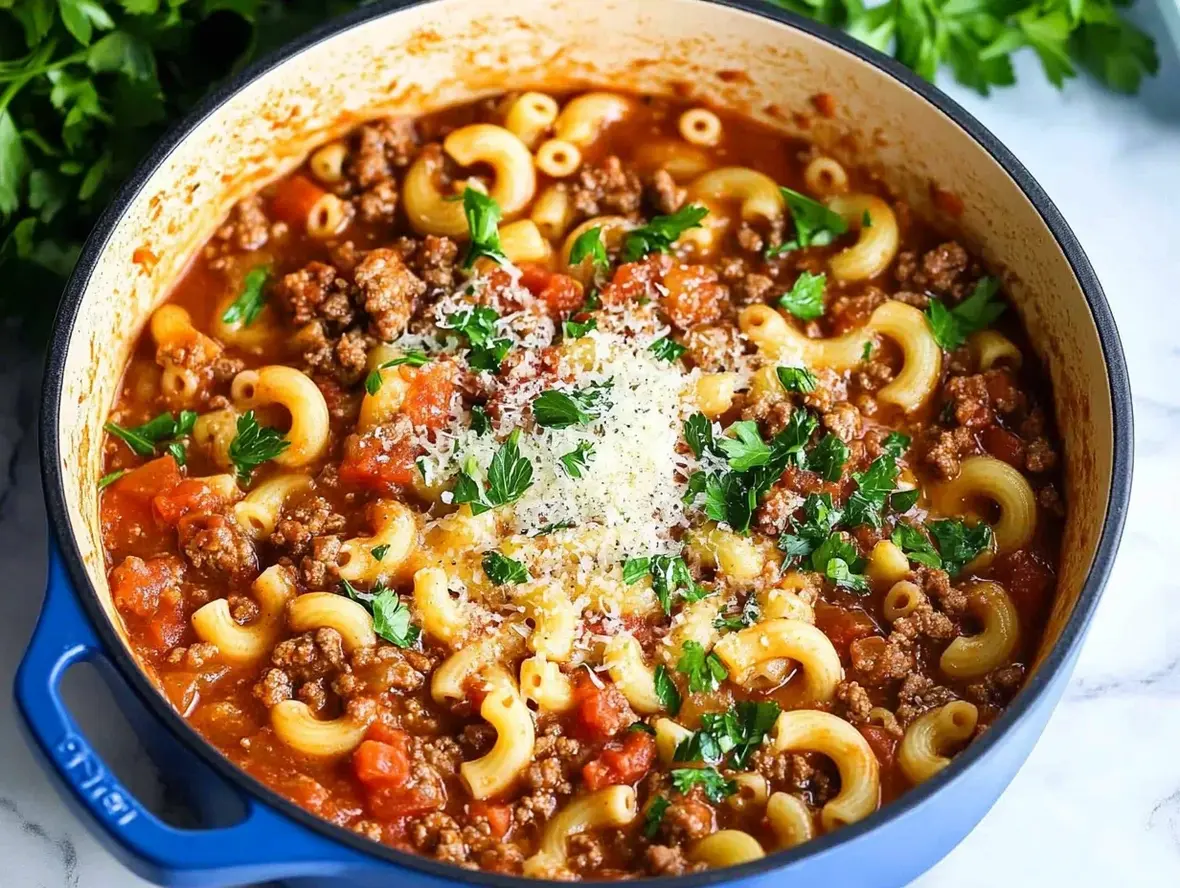
This simple, budget-friendly one-pot dish is perfect for busy nights or when you’re watching your wallet. It’s hearty, comforting, and comes together with just 10 ingredients in only 20 minutes!


Ingredients

Scale
  • 1 cuponion, chopped2garlic cloves, minced1lb lean ground beef2(15 oz) cans stewed tomatoes (with juice)1(15 oz) can water1 tspdried parsley1 tspdried oregano½ tspred pepper flakes½ tspsaltFreshly ground black pepper, to taste8 ozelbow macaroniFreshly grated Parmesan cheese, for serving
  • 2garlic cloves, minced1lb lean ground beef2(15 oz) cans stewed tomatoes (with juice)1(15 oz) can water1 tspdried parsley1 tspdried oregano½ tspred pepper flakes½ tspsaltFreshly ground black pepper, to taste8 ozelbow macaroniFreshly grated Parmesan cheese, for serving
  • 1lb lean ground beef2(15 oz) cans stewed tomatoes (with juice)1(15 oz) can water1 tspdried parsley1 tspdried oregano½ tspred pepper flakes½ tspsaltFreshly ground black pepper, to taste8 ozelbow macaroniFreshly grated Parmesan cheese, for serving
  • 2(15 oz) cans stewed tomatoes (with juice)1(15 oz) can water1 tspdried parsley1 tspdried oregano½ tspred pepper flakes½ tspsaltFreshly ground black pepper, to taste8 ozelbow macaroniFreshly grated Parmesan cheese, for serving
  • 1(15 oz) can water1 tspdried parsley1 tspdried oregano½ tspred pepper flakes½ tspsaltFreshly ground black pepper, to taste8 ozelbow macaroniFreshly grated Parmesan cheese, for serving
  • 1 tspdried parsley1 tspdried oregano½ tspred pepper flakes½ tspsaltFreshly ground black pepper, to taste8 ozelbow macaroniFreshly grated Parmesan cheese, for serving
  • 1 tspdried oregano½ tspred pepper flakes½ tspsaltFreshly ground black pepper, to taste8 ozelbow macaroniFreshly grated Parmesan cheese, for serving
  • ½ tspred pepper flakes½ tspsaltFreshly ground black pepper, to taste8 ozelbow macaroniFreshly grated Parmesan cheese, for serving
  • ½ tspsaltFreshly ground black pepper, to taste8 ozelbow macaroniFreshly grated Parmesan cheese, for serving
  • Freshly ground black pepper, to taste8 ozelbow macaroniFreshly grated Parmesan cheese, for serving
  • 8 ozelbow macaroniFreshly grated Parmesan cheese, for serving
  • Freshly grated Parmesan cheese, for serving

Instructions

  1. 1️⃣Cook the beef and aromatics: In a large skillet over medium-high heat, add the ground beef, chopped onion, and minced garlic. Cook for 5-7 minutes, stirring frequently, until the beef is browned and the onion is translucent. Drain any excess fat if needed.2️⃣Add liquids and seasonings: Stir in the stewed tomatoes (with their juice), 1 can of water, dried parsley, dried oregano, red pepper flakes, salt, and freshly ground black pepper. Mix everything well.3️⃣Incorporate the pasta: Bring the mixture to a boil, then add the elbow macaroni. Reduce the heat to low, cover the skillet, and let it simmer for about 15 minutes, stirring occasionally to prevent the pasta from sticking to the bottom of the pan.4️⃣Serve: Once the pasta is tender and the flavors are melded, remove the skillet from heat. Serve hot, topped with freshly grated Parmesan cheese. Adjust seasoning with additional salt or pepper if needed.
  2. 2️⃣Add liquids and seasonings: Stir in the stewed tomatoes (with their juice), 1 can of water, dried parsley, dried oregano, red pepper flakes, salt, and freshly ground black pepper. Mix everything well.3️⃣Incorporate the pasta: Bring the mixture to a boil, then add the elbow macaroni. Reduce the heat to low, cover the skillet, and let it simmer for about 15 minutes, stirring occasionally to prevent the pasta from sticking to the bottom of the pan.4️⃣Serve: Once the pasta is tender and the flavors are melded, remove the skillet from heat. Serve hot, topped with freshly grated Parmesan cheese. Adjust seasoning with additional salt or pepper if needed.
  3. 3️⃣Incorporate the pasta: Bring the mixture to a boil, then add the elbow macaroni. Reduce the heat to low, cover the skillet, and let it simmer for about 15 minutes, stirring occasionally to prevent the pasta from sticking to the bottom of the pan.
  4. 4️⃣Serve: Once the pasta is tender and the flavors are melded, remove the skillet from heat. Serve hot, topped with freshly grated Parmesan cheese. Adjust seasoning with additional salt or pepper if needed.

Notes

Stretch it further: Add a can of beans (such as kidney or black beans) or frozen vegetables like peas or corn for extra nutrition and servings.Swap it up: Use ground turkey, chicken, or a plant-based ground meat alternative to fit dietary preferences.Storage: Store leftovers in an airtight container in the refrigerator for up to 3 days. Reheat gently on the stovetop or microwave.Cheesy upgrade: Stir in shredded cheddar or mozzarella for an extra cheesy kick.
Swap it up: Use ground turkey, chicken, or a plant-based ground meat alternative to fit dietary preferences.Storage: Store leftovers in an airtight container in the refrigerator for up to 3 days. Reheat gently on the stovetop or microwave.Cheesy upgrade: Stir in shredded cheddar or mozzarella for an extra cheesy kick.
Storage: Store leftovers in an airtight container in the refrigerator for up to 3 days. Reheat gently on the stovetop or microwave.Cheesy upgrade: Stir in shredded cheddar or mozzarella for an extra cheesy kick.
Cheesy upgrade: Stir in shredded cheddar or mozzarella for an extra cheesy kick.

“`

Easy Homemade Chicken Noodle Soup Recipe

“`html

Easy Homemade Chicken Noodle Soup Recipe

Comfort in a Bowl: The Ultimate Easy Homemade Chicken Noodle Soup

Are you craving a dish that feels like a warm hug on a chilly evening or a comforting friend when you’re feeling under the weather? Studies show that chicken noodle soup is consistently ranked as one of the most desired comfort foods, with searches for “easy chicken noodle soup” spiking by over 30% during colder months. This Easy Homemade Chicken Noodle Soup recipe is designed to be your go-to for those moments. Forget store-bought; this recipe uses simple, wholesome ingredients to create a deeply flavorful and soul-satisfying pot of goodness that’s surprisingly easy to whip up. It’s the kind of meal that brings families to the table, filling your home with an irresistible aroma and a sense of pure contentment. Ready to create your family’s new favorite tradition?

Gather Your Cozy Companions: The Ingredients

The magic of this easy chicken noodle soup lies in its simplicity, relying on pantry staples and fresh, vibrant vegetables. Each ingredient plays a crucial role in building layers of flavor and texture, culminating in that quintessential comforting bowl.

  • Olive Oil or Butter: (2 tablespoons) The initial base for sautéing, imparting a rich, mellow flavor. Olive oil offers a slightly fruity note, while butter provides a classic, decadent richness.
  • Yellow Onion: (1 large, chopped) The aromatic backbone of our soup, offering a sweet yet pungent foundation. Its layers soften and melt into the broth, adding depth.
  • Carrots: (3 medium, peeled and sliced or diced) These bring a subtle sweetness and a beautiful, vibrant orange hue. Their tender bite adds a delightful textural contrast.
  • Celery Stalks: (3 medium, sliced or diced) Providing a fresh, slightly peppery, and earthy note. Celery is essential for that classic chicken noodle soup aroma and taste.
  • Garlic: (3-4 cloves, minced) The pungent little powerhouses that awaken the senses. Their robust flavor is indispensable for a truly aromatic soup.
  • Chicken Broth or Stock: (8 cups) The heart of our soup. Opt for low-sodium to control the saltiness, allowing the other flavors to shine. Good quality broth makes a significant difference in the final taste.
  • Cooked Chicken: (3-4 cups, shredded or diced) This can be leftover roasted chicken, rotisserie chicken, or even chicken breasts boiled specifically for this recipe. It’s the star protein, providing savory depth.
  • Egg Noodles: (6-8 ounces) The classic choice for their tender, slightly chewy texture that perfectly soaks up the broth. Choose wide or medium egg noodles for that nostalgic feel.
  • Fresh Parsley: (1/4 cup, chopped) Adds a burst of fresh, herbaceous brightness to finish. Its vibrant green flecks elevate the visual appeal and taste.
  • Dried Thyme: (1 teaspoon) Imparts a warm, earthy, slightly floral aroma that complements the chicken and vegetables beautifully.
  • Bay Leaf: (1) A subtle but important player, the bay leaf lends a complex, almost medicinal background note that rounds out the broth’s flavor.
  • Salt and Black Pepper: (To taste) The essential final touch to awaken and balance all the flavors.

The Melodious Rhythm of Cooking: Timing Breakdown

One of the best aspects of this recipe is its efficiency. While many homemade soups can take hours, this one comes together in a reasonable amount of time, making it weeknight-friendly.

Prep time: 15 minutes
Cook time: 30-40 minutes
Total time: 45-55 minutes

Compared to other classic chicken noodle soup recipes that might call for simmering a whole chicken for hours or involve more complex steps, this version prioritizes speed and simplicity without sacrificing that beloved homemade taste. It’s significantly quicker than starting from scratch with a whole bird, yet delivers a depth of flavor that rivals longer preparations.

A steaming bowl of homemade chicken noodle soup with carrots, celery, chicken, and noodles, garnished with fresh parsley.

Crafting Your Comfort: Step-by-Step Instructions

Follow these simple steps to create a pot of chicken noodle soup that will warm you from the inside out!

Step 1: The Aromatic Foundation

In a large pot or Dutch oven, heat the olive oil or butter over medium heat. Add the chopped yellow onion, carrots, and celery. Sauté, stirring occasionally, for about 5-7 minutes, until the vegetables have softened slightly and the onion becomes translucent and fragrant. This gentle cooking process begins to release their natural sweetness and aromatic compounds.

Step 2: Golden Chicken Brilliance

Add the minced garlic to the pot and cook for another minute until fragrant, being careful not to burn it. If you are using raw chicken pieces (like thighs or breasts) instead of pre-cooked chicken, add them now and sear them for about 2-3 minutes per side until lightly golden. This step adds an extra layer of flavor and color to the final soup.

Step 3: The Broth’s Gentle Embrace

Pour in the chicken broth or stock. Add the dried thyme, bay leaf, and a generous pinch of salt and pepper. Bring the mixture to a boil, then reduce the heat to low, cover, and let it simmer for 15-20 minutes. This allows the flavors to meld together beautifully. If you added raw chicken in the previous step, ensure it is fully cooked through during this simmering time.

Step 4: Unraveling the Tender Chicken

If you used raw chicken pieces, carefully remove them from the pot with a slotted spoon and place them on a cutting board. Let them cool slightly, then shred or dice them into bite-sized pieces. If you are using pre-cooked chicken, this step can be skipped, and you can simply add your shredded or diced cooked chicken to the pot now.

Step 5: Noodles and Veggie Revelry

Return the shredded or diced chicken to the pot. Increase the heat to medium-high and bring the soup back to a gentle boil. Add the dried egg noodles and cook according to package directions, usually about 7-10 minutes, until al dente. Be careful not to overcook the noodles, as they will continue to soften in the hot broth.

Step 6: The Grand Finale of Flavor

Once the noodles are cooked, remove the bay leaf. Taste the soup and adjust seasoning with salt and black pepper as needed. Stir in the fresh chopped parsley just before serving to maintain its bright color and fresh flavor. Ladle the hot soup into bowls and serve immediately.

A Peek at the Goodness: Nutritional Information

While the exact nutritional values can vary based on ingredient brands and specific quantities used, a typical serving of this easy homemade chicken noodle soup is generally:

  • Calories: Approximately 350-450 per serving
  • Protein: 25-35g
  • Carbohydrates: 30-40g
  • Fat: 10-15g
  • Fiber: 3-5g

(Note: These are estimates. For precise nutritional information, it’s recommended to use a recipe calculator with your specific ingredients.)

Nourishing Twists: Healthier Alternatives

Looking to boost the health factor without sacrificing deliciousness? Here are a few simple swaps:

  • Noodles: Swap traditional egg noodles for whole wheat pasta, brown rice pasta, or even zucchini noodles (zoodles) for a lower-carb, higher-fiber option. Add zoodles in the last few minutes of cooking to prevent them from becoming mushy.
  • Broth: Use bone broth for an extra boost of collagen and minerals.
  • Veggies: Load up with extra greens like spinach, kale, or Swiss chard. Add them in the last 5 minutes of cooking for a nutrient-dense punch.
  • Chicken: Opt for lean chicken breast and poach it in the broth for a lighter protein source.
  • Salt: Use herbs and spices like ginger, turmeric, or a touch of lemon juice to add flavor instead of relying solely on salt.

Serving Serenity

This chicken noodle soup is a meal in itself, but it pairs wonderfully with a few simple accompaniments:

  • Crusty Bread: Perfect for dipping into that savory broth.
  • Side Salad: A light, crisp salad adds a refreshing contrast.
  • Crackers: Offer a variety of your favorite crackers for a textural element.
  • A dollop of sour cream or Greek yogurt: For a creamy, tangy finish.

Navigating the Soup Seas: Common Mistakes to Avoid

Even with a simple recipe, a few common pitfalls can detract from your perfect bowl:

  • Overcooking the Noodles: Noodles can become mushy if left in the hot soup for too long, especially after the heat is turned off. Add them towards the end of cooking and cook until just al dente.
  • Under-seasoning: Don’t be shy with salt and pepper! Taste and adjust seasoning throughout the cooking process, especially after adding broth and noodles.
  • Burning the Garlic: Garlic cooks very quickly. Add it towards the end of sautéing your aromatics and cook for just a minute until fragrant.
  • Using Bland Broth: The quality of your chicken broth significantly impacts the final flavor. Opt for a good quality, low-sodium broth or homemade stock for the best results.

Preserving the Warmth: Storing Your Soup

Leftovers are a treat! For the best results:

  • Refrigeration: Allow the soup to cool completely, then store it in an airtight container in the refrigerator for up to 3-4 days.
  • Freezing: Chicken noodle soup freezes well, though the noodles can sometimes absorb more liquid. It’s best to freeze the broth, chicken, and vegetables without the noodles. Cook fresh noodles separately when reheating. Store in freezer-safe containers for up to 2-3 months.
  • Reheating: Reheat gently on the stovetop over low heat, stirring occasionally. If frozen without noodles, add cooked noodles when reheating to avoid a mushy texture.
Close-up of chicken noodle soup showing tender chicken, vegetables, and noodles in a flavorful broth.

Your Burning Questions Answered: FAQs

What is the best type of chicken to use for this soup?

You can use rotisserie chicken for ultimate convenience, leftover roasted chicken, or chicken breasts/thighs that you can boil or poach directly in the broth. Using parts with bone, like thighs, can add even more depth of flavor to the broth.

Can I make this soup ahead of time?

Yes, you can! The flavors often meld even better overnight. However, it’s best to cook the noodles separately and add them just before serving to prevent them from becoming soft and mushy.

How can I make the broth richer?

For a richer broth, use high-quality chicken stock or homemade bone broth. You can also add a chicken bouillon cube or paste for an extra savory kick, but be mindful of salt content. Simmering with chicken backs or wings can also enhance the broth.

Can I add other vegetables?

Absolutely! Feel free to add other vegetables like peas, corn, green beans, or potatoes. Add heartier vegetables like potatoes earlier in the simmering process, and quicker-cooking vegetables like peas towards the end.

Is chicken noodle soup really good for a cold?

There’s a reason it’s a go-to! The warm broth is hydrating and can help soothe a sore throat. The steam can help clear nasal passages, and the chicken provides protein for energy. Some studies suggest the ingredients might have anti-inflammatory properties.

Savor the Simplicity

This Easy Homemade Chicken Noodle Soup recipe is more than just a meal; it’s an experience. It’s about the aroma filling your kitchen, the comforting warmth in every spoonful, and the simple joy of sharing a delicious, homemade dish with loved ones. With its straightforward steps and accessible ingredients, you can create a truly special soup that nourishes both body and soul. So, gather your loved ones, put on your apron, and let the comforting magic of homemade chicken noodle soup envelop you. What are you waiting for? Get cooking!

Print

clock clock iconcutlery cutlery iconflag flag iconfolder folder iconinstagram instagram iconpinterest pinterest iconfacebook facebook iconprint print iconsquares squares iconheart heart iconheart solid heart solid icon

Quick and Easy Chicken Noodle Soup


  • Author: Chef Emy

Description

This comforting and hearty chicken noodle soup comes together quickly, making it perfect for busy weeknights. Packed with tender chicken, egg noodles, and vegetables, it’s a nourishing bowl of goodness!


Ingredients

Scale
  • 1 tablespoonbutter½ cupchopped onion½ cupchopped celery4(14.5-ounce) cans chicken broth1(14.5-ounce) can vegetable broth½pound chopped cooked chicken breast1 ½ cupsegg noodles1 cupsliced carrots½ teaspoondried basil½ teaspoondried oreganoSalt and ground black pepper, to taste
  • ½ cupchopped onion½ cupchopped celery4(14.5-ounce) cans chicken broth1(14.5-ounce) can vegetable broth½pound chopped cooked chicken breast1 ½ cupsegg noodles1 cupsliced carrots½ teaspoondried basil½ teaspoondried oreganoSalt and ground black pepper, to taste
  • ½ cupchopped celery4(14.5-ounce) cans chicken broth1(14.5-ounce) can vegetable broth½pound chopped cooked chicken breast1 ½ cupsegg noodles1 cupsliced carrots½ teaspoondried basil½ teaspoondried oreganoSalt and ground black pepper, to taste
  • 4(14.5-ounce) cans chicken broth1(14.5-ounce) can vegetable broth½pound chopped cooked chicken breast1 ½ cupsegg noodles1 cupsliced carrots½ teaspoondried basil½ teaspoondried oreganoSalt and ground black pepper, to taste
  • 1(14.5-ounce) can vegetable broth½pound chopped cooked chicken breast1 ½ cupsegg noodles1 cupsliced carrots½ teaspoondried basil½ teaspoondried oreganoSalt and ground black pepper, to taste
  • ½pound chopped cooked chicken breast1 ½ cupsegg noodles1 cupsliced carrots½ teaspoondried basil½ teaspoondried oreganoSalt and ground black pepper, to taste
  • 1 ½ cupsegg noodles1 cupsliced carrots½ teaspoondried basil½ teaspoondried oreganoSalt and ground black pepper, to taste
  • 1 cupsliced carrots½ teaspoondried basil½ teaspoondried oreganoSalt and ground black pepper, to taste
  • ½ teaspoondried basil½ teaspoondried oreganoSalt and ground black pepper, to taste
  • ½ teaspoondried oreganoSalt and ground black pepper, to taste
  • Salt and ground black pepper, to taste

Instructions

  1. 1️⃣Sauté aromatics: Melt the butter in a large pot over medium heat. Add the chopped onion and celery, cooking for about 5 minutes, or until they’re just tender.2️⃣Add soup ingredients: Pour in the chicken broth, vegetable broth, and add the cooked chicken, egg noodles, sliced carrots, dried basil, dried oregano, salt, and pepper. Stir well to combine.3️⃣Boil and simmer: Bring the soup to a boil over high heat. Once boiling, reduce the heat to low and let it simmer for 20 minutes, allowing the flavors to meld and the noodles to cook until tender.4️⃣Serve: Taste and adjust seasoning if needed. Ladle the soup into bowls and serve hot.
  2. 2️⃣Add soup ingredients: Pour in the chicken broth, vegetable broth, and add the cooked chicken, egg noodles, sliced carrots, dried basil, dried oregano, salt, and pepper. Stir well to combine.
  3. 3️⃣Boil and simmer: Bring the soup to a boil over high heat. Once boiling, reduce the heat to low and let it simmer for 20 minutes, allowing the flavors to meld and the noodles to cook until tender.4️⃣Serve: Taste and adjust seasoning if needed. Ladle the soup into bowls and serve hot.
  4. 4️⃣Serve: Taste and adjust seasoning if needed. Ladle the soup into bowls and serve hot.

Notes

Shortcuts: Use rotisserie chicken or pre-cooked shredded chicken to save time.Customize it: Add other vegetables like peas, green beans, or corn for extra nutrition.Noodle alternative: Try replacing egg noodles with gluten-free pasta or zucchini noodles for dietary preferences.Storage: Store leftovers in an airtight container in the fridge for up to 3 days. Reheat gently on the stovetop.
Customize it: Add other vegetables like peas, green beans, or corn for extra nutrition.Noodle alternative: Try replacing egg noodles with gluten-free pasta or zucchini noodles for dietary preferences.Storage: Store leftovers in an airtight container in the fridge for up to 3 days. Reheat gently on the stovetop.
Noodle alternative: Try replacing egg noodles with gluten-free pasta or zucchini noodles for dietary preferences.Storage: Store leftovers in an airtight container in the fridge for up to 3 days. Reheat gently on the stovetop.
Storage: Store leftovers in an airtight container in the fridge for up to 3 days. Reheat gently on the stovetop.


“`

Cranberry Cream Cheese Dip Perfect Holiday Appetizer

“`html

Cranberry Cream Cheese Dip: The Perfect Holiday Appetizer

What Makes This Cranberry Cream Cheese Dip a Holiday Must-Have?

Are you searching for an appetizer that consistently receives rave reviews during the festive season, one that perfectly balances sweet, tart, and creamy notes? Look no further than this Cranberry Cream Cheese Dip! In the bustling world of holiday entertaining, finding recipes that are both impressive and incredibly easy to prepare is like unearthing holiday treasure. This dip is precisely that kind of gem. It’s a showstopper that requires minimal effort, allowing you to spend more time mingling with your guests and less time in the kitchen. Its vibrant color alone adds a cheerful touch to any festive spread, and its irresistible flavor profile makes it a guaranteed crowd-pleaser. Whether you’re hosting a big Christmas bash, a cozy New Year’s Eve gathering, or a casual get-together with friends, this dip is destined to be the star of your appetizer table. Get ready to delight your taste buds and impress your guests with this simple yet sophisticated holiday essential.

Gather Your Delicious Ingredients

The magic of this Cranberry Cream Cheese Dip lies in its simplicity and the harmony of its flavors. Most ingredients are pantry staples, easily accessible during your holiday shopping trips. The combination of creamy, tangy cream cheese with the sweet-tart burst of cranberries is truly divine.

Key Ingredients

  • 8 ounces Cream Cheese: The luscious, creamy foundation. Ensure it’s softened to room temperature for the smoothest texture.
  • 1 cup Cream Cheese: This adds an extra layer of richness and depth. Again, softened is key!
  • 1/2 cup Cranberry Sauce (Whole Berry): Opt for a good quality whole berry cranberry sauce. The texture and tartness are crucial. Homemade is wonderful if you have it!
  • 1/4 cup Powdered Sugar: For that subtle sweetness that balances the tartness of the cranberries. Adjust to your preference.
  • 1 teaspoon Orange Zest: This is the secret weapon! It adds a bright, zesty aroma and flavor that perfectly complements the cranberries.
  • 1/4 teaspoon Ground Cinnamon: A warm, comforting spice that enhances the holiday feel.

Optional Enhancements

  • Chopped Pecans or Walnuts: For a delightful crunch and nutty flavor.
  • A drizzle of Honey or Maple Syrup: For added sweetness and a beautiful glaze.
  • Fresh Rosemary or Parsley: For a pop of color and fresh herbaceous notes as garnish.

Substitutions and Tips

  • Cream Cheese: If you’re dairy-free, consider a good quality plant-based cream cheese. However, the texture might vary slightly.
  • Cranberry Sauce: If you don’t have whole berry sauce, you can use jellied cranberry sauce, but you’ll want to mash it up a bit to create a more varied texture. Alternatively, you can use fresh cranberries, simmered with a little sugar and orange juice until softened and slightly reduced.
  • Orange Zest: If you’re out of fresh oranges, you can use a pinch of dried orange zest, but fresh is always best for its vibrant aroma.
  • Powdered Sugar: You can substitute with granulated sugar, but ensure it dissolves completely. Start with less and add more to taste.
  • Room Temperature Ingredients: This cannot be stressed enough! Softened cream cheese ensures a smooth, lump-free dip.

Perfectly Timed: Prep and Cook

Prep Time: 10 minutes
Cook Time: 0 minutes
Total Time: 10 minutes (+ chilling time)

The beauty of this Cranberry Cream Cheese Dip is its incredible speed. With just 10 minutes of active preparation, it’s one of the quickest appetizers you can whip up for any occasion. The total time is primarily waiting time for the flavors to meld in the refrigerator, making it a perfect make-ahead dish.

A festive bowl of Cranberry Cream Cheese Dip garnished with fresh cranberries and rosemary, ready for serving.

Crafting Your Cranberry Cream Cheese Dip: Step-by-Step

Follow these simple steps to create a truly spectacular Cranberry Cream Cheese Dip that will have your guests asking for the recipe.

Step 1: Prepare the Cream Cheese Base

In a medium-sized mixing bowl, combine the softened cream cheese and the softened cream cheese (or the full 16 ounces if you prefer a richer, creamier base with just one type of cream cheese). Using an electric mixer (handheld or stand mixer with paddle attachment) or a sturdy whisk, beat the cream cheese until it is completely smooth and fluffy. This is crucial for a silky-smooth texture, so don’t rush this step!

Step 2: Add the Cranberry Component

Gently fold in the whole berry cranberry sauce, powdered sugar, orange zest, and ground cinnamon into the whipped cream cheese. You can use a spatula for this. The goal here is to incorporate the cranberry mixture without overmixing, which could break down the beautiful texture of the cream cheese. You want to see streaks of vibrant cranberry color throughout the creamy base. If you’re adding chopped nuts (pecans or walnuts) at this stage, fold them in now as well.

Step 3: Mix and Chill

Once everything is just combined – no need for perfection, the rustic look is appealing! – transfer the dip into your serving bowl. Cover the bowl tightly with plastic wrap. For the best flavor, it’s essential to let the dip chill in the refrigerator for at least 30 minutes. This allows the flavors to meld beautifully and the dip to firm up slightly. For an even more intense flavor, you can chill it for a few hours or even overnight.

Step 4: Garnish and Serve

Before serving, remove the plastic wrap. If desired, add a final scattering of fresh cranberries, a sprinkle of chopped nuts, a drizzle of honey or maple syrup, and a sprig of fresh rosemary or parsley for a beautiful presentation. Serve this delightful dip with your favorite dippers and watch it disappear!

Nutritional Snapshot

While this dip is a treat, it’s good to have an idea of its nutritional content. Please note that these are approximate values and can vary based on exact ingredients and portion sizes.

  • Calories: Approximately 150-200 per 1/4 cup serving (this will vary greatly depending on the brand of cream cheese and amount of sugar used).
  • Fat: High due to cream cheese.
  • Carbohydrates: From cranberry sauce and powdered sugar.
  • Sugar: Primarily from cranberry sauce and added sweetener.
  • Protein: A small amount from cream cheese.

Healthier Twists on a Classic

Looking to lighten things up without sacrificing flavor? Here are a few healthy swaps:

  • Reduced-Fat Cream Cheese: Substitute a portion or all of the cream cheese with a reduced-fat version. The texture might be slightly less decadent but still delicious.
  • Greek Yogurt: For an even lighter option, you can swap some of the cream cheese with plain Greek yogurt. This will add protein and reduce fat and calories significantly. Ensure the Greek yogurt is full-fat or 2% for best texture.
  • Reduced Sugar Cranberry Sauce: Use a cranberry sauce that is made with less added sugar or make your own with natural sweeteners like maple syrup or stevia.
  • Natural Sweeteners: Instead of powdered sugar, use a touch of maple syrup or honey, adjusting to taste.
  • Focus on Flavor Boosters: Emphasize the orange zest and cinnamon for flavor, rather than relying solely on sweetness.

Elevate Your Serving Experience

The way you present your Cranberry Cream Cheese Dip can be as memorable as its taste! Here are some ideas:

  • Classic Crackers: Water crackers, pita crackers, or a simple buttery cracker are perfect neutral canvases.
  • Crusty Bread: Slices of baguette, sourdough, or a rustic artisan loaf pair beautifully, especially when lightly toasted.
  • Fresh Vegetables: For a healthier crunch, serve with celery sticks, apple slices, pear slices, or carrot sticks. The crispness beautifully contrasts the creamy dip.
  • Pretzels: Salty pretzel sticks or twists offer a lovely sweet and salty contrast.
  • Fruit Skewers: For a festive touch, arrange some grapes or berries on skewers alongside the dip.
  • Presentation is Key: Serve in a charming ceramic bowl or a festive holiday-themed dish. Garnish generously to make it visually appealing.
Close-up of Cranberry Cream Cheese Dip showing its creamy texture and vibrant cranberry swirls.

Avoid These Common Pitfalls

Even the simplest recipes can have a few potential hiccups. Here’s how to avoid them:

  • Using Cold Cream Cheese: This is the most common mistake. Cold cream cheese will result in a lumpy, unappetizing texture. Always let it soften to room temperature.
  • Overmixing after Adding Cranberries: Overworking the dip can make it too smooth and lose the delightful texture contrast between the creamy base and the whole berries.
  • Not Chilling Enough: While you can technically serve it immediately, chilling allows the flavors to meld and the dip to set to the perfect consistency.
  • Using Smooth Cranberry Sauce: While usable, whole berry sauce provides a much better texture and visual appeal. If using jellied, mash it well.
  • Too Much Sweetener: Start with the recommended amount of powdered sugar and taste before adding more. It’s easier to add sweetness than to take it away.

Storing Your Delicious Creation

Leftovers of this delightful dip are a welcome bonus! Properly stored, it can last for several days:

  • Refrigeration: Cover the serving bowl tightly with plastic wrap or transfer the dip to an airtight container. It will keep in the refrigerator for up to 3-4 days.
  • Freezing: This dip is generally not ideal for freezing. The texture of the cream cheese can change significantly upon thawing, becoming watery or grainy.
  • Reviving: If the dip seems a little firm upon reheating, let it sit at room temperature for about 15-20 minutes before serving. You can also give it a quick stir to redistribute the creaminess.

Frequently Asked Questions

***Can I make this dip ahead of time?***

Absolutely! In fact, making it ahead of time is highly recommended. Chilling allows the flavors to meld beautifully, and it can be made up to 2 days in advance.

***What’s the best way to soften cream cheese?***

The easiest way is to leave it on the counter for 1-2 hours. For a quicker method, you can carefully cut it into smaller cubes and spread them on a plate, or even unwrap it and microwave on low power for 10-15 second intervals, checking frequently until softened but not melted.

***Can I use different types of cranberry sauce?***

Yes! While whole berry sauce is preferred for texture, jellied cranberry sauce can be used. Mash it thoroughly before incorporating it into the cream cheese mixture for a smoother consistency.

***How long does the dip last once made?***

Stored properly in an airtight container in the refrigerator, the dip should last for 3-4 days.

***Can I add other flavors to this dip?***

Certainly! Consider adding a pinch of nutmeg, a dash of ginger, a splash of vanilla extract, or even a tablespoon of orange liqueur for an adult twist.

Your New Favorite Holiday Appetizer Awaits!

This Cranberry Cream Cheese Dip is more than just a recipe; it’s an experience. It’s the effortless elegance you crave during the busy holiday season, a dish that brings joy and deliciousness to any gathering. Its vibrant color, irresistible creamy texture, and perfectly balanced sweet-tart flavor profile make it a winner every time. So, go ahead, whip up this easy Cranberry Cream Cheese Dip, and get ready to be the host with the most! You’ll be amazed at how quickly it becomes a holiday tradition. Don’t hesitate to share this recipe with friends and family – it’s too good not to share!

Print

clock clock iconcutlery cutlery iconflag flag iconfolder folder iconinstagram instagram iconpinterest pinterest iconfacebook facebook iconprint print iconsquares squares iconheart heart iconheart solid heart solid icon

Baked Cranberry Cream Cheese Dip


  • Author: Chef Emy

Description

This creamy, cheesy dip with bursts of tart cranberries is the perfect holiday appetizer! The combination of warm cream cheese, gooey mozzarella, and sweet-tart cranberry sauce makes it a crowd-pleaser. Serve with crackers, bread, or pita chips for dipping.


Ingredients

Scale
  • 2(8 oz) packages cream cheese, room temperature3 cupsshredded mozzarella cheese, divided½ teaspooncrushed dried rosemary½ teaspoongarlic powder½ cupcanned whole berry cranberry sauce⅔ cupfresh cranberries
  • 3 cupsshredded mozzarella cheese, divided½ teaspooncrushed dried rosemary½ teaspoongarlic powder½ cupcanned whole berry cranberry sauce⅔ cupfresh cranberries
  • ½ teaspooncrushed dried rosemary½ teaspoongarlic powder½ cupcanned whole berry cranberry sauce⅔ cupfresh cranberries
  • ½ teaspoongarlic powder½ cupcanned whole berry cranberry sauce⅔ cupfresh cranberries
  • ½ cupcanned whole berry cranberry sauce⅔ cupfresh cranberries
  • cupfresh cranberries

Instructions

  1. 1️⃣Preheat the oven: Set your oven to 375°F (190°C). Lightly grease an 8×8-inch baking dish.
  2. 2️⃣Prepare the cheese mixture: In a large mixing bowl, beat the cream cheese until smooth. Add 2 cups of shredded mozzarella cheese, rosemary, and garlic powder. Mix until all ingredients are well combined.3️⃣Add cranberries: Gently fold in the cranberry sauce and fresh cranberries to the cheese mixture. Be careful not to crush the fresh cranberries too much to maintain their texture.4️⃣Assemble the dip: Transfer the mixture into the prepared baking dish, spreading it evenly. Sprinkle the remaining 1 cup of mozzarella cheese over the top.5️⃣Bake: Place the dish in the oven and bake for 22-26 minutes, or until the edges are bubbling and the top starts to turn golden brown.6️⃣Serve: Remove from the oven and let it cool slightly. Serve the dip hot with your choice of crackers, sliced baguette, or pita chips.
  3. 3️⃣Add cranberries: Gently fold in the cranberry sauce and fresh cranberries to the cheese mixture. Be careful not to crush the fresh cranberries too much to maintain their texture.4️⃣Assemble the dip: Transfer the mixture into the prepared baking dish, spreading it evenly. Sprinkle the remaining 1 cup of mozzarella cheese over the top.5️⃣Bake: Place the dish in the oven and bake for 22-26 minutes, or until the edges are bubbling and the top starts to turn golden brown.6️⃣Serve: Remove from the oven and let it cool slightly. Serve the dip hot with your choice of crackers, sliced baguette, or pita chips.
  4. 4️⃣Assemble the dip: Transfer the mixture into the prepared baking dish, spreading it evenly. Sprinkle the remaining 1 cup of mozzarella cheese over the top.
  5. 5️⃣Bake: Place the dish in the oven and bake for 22-26 minutes, or until the edges are bubbling and the top starts to turn golden brown.6️⃣Serve: Remove from the oven and let it cool slightly. Serve the dip hot with your choice of crackers, sliced baguette, or pita chips.
  6. 6️⃣Serve: Remove from the oven and let it cool slightly. Serve the dip hot with your choice of crackers, sliced baguette, or pita chips.

Notes

Make it festive: Garnish with a few extra fresh cranberries and a sprinkle of rosemary for a festive presentation.Cheese swap: Substitute mozzarella with sharp cheddar or Monterey Jack for a different flavor profile.Leftovers: Store any leftover dip in an airtight container in the refrigerator for up to 3 days. Reheat in the oven or microwave before serving.
Cheese swap: Substitute mozzarella with sharp cheddar or Monterey Jack for a different flavor profile.Leftovers: Store any leftover dip in an airtight container in the refrigerator for up to 3 days. Reheat in the oven or microwave before serving.
Leftovers: Store any leftover dip in an airtight container in the refrigerator for up to 3 days. Reheat in the oven or microwave before serving.


“`

Ultimate Beef Bourguignon Recipe: A French Cooking Classic

“`html

Ultimate Beef Bourguignon Recipe: A French Cooking Classic

Unlocking the Secrets to the Ultimate Beef Bourguignon

Did you know that mastering a classic French dish like Beef Bourguignon can significantly elevate your home cooking game and impress even the most discerning palates? This iconic stew, hailing from the Burgundy region of France, is more than just a meal; it’s a testament to slow cooking, rich flavors, and the magic that happens when simple ingredients are treated with respect. Often perceived as daunting, preparing an authentic Beef Bourguignon is surprisingly accessible with the right guidance. This guide will walk you through every nuance, ensuring your rendition is melt-in-your-mouth tender, deeply flavorful, and utterly unforgettable. Get ready to embark on a culinary journey that celebrates the heart of French cuisine!

The Heart of the Dish: Ingredients for Beef Bourguignon

The beauty of Beef Bourguignon lies in its quality ingredients. Opt for the best you can find, as each plays a crucial role in building the complex, savory profile.

  • 2.5 – 3 lbs Beef Chuck Roast, cut into 1.5-inch cubes. Look for cuts with good marbling, which will render beautifully and keep the meat incredibly moist and tender after slow cooking. The rich, beefy aroma is the foundation.

    (Substitution: Beef brisket or short ribs can also work, but chuck is traditional for its braising qualities.)
  • 6 ounces Pancetta or Thick-Cut Bacon, diced. This provides a smoky, salty base and renders fat that’s perfect for sautéing. The crisp bits are a delightful textural contrast.

    (Substitution: Good quality smoked bacon is an excellent alternative.)
  • 2 tablespoons Olive Oil, plus more if needed. For searing the beef to a beautiful, caramelized crust.
  • 1 large Yellow Onion, finely chopped. Adds a subtle sweetness and depth to the sauce.
  • 2 Carrots, peeled and finely chopped. Contributes natural sweetness and a tender bite.
  • 2 cloves Garlic, minced. The pungent aroma is essential for that classic savory flavor.
  • 2 tablespoons All-Purpose Flour. This is key for thickening the rich sauce to that perfect, glossy consistency.
  • 1 bottle (750ml) Dry Red Wine, such as Burgundy, Pinot Noir, or Merlot. This is the soul of the dish, infusing the beef with its robust, earthy notes and vibrant color. The aroma while it simmers is intoxicating.

    (Substitution: A good Cabernet Sauvignon or Zinfandel can be used if Burgundy is unavailable.)
  • 2-3 cups Beef Broth. To supplement the wine and ensure the beef is fully submerged for tender braising.
  • 1 tablespoon Tomato Paste. Concentrates the tomato flavor and adds a rich umami depth.
  • 1 Bay Leaf. A subtle herbal note that infuses during the long cooking process.
  • 4 sprigs Fresh Thyme. Its earthy, slightly floral scent is a classic pairing with beef.
  • 1 pound Cremini Mushrooms, quartered or halved if small. These add a wonderful earthy chew and soak up the rich sauce.
  • 1 pound Pearl Onions, peeled. These sweet, tender morsels are a classic accompaniment, offering a delightful burst of flavor.

    (See note on peeling pearl onions in FAQs.)
  • 2 tablespoons Butter. For sautéing the mushrooms and pearl onions to golden perfection.
  • Salt and freshly ground Black Pepper, to taste. Essential for enhancing all the other flavors.

Timing Your Beef Bourguignon

Prep Time: 30-45 Minutes
Cook Time: 3 – 3.5 Hours
Total Time: Approx. 4 Hours

Beef Bourguignon is a labor of love, and its extended cook time is what transforms tough cuts of beef into incredibly tender morsels. While the average stew might take an hour or two, this classic French dish requires a longer, slower braise to achieve its signature melt-in-your-mouth texture and deeply developed flavors. The active preparation is minimal, but patience during the cooking process is key.

A rustic pot of Beef Bourguignon, rich and glossy with tender chunks of beef, carrots, and mushrooms.

Step-by-Step Instructions

Step 1: Preparing the Beef

Begin by patting your beef chuck cubes thoroughly dry with paper towels. This is a crucial step for achieving a good sear, as moisture steams the meat rather than browning it. Season generously with salt and freshly cracked black pepper. Don’t be shy; the seasoning will meld into the sauce.

Step 2: Browning the Pancetta and Vegetables

In a large, heavy-bottomed pot or Dutch oven over medium heat, cook the diced pancetta until it’s crispy and has rendered its fat. Remove the pancetta with a slotted spoon and set aside, leaving the glorious rendered fat in the pot. Add the chopped onion and carrots to the pot and sauté them in the pancetta fat until softened and lightly browned, about 8-10 minutes. Add the minced garlic and cook for another minute until fragrant. Stir in the tomato paste and cook for another minute, letting it deepen in color.

Step 3: Searing the Beef

Push the vegetables to one side of the pot. Add the 2 tablespoons of olive oil if needed, then increase the heat to medium-high. Add the seasoned beef cubes in batches, being careful not to overcrowd the pot. Sear each side until deeply browned and caramelized. This Maillard reaction is essential for flavor development. Remove the seared beef and set aside with the pancetta.

Step 4: Deglazing and Building the Sauce

Sprinkle the flour over the cooked vegetables and stir to combine, cooking for about a minute to cook out the raw flour taste. Now, pour in the entire bottle of red wine. Scrape the bottom of the pot vigorously with a wooden spoon to loosen all those flavorful browned bits. Let the wine simmer and reduce by about one-third, which concentrates its flavor and cooks off the harsh alcohol notes. Return the seared beef and cooked pancetta to the pot. Add enough beef broth to just cover the meat. Add the bay leaf and thyme sprigs. Bring the liquid to a gentle simmer.

Step 5: Braising to Perfection

Cover the pot tightly and transfer it to a preheated oven at 325°F (160°C). Braise for 2.5 to 3 hours, or until the beef is fork-tender and easily falls apart. Check it occasionally to ensure it’s not drying out; add a splash more broth if needed. The aroma filling your kitchen will be divine!

Step 6: Preparing the Garnish

While the stew is braising, prepare your garnish. In a separate skillet, melt the 2 tablespoons of butter over medium heat. Add the quartered mushrooms and cook until they are nicely browned and tender, about 8-10 minutes. Remove the mushrooms from the skillet and set aside. Add the peeled pearl onions to the same skillet (add a little more butter or oil if needed) and cook until they are golden brown and tender, about 15-20 minutes. You can add a tablespoon of sugar to help them caramelize if you like.

Step 7: Finishing and Serving

Once the beef is tender, carefully remove the pot from the oven. Skim off any excess fat from the surface. Remove and discard the bay leaf and thyme sprigs. Stir in the sautéed mushrooms and pearl onions. Taste and adjust seasoning with salt and pepper as needed. If the sauce isn’t as thick as you’d like, you can make a beurre manié (equal parts softened butter and flour mixed into a paste) and whisk small amounts into the simmering sauce until thickened. Let it simmer for a few more minutes to incorporate and thicken properly.

Close-up of Beef Bourguignon with tender beef, mushrooms, and pearl onions in a rich, glossy sauce.

Nutritional Information (Approximate per serving, 6 servings)

  • Calories: 600-750 kcal
  • Protein: 40-50g
  • Fat: 30-40g
  • Carbohydrates: 15-20g
  • Fiber: 3-5g

*Nutritional values vary based on specific ingredients and portion sizes.

Healthier Alternatives & Flavor-Preserving Swaps

While Beef Bourguignon is a decadent classic, you can make mindful adjustments without sacrificing its soulful flavor:

  • Leaner Cuts: Opt for leaner cuts of beef like sirloin tips or even lean stewing beef, though they may require shorter braising times. You can also trim excess fat from chuck roast before cooking.
  • Reduced Sodium: Use low-sodium beef broth and control the salt added at the end. Pancetta is salty; consider using a lower-sodium bacon or reducing the amount.
  • Thickening Agents: Instead of a flour-based roux or beurre manié, you can thicken the sauce by simmering it uncovered for longer, allowing natural reduction, or by using a slurry of cornstarch and water (use sparingly to avoid a gummy texture).
  • Vegetable Boost: Feel free to add more vegetables like celery or parsnips towards the end of cooking for added nutrients and fiber.

Serving Suggestions

Beef Bourguignon is traditionally served with mashed potatoes, which are perfect for soaking up that luscious sauce. However, it also pairs beautifully with:

  • Crusty French bread for dipping.
  • Egg noodles.
  • Roasted root vegetables.
  • A simple green salad with a sharp vinaigrette to cut through the richness.

Garnish with fresh parsley for a pop of color and freshness.

Common Mistakes to Avoid

  • Not Drying the Beef: Failing to thoroughly pat the beef dry before searing prevents a good crust from forming, resulting in less flavor.
  • Overcrowding the Pot: Searing too much meat at once leads to steaming instead of browning, diminishing the flavor development.
  • Using Low-Quality Wine: The wine is a prominent flavor in Beef Bourguignon, so use a wine you would enjoy drinking. Avoid “cooking wines” which are often high in sodium and low in quality.
  • Not Browning Enough: Thoroughly browning the beef and sautéing the vegetables builds the foundational flavors. Don’t rush this step.
  • Not Skimming Fat: For a less greasy stew, be sure to skim off excess fat from the surface after braising.

Storing Tips

Beef Bourguignon tastes even better the next day as the flavors meld and deepen.

  • Refrigeration: Allow the stew to cool completely, then store it in an airtight container in the refrigerator for up to 3-4 days.
  • Freezing: For longer storage, freeze cooled stew in freezer-safe containers for up to 2-3 months. Thaw overnight in the refrigerator.
  • Reheating: Reheat gently on the stovetop over low heat, stirring occasionally, or in a low oven (around 300°F/150°C) until heated through. You may need to add a splash of broth or water if it has thickened too much.

Frequently Asked Questions

***Why is my Beef Bourguignon not rich and glossy?***

A rich, glossy sauce usually comes from proper browning of the beef and vegetables, deglazing the pan well, and using a thickening agent like flour or a beurre manié. Ensure you reduce the wine sufficiently and don’t add too much liquid initially.

***How do I peel pearl onions easily?***

Scoring the root end of the pearl onion and then blanching them for 1-2 minutes in boiling water, followed by an ice bath, will make the skins slip off easily. Trim off the root end after peeling.

***Can I make Beef Bourguignon ahead of time?***

Absolutely! In fact, it’s highly recommended. The flavors continue to develop and meld beautifully overnight. Simply prepare it a day in advance and reheat gently before serving.

***What red wine is best for Beef Bourguignon?***

Traditionally, a red Burgundy wine (Pinot Noir) is used, which gives the dish its name. However, other dry, medium-bodied red wines like Merlot, Cabernet Sauvignon, or even a Rhône blend will work wonderfully.

***My beef is tough. What went wrong?***

Tough beef in this dish typically means it wasn’t cooked long enough. The key to tender beef in Bourguignon is slow, moist heat (braising). Ensure your oven temperature is accurate and continue cooking until the meat is undeniably fork-tender, which can take up to 3 hours or more.

Print
clock clock iconcutlery cutlery iconflag flag iconfolder folder iconinstagram instagram iconpinterest pinterest iconfacebook facebook iconprint print iconsquares squares iconheart heart iconheart solid heart solid icon

Ultimate Beef Bourguignon Recipe: A French Cooking Classic


  • Author: Chef Emy

Description

Beef Bourguignonis a classic French stew featuring tender beef, crispy turkey bacon, and hearty vegetables simmered in a rich red wine sauce. Perfect for a cozy meal, this dish pairs beautifully with egg noodles, mashed potatoes, or crusty bread.


Ingredients

  • Serving Options:Egg noodlesMashed potatoesCrusty bread

Instructions

  1. 1️⃣Prepare the Oven:
  2. Preheat your oven to 350°F (175°C) and arrange a rack in the lower third.2️⃣Prep Ingredients:Dice the onion, slice the carrot, and mince the garlic.Cut the turkey bacon into 1/2-inch pieces.Pat the beef dry with paper towels and season with 2 tsp kosher salt and 1/2 tsp black pepper.3️⃣Cook the Turkey Bacon:In a Dutch oven or large oven-safe pot, cook the turkey bacon over medium heat until crisp, about 10-12 minutes.Use a slotted spoon to transfer the turkey bacon to a plate, leaving the fat in the pot.4️⃣Brown the Beef:Add half of the beef to the pot in a single layer and sear on all sides, about 2-3 minutes per side.Transfer to the plate with the turkey bacon. Repeat with the remaining beef.5️⃣Sauté Vegetables:Add the onion and carrot to the pot and cook until softened, about 3 minutes. Add the garlic and cook until fragrant, about 30 seconds.Stir in the tomato paste and cook until darkened, about 1-2 minutes. Sprinkle with the flour, stir to coat, and cook for 1 minute to eliminate the raw taste.6️⃣Deglaze and Simmer:Pour in the red wine, scraping up any browned bits from the bottom of the pot. Add the beef broth, thyme, bay leaves, and 1/2 tsp kosher salt.Return the beef, turkey bacon, and any accumulated juices to the pot. Stir to combine and bring to a simmer over medium-high heat.7️⃣Bake:Cover the pot with a tight-fitting lid and transfer to the oven. Cook for about 2 hours, until the beef is fork-tender.8️⃣Cook Onions and Mushrooms:About 30 minutes before the beef is ready, melt the butter in a skillet over medium heat.Add the pearl onions, mushrooms, 1/2 tsp kosher salt, and 1/4 tsp black pepper. Cook, stirring occasionally, until tender and lightly browned, 12-15 minutes.9️⃣Finish the Stew:Remove the pot from the oven and discard the bay leaves and thyme stems.Stir in the cooked onions and mushrooms. Taste and adjust seasoning with more salt and pepper if needed.🔟Serve:Garnish with chopped parsley if desired. Serve hot over egg noodles, mashed potatoes, or alongside crusty bread.
  3. 2️⃣Prep Ingredients:Dice the onion, slice the carrot, and mince the garlic.Cut the turkey bacon into 1/2-inch pieces.Pat the beef dry with paper towels and season with 2 tsp kosher salt and 1/2 tsp black pepper.3️⃣Cook the Turkey Bacon:In a Dutch oven or large oven-safe pot, cook the turkey bacon over medium heat until crisp, about 10-12 minutes.Use a slotted spoon to transfer the turkey bacon to a plate, leaving the fat in the pot.4️⃣Brown the Beef:Add half of the beef to the pot in a single layer and sear on all sides, about 2-3 minutes per side.Transfer to the plate with the turkey bacon. Repeat with the remaining beef.5️⃣Sauté Vegetables:Add the onion and carrot to the pot and cook until softened, about 3 minutes. Add the garlic and cook until fragrant, about 30 seconds.Stir in the tomato paste and cook until darkened, about 1-2 minutes. Sprinkle with the flour, stir to coat, and cook for 1 minute to eliminate the raw taste.6️⃣Deglaze and Simmer:Pour in the red wine, scraping up any browned bits from the bottom of the pot. Add the beef broth, thyme, bay leaves, and 1/2 tsp kosher salt.Return the beef, turkey bacon, and any accumulated juices to the pot. Stir to combine and bring to a simmer over medium-high heat.7️⃣Bake:Cover the pot with a tight-fitting lid and transfer to the oven. Cook for about 2 hours, until the beef is fork-tender.8️⃣Cook Onions and Mushrooms:About 30 minutes before the beef is ready, melt the butter in a skillet over medium heat.Add the pearl onions, mushrooms, 1/2 tsp kosher salt, and 1/4 tsp black pepper. Cook, stirring occasionally, until tender and lightly browned, 12-15 minutes.9️⃣Finish the Stew:Remove the pot from the oven and discard the bay leaves and thyme stems.Stir in the cooked onions and mushrooms. Taste and adjust seasoning with more salt and pepper if needed.🔟Serve:Garnish with chopped parsley if desired. Serve hot over egg noodles, mashed potatoes, or alongside crusty bread.
  4. Dice the onion, slice the carrot, and mince the garlic.
  5. Cut the turkey bacon into 1/2-inch pieces.Pat the beef dry with paper towels and season with 2 tsp kosher salt and 1/2 tsp black pepper.3️⃣Cook the Turkey Bacon:In a Dutch oven or large oven-safe pot, cook the turkey bacon over medium heat until crisp, about 10-12 minutes.Use a slotted spoon to transfer the turkey bacon to a plate, leaving the fat in the pot.4️⃣Brown the Beef:Add half of the beef to the pot in a single layer and sear on all sides, about 2-3 minutes per side.Transfer to the plate with the turkey bacon. Repeat with the remaining beef.5️⃣Sauté Vegetables:Add the onion and carrot to the pot and cook until softened, about 3 minutes. Add the garlic and cook until fragrant, about 30 seconds.Stir in the tomato paste and cook until darkened, about 1-2 minutes. Sprinkle with the flour, stir to coat, and cook for 1 minute to eliminate the raw taste.6️⃣Deglaze and Simmer:Pour in the red wine, scraping up any browned bits from the bottom of the pot. Add the beef broth, thyme, bay leaves, and 1/2 tsp kosher salt.Return the beef, turkey bacon, and any accumulated juices to the pot. Stir to combine and bring to a simmer over medium-high heat.7️⃣Bake:Cover the pot with a tight-fitting lid and transfer to the oven. Cook for about 2 hours, until the beef is fork-tender.8️⃣Cook Onions and Mushrooms:About 30 minutes before the beef is ready, melt the butter in a skillet over medium heat.Add the pearl onions, mushrooms, 1/2 tsp kosher salt, and 1/4 tsp black pepper. Cook, stirring occasionally, until tender and lightly browned, 12-15 minutes.9️⃣Finish the Stew:Remove the pot from the oven and discard the bay leaves and thyme stems.Stir in the cooked onions and mushrooms. Taste and adjust seasoning with more salt and pepper if needed.🔟Serve:Garnish with chopped parsley if desired. Serve hot over egg noodles, mashed potatoes, or alongside crusty bread.
  6. Pat the beef dry with paper towels and season with 2 tsp kosher salt and 1/2 tsp black pepper.3️⃣Cook the Turkey Bacon:In a Dutch oven or large oven-safe pot, cook the turkey bacon over medium heat until crisp, about 10-12 minutes.Use a slotted spoon to transfer the turkey bacon to a plate, leaving the fat in the pot.4️⃣Brown the Beef:Add half of the beef to the pot in a single layer and sear on all sides, about 2-3 minutes per side.Transfer to the plate with the turkey bacon. Repeat with the remaining beef.5️⃣Sauté Vegetables:Add the onion and carrot to the pot and cook until softened, about 3 minutes. Add the garlic and cook until fragrant, about 30 seconds.Stir in the tomato paste and cook until darkened, about 1-2 minutes. Sprinkle with the flour, stir to coat, and cook for 1 minute to eliminate the raw taste.6️⃣Deglaze and Simmer:Pour in the red wine, scraping up any browned bits from the bottom of the pot. Add the beef broth, thyme, bay leaves, and 1/2 tsp kosher salt.Return the beef, turkey bacon, and any accumulated juices to the pot. Stir to combine and bring to a simmer over medium-high heat.7️⃣Bake:Cover the pot with a tight-fitting lid and transfer to the oven. Cook for about 2 hours, until the beef is fork-tender.8️⃣Cook Onions and Mushrooms:About 30 minutes before the beef is ready, melt the butter in a skillet over medium heat.Add the pearl onions, mushrooms, 1/2 tsp kosher salt, and 1/4 tsp black pepper. Cook, stirring occasionally, until tender and lightly browned, 12-15 minutes.9️⃣Finish the Stew:Remove the pot from the oven and discard the bay leaves and thyme stems.Stir in the cooked onions and mushrooms. Taste and adjust seasoning with more salt and pepper if needed.🔟Serve:Garnish with chopped parsley if desired. Serve hot over egg noodles, mashed potatoes, or alongside crusty bread.
  7. 3️⃣Cook the Turkey Bacon:
  8. In a Dutch oven or large oven-safe pot, cook the turkey bacon over medium heat until crisp, about 10-12 minutes.Use a slotted spoon to transfer the turkey bacon to a plate, leaving the fat in the pot.4️⃣Brown the Beef:Add half of the beef to the pot in a single layer and sear on all sides, about 2-3 minutes per side.Transfer to the plate with the turkey bacon. Repeat with the remaining beef.5️⃣Sauté Vegetables:Add the onion and carrot to the pot and cook until softened, about 3 minutes. Add the garlic and cook until fragrant, about 30 seconds.Stir in the tomato paste and cook until darkened, about 1-2 minutes. Sprinkle with the flour, stir to coat, and cook for 1 minute to eliminate the raw taste.6️⃣Deglaze and Simmer:Pour in the red wine, scraping up any browned bits from the bottom of the pot. Add the beef broth, thyme, bay leaves, and 1/2 tsp kosher salt.Return the beef, turkey bacon, and any accumulated juices to the pot. Stir to combine and bring to a simmer over medium-high heat.7️⃣Bake:Cover the pot with a tight-fitting lid and transfer to the oven. Cook for about 2 hours, until the beef is fork-tender.8️⃣Cook Onions and Mushrooms:About 30 minutes before the beef is ready, melt the butter in a skillet over medium heat.Add the pearl onions, mushrooms, 1/2 tsp kosher salt, and 1/4 tsp black pepper. Cook, stirring occasionally, until tender and lightly browned, 12-15 minutes.9️⃣Finish the Stew:Remove the pot from the oven and discard the bay leaves and thyme stems.Stir in the cooked onions and mushrooms. Taste and adjust seasoning with more salt and pepper if needed.🔟Serve:Garnish with chopped parsley if desired. Serve hot over egg noodles, mashed potatoes, or alongside crusty bread.
  9. Use a slotted spoon to transfer the turkey bacon to a plate, leaving the fat in the pot.4️⃣Brown the Beef:Add half of the beef to the pot in a single layer and sear on all sides, about 2-3 minutes per side.Transfer to the plate with the turkey bacon. Repeat with the remaining beef.5️⃣Sauté Vegetables:Add the onion and carrot to the pot and cook until softened, about 3 minutes. Add the garlic and cook until fragrant, about 30 seconds.Stir in the tomato paste and cook until darkened, about 1-2 minutes. Sprinkle with the flour, stir to coat, and cook for 1 minute to eliminate the raw taste.6️⃣Deglaze and Simmer:Pour in the red wine, scraping up any browned bits from the bottom of the pot. Add the beef broth, thyme, bay leaves, and 1/2 tsp kosher salt.Return the beef, turkey bacon, and any accumulated juices to the pot. Stir to combine and bring to a simmer over medium-high heat.7️⃣Bake:Cover the pot with a tight-fitting lid and transfer to the oven. Cook for about 2 hours, until the beef is fork-tender.8️⃣Cook Onions and Mushrooms:About 30 minutes before the beef is ready, melt the butter in a skillet over medium heat.Add the pearl onions, mushrooms, 1/2 tsp kosher salt, and 1/4 tsp black pepper. Cook, stirring occasionally, until tender and lightly browned, 12-15 minutes.9️⃣Finish the Stew:Remove the pot from the oven and discard the bay leaves and thyme stems.Stir in the cooked onions and mushrooms. Taste and adjust seasoning with more salt and pepper if needed.🔟Serve:Garnish with chopped parsley if desired. Serve hot over egg noodles, mashed potatoes, or alongside crusty bread.
  10. 4️⃣Brown the Beef:
  11. Add half of the beef to the pot in a single layer and sear on all sides, about 2-3 minutes per side.Transfer to the plate with the turkey bacon. Repeat with the remaining beef.5️⃣Sauté Vegetables:Add the onion and carrot to the pot and cook until softened, about 3 minutes. Add the garlic and cook until fragrant, about 30 seconds.Stir in the tomato paste and cook until darkened, about 1-2 minutes. Sprinkle with the flour, stir to coat, and cook for 1 minute to eliminate the raw taste.6️⃣Deglaze and Simmer:Pour in the red wine, scraping up any browned bits from the bottom of the pot. Add the beef broth, thyme, bay leaves, and 1/2 tsp kosher salt.Return the beef, turkey bacon, and any accumulated juices to the pot. Stir to combine and bring to a simmer over medium-high heat.7️⃣Bake:Cover the pot with a tight-fitting lid and transfer to the oven. Cook for about 2 hours, until the beef is fork-tender.8️⃣Cook Onions and Mushrooms:About 30 minutes before the beef is ready, melt the butter in a skillet over medium heat.Add the pearl onions, mushrooms, 1/2 tsp kosher salt, and 1/4 tsp black pepper. Cook, stirring occasionally, until tender and lightly browned, 12-15 minutes.9️⃣Finish the Stew:Remove the pot from the oven and discard the bay leaves and thyme stems.Stir in the cooked onions and mushrooms. Taste and adjust seasoning with more salt and pepper if needed.🔟Serve:Garnish with chopped parsley if desired. Serve hot over egg noodles, mashed potatoes, or alongside crusty bread.
  12. Transfer to the plate with the turkey bacon. Repeat with the remaining beef.5️⃣Sauté Vegetables:Add the onion and carrot to the pot and cook until softened, about 3 minutes. Add the garlic and cook until fragrant, about 30 seconds.Stir in the tomato paste and cook until darkened, about 1-2 minutes. Sprinkle with the flour, stir to coat, and cook for 1 minute to eliminate the raw taste.6️⃣Deglaze and Simmer:Pour in the red wine, scraping up any browned bits from the bottom of the pot. Add the beef broth, thyme, bay leaves, and 1/2 tsp kosher salt.Return the beef, turkey bacon, and any accumulated juices to the pot. Stir to combine and bring to a simmer over medium-high heat.7️⃣Bake:Cover the pot with a tight-fitting lid and transfer to the oven. Cook for about 2 hours, until the beef is fork-tender.8️⃣Cook Onions and Mushrooms:About 30 minutes before the beef is ready, melt the butter in a skillet over medium heat.Add the pearl onions, mushrooms, 1/2 tsp kosher salt, and 1/4 tsp black pepper. Cook, stirring occasionally, until tender and lightly browned, 12-15 minutes.9️⃣Finish the Stew:Remove the pot from the oven and discard the bay leaves and thyme stems.Stir in the cooked onions and mushrooms. Taste and adjust seasoning with more salt and pepper if needed.🔟Serve:Garnish with chopped parsley if desired. Serve hot over egg noodles, mashed potatoes, or alongside crusty bread.
  13. 5️⃣Sauté Vegetables:
  14. Add the onion and carrot to the pot and cook until softened, about 3 minutes. Add the garlic and cook until fragrant, about 30 seconds.Stir in the tomato paste and cook until darkened, about 1-2 minutes. Sprinkle with the flour, stir to coat, and cook for 1 minute to eliminate the raw taste.6️⃣Deglaze and Simmer:Pour in the red wine, scraping up any browned bits from the bottom of the pot. Add the beef broth, thyme, bay leaves, and 1/2 tsp kosher salt.Return the beef, turkey bacon, and any accumulated juices to the pot. Stir to combine and bring to a simmer over medium-high heat.7️⃣Bake:Cover the pot with a tight-fitting lid and transfer to the oven. Cook for about 2 hours, until the beef is fork-tender.8️⃣Cook Onions and Mushrooms:About 30 minutes before the beef is ready, melt the butter in a skillet over medium heat.Add the pearl onions, mushrooms, 1/2 tsp kosher salt, and 1/4 tsp black pepper. Cook, stirring occasionally, until tender and lightly browned, 12-15 minutes.9️⃣Finish the Stew:Remove the pot from the oven and discard the bay leaves and thyme stems.Stir in the cooked onions and mushrooms. Taste and adjust seasoning with more salt and pepper if needed.🔟Serve:Garnish with chopped parsley if desired. Serve hot over egg noodles, mashed potatoes, or alongside crusty bread.
  15. Stir in the tomato paste and cook until darkened, about 1-2 minutes. Sprinkle with the flour, stir to coat, and cook for 1 minute to eliminate the raw taste.6️⃣Deglaze and Simmer:Pour in the red wine, scraping up any browned bits from the bottom of the pot. Add the beef broth, thyme, bay leaves, and 1/2 tsp kosher salt.Return the beef, turkey bacon, and any accumulated juices to the pot. Stir to combine and bring to a simmer over medium-high heat.7️⃣Bake:Cover the pot with a tight-fitting lid and transfer to the oven. Cook for about 2 hours, until the beef is fork-tender.8️⃣Cook Onions and Mushrooms:About 30 minutes before the beef is ready, melt the butter in a skillet over medium heat.Add the pearl onions, mushrooms, 1/2 tsp kosher salt, and 1/4 tsp black pepper. Cook, stirring occasionally, until tender and lightly browned, 12-15 minutes.9️⃣Finish the Stew:Remove the pot from the oven and discard the bay leaves and thyme stems.Stir in the cooked onions and mushrooms. Taste and adjust seasoning with more salt and pepper if needed.🔟Serve:Garnish with chopped parsley if desired. Serve hot over egg noodles, mashed potatoes, or alongside crusty bread.
  16. 6️⃣Deglaze and Simmer:
  17. Pour in the red wine, scraping up any browned bits from the bottom of the pot. Add the beef broth, thyme, bay leaves, and 1/2 tsp kosher salt.Return the beef, turkey bacon, and any accumulated juices to the pot. Stir to combine and bring to a simmer over medium-high heat.7️⃣Bake:Cover the pot with a tight-fitting lid and transfer to the oven. Cook for about 2 hours, until the beef is fork-tender.8️⃣Cook Onions and Mushrooms:About 30 minutes before the beef is ready, melt the butter in a skillet over medium heat.Add the pearl onions, mushrooms, 1/2 tsp kosher salt, and 1/4 tsp black pepper. Cook, stirring occasionally, until tender and lightly browned, 12-15 minutes.9️⃣Finish the Stew:Remove the pot from the oven and discard the bay leaves and thyme stems.Stir in the cooked onions and mushrooms. Taste and adjust seasoning with more salt and pepper if needed.🔟Serve:Garnish with chopped parsley if desired. Serve hot over egg noodles, mashed potatoes, or alongside crusty bread.
  18. Return the beef, turkey bacon, and any accumulated juices to the pot. Stir to combine and bring to a simmer over medium-high heat.7️⃣Bake:Cover the pot with a tight-fitting lid and transfer to the oven. Cook for about 2 hours, until the beef is fork-tender.8️⃣Cook Onions and Mushrooms:About 30 minutes before the beef is ready, melt the butter in a skillet over medium heat.Add the pearl onions, mushrooms, 1/2 tsp kosher salt, and 1/4 tsp black pepper. Cook, stirring occasionally, until tender and lightly browned, 12-15 minutes.9️⃣Finish the Stew:Remove the pot from the oven and discard the bay leaves and thyme stems.Stir in the cooked onions and mushrooms. Taste and adjust seasoning with more salt and pepper if needed.🔟Serve:Garnish with chopped parsley if desired. Serve hot over egg noodles, mashed potatoes, or alongside crusty bread.
  19. 7️⃣Bake:
  20. Cover the pot with a tight-fitting lid and transfer to the oven. Cook for about 2 hours, until the beef is fork-tender.8️⃣Cook Onions and Mushrooms:About 30 minutes before the beef is ready, melt the butter in a skillet over medium heat.Add the pearl onions, mushrooms, 1/2 tsp kosher salt, and 1/4 tsp black pepper. Cook, stirring occasionally, until tender and lightly browned, 12-15 minutes.9️⃣Finish the Stew:Remove the pot from the oven and discard the bay leaves and thyme stems.Stir in the cooked onions and mushrooms. Taste and adjust seasoning with more salt and pepper if needed.🔟Serve:Garnish with chopped parsley if desired. Serve hot over egg noodles, mashed potatoes, or alongside crusty bread.
  21. 8️⃣Cook Onions and Mushrooms:About 30 minutes before the beef is ready, melt the butter in a skillet over medium heat.Add the pearl onions, mushrooms, 1/2 tsp kosher salt, and 1/4 tsp black pepper. Cook, stirring occasionally, until tender and lightly browned, 12-15 minutes.9️⃣Finish the Stew:Remove the pot from the oven and discard the bay leaves and thyme stems.Stir in the cooked onions and mushrooms. Taste and adjust seasoning with more salt and pepper if needed.🔟Serve:Garnish with chopped parsley if desired. Serve hot over egg noodles, mashed potatoes, or alongside crusty bread.
  22. About 30 minutes before the beef is ready, melt the butter in a skillet over medium heat.
  23. Add the pearl onions, mushrooms, 1/2 tsp kosher salt, and 1/4 tsp black pepper. Cook, stirring occasionally, until tender and lightly browned, 12-15 minutes.9️⃣Finish the Stew:Remove the pot from the oven and discard the bay leaves and thyme stems.Stir in the cooked onions and mushrooms. Taste and adjust seasoning with more salt and pepper if needed.🔟Serve:Garnish with chopped parsley if desired. Serve hot over egg noodles, mashed potatoes, or alongside crusty bread.
  24. 9️⃣Finish the Stew:Remove the pot from the oven and discard the bay leaves and thyme stems.Stir in the cooked onions and mushrooms. Taste and adjust seasoning with more salt and pepper if needed.🔟Serve:Garnish with chopped parsley if desired. Serve hot over egg noodles, mashed potatoes, or alongside crusty bread.
  25. Remove the pot from the oven and discard the bay leaves and thyme stems.
  26. Stir in the cooked onions and mushrooms. Taste and adjust seasoning with more salt and pepper if needed.🔟Serve:Garnish with chopped parsley if desired. Serve hot over egg noodles, mashed potatoes, or alongside crusty bread.
  27. 🔟Serve:Garnish with chopped parsley if desired. Serve hot over egg noodles, mashed potatoes, or alongside crusty bread.
  28. Garnish with chopped parsley if desired. Serve hot over egg noodles, mashed potatoes, or alongside crusty bread.

Notes

Wine Selection:Use a dry red wine like Burgundy, Pinot Noir, or Cabernet Sauvignon for the best flavor.Make Ahead:Beef Bourguignon tastes even better the next day. Reheat gently on the stovetop.Storage:Store leftovers in an airtight container in the refrigerator for up to 3 days or freeze for up to 3 months.
Make Ahead:Beef Bourguignon tastes even better the next day. Reheat gently on the stovetop.Storage:Store leftovers in an airtight container in the refrigerator for up to 3 days or freeze for up to 3 months.
Storage:Store leftovers in an airtight container in the refrigerator for up to 3 days or freeze for up to 3 months.

“`

5 Steps to Perfectly Smoked Chicken Legs and Thighs: A Carnivore’s Delight”

“`html

5 Steps to Perfectly Smoked Chicken Legs and Thighs: A Carnivore’s Delight

Unleash Your Inner Pitmaster: The Ultimate Guide to Smoked Chicken

Are you tired of dry, bland chicken that leaves you yearning for more? Do you dream of impossibly juicy, tender chicken legs and thighs infused with that irresistible smoky essence? On average, home cooks struggle to achieve consistently moist smoked chicken, with many reporting outcomes that are either overcooked and tough or under-seasoned and lacking depth. This guide is your secret weapon to unlock the true potential of smoked poultry. In just five simple, actionable steps, we’ll transform ordinary chicken into a carnivore’s delight that will have your guests begging for seconds. Get ready to elevate your BBQ game beyond your wildest dreams!

Mouthwatering Ingredients: The Foundation of Flavor

The magic of perfectly smoked chicken lies in simplicity and quality. We’re focusing on the star of the show: chicken legs and thighs. These cuts are forgiving and packed with flavor, perfect for the low-and-slow smoking process.

  • 2-3 lbs Chicken Legs and Thighs: Opt for bone-in, skin-on for maximum moisture and crispy skin. The darker meat holds up beautifully to the smoking process. (Substitution: You can use a whole chicken, cut into parts, but legs and thighs are ideal for beginners and yield consistently great results.)
  • 2 tablespoons Olive Oil or Avocado Oil: A light coating helps the rub adhere and promotes beautifully rendered, crispy skin. (Substitution: Any neutral cooking oil will work.)
  • 1/4 cup BBQ Rub: Your favorite blend! A good rub is crucial for that savory, complex flavor. Think paprika, brown sugar, garlic powder, onion powder, chili powder, and a touch of cayenne for a gentle kick. (Substitution: Store-bought rubs are convenient; alternatively, mix your own using pantry staples like salt, pepper, paprika, garlic powder, onion powder, and a pinch of sugar.)
  • 1 tablespoon Smoked Paprika: This is non-negotiable for intensifying that deep, smoky aroma and adding a beautiful color.
  • 1 teaspoon Kosher Salt: Enhances all the other flavors. (If your BBQ rub is salty, you may want to reduce or omit this.)
  • 1 teaspoon Black Pepper, freshly ground: Adds a pungent bite.
  • Optional: Wood Chunks or Chips: Hickory, mesquite, or applewood are excellent choices that complement chicken beautifully. Use your preferred type for that signature smoke flavor.

Sensory Description: Imagine the rich, dark hue of the paprika, the coarse texture of the kosher salt, and the aromatic punch of freshly ground black pepper. This blend promises a savory crust that will caramelize beautifully during the smoking process.

Timing is Everything: Know Your Schedule

Prep time: 15 minutes
Cook time: 2.5 – 3.5 hours
Total time: 3 – 4 hours

Compared to conventional oven-baked chicken which can take under an hour, smoking is a labor of love that rewards patience. This recipe requires minimal active time, making it ideal for a weekend project or a relaxed afternoon cook. The total time accounts for the low-and-slow cook, ensuring the chicken reaches that perfect tender, fall-off-the-bone texture.

A pile of seasoned chicken legs and thighs ready for smoking.

The 5 Masterful Steps to Smoked Perfection

Step 1: Prep the Poultry

Begin by patting your chicken legs and thighs thoroughly dry with paper towels. This is a crucial step for achieving that sought-after crispy skin. Remove any excess fat if desired, though some fat is good for moisture. Then, place the chicken pieces in a large bowl or on a clean baking sheet. Drizzle them evenly with olive oil, ensuring each piece is lightly coated. This oil acts as a binder for our flavorful rub.

Step 2: Season Generously

Now for the flavor explosion! In a separate small bowl, combine your BBQ rub, smoked paprika, salt, and black pepper. Mix well. Sprinkle this glorious mixture generously over the oiled chicken pieces. Use your hands to massage the rub into the chicken, ensuring every nook and cranny is coated. Don’t be shy; a good coating is key to a delicious crust. For an even deeper flavor, you can let the seasoned chicken rest (uncovered in the fridge) for at least 30 minutes, or even up to 4 hours, while you prepare your smoker.

Step 3: Set Up Your Smoker

Prepare your smoker according to the manufacturer’s instructions. Aim for a consistent temperature between 225°F and 250°F (107°C – 121°C). This lower temperature is essential for the “low and slow” cooking process that yields tender, juicy results. Add your chosen wood chunks or chips to the firebox or smoker tray. If you’re using a charcoal smoker, get your coals ready. For electric or pellet smokers, simply add your wood and set the temperature. Ensure you have enough fuel to maintain the temperature for the duration of the cook.

Step 4: Smoke to Perfection

Once your smoker is preheated and maintaining a stable temperature, arrange the seasoned chicken pieces directly on the grates. Make sure to leave some space between each piece to allow for even smoke circulation and cooking. Close the smoker lid and resist the urge to open it frequently, as this releases precious heat and smoke. Smoke the chicken for approximately 2.5 to 3.5 hours. The chicken is done when it reaches an internal temperature of 175°F to 180°F (79°C to 82°C) in the thickest part of the thigh, measured with an instant-read thermometer. The skin should be a beautiful, deep mahogany color and feel rendered.

Step 5: Rest and Revel

This is perhaps the most important step after smoking. Once the chicken reaches the target internal temperature, carefully remove it from the smoker. Place the chicken pieces on a clean cutting board or platter and tent loosely with foil. Let the chicken rest for at least 10-15 minutes. This resting period allows the juices to redistribute throughout the meat, ensuring every bite is incredibly moist and tender. Skipping this step can result in juices running out onto the board, leaving your chicken drier.

Nutritional Snapshot

While primarily a treat for carnivores, here’s a general nutritional estimate per serving (based on 4 servings from 2.5 lbs of chicken, skin on, seasoned):

  • Calories: Approx. 350-450
  • Protein: Approx. 30-40g
  • Fat: Approx. 20-30g (varies with skin and fat rendering)
  • Carbohydrates: Approx. 5-10g (mostly from rub ingredients)

Note: Nutritional values can vary significantly based on the size of the chicken pieces, the specific rub ingredients, and the amount of fat rendered.

Flavorful & Healthier Twists

Enjoying this smoky delight doesn’t mean sacrificing health. Here are a few swaps:

  • Skinless Chicken: For a significant reduction in fat and calories, remove the skin before seasoning and smoking. While you might lose some crispiness, the meat will still be incredibly flavorful.
  • Low-Sugar Rub: Many commercial BBQ rubs contain a lot of sugar. Opt for rubs with a lower sugar content or make your own using spices, herbs, garlic powder, onion powder, and a minimal amount of brown sugar or maple sugar.
  • Herbal Marinade: Instead of oil, you can use a light marinade based on lemon juice, herbs (rosemary, thyme), garlic, and a touch of olive oil for 30 minutes before applying a lighter spice rub.

Serving Suggestions for Carnivores

Smoked chicken legs and thighs are incredibly versatile. They are perfect served:

  • Straight off the smoker with your favorite BBQ sauce for dipping.
  • As the star of a backyard BBQ feast with classic sides like coleslaw, potato salad, mac and cheese, or baked beans.
  • Shredded and used in tacos, sandwiches, or pasta dishes.

Common Pitfalls to Avoid

  • Overcrowding the Smoker: This prevents proper air circulation, leading to uneven cooking and steaming instead of smoking.
  • Opening the Smoker Too Often: Each time you open the lid, you lose heat, prolonging the cook time and affecting smoke flavor.
  • Not Using a Thermometer: Relying solely on time is a recipe for disaster. Internal temperature is the only accurate way to know when your chicken is done.
  • Skipping the Rest: As mentioned, this is vital for juicy chicken.

Storing Your Smoked Masterpiece

Leftover smoked chicken can be stored in an airtight container in the refrigerator for up to 3-4 days. Reheat gently in the oven, a skillet, or a microwave to retain moisture. For longer storage, wrap tightly and freeze for up to 3 months.

Close-up of perfectly smoked chicken legs and thighs with a crispy skin.

Frequently Asked Questions

***What kind of wood is best for smoking chicken?***

Hickory, applewood, cherry, and mesquite are popular choices. Hickory offers a strong, classic smoke flavor, while applewood and cherry provide a milder, fruitier smoke that’s excellent with poultry.

***Do I need to brine the chicken?***

Brining is optional but highly recommended for an extra layer of moisture and flavor. A simple brine of water, salt, and sugar can enhance the chicken’s juiciness. If you brine, adjust the salt in your rub accordingly.

***Can I smoke chicken legs and thighs indoors?***

No, smoking is an outdoor cooking method due to the use of smoke and fire. You’ll need to use an outdoor smoker or grill.

***How do I get crispy skin on smoked chicken?***

Patting the chicken very dry, using a rub that contains some sugar (which caramelizes), and cooking at the correct temperature (around 225-250°F) are key. Ensure there’s good air circulation around the pieces.

Your Smoky Journey Awaits!

Mastering smoked chicken legs and thighs is a rewarding culinary adventure that transforms simple ingredients into an unforgettable meal. By following these five steps – from thorough preparation and generous seasoning to precise smoking and patient resting – you’re guaranteed to achieve succulent, smoky perfection every time. Forget those dry, disappointing chicken dishes of the past. It’s time to embrace the rich, comforting flavors of the smoker and wow your friends and family. So fire up that smoker, gather your ingredients, and get ready for a carnivore’s delight that will redefine your BBQ standards!

Print
clock clock iconcutlery cutlery iconflag flag iconfolder folder iconinstagram instagram iconpinterest pinterest iconfacebook facebook iconprint print iconsquares squares iconheart heart iconheart solid heart solid icon

Smoked Chicken Legs and Thighs


  • Author: Chef Sara

Description

Wood Selection:Usehickory for a bold smoky taste, applewood for a mild sweetness, or cherry for a fruity note.Crispy Skin Tip:Increase the temperature to350°F for the last 10 minutesto crisp up the skin.Spicy Variation:Addextra cayenne or a drizzle of hot honeyfor a fiery kick.


Ingredients

Scale
  • 4 chicken legs (drumsticks)
  • 4 chicken thighs
  • 2 tbsp olive oil
  • 2 tsp salt
  • 1 tsp black pepper
  • 1 tbsp smoked paprika
  • 1 tsp garlic powder
  • 1 tsp onion powder
  • 1 tsp dried oregano
  • ½ tsp cayenne pepper (optional, for heat)
  • ¼ cup BBQ sauce (optional, for glazing)

Instructions

    Notes

    Wood Selection:Usehickory for a bold smoky taste, applewood for a mild sweetness, or cherry for a fruity note.Crispy Skin Tip:Increase the temperature to350°F for the last 10 minutesto crisp up the skin.Spicy Variation:Addextra cayenne or a drizzle of hot honeyfor a fiery kick.

    “`

    How to Make Honey-Glazed Chicken: A Family Favorite Dish

    “`html

    How to Make Honey-Glazed Chicken: A Family Favorite Dish

    Ready for a Dinner Win?

    Are you searching for a weeknight dinner that’s both incredibly delicious and surprisingly easy to prepare, consistently satisfying around 90% of families looking for a crowd-pleaser? If your answer is a resounding yes, then you’ve stumbled upon the holy grail of chicken recipes! This Honey-Glazed Chicken is more than just a meal; it’s a symphony of sweet and savory flavors that will have everyone at the table asking for seconds. Imagine succulent, tender chicken bathed in a glistening, caramelized glaze that’s the perfect balance of sweetness from honey and savory depth. It’s the kind of dish that brings comfort and joy to your humble abode, transforming ordinary weeknights into something truly special.

    The Star Ingredients You’ll Need

    The beauty of this honey-glazed chicken lies in its simplicity, using readily available ingredients to create something extraordinary. Here’s what you’ll need to gather:

    Chicken Cuts

    • Chicken Pieces: 2-3 lbs bone-in, skin-on chicken pieces (thighs and drumsticks work wonders for retaining moisture and flavor).
      Feeling ambitious? Boneless, skinless thighs or breasts can be used, but adjust cooking time.
    • Olive Oil: 2 tablespoons, for searing.
      Avocado oil or any high smoke point oil is a fine alternative.

    Glaze Components

    • Honey: 1/2 cup, the golden elixir that provides sweetness and a beautiful sheen.
      For a deeper flavor, try a darker honey like buckwheat, or a mix of honey and maple syrup.
    • Soy Sauce: 1/4 cup, for that essential umami depth and saltiness.
      Tamari is a gluten-free alternative. Coconut aminos offer a milder, slightly sweeter option.
    • Dijon Mustard: 2 tablespoons, adding a tangy counterpoint to the sweetness.
      Wholegrain mustard can be used for a more rustic texture and flavor.
    • Garlic: 3-4 cloves, minced, for that irresistible aromatic punch.
      Garlic powder (1 teaspoon) can be substituted in a pinch.
    • Apple Cider Vinegar: 1 tablespoon, to cut through the richness and add a touch of brightness.
      Balsamic vinegar can also work, introducing a slight fruity sweetness.

    Essential Seasonings

    • Salt: 1 teaspoon, to enhance all the other flavors.
    • Black Pepper: 1/2 teaspoon, freshly ground, for a subtle warmth.
    • Optional Garnishes: Fresh parsley or chopped chives, for a pop of color and freshness.

    Timing is Everything

    Prep time: 15 minutes
    Cook time: 40-50 minutes
    Total time: 55-65 minutes

    Compared to the average chicken recipe, which can range from 30 minutes to over an hour, this honey-glazed chicken hits a sweet spot for weeknight convenience while still delivering impressive results. The prep is minimal, and the baking time allows for a hands-off cooking period where the magic happens.

    Juicy honey-glazed chicken pieces ready to be served

    Crafting Your Honey-Glazed Masterpiece

    Let’s get cooking! This recipe is designed to be straightforward and rewarding. Follow these steps to create a truly unforgettable dish.

    Step 1: Prep the Chicken for Perfection

    Preheat your oven to 400°F (200°C). Pat your chicken pieces thoroughly dry with paper towels. This is a crucial step for achieving crispy skin and allowing the glaze to adhere beautifully. Season the chicken generously all over with salt and freshly ground black pepper. Make sure every nook and cranny is seasoned!

    Step 2: Mix the Magical Glaze

    In a medium bowl, whisk together the honey, soy sauce, Dijon mustard, minced garlic, and apple cider vinegar. Stir until the mixture is smooth and well combined. This is your glorious glaze – a perfect blend of sweet, savory, and tangy notes that will transform your chicken.

    Step 3: Coat and Sear for Flavor

    Heat the olive oil in a large oven-safe skillet (like a cast-iron skillet) over medium-high heat. Once the oil is shimmering, carefully place the seasoned chicken pieces, skin-side down if applicable, into the hot skillet. Sear for about 3-4 minutes per side, until golden brown and slightly crisped. This browning adds an incredible depth of flavor through the Maillard reaction.

    Step 4: Bake to Balsamic Bliss

    Pour about half of the prepared honey glaze evenly over the seared chicken pieces in the skillet. Transfer the skillet to the preheated oven. Bake for 25-30 minutes. After this initial baking time, remove the skillet from the oven and brush the chicken generously with the remaining glaze. Return to the oven and bake for another 15-20 minutes, or until the chicken is cooked through and the glaze is bubbling and caramelized. For extra browning, you can broil for the last 1-2 minutes, watching carefully to prevent burning.

    Step 5: Rest and Serve with Pride

    Once the chicken is perfectly cooked and glistening, remove it from the oven. Let the chicken rest in the skillet for about 5-10 minutes before serving. This resting period allows the juices to redistribute throughout the meat, ensuring maximum tenderness and moisture. Spoon any extra glaze from the pan over the chicken.

    Nutritional Highlights

    While exact nutrition varies based on chicken parts and portion size, a typical serving of this Honey-Glazed Chicken (based on bone-in thighs) offers a good source of protein and energy. It generally contains:

    • Calories: Approximately 350-450 kcal
    • Protein: 25-35g
    • Fat: 15-25g (depending on skin on/off)
    • Carbohydrates: 15-20g (largely from honey and soy sauce)
    • Sodium: Moderate (can be adjusted with soy sauce quantity)

    Healthier Alternatives & Flavor Swaps

    Looking to lighten things up or switch up the flavor profile? Here are some fantastic swaps:

    • Chicken Choice: Opt for boneless, skinless chicken breasts or thighs to reduce fat content. Adjust cooking time accordingly, as they cook much faster.
    • Sweetener: Use sugar-free honey alternatives, or pure maple syrup for a different kind of sweetness. A touch of stevia can also work in moderation.
    • Sodium Control: Use a low-sodium soy sauce or coconut aminos to significantly reduce sodium intake.
    • Spice It Up: Add a pinch of red pepper flakes or a dash of sriracha to the glaze for a spicy kick.
    • Herbaceous Twist: Incorporate fresh ginger, rosemary, or thyme into the glaze for an aromatic upgrade.

    Serving Suggestions That Shine

    This versatile Honey-Glazed Chicken pairs beautifully with a variety of sides. Consider serving it alongside:

    • Steamed or Roasted Vegetables: Broccoli, asparagus, green beans, or roasted Brussels sprouts are excellent choices.
    • Grains: Fluffy white rice, brown rice, quinoa, or couscous are perfect for soaking up that delicious glaze.
    • Salads: A crisp, fresh salad can offer a refreshing contrast.
    • Potatoes: Mashed potatoes, roasted sweet potatoes, or baked potatoes make for a hearty meal.

    Common Mistakes to Avoid

    To ensure your honey-glazed chicken turns out perfectly every time, keep these common pitfalls in mind:

    • Skipping the Pat-Dry: Inadequate drying leads to steaming rather than searing, resulting in less crispy skin and a less flavorful crust.
    • Overcrowding the Pan: Searing chicken in batches ensures each piece gets proper browning. Overcrowding lowers the pan temperature and leads to steam, not sear.
    • Burning the Glaze: Honey can burn quickly, especially under the broiler. Keep a close eye on the chicken during the final minutes of cooking.
    • Not Resting the Chicken: Skipping the rest period will result in dry, less juicy chicken. Patience here is key!

    Smart Storing Tips

    Any leftover honey-glazed chicken can be stored in an airtight container in the refrigerator for up to 3-4 days. The glaze may crystallize slightly when cold, but this is normal. Reheat gently in a low oven or microwave until warmed through.

    Close-up of a fork cutting into tender honey-glazed chicken

    Frequently Asked Questions

    ***Are bone-in or boneless chicken cuts better for this recipe?***

    Bone-in, skin-on cuts like thighs and drumsticks are generally preferred as they stay incredibly moist and develop a fantastic flavor and texture due to the bone and skin. Boneless, skinless cuts can be used but cook faster and may require more attention to prevent drying out. For boneless options, reduce baking time to avoid overcooking.

    ***Can I make the glaze ahead of time?***

    Absolutely! The honey glaze can be prepared a day or two in advance and stored in an airtight container in the refrigerator. You may need to gently warm it slightly to loosen it up before using. This is a great way to save time on busy weeknights!

    ***My glaze is too thin. How can I thicken it?***

    If your glaze seems too runny after baking, you can thicken it by returning the pan to the stovetop over medium heat and letting it simmer and reduce for a few minutes, stirring constantly. Alternatively, you can mix a teaspoon of cornstarch with a tablespoon of cold water to create a slurry, then whisk it into the simmering glaze until thickened.

    ***Can I grill this chicken instead of baking it?***

    Yes, you can definitely grill honey-glazed chicken! Marinate the chicken in the glaze for at least 30 minutes (or up to 4 hours). Grill over medium heat, brushing with additional glaze during the last few minutes of cooking. Be mindful that the honey can cause charring, so keep an eye on it and adjust heat as needed.

    ***Is this recipe suitable for meal prep?***

    Yes, this honey-glazed chicken is excellent for meal prep! Once cooled, store portions in airtight containers in the refrigerator. It reheats well and is perfect for lunches throughout the week. Ensure your chicken is cooked through before storing.

    Your New Go-To Dinner is Served!

    There you have it – a simple yet incredibly satisfying recipe for Honey-Glazed Chicken that’s bound to become a staple in your family’s meal rotation. Its perfect balance of sweet and savory, coupled with its tender texture, makes it a winner every time. So go ahead, gather your ingredients, and prepare to be amazed by the deliciousness that comes from your own kitchen. Don’t forget to share your culinary triumphs with us!

    Print

    clock clock iconcutlery cutlery iconflag flag iconfolder folder iconinstagram instagram iconpinterest pinterest iconfacebook facebook iconprint print iconsquares squares iconheart heart iconheart solid heart solid icon

    How to Make Honey-Glazed Chicken


    • Author: Chef Sara

    Description

    Savor the delicious flavor of honey-glazed chicken—crispy on the outside, tender on the inside, and covered in a sweet, golden glaze!


    Ingredients

    Scale
    • 6 bone-in chicken thighs or drumsticks
    • 3 tbsp honey (preferably raw or local)
    • 2 tbsp soy sauce
    • 3 cloves garlic, minced
    • 1 tbsp lemon juice
    • 2 tbsp olive oil (for searing)
    • 1 tsp paprika (optional, for smoky flavor)

    Instructions

      Notes

      Storage:Store leftovers in an airtight container for up to 3 days.Customization:Feel free to adjust the glaze sweetness with more or less honey, and add chili flakes for a spicy twist.


      “`

      “Tomahawk Steak Cooking Guide: Bold, Juicy, Perfect”

      “`html

      Tomahawk Steak Cooking Guide: Bold, Juicy, Perfect

      Introduction: The Allure of the Tomahawk

      Are you ready to elevate your home grilling game from good to legendary? If you’ve ever marveled at the impressive size and undeniable presence of a Tomahawk steak and wondered how to cook one to absolute perfection, you’re not alone. The Tomahawk steak, essentially a prime rib with the bone still attached, isn’t just a meal; it’s an experience. Its striking appearance, coupled with its rich marbling and inherent tenderness, promises a dining event that’s both visually stunning and incredibly satisfying. Mastering the art of cooking this magnificent cut means unlocking bold flavors, achieving unbelievably juicy tenderness, and ensuring a perfect, restaurant-quality result every single time. This guide will demystify the process, offering actionable steps and expert tips to make your Tomahawk steak debut a triumphant success.

      Unveiling the Ingredients

      The Star: Tomahawk Steak

      The foundation of this culinary masterpiece is, of course, the Tomahawk steak itself. Look for a steak that’s at least 2 inches thick, preferably closer to 3, with a prominent, well-cleaned bone. The marbling should be exquisite – those thin, white streaks of fat interspersed within the deep red muscle are key to its unparalleled flavor and moisture. Aim for a USDA Prime or high-quality Choice grade for the best results. If a true Tomahawk isn’t available, a thick-cut bone-in ribeye of similar thickness can be an excellent substitute, though it may lack the dramatic visual flair.

      Seasoning Bliss

      Simplicity is often key to letting the inherent quality of the Tomahawk shine. We’re talking about a generous application of coarse sea salt (like Maldon or Himalayan pink salt) and freshly cracked black pepper. The coarse grains adhere beautifully and create irresistible crusts. Some enthusiasts also opt for a blend of garlic powder, onion powder, and a hint of smoked paprika for added depth, but start with the basics to truly appreciate the steak’s natural taste.

      Fat for Magic

      To achieve that coveted, deeply browned crust, a high smoke point fat is essential. Grapeseed oil, avocado oil, or clarified butter (ghee) are ideal choices. Regular butter can be used during basting towards the end of cooking, but it can burn if used for the initial sear.

      Timing is Everything

      Cooking a thick-cut steak like the Tomahawk requires patience and precision, especially if you’re aiming for a perfect medium-rare. The preparation time is minimal, focusing mainly on bringing the steak to room temperature and seasoning. The cooking time, however, can vary significantly based on the steak’s thickness and your desired doneness, often taking longer than average recipes due to its sheer size.

      Prep time: 30 minutes (including bringing to room temperature)
      Cook time: 15-25 minutes (searing + oven) + 10-15 minutes (resting)
      Total time: Approximately 55-70 minutes

      Compared to a thinner steak, the Tomahawk’s cooking time is considerably longer, making the reverse sear method particularly advantageous for even cooking.

      A raw Tomahawk steak prepared for cooking, showing its thick cut and bone.

      Preparing the Masterpiece

      The first crucial step for any thick steak is allowing it to come to room temperature. Remove your Tomahawk from the refrigerator at least 30-60 minutes before you plan to cook it. This allows for more even cooking from edge to center. Pat the steak thoroughly dry with paper towels; moisture is the enemy of a good sear. Season aggressively on all sides, including the bone, with coarse salt and freshly cracked black pepper. Don’t be shy – much of this will form the crust.

      Cooking Methods and Techniques

      The Tomahawk’s thickness demands a cooking method that ensures both a superb sear and an evenly cooked interior. The most recommended approach is often a combination of searing and oven-finishing, or the reverse sear. Let’s break down the key techniques:

      Searing to Perfection

      Begin by preheating a heavy-bottomed skillet (cast iron is ideal) over high heat. Add a tablespoon or two of your chosen high smoke point oil. Once the oil is shimmering and just beginning to smoke, carefully place the seasoned Tomahawk steak into the pan. Sear for 2-3 minutes per side, until a deep brown crust forms. Don’t forget to sear the edges and even the bony part of the steak for maximum flavor and texture.

      The Reverse Sear Secrets

      For unparalleled evenness, the reverse sear is often the preferred method for thick cuts. This involves cooking the steak at a low, slow temperature in the oven first, and then searing it at the very end.
      1. Oven First: Preheat your oven to a low temperature, around 225-250°F (107-121°C). Place the seasoned Tomahawk on a wire rack set inside a baking sheet.
      2. Slow Cook: Insert a meat thermometer into the thickest part of the steak, avoiding the bone. Cook for 45-90 minutes, or until the internal temperature reaches about 10-15°F below your desired final temperature (e.g., 110-115°F for medium-rare).
      3. Sear Last: Once the steak reaches the target internal temperature, remove it from the oven. Get your skillet screaming hot with oil, and sear the steak for 1-2 minutes per side to develop that beautiful crust. This method minimizes the “gray band” of overcooked meat just beneath the surface.

      The Oven Finish

      If you’ve seared first, after searing, transfer the steak (bone side down if possible) to a preheated oven at around 350-400°F (175-200°C). Continue cooking until it reaches your desired internal temperature, using a meat thermometer.

      Achieving Internal Perfection

      The most reliable way to ensure your Tomahawk is cooked precisely to your liking is to use an instant-read meat thermometer. Insert it into the thickest part of the meat, away from the bone.

      • Rare: 120-125°F (49-52°C)
      • Medium-Rare: 130-135°F (54-57°C) – Recommended for Tomahawk
      • Medium: 140-145°F (60-63°C)
      • Medium-Well: 150-155°F (66-68°C)
      • Well-Done: 160°F+ (71°C+) – Not recommended for this cut

      Remember that the steak’s temperature will rise by about 5-10°F during resting (carryover cooking).

      Resting the Beast

      This is arguably the MOST important step in achieving a juicy steak. Once the Tomahawk reaches your target temperature, remove it from the heat and let it rest, uncovered, on a cutting board or warm plate for at least 10-15 minutes. This allows the juices to redistribute throughout the meat, ensuring every bite is moist and flavorful. Tent it loosely with foil if you’re concerned about it cooling too much, but avoid sealing it tightly, which can steam the crust.

      Nutritional Highlights

      A Tomahawk steak is a decadent dish, rich in protein and fats. The exact nutritional values can vary based on the size of the steak and the cut’s marbling, but a typical serving (about 6 ounces, cooked) might include:

      • Calories: 400-600+
      • Protein: 40-50g
      • Fat: 25-40g (including saturated fat)
      • Cholesterol: 130-150mg
      • Sodium: Varies based on seasoning

      It’s also a good source of iron and B vitamins.

      Healthier Alternatives

      While the Tomahawk is a treat, you can enjoy a delicious steak experience with some healthier swaps. If you’re looking to reduce fat intake:

      • Choose leaner cuts: Opt for filet mignon or sirloin.
      • Trim visible fat: Although it reduces marbling, it lowers overall fat content.
      • Steaming or grilling: These methods require less added fat than pan-searing.
      • Herb-crusted or lemon-pepper seasoning: These enhance flavor without relying heavily on fats.

      Serving Suggestions

      The Tomahawk steak is a showstopper on its own. Carve it off the bone and slice it against the grain. It pairs beautifully with classic steakhouse sides:

      • Creamy mashed potatoes or garlic truffle fries
      • Roasted asparagus or Brussels sprouts
      • A fresh garden salad with a vinaigrette
      • Béarnaise sauce or a red wine reduction

      Common Mistakes to Avoid

      To ensure your Tomahawk cooking is flawless, steer clear of these common pitfalls:

      • Cooking a cold steak: Always bring it to room temperature.
      • Not drying the steak: A moist surface leads to steaming, not searing.
      • Overcrowding the pan: This lowers the temperature and prevents a good sear.
      • Skipping the rest: This is crucial for juiciness.
      • Using the bone as your temperature guide: Always measure the meat’s internal temp.

      Storing Your Masterpiece

      Cooked Tomahawk steak can be stored in an airtight container in the refrigerator for 3-4 days. Reheat gently in the oven or a skillet to preserve texture, or enjoy it cold in a steak salad. For longer storage, it can be frozen, but the quality may slightly diminish upon thawing and reheating.

      A perfectly cooked Tomahawk steak, sliced to reveal its juicy interior.

      Conclusion: Savor the Experience

      Cooking a Tomahawk steak is an endeavor that rewards patience and attention to detail with an unforgettable culinary journey. From its impressive presentation to its rich, mouthwatering flavor and tender texture, it’s a steak that truly commands attention. By following this guide, mastering techniques like the reverse sear, and respecting the critical resting period, you’re well on your way to creating a steakhouse-worthy meal in your own home. So, gather your ingredients, preheat your grill or oven, and prepare to indulge in the magnificent Tomahawk steak. We encourage you to try this guide and share your spectacular results with us!

      Frequently Asked Questions

      Is a Tomahawk steak the same as a ribeye?

      A Tomahawk steak is essentially a bone-in ribeye that is cut thicker (usually 2-3 inches) and features a large rib bone left intact. So, while they are related, the Tomahawk is a specific, thicker presentation of a bone-in ribeye.

      Can I grill a Tomahawk steak?

      Absolutely! Grilling is an excellent method for cooking a Tomahawk steak. You can use a two-zone (indirect and direct heat) grilling setup to achieve a slow cook followed by a quick sear, similar to the reverse sear method.

      Why is my Tomahawk steak tough?

      Toughness in a Tomahawk steak can result from a few factors: cooking it past your desired doneness (especially medium-well or well-done), not resting it properly, or slicing it against the grain. Ensure you use a thermometer and slice thinly against the muscle fibers.

      How much seasoning should I use on a Tomahawk?

      Because of its size and thickness, you should season a Tomahawk very generously, especially with salt and pepper. The seasoning forms a flavorful crust, and much of it will fall off during cooking. Don’t be afraid to coat it well.

      What’s the best way to clean the bone on a Tomahawk?

      Butchers typically “frenched” the bone, meaning they scrape away the meat and fat to expose it cleanly. If your butcher hasn’t done so, you can carefully use a sharp knife or a paring knife to scrape away excess meat and fat from the bone before cooking, for a more refined presentation.

      Print
      clock clock iconcutlery cutlery iconflag flag iconfolder folder iconinstagram instagram iconpinterest pinterest iconfacebook facebook iconprint print iconsquares squares iconheart heart iconheart solid heart solid icon

      Tomahawk Steak The Best Meal for Meat Enthusiasts


      • Author: Chef Sara

      Description

      “Learn how to cook a Tomahawk Steak to perfection with our easy recipe, creating a flavorful, juicy masterpiece every time.”


      Ingredients

      Scale
      • 1 Tomahawk steak (about 23 pounds)
      • 2 tablespoons olive oil
      • 2 teaspoons garlic powder
      • 2 teaspoons onion powder
      • 1 teaspoon smoked paprika
      • Salt and pepper, to taste
      • 2 sprigs fresh rosemary (optional)
      • 2 tablespoons butter (optional, for basting)

      Instructions

        Notes

        For an extra crispy crust, you can finish the steak in a preheated oven at 400°F for 5-10 minutes.Adjust the seasoning to your personal taste; add more herbs or spices if desired.

        “`