Table of Contents
Grilled Chicken Thighs with Chimichurri – A Flame-Kissed Love Letter to Herbs
I still remember the first time I made chimichurri in my tiny Paris kitchen — my French-trained chef instructor raised an eyebrow at my Moroccan-born enthusiasm for raw garlic and fresh parsley. “C’est une sauce d’Argentine, non?” he asked. Yes, I told him, but the soul of this sauce — the way it wakes up grilled meat with nothing but herbs, acid, and oil — that is something I recognized immediately. Growing up in Morocco, my mother made chermoula for every fish and lamb dish: a bold, herby, garlicky concoction that stained our fingertips green and filled the house with the promise of something good. Chimichurri is its Argentine cousin, and when you spoon it over these Grilled Chicken Thighs with Chimichurri, you get the best of both worlds. The chicken turns impossibly juicy over high heat, and the sauce — used as both a marinade and a finishing drizzle — delivers a double hit of bright, garlicky, herbaceous flavor. This is the recipe I bring to every summer cookout, every weeknight dinner when I need something fast but impressive, and every time I want to remind myself why I love cooking: because a few simple ingredients, treated with care, can taste like pure magic.
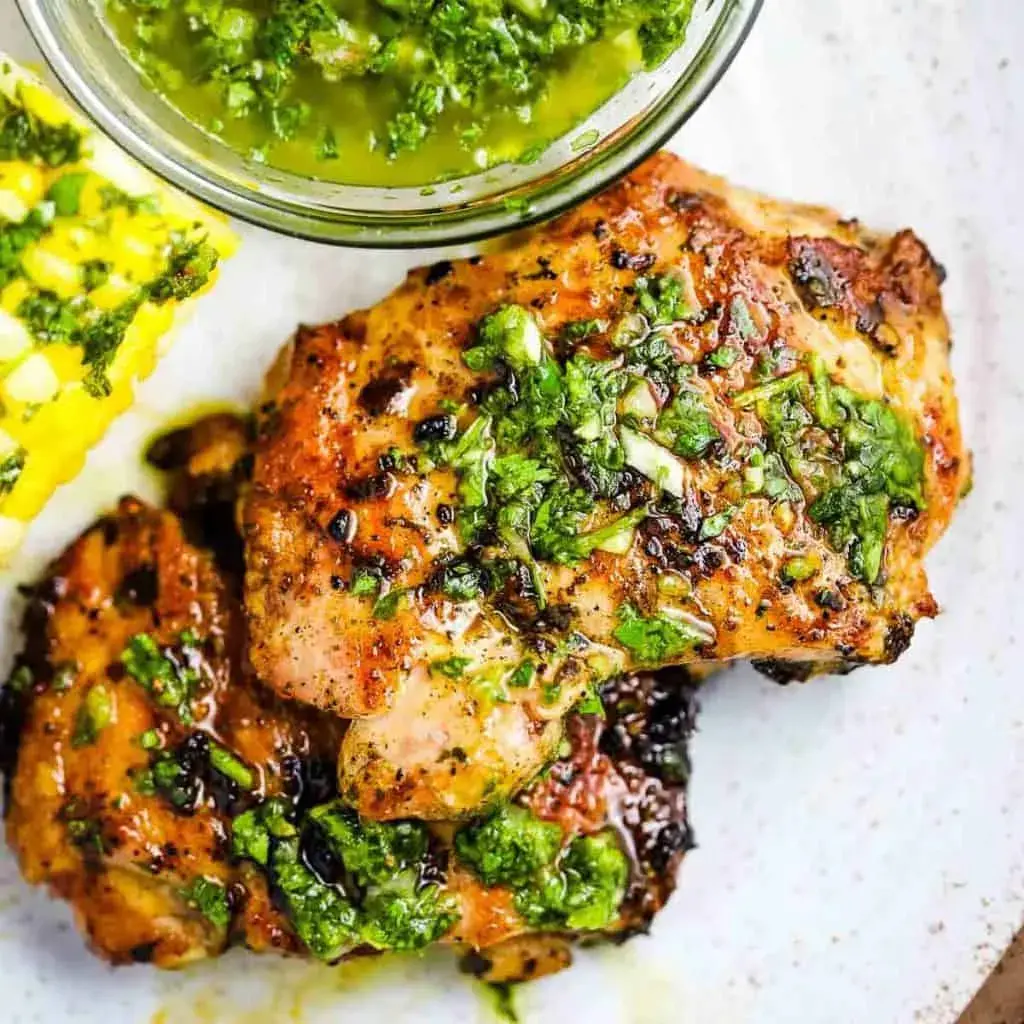
Let me paint you a picture: the chicken thighs hit the hot grill grate with a sizzle that makes your heart skip. Within seconds, the smell of caramelizing garlic and oregano rises up — that moment when the chimichurri clinging to the chicken begins to toast and char just slightly at the edges. The skinless meat stays tender because thighs have that perfect amount of fat to keep everything moist, even over a fierce flame. After about five minutes per side, the chicken emerges with gorgeous grill marks and a faint crust, the herbs from the marinade dark and fragrant. I love to let the thighs rest for just a couple of minutes before slicing them on a bias, revealing that pale, juicy interior. Then I spoon over a generous dollop of fresh, uncooked chimichurri — the same sauce but now transformed: cool and bright against the warm, smoky meat. The contrast is everything. The parsley and cilantro taste garden-fresh, the shallot gives a gentle bite, the lemon and red wine vinegar cut through the richness, and the olive oil ties it all together in a silky, spoonable finish. It is the kind of dish that makes you close your eyes at the table.
What sets my version apart from the countless chimichurri chicken recipes out there? Three things. First, I add a small amount of jalapeño for a whisper of heat that amplifies the herbs without making the sauce spicy — it is a trick I picked up from a street-food stall in Buenos Aires during a trip after culinary school. Second, I insist on marinating the chicken in a portion of the chimichurri for at least twenty minutes (though overnight is best), which infuses the meat from the inside out. And third — my true chef’s secret — I reserve a full half of the chimichurri un-marinated, so it stays bright and vivid as a finishing sauce. Most recipes use the same chimichurri for everything and end up with a muddied, cooked-down version on the plate. Not here. The dual-use approach guarantees a pop of freshness in every single bite. 💡 emy’s Pro Tip: Let the chicken come to room temperature for about 15 minutes before grilling — it ensures even cooking and juicier results. And the one mistake I see most often? Using dried herbs in the chimichurri and expecting the same vibrancy. Fresh herbs are not optional here — they are the whole point.
Why This Grilled Chicken Thighs with Chimichurri Recipe Is the Best
The Flavor Secret. This isn’t just grilled chicken with a sauce — it is a dual-chimichurri method that layers flavor at two different moments. The marinade portion infuses the chicken with garlic, shallot, and herbs while also tenderizing the meat thanks to the acid from the lemon juice and red wine vinegar. Then the fresh, uncooked finishing sauce delivers a completely different experience: vibrant, raw, and herbaceous. My Moroccan training taught me that marinades should penetrate deep, while my French training taught me to respect the integrity of a sauce served raw. This recipe honors both traditions, and the result is a chicken thigh that tastes complex from the first bite to the last.
Perfected Texture. Boneless skinless chicken thighs are incredibly forgiving — much more so than chicken breasts — but they still need the right technique to stay tender. I learned in Paris that the key to juicy grilled poultry is high, direct heat for a short time, followed by a brief rest. The thighs cook in about 5 to 6 minutes per side, just long enough to develop a nice char and render the fat, but not so long that the meat dries out. The chimichurri marinade acts as a protective layer, preventing the surface from scorching while the interior reaches a safe 165°F. The result is meat that is succulent, sliceable, and full of juice that mingles with the fresh chimichurri on the plate.
Foolproof & Fast. Even if you are a beginner griller, this recipe sets you up for success. The marinade does the heavy lifting for flavor, and the cook time is short enough that you can stand by the grill and watch the magic happen. I’ve made this on a busy Tuesday night after a long day of recipe testing in my NYC kitchen, and it comes together in under 30 minutes of active time. The chimichurri sauce takes less than five minutes in a food processor — no knife skills required — and the chicken only needs twenty minutes to marinate if you are in a hurry. This is the recipe I send to friends who tell me they are scared of grilling. It is forgiving, delicious, and honestly, a little bit show-stopping.
Grilled Chicken Thighs with Chimichurri Ingredients
I love sourcing my ingredients for this recipe from the Union Square Greenmarket in the summer, where the parsley and cilantro are piled high in bushy bunches and the shallots are small and sweet. In the winter, I head to Kalustyan’s in Murray Hill for dried oregano that still smells like the Mediterranean. No matter where you shop, the key is to choose fresh, vibrant herbs and a good-quality olive oil — those two ingredients carry the entire chimichurri. Here is everything you need.
Ingredients List
- 1/2 cup fresh cilantro (packed, tender stems and leaves)
- 1/2 cup fresh Italian parsley (packed, stems removed)
- 1 tablespoon fresh oregano (or 1 teaspoon dried, but fresh is strongly preferred)
- 1 small shallot (peeled and roughly chopped)
- 2 cloves garlic (peeled)
- 1/2 jalapeño pepper (seeded for mild heat, or keep seeds for more spice)
- 1 tablespoon fresh lemon juice
- 1 tablespoon red wine vinegar
- 1/2 cup olive oil (extra-virgin is best)
- 1 teaspoon kosher salt
- Fresh ground black pepper (to taste)
- 2 lbs boneless skinless chicken thighs* (about 6–8 thighs)
Ingredient Spotlight
Fresh Cilantro and Parsley: These two herbs form the backbone of the chimichurri. Cilantro adds a bright, almost citrusy note that I associate with my mother’s kitchen in Marrakech, while Italian parsley brings a clean, grassy flavor that balances the cilantro’s boldness. When shopping, look for bunches with leaves that are perky and evenly green — no wilting or yellowing. If you find one of those herbs lacking, you can use all parsley or all cilantro, but the blend is truly special. Tested substitution: In a pinch, use 1/4 cup each of fresh mint and basil in place of the cilantro for a completely different but still delicious herbal profile.
Fresh Oregano: Oregano is what gives chimichurri its earthy, almost piney undertone. Fresh oregano is milder and more floral than dried, but if all you have is dried, use 1 teaspoon and crumble it between your palms to release the oils before adding it to the food processor. Remember: Dried oregano is more concentrated, so do not substitute a full tablespoon — it will dominate the sauce. I buy fresh oregano from the little potted herb section at my local grocery store in NYC and keep it on the windowsill; it lasts for weeks and makes the whole kitchen smell like a trattoria.
Boneless Skinless Chicken Thighs: Thighs are the MVP of grilling — they have enough fat to stay moist over high heat, and they take on marinades beautifully. I recommend thighs that are about 4 to 5 ounces each, so they cook evenly in the stated time. If your thighs are very large, you may need an extra minute per side. 💡 emy’s Pro Tip: If you can only find bone-in, skin-on thighs, increase the cook time to about 8 to 10 minutes per side and remove the skin after cooking if you prefer a leaner finish. The bone will add even more flavor to the meat.
| Original Ingredient | Best Substitution | Flavor / Texture Impact |
|---|---|---|
| Fresh cilantro | Fresh mint or basil (1/4 cup each) | Brighter, slightly sweeter, less earthy |
| Fresh oregano | 1 tsp dried oregano (crumbled) | More concentrated, less floral — reduce by 2/3 |
| Boneless skinless chicken thighs | Bone-in, skin-on thighs | Richer flavor, longer cook time, crispier skin |
| Red wine vinegar | White wine vinegar or sherry vinegar | Slightly milder or nuttier, still bright |
| Jalapeño pepper | Serrano or a pinch of red pepper flakes | More heat or diffused heat, adjust to taste |
How to Make Grilled Chicken Thighs with Chimichurri — Step-by-Step
Trust me on this one — the process is as simple as it is rewarding. The chimichurri comes together in under five minutes, the chicken marinates while you heat the grill, and the actual cooking is a quick, hands-on affair. Let me walk you through each step with the exact cues I use in my own kitchen.
Step 1: Make the Chimichurri
In a food processor, combine the cilantro, parsley, oregano, shallot, garlic, and jalapeño. Add the lemon juice, red wine vinegar, olive oil, salt, and a few grinds of fresh black pepper. Pulse in short bursts until everything is finely chopped and well combined — the texture should be like a coarse pesto, not a smooth puree. You want to see small flecks of herbs. Scrape down the sides once or twice with a spatula.
💡 emy’s Pro Tip: Taste the chimichurri at this stage. It should be vibrant, garlicky, and bright. If it tastes flat, add a pinch more salt or another squeeze of lemon. Remember, you will use half for marinating and half for finishing, so make sure the base is delicious before dividing.
Step 2: Marinate the Chicken
Place the chicken thighs in a baking dish or a large zip-top bag. Season them lightly with a pinch of salt and pepper. Pour about 1/4 cup of the chimichurri over the chicken and turn each thigh to coat thoroughly. Reserve the remaining chimichurri in a separate bowl, cover, and refrigerate. Cover the chicken and marinate for at least 20 minutes at room temperature or up to 24 hours in the refrigerator. If marinating overnight, take the chicken out of the fridge about 15 minutes before grilling to let it warm up slightly.
⚠️ Common Mistake to Avoid: Do not use all the chimichurri for the marinade. The portion used for marinating will darken and lose its fresh green color during cooking. By reserving half, you guarantee that vibrant, raw herb flavor on the finished dish.
Step 3: Grill the Chicken
Heat your grill to medium high — about 400°F to 450°F. Clean the grates and oil them lightly with a paper towel dipped in vegetable oil. Place the chicken thighs on the grill in a single layer, leaving a little space between each piece. Cook for 5 to 6 minutes per side, flipping once, until the chicken is deeply charred in spots and the juices run clear when pierced with a knife. The internal temperature should reach 165°F on an instant-read thermometer. Transfer the chicken to a cutting board and let it rest for 5 minutes — this step is crucial for keeping the meat juicy.
💡 emy’s Pro Tip: If you like extra char, resist the urge to flip the chicken more than once. Let it sit undisturbed for the full 5 to 6 minutes on the first side. That stillness is what creates the beautiful grill marks and the slightly crispy edges.
Step 4: Serve
Slice the chicken thighs on a bias into thick strips — or leave them whole if you prefer a more rustic presentation. Arrange them on a platter and spoon the reserved fresh chimichurri generously over the top. Serve immediately with extra chimichurri on the side for dipping or drizzling at the table.
⚠️ Common Mistake to Avoid: Do not skip the resting time. If you slice the chicken right off the grill, all those flavorful juices will spill onto the cutting board instead of staying in the meat. Five minutes of patience makes a world of difference.
| Step | Action | Duration | Key Visual Cue |
|---|---|---|---|
| 1 | Make chimichurri in food processor | 3–5 mins | Coarse, pesto-like texture with visible herb flecks |
| 2 | Marinate chicken in 1/4 cup chimichurri | 20 mins – 24 hrs | Chicken evenly coated in green sauce |
| 3 | Grill over medium-high heat | 5–6 mins per side | Deep char marks, juices run clear, internal temp 165°F |
| 4 | Rest and serve with reserved chimichurri | 5 mins rest | Juices reabsorb, meat looks plump and glossy |
Serving & Presentation
I love to serve these grilled chicken thighs on a large wooden board or a white platter that lets the green chimichurri pop. Slice the thighs on the bias into thick, angled pieces — this shows off the juicy interior and makes each piece look intentional. Spoon the reserved chimichurri in a ribbon down the center of the chicken, then add a few extra dollops around the edges. I always serve a small bowl of extra chimichurri on the side because people cannot resist adding more. A scattering of flaky sea salt and a few fresh parsley leaves over the top adds a final touch of brightness.
In my NYC kitchen, I pair this chicken with simple sides that let the chimichurri shine. A crisp green salad with avocado and a lime vinaigrette is perfect in the summer. In the cooler months, I serve it with roasted sweet potatoes and a dollop of Greek yogurt — the creamy sweetness offsets the herbal garlic notes beautifully. My Moroccan side of the family would insist on warm flatbread and a bowl of olives, and I have to admit, that combination is hard to beat. For a full meal, I also love adding grilled zucchini or bell peppers right alongside the chicken on the same platter. Everything gets kissed by the same grill and the same green sauce, creating a cohesive, colorful plate.
| Pairing Type | Suggestions | Why It Works |
|---|---|---|
| Side Dish | Grilled zucchini, green salad with avocado, roasted sweet potatoes, warm flatbread | Light, fresh sides balance the rich, charred chicken; flatbread soaks up extra chimichurri |
| Sauce / Dip | Extra chimichurri, Greek yogurt with lemon, tahini sauce | Creamy dips contrast with the bright, acidic chimichurri; tahini adds nuttiness |
| Beverage | Crisp white wine (Sauvignon Blanc), light red (Pinot Noir), sparkling water with lime | Acidity in the wine matches the chimichurri; bubbles cleanse the palate |
| Garnish | Flaky sea salt, fresh parsley leaves, thinly sliced red chili, lemon wedges | Adds color, texture, and a final pop of flavor at the table |
Make-Ahead, Storage & Reheating
This recipe is a gift for meal prep — I often make a double batch of chimichurri on Sunday and use it throughout the week on grilled chicken, roasted vegetables, or even as a dressing for grain bowls. The chicken itself stores beautifully, and with a few smart reheating tricks, it tastes almost as good as the day you grilled it. Here is how I keep everything fresh in my busy NYC schedule.
| Method | Container | Duration | Reheating Tip |
|---|---|---|---|
| Refrigerator | Airtight container, chimichurri stored separately | Up to 4 days | Reheat gently in a skillet with a splash of water or broth to restore moisture |
| Freezer | Freezer-safe bag or container, chimichurri in a separate small jar | Up to 3 months | Thaw overnight in the fridge, then reheat in a 350°F oven for 10–12 minutes |
| Make-Ahead | Chimichurri in a jar, chicken marinated in a bag | Chimichurri up to 5 days ahead; marinated chicken up to 24 hours ahead | Bring chicken to room temp before grilling; stir chimichurri before serving |
When reheating, the goal is to bring the chicken back to life without drying it out. My favorite method is to slice the leftover chicken and warm it quickly in a hot skillet with a tiny splash of water or chicken broth — just enough to create a little steam. Cover the pan for about 90 seconds and you will have tender, juicy chicken that tastes freshly made. Avoid the microwave if you can; it tends to toughen the meat and dull the flavors. For the chimichurri, let it come to room temperature before serving — cold chimichurri loses some of its aromatic punch. If you stored it in the fridge, take it out 15 to 20 minutes before you plan to eat and give it a good stir.
💡 emy’s Pro Tip: The chimichurri actually gets better after a day or two in the fridge as the flavors meld. I like to make it on a Sunday and use it for quick weeknight dinners — it is one less thing to think about on a busy Tuesday.
Variations & Easy Swaps
One of the things I love most about this recipe is how adaptable it is. Whether you are cooking for someone with dietary restrictions or you just want to play with different flavors, these variations will keep the dish exciting all year round. I have tested each of these in my own kitchen, and they all deliver that same juicy, herbaceous magic.
| Variation | Key Change | Best For | Difficulty Impact |
|---|---|---|---|
| Spicy Chimichurri with Harissa | Add 1 tbsp harissa paste to the chimichurri | Moroccan-inspired heat lovers | Easy |
| Dairy-Free Creamy Chimichurri | Add 2 tbsp tahini to the chimichurri | Creamy sauce without dairy | Easy |
| Lemon-Herb Chicken Thighs | Replace red wine vinegar with extra lemon juice; add lemon zest | Bright, citrus-forward flavor | Easy |
Spicy Chimichurri with Harissa
This variation is my personal nod to my Moroccan roots. Add 1 tablespoon of harissa paste to the chimichurri before blending — the smoky, spicy, slightly sweet heat of harissa mingles with the fresh herbs in a way that is utterly addictive. Harissa is made from roasted red peppers, chilis, garlic, and warm spices like caraway and coriander, so it adds a whole new layer of complexity without overwhelming the chimichurri. Use it as a marinade and finishing sauce just like the original. I love serving this version with grilled eggplant and a side of couscous for a North African-inspired summer plate.
Dairy-Free Creamy Chimichurri
For a luscious, creamy version that is still completely dairy-free, add 2 tablespoons of tahini to the chimichurri in the food processor. Tahini (sesame paste) blends beautifully with the herbs and oil, creating a sauce that is thick enough to spoon over the chicken like a dressing. The nuttiness of the tahini rounds out the sharpness of the lemon and vinegar, making the chimichurri feel richer and more substantial. This variation is fantastic on grain bowls, as a dip for raw vegetables, or smeared on toast with leftover chicken. I tested this during a week when I was avoiding dairy, and it became a new favorite — even my husband, who is not a tahini fan, asked for the recipe.
Lemon-Herb Chicken Thighs
If you want a brighter, more citrus-forward chimichurri, swap the red wine vinegar for an additional tablespoon of fresh lemon juice and add the zest of one lemon to the food processor. The lemon zest adds a fragrant, floral note that the vinegar cannot replicate, and the extra acidity keeps the sauce lively. This version pairs beautifully with grilled fish or shrimp, but it is also a stunner on the chicken. I make this in late spring when lemons are at their peak and I am craving something sunny on the plate. The zest also gives the chimichurri a slightly thicker texture, which clings to the chicken even better.
Share Your Version!
Now I want to hear from you. Did you make these Grilled Chicken Thighs with Chimichurri? Did you try one of the variations — or come up with your own twist? Leave a star rating and a comment below to tell me how it went. Your feedback helps me create better recipes for this community, and I read every single comment. If you snapped a photo of your beautiful platter, share it on Instagram or Pinterest and tag @cookingwithemi — I would love to feature your creations in my stories. And here is a question for you: what is one ingredient you always add to chimichurri that makes it your own? I am always looking for new ideas, and I bet other readers are too.
From my NYC kitchen to yours — I hope this recipe brings as much warmth to your table as it does to mine. — emy 🧡
Love This Recipe? Save It to Pinterest!
If you enjoyed this Grilled Chicken Thighs with Chimichurri recipe, don’t let it get lost in your browser tabs! 😄 Pin it now so you can find it again anytime — and explore hundreds more tried-and-tested recipes waiting for you on my Pinterest boards.
👉 Follow emy on Pinterest @exorecipe
📌 Pin this recipe · 🔁 Re-pin your favorites · 💬 Tag me when you make it — I love seeing your creations!
Can I use dried herbs instead of fresh in chimichurri?
I strongly recommend fresh herbs for chimichurri — the entire sauce is built around the bright, vibrant flavor of raw parsley, cilantro, and oregano. Dried herbs will give you a much more muted, slightly dusty taste, and the texture will be less appealing. However, if you are in a pinch, you can use 1 teaspoon of dried oregano in place of the fresh tablespoon, and add an extra handful of fresh parsley or cilantro to make up for the missing volume. Just know that the result will not be as punchy or green. For the best experience, stick with fresh — they are the heart of this sauce.
How long should I marinate the chicken thighs?
You can marinate the chicken for as little as 20 minutes and still get great flavor, but the sweet spot is 2 to 4 hours in the refrigerator. If you have time, overnight marination (up to 24 hours) gives the deepest flavor penetration. The acid in the lemon juice and vinegar gently tenderizes the meat without making it mushy, even with an overnight soak. Just remember to take the chicken out of the fridge about 15 minutes before grilling to let it come to room temperature — this helps it cook more evenly and stay juicy.
Can I grill chicken thighs on a gas grill or charcoal grill?
Absolutely — both work beautifully. On a gas grill, preheat to medium high (about 400°F to 450°F) and oil the grates well before adding the chicken. On a charcoal grill, wait until the coals are covered with a light gray ash and you can hold your hand about 5 inches above the grate for 3 to 4 seconds. Charcoal will give you a smokier flavor that pairs wonderfully with the chimichurri. Whichever you use, keep the lid open while grilling the thighs — they cook quickly and you want to keep an eye on the char level.
What can I serve with grilled chicken thighs and chimichurri?
This dish is incredibly versatile. For a light summer meal, serve with a crisp green salad with avocado, grilled zucchini, or a simple tomato and cucumber salad. In cooler months, roasted sweet potatoes, warm flatbread, or a bowl of couscous are excellent choices. I also love pairing it with creamy sides like Greek yogurt or tahini sauce to balance the bright, acidic chimichurri. For a full grill spread, add grilled bell peppers, onions, and corn on the cob — everything tastes good with a drizzle of that green sauce.
How do I store leftover chimichurri sauce?
Store leftover chimichurri in a clean glass jar or an airtight container in the refrigerator for up to 5 days. The olive oil will solidify slightly when cold, so let it sit at room temperature for about 15 to 20 minutes before using, then stir well to recombine. If you want to keep it longer, you can freeze chimichurri in an ice cube tray for up to 3 months — pop out a cube whenever you need a burst of herb flavor for grilled meats, roasted vegetables, or grain bowls. Just note that the color may dull slightly after freezing, but the taste will still be excellent.
Can I make this recipe with chicken breasts instead of thighs?
Yes, you can substitute boneless skinless chicken breasts, but be aware that breasts cook faster and are more prone to drying out. Pound the breasts to an even thickness (about 1/2 to 3/4 inch) so they cook evenly, and reduce the grill time to about 4 to 5 minutes per side, depending on thickness. Use an instant-read thermometer to check for doneness — chicken breasts are safe at 165°F. I recommend marinating breasts for at least 2 hours to help keep them moist. The chimichurri will still be delicious, but thighs remain my top choice for their unmatched juiciness.
Is chimichurri gluten-free and dairy-free?
Yes, traditional chimichurri made with fresh herbs, garlic, shallot, vinegar, and olive oil is naturally gluten-free and dairy-free. This recipe contains no wheat, dairy, or gluten-containing ingredients. Just be sure to check the labels on your red wine vinegar and any optional add-ins like harissa or tahini to confirm they are certified gluten-free if that is a concern for you. I have many readers with celiac disease and dairy allergies who make this chimichurri regularly — it is one of the most inclusive sauces in my repertoire.
What is the best way to reheat grilled chicken thighs without drying them out?
The best method is to reheat them gently in a skillet over medium-low heat with a splash of water, chicken broth, or even a little extra chimichurri. Cover the pan and let the chicken steam for about 90 seconds to 2 minutes, then remove the lid and let any excess moisture evaporate. This method keeps the meat tender and brings back some of the juiciness. Alternatively, you can reheat in a 350°F oven for about 8 to 10 minutes, covered with foil. Avoid the microwave, which tends to toughen the meat and dull the flavor of the chimichurri.
Can I use a blender instead of a food processor for the chimichurri?
Yes, you can use a blender, but I recommend pulsing rather than running it continuously. A blender tends to puree the herbs more finely than a food processor, giving you a smoother, more emulsified sauce rather than the coarse, textured consistency that is traditional for chimichurri. If you prefer a smoother sauce, go ahead and use a blender — it will still taste delicious. For a more authentic texture, stick with a food processor and pulse in short bursts, scraping down the sides as needed.
How can I tell when chicken thighs are fully cooked on the grill?
The most reliable way is to use an instant-read thermometer inserted into the thickest part of the thigh — the safe internal temperature for chicken is 165°F. Visual cues include juices that run clear when you pierce the meat with a knife (not pink or cloudy), and a firm texture when you press the thigh with tongs. Boneless thighs typically take 5 to 6 minutes per side over medium-high heat. If you do not have a thermometer, make a small cut into the thickest part of one thigh to check that the meat is opaque all the way through — no pink in the center.
Grilled Chicken Thighs with Chimichurri
Description
Juicy, tender, grilled boneless skinless chicken thighs are served with a flavor-packed chimichurri sauce that is used as both a marinade and topping.
Ingredients
- 1/2 cup fresh cilantro (fresh)
- 1/2 cup fresh Italian parsley (chopped, fresh)
- 1 tablespoon fresh oregano (or 1 teaspoon dried)
- 1 small shallot (peeled)
- 2 cloves garlic (peeled)
- 1/2 jalapeno pepper (seeded)
- 1 tablespoon fresh lemon juice
- 1 tablespoon red wine vinegar
- 1/2 cup olive oil
- 1 teaspoon kosher salt
- fresh ground pepper
- 2 lbs boneless skinless chicken thighs*
Instructions
- In a food processor, combine the cilantro, parsley, oregano, shallot, garlic, and jalapeño.
- Add the lemon juice, red wine vinegar, olive oil, salt, and pepper and pulse until well combined and finely chopped.
- Place the chicken in a baking dish, season with salt and pepper, and cover with a 1/4 cup of the chimichurri. Turn to coat the chicken completely. Marinate for 20 minutes to 24 hours in the refrigerator.
- Take the chicken out of the fridge to warm up slightly while heating the grill to medium high. Cook the chicken about 5-6 minutes per side, until juices run clear.
- Serve with extra chimichurri on the side.