“`html
Table of Contents
- Embark on a Culinary Journey to Seoul
- The Symphony of Flavors: Ingredients
- Timing is Everything
- Crafting Your Korean Beef Bowl: Step-by-Step
- Nutritional Snapshot
- Healthier Twists for Guilt-Free Indulgence
- Elevating Your Korean Beef Bowl Experience
- Avoiding Common Pitfalls
- Savoring Leftovers: Storage Wisdom
- Your Burning Questions Answered
Korean Beef Bowl
Embark on a Culinary Journey to Seoul
Are you craving a meal that’s bursting with flavor, quick to prepare, and guaranteed to impress? If you’re looking for an answer to “what’s for dinner tonight?” that offers the perfect blend of sweet, savory, and a hint of spice, then you’ve landed on the right page. Indulge in the savory delight of a Korean beef bowl, where tender marinated beef meets vibrant vegetables over a fluffy bed of rice. This dish captures the essence of Korean cuisine with its perfect balance of sweet, spicy, and umami flavors. Quick to prepare in just 30 minutes, it’s an ideal choice for busy weeknights or gatherings that call for something special. Fresh ginger and garlic infuse the beef with depth, while colorful veggies add crunch and nutrition. Whether you’re a seasoned chef or a kitchen novice, this recipe promises a satisfying culinary experience that will transport your taste buds straight to Seoul.
The Symphony of Flavors: Ingredients
Crafting a truly exceptional Korean Beef Bowl is all about the quality of your ingredients and how they come together. Here’s what you’ll need to create this delightful dish, with a few notes on what makes each element shine.
For the Beef
- 1 pound thinly sliced beef: Ribeye or sirloin are excellent choices for their tenderness and marbling, which absorb flavor beautifully. Look for pre-sliced beef for convenience, or slice it yourself from a partially frozen cut for easier handling.
- 1 tablespoon soy sauce (or tamari for gluten-free): The salty, umami foundation of the marinade.
- 1 tablespoon mirin (or rice wine vinegar with a pinch of sugar): Adds a subtle sweetness and helps tenderize the meat.
- 1 teaspoon sesame oil: For that unmistakable nutty aroma and richness.
- 2 cloves garlic, minced: Pungent and aromatic, essential for depth.
- 1 teaspoon grated fresh ginger: Adds a bright, spicy kick that cuts through the richness.
- 1/2 teaspoon black pepper: A touch of warmth and spice.
For the Savory Sauce
- 1/4 cup soy sauce (or tamari): The backbone of the sauce, providing that deep savory flavor.
- 2 tablespoons brown sugar (or honey/maple syrup): Balances the saltiness with a delightful sweetness.
- 1 tablespoon mirin (or rice wine vinegar + sugar): Enhances sweetness and adds a lovely glossy finish.
- 1 teaspoon sesame oil: For aromatic depth.
- 1 clove garlic, minced: More garlicky goodness to layer flavors.
- 1/2 teaspoon grated fresh ginger: Reinforces the warm, zesty notes.
- Optional: 1/2 teaspoon gochugaru (Korean chili flakes) or a pinch of red pepper flakes: For that authentic Korean heat. Adjust to your spice preference.
For Serving
- Cooked rice: Jasmine or short-grain sushi rice work wonderfully, providing a fluffy, slightly sticky base.
- 1-2 cups mixed vegetables: Broccoli florets, sliced carrots, bell peppers (any color), snap peas, or thinly sliced onions add vibrant color, crisp texture, and nutrients.
- Garnish: Toasted sesame seeds, thinly sliced green onions, a drizzle of sriracha, or a fried egg for extra richness.
Timing is Everything
Compared to many authentic Korean dishes that can take hours, this recipe is a weeknight champion at just 30 minutes total. This is significantly faster than the average 1-hour to 2-hour preparation and cooking time for many traditional Korean meals, making it perfect for those spontaneous cravings.
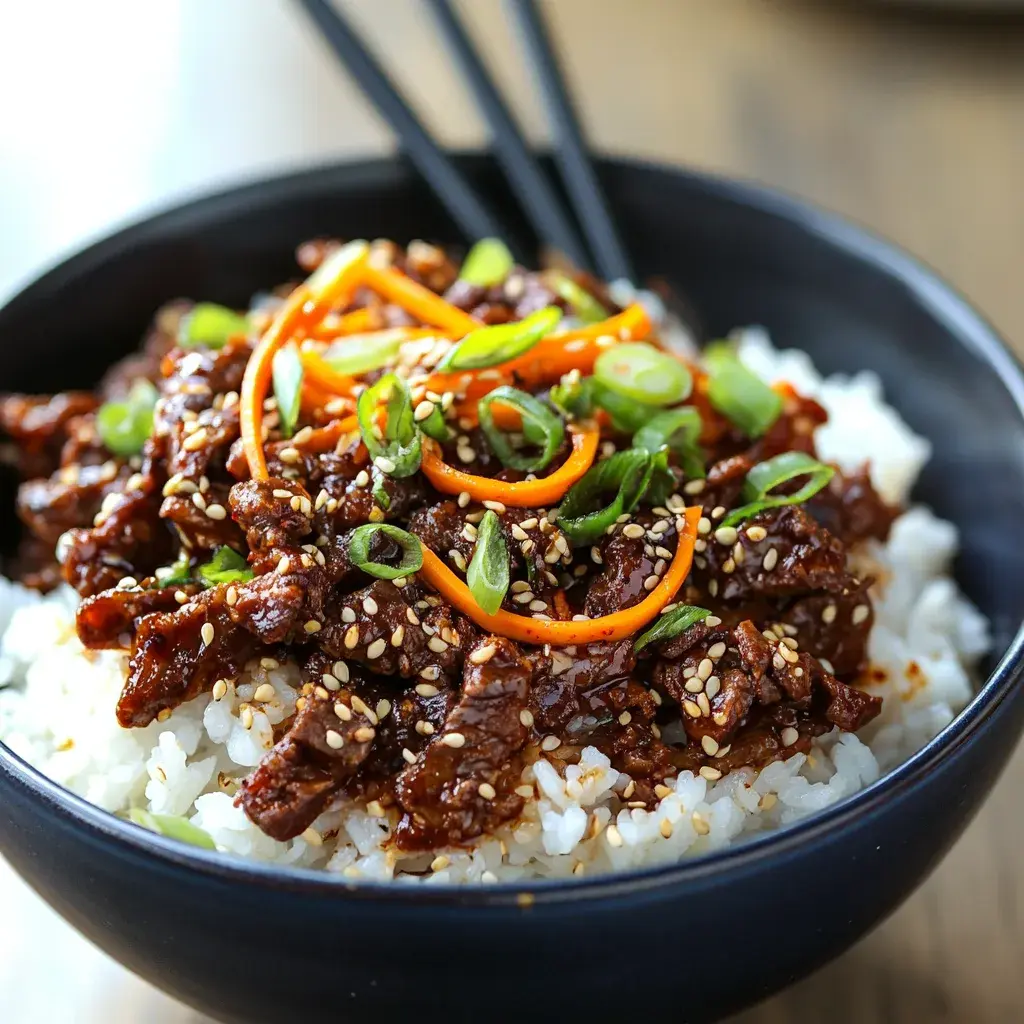
Crafting Your Korean Beef Bowl: Step-by-Step
Let’s get cooking! Follow these simple steps to create a delicious and satisfying Korean Beef Bowl that will become a staple in your meal rotation.
Step 1: Marinate the Beef to Perfection
In a medium bowl, combine the thinly sliced beef with soy sauce, mirin, sesame oil, minced garlic, grated ginger, and black pepper. Toss gently to ensure every piece of beef is coated. Let it marinate for at least 10 minutes while you prepare the other components. For an even deeper flavor, you can let it marinate for up to 30 minutes in the refrigerator.
Step 2: Prepare the Colorful Veggies
While the beef is marinating, prepare your vegetables. Wash and chop your chosen vegetables into bite-sized pieces. This could include trimming broccoli into small florets, slicing carrots thinly, and cutting bell peppers into strips. If using onions, slice them thinly.
Step 3: Sizzle the Sliced Beef
Heat a tablespoon of high-heat oil (like vegetable or canola oil) in a large skillet or wok over medium-high heat until shimmering. Add the marinated beef in a single layer. Don’t overcrowd the pan; cook in batches if necessary to ensure the beef sears and caramelizes rather than steams. Cook for 2-3 minutes per side, until browned and cooked through. Remove the beef from the skillet and set aside.
Step 4: Briefly Wilt the Vegetables
In the same skillet, add a little more oil if needed. Add your prepared vegetables (starting with harder vegetables like carrots and broccoli, followed by quicker-cooking ones like bell peppers and onions). Stir-fry for 2-4 minutes, until they are tender-crisp – retaining a slight bite. If you’re using leafy greens like spinach, add them in the last minute to wilt.
Step 5: Assemble Your Masterpiece
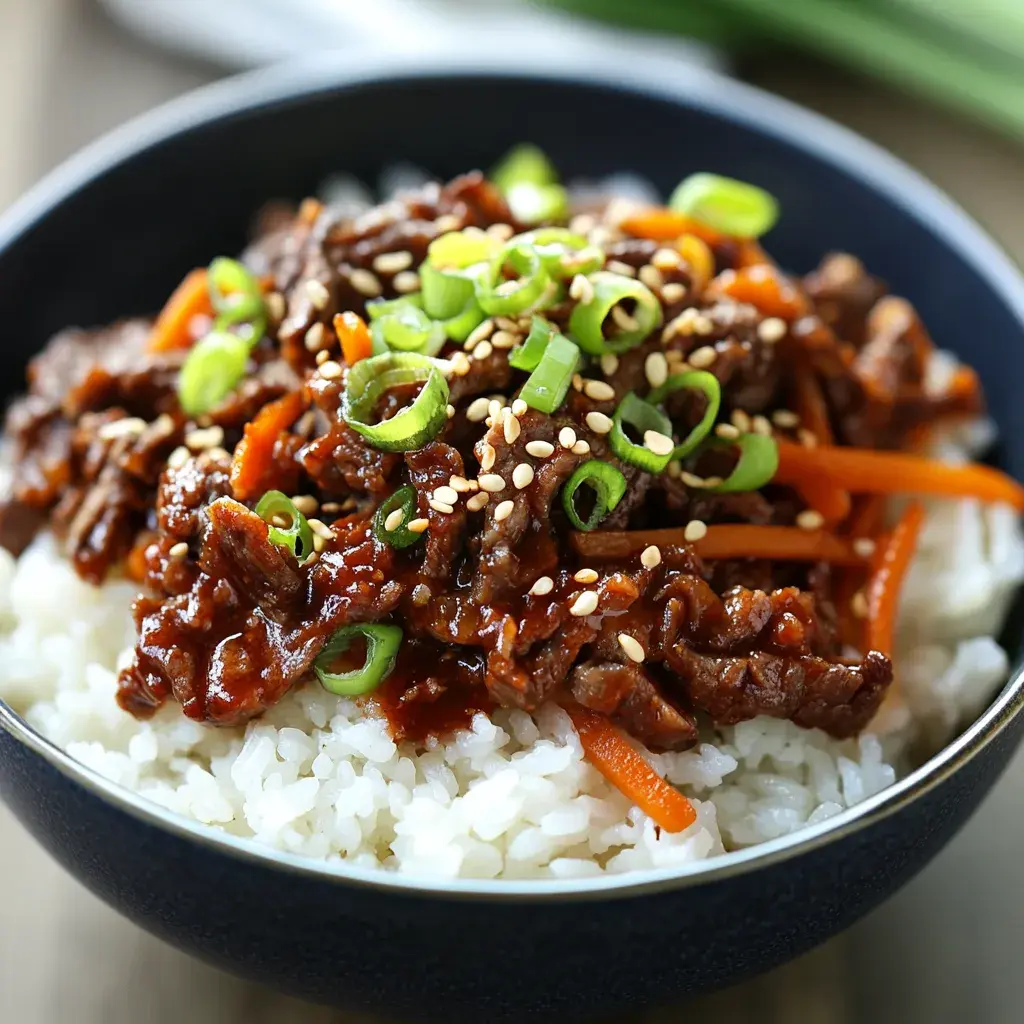
To assemble, spoon a generous portion of cooked rice into each bowl. Top with the cooked Korean beef and the stir-fried vegetables. Drizzle with the prepared sauce, ensuring an even coating. Garnish with toasted sesame seeds and sliced green onions. For an extra treat, add a fried egg on top!
Nutritional Snapshot
While exact nutritional values can vary based on specific ingredients and portion sizes, a typical serving of Korean Beef Bowl (approximately 4 servings) offers:
- Calories: 450-600
- Protein: 25-35g
- Fat: 20-30g (varies greatly with beef cut and added oils)
- Carbohydrates: 30-45g (primarily from rice and sugar in the sauce)
- Fiber: 3-6g (from vegetables)
Please note: This is an estimated range. For precise information, it’s recommended to use a nutritional calculator with your specific ingredients.
Healthier Twists for Guilt-Free Indulgence
Want to make this already delightful dish even more health-conscious without sacrificing flavor? Try these simple swaps:
- Leaner Beef: Opt for beef cuts like flank steak or top round, trimming any visible fat before slicing and marinating.
- Reduced Sodium Soy Sauce: Significantly cuts down on sodium intake while maintaining that essential umami flavor.
- Sugar Alternatives: Use a sugar substitute like erythritol or a small amount of stevia in the sauce, or opt for unsweetened apple sauce as a natural sweetener.
- More Veggies, Less Rice: Increase the proportion of vegetables and reduce the amount of rice, or opt for cauliflower rice for a low-carb alternative.
- Air Fryer Beef: For a less oily option, try air frying the marinated beef until crispy and browned.
Elevating Your Korean Beef Bowl Experience
While delicious on its own, a Korean Beef Bowl can be enhanced with a few thoughtful additions:
- Kimchi: A staple in Korean cuisine, kimchi adds a fermented, spicy, and sour kick that complements the richness of the beef perfectly.
- Pickled Radish (Danmuji): Its sweet and tangy crunch provides a refreshing contrast.
- Fresh Herbs: A sprinkle of fresh cilantro or perilla leaves can add an aromatic dimension.
- Spicy Mayo Drizzle: Mix mayonnaise with sriracha or gochujang for a creamy, spicy topping.
Avoiding Common Pitfalls
To ensure your Korean Beef Bowl is a resounding success, steer clear of these common mistakes:
- Overcrowding the Pan: This leads to steamed, rather than seared, beef, resulting in a lack of caramelization and flavor. Cook in batches!
- Not Slicing Beef Thinly Enough: Tough, thick slices won’t marinate well and can be difficult to eat. Partially freezing the beef helps achieve paper-thin slices.
- Overcooking the Vegetables: Aim for tender-crisp. Mushy vegetables detract from the texture and appeal of the dish.
- Skipping the Marination Time: While brief is okay, allowing the beef to marinate even for 10-15 minutes significantly boosts flavor and tenderness.
- Using Low-Smoke Point Oils: For searing, a high-smoke point oil is crucial to prevent burning and achieve a good sear.
Savoring Leftovers: Storage Wisdom
Leftovers can be stored in an airtight container in the refrigerator for up to 3 days. The flavors tend to meld and deepen overnight, making it a fantastic make-ahead meal. Reheat gently on the stovetop or in the microwave, being careful not to overcook the beef or vegetables. If the sauce becomes too thick, add a splash of water or soy sauce.
Your Burning Questions Answered
***What is the best cut of beef for a Korean Beef Bowl?***
Ribeye, sirloin, or even flank steak are excellent choices due to their tenderness and marbling. For easier slicing and a very thin cut, partially freeze the beef before slicing against the grain.
***Can I make this ahead of time?***
Yes, you can prepare the beef (marinated and cooked) and vegetables separately and store them in the refrigerator. Assemble and reheat just before serving. The sauce can also be made ahead and stored.
***How do I make it spicier?***
Add gochugaru (Korean chili flakes) or red pepper flakes to the marinade and/or the sauce. You can also add a dollop of gochujang (Korean chili paste) to your bowl or drizzle with sriracha.
***What if I don’t have mirin?***
You can substitute mirin with dry sherry or rice wine vinegar mixed with a pinch of sugar to achieve a similar balance of sweetness and acidity.
***Can I use a different protein?***
Absolutely! Thinly sliced chicken breast, pork tenderloin, or even firm tofu marinated and cooked in the same way would be delicious substitutes.
Did you try this **Korean Beef Bowl** recipe? We’d love to hear what you think! Share your experience in the comments below and let us know your favorite ways to customize this delicious dish.
Korean Beef Bowl
Description
Indulge in the savory delight of a Korean beef bowl, where tender marinated beef meets vibrant vegetables over a fluffy bed of rice. This dish captures the essence of Korean cuisine with its perfect balance of sweet, spicy, and umami flavors. Quick to prepare in just 30 minutes, it’s an ideal choice for busy weeknights or gatherings that call for something special. Fresh ginger and garlic infuse the beef with depth, while colorful veggies add crunch and nutrition. Whether you’re a seasoned chef or a kitchen novice, this recipe promises a satisfying culinary experience that will transport your taste buds straight to Seoul.
Ingredients
- 1pound beef sirloin, sliced thin
- 2 tablespoonslow-sodium soy sauce
- 1 tablespoonbrown sugar
- 1 tablespoonsesame oil
- 3cloves garlic, minced
- 1 teaspoonfresh ginger, grated
- 2 cupscooked rice (white or brown)
- Sliced green onions and sesame seeds for garnish
Instructions
- Marinate the sliced beef in soy sauce, garlic, ginger, and brown sugar for at least 15 minutes.
- Heat sesame oil in a skillet over medium heat; sauté marinated beef until browned (about 3 minutes per side).
- Serve the beef over cooked rice and garnish with green onions and sesame seeds.
Notes
Feel free to customize your bowl with additional vegetables like bell peppers or broccoli.
For extra spice, add gochujang or chili flakes during cooking.
Nutrition
- Calories: 450
- Sugar: 9g
- Fat: 20g
- Carbohydrates: 45g
- Protein: 30g
“`