Table of Contents
Red Wine Braised Short Ribs Dutch Oven Comfort – A Slow‑Cooked Family Classic
Growing up in a family kitchen in Casablanca, I learned that a good braise starts with a beautiful sear. Later, my culinary school days in Paris taught me how a Dutch oven can turn simple cuts into velvet‑soft masterpieces. Now, in the bustle of New York City, I bring that same love for slow‑cooked comfort to my own kitchen, turning a humble pot of Red Wine Braised Short Ribs into a crowd‑pleasing feast.
When the rich aroma of crusted beef meets the deep notes of Cabernet Sauvignon, the senses dance. The meat melts on the tongue while the caramelized onions, tender carrots, and aromatic thyme create a sauce that glistens like a moonlit broth. Every spoonful is a fusion of Moroccan spices, a hint of French mirepoix, and the unmistakable smoky kiss of long‑simmered beef stock.
I’ve honed this version to keep the heart‑warming flavor profile but cut the cooking time down to under three hours. My pro tip is to let the wine reduce dramatically—think 50%—to intensify the braise before adding the broth. A common mistake, though, is skipping the initial sear, which will leave the ribs with a pale, unexciting exterior.
Why This Red Wine Braised Short Ribs Recipe Is the Best
The flavor secret lies in the double‑stage reduction. I first work the sugars in the onions and tomatoes by allowing them to caramelize, then use a full‑flavored Cabernet to deepen the broth. This layered technique is a staple I learned from my favorite French mentor, Chef Laurent, who taught me that “the secret of a great braise is patience” – literally.
Texture is perfected by anchoring the ribs to a heavy Dutch oven, which distributes heat evenly and keeps the meat steaming rather than drying. My elbow‑deep knowledge of sous‑vide timing informs the 2½‑3‑hour bake, ensuring the connective tissue breaks down while the meat remains juicy.
The recipe is foolproof for beginners: the only “technical” step is the sear, which you can easily confirm by the browning pattern. With my clear pro tips and a quick reference table, anyone can pull out a show‑stopping dish without feeling pulled over.
Red Wine Braised Short Ribs Ingredients
I usually hunt for the best bone‑in short ribs at the local NYC farmer’s market near West Village, where the butchers swear by the “six‑hour cut.” Fresh carrots and garlic come from the same stall, ensuring the broth stays bright. The little shop that sells garlic has a charm reminiscent of my mother’s kitchen, where every bulb was a promise of flavor.
Ingredients List
- 2 tablespoons olive oil
- 3-4 pounds bone‑in short ribs (8-10 pieces)
- Salt and pepper, to taste
- 1 large onion, diced
- 2 stalks celery, diced
- 2 carrots, diced
- 3 cloves garlic, smashed
- 2 tablespoons tomato paste
- 2 cups Cabernet Sauvignon (full‑bodied)
- 3 cups beef broth
- 2 bay leaves
- 1 sprig thyme
- 1 sprig oregano
- Optional: 2 tablespoons Worcestershire sauce
Ingredient Spotlight
Short Ribs—bone‑in adds collagen and flavor. Look for pieces with a good marbling band; no need to defrost, grab fresh from the butcher’s best cut. If you’re on a budget, a chuck roast cut can mimic the tenderness.
Tomato Paste—provides body and acidity. Replace with canned tomato puree; you’ll lose a bit of thickness but keep the same bright tomato flavor.
Cabernet Sauvignon—this wine adds tannic backbone and a hint of berry sweetness. Try Merlot for a softer profile. It still burbles with the savory depth that keeps the broth anchored.
| Original Ingredient | Best Substitution | Flavor / Texture Impact |
|---|---|---|
| Bone‑in Short Ribs | Chuck Roast (cube) | Less gelatin, but still tender if braised 2–3 hrs. |
| Tomato Paste | Tomato Puree | Lighter body, slightly sweeter. |
| Cabernet Sauvignon | Merlot | Soft tannins, richer fruit notes. |
How to Make Red Wine Braised Short Ribs — Step-by-Step
Begin by preheating your oven to a steady 350 °F (175 °C). My Dutch oven acts like a pressure cooker, holding heat and turning a few minutes of browning into lifelong tenderness.
Step 1: Brown the Ribs
Pat the ribs dry, then season generously with salt and pepper. Heat the olive oil in your Dutch oven over medium‑high heat. Brown the ribs in batches, about 5‑6 minutes each side. The crust will carry the flavor into the sauce.
💡 emy’s Pro Tip: Let the meat sizzle until the first side turns a deep mahogany; this develops a robust umami base.
Step 2: Caramelize the Vegetables
Add the diced onion to the pot; cook 8–10 minutes until translucent. Next, toss in celery and carrots, cooking another 3‑5 minutes. The vegetables create a savory foundation, echoing the Mirepoix I learned from Chef Laurent.
⚠️ Common Mistake to Avoid: Skipping the caramelization step leaves the broth thin and the meat dull.
Step 3: Add Garlic and Tomato Paste
Crush the garlic cloves into a paste, then stir in the tablespoon of tomato paste. Let it bloom for a minute before proceeding; this releases the tomato’s hidden sugars.
💡 emy’s Pro Tip: A quick stir keeps the paste from burning and ensures even distribution.
Step 4: Deglaze with Wine
Pour in the generous 2 cups of Cabernet, bring to a gentle boil. Reduce the heat to medium and let it simmer until the liquid has reduced by about half—aim for the color of a deep ruby. This concentrates the flavor.
⚠️ Common Mistake to Avoid: Turning off the heat too early means the wine doesn’t reduce; you’ll end up with too much liquid.
Step 5: Add Beef Broth and Herbs
Stir in the beef broth, bay leaves, thyme, and oregano. Bring to a simmer, then fold the browned ribs back into the pot. Scrape up any browned bits—they’re flavors.
💡 emy’s Pro Tip: The orange‑tinted broth after adding herbs hints at deep, balanced flavors.
Step 6: Transfer to Oven
Lock the Dutch oven lid on and slide the pot into the preheated oven. It’s a cozy oven for the next 2½ to 3 hours, where the meat turns almost into a sauce.
⚠️ Common Mistake to Avoid: Check the temperature—if the oven is below 350 °F, the ribs may slow to a stew instead of a decadent braise.
Step 7: Check Tenderness
After about 2¼ hours, lean in and feel the meat; a fork should glide past bone without much resistance. If it’s still bumping, let it roast an extra hour.
💡 emy’s Pro Tip: My test is the fork test—immediate pullback means fall‑apart tenderness.
Step 8: Recover the Ribs
Lift the ribs onto a sheet, cover with foil, and let them rest while you handle the sauce. The resting phase keeps the juices trapped.
⚠️ Common Mistake to Avoid: Removing the ribs too early dries the meat; rest them for 10 minutes.
Step 9: Strain the Sauce
Transfer the liquid and vegetables through a fine‑mesh sieve into a clean saucepan. Discard the solids; they’re already flavorful, so nothing better to use them for.
💡 emy’s Pro Tip: Keep the sauce on a low heat so it doesn’t stick while thickening.
Step 10: Thicken the Gravy
Return the strained liquid to the Dutch oven and simmer, liberating all the remaining aromatics. If you want a silkier finish, whisk in a slurry of cornstarch and water at the end.
⚠️ Common Mistake to Avoid: Over‑thickening leads to a pudding‑like gravy; keep simmering until you see a glossy sheen.
| Step | Action | Duration | Key Visual Cue |
|---|---|---|---|
| 1 | Brown ribs | 5‑6 min each side | Deep mahogany crust |
| 2 | Caramelize vegetables | 8‑10 min onions | Translucent onions |
| 3 | Add garlic & tomato paste | 1 min | Red bloom |
| 4 | Deglaze wine | Simmer 15‑20 min | Half‑reduced ruby |
| 5 | Add broth & herbs | 3‑4 min simmer | Orange‑tinted broth |
| 6 | Transfer to oven | 2½‑3 hrs | Gently browned surface |
| 7 | Check tenderness | 2¼ hrs | Fork slides smoothly |
| 8 | Rest ribs | 10 min | Foil covers |
| 9 | Strain & remove solids | 2 min | Clear liquid |
| 10 | Thicken gravy | 5‑10 min | Glossy sheen |
Serving & Presentation
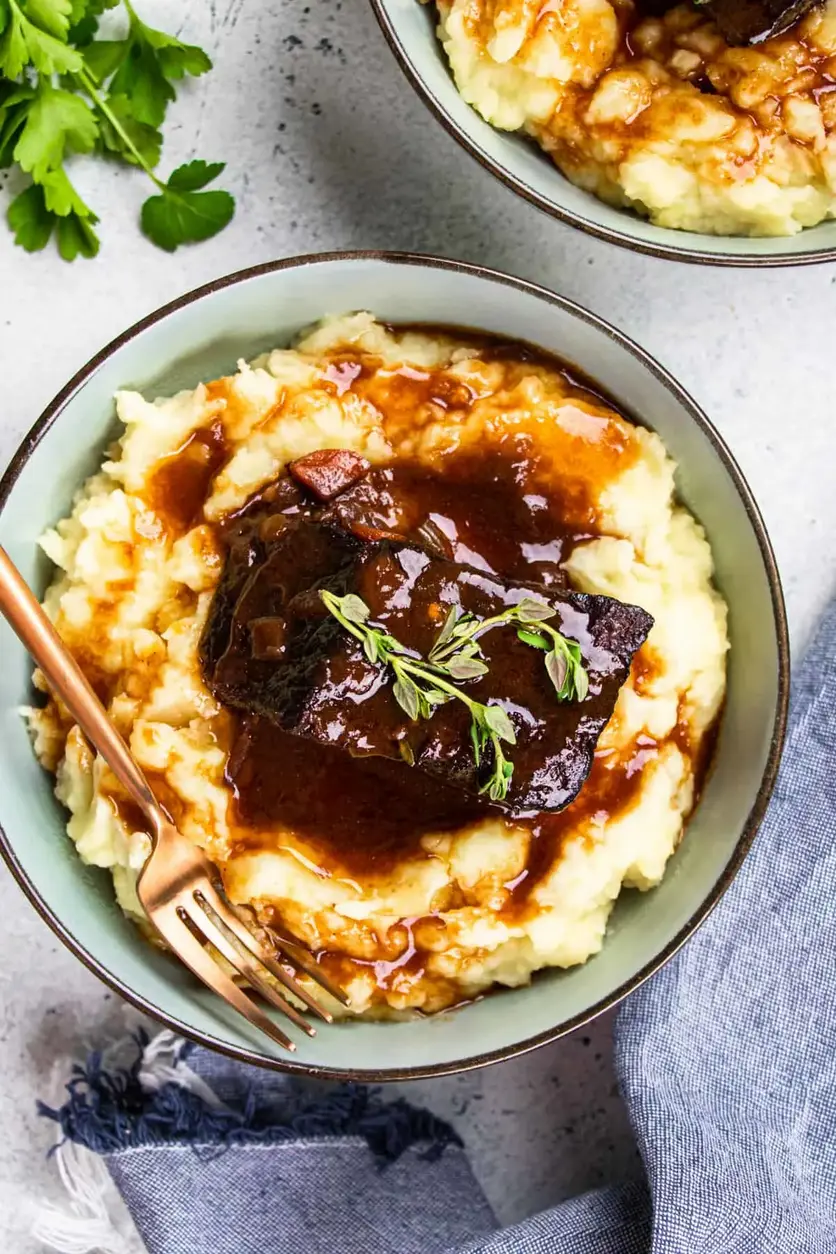
Plate the tender ribs over creamy polenta or mashed potato. A drizzle of the thickened sauce and a sprinkle of fresh parsley gives the dish a burst of color. Garnish with crispy prosciutto croutons; their salty crunch echoes the deep, savory core of the braise.
Serve alongside a glass of the same Cabernet you deglazed with, honoring the original spirit of the dish. A side of roasted rosemary potatoes, pulled from a New York farmer’s market, complements the deep earthy notes. My Moroccan nights would’ve loved a splash of preserved lemon, but I keep it classic for easy palate compatibility.
| Pairing Type | Suggestions | Why It Works |
|---|---|---|
| Side Dish | Polenta, mashed potatoes, roasted carrots | Soothing base that soaks the sauce |
| Sauce / Dip | Red wine reduction, herb butter | Enhances depth of crimson glaze |
| Beverage | Cabernet Sauvignon, full‑body red | Matches the wine‑braised character |
| Garnish | Fresh parsley, crushed pistachios, lemon zest | Adds brightness and texture contrast |
Make-Ahead, Storage & Reheating
When living a fast‑paced NYC rhythm, I pre‑braise the ribs one day ahead, then reheat the sauce the evening before guests arrive. It saves me the bustle of last‑minute cooking.
| Method | Container | Duration | Reheating Tip |
|---|---|---|---|
| Refrigerator | Sturdy zip‑lock bag | 3 days | Microwave or stovetop with a splash of broth |
| Freezer | Air‑tight container | 2 months | Slowly defrost, then simmer to re‑thicken |
| Make‑Ahead | Dedicated prep pot | 1 day in advance | Reheat in Dutch oven over low heat, stir nightly |
To maintain the luxuriously silky sauce when reheating, fluff it with a fork and fold in a tablespoon of butter or a splash of cream. I also whisk in a teaspoon of tomato paste on the stove to reinforce flavor after freezing.
Variations & Easy Swaps
| Variation | Key Change | Best For | Difficulty Impact |
|---|---|---|---|
| Low‑fat Bacon‑Glazed Variant | Swap broth for low‑fat beef stock, add seared bacon crisp | Health‑conscious diners | –0.5 |
| Gluten‑Free / Dairy‑Free | Use chicken broth, oat milk in sauce, omit Worcestershire | Allergies or celiacs | –0.3 |
| Seasonal Flavor Twist | Season with fresh sage and poppyseed bread crumb crust | Spring or fall menu | +0.2 |
Low‑fat Bacon‑Glazed Variant
Infuse the sauce with a lightly seared bacon curl before melding with the broth. Remove it after browning, allowing its smoky essence to coat the short ribs, and finish the dish as usual for a lighter bite that keeps the flavor punch.
Gluten‑Free / Dairy‑Free
Swap the beef broth with homemade gluten‑free stock and remove any wheat‑based thickeners. Use oat or almond milk to finish the sauce; the result is silky and silky‑smooth, still deep with the wine reduction.
Seasonal Flavor Twist
In the winter market, I add a handful of fresh thyme leaves and finish with a drizzle of honey‑glazed maple syrup. In spring, replace the olive oil with a touch of citrus‑infused olive oil and sprinkle lime zest on the finished dish.
FAQ
Can I cook short ribs without a Dutch oven?
Yes, any heavy‑bodied pot that can withstand steady heat works, such as a large skillet or a Dutch‑style cast‑iron pan. The key is to keep the heat low enough that the ribs steam in their own juices. If you’re using a saucepan, deck the lid well and monitor closely to avoid scorching.
How do I know when the short ribs are done?
The classic test is to slide a fork between the meat and the bone; it should pop out without much resistance. Alternatively, the internal temperature should read between 190°F and 205°F, which guarantees “fall‑apart” tenderness while still retaining moisture.
Can I use a different red wine?
Any full‑bodied red will do, but goal is tannin and fruit depth. Merlot or Zinfandel are great sub‑honors. Avoid wines with high acidity like Chianti, which could make the sauce too sharp, or sweet dessert wines, which will alter the savory balance.
How can I save time on this recipe?
Pre‑season the ribs before you start, using a simple salt‑pepper rub. Keep the stock on low after braising so you can blast the sauce on the stove while the rib resting steam gently soaks into the meat. Also, batch‑brown ribs in a high‑heat sauté pan, then transfer to the Dutch oven – it saves oven cleanup.
What can I serve with these short ribs?
Classic sides such as creamy polenta, buttery mashed potato, or a crisp roasted bed of garlic‑roasted Brussels sprouts pair well. The rich sauce pairs beautifully with a sturdy root‑vegetable mash or a dusted chalky risotto that swallows the gravy effortlessly.
Can I freeze the leftovers?
Absolutely. Store the meat and sauce separately in sealed containers, and keep both in the freezer for up to two months. Reheat by gently simmering the sauce over low heat, stirring frequently until it returns to a silky consistency. Add a touch of butter or cream for extra sheen.
Why do the ribs get so tender?
The slow braising process—long simmering at moderate heat—breaks down collagen into gelatin. This gelatin then dissolves into the sauce, creating a silky coating that clings to each rib. The final resting period also lets the redistributed juices diffuse, sealing in moisture.
How can I make it gluten‑free?
Buy gluten‑free beef stock, omit any wheat‑based thickening agents, and replace the Worcestershire sauce—most brands contain gluten—with a gluten‑free alternative or a splash of balsamic. Fine‑ground onion powder can act as a binder if thicker sauce is desired.
Can I use beef broth from cartons?
Carton broth often contains added sodium and preservatives. Choose a low‑sodium option and add just enough salt to taste after deglazing. The richer taste of homemade or high‑quality store‑bought broth will elevate the savory depth.
What are the health benefits of this dish?
Red wine braised short ribs are a hearty protein source, providing essential iron, zinc, and B‑vitamins. The slow cooker method reduces the need for added fats, and the dose of beef‑derived gelatin supports joint health. Pairing it with half a cup of roasted greens adds antioxidants and fiber.
Share Your Version!
I invite you to play with this recipe as much as you love it. Drop a star rating in the comments, let me know what tweaks brought it to your kitchen—maybe a dash of smoked paprika or a spiced cakebread for crust. I’d love to see your photos on Instagram or Pinterest (don’t forget to tag @cookingwithemi).
If you have a favorite herb that you think would sing in this braise, let me know in the comments. I’m always hunting for the next savory surprise.
From my NYC kitchen to yours — I hope this recipe brings as much warmth to your table as it does to mine. — emy 🧡
Love This Recipe? Save It to Pinterest!
If you enjoyed this Red Wine Braised Short Ribs recipe, don’t let it get lost in your browser tabs! 😄 Pin it now so you can find it again anytime — and explore hundreds more tried‑and‑tested recipes waiting for you on my Pinterest boards.
👉 Follow emy on Pinterest @chefrecipes2
📌 Pin this recipe · 🔁 Re-pin your favorites · 💬 Tag me when you make it — I love seeing your creations!
Curious about more culinary adventures? Subscribe to my newsletter for weekly recipes, NYC market tips, and a sprinkle of Moroccan flair straight to your inbox!
Red Wine Braised Short Ribs in Dutch Oven
Description
Red Wine Braised Short Ribs is the best recipe for tender fall apart bone-in beef short ribs slow cooked with gravy in a Dutch Oven. This is a perfect comfort meal you can make at home for your friends and family!
Ingredients
- 2 tablespoons olive oil
- 3–4 pounds bone-in short ribs (8–10 pieces)
- Salt (pepper to taste)
- 1 large onion (diced)
- 2 stalks celery (diced)
- 2 carrots (diced)
- 3 cloves garlic (crashed)
- 2 tablespoons tomato paste
- 2 cups wine (Cabernet Sauvignon)
- 3 cups beef broth
- 2 bay leaves
- 1 spring thyme
- 1 spring oregano
Instructions
- To start, lets preheat the oven to 350°F.
- Rinse and pat dry the meat and generously season with salt and pepper.
- Heat 2 tbsp olive oil in 6 Qt Dutch oven over medium-high heat. Brown the meat in two batches for 5-6 minutes on each side, then transfer to a plate and set aside.
- Add 1 diced onion and cook for 8-10 minutes or until translucent and softened. Then add 2 stalks diced celery and 2 diced carrots, and cook for 3-5 minutes more.
- Add 3 cloves smashed garlic and 2 tbsp tomato paste and cook for a few more minutes.
- Stir in 2 cups wine, bring to boil, lower the heat to medium and simmer until it reduces in half, about 15-20 minutes.
- Add 3 cups beef broth and stir.
- Transfer the meat back to the pot, add bay leaves, thyme and oregano.
- Cover with the lid and transfer to the oven.
- Cook for 2 ½-3 hours or until the ribs are tender.
- Transfer the meat to the plate and cover with foil.
- Strain the sauce and set discard the vegetables.
- Pour the liquid back to the pot and simmer until it thickens.