Table of Contents
Red Wine Braised Short Ribs in Dutch Oven – French‑Inspired Slow Braise that Turns Meat Into Memories
I still remember the first time I dragged a piece of bone‑in beef short rib from a corner market in Grand Central and brought it home to my apartment to experiment. In the heat of that rainy evening, I paired the cut with a splash of cabernet from a dusty pantry, letting the wine absorb the savory depth of the meat. The result? A slow‑braised masterpiece that feels just like a hug from my mother’s kitchen in Casablanca, but with the theatrical flair of a Parisian sauce simmered in a Dutch oven.
The stew boasts a glossy brown crust, a caramelized onion, and where the reduction meets the sear, the meat succumbs to a melt‑in‑your‑mouth tenderness that is almost cinematic. The scent that rises as the liquid reduces is a complex bouquet of roasted garlic, fresh thyme, and a whisper of bay leaf—so inviting that you can almost hear the clatter of pots from the old Paris kitchen in the background. The swallowable sauce, thickened with tomato paste, is a velvety ribbon that clings lovingly to each rib.
My “French‑Inspired Slow Braise” difference lies in the technique: I first brown the ribs for depth, then deglaze with a robust red wine, which I reduce by half before layering broth and aromatics. The secret trick is to finish the batch in a Dutch oven, letting the circulation create an even, low‑heat environment. I’ve learned that letting the short ribs submerge fully produces layers of umami that most quick recipes overlook, and that’s why, even after years, I keep circling back to this dish.
Why This Red Wine Braised Short Ribs Recipe Is the Best
The Flavor Secret is rooted in the deliberate reductions: I start with a high‑quality Cabernet that cuts through the beef’s richness, then allow it to reduce by half to hone both depth and acidity, creating a balanced sauce that lingers on the palate. My Moroccan heritage teaches me to taste every layer, and French sauce fundamentals guide my finishing glide of tomato paste and herbs.
Perfected Texture comes from a methodical browning phase, which locks in juices, followed by slow braising at 350°F. The Dutch oven’s thick walls distribute heat evenly, coaxing the connective tissues into gelatinous perfection, so the meat practically falls off the bone.
Foolproof & Fast means you set it up for the hour‑long cook, and then you’re free to hit the city or catch a museum opening. I’ve fine‑tuned the timing so that anyone—whether a first‑timer or seasoned cook—can trust the recipe to deliver tenderness without the guesswork.
Red Wine Braised Short Ribs Ingredients
I source the short ribs from Carmine’s Butcher in Brooklyn, where the cuts are always well‑marbled. The wine comes from a trusted house wine shop, and for the veggies I wander to the Union Square farmers’ market for the freshest onions, carrots, and celery.
Ingredients List
- 3‑4 pounds bone‑in short ribs (8‑10 pieces)
- 2 tablespoons olive oil
- Salt and pepper, to taste
- 1 large onion, diced
- 2 stalks celery, diced
- 2 carrots, diced
- 3 cloves garlic, smashed
- 2 tablespoons tomato paste
- 2 cups Cabernet Sauvignon
- 3 cups beef broth
- 2 bay leaves
- 1 sprig thyme
- 1 sprig oregano
Ingredient Spotlight
Short Ribs: The game‑changer; look for marbling and a good bone length. If you’re short on time, use a pressure cooker, but keep the crust in mind.
Cabernet Sauvignon: Its tannins lift the meat’s richness. A bold, fruit‑heavy bottle works best; if you want a smoother profile, a Merlot will still rock the braise.
Tomato Paste: Gives umami depth and a subtle sweet note. If you’re gluten free, use a certified gluten‑free paste; the sauce still holds together perfectly.
Bay Leaves: A fragrant antique that almost begs to be discarded. Keep them in a small cloth packet so you can pull them out before serving.
Thyme: Fresh gives a brighter note; dried will add a deeper herbaceous layer, especially if you’re in a pinch.
| Original Ingredient | Best Substitution | Flavor / Texture Impact |
|---|---|---|
| Short Ribs | Chuck Short Ribs | Similar fat content, slightly less tender unless braised longer. |
| Cabernet Sauvignon | Merlot | Softens acidity; gives a smoother, fruitier profile. |
| Tomato Paste | Homemade tomato sauce | Less concentrated; thicker sauce may need simmering longer. |
| Bay Leaves | Fresh bay leaf ragout | Adds a fresher, less dried‑bitter aroma; peel out before serving. |
How to Make Red Wine Braised Short Ribs — Step‑by‑Step
Let me walk you through each stage of this enticing braise, from searing to serving.
Step 1: Brown the Meat
Heat 2 tablespoons olive oil in a 6‑quart Dutch oven over medium‑high heat. Pat the ribs dry, season liberally with salt and pepper, and brown in two batches, searing each side for 5‑6 minutes until a deep mahogany crust forms. Transfer to a plate and set aside.
💡 emy’s Pro Tip: Use a heat‑resistant silicone mat to keep the added plates from sticking to the pot during deglazing.
Step 2: Cook the Vegetables
In the same pot, add diced onion. Sauté 8‑10 minutes until translucent, then stir in celery and carrots. Cook another 3‑5 minutes until the vegetables soften but still hold shape.
⚠️ Common Mistake to Avoid: Over‑crowding the pot, which steams veggies instead of browning them.
Step 3: Add Garlic and Tomato Paste
Add smashed garlic and 2 tablespoons tomato paste. Stir until the paste darkens slightly (about 2 minutes) to caramelize its sugars.
💡 emy’s Pro Tip: Stir constantly to prevent the paste from sticking to the bottom and burning.
Step 4: Deglaze with Red Wine
Pour in 2 cups of Cabernet Sauvignon, scraping the browned bits from the bottom of the pot. Bring to a vigorous boil, then reduce heat to medium.
⚠️ Common Mistake to Avoid: Skipping the scraping step, leading to a gritty sauce.
Step 5: Reduce the Wine
Let the wine reduce by half, about 15‑20 minutes, until it’s thickened and fragrant. This concentrates flavor and reduces acidity.
💡 emy’s Pro Tip: Use a ladle to gently skim any foam that rises to the surface during reduction.
Step 6: Add Beef Broth
Stir in 3 cups of beef broth, mixing to combine the reduced wine and tomato paste into a cohesive base.
⚠️ Common Mistake to Avoid: Using low‑salt broth, which can leave the dish flat.
Step 7: Return the Ribs and Herbs
Place the browned ribs back into the pot. Add bay leaves, fresh thyme, and oregano. Stir to coat the meat in the aromatics.
💡 emy’s Pro Tip: Arrange the rib bones pointing toward the top; this directs heat evenly around the meat.
Step 8: Cover and Oven Cook
Cover the Dutch oven with its lid, seal with a bread crust or foil, and transfer to a preheated oven at 350°F. Bake for 2½‑3 hours until the meat is fork‑tender.
⚠️ Common Mistake to Avoid: Raising the oven temperature while cooking, which can dry out the meat.
Step 9: Strain the Sauce
Lift the meat onto a plate and cover with foil. Strain the sauce through a fine mesh sieve into a clean pot, discarding the solids.
💡 emy’s Pro Tip: Keep the strained liquid warm on low while you finish the sauce.
Step 10: Thicken the Gravy
Return the liquid to the pot, bring to a gentle boil, and simmer until it reaches a velvety consistency (about 10‑15 minutes). Taste and adjust with salt or a splash of red wine if desired.
⚠️ Common Mistake to Avoid: Reducing the gravy too aggressively, causing it to scorch.
| Step | Action | Duration | Key Visual Cue |
|---|---|---|---|
| 1 | Brown ribs | 5‑6 min/side | Deep mahogany crust |
| 2 | Sauté onions | 8‑10 min | Translucent, glossy |
| 3 | Add garlic & paste | 2 min | Past darkens, aromas release |
| 4 | Deglaze wine | Boil, then reduce | Flaming bubbles and fragrance |
| 5 | Reduce wine | 15‑20 min | Thicker, glossy sheen |
| 6 | Add broth | Immediate mix | Uniform aroma |
| 7 | Return ribs & herbs | Instant infusion | All surface coated |
| 8 | Braise in oven | 2½‑3 hrs | Tender, crackling edges |
| 9 | Strain sauce | Instant clarity | Smooth, glossy liquid |
| 10 | Thicken gravy | 10‑15 min | Velvet sheen, cling |
Serving & Presentation
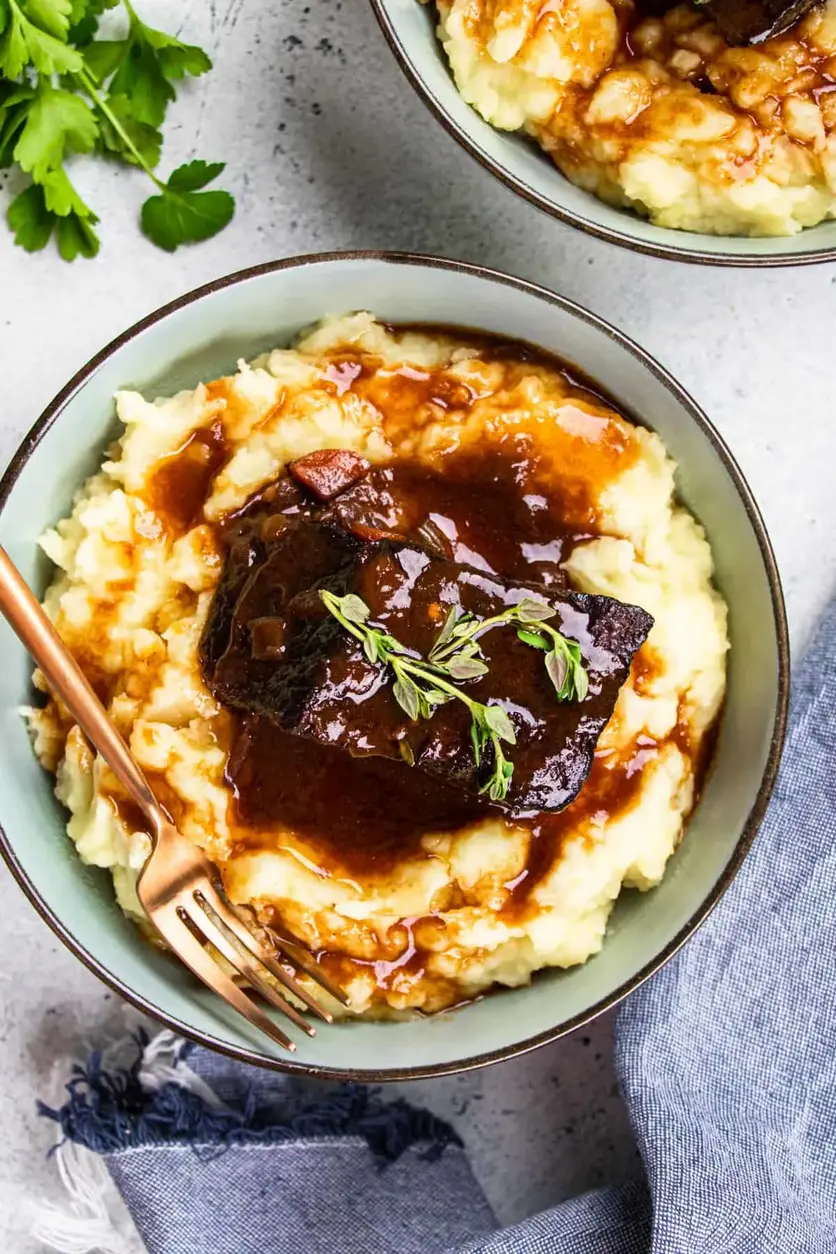
Plate each rib on a slightly warmed slate, letting the glossy gravy pool at the bottom. Sprinkle a handful of chopped fresh parsley for a burst of green against the rich brown.
Pair these decadent ribs with creamy mashed potatoes or buttery polenta, a nod to my Moroccan cauliflower mash, and finish with a glass of the same Cabernet for a seamless flavor loop. A crisp, dry Riesling or a Bordeaux blend would also complement the savory depth nicely.
If you’re in the mood for a touch of extravagance, crumble a spoonful of smoked salt over the finished dish; the salt’s mineral tang acts as a counterpoint to the wine’s acidity.
| Pairing Type | Suggestions | Why It Works |
|---|---|---|
| Side Dish | Mashed potatoes, roasted root veggies, or buttery polenta | Neutral base absorbs sauce, creates balanced bites |
| Sauce / Dip | Herb aioli, clove‑infused butter, or a velvety béarnaise | Amplifies meat’s richness with fresh herb profile |
| Beverage | Cabernet Sauvignon, Bordeaux Blend, or dry Riesling | Wine’s tannins cut through fat, sharpening flavors |
| Garnish | Micro‑greens, roasted almonds, or smoked salt shards | Add texture and surprise to the final bite |
Make‑Ahead, Storage & Reheating
I love prepping this dish on my busiest weekend mornings, letting it slow cook on the stove and setting it for my week‑night dinners. The sauce locks in flavors that deepen over time, making it ideal for meal‑prep.
| Method | Container | Duration | Reheating Tip |
|---|---|---|---|
| Refrigerator | Glass mason jar | 3 days | Reheat in low oven with a splash of broth |
| Freezer | Vacuum‑seal bag | 2 months | Thaw overnight, then gently simmer |
| Make‑Ahead | An airtight, heat‑proof dish | 2 days in advance | Pre‑assemble and keep chilled; reheat at 325°F in the oven |
When reheating, remember that the sauce can thicken further; a quick splash of beef broth or a drizzle of butter will bring it back to silky softness. I love wrapping the pot in foil before placing it back in the oven—this keeps the moisture from escaping and maintains that melt‑away texture.
Variations & Easy Swaps
| Variation | Key Change | Best For | Difficulty Impact |
|---|---|---|---|
| Couscous Base | Add a rack of couscous in the last 20 min of cooking | Vegetarian option, fluffy side | Minimal |
| Gluten‑Free | Replace beef broth with tamari‑flavored broth | Low‑gluten, same rich flavor | None |
| Autumn Mushroom Sauce | Stir in sautéed wild mushrooms at the end | Seasonal, earthy twist | Minor |
Couscous Base
I keep a rack of short‑grain couscous in the back of my pantry, and adding it in the last 20 minutes grounds the dish in warmth. The couscous swallows up the fragrant sauce, offering a dry‑to‑wet contrast reminiscent of a Moroccan tagine.
Gluten‑Free
Swap the conventional beef broth with a gluten‑free tamari‑infused broth. The subtle umami mirrors the original, while the sauce stays silky. The chewy texture of the ribs stays intact, proving that gourmet can be inclusive.
Autumn Mushroom Sauce
Stir in sautéed wild mushrooms—portobello, shiitake, and cremini—into the braised liquid during the last 10 minutes. Their earthy undertone pairs perfectly with the deep wine notes, adding another layer for a cozy fall meal.
How long should I cook short ribs in the oven for them to be tender?
For bone‑in short ribs, a low‑heat, slow braise of 2½ to 3 hours at 350°F is ideal to break down collagen into gelatin. If you’re short on time, a pressure cooker can reduce the cooking time to 45‑60 minutes, but the gentle oven method keeps the meat tender while still developing a deep flavor following a slow reduction of wine and broth.
What type of wine is best for braising short ribs?
The best wine for braising short ribs is a full‑bodied red with good acidity and tannins. A mid‑price Cabernet Sauvignon, Merlot, or a Bordeaux blend works beautifully because they impart depth and allow the sauce to reduce to a glossy, flavorful glaze. Higher‑quality wines elevate the dish, as the broth carries a large portion of the wine’s character.
Can I use a Dutch oven on the stove instead of the oven?
Yes, you can finish the braise entirely on the stovetop. After sautéing the aromatics and reducing the wine, add the broth and other ingredients, then cover and simmer on low for 2½‑3 hours, stirring occasionally. The Dutch oven’s heat‑retaining walls will still allow a steady, even cook, though the sear will be less pronounced without the oven’s radiant heat.
What can I serve with this dish for a full dinner?
Serve the ribs over creamy mashed potatoes, buttery polenta, or a light couscous base to soak up the sauce. Pair with roasted root vegetables such as carrots, parsnips, or beetroot for color and heat, and finish with a chilled glass of Cabernet Sauvignon or a dry Riesling for balance. A simple green salad with a vinaigrette lightly drizzled over the plated rib gives a fresh counterpoint.
How does paprika affect the flavor?
Smoked paprika adds a subtle, smoky sweetness that deepens the overall savoriness and complements the wine’s tannins. It’s not essential but can give the sauce an extra layer of complexity without overpowering the tender ribs. In a Moroccan or North African setting, it’s a common aromatic for braises and stews.
What are some quick tips to keep the sauce thick?
After removing the solid vegetables, strain the sauce and return it to low heat. Simmer until it reduces to a velvety consistency. Add a slurry of cornstarch and cold water if it remains too thin, or cook it for a few more minutes with the lid off to evaporate excess liquid. A touch of tomato paste early on helps create a thicker glaze.
Is it okay to use bone‑in or boneless ribs?
Bone‑in short ribs give the dish a richer, more intense flavor due to marrow release during the slow braise. Boneless ribs will cook slightly faster and will need a bit more seasoning, but you can still achieve tenderness with the same liquid base. The result will be less complex but still succulent.
How do I prevent the meat from drying out?
Always leave the lid on while braising; it traps steam and keeps the meat moist. If you notice the liquid evaporating too quickly, add a splash of broth or additional wine. Cooling the meat gently after cooking and letting it rest in foil also preserves juiciness before serving.
Do I need to strain the vegetables from the sauce?
Straining is optional but recommended if you prefer a silky sauce. It removes fibrous vegetable bits, allowing the gravy to coat the ribs evenly. If you enjoy a more rustic texture, you can leave the vegetables in; they’ll soak up some of the wine’s sweetness and add a hearty bite.
Can this recipe be doubled for a larger gathering?
Absolutely! Double the quantity of ribs, wine, broth, and aromatics. You’ll need a larger Dutch oven or two smaller ones. Keep the cooking temperature and time roughly the same, but check the meat with a fork after the expected finish time; if it’s not quite falling apart, give it another 30 minutes.
Share Your Version!
If you tweak this recipe for your own family or add a secret ingredient like smoked paprika, let me know—I love hearing how you adapt classic techniques. Drop a star rating and share your thoughts in the comments below. Your feedback keeps my kitchen vibrant!
Tag @cookingwithemi on Instagram or share a photo on Pinterest and let me see how your table reflects NYC’s bustling charm. I’ll pin the photo on my board and maybe feature it for everyone to see. Curious about which spice you’d swap for the tomato paste? That’s a great question to explore next.
From my NYC kitchen to yours — I hope this recipe brings as much warmth to your table as it does to mine. — emy 🧡
Love This Recipe? Save It to Pinterest!
If you enjoyed this Red Wine Braised Short Ribs recipe, don’t let it get lost in your browser tabs! 😄 Pin it now so you can find it again anytime — and explore hundreds more tried‑and‑tested recipes waiting for you on my Pinterest boards.
👉 Follow emy on Pinterest @exorecipe
📌 Pin this recipe · 🔁 Re-pin your favorites · 💬 Tag me when you make it — I love seeing your creations!
Red Wine Braised Short Ribs in Dutch Oven
Description
Red Wine Braised Short Ribs is the best recipe for tender fall apart bone-in beef short ribs slow cooked with gravy in a Dutch Oven. This is a perfect comfort meal you can make at home for your friends and family!
Ingredients
- 2 tablespoons olive oil
- 3–4 pounds bone-in short ribs (8–10 pieces)
- Salt (pepper to taste)
- 1 large onion (diced)
- 2 stalks celery (diced)
- 2 carrots (diced)
- 3 cloves garlic (crashed)
- 2 tablespoons tomato paste
- 2 cups wine (Cabernet Sauvignon)
- 3 cups beef broth
- 2 bay leaves
- 1 spring thyme
- 1 spring oregano
Instructions
- To start, lets preheat the oven to 350°F.
- Rinse and pat dry the meat and generously season with salt and pepper.
- Heat 2 tbsp olive oil in 6 Qt Dutch oven over medium-high heat. Brown the meat in two batches for 5-6 minutes on each side, then transfer to a plate and set aside.
- Add 1 diced onion and cook for 8-10 minutes or until translucent and softened. Then add 2 stalks diced celery and 2 diced carrots, and cook for 3-5 minutes more.
- Add 3 cloves smashed garlic and 2 tbsp tomato paste and cook for a few more minutes.
- Stir in 2 cups wine, bring to boil, lower the heat to medium and simmer until it reduces in half, about 15-20 minutes.
- Add 3 cups beef broth and stir.
- Transfer the meat back to the pot, add bay leaves, thyme and oregano.
- Cover with the lid and transfer to the oven.
- Cook for 2 ½-3 hours or until the ribs are tender.
- Transfer the meat to the plate and cover with foil.
- Strain the sauce and set discard the vegetables.
- Pour the liquid back to the pot and simmer until it thickens.