Table of Contents
Red Wine Braised Short Ribs in Dutch Oven – Dutch Oven Slow Braise Method – A Comforting Classic
I still remember the first time I ladled a rich, velvety sauce over sizzling short ribs back in a city kitchen in the French Quarter of Paris. That was the moment I realized how the humble Dutch oven could transform simple beef into a decadent centerpiece. Now, the same technique brings that same comfort meal right to your kitchen—Red Wine Braised Short Ribs in a Dutch Oven. It’s the ultimate luxury you can make at home, and my unique Dutch oven slow-braise method gives the ribs that dream‑tender texture and depth of flavor.
Picture the tender bones crumbling, the wine reducing into a deep mahogany sauce speckled with caramelized aromatics. The onions melt into soft caramel, the garlic releases its honeyed warmth, and a splash of Cabernet Sauvignon adds a subtle fruitiness that dances with the savory broth. When poured over the ribs, the sauce clings like an indulgent blanket, while the thyme and oregano lend an herbal echo reminiscent of North African spices I grew up with in my mother’s kitchen. The finished dish feels like a hug in a bowl—a comforting, aromatic comfort that invites you to savor the slow‑cooked bliss.
Coming from a Moroccan upbringing and honed by a French culinary school, I’ve refined this braising recipe over years of experimentation. My Pro Tip: keep the Dutch oven tightly sealed to trap moisture, which turns the ribs into melt‑in‑your‑mouth tenderness. A common mistake I see is over‑stirring; let the meat sit undisturbed so the gelatin caves out slowly. With these tricks, you’ll turn an ordinary short‑rib pot into a sensational, fall‑apart feast—just as I’ve done on countless dinner parties in New York City.
Why This Red Wine Braised Short Ribs Recipe Is the Best
The flavor secret lies in the meticulous simmer from a low‑heat Dutch oven, which extracts the marrow’s umami while the red wine slowly reduces to a silky glaze. By letting the wine condense, the sauce thickens naturally without extra flour or roux—an essential trick I learned while refining sauce work in Paris.
The texture comes from the dual sear and slow braise: high‑heat searing creates a Maillard crust that locks in juices, and the extended low‑heat braise pulls the collagen apart until it’s practically falling off the bone. Even a beginner can follow the clear, step‑by‑step instructions to perfect that “fall‑apart” finish.
It’s also fool‑proof—reheating it works wonders for busy nights, and the open lunch pot is great for traveling. After all, if it takes just a couple of minutes to reheat and cook, you’ve got a hearty comfort meal that’s hard to beat.
Red Wine Braised Short Ribs Ingredients
I love getting the meats and vegetables from the Brooklyn farmers market. Fresh, local produce always brings the most vivid colors and clean flavors. The ribs are snagged from the butcher in Brooklyn Heights, and the carrots are from the seasonal squash stand—classic New York add-ons.
Ingredients List
- 2 tablespoons olive oil
- 3–4 pounds bone‑in short ribs (8–10 pieces)
- Salt & pepper, to taste
- 1 large onion, diced
- 2 stalks celery, diced
- 2 carrots, diced
- 3 cloves garlic, smashed
- 2 tablespoons tomato paste
- 2 cups Cabernet Sauvignon
- 3 cups beef broth
- 2 bay leaves
- 1 sprig fresh thyme
- 1 sprig fresh oregano
Ingredient Spotlight
Short Ribs – Look for marrow‑rich, well‑marbled cuts. In U.S. grocery stores, choose “rack” ribs for even cooking, or “flank” ribs for a cheaper alternative that still melts. Safely, you can swap with short ribs from a local butchers or use a 3‑pound block if you prefer individual slices.
Cabernet Sauvignon – The wine’s tannin and plum notes deepen the sauce. If you feel adventurous, a dry Merlot works, but keep the same 2‑cup measurement. In a pinch, pick up an inexpensive yet decent dry wine, as the cooking method weights down any initial harshness.
Tomato Paste – It gives body and a burst of acidity. For a refined twist, replace with crushed canned tomatoes; this brings a fresher, smaller‑grained flavor, although the sauce will be slightly thinner unless you reduce it greater.
| Original Ingredient | Best Substitution | Flavor / Texture Impact |
|---|---|---|
| Short Ribs | 2‑Pound Chuck Roast | Thicker texture, shorter cooking time. |
| Cabernet Sauvignon | Dry Merlot | Softer acidity, less robust. |
| Tomato Paste | Crushed Canned Tomatoes | Light texture, more brothy sauce. |
How to Make Red Wine Braised Short Ribs in Dutch Oven – Step by Step
The magic of this dish starts with searing, then slow‑broiling and isended; watch each stage closely and enjoy the process.
Step 1: Brown the Ribs
Heat 2 Tbsp olive oil in a 6‑qt Dutch oven over medium‑high heat. Once shimmering, add the ribs in a single layer without crowding. Sear 5–6 minutes per side until golden brown. Transfer to a plate and set aside.
💡 emy’s Pro Tip: Pre‑heat the pot before adding oil so the ribs hit the pan immediately and develop a deep Maillard crust.
Step 2: Cook Veggies
In the same pot, add diced onion and cook for 8–10 minutes until translucent. Then stir in celery and carrots, cooking 3–5 minutes more until they start to soften.
⚠️ Common Mistake to Avoid: Adding too many veggies at once can lower pan temperature and cause the meat to steam instead of sear.
Step 3: Add Garlic & Paste
Stir in smashed garlic cloves and 2 Tbsp tomato paste, cooking 1–2 minutes until fragrant and slightly caramelized.
💡 emy’s Pro Tip: Use a spoon to knead the paste into the vegetables; this releases the paste’s tannic bitterness and gives a cohesive sauce.
Step 4: Boil Wine
Pour in 2 cups Cabernet Sauvignon and bring to a gentle boil. Reduce heat to medium, letting it simmer until it reduces by half—about 15–20 minutes.
⚠️ Common Mistake to Avoid: Letting the wine boil too fast can scorch, altering the flavor profile.
Step 5: Add Beef Broth
Stir in 3 cups beef broth, then return the ribs to the pot. Add bay leaves, fresh thyme, and oregano.
💡 emy’s Pro Tip: Use a good bone broth; its higher collagen content turns the sauce silky and intensifies the meat flavor.
Step 6: Reintegrate Meat
Gently press the ribs back into the liquid, ensuring they are partially submerged. This ensures even tagging of the sauce.
⚠️ Common Mistake to Avoid: Over‑stirring the pot removes the implied glossy base for thickening.
Step 7: Cover & Bake
Cover tightly and transfer the Dutch oven to a preheated oven at 350°F. Bake for 2 ½–3 hours, checking every 10 minutes for liquid moisture. Keep the lid sealed.
💡 emy’s Pro Tip: Medium‑low heat results in a smooth, cohesive sauce; don’t open the lid too early or you’ll lose steam.
Step 8: Cook Until Tender
Stop checking after the ribs feel tender and fall easily to the bone. The meat should be so soft it can be pulled apart with a fork.
⚠️ Common Mistake to Avoid: Cutting the ribs before they’re fully tender; this leaves them chewy.
Step 9: Strain Sauce
Remove the ribs to a plate, cover, and keep warm. Strain the sauce through a fine sieve and discard the solids.
💡 emy’s Pro Tip: A velvety sauce is golden; a gritty one means you didn’t strain properly.
Step 10: Thicken Sauce
Return strain to the pot and simmer until the sauce thickens to your preference. If it’s too thin, let it reduce; if too thick, add a splash of beef broth to loosen.
⚠️ Common Mistake to Avoid: Over‑reducing can make the sauce. Watch closely for that silky consistency.
| Step | Action | Duration | Key Visual Cue |
|---|---|---|---|
| 1 | Sear ribs | 5‑6 mins each side | Golden crust |
| 2 | Cook veggies | 8‑10 mins | Translucent onions |
| 3 | Add garlic & paste | 1‑2 mins | Fragrant aroma |
| 4 | Reduce wine | 15‑20 mins | Half‑volume |
| 5 | Add broth & herbs | Immediate rest | Herb aroma |
| 6 | Re‑add ribs | 2 mins | Submerged |
| 7 | Bake | 2½‑3 hrs | Deep red hue |
| 8 | Check tenderness | 30‑40 mins | Pull‑apart |
| 9 | Strain sauce | 5 mins | Velvety texture |
| 10 | Reduce sauce | 10‑15 mins | Glossy glaze |
Serving & Presentation
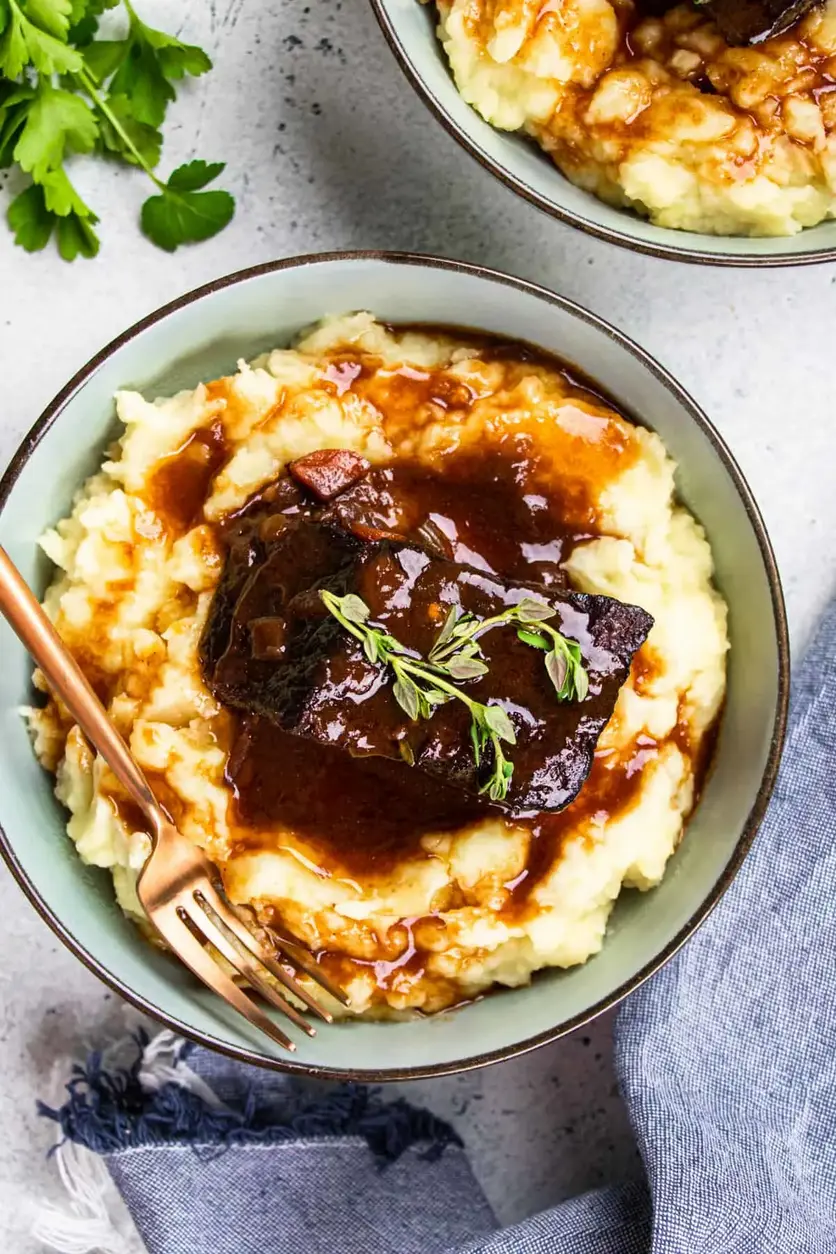
Plating – Arrange the ribs in a shallow dish, spoon the glossy gravy over one side, and drizzle with a little extra jus for flair. A touch of fresh parsley or micro‑greens creates a bright pop that echo’s my mother’s kitchen décor.
Garnish – A sprinkle of toasted breadcrumbs or a few tarragon leaves adds an interesting crunch and familiar French touches, while hints of crushed pistachios bring a Moroccan pop of color.
Pairings – The robust gravy pairs beautifully with creamy mashed potatoes, buttered green beans, or a crusty French baguette for soaking. In NYC, a light Pinot Noir or a bold Zinfandel can complement the deep tannins in the dish.
| Pairing Type | Suggestions | Why It Works |
|---|---|---|
| Side Dish | Mashed potatoes, root‑vegetable mash, roasted brussels sprouts | Complements the sauce’s creaminess and balances the meat’s richness. |
| Sauce / Dip | Herbed butter, aioli with roasted garlic | Adds a buttery contrast that lifts the gravy’s depth. |
| Beverage | Pinot Noir, Zinfandel, dark stout | The tannic fruitiness softens the meat’s fat while complementing the wine reduction. |
| Garnish | Fresh thyme sprigs, micro‑greens, toasted pine nuts | Provides color, texture, and a “fresh” touch that offsets the dish’s weight. |
Make‑Ahead, Storage & Reheating
When New York’s traffic forces me to prep ahead, I finish the braise, let it cool, and divide it into meal‑prep containers. The flavor deepens during refrigeration, giving me a ready‑to‑heat dish that’s still luscious.
| Method | Container | Duration | Reheating Tip |
|---|---|---|---|
| Refrigerator | Air‑tight mason jars | 3 days | Reheat on stovetop, add a splash broth to loosen. |
| Freezer | Large freezer bags | 3 months | Thaw overnight, simmer gently, adding a bit water if needed. |
| Make‑Ahead | Separate meat & sauce | 2 days in advance | Recombine and heat like a single pot; keep sauce from thickening too much. |
When reheating, keep the heat low to avoid burning the sauce, and stir occasionally. My personal trick: add a bit of beef stock or a dash of red wine to restore the silky glisten. The final result recaptures the mouth‑watering steam‑filled aroma of the original braise.
Variations & Easy Swaps
| Variation | Key Change | Best For | Difficulty Impact |
|---|---|---|---|
| Herb & Garlic Butter Finish | Finish with a pat of herb‑infused butter | All diners who love rich, buttery sauces. | Essential, quick addition |
| Gluten‑Free Tomato-Free Sauce | Replace tomato paste with pumpkin puree | Gluten‑free or low‑carb diet lovers. | Moderate; requires swapping sauce base. |
| Seasonal Autumn Squash Twist | Add diced butternut squash | Fall meal that feels seasonal. | Simple swap, adds sweetness |
Herb & Garlic Butter Finish
After scraping the sauce, melt 4 Tbsp unsalted butter with fresh rosemary, thyme, and minced garlic. Whisk into the reduced broth for a glossy finish. The butter’s richness echoes the dish’s French technique while a dash of garlic harks back to my Moroccan roots.
Gluten‑Free Tomato‑Free Sauce
Swap the 2‑Tbsp tomato paste for 2 Tbsp pumpkin puree or a small can of pureed tomato sauce. This provides natural sweetness and mellow acidity while eliminating gluten. The sauce becomes smoother, and the pumpkin adds a subtle nutty tone reminiscent of Moroccan stews.
Seasonal Autumn Squash Twist
Slice 1 cup diced butternut squash into the pot with the carrots and celery. As the wine reduces, the squash softens into sweet, caramelized cubes that pair beautifully with the red‑wine gravy. It’s an easy switch that gives the meal a warm, harvest vibe.
How long does it take to braise short ribs in a Dutch oven?
In a Dutch oven, braising short ribs typically takes about 2½ to 3 hours at a steady 350°F. The low and slow heat allows the connective tissue to break down into gelatin, turning the meat into a tender, fall‑apart texture. The 150‑minute cooking time ensures the beef meets a silky gravy that holds the broth’s essence without drying out.
Can I use a different wine instead of Cabernet Sauvignon?
Absolutely! While Cabernet provides a robust tannic backbone, any dry red—such as Merlot, Syrah, or even a well‑rounded Zinfandel—will work. The key is a wine with enough body to stand up to the beef’s richness. Adjust the quantity slightly if the wine is lighter, but keep the same 2‑cup volume for balance.
What type of Dutch oven works best for braising ribs?
A heavy‑bottom, cast‑iron Dutch oven is ideal because it distributes heat evenly and retains moisture. Look for a pot with a tight‑sealing lid; the seal keeps steam inside for a flawless braise. Ceramic or enameled options also perform well, but a proper cast‑iron is the classic choice found in every New York kitchen.
Is it better to cook short ribs in the oven or stovetop?
While you can crowd the stovetop, the oven offers a more consistent, low heat that lets the meat paint itself in involution without temperature spikes. The Dutch oven’s lid locks in moisture, and the oven’s even heat allows the wine reduction to even, producing a deeper sauce. For a slow‑braised masterpiece, the oven reigns supreme.
How do I keep the sauce from becoming too thick?
To maintain the sauce’s silky consistency, simmer gently and monitor the reduction. If it begins to look like syrup, add a splash of water or more beef broth to loosening. Keep the pot covered so steam does not evaporate rapidly; a tricky balance that you’ll master after a few tries.
Can I freeze the leftover braised short ribs and sauce?
Definitely. Separate the meat and sauce, store each in a freezer‑safe container, and freeze for up to three months. When thawing, reheat gently, adding a bit of broth or wine to restore moisture. The beef may even taste more concentrated, giving a deeper flavor in the reheated dish.
What side dishes pair well with red wine braised short ribs?
Classic mash, roasted root vegetables, or a crisp green‑bean sauté create a balanced plate. A dark rye loaf or baguette is perfect for soaking up the gravy, while a sunny‑side‑up egg adds a contrasting texture. These sides echo the dish’s hearty comfort vibe and highlight the French‑Moroccan fusion.
How do I make the braised short ribs in the microwave?
Though the microwave won’t replicate the slow‑braise depth, you can heat pre‑made sauce rapidly. Use a low heat setting, stir, and cover with a lid or parchment to trap moisture. For a true tender result, a stovetop or oven is essential.
What is the best way to sear short ribs before braising?
Pat dry the ribs, season generously, and let the pot reach a high temperature before adding oil. A hot oil surface will sear the meat in seconds, giving a Maillard crust that locks juices inward. Avoid crowding the pot, and lift each piece gently to ensure an even sear on every side.
Can I add vegetables while braising and how many?
Yes—carrots, celery, onions, and even potatoes can simmer alongside the ribs to develop depth. Aim for 1–2 cups of veggies for a balanced ratio; each adds flavor, sweetness, and a nutritional boost. Keep them sliced uniformly so they submerge evenly and soften during the braising process.
Share Your Version!
If you tried this recipe, drop a star rating and let me know how it turned out. I love seeing your photos—share them on Instagram or Pinterest, tag @cookingwithemi, and let the food community rally. I’ve added a twist, swapped a spice, or even tried a gluten‑free version? Tell me which unique angle worked for you.
From my NYC kitchen to yours — I hope this recipe brings as much warmth to your table as it does to mine. — emy 🧡
Love This Recipe? Save It to Pinterest!
If you enjoyed this Red Wine Braised Short Ribs recipe, don’t let it get lost in your browser tabs! 😄 Pin it now so you can find it again anytime — and explore hundreds more tried‑and‑tested recipes waiting for you on my Pinterest boards.
👉 Follow emy on Pinterest @exorecipe
📌 Pin this recipe · 🔁 Re-pin your favorites · 💬 Tag me when you make it — I love seeing your creations!
Got a twist on this classic? Drop a comment below and let’s chat! If you share a photo on Instagram or Pinterest, tag me @cookingwithemi and I’ll love to see your creations. Happy cooking!
Red Wine Braised Short Ribs in Dutch Oven
Description
Red Wine Braised Short Ribs is the best recipe for tender fall apart bone-in beef short ribs slow cooked with gravy in a Dutch Oven. This is a perfect comfort meal you can make at home for your friends and family!
Ingredients
- 2 tablespoons olive oil
- 3–4 pounds bone-in short ribs (8–10 pieces)
- Salt (pepper to taste)
- 1 large onion (diced)
- 2 stalks celery (diced)
- 2 carrots (diced)
- 3 cloves garlic (crashed)
- 2 tablespoons tomato paste
- 2 cups wine (Cabernet Sauvignon)
- 3 cups beef broth
- 2 bay leaves
- 1 spring thyme
- 1 spring oregano
Instructions
- To start, lets preheat the oven to 350°F.
- Rinse and pat dry the meat and generously season with salt and pepper.
- Heat 2 tbsp olive oil in 6 Qt Dutch oven over medium-high heat. Brown the meat in two batches for 5-6 minutes on each side, then transfer to a plate and set aside.
- Add 1 diced onion and cook for 8-10 minutes or until translucent and softened. Then add 2 stalks diced celery and 2 diced carrots, and cook for 3-5 minutes more.
- Add 3 cloves smashed garlic and 2 tbsp tomato paste and cook for a few more minutes.
- Stir in 2 cups wine, bring to boil, lower the heat to medium and simmer until it reduces in half, about 15-20 minutes.
- Add 3 cups beef broth and stir.
- Transfer the meat back to the pot, add bay leaves, thyme and oregano.
- Cover with the lid and transfer to the oven.
- Cook for 2 ½-3 hours or until the ribs are tender.
- Transfer the meat to the plate and cover with foil.
- Strain the sauce and set discard the vegetables.
- Pour the liquid back to the pot and simmer until it thickens.