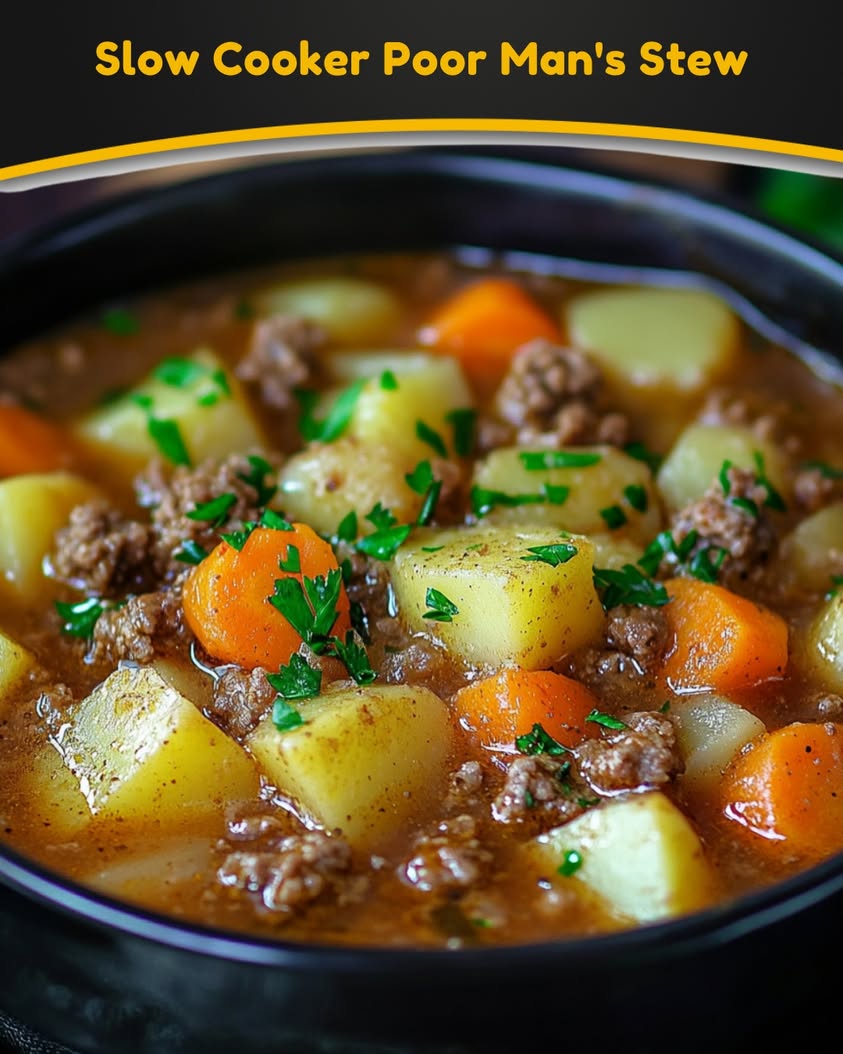
Slow Cooker Poor Man’s Stew: A Hearty Meal for Budget-Friendly Dining
If you’re looking for a warm and hearty meal that won’t break the bank, look no further than Slow Cooker Poor Man’s Stew. This comforting dish is packed with beneficial nutrients and flavors that will satisfy your hunger and warm your soul. The beauty of this recipe lies in its simplicity; you can utilize affordable ingredients, making it an excellent option for families or anyone aiming to eat well on a budget. The slow cooker ensures that the ingredients meld beautifully, creating a stew that is rich in flavor and satisfying to the palate.
The tender chunks of meat, combined with an array of fresh vegetables, simmer to perfection over several hours. Every spoonful delivers a delightful balance of savory and sweet notes thanks to the carrots, potatoes, and the secret spices that enhance the dish’s comforting essence. Not only is this stew filling, but it also invites you to gather around the dinner table, fostering warmth and conversation among loved ones.
Quick Recipe Highlights
- Flavor Profile: Expect a rich, savory flavor with hints of sweetness from the vegetables.
- Texture: This stew features tender meat, velvety potatoes, and a hearty broth that creates a fulfilling mouthfeel.
- Aroma: The stew produces a delicious aroma while cooking, with notes of herbs and roasted vegetables wafting through your kitchen.
- Visual Appeal: The vibrant colors of the veggies against the hearty broth make this dish a feast for the eyes.
- Skill Level Needed: This recipe is perfect for beginners, as it requires minimal cooking techniques and is highly forgiving.
- Special Equipment: A slow cooker is essential for achieving the best results, allowing hands-free cooking as flavors develop.
Recipe Overview
- Difficulty Level: This stew is easy to make, with no complicated steps, making it ideal for novice cooks.
- Category: It fits perfectly within the comfort food category, cherished for its wholesome qualities.
- Cuisine: The recipe has roots in traditional American cooking, often inspired by the need for resourceful meal solutions.
- Cost: Ingredients are generally inexpensive, making this dish affordable for large families or meal-preppers.
- Season: This stew shines during the fall and winter months when cozy dishes are preferred for their warmth.
- Occasion: It’s suitable for family dinners, potlucks, or any gathering where comfort food is cherished.
Why You’ll Love This Recipe
Slow Cooker Poor Man’s Stew is not just a dish; it’s an experience that wraps you in a warm embrace. The medley of flavors starts with the rich broth infused with spices that tickle the taste buds. It perfectly captures the essence of home cooking, making you feel nostalgic as you enjoy each hearty bite. With tender, melt-in-your-mouth meat complemented by nutritious vegetables, this dish checks all the boxes for a satisfying meal.
One of the standout features of this recipe is the convenience it offers. With minimal prep time, you can set your slow cooker and go about your day while the stew cooks to perfection. This means less hassle in the kitchen and more quality time spent with family or on your personal interests. It’s perfect for busy weeknights or lazy weekends when you still crave a fulfilling meal.
On the health front, this stew is packed with protein and essential vitamins from the assorted vegetables. It provides a balanced meal in one bowl, catering to hunger while ensuring your nutritional needs are met. With the inclusion of fiber-rich ingredients, it also helps in digestion, making it a wholesome option for everyone at the dining table.
Socially, serving up a pot of Slow Cooker Poor Man’s Stew encourages conversation and connection. The simple act of sharing a warm meal creates bonds and memories during any occasion. Your guests will appreciate the love and care that went into preparing a homemade dish, inviting the comfort of home into their experience.
Economic value cannot be overlooked; this stew showcases how you can create something delicious and substantial without overspending. By opting for budget-friendly ingredients and making use of your slow cooker, you’re able to serve a delightful meal that stretches your dollar further. It’s a testament to the idea that good food doesn’t need to be expensive.
Historical Background and Cultural Significance
Slow Cooker Poor Man’s Stew reflects the essence of resourceful cooking that emerged during times of economic hardship. Many home cooks turned to stew as a way to stretch their ingredients and feed their families without overspending. The roots of such recipes can be traced back to various cultures that appreciated the filling nature of stews, adapting them with local ingredients and herbs to create tasty and economical meals.
The cultural importance of such dishes cannot be understated. They symbolize family bonding and traditions passed down through generations. In many homes, stews are a staple, often prepared in large batches to ensure there’s enough to share. This friendly approach to cooking encourages communal dining, where everyone can gather, share stories, and enjoy the fruits of labor together.
Over the years, the Poor Man’s Stew has evolved, with cooks adapting the ingredients based on availability and personal preference. While the traditional recipe might highlight specific meats or vegetables, contemporary versions often embrace a variety of seasonal produce, reflecting new culinary trends while maintaining the heartiness of the original dish.
Regional variations of the stew can be found all around the globe. For instance, in some cultures, beans may take the center stage as the main protein source, providing an earthy flavor that complements the vegetables beautifully. This adaptation showcases how the dish connects with different eating habits and tastes, making it a versatile favorite among many.
Ingredient Deep Dive
Beginning with beef, this protein has served as a primary source of sustenance in various cultures, owing to its rich flavor profile and versatility. It provides essential amino acids crucial for muscle repair and overall health. When selecting beef for this stew, look for cuts like chuck or stew meat, which become tender when slow-cooked. To preserve quality, store beef in the coldest part of your refrigerator, and if not used within a few days, consider freezing it to extend its shelf life.
Certain vegetables, like carrots and potatoes, play an important role in this recipe, offering fiber and vitamins. Carrots add a natural sweetness and vibrant color, while potatoes contribute creaminess when cooked. When choosing potatoes, go for waxy varieties like red or new potatoes to maintain their shape during cooking. Store these vegetables in a cool, dark place to prolong freshness, and feel free to experiment with seasonal produce like parsnips or turnips for added flavor.
Common Mistakes to Avoid
- Overcrowding the pot: Adding too many ingredients can result in uneven cooking and prevent the broth from reaching its peak flavor. Stick to the recommended amounts.
- Skipping browning the meat: Not browning the meat before adding it to the slow cooker can lead to a loss of rich flavor. A quick sear enhances the overall taste.
- Using the wrong cuts of meat: Selecting lean cuts may result in a tough texture. Opt for tougher cuts that break down beautifully during cooking.
- Neglecting the seasoning: Seasoning should be adjusted throughout the cooking process. Tasting and adjusting seasoning allows for a well-balanced stew.
- Adding dairy too early: If you plan to enrich your stew with dairy, avoid adding it until the end to prevent curdling.
- Ignoring vegetable sizes: Cutting vegetables into uniform pieces ensures even cooking. Uneven sizes can lead to some becoming mushy while others stay firm.
- Cooking on high instead of low: Slow cooking is all about low, slow heat which helps build flavor and texture. Resist the urge to speed up the process.
- Not allowing enough cooking time: Stews develop their flavors over time, so avoid rushing and check on it only when the cooking time is up.
- Not letting it sit: Allowing the stew to rest a little before serving can enhance flavors, as ingredients continue to mingle.
- Not saving leftovers: This stew can taste even better the next day. Always save leftovers to enjoy throughout the week!
Essential Techniques
The slow cooking technique is paramount in this recipe, allowing flavors to meld while breaking down tougher cuts of meat. To master it, choose a suitable slow cooker setting and avoid the temptation to lift the lid too often, as this releases heat and prolongs cooking time. A visual cue to determine doneness is the tenderness of the meat; it should easily shred with a fork.
Another critical technique is proper seasoning. It’s essential to season your dish throughout the cooking process rather than in one go. Start with the base when browning the meat, then adjust as you add vegetables and broth. Taste testing at various intervals helps ensure a well-flavored stew, eliminating the guesswork.
Pro Tips for Perfect Slow Cooker Poor Man’s Stew
1. Always defer to the low setting for slow cooking. While the high setting saves time, it often sacrifices flavor development.
2. Use a combination of fresh and dried herbs to enhance flavors at different stages of cooking. Fresh herbs can be added at the end for a vibrant lift.
3. Experiment with different types of broth for a unique flavor, such as chicken, beef, or vegetable broth, based on what you have available.
4. Consider using frozen vegetables if you’re tight on time; they can still provide excellent taste and nutrition.
5. Let the stew cool completely before storing for leftovers; this prevents bacteria growth and helps maintain flavor.
6. Be patient! Stews are better the next day, as the flavors deepen and mingling continues during storage.
7. Pair with hearty bread or biscuits for an incredibly satisfying meal that rounds out the dish beautifully.
8. Lastly, adjust liquid based on ingredient freshness; sometimes, fresh vegetables may contribute additional moisture that should be accounted for.
Variations and Adaptations
Regional variations of Poor Man’s Stew can integrate spices or herbs that reflect local culinary traditions, such as adding cumin for a Southwest touch or incorporating soy sauce for an Asian flair. Seasonal adaptations could use winter squash instead of potatoes, showcasing harvest ingredients at their peak. Additionally, dietary modifications can cater to those following vegetarian, low-carb, or gluten-free lifestyles.
For flavor variations, experiment with different stocks or broth bases; for example, a spicy Chipotle broth can add a smoky zing, while a coconut milk base can introduce a South Asian influence. Texture modifications might include adding lentils for increased creaminess or utilizing brown rice for a heartier composition. Presentation can also enhance the meal, utilizing fresh herbs or a dollop of sour cream to add a pop of color on top of the stew.
Serving and Presentation Guide
To serve Slow Cooker Poor Man’s Stew, focus on the presentation to elevate the dining experience. Consider using shallow bowls that allow the stew to be the star of the meal, and top with a sprinkle of fresh parsley or chives for visual appeal. Garnishing with freshly cracked pepper or a dash of olive oil can also add an enticing finish.
Serve with crusty bread or warm rolls on the side, perfect for dipping into the rich broth. Temperature is key; aim to serve the stew warm without being boiling hot to enhance the flavors while maintaining comfort for your guests. Control the portions according to hunger levels, ensuring everyone can enjoy more if desired.
Wine and Beverage Pairing
When selecting a wine to accompany your Slow Cooker Poor Man’s Stew, consider a bold red like Cabernet Sauvignon or Merlot. These wines harmonize beautifully with the dish’s rich flavors and can complement the hearty ingredients well. Remember to serve the wine at room temperature to enhance its character.
If you prefer non-alcoholic options, consider pairing the stew with a robust iced tea or sparkling water infused with citrus. For a cozy alternative, a cup of herbal tea can add a soothing quality without overshadowing the meal. If coffee is on the table, a rich dark roast can create a delightful after-dinner pairing.
Storage and Shelf Life
To maximize freshness, store any leftover Slow Cooker Poor Man’s Stew in an airtight container in the refrigerator for up to 3-4 days. Ensure it is cooled completely before refrigerating to prevent bacteria growth. For longer-term storage, this stew freezes well; portion it into freezer-safe bags, ensuring you squeeze out excess air. It can last in the freezer for up to 3 months.
Signs of spoilage to look for include off smells or discoloration. When reheating, ensure the stew reaches a minimum internal temperature of 165°F to guarantee safe consumption. Gently reheating on the stovetop or in the microwave can help maintain texture without overcooking the ingredients.
Make Ahead Strategies
To simplify your cooking routine, consider prepping Slow Cooker Poor Man’s Stew ingredients in advance. Chop vegetables and freeze them in usable portions, allowing for a quick assembly on cooking day. You can also marinate the meat the night before for additional flavor, storing it in the fridge until ready to cook.
Additionally, consider preparing the stew in the morning and setting it to cook on low. This allows for a warm meal awaiting your return from the day’s activities. Since it can taste even better the next day, you might consider making a double batch to enjoy throughout the week or share with friends. When reheating, you can enhance freshness by adding a bit of water or broth to adjust the consistency.
Scaling Instructions
Should you want to halve or double the Slow Cooker Poor Man’s Stew recipe, adjust the ingredients in direct proportion while maintaining the same cooking time. Doubling may necessitate using a larger slow cooker to accommodate the increased volume and ensure even cooking.
For those looking to serve a smaller crowd, simply cutting the recipe in half will still yield flavorful results. Pay attention to your slow cooker’s capacity and keep an eye on the cooking time, as half portions might cook a little faster. Storing considerations also remain constant; simply follow the same guidelines regardless of how much stew you produce.
Nutritional Deep Dive
This Slow Cooker Poor Man’s Stew offers not only a satisfying meal but also a well-rounded nutritional profile. It boasts a good balance of macronutrients, including protein from the meat and healthy carbohydrates from the vegetables. This makes it an excellent choice for an energy-boosting meal.
Micronutrient analysis reveals that the stew is rich in vitamins like A and C from the carrots and potatoes, which support healthy vision and immune function, respectively. When portioned thoughtfully, this stew can be a great addition to a balanced diet, aiding in weight management due to its filling nature while being relatively low in calories compared to more processed meals.
Dietary Adaptations
For those following a gluten-free diet, be sure to check any pre-packaged broth for gluten content, or consider making your own at home. Additionally, using cornstarch or gluten-free flour can thicken the stew if desired without introducing gluten.
If you’re vegan, substitute the meat with hearty legumes like chickpeas or lentils, and use vegetable broth to maintain flavor integrity. For a low-carb version, eliminate potatoes and add cauliflower florets instead, which can mimic the texture while keeping carb counts low.
Troubleshooting Guide
If your stew has a texture that is too thick, add a splash of stock or water to reach your desired consistency. Conversely, if it’s too watery, consider cooking without the lid for the last hour to allow some liquid to evaporate and enhance flavor concentration.
In the case of flavor imbalance, taste your stew and adjust accordingly with salt, pepper, or even a dash of vinegar or citrus to brighten the flavor. Should your meat become tough, it may require more slow cooking, so try extending the cook time to allow fibers to relax and tenderize further.
Recipe Success Stories
Many community feedback stories highlight the endearing nature of Slow Cooker Poor Man’s Stew. Readers often share how this simple meal became a family tradition, with different relatives adding their own twists over time. Variations such as adding beans or unique spices have led to numerous adaptations that showcase personal creativity while maintaining the stew’s comforting roots.
Success stories often portray the stew as a failsafe choice for potlucks, where it is a crowd-pleaser among diverse palates. Readers suggest serving it alongside various accompaniments, turning it into a feast that invites engagement and conversation among guests.
Frequently Asked Questions
Can I use frozen vegetables in this recipe? Yes! Frozen vegetables are a convenient option and can be added directly to the stew without thawing. They help save prep time and still provide a nutritious element.
How do I store leftovers? Allow the stew to cool completely before transferring it to an airtight container. It can be kept in the refrigerator for up to 3-4 days or frozen for up to 3 months.
Can I add beans to the stew? Absolutely! Beans can increase protein and fiber content. If using canned beans, add them in the last 30 minutes of cooking to prevent them from becoming too mushy.
What can I serve with Poor Man’s Stew? Crusty bread, rice, or a fresh salad make excellent companions to this hearty dish, providing additional textures and flavors to complete your meal.
Is the stew spicy? The stew is not inherently spicy, but you can adjust the seasoning and add spices like red pepper flakes for added heat if desired.
Can this recipe be made on the stovetop instead of a slow cooker? Yes! You can adapt it by simmering all ingredients in a large pot over low heat for about 1.5 to 2 hours until everything is tender.
What’s the best way to thicken the stew? If you prefer a thicker stew, you can mix a bit of cornstarch with water and stir it into the stew during the last 30 minutes of cooking.
Can I use other meats instead of beef? Certainly. This recipe can be customized with different proteins, such as chicken or turkey, depending on your preference.
What if I don’t have a slow cooker? You can make the stew in a Dutch oven or a heavy pot on the stove. Just adjust the cooking time and monitor as it simmers.
How do I know when the stew is done? The stew is done when the meat is tender and easily pulls apart with a fork, and the vegetables are soft.
Additional Resources
For more delicious recipes, explore similar comfort foods like casseroles, hearty soups, and other slow cooker delights that are perfect for family dinners. Consider diving into technique guides that focus on slow cooking to enhance your skills and perfect meal timing. Ingredients like herbs and spices can have a significant impact on flavor, so familiarize yourself with their uses to elevate your dishes.
Join the Conversation
We invite you to share your experience with Slow Cooker Poor Man’s Stew! Join the community by sharing photos of your creations on social media and exchanging tips or variations you’ve tried. Reader reviews and suggestions are essential in keeping the conversation lively, paving the way for inspired adaptations and improvements.
The Recipe
Slow Cooker Poor Man’s Stew
Serves: 6
Prep Time: 15 mins
Cook Time: 6 hours
Total Time: 6 hours 15 mins
Kitchen Equipment Needed
- Slow Cooker
- Cutting Board
- Chef’s Knife
- Measuring Cups
- Measuring Spoons
Ingredients
- 2 lbs beef chuck, cut into 1-inch cubes
- 4 cups beef broth
- 3 large carrots, sliced
- 4 medium potatoes, diced
- 1 onion, chopped
- 2 cloves garlic, minced
- 2 tbsp tomato paste
- 1 tsp dried thyme
- 1 tsp paprika
- Salt and pepper to taste
Directions
- Begin by browning the beef in a skillet over medium-high heat until it’s browned on all sides.
- Transfer the beef to the slow cooker and add the chopped vegetables.
- In a bowl, mix the beef broth, tomato paste, garlic, thyme, paprika, salt, and pepper, then pour over the meat and vegetables.
- Cover and cook on low for 6-8 hours, or on high for 3-4 hours until the meat is tender and vegetables are cooked through.
- Taste, adjust seasoning if necessary, and serve warm.
Recipe Notes
- Add other vegetables like corn or green beans for variation.
- Allow the stew to cool completely before storing it in an airtight container.
- This stew can taste even better the next day!