Table of Contents
Sticky Coconut Cake (Wingko Babat) – Gluten-Free Indonesian Dessert
I remember my first bite of sticky coconut cake—wingko babat—at a tiny Indonesian café in Queens. I had just moved to New York City from Paris, and the moment that sticky, coconut-scented bar hit my tongue, I was transported back to Morocco. My mother used to make a similar confection using semolina and coconut, but the Indonesian version, with its chewy glutinous rice flour and broiled golden top, was a revelation. This easy sticky coconut cake recipe is my tribute to that moment—a gluten-free dessert that’s both humble and utterly addictive. It’s the kind of homemade coconut cake that makes you close your eyes and savor every bite.
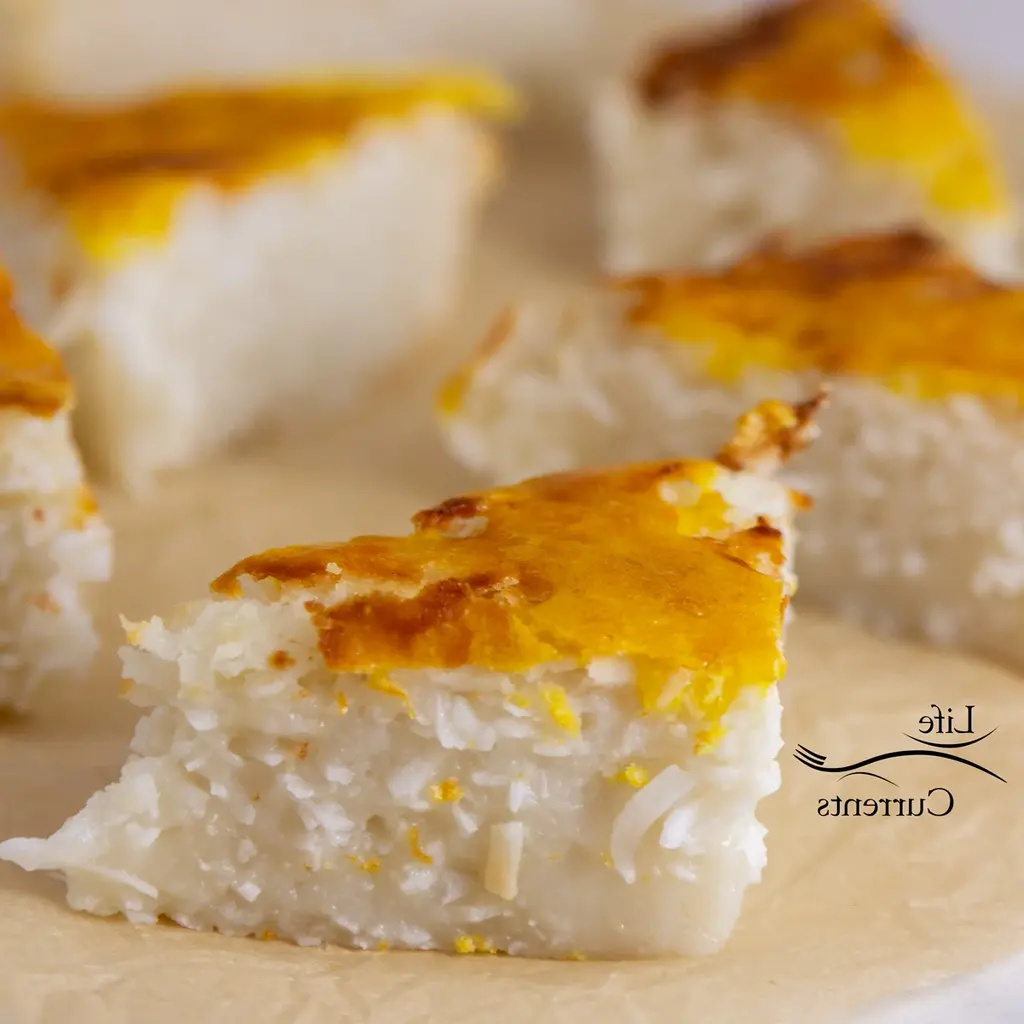
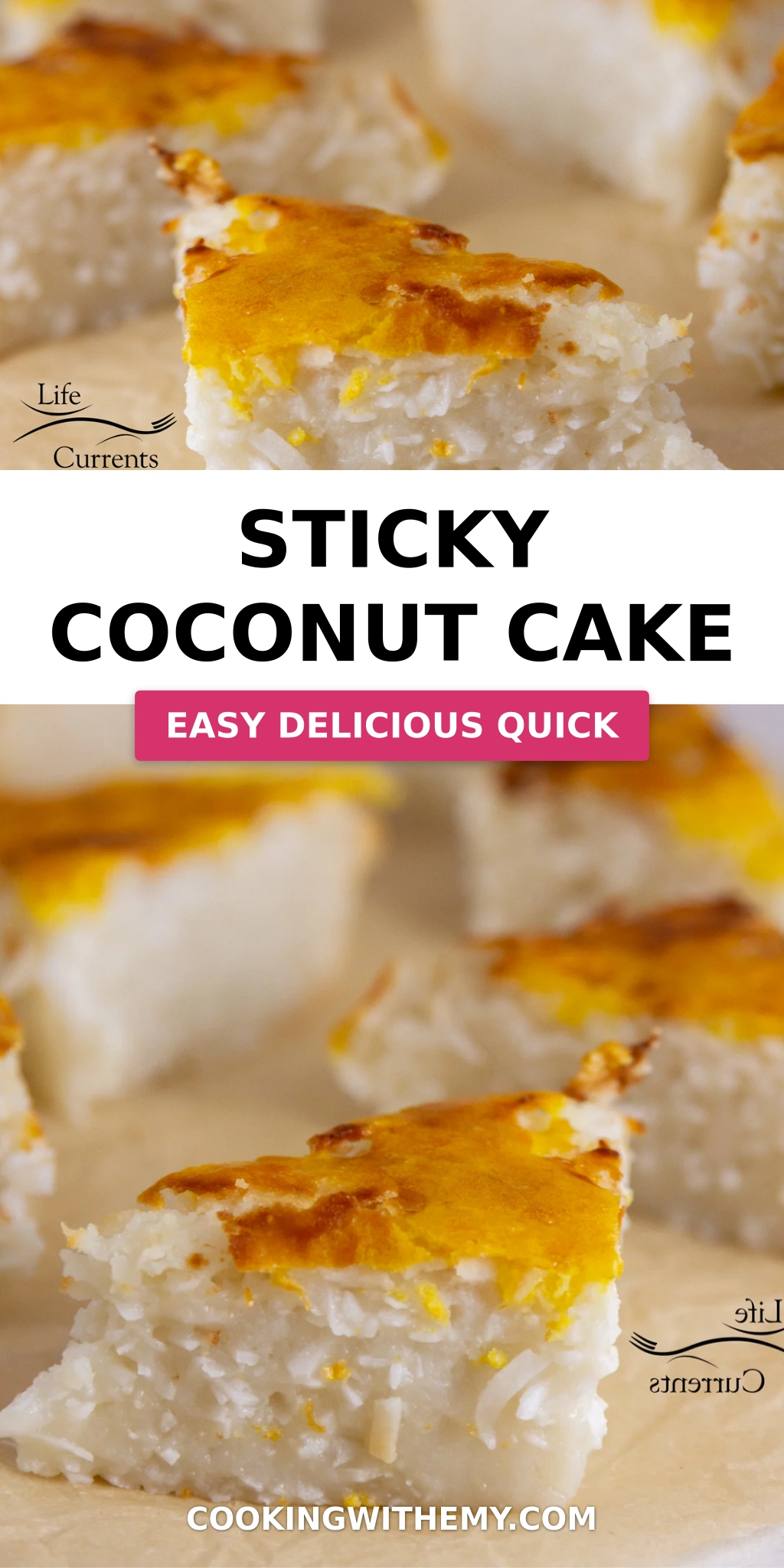
Imagine a dense, moist cake with a tender crumb and a sticky, caramelized surface from the broiled egg yolk glaze. The coconut flavor is front and center—sweet shredded coconut and rich coconut milk work together to create a tropical aroma that fills your kitchen. Each square or triangle yields to a soft, almost pudding-like interior, while the edges are just barely crisp. It’s a texture lover’s dream, and the simplicity of the ingredients—six items, most of which you probably already have—makes it a weeknight win.
I’ve tested this sticky coconut cake recipe dozens of times to make sure it’s foolproof. The key is chilling the cake overnight so it sets properly and develops that signature sticky texture. I’ll share my best pro tip to avoid a dense cake, and I’ll warn you about the one mistake that can turn your wingko babat into a soggy mess. If you’re a coconut lover, this moist coconut cake will become your new go-to dessert.
Why This Sticky Coconut Cake Recipe Is the Best
The Flavor Secret – Most wingko babat recipes are either too dry or too sweet. My version uses full-fat canned coconut milk (never light) and just the right amount of sugar to let the natural coconut shine. Growing up in Morocco, I learned that balance is everything: a pinch of vanilla extract rounds out the coconut without overpowering it. The egg yolk brushed on top before broiling adds a rich, savory note that cuts through the sweetness—a technique I picked up from a Parisian pastry chef.
Perfected Texture – Glutinous rice flour (also called sweet rice flour) is non-negotiable for that chewy, sticky crumb. I’ve tested cornstarch and regular rice flour as substitutes—they work, but the texture is noticeably less authentic. The overnight chill is crucial: it allows the starches to fully hydrate so the cake sets into a dense, sliceable block that’s still soft and tender. Skip this step and you’ll end up with a crumbly mess.
Foolproof & Fast – This easy sticky coconut cake comes together in one bowl. No electric mixer, no complicated folding. The batter is thin and liquidy—that’s normal. Just whisk, pour, bake, broil, and chill. Even if you’ve never made a gluten-free cake before, you’ll nail it on the first try. I’ve taught this to readers who had never baked from scratch, and they sent me photos of perfect wingko babat.
Sticky Coconut Cake Recipe Ingredients
I love shopping for these ingredients at my local Asian grocery in NYC’s Chinatown, where I can find glutinous rice flour in bulk. But you can grab everything at any well-stocked supermarket. A memory from Morocco: my mother would toast shredded coconut before adding it to desserts—that’s a step I sometimes add for extra depth, but this recipe keeps it simple.
Ingredients List
- 2 eggs (separated)
- 1¼ cup granulated sugar
- 2¼ cup full-fat canned coconut milk
- 3 cups shredded sweetened coconut
- 1½ cup glutinous rice flour (also called sweet rice flour or mochiko)
- 1 teaspoon vanilla extract
Ingredient Spotlight
Glutinous Rice Flour – This is the backbone of the cake. Despite its name, it’s gluten-free (glutinous refers to the sticky texture, not gluten). You can find it in the Asian aisle or online. Substitution: a 1:1 gluten-free all-purpose flour blend works, but the cake will be less chewy and more cake-like.
Full-Fat Canned Coconut Milk – Do not use light coconut milk or coconut cream. The fat content is essential for moisture and richness. If you only have coconut cream, dilute it with water (3 parts cream to 1 part water).
Shredded Sweetened Coconut – Unsweetened coconut will result in a less sweet cake; if you use it, increase sugar by ¼ cup. For the best texture, avoid desiccated coconut (too fine) and use the standard shreds found in the baking aisle.
| Original Ingredient | Best Substitution | Flavor / Texture Impact |
|---|---|---|
| Glutinous rice flour | 1:1 gluten-free all-purpose flour | Less chewy, more cake-like; still good |
| Full-fat coconut milk | Coconut cream + water (3:1) | Slightly richer, still works |
| Sweetened shredded coconut | Unsweetened shredded coconut + ¼ cup extra sugar | Adjust sweetness; texture unchanged |
| Eggs | Flax eggs (2 tbsp flaxmeal + 6 tbsp water) | Slightly less structure; still binds |
How to Make Sticky Coconut Cake – Step-by-Step
Don’t let the overnight chill intimidate you! The hands-on time is only about 15 minutes, and the results are so worth it. Follow these steps carefully, and you’ll have a perfect moist coconut cake every time.
Step 1: Prepare the Batter
Preheat your oven to 350°F. In a medium mixing bowl, whisk the egg whites and granulated sugar together until well combined and slightly frothy. No need to beat until stiff; just dissolve the sugar. Slowly pour in the coconut milk, shredded coconut, glutinous rice flour, and vanilla extract. Stir until everything is evenly mixed and no lumps of coconut or flour remain. The batter will be thin and liquidy—that’s exactly what you want.
💡 emy’s Pro Tip: To avoid lumps, whisk the flour into the liquid gradually and use a silicone spatula to break up any clumps of shredded coconut. A quick blitz with an immersion blender can save you if you see lumps.
Step 2: Bake the Cake
Pour the batter into an 8×8-inch baking pan lined with parchment paper (or greased). Bake for 45 minutes. The cake will look set around the edges but still slightly jiggly in the center. It should be pale golden on top. Don’t overbake; the residual heat will continue cooking as it cools.
⚠️ Common Mistake to Avoid: Opening the oven door too often. The temperature drop can cause the cake to sink or become dense. Trust the timer and peek only once near the end.
Step 3: Broil the Top
Carefully remove the pan from the oven. Using a pastry brush, brush the reserved egg yolks evenly over the surface of the hot cake. Switch your oven to broil (high) and place the pan on the top rack. Broil for 5–10 minutes, watching constantly. The top should turn a deep golden brown with some darker spots. Take it out the moment it’s golden—burnt sugar turns bitter.
💡 emy’s Pro Tip: If your broiler runs hot, rotate the pan halfway through for even browning. You can also use a kitchen torch to get a more controlled caramelized surface.
Step 4: Cool and Chill
Set the pan on a wire rack and let it cool completely to room temperature. Then wrap the pan tightly with plastic wrap and refrigerate for at least 8 hours, preferably overnight. This step is mandatory—it allows the cake to set into a firm yet tender block that can be cut cleanly into squares or triangles.
⚠️ Common Mistake to Avoid: Rushing the chill time. If you cut the cake after only 2–3 hours, it will be too soft and sticky to slice neatly. Patience pays off!
| Step | Action | Duration | Key Visual Cue |
|---|---|---|---|
| 1 | Prepare batter | 5 min | Thin, liquid, no lumps |
| 2 | Bake | 45 min | Set edges, jiggly center |
| 3 | Broil | 5–10 min | Deep golden brown top |
| 4 | Cool & chill | 8 hrs–overnight | Firm, sliceable, sticky |
Serving & Presentation
This moist coconut cake shines when served cold or at room temperature. I love to cut it into triangles, just like my Moroccan mother would slice baklava, and arrange them on a wooden board. A dusting of toasted coconut flakes on top adds extra crunch and visual appeal. For a NYC brunch twist, serve it alongside a bowl of fresh tropical fruit—mango, papaya, or dragon fruit—and a dollop of coconut yogurt.
If you’re feeling nostalgic for Indonesia, pair it with a cup of strong black tea or a creamy iced latte. The sweetness of the cake balances bitterness beautifully. When I lived in Paris, we’d enjoy such treats with a tiny espresso; the contrast is sublime.
| Pairing Type | Suggestions | Why It Works |
|---|---|---|
| Side Dish | Fresh mango slices, grilled pineapple, coconut panna cotta | Bright acidity cuts richness |
| Sauce / Dip | Coconut caramel, chocolate ganache, lime syrup | Adds moisture and flavor contrast |
| Beverage | Hot black tea, iced latte, espresso, coconut water | Balances sweetness; cleanses palate |
| Garnish | Toasted coconut flakes, edible flowers, mint leaves | Adds texture and visual pop |
Make-Ahead, Storage & Reheating
This cake is a meal-prep dream. As a busy NYC blogger, I often bake it on Sunday, let it chill overnight, and slice it on Monday for the week ahead. The sticky texture actually improves after a day in the fridge.
| Method | Container | Duration | Reheating Tip |
|---|---|---|---|
| Refrigerator | Airtight container | Up to 5 days | Serve cold; don’t reheat |
| Freezer | Wrap tightly in plastic + foil | Up to 3 months | Thaw in fridge overnight; serve cold |
| Make-Ahead | Bake, cool, chill in pan | Up to 2 days in advance | Slice just before serving |
I don’t recommend reheating this cake—it’s best enjoyed cold or at room temperature. The fridge firmness is part of its charm. If you prefer a softer texture, let it sit out for 15 minutes before eating. The sticky, moist interior stays wonderful for days.
Variations & Easy Swaps
| Variation | Key Change | Best For | Difficulty Impact |
|---|---|---|---|
| Pandan Infusion | Add 1 tsp pandan extract + a few drops green food coloring | Aromatic twist; beautiful color | No change |
| Vegan Version | Use flax eggs (2 tbsp flaxmeal + 6 tbsp water) and skip egg yolk glaze; brush with melted coconut oil | Fully plant-based | Slightly less sticky top |
| Chocolate Swirl | Melt ½ cup dark chocolate chips and swirl into batter before baking | Decadent dessert | Minimal extra effort |
Pandan Infusion
Pandan, the “vanilla of Southeast Asia,” pairs beautifully with coconut. I discovered it at a Thai market in Elmhurst, Queens. Add a teaspoon of pandan extract and a drop of green food coloring to the batter. The resulting cake has a floral, grassy aroma that elevates the whole dessert. It’s a hit at parties—guests always ask what that mysterious flavor is.
Vegan Version
For a plant-based take, replace the eggs with flax eggs. The texture will be slightly less firm, but still delicious. Skip the egg yolk glaze and brush the top with melted coconut oil before broiling—it won’t be as sticky, but it will still brown beautifully. I tested this for a friend’s vegan wedding shower and it disappeared in minutes.
Chocolate Swirl
A chocolate-coconut combination that my Parisian pastry chef mentor would approve. Melt ½ cup of dark chocolate chips with a tablespoon of coconut oil, then gently swirl it into the batter with a knife before baking. The chocolate pockets create a delightful contrast against the sweet coconut. I love using a single-origin chocolate from a Brooklyn roaster.
FAQ
How do you make a sticky coconut cake without it being too dense?
The key to avoiding a dense sticky coconut cake is not overmixing the batter and using the correct ratio of liquid to flour. Whisk just until the ingredients are combined—overworking the glutinous rice flour can make the cake heavy. Also, make sure your coconut milk is full-fat; light coconut milk adds too much water, which can lead to a gummy, dense texture. Finally, don’t skip the overnight chill; it allows the starches to relax and the cake to set into a tender, sliceable block. If your cake turns out dense, you may have used too much glutinous rice flour or not enough coconut milk.
Can I substitute coconut milk for coconut cream in a sticky coconut cake?
Yes, you can substitute coconut cream for coconut milk, but you’ll need to adjust the liquid. Coconut cream is thicker and richer than coconut milk. If using full-fat coconut cream, dilute it with water in a 3:1 ratio (3 parts cream to 1 part water) to mimic the consistency of coconut milk. Using straight coconut cream without dilution will yield a very rich, almost fudgy cake that may not set as well. The resulting texture will be denser and more decadent—some people love that, so feel free to experiment!
What is the best way to store sticky coconut cake to keep it moist?
The absolute best way to store sticky coconut cake is in an airtight container in the refrigerator. Because of the high coconut content, the cake stays moist for up to five days. I recommend keeping it in the same pan you baked it in, covered tightly with plastic wrap, then a layer of foil. If you’ve already sliced it, place a piece of parchment paper between layers to prevent sticking. Do not leave it at room temperature for more than 2 hours, as the moisture can cause mold. To keep it extra moist, you can brush the cut sides with a little coconut milk before storing.
How long does sticky coconut cake need to cool before serving?
After baking and broiling, the cake must cool completely to room temperature in the pan on a wire rack—this takes about 1 to 1½ hours. Then it needs to chill in the refrigerator for at least 8 hours, ideally overnight. This long cooling and setting period is essential for the cake to firm up so you can slice it cleanly. If you try to serve it after only a couple hours of chilling, the cake will be too soft and sticky. Patience is the secret to perfect sticky coconut cake.
What is Wingko Babat?
Wingko Babat is a traditional Indonesian gluten-free cake made primarily from glutinous rice flour and coconut. It originates from the Babat region in East Java, Indonesia. The cake has a dense, chewy, and sticky texture similar to mochi, with a rich coconut flavor. It is typically baked until golden and then cut into small squares or diamonds. Wingko Babat is often enjoyed as a snack or dessert, sometimes served warm with a cup of tea. This recipe is a classic version, but many variations exist across Indonesia.
Can I use regular rice flour instead of glutinous rice flour?
I strongly recommend against substituting regular rice flour for glutinous rice flour in this sticky coconut cake. Regular rice flour (from standard white rice) has a different starch composition—it will produce a crumbly, dry cake rather than the characteristic chewy, sticky texture. Glutinous rice flour (also called sweet rice flour or mochiko) is essential for the authentic wingko babat texture. If you cannot find it, you can try a 1:1 gluten-free all-purpose flour blend, but the result will be more like a tender cake than a sticky, dense dessert.
Can I make sticky coconut cake dairy-free?
Yes, this sticky coconut cake is naturally dairy-free! The only animal product in the original recipe is eggs. For a vegan version, you can use flax eggs (2 tablespoons ground flaxseed mixed with 6 tablespoons water, let sit for 5 minutes) and skip the egg yolk glaze. Brush the top with melted coconut oil instead before broiling. The cake will still be moist and delicious, though slightly less firm. All other ingredients—coconut milk, shredded coconut, glutinous rice flour, sugar, and vanilla—are dairy-free. Perfect for those with lactose intolerance or a vegan lifestyle.
How can I tell when the sticky coconut cake is fully baked?
After 45 minutes at 350°F, the cake should be set around the edges and look firm, but the center will still jiggle slightly when you gently shake the pan. The surface will be pale golden. Insert a toothpick near the center—if it comes out with moist crumbs or clean (not wet batter), the cake is done. Don’t overbake, because the cake continues to cook as it cools. The true test of doneness happens after the overnight chill: the cake should be firm enough to slice cleanly but still tender and sticky. The broiled top should be deep golden brown with a slight caramelization.
Can I add toppings or mix-ins to sticky coconut cake?
Absolutely! This cake is a wonderful base for customization. For a tropical twist, fold in ½ cup of toasted macadamia nuts or dried mango pieces before baking. Chocolate chips (dark or white) create a decadent version. If you like a little heat, add a pinch of cayenne or ginger to the batter. For a crunchy top, sprinkle extra shredded coconut or sesame seeds over the batter right before baking. Just be careful not to overload the batter—too many mix-ins can affect how the cake sets. Stick to about ½ cup additions for the best results.
Why is my sticky coconut cake too dry on the edges?
Dry edges are usually a sign of overbaking. Every oven runs a little differently—check your cake at the 40-minute mark. If the edges are already browning too much, tent the pan loosely with foil for the remaining bake time. Also, make sure your baking pan is the correct size (8×8-inch). A larger pan will spread the batter thinner, causing it to bake faster and dry out. If the issue persists, try reducing the oven temperature to 325°F and baking a few minutes longer. The high fat content of coconut milk helps keep the interior moist, but the edges are always more exposed.
Share Your Version!
I’d love to see your sticky coconut cake creations! Did you try the pandan version? Or maybe you added a chocolate swirl? Drop a comment below with your tweaks, and don’t forget to leave a star rating if this recipe made you smile. Tag me @cookingwithemy on Instagram or Pinterest when you bake it—I always repost my favorites.
From my NYC kitchen to yours — I hope this recipe brings as much warmth to your table as it does to mine. — emy 🧡
Love This Recipe? Save It to Pinterest!
If you enjoyed this Sticky Coconut Cake recipe, don’t let it get lost in your browser tabs! 😄 Pin it now so you can find it again anytime — and explore hundreds more tried-and-tested recipes waiting for you on my Pinterest boards.
👉 Follow emy on Pinterest @cookingwithemy
📌 Pin this recipe · 🔁 Re-pin your favorites · 💬 Tag me when you make it — I love seeing your creations!
Did you make this? I’d love to hear how it turned out! Leave a comment below or tag @cookingwithemy on social media. Your feedback helps me create more recipes you’ll love. 🧡
Sticky Coconut Cake
Description
This gluten free Indonesian Sticky Coconut Cake (Wingko Babat) is a coconut filled dessert snack thats easy to make and so delicious! Its simply a must make for coconut lovers. And, its super easy to make too!
Ingredients
- 2 eggs (separated)
- 1¼ cup granulated sugar
- 2¼ cup full fat canned coconut milk
- 3 cups shredded sweetened coconut
- 1½ cup glutinous rice flour
- 1 teaspoon vanilla extract
Instructions
- Preheat oven to 350° F.
- Whisk the egg whites and the sugar together in a medium bowl. Slowly mix in the coconut milk, shredded coconut, rice flour, and vanilla. Make sure that all the ingredients are well combined and that there are no lumps of coconut. The batter will be thin and liquidy.
- Pour the batter into an 8×8-inch baking pan and bake it in the preheated 350° F oven for 45 minutes.
- Carefully take out the pan and brush the egg yolks on top of the cake. Set the oven to broil and broil the cake for 5-10 minutes. Keep a close eye on it, as it will brown quickly, and take it out when the turns golden brown.
- Set the cake in the pan on a wire rack to cool completely to room temperature. Then, place the cake in the pan, covered with plastic wrap, in the fridge overnight or for 8 hours before cutting and serving, to ensure that the cake has set. Cut cake into squares or triangles, and serve cold from the fridge or at room temperature.
Nutrition
- Calories: 268 kcal
- Sugar: 15 g
- Fat: 17 g
- Carbohydrates: 29 g
- Protein: 3 g
Tried This Recipe? Leave a Comment!
Did you make this recipe? I’d love to hear how it turned out! Please leave a comment and a rating below. Your feedback helps other home cooks and supports cheerychop.com!
For more delicious inspiration, follow me on Pinterest!