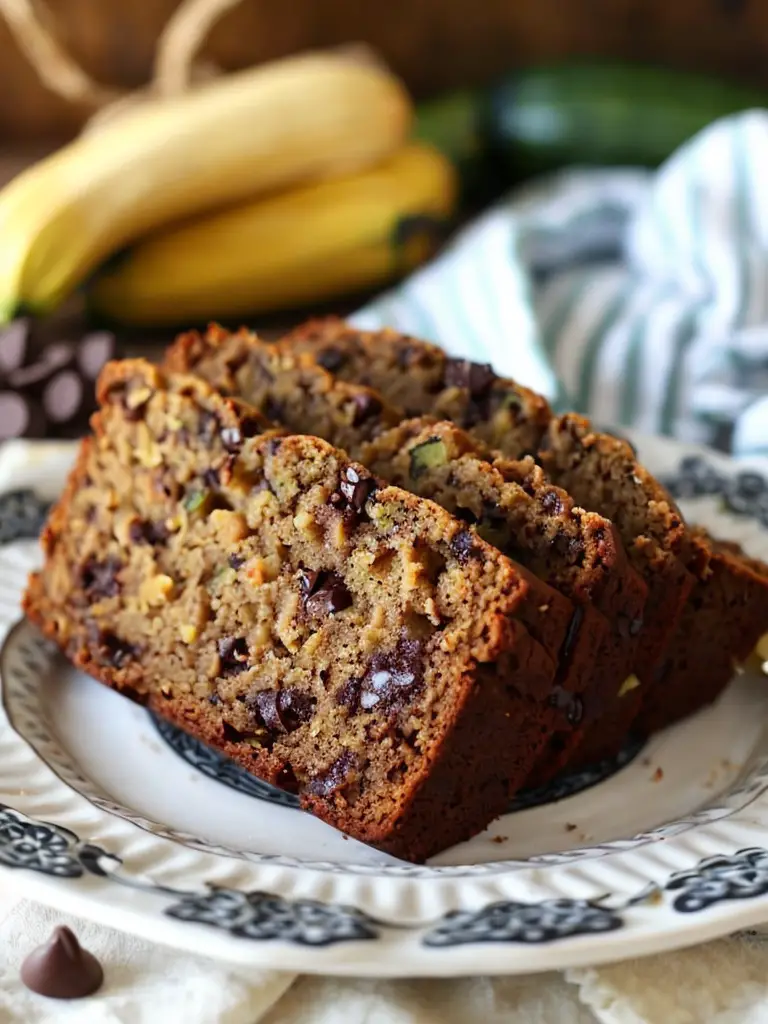
Deliciously Moist Chocolate Chip Zucchini Banana Bread Recipe

Decadent Chocolate Chip Zucchini Banana Bread: A Deliciously Unique Treat

⚖️
Difficulty
Easy

⏲️
Prep Time
15 mins

🕒
Cook Time
50 mins

⏱️
Total Time
65 mins

🍽️
Servings
8 slices

Chocolate Chip Zucchini Banana Bread is a wonderfully moist and rich treat that amalgamates the sweetness of ripe bananas with the subtle earthiness of zucchini, all intertwined with luxurious chocolate chips. This scrumptious quick bread is not just a fantastic way to use up those overripe bananas and an abundance of summer zucchinis; it also provides a delightful flavor profile that pleases both kids and adults alike. Imagine a warm slice fresh from the oven, the decadent chocolate melding perfectly with the soft, tender crumb—this is the epitome of comfort food.

The joy of baking this Chocolate Chip Zucchini Banana Bread goes beyond the taste. Your kitchen will be filled with an inviting aroma that beckons anyone nearby. The combination of cinnamon and vanilla adds depth to the smell, making it irresistible. Plus, the vibrant flecks of zucchini peeking through the sweet, golden-brown crust provide a visually appealing touch that will entice friends and family to grab a slice. It’s perfect for breakfast, an afternoon snack, or even as a delicious dessert after dinner.

Quick Recipe Highlights

  • Flavor Profile: This bread has a delightful sweetness from the ripe bananas and a subtle earthiness from the zucchini, all balanced beautifully by rich chocolatey notes.
  • Texture: Moist and fluffy with a tender crumb, the bread offers a satisfying contrast to the semi-melted chocolate chips throughout.
  • Aroma: Inviting scents of baked banana, cinnamon, and chocolate fill the air, creating a warm and homey atmosphere.
  • Visual Appeal: The dark chocolate chips glisten against the golden-brown crust, while the flecks of green from the zucchini add color.
  • Skill Level Needed: An easy recipe, perfect for beginner bakers, requiring basic mixing and baking techniques.
  • Special Equipment: A mixing bowl, loaf pan, and a simple whisk are all you need to create this delicious loaf.

Recipe Overview

  • Difficulty Level: This Chocolate Chip Zucchini Banana Bread is an easy recipe that is great for novice bakers. The steps are straightforward, making it accessible for anyone keen to whip up a delightful loaf.
  • Category: Ideal for breakfast or snacks, this recipe falls into the quick bread category, which is versatile and perfect for any time of day.
  • Cuisine: This bread is a beautiful fusion of American baking traditions, leveraging common ingredients found in many households, particularly in the summer when zucchinis are abundant.
  • Cost: Estimated at a budget-friendly price, this recipe includes staple ingredients like flour, sugar, and zucchini, making it easy to enjoy without breaking the bank.
  • Season: Best enjoyed during summer and fall when zucchinis are fresh, it’s a great way to celebrate seasonal produce.
  • Occasion: This delightful bread works wonderfully for brunch, picnics, or casual gatherings, and it’s a perfect homemade gift.

Why You’ll Love This Recipe

The appeal of Chocolate Chip Zucchini Banana Bread lies in its incredible taste and deceptive health benefits. By integrating zucchini, this bread adds an extra layer of moisture without overwhelming sweetness, making each slice not only indulgent but deceptively nutritious. The chocolate offers a delightful contrast of richness, ensuring that every bite is both satisfying and enjoyable.

In terms of convenience, this recipe can be made in just over an hour, allowing busy individuals or families to prepare a wholesome snack quickly. The ease of mixing and baking means you can involve kids in the kitchen, making it a fun family activity that results in a delicious reward for everyone.

From a nutritional standpoint, this recipe packs in the benefits of bananas and zucchini, rich in potassium, vitamins, and fiber. This loaf is an excellent option for breakfast or a snack, providing not just energy but also vital nutrients to fuel your day.

Socially, nothing beats sharing a freshly baked loaf with friends and family. This Chocolate Chip Zucchini Banana Bread is perfect for sharing at gatherings, bringing people together over a slice of homemade joy and creating memorable experiences.

Lastly, it’s a cost-effective recipe that utilizes pantry staples and leftover produce. This not only minimizes food waste but offers a delectable treat without needing specialty ingredients that can often be costly.

Historical Background and Cultural Significance

Bread has been an essential part of cuisines worldwide, but the specific history of quick breads, like this Chocolate Chip Zucchini Banana Bread, is particularly fascinating. Quick breads emerged around the time baking powder and baking soda became commonly used in the late 19th century. These leavening agents allowed home bakers to create light and airy breads without the lengthy fermentation processes associated with traditional yeast bread.

Zucchini bread traces its origin back to the times when gardeners sought to use up their abundant summer harvests. Combining this vegetable with bananas not only enhanced the flavor but also contributed moisture to the dough, allowing it to remain tender and delicious. The integration of sweet and savory ingredients Create an unexpected but delightful flavor profile that has endured over the years.

As this recipe evolved, various iterations have appeared worldwide, reflecting local preferences and available ingredients. For instance, in some cultures, spices such as nutmeg or cardamom might be added, highlighting regional variations in flavor profiles.

In contemporary communities, the adaptation of this recipe to include chocolate has made it a favorite for dessert lovers, linking generations through the joy of sweet treats. The cultural importance of sharing homemade goods with family remains strong, emphasizing connection and nurturing through food.

Ingredient Deep Dive

Bananas

Bananas are a staple fruit known for their rich flavor and versatility. Originating from Southeast Asia and now popular worldwide, they are celebrated for their creamy texture and natural sweetness. In baking, particularly for this Chocolate Chip Zucchini Banana Bread, ripe bananas lend moisture and sweetness, reducing the need for additional sugar.

Nutritionally, bananas are an excellent source of potassium, vitamin C, and dietary fiber, which contribute to heart health and digestion. When selecting bananas, look for ones that are heavily speckled with brown for optimal sweetness. They can be stored at room temperature until ripe, after which refrigeration can prolong their life, though the skin may darken. If you need a substitute, unsweetened applesauce works well to maintain moisture.

Zucchini

Zucchini, a summer squash, is famed for its mild flavor and versatility in both savory and sweet dishes. It has its origins in Central America and has morphed into favorites across various cuisines. Its inclusion in baked goods, such as this Chocolate Chip Zucchini Banana Bread, provides moisture without adding calories, making it an excellent addition for healthier recipes.

Nutritional benefits of zucchini include vitamins A and C, as well as numerous antioxidants. When selecting zucchini, choose firm ones with shiny skin and a vibrant color. They can be stored in the refrigerator for a week or so. For substitutes, you can utilize shredded yellow squash or pureed pumpkin, though the latter will yield a different taste.

Chocolate Chips

Chocolate chips are a delightful addition to many baked goods, adding an indulgent touch that elevates the recipe. Originating in the United States in the 1930s, chocolate chips quickly became a pantry staple, especially for cookies and sweet bread.

Beyond flavor, chocolate adds antioxidants and can elevate mood thanks to its chemical components. When choosing chocolate chips, opt for semi-sweet or dark varieties, which tend to have richer flavors. Store them in a cool, dry place, and they can last for months. For substitutions, feel free to use chopped chocolate bars or even white chocolate for a different flavor.

Common Mistakes to Avoid

  • Overmixing the batter: Mixing too much can result in tough bread. Stir until just combined for the best texture.
  • Using unripe bananas: Ensure bananas are fully ripe to maximize sweetness and moisture in the bread.
  • Not draining excess moisture from zucchini: Squeeze out excess liquid before adding to the batter; otherwise, the bread may become soggy.
  • Incorrect oven temperature: Always preheat your oven for consistent baking results, as an unheated oven may affect the rise.
  • Not testing for doneness: Use a toothpick inserted in the center to check if it comes out clean; underbaking could lead to a gooey center.
  • Skipping parchment paper: Even if greasing, parchment paper ensures easy removal and avoids sticking.
  • Not letting it cool completely: Allow the bread to cool in the pan before transferring to a wire rack to prevent a wet or gummy texture.
  • Ignoring ingredient temperature: Room-temperature ingredients mix better and contribute to the bread’s overall rise and texture.
  • Cutting into the bread too soon: Allow the loaf to cool to set the texture perfectly; cutting too early can result in crumbling.
  • Replacing ingredients randomly: Make sure to use substitutes that match the properties of the original ingredients to achieve desired results.

Essential Techniques

Mixing the Batter

Proper mixing ensures a tender loaf. Mix wet ingredients separately from dry ingredients to prevent overmixing. Combine both gently until just incorporated; this method minimizes gluten development, yielding a soft texture. Look for visual cues, like a slightly lumpy batter, indicating it’s ready for the oven.

Measuring Ingredients

Accurate ingredient measurements are crucial for success. Use a kitchen scale or proper measuring cups to ensure precision, especially with flour. Spoon flour into the cup and level it off gently. Improper measurements can cause alterations in texture and flavor.

Squeezing Zucchini

To prevent overly moist batter, squeezing excess liquid from shredded zucchini is essential. Use a clean dish towel or cheesecloth, and press until mostly dry. This step helps maintain the right moisture balance in your bread.

Oven Thermometer Use

Using an oven thermometer can help ensure your oven heats accurately. Many ovens can be off by significant degrees, leading to under- or over-cooked bread. Use this tool for the best baking results; your baked goods will always come out perfect.

Pro Tips for Perfect Chocolate Chip Zucchini Banana Bread

1. For extra flavor, add a teaspoon of vanilla extract or a sprinkle of cinnamon to the batter.
2. Experiment with different types of chocolate chips, such as dark, milk, or even white chocolate, for varied flavor profiles.
3. Add nuts, such as walnuts or pecans, for added texture and nutty flavors.
4. Use a combination of whole wheat flour and all-purpose flour for a healthier twist.
5. If the zucchinis are abundant, double the recipe and freeze one loaf for later!
6. To enhance moisture, try adding a few tablespoons of yogurt or sour cream to the batter.
7. If you like crunch, sprinkle some oats or granola on top before baking.
8. Top your warm loaf with a dusting of powdered sugar for a beautiful finish!

Variations and Adaptations

For a seasonal summer twist, consider adding fresh blueberries to your Chocolate Chip Zucchini Banana Bread. The burst of juicy fruit pairs beautifully with the rich chocolate and complements the banana flavor. During fall, a touch of nutmeg and chopped pecans could give it a delightful autumn feel.

For health-conscious eaters, make it gluten-free by substituting all-purpose flour with gluten-free blends tailored for baking. Dairy-free options exist as well—using coconut oil in place of butter creates a delightful flavor and moist texture without dairy.

If someone prefers a lower-sugar option, opt for dark chocolate chips or even sugar alternatives for a lighter take. For a unique texture upgrade, consider swirling in cream cheese batter before baking for a deliciously decadent marble effect.

Presentation is key! Serve in muffin tins for perfect individual portions or slice and package as gifts for friends and family, topped with homemade fruit preserves.

Serving and Presentation Guide

When serving Chocolate Chip Zucchini Banana Bread, consider slicing it into thick pieces for a rustic look, or opt for slender slices for a more refined presentation. A dusting of powdered sugar on top adds charm and brightness, enhancing its visual appeal.

Garnishing with fresh mint leaves can bring a splash of color and freshness, while a dollop of whipped cream or a scoop of vanilla ice cream elevates it to a decadent dessert. For an elegant touch, serve it on a wooden board with a selection of gourmet jams and butter, inviting guests to create their combinations.

Temperature matters! Serve this bread warm or at room temperature. Storing it in a beautifully wrapped cloth can keep it fresh and inviting, and ensure guests can easily help themselves.

Wine and Beverage Pairing

Pairing wines with chocolate desserts can be delightful. A fruity Pinot Noir nicely complements the rich flavors of chocolate while balancing the sweetness of bananas. Alternatively, a sparkling wine like Prosecco could add a refreshing contrast.

For non-alcoholic options, consider pairing with a spiced chai tea or a rich dark hot chocolate to enhance the chocolatey experience. Fresh fruit juices or mocktails can also serve as fantastic refreshers.

When serving iced beverages, ensure they are chilled but not overly cold to avoid overpowering the bread’s warm, comforting flavors. For coffee aficionados, a warm mug of fresh brewed coffee, particularly a smooth latte, harmonizes exceptionally well with the dessert-like qualities of the bread.

Storage and Shelf Life

To maximize freshness, store Chocolate Chip Zucchini Banana Bread in an airtight container at room temperature. It can last up to four days; however, for longer shelf life, refrigeration is an option, extending it to about a week.

For freezing, wrap slices individually in plastic or aluminum foil and place them in a zip-lock freezer bag. This method retains moisture and flavor for up to three months. To thaw, simply let them sit at room temperature or microwave briefly for warmth.

Signs of spoilage include an off smell or mold growth. If you notice any, it is best to discard the loaf. Proper reheating methods involve using an oven at low temperatures or the microwave to gently warm without drying it out.

Make Ahead Strategies

You can easily prepare the ingredients for Chocolate Chip Zucchini Banana Bread in advance. Pre-grate zucchini and store it in the refrigerator for up to two days before use. Likewise, you can mash bananas and combine with other wet ingredients ahead of time.

Make batter the night before and refrigerate it, covering the bowl tightly. Just remember to bring it back to room temperature before baking, as cold batter may affect the rise. This way, you can enjoy freshly baked bread in the morning with minimal effort.

For added convenience, consider prepping and storing dry ingredients in a mason jar. It makes the process even faster the day you decide to bake. Just pour the contents into a bowl, mix in your wet ingredients, and you’re ready to bake!

Scaling Instructions

If you need to halve the recipe, simply divide all the ingredient quantities in two. It’s that simple! Be careful when adjusting baking times; check for doneness a few minutes earlier than indicated.

Doubling or tripling the recipe is entirely feasible, especially for gatherings. Use larger mixing bowls and ensure you have ample baking space. Be wary, as larger batches may require a more extended baking time, so watch carefully and do the toothpick test for doneness.

When scaling up, consider the size and type of your baking dish; a larger loaf pan will require a longer baking time compared to smaller ones. Adjust accordingly, and be patient as your delicious creation bakes to perfection.

Nutritional Deep Dive

A piece of Chocolate Chip Zucchini Banana Bread is a delicious way to gather essential nutrients. Each slice typically contains a healthy balance of macro and micronutrients, primarily due to bananas and zucchini, which provide vitamins A and C, potassium and fiber essential for digestion.

On the macro level, this bread offers carbohydrates for energy, while the fats from chocolate chips provide a small dose of healthy fats when made with higher cocoa content chocolate. Additionally, using whole wheat flour adds dietary fiber, which assists with digestion and maintaining a healthy diet.

When considering portion sizes, one slice is satisfying enough due to its rich flavors. For those managing weight, enjoying this bread in moderation is key; enjoying a slice can fit perfectly into an otherwise balanced diet without compromising indulgence.

Dietary Adaptations

Chocolate Chip Zucchini Banana Bread can easily be tailored to fit various dietary needs. For a gluten-free option, opt for gluten-free flour blends that closely mimic traditional all-purpose flour to ensure the right texture in your bread.

Dairy-free diets can benefit from using coconut oil instead of butter, providing a delightful coconut flavor while maintaining moisture. Substituting the chocolate for dairy-free varieties is another essential step for those avoiding dairy.

For a vegan version, replace eggs with flaxseed meal mixed with water, or opt for ripe bananas, as they act as a binder, adding flavor and moisture. Maple syrup can replace sugar to increase sweetness while keeping the recipe vegan-friendly.

Low-carb or keto adaptations can be made by substituting all-purpose flour with almond flour and reducing or replacing sugars with low-carb sweeteners. Each modification can be achieved while still enjoying a delectable bread.

Troubleshooting Guide

If your Chocolate Chip Zucchini Banana Bread doesn’t rise as expected, check to ensure your baking powder is fresh, as expired leavening agents can hinder the rising process. Overmixing can also create dense bread; use gentle folding techniques instead of vigorous mixing.

Flavor balance issues can arise from using unripe bananas; always ensure bananas are adequately ripened for optimal sweetness. For overly sweet bread, consider cutting sugar next time or adding a pinch of salt.

Temperature problems often result from inconsistent oven heat. An oven thermometer can help ensure proper baking temperature. If your bread is browning too quickly, use aluminum foil to tent over the top.

Ingredient substitutions require the right adjustments. For example, if using whole wheat flour, a bit more moisture may be necessary. Adjusting wet ingredients accordingly can prevent drying or dense textures.

Recipe Success Stories

Readers consistently rave about their experiences making Chocolate Chip Zucchini Banana Bread, sharing joy in its easy preparation and delicious results. Many report incorporating various mix-ins, such as nuts or fruits, leading to delightful variations that their families adore.

Some bakers discover that using overripe bananas lends their loaves an even more pronounced sweetness, enhancing the overall flavor profile. Others have shared success stories about turning the recipe into muffins, achieving perfect portions for kids’ snacks or school lunches.

Feedback from readers also highlights the wonderful aroma that fills their kitchens, creating warm memories of baking and family gatherings. Photographers have shared stunning images showcasing their beautifully baked loaves, proving that this recipe is not only tasty but visually appealing.

Finally, countless adaptation stories show how creative bakers have put their twist on the original recipe, enhancing its versatility and making it their own in the process. Many find joy in the sharing nature of this recipe, fostering connection and conversation over a simple yet delightful loaf.

Frequently Asked Questions

Can I freeze Chocolate Chip Zucchini Banana Bread?

Yes! You can freeze the bread. Wrap it well in plastic wrap and foil or place slices in an airtight container. It can be stored for up to three months. Thaw overnight in the fridge or at room temperature before consuming.

How can I ripen bananas quickly?

If you’re short on time, place bananas in a preheated oven at 300°F (149°C) for about 15-20 minutes, until the skin turns dark. Let them cool before using them in your recipe.

What can I use if I don’t have chocolate chips?

You can substitute with chopped chocolate bars or even dried fruits like raisins or cranberries for a twist. Adjust depending on your desired flavor profile.

Is it necessary to peel the zucchini?

No, it’s not necessary! The skin of zucchini is quite tender and will blend seamlessly in the final product. Just wash the zucchini thoroughly before shredding.

Can I use whole wheat flour instead of all-purpose flour?

Yes, you can use whole wheat flour. Keep in mind that it may create a denser texture, so consider mixing it with all-purpose flour for a lighter loaf.

How can I make my bread moister?

Ensuring you properly drain the zucchini and using ripe bananas will contribute to moisture. Adding yogurt or sour cream to your batter can also help.

What can I add to enhance the flavor?

Spices like cinnamon, nutmeg, or vanilla extract enrich the bread’s flavor. You can also consider adding chopped nuts or a swirl of cream cheese for an added taste dimension.

How do I store the bread properly?

Store the bread in an airtight container at room temperature for about four days. If refrigerating, it can last up to a week or freeze for longer storage.

Can I make mini loaves or muffins instead?

Yes, this recipe works great for mini loaves or muffins! Adjust the baking time accordingly; muffins generally take 15-20 minutes while mini loaves may take around 35-40 minutes.

What should I do if my bread is too dry?

If your bread turns out dry, it could be due to overbaking. Next time, reduce the baking time slightly and check for doneness with a toothpick earlier.

Additional Resources

If you enjoyed this Chocolate Chip Zucchini Banana Bread, check out related recipes such as classic banana bread, zucchini muffins, or other delightful quick breads. Technique guides on baking tips and ingredient handling can enhance your skills, while ingredient information ensures you’re well-equipped for your next baking adventure.

Investing in quality kitchen equipment can also elevate your baking game, including reliable loaf pans, measuring tools, and mixing bowls to ensure consistency in your results. Seasonal variations highlight how to adapt dishes based on what ingredients are in season.

Join the Conversation

Engaging with others in the kitchen can lead to a wealth of ideas and inspiration. Share your photos of your completed Chocolate Chip Zucchini Banana Bread on social media platforms using hashtags for community interaction.

Encourage others to review the recipe and share their experiences, variations, and creative adaptations. Building a vibrant community around cooking allows everyone to learn and embrace unique flavors rooted in shared traditions.

Don’t miss out on trying this delightful recipe! Whether you’re a novice or a pro, and whether you enjoy baking for yourself or sharing with loved ones, this Chocolate Chip Zucchini Banana Bread is sure to become a favorite in your collection.

The Recipe

Chocolate Chip Zucchini Banana Bread

Serves: 8 slices

Prep Time: 15 mins

Cook Time: 50 mins

Total Time: 65 mins

Kitchen Equipment Needed

  • Mixing bowls
  • Loaf pan
  • Whisk
  • Grater for zucchini
  • Measuring cups and spoons
  • Oven mitts

Ingredients

  • 1 cup mashed ripe bananas (about 2-3 bananas)
  • 1 cup grated zucchini (drained)
  • 1/3 cup melted coconut oil or butter
  • 1/2 cup brown sugar
  • 1/4 cup granulated sugar
  • 2 large eggs
  • 1 teaspoon vanilla extract
  • 2 cups all-purpose flour
  • 1 teaspoon baking soda
  • 1/2 teaspoon baking powder
  • 1/2 teaspoon cinnamon
  • 1/4 teaspoon salt
  • 1 cup semi-sweet chocolate chips

Directions

  1. Preheat your oven to 350°F (175°C) and grease a 9×5 loaf pan or line it with parchment paper.
  2. In a mixing bowl, combine the mashed bananas, grated zucchini, melted coconut oil or butter, brown sugar, granulated sugar, eggs, and vanilla extract. Mix until well blended.
  3. In another bowl, whisk together the flour, baking soda, baking powder, cinnamon, and salt.
  4. Gradually add the dry ingredients to the wet ingredients, gently combining until just mixed. Do not overmix.
  5. Fold in chocolate chips carefully, ensuring they are evenly distributed in the batter.
  6. Pour the batter into the prepared loaf pan and smooth the top with a spatula.
  7. Bake for 50-60 minutes or until a toothpick inserted into the center comes out clean.
  8. Allow the bread to cool in the pan for about 10 minutes before transferring it to a wire rack to cool completely.

Recipe Notes

  • Store leftovers in an airtight container at room temperature for up to 4 days.
  • Freeze leftovers for up to 3 months for a delicious treat later.
  • Feel free to swap in nuts or different types of chocolate for variety!

Easy Christmas Fudge Recipe: Perfect Holiday Treats to Gift

Christmas Fudge Recipe – Easy Holiday Treats to Gift

⚖️
Difficulty
Easy

⏲️
Prep Time
15 mins

🕒
Cook Time
5 mins

⏱️
Total Time
20 mins

🍽️
Servings
16 pieces

Christmas fudge is a delightful and luxurious holiday treat that embodies the spirit of giving. This Christmas Fudge Recipe is a festive gem that is not only simple to prepare but also makes the perfect gift for friends and family. Imagine unwrapping a beautifully packaged square of rich, creamy fudge that melts in your mouth, offering a burst of sweet flavor with every bite. The combination of chocolate, sweetness, and the joy of sharing makes this fudge a cherished holiday tradition.

The fudge has a lovely texture that balances smoothness and a bit of chewiness, giving you that comforting sensation with each indulgent piece. Made with flavorful ingredients, the sweetness is perfectly complemented by the deep richness of chocolate. Notably, the aroma of freshly made fudge wafts enticingly through your kitchen, creating a warm, cozy atmosphere that sets the stage for a delightful holiday gathering. Whether you’re enjoying it yourself or gifting it to loved ones, this easy recipe promises happiness and joy this Christmas season.

Quick Recipe Highlights

  • Flavor Profile: This fudge boasts a decadent chocolate flavor with a touch of sweetness, making it irresistibly good. Adding nuts or peppermint further enhances its festive taste.
  • Texture: The fudge is incredibly smooth with a creamy consistency, creating a delightful melt-in-your-mouth experience perfect for the holiday season.
  • Aroma: The warm scent of vanilla and chocolate fills the air while you make this fudge, immediately drawing everyone to the kitchen.
  • Visual Appeal: Rich, dark fudge decorated with colorful sprinkles or nuts adds a festive touch, perfect for holiday presentations.
  • Skill Level Needed: This Christmas Fudge Recipe is easy enough for beginners, requiring no specialized skills beyond basic cooking techniques.
  • Special Equipment: A microwave-safe bowl and a loaf pan are all you’ll need to create this delicious treat.

Recipe Overview

  • Difficulty Level: This recipe is considered easy, making it accessible for beginners while still being satisfying for more experienced cooks. The straightforward steps ensure success on the first attempt.
  • Category: This Christmas Fudge falls under holiday treats and desserts, making it an ideal choice for Christmas celebrations, potlucks, or gifting.
  • Cuisine: Rooted in Western culinary traditions, fudge making has transformed into a favorite dessert worldwide, especially during festive occasions.
  • Cost: The ingredients are relatively inexpensive, typically costing less than $10 while making a batch that can serve many.
  • Season: Fudge is particularly popular during the winter months, especially around the holidays, making it a seasonal staple.
  • Occasion: Perfect for Christmas parties, cookie exchanges, or even as a thoughtful handmade gift during the holidays.

Why You’ll Love This Recipe

Christmas fudge appeals to the taste buds with its rich, sweet flavor profile that embodies the essence of festive treats. The luxurious, creamy texture adds another layer of indulgence, making every bite a treat to savor. Preparing this fudge is a breeze, allowing you to whip up a delicious dessert in just 20 minutes. You’ll find yourself enjoying the process of making it as much as you enjoy eating it.

Another significant advantage is the nutritional appeal, as this fudge can be easily made with variations including nuts and dried fruits, which add texture and nutrients. Sharing homemade fudge during the holiday season evokes a sense of community and warmth, making it a beloved choice for gatherings. Furthermore, the cost-effectiveness of this recipe means you can treat many friends and family without breaking the bank, ensuring you share love and joy in delicious form.

Fudge is not just about hunger; it’s about creating moments. It’s a perfect conversation starter for gatherings; its rich taste leads to delightful discussions. Its versatility allows you to tailor it to personal preferences, making it an endlessly adaptable recipe. Christmas fudge has the potential to become a cherished tradition that enhances the spirit of giving during this wonderful season.

Historical Background and Cultural Significance

The history of fudge can be traced back to the late 19th century in the United States, initially created by accident when sugar was combined with butter and chocolate. Over the years, this simple confectionery transformed into a beloved treat across the nation, especially during Christmas. Its adaptability led to numerous variations, making it a classic holiday offering.

Culturally, fudge holds a significant place in American culinary evolution, representing the home baking tradition that has been passed down through generations. During festive seasons, sharing fudge has become synonymous with the spirit of gift-giving and hospitality. Families often create their own recipes, which become cherished heirlooms, reminding them of holiday gatherings and joyful times.

The evolution of the fudge recipe has seen the addition of various flavors such as peppermint, nuts, and more, reflecting regional preferences and available ingredients. These variations showcase the creativity of home bakers and their desire to make their confections unique and special for the holidays.

Regional variations of fudge have emerged, each with distinctive twists and local ingredients, reflecting the diverse culinary tapestry across the United States. From the salted varieties of New England to the decadent chocolate-infused iterations found in the South, every area has its unique take on this quintessential holiday treat.

Ingredient Deep Dive

Chocolate

Chocolate is the heart of any fudge recipe. Rich in antioxidants, it can provide a sumptuous depth of flavor while offering potential health benefits when consumed in moderation. When selecting chocolate for fudge, look for high-quality dark or semi-sweet options to achieve the best flavor. For storage, keep chocolate in a cool, dry place to maintain its freshness. If unavailable, you can substitute with cocoa powder, adjusting the sugar accordingly.

Condensed Milk

Condensed milk brings sweetness and a creamy dimension to fudge. It is a staple ingredient in many dessert recipes due to its ability to create a rich texture. When purchasing condensed milk, choose brands that contain minimal additives for the best results. Store unopened cans in a cool pantry, and once opened, transfer any leftovers to an airtight container in the fridge. If you’re looking for a dairy-free alternative, coconut milk can work well in fudge recipes, providing a unique flavor twist.

Common Mistakes to Avoid

  • Overheating the chocolate can cause it to seize, preventing a smooth fudge texture. Always melt it gently and avoid boiling.
  • Not using a candy thermometer can lead to under or overcooking the fudge, which affects its firmness and consistency.
  • Skipping the greasing or lining of the pan will result in sticky fudge that is difficult to remove.
  • Mixing in ingredients like nuts or candy too soon can cause them to sink instead of staying evenly distributed throughout the fudge.
  • Allowing fudge to cool too quickly can lead to a grainy texture. Let it set at room temperature for best results.
  • Using subpar ingredients compromises flavor and texture. Always invest in good-quality chocolate and vanilla.
  • Failing to let the fudge chill completely before cutting can ruin its shape, leading to messy servings.
  • Not adjusting for high humidity can affect the fudge. If conditions are particularly humid, consider reducing the liquid ingredients slightly.
  • Skipping taste tests while making can lead to imbalance; always check for sweetness and flavor during preparation.
  • Not having all ingredients prepped and measured can lead to a chaotic cooking environment, increasing the chance of mishaps.

Essential Techniques

Melting chocolate: This step is crucial to the fudge-making process. Always melt chocolate in a microwave or over a double boiler, stirring frequently to avoid scorching. The ideal texture should be smooth and glossy. Common pitfalls include overheating and burning, which can ruin your fudge, so watch it closely.

Cooling and setting: Allow your fudge to cool at room temperature before cutting it. This process is key to ensuring the fudge retains its shape and doesn’t become too soft. Look for it to firm up without remaining too sticky at the surface – this is a sign of successful cooling.

Pro Tips for Perfect Christmas Fudge

1. Use a good quality chocolate for a richer taste and smooth texture, as the chocolate’s quality can significantly impact the fudge’s flavor.
2. Consider adding a pinch of salt to enhance the chocolate flavor and balance the sweetness.
3. Allow the fudge to set in the refrigerator after cooling at room temperature for a firmer texture and easier cutting.
4. Experiment with festive add-ins like crushed peppermint candies or seasonal spices like cinnamon for a unique twist.
5. To create a beautiful presentation, use a sharp knife for cutting and clean the knife between cuts for neater edges.
6. Label your fudge gifts with ingredient information, especially if you include nuts or allergens.
7. Soften hard edges by carefully warming them with your hands before cutting, making the process easier and preventing crumbling.
8. Store any leftover fudge in an airtight container at room temperature for up to two weeks, or freeze for longer storage.

Variations and Adaptations

There are countless ways to personalize your Christmas fudge. Add-ins can vary widely; think of seasonal favorites like white chocolate, toffee bits, or even dried fruit for a chewy texture. For a festive twist, a dash of peppermint extract can elevate the flavor and pair beautifully with chocolate.

Seasonal adaptations can include evoke autumn flavors by introducing pumpkin spice for fall or marshmallows during winter. For dietary needs, consider gluten-free or dairy-free versions by substituting traditional ingredients with suitable alternatives like coconut cream or nut milks.

Flavor variations can be endless. Incorporate can make fudge creamy and decadent. Leverage weekend baking events with friends to try new flavors while swapping gifts and enjoying seasonal cheer. Presentation alternatives can also be adjusted; for instance, shaping fudge into festive shapes using cookie cutters can be a fun surprise for all ages.

Serving and Presentation Guide

To serve your Christmas fudge elegantly, cut it into bite-sized squares and arrange them on a festive platter. Enhance the visual appeal by garnishing with chocolate shavings, sprinkles, or edible glitter that adds sparkle. Traditional accompaniments like peppermint sticks or candy canes can make the sweet treat stand out even more.

For a modern twist, serve fudge in small mason jars tied with festive ribbons, making lovely gift snapshots that guests can take home. Ensure that fudge is stored in a cool place to maintain its consistency and flavor. Consider portion control by offering individual servings, which help guests not to overindulge while enjoying this sweet treat.

Wine and Beverage Pairing

Pairing your Christmas fudge with beverages can enhance the tasting experience. A rich, dark red wine, such as Merlot or Cabernet Sauvignon, complements the deep chocolate flavors beautifully. For something lighter, sparkling wine like Prosecco adds a refreshing contrast.

If wine isn’t your style, consider non-alcoholic alternatives such as a creamy hot chocolate or spiced cider that know how to bring warmth and a festive vibe. A dash of nutmeg or cinnamon can elevate classic flavors, making any drink exciting.

For coffee lovers, opt for a smooth espresso or a velvety cappuccino to contrast the sweetness of the fudge. Brewing a warm cup of chai tea also brings delicious warmth while enhancing those buttery undertones in the dessert.

Storage and Shelf Life

When storing your Christmas fudge, keep it in an airtight container at room temperature away from humidity. This ensures that it stays fresh and maintains its texture. If refrigerated, it can last up to two weeks, but allow it to come to room temperature before serving for the best texture.

Freezing fudge is possible; wrap it tightly in plastic wrap and then place it in an airtight container. This can extend its shelf life for several months. Always label the container with the date to help track its freshness.

For any signs of spoilage, watch for changes in color or an off smell, which indicates that it should be discarded. When reheating, remember that fudge is not meant to be heated too much, especially if frozen; simply let it sit out until softened rather than using heat.

Make Ahead Strategies

Making Christmas fudge ahead of time is a convenient strategy for busy holiday schedules. Prepare the fudge up to two weeks ahead of your planned events to alleviate last-minute stress. To maintain freshness, ensure that it is properly stored.

Consider setting a prep timeline for making larger batches in one day, allowing half to cool before making additional flavors. If you’re making different types, label them clearly to avoid mix-ups.

As for quality impact, allowing the fudge to rest for a day enhances flavor as ingredients meld, making it even tastier. If you’re unsure about serving the fudge, make it a day or two in advance for optimal taste.

Scaling Instructions

Scaling your Christmas fudge recipe can be easily achieved. If you prefer to make smaller quantities, simply halve the recipe while keeping the ingredient ratios consistent. Conversely, when doubling or tripling the recipe, ensure that your mixing bowl and equipment can accommodate larger volumes.

Timing adjustments may be required during cooking, particularly if the batches are larger. Always monitor the fudge closely to avoid over or undercooking. When scaling, plan for additional storage containers to hold the fudge, as larger batches yield more treats.

Make sure to factor storage considerations for larger quantities, since longer shelf lives can apply if you’re making fudge for gifting, so re-evaluation of the number of pans used may assist in optimal organization.

Nutritional Deep Dive

Understanding the nutritional components of Christmas fudge can help in mindful indulgence. Each serving typically provides a unique macro breakdown, including carbohydrates mostly from sugar. It’s essential to consider the fat content from chocolate, which can vary based on the type used.

Fudge can offer beneficial micronutrients from added ingredients such as nuts, which contribute protein and healthy fats. Substitutions like using dark chocolate can enhance antioxidant intake, making the dessert a little more favorable. Awareness of portion size will also affect overall caloric intake, especially during the holiday season.

Dietary considerations are paramount, especially for special dietary requirements like gluten-free or dairy-free, where specific substitutions can round out the nutritional profile without compromising the indulgence.

Dietary Adaptations

For those needing gluten-free options, using specific brands of chocolate or ensuring that all add-ins are gluten-free will keep the holiday fudge accessible. Similarly, for dairy-free recipes, substituting regular condensed milk with coconut or other nut-based alternatives provides the same creaminess without dairy.

Vegan adaptations can use plant-based fats and sugars to create creamy and richly flavored fudge that suits various diets. Low-carb and keto adaptations can leverage sugar substitutes to create a dessert that satisfies sweet cravings without high glycemic impact.

As dietary trends evolve, being aware of paleo or low-FODMAP adjustments can also help provide festive options to suit different guest preferences while gathering, ensuring everyone can enjoy a piece of the delicious fudge.

Troubleshooting Guide

If your fudge turns out too soft, it likely didn’t set correctly. Make sure to let it cool at room temperature before chilling. Conversely, if it’s too hard, reducing cooking time next batch can help achieve the perfect consistency.

A grainy texture may surface from sugar crystals forming. To avoid this, stir consistently while heating and maintain the correct temperature. If the flavor is too sweet, consider adding a touch of salt or cocoa powder during the next preparation for balance.

For ingredient substitutions, ensure the proportions remain accurate, as a lack of balance can lead to unwanted results. Timing concerns can also influence the outcome; always pre-measure ingredients to help keep track of cooking times accurately.

Recipe Success Stories

Community feedback often highlights excitement and joy surrounding this Christmas Fudge Recipe. Many users have shared their personal variations, such as adding caramel swirls or including different festive toppings that resonate with their family traditions.

Readers have suggested fun adaptations like using seasonal flavored chocolate, which brings new life into a classic dish, proving that this fudge recipe easily becomes a blank canvas for creativity. Successful execution often leads to photography tips for presenting fudge, showcasing its vibrant colors and texture that tempt anyone during tastings.

Adaptation stories further emphasize how this simple fudge has transformed into unique holiday creations shared among friends, each sparking joyful memories. The act of making it not only creates delicious treats but also builds connections, with many eager to share their experiences.

Frequently Asked Questions

How do I store Christmas fudge?

To store Christmas fudge, keep it in an airtight container at room temperature for up to two weeks. If you prefer, you can also refrigerate it for a longer shelf life or freeze it for up to three months. Ensure any leftovers are wrapped tightly to maintain freshness.

Why did my fudge turn out grainy?

Graininess in fudge usually occurs if the sugar didn’t dissolve fully or if it was overheated. To avoid this, melt the mixture gently and stir consistently without letting it reach boiling point. A candy thermometer can help maintain the correct temperature for smooth fudge.

Can I use flavored chocolate for this recipe?

Absolutely! Flavored chocolates can add a unique twist to your Christmas fudge. White chocolate, caramel, and flavored dark chocolates can all be used effectively. Adjust other sweeteners accordingly to balance the flavors.

What can I use instead of condensed milk?

If you’re looking for an alternative to condensed milk, coconut milk or any non-dairy milk thickened with a bit of sugar can be effective substitutes. You can also consider using homemade evaporated milk for a richer taste.

How long does homemade fudge last?

Homemade fudge can last up to two weeks when stored properly at room temperature. If refrigerated, it can maintain its freshness for longer periods, and if frozen, it can last for several months.

Can I add nuts or candy pieces to my fudge?

Yes, adding nuts or candy pieces is a wonderful way to enhance your Christmas fudge. Be sure to incorporate them at the right time to evenly distribute them without disrupting the melting process.

Is this fudge recipe suitable for vegan diets?

To make this fudge recipe vegan, simply replace any dairy ingredients, like chocolate and condensed milk, with plant-based alternatives. Be mindful to check labels to ensure all ingredients are vegan-friendly.

Can I use low-carb sweeteners in place of sugar?

Low-carb sweeteners can be utilized, but keep in mind that texture and taste may differ. It’s crucial to choose a suitable sweetener designed for baking, and always check the serving recommendations for best outcomes.

How do I know when my fudge is set?

Fudge is set when it has cooled completely and becomes firm to the touch. When ready to slice, it should hold its shape well and not feel overly soft or sticky. For the best cuts, let it chill in the refrigerator.

Can I make fudge ahead of time for the holidays?

Definitely! Fudge is an excellent make-ahead treat. Prepare it several days in advance, and store it properly to keep it fresh. It often tastes even better after a day or two as flavors develop.

Additional Resources

If you enjoyed this Christmas fudge recipe, explore related recipes that showcase holiday treats and desserts. Check out technique guides for candy making or ingredient information focusing on chocolate and sweeteners. Equipment recommendations can help streamline your cooking experience, especially for holiday baking needs. Lastly, consider seasonal variations to keep festive flavors exciting throughout the winter months.

Join the Conversation

We love hearing about your experiences with our recipes! Share your photos and feedback on social media, and feel free to adapt the recipes to suit your taste. Engaging with our community not only helps others discover delightful variations but also inspires new ideas and improvements. Together, we can create cherished memories and festive traditions through cooking and sharing delicious recipes like this Christmas fudge.

The Recipe

Christmas Fudge

Serves: 16 pieces

Prep Time: 15 mins

Cook Time: 5 mins

Total Time: 20 mins

Kitchen Equipment Needed

  • Microwave-safe bowl
  • Loaf pan or square baking dish
  • Spatula for mixing
  • Parchment paper (optional, for easy removal)

Ingredients

  • 2 cups semi-sweet or dark chocolate chips
  • 1 cup sweetened condensed milk
  • 1 teaspoon vanilla extract
  • 1 cup nuts, chopped (optional)
  • Sprinkles or crushed candy canes for topping (optional)

Directions

  1. In a microwave-safe bowl, combine the chocolate chips and sweetened condensed milk.
  2. Microwave in 30-second intervals, stirring in between until the mixture is fully melted and smooth.
  3. Add vanilla extract and stir until incorporated. If using, fold in chopped nuts.
  4. Pour the fudge mixture into a lined or greased loaf pan, spreading it evenly.
  5. Top with sprinkles or crushed candy canes if desired, and gently press them into the surface.
  6. Allow the fudge to cool at room temperature for about 2 hours, then refrigerate for an additional hour for a firmer texture.
  7. Once set, cut into squares and enjoy or gift to loved ones!

Recipe Notes

  • For a richer fudge, use a combination of semi-sweet and dark chocolate.
  • Feel free to customize add-ins according to your preferences or seasonal favorites.

Create Irresistible Butterfinger Caramel Crunch Bars at Home

Irresistible Butterfinger Caramel Crunch Bars: An Indulgent Treat

⚖️
Difficulty
Easy

⏲️
Prep Time
20 mins

🕒
Cook Time
30 mins

⏱️
Total Time
50 mins

🍽️
Servings
16 bars

These Irresistible Butterfinger Caramel Crunch Bars are a delightful dessert that combines crunchy textures and rich flavors. Each bite delivers a sweet explosion of buttery caramel enveloped in a crispy base with the unique taste of Butterfinger candy. Perfect for sharing at gatherings or simply for indulging yourself, these bars are a great treat that everyone will love. The balance of sweetness and crunch creates an irresistible combination that will leave your taste buds craving more.

This recipe not only brings nostalgic candy flavors to life but also adjusts them for a homemade experience. The buttery, sweet aroma fills the kitchen as these bars bake, enticing you to grab a piece as soon as they cool down. With simple ingredients and straightforward steps, you can whip up these bars quickly, making it a go-to recipe for a last-minute dessert choice.

Quick Recipe Highlights

  • Flavor Profile: Sweet caramel combined with the nutty taste of Butterfinger, layered on a buttery crust.
  • Texture: Crisp, crunchy base with a sticky caramel layer and chocolate topping.
  • Aroma: Buttery and sweet caramel scents waft through the air while baking.
  • Visual Appeal: These bars boast a lovely golden-brown crust with a rich chocolate drizzle on top.
  • Skill Level Needed: This recipe is beginner-friendly, requiring minimal baking skills.
  • Special Equipment: All you need is a baking dish, mixing bowl, and a spatula.

Recipe Overview

  • Difficulty Level: These bars are classified as easy to make, making them suitable for bakers of all skills. The recipe involves simple steps and does not require advanced techniques.
  • Category: This treat falls under desserts and is perfect for satisfying a sweet tooth after dinner or during celebrations.
  • Cuisine: This recipe is an American favorite, reflecting the country’s love for sweet treats and creative desserts.
  • Cost: The ingredients are budget-friendly, with most commonly available at your grocery store, making it an economical choice for homemade desserts.
  • Season: These bars are ideal for year-round enjoyment but shine in the fall when sweet treats are especially popular.
  • Occasion: Perfect for birthday parties, potlucks, or family gatherings where a sweet treat is welcomed.

Why You’ll Love This Recipe

The taste and texture of these Butterfinger Caramel Crunch Bars make them a delightful addition to any dessert table. The buttery base perfectly complements the sweet, sticky caramel and crunchy Butterfinger pieces, providing a satisfying mouthfeel with every bite. The drizzle of chocolate on top adds an extra layer of sweetness that enhances the overall flavor. Each bite is a harmonious blend of textures—crispy, chewy, and creamy all at once, making it a dessert that truly tantalizes the taste buds.

This recipe is also incredibly convenient, allowing you to prepare these bars quickly with minimal ingredients needed. You can mix and bake everything in under an hour, and once they cool, they’re ready to be enjoyed any time of day. Whether you need a quick dessert for unexpected guests or want to treat yourself after a long day, these bars offer an easy, delicious solution that requires little time and effort.

Nutritionally, while these bars are certainly indulgent, they can still fit into a balanced diet in moderation. They provide a source of energy, thanks to the sugars and carbohydrates from the candy and the base. Additionally, homemade treats can often be made with fresher ingredients compared to store-bought options, allowing for better quality in every bite.

When entertaining, these Butterfinger Caramel Crunch Bars add a touch of sweetness to your spread and are easy to serve. They can be cut into small squares, making them ideal for sharing, and the nostalgia surrounding Butterfinger candy often evokes fond memories for many. Adding these bars to your dessert table ensures that they’re always a hit with friends and family.

Ultimately, the cost-effectiveness and accessibility of this recipe make it even more appealing. Ingredients are easy to find and won’t break the bank, allowing you to create an impressive dessert without spending a fortune. The combination of affordability and scrumptious taste keeps the recipe as a go-to for any occasion.

Historical Background and Cultural Significance

Butterfinger bars have been an American favorite since their introduction in the 1920s, marketed for their unique crunchy texture. These chocolate-covered bars quickly gained popularity due to their delightful combination of flavors. The transition of Butterfinger from store-candy to a homemade treat reflects the evolution of food culture, with many seeking to recreate familiar flavors in their own kitchens.

Culturally, Butterfinger holds a special place in the hearts of many, often associated with childhood snacks and treats. Over the years, the versatile candy has found its way into various dessert recipes, diversifying its use beyond mere snacking. This particular recipe shines a light on how candy can be transformed into delicious bars that are perfect for celebrations or casual get-togethers, demonstrating the blend of nostalgia with innovative home cooking.

The evolution of dessert bars has also seen many regional variations, where different communities experiment with flavors and textures. Some might add nuts or even fruits for added complexity, while others stick closely to the classic Butterfinger flavor. This variety showcases the American palate’s adaptability and eagerness to enjoy diverse dessert options.

While the Butterfinger Caramel Crunch Bars may have started as a spin on a classic candy bar, they have evolved into a beloved recipe that can be shared and enjoyed in various settings. The cultural significance of this treat continues to grow as more people discover the joys of making their favorite candies into homemade delights.

Ingredient Deep Dive

The main ingredient in Butterfinger Caramel Crunch Bars is the beloved Butterfinger candy. With its unique blend of creamy peanut butter and crunchy toffee pieces, Butterfinger has become a classic chocolate bar known for its distinct taste. Rich in sugar and fats, it’s a suitable treat but should be consumed in moderation due to its caloric density. When selecting Butterfinger for your recipe, ensure to choose fresh bars, as older ones may lose their crunch. Store them in a cool, dry place to maintain their quality, especially if you plan to use them in baking.

Next, we have caramel, which is integral to the richness of these bars. Caramel is made by slowly heating sugar until it liquefies and turns into a golden-brown syrup. It brings sweetness and a sticky texture that binds the bars together. When making or buying caramel, look for high-quality options without artificial additives for the best flavor. Storing homemade caramel requires keeping it in an airtight container in a cool place, as heat can cause it to become overly sticky or hard.

Common Mistakes to Avoid

  • Not cooling the bars completely before slicing can lead to messy pieces. Be sure to let them rest until they’re firm.
  • Using old Butterfinger bars can affect the texture; always select the freshest candy available.
  • Overcooking the caramel can lead to a hard consistency; keep a close watch on it while it cooks.
  • Not lining your baking dish properly may cause sticking; use parchment paper for easy removal.
  • Skipping the chocolate drizzle can leave the bars looking less appealing; add this finishing touch for presentation.
  • Inaccurate measurements can lead to inconsistencies; always measure carefully, especially for sugar and flour.
  • Rushing the cooling process by placing bars in the fridge can cause condensation; let them cool at room temperature.
  • Forgetting to chop the Butterfinger pieces can lead to uneven distribution; chop them into small, manageable sizes.
  • Using unsalted butter instead of salted can alter the flavor; follow the ingredient list for the best results.
  • Not using a sharp knife to cut the bars can result in jagged edges; ensure to use a sharp knife for clean slices.

Essential Techniques

When making Butterfinger Caramel Crunch Bars, mastering the melting technique is vital for both the butter and the chocolate. Melting butter helps create a smooth base, while melting chocolate for drizzling requires gentle heat to avoid burning. Using a double boiler is recommended for best results, as it provides an even temperature and prevents overheating. When mastered, this technique allows for a perfect consistency that enhances the flavor and texture of your dessert.

Another important technique is the layering process when combining the ingredients. You’ll need to evenly distribute the caramel and chocolate layers over the base and into the mixture. Use an offset spatula for precision and ensure that the filling reaches all corners of the pan. Proper layering will not only make the bars visually appealing but also ensure an even distribution of flavors in every bite.

Pro Tips for Perfect Irresistible Butterfinger Caramel Crunch Bars

1. Allow your baking dish to cool completely before attempting to slice the bars. This will give you clean cuts and prevent toppings from smearing.

2. Drizzle the chocolate while it is still warm to ensure it spreads evenly and adheres perfectly to the bars.

3. Experiment with adding extra toppings such as chopped peanuts or drizzling caramel for added flavor and texture variations.

4. When storing, use an airtight container to keep bars fresh and prevent them from becoming overly hard or dry.

5. If you want to enhance chocolate flavor, consider using dark chocolate for the drizzle instead of milk chocolate.

6. Prioritize finely chopping the Butterfinger candy for an even distribution throughout the bars, enhancing the overall texture.

7. Serve the bars at room temperature for the best taste, as refrigeration can alter the texture of the caramel.

8. Use a kitchen scale for more precise measurements if needed, ensuring perfect ratios for success.

Variations and Adaptations

To create regional variations of these bars, consider adding local flavors such as sea salt or using different types of chocolate, such as a rich dark chocolate or white chocolate drizzle. Seasonal adaptations can include adding pumpkin spice or peppermint during the holidays, allowing the bars to align with the flavor profiles that are popular during certain times of the year.

If you’re looking for dietary modifications, consider using vegan caramel or gluten-free graham crackers, allowing those with dietary restrictions to still enjoy these delicious treats. For flavor variations, adding crushed nuts, like almonds or pecans, can bring new textures and flavors to the bars.

For a unique texture modification, try adding layers of crispy rice cereal for an extra crunch, or use whole grains for the crust to make it more nutritious. Presentation alternatives, such as plating the bars with a scoop of ice cream or fresh fruits, can elevate the overall dining experience.

Serving and Presentation Guide

When it comes to plating these Butterfinger Caramel Crunch Bars, aim for visually appealing presentations to impress your guests. Cut the bars into uniform squares and arrange them on a beautiful serving platter. Consider garnishing with crushed Butterfinger pieces sprinkled on top or a dusting of cocoa powder to add visual interest.

Traditional accompaniments include a scoop of vanilla ice cream, which complements the sweet and crunchy flavor of the bars beautifully. For modern serving suggestions, create individual servings by wrapping each bar in decorative parchment paper tied with twine for an attractive party treat. Temperature considerations are essential; serve these bars at room temperature to showcase their delightful texture and flavor profile.

Lastly, for portion control tips, aim for small squares to allow indulgence without overwhelming guests, making these bars the perfect addition to a dessert table.

Wine and Beverage Pairing

When looking for the perfect wine pairing for your Butterfinger Caramel Crunch Bars, opt for sweet dessert wines like Moscato or a fruity Riesling that will enhance the sweet notes of the bars without overpowering them. For a richer option, consider a tawny port, which complements the caramel beautifully with its nutty undertones.

If you prefer non-alcoholic alternatives, complement your bars with a sweetened iced coffee or hot cocoa, as the chocolate and caramel flavors will blend seamlessly and offer a delightful flavor experience. Temperature considerations are always key; ensure that beverages served are chilled or warm based on preference to enhance the tasting experience.

Storage and Shelf Life

For optimal storage of these Butterfinger Caramel Crunch Bars, keep them in an airtight container at room temperature, away from direct sunlight. This will help ensure that they stay fresh and maintain their delightful texture. The bars can be kept for up to a week when stored correctly.

If you need to store them for a longer period, they can also be frozen. Wrap them individually in plastic wrap and place them in a freezer-safe container. They can last for up to three months in the freezer. When ready to enjoy, allow them to thaw at room temperature. Signs of spoilage include a change in texture (becoming hard or sticky), so it’s essential to check before serving.

Make Ahead Strategies

To make your baking experience efficient, consider preparing the Butterfinger Caramel Crunch Bars ahead of time. You can bake the base a day in advance, allowing it to cool completely before adding the layers of caramel and chocolate. Evidence indicates that the flavors deepen and meld beautifully when allowed to sit overnight.

You can also store each component separately until ready to assemble, ensuring that your bars are fresh and flavorful when served. Just remember to allow for enough time for cooling after baking and before slicing, as this significantly impacts the final texture and presentation of the desserts.

Scaling Instructions

If you need to scale your recipe, halving or doubling the ingredients is straightforward. For halving, carefully adjust the ingredients to ensure the proportions remain as intended. For larger gatherings, doubling or even tripling the recipe can be done with ease, just ensure you’re using the appropriate sizes of baking dishes.

When scaling, keep an eye on baking times. Larger quantities may require additional time in the oven, while smaller batches may need less. Always check for doneness with a toothpick; it should come out clean when the bars are ready. Storage considerations also come into play; larger batches may require more container space, so plan accordingly.

Nutritional Deep Dive

Examining the nutritional aspects of Butterfinger Caramel Crunch Bars reveals a balance of energy-boosting macros. The bars contain high amounts of carbohydrates primarily from sugars and graham crackers along with moderate protein content from the Butterfinger candy.

Micronutrient analysis shows that these bars provide some vitamins and minerals mainly from the butter and small amounts from the Butterfinger itself. However, due to their high sugar concentration, moderation is key. Understanding portion analysis is essential for enjoying these bars while managing calorie intake for those monitoring their dietary habits or seeking weight management strategies.

Dietary Adaptations

For those needing to modify the Butterfinger Caramel Crunch Bars for gluten-free diets, substitute regular graham crackers with gluten-free alternatives designed for baking. This ensures the base remains tasty while accommodating dietary restrictions.

To make the bars dairy-free, consider using coconut oil instead of butter and opting for non-dairy versions of chocolate and caramel. For a vegan take, you can also find plant-based butter alternatives, ensuring everyone can enjoy this delightful dessert without compromising their dietary choices.

For those following low-carb or keto diets, almond flour can replace traditional graham crackers to maintain low carbohydrates. Creating a similar experience without the high sugar is achievable by using sugar substitutes. This flexibility makes the recipe accessible to a broader audience with various dietary needs.

Troubleshooting Guide

If you’re experiencing texture issues with your Butterfinger Caramel Crunch Bars, check your caramel preparation—overcooked caramel can turn hard. For an ideal consistency, keep the cooking time short and stir regularly during preparation.

Flavor balance may also add a challenge; if your bars taste too sweet or flat, consider an additional pinch of salt to elevate the flavor profile. Incorporating nuts can also provide a complementary crunch and earthy flavor to balance sweetness.

Temperature problems often arise when baking—ensure your oven is properly calibrated to avoid undercooked or burnt bars. Equipment challenges can often stem from using mismatched baking dish sizes; ensure you use the correct size specified in the recipe for even baking.

When it comes to ingredient substitutions, ensure that the replacements have similar properties as the originals, especially with chocolate, as variations in fat content can significantly affect melting and texture.

Recipe Success Stories

Community feedback around these bars suggests they create cherished memories during gatherings. Many have shared their enjoyment of incorporating personal messages and stories into their baking experiences, with families bonding over cutting and decorating their bars together.

Variation successes abound, with individuals adapting the basic recipe to create their unique spins, like adding flavored extracts for an added twist. Photographers in the community also recommend staging shots outdoors for natural lighting to showcase the rich colors of the bars.

Many readers have provided suggestions, indicating that replacing Butterfinger with different candy varieties creates innovative alternatives, bringing a sense of adventure to the baking process. These stories highlight the recipe’s adaptability in bringing people together through creativity and shared culinary experiences.

Frequently Asked Questions

Can I use other types of candy instead of Butterfinger? Absolutely! Other crunchy chocolate bars like Twix or Reese’s can work well, providing unique flavor variations to the recipe.

How should I store the bars? Keep them in an airtight container at room temperature for up to a week or freeze them for longer storage.

Can I make these bars in advance? Yes, these bars can be made a day or even two in advance, allowing the flavors to meld beautifully.

What can I do if my caramel hardens? If your caramel turns hard, try reheating it gently with a splash of cream or milk to restore its smooth texture.

Are these bars customizable for dietary needs? Yes, you can easily adapt the recipe for gluten-free, dairy-free, or vegan diets with appropriate substitutions.

What’s the best way to cut the bars? Use a warm, sharp knife for clean cuts to avoid crumbling the edges of the bars.

Can I add nuts or other toppings? Yes! Chopped nuts, sprinkles, or an additional chocolate drizzle can enhance both the flavor and visual appeal of the bars.

Is it necessary to chill the bars before serving? Chilling is not necessary, but if you prefer a firmer texture, refrigerating for a short time can help.

How do I prevent my chocolate from seizing? Ensure no water or steam comes in contact with the chocolate while melting, as this can cause it to seize up.

What is the best type of chocolate for drizzling? A good-quality chocolate, either milk chocolate or dark chocolate, will provide great flavor; use what you prefer!

Additional Resources

If you’re interested in exploring more dessert recipes, consider trying variations involving other candy bars or different flavor profiles. A great way to elevate your baking skills is to delve into technique guides that detail how to make caramel from scratch or tips for perfecting your chocolate melting.

Additionally, seeking ingredient information is valuable—understanding how chocolates differ or how to choose the best caramel can uniquely adjust your recipe. Recommendations of kitchen tools are also crucial; investing in quality baking dishes and utensils can significantly enhance your cooking experience.

Join the Conversation

Sharing your baking adventures through social media helps build a community of fellow enthusiasts who love to explore baking. When you try out these Butterfinger Caramel Crunch Bars, consider posting pictures and notes about your unique touches or adaptations.

Engage with fellow bakers by sharing the recipe along with your feedback and suggestions, forming connections that can lead to discovering even more incredible recipes. Contributing your recipe variations can inspire others, creating a lively exchange of ideas within the baking community.

The Recipe

Irresistible Butterfinger Caramel Crunch Bars

Serves: 16 bars

Prep Time: 20 mins

Cook Time: 30 mins

Total Time: 50 mins

Kitchen Equipment Needed

  • Baking dish (9×13 inch)
  • Mixing bowls
  • Spatula
  • Cutting board
  • Sharp knife

Ingredients

  • 1 cup graham cracker crumbs
  • ½ cup unsalted butter, melted
  • 1 cup Butterfinger candies, chopped
  • 1 cup caramel sauce
  • 1 cup chocolate chips

Directions

  1. Preheat your oven to 350°F (175°C) and grease the baking dish.
  2. In a mixing bowl, combine graham cracker crumbs with melted butter and press the mixture into the bottom of the prepared baking dish.
  3. Bake for 10 minutes, then remove from the oven and sprinkle the chopped Butterfinger candies on top.
  4. Drizzle the caramel sauce over the Butterfinger layer evenly.
  5. In a microwave-safe bowl, melt the chocolate chips and pour over the caramel layer.
  6. Return to the oven and bake for an additional 15-20 minutes until set.
  7. Allow to cool completely before slicing into bars.

Recipe Notes

  • Feel free to modify the toppings as desired, adding nuts or additional chocolate drizzle.
  • Store in an airtight container for up to a week.
  • For best results, use fresh Butterfinger bars, and allow to cool completely for easy slicing.

Delicious Lemon Cheesecake Filled Crescent Rolls Recipe to Try

Lemon Cheesecake Filled Crescent Rolls: A Delightful Sweet Treat

⚖️
Difficulty
Easy

⏲️
Prep Time
15 mins

🕒
Cook Time
25 mins

⏱️
Total Time
40 mins

🍽️
Servings
8 servings

Indulge in the luscious flavors of our Lemon Cheesecake Filled Crescent Rolls that combine the brightness of lemons with the creamy goodness of cheesecake, all wrapped in flaky pastry. This delightful dessert is perfect for any occasion, whether you’re treating yourself, hosting a family gathering, or looking for a fantastic addition to your brunch menu. The moment you bite into these rolls, you’ll experience a delightful contrast of textures: the crisp outside and the creamy, tangy filling that melts in your mouth.

Imagine the aroma of fresh lemons, sugar, and buttery layers baking in your oven, filling your kitchen with an irresistible fragrance. These Lemon Cheesecake Filled Crescent Rolls not only taste divine, but they also look stunning with their golden-brown crust and glossy glaze. They are sure to impress your guests and elevate your dessert game!

Quick Recipe Highlights

  • Flavor Profile: Bright, zesty lemon combined with rich cream cheese creates a splendidly balanced taste experience.
  • Texture: The flaky outer layer gives way to a creamy, velvety filling, providing a delightful mouthfeel.
  • Aroma: A wonderful citrus aroma blends with the sweet scent of baked pastry, making them simply irresistible.
  • Visual Appeal: Their golden-brown exterior, sometimes dusted with powdered sugar, creates an inviting appearance.
  • Skill Level Needed: Perfect for beginners and experienced bakers alike, the recipe is straightforward with minimal steps.
  • Special Equipment: All you need are basic baking tools, making this recipe approachable for everyone.

Recipe Overview

  • Difficulty Level: The simplicity of the ingredients and steps makes this recipe suitable for all levels, perfect for beginners or a fun activity with kids.
  • Category: Ideal for desserts, brunch, or snack time, these Crescent Rolls can elevate any meal.
  • Cuisine: This recipe showcases classic American comfort food with a twist of tangy lemon, rooted in both casual and festive food traditions.
  • Cost: With minimal ingredients and tools, this recipe is budget-friendly, costing approximately $10 for a batch.
  • Season: Lemon desserts are refreshing year-round but are especially appreciated in spring and summer when citrus fruits are in season.
  • Occasion: Whether it’s a birthday, brunch, or casual gathering, these rolls will make a memorable addition to your spread.

Why You’ll Love This Recipe

Delight in the wonderful flavors and textures these Lemon Cheesecake Filled Crescent Rolls offer! The combination of creamy cheesecake with the vibrant taste of lemon creates an incredibly satisfying experience. Each bite is a burst of flavor, making them a hit with everyone from kids to adults. The buttery, flaky pastry adds a wonderful layer of richness that pairs perfectly with the tangy filling.

In addition to their taste, these rolls are easy and quick to prepare. With only a few ingredients and less than an hour, you can create a delicious dessert that looks and tastes like it came from a bakery. They can be made ahead, frozen, or prepped in advance, allowing you to enjoy them fresh out of the oven when company arrives.

Not only are these rolls indulgent and tasty, but they also provide some nutritional benefits. Lemons are a great source of vitamin C, and cream cheese offers protein and calcium. When enjoyed in moderation, this dessert can fit into a balanced diet, making it a guilt-free treat.

They serve wonderfully at gatherings, acting as delightful finger foods that spark conversations among guests. The beauty of these Lemon Cheesecake Filled Crescent Rolls will attract attention on any dessert table, elevating your hosting game effortlessly.

Budget-conscious bakers will appreciate the cost-effectiveness of this recipe. With simple ingredients that can easily be found in your kitchen or at your local grocery store, you can create a show-stopping dessert without breaking the bank. These Crescent Rolls make sweet treats accessible for any occasion.

Historical Background and Cultural Significance

The origin of cheesecake dates back to ancient Greece, where it was served to athletes during the first Olympic Games in 776 B.C. Over the centuries, cheesecakes evolved, with variations emerging across different cultures, including the rich New York style that we often encounter today. The combination of lemon with cheesecake has roots in American culinary traditions that celebrate citrus flavors, especially in sunny states like Florida and California.

Cultural importance of lemon desserts stretches across multiple cuisines, especially in Mediterranean dishes where lemon is used extensively to provide a refreshing zest. In America, lemonades and lemon meringue pies often take center stage during summer gatherings, and lemon-flavored cheesecakes have become a festive favorite, often showcased at holiday parties or family get-togethers.

As bakeries experimented with pastries, the rise of crescent rolls in American cuisine allowed for a quick and easy way to serve up sweet and savory fillings. The adaptability of this baked good opened the doors for chefs to fill them with an array of ingredients, including the beloved cheesecake. This practice not only preserves the traditional flavors of cheesecake but also introduces them in a playful, approachable manner.

Regional variations exist with lemon cheesecake desserts found from the East Coast to the West Coast, often featuring local ingredients and preparation techniques. In the South, for instance, you might find these rolls drizzled with a buttery glaze, while in the North, a sprinkle of seasonal berries may be added, showcasing local flavors through every bite.

Ingredient Deep Dive

Crescent Roll Dough: This versatile dough offers convenience, allowing home bakers to create flaky pastries quickly. Made with enriched dough, it’s an ideal canvas for both sweet and savory fillings. Crescent rolls are beloved for their buttery flavor and flaky texture. Properly sealed, they maintain their shape while baking, creating delightful layers. Look for dough that hasn’t been left in your pantry for too long to ensure optimal freshness in your recipes.

Cream Cheese: An essential ingredient in cheesecake, cream cheese provides creaminess that’s hard to replicate. Its rich texture pairs beautifully with lemon’s acidity, creating a well-balanced filling. When selecting cream cheese, opt for blocks rather than spreads for a firmer consistency, and ensure it’s softened to room temperature for easy mixing. Store leftover cream cheese tightly wrapped in the refrigerator to extend its shelf life.

Lemon Juice and Zest: Fresh lemon juice and zest add a refreshing brightness to recipes. Lemons are versatile fruits often used in both sweet and savory dishes. Incorporating both juice and zest amplifies the lemon flavor, making every bite delectably tangy. When selecting lemons, look for heavier ones with a bright, smooth skin for maximum juiciness. Fresh lemons should be stored at room temperature for up to a week or in the fridge for longer preservation.

Sugar: The sweetness of sugar balances out the tartness of lemons and cream cheese. You can use regular granulated sugar or experiment with alternatives like coconut sugar for a different taste. Sugar should be kept in an airtight container in a cool, dry place to prevent clumping. Always measure accurately for best results in both baking and cooking methods.

Common Mistakes to Avoid

  • Not sealing the rolls properly: Ensure that the seams are tightly pressed together to prevent the filling from leaking out during baking.
  • Using cold cream cheese: Start with cream cheese at room temperature for smooth mixing and a creamy filling.
  • Overbaking the rolls: Keep an eye on them while in the oven; they should be golden brown, not overly browned, for the best texture.
  • Skipping the zest: Leaving out lemon zest reduces the intensity of flavor; it adds a delightful brightness that complements the filling.
  • Piling too much filling: Using too much filling can cause the rolls to burst; adhere to the recommended amount for perfect pastry.
  • Not preheating the oven: Always ensure your oven is preheated, leading to even cooking and rise for your rolls.
  • Using bottled lemon juice: Freshly squeezed lemon juice offers superior flavor and freshness over bottled alternatives.
  • Omitting the glaze: A glaze enhances the visual appeal and adds a touch of sweetness; consider drizzling it on just before serving for maximum impact.

Essential Techniques

Sealing the Dough: This involves pressing the seams of the crescent roll dough tightly to keep the filling from leaking out. Proper sealing is crucial for ensuring that the cheese mixture stays inside while baking. To master this technique, firmly pinch the edges with your fingers or use a fork to create a decorative press. Watch out for excess filling as it can make sealing difficult. A good visual cue is when the dough looks smooth and closed without visible openings.

Mixing the Filling: Achieving a smooth, creamy cheesecake filling is all about proper mixing. Start with softened cream cheese to avoid lumps and to allow for even blending. Beat the cream cheese until it’s consistently smooth before adding other ingredients for optimal texture. Avoid overworking the mixture once other ingredients are added to prevent aeration, which can lead to cracks during baking. The end result should be a thick yet spreadable consistency.

Pro Tips for Perfect Lemon Cheesecake Filled Crescent Rolls

1. Use fresh lemons for the best flavor. The zest contains essential oils that enhance the overall taste of the filling.
2. Chill the filling slightly before using it; this can make it easier to spread and minimize excess leakage during baking.
3. Don’t overcrowd the baking sheet; give each roll space to expand and brown evenly during baking.
4. For added flair, consider mixing in fresh berries in the filling or as a garnish on the finished product.
5. Brush the tops with melted butter before baking for an extra flaky, golden finish.
6. Allow the rolls to cool slightly before glazing; this will help the glaze adhere better without melting away.
7. Keep an eye on the rolls as they bake to prevent over-browning; oven temperatures can vary widely.
8. For a fun twist, try adding chocolate chips or nuts to the filling for some added texture and flavor variation.

Variations and Adaptations

These Lemon Cheesecake Filled Crescent Rolls can be easily adapted to suit various tastes. For a regional twist, try adding key lime juice and zest to your filling for a Florida-inspired treat. Seasonal adaptations can also take shape; in the fall, consider incorporating pumpkin puree and spices for a unique spin. Dietary modifications are simple too; swap cream cheese for a dairy-free alternative to cater to those with lactose intolerance.

Experimenting with different flavors in the rolls is another delightful option. Add a layer of blueberry or raspberry jam in the filling for a fruity burst. For texture modifications, chop up nuts or chocolate pieces and fold them into the filling before baking. Lastly, presentation can be varied by serving the rolls alongside a fresh fruit compote or drizzle of chocolate sauce.

Serving and Presentation Guide

To create an inviting presentation with your Lemon Cheesecake Filled Crescent Rolls, consider serving them on a beautiful platter lined with parchment paper. You can garnish with a dusting of powdered sugar or a light drizzle of lemon glaze for added visual appeal. Traditional accompaniments may include whipped cream or a scoop of vanilla ice cream for an indulgent treat.

For modern serving suggestions, pair them with a fresh berry medley or a light lemon curd for dipping. Keeping temperature considerations in mind, these rolls are delicious served warm but can also be enjoyed at room temperature. Portion control is important; consider cutting each roll in half for serving as a bite-sized treat to encourage sharing.

Wine and Beverage Pairing

For a delightful pairing, opt for a light and zesty white wine, such as a Sauvignon Blanc, which complements the refreshing lemon flavor in these rolls. If you prefer a non-alcoholic alternative, serve them with a sparkling lemonade or iced tea for a refreshing contrast. For coffee lovers, a lightly brewed tea, such as a chamomile infusion, can provide a pleasant balance to the rich filling.

Temperature considerations for serving drinks alongside the rolls enhance the overall experience, ensuring everything complements each other. Serve wines chilled, and make sure that any iced drinks arrive cold and refreshing.

Storage and Shelf Life

To maintain the freshness of your Lemon Cheesecake Filled Crescent Rolls, store them in an airtight container at room temperature for up to two days. For longer storage, they can be refrigerated for up to a week. It’s advisable to consume any leftovers within this timeframe for the best taste and texture.

For freezing, wrap the rolls securely in plastic wrap, then place them in a freezer-safe container. They can last up to three months in the freezer. When ready to enjoy again, simply thaw them in the refrigerator overnight and reheat in the oven to restore their flaky texture. Watch for any signs of spoilage; if they show an unusual odor or texture, it’s best to discard them.

Make Ahead Strategies

To save time, consider preparing your filling and dough ahead of time. You can mix the cheesecake filling in advance and store it in the refrigerator until you’re ready to assemble the rolls. The crescent dough can also be rolled out and filled but should be baked fresh the day you plan to serve for optimal taste and texture.

If you plan to free some rolls, bake them and then freeze the finished product for an easy dessert option later. Assembly tips include keeping the filling well-chilled to prevent the dough from becoming soggy. Just ensure that if you’re making ahead, you account for the time needed to either reheat or bake the rolls before serving.

Scaling Instructions

Scaling the recipe is easy, whether you’d like to halve it for a smaller gathering or double it for a holiday feast. When halving, ensure that you adapt the fillings and dough proportions accurately to maintain flavor balance. For doubling or tripling, assess your baking sheet sizes; you may need to bake in batches.

Timing modifications are key when scaling; larger amounts typically require longer baking times, so keep an eye on them to avoid overcooking. Additionally, ensure you have the right equipment on hand; larger batches may require larger pans or additional baking sheets.

Nutritional Deep Dive

Exploring the nutrition in Lemon Cheesecake Filled Crescent Rolls reveals a delightful mix of macronutrients. A standard serving contains carbohydrates primarily from the dough and sugars, protein from the cream cheese, and fats that contribute to a satisfying mouthfeel.

Micronutrient analysis shows that lemons bring beneficial vitamin C and fiber into the mix. Incorporating cream cheese adds calcium and essential fats, providing a well-rounded dessert option. Health benefits may include a boost to the immune system from the vitamin C content in lemons, while enjoyment in moderation can fit within a balanced diet.

Dietary considerations are essential; for those watching their intake, these rolls can be adjusted to lower sugar content by using alternatives like stevia, keeping the delightful taste intact. Portion analysis suggests that enjoying one roll as a treat can integrate well into an overall healthy eating pattern, emphasizing mindfulness around sweets.

Dietary Adaptations

For those with gluten sensitivities, gluten-free crescent rolls can be utilized, allowing everyone to partake in the deliciousness. Vegans can opt for non-dairy cream cheese and avoid egg wash for sealing the rolls, ensuring all adaptions honor dietary concerns.

Low-carb and keto variations can replace traditional sugar with erythritol, but adjustments may be necessary in ratios to achieve balancing sweetness. Additionally, incorporating nut flour in place of pastry dough can create a low-carb alternative.

A low-FODMAP approach can be achieved by ensuring minimal lactose is used. Lemon desserts are often naturally high in flavor without requiring excessive sugar, so those adhering to this diet can still enjoy them in moderation as a special treat.

Troubleshooting Guide

When facing texture issues such as sogginess in crescent rolls, it often results from overly wet fillings; ensure that the mixture is thick enough to prevent leakage. To rebalance flavor, consider adjusting the acidity by adding more sugar or cream cheese to the mixture to promote an enjoyable taste.

For temperature problems, ensure your baking sheet is preheated, as a cold surface can cause rolls to spread rather than rise. When confronting equipment challenges, if you don’t have a hand mixer, whipping by hand with a fork can still yield a creamy filling, but it may take more time.

Ingredient substitutions can lead to inconsistencies; maintain ratios and consistencies as closely as possible for best results. Lastly, timing concerns can be solved by utilizing a kitchen timer to avoid forgetting rolls in the oven; they should be checked for doneness a few minutes early.

Recipe Success Stories

Community feedback has consistently praised the ease and flavor of Lemon Cheesecake Filled Crescent Rolls, with many users expressing surprise at how quick the preparation was. Variations have become popular as people showcase their versions on social media, ranging from using different fruit fillings to experimenting with spices.

Reader suggestions encourage personalization, with everyone highlighting the ability to adjust aspects like sweetness or tanginess to their preferences effortlessly. Some have shared their photos, noting that creative plating made the rolls a centerpiece rather than just a dessert.

Photography tips abound as other bakers showcase their success stories, often attributing their artistic food styling to fun garnishes and fresh fruit accompaniments. Many indicate that their twists on the original recipe turned out just as well, inspiring others to try variations with confidence.

Frequently Asked Questions

How long can I store Lemon Cheesecake Filled Crescent Rolls?

They can be stored in an airtight container at room temperature for up to two days or refrigerated for up to a week. For long-term storage, they can be frozen for up to three months.

Can I freeze the filling separately?

Yes, you can freeze the cheesecake filling separately in an airtight container. When ready to use, allow it to thaw in the refrigerator before assembling with the dough.

What can I substitute for cream cheese?

You can use dairy-free cream cheese or Greek yogurt as substitutes, but make sure the consistency is similar for optimal results.

Can I make these rolls vegan?

Absolutely! Use plant-based crescent dough and non-dairy cream cheese, ensuring to skip any egg wash steps for a completely vegan dish.

Can I use other fruits in the filling?

Yes! Feel free to experiment with other fruits like blueberries, raspberries, or strawberries mixed into the cheesecake filling for a delightful twist.

What’s the best way to reheat leftover rolls?

Reheat in the oven at 350°F for about 10-15 minutes until warmed through and the pastry is crispy again. Avoid the microwave, as it can make them soggy.

How do I improve the flavor of the filling?

Enhance the filling by incorporating more lemon zest or a splash of vanilla extract. This will deepen the overall flavor and elevate the experience.

What if my rolls are coming out too doughy?

Ensure you are not overcrowding the rolls on the baking sheet and that your oven temperature is accurate. Sometimes, underbaking leads to a doughy texture.

Can I double this recipe?

Yes, you can easily double the recipe. Just ensure you have enough baking sheets and maintain time adjustments accordingly.

What would be good accompaniments with these rolls?

They are wonderful served with whipped cream, a dusting of powdered sugar, or a light fruit compote to balance the richness.

Additional Resources

For more delightful recipes, check out our other citrus desserts, such as lemon meringue pie or lemon bars. We also offer technique guides for perfecting your baking skills, including pastry techniques and filling preparation methods. If you’re curious about the types and uses of cream cheese, we’ve compiled a detailed breakdown for your convenience.

Equipment recommendations feature must-have tools like pastry brushes and tart pans that can enhance your baking experience. Don’t miss seasonal variations that highlight seasonal ingredients and showcase variations on classic flavors!

Join the Conversation

We invite you to share your experience making Lemon Cheesecake Filled Crescent Rolls! Connect with us on social media using #MyCrescentRolls to showcase your creativity, adaptations, and tips. We love to see your photography and would be excited to share your success stories with our community.

Engagement is key in crafting delicious recipes, so feel free to leave your suggestions and questions in the comments section. Let’s build a supportive community for all bakers and food lovers who enjoy a hint of lemony goodness in their lives.

The Recipe

Lemon Cheesecake Filled Crescent Rolls

Serves: 8 servings

Prep Time: 15 mins

Cook Time: 25 mins

Total Time: 40 mins

Kitchen Equipment Needed

  • Baking sheet
  • Parchment paper
  • Mixing bowl
  • Hand mixer or whisk
  • Backing brush (if egg wash is used)

Ingredients

  • 1 can (8 oz) crescent roll dough
  • 8 oz cream cheese, softened
  • 1/2 cup powdered sugar
  • 1/4 cup lemon juice
  • 1 tablespoon lemon zest
  • 1 egg, beaten (optional for egg wash)
  • Additional powdered sugar for dusting, if desired

Directions

  1. Preheat your oven to 375°F (190°C) and line a baking sheet with parchment paper.
  2. In a mixing bowl, combine cream cheese, powdered sugar, lemon juice, and lemon zest until smooth and creamy.
  3. Open the crescent roll dough and separate it into triangles.
  4. Place a generous tablespoon of filling at the wide end of each triangle.
  5. Roll each triangle towards the point, sealing the filling inside, and press the edges to seal tightly.
  6. If using, brush the tops lightly with the beaten egg for a golden finish.
  7. Bake the rolls in the preheated oven for 15-20 minutes, or until golden brown.
  8. Allow cooling slightly before dusting with powdered sugar and serving.

Recipe Notes

  • For extra flavor, consider adding a pinch of salt to the filling.
  • These rolls can be made ahead of time and frozen; just reheat them before serving for best results.
  • Feel free to play with different fruit fillings for various flavor experiences.

Indulge in Heavenly White Chocolate Cake with Pineapple Filling

Heavenly White Chocolate Cake with Pineapple Filling: A Tropical Indulgence

⚖️
Difficulty
Moderate

⏲️
Prep Time
30 mins

🕒
Cook Time
40 mins

⏱️
Total Time
1 hr 10 mins

🍽️
Servings
12

Indulge your senses in a slice of our Heavenly White Chocolate Cake with Pineapple Filling. This exquisite cake promises a delightful balance of creamy sweetness and tropical zest, making it an ideal choice for any special occasion or simply to elevate your day-to-day gatherings. Every bite reveals layers of luscious white chocolate cake and a refreshing pineapple filling, capturing the essence of paradise. The cake’s light and airy texture pairs perfectly with the juicy fruit layers, inviting you to savor the moment.

Imagine serving this stunning cake at your next celebration; its elegant appearance will make it the centerpiece of your dessert table, enticing everyone to take a piece. The combination of rich white chocolate and tangy pineapple not only creates a flavor explosion but also delivers a delightful aroma that fills the kitchen, teasing your taste buds long before it’s served. This cake doesn’t just satisfy a sweet tooth; it brings joy and warmth, making every gathering memorable.

Quick Recipe Highlights

  • Flavor Profile: The cake offers a harmonious blend of sweet white chocolate complemented by tangy pineapple, resulting in a refreshing treat.
  • Texture: Each layer is soft and moist, with a creamy filling that melts in your mouth.
  • Aroma: A delightful mix of sweet chocolate and tropical pineapple wafts through the air while baking.
  • Visual Appeal: With its layers and lush cream frosting, this cake is a feast for the eyes, boasting an inviting white and yellow color palette.
  • Skill Level Needed: Moderate skill is required for mixing the batter and decorating the cake with finesse.
  • Special Equipment: You will need basic baking tools, including cake pans, mixing bowls, and a stand mixer for best results.

Recipe Overview

  • Difficulty Level: This Heavenly White Chocolate Cake strikes the perfect balance between elevated baking techniques and accessibility, making it a satisfying challenge for intermediate bakers.
  • Category: This dessert fits perfectly into the cake category, ideal for birthdays, weddings, and holiday celebrations.
  • Cuisine: With influences from classic American baking and tropical flavors, this cake merges traditions to create something uniquely delightful.
  • Cost: The estimated cost for this recipe is reasonable, considering the overall luxe flavors it brings—most ingredients are pantry staples.
  • Season: Although perfect for summer with its fruity filling, this cake can be enjoyed year-round, making it versatile for all occasions.
  • Occasion: Whether it’s a casual get-together or a grand event, this cake is suitable for a variety of gatherings, promising to impress your guests.

Why You’ll Love This Recipe

The taste and texture appeal of this Heavenly White Chocolate Cake with Pineapple Filling will leave you craving more after the very first bite. The rich chocolate flavor is elevated with the tartness of the pineapple, providing a unique taste that’s both familiar yet exhilarating. The cake’s fluffy layers create a light mouthfeel, making it easy to enjoy multiple slices without feeling weighed down.

Convenience and preparation benefits make this cake a winner in any kitchen. You can prepare the filling ahead of time, allowing for a streamlined baking process when it’s time to assemble. Moreover, the cake keeps well for a few days in the refrigerator, maintaining its moisture and flavor, making it perfect for prepping in advance of an event.

From a nutritional standpoint, using fresh pineapple offers health benefits such as vitamin C and antioxidants, while the white chocolate contributes to indulgence without overpowering the palate. This cake is a treat you won’t feel guilty serving to friends and family, as it includes whole ingredients that are both satisfying and nourishing.

The social and entertaining value of serving this cake cannot be overstated. Whether during a festive gathering or a simple dinner party, this cake catalyzes conversation and is sure to delight guests of all ages. Its impressive presentation makes it a great icebreaker, and the flavor provides a memorable dessert experience that everyone will talk about afterward.

Cost-effectiveness and accessibility make this recipe an attractive option for both novice and seasoned bakers. Many ingredients are readily available at local grocery stores, and their prices are generally budget-friendly, allowing you to create an indulgent dessert without breaking the bank.

Historical Background and Cultural Significance

The Heavenly White Chocolate Cake’s roots can be traced back to the rise of chocolate as a beloved ingredient in American baking. Initially introduced by European settlers, chocolate quickly became a staple in desserts. White chocolate, in particular, gained popularity in the late 20th century, inspiring creative cake recipes, such as this one.

Culturally, this cake represents a fusion of flavors, celebrating both the artistry of baking and the tropical essence embodied by pineapple. Its incorporation of fresh fruit into desserts echoes the tradition of using seasonal produce to enhance sweetness and flavor, a concept widely embraced in various culinary practices.

Over time, this recipe has evolved, with variations appearing in kitchens across the world. Bakers have adapted it using different fruit fillings, frostings, and even gluten-free ingredients, showcasing the cake’s versatility and appeal to diverse dietary needs.

Regionally, this cake can take on different identities based on ingredient substitutions and local flavors. In tropical regions, bakers might use local fruits like mango or passionfruit, while chocolate lovers may add dark chocolate layers to enhance the overall experience.

Ingredient Deep Dive

The main ingredients in this decadent cake each carry their own cultural significance and history. Starting with white chocolate, its creation dates back to the early 20th century when it was developed as a sweeter alternative to dark chocolate, appealing to those seeking a milder taste. Rich in calories but low in cocoa solids, white chocolate is often used in desserts for its creamy texture, but it should be noted that it lacks some of the health benefits associated with dark chocolate.

When it comes to nutritional benefits, white chocolate contains a fair amount of milk fat and sugar, providing a significant source of energy. It’s crucial, however, to select high-quality white chocolate with a high cocoa butter content for maximum flavor. Store this ingredient in a cool, dry place, and be mindful of its heat sensitivity during baking.

Pineapple, on the other hand, has a storied history, originating in South America and spreading throughout the world as one of the most recognizable tropical fruits. Beyond its sweet, juicy flavor, pineapple is rich in bromelain, an enzyme known for its digestive benefits. It’s best to use fresh pineapple for optimal taste and texture, and it’s essential to discard any that appear overly ripe or bruised.

Common Mistakes to Avoid

  • Overmixing the Batter: Avoid mixing the batter too much after adding the flour to the wet ingredients, as this can result in a dense cake.
  • Not Measuring Ingredients Accurately: Baking is a science, so improper measurements can alter the cake’s texture and flavor.
  • Using Cold Ingredients: For best results, ensure that butter and eggs are at room temperature before mixing them into the batter.
  • Undercooking or Overcooking: Be mindful of the baking time—check for doneness with a toothpick and avoid overbaking to prevent dryness.
  • Skipping the Cooling Time: Allow the cake to cool completely before frosting; otherwise, the frosting may melt or slide off.
  • Neglecting to Use Parchment Paper: Line the cake pans with parchment paper for easy release and to maintain the cake’s perfect shape.
  • Rushing the Assembly: Take your time when layering and frosting the cake to achieve a clean and beautiful appearance.
  • Not Tasting the Filling: Ensure the pineapple filling is not too sweet or tart; adjust sweetness according to your taste preferences.

Essential Techniques

To ensure that your Heavenly White Chocolate Cake is a success, it’s essential to master a few key techniques. First, proper creaming of the butter and sugar is vital. This step incorporates air into the batter, producing a light, fluffy cake. To master this technique, beat the ingredients together until light in color and texture, about 5-7 minutes.

Additionally, when melting white chocolate, it’s crucial to do so gently. Use a double boiler or microwave at low power, stirring often to prevent scorching. Visual cues for success include the chocolate melting smoothly without any lumps. This ensures a creamy texture in your cake.

Pro Tips for Perfect Heavenly White Chocolate Cake

To enhance your baking experience, consider these pro tips for achieving the perfect cake. First, always use high-quality ingredients; they make a significant difference in flavor and texture. Invest in good chocolate and fresh fruits for the best results.

Next, ensure your oven temperature is accurate. An oven thermometer can help determine if your device needs calibration, ensuring even baking throughout your cake.

When layering the cake, level the tops of your baked cakes with a serrated knife for even stacking. This simple step elevates the appearance of your cake and ensures a visually appealing presentation.

If you find the pineapple filling to be too sweet, balance it with a touch of lemon or lime juice to enhance flavor depth. A little acidity can elevate the overall taste profile of your dessert.

Lastly, for an eye-catching finish, consider garnishing with fresh pineapple slices or chocolate shavings just before serving. This adds a vibrant touch and invites your guests to indulge in the delightful flavors awaiting them.

Variations and Adaptations

This Heavenly White Chocolate Cake can easily be adapted to suit various tastes and dietary preferences. For those craving a richer flavor, consider dark chocolate ganache instead of traditional white chocolate frosting. The bittersweet chocolate will contrast beautifully with the sweet pineapple filling.

Seasonal adaptations work wonderfully with this recipe; during the fall, adding spices like cinnamon or nutmeg to the batter will invoke a cozy autumn flavor, while using fresh berries in the summer can provide a refreshing change.

If adhering to dietary restrictions, consider making a gluten-free version using a quality gluten-free flour blend. Similarly, for a dairy-free option, substitute the butter and milk with non-dairy alternatives without compromising the cake’s texture.

Flavor variations are also possible—try replacing the pineapple with berries or stone fruits for a unique twist. Each alternative brings about its distinct taste and richness to the dessert.

Finally, when it comes to presentation, consider using a naked cake style, leaving the sides of the cake exposed for a rustic look. Top with fresh fruits for a touch of elegance and natural beauty.

Serving and Presentation Guide

Presenting your Heavenly White Chocolate Cake beautifully can elevate the dining experience for your guests. Begin with plating techniques, such as using a large, decorative cake stand that draws the eye. Serve slices on vintage dessert plates with forks to enhance the cake’s elegance.

Garnishing can take your cake to the next level. Consider fresh tropical fruit, like slices of pineapple or kiwi, to complement the cake’s flavors. A drizzle of chocolate sauce across the plate adds a gourmet touch, creating a pleasing contrast.

Traditional accompaniments could include whipped cream or vanilla ice cream, providing a delightful contrast in temperature and texture. For modern serving suggestions, individual mini cakes or jarred versions are fun alternatives for parties or gatherings.

Temperature considerations are key; allow the cake to come to room temperature before serving for optimal enjoyment. When it comes to portion control, aim for even slices, ensuring that everyone gets a taste of this delightful dessert without overindulging.

Wine and Beverage Pairing

Pairing beverages with your Heavenly White Chocolate Cake can greatly enhance the tasting experience. A light and fruity white wine such as a Riesling or Moscato complements the cake’s creaminess and tropical flavors beautifully. The sweetness of these wines balances out the richness of the chocolate, creating a harmonious experience.

For non-alcoholic alternatives, consider serving a chilled sparkling lemonade or coconut water. These refreshing beverages offer a beautiful contrast and enhance the tropical essence of the dessert.

If coffee or tea is more suitable, opt for a mild brew such as a lightly roasted coffee or a delicate green tea. Both drinks provide a nice counterbalance to the cake’s sweetness without overpowering the flavors.

Be mindful of serving temperatures; serve wines chilled but allow them a few minutes to warm slightly in the glass to release their full bouquet.

Storage and Shelf Life

Proper storage of your Heavenly White Chocolate Cake will ensure that it remains fresh and delicious for days. Store leftover cake in an airtight container in the refrigerator to maintain moisture and flavor. If properly stored, the cake can last up to 4-5 days without losing its delightful texture.

When it comes to temperature requirements, keep the cake chilled, especially if it’s layered with fresh fruit filling. However, allow it to sit at room temperature for about 30 minutes before serving for the best flavor.

Use containers that ensure no air exposure to prolong freshness. Glass containers or high-quality plastic wrap are suitable options that effectively seal in moisture.

Always be aware of signs of spoilage; if the cake shows any signs of mold or an unpleasant odor, it’s best to discard it. For reheating, simply place a slice in the microwave for a few seconds to warm it gently and revive its flavors.

Finally, if you wish to freeze the cake, consider freezing it without frosting first. Once the cake is completely cooled, wrap it tightly in plastic wrap and then in foil before placing it in the freezer, where it can last for up to 3 months.

Make Ahead Strategies

Planning ahead while preparing your Heavenly White Chocolate Cake can elevate your baking experience significantly. Start by making the pineapple filling one or two days before you plan to assemble the cake. This not only enhances the flavor as it sits, but also saves you time on the day of assembly.

Consider storing baked and cooled cake layers in the freezer; wrapping them tightly in plastic can preserve their freshness. When you’re ready, simply thaw them a few hours before frosting.

Quality impact is paramount—fresh cake layers will retain moisture and flavor when frozen properly. Additionally, while icebox cakes are popular, the individual layers remain fresher if caramelized or filled just before serving.

For assembly tips, it helps to prepare your frosting and gathering all necessary tools ahead of time, streamlining the decoration process. Finally, consider adding elements like fresh fruit or whipped cream close to serving, as this preserves their texture and juiciness.

Scaling Instructions

Scaling your Heavenly White Chocolate Cake recipe can be done easily with just a few adjustments. To halve the recipe, reduce each ingredient accordingly and use smaller cake pans to ensure proper baking and even cooking.

If doubling or tripling the recipe, be sure to mix in batches, as larger quantities can affect the consistency of the batter. Investing in larger mixing equipment will also save time and effort.

For equipment adjustments, ensuring you have enough cake pans or utilizing a baking sheet for a layer cake can make the process seamless. Bake the cakes in batches, if necessary, without compromising on quality.

Timing modifications are crucial; larger cakes may require additional baking time, so always check for doneness with a toothpick inserted into the center.

Lastly, consider storage considerations when scaling; larger cakes will take up more space in storage containers, so plan accordingly to keep your delicious creation safe.

Nutritional Deep Dive

While indulging in Heavenly White Chocolate Cake, it’s enlightening to explore its nutritional content. This cake provides a balanced mix of macronutrients, with carbohydrates from sugar and flour, fats from butter and chocolate, and some essential proteins from eggs.

In terms of micronutrient analysis, white chocolate is lower in essential nutrients compared to dark chocolate but still offers energy-dense calories. Pineapple adds a bountiful source of vitamin C and manganese, contributing to overall health benefits.

The cake’s health benefits include the potential digestive support from fresh pineapple and the satisfaction it provides due to its rich flavors, which can curb sweet cravings effectively.

When considering dietary restrictions, bear in mind portion size; small servings can offer enjoyment without excessive caloric intake, fitting well into a balanced diet.

For those managing weight, this cake is a delightful treat to enjoy on special occasions, encouraging mindful consumption alongside healthy methods in everyday meals.

Dietary Adaptations

This versatile Heavenly White Chocolate Cake can cater to various dietary needs with a few simple modifications. For a gluten-free version, substitute the all-purpose flour with a quality gluten-free flour blend, ensuring all other ingredients are also gluten-free.

Dairy-free adaptations can easily be accomplished by using plant-based butter and non-dairy milk alternatives. This not only preserves the cake’s texture but also its delightful taste.

If you need a vegan option, replace eggs with flaxseed meal or applesauce and use vegan chocolate. This ensures everyone can enjoy the cake while sticking to their dietary restrictions.

For low-carb or keto diets, consider using almond flour or coconut flour instead and a sugar substitute suitable for baking. Although texture may vary slightly, it remains enjoyable.

Additionally, paleo and low-FODMAP individuals can find adaptations that allow them to savor this dessert as well, using natural sweeteners and avoiding high-FODMAP fruits in the filling.

Troubleshooting Guide

If challenges arise while making your Heavenly White Chocolate Cake, consider these effective solutions. Common texture issues can include a dense cake, often caused by overmixing the batter. To remedy this, gently fold the ingredients together until just combined for a lighter texture.

Flavor balance may pose a concern; if the cake tastes too sweet, try incorporating a pinch of salt to enhance the overall flavor and balance sweetness.

Temperature problems can arise if the oven is not properly calibrated, so ensure your oven thermometer is accurate. If you notice uneven baking, rotate the cake halfway through to promote even heat distribution.

For equipment challenges, if a cake pan is not available, consider using a baking dish to create a sheet cake version, adjusting baking time as necessary.

When facing ingredient substitutions, always test small batches if trying an alternative, allowing you to explore new flavors without sabotaging the final product.

Timing concerns are also prevalent; if you run out of time while preparing, consider cutting the cake into smaller layers and frosting them quickly for a more casual yet delightful approach.

Recipe Success Stories

This Heavenly White Chocolate Cake has garnered numerous success stories from its appreciative bakers. Community feedback highlights how versatile this recipe can be, with people sharing their adaptations like adding a mango filling or experimenting with different frostings for varied delights.

Many have shared variation successes, where they substituted ingredients based on what they had on hand yet preserved the cake’s enchanting flavor. This speaks to the adaptability of the recipe, making it a beloved choice in many households.

Readers have submitted adaptation stories, showcasing their creativity in transforming the cake for various dietary needs without compromising its rich taste. These user innovations inspire more to take on the recipe, adding their unique flair.

For photography tips, many users suggest displaying the cake on beautiful serving dishes and ensuring proper lighting to capture its stunning details. The visual appeal greatly enhances engagement on social media.

Lastly, the stories of people enjoying this cake during special occasions, from birthdays to weddings, have solidified its place as a cherished recipe within the community.

Frequently Asked Questions

Q: Can I substitute the white chocolate?

A: Yes, you can substitute dark or semi-sweet chocolate for a different flavor profile. However, keep in mind the sweetness level may change, and adjustments might be necessary for balance.

Q: How can I make the cake more moist?

A: To ensure a moist cake, avoid overbaking and consider brushing the layers with simple syrup before frosting. This adds extra moisture and enhances flavor.

Q: Can I make this cake ahead of time?

A: Absolutely! Bake the layers in advance and freeze them, or prepare the filling a day or two ahead for convenience.

Q: What’s the best way to store leftovers?

A: Store leftovers in an airtight container in the refrigerator for up to 5 days. You can freeze the cake for longer preservation.

Q: Can I use canned pineapple instead of fresh?

A: Yes, canned pineapple is a convenient alternative. Just ensure to drain the excess juice to prevent the filling from becoming too soggy.

Q: Does this cake freeze well?

A: Yes, but it’s best to freeze layers without frosting. Wrap them tightly in plastic wrap and foil before placing them in the freezer.

Q: How do I adjust the recipe for high altitudes?

A: At high altitudes, reduce sugar slightly and increase the liquid. Adjust baking time as needed, noting changes in consistency and texture.

Q: Can I use a different filling?

A: Absolutely! Feel free to experiment with other fillings such as raspberry or lemon curd for different flavor profiles.

Q: Will this recipe work for cupcakes?

A: Yes! This recipe is suitable for cupcakes as well, but adjust the baking time to around 18-20 minutes.

Q: Can I add nuts to the batter?

A: Yes, adding chopped nuts can provide a lovely crunch. Just be sure to mix them in gently to avoid overmixing the batter.

Additional Resources

If you’re intrigued by this Heavenly White Chocolate Cake, explore related recipes that complement its rich flavors, such as tropical fruit tarts or chocolate mousse. Additional technique guides on cake baking can boost your confidence and skills for future creations.

For those interested in ingredient information, learning about the benefits of different chocolate types could enhance your baking knowledge and inspire future experimentation.

Equipment recommendations are also available, highlighting must-have baking tools that can streamline your baking process, ensuring you have the right tools for the task.

Lastly, consider seasonal variations in your baking; adapting your ingredients based on seasonal produce can elevate your cakes and keep them exciting throughout the year.

Join the Conversation

We’d love to see your creations of the Heavenly White Chocolate Cake! Share your experiences on social media and engage with our growing community of passionate bakers. Photography tips can help you showcase your beautiful cake, and recipe reviews allow you to provide feedback on any variations you tried.

Engage with others in the community by discussing your adaptations or favorite tricks to make the recipe your own. Sharing recipes can spark creativity and inspire others to try new things in the kitchen.

The Recipe

Heavenly White Chocolate Cake with Pineapple Filling

Serves: 12

Prep Time: 30 mins

Cook Time: 40 mins

Total Time: 1 hr 10 mins

Kitchen Equipment Needed

  • 2 9-inch round cake pans
  • Mixing bowls
  • Stand mixer or handheld mixer
  • Rubber spatula
  • Measuring cups and spoons
  • Cooling rack
  • Offset spatula for frosting

Ingredients

  • 1 cup unsalted butter, softened
  • 1 ½ cups sugar
  • 4 large eggs
  • 2 cups all-purpose flour
  • 1/2 cup milk
  • 1 cup white chocolate, melted
  • 1 tsp baking powder
  • Pinch of salt
  • 2 cups pineapple, crushed and drained
  • 1 cup heavy cream for frosting
  • 1/2 cup powdered sugar
  • Fresh pineapple slices for garnish (optional)

Directions

  1. Preheat your oven to 350°F (175°C). Grease and flour the cake pans.
  2. In a large bowl, cream together the butter and sugar until light and fluffy.
  3. Add the eggs, one at a time, mixing well after each addition. Slowly mix in the melted white chocolate.
  4. In another bowl, sift together the flour, baking powder, and salt.
  5. Gradually add the dry ingredients to the wet mixture, alternating with the milk, starting and ending with dry ingredients.
  6. Divide the batter evenly between the prepared pans and smooth the tops with a spatula.
  7. Bake for 30-35 minutes, or until a toothpick inserted into the center comes out clean.
  8. Once baked, allow the cake layers to cool in the pans for 10 minutes, then transfer them to a cooling rack to cool completely.
  9. While the cakes cool, prepare the filling by combining crushed pineapple and a little sugar if desired.
  10. In a clean mixing bowl, whip the heavy cream until stiff peaks form and gently fold in the powdered sugar.
  11. Once the cakes are completely cool, level the tops if necessary. Place one layer on a serving plate and spread a layer of pineapple filling over it.
  12. Add the second cake layer on top and frost the entire cake with the whipped cream mixture. Garnish with fresh pineapple slices if desired.
  13. Slice and serve the cake chilled or at room temperature, savoring every bite!

Recipe Notes

  • For a richer flavor, consider adding a teaspoon of vanilla extract to the batter.
  • Experiment with different fruit fillings based on seasonal availability.
  • This cake can also be made in advance and stored in the refrigerator for up to 5 days.
  • Substitute pineapple with mixed berries or any preferred fruit to customize your cake.

Delightful Mini Powdered Sugar Donut Muffins for Any Occasion

Mini Powdered Sugar Donut Muffins: A Delightful Treat for Any Occasion

⚖️
Difficulty
Easy

⏲️
Prep Time
10 mins

🕒
Cook Time
15 mins

⏱️
Total Time
25 mins

🍽️
Servings
12 muffins

Indulge in the airy wonders of Mini Powdered Sugar Donut Muffins, a delightful twist on traditional baked treats that combine the essence of classic donuts with the convenience of muffins. These muffins, with their light and fluffy texture, are generously coated in powdered sugar, making them irresistible for breakfast, snacks, or dessert. Imagine biting into a warm muffin that melts in your mouth, flooding your senses with sweet, crumbly bliss. Whether you’re serving them at a birthday party, holiday gathering, or simply enjoying a quiet morning at home, these mini muffins are sure to impress.

The preparation is swift and simple, ensuring that you can whip up a batch even on your busiest mornings. With pantry staples like flour, sugar, and eggs, these muffins call out to mothers, teachers, and anyone who loves a homemade treat but doesn’t want to spend hours in the kitchen. Their delightful aroma wafts through your home as they bake, reminiscent of warm donuts fresh out of the fryer, making your kitchen a cozy haven.

Quick Recipe Highlights

  • Flavor Profile: These muffins boast a sweet and lightly buttery flavor complemented by the sugary coating that adds a delightful crunch.
  • Texture: Expect a soft and fluffy interior with a slight crispiness on the outside due to the powdered sugar coating.
  • Aroma: The baked muffins fill your space with a warm, sweet scent, reminiscent of fresh pastries.
  • Visual Appeal: These mini muffins are visually charming, with a snowy white coating that sparkles in the light against a golden brown hue.
  • Skill Level Needed: Perfect for beginners, these muffins require minimal baking skills and equipment.
  • Special Equipment: A standard muffin tin and mixing bowls are all you need to create these treats.

Recipe Overview

  • Difficulty Level: This recipe is classified as easy, making it perfect for novice bakers eager to try their hand at muffins.
  • Category: Mini Powdered Sugar Donut Muffins fall under the breakfast and snack category, making them versatile for any time of day.
  • Cuisine: While inspired by classic American donuts, these muffins have gained popularity in various culinary traditions across the globe.
  • Cost: Budget-friendly, the ingredients typically cost under $10 for a full batch.
  • Season: These muffins can be enjoyed year-round but are particularly wonderful during fall and winter gatherings.
  • Occasion: Great for birthday parties, brunch events, or as a delightful afternoon snack.

Why You’ll Love This Recipe

The balance of taste and texture in Mini Powdered Sugar Donut Muffins is a delight. They offer the sweetness of a donut without the fried heaviness, delivering a light, fluffy bite that pairs beautifully with coffee or tea. The powdered sugar adds a pleasing crunch that contrasts wonderfully with the soft interior, creating a mouthful that’s both enjoyable and comforting.

Convenience is another reason to love this recipe. With a prep time of only 10 minutes and a cook time of 15 minutes, you can have fresh muffins ready in less than half an hour. This makes it easy to prepare them for unexpected guests or as a quick breakfast before heading out the door.

Nutritionally, while these mini muffins are a treat, they can also fit into a balanced diet when enjoyed in moderation. They offer a small dose of energy from carbohydrates, and you can customize the recipe by adding healthier ingredients like whole wheat flour or reducing sugar content.

Socially, these muffins are perfect for entertaining. Their bite-sized nature makes them easy to serve and share, whether at a café table with friends or a potluck with family. They are sure to be a hit and provide a delightful addition to any gathering, enticing guests with their sweetness and inviting appearance.

Lastly, the cost-effectiveness of this recipe cannot be overstated. With simple ingredients that you likely already have on hand, making these muffins is not only economical but also a way to bring homemade flavor to your table without overspending.

Historical Background and Cultural Significance

The origins of the donut can be traced back to Dutch settlers in America, who brought with them a recipe for “olykoeks,” or oily cakes. These cakes eventually evolved into the donuts we enjoy today. The transition to muffins, particularly in miniature form, reflects modern baking trends focusing on convenience and portion control.

Mini muffins have gained traction not just for their taste but for their adaptability. They can be catered to various dietary preferences and have become a staple in coffee shops and bakeries across America. The rise of artisanal baking has further enhanced the popularity of these sweet treats, making them a favorite for brunch and catering.

As food culture continues to evolve, the muffin form of donuts represents a shift towards lighter, less indulgent options that still satisfy sweet cravings. Their popularity has led to numerous variations and interpretations, making them a beloved item in kitchens worldwide.

Regional variations of the muffin have emerged, with different locales adopting unique ingredients or flavor profiles reflective of their cultural tastes. From adding spices to incorporating seasonal fruits, each region puts its own spin on this beloved treat.

Ingredient Deep Dive

Flour:
Flour is the foundation of any baked good. Choosing the right type can significantly influence the texture and flavor. All-purpose flour is commonly used, but whole wheat flour provides added nutrients and a nuttier taste. When selecting flour, look for freshness, and store it in a cool, dry place to avoid spoilage.

Sugar:
Sugar not only sweetens the muffins but also contributes to their tenderness and moisture. Granulated sugar is the standard, while confectioners’ sugar is used for the powdered coating. For a healthier twist, explore alternatives like coconut sugar or stevia. Store sugar in an airtight container to maintain its quality.

Milk:
Milk adds moisture and richness to muffins. Whole milk is a popular choice, but alternatives like almond milk, oat milk, or coconut milk can cater to dairy-free diets. When selecting milk, consider whether you want a creamier base or a lighter option depending on dietary needs and recipe goals.

Eggs:
Eggs bring structure and binding to the muffin batter while enriching the flavor. Fresh eggs yield the best results, and for those with egg sensitivities, flax or chia seeds can serve as excellent substitutes. Properly store eggs in the fridge, noting any expiration dates for maximum freshness.

Common Mistakes to Avoid

  • Overmixing the batter: While combining ingredients, it’s essential to mix just until combined. Overmixing can lead to dense, tough muffins.
  • Skipping the preheating step: Always preheat your oven to ensure your muffins bake evenly and rise properly.
  • Incorrect measurements: Baking is a science; using the wrong amounts can result in unforeseen consequences. Use precise measurements for best results.
  • Using stale ingredients: Expired baking powder or old flour can impact the rise and texture of your muffins. Always check freshness before starting.
  • Adjusting baking time: Don’t open the oven door while baking until you’re close to the time indicated; it can cause muffins to sink.
  • Baking in the wrong pan: Ensure you’re using a proper muffin tin, as different sizes can affect baking time and doneness.
  • Not greasing the pan properly: If the pan is not greased well, the muffins may stick and lose their shape.
  • Ignoring cooling time: Letting your muffins cool in the pan for a few minutes before transferring to a wire rack helps maintain their structure.

Essential Techniques

When baking muffins, mastering the technique of mixing is crucial. This involves combining dry ingredients separately from wet ones to create a uniform batter without over-mixing, which ensures fluffy muffins. Use a gentle folding method to incorporate wet and dry ingredients while keeping air pockets intact for optimal rise.

Another key technique is proper baking temperature. Preheating your oven allows for immediate heat exposure, helping the muffins to rise quickly for a light texture. Positioning your muffin tin in the center of the oven ensures even heat distribution, contributing to well-cooked muffins all around.

Pro Tips for Perfect Mini Powdered Sugar Donut Muffins

1. Use room temperature ingredients for the best blend; warm eggs and milk incorporate more easily.
2. Experiment with different flavored extracts like vanilla or almond for varied taste profiles in your muffins.
3. Add a pinch of nutmeg or cinnamon to the batter for a delightful seasonal twist.
4. For an extra indulgent muffin, consider stuffing them with cream cheese or chocolate chips before baking.
5. Keep an eye on the muffins during the last few minutes of baking; they should spring back when lightly pressed.
6. Let muffins cool in the pan briefly before transferring to a wire rack to prevent sogginess.
7. Sprinkle the muffins with a little extra powdered sugar before serving for an appealing presentation.
8. If desired, try a sugar coating or glaze instead of powdered sugar for a different flavor and texture.

Variations and Adaptations

Regional variations of these mini muffins can include additions such as maple syrup for a sweet twist or incorporating spices like pumpkin pie spice in the autumn. Seasonal adaptations allow for fresh fruit like blueberries or raspberries to be folded into the batter, enhancing both flavor and nutrition.

Dietary modifications could include using gluten-free flour or substituting plant-based milk and eggs for a vegan option without losing the flavorful essence of the muffins. Flavor variations may consist of adding cocoa powder for a chocolate version or infusing the batter with citrus zest for a refreshing alternative.

For texture modifications, consider including nuts or seeds for added crunch or swapping out some of the white flour for whole wheat to increase fiber content. Finally, unique presentation alternatives such as mini muffin towers or creative serving platters can elevate your serving style.

Serving and Presentation Guide

When it comes to plating your Mini Powdered Sugar Donut Muffins, consider arranging them in a tiered stand for a visually appealing display that guests will admire. Garnish with fresh berries or mint leaves to add color and vibrancy.

You can serve these muffins warm, straight from the oven or allow them to cool for a few minutes while they’re being dusted with powdered sugar to create a delectable finish. Consider pairing them with whipped cream or a delicious fruit dip for an interactive dessert experience.

For coffee or tea lovers, present a small cup alongside the muffins to enhance the sensory experience. Offering a variety of muffins on a platter can turn them into the highlight of your brunch table, adding an element of choice for your guests.

Keep in mind that portion control is essential; cut them into halves or quarters for smaller bites, perfect for gatherings or parties where guests may want to sample multiple treats.

Wine and Beverage Pairing

When enjoying Mini Powdered Sugar Donut Muffins, a light sparkling wine like Prosecco pairs nicely, as its bubbles balance the sweetness and provide a refreshing contrast. Alternatively, consider a California Chardonnay, which complements the buttery notes of the muffins.

For non-alcoholic options, freshly brewed herbal tea works beautifully, as the warm spices can enhance the muffin flavors. Additionally, a classic pairing with coffee enhances the overall experience, with rich coffee balancing the sweetness beautifully.

When serving, offer beverages at appropriate temperatures, ensuring coffee is served hot and sparkling wine is well-chilled for optimal flavor profiles.

Storage and Shelf Life

To keep your Mini Powdered Sugar Donut Muffins fresh, store them in an airtight container at room temperature for up to 3 days. If you need to store them for a longer period, place them in the refrigerator, which can extend their life up to a week.

When freezing, wrap each muffin in plastic wrap and then place them in a freezer bag; they can last for up to 3 months. To serve, simply defrost the muffins in the fridge overnight and reheat them in the oven to restore their freshness.

Signs of spoilage include a change in texture or appearance, such as excessive dryness or mold growth. Reheating instructions involve warming muffins gently in the oven or microwave, ensuring they retain moisture and warmth.

Make Ahead Strategies

To streamline your baking process, prepare the batter the night before and store it in the refrigerator until you’re ready to bake. This allows the ingredients to meld, enhancing the muffin flavors.

Alternatively, bake the muffins ahead of time, and freeze them in individual portions, ready to defrost and serve. This way, you can enjoy freshly baked muffins even on the busiest of mornings.

For a finishing touch, consider adding any cream fillings or toppings just before serving to maintain texture and presentation. If using fresh fruits, only incorporate them directly into the batter right before baking to prevent excess moisture.

Scaling Instructions

If you want to adjust the recipe for larger gatherings, doubling or tripling the batch is straightforward. However, remember to use multiple muffin pans and rotate them in the oven for even baking.

When halving the recipe, you can use a smaller muffin tin for mini versions, ensuring you adjust the baking time accordingly, as they may cook faster.

Be aware of equipment adjustments as well; larger mixers may be needed if you’re scaling up significantly. Keep a close eye on the muffins while they bake, as timing may vary based on size and oven conditions.

Consider storage requirements after baking larger batches; more containers may be needed for proper cooling and preservation.

Nutritional Deep Dive

Each Mini Powdered Sugar Donut Muffin offers a delightful balance of nutrients, counting roughly 150 calories per muffin, primarily from carbohydrates and fats. The exact macronutrient profile will vary based on the specific ingredients used, especially if substitutions are made.

Additionally, these muffins can provide essential micronutrients, particularly if whole grain flour is used, boosting fiber content significantly. Incorporating fruits can increase vitamin content, thus enhancing the overall health benefits of your sweet treat.

When considering portion analysis, watching serving sizes is crucial for those mindful of caloric intake or attempting weight management. Smaller portions allow for enjoyment without compromising diet goals.

For weight management, considering healthier variations of the recipe or substituting lower-calorie alternatives can help maintain a balance between indulgence and health.

Dietary Adaptations

For gluten-sensitive individuals, using a gluten-free flour blend can make Mini Powdered Sugar Donut Muffins accessible without sacrificing taste or texture. Always check labels to ensure that your ingredients are certified gluten-free.

Dairy-free adaptations can be achieved using almond milk or soy milk in place of regular milk and substituting flax eggs for hen eggs. This accommodates lactose-intolerant individuals while keeping the muffins soft and flavorful.

For vegan versions, a quick swap of ingredients such as using applesauce or mashed bananas instead of eggs adds moisture and keeps the muffins fluffy. The substitution of plant-based milk and oils ensures that the muffins remain delicious and suitable for those following vegan diets.

Other specific diets can be accommodated as well, like Keto or low-carb variations by replacing sugar with erythritol and using almond flour instead of regular flour, adjusting baking times for best results.

Troubleshooting Guide

If your muffins turn out dense, it likely stems from overmixing the batter. Be sure to fold the wet and dry ingredients together only until they are just combined to preserve lightness.

If the flavor is off, checking ingredient quality can help; using old baking powder or sugar can lead to flat-tasting muffins. Always ensure ingredients are fresh and stored properly.

Temperature problems can arise from uneven heating in the oven; ensure that your oven is calibrated correctly and consider rotating pans halfway through baking time for even results.

Ingredient substitutions might lead to unexpected results. Always test a small batch first when trying new flour or sweetener types to understand how they might affect baking.

Timing can also be problematic; if you’re unsure, take the muffins out a minute or two earlier. They continue to cook slightly while cooling, and overbaking is a common issue.

Recipe Success Stories

Many bakers have shared glowing reviews of this Mini Powdered Sugar Donut Muffins’ ability to wow family and friends at gatherings. One reader noted that they made these muffins for a weekend brunch, and every guest asked for the recipe, impressed by their lightness and flavor.

Another baker shared their success with swapping in whole wheat flour and getting rave reviews from their health-conscious friends. This not only made the muffins healthier but also enhanced their taste with a nutty flavor.

Feedback from families reported that these muffins have become a regular breakfast item due to their ease of preparation and time-saving benefits. Children particularly enjoy the fun, mini-sized presentation.

A suggestion from the community included adding chocolate chips into the batter, leading to a chocolate dream variation that many readers now rave about, showcasing the versatility of the recipe.

Frequently Asked Questions

How can I make these muffins gluten-free?

To make Mini Powdered Sugar Donut Muffins gluten-free, simply substitute the all-purpose flour with a gluten-free flour blend. Ensure that any additional ingredients like baking powder are also gluten-free, and enjoy the same soft, fluffy texture!

Can I use almond milk instead of regular milk?

Yes, almond milk can be used as a dairy substitute in this recipe. It will work just as well, providing moisture without compromising the muffins’ taste.

What should I do if my muffins are too dry?

If your muffins turn out dry, consider adding a touch more liquid next time or reducing the baking time slightly. Moisture can also be increased by adding ingredients like applesauce or yogurt.

How to store leftover muffins?

Leftover muffins should be stored in an airtight container at room temperature for up to 3 days. For longer storage, freeze them individually wrapped, and they will remain fresh for up to 3 months.

Can I add chocolate chips or nuts to the batter?

Absolutely! Adding chocolate chips, nuts, or dried fruits can elevate the muffins’ taste and texture. Just fold them into the batter gently to keep the muffins light.

Will using whole wheat flour change the taste?

Whole wheat flour will give your muffins a nuttier flavor and denser texture. It’s a great way to make them healthier while still being delicious!

What is the best way to reheat leftover muffins?

The best way to reheat your muffins is to preheat your oven to 350°F (175°C) and warm them for about 5-10 minutes. This will restore moisture and warmth without overcooking them.

Is it necessary to grease the muffin tin?

Yes, greasing the muffin tin or using muffin liners is crucial to prevent the muffins from sticking and ensure they release easily after baking.

How can I make these muffins more flavorful?

To enhance the flavor, consider adding extracts such as vanilla or almond, spices like cinnamon or nutmeg, and even citrus zest for a refreshing twist.

Are these muffins suitable for kids?

Yes! Mini Powdered Sugar Donut Muffins are kid-friendly, easy to handle, and the sweet taste is sure to be a hit with children of all ages.

Additional Resources

For those looking to expand their baking repertoire, consider exploring related recipes such as classic donuts, banana muffins, or even gluten-free treats. There are numerous technique guides available for muffin making, icing techniques, and incorporating fruits into baked goods.

Keep an eye out for ingredient information to deepen your knowledge about selecting the best flour, sugar alternatives, and dairy options. Equipment recommendations can enhance your baking experience, ensuring you have the right tools for a stress-free baking session.

Seasonal variations will also guide you in creating delicious muffins suitable for every occasion, from festive winter flavors to fresh berry adaptations in summer.

Join the Conversation

Engaging with the baking community is a fun way to share experiences, tips, and variations of the Mini Powdered Sugar Donut Muffins. Social media platforms are perfect for sharing photos of your creations or tagging friends when trying new adaptations.

Consider documenting your baking journey with photography, showcasing the delightful process from mixing to enjoying freshly baked muffins. Community engagement can lead to recipe reviews, inspiring others to give this easy yet satisfying treat a go.

Don’t hesitate to share your unique variations or discoveries that might inspire others. Whether you add nuts, fruits, or different flavored sugars, each twist can lead to an exciting outcome.

The Recipe

Mini Powdered Sugar Donut Muffins

Serves: 12 muffins

Prep Time: 10 mins

Cook Time: 15 mins

Total Time: 25 mins

Kitchen Equipment Needed

  • Muffin tin
  • Mixing bowl
  • Whisk
  • Measuring cups and spoons
  • Cooling rack

Ingredients

  • 1 ½ cups all-purpose flour
  • ½ cup granulated sugar
  • 2 tsp baking powder
  • ½ tsp salt
  • 1 large egg
  • ½ cup milk
  • ¼ cup unsalted butter, melted
  • 1 tsp vanilla extract
  • ½ cup powdered sugar (for dusting)

Directions

  1. Preheat your oven to 350°F (175°C) and grease a muffin tin.
  2. In a large bowl, mix together flour, granulated sugar, baking powder, and salt.
  3. In another bowl, beat the egg and then add in milk, melted butter, and vanilla extract until well combined.
  4. Pour the wet ingredients into the dry ingredients and stir until just combined.
  5. Fill each muffin cup about 2/3 full with the batter.
  6. Bake for 12-15 minutes, or until a toothpick inserted in the center comes out clean.
  7. Let the muffins cool in the pan for a few minutes before transferring to a wire rack.
  8. Once cooled, dust generously with powdered sugar before serving.

Recipe Notes

  • For added flavor, consider folding chocolate chips or nuts into the batter before baking.
  • Store leftover muffins in an airtight container at room temperature for up to three days.
  • Freezing muffins is a great way to preserve them; simply wrap them individually in plastic wrap.

Delicious Sea Salted Praline Pecan Clusters for Sweet Indulgence

Sea Salted Praline Pecan Clusters: A Sweet Indulgence

⚖️
Difficulty
Easy

⏲️
Prep Time
10 mins

🕒
Cook Time
15 mins

⏱️
Total Time
25 mins

🍽️
Servings
12 clusters

Welcome to your next dessert obsession — Sea Salted Praline Pecan Clusters! These delightful treats are perfect for anyone who craves combination of sweet and salty flavors. The crunchy pecans coated in rich praline give each cluster a satisfying crunch, while the hint of sea salt elevates the sweetness into an extraordinary dessert experience. Perfect as holiday treats, party snacks, or decadent personal rewards, these clusters provide a touch of elegance with their gourmet essence.

Imagine taking a bite into these heartwarming clusters; the rich, buttery flavor of caramel dances with the nuttiness of roasted pecans. Each cluster provides a delightful texture contrast between the crisp shell and crunchy pecans, making them simply irresistible. Pull your loved ones into the kitchen as you whip up this simple recipe that promises delightful smiles and satisfied taste buds!

Quick Recipe Highlights

  • Flavor Profile: Sweet caramelized sugar with buttery pecans and a touch of sea salt.
  • Texture: Crunchy on the outside with a delightful nuttiness from the pecans inside.
  • Aroma: Buttery and nutty with warm notes of caramelized sugar wafting through the air.
  • Visual Appeal: Beautiful clusters that glisten and shine, perfect for showcasing on dessert tables.
  • Skill Level Needed: This recipe is beginner-friendly, requiring minimal cooking skills.
  • Special Equipment: All you need is a baking sheet and parchment paper.

Recipe Overview

  • Difficulty Level: This recipe is easy to prepare, making it suitable for novice bakers and kids too.
  • Category: These pecan clusters are a delightful sweet treat or dessert item.
  • Cuisine: Inspired by classic Southern confections, these clusters embrace the warm flavors of Southern hospitality.
  • Cost: Approximately $10 for a batch of 12 clusters, making this an affordable indulgence.
  • Season: Fall and winter are ideal seasons for enjoying these treats, especially around holidays.
  • Occasion: Perfect for holiday gatherings, birthday parties, or as homemade gifts.

Why You’ll Love This Recipe

These Sea Salted Praline Pecan Clusters boast an irresistible taste that combines slight sweetness with a hint of saltiness. Each bite offers a crunchy texture that delivers a satisfying contrast, making them incredibly addictive. The richness of the caramel complements the nuttiness of the pecans beautifully, ensuring that your palate enjoys a unique experience with every bite.

Not only are these clusters delicious, but they are also quick and easy to prepare. With minimal cooking time and easy-to-follow steps, you can whip these up in under 30 minutes, making them a fantastic last-minute dessert option. They require little hands-on time, allowing you to spend more time with family and friends instead of locked away in the kitchen.

From a nutritional perspective, pecans are packed with healthy fats, protein, and antioxidants. Incorporating these nuts into your diet can promote heart health and provide sustained energy. In moderation, these clusters can serve as a delectable yet nutritious snack option for those looking to satisfy their sweet tooth without the guilt.

These Sicilian-inspired Praline Pecan Clusters are perfect for social gatherings. Share them at parties, give them as gifts, or set them out on your dessert table. The clusters offer a sweet treat that feels indulgent yet accessible, inviting your guests to enjoy an exploration of flavors together.

Lastly, the cost-effectiveness of making your own clusters cannot be overstated. A small number of ingredients yield a substantial amount of clusters, making this an economical choice for celebrations or family gatherings without sacrificing on flavor or aesthetic.

Historical Background and Cultural Significance

The origins of praline date back to the 17th century in France, where they were initially created as a sugary confections made from almonds. As this sweet treat migrated across the globe, it found a special home in Southern cuisine, evolving into various nut and sugar combinations. Pecans, a Southern staple, played a significant role in this evolution, lending their exquisite flavor and richness to the creation of praline desserts.

In the Southern United States, pecans became a symbol of hospitality and family gatherings. They are a key ingredient in many recipes, especially during festive seasons, underscoring their importance in Southern culinary traditions. The cultural significance of pralines, especially those with pecans, remains strong in Southern kitchens, often served during the holidays or as gifts for friends and family.

Over time, the recipe for praline has also adapted across regions, with variations using different nuts and flavorings. Today, the Sea Salted Praline Pecan Cluster serves as a modern homage to the classic flavors, celebrating the traditional roots while allowing for personal touches that bring a contemporary flair.

Regional variations highlight the versatility of the praline cluster. For example, in New Orleans, pralines are made with brown sugar and often includes cream for a fudgy texture. In contrast, our recipe maintains a crisp texture, emphasizing the crunchiness of pecans while blending sweet and salty flavors.

Ingredient Deep Dive

Pecans

Pecans are native to North America and are revered not only for their delicious flavor but also for their nutritional benefits. They are rich in healthy fats, particularly monounsaturated fats, which are beneficial for heart health. The creamy texture and buttery taste of pecans offer a unique flavor profile, elevating any dish they are included in.

Select fresh, whole pecans, preferably from local or reliable sources, as freshness impacts both taste and health benefits. Store pecans in an airtight container in a cool, dark place; they can also be refrigerated for extended shelf life. If you want to substitute pecans, walnuts or hazelnuts can create a similar crunch and flavor.

Granulated Sugar

Granulated sugar is a staple in most desserts, providing the sweetness that enhances flavors and balances other ingredients. It undergoes minimal processing, preserving its energy-dense properties. However, sugar contributes to caloric intake without providing essential nutrients, which is why moderation is key.

When selecting sugar, opt for organic or unrefined varieties to enhance ethical sourcing and flavor profiles. Store sugar in a cool, dry area to prevent clumping. For alternatives, consider using coconut sugar or maple syrup but be cautious of the moisture content affecting the final texture.

Common Mistakes to Avoid

  • Skipping the roasting of pecans: While it may seem optional, roasting enhances the flavor and crunch. Toast pecans in a dry skillet for a few minutes before adding them to the mixture.
  • Not letting the caramel cool slightly: If the mixture is too hot, it can lead to uneven coating and melting the chocolate prematurely.
  • Overcooking the caramel: Keeping a close eye on the cooking process is key to achieving that perfect golden color without burning.
  • Not using enough salt: The salt balances sweetness; without enough, the clusters may taste overly sweet. Don’t shy away from sprinkling a generous pinch on top!
  • Rushing cooling time: It’s important to let clusters cool completely on the parchment paper for the best texture. If cooled prematurely, they may stick to the paper.
  • Using stale nuts: Ensure your pecans are fresh to gain the best flavors and health benefits.
  • Packing them too tightly: Allow enough space between clusters for even cooling and easier serving.
  • Thinking all sugars are created equal: Different sugars have different flavors and consistencies; understanding their impact is significant in achieving the best results.

Essential Techniques

Caramelizing Sugar

Mastering the art of caramelizing sugar is crucial for creating those perfect pralines. Start with medium heat and stir constantly to prevent burning. Sugar must dissolve completely before it begins to brown; look for a light amber color and ensure that it doesn’t reach the smoke point. This technique is essential for achieving that rich flavor.

Cooling Properly

Allowing your clusters to cool completely on parchment paper prevents them from sticking and losing their shape. It’s also vital to keep them at room temperature during the cooling process as refrigeration may cause clumping or uneven textures. Recognizing the right point to stop cooking and allowing enough cooling time will result in the best clusters.

Pro Tips for Perfect Sea Salted Praline Pecan Clusters

1. Ensure all your ingredients are at room temperature before starting for the best mix.

2. Try using different nut combinations, such as adding walnuts for a unique flavor twist.

3. Experiment with flavored sea salts for a gourmet touch; try smoked salt for a savory kick.

4. For a healthier option, consider reducing sugar slightly without sacrificing flavor.

5. Drizzle with melted dark chocolate for an added layer of indulgence.

6. Keep clusters well-spaced on the baking sheet for even cooling and shaping.

7. Store properly in an airtight container to maintain freshness and crunch.

8. Make a larger batch and gift them in decorative jars — a thoughtful present for friends and family!

Variations and Adaptations

Consider regional variations by incorporating unique flavors; for instance, spicy cayenne can be added for a kick! Use seasonal adaptations by incorporating dried cranberries or other fruits during autumn or winter holidays.

Dietary modifications are also an option—vegan versions can use coconut cream for a dairy-free alternative, while those on low-carb diets can experiment with sugar alternatives for a healthier version with the same crunch.

Change up the textures by adding crispy rice cereal to some clusters for an unexpected crunchy element. For presentation alternatives, try shaping the clusters using cookie cutters for themed parties.

Serving and Presentation Guide

When serving Sea Salted Praline Pecan Clusters, consider elegant plating techniques. Lay clusters on a decorative plate with contrasting colors for visual appeal. Sprinkle fine sea salt on top just before serving to enhance flavor and aesthetic. Consider thematic garnishing, such as edible flowers or fresh herbs.

Accompany these clusters with savory options, like cheese platters, to balance sweetness during gatherings. They can also be served at room temperature, as the clumps maintain their texture beautifully. Keep portion control in mind; these clusters are rich, so serving smaller pieces can also enhance the experience!

Wine and Beverage Pairing

Pair your Sea Salted Praline Pecan Clusters with a late harvest white wine, like a Riesling, which complements the sweetness perfectly. Alternatively, a glass of port wine serves as a luxurious pairing, enhancing the richness of the pecans.

For non-alcoholic options, a chai latte with its warm spices can create a cozy pairing, or you might enjoy a lightly brewed black tea to counterbalance the sweetness. When serving, remember to consider serving temperatures, ensuring wines are chilled and teas are served warm with clusters.

Storage and Shelf Life

To maintain the fresh taste and texture of your clusters, store them in an airtight container at room temperature. Avoid refrigeration, as moisture can lead to sticking and loss of crunch. Properly stored, these clusters can last up to two weeks without losing their flavor.

Signs of spoilage may include a change in color or off odor; when in doubt, it’s best to discard. If needing to freeze clusters, lay them flat in a single layer within an airtight container, allowing for easy grabbing later. When ready to serve, allow them to thaw at room temperature.

Make Ahead Strategies

If you’re planning for a gathering, you can make the clusters a few days in advance. Allow them to cool completely, and store them in an airtight container away from moisture. For the best flavor, consume them within a week of making.

During busy weeks, create a prep timeline to manage your tasks efficiently. An excellent tip is to prepare the clusters one day and indulge the next—this allows flavors to meld for an even tastier treat.

Scaling Instructions

If you want to halve the recipe, simply divide the ingredients accordingly, and your cooking time will remain about the same! To double or triple the recipe, consider spreading the clusters out on multiple baking sheets to ensure even cooking.

Remember to adjust your equipment accordingly when increasing batch size, ensuring all ingredients have space to cook adequately. When scaling up, it may take a little extra time, so plan for that in your cooking schedule.

Nutritional Deep Dive

Each sea salted praline pecan cluster is roughly 90 calories and is packed with healthy fats, making them a nutritious option for satisfying your sweet cravings. The macro breakdown reveals that around half of the calories come from healthy fats provided by the pecans, while the remainder is from sugars.

Micronutrient benefits include vitamin E and magnesium from pecans, contributing to heart health and maintaining cholesterol levels. Understanding serving sizes and moderation is key to incorporating these clusters into various dietary plans for effective weight management.

Dietary Adaptations

For those with dietary restrictions, these Sea Salted Praline Pecan Clusters can easily be adapted. Gluten-free eaters can enjoy them worry-free, as they contain no gluten ingredients. For dairy-free options, choose plant-based butter alternatives without sacrificing flavor.

Vegans can utilize coconut oil along with maple syrup instead of conventional ingredients for a delightful twist. Additionally, consider low-carb and keto-friendly substitutes like erythritol for sugar to maintain sweetness while minimizing carbs.

Troubleshooting Guide

If you encounter texture issues with your clusters, they may turn out too chewy or soft. This can be remedied by ensuring you achieve the correct caramel color, monitoring cooking closely. If they are overly crunchy, they might have been overcooked; next time, keep a closer eye on the caramel.

Should flavor balance be off — perhaps too sweet — consider adding an additional sprinkle of sea salt to bring everything together. Be mindful of timing; if you pull the clusters from the heat too early, they may not set correctly, compromising that perfect crunchy texture.

Recipe Success Stories

We love hearing from readers about their experiences making Sea Salted Praline Pecan Clusters! Many have shared variation successes by adding dried fruits or using different nuts, creating something uniquely theirs. Others remarked on the clusters’ appeal, proving popular at their family gatherings and events.

Photography tips from readers have also emerged, showcasing how a sprinkle of extra sea salt can bring out the beauty in your clusters. The variations on how people present the clusters at parties certainly inspire the community!

Frequently Asked Questions

1. Can I use other nuts instead of pecans?

Yes, you can use walnuts, almonds, or even cashews in place of pecans, although flavor and texture will vary slightly based on the nut used.

2. How should I store my clusters?

Keep the clusters in an airtight container at room temperature. Avoid refrigeration, as it can make them chewy.

3. How long do these clusters last?

When stored correctly, they can last up to two weeks without losing flavor or texture.

4. Is it possible to make these clusters gluten-free?

Absolutely! The base ingredients in this recipe are already gluten-free, making them safe for gluten-sensitive diets.

5. Can I make these clusters vegan?

Yes! Substitute conventional butter with coconut oil or a plant-based alternative. Use maple syrup or agave nectar as a sweetener.

6. What will happen if I overcook the caramel?

If you overcook the caramel, it will become too hard and may burn, resulting in an unpleasant flavor. Watch carefully while cooking!

7. Can I freeze these clusters?

Yes, you can freeze them! Layer them carefully in an airtight container, and allow them to thaw at room temperature before serving.

8. Can I add chocolate to these clusters?

Definitely! Drizzling melted dark chocolate over the cooled clusters adds an elegant touch.

9. Is there an alternative sugar I can use?

You may substitute granulated sugar with coconut sugar or raw sugar, which can offer a different flavor profile.

10. What can I do if my clusters are too sticky?

If they are sticky, it may indicate they weren’t cooled properly or that too much moisture was incorporated. Ensure they cool thoroughly before storing.

Additional Resources

To enhance your cooking experience, check out our related recipes such as pecan pie and caramel crunch bars. Explore technique guides for mastering caramel and nut toasting for perfect desserts.

Learn more about nut varieties through our ingredient information section and discover the best kitchen equipment for your baking adventures. Seasonal variations can also spark new ideas for what to prepare next!

Join the Conversation

We love connecting with our readers! Share your photo creations of Sea Salted Praline Pecan Clusters on social media using our hashtag. Join our community discussions where you can exchange recipe variations, tips, and success stories.

Your feedback and reviews make a delicious impact, helping us to continue providing delightful recipes that you can enjoy and share with family and friends.

The Recipe

Sea Salted Praline Pecan Clusters

Serves: 12 clusters

Prep Time: 10 mins

Cook Time: 15 mins

Total Time: 25 mins

Kitchen Equipment Needed

  • Baking sheet
  • Parchment paper

Ingredients

  • 1 cup pecans, roughly chopped
  • 1 cup granulated sugar
  • 1/4 cup unsalted butter
  • 1/4 teaspoon sea salt
  • 1 teaspoon vanilla extract

Directions

  1. Preheat the oven to 350°F (175°C) and line a baking sheet with parchment paper.
  2. In a medium saucepan over medium heat, combine sugar, butter, and cook until the mixture turns golden brown, about 10 minutes.
  3. Remove from heat and quickly mix in pecans, sea salt, and vanilla extract.
  4. Drop tablespoon-sized clusters onto the prepared baking sheet.
  5. Let cool at room temperature until set, about 10-15 minutes.

Recipe Notes

  • For additional flavor, add a pinch of cinnamon or cayenne pepper to the mixture.
  • These clusters can be customized with different nuts or chocolate drizzles.
  • Be sure to roast your nuts beforehand for enhanced flavor.

Delicious Fried Pineapple with a Crispy Coconut Crust Recipe

Fried Pineapple with Coconut Crust: A Delicious Tropical Treat

⚖️
Difficulty
Easy

⏲️
Prep Time
15 mins

🕒
Cook Time
10 mins

⏱️
Total Time
25 mins

🍽️
Servings
4

Indulge in the mouthwatering experience of Fried Pineapple with Coconut Crust, a delightful dessert that promises to transport your taste buds to a tropical paradise. With its sweet, caramelized pineapple encased in a crispy coconut coating, each bite is a perfect blend of flavors and textures that will make your senses sing. This recipe is not just a delicious treat; it’s a celebration of summer vibes, making it an ideal choice for gatherings, barbecues, or just a cozy night in.

The contrast between the warm, soft pineapple and the crunchy coconut crust offers a unique taste sensation. When paired with a side of vanilla ice cream or a dollop of whipped cream, this dish becomes a symphony of indulgence that encourages you to savor every single bite. Moreover, the bright colors and enticing aroma of the fried pineapple will not only please your palate but also elevate the ambiance of any occasion.

Quick Recipe Highlights

  • Flavor Profile: The sweet, juicy pineapple perfectly complements the toasted coconut, delivering a sweet and savory taste with every bite.
  • Texture: Delight in the contrast of the crispy coconut outside and the tender, warm pineapple inside, creating a satisfying mouthfeel.
  • Aroma: The tantalizing aroma of frying coconut and caramelized pineapple will fill your kitchen, evoking feelings of summer and warmth.
  • Visual Appeal: The golden-brown color of the coconut crust contrasted with the vibrant yellow of the pineapple creates an inviting presentation.
  • Skill Level Needed: Easy preparation and cooking make this recipe accessible to novice cooks and a fun challenge for experienced chefs.
  • Special Equipment: Just a skillet or frying pan is needed, making this recipe straightforward and easy to execute.

Recipe Overview

  • Difficulty Level: This recipe is categorized as easy, making it suitable for anyone looking to impress without spending hours in the kitchen. The steps are simple, with the main process involving frying.
  • Category: This dessert fits perfectly into the snack or dessert category, ideal for warm-weather gatherings or as a sweet treat after a meal.
  • Cuisine: Fried Pineapple with Coconut Crust is inspired by tropical cuisines, showcasing flavors typical of Southeast Asian desserts.
  • Cost: The cost of ingredients is relatively low, making this indulgent recipe affordable. Expect to spend around $10–$15 for four servings.
  • Season: Best enjoyed during the summer when pineapples are in season, this recipe embraces fresh, juicy fruit with a tropical flair.
  • Occasion: Perfect for barbecues, summer parties, or as a refreshing finale to a family dinner, Fried Pineapple is versatile for all occasions.

Why You’ll Love This Recipe

Fried Pineapple with Coconut Crust not only tantalizes your taste buds with its perfect balance of sweetness and crunch, but it also offers a delightful culinary experience that invites sharing and enjoyment. The unique blend of flavors, highlighted by the golden coconut crust, provides a satisfying treat that is both comforting and exotic. It is a dessert that will encourage you to savor every bite, boosting your mood instantly.

Moreover, the convenience of preparing this dessert makes it a winner among busy home cooks. With minimal prep time and a short cooking duration, you can whip up this exquisite dish quickly, leaving you free to enjoy time with family and friends. The ease of preparation ensures that even novice cooks can become dessert pros, presenting this beautiful dish with confidence.

From a nutritional standpoint, this recipe features fresh fruit and coconut, both of which offer benefits. Pineapple is known for its digestive properties and vibrant vitamin C content, while coconut provides healthy fats and adds a satisfying crunch. Together, they create a dessert that, while indulgent, can also fit within a healthier dietary framework when enjoyed in moderation.

For social occasions, this dish serves as an impressive centerpiece. Its striking visual appeal and exotic flavors will be a conversation starter, inviting guests to gather around and share in the experience. Whether served as a standalone dessert or paired with ice cream, the Fried Pineapple with Coconut Crust creates an inviting atmosphere of togetherness.

Lastly, the cost-effectiveness of this recipe simplifies dessert preparation. With budget-friendly ingredients and an accessible cooking method, you can treat your loved ones to a delightful dessert without breaking the bank. This accessibility allows everyone to enjoy a taste of the tropics at home.

Historical Background and Cultural Significance

The origins of fried pineapple can be traced back to various tropical regions where pineapples thrived, notably in Southeast Asia and the Caribbean. In these areas, the fruit is frequently featured in both savory and sweet dishes, showcasing its versatility and popularity. The practice of frying fruit with a crust has deep cultural roots, often used to create treats during festive occasions or as a special family recipe passed down through generations.

Culturally, pineapples symbolize hospitality and warmth, making a dessert like Fried Pineapple with Coconut Crust a delightful addition to social gatherings. This dish’s ability to bring people together is reflective of the communal eating traditions tied closely to many tropical societies, where sharing food fosters togetherness and connection.

As culinary traditions evolved, regional variations of fried pineapple emerged, each adapting the basic concept with local ingredients and flavors. For example, in some cultures, the addition of spices, such as cinnamon or nutmeg, gives the dish a unique twist that celebrates regional taste preferences.

Today, Fried Pineapple with Coconut Crust has gained popularity worldwide, celebrated by food enthusiasts for its delightful taste and unique presentation. The dish brings together the essence of tropical flavors, making it a favorite for those seeking an exotic yet accessible dessert option.

Ingredient Deep Dive

Pineapple

Pineapple holds great cultural significance, particularly in tropical regions where it is often seen as a symbol of hospitality and warmth. This fruit is bursting with nutrients, particularly vitamin C, and contains bromelain, an enzyme known for its digestive health benefits.

When selecting pineapples, look for one that is firm yet slightly soft when pressed, indicating ripeness. Store whole pineapples at room temperature for up to two days and refrigerate cut pieces to maintain freshness. For recipe adaptability, canned pineapple can be used, though be cautious of added sugars.

Coconut

Coconut is revered in many cultures, particularly in Southeast Asia, where it plays a significant role in cuisine and traditional practices. Beyond its delicious flavor, coconut offers health benefits, including healthy fats that can aid in heart health.

Choose unsweetened shredded coconut for this recipe, ensuring the best flavor and texture. It should be kept in a cool, dry place, and can be stored in the refrigerator for extended freshness. If needed, substitute with almond flour for a nutty twist, but ensure to adjust cooking times slightly.

Common Mistakes to Avoid

  • Not allowing the oil to heat properly before frying. This can lead to soggy coconut crust and improperly cooked pineapple.
  • Using ripe but not overripe pineapples, as overly ripe pineapples can be too soft and lose shape while cooking.
  • Overcrowding the skillet can cause uneven cooking. Fry the pineapple in small batches for better results.
  • Skipping the coating step. Ensure each piece of pineapple is adequately covered with coconut for an even crust.
  • Not monitoring the cooking time closely can result in burnt coconut or overly caramelized pineapple.
  • Failing to flip the pineapple at the right moment can lead to uneven cooking of the starches and sugars.
  • Using sweetened coconut instead of unsweetened can overpower the natural flavors of the fried pineapple.
  • Not allowing the fried pineapple to drain on paper towels can result in an oily texture that detracts from the dish.
  • Skipping the cooling period before serving can lead to melting ice cream if served together.
  • Neglecting to taste while preparing to determine if more seasoning is needed.

Essential Techniques

Frying is the key technique for this recipe, and it’s particularly important to master it to achieve the desired crunch and flavor. Proper frying involves preheating oil to the right temperature—this ensures an even cook and allows the coconut to crisp without soaking in excess oil.

Don’t rush the frying process. Each side should be cooked until golden brown, usually about 3-4 minutes per side. The color of the coconut crust is a visual cue that signifies readiness; a golden-brown crust indicates perfect frying.

Pro Tips for Perfect Fried Pineapple with Coconut Crust

To ensure your Fried Pineapple with Coconut Crust turns out exceptional, consider these tips:

1. Choose fresh, ripe pineapples for the best flavor. Look for pineapples that have a pleasant aroma and firm texture.
2. Toast the shredded coconut lightly in the oven before using, enhancing its flavor and crispness.
3. Experiment with dipping sauces, like chocolate or caramel, to elevate the serving experience.
4. Use a thermometer to check oil temperature; the ideal frying temperature is around 350°F to 375°F.
5. Allow the fried pineapple to rest on paper towels to absorb excess oil before serving.
6. For added flavor, mix a pinch of salt or cinnamon into the coconut coating.
7. Pair this dessert with a fresh fruit salsa for an added layer of taste.
8. Chill your plate or serving dish before plating to maintain the dish’s temperature.

Variations and Adaptations

Explore different regional variations by incorporating local spices, such as cardamom or chili powder, into the coconut batter. This adjustment can provide an exciting twist to the original flavor profile.

Seasonal adaptations could include using mango or banana instead of pineapple, giving it a unique seasonal flair while still keeping the same delicious coconut coating. For healthier options, consider baking the coconut-crusted fruit in the oven rather than frying, reducing oil consumption.

Those on specific dietary plans can easily modify this recipe. To create a gluten-free dessert, ensure the coating ingredients are free from gluten. For a vegan version, swap out any milk-based dips with coconut milk or a dairy-free alternative.

Texture modifications can also be made by crushing the coconut into finer crumbs, creating a different mouthfeel or even adding nuts for an additional crunch. Presentation can also vary by serving the fried fruit in parfaits with layered yogurt and granola.

Serving and Presentation Guide

To plate your Fried Pineapple with Coconut Crust beautifully, start by arranging the pineapple pieces in a circular pattern on a clean white plate, providing contrast to the vibrant colors of the dish. Drizzle with honey or a sauce of your choice to enhance visual appeal.

Consider garnishing the dish with fresh mint leaves or toasted coconut flakes for an elegant finish. Serve with a side of vanilla ice cream or whipped cream, allowing guests to customize their dessert experience.

Temperature is crucial; serve the dish warm for the best flavor and texture. For portion control, slice larger pieces of pineapple into smaller bites, making it easier for guests to enjoy during casual gatherings.

Wine and Beverage Pairing

Enhance your dining experience by pairing Fried Pineapple with Coconut Crust with a chilled glass of Moscato or a fruity Sauvignon Blanc. Both wines bring out the tropical flavors of the dish, balancing sweetness with acidity.

For non-alcoholic options, consider serving with coconut water or a refreshing fruit spritzer. These beverages will complement the tropical theme of the dish without overwhelming the palate.

A cup of herbal tea, such as chamomile or peppermint, can also serve as a soothing balance to the sweetness of the dessert. Ensure the drinks maintain a cool temperature to balance the warmth of the fried pineapple.

Storage and Shelf Life

To store leftover Fried Pineapple with Coconut Crust, place it in an airtight container and refrigerate for up to 3 days. For optimal texture, it’s better to consume it fresh.

While reheating, avoid using the microwave, as this can make the coconut crust soggy. Instead, use an oven at a low temperature to restore crispness.

For longer storage, consider freezing the fried pineapple. Lay the pieces on a baking sheet to freeze individually before transferring to a freezer-safe container. Ensure consumption within a month for best quality. Upon thawing, a quick re-fry in a hot skillet can revitalize the texture.

Make Ahead Strategies

For those looking to prepare in advance, the pineapple can be sliced and coated in coconut the day before serving. Store the prepared pieces in the refrigerator to maintain freshness.

If frying the day before an event, ensure to allow the fried pineapple to cool completely before storing, as residual heat can cause condensation and sogginess. Reheat just before serving for the best taste experience.

Quality can be impacted if the fried pineapple is made too far in advance, so aim to complete frying within two hours of serving. Consider adding fresh elements, like a fruit salsa or dipping sauce, just before serving for a refreshing touch.

Scaling Instructions

Scaling this recipe is simple and effective. To halve the recipe, adjust the ingredient amounts accordingly, ensuring even distribution of coconut and pineapple.

If doubling or tripling, consider the size of your skillet, as overcrowding can lead to uneven frying. You may need to work in batches for best results.

Timing modifications may be necessary when scaling up the recipe. Keep a close eye on cooking times, as larger quantities may require a few extra minutes for the perfect golden crust.

Also, when storing larger batches, use multiple containers to preserve freshness and quality.

Nutritional Deep Dive

This Fried Pineapple with Coconut Crust serves as a delightful indulgence with proper moderation. A typical serving can deliver about 200 calories, primarily from natural sugars in the pineapple and healthy fats in the coconut.

In terms of micronutrients, pineapple is rich in vitamin C and manganese, while coconut is a good source of dietary fiber and healthy saturated fats. Balancing this dessert with protein or healthy fats can create a more complete meal.

Dietary considerations should always be taken into account. For those managing weight, enjoying a smaller portion or serving it with fresh fruit can reduce overall caloric intake while still enjoying the flavors.

Dietary Adaptations

For families dealing with specific dietary needs, this recipe offers several adaptations. To make it gluten-free, ensure all coating ingredients are certified gluten-free, and use corn starch instead of flour if a binder is needed.

For a dairy-free version, pair the fried pineapple with coconut yogurt or a homemade cashew cream, amplifying that tropical flair. Those on a keto or low-carb diet could consider substituting the sweetener or reducing the sugar in the coating for fewer carbs.

Vegan diners can enjoy this dessert by ensuring the dipping sauce or side accompaniments are plant-based, while paleo enthusiasts can use natural sweeteners like honey or maple syrup to adhere to their dietary patterns.

Troubleshooting Guide

For texture issues, if the coconut crust is not crispy, the oil temperature may be too low. Ensure a steady temperature for optimal frying.

If the flavor balance feels off, consider adjusting the sweetness or acidity by adding a light squeeze of lime or sprinkling salt to enhance all flavors.

If you encounter temperature problems while frying, remember to monitor the heat closely; too high can burn the coconut, while too low can cause sogginess.

Should you face equipment challenges, like frying in a non-stick pan that isn’t working, switch to cast iron for better heat retention and even cooking.

Timing concerns can be resolved by preparing the components in advance, allowing you to fry only when ready to serve, ensuring the best texture and flavor.

Recipe Success Stories

Community feedback often highlights the joy brought by this recipe. Many readers share their experiences of serving Fried Pineapple with Coconut Crust at summer gatherings, impressing guests with its flavor.

Success with variations is a common theme, with users adapting the basic concept to include different tropical fruits, showcasing the versatility of the recipe. From mango to peaches, the adaptability allows for creativity while maintaining a delicious standard.

Photography tips shared by readers emphasize the vibrant colors and contrasting textures prevalent in the dish. Using natural lighting and simple plating techniques can help highlight the golden crust and juicy interior.

Variations suggested by the community feature unique sauces and accompaniments that enhance the overall dish while maintaining the essence of the Fried Pineapple.

Frequently Asked Questions

Can I use canned pineapple for this recipe?

Yes, you can use canned pineapple, but opt for the unsweetened variety for the best flavor. Drain and pat dry the pieces thoroughly before coating with coconut to avoid excess moisture.

Is it necessary to let the coconut toast before using?

Toasting the coconut enhances its flavor and can help achieve a crunchier texture. It’s not essential, but for optimal taste, it’s recommended.

What can I serve with Fried Pineapple?

This dish pairs well with vanilla ice cream, whipped cream, or a light fruit salsa. Adding a dip enhances the context of the dish while providing extra flavor.

Can I make this recipe gluten-free?

Absolutely! Ensure that all ingredients used, including the shredded coconut, are certified gluten-free to safely adapt this recipe for gluten-intolerant individuals.

How do I store leftovers?

Store leftovers in an airtight container in the refrigerator for up to 3 days. For better preservation, consider freezing, although the texture may not be as crisp upon reheating.

Can I bake instead of frying?

Yes, you can bake the coconut-crusted pineapple for a healthier option. Preheat the oven to 375°F and bake for about 15 minutes, flipping halfway through until golden brown.

How do I know when the pineapple is done frying?

The pineapple is typically ready when the coconut is golden brown and crispy. A visual cue in prickling color change is a good indicator of doneness.

Is this recipe suitable for a vegan diet?

Yes, simply ensure that any dipping sauces or additional toppings are made with plant-based ingredients to keep the dish vegan-friendly.

Can I substitute the pineapple with other fruits?

Yes! Other fruits such as mango, banana, or pear can be substituted to create unique flavor profiles while maintaining the same crispy coconut crust.

What type of coconut should I use?

For this recipe, it’s best to use unsweetened shredded coconut. Sweetened coconut can alter the flavor profile and is not recommended.

Additional Resources

Expanding on tropical desserts, check out our recipe for Coconut Macaroons or try a refreshing Mango Sorbet that complements the flavors found in this dish.

For guidance on perfect frying techniques, explore our technique guides, showcasing stovetop frying tips, and alternative cooking methods like air frying.

Incorporating our ingredient information on pineapples and coconuts can enrich your understanding of these key components, enhancing your culinary insights.

Lastly, consider exploring seasonal variations, bringing forth citrus flavors during winter months or berry adaptations in late summer, keeping your dessert experiences exciting year-round.

Join the Conversation

We invite you to connect with us by sharing your experiences and adaptations of the Fried Pineapple with Coconut Crust recipe. Post your photography and feedback on social media, tagging us for a chance to be featured.

Engage with fellow culinary enthusiasts in the comments section, discussing variations and providing tips for success. Recipe reviews and suggestions are welcome, fostering community collaboration in crafting this delightful dish.

Explore different flavor combinations and creative plating ideas that you’ve crafted, as we celebrate everyone’s unique approach to this tropical classic. Let’s create a conversation filled with culinary creativity together!

The Recipe

Fried Pineapple with Coconut Crust

Serves: 4

Prep Time: 15 mins

Cook Time: 10 mins

Total Time: 25 mins

Kitchen Equipment Needed

  • Skillet or frying pan
  • Tongs or a fork
  • Paper towels
  • Airtight container for storage

Ingredients

  • 1 ripe pineapple, peeled and sliced
  • 1 cup unsweetened shredded coconut
  • ½ cup all-purpose flour (or gluten-free substitute)
  • 2 eggs, beaten
  • ½ teaspoon vanilla extract
  • Oil for frying (coconut oil recommended)
  • Honey or maple syrup for drizzling (optional)

Directions

  1. Heat the oil in a skillet over medium-high heat.
  2. In a shallow bowl, combine shredded coconut and flour. In another bowl, beat the eggs and add vanilla extract.
  3. Dip each pineapple slice in the egg mixture, then coat with the coconut mixture, pressing lightly to adhere.
  4. Fry the coated pineapple slices in hot oil for about 3-4 minutes on each side, until golden brown.
  5. Transfer the fried pineapple onto paper towels to drain excess oil.
  6. Serve warm, drizzled with honey or syrup if desired.

Recipe Notes

  • For added crunch, toast the coconut before coating the pineapple.
  • Feel free to experiment with spices in the coconut coating for different flavor profiles.
  • Consider pairing the fried pineapple with ice cream or a fresh fruit salsa.

Deliciously Addictive Praline Popcorn Recipe for Sweet Snacking

Delicious Praline Popcorn: The Ultimate Sweet Snack

⚖️
Difficulty
Easy

⏲️
Prep Time
10 mins

🕒
Cook Time
15 mins

⏱️
Total Time
25 mins

🍽️
Servings
8 servings

Indulge in the delightful experience of Praline Popcorn, a sweet and crunchy snack that will elevate any occasion. With its nutty flavor, rich caramel coating, and the satisfying crunch of popcorn, this treat is a perfect blend of textures and tastes that will leave you craving more. Whether you’re hosting a movie night, celebrating a special occasion, or simply looking for a sweet snack, this recipe will become a favorite for both kids and adults alike.

The combination of popcorn and praline is not only delicious, but it also evokes feelings of nostalgia and comfort. Picture fluffy popcorn pieces enveloped in a warm, buttery caramel, punctuated by the delightful crunch of pecans. As you take a bite, the sweet aroma wafts through the air, drawing everyone in for a taste. Enjoy this quick and simple recipe that transforms ordinary popcorn into a gourmet treat right in your kitchen.

Quick Recipe Highlights

  • Flavor Profile: The Praline Popcorn offers a rich, buttery sweetness with a hint of nuttiness from the pecans, creating an irresistible taste explosion.
  • Texture: Each bite is a delightful crunch, blending the crispness of freshly popped corn with the chewiness of caramel and the crunch of praline.
  • Aroma: Experience the enticing smell of caramelized sugar mixed with toasted pecans, making it hard to resist grabbing a handful.
  • Visual Appeal: Golden popcorn pieces glisten with a caramel sheen, sprinkled with crunchy pecans, making it visually stunning.
  • Skill Level Needed: This recipe is beginner-friendly and does not require specialized cooking techniques.
  • Special Equipment: A large pot for popping corn and a baking sheet for cooling the finished product are all you need.

Recipe Overview

  • Difficulty Level: Easy. This Praline Popcorn requires minimal cooking skills, making it perfect for beginners. Just keep an eye on the caramel to avoid burning.
  • Category: Snack/Dessert. Ideal for casual snacking or a sweet finish to your meal.
  • Cuisine: American. This recipe draws from traditional American treats, fusing classic caramel with popcorn for a unique twist.
  • Cost: The ingredients are budget-friendly, typically costing around $10 for multiple batches.
  • Season: Perfect year-round but is especially popular during holidays and celebrations when sweet treats are in demand.
  • Occasion: Great for movie nights, birthday parties, and gatherings where a sweet snack is welcome.

Why You’ll Love This Recipe

Praline Popcorn makes for a delicious and satisfying snack with a flavor profile that marries sweet and nutty, guaranteeing both children and adults will be delighted. The satisfying crunch of the popcorn contrasted with the chewy caramel offers a unique mouthfeel that is both indulgent and comforting. This treat can easily be whipped together within 25 minutes, making it a convenient option for unexpected gatherings or last-minute dessert needs.

In addition to tasting incredible, this popcorn also offers nutritional benefits due to the inclusion of pecans, which are known for their healthy fats and essential nutrients. They add a nutritious boost while keeping the indulgent feel that sweet treats offer. With this recipe, you can feel good about serving a snack that has a hint of healthiness amidst its sweetness.

Praline Popcorn is perfect for entertaining, as it brings an element of joy and nostalgia that encourages sharing and laughter—ideal for socializing. Plus, its budget-friendly nature allows you to treat your guests without breaking the bank. You can also package it beautifully for gifts or party favors, adding a personal touch to your events.

Additionally, this recipe is accessible to everyone, including those with limited cooking expertise. It’s a straightforward process that requires minimal ingredients and equipment. You can easily customize it further to cater to dietary preferences or flavor preferences while keeping the prodigious delight that this popcorn brings.

Finally, Praline Popcorn is an exceptional value; with just a few simple ingredients, you can create a large batch that satisfies a crowd’s craving for a sweet, crunchy snack. Whether for your own enjoyment or to share, this recipe strikes the wonderful balance between indulgence and practicality.

Historical Background and Cultural Significance

The origins of Praline Popcorn can be traced back to the traditional American relationship with snack foods that offers both indulgence and satisfaction. Pralines are a sweet treat themselves, originating from France, where nuts are combined with caramelized sugar. This French influence merges beautifully with American popcorn culture, which has evolved into a beloved snack throughout various regions of the country.

Historically, popcorn has been a popular snack worn on festive occasions, earning its fame in movie theaters and at fairs across America. The addition of caramelized nuts brings a celebratory twist to this classic snack, recalling memories of festivals, carnivals, and gatherings. Praline Popcorn serves as a bridge connecting old-world confectionery methods with modern American snacking habits.

Over the years, this recipe has evolved, allowing for creative spins on the traditional approach. Many regionally inspired variations have emerged, such as adding flavors like chocolate or different types of nuts. Each twist shares the core idea: the delicious combination of buttery sweetness, shared in joyful settings, continues to resonate with both families and friends.

As more people focus on homemade snacks, Praline Popcorn’s popularity resurges. It represents the essence of home cooking, evoking warmth, love, and shared moments. The cultural significance of this snack resonates beyond just taste; it encapsulates experiences and traditions that bring people together.

Ingredient Deep Dive

Popcorn: Popcorn is more than just a snack; it’s deeply ingrained in American culture. Derived from ancient corn varieties, it is rich in fiber and low in calories, making it a healthier alternative to other snacks. When selecting popcorn, look for organic varieties without added chemicals to ensure the best flavor. Store unpopped kernels in a cool, dry area to maintain freshness.

Pecans: Pecans are native to North America and are packed with essential nutrients, including healthy fats, vitamins, and minerals. They contribute a rich, buttery flavor to the popcorn. Choose fresh pecans that are plump and fragrant. Store them in an airtight container to avoid rancidity, and consider toasting them lightly before adding to the recipe for enhanced flavor.

Butter: Butter enhances the richness of the popcorn, creating a decadent experience. Made from churning milk or cream, it is an essential ingredient in countless recipes. Opt for unsalted butter for better control over flavor, and ensure it is fresh when cooking. Store butter in refrigeration for optimal longevity, and it can be frozen for extended shelf life if needed.

Brown Sugar: Brown sugar adds a deep, caramel-like flavor to Praline Popcorn. It contains molasses, which not only imparts a richer color but also enhances moisture content. It is readily available, but for the best results, look for organic options without additives. Store brown sugar in an airtight container to keep it fresh and avoid hardening.

Common Mistakes to Avoid

  • Overcooking the caramel: Keep a close eye on the caramel to avoid burning it, which can impart an unpleasant bitterness to the popcorn. Use a candy thermometer if necessary, aiming for a soft ball stage for the best texture.
  • Using old popcorn kernels: Stale popcorn kernels won’t pop well, leading to a disappointing texture. Always check the expiration date and buy fresh kernels for optimal popping.
  • Not coating evenly: Ensure all popcorn is coated evenly with the caramel to avoid clumping. Toss the popcorn gently with a spatula as you add the caramel to ensure even coverage.
  • Skipping the cooling time: Allowing the popcorn to cool is essential. It helps the caramel harden properly, creating that delightful crunchy texture instead of a gooey mess.
  • Inadequate stirring: Stirring the mixture well is critical to prevent sugar from crystallizing. Be quick and thorough while mixing to achieve a smooth caramel coating.
  • Inconsistent popping temperature: Popping popcorn at varying temperatures can lead to unpopped kernels or burnt popcorn. Use a consistent medium-high heat for even popping.
  • Neglecting the pecans: To enhance the flavor, toast the pecans briefly before incorporating them into the caramel mixture. This step adds depth and aroma.
  • Forgetting to line the baking sheet: Use parchment paper or silicone mats when spreading the popcorn to avoid sticking and ensure easy cleanup later.
  • Ignoring safety precautions: Caramel can reach very high temperatures, so use caution while cooking. Always keep children away during the cooking process.
  • Not measuring ingredients: Accurate measurements are crucial for creating the perfect caramel. Measure all your ingredients beforehand, avoiding errors during the cooking process.

Essential Techniques

Making popcorn: This step is crucial as it sets the foundation for your Praline Popcorn. Popcorn can be made using a stovetop method or an air popper. To master it, use fresh kernels and a suitable pot with a lid, maintaining a medium-high heat. The common pitfall is burning or under-popping; listen for the popping sounds and remove it once no more pops occur. Look for fluffy, white kernels as a cue to check for readiness.

Preparing caramel: Perfecting the caramel is key to achieving that gooey sweetness. Start by combining sugar, butter, and cream in a saucepan, heating gently until dissolved and then boiling. To master this, use a candy thermometer to monitor the temperature; it should reach 240°F for soft balls. A common mistake is to stir excessively once boiling; this can introduce air bubbles that affect texture. Look for a bubbly, golden mixture as a cue for doneness.

Pro Tips for Perfect Praline Popcorn

1. Use high-quality popcorn kernels to achieve the lightest and fluffiest results. Test a few kernels before committing to a large batch to ensure your popping method works well.
2. Toasting the pecans beforehand elevates the flavor significantly. Toasting enhances their natural oils, intensifying their nuttiness, so don’t skip this step.
3. Don’t shy away from experimenting with different nuts. Almonds, walnuts, or cashews can add exciting textures and flavors, creating your unique variation of Praline Popcorn.
4. If you prefer a deeper flavor, consider adding a pinch of sea salt to the caramel. This balance of sweet and salty creates a delightful contrast.
5. For a fun twist, drizzle melted chocolate over the cooled praline popcorn. Allow it to harden for a decadent chocolatey addition to this treat.
6. When storing leftover popcorn, use an airtight container to maintain freshness. You can also add a slice of bread to absorb excess moisture to keep popcorn crunchy longer.
7. If the caramel seems too thick to coat the popcorn easily, add a splash of cream and return it to low heat, giving it that pourable consistency.
8. For added visual appeal, use different colored popcorn and nuts to create a festive look, making it perfect for celebration snacks or holiday gifts.

Variations and Adaptations

Praline Popcorn can be easily adapted to suit different tastes and occasions. Consider adding seasonal spices during the caramel-making process for festive flavors. Cinnamon, nutmeg, or pumpkin spice can transform this treat into a fall delight. Additionally, try incorporating seasonal nuts such as chestnuts or hazelnuts to change up the flavor profile.

You can also create a holiday-themed version by adding colored sprinkles or candy canes crushed finely, providing a festive touch. For an indulgent twist, mix in small chocolate-covered candies or dried fruits to introduce varied textures alongside the classic caramel flavor.

Dietary modifications are also possible; for a vegan alternative, substitute butter with coconut oil and use maple syrup instead of traditional sugar. You can still enjoy that sweet and crunchy texture while catering to your dietary needs.

If you’re after a healthier version, consider using air-popped popcorn, reducing sugar in the caramel mixture, or using honey as a natural sweetener. This way, you maintain the satisfying crunch while lowering the total calories.

Serving and Presentation Guide

To create a stunning presentation for your Praline Popcorn, consider using clear jars or cellophane bags to showcase the colorful, glossy popcorn. Use decorative ribbon to tie the bags, making them perfect as gifts or party favors. You can also serve the popcorn in elegant bowls or on wooden platters for a rustic touch during gatherings.

For garnishing, sprinkle a pinch of sea salt on top just before serving for an enticing contrast to the sweetness. Consider pairing the popcorn with small portions of fruits like berries or sliced bananas for a pop of color and freshness.

Serving it warm is ideal for those cozy nights in, but if offering at a party, allow it to cool completely before presentation to ensure it stays crisp. For portion control, consider serving them in small cups or cones, making it easy for guests to grab and enjoy.

Wine and Beverage Pairing

Pairing beverages with Praline Popcorn can elevate your snacking experience. For wine enthusiasts, consider a sweet Riesling or a Moscato, as their fruity tones complement the rich caramel flavor. A light-bodied Pinot Noir can also work beautifully, offering a smooth contrast to the popcorn’s sweetness.

For those preferring non-alcoholic options, a cold apple cider or a refreshing iced tea can pair nicely. Chocolate or vanilla-flavored milk can provide a nostalgic touch that makes the snack more indulgent. If preferred, consider herbal teas that offer a calming experience, creating a pleasant balance to the sugary crunch.

When serving drinks, consider presentation; iced drinks in clear glasses with fresh fruit garnishes add to the overall festive feel and encourage guests to indulge.

Storage and Shelf Life

To maintain your Praline Popcorn’s freshness, store it in an airtight container at room temperature. This method preserves its crunchy texture while protecting it from humidity. Ideally, enjoy the popcorn within one week, although it can last up to two weeks if kept in optimal conditions.

To avoid spoilage, look for signs such as a stale smell or a chewy texture; these indicate the popcorn has taken on moisture. If you want to keep it for an extended period, consider freezing it. Place the popcorn in a freezer-safe bag or container, and it will maintain its quality for about a month.

Should you want to reheat popcorn that has lost its crunch, spread it on a baking sheet and pop it in the oven at a low temperature (around 250°F) for a few minutes. This method revitalizes the texture, bringing the popcorn back to deliciousness.

Make Ahead Strategies

Praline Popcorn can easily be made ahead of time for convenience during busy occasions. Prepare and cook it a day or two in advance, storing it in an airtight container to keep it fresh. This strategy is particularly useful for gatherings or holiday events, giving you more time to focus on other preparations.

If you’re looking to save time on assembly, measure and prepare the popcorn kernels and nuts a few days in advance, keeping them stored separately until you’re ready to make the caramel. This setup ensures a quicker preparation on the day of serving.

Quality may decrease slightly upon storing, so aim to pop and coat just before serving whenever possible. If you need to do some assembly in advance, treat the popcorn differently. Store any additions, like nuts or candy, separately to maintain their textures until you’re ready to combine everything, ensuring every mouthful remains a delightful crunch.

Scaling Instructions

Scaling your Praline Popcorn recipe is easy! If you want to halve it, simply adjust your ingredients proportionally—use ½ cup of popcorn, ½ cup of butter, etc. This allows for a simpler batch without compromising flavor or texture.

Conversely, if you’re planning on doubling or tripling your recipe, maintain an eye on your cooking times. Larger quantities often require longer caramel preparation, so you may need to adjust accordingly. Use larger pots for popping popcorn to accommodate the additional amount to ensure even cooking.

If you decide to make a larger batch, keep in mind the cooling times. Spreading out the popcorn on multiple baking sheets can assist in quick cooling, preserving its crunchiness.

Lastly, remember to adjust your storage containers if making larger quantities. Bigger portions will require elevated storage options to maintain freshness, so consider airtight bins or sealable bags suitable for the amounts prepared.

Nutritional Deep Dive

Praline Popcorn is a delightful treat that can easily fit into your snacking habits, especially with its unique blend of ingredients. It’s important to consider the macro breakdown, with popcorn serving as a low-calorie, high-fiber base; however, the caramel and nuts will add sugars and fats, hence moderation is key.

From a micronutrient perspective, pecans bring healthy fats, protein, and important vitamins like E and B, which can support heart health and provide energy. The nutritional benefits of popcorn can contribute to overall fullness and fiber intake, making it a more satisfying snack choice compared to typical sugary options.

While enjoying Praline Popcorn, be mindful of portion sizes. A typical serving can pack in considerable calories due to sugar and nuts, so managing your intake can assist in weight management. Consider balancing this sweet treat by pairing it with healthier snack options like fruits or yogurt for a more rounded dietary choice.

Finally, for weight management tips, try to savor the flavors slowly. Allowing yourself to enjoy each bite can reduce overall intake, satisfying cravings without the need for excessive quantities.

Dietary Adaptations

Creating dietary adaptations for Praline Popcorn can widen its appeal while accommodating various dietary preferences. For gluten-free diets, verify the popcorn brand to ensure it’s certified gluten-free, as most are inherently free of gluten.

For those following dairy-free or vegan lifestyles, substitute butter with coconut oil or vegan margarine. Opt for plant-based sweeteners such as maple syrup in the caramel to maintain that sweet flavor without compromising dietary restrictions.

Keto and low-carb individuals can replace brown sugar with sugar alternatives like erythritol or monk fruit sweeteners. This substitution will allow for sweetness without the carbs, making the treat more suitable for those watching their carb intake.

Another dietary modification includes reducing added sugars. You can significantly lower the sugar content by skipping or cutting back on caramel and relying on the natural sweetness of the toppings instead.

Troubleshooting Guide

If the popcorn is too chewy, it likely means the caramel hasn’t been heated enough—ensure you always reach the soft ball stage for the correct consistency. If the popcorn has a burnt flavor, it could be a sign of overcooked caramel. To avoid this, closely monitor the temperature while cooking.

Should you encounter texture issues with uneven coating, it’s typically due to cooling too quickly. Try reheating the caramel gently and mixing again to ease the coating process. If the popcorn is too sweet, consider adding a sprinkle of sea salt on top as it’ll cut through some of the sweetness.

If you find the flavor lacks balance, adding a splash of vanilla extract or a hint of cinnamon can improve the overall experience. For those who experience issues with sticking, consider using parchment paper during the cooling process to minimize any mess.

Recipe Success Stories

Home cooks share their experiences praising Praline Popcorn for its ease and impressiveness. Many have stated how this recipe allows for creativity—using various ingredients, such as chocolate, to personalize the treat for family gatherings or special events.

Readers have adapted the recipe, experimenting with adding other flavors like sriracha or lime zest, resulting in enjoyable variations that still capture the essence of sweet and crunchy. Photos shared in community groups showcase beautiful bowls filled with the popcorn, often garnished with colorful nuts and a drizzle of chocolate, emphasizing the treat’s versatility.

Tips from readers often focus on presentation, suggesting your popcorn can go beyond snacks to be the centerpiece of dessert tables, attracting attention and delight at parties. These success stories inspire others to give this sweet treat a try, often generating discussion on favorite adaptations.

Frequently Asked Questions

Can I use microwave popcorn for this recipe? Yes, you can use plain microwave popcorn. However, ensure it’s unsalted and unbuttered to control the sweetness and flavor of the final product.

How do I store leftover Praline Popcorn? Store it in an airtight container at room temperature to maintain crispness. If moisture seeps in, it can become chewy over time.

Can I make this recipe in advance? Absolutely! You can prepare it a couple of days before needed. Just keep it stored properly to maintain freshness.

What types of nuts can I use? While pecans are traditional, you can experiment with almonds, hazelnuts, or walnuts, all of which will offer different textures and flavors.

Is this a good option for gifts? Yes! Pack Praline Popcorn in decorative bags or jars for a sweet, homemade gift that’s sure to be appreciated.

Can I reheat the caramel if it hardens? Yes, you can gently reheat it in the microwave or on the stove over low heat to return it to a pourable consistency.

Is there a way to make this less sweet? You can reduce the sugar in the caramel recipe or add a pinch of salt to balance the sweetness.

Can Praline Popcorn be frozen? While it’s best enjoyed fresh, you can freeze it for up to a month. Just ensure it’s in an airtight container to protect against freezer burn.

What can I pair with Praline Popcorn? It pairs well with light beverages like sweet wine, iced tea, or even alongside fruit, creating a balanced and delightful snack platter.

Can I add chocolate? Absolutely! Drizzling or mixing in chocolate will add a delicious chocolatey flavor, enhancing the treat indulgently.

Additional Resources

For those who enjoy Praline Popcorn, consider exploring additional popcorn recipes, like savory cheese popcorn, or chocolate-covered popcorn for a varied snack table. Learning techniques on effective popcorn popping can also enhance your baking skills, ensuring consistently fluffy kernels.

Further, researching ingredient guides will enrich your understanding of how to choose the best nuts or sweeteners for your treats, ensuring quality in every batch. Equipment recommendations for popcorn makers can elevate your snack-making process.

Don’t forget to consider seasonal variations; incorporating flavors of the season can keep your snacking fresh and exciting throughout the year.

Join the Conversation

We encourage you to share your Praline Popcorn experiences on social media! Use hashtags, upload your stunning photos, and review the recipe to inspire others. Join our community to exchange ideas, suggest variations, and connect with fellow snack enthusiasts.

Photography tips can help others recreate the deliciousness visually, so don’t hold back on sharing your best shots. The joy of cooking and snacking is best when shared, so let’s create a dialogue around this delightful treat!

The Recipe

Praline Popcorn

Serves: 8

Prep Time: 10 mins

Cook Time: 15 mins

Total Time: 25 mins

Kitchen Equipment Needed

  • Large pot for popping popcorn
  • Baking sheet
  • Parchment paper (optional)
  • Medium saucepan
  • Spatula or wooden spoon

Ingredients

  • 1 cup popcorn kernels
  • ½ cup unsalted butter
  • 1 cup brown sugar
  • ½ cup light corn syrup
  • 1 cup pecan halves
  • ½ teaspoon salt

Directions

  1. Pop the popcorn kernels in a large pot over medium-high heat. Once popped, transfer them to a large bowl and set aside.
  2. In a medium saucepan, melt the butter over medium heat. Stir in the brown sugar, corn syrup, and salt.
  3. Bring the mixture to a boil, stirring constantly. Once it reaches a soft ball stage, remove from the heat.
  4. Quickly add the pecans to the caramel mixture and stir to coat evenly.
  5. Pour the caramel pecan mixture over the popped popcorn and mix gently to coat all the popcorn thoroughly.
  6. Spread the coated popcorn on a baking sheet lined with parchment paper, allowing it to cool completely.
  7. Break into pieces and serve or store in an airtight container.

Recipe Notes

  • Feel free to substitute the pecans with other nuts such as almonds or walnuts.
  • For added flavor, consider mixing in chocolate chips once the popcorn is out of the oven.
  • This recipe can also be made vegan by substituting butter with coconut oil and using a vegan-friendly sweetener.

Delicious Maraschino Cherry Chocolate Chip Cookies Recipe Made Easy

Maraschino Cherry Chocolate Chip Cookies – Easy & Delicious Recipe!

⚖️
Difficulty
Easy

⏲️
Prep Time
15 mins

🕒
Cook Time
12 mins

⏱️
Total Time
27 mins

🍽️
Servings
24 cookies

Maraschino Cherry Chocolate Chip Cookies are a delightful twist on the classic chocolate chip cookie, incorporating the sweet and tangy flavor of maraschino cherries. This easy and delicious recipe promises to satisfy your sweet tooth while bringing a touch of whimsy to your dessert table. Imagine biting into a freshly baked cookie, with the chocolate melting in your mouth and the cherry adding a burst of flavor—it’s a glorious experience for your taste buds.

The vibrant red cherries not only enhance the flavor but also make these cookies visually enticing, perfect for special occasions or a simple family treat. Whether you’re baking for a holiday party, a weekend gathering, or just to enjoy at home, these cookies offer the perfect balance of sweet and fruity goodness. Plus, they’re easy to make, ensuring you can whip up a batch in no time.

Quick Recipe Highlights

  • Flavor Profile: Sweet vanilla notes complement rich chocolate, while maraschino cherries add a delightful tartness.
  • Texture: Soft and chewy in the center with a slightly crisp edge, these cookies are perfect for dunking.
  • Aroma: The smell of freshly baked cookies mingled with the sweetness of cherries wafts through your kitchen, inviting everyone in.
  • Visual Appeal: The bright red maraschino cherries contrasting against the golden cookies creates a lovely presentation.
  • Skill Level Needed: This recipe is beginner-friendly, making it suitable for bakers of all ages and experiences.
  • Special Equipment: You’ll need basic baking tools such as mixing bowls, a baking sheet, and a spatula.

Recipe Overview

  • Difficulty Level: These Maraschino Cherry Chocolate Chip Cookies are considered easy due to their straightforward steps and minimal techniques required.
  • Category: Perfect for desserts or snacks, these cookies are versatile for any occasion.
  • Cuisine: This recipe draws inspiration from American cuisine, embracing classic flavors with a fun twist.
  • Cost: The typical ingredients are affordable, making this a budget-friendly treat.
  • Season: They shine in every season, particularly during holidays when sweet treats are in demand.
  • Occasion: These cookies are excellent for birthdays, holidays, or as a sweet pick-me-up anytime.

Why You’ll Love This Recipe

Experience the amazing taste and texture of Maraschino Cherry Chocolate Chip Cookies that will leave your guests asking for seconds. The combination of melt-in-your-mouth chocolate and juicy cherries creates a delightful contrast that is hard to resist. They not only provide a satisfying chewiness but also a burst of flavor with every bite, making them a favorite among all cookie enthusiasts.

The convenience of this recipe cannot be overstated. With simple steps and readily available ingredients, you can have delicious cookies in under 30 minutes. It’s perfect for a last-minute dessert or a fun afternoon baking activity with kids. You’ll appreciate how easy it is to go from mixing to baking, and before you know it, the smell of cookies will fill your home.

Nutritionally, these cookies bring a hint of fruitiness with the addition of cherries, which provide antioxidants and vitamins, offering a small health boost to your indulgence. While they are still a treat, incorporating fruit can make them feel a bit more wholesome.

Socially, baking these cookies can become an engaging activity to share with friends and family. Whether you’re inviting people over for a gathering or packaging them as gifts, these cookies can bring joy and create delightful memories together.

Finally, the affordability of the ingredients used in this Maraschino Cherry Chocolate Chip Cookies recipe makes it an accessible option for anyone looking to bake something sweet without breaking the bank. You won’t need to spend extravagantly to enjoy a delicious homemade treat.

Historical Background and Cultural Significance

Cookies have been a beloved dessert worldwide, with origins tracing back thousands of years. However, the fusion of chocolate chips and maraschino cherries in cookies is a uniquely American invention, showcasing the creativity of home bakers experimenting with flavors. This evolution reflects a wider trend in the culinary world where traditional recipes are updated for modern palates.

Maraschino cherries, originally preserved in alcohol, became a popular decorative item in American desserts in the 19th century. Their bright appearance and sweet flavor made them an ideal addition to many baked goods, including these cookies, signifying festivities and joy. Their utilization in cookie recipes becomes a symbol of celebration, often appearing in homes during holidays and family gatherings.

Over time, the chocolate chip cookie has evolved immensely, taking on various forms and ingredients. From being a simple butter and sugar concoction, bakers have explored adding unexpected elements like maraschino cherries, resulting in exciting and delicious variations that continue to capture the hearts of dessert lovers.

Regional variations of cherry treats also exist, with different parts of the world incorporating local flavors and techniques. This recipe stands as an example of how cultural influences intertwine in the kitchen, creating a dish that reflects both traditional American flavors and innovative baking practices.

Ingredient Deep Dive

Flour
Flour is the primary structural component in baked goods, providing the necessary protein for gluten formation. In cookie recipes, all-purpose flour is commonly used for its balanced properties. The gluten development contributes to the cookie’s chewy texture while allowing it to rise correctly. Look for high-quality flour, stored in a cool, dry place, to ensure its freshness. If you need a variation, consider using whole wheat flour for a nuttier flavor and added fiber.

Sugar
Sugar not only sweetens cookies but plays a vital role in texture and color. Brown sugar, often used in chocolate chip cookies, lends a deeper flavor and moisture, while granulated sugar contributes to crispness. Storing sugar in airtight containers keeps it from clumping and extends its shelf life. Alternatives like coconut sugar or maple sugar can be substituted for a unique taste profile and lower glycemic index.

Butter
Butter is crucial for providing moisture, flavor, and richness to cookies. Using unsalted butter allows for precise control over the salt content in the recipe. Be sure to soften butter properly before creaming with sugar to achieve the perfect cookie texture. For dairy-free options, coconut oil or vegan butter can serve as substitutes.

Chocolate Chips
Chocolate chips are a quintessential ingredient in chocolate chip cookies, available in various types, including semi-sweet, dark, and milk chocolate. They add bursts of chocolatey flavor and richness, complementing the sweetness of the cookie. For the best results, choose high-quality chips, and consider using a mix of different types for a complex flavor experience.

Maraschino Cherries
The maraschino cherry brings a vibrant color and a sweet, slightly tart flavor profile to the cookies. While they are often viewed simply as a decoration, their flavor enhances the entire cookie. Look for cherries that are naturally colored and flavored without artificial additives. To store, keep them in a sealed jar in the refrigerator for optimal freshness, and experiments with dried fruits or cranberries can offer interesting alternatives.

Common Mistakes to Avoid

  • Overmixing the Dough: This can lead to tough cookies due to excess gluten formation. Mix just until the ingredients are combined.
  • Using Cold Butter: Cold butter will not cream well with sugar, resulting in dense cookies. Ensure your butter is at room temperature.
  • Incorrect Oven Temperature: Always preheat your oven properly to ensure even baking, as inaccurate temperatures can lead to under or over-baked cookies.
  • Not Measuring Ingredients Accurately: Baking is a science that requires precise measurements. Use dry measuring cups for solids and liquid measuring cups for liquids.
  • Skipping Cooling Time: Allow cookies to cool on the baking sheet briefly before transferring to a wire rack to finish cooling. This prevents them from breaking.
  • Using Old Ingredients: Check the freshness of both baking soda and flour, as expired ingredients can affect texture and taste.
  • Not Chilling the Dough: Chilling the dough can help the flavors meld and can improve the texture, preventing cookies from spreading too much.
  • Forgetting to Line the Baking Sheet: This can lead to sticking and uneven baking. Use parchment paper or silicone baking mats for easy removal.
  • Overcrowding the Baking Sheet: Place cookies with sufficient space between them to allow for spreading; overcrowding can result in uneven cooking.
  • Ignoring the Visual Cues: Rely on the cookie’s color and firmness, not just the timer, to determine doneness; they should be golden-brown around the edges.

Essential Techniques

Creaming Butter and Sugar
This technique is crucial for achieving the right texture in your cookies. Creaming incorporates air into the butter, which helps leaven the cookies. It’s essential to beat the mixture until it turns light and fluffy—this usually takes about 2-3 minutes. Avoid over-creaming, as it can lead to overly airy cookies. Watch for the pale color and volume increase to determine success.

Proper Measurement
Accurate measurement is fundamental to baking success. Use measuring cups and spoons precisely suited for dry and liquid ingredients. For dry ingredients, spoon them into the measuring cup and level off with a knife rather than scooping directly to prevent packing. Properly measuring ensures you don’t inadvertently add too much flour or sugar, which can alter final outcomes significantly.

Baking Technique
Understanding your oven’s hot spots and how different materials influence baking can help you get perfect cookies. Always bake on the middle rack for the most even heating. Rotate the baking sheet halfway through the baking time for uniform results. Each oven is unique, so do note the color of your baked goods as a more reliable indicator than timing alone.

Cooling Cookies
Cooling is as critical as baking; transferring cookies too early can lead to broken pieces. Allowing cookies to cool on the sheet for a few minutes allows them to firm up before being moved. A wire rack helps circulate air around the cookies, preventing sogginess. Perfect cooling also enhances the texture for a satisfying bite.

Pro Tips for Perfect Maraschino Cherry Chocolate Chip Cookies

Use high-quality chocolate chips for the best flavor impact—Ghirardelli or Guittard brands are excellent choices. Cherries can be chopped to your desired size if you prefer more distributed flavor, or left whole for bursts of cherry in each bite. For added texture, sprinkle some sea salt before baking to enhance sweetness and complexity.

Consider adding chopped nuts like walnuts or pecans to introduce a delightful crunch. Experiment with adding a tablespoon of almond extract alongside the vanilla for enhanced flavor depth. For a chewier cookie, substitute bread flour for all-purpose flour to increase gluten content, providing a different mouthfeel.

If you’d like a bit of a healthier twist, try substituting half of the butter with unsweetened applesauce—it will reduce the fat while still maintaining moisture. Opt for dark chocolate instead of semi-sweet to offer a more complex, less sweet taste. Lastly, chilling the dough for at least 30 minutes before baking can help improve the overall texture and flavor meld.

Variations and Adaptations

For a seasonal twist, try adding peppermint extract during the winter months to create a Maraschino Cherry Candy Cane Cookie. You can also make a delightful citrus version by adding orange zest, creating a refreshing summertime cookie. For dietary needs, consider gluten-free flour blends, ensuring the chocolate chips are also gluten-free.

If you love a touch of spices, incorporate cinnamon or nutmeg for a cozy fall twist. Transform these cookies into a sandwich by using them with cream cheese frosting or chocolate ganache, creating an indulgent experience. For texture lovers, try breaking the chocolate chips into pieces, allowing pockets of chocolate to melt around fruity cherries.

Additionally, switching maraschino cherries with dried cranberries or raspberries can bring a completely new profile, delivering a more understated sweetness and chewier texture. You can also create a cookie bar by pressing the dough into a baking dish for a thicker texture, increasing baking time as necessary.

Serving and Presentation Guide

To plate your Maraschino Cherry Chocolate Chip Cookies beautifully, stack them in a clear glass jar, allowing their vibrant colors to shine. A dusting of powdered sugar or a drizzle of melted chocolate enhances visual appeal and adds an extra touch of sweetness. Dark-colored plates contrast beautifully against the bright red cherries, making them stand out.

When serving, consider pairing them with a glass of cold milk, hot cocoa, or even coffee to elevate the experience. You can include small plates or napkins printed with cherries to reinforce the theme. For parties or gatherings, arrange cookies on platters with decorative liners to add flair.

Temperature is key; these cookies are best served warm, with the chocolate still gooey. If serving later, warm them slightly in the microwave. Keep portion control in mind, as each treat should be around the size of your palm for optimal enjoyment without overindulgence.

Wine and Beverage Pairing

For wine enthusiasts, pairing your cookies with a sweet dessert wine like a Moscato or Riesling can create a delightful contrast with the chocolate and cherries. The fruity notes in the wine will complement the cookie’s sweet and tart flavors beautifully.

If you prefer non-alcoholic alternatives, opt for a rich hot chocolate or a spiced chai tea, both of which have a quality that blends well with the indulgent nature of the cookies. Iced coffee with a splash of flavored syrup offers a refreshing balance and can cool down the palate between bites.

Remember to serve all beverages chilled or warm, depending on the pairing, to enhance the overall enjoyment of your sweet treat experience.

Storage and Shelf Life

To store your Maraschino Cherry Chocolate Chip Cookies, place them in an airtight container at room temperature. They can last up to a week; however, for optimal freshness and taste, consume them within the first few days. If you notice any signs of moisture or staleness, they should be discarded.

For longer preservation, consider freezing the cookies. Place them in a single layer on a baking sheet to freeze briefly, then transfer to freezer-safe containers. They can last up to three months in the freezer. To reheat, simply pop them in a warm oven for a few minutes or microwave them for 15-20 seconds.

Additionally, if the cookies begin to harden, store them with a slice of bread in the container to help maintain moisture, extending their enjoyable life.

Make Ahead Strategies

If you want to prepare your Maraschino Cherry Chocolate Chip Cookies in advance, you can make the dough ahead of time and refrigerate it for up to 48 hours before baking. This allows flavors to blend beautifully, enhancing the overall taste.

You can also freeze dough balls before baking; simply scoop the dough, place them on a baking sheet lined with parchment, and freeze until solid. Once frozen, transfer the dough balls to a freezer bag. When you’re ready to bake, customize your baking time according to the dough’s temperature.

To keep the cookies fresh once baked, consider packaging them separately with wax paper between layers or in single servings to make them easy to grab and enjoy over the week or during gatherings.

Scaling Instructions

If you want to halve the recipe, simply adjust your measurements accordingly—this is often easier for quick snacks. To double or triple the batch, ensure you have enough mixing space and baking sheets available, as larger quantities will require more time for mixing and baking.

When baking in larger quantities, keep a close eye on the baking time; they may require additional time due to oven crowding or temperature variations. Using multiple racks can also help evenly distribute heat, leading to consistently baked cookies.

Lastly, consider the size of your mixing bowls and ensure that they’re large enough to accommodate the increased quantities without spilling or making a mess.

Nutritional Deep Dive

These Maraschino Cherry Chocolate Chip Cookies can be enjoyed mindfully, particularly when you consider a macro breakdown. Each cookie typically contains moderate carbohydrates from sugars and flour, balanced by fats from butter and chocolate. For a more precise view, consider adjusting portion sizes.

Micronutrient analyses show that cherries provide vitamin C and antioxidants, while dark chocolate can contribute to heart health when consumed in moderation. Understanding these benefits can help you enjoy luxuries like cookies guilt-free while maintaining nutritional balance.

Be aware of dietary considerations such as portion control—two cookies instead of four offers the same satisfaction without overindulgence. Always remember that mindful eating is key to enjoying treat items, ensuring they fit into your dietary preferences.

Dietary Adaptations

For those avoiding gluten, you can substitute regular flour with gluten-free flour blends that provide a similar texture and taste. Make sure to check that your chocolate chips are also gluten-free to keep the entire recipe accommodating.

Dairy-free individuals can create delicious results by using coconut oil or a vegan butter alternative instead of regular butter. Ensure the chocolate chips used are dairy-free as well for a fully plant-based treat.

If you’re following a keto or low-carb diet, you can substitute sugar with erythritol or other sugar alternatives, adjusting liquid ingredients to compensate for potential dryness. Adapting the recipe can still fulfill your cookie cravings.

Paleo dieters could utilize almond flour as a base, combined with maple syrup or honey as a natural sweetener, and add in more dried fruits for that chewy texture without compromising the integrity of the diet.

Troubleshooting Guide

If your Maraschino Cherry Chocolate Chip Cookies are coming out flat, it could be due to using warm butter or not chilling the dough long enough before baking. Try refrigerating the dough longer, and ensure your butter is softened but not melted.

If they’re too dry, overbaking could have occurred. Always keep an eye on the color of your cookies, and remove them from the oven just as the edges begin to set while the center remains slightly soft.

A too cakelike texture may arise from mistakenly adding too much flour. When measuring, use the scoop-and-level method to avoid overpacking; remember that less can often be more for cookie texture.

Lastly, if your cookies lack flavor, consider increasing vanilla or adding a pinch of salt to enhance the overall taste. These little tweaks can significantly elevate the cookie experience.

Recipe Success Stories

Many home bakers have found success with these Maraschino Cherry Chocolate Chip Cookies, often praising their flavor and texture. Community feedback highlights how children and adults alike enjoy the playful addition of cherries, transforming a classic into a family favorite.

Variations have also been shared by readers, who experiment with different chocolate types and nuts. Some suggest adding dried coconut for an exotic twist, while others have found success by making them into sandwiches filled with cream cheese frosting.

Adaptation stories showcase creativity, with bakers substituting maraschino cherries for fresh ones or even other fruits like raspberries, promising wonderful results. Photography tips shared in social media show off vibrant colors and many one-of-a-kind presentations.

Frequently Asked Questions

Can I use fresh cherries instead of maraschino cherries?
Yes! Fresh cherries can be used, but make sure to pit and chop them so that they blend well in the cookie dough. They may add a slightly different flavor and texture.

How do I keep my cookies soft after baking?
Store the cookies in an airtight container at room temperature. Consider adding a slice of bread to help maintain moisture.

Can I freeze the dough?
Absolutely! You can freeze cookie dough for up to 3 months. Just scoop the dough into balls, freeze them on a baking sheet, and then transfer them to a freezer bag.

What can I use instead of eggs in this recipe?
For an egg substitute, consider using 1/4 cup of unsweetened applesauce or a flax egg (1 tablespoon of ground flaxseed mixed with 2.5 tablespoons of water).

How do I prevent my cookies from spreading too much?
Chilling the dough prior to baking can help prevent spreading. Ensure you’re also using the right amount of flour using the spoon-and-level method.

Will these cookies still taste good if I omit the chocolate chips?
If you like, you can omit chocolate chips and replace them with nuts or oats to give a different texture and maintain the flavor profile.

Can the recipe be halved?
Yes, you can easily halve all ingredient measurements if you want a smaller batch of cookies.

What type of chocolate is best for these cookies?
Semi-sweet or dark chocolate chips work great, but feel free to experiment with your favorite chocolate type or combination.

How do I know when the cookies are done baking?
Cookies should be golden brown around the edges while still appearing soft in the center. They will firm up as they cool down.

Can I add other mix-ins to these cookies?
Absolutely! Feel free to add nuts, oatmeal, or even white chocolate chips for a personalized touch.

Additional Resources

For those who love to explore further, consider checking out related recipes like classic chocolate chip cookies, oatmeal raisin cookies, or our favorite monster cookies. These recipes share similar techniques and ingredient profiles, offering variety for your baking adventures.

Explore technique guides that detail the essential methods of creaming butter, egg incorporation, and proper rolling techniques. Understanding these foundation elements will improve your baking skills across all recipes.

Ingredient information, particularly focusing on flour types and sugars, can enhance your understanding of how each component affects your final product. Knowing options will help make informed choices in health and taste.

If you’re in need of new equipment, look at recommended baking sheets and mixers, ensuring you have the right tools to make your baking experience enjoyable and efficient. High-quality tools make a significant difference in results.

Lastly, if you want your baking to reflect the seasons, look into seasonal variations of cookies, incorporating spices like ginger for fall or citrus zests for refreshing summer treats.

Join the Conversation

We invite you to share your experiences with Maraschino Cherry Chocolate Chip Cookies on social media! Use #CherryChocolateCookieChallenge to connect with fellow bakers, share tips, and showcase your creative cookie designs.

Photography enhancements can make your cookies shine on your feed. Play with natural lighting and diverse angles to capture the vibrancy of the cherries and the textures of the cookie itself.

Review the recipe after trying it; community engagement often helps improve and adapt recipes based on feedback and experience. We’d love to hear your suggestions and any tweaks you made along the way.

If you try a variation, let us know how it went! Your contributions enrich the cooking journey for others seeking to delight in these delicious treats.

The Recipe

Maraschino Cherry Chocolate Chip Cookies

Serves: 24 cookies

Prep Time: 15 mins

Cook Time: 12 mins

Total Time: 27 mins

Kitchen Equipment Needed

  • Mixing bowls
  • Baking sheet
  • Parchment paper
  • Spatula
  • Measuring cups and spoons
  • Cooling rack

Ingredients

  • 2 1/4 cups all-purpose flour
  • 1 teaspoon baking soda
  • 1 teaspoon salt
  • 1 cup unsalted butter, softened
  • 3/4 cup granulated sugar
  • 3/4 cup packed brown sugar
  • 1 teaspoon vanilla extract
  • 2 large eggs
  • 1 1/2 cups chocolate chips
  • 1 cup maraschino cherries, chopped

Directions

  1. Preheat your oven to 350°F (175°C).
  2. In a medium bowl, mix flour, baking soda, and salt together. Set aside.
  3. In a large bowl, cream the softened butter, granulated sugar, and brown sugar until light and fluffy.
  4. Add vanilla and eggs, mixing thoroughly until combined.
  5. Gradually add the flour mixture to the wet ingredients, mixing until just combined.
  6. Fold in chocolate chips and chopped maraschino cherries.
  7. Drop dough by rounded tablespoons onto a baking sheet lined with parchment paper, spacing them about 2 inches apart.
  8. Bake for 10-12 minutes, or until edges are lightly golden.
  9. Remove from oven and let them cool on the baking sheet for 5 minutes before transferring to a wire rack to cool completely.

Recipe Notes

  • For a richer flavor, consider using dark chocolate chips.
  • You can substitute half of the butter for unsweetened applesauce for a healthier option.
  • Chill the dough for better texture and to prevent spreading if desired.
  • If using whole cherries, be sure to pit and chop them properly before incorporating into the dough.