End your day with a delicious, comforting, and satisfying dinner! Whether you’re looking for quick and easy weeknight meals, cozy comfort food, or elegant dishes for special occasions, we have the perfect recipes for you.
From hearty casseroles and one-pan wonders to savory pastas, juicy meats, and flavorful vegetarian options, our collection is designed to make dinnertime effortless and enjoyable.
Busy schedule? No problem! Try our slow cooker meals, sheet pan dinners, and 30-minute recipes to save time without sacrificing flavor. Whatever your craving, these recipes will bring warmth and joy to your table every night. 🍽️✨
Growing up in my mother’s kitchen in Morocco, I learned that the best sauces are built on layers of flavor — not just heat or salt, but a harmony of sweet, savory, and spicy. This Szechuan sauce is a flavorful sweet and savory recipe with just the right amount of spice that I make in 15 minutes using soy sauce, fresh ginger, and chili garlic sauce. The secret to its balance comes from a technique I picked up in Paris: blooming the ginger and chili in hot liquid before adding the rest, which wakes up their essential oils without making the sauce harsh.
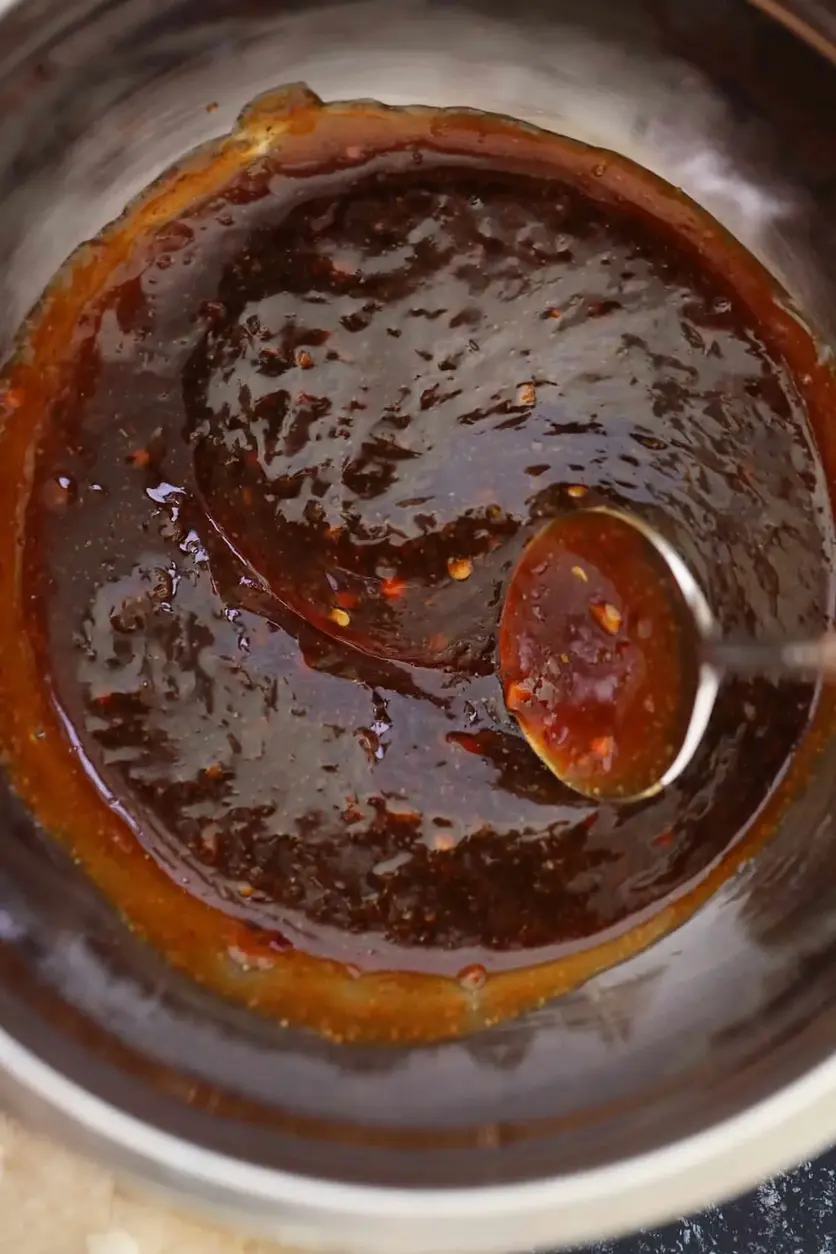
The first time I made this sauce for a stir-fry in my tiny NYC apartment, the smell filled every corner — ginger warming the air, vinegar cutting through with a bright tang, and a gentle heat that lingered on the tongue. It clings to noodles like a velvet glaze, with just enough body from cornstarch to coat a spoon but not weigh it down. The color is a deep amber brown, flecked with red chili flakes and tiny bits of fresh ginger.
This version is my riff on the classic Chinese-American Szechuan sauce you might get from takeout, but I’ve dialed up the ginger and added a touch of red wine vinegar for complexity. One thing I often see home cooks get wrong is adding the cornstarch slurry too early — it clumps and leaves a starchy taste. I’ll show you the exact moment to stir it in for a silky, glossy finish. 💡 emy’s Pro Tip: Always dissolve your cornstarch in cold broth first — room temperature liquid prevents lumps every time.
Why This Szechuan Sauce Recipe Is the Best
The flavor secret here is the combination of two vinegars — red wine vinegar and rice vinegar. The red wine vinegar adds a fruity depth that rice vinegar alone can’t give, while the rice vinegar keeps things light. This two-vinegar trick is something I learned from a saucier in Paris, and it makes the sauce sing without being sharp.
Texture-wise, the cornstarch slurry is the key. But instead of dumping it in all at once, I add it in a slow stream while whisking constantly. This technique ensures the sauce thickens evenly — no lumps, no gluey spots. You end up with a sauce that pours beautifully but clings to every bite.
This recipe is foolproof because it comes together in one saucepan and uses ingredients you probably already have in your pantry. It’s forgiving: if you like it spicier, add more chili garlic sauce; if you want it sweeter, bump up the brown sugar. Within 15 minutes, you’ll have a sauce that works for everything from rice bowls to chicken wings.
Szechuan Sauce Ingredients
I love buying my soy sauce and ginger from the Asian market near Union Square in NYC — the ginger is always fragrant and knobby, and the soy sauce has a cleaner taste than what I find in regular grocery stores. This recipe reminds me of the bustling spice markets in Marrakech where I’d pick up chili pastes as a child.
Ingredients List
1/4 cup low-sodium soy sauce
2 tablespoons red wine vinegar
1 tablespoon fresh ginger (minced)
2 tablespoons brown sugar
1 tablespoon Asian chili garlic sauce (or chili sauce)
1 tablespoon rice vinegar
1/2 teaspoon crushed red pepper flakes
1/2 teaspoon garlic powder
1/2 cup chicken broth (veggie broth for vegetarian) — cold
1 tablespoon cornstarch
Ingredient Spotlight
Soy Sauce: This provides the salty, umami backbone. Use low-sodium so you can control the salt level. I prefer Kikkoman or a Japanese-style soy sauce for its cleaner, less yeasty flavor. If you’re gluten-free, swap with tamari — it works beautifully and tastes almost identical.
Fresh Ginger: Do not substitute dried ginger! Fresh ginger gives a bright, peppery warmth that is essential. Look for ginger that feels heavy and has smooth skin. From my Paris training, I always peel it with a spoon — it’s easier than a knife and you waste less.
Chili Garlic Sauce: This is my shortcut to deep fermented heat. I use Huy Fong brand (the one with the rooster on the label). It’s not just spicy — it has garlic and vinegar notes that build complexity. You can substitute with sambal oelek for a purer chili flavor.
Original Ingredient
Best Substitution
Flavor / Texture Impact
Soy Sauce
Tamari (gluten-free)
Similar umami, slightly less salt; no difference in texture
Fresh Ginger
1/2 tsp dried ginger + 1 tsp fresh lemon juice
Less pungent, more muted heat; sauce will have less zing
Chili Garlic Sauce
Sambal Oelek
Pure chili heat, less garlic; sauce will be spicier with less depth
Chicken Broth
Vegetable Broth
Milder savory notes; identical texture and thickening
Brown Sugar
Coconut Sugar
Slightly less sweet, hint of caramel; texture unchanged
How to Make Szechuan Sauce — Step-by-Step
Trust me, this is the easiest sauce you’ll ever make. It all happens in one pan, and you’ll have dinner ready before you know it.
Step 1: Prep the Slurry
In a small bowl, combine 1/2 cup cold chicken broth and 1 tablespoon cornstarch. Stir with a fork until the cornstarch is fully dissolved and no white streaks remain. The broth must be cold — if it’s warm, the cornstarch will clump immediately and you’ll get a lumpy sauce.
💡 emy’s Pro Tip: Use a fork, not a whisk, for the slurry. A fork breaks up cornstarch clumps more efficiently and creates a smooth paste faster.
Step 2: Build the Flavor Base
In a medium saucepan over medium heat, add all remaining ingredients except the broth and cornstarch mix: soy sauce, red wine vinegar, minced ginger, brown sugar, chili garlic sauce, rice vinegar, red pepper flakes, and garlic powder. Stir gently with a wooden spoon. Bring the mixture to a light boil — you’ll see small bubbles forming around the edges. Do not let it boil vigorously or the vinegar can become harsh. This takes about 3 minutes.
⚠️ Common Mistake to Avoid: Boiling the sauce too hard before adding the slurry can reduce the liquid too much and concentrate the salt. Keep it at a gentle simmer — you want steam, not a rolling boil.
Step 3: Thicken & Finish
Give your cornstarch slurry a quick stir (it settles fast), then pour it into the simmering sauce in a slow, steady stream while whisking constantly with a wire whisk. Continue whisking for 3–5 minutes, until the sauce thickens to a glossy, syrupy consistency that coats the back of a spoon. You’ll see it go from watery to opaque and silky. Remove from heat immediately — it will continue to thicken slightly as it cools.
💡 emy’s Pro Tip: For the glossiest finish, whisk in one teaspoon of butter or sesame oil off the heat. It adds a restaurant-quality sheen and rounds out the flavors.
Step
Action
Duration
Key Visual Cue
1
Prep Slurry
1 minute
No lumps in the paste
2
Build Flavor Base
3 minutes
Small bubbles at edges; ginger is fragrant
3
Thicken & Finish
3–5 minutes
Glossy, coats spoon
Serving & Presentation
This Szechuan sauce is incredibly versatile. Use it as a glaze for stir-fried chicken or beef, a dipping sauce for spring rolls or dumplings, or drizzle it over steamed rice and vegetables for a quick weeknight dinner. I like to toss it with noodles and sesame seeds for an amazing 10-minute noodle bowl that reminds me of late-night noodle shops in NYC’s Chinatown.
For presentation, the sauce’s rich amber color looks gorgeous when drizzled over white rice or pale noodles. Garnish with a sprinkle of sliced green onions, a few sesame seeds, and a pinch of extra red pepper flakes for color. I sometimes add a twist of lime for brightness — a trick from my Moroccan kitchen that cuts through the richness perfectly.
Pairing Type
Suggestions
Why It Works
Side Dish
Steamed jasmine rice, lo mein noodles, roasted broccoli
The sauce clings to rice and noodles; roasted veg adds crunch
Sauce / Dip
Dumplings, spring rolls, chicken wings, tofu cubes
Balanced sweetness and heat enhance without overpowering
Beverage
Crisp lager, iced green tea, semi-dry Riesling
Cuts the spice; green tea refreshes the palate
Garnish
Green onions, sesame seeds, lime wedge, cilantro
Adds freshness, color, and visual contrast
Make-Ahead, Storage & Reheating
As a busy NYC mom and food blogger, I love making a double batch of this Szechuan sauce on Sundays. It saves me during the week when I need a quick dinner fix. Just pour it into a jar and you’ll have sauce ready for noodles, stir-fries, or a quick dip after 15 minutes.
Method
Container
Duration
Reheating Tip
Refrigerator
Airtight glass jar
Up to 2 weeks
Warm in saucepan over low heat, stirring; add splash of water to loosen
Freezer
Silicone ice cube tray, then zip-top bag
Up to 3 months
Defrost in fridge overnight; reheat in pan, whisking to re-emulsify
Make-Ahead
Airtight jar
Up to 5 days in advance
No need to reheat for cold dips; for hot uses, warm gently
When reheating from the fridge, I’ve found that the cornstarch can create a slight skin on top if left too long. Just whisk it back in over low heat — it will become silky again. If it’s too thick, add a tablespoon of water or broth. From my years in restaurant kitchens, I always warm sauces gently to avoid breaking the emulsion.
This Szechuan sauce is a flavorful sweet and savory recipe with just the right amount of spice. I make it in 15 minutes using soy sauce, fresh ginger, and chili garlic sauce. It works perfectly as a dip, marinade, or sauce for rice, noodles, and stir-fried meals.
Ingredients
Scale
1/4 cup low-sodium soy sauce
2 tablespoons red wine vinegar
1 tablespoon fresh ginger (minced)
2 tablespoons brown sugar
1 tablespoon Asian chili garlic sauce (or chili sauce)
1 tablespoon rice vinegar
1/2 teaspoon crushed red pepper flakes
1/2 teaspoon garlic powder
1/2 cup chicken broth (veggie broth for vegetarian)
1 tablespoon cornstarch
Instructions
Combine broth and cornstarch in a small bowl; stir until dissolved
In a saucepan over medium heat, add all ingredients except broth and cornstarch mix and bring to a light boil.
Stir the cornstarch mixture until it thickens, about 3-5 minutes. Remove from heat and let it cool.
I still remember the first time I made baked cilantro lime chicken in my tiny New York City kitchen. It was a humid August evening, and I was missing the bright, herbaceous flavors of the salads my mother used to toss together in our home in Morocco. She would pile cilantro and lime into everything — from tagines to simple grilled fish — and that combination of fresh, citrusy, and slightly peppery notes always felt like sunshine on a plate. This baked cilantro lime chicken is my grown-up, chef-trained take on that memory. It’s low-carb, keto-friendly, and easily adapted for paleo or Whole30 diets, which makes it a staple in my meal prep rotation. The marinade comes together in a blender in under five minutes, and the result is tender, juicy chicken that’s bursting with flavor. Trust me, once you try this, you’ll never go back to bland chicken again.
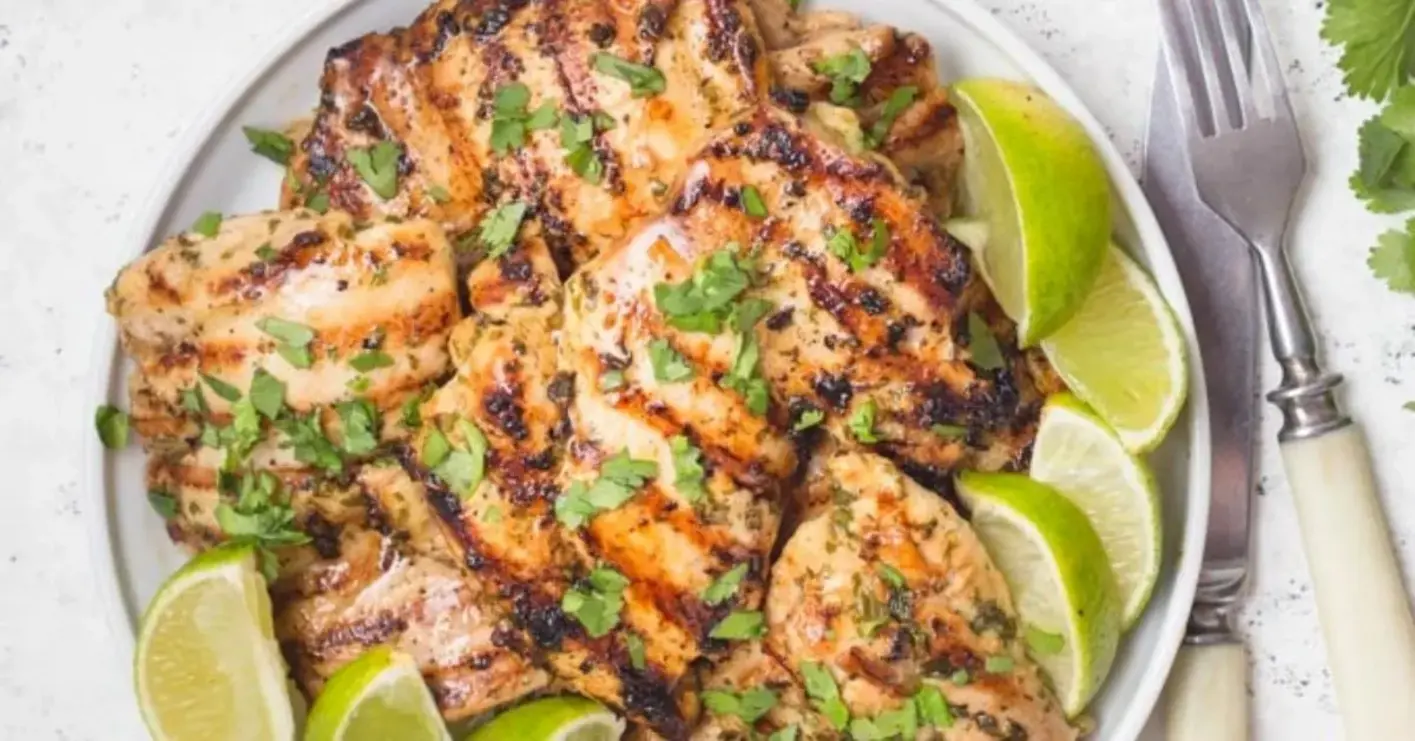
Imagine this: chicken thighs that come out of the oven with a beautifully caramelized, golden-brown surface, thanks to a quick sear before baking. The aroma alone — garlic, cumin, and fresh lime — will fill your entire apartment. When you cut into the meat, it’s impossibly juicy, infused with that vibrant cilantro-lime marinade that clings to every bite. There’s a subtle smokiness from the cumin, a bright pop from the lime, and a savory depth from the garlic that makes this dish feel both comforting and exciting. The best part? It’s naturally low in carbs, so it fits beautifully into a keto or paleo lifestyle without sacrificing an ounce of flavor. I like to serve it with a simple avocado salad or cauliflower rice on the side — the creamy avocado pairs perfectly with the tangy, herbaceous chicken.
What sets my version of cilantro lime chicken apart is the technique I learned at culinary school in Paris: balancing acidity with fat. The marinade here uses just the right amount of lime juice (not too much, or it can turn the chicken tough) along with olive oil to keep the meat tender and moist. I also add a generous handful of fresh cilantro leaves — measured before chopping — because I want that herb to be a star, not a background note. One common mistake I see home cooks make is skipping the marinating time, thinking they can just pour the sauce on and bake. Do yourself a favor and let the chicken sit in that marinade for at least 30 minutes — it makes all the difference. And if you’re using bone-in thighs (which I sometimes do for a richer flavor), you’ll need to adjust your baking time. But for a quick, foolproof weeknight dinner, boneless skinless thighs are your best friend. I’ll walk you through both methods in the steps below.
Why This Cilantro Lime Chicken Recipe Is the Best
The Flavor Secret — This isn’t just a marinade thrown together haphazardly. I blend the cilantro, lime zest, lime juice, garlic, cumin, salt, pepper, and olive oil until it’s a smooth, emulsified sauce. This technique, which I picked up in Paris, ensures the flavors are fully integrated and coat every nook and cranny of the chicken. The cumin adds a warm, earthy note that ties the bright citrus and fresh herbs together beautifully, a trick I inherited from my mother’s Moroccan kitchen.
Perfected Texture — Baking chicken can sometimes lead to dry, tough meat, but I’ve cracked the code. By searing the chicken first (even just for a few minutes on the stovetop or under the broiler), you lock in the juices and create a gorgeous crust. Then, baking at 375°F ensures the chicken cooks through gently, staying moist and tender. For boneless skinless thighs, that means about 25-30 minutes — just long enough to be safe and succulent.
Foolproof & Fast — I’ve designed this recipe to be as simple as possible without sacrificing taste. The marinade takes two minutes in a blender, and the active cooking time is minimal. It’s perfect for beginners because the oven does most of the work, and there’s no complicated basting or flipping required. Just marinate, sear (or not — you can bake directly!), and bake. I promise you’ll feel like a chef with barely any effort.
Cilantro Lime Chicken Ingredients
When I’m shopping for this at the Union Square Greenmarket in NYC, I always look for the freshest, most vibrant cilantro — it should smell fragrant and look perky, not wilted. The limes need to be heavy for their size, which means they’re juicy. And for the chicken, I prefer thighs because they stay moist and flavorful even with a quick bake. Here’s everything you’ll need.
Ingredients List
8 boneless skinless chicken thighs (about 2 lb)
1 cup cilantro leaves, packed (measure un-chopped leaves, about 1/2 bunch)
1 tsp lime zest
1/4 cup lime juice (about 3 limes)
3 cloves garlic (chopped)
1 tsp cumin
1 tsp salt
1 tsp black pepper
3 tbsp olive oil
Extra cilantro leaves, for garnish (optional)
Lime wedges, for serving (optional)
Ingredient Spotlight
Cilantro. This is the soul of the dish. Fresh cilantro adds a bright, citrusy, slightly peppery flavor that’s irreplaceable. When buying, look for bunches with deep green leaves and no yellowing. If you can’t find fresh cilantro, you could substitute fresh parsley (Italian flat-leaf is best) for a milder flavor, but you’ll lose that distinct zing. For a completely different twist, try fresh mint — it’s lovely but will change the dish dramatically.
Limes. Both the zest and juice are crucial. The zest gives you the concentrated, aromatic lime oil, while the juice provides the acidity that balances the richness of the chicken. Choose limes that are firm but give slightly when squeezed — they’re the juiciest. If you only have bottled lime juice, use about 3 tablespoons, but note that the flavor won’t be as bright. A splash of white wine vinegar can help mimic the acidity if you’re in a pinch.
Cumin. This warm, earthy spice is a cornerstone of my Moroccan heritage. It adds depth and a subtle smokiness that complements both the lime and the cilantro. Use ground cumin for this recipe; it blends easily into the marinade. If you don’t have cumin, you can try ground coriander for a lighter, floral note, or a pinch of smoked paprika for a different kind of warmth. But honestly, cumin is non-negotiable for the authentic flavor I’m aiming for.
Original Ingredient
Best Substitution
Flavor / Texture Impact
Cilantro
Fresh parsley (Italian flat-leaf)
Milder, more herbal; loses the signature cilantro zing
Fresh lime juice
Bottled lime juice + 1 tsp white wine vinegar
Slightly less bright; vinegar adds necessary acidity
Cumin
Ground coriander
Lighter, more floral; loses the earthy warmth
How to Make Cilantro Lime Chicken — Step-by-Step
Let me guide you through this — it’s easier than you think. I’ll break it down into simple steps, with my best tips to ensure perfect results every time.
Step 1: Prepare the Marinade
Add the packed cilantro leaves, lime zest, lime juice, chopped garlic, cumin, salt, pepper, and olive oil to a blender. Pulse until the mixture is completely smooth and vibrant green. You’re looking for a pourable, emulsified sauce. If you don’t have a blender, you can finely mince the cilantro and garlic and whisk everything together in a bowl — it just won’t be as smooth.
💡 emy’s Pro Tip: For the brightest flavor, let the marinade sit for 5 minutes after blending. This allows the garlic and cumin to bloom and meld with the lime juice.
Step 2: Marinate the Chicken
Place the boneless skinless chicken thighs in a large bowl or a zip-top bag. Pour the marinade over the chicken and toss or massage until every piece is evenly coated. Seal the bag or cover the bowl, then refrigerate for at least 30 minutes — up to 4 hours is ideal. Don’t exceed 4 hours, as the acidity from the lime can start to break down the protein too much and make the texture mushy.
⚠️ Common Mistake to Avoid: Skipping the marination time. Even 15 minutes makes a difference, but 30 minutes is the sweet spot for flavor penetration without compromising texture.
Step 3: Sear the Chicken (Optional but Recommended)
While the chicken is marinating, preheat your oven to 375°F. Heat a cast-iron skillet or grill pan over medium-high heat and brush with a little olive oil. Remove the chicken from the marinade (let excess drip off) and sear each piece for 2-3 minutes per side, until you get a nice golden-brown crust. This step builds deep, caramelized flavor that baking alone can’t achieve.
💡 emy’s Pro Tip: Don’t overcrowd the pan. Sear in batches if needed. Overcrowding steams the chicken instead of searing, and you’ll lose that gorgeous crust.
Step 4: Bake the Chicken
Transfer the seared chicken thighs to a baking dish (if not using the same oven-safe skillet). Bake for 25-30 minutes for boneless skinless thighs, or until the internal temperature reaches 165°F when checked with a digital meat thermometer. If using bone-in thighs, bake for about 45 minutes. The chicken should be golden brown and the juices should run clear.
⚠️ Common Mistake to Avoid: Not using a meat thermometer. Don’t guess — chicken can go from perfectly cooked to dry in minutes. A digital thermometer is your best friend for juicy results every time.
Step 5: Rest and Serve
Once the chicken is cooked, let it rest in the pan for 5 minutes. This allows the juices to redistribute, so every bite is moist and flavorful. Garnish with fresh cilantro leaves and a squeeze of lime juice before serving.
💡 emy’s Pro Tip: While the chicken rests, drizzle a little of the pan juices over the top for extra flavor. Those juices are liquid gold — don’t waste them!
Step
Action
Duration
Key Visual Cue
1
Blend marinade
2 minutes
Smooth, vibrant green sauce
2
Marinate chicken
30 mins – 4 hours
Chicken fully coated in green marinade
3
Sear chicken
2-3 mins per side
Golden-brown crust forms
4
Bake chicken
25-30 mins (boneless)
Internal temp 165°F
5
Rest and serve
5 minutes
Juices settle, chicken glistens
Serving & Presentation
I love serving this baked cilantro lime chicken with a generous spoonful of the pan juices drizzled over the top. The vibrant green of the marinade against the golden-brown chicken is beautiful on its own, but a few extra cilantro leaves and a lime wedge on the plate really make it pop. For a complete meal that’s still low-carb and paleo-friendly, I pair it with creamy avocado slices, a fresh tomato and cucumber salad, or a bowl of cilantro lime cauliflower rice. The cool, creamy avocado balances the tangy, spicy notes of the chicken perfectly.
When I’m feeling like I’m back in Morocco, I serve this with a side of warm flatbread (if not doing Whole30) and a dollop of harissa-spiked yogurt. For a NYC touch, I sometimes add a quick pickled red onion — the acidity cuts through the richness. No matter how you serve it, this chicken is the star of the show. It’s also fantastic sliced and tossed into a salad for lunch the next day.
Low-carb, fresh, and complements the citrus-herb flavors
Sauce / Dip
Avocado crema, tahini sauce, Greek yogurt with lime
Adds creaminess and extra tang
Beverage
Sparkling water with lime, crisp Sauvignon Blanc, iced green tea
Refreshing and cleanses the palate
Garnish
Fresh cilantro, lime wedges, sliced jalapeño
Enhances color, aroma, and bright flavor
Make-Ahead, Storage & Reheating
As a busy mom and food blogger in NYC, meal prep is my lifeline. This cilantro lime chicken is one of my go-to recipes for Sunday meal prep because it tastes even better the next day as the flavors meld. Here’s how to store it properly so you can enjoy it all week long.
Growing up in Morocco, I remember my mother layering warm spices with the patience of an artist, each dish telling a story of our North African roots. When I moved to New York City and trained at a French culinary school in Paris, I learned how to marry those bold, aromatic flavors with the precision of a chef’s technique. This Dairy Free Butter Chicken is that marriage in a bowl—rich, creamy, and deeply comforting, with coconut milk stepping in for heavy cream and yogurt, making it perfect for Paleo and Whole30 lifestyles. The magic here isn’t just the substitution; it’s the way the coconut milk soaks up the garam masala, turmeric, and ginger, creating a silky sauce that clings to every piece of chicken. I want you to feel the warmth of my mother’s kitchen and the confidence of a NYC cook all at once.
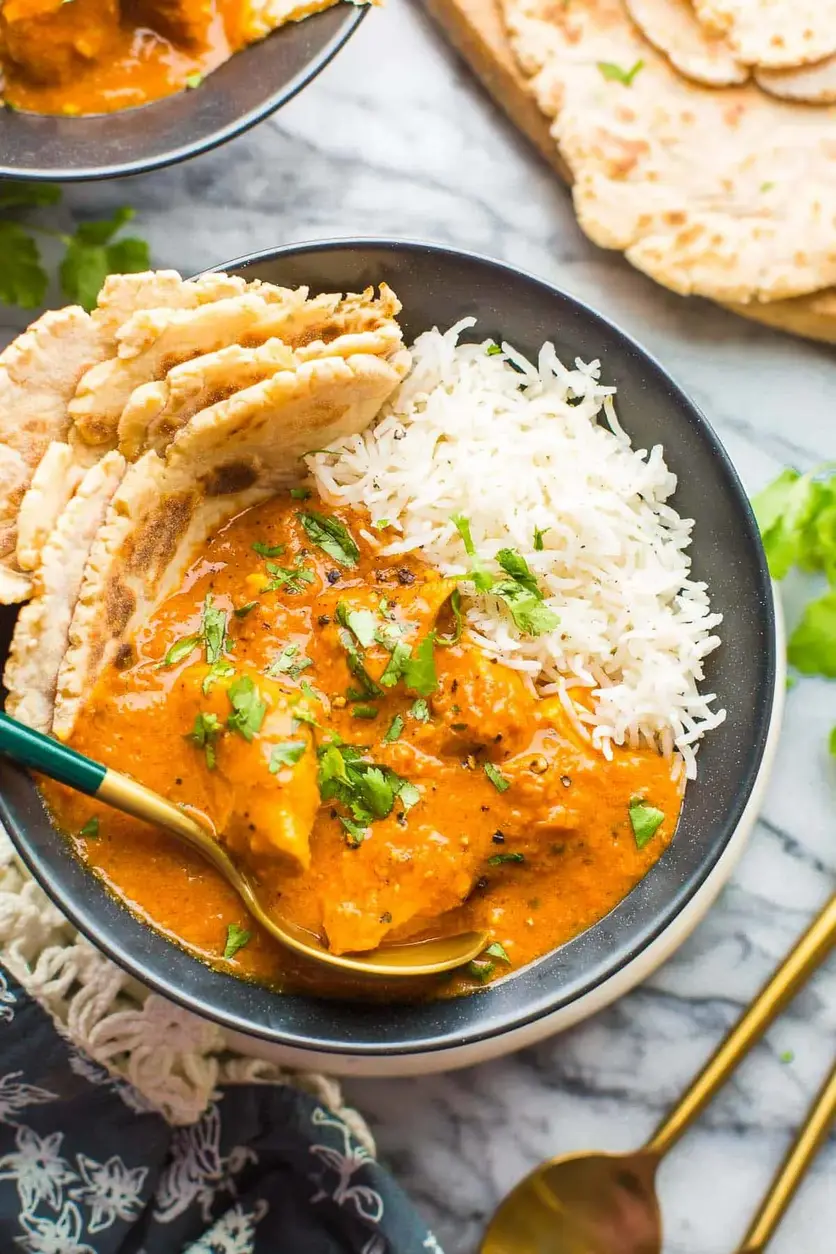
The first time I made this for a dinner party in my Brooklyn apartment, the aroma of fenugreek and coriander filled every corner, and my guests—a mix of foodies and skeptics—asked for seconds before I could sit down. The sauce is extra saucy, with a reddish-brown hue that comes from slow-simmering tomato paste and spices, and it’s finished with a final touch of coconut milk for that velvety smoothness. You’ll taste the sweet warmth of garam masala, the slight kick from fresh chili, and the tang from lemon juice, all balanced by the richness of full-fat coconut milk. It’s the kind of meal that feels like a hug on a chilly NYC evening, but light enough to enjoy any night of the week.
What sets my version apart is the double-coconut approach—first marinating the chicken in coconut milk and lemon juice, then adding more coconut milk at the end for extra creaminess. This technique comes from my French pastry training, where layering flavors is key. I also insist on blending the sauce until it’s silky smooth, a step many home cooks skip, but it makes a world of difference. 💡 emy’s Pro Tip: Don’t rush the marinade—let it sit for at least 30 minutes, or overnight, to let the flavors really sink into the chicken. One common mistake I see is overcrowding the pan when browning the chicken; do it in batches to get that beautiful golden crust. This Dairy Free Butter Chicken is more than a recipe—it’s a testament to how simple swaps can create something extraordinary.
Why This Dairy Free Butter Chicken Recipe Is the Best
The Flavor Secret: The unique angle here is using coconut milk in two stages—first as a marinade to tenderize and infuse the chicken, then as a finishing cream to create a sauce that’s rich and luxurious without any dairy. Growing up, my mother taught me that the best dishes come from patience, and this recipe rewards that with a depth of flavor that store-bought versions just can’t match.
Perfected Texture: From my Paris training, I learned that a smooth sauce is everything. By blending the cooked sauce until silky, you get that restaurant-quality finish that coats the chicken perfectly. The fenugreek adds a subtle, nutty note that’s hard to replicate, but it’s that final simmer that brings everything together into a cohesive, saucy dream.
Foolproof & Fast: Even with the marinade and blending, this dish comes together in just over an hour from start to finish. I’ve streamlined it so you can marinate overnight and have dinner on the table in 30 minutes the next day. The instructions are clear, with visual cues so you know exactly when each step is done—like when the onions turn translucent or the sauce thickens into a reddish-brown color.
Dairy Free Butter Chicken Ingredients
When I shop for these ingredients at my local NYC farmers market or Whole Foods, I always look for the freshest spices and full-fat coconut milk from a can—it’s non-negotiable for that creamy texture. My mother’s kitchen in Morocco used dried fenugreek leaves, which I now find at specialty spice shops in the city, and they add a flavor I can’t live without.
Ingredients List
½ cup full fat coconut milk, coconut cream or coconut yoghurt (114g) – see notes*
1 chili, stemmed, seeded and minced (see notes for type)
1 tbsp garam masala
1 tsp ground coriander
½ tsp ground cumin
½ tsp black pepper
1 ½ cups water (360ml)
½ cup tomato paste (64g)
1 tbsp sugar
1 tsp salt
½ tsp dried fenugreek or kasoori methi (see notes)
1 cup unsweetened full fat coconut milk or coconut cream from a can (228g)
Ingredient Spotlight
Coconut Milk: The star of this dish for its creamy, dairy-free richness. Use full-fat from a can for best results; light coconut milk won’t give you the same luxurious sauce. I always shake the can well before opening to combine the cream and liquid.
Garam Masala: This warming spice blend is the backbone of the recipe. You can find it in any US grocery store or make your own with cinnamon, cardamom, and cloves. Freshness matters—check the expiration date for that vibrant aroma.
Dried Fenugreek (Kasoori Methi): These aromatic dried leaves add a subtle, nutty flavor that’s irreplaceable in butter chicken. I buy mine at a local Indian market or online. A good substitute is a pinch of maple syrup for sweetness, but the fenugreek is truly unique.
Chicken Thighs vs. Breasts: I recommend thighs for juiciness, but breasts work too—just be careful not to overcook them. My NYC friends often use a mix, and it’s always a hit.
Original Ingredient
Best Substitution
Flavor / Texture Impact
Full-fat coconut milk
Coconut cream or coconut yoghurt
Slightly thicker sauce; similar richness
Dried fenugreek
1 tsp maple syrup + ½ tsp cumin
Adds sweetness and warmth; less nutty
Fresh chili
½ tsp red pepper flakes
Less fresh heat; more dried spice kick
Tomato paste
½ cup crushed tomatoes (reduce water by ¼ cup)
Lighter color; slightly sweeter sauce
How to Make Dairy Free Butter Chicken — Step-by-Step
This might look like a long list, but I promise each step is simple and rewarding. Let me walk you through it, just like I would in my own kitchen.
Step 1: Marinate the Chicken
In a large mixing bowl, mix together ½ cup coconut milk, lemon juice, 1 tbsp ginger, 1 ½ tbsp garlic, 2 tsp garam masala, ½ tsp black pepper, 1 tsp turmeric, and ½ tsp salt until well combined. Add the chicken pieces and toss to coat. Let it marinate for at least 30 minutes; I often do this the night before for deeper flavor.
💡 emy’s Pro Tip: Use a glass or ceramic bowl for marinating—metal bowls can react with the lemon juice and alter the taste.
Step 2: Brown the Chicken
Warm 2 tbsp coconut oil in a large pot or skillet over medium-high heat. Once hot, add the chicken pieces in 2-3 batches (don’t crowd the pan!). Cook for about 3 minutes per side until golden brown, then set aside.
⚠️ Common Mistake to Avoid: Overcrowding the pan causes the chicken to steam instead of brown. Work in batches for that perfect crust.
Step 3: Sauté the Aromatics
Add the remaining 2 tbsp coconut oil to the same pot. Cook the diced onion for 5-7 minutes over medium heat until translucent. Stir in 5 minced garlic cloves, 4 tsp fresh ginger, and the minced chili, cooking for 1 minute until fragrant.
💡 emy’s Pro Tip: Finely chop the chili to distribute its heat evenly. For a milder dish, use a seeded serrano or just half of it.
Step 4: Build the Sauce
Reduce heat to medium-low. Add ½ cup tomato paste, 1 tbsp garam masala, 1 tsp coriander, ½ tsp cumin, and ½ tsp black pepper. Cook for 2-3 seconds, stirring constantly. If the pan looks dry, add 1-2 tbsp water. Then pour in 1 ½ cups water, 1 tbsp sugar, and 1 tsp salt. Let it simmer for 15 minutes until the sauce thickens into a deep reddish-brown color.
⚠️ Common Mistake to Avoid: Burning the tomato paste and spices. Keep the heat low and stir continuously during this step.
Step 5: Blend the Sauce
Remove the pot from heat. Using a blender or immersion blender, purée the sauce until smooth. If using a blender, do this in batches to avoid overfilling. Return the sauce to the pot.
💡 emy’s Pro Tip: An immersion blender is my go-to for this—it saves time and cleanup. Blend in a heat-safe bowl to avoid splatters.
Step 6: Finish with Coconut Milk
Stir in the remaining 1 cup coconut milk until fully combined. Return the browned chicken to the pot, mixing it into the sauce. Simmer over medium-low heat for 10 minutes. Stir in ½ tsp dried fenugreek or kasoori methi if using.
⚠️ Common Mistake to Avoid: Adding the fenugreek too early can make it bitter. Stir it in at the very end for a gentle, earthy finish.
Step 7: Serve
Serve topped with fresh cilantro alongside rice or cauliflower rice. The sauce should be creamy, rich, and clinging to every piece of chicken. Enjoy immediately!
Step
Action
Duration
Key Visual Cue
1
Marinate chicken
30 mins
Chicken fully coated in golden marinade
2
Brown chicken
6 mins
Golden-brown crust on all sides
3
Sauté aromatics
6-8 mins
Onions translucent; garlic fragrant
4
Build sauce
15 mins
Deep reddish-brown, thickened
5
Blend sauce
2 mins
Silky smooth texture
6
Finish with coconut milk
10 mins
Sauce coats chicken; fragrant fenugreek
Serving & Presentation
When I serve this Dairy Free Butter Chicken at my NYC dinner parties, I love to plate it family-style in a large shallow bowl. The sauce is extra saucy, so I pour it generously over fluffy basmati rice or cauliflower rice for a Paleo option. Top with fresh cilantro and a squeeze of lemon for brightness—it’s how my mother always finished her dishes in Morocco.
For a complete meal, I pair it with a cooling cucumber and mint raita (made with coconut yogurt) and warm naan bread. The combination of spicy, creamy, and fresh is pure comfort. On busy weeknights, I’ll just serve it with a simple green salad dressed with lemon and olive oil—quick, fresh, and perfect for soaking up the sauce.
A final touch: sprinkle a few dried fenugreek leaves over the top before serving for an aromatic finish. This recipe is as much about presentation as it is about taste, and it’s always the first dish to disappear. From my Paris training, I learned that food is an experience, so take a moment to enjoy the colors and smells before diving in.
Cabbage Fritters | Crispy Fried or Oven Baked Patties
Table of Contents
Cabbage Fritters – Crispy Fried or Oven Baked Patties – The Secret to Perfectly Golden Veggie Patties
⚖️
Difficulty
Easy
⏲️
Prep Time
15 mins
🕒
Cook Time
12 mins
⏱️
Total Time
27 mins
🍽️
Servings
8-10 fritters
I still remember the first time I made these cabbage fritters. It was a chilly winter afternoon in my tiny NYC apartment, and I had a half-head of cabbage sitting in the fridge, looking at me with what felt like judgment. Back in Morocco, my mother would turn leftover vegetables into golden, crispy patties with a flick of her wrist and a pinch of cumin. That memory pushed me to experiment. The result? These crispy cabbage fritters that are now a staple in my home. The secret to cabbage fritters that are golden on the outside and tender on the inside lies in the technique — a gentle hand while mixing and the right pan temperature. Whether you pan-fry them for a crunchy crust or bake them for a lighter bite, these patties are pure comfort.
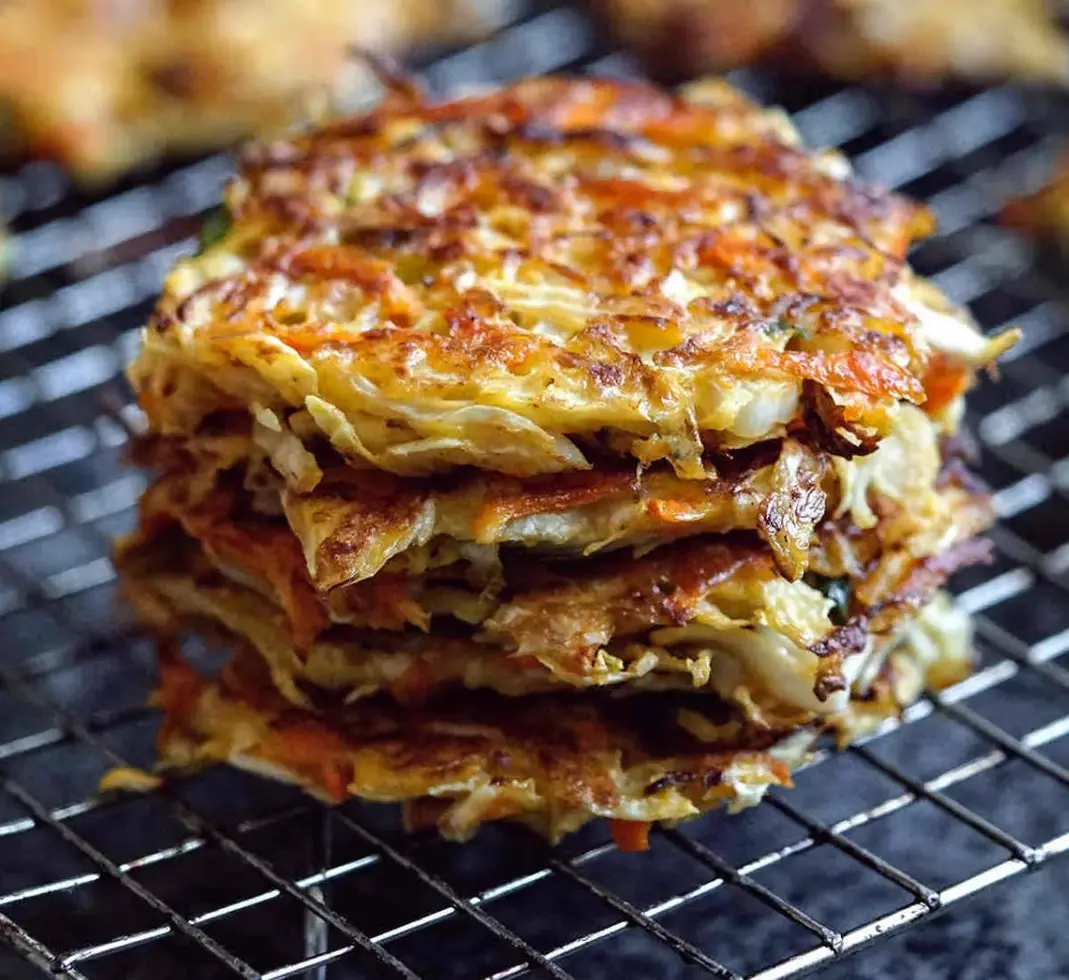
When these fritters hit the hot skillet, the sizzle is unmistakable — it’s the sound of cabbage transforming into something irresistible. The edges turn lacy and deep golden brown, while the interior stays moist and packed with shredded carrots and scallions. A whisper of smoked paprika and coriander adds warmth without overpowering the sweet, earthy flavor of the cabbage. The texture is the real star: crispy on the outside, almost creamy on the inside. I love how the scallions release their subtle onion perfume as they cook, mingling with the garlic and the nutty note of ghee. It’s a smell that takes me straight back to my mother’s kitchen — but with a Parisian finesse I picked up in culinary school.
What sets my version apart is the balance between simplicity and technique. I’ve tested this recipe dozens of times — through soggy fritters, burned fritters, and fritters that fell apart in the pan. After all that trial and error, I’ve cracked the code. The key is not squeezing the cabbage too hard — you want just enough egg and flour to bind, not drown. And the pan must be at the perfect medium-low heat. My biggest pro tip? Press the fritters thin — thinner than you think — so they cook all the way through without burning. The most common mistake? Crowding the pan. Give each fritter room to breathe. Trust me, this recipe is foolproof once you know these little tricks.
Why This Cabbage Fritters Recipe Is the Best
The flavor secret in these cabbage fritters is the combination of smoked paprika and a touch of coriander. Growing up in Morocco, I watched my mother add spices with confidence — never measuring, always tasting. The smoked paprika brings a subtle, earthy depth that makes the fritters taste almost meaty, while the coriander adds a gentle citrusy note that brightens the cabbage. This isn’t a bland veggie patty — it’s a patty with a backbone. The carrots add natural sweetness, and the scallions bring a gentle bite. Together, they create a fritter that’s complex enough for a dinner party but simple enough for a Tuesday lunch.
Perfected texture is where my Parisian training comes in. In culinary school, I learned that moisture management is everything when frying vegetables. The trick is to mix the shredded cabbage, carrots, and eggs with a light hand — overworking the mixture releases too much water from the cabbage, turning your fritters into sad, soggy discs. I also learned that a 10-inch ceramic non-stick skillet, preheated for a full three minutes on medium-low, creates the ideal surface for even browning. The fritters cook undisturbed for three minutes per side, developing a crust that shatters when you bite into it. Inside, the cabbage stays tender and juicy, never watery.
This recipe is foolproof and fast because it uses everyday ingredients you probably already have in your pantry. No exotic spices, no hard-to-find vegetables — just cabbage, carrots, eggs, flour, and a few spices. The preparation takes about 15 minutes, and the cooking time is just 12 minutes total. Even if you’ve never made a fritter before, my step-by-step instructions with visual cues will guide you to success. Plus, I’ve included both pan-fried and oven-baked options, so you can choose your preferred method. Whether you’re a busy parent, a college student, or a seasoned home cook, these cabbage fritters will become your go-to recipe for a quick, satisfying meal.
Cabbage Fritters Ingredients
I buy my cabbage from the Union Square Greenmarket when I can — the local varieties are incredibly sweet and crisp. But even the standard green cabbage from any grocery store works beautifully. In Morocco, my mother would use a firm, heavy white cabbage, which is similar to what we find here. The key is to choose a cabbage that feels dense and heavy for its size, with tightly packed leaves. For these fritters, the cabbage is the star, so quality matters. I also grab my carrots and scallions from the farmers market — they’re usually sweeter and more flavorful than supermarket options.
Ingredients List
16 oz shredded cabbage (about 7 packed cups or 1/3 of a medium head)
1/2 tsp coriander, ground (optional but recommended)
3-4 tbsp fat for frying (ghee, avocado oil, or grape-seed oil)
Ingredient Spotlight
Cabbage is the foundation of this dish. It provides the bulk and a subtle sweetness when cooked. Look for a head that feels heavy and has crisp, unblemished leaves. Green cabbage is classic, but savoy cabbage works well too — it’s a bit more tender. Avoid pre-shredded bagged cabbage if possible; it’s often too dry and won’t hold together as well.
Eggs are the binder that holds everything together. They provide structure and richness. Use large eggs — if you use extra-large, the mixture might be too wet; if you use medium, it might be too dry. At room temperature, eggs incorporate more evenly, but cold eggs work fine in a pinch.
Flour helps absorb excess moisture and gives the fritters a tender crumb. All-purpose flour is my go-to for the best texture. For a gluten-free version, use a 1:1 gluten-free baking blend that contains xanthan gum — this ensures the fritters hold together. Almond flour will work but will make the fritters denser and more delicate.
Smoked paprika is my secret weapon. It adds a deep, smoky flavor that elevates the fritters from simple to memorable. If you don’t have smoked paprika, regular sweet paprika works, but you’ll miss that subtle barbecue-like note. Coriander is optional but highly recommended — its citrusy, floral notes complement the cabbage beautifully.
Original Ingredient
Best Substitution
Flavor / Texture Impact
All-purpose flour
1:1 gluten-free flour blend
Slightly crumblier but still holds; add 1 extra tbsp if needed
Smoked paprika
Regular paprika + pinch of cumin
Less smoky but still warm and earthy
Ghee for frying
Avocado oil or grape-seed oil
Ghee adds nutty richness; oils give neutral flavor
Scallions
1 small yellow onion, finely diced
Slightly stronger onion flavor; sauté onion first if raw bothers you
How to Make Cabbage Fritters — Step-by-Step
Don’t worry — even if the mixture looks like a loose slaw at first, these fritters will hold together beautifully once they hit the heat. The key is to trust the process and not overwork the cabbage.
Step 1: Shred the Cabbage
Use a mandoline slicer for fine, uniform shreds. You’ll need 16 oz, which is about 7 packed cups, or roughly 1/3 of a medium head of cabbage. If you don’t have a mandoline, a sharp chef’s knife works — just cut the cabbage into very thin ribbons. Uniform shreds ensure even cooking.
💡 emy’s Pro Tip: Run the cabbage under cold water after shredding, then spin it dry in a salad spinner. This removes excess starch and helps the fritters stay crispy.
Step 2: Prep the Vegetables
Thinly slice 2-3 scallions, using both white and green parts. Grate the carrots using a box grater — the finer side works best. Mince the garlic cloves. If you prefer a milder garlic flavor, use the finer side of the box grater to create a paste. This distributes the garlic more evenly.
⚠️ Common Mistake to Avoid: Don’t use a food processor to shred the cabbage — it releases too much water and makes the fritters soggy. Always shred by hand or with a mandoline.
Step 3: Mix the Batter
In a large bowl, add the shredded cabbage, sliced scallions, grated carrots, minced garlic, eggs, flour, salt, pepper, paprika, and coriander. Use your hands to toss everything together gently. The mixture should be evenly coated with egg, but don’t squeeze or press — you don’t want to draw water out of the cabbage. It will look like a loose, wet slaw. That’s exactly right.
💡 emy’s Pro Tip: If the mixture looks too wet after sitting for a few minutes, add 1 more tablespoon of flour. If it looks too dry, add a splash of milk or water. The batter should hold together when pressed in your palm.
Step 4: Heat the Pan
Heat a non-stick skillet (I use a 10-inch ceramic-coated one) over medium-low heat for 3 minutes. My stove dial is at 3. This gentle preheat ensures even browning without burning. Add 3-4 tablespoons of your chosen fat — ghee, avocado oil, or grape-seed oil — and let it heat for another minute. The fat should shimmer but not smoke.
⚠️ Common Mistake to Avoid: Using high heat will burn the outside of the fritters while leaving the inside raw. Stick to medium-low and be patient — the fritters will still get beautifully crispy.
Step 5: Form and Fry
Form a ball of the mixture in your hands — about 1/3 cup each — and place it in the heated skillet. Press down firmly with a spatula or your fingers to flatten into a patty about 1/4-inch thick. The thinner the patty, the faster and more evenly it will cook. Fry for 3 minutes per side, or until the surface is deep golden brown and crispy. Repeat with the remaining mixture, adding more oil as needed between batches.
💡 emy’s Pro Tip: For extra crispy edges, don’t move the fritters for the first 2 minutes of cooking. Let the crust form undisturbed. When you flip, you’ll see a beautiful golden-brown surface.
Step
Action
Duration
Key Visual Cue
1
Shred cabbage
5 mins
Fine, uniform ribbons
2
Prep vegetables
5 mins
Grated carrots, sliced scallions
3
Mix batter
3 mins
Loose, wet slaw consistency
4
Heat pan
3 mins
Fat shimmers, not smoking
5
Form and fry
3 min per side
Deep golden brown edges
Serving & Presentation
I love serving these cabbage fritters as a snack with a dollop of cool Greek yogurt or labneh mixed with a pinch of za’atar — it’s a nod to my Moroccan roots. The creamy, tangy sauce balances the crispy, savory fritters perfectly. For a lighter option, serve them over a simple arugula salad with a lemon vinaigrette. In NYC, I often bring these to potlucks and they disappear within minutes. They’re also fantastic as a burger patty substitute — just add a slice of melty cheese and some pickled onions.
For presentation, I arrange the fritters on a rustic wooden board, sprinkled with fresh parsley and a pinch of flaky sea salt. A small bowl of garlic aioli or sriracha mayo on the side adds a modern twist. If I’m serving them for breakfast, I’ll add a fried egg on top and a dash of hot sauce. The versatility is endless. In the summer, I pair them with a cold cucumber and mint salad — it’s refreshing and cuts through the richness.
Vegan Cabbage Rolls (Asian-Inspired Wraps)
Table of Contents
Vegan Cabbage Rolls with Chinese Brown Garlic Sauce – An Asian-Inspired, Gluten-Free Feast
⚖️
Difficulty
Medium
⏲️
Prep Time
30 mins
🕒
Cook Time
25 mins
⏱️
Total Time
55 mins
🍽️
Servings
10-12 rolls
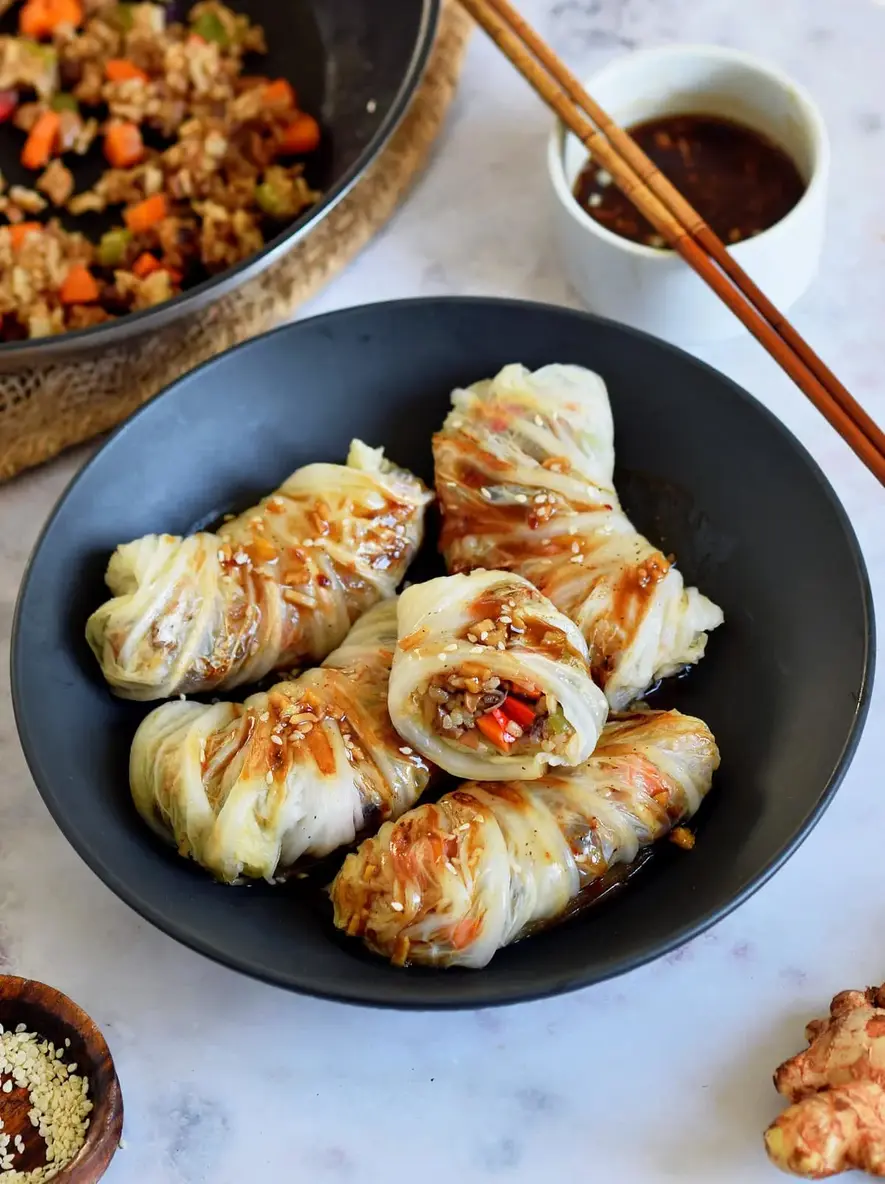
Growing up in Morocco, stuffed vegetables were a weekly ritual in my mother’s kitchen—bell peppers, zucchini, and of course, cabbage leaves simmered in a fragrant tomato sauce. Years later, my culinary training in Paris taught me the art of balance and the magic of a perfectly emulsified sauce. Now, in my NYC kitchen, I’ve fused those worlds to create these Asian-inspired vegan cabbage rolls. These gluten-free wraps are stuffed with a savory rice and veggie filling and served with a rich Chinese brown garlic sauce that will make your taste buds sing. The unique angle here is that rich, glossy, umami-packed sauce—it’s the kind of French technique-meets-Asian-flavor twist that turns a humble dish into a showstopper.
Imagine tender, blanched napa cabbage leaves, their delicate ribs softened just enough to wrap around a hearty filling of sticky sushi rice, sweet carrots, crisp peppers, and earthy mushrooms, all sautéed with ginger, garlic, and tamari. The real star is the sauce: a glossy, savory-sweet brown garlic sauce with a hint of maple syrup and rice vinegar, thickened to a perfect coating consistency. The aroma of toasted sesame oil, fresh ginger, and garlic hitting the hot pan is pure kitchen therapy. Each bite offers a wonderful contrast—the soft, yielding cabbage, the slightly chewy, flavorful rice filling, and that luxurious, velvety sauce clinging to every nook and cranny.
What makes my version stand out is the focus on texture and layered flavor, a lesson from my French pastry instructors: every component must be perfect. I’ll share my pro tip for getting those cabbage leaves pliable without tearing, and I’ll warn you about the one common mistake that can make your rolls soggy. This recipe is naturally vegetarian, vegan, and gluten-free, but more importantly, it’s packed with the kind of comforting, complex flavor that will have everyone asking for seconds.
Why This Vegan Cabbage Rolls Recipe Is the Best
The flavor secret lies in that Chinese brown garlic sauce. It’s not an afterthought; it’s the centerpiece. Drawing from my French sauce training, I build layers of flavor: first toasting the ginger and garlic in sesame oil to unlock their aromatic oils, then balancing salty tamari with sweet maple syrup and sharp rice vinegar before finishing with a cornstarch slurry for a glossy, restaurant-quality glaze. This sauce transforms the dish from simple stuffed cabbage to a gourmet, Asian-inspired experience.
Perfected texture is non-negotiable. The cabbage must be blanched just until pliable—a technique I perfected to avoid the mushiness that plagues so many stuffed leaf recipes. The rice filling is another point of pride: using soaked sushi rice gives it a delightful sticky-chew that holds the roll together beautifully, while the veggies are sautéed just to al dente to maintain a pleasant bite. This attention to contrasting textures is a chef’s signature.
This recipe is foolproof & fast because I’ve streamlined the process. By soaking the rice first, it cooks in just 10-12 minutes. Blanching the cabbage in batches and using the same skillet for the filling and searing the rolls minimizes cleanup. I’ve designed the steps so you can multitask efficiently, making this a achievable weeknight meal that feels special enough for company.
Vegan Cabbage Rolls Ingredients
I love picking up my napa cabbage and fresh ginger at the Union Square Greenmarket here in NYC—there’s nothing like farm-fresh produce. The tamari and sushi rice are staples I always have on hand from my local Asian grocery, a habit formed from my time exploring the markets of Paris’s 13th arrondissement. Each ingredient here plays a specific role in building the deep, satisfying flavor profile of these gluten-free cabbage rolls.
Ingredients List
1 1/4 cups dry sushi rice (or any short-grain rice)
1 large napa cabbage (10-12 leaves)
1 tbsp neutral oil, divided (like avocado or grapeseed)
1 medium onion, diced
3/4 tbsp fresh ginger, minced
3 garlic cloves, minced
1 medium carrot, diced
2 medium bell peppers (any color), diced
8 white button mushrooms, diced (fresh or canned, drained)
2 tbsp tamari (or coconut aminos for soy-free)
1/2 tsp each of sea salt, ground black pepper, onion powder
1/4 tsp red pepper flakes (or to taste)
Sesame seeds, for garnish
For the Chinese Brown Garlic Sauce:
1 tsp sesame oil (or neutral oil)
1/2 tbsp fresh ginger, minced
2 garlic cloves, minced
1 1/2 tbsp tamari (or coconut aminos)
1 tbsp rice vinegar
3/4 tbsp pure maple syrup
1/2 cup water
1/2 tbsp cornstarch
Salt, black pepper, red pepper flakes, smoked paprika to taste
Ingredient Spotlight
Napa Cabbage: This is your wrapper. Its oblong, tender leaves are more pliable than green cabbage. Look for a head that feels heavy for its size with crisp, pale green leaves. The core should look fresh, not dried out. If you can’t find napa, savoy cabbage is the best substitute—its crinkled leaves are also tender.
Sushi Rice: This short-grain rice is the glue of the filling. When soaked and cooked, it becomes sticky, helping the rolls hold their shape. At the store, look for bags labeled “sushi rice” or “short-grain rice.” If you substitute with long-grain rice like jasmine, the filling will be fluffier and less cohesive, so you may need to pack the rolls tighter.
Tamari: This is my go-to for deep, rich umami without the wheat found in most soy sauces, keeping the recipe gluten-free. You’ll find it in the Asian aisle next to soy sauce. Coconut aminos are a great soy-free alternative, offering a slightly sweeter, milder flavor.
Fresh Ginger & Garlic: The aromatic foundation. Fresh is non-negotiable here for that bright, pungent kick. Look for firm ginger with smooth skin. Pre-minced jars lack the vital oils. If you’re in a pinch, 1/4 tsp of ground ginger can substitute for 1 tbsp fresh, but the flavor will be warmer and less sharp.
Pairing Type
Suggestions
Why It Works
Side Dish
Arugula salad, roasted vegetables, or simple rice pilaf
Fresh greens balance the richness; rice adds substance
Sauce / Dip
Greek yogurt with za’atar, garlic aioli, sriracha mayo, or tahini sauce
Creamy dips complement the crispy exterior and add flavor
Beverage
Iced mint tea, crisp white wine (Sauvignon Blanc), or a light lager
Refreshing drinks cut through the savory notes
Original Ingredient
Best Substitution
Flavor / Texture Impact
Napa Cabbage
Savoy Cabbage
Similar tender texture, slightly more pronounced ribs. Blanching time may need 30 extra seconds.
Sushi Rice
Jasmine Rice
Filling will be less sticky and more separate. Helps if you slightly overcook the rice to increase starchiness.
Tamari
Coconut Aminos
Sweeter, less salty flavor. Sauce may require a pinch more salt to balance.
Fresh Button Mushrooms
Canned Mushrooms or Shiitake
Canned offer convenience but softer texture. Dried shiitake (rehydrated) add a deeper, woodsy umami.
Rice Vinegar
Apple Cider Vinegar
Slightly fruitier tang. Use 3/4 tbsp to start, as it can be stronger than rice vinegar.
How to Make Vegan Cabbage Rolls — Step-by-Step
Don’t let the rolling intimidate you! I’ve broken it down into simple, manageable steps. The key is organization—having your rice soaking, your veggies chopped, and your blanching station ready. Let’s create these beautiful, flavorful bundles together.
Step 1: Prep the Rice and Cabbage
Soak the 1 1/4 cups of sushi rice in a large bowl of cool water for 45-60 minutes. This step is crucial for even cooking and achieving the perfect sticky texture. After soaking, drain the rice thoroughly. Cook it in a saucepan with 1 1/2 cups of water and a pinch of salt over medium heat. Once boiling, reduce to a simmer, cover, and cook for 10-12 minutes until tender and water is absorbed. Fluff with a fork and set aside.
💡 emy’s Pro Tip: While the rice soaks, prep your cabbage and veggies. Carefully remove 10-12 whole leaves from the napa cabbage. Bring a large pot of water to a rolling boil. Blanch the leaves in batches of 3-4 for 2-3 minutes, just until they turn bright green and pliable. Immediately transfer them to a bowl of ice water to stop the cooking. This sets the color and makes them easy to handle. Pat them dry gently with a clean kitchen towel.
Step 2: Sauté the Veggie Filling
While the rice cooks, heat 1/2 tablespoon of oil in a large skillet or wok over medium-high heat. Add the diced onion, 3/4 tbsp minced ginger, and 3 minced garlic cloves. Sauté for 1 minute until fragrant. Add the diced carrot, bell peppers, and mushrooms. Cook, stirring frequently, for 3-4 minutes until the veggies are just tender but still have a slight crunch. Pour in the 2 tablespoons of tamari and add the 1/2 tsp each of salt, pepper, onion powder, and the red pepper flakes. Stir well and cook for another 1-2 minutes.
⚠️ Common Mistake to Avoid: Don’t overcrowd the skillet. If your pan is too small, the veggies will steam instead of sauté, becoming soggy and losing their vibrant color and texture. Cook in two batches if necessary, using a touch more oil.
Step 3: Combine and Season
Once the rice is cooked, add it directly to the skillet with the sautéed vegetables. Gently fold everything together until the rice is evenly coated with the seasonings and mixed with the veggies. Turn off the heat. This is your most important tasting moment. Taste the filling and adjust seasoning—you might want more tamari for saltiness, a squeeze of lime for acidity, or more red pepper flakes for heat. Remember, the sauce will add another layer of flavor, so the filling should be well-seasoned but not overpowering.
Step 4: Roll the Cabbage Leaves
Lay one blanched cabbage leaf flat on a clean surface, with the stem end facing you. Place about 1 1/2 to 2 tablespoons of the rice filling in the center of the lower third of the leaf. Fold the left and right sides of the leaf inward over the filling. Then, fold the bottom flap (nearest you) up and over the filling, and roll it away from you tightly, like a burrito. Place the roll seam-side down on a plate. Repeat with the remaining leaves and filling.
💡 emy’s Pro Tip: If a leaf has a very thick stem rib, you can shave it down with a paring knife to make rolling easier. Don’t overstuff! Using too much filling is the main reason rolls burst open during the searing step.
Step 5: Pan Sear the Rolls
Heat the remaining 1/2 tablespoon of oil in a clean non-stick or well-seasoned skillet over medium heat. Once the oil is shimmering, carefully place 5-6 cabbage rolls in the pan, seam-side down. Do not crowd them. Let them cook undisturbed for 2-3 minutes until the bottom is golden brown and slightly crispy. Gently flip them using a spatula and tongs, and sear the other side for another 2-3 minutes. Remove to a serving platter and repeat with the remaining rolls.
Step 6: Make the Chinese Brown Garlic Sauce
In a small saucepan, heat 1 teaspoon of sesame oil over medium heat. Add the remaining 1/2 tbsp minced ginger and 2 minced garlic cloves. Sauté for 30-60 seconds until fragrant but not browned. Pour in the 1 1/2 tbsp tamari, 1 tbsp rice vinegar, and 3/4 tbsp maple syrup. Let it simmer for 1-2 minutes. In a separate small bowl, whisk the 1/2 cup water with the 1/2 tbsp cornstarch to make a smooth slurry. While stirring the saucepan, slowly pour in the cornstarch slurry. Add salt, pepper, red pepper flakes, and a pinch of smoked paprika to taste. Continue to cook, stirring constantly, for 2-3 minutes until the sauce thickens to a glossy, coating consistency.
⚠️ Common Mistake to Avoid: Adding the cornstarch slurry directly to the hot liquid without whisking first will create lumps. Always make a slurry with cold water first. Also, cook the sauce for the full time after adding the slurry to get rid of the raw cornstarch flavor.
Step 7: Serve and Garnish
Arrange the warm, seared cabbage rolls on a platter or individual plates. Generously drizzle the warm Chinese brown garlic sauce over the top. Finish with a sprinkle of toasted sesame seeds for crunch and visual appeal. Serve immediately while everything is warm.
Step
Action
Duration
Key Visual Cue
1
Soak & Cook Rice
45-60 min soak + 12 min cook
Rice is tender, water fully absorbed.
2
Blanch Cabbage
2-3 min per batch
Leaves turn bright green and flexible.
3 & 4
Sauté Filling & Combine
5-6 min total
Veggies tender-crisp, rice fully incorporated.
5
Roll the Bundles
10-12 min
Tight, burrito-style rolls that hold shape.
6
Pan Sear Rolls
4-6 min per batch
Golden brown, crispy exterior on both sides.
7
Make the Sauce
5-7 min
Sauce is glossy, thick enough to coat the back of a spoon.
Serving & Presentation
Presentation is where you can really let your inner chef shine. I love serving these on a large, rustic platter, drizzling the glossy brown sauce in a zig-zag pattern over the neatly arranged rolls. A final flourish of green scallions or fresh cilantro leaves adds a pop of color. In my NYC apartment, I often serve this family-style, letting everyone help themselves—it creates a warm, communal feeling reminiscent of meals back in Morocco.
For a complete meal, these Asian-inspired vegan cabbage rolls are incredibly versatile. They’re substantial enough to be a main course but also pair beautifully with other dishes. Think about balancing textures and flavors: something crisp, something fresh, and something with a bit of acidity to cut through the richness of the sauce.
Pairing Type
Suggestions
Why It Works
Side Dish
Simple steamed broccoli, sautéed bok choy, or a cucumber salad.
Light, green sides complement the hearty rolls without competing. The crunch of bok choy is perfect.
Sauce / Dip
Extra brown garlic sauce, spicy sriracha mayo, or a sweet chili sauce.
Offers variety for different heat preferences. The creamy sriracha mayo adds a cool contrast.
Beverage
Jasmine green tea, a crisp lager, or a dry Riesling.
Tea cleanses the palate. The slight sweetness of Riesling balances the savory umami of the sauce.
Garnish
Toasted sesame seeds, sliced green onions, chopped cilantro, lime wedge.
Adds freshness, color, and textural contrast. A squeeze of lime brightens the entire dish.
Make-Ahead, Storage & Reheating
Easy Teriyaki Chicken Recipe
Table of Contents
Easy Teriyaki Chicken Recipe — Homemade Teriyaki with a Moroccan Ginger Twist
⚖️
Difficulty
Easy
⏲️
Prep Time
10 mins
🕒
Cook Time
10 mins
⏱️
Total Time
20 mins
🍽️
Servings
4
Growing up in a bustling Moroccan kitchen with fragrant tagines, I learned early that flavor is about balance and storytelling. Years later, in the city that never sleeps, I fused that heritage with my French culinary school training, creating a grocery‑friendly soup… oh no, a teriyaki chicken that whispers of jasmine, garlic, and the warm sunshine of Marrakesh. This recipe is my proudest fusion: a homemade teriyaki sauce with a Moroccan ginger twist, and I’ll guide you through its 20‑minute journey.
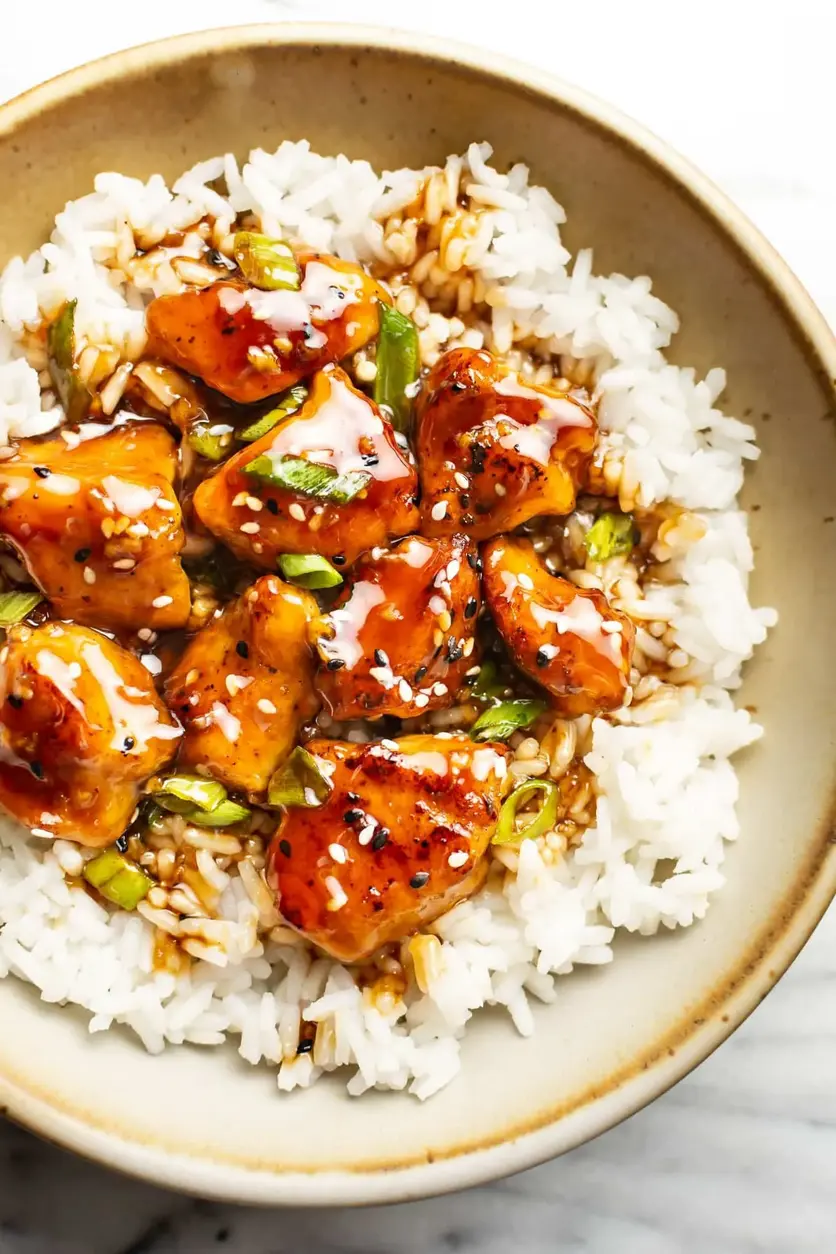
Picture this: golden chicken cubes bathed in a glossy sauce that shimmers like a twilight lantern. The first bite gives a smoky caramelized crust, a mellow sweetness from honey, the saltiness of tamari, and a subtle earthiness from freshly chopped ginger. Aromas drift like incense from the spice rack of the old North African market, while the visual appeal—eye‑catching glazed meat—sets the stage for a dinner that feels both start‑up chic and home‑grown comfort.
I’ve taken this dish home countless times, from lunch in the Brooklyn loft to dinner on a rainy night in Manhattan. My secret? A carefully measured sauce where honey guards against burning, and a technique of quick searing to lock in juices. My pro tip is to skewer the chicken first—yes, it’s a quick trick I learned from a street vendor in Marrakech—then toss it in the pan; it keeps the pieces tender. A common mistake is cutting the chicken too thin; keep it to 1‑inch cubes to avoid drying out.
Why This Easy Teriyaki Chicken Recipe Is the Best
The flavor secret is the fusion of classic Japanese umami with Moroccan saffron‑kissed ginger. My background in French sauce work allows me to temper sweetness aggressively, preventing that cloying glaze cartridge many restaurants bump. This gives each bite a balanced depth reminiscent of my grandmother’s tagine but in a single pan.
Perfected texture comes from quick high‑heat searing that caramelizes the exterior while locking moisture inside. That golden crust is reminiscent of a Parisian coq au vin sear, but the method is stripped of the slow‑cook mire. This step gives you a restaurant‑quality texture in 20 minutes.
Foolproof & fast—because the recipe’s structure is intentional: a single bowl for the sauce, no pre‑washing rice, no double‑layer steps. Even a novice can track the timing and pull out a bowl of savory delight in under half an hour.
Teriyaki Chicken Ingredients
I usually grab the ingredients on a Saturday stroll through the Union Square Farmers Market, where the chicken sellers brag about free‑range stock. The avocado oil, fresh ginger, and tamari come from my favorite organic aisle. Here’s what we’ll need:
Ingredients List
1 ½ pounds boneless skinless chicken thighs, diced into 1‑inch cubes
1 tablespoon avocado oil
1 tablespoon finely chopped ginger
2 cloves garlic, minced
Salt and pepper, to taste
¼ cup tamari soy sauce (or coconut aminos)
¼ cup sake
¼ cup mirin
2 tablespoons honey
Sesame seeds, 1 tablespoon
Sliced green onion, 2 tablespoons
Ingredient Spotlight
Chicken Thighs: House‑clean the best portion for tenderness. Look for dark meat with silver skin; it adds juiciness. Substitute with cutlets for a leaner version; you’ll need to reduce sauce amount slightly to avoid excess moisture.
Tamari Soy Sauce: The low‑salt or gluten‑free variant gives authentic umami. If you prefer a sweeter lean, use coconut aminos; it keeps the recipe gluten‑free while enhancing aroma. Switching to tabasco would be disastrous!
Honey: White or raw works best; it controls glaze thickness. If you’re allergic to honey, try maple syrup for a subtle twist—but the chew will change quite dramatically.
Original Ingredient
Best Substitution
Flavor / Texture Impact
Chicken Thighs
Chicken Breast
Tenderer but less juicy, coat thins.
Tamari
Coconut Aminos
Less salty, sweeter, slightly syrupy.
Honey
Maple Syrup
Changes glaze aroma; subtle tart.
How to Make Easy Teriyaki Chicken Recipe — Step-by-Step
Let’s roll—set your kitchen to action and you’ll see a glassy, aromatic feast waiting to leap onto your plate.
Step 1: Make Sauce
In a medium bowl, whisk together ¼ cup tamari, ¼ cup sake, ¼ cup mirin, and 2 tablespoons honey until the mixture is smooth and glossy. Set aside while you prep the chicken.
💡 emy’s Pro Tip: Warm the sauce slightly in the microwave for 10 seconds—this helps the honey dissolve quickly, preventing clumps.
Step 2: Stir Fry Chicken
Heat 1 tablespoon avocado oil in a large sauté pan or wok over medium‑high heat. Add the diced chicken in a single layer and sear for 1–2 minutes until a golden crust forms. Season with salt and pepper, flip, and cook another 1–2 minutes.
⚠️ Common Mistake to Avoid: Overcrowding the pan can cause steaming instead of searing—work in batches for a crisp finish.
Step 3: Add Sauce
Give the sauce a quick whisk and pour it into the pan along with 1 tablespoon chopped ginger and 2 minced garlic cloves. Stir to coat the chicken, and let the mixture simmer for 4–5 minutes until the sauce thickens and glazes the meat beautifully.
Step 4: Serve
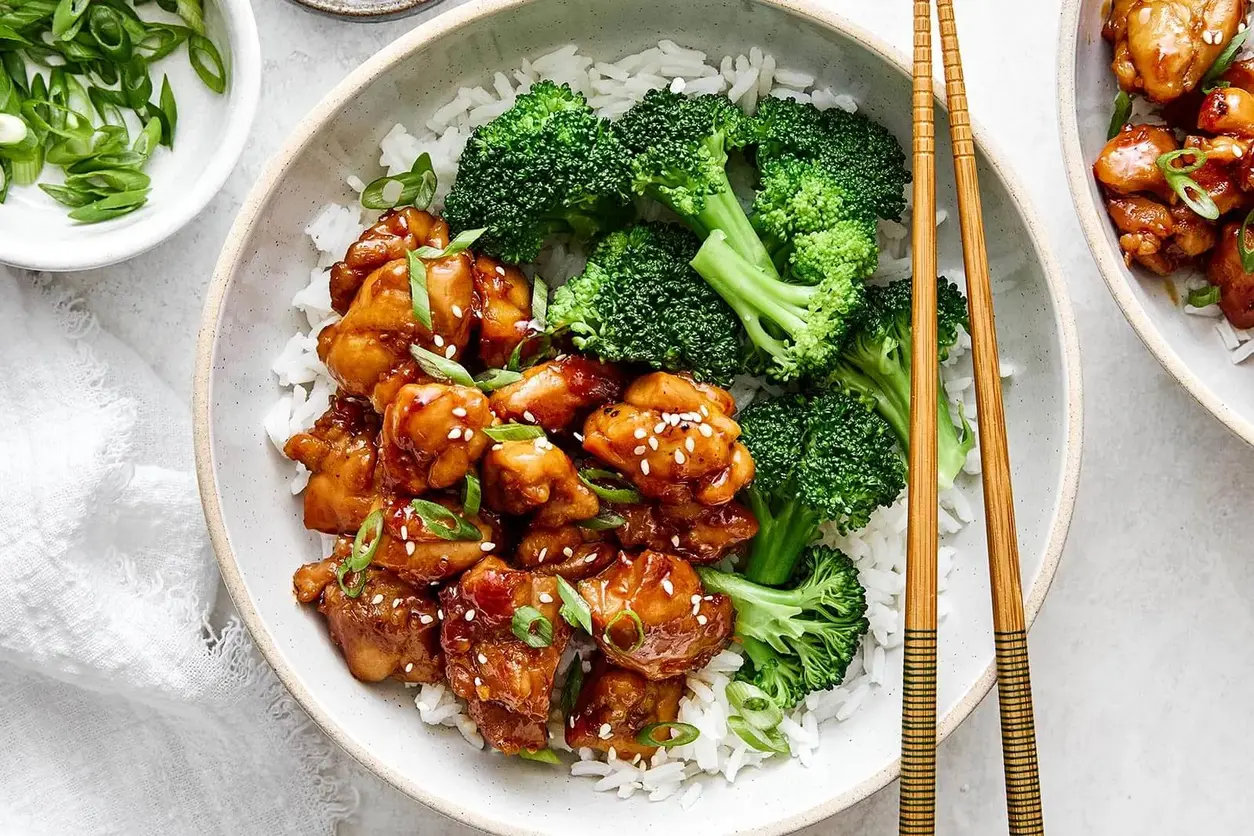
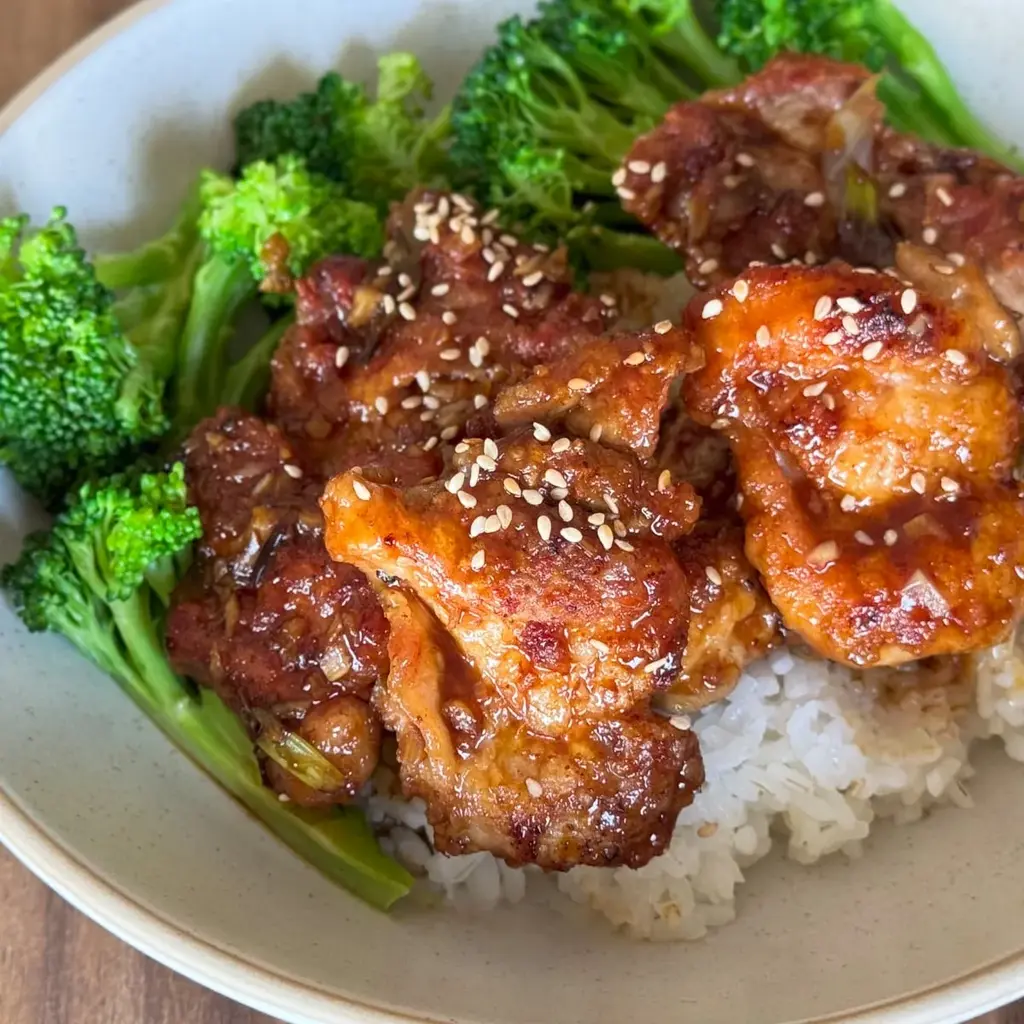
Serve the glazed chicken over a fresh bed of steamed rice and a side of lightly steamed broccoli. Sprinkle diced green onions and 1 tablespoon sesame seeds for the finishing touch.
💡 emy’s Pro Tip: If you like a hint of brightness, add a squeeze of fresh lime before tossing the greens.
Step
Action
Duration
Key Visual Cue
1
Make Sauce
5 mins
Glaze turns silky
2
Stir Fry Chicken
4‑5 mins
Golden crust appears
3
Simmer Sauce
4‑5 mins
Sauce thickens to coat
4
Serve
1‑2 mins
Lime splash gives zing
Serving & Presentation
Plate the chicken over fluffy rice like a city skyline at night, the sesame seeds shining like street lamps. Garnish with green onions, a drizzle of extra sauce, and perhaps a light chiffonade of fresh parsley, borrowed from my Parisian herb pantry. Add a side of pickled daikon or a delicate cucumber salad from my recent August market haul—each bite becomes a contrast of sweet, salty, and tart that echoes the city’s mix of cultures.
A classic pairing is pickled ginger, which lifts the sweetness; or a glass of chilled Riesling to cut through the richness, just as a lunch in Manhattan keeps you refreshed. The dish feels both comforting and cosmopolitan—perfect for a weekday dinner or a brunch gathering with friends.
Pairing Type
Suggestions
Why It Works
Side Dish
Steamed broccoli, pickled cucumber salad, or roasted sweet potatoes
Balance savory with crunch or sweetness.
Sauce / Dip
Extra teriyaki glaze, ponzu, or a tangy yuzu butter
Enhances umami and adds zing.
Beverage
Chilled Riesling, light gin spritz, or sparkling water with lime
Refreshes palate and cuts richness.
Garnish
Sesame seeds, sliced green onions, lemon zest, or micro cilantro
Adds aroma and textural contrast.
Make-Ahead, Storage & Reheating
I love prepping this dish on Sunday for my hectic week. I reheat the chicken in a skillet over medium heat, adding a splash of water to loosen the glaze, so the sauce stays silky. For a quick comeback, the rice is best reheated separately in a microwave covered with a damp paper towel.
Method
Container
Duration
Reheating Tip
Refrigerator
Glass jar
3 days
Reheat over low heat, stir
Freezer
Vacuum seal bag
2 months
Thaw in fridge 24h
Make-Ahead
Stove pot
1 day ahead
Reheat to 165°F, stir
When reheating, I always do a quick sauté with a teaspoon of oil—this restores the sear and keeps the glaze from drying. A more adventurous tip is to finish the dish over a steam rack for 2 minutes to re‑introduce that subtle moisture envelope. After reheating, serve immediately for the best bite.
Variations & Easy Swaps
Variation
Key Change
Best For
Difficulty Impact
Spicy Garlic Teriyaki
Add 1 tsp chili flakes
Spicy lovers
Easy
Gluten‑Free Teriyaki
Use tamari salt‑free
Gluten‑free diet
Easy
Summer Citrus Teriyaki
Replace honey with honey‑lime drizzle
Summer freshness
Easy
Spicy Garlic Teriyaki
In a leap of flavor, sprinkle 1 teaspoon of red chili flakes into the sauce while whisking. The heat mingles with the garlic sweetness, creating a bold bite that people love at rainy Brooklyn brunches.
Gluten‑Free Teriyaki
Replace the ¼ cup tamari with ¼ cup tamari salt‑free or gluten‑free soy sauce. The sauce stays silky, and the taste remains classic—just as I test it every month at the local health‑food store.
Summer Citrus Teriyaki
Add a splash of freshly squeezed lime juice to the sauce, followed by a drizzle of honey‑lime glaze after the chicken sears. The citrus brightens the dish, perfect for a sunny Sunday dinner in the West Village.
How long does teriyaki chicken last in the refrigerator?
Teriyaki chicken can stay fresh in the refrigerator for about three days if stored in an airtight container. The high sugar content of the sauce helps preserve it, but to maintain optimal flavor, I recommend reheating it within 48 hours. If you’re planning ahead, I love freezing small portions for up to two months, then thaw at night for a quick weekday dinner.
Can I make teriyaki sauce without honey?
Absolutely. Honey gives the glaze its silky sweetness, but you can use maple syrup, brown rice vinegar, or even a drizzle of brown sugar. Just mix the alternatives in the same proportions and simmer until the sauce thickens. The key is to achieve a balance between sweetness, umami, and acidity, so taste as you go. This swap is common for vegans and those with restrictions.
What protein can I use instead of chicken?
Teriyaki dishes are ultra‑adaptable. You can replace chicken with sliced beef, pork tenderloin, or even tofu cooked in the same style. For beef, a quick sear will lock in juices; tofu benefits from a light dusting of cornstarch before pan‑frying to create a crisp exterior. Remember to adjust the cooking time to avoid over‑cooking any alternative protein.
How do I prevent the teriyaki sauce from burning?
Burning usually occurs when the pan is too hot or the sugar component is too concentrated. To avoid this, keep the heat moderate and stir the sauce constantly during the simmer stage. Adding a splash of water or a gentle squeeze of lime after the sauce thickens can also break the sugar’s tendency to seize on the pan’s bottom, keeping the glaze smooth and glossy.
Can I use coconut aminos instead of tamari?
Coconut aminos is a great gluten‑free, low‑sodium alternative that will give your teriyaki a slightly sweeter, slightly grainy flavor profile. Use it in equal measure to tamari, but keep a close eye on the thickness—the sweetness can create a thicker glaze. I’ve tested this swap a few times at the store in Brooklyn, and it’s a wonderful option for those who should avoid soy.
What’s the best kind of rice to serve with teriyaki chicken?
Short‑grained jasmine rice is the classic side, offering a fragrant, slightly sticky texture that complements the glaze. For a lighter option, steamed cauliflower rice or a handful of quinoa could work if you’re looking for low‑carb substitutes. My personal choice at home is chalk‑white jasmine, but feel free to experiment with whatever grain makes your palate happy.
How do I pair teriyaki chicken with wine?
A chilled Riesling or a dry, fruit‑forward Pinot Noir provides a refreshing counter‑balance to the rich sauce. If you prefer a red, try a light, oak‑free Syrah that will not overpower the sweetness. The key is to pair a wine with bright acidity to cut the sugars, creating a well‑rounded, satisfying sip. At my favorite wine bar on 5th Avenue, the Riesling is the go‑to supplement for this dish.
Can I add more sauce after cooking?
Definitely. After cooking, you can whisk a little soy sauce, mirin, or a few drops of sesame oil into the pan and simmer for a minute. The extra glaze will cling to the chicken better, but be careful not to add too much, or you’ll drown the flavors. A quick splash just before plating elevates the dish’s visual appeal and adds a glossy sheen.
Share Your Version!
Let me know how your plate turned out—drop a story or a star rating in the comments below. I’d love to see your creative spin—maybe you added a Moroccan spice or a New York–sourced citrus. Snap a photo and tag me on Instagram or Pinterest; I’ll pin it and shout it out to my followers.
From my NYC kitchen to yours — I hope this recipe brings as much warmth to your table as it does to mine. — emy 🧡
📌
Love This Recipe? Save It to Pinterest!
If you enjoyed this Easy Teriyaki Chicken recipe, don’t let it get lost in your browser tabs! 😄 Pin it now so you can find it again anytime — and explore hundreds more tried-and-tested recipes waiting for you on my Pinterest boards.
This easy teriyaki chicken is everyones favorite stir-fry dinner. Its made special tossing chicken thighs with my homemade teriyaki sauce, and comes together in just 20 minutes! Watch the video below to see how I make this in my kitchen!
Ingredients
Scale
1 ½ pounds boneless skinless chicken thighs (diced into 1-inch cubes)
1 tablespoon avocado oil
1 tablespoon finely chopped ginger
2 cloves garlic (minced)
salt and pepper (to taste)
¼ cup tamari soy sauce (or coconut aminos)
¼ cup sake
¼ cup mirin
2 tablespoons honey
sesame seeds
sliced green onion
Instructions
Make the teriyaki sauce. In a medium sized bowl, whisk together the soy sauce, sake, mirin, and honey until everything is well combined. Set this aside.
Stir fry the chicken. Heat the oil in a large saute pan or wok over medium-high heat. Add in the chicken and let it cook for 1 to 2 minutes on one side, until nice and golden. Season the chicken with salt and pepper. Then, flip it over and cook the other side for another 1 to 2 minutes.
Toss together. Give the sauce a quick whisk and add it to the pan along with the minced ginger and garlic. Stir the sauce with the chicken and let it simmer for 4 to 5 minutes until the sauce has reduced and thickened.
Serve on top of a fresh bed of rice and a side of steamed broccoli. Garnish with diced green onions and sesame seeds.
Easy Teriyaki Chicken
Table of Contents
Easy Teriyaki Chicken Sweet & Tangy Sauce from Scratch – A 30‑minute Bite of Happiness
⚖️
Difficulty
Easy
⏲️
Prep Time
10 mins
🕒
Cook Time
20 mins
⏱️
Total Time
30 mins
🍽️
Servings
2
I still remember the first time I walked into a bustling North African souk in Marrakesh, the scent of cumin and sweet saffron mingling in the air. That experience taught me that flavor is a story carried through spices, a lesson I carried with me to the Parisian kitchens where I sharpened my sauce‑making skills, and now to the gleaming food scene of New York. Today, I’m excited to share a simple yet profound twist on a classic: the Easy Teriyaki Chicken with a Sweet & Tangy Sauce from Scratch – it’s a 30‑minute dish that soars past the usual take‑out fare.
Picture a gleaming pan where tender chicken pieces are kissed by a glossy glaze that’s both caramelized and aromatic. The sauce sings with bright notes of ginger and garlic, tempered by a subtle sweetness from brown sugar and the umami richness of soy. As the heat works its alchemy, the sauce thickens, droplets cling to the meat like a fine honey, and a subtle nutty scent of toasted sesame seeds floats in the kitchen. The final bite delivers a satisfying snap of the chicken’s exterior alongside a tender, juicy interior— a harmony that has me reaching for the salt shaker just so.
I’ve favored this version for years on the kitchen side of Manhattan, and it’s become a staple when I need a reliable, low‑stress meal. My secrets? A quick cornstarch bloom to ensure the sauce coats the chicken evenly, a blend of mirin and soy that gives that unmistakable teriyaki depth, and a final spritz of rice vinegar to lift the sweetness. Common pitfalls include overcooking the chicken or letting the sauce boil too long and lose its glossy sheen—I’m going to share how to dodge those traps later.
Why This Easy Teriyaki Chicken Recipe Is the Best
The flavor secret lies in making the sauce from scratch. By blending mirin, soy sauce, and a touch of rice vinegar with fresh ginger and garlic, the dish carries a depth that pre‑made sauces can’t replicate. My Parisian training taught me to balance sweetness and umami, and the Moroccan palate for vibrant, aromatic dishes ensures each bite feels alive.
The texture is achieved by coating the chicken in a quick cornstarch slurry before searing, which creates a crisp exterior while preserving a soft interior. Cutting the chicken into 1‑inch pieces, as I do, ensures even cooking and more surface area for the sauce to cling to.
It’s foolproof and fast. With a prep of just 10 minutes and active cooking for 20, even a busy Mid‑town commuter can turn this into a wholesome dinner that feels handcrafted.
Teriyaki Chicken Ingredients
I usually pick out fresh, unbrined chicken breasts from the local Manhattan farmer’s market, then let them rest at room temperature. The brown sugar I buy from a specialty aisle gives a finer sweetness, and I grate fresh ginger right in the kitchen to unlock its aroma.
Ingredients List
2 chicken breasts (cut into 1″ pieces)
1/2 teaspoon garlic powder
Pepper, to taste
3 tablespoons cornstarch
3 tablespoons olive oil (divided)
¼ cup brown sugar (packed)
1 teaspoon grated fresh ginger
2 cloves garlic, minced
3 tablespoons mirin (see note)
2 tablespoons soy sauce
1 teaspoon rice vinegar (or apple cider vinegar)
½ cup water
1 tablespoon cornstarch (for sauce)
Optional garnish: chopped scallions & sesame seeds, to taste
Ingredient Spotlight
Chicken breasts: Choose firm, boneless pieces that stay juicy. For a slightly richer flavor, you can swap for thighs, but keep the cooking time in mind.
Mirin: This sweet rice wine is pivotal for the classic teriyaki sheen. If you can’t find mirin, a splash of honey or maple syrup plus a dash of rice vinegar mimics its sweetness and acidity.
Soy sauce: Opt for low‑sodium to keep salt levels in check. Regular soy gives classic depth, but you can try tamari if you’re gluten‑sensitive.
Sesame seeds: Toast them lightly in a dry pan to release their nutty fragrance—this adds a subtle crunch to the finished dish.
Original Ingredient
Best Substitution
Flavor / Texture Impact
Chicken breasts
Chicken thighs
Richer, juicier; slightly longer cook time.
Mirin
Honey + rice vinegar
Sweet with a mild acidity; keeps glaze glossy.
Soy sauce
Tamari
Same umami depth; gluten‑free version.
How to Make Easy Teriyaki Chicken — Step-by-Step
Let’s dive straight in; you’ll have a delicious meal on the table in no time.
Step 1: Whisk the Sauce
In a small bowl, combine ¼ cup brown sugar, 1 tablespoon cornstarch, 3 tablespoons mirin, 2 tablespoons soy sauce, 1 teaspoon rice vinegar, and ½ cup water. Whisk until the sugar dissolves and the mixture is unrippled. Stir in the grated ginger and minced garlic.
💡 emy’s Pro Tip: Whisking the sauce first ensures a silky, lump‑free glaze that clings beautifully to the chicken.
Step 2: Coat the Chicken
Place the chicken pieces in a bowl. Sprinkle garlic powder, pepper, and 3 tablespoons cornstarch. Toss until every bite is lightly dusted. This coating creates a crisp bite and holds the sauce.
⚠️ Common Mistake to Avoid: Skipping the cornstarch will leave the sauce running, making the dish cloyingly wet.
Step 3: Cook the Chicken
Heat 2 tablespoons olive oil in a large skillet over medium‑high heat. Add about half the chicken. Cook 4 minutes, then flip and brown another 3‑4 minutes until the internal temp reaches 165°F (74°C). Remove to a plate. Repeat with the remaining oil and chicken.
💡 emy’s Pro Tip: Cook in batches to keep the pan from steaming—this gives each piece a golden crust.
Step 4: Merge and Glaze
Return the cooked chicken to the pan, pour in the pre‑whisked sauce, and let it bubble for a minute, stirring constantly, until thickened to a glossy sheen. Serve over steamed rice, garnished with scallions and toasted sesame seeds.
⚠️ Common Mistake to Avoid: Over‑simmering the sauce will cause it to burn and become bitter—watch carefully as it thickens.
Step
Action
Duration
Key Visual Cue
1
Whisk sauce
5 mins
Smooth, no lumps
2
Coat chicken
3 mins
Even coat, slight sheen
3
Cook chicken
8‑10 mins
Golden crust, steam stops
4
Glaze
2‑3 mins
Glassy coating, fragrant steam
Serving & Presentation
Serve the glazed chicken over a bed of fluffy white rice, or for a low‑carb twist, swap for cauliflower rice. Sprinkle extra scallions and sesame seeds for a pop of color and crunch. The dish pairs wonderfully with a crisp glass of sparkling rosé or a chilled green tea, echoing the sweet‑sour notes on the plate.
If you’re bringing this to work or a roommate’s apartment, wing it with a quick side of steamed bok choy or sautéed shiitake mushrooms—both absorb the sauce beautifully.
Pairing Type
Suggestions
Why It Works
Side Dish
Steamed bok choy, sautéed greens
Drains excess sauce, adds green contrast.
Sauce / Dip
Extra soy glaze, chili oil
Heightens umami and adds heat.
Beverage
Sparkling rosé, green tea
Balances sweetness and cleanses palate.
Garnish
Fresh cilantro, nori strips
Adds herbaceous freshness and sea‑salt flavor.
Make‑Ahead, Storage & Reheating
I’ve built this recipe into my weekly meal‑prep routine. The dish keeps well for 2 days in the fridge and up to 3 months frozen. Reheating is a breeze—place the chicken in a skillet over medium heat, splash a little water, and cover to steam the sauce back to shine.
Method
Container
Duration
Reheating Tip
Refrigerator
Sealed plastic tub
Up to 2 days
Warm in skillet with splash of water.
Freezer
Freezer‑safe zip box
Up to 3 months
Thaw overnight, reheat as above.
Make‑Ahead
Meal‑prep bowl
Prep 3 days in advance
Reassemble with fresh rice when ready.
When I rush after a long subway ride, I throw a handful of pre‑soaked veggies into a hot skillet, pour the dish on top, and stir‑fry in five minutes—saving me a trip to the deli. The sauce holds up, and the chewiness makes every bite feel homemade.
Variations & Easy Swaps
Variation
Key Change
Best For
Difficulty Impact
Soy‑Free Version
Replace soy with coconut aminos or tamari
Gluten‑free diners
Same; no extra steps.
Pineapple Twist
Add ½ cup fresh pineapple chunks to sauce
Summer freshness
Requires adding fruit mid‑simmer.
Spicy Kick
Include 1 tbsp sriracha or fresh red pepper flakes
Heat lovers
Simple glaze adjustment.
Soy‑Free Version
Swap soy sauce for tamari or coconut aminos, keeping the same 2‑tbsp amount. The umami remains, but the sauce becomes naturally gluten‑free—tested at my community farm market and loved by my gluten‑sensitive roommates.
Pineapple Twist
Add half a cup of diced fresh pineapple to the sauce after whisking. It gives a tropical burst and mellowes the sweetness, a trick I discovered during a weekend visit to a Queens farmer’s market.
Spicy Kick
Stir in a tablespoon of sriracha or a sprinkle of crushed red pepper before cooking the chicken. The heat extends the sauce’s flavor profile and pairs great with a cooling cucumber salad.
What is the best way to keep teriyaki sauce from burning?
Teriyaki sauce can burn quickly because of its high sugar content. The trick is to stir constantly, reduce the heat after it starts bubbling, and add a splash of water or broth when it’s thickening. Another tip is to use a low‑heat setting or turn off the burner for a minute or two after the sauce has reached the right thickness to let it finish collapsing without scorching.
Can I use ground chicken instead of breast?
Yes, ground chicken can be used, and it cooks faster (about 8–10 minutes) than breast pieces. Because the flavor is more evenly distributed, you’ll still get great sauce absorption, but the texture will be more homogenous. Just cramp the ground chicken into a 1‑inch shaped patty or stick it in a thin layer and season lightly before adding the sauce.
What’s the travel‑friendly way to serve teriyaki chicken?
A mess‑free solution is a reusable silicone bento box. Pre‑cook the chicken and sauce separately, then layer rice at the bottom, tuck the glazed chicken on top, and finish with fresh scallions. When ready to eat, toss the box in a microwave for 30‑second bursts and the dish will re‑melt into a comforting steam‑powered plate.
How do I reduce sodium in this teriyaki recipe?
Cut the soy sauce by half and supplement the salty flavor with a tiny pinch of Himalayan salt or a splash of low‑sodium soy sauce. Add a dash of sesame oil after cooking to maintain aroma, and consider seasoned rice vinegar to add depth without the extra sodium. The key is to balance salty versus sweet, so taste as you go and adjust gradually.
What is the stock‑size I should use for the sauce?
For this recipe, use a stock size of about ¾ cup of liquid, which drains quickly from the thickened sauce. Keep in mind that the more you add water or stock, the thinner the glaze will become. If you prefer a firmer sauce, reduce the liquid to ½ cup or cook a few minutes longer on low heat to evaporate excess moisture.
I don’t have mirin, what can I use?
Mirin can be substituted with a mixture of 1 part honey or maple syrup and 1 part rice vinegar, a pinch of salt, and a dash of soy sauce. This blend replicates the sweetness and acidity profile closely. If the pantry is limited, just sweeten the sauce with a tablespoon of brown sugar and keep the rice vinegar for acidity.
Does the chicken stay moist after storage?
Yes, if the chicken is stored in a sealed, airtight container, it retains its juiciness for up to 2 days in the fridge. Adding a splash of broth or sesame oil during reheating helps restore moisture that might have been lost during freezing. The chicken will come back to life with the sauce’s tangy glaze, making week‑night dinners feel freshly made.
Which rice works best with teriyaki chicken?
Short‑grain jasmine rice or sushi rice is my favorite because its stickiness pairs with the sauce and keeps the flavors together. Brown rice offers a nuttier backdrop if you’re calorie‑conscious, though it requires additional cooking time. For a quick option, simply use frozen rice blends that pop in the microwave, and pour the leftover sauce over them to coat evenly.
Share Your Version!
Give this dish your personal twist and let me know how it turned out! Drop a ⭐ rating in the comments, write a quick note, and let me see your take.
Snap a photo, tag @cookingwithemi on Instagram or Pinterest, and use the hashtag #gnuslice for a chance to be featured in my weekly “Cooking in NYC” series.
If you swap the chicken for tofu, how does that change the texture and flavor? I’d love to hear your vegan version!
From my NYC kitchen to yours — I hope this recipe brings as much warmth to your table as it does to mine. — emy 🧡
📌
Love This Recipe? Save It to Pinterest!
If you enjoyed this Easy Teriyaki Chicken recipe, don’t let it get lost in your browser tabs! 😄 Pin it now so you can find it again anytime — and explore hundreds more tried‑and‑tested recipes waiting for you on my Pinterest boards.
This easy teriyaki chicken recipe has the most tender, delicious chicken bites coated in a sweet teriyaki sauce from scratch. It’s a 30-minute dish that’s better than takeout!
Add the sauce ingredients to a small bowl and whisk together.
Cut the chicken into about 1" pieces and add it to another bowl. Add the garlic powder and pepper and stir until coated, then add the cornstarch and stir again to coat.
Add 2 tablespoons of oil to a skillet. Let it heat for a few minutes over medium-high heat. Cook the chicken in 2 batches (don't crowd the pan). Cook the chicken for 4 minutes and then flip (I use tongs to make it easy) and cook for another 3-4 minutes or so. Chicken should be browned and cooked through (165F). Transfer chicken to plate. For the second batch, I add another tablespoon of olive oil to the pan.
Once the second batch of chicken is done, add the chicken that's on the plate back to the pan. Stir in the sauce and let it bubble for a minute or so, until thickened. Serve immediately over rice with scallions & sesame seeds sprinkled on top.
Air Fryer Korean Soy Garlic Chicken Thighs (Easy Recipe)
Table of Contents
Air Fryer Korean Soy Garlic Chicken Thighs – Lightly Bread with Potato Starch for a Crispy Exterior
⚖️
Difficulty
Easy
⏲️
Prep Time
10 mins
🕒
Cook Time
20 mins
⏱️
Total Time
30 mins
🍽️
Servings
2
Growing up in a bustling Moroccan souk, I learned that a few simple pantry staples could transform an everyday dinner into a street‑carne of flavors. Back in Paris, the mastery of a light glaze began my fascination with sauces, and now, in the heart of New York City, I fuse those techniques to create a sauce that sings with sweetness and daring heat. This one‑pan, almost‑fry “Air Fryer Korean Soy Garlic Chicken Thighs” is the perfect marriage of Old‑World intrigue and modern convenience.
Imagine the crisp bite of fresh garlic sinking into a slightly kızarmalı chicken thigh, while the black pepper dances with a splash of honey and a hint of soy sauce. The result is a glossy, caramelized surface that crackles with garlic crunch. There’s the aroma of a Moroccan spice market mingling with the scent of a New York street, a sky‑blue haze hinting at most even as the sauce melds in the pan. It’s a story that begins in the sun‑lit kitchen of your table and ends as a golden finish.
I like to emphasize that this recipe is quick, clean, and perfect for the hurried foodie of Times Square. The only twist is using potato starch to lightly bread the thighs. I’ll share a pro tip about keeping the starch dry to preserve a crisp exterior and a common mistake: adding too much oil will water‑coat the chicken, making it mushy. Trust me, it’s simple: keep the oil at a medium‑high heat.
Why This Air Fryer Korean Soy Garlic Chicken Thighs Recipe Is the Best
The secret is in the coating—a dusting of potato starch and fine flour that forms a crunch that corners the chicken. As I trained in Paris, I learned how a fine dust can turn a denser protein into a caramelized crust that sears within minutes. That technique turns an ordinary thigh into a pan‑frit with a glossy glaze that gleams like a sunset over the Mediterranean.
Texture is everything. By letting the chicken sit in the oil long enough to develop a golden crust, the inner meat remains juicy and luscious. The aromatics—garlic, white onion, and chili—introduce heat that crisp, but never burn, allowing the sweetness to highlight rather than overpower.
It’s a fool‑proof, fast recipe because the single‑pan method eliminates the need for a protracted spice infusion or a slow sous‑vide. Anyone, even a novice in the kitchen, can whip it up for a weeknight dinner without fuss.
Soy Garlic Chicken Thighs Ingredients
I usually pick these ingredients at the Queensboro Plaza or the farmers nearby on 34th Street. The fresh chicken comes from a local humane‑friendly, the garlic is roasted to a rosy golden hue, and the soy sauce has that deep, umami western finish that reminds me of a street‑carne after a market service in my mother’s kitchen back in Fez.
Ingredients List
1 lb boneless skinless chicken thighs
3 tbsp potato starch
3 tbsp all‑purpose flour
1 tsp garlic powder
½ tsp salt
½ tsp black pepper
3 tbsp neutral oil (canola or grapeseed)
8 cloves garlic, minced
2 stalks green onion (green and white parts separated)
1 tsp red chili flakes
½ cup chicken stock (or water + bouillon)
3 tbsp honey
1 tbsp rice vinegar
1 tbsp dark soy sauce
1 tsp cornstarch
Green onion (green part) for garnish
Sesame seeds for garnish
Ingredient Spotlight
Chicken thighs – Fresh, locally sourced thighs give a juicy, tender center. Look for whole, dark‑tinted skin and a firm texture. If you prefer a leaner cut, choose bone‑in‑stone for a smoother bite.
Garlic – Choose “English” or “Sivri” varieties for a sweeter garlic. Roast the cloves in a dimple of plain metal until you get the golden, caramelized flavor. Substitute with roasted new‑style garlic if you’re a bit sensitive to the pungent bite.
Honey – This sweet liquid is what I used for my mother’s flatbread. A 3‑day floral honey keeps a smooth background and acts like lulling glaze to keep the sauce crisp. Skip the liquid if you’re vegan; use agave syrup for a twist.
Original Ingredient
Best Substitution
Flavor / Texture Impact
Chicken thighs
Boneless chicken breasts
Same juiciness, slightly slimmer
Potato starch
Cornstarch or mashed potatoes
Keeps crunch but reduces flour-like texture
Honey
Agave nectar
Adds floral sweet note but lowers caramel-like weight
How to Make Air Fryer Korean Soy Garlic Chicken Thighs — Step-by-Step
I love to start the sauce before the heat, so we’ll prep all the sauce first, then set the chicken aside while we dust them.
Step 1: Prepare the Sauce
Combine ½ cup chicken stock, 3 tbsp honey, 1 tbsp rice vinegar, 1 tbsp dark soy sauce, and 1 tsp cornstarch in a small bowl, whisk until smooth. Set aside. This full‑gloss sauce takes on the flavor of the meal before the heat.
💡 emy’s Pro Tip: Whisk the sauce until the cornstarch just thickens; this will keep the sauce silky when you add it later.
Step 2: Dry the Chicken
Pat the 1‑lb boneless thighs with a paper towel to remove excess moisture; this helps the coating stick in the pan.
⚠️ Common Mistake to Avoid: Trying to soak the chicken in after coating—this makes a soggy center.
Step 3: Mix the Coating
In a shallow dish, mix 3 tbsp potato starch, 3 tbsp flour, 1 tsp garlic powder, ½ tsp salt, and ½ tsp black pepper.
💡 emy’s Pro Tip: Tapping the mixture into a plastic bag keeps the starch from clumping.
Step 4: Coat the Chicken
Lightly dredge each side of the thighs in the coating; you’ll see a light brown crust forming. Leave them to rest for a few seconds—this will allow the starch to adhere.
⚠️ Common Mistake to Avoid: Skipping the rest period can cause the coating to stick to the pan.
Step 5: Warm the Oil
Pour 3 tbsp neutral oil into a large skillet; heat over medium‑high until shimmering but not smoking. You’ll hear a gentle hiss.
💡 emy’s Pro Tip: Use canola or grapeseed oil for a lighter color that doesn’t bleed into the sauce.
Step 6: Fry the Chicken
Add the coated thighs to the skillet. Cook 7 minutes per side or until golden brown on both sides; the interior should still be juicy.
⚠️ Common Mistake to Avoid: Over‑frying will cause a hard center.
Step 7: Remove the Chicken
Transfer the browned thighs to a plate and set aside. The aroma will start to perfume the room.
💡 emy’s Pro Tip: Let the thighs rest for 2 mins—this allows juices to settle.
Step 8: Saute the Aromatics
Add the minced garlic, white parts of the green onion, and chili flakes to the same pan. Saute 3 min until the garlic turns golden and the aroma stays luminous.
⚠️ Common Mistake to Avoid: Burning garlic too soon; you’ll get bitter.
Step 9: Add the Sauce
Pour the pre‑prepared sauce over the aromatics; let it simmer for 1 min until it thickens.
💡 emy’s Pro Tip: The sauce thickens as it meets heat—watch it lightly bloom.
Step 10: Return the Chicken & Finish
Add the chicken back to the pan. Cook 5 min, turning occasionally, until the chicken is fully cooked and coated with a glossy glaze.
⚠️ Common Mistake to Avoid: Draining the butter before returning the chicken—keep the sauce from drying out.
Step
Action
Duration
Key Visual Cue
1
Mix sauce ingredients
1 min
Smooth, glossy consistency
2
Dry chicken thighs
2 min
Dry surface
3
Mix coating
30 sec
Light brown rust
4
Coat chicken
30 sec
Starch settle on surface
5
Heat oil
1 min
Glinting oil surface
6
Fry chicken
14 min
Golden crust
7
Remove chicken
20 sec
Soft fragrant
8
Saute aromatics
3 min
Golden garlic
9
Add sauce
1 min
Silky glaze
10
Return and finish
5 min
Glazing glaze
Serving & Presentation
Plate the chicken on a wooden board flaked with olive oil. Drizzle the remaining sauce over the top, then scatter some toasted sesame seeds just like my mother’s miniature dishes. The gentle crunch of the sesame gives a subtle contrast to the silky glaze.
Serve with steamed jasmine rice or a crisp cauliflower rice, that keep the plate balanced and the colors dance across the palate. On a side, bring a side dish of slow‑roasted mushrooms, or a light salad of micro‑greens and a pop of lime for the final pop.
If you want a more dramatic presentation, garnish the dish with a handful of paprika dust, or a few micro‑flower petals from a downtown pharmacy, to accent the colors.
Pairing Type
Suggestions
Why It Works
Side Dish
Steamed green beans; roasted popcorn; carrot ribbons
Bright colors contrast with orange glaze, add crunch.
Sauce / Dip
Yogurt with fresh mint; tomato coulis; citrus aioli
Cool flavors balance salty sweetness.
Beverage
Sparkling glass; iced tea; white wine
Cold pours the palate after heavy sauce.
Garnish
Sesame seeds; micro‑angel chilies; parsley dust
Adds textural sparkle.
Make-Ahead, Storage & Reheating
I usually make 2‑day batches in the fridge: I let the chicken rest at room temperature (about 70°F), then pack them in narrow containers. I keep a backup set in the freezer for the weekend; freeze the sauce portion separately so you can heat them in a microwave before serving.
Method
Container
Duration
Reheating Tip
Refrigerator
Glass jar
2 days
Heat in microwave 30‑sec before serving.
Freezer
Tight‑sealed plastic container
2 months
Microwave in a pot or 2‑min stew to reheat.
Make‑Ahead
Compostable lunch boxes
1 week
Keep sauce ready in a separate cup.
During reheating, my tip is to toss the chicken pieces in hot oil for a minute to bring the glaze lime again. That keeps the sauce from thickening too much and preserves the cherished texture. If you’re in a hurry, you can finish the dish straight from a sealed bag.
Variations & Easy Swaps
Variation
Key Change
Best For
Difficulty Impact
Kimchi Twist
Add diced kimchi at the last stir
Spicy lovers, Korean seekers
Easy
Gluten‑Free
Swap potato starch for almond flour, keep the coat texture
Gluten‑free diners
Medium
Spring Peach Glaze
Finish with sliced peaches and a splash of whisky
Summer parfaits
Easy
Kimchi Twist
Add spicy kimchi in a new pan. The fermented taste lifts the dish to a floor‑to‑sky royalty, while the airy sheen keeps the sauce crisp inside.
Gluten‑Free
Swap potato streak for almond dust. It keeps the alcohol interference but trims away the chewy structure; the final bite tastes like dusty pearl.
Spring Peach Glaze
Finish with sliced peaches and a splash of bourbon – a gorgeous minglée over a fresh glass.
What is the best pan to cook soy garlic chicken thighs?
For a quick and crispy finish, I recommend a large stainless steel skillet that can withstand high heat. If you prefer a cleaner countertop, a non‑stick pan will work, but be cautious not to have the surface dry too hard. A well‑seasoned steel pan lets the chicken brown beautifully while locking in moisture, just like a vintage Paris restaurant in the heart of NYC.
How long does it take to cook soy garlic chicken thighs?
The whole process typically clocks around 30 minutes from prep to plate. Each take 10 minutes of prep, 20 minutes of cooking, and 10 minutes of resting – a workers’ lunch at a New York café-style brunch. It’s quick enough for a busy weeknight but long enough for flavors to marry.
What ingredient can replace potato starch in the coating?
If you’re allergic to wheat or feel shy about it, corn blue or mung beans can substitute. They’ll still give that light crunch and separate from the fried zones in a bowl like a suburban dinner box. They preserve the buttery coating look you love.
What side dish goes best with soy garlic chicken thighs?
A fresh salad of cucumber, radish, and a pinch of olive oil cuts through the rich glaze. Also, sautéed mushrooms or a mild potato mash keep the plate bright while matching the briny tones. I pair a light sweet rice pilaf to tone down the glaze just like the mint on a Moroccan platter.
Can I use a skillet instead of an air fryer?
Absolutely. A heavy‑bottom skillet lets you sear the chicken to a golden hue, then finish the glaze in the same pan. That’s how I developed this recipe back in Cairo. The key is to control the heat so the coating forms a golden crust without burning the sauce.
Do I need to marinate the chicken before cooking?
No. The quick coating of the rice or potato starch combined with the swirling sauce washes the chicken’s surface, and a little salt in the pan keeps the center juicy to say a warm invitation. For extra flavor, sprinkle a very light herb or a dash of lemon juice after the garnish.
How do I store leftover soy garlic chicken thighs?
You can keep them in a covered jar in the refrigerator for up to 3 days. To retain the glaze texture, place them in a chilled butter cup, adding a squeeze of fresh lemon or a tiny pinch of smoked paprika before reheating. Never over‑heat them; keep the temperature at 140°F (60°C) when you reheat.
What’s a good sauce to serve with soy garlic chicken thighs?
A sprinkle of yogurt rolls with a cumin‑so wine or a fresh vinaigrette with parsley and lemon zest strikes the midnight. It keeps the dish vibrant and light, balancing each bright hour mentioned in my NYC day‑night plan for kitchens. It’s also the standard pairing at my favorite rooftop restaurants.
Share Your Version!
I’d love to hear your own tweaks—like how you adjust the heat or add a dash of lemon zest to brighten the sauce. Drop a rating or comment below, or post a picture of your plated dish on Instagram or Pinterest and tag @cookingwithemi. 🌟
Got a favorite spice block you dip the chicken in? Tell me what you tried and let me know how you made it your own. I can’t wait to see your take on this classic!
From my NYC kitchen to yours — I hope this recipe brings as much warmth to your table as it does to mine. — emy 🧡
📌
Love This Recipe? Save It to Pinterest!
If you enjoyed this Air Fryer Korean Soy Garlic Chicken Thighs recipe, don’t let it get lost in your browser tabs! 😄 Pin it now so you can find it again anytime — and explore hundreds more tried‑and‑tested recipes waiting for you on my Pinterest boards.
📌 Pin this recipe · 🔁 Re-pin your favorites · 💬 Tag me when you make it — I love seeing your creations!
Got feedback on the recipe? Or a kitchen trick you’re curious about? Drop a comment below or shoot me a pic of your dish on Instagram. I’m excited to see what you cook!
Soy Garlic Chicken Thighs are 10 /10 delicious and super easy to make. Everything can be done in one pan. Lightly bread with potato starch. Pan fry the chicken pieces, add the sauce and let it thicken and thats it.
Ingredients
Scale
Chicken
1 lb chicken thighs boneless skinless
3 tbsp potato starch
3 tbsp all purpose flour
1 tsp garlic powder
1/2 tsp salt
1/2 tsp black pepper
3 tbsp neutral oil for pan frying
8 cloves of garlic (minced)
2 stalks green onion (green and white parts seperated)
1 tsp red chili flakes
Sauce
1/2 cup chicken stock (sub: water & chicken bouillon)
3 tbsp honey
1 tbsp rice vinegar
1 tbsp dark soy sauce
1 tsp cornstarch
Garnish
Green onion (green part)
Sesame seeds
Instructions
SOY GARLIC CHICKEN SAUCE: combine all the sauce ingredients 1/2 cup chicken stock (or sub with water and chicken bouillon), 3 tbsp honey, 1 tbsp 1 tbsp rice vinegar, 1 tbsp dark soy sauce, 1 tsp cornstarch, mix then set aside.
CHICKEN: Dry the boneless skinless chicken thighs with a paper towel.
Mix the potato starch, flour, garlic powder, salt, and black pepper on a large plate.
Lightly coat the chicken thighs on both sides.
Heat enough neutral oil in a large frying pan over medium-high heat to cover the bottom of the pan.
Once the oil is hot, add the chicken thighs and fry until golden brown on both sides, about 7 minutes per side.
Remove the chicken from the pan and set aside on a plate.
SAUCE: In the same pan, add the minced garlic, the white part of the green onion, and red chili flakes and saute for 3 minutes until the garlic is golden brown.
Add the sauce to the pan and cook for 1 minute or until the sauce has thickened.
Add the chicken back to the pan. Cook for 5 minutes or until the chicken is cooked and covered with the glossy sauce.
Serve it with your favorite veggies and steamed rice.
Easy Chicken Stir Fry with vegetables
Table of Contents
Easy Chicken Stir Fry with Vegetables – Honey Garlic Twist
⚖️
Difficulty
Easy
⏲️
Prep Time
15 mins
🕒
Cook Time
20 mins
⏱️
Total Time
35 mins
🍽️
Servings
4
I was strolling through the farmers market on a crisp Brooklyn morning, handpicking crisp broccoli and rainbow peppers, when a sudden craving hit—an Asian‑inspired stir‑fry that could turn an ordinary weeknight into a culinary celebration. The “Easy Chicken Stir Fry with Vegetables” is my answer to fast, healthy dinners that never compromise on flavor. With its honey‑garlic sauce twist, this dish blends the sweetness of honey and the sharpness of soy into a glaze that clings to tender chicken and crisp veggies. It’s the kind of meal that feels like a hug from my Moroccan mother’s kitchen, a whisper of Parisian sauces, and the hustle of New York life all in one bowl.
Picture the sizzling skillet: golden‑brown chicken strips, steam curling from vibrant green broccoli, and the pop of crimson bell peppers. A burst of aromatic ginger and garlic powder fills the air, while glossy honey‑soy drizzle creates a caramelized sheen. As the sauce simmers, it thickens into a silky coating that clings to each morsel, marrying texture with flavor. The final dish boasts a bright, savory-sweet profile—sweetness from honey, umami from soy, and a subtle kick from pepper—making every bite a balanced, wholesome experience that satisfies both the palate and the soul.
What sets this recipe apart is the simple, time‑saving honey‑garlic sauce and my personal technique of searing the chicken first, which locks in moisture and creates a golden crust that resists sogginess. I’ll share a pro tip for maximizing flavor at the last step, and warn you against a common mistake: over‑cooking the veggies. With just a few adjustments, even novice cooks can master this vibrant stir‑fry.
Why This Easy Chicken Stir Fry Recipe Is the Best
The secret sauce, literally, lies in my honey‑garlic glaze—a quick blend of honey, soy sauce, and subtle ginger heat that gives the dish a signature sweet‑savory depth. Drawing on my Moroccan background, I infuse the sauce with a touch of cumin, creating an earthy undertone that’s both familiar and exotic.
A key technique borrowed from my Parisian training is the “quick sear” for the chicken. By browning the strips before adding them back to the pan, I preserve juiciness and develop a caramelized crust that adds a subtle crunch. This method turns a simple stir‑fry into a restaurant‑quality entrée in under half an hour.
I’ve tweaked this recipe countless times, ensuring that it remains foolproof for beginners—no special gadgets, no elaborate prep. The step‑by‑step guidance paired with clear timing cues guarantees success, making even a hectic NYC night easier and more delicious.
Easy Chicken Stir Fry Ingredients
I sourced the freshest broccoli and bell peppers from the Brooklyn market, and I always choose lean chicken tenders from a local grocery store’s fresh section. The ingredients are budget‑friendly yet deliver big on flavor, proving that a quick stir‑fry doesn’t have to be expensive.
Ingredients List
1 lb chicken tenders, cut into strips
1 head broccoli, cut into bite‑sized florets
2 bell peppers, thinly sliced (mix colors for visual appeal)
1 yellow onion, chopped
¼ cup + 2 tbsp soy sauce
3 tbsp olive oil
2 ½ tbsp honey
1 ½ tsp garlic powder
½ tsp ground ginger
pepper, to taste
salt, to taste
Ingredient Spotlight
Chicken Tenders: Opt for lean, fresh cuts for quick cooking and tenderness. In a pinch, chicken thighs (boneless, skinless) work beautifully, adding slight juiciness—just trim excess fat.
Broccoli: Look for firm florets with tight heads. If you prefer a sweeter bite, blanch the florets in salted water for 30 seconds before stir‑frying.
Bell Peppers: The crunch and bright color are essential. If you’re short on time, pre‑sliced pepper strips from your local store save prep time.
Honey: A medium‑strength, liquid honey gives the glaze a balanced sweetness. If you can’t find honey, substitute with maple syrup; it imparts a subtle depth but be mindful it’s more liquid.
Original Ingredient
Best Substitution
Flavor / Texture Impact
Chicken tenders
Boneless thigh strips
Slightly richer flavor, more juicy
Broccoli
Cauliflower florets
Milder taste, similar crunch
Honey
Maple syrup
Slightly different sweet profile
How to Make Easy Chicken Stir Fry — Step-by-Step
Let’s dive into the quick, flavor‑rich journey that will have you eating this stir‑fry from the first bite.
Step 1: Prepare Vegetables
Chop broccoli into bite‑sized florets, slice bell peppers into thin strips, and mince a yellow onion into small cubes. Arrange them on a flat surface to keep everything organized.
💡 emy’s Pro Tip: Pre‑slicing the veggies before cooking saves time and keeps the stir‑fry crisp; it also ensures even heat distribution.
Step 2: Cook Chicken
Heat 1 tbsp of olive oil in a wok or large skillet over medium heat. Add the seasoned chicken strips, season with salt and pepper, and sauté until lightly browned on both sides and cooked through. Remove from heat.
⚠️ Common Mistake to Avoid: Overcrowding the pan can cause the chicken to steam rather than sear, resulting in a soggy exterior.
Step 3: Cook Vegetables
Add 2 tbsp of olive oil to the same pan, then toss in broccoli, bell peppers, onion, garlic powder, and ground ginger. Stir and sauté for about 10 minutes, or until the veggies are tender yet still crisp.
💡 emy’s Pro Tip: Keep the heat medium‑high to maintain the veggies’ bright color and crunch.
Step 4: Add Sauce
Lower the heat and pour in ¼ cup soy sauce followed by 2½ tbsp honey. Simmer gently, allowing the sauce to thicken slightly, and stir to coat the vegetables evenly.
⚠️ Common Mistake to Avoid: Using a high heat at this stage can burn the honey; keep it low to preserve the sweetness.
Step 5: Recombine
Return the cooked chicken to the pan, stir everything together, and simmer for another 5 minutes for flavors to meld. Adjust salt and pepper to taste.
💡 emy’s Pro Tip: A quick splash of lime juice at the end brightens the dish and balances the honey’s sweetness.
Step 6: Serve
Plate the stir‑fry over steamed rice or noodles, garnish with chopped green onions, and enjoy a wholesome, aromatic meal.
⚠️ Common Mistake to Avoid: Serving the dish while the sauce is still too runny results in a soggy texture; wait until it thins slightly for best consistency.
Step
Action
Duration
Key Visual Cue
1
Prepare veggies
5 min
Bright, colorful cut
2
Cook chicken
6 min
Golden crust
3
Cook veggies
10 min
Crisp green florets
4
Add sauce
3 min
Glaze coats evenly
5
Recombine
5 min
All ingredients glisten
6
Serve
Immediate
Bright, aromatic bowl
Serving & Presentation
Plate the vibrant stir‑fry over a bed of fluffy jasmine rice, allowing the honey‑soy glaze to cascade across the grains. Sprinkle thinly sliced green onions and a dusting of sesame seeds for a subtle crunch and nutty aroma, reminiscent of a Moroccan tagine’s finishing touch.
For an extra layer of flavor, drizzle a squeeze of fresh lime juice over the dish—a technique I learned during a trip to Marrakech’s spice markets. The citrus zing brightens the savory sweetness and adds a refreshing finish that pairs wonderfully with a chilled glass of rosé or a light white wine, echoing the Parisian flair of balanced pairings.
Serve immediately, or let the stir‑fry cool, then transfer to a glass container for lunch the next day; the sauce will thicken but will still coat each element beautifully.
Make-Ahead, Storage & Reheating
I love prepping this stir‑fry in advance for my busy NYC schedule. By cooking it in batches and storing it in airtight containers, I can grab a bowl in less than a minute and have dinner ready.
Method
Container
Duration
Reheating Tip
Refrigerator
Glass Mason jar or Tupperware
4 days
Reheat on skillet, add splash of water.
Freezer
Vacuum‑sealed bag
2 months
Thaw in fridge overnight, stir in skillet.
Make‑Ahead
Pre‑portion rice separately
1 day
Reheat stir‑fry, add pre‑cooked rice.
Reheating on the stovetop over medium heat with a splash of water or broth helps restore the sauce’s silkiness. A quick 2‑minute stir ensures it doesn’t dry out.
If you’ve frozen the dish, thaw it in the fridge for 4–6 hours before reheating. The flavors intensify, giving the dish a deeper, richer taste that’s almost indistinguishable from freshly cooked.
Variations & Easy Swaps
Variation
Key Change
Best For
Difficulty Impact
Gluten‑Free
Use tamari instead of soy sauce
Gluten‑sensitive diners
Minor adjustment
Dairy‑Free
Replace butter with coconut oil
Vegetarian or dairy‑free
Easy swap
Seasonal Twist
Add sliced snow peas and a splash of rice vinegar
Spring or summer markets
Adds freshness
Gluten‑Free Version
Swap ordinary soy sauce for tamari, a naturally gluten‑free sauce that offers a deeper umami flavor. The dish retains its glossy glaze, and you’ll get a richer, savory finish that’s perfect for gluten‑sensitive guests.
Dairy‑Free Adaptation
Use coconut oil in place of butter or olive oil to give a subtle tropical aroma. The texture stays silky, and the flavor profile remains bright; the coconut notes are subtle enough to keep the dish authentic.
Seasonal Flavor Twist
In March, swap bell peppers for snow peas and add a drizzle of rice vinegar. The peas bring crunch and a hint of sweetness, while vinegar gives a fresh brightness that complements the honey glaze.
How long does a chicken stir fry stay good in the fridge?
Stir‑fry that’s been refrigerated in an airtight container will stay fresh for up to four days. The sauce helps preserve the vegetables, and the chicken remains juicy, but if you notice any off odor or sliminess, it’s best to discard it. For safety, keep the fridge below 40°F and serve within 3–4 days.
Can I use frozen chicken for this stir fry?
Yes, you can use thawed or even raw frozen chicken if you thaw it properly. Thaw it in the refrigerator overnight or under cold water for quicker prep. Once thawed, pat dry and season before cooking; this avoids excess moisture that can steam the dish. If you skip thawing, cook it on a lower heat to ensure it cooks evenly.
What’s a good protein substitution for chicken?
You can replace the chicken with firm tofu, shrimp, or thinly sliced beef for a different protein profile. Tofu should be pressed to remove excess moisture, then marinated lightly in soy, honey, and ginger before stir‑frying. Shrimp cooks quickly, so add it during the final simmer to avoid over‑cooking. Beef slices work well when seared until browned before adding the veggies.
Is olive oil the best oil for stir frying?
Olive oil is convenient and adds flavor, but its smoke point is moderate. For high‑heat stir‑frying, consider using vegetable oil, canola, or peanut oil, which have higher smoke points and neutral taste. If you’re looking for a smoky flavor, sesame oil is great as a finishing drizzle, but keep it light to avoid overpowering the dish.
How do I prevent my veggies from getting soggy?
Preheat the pan and add oil before tossing in the veggies; this creates a sear that locks moisture. Don’t overcrowd the pan and keep the heat on medium‑high while sautéing. Stir quickly and keep the vegetables moving. If you add liquid, do so slowly and let it evaporate before the next ingredient, preserving crispness.
Can I make this stir‑fry vegetarian?
Absolutely! Use tofu, tempeh, seitan, or even a hearty lentil mix. Adjust the sauce’s thickness with cornstarch or a splash of vegetable broth. Ensure you sear your protein choice first to build flavor, then add veggies and sauce just as described. The result will still be vibrant and satisfying.
What’s the healthiest version of this stir fry?
Reduce the amount of oil and use a light drizzle of olive or avocado oil. Replace honey with a small amount of agave nectar or stevia if you’re watching sugar intake. Increase the volume of veggies relative to chicken, and consider a low‑sodium soy sauce or tamari to cut sodium. Serve over cauliflower rice instead of white rice for lower carbs.
How long does the honey‑garlic sauce stay fresh when stored?
The sauce is usually made in situ, but if you pre‑mix it, keep it in an airtight container in the fridge. It will maintain quality for about 3–5 days, but the honey may crystallize slightly over time. Stir the sauce before using; the sugar crystals dissolve when heated, giving you the same smooth glaze.
Share Your Version!
I’d love to hear how you twist this recipe—did you add pineapple for a tropical kick, swapped soy with coconut aminos, or paired it with a spicy kimchi? Leave a star rating, drop a comment below, and let me know what worked for you. If you share a photo on Instagram or Pinterest, tag @cookingwithemi so I can see your creations.
From my NYC kitchen to yours — I hope this recipe brings as much warmth to your table as it does to mine. — emy 🧡
📌
Love This Recipe? Save It to Pinterest!
If you enjoyed this Easy Chicken Stir Fry recipe, don’t let it get lost in your browser tabs! 😄 Pin it now so you can find it again anytime — and explore hundreds more tried‑and‑tested recipes waiting for you on my Pinterest boards.
📌 Pin this recipe · 🔁 Re-pin your favorites · 💬 Tag me when you make it — I love seeing your creations!
Did this recipe spark any ideas for your next dinner? Drop a comment below or share your tweaks and photos! I’m always excited to see how you make it your own.
Need an easy and healthy dinner recipe? Easy Chicken Stir Fry with vegetables is your answer. This asian inspired dish is made with broccoli, bell peppers, ginger, and a delicious honey garlic sauce. It is perfect served over rice for an easy weeknight dinner or even as meal prep!
Ingredients
Scale
1 lb chicken tenders
1 head broccoli
2 bell peppers
1 yellow onion
1/4 cup + 2 tbsp soy souce
3 tbsp olive oil
2 1/2 tbsp honey
1 1/2 tsp garlic powder
1/2 tsp ground ginger
pepper
salt
Instructions
Start by chopping your vegetables. Chop the broccoli into bite sized chunks and cut the peppers and onion into thin slices.
Next cut the chicken tenders into strips.
Add 1 tbsp of the olive oil to a pan and place over medium heat. Add the chicken in, season with salt and pepper and cook until browned on both sides and cooked through. Remove from the heat.
To the same pan (or a bigger one if needed) add 2 tbsp of olive oil, broccoli, peppers, onion, garlic powder, and ground ginger. Also add some pepper.
Sauté for about 10 minutes or until soft.
Lower the heat and add in the soy sauce and honey. Simmer for a few minutes.
Add the cooked chicken back into the pan. Mix everything together and simmer for another 5 minutes for all the flavors to combine. You can also add salt and pepper to taste at this point.
Serve over rice and enjoy!
Easy Chicken Teriyaki with Marinade
Table of Contents
Easy Chicken Teriyaki with Marinade — Marinade Made Simple
⚖️
Difficulty
Easy
⏲️
Prep Time
15 mins
🕒
Cook Time
25 mins
⏱️
Total Time
40 mins
🍽️
Servings
4
When I first moved to New York City, I found myself craving the comforting flavor of Moroccan and French cuisine. That blend came to life in my kitchen during a night at the farmers market, where I paired fresh spices with modern techniques. Today I’m sharing how a simple chicken teriyaki can carry the warmth of my mother’s Moroccan kitchen and the elegance of a Parisian sauce.
Imagine the sizzling aroma of minced garlic and ginger, the glossy sheen of soy and mirin, and the sweet crunch of toasted sesame seeds. Each bite is a harmony of savory umami, gentle sweetness, and the subtle smoky flare from the grill. The dish transforms ordinary chicken into a feast that feels both comforting and adventurous.
I’ve tweaked this classic so that it’s beyond a restaurant copy with a flexible garnish and an optional bake that locks in the glaze perfectly. A pro tip? Keep half the glaze for the final toss; a common mistake, however, is overcooking and drying the chicken during the glaze reduction.
Why This Easy Chicken Teriyaki with Marinade Recipe Is the Best
First, the marinades are simple yet incredibly flavorful—thanks to the balance of soy, mirin, and a subtle sugar component. This combination blends Moroccan citrus notes with a Japanese umami core, giving you a taste that feels as if you walked through Casablanca’s souks and then onto a French patisserie.
Second, the technique of flattening the chicken ensures even cooking and a juicy center, a method I learned in my culinary school. The exterior crisps beautifully while the interior stays tender, a juxtaposition lovers of texture cherish.
Lastly, the recipe is beginner-friendly. Each step invites you to improvise—whether you grill, bake, or stir-fry—without fear of missing a beat. It’s a kitchen confidence builder wrapped in a delicious plate.
Chicken Teriyaki Ingredients
I head to my favorite food store on the Lower East Side where I’ve found fresh, locally-sourced chicken and organic soy sauce, each ingredient with a history of its own. That knowledge improves the quality of every bite.
Ingredients List
¾ lb chicken thigh (or chicken breast; see Note 1)
1 tablespoon vegetable oil
1 tablespoon toasted white sesame seeds
½ cup low sodium soy sauce
½ cup mirin (see Note 2 for substitutions)
½ cup sugar (see Note 3 for substitutions)
1 teaspoon minced garlic or ginger (optional)
Ingredient Spotlight
Chicken thigh is the star—its extra fat adds moisture and flavor. When choosing a cut, look for a light pink center and a thick, even skin. If using breast, pick a skinless, boneless cut to keep the dish juicy.
Low sodium soy sauce balances saltiness while keeping the glaze bright. If you can’t find it, use regular soy in moderation and add a splash of water to dilute the salt.
Mirin replaces the subtle sweetness that defines teriyaki. A quick substitute is honey or a mix of rice wine and sugar—just remember the final glaze will be slightly sweeter.
Original Ingredient
Best Substitution
Flavor / Texture Impact
Chicken thigh
Chicken breast
Lighter, less fat; keeps juicy if properly cooked.
Low sodium soy sauce
Regular soy sauce
Increased saltiness; dilute with water to balance.
Mirin
Honey
Slightly sweeter and thicker glaze.
How to Make Easy Chicken Teriyaki with Marinade — Step-by-Step
I’ve kept the steps lean because the goal is to bring flavors together without overwhelming the palate. Each phase builds on the previous, giving you a smooth process from marinating to plating.
Step 1: Flatten the Chicken
Place the chicken in a zip‑lock bag or bowl and gently pound to about ¾ inch thickness. This ensures even heat distribution and a juicy center. Check for a light pink core when cooked to 165°F.
💡 emy’s Pro Tip: Use a meat mallet or a rolling pin; a uniform thickness guarantees a crisp exterior.
Step 2: Make the Marinade
In a bowl, whisk together soy sauce, mirin, sugar, garlic/ginger, and sesame seeds. Fill the bag with the chicken, pour half of the mixture over it, and marinate for at least 15 minutes—or overnight in the fridge for deeper flavor.
⚠️ Common Mistake to Avoid: Skipping the salt‑free soy sauce can make the dish too salty; use low sodium for a balanced glaze.
Step 3: Grill or Pan Fry
Heat a grill or skillet to medium‑high, add oil, and cook the chicken skin‑side down if using skin on. Flip when golden brown. In the last 3 minutes, pour reserved glaze, letting it reduce into a thick sauce.
💡 emy’s Pro Tip: Use a lid for faster heat and a shine that helps the glaze set.
Step 4: Optional Bake
Preheat the oven to 400°F, arrange chicken on a lined pan, bake for ~20 minutes. Brush the reserved sauce every 5‑7 minutes for a caramelized glaze that stays juicy. Reduce heat if it begins to char.
⚠️ Common Mistake to Avoid: Baking too long on a high flame can burn the glaze; lower the heat once it turns dark.
Step 5: Cut and Serve
Slice the chicken into bite‑size pieces and place over steamed rice. Sprinkle extra sesame seeds, and drizzle the remaining glaze on top. The result: a plate that smells, looks, and tastes like a culinary journey.
💡 emy’s Pro Tip: Serve immediately; the glaze thickens as it cools, so keep the dish warm to maintain the sheen.
Step
Action
Duration
Key Visual Cue
1
Flatten chicken
10‑15 min
Even thickness
2
Marinate and reserve half
15‑30 mins / overnight
Glazed aroma
3
Grill or pan‑fry
12‑15 mins
Golden top
4
Bake optional
20 mins
Glaze caramelization
5
Cut & serve
30‑60 sec
Glaze sheen
Serving & Presentation
Present the teriyaki on a shallow bowl of jasmine rice, scattered with fresh scallions and more toasted sesame seeds. A drizzle of cool soy sauce adds a salty contrast, while a splash of lime juice brightens the sweet glaze.
At a bustling NYC evening, this dish pairs beautifully with a crisp glass of white wine or a cold beer brewed on West Village. Remember, garnish is not just decoration—each accent reinforces the flavor profile.
Adds fresh crunch and citrus notes to balance glaze.
Sauce / Dip
Ponzu, wasabi mayo, sweet chili.
Enhances umami and adds a zing or spice.
Beverage
Sake, chilled Riesling, artisan copper beer.
Cleanses palate, complements sweet and savory notes.
Garnish
Fresh herbs, lime wedges, toasted nuts.
Adds aromatics and a textural finish.
Make-Ahead, Storage & Reheating
I often prep extra portions for my New York office lunch rush. The glaze actually becomes more flavorful when it sits, so baking ahead works wonders.
Method
Container
Duration
Reheating Tip
Refrigerator
Zip‑lock bag
3 days
Reheat in skillet with splash of water for 3‑4 min.
Freezer
Freezer bags
1 month
Thaw overnight, then warm in oven 350°F for 10 min.
Make‑Ahead
Cooked rice & chicken
5 days
Reheat chip‑size portions in microwave 1 min, then drizzle fresh glaze.
Reheating in a pan with a splash of water helps the glaze retain its glossy finish. For busy days, grab a pre‑finished portion and swirl a little sauce over, and you have a meal that feels fresh.
Variations & Easy Swaps
Variation
Key Change
Best For
Difficulty Impact
Vegetarian Teriyaki
Use marinated tofu or tempeh.
Veggie lovers.
Easy.
Gluten‑Free Teriyaki
Swap soy sauce for tamari or coconut aminos.
Gluten‑sensitive diners.
Same effort.
Summer Pineapple Teriyaki
Add fresh pineapple slices & cornstarch‑topping.
Seasonal focus.
Intermediate.
Variation 1: Vegetarian Teriyaki
Marinate firm tofu or tempeh in the same sauce, then pan‑fry until golden. Tofu absorbs the glaze and offers a protein‑rich alternative. I often finish with a sprinkle of toasted sesame seeds for crunch. The result is a plant‑based dish that still carries that classic savory sweetness.
Variation 2: Gluten‑Free Teriyaki
Using tamari instead of soy preserves the umami and lowers the carbohydrate load. The glaze is slightly thicker and chewier, but the savory depth remains. I’ve found a one‑to‑one substitution works perfectly in this recipe, giving a crisp finish without gluten.
Variation 3: Summer Pineapple Teriyaki
Fresh pineapple slices provide a juicy sweet burst that cuts through the rich glaze. A light cornstarch slurry mixes with the glaze, giving a velvety texture. I source the pineapple from a Chinatown bowl, and the freshness brings a vibrant summer flare to the dish.
How long does chicken teriyaki last in the fridge?
Chicken teriyaki can be safely stored in the refrigerator for up to three days after cooking. Keep it in an airtight container to maintain moisture and prevent cross‑contamination. If you plan to eat it later, I recommend reheating it gently in a skillet or microwave, ensuring the internal temperature reaches 165°F before serving.
Can I use a different sugar in the teriyaki glaze?
Yes, you can replace refined white sugar with alternatives like brown sugar, coconut sugar, or honey. Each gives a distinct flavor profile: brown sugar adds a caramel nuance, coconut sugar offers a mild molasses note, while honey adds a subtle floral sweetness. Switch by maintaining the same volume to preserve the glaze’s thickness.
What’s the best way to achieve a glossy glaze?
A glossy glaze comes from a balanced reduction: simmer the mixture until it’s only a couple of tablespoons, then pour over the cooked chicken. Using a silicone whisk during reduction prevents lumps. For a super‑shine finish, finish with a spritz of extra soy sauce in a light mist before plating.
How do I keep the sesame seeds from burning?
Toast sesame seeds with a touch of oil for just 1–2 minutes until fragrant, then tumble them in a dry pan to cool. Adding them after the glaze has thickened ensures they retain crunch. Alternatively, sprinkle them over the finished dish rather than cooking with the sauce to avoid browning.
Is it okay to bake longer than 20 minutes?
While a 20‑minute bake yields a tender interior, extending well beyond 25 minutes can dry out the chicken and cause the glaze to splatter. If you prefer a more caramelized crust, finish the bake for an additional 5 minutes, but watch the glaze closely to avoid burning.
Can I use water instead of milk in the glaze?
Water works but it reduces the richness of the glaze. Milk adds thickness and a subtle creaminess, but if dairy‑free is a requirement, you can use coconut milk or a splash of soy milk. Ensure the mixture reduces properly; otherwise, it may not coat the chicken adequately.
What’s the best oil for sauce reduction?
Vegetable oil or light olive oil works best for a neutral baseline. If you prefer a deeper flavor, a splash of sesame oil during the last minute of reduction adds a fragrant note without overpowering the sweetness of the glaze. Avoid using high‑smoke‑point oils if you’re reducing at a very high heat.
Can I use skinless chicken?
Skinless chicken breast will cook faster and is perfectly acceptable in this recipe. However, it can become dry if overcooked. Using a thermometer or cooking until 165°F and probi able to monitor the time will preserve moisture. I often trim the breast to keep it even, which helps it absorb the glaze better.
Do I need to heat the glaze before serving?
Yes, reheating the glaze to a syrupy consistency before combining with the cooked chicken intensifies the flavor and makes it cling to the pieces. A quick scorch over medium heat or a short microwave pulse will do. If you prefer a cooler glaze, heat lightly and cool before drizzling.
Where do I buy the best teriyaki sauce on NYC?
For the richest flavor, I shop at local Asian markets in Queens or Brooklyn. Follow my Pinterest boards for the best brands and see my reviews in the recipe. Classic Japanese brands like Kikkoman or Ajinomoto offer authentic profiles. I also experiment with homemade sauces in my kitchen to keep the taste fresh.
Share Your Version!
I’d love to hear how you’ve tweaked this dish—whether you swapped out the sauce, tried a bold spice, or used a different protein. Drop a comment below and give me a star rating. If you’re feeling fancy, share a photo on Instagram or Pinterest and tag @cookingwithemi. What’s your secret twist that brings it closer to your own culinary roots?
From my NYC kitchen to yours — I hope this recipe brings as much warmth to your table as it does to mine. — emy 🧡
📌
Love This Recipe? Save It to Pinterest!
If you enjoyed this Easy Chicken Teriyaki with Marinade recipe, don’t let it get lost in your browser tabs! 😄 Pin it now so you can find it again anytime — and explore hundreds more tried-and-tested recipes waiting for you on my Pinterest boards.
This easy chicken teriyaki is marinated then grilled, baked, or stir fried until perfectly cooked and juicy! Glaze with teriyaki sauce for the best chicken teriyaki that’s even better than takeout! Works great with chicken breast or chicken thighs!
Ingredients
Scale
¾ lb chicken thigh (or chicken breast; See Note 1)
1 Tablespoon vegetable oil
1 Tablespoon toasted white sesame seeds
cup low sodium soy sauce
cup mirin (see Note 2 for substitutions)
cup sugar (see Note 3 for substitutions)
1 teaspoon minced garlic or ginger ((optional))
Instructions
Prep chicken: Flatten the chicken so it's about ¾ inch thick for even cooking. Place in a zipper bag or large bowl to marinate.
Marinade: Combine the ingredients for the marinade and mix together until the sugar dissolves. Reserve half for later use and marinate the chicken with the remaining half for at least 15 minutes to overnight in the fridge.
Grill or Pan fry: Heat your grill or pan over medium high heat and add the oil. Remove chicken from the marinade, wiping off the excess. Cook skin-side down if using skin-on chicken and flip when golden brown. During the last 3 minutes, add your desired amount of the reserved teriyaki marinade. It will reduce and thicken into a glaze as the chicken cooks. Internal temperature should register 165°F and juices should run clear.
(Optional) Bake: Preheat oven to 400°F and line a baking pan. Bake chicken for about 20 until fully cooked, brushing on the reserved sauce a few times during the last 5 to 7 minutes. The reserved sauce will thicken into a glaze. Reduce the heat if it starts to burn.
Cut the chicken into bite sized pieces and serve over steamed rice. Sprinkle with sesame seeds and spoon any remaining glaze over the chicken. Enjoy!
Hi I'm Emy
I’m passionate about sharing a diverse collection of sweet and savory recipes that I’ve meticulously tested and perfected in my own kitchen.