End your day with a delicious, comforting, and satisfying dinner! Whether you’re looking for quick and easy weeknight meals, cozy comfort food, or elegant dishes for special occasions, we have the perfect recipes for you.
From hearty casseroles and one-pan wonders to savory pastas, juicy meats, and flavorful vegetarian options, our collection is designed to make dinnertime effortless and enjoyable.
Busy schedule? No problem! Try our slow cooker meals, sheet pan dinners, and 30-minute recipes to save time without sacrificing flavor. Whatever your craving, these recipes will bring warmth and joy to your table every night. 🍽️✨
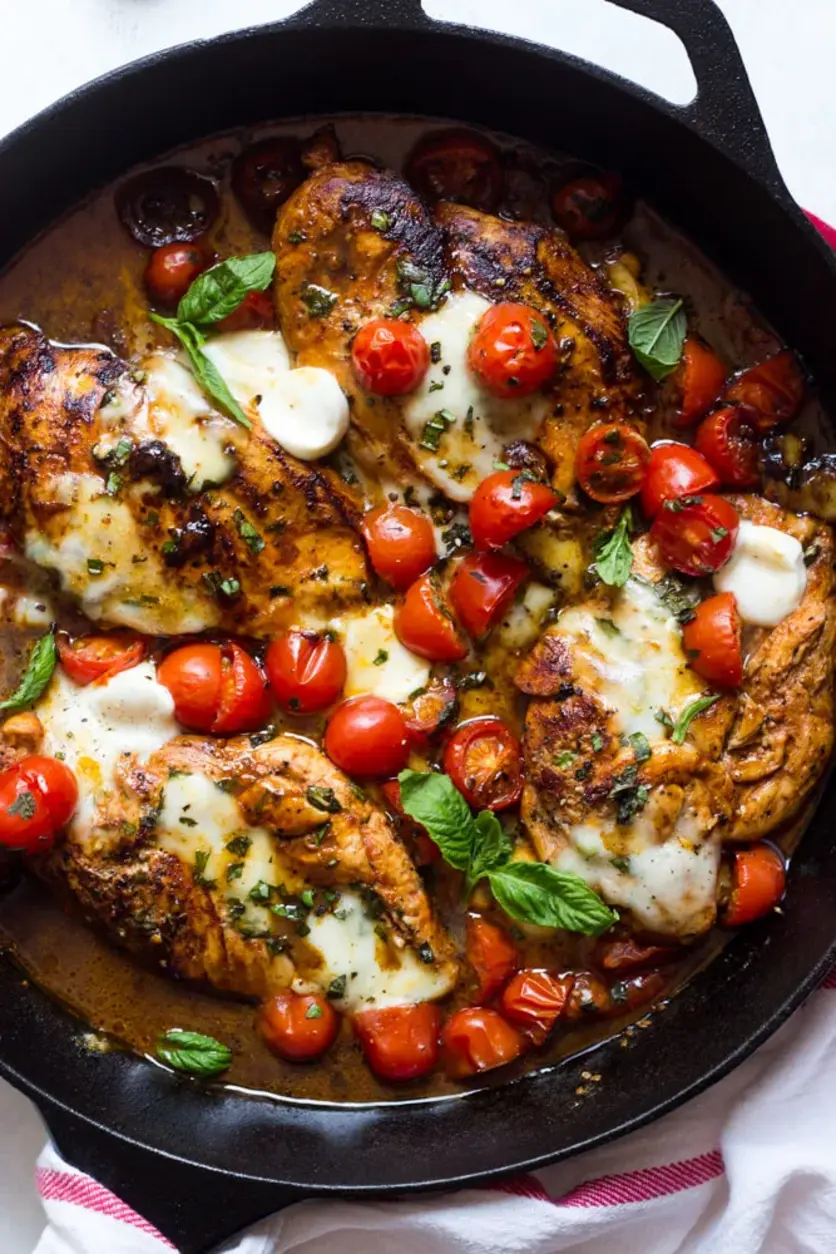
Balsamic Glazed One Pan Chicken
Table of Contents
Balsamic Glazed One Pan Chicken – A Flavor-Packed, Easy Weeknight Dinner
⚖️
Difficulty
Easy
⏲️
Prep Time
10 mins
🕒
Cook Time
25 mins
⏱️
Total Time
35 mins
🍽️
Servings
4
When I first moved to New York City after my time at culinary school in Paris, I remember being absolutely exhausted by the end of most weekdays. Between working long hours at a small French bistro in the West Village and navigating the subway, the last thing I wanted was a complicated dinner. That’s when I started leaning into the recipes that reminded me of my mother’s kitchen in Morocco — where bold, simple flavors came together in one pot. This balsamic glazed one pan chicken is a perfect example. It’s the kind of dish that looks and tastes like you spent all day cooking, but really, it comes together in about 35 minutes flat. The balsamic glaze, with its sweet-tangy depth, is the star here, and I love how it mingles with the creamy mozzarella and burst tomatoes.
Imagine this: tender, juicy chicken breasts — pounded to an even thickness so they cook perfectly — sitting in a rich balsamic glaze that’s been seasoned with garlic, honey, and a touch of Dijon mustard. The glaze caramelizes slightly as it bakes, creating a glossy, sticky finish that coats every bite. On top, you’ve got these little pockets of fresh mozzarella that melt into gooey, creamy goodness, and grape tomatoes that burst open, releasing their sweet-tart juices. The fresh basil on top adds a bright, herbaceous note that cuts right through the richness. I can still smell the aroma from my tiny Upper West Side kitchen, where the smell of balsamic reduction filled the whole apartment — and my neighbors started asking what I was making.
What sets my version apart is how I balance that classic Italian-American balsamic chicken with a few techniques I picked up in Paris and a little North African warmth. I deglaze the pan after searing the chicken, scraping up all those browned bits — that’s where the flavor lives, a classic French technique called “déglacer.” And I always finish with a pinch of good flaky salt and fresh black pepper. I’ll share a pro tip below on how to avoid the most common mistake: overcooking the chicken. Trust me, once you master this one-pan wonder, it will become a staple in your weeknight rotation.
Why This Balsamic Glazed One Pan Chicken Recipe Is the Best
The Flavor Secret: The secret to the deep, rich flavor here is the combination of balsamic vinegar and honey, which I learned to balance during my years in Paris. Balsamic vinegar brings acidity and a natural sweetness, while honey adds depth and helps the glaze caramelize beautifully. The Dijon mustard is my non-negotiable addition — it acts as an emulsifier, bringing the sauce together, and adds a subtle tang that elevates the whole dish. I always use a good-quality balsamic, ideally aged for at least 12 years, for that syrupy, mellow finish. It’s a trick I brought back from a market in the Marais.
Perfected Texture: To achieve perfectly cooked chicken every time, I use a technique I mastered in culinary school: pounding the chicken to an even ½-inch thickness. This guarantees that the chicken cooks uniformly, preventing dry edges and raw centers. The sear is quick — just 1-2 minutes per side — to get a golden crust, and then the oven does the rest. The mozzarella and tomatoes are added after the sear, so they stay fresh and vibrant, not mushy. That 5-minute rest after baking? It’s essential for the juices to redistribute, ensuring every bite is moist and tender.
Foolproof & Fast: This is the kind of dish that even beginners can nail on their first try. The instructions are simple, the ingredients are straightforward, and everything happens in one skillet. For my fellow go-getters in NYC or anywhere with a busy lifestyle, this recipe requires minimal cleanup and delivers maximum taste. You can have dinner on the table in 35 minutes, and it’s impressive enough for a casual date night or a family dinner.
Balsamic Glazed One Pan Chicken Ingredients
I love shopping for these ingredients at the Union Square Greenmarket on a Saturday morning. The fresh basil reminds me of the herb garden my mother kept in our courtyard in Fez, and the grape tomatoes from a local farm are so sweet this time of year. Here’s everything you’ll need to make this balsamic glazed one pan chicken recipe sing.
Ingredients List
2 lb. boneless, skinless chicken breasts, pounded to even thickness
1/3 cup balsamic vinegar
2 Tbsp. honey
2 Tbsp. avocado oil (for sauce) or olive oil
2 garlic cloves, minced
1 tsp. Italian seasoning
1 Tbsp. Dijon mustard
8 oz. grape tomatoes, halved
8 oz. fresh mozzarella balls (ciliegine or pearls)
2 Tbsp. finely chopped fresh basil
2 Tbsp. avocado oil or other high-heat oil (for searing)
Kosher salt and fresh black pepper, to taste
Ingredient Spotlight
Balsamic Vinegar: This is the heart of the glaze. Look for a bottle labeled “Aceto Balsamico Tradizionale di Modena” for the best quality. In a pinch, a good supermarket brand works, but avoid the super cheap stuff — it can be overly acidic and thin. The aged vinegar has a natural sweetness and syrupy texture that reduces beautifully.
Fresh Mozzarella: The small ciliegine (cherry-sized) balls or pearls are perfect here because they melt evenly and don’t overwhelm the chicken. For a dairy-free option, use a high-quality cashew-based mozzarella. I’ve tested this with Miyoko’s brand and it delivers a similar creamy, melty result.
Chicken Breasts: Boneless, skinless breasts are the easiest for weeknights. I always buy them from a trusted butcher at the Essex Street Market. If you prefer darker meat, boneless skinless thighs work beautifully — just increase the cooking time by 5-7 minutes. No need to pound thighs; they stay juicy naturally.
Original Ingredient
Best Substitution
Flavor / Texture Impact
Balsamic vinegar
Sherry vinegar + 1 tsp honey
More nutty, less sweet; reduce honey slightly
Fresh mozzarella
Cashew mozzarella (vegan) or halloumi
Halloumi stays firmer; cashew melts well
Honey
Maple syrup or agave nectar
Slightly thinner glaze; maple adds woodsy notes
Italian seasoning
Dried oregano + dried basil + pinch of thyme
Classic Italian flavor profile
How to Make Balsamic Glazed One Pan Chicken — Step-by-Step
This is where the magic happens. Follow these steps closely, and you’ll have a restaurant-quality meal in under 40 minutes. I promise it’s easier than it sounds.
Step 1: Prep the Sauce and Tomato Mixture
In a small bowl, whisk together the balsamic vinegar, honey, 2 tablespoons of oil (avocado or olive), minced garlic, Italian seasoning, and Dijon mustard. Season with a pinch of salt and pepper. Set aside. In a separate bowl, gently toss together the halved grape tomatoes, fresh mozzarella balls, and chopped basil. Season with salt and pepper, to taste. Set both aside.
💡 emy’s Pro Tip: For the best flavor, let the tomato-mozzarella mixture sit at room temperature for 10 minutes while you sear the chicken. This allows the flavors to meld and the mozzarella to soften slightly.
Step 2: Sear the Chicken
Preheat your oven to 400°F (200°C). In a large oven-safe skillet (I use a 12-inch cast iron or stainless steel pan), heat 2 tablespoons of avocado oil over medium-high heat until shimmering. Pat your chicken breasts dry with paper towels — this is key for a good sear. Season the chicken generously on both sides with kosher salt and fresh black pepper. Carefully place the chicken in the hot skillet in a single layer. Cook for 1-2 minutes per side, until lightly golden brown. Do not overcrowd the pan; if needed, work in batches.
⚠️ Common Mistake to Avoid: Skipping the pat-dry step. Moisture on the chicken’s surface will cause it to steam instead of sear, resulting in a pale, leathery exterior. Always pat dry before seasoning.
Step 3: Add Sauce and Toppings
Once the chicken is golden on both sides, pour the balsamic sauce mixture into the skillet around the chicken. It should immediately start bubbling — that’s good! Use a wooden spoon to scrape up all the browned bits from the bottom of the pan. This deglazing step releases all that flavorful fond into the sauce. Immediately remove the pan from the heat, and spoon the tomato-mozzarella mixture evenly over the chicken pieces.
💡 emy’s Pro Tip: If you’re using a cast iron skillet, be careful as the handle gets extremely hot. Use a kitchen towel or oven mitt when handling throughout the process.
Step 4: Bake to Perfection
Place the skillet in the preheated oven, uncovered. Bake for 18-23 minutes, or until the chicken is fully cooked through and the internal temperature reaches 165°F (74°C) when tested with an instant-read thermometer. The tomatoes will be blistered and the mozzarella will be melted and golden in spots. Remove from the oven and let the pan rest for 5 minutes before serving — this allows the juices to redistribute, keeping the chicken incredibly tender.
⚠️ Common Mistake to Avoid: Cutting into the chicken immediately after baking. The juices will run out, leaving dry meat. Patience pays off — rest for a full 5 minutes.
I love serving this balsamic glazed one pan chicken straight from the skillet — it’s rustic, warm, and shows off all those beautiful layers. Place the skillet on a trivet in the center of the table, and let everyone help themselves. For a more polished platter, use a large serving dish and carefully arrange the chicken, then spoon the tomatoes, mozzarella, and all the glorious sauce over the top.
A final sprinkle of fresh basil leaves (use whole leaves for a beautiful presentation) and a pinch of flaky salt, like Maldon, are my go-to finishing touches. I love pairing this with a side of crusty bread to soak up every last drop of the balsamic glaze, or over a bed of fluffy couscous — a nod to my Moroccan roots. If you’re in the mood for something green, try a simple arugula salad with lemon vinaigrette to cut through the richness.
Pairing Type
Suggestions
Why It Works
Side Dish
Crusty sourdough, couscous, or roasted green beans
Sauce absorption, texture contrast, freshness
Sauce / Dip
Extra balsamic glaze drizzle, or tzatziki for a cool twist
Enhances richness; tzatziki adds tangy coolness
Beverage
Chilled Pinot Grigio, or sparkling water with lemon
Acidity cuts through the rich glaze
Garnish
Fresh basil leaves, flaky salt, lemon zest
Brightness, texture, visual appeal
Make-Ahead, Storage & Reheating
For my busy weekly meal prep in the city, I often double this balsamic glazed one pan chicken recipe and store portions for the week. The flavors actually deepen overnight as they meld, making leftovers even more delicious. Here’s how I manage it.
One-pan balsamic chicken is such a flavorful weeknight dinner. Made with simple ingredients and easy steps!
Ingredients
Scale
1/3 cup balsamic vinegar
2 Tbsp. honey
2 Tbsp. oil, such as avocado or olive oil
2 garlic cloves, minced
1 tsp. Italian seasoning
1 Tbsp. Dijon mustard
8 oz. grape tomatoes, halved
8 oz. fresh mozzarella balls (ciliegine or pearls)
2 Tbsp. finely chopped fresh basil
2 lb. boneless, skinless, chicken breasts, pounded to even thickness
2 Tbsp. avocado oil or other high-heat oil
Kosher salt and fresh black pepper
Instructions
In a bowl, whisk together the sauce ingredients. Season with salt and pepper, to taste. Set aside.
In a separate bowl, toss together the tomatoes, mozzarella, and basil. Season with salt and pepper, to taste. Set aside.
Preheat oven to 400 degrees F.
Heat oil over medium-high heat in a large oven-safe skillet. Season the chicken all over with salt and pepper, to taste. When the pan is hot and oil is shimmering, add the chicken to the skillet in a single layer. Cook for 1-2 minutes on each side or until lightly golden brown. Add the balsamic sauce mixture. It should quickly come to a simmer. Use a wooden spoon to scrape up any brown bits from the bottom of the pan.
Immediately remove the pan from the heat and add the tomato mozzarella mixture over the chicken.
Bake uncovered for 18-23 minutes or until chicken is fully cooked through. Internal temperature should register at 165F. Remove from the oven and rest for 5 minutes before serving.
Garlic Parmesan Chicken Skewers
Table of Contents
Garlic Parmesan Chicken Skewers – Air Fryer Recipe with Homemade Garlic Parmesan Butter
⚖️
Difficulty
Easy
⏲️
Prep Time
15 mins
🕒
Cook Time
12–14 mins
⏱️
Total Time
27–29 mins
🍽️
Servings
4–6
I’ll never forget the first time I made these Garlic Parmesan Chicken Skewers. It was a rainy Tuesday in my tiny NYC apartment, and the smell of garlic butter sizzling in the air fryer transported me straight back to my mother’s kitchen in Morocco. She would always say, “The secret to any great dish is patience with the basting, habibti.” And that’s exactly what this recipe is all about — fall-apart tender chicken, layered with a homemade garlic parmesan butter that you baste through every stage of cooking. The result is impossibly juicy, deeply savory chicken skewers with a golden, slightly crispy edge. This is not just a quick dinner; it’s a celebration of flavor that connects my training at Le Cordon Bleu in Paris with the bold, no-fuss cooking of New York City. The air fryer makes it all possible in under 30 minutes, so you can have dinner on the table even on the busiest weeknight.
Imagine this: You pull the chicken skewers from the air fryer, and the garlic butter is still bubbling along the edges. The parmesan has melted into a delicate crust, while the paprika and garlic powder create a deep, warm aroma. The first bite gives you a slight crunch on the outside, then the chicken practically melts — it’s that tender. The garlic is mellow and sweet from being gently cooked in butter, and the red pepper flakes add just a kiss of heat that lingers. A touch of hot sauce brightens everything, cutting through the richness. My husband, who is from upstate New York, calls these “the best chicken skewers I’ve ever had,” and he’s not one to exaggerate. Whether you serve them as an appetizer at a gathering or pile them over a bed of rice and roasted vegetables, they always disappear first.
What sets this recipe apart from the countless other chicken skewer recipes online? Two things: First, the basting technique. Instead of just brushing sauce at the end, I baste the skewers in three stages — after par-cooking, mid-way, and a final clean pass — so every fiber of the chicken is infused with that garlic parmesan butter. Second, the quality of the ingredients matters. I source my parmesan from Di Palo’s Fine Foods in Little Italy, and the garlic from a farm stand at the Union Square Greenmarket. The fresh parsley and lemon zest? Non-negotiable for a bright finish. 💡 emy’s Pro Tip: The garlic parmesan butter can separate if heated too quickly, so always melt it gently and stir in a little softened butter if needed to bring it back together. ⚠️ Common Mistake to Avoid: Don’t leave gaps between the chicken pieces on the skewer — packing them tight is what creates that fall-apart texture by trapping the juices inside.
Why This Garlic Parmesan Chicken Skewers Recipe Is the Best
The Flavor Secret: The magic really lies in that garlic parmesan butter. In Morocco, my mother would often use a blend of butter and olive oil to baste her kebabs, a technique I refined in Paris where I learned to emulsify butter-based sauces perfectly. Here, I whisk in fresh parsley, red pepper flakes, and a splash of hot sauce — the acidity cuts the richness, while the parmesan adds an umami depth that just won’t quit. I’ve tested this with cheap garlic powder and with freshly minced garlic, and trust me, the fresh cloves make a world of difference.
Perfected Texture: The key is the double-basting method. First, I season the chicken with a dry rub of paprika, garlic powder, onion powder, salt, and pepper. Then, after an initial 5-minute cook, I flip and baste with the butter for the first time. Returning it to the air fryer allows the butter to caramelize onto the chicken. After a second flip and baste, the final roast seals the deal. The result is moist, shreddable chicken that’s crisp on the outside without being dry. I learned this layered approach from my old chef in Paris who insisted that “a sauced piece of meat should always get three coats.”
Foolproof & Fast: Even if you’ve never used an air fryer before, this recipe is nearly impossible to mess up. The total cook time is just 12–14 minutes, and I’ve included exact internal temperature targets (165°F) so you never have to guess. Plus, I give you detailed instructions for both oven and grill methods in the notes. This is the kind of recipe that makes you feel like a pro cook, even on a Tuesday night after a long day at work.
Garlic Parmesan Chicken Skewers Ingredients
Every Friday morning, I head down to the Union Square farmers market to grab the freshest chicken and farm-fresh garlic I can find. For this recipe, I use chicken tenders because they’re ready to go with minimal prep, but thighs or breasts work beautifully too. The parmesan — always buy a block and grate it yourself, it melts so much smoother. And don’t skip the fresh parsley; it’s the only way to get that vibrant green finish.
Ingredients List
2 lbs chicken tenders, thighs or breast (boneless, skinless)
2 tbsp olive oil
1 stick butter (8 tbsp)
8–10 cloves garlic, minced
1/2 cup parmesan, grated (fresh is best)
1 tbsp hot sauce (more if desired)
2 teaspoons red pepper flakes
1/3 cup fresh parsley, minced
2 teaspoons paprika
1 teaspoon garlic powder
1 teaspoon onion powder
1/2 teaspoon salt
1/2 teaspoon pepper
Ingredient Spotlight
Let’s talk about the star of this dish: the chicken. Chicken tenders (which are simply the inner breast strips) are my go-to because they cook quickly and are naturally tender. If you’re using chicken breasts, slice them into 3-inch pieces of even thickness so they cook uniformly. Chicken thighs — boneless, skinless — add even more moisture and richness; they’re my second favorite option. The butter: use unsalted so you control the salt level, and don’t be tempted to use margarine — it won’t emulsify the same way. And for the parmesan? Please, please buy a block of Parmigiano-Reggiano and grate it yourself. The pre-shredded stuff has anti-caking agents that prevent it from melting into that silky, luscious sauce.
Original Ingredient
Best Substitution
Flavor / Texture Impact
Chicken tenders
Boneless chicken thighs
More rich, juicy; slightly longer cook time
Butter (unsalted)
Ghee or vegan butter (if dairy-free)
Lighter, slightly nutty for ghee; dairy-free version less rich
Fresh parmesan (grated)
Pecorino Romano or vegan parmesan
More salty, tangy for Pecorino; vegan version has less melt
Fresh garlic
1 tsp garlic powder per 2 cloves (up to 2 tsp)
Milder, less pungent; best in a pinch
How to Make Garlic Parmesan Chicken Skewers — Step-by-Step
Making these skewers is so simple, and the air fryer does most of the heavy lifting. Just follow these easy steps, and you’ll have restaurant-quality chicken at home.
Step 1: Prepare the Skewers
Before you start, soak your wooden skewers in water for at least 30 minutes — this prevents them from burning in the air fryer. If you’re using metal skewers, skip this step. While they soak, combine the paprika, garlic powder, onion powder, salt, and pepper in a small bowl for the dry rub.
💡 emy’s Pro Tip: Use flat metal skewers if you have them — they hold the chicken tighter so the pieces don’t spin when you flip them halfway through cooking.
Step 2: Season the Chicken
Cut your chicken tenders or breasts into 3-inch pieces. Place them in a large bowl or a zip-top bag, drizzle with the olive oil, and toss with the dry rub until every piece is well coated. The oil helps the spices stick and also promotes browning in the air fryer.
⚠️ Common Mistake to Avoid: Don’t skip the oil — it’s essential for the seasoning to adhere and for the chicken to develop that golden crust.
Step 3: Skewer the Chicken
Thread the chicken pieces tightly onto the skewers, leaving absolutely no space between them. This is the secret to fall-apart juiciness — the chicken steams in its own juices as it cooks. If the skewers are too long for your air fryer basket, snip the top few inches with kitchen shears once the chicken is on.
💡 emy’s Pro Tip: Pack the chicken like you’re making a dense kebab — this prevents the ends from drying out while the center stays tender.
Step 4: Make the Garlic Parmesan Butter
In a microwave-safe bowl, add the stick of butter (cut into pieces) and the minced garlic. Microwave in 15-second bursts until the butter is partially melted and the garlic is fragrant — about 30–45 seconds total. Whisk in the red pepper flakes, hot sauce, fresh parsley, and grated parmesan until smooth. If the sauce starts to separate (it can happen if the butter gets too hot), add 1–2 tablespoons of softened butter and stir vigorously to bring it back together.
⚠️ Common Mistake to Avoid: Do not microwave the butter on full power for too long — it splatters and can burn the garlic. Use 50% power or just short bursts.
Step 5: Baste in Stages
Divide your sauce: scoop out about 1/3 of it into a separate bowl for the par-cook basting (this will touch the raw chicken). Keep the remaining 2/3 clean for the final finish. Wash your basting brush between uses or use two separate brushes to avoid cross-contamination.
Step 6: Air Fry the Skewers
Preheat your air fryer to 400°F. Place 2–3 skewers in the basket (don’t overcrowd — they need space for hot air to circulate). Cook for 5 minutes. Remove, flip the skewers, and brush generously with the par-cook sauce. Return to the air fryer and cook for another 2 minutes. Flip them back, baste again, and cook for a final 5–6 minutes, or until the internal temperature reaches 165°F on an instant-read thermometer. Total cook time is about 12–14 minutes, but this can vary slightly based on your air fryer model.
Step 7: Final Touch and Serve
Remove the skewers from the air fryer. Brush one last time with the clean reserved garlic parmesan butter, then sprinkle with extra fresh parmesan and a little more parsley for color. Serve immediately, while the butter is still bubbling. The final baste is what makes these skewers truly unforgettable.
💡 emy’s Pro Tip: Let the skewers rest for just 1–2 minutes before serving. This allows the juices to redistribute, ensuring every bite is perfectly moist.
Step
Action
Duration
Key Visual Cue
1
Soak skewers & mix dry rub
30+ mins (soak) + 2 mins
Skewers fully submerged
2
Season chicken with oil & rub
5 mins
Coating is even, no dry spots
3
Skewer chicken tightly
5–7 mins
No gaps between pieces
4
Cook at 400°F (first pass)
5 mins
Chicken is white on top, lightly golden
5
Flip, baste with sauce #1
30 secs
Even coating of butter mixture
6
Cook second pass
2 mins
Butter sizzling, parmesan melting
7
Flip, baste again with sauce #1
30 secs
Glossy, saturated color
8
Final cook (third pass)
5–6 mins
Internal temp 165°F, golden brown crust
Serving & Presentation
When I make these for friends in my NYC apartment, I like to pull the skewers straight off the air fryer and lay them across a bed of fluffy jasmine rice or fluffy couscous — a nod to my North African roots. A quick side of roasted cherry tomatoes and zucchini, drizzled with a little of the leftover garlic butter, makes the perfect plate. For a more elegant presentation, serve the skewers upright in a tall glass, or arrange them on a platter and scatter with fresh parsley and extra parmesan shavings.
The leftover garlic parmesan butter is liquid gold — I always keep it to toss with pasta the next day or to spread on crusty bread for dipping. There’s nothing like dipping a piece of warm baguette into that buttery, garlicky goodness while nibbling on a skewer.
Pairing Type
Suggestions
Easy Chicken Burrito Casserole
Table of Contents
Easy Chicken Burrito Casserole – One-Pot Wonder: Your New Weeknight Hero
⚖️
Difficulty
Easy
⏲️
Prep Time
15 mins
🕒
Cook Time
75 mins
⏱️
Total Time
90 mins
🍽️
Servings
8
I still remember the first time I made this easy chicken burrito casserole in my tiny New York City kitchen — a far cry from my mother’s spacious, sunlit kitchen in Morocco, where the scent of cumin and coriander would drift through the house for hours. But here, in the heart of Manhattan, I wanted to recreate that feeling of a big, comforting meal that brings everyone around the table. This easy chicken burrito casserole is my answer — a dish that combines the soul of a classic burrito with the practicality of a one-dish wonder. It’s low-prep, loaded with protein, and incredibly satisfying. Whether you’re feeding a hungry family or meal-prepping for a busy week, this easy chicken burrito casserole will become your go-to.
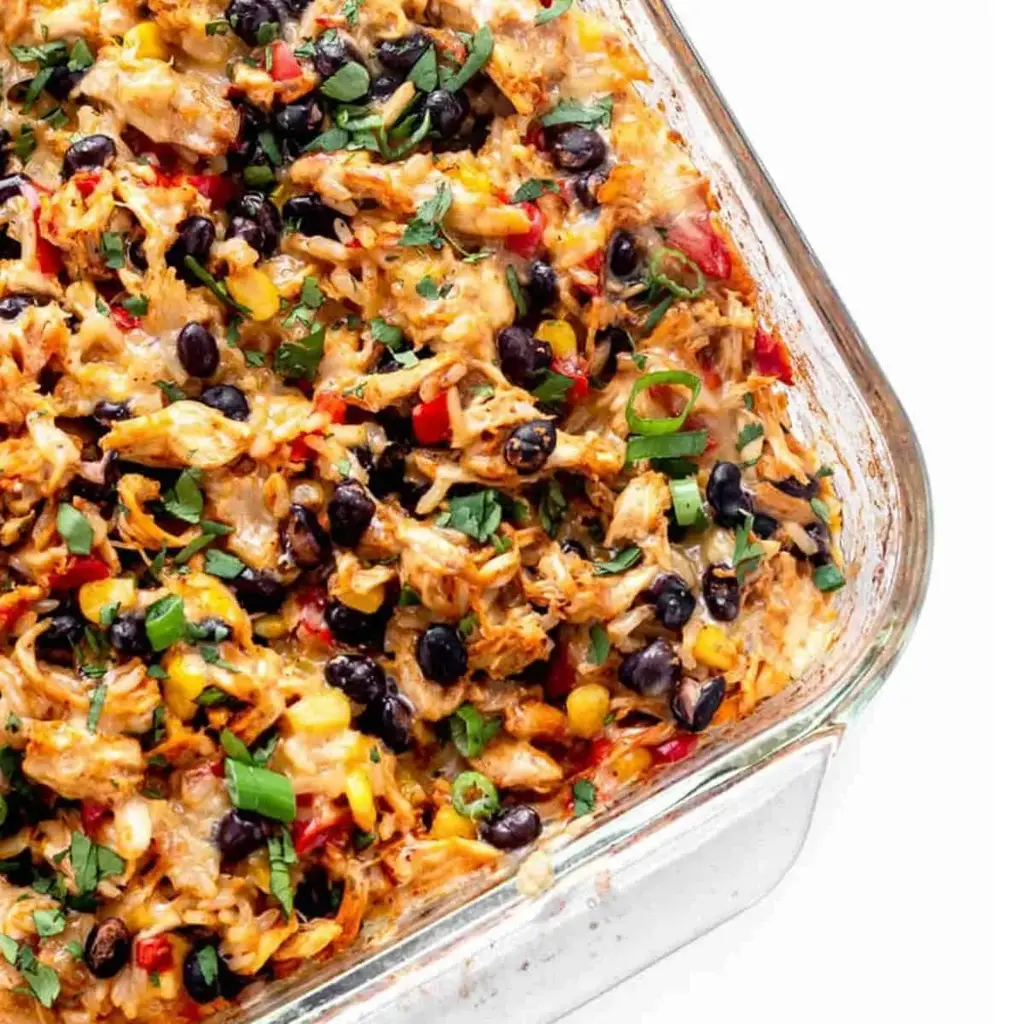
Imagine a dish where tender, shredded chicken mingles with perfectly cooked brown rice, sweet corn, and hearty black beans — all seasoned with a homemade fajita blend that’s warm, smoky, and just a little bit spicy. The first spoonful is pure comfort: the creamy richness of melted Monterey Jack cheese stretches across the top, while the rice soaks up all those savory juices from the broth and green chiles. You’ll notice subtle notes of cayenne (if you dare), balanced by the sweetness of the bell pepper and the earthy depth of the beans. The aroma that fills your kitchen is nothing short of intoxicating — it’s the kind of scent that promises a hearty, happy meal. I love that this dish tastes like your favorite burrito, but you get to make it in one big casserole dish with simple ingredients.
What sets my version apart is the technique of baking everything together so the rice absorbs all that flavor as it cooks. After years working in Paris kitchens, I learned that letting ingredients marry slowly creates layers of flavor you simply can’t get any other way. The one-pot approach also makes cleanup a breeze, which is essential in a busy NYC life. I’ll share my secret for getting the perfect rice-to-liquid ratio, plus a few tricks to avoid a soupy casserole. And if you’ve ever wondered how to make sure your chicken burrito casserole is perfectly cooked every time, keep reading — I’ll walk you through it. 💡 emy’s Pro Tip: Don’t skip the foil cover — it’s essential for trapping steam and cooking the rice perfectly.
Why This Easy Chicken Burrito Casserole Recipe Is the Best
The Flavor Secret My Moroccan roots taught me that bold spices are the heart of any dish. I use a homemade fajita seasoning that balances smoky paprika, earthy cumin, and just a hint of cayenne — but I keep it mild so the entire family can enjoy it. In my Paris training, I learned the importance of building flavor from the ground up, so I sauté the onions and peppers briefly before adding them to the casserole. This step might seem simple, but it releases their natural sweetness and sets the foundation for a deeply flavorful chicken burrito casserole. The green chiles add a gentle heat that complements, rather than overwhelms, and the tomato paste gives a subtle richness that ties everything together.
Perfected Texture Getting the texture right in a casserole can be tricky — especially when you’re cooking rice from scratch in the same dish. I use parboiled long-grain brown rice, which holds its shape beautifully even after an hour in the oven. The technique of covering the dish tightly with foil for the first hour allows the rice to cook evenly and absorb all the broth, while the final uncovered step gives you that golden, bubbly cheese topping. The result is a chicken burrito casserole that’s perfectly balanced: soft but not mushy, cheesy but not greasy, with every grain of rice distinct and flavorful. I learned this covered-to-uncovered trick during my time in Paris, where slow cooking is an art form, and it works wonderfully here.
Foolproof & Fast This easy chicken burrito casserole is designed for busy weeknights and beginner cooks alike. With just 15 minutes of active prep, you can assemble everything in one dish and let the oven do the rest. I’ve tested this recipe multiple times to ensure the liquid ratios are perfect — no one wants a soupy casserole or dry, crunchy rice. The beauty is that you can use leftover rotisserie chicken or quickly poach some chicken breasts, making it even faster. Plus, because everything is baked together, you have minimal dishes to wash at the end — just one bowl and one baking dish. It’s truly a stress-free dinner that delivers restaurant-quality results.
Easy Chicken Burrito Casserole Ingredients
When I walk through the aisles of my local farmers market in Brooklyn on a Saturday morning, I always keep these ingredients in mind. I’ll pick up a fresh bell pepper that still has its stem attached, and I’ll grab a bag of high-quality black beans — low sodium is important because we control the salt ourselves. The fajita seasoning I often make in bulk and store in my spice cabinet, but store-bought works perfectly too. There’s a warmth in selecting each component, a ritual I carry from my mother’s kitchen in Casablanca to my home here in the city.
Ingredients List
1/2 cup finely diced onion
1 red bell pepper (diced)
1 cup uncooked parboiled long-grain brown rice (can also use long grain white rice)
3 tablespoons fajita seasoning (homemade or store-bought)
1/8 teaspoon cayenne pepper (optional)
1 cup corn kernels (frozen)
1 14 ounce can low sodium black beans (drained and rinsed)
5 cups shredded chicken
3 cups reduced sodium chicken broth
1 4 ounce can mild green chilies
1 tablespoon olive oil
2 tablespoons tomato paste
1 1/4 cups shredded Monterey Jack cheese
Ingredient Spotlight
Parboiled Long-Grain Brown Rice: This is my secret for perfect texture. Parboiled rice has been partially cooked in the husk, which makes it resistant to becoming mushy even after long simmering. It holds its shape beautifully and absorbs the broth evenly. If you swap for white rice, reduce the baking time by about 15 minutes. This is the ingredient that truly makes this easy chicken burrito casserole foolproof.
Fajita Seasoning: I love using a homemade blend with smoked paprika, cumin, garlic powder, onion powder, and a touch of chili powder. It provides that unmistakable Tex-Mex flavor. If you buy store-bought, check the sodium level — some brands are very salty. You can also substitute taco seasoning, but it may have a slightly different flavor profile. I always say: build your spice cabinet, and you’ll never look back.
Shredded Chicken: This recipe calls for 5 cups of shredded chicken, which is roughly 2 large chicken breasts or 1 rotisserie chicken. I prefer to poach the chicken with fresh aromatics like onion, garlic, and bay leaf — a technique I learned at Le Cordon Bleu in Paris — because it adds more flavor to the casserole. Rotisserie chicken is a fantastic shortcut, and I use it often when I’m short on time. For a vegetarian version, you can swap the chicken for extra black beans or a plant-based chicken substitute.
Monterey Jack Cheese: This cheese melts beautifully and has a mild, buttery flavor that complements the spices without overpowering them. For a sharper kick, try Pepper Jack cheese. For a dairy-free version, I’ve tested vegan shredded mozzarella-style cheese, and it works well — just look for one that is labeled for baking. The cheese should be shredded from a block; pre-shredded often includes anti-caking agents that prevent smooth melting.
Original Ingredient
Best Substitution
Flavor / Texture Impact
Parboiled brown rice
Long-grain white rice
Slightly softer texture; reduce baking time by 15 mins
Chicken broth
Vegetable broth
Slightly less savory; good for vegetarian version
Monterey Jack cheese
Pepper Jack or vegan mozzarella
Pepper Jack adds heat; vegan cheese melts less smoothly
Fajita seasoning
Taco seasoning
Slightly different spice profile; still delicious
How to Make Easy Chicken Burrito Casserole — Step-by-Step
Let me walk you through this simple process. I promise you’ll be amazed at how easy it is to create something so delicious. Remember, the key is to trust the oven and the foil — they do all the hard work.
Step 1: Prepare and Layer
Preheat your oven to 400°F. In a 9×13 inch baking dish, combine the finely diced onion, diced red bell pepper, uncooked rice, fajita seasoning, and cayenne pepper (if using). Stir these dry ingredients together so the seasoning coats every grain of rice. This ensures the flavor distributes evenly as the casserole bakes.
⚠️ Common Mistake to Avoid: Don’t skip stirring the dry ingredients thoroughly — if the seasoning sits in one spot, parts of the casserole will be bland while others are too spicy.
Step 2: Make the Broth Mixture
In a separate bowl or a measuring cup, whisk together the chicken broth, mild green chiles, tomato paste, and olive oil. Whisk until the tomato paste is fully dissolved and the mixture looks uniform. This liquid will cook the rice and infuse it with flavor from the chiles and broth. Pour this mixture into the baking dish and stir everything together until well combined.
💡 emy’s Pro Tip: For an even more intense flavor, warm the broth mixture slightly before adding it — this helps the rice start cooking immediately and reduces any risk of uneven baking.
Step 3: Add Protein and Vegetables
Add the shredded chicken, drained black beans, and frozen corn to the baking dish. Give it an additional, generous stir until everything is evenly distributed. The chicken should be submerged slightly in the broth. It’s okay if a few pieces are sticking up — the foil will help them cook through. This step is where the dish transforms into a complete meal.
⚠️ Common Mistake to Avoid: Make sure to drain and rinse the black beans well. The starch and liquid from the can can make the casserole too thick and slightly starchy.
Step 4: Bake Covered
Cover the baking dish tightly with aluminum foil. Transfer the dish to the preheated oven and bake for 65–70 minutes, or until all the liquid is absorbed and the rice is tender. The foil traps steam, which is essential for cooking the rice perfectly without drying out the top. I recommend checking at the 60-minute mark — if the liquid is almost gone but the rice still has a slight bite, cover again and bake another 5–10 minutes.
⚠️ Common Mistake to Avoid: Don’t open the foil during baking — each time you do, you release valuable steam that the rice needs to cook evenly. Trust the process!
Step 5: Add Cheese and Finish
Once the rice is tender and liquid is absorbed, carefully remove the baking dish from the oven and remove the aluminum foil. Sprinkle the shredded Monterey Jack cheese evenly over the top. Return the dish to the oven, uncovered, for 5–10 minutes, or until the cheese has melted and is slightly golden and bubbly. The final minutes are crucial for creating that beautiful, inviting crust.
💡 emy’s Pro Tip: For an extra-golden and bubbly cheese topping, switch the oven to broil for the last 1–2 minutes — but watch closely so it doesn’t burn!
Step 6: Rest and Serve
Remove the casserole from the oven and allow it to rest for 5–10 minutes before serving. This resting period is important — it allows the ingredients to set and the flavors to meld together. During this time, you can prepare your garnishes: chop some fresh cilantro, slice green onions, dice an avocado, and set out salsa. Serve the casserole warm with your favorite toppings, and enjoy the fruits of your very simple labor.
⚠️ Common Mistake to Avoid: Serving too hot — the casserole will be very hot straight from the oven. Letting it rest not only prevents burns but also gives the rice a chance to absorb any remaining moisture for the best texture.
Step
Action
Duration
Key Visual Cue
1
Layer dry ingredients
2 mins
Rice and spices evenly mixed
2
Whisk broth mixture
2 mins
Tomato paste fully dissolved
3
Add chicken, beans, corn
3 mins
Ingredients submerged in broth
4
Bake covered
65–70 mins
Liquid absorbed, rice tender
5
Add cheese and bake uncovered
5–10 mins
Cheese melted, golden, bubbly
6
Rest and serve
5–10 mins
Casserole set, slightly cooled
Serving & Presentation
When I serve this easy chicken burrito casserole, I like to bring a little bit of my Moroccan heritage to the table. I’ll set out small bowls of fresh cilantro, sliced green onions, tangy salsa, and creamy avocado — much like the tagine accompaniments my mother would prepare. The colors are stunning: the golden cheese top, the green garnish, the bright red salsa, and the rich brown casserole underneath. It’s a feast for the eyes as much as the palate.
I love pairing this dish with a simple side salad dressed with lime and olive oil, or with a side of warm tortilla chips for scooping up any extra toppings. In New York, I often grab a bag of fresh tortilla chips from a local Mexican market, and they add the perfect crunch. For a complete meal, serve alongside refried beans or Mexican rice. And don’t forget a dollop of sour cream or Greek yogurt — the cool contrast to the warm, spicy casserole is simply divine. This casserole is also fantastic as a filling for actual burritos: just spoon it into a large tortilla, add some rice, and enjoy.
💡 emy’s Pro Tip: For a restaurant-style presentation, use a springform pan instead of a baking dish. Layer the casserole, bake as directed, then remove the ring for a stunningly tall, layered casserole that looks like it came from a taco truck in NYC.
Pairing Type
Suggestions
Why It Works
Side Dish
Tortilla chips, side salad with lime vinaigrette, refried beans
I still remember the first time I made chicken parmesan in my tiny Paris apartment—it was a disaster. The oil splattered everywhere, the kitchen reeked for days, and my landlady gave me the look. Years later, after training at Le Cordon Bleu and moving to New York, I knew there had to be a better way. This oven baked chicken parmesan is that better way. By skipping the deep fryer and using a smart panko-parmesan crust, you get all the crispy, cheesy, saucy goodness without the grease. The unique angle here is my no-fry, high-heat method that locks in moisture while delivering a shatteringly golden coating—something I perfected right here in my NYC kitchen.
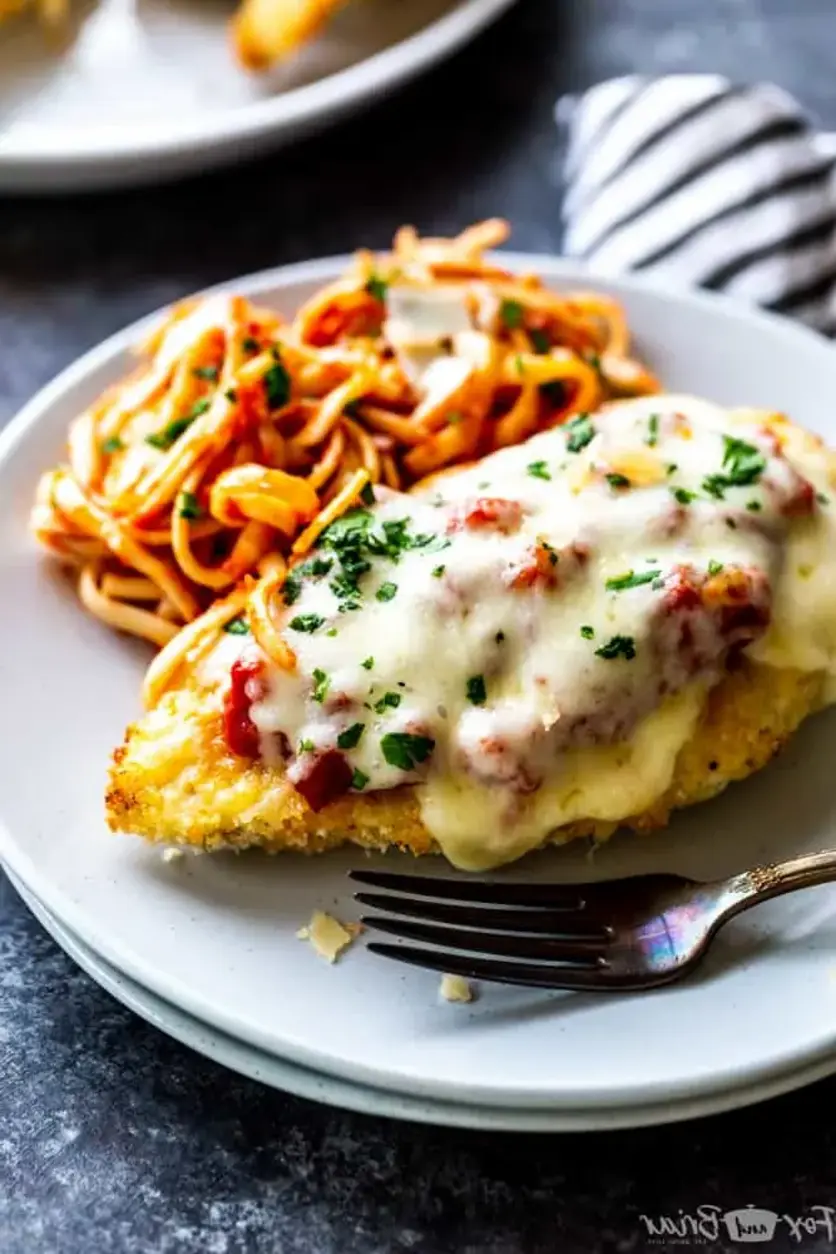
When this dish comes out of the oven, the kitchen fills with the scent of garlic, oregano, and bubbling mozzarella. The chicken is tender inside, the crust is crunchy and speckled with nutty parmesan, and the marinara sauce pools around each piece, turning into a rich, tangy bed. I like to take it a step further by finishing it under the broiler, which gives the cheese those irresistible golden-brown spots. It’s the kind of dinner that makes everyone at the table go quiet—except to ask for seconds.
What sets my version apart is a technique I picked up in Paris: pounding the chicken to even thickness and using panko breadcrumbs for an airy, extra-crisp texture. No soggy bottoms, no dry chicken. I’ll walk you through every step, including my pro tip for the perfect crust adherence and a common mistake that home cooks make when broiling. By the end, you’ll have a restaurant-quality meal that’s ready in about 35 minutes—and I promise your kitchen will stay clean.
Why This Oven Baked Chicken Parmesan Recipe Is the Best
The Flavor Secret: Growing up in Morocco, my mother taught me that the best dishes start with a strong foundation. Here, the foundation is the crust—a blend of panko breadcrumbs, freshly grated parmesan, and a whisper of oregano and garlic powder. This mix toasts beautifully in the oven, creating layers of savory depth that remind me of the spice souks back home. The good olive oil brushed on the foil helps it all crisp up without turning greasy.
Perfected Texture: At culinary school in Paris, Chef Michel drilled into me that moisture is the enemy of crispiness. That’s why I pat the chicken dry, use egg wash sparingly, and bake at 400°F on the second-from-top rack. This lets the crust set quickly while the chicken stays juicy inside. The final broil adds that last bit of crunch that makes every bite sing.
Foolproof & Fast: This oven baked chicken parmesan is designed for busy weeknights. No standing over a hot stove, no messy cleanup. The entire process is straightforward, and I’ve tested it with beginner cooks in my own NYC cooking classes. If you follow these steps, you’ll get a perfect result every single time.
Oven Baked Chicken Parmesan Ingredients
I source my chicken from the farmers market in Union Square, where the quality is always top-notch. The parmesan I grate myself—I can’t stress enough how much better fresh-grated tastes compared to the pre-shredded stuff. This simple ingredient list is the backbone of a dish that feels both comforting and elevated.
Ingredients List
2 tablespoons olive oil (for brushing the foil)
2 chicken breasts (about 1 pound total)
1 large egg
1 cup panko bread crumbs
1/2 cup parmesan cheese (fresh grated)
1 teaspoon dried oregano
1/2 teaspoon garlic powder
1 teaspoon kosher salt
1/2 teaspoon black pepper
1 cup marinara sauce (your favorite brand or homemade)
1 ½ cups shredded mozzarella
2 tablespoon minced parsley (optional, for garnish)
Ingredient Spotlight
Chicken Breasts: The star of the show. Look for even-sized breasts and pound them to about 1/2-inch thickness so they cook uniformly. If you can, use organic or air-chilled chicken—it has better texture.
Panko Breadcrumbs: These Japanese-style breadcrumbs are lighter and crispier than regular breadcrumbs. They create a delicate, shattery crust that holds up to the sauce without getting soggy.
Fresh Parmesan: Grate it yourself. Pre-grated parmesan often contains anti-caking agents that prevent melting and reduce flavor. A good wedge of Parmigiano-Reggiano makes all the difference.
Original Ingredient
Best Substitution
Flavor / Texture Impact
Chicken breasts
Chicken thighs (boneless, skinless)
Slightly juicier, richer flavor
Panko bread crumbs
Gluten-free panko or crushed pork rinds
Lighter texture with pork rinds; similar crunch with GF panko
Mozzarella
Provolone or low-moisture mozzarella
Provolone adds a sharper tang; low-moisture mozzarella melts the same
Marinara sauce
Crushed tomatoes with basil
Slightly chunkier, more rustic flavor
How to Make Oven Baked Chicken Parmesan — Step-by-Step
This method is streamlined and foolproof—I’ve taught it to dozens of home cooks in New York, and everyone walks away with a perfect dish. Let’s get started.
Step 1: Prepare Baking Sheet
Line a rimmed baking sheet with aluminum foil. Brush the foil generously with 2 tablespoons of olive oil. This prevents sticking and helps the crust crisp up. Adjust your oven rack so it’s in the second-from-top position, then preheat the oven to 400°F.
💡 emy’s Pro Tip: Use heavy-duty foil so it doesn’t tear when you flip the chicken. A thin foil can rip under the weight of the meat.
Step 2: Cut and Pound Chicken
Cut each chicken breast in half horizontally, as if butterflying it, but cut all the way through to form two even pieces. Place the pieces in a gallon-sized zip-top bag (or between two sheets of plastic wrap) and pound to an even 1/2-inch thickness using a meat pounder or rolling pin.
⚠️ Common Mistake to Avoid: Not pounding to even thickness. This leads to dry edges and undercooked centers. Take the extra 60 seconds to get it uniform.
Step 3: Season and Bread
Pat the chicken dry with paper towels, then season both sides with salt and pepper. In a shallow dish, combine 1 cup panko breadcrumbs, 1/2 cup grated parmesan, 1 teaspoon dried oregano, 1/2 teaspoon garlic powder, 1 teaspoon kosher salt, and 1/2 teaspoon black pepper. In another shallow dish, whisk the egg. Dip each chicken piece into the egg, letting excess drip off, then press into the breadcrumb mixture, coating all sides. Gently press with your hand to help crumbs adhere.
Step 4: Bake to Perfection
Place the breaded chicken on the prepared baking sheet in a single layer. Bake on the second-from-top rack for 15 minutes, or until the chicken is cooked through and the crust is golden. A meat thermometer inserted into the thickest part should read 165°F.
💡 emy’s Pro Tip: Don’t overcrowd the pan. Leave space between pieces so air circulates and the crust stays crunchy all over.
Step 5: Sauce and Cheese
Flip each piece of chicken with a spatula. Spoon 1/4 cup of marinara sauce over each piece, then top with 1/4 cup of shredded mozzarella. Return the baking sheet to the oven and turn the broiler to high. Broil for 2-4 minutes, watching closely, until the cheese is bubbly and golden brown and the edges of the chicken are browning.
⚠️ Common Mistake to Avoid: Walking away during broiling. It takes only seconds to go from perfect to burned. Stay by the oven and keep an eye on it.
Step
Action
Duration
Key Visual Cue
1
Prepare baking sheet with oiled foil
2 minutes
Foil is evenly coated, shiny
2
Cut and pound chicken
5 minutes
Even 1/2-inch thickness
3
Season and bread chicken
5 minutes
Fully coated, no bare spots
4
Bake chicken
15 minutes
Golden crust, internal temp 165°F
5
Add sauce and cheese, broil
2-4 minutes
Cheese bubbly, edges browning
Serving & Presentation
Serve this oven baked chicken parmesan hot, straight from the baking sheet to the plate. I like to sprinkle it with fresh minced parsley and a pinch of flaky sea salt right before serving—it brightens the whole dish. Pair it with a simple arugula salad dressed with lemon vinaigrette to cut through the richness, or serve over a bed of al dente spaghetti for a classic combo. In my NYC apartment, I often plate it with roasted broccoli or garlic bread on the side, because that’s how my husband likes it.
Pairing Type
Suggestions
Why It Works
Side Dish
Arugula salad, roasted broccoli, garlic bread
Balances richness with freshness or crunch
Sauce / Dip
Extra marinara, ranch dressing, balsamic glaze
Adds moisture and contrasting flavors
Beverage
Chianti, Pinot Noir, sparkling water with lemon
Acidity cuts through fat; refreshing
Garnish
Fresh parsley, basil leaves, red pepper flakes
Adds color and herbal brightness
Make-Ahead, Storage & Reheating
This recipe is a lifesaver for my busy NYC schedule. I often prep the breaded chicken in the morning and refrigerate it on the baking sheet until I’m ready to bake. Leftovers keep wonderfully, and the reheating method makes all the difference.
Method
Container
Duration
Reheating Tip
Refrigerator
Airtight container
Up to 4 days
Reheat in a 375°F oven for 10 minutes
Freezer
Freezer-safe bag or container
Up to 3 months
Gordon Ramsay French Onion Soup Recipe
Table of Contents
Gordon Ramsay French Onion Soup Recipe – A Chef’s Homage
⚖️
Difficulty
Medium
⏲️
Prep Time
15 mins
🕒
Cook Time
70 mins
⏱️
Total Time
85 mins
🍽️
Servings
4
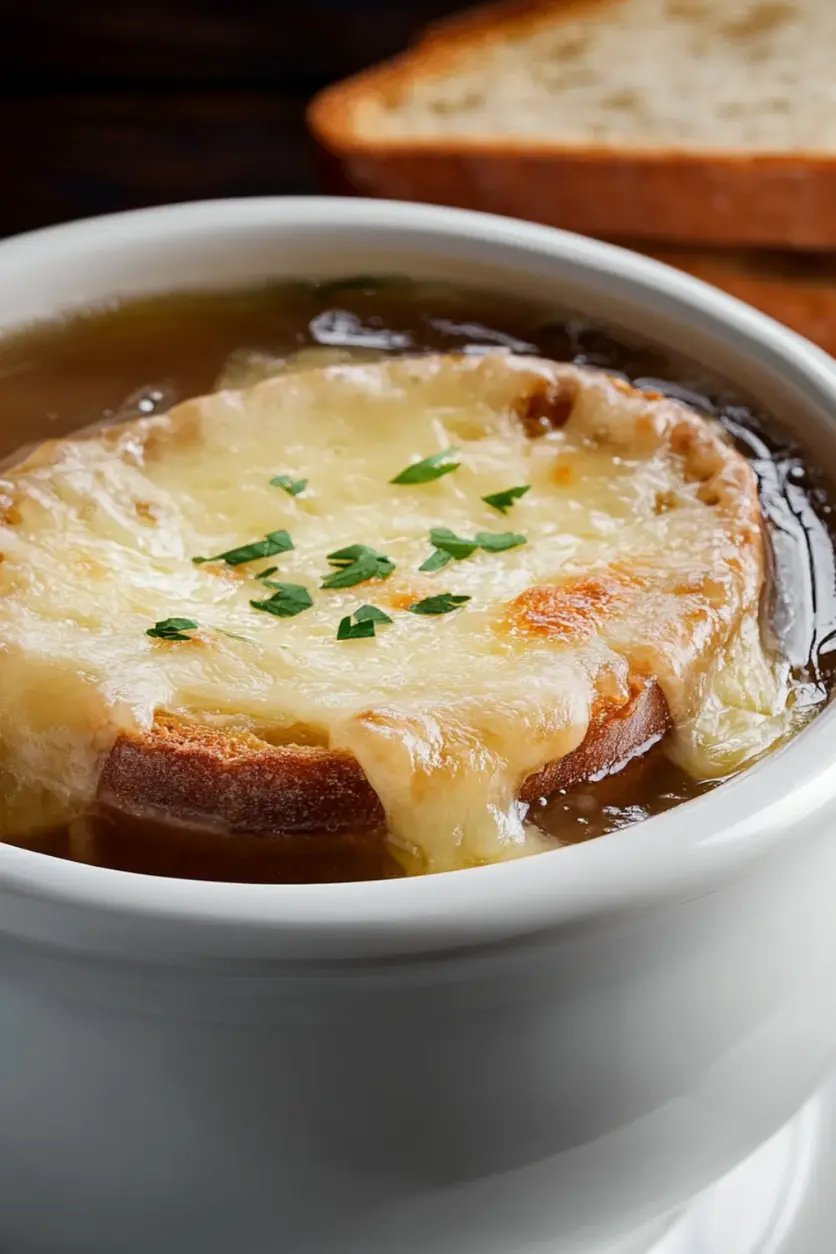
There are soups that warm you, and then there’s this Gordon Ramsay French onion soup recipe — the one that wraps you in a blanket of caramelized sweetness and savory depth. I first tasted a version of this classic in a tiny bistro near Les Halles in Paris during my culinary training. The chef there took thirty minutes just to caramelize the onions, stirring with a patience I didn’t yet have. Now, living in New York City, I find that same patience every time I stand over my own pot. This Gordon Ramsay French onion soup recipe is built on the same principle: deeply caramelized onions, a rich beef broth, and a golden Gruyère toast that crackles when you break through it. The unique angle here is the sugar trick — a small pinch added midway through caramelization that mimics a professional’s touch.
Imagine a bowl where the broth is almost mahogany, with threads of melted Gruyère stretching from your spoon to your lips. The onions are buttery soft, almost jammy, with a sweetness that never tips into cloying. A whisper of thyme and bay leaf lifts the whole thing, while a splash of dry white wine cuts through the richness. It smells like a Parisian kitchen on a rainy evening — warm, earthy, and impossibly comforting. The toasted baguette crouton, bubbling with cheese, becomes a little raft of joy. Every spoonful is a balance of savory broth, sweet onion, and nutty, browned cheese.
I’ve tweaked this Gordon Ramsay French onion soup recipe over the years, blending my French training with the ingredients I find at the Union Square Greenmarket. The biggest game-changer? Using a mix of butter and olive oil for caramelization — the butter gives flavor, the oil prevents burning. My pro tip is to deglaze with wine while the pan is still hot, scraping up all those browned bits from the bottom; that’s where the soul of the soup lives. A common mistake is rushing the onions — if they brown too fast, they turn bitter instead of sweet. Take your time, and this Gordon Ramsay French onion soup recipe will reward you with a bowl of pure comfort.
Why This Gordon Ramsay French Onion Soup Recipe Is the Best
The Flavor Secret: Most recipes stop when onions are just translucent. Not this one. I take them into deep mahogany territory, coaxing out natural sugars until they almost caramelize into a compote. Adding a teaspoon of sugar at the 10-minute mark accelerates this process without burning, a trick I learned from a pastry chef in Paris. The result is a broth so rich it tastes like it simmered all day, even though it only takes about an hour. My Moroccan grandmother’s tagines taught me the power of slow-cooking onions, and this Gordon Ramsay French onion soup recipe is my love letter to that lesson.
Perfected Texture: The onions should melt on your tongue, not be stringy or crunchy. That means slicing them thinly, about 1/8-inch thick, which ensures even cooking. I also use a wide, heavy-bottomed pot so the onions have room to breathe — crowding them traps steam and prevents proper browning. The broth is silky yet substantial, with just enough body from quality beef stock to feel satisfying without being heavy. A final touch: I simmer the soup uncovered for 30 minutes to concentrate the flavors, exactly as Gordon Ramsay demonstrates in his own kitchen.
Foolproof & Fast: While classic recipes call for hours of simmering, this Gordon Ramsay French onion soup recipe is designed for a weeknight dinner. The caramelization takes about 40 minutes (mostly hands-off after the first 10 minutes), and the broth simmers for just 30 minutes. That means from start to finish, you’re looking at about 85 minutes total — but most of that is passive cooking. Even a beginner can pull this off, as long as you resist the urge to crank the heat. Low and slow is the mantra here.
French Onion Soup Ingredients
Every time I make this Gordon Ramsay French onion soup recipe, I think of my first trip to the Union Square Greenmarket in NYC. I wandered past piles of Vidalia onions, their papery skins glowing in the morning light, and knew they’d be perfect for this soup. In Paris, my chef always insisted on using a mix of yellow and red onions for depth, but at home, I stick with yellow for their reliable sweetness. Here’s what you’ll need — all available at your local grocery store or farmers market.
120ml (½ cup) dry white wine (like Sauvignon Blanc or Pinot Grigio)
2 bay leaves
2 sprigs fresh thyme (or 1 teaspoon dried)
Salt and freshly ground black pepper, to taste
1 baguette, sliced into ½-inch rounds and toasted
170g (about 1½ cups) Gruyère cheese, grated
Fresh parsley, chopped (optional, for garnish)
Ingredient Spotlight
Onions: The heart of this Gordon Ramsay French onion soup recipe. Yellow onions are preferred for their balanced sweetness and mellow flavor. If you only have red or white onions, red will add a slightly sharper taste, while white onions are milder. Avoid sweet onions like Vidalias — they’re too high in moisture and can turn mushy. Look for firm, heavy onions with no soft spots.
Gruyère: This Swiss cheese is essential for that nutty, melty topping. It browns beautifully under the broiler and stretches into luscious strings. If you can’t find Gruyère, Emmental or Comté are excellent substitutes — both melt well and have a similar nuttiness. Avoid pre-shredded cheese; it contains anti-caking agents that prevent smooth melting.
Beef Stock: The backbone of the broth. Use a high-quality, low-sodium store-bought stock, or make your own for an even deeper flavor. I often use Better Than Bouillon beef base dissolved in water — it’s concentrated and delivers a robust, meaty flavor that mimics homemade. Avoid watery broths; they’ll leave your soup thin and unsatisfying.
Dry White Wine: A splash of acidity brightens the rich, savory broth. Use a wine you’d drink — avoid anything labeled “cooking wine,” which has added salt and preservatives. Sauvignon Blanc or an unoaked Chardonnay work well. If you don’t have wine, substitute with an extra splash of stock and a teaspoon of lemon juice or white wine vinegar.
Original Ingredient
Best Substitution
Flavor / Texture Impact
Yellow onions
Red onions
Slightly sharper, less sweet
Gruyère cheese
Emmental or Comté
Similar nuttiness, excellent melting
Beef stock
Chicken stock + 1 tbsp soy sauce
Lighter body, umami boost from soy
Dry white wine
Extra stock + 1 tsp lemon juice
Less depth, but still bright
Butter
Additional olive oil (3 tbsp total)
Less richness, slightly fruity note
How to Make Gordon Ramsay French Onion Soup — Step-by-Step
Don’t be intimidated by the caramelization time — this Gordon Ramsay French onion soup recipe is more about patience than skill. Follow these steps, and you’ll have a bowl that rivals any bistro in NYC.
Step 1: Caramelize the Onions
Heat butter and olive oil in a large, heavy-bottomed pot over medium-low heat. Add the thinly sliced onions and stir to coat. Cook for 30–40 minutes, stirring every 5 minutes, until the onions are deeply browned and jammy. After 10 minutes, sprinkle in the sugar to help caramelization. The key is low, steady heat — if you see any burning, reduce the temperature immediately.
💡 emy’s Pro Tip: Use a wooden spoon to stir. Metal can scrape the pot and release unwanted flavors. And don’t walk away too long — every 5 minutes of stirring prevents sticking.
Step 2: Add Garlic and Deglaze
Add the minced garlic and stir for 2 minutes until fragrant. Pour in the dry white wine, scraping the bottom of the pot with your spoon to release all those browned bits (called fond). Let the wine bubble for 1 minute, then add the beef stock, bay leaves, thyme, salt, and pepper.
⚠️ Common Mistake to Avoid: Adding the wine when the pot is too cool. The sizzle is crucial for deglazing — it lifts the fond into the broth, adding deep savory notes. If the pot isn’t hot enough, you’ll miss that flavor.
Step 3: Simmer the Broth
Bring the soup to a gentle simmer, then reduce heat to low and cook uncovered for 30 minutes. Stir occasionally. This allows the flavors to meld and the liquid to concentrate slightly. Taste and adjust seasoning — you may need more salt or pepper depending on your stock.
💡 emy’s Pro Tip: For an even deeper flavor, add a Parmesan rind to the pot while simmering. It adds a subtle nutty richness that complements the Gruyère beautifully.
Step 4: Assemble and Broil
Preheat your broiler. Ladle the soup into oven-safe bowls. Place a toasted baguette slice on top of each bowl, then pile on the grated Gruyère. Broil for 2–3 minutes until the cheese is melted, bubbly, and golden brown in spots. Watch closely — cheese can burn quickly under the broiler.
⚠️ Common Mistake to Avoid: Using cold bowls. Place your oven-safe bowls on a baking sheet and warm them in the oven for 5 minutes before adding the soup. This keeps the soup hot while the cheese melts.
Step 5: Serve and Garnish
Carefully remove the bowls from the oven (they’re very hot!). Let them cool for 2 minutes, then garnish with fresh parsley if desired. Serve immediately with a spoon and a warning that the bowl is hot. The cheese will stretch gloriously as you dig in.
Step
Action
Duration
Key Visual Cue
1
Caramelize onions
30–40 minutes
Deep golden brown, jammy texture
2
Add garlic and deglaze
3 minutes
Wine sizzles and steams, fond lifts
3
Simmer broth
30 minutes
Liquid reduces slightly, deep brown color
4
Assemble and broil
2–3 minutes
Cheese bubbles and turns golden
5
Serve and garnish
2 minutes
Parsley flecks, cheese strings stretch
Serving & Presentation
Presentation matters with this Gordon Ramsay French onion soup recipe. I always serve it in deep, oven-safe ceramic bowls — the kind you’d find at a cozy bistro in the West Village. Ladle the soup to about 1 inch from the rim, then float the baguette slice on top. Pile on the Gruyère generously, allowing some to drip over the edge for a rustic, irresistible look. A sprinkle of fresh parsley adds a pop of green against the deep brown broth and golden cheese.
Pair this soup with a crisp green salad dressed with a simple vinaigrette — the acidity cuts through the richness. For a heartier meal, serve it alongside a grilled steak or a roasted chicken. In my NYC kitchen, I love to open a bottle of the same wine I used in the soup — a crisp Sauvignon Blanc or a light Pinot Noir. The wine echoes the flavors in the broth, creating a beautiful harmony.
French Onion Soup
Table of Contents
French Onion Soup Recipe – Classic, Rich, and Cheesy
⚖️
Difficulty
Medium
⏲️
Prep Time
15 mins
🕒
Cook Time
70 mins
⏱️
Total Time
85 mins
🍽️
Servings
5
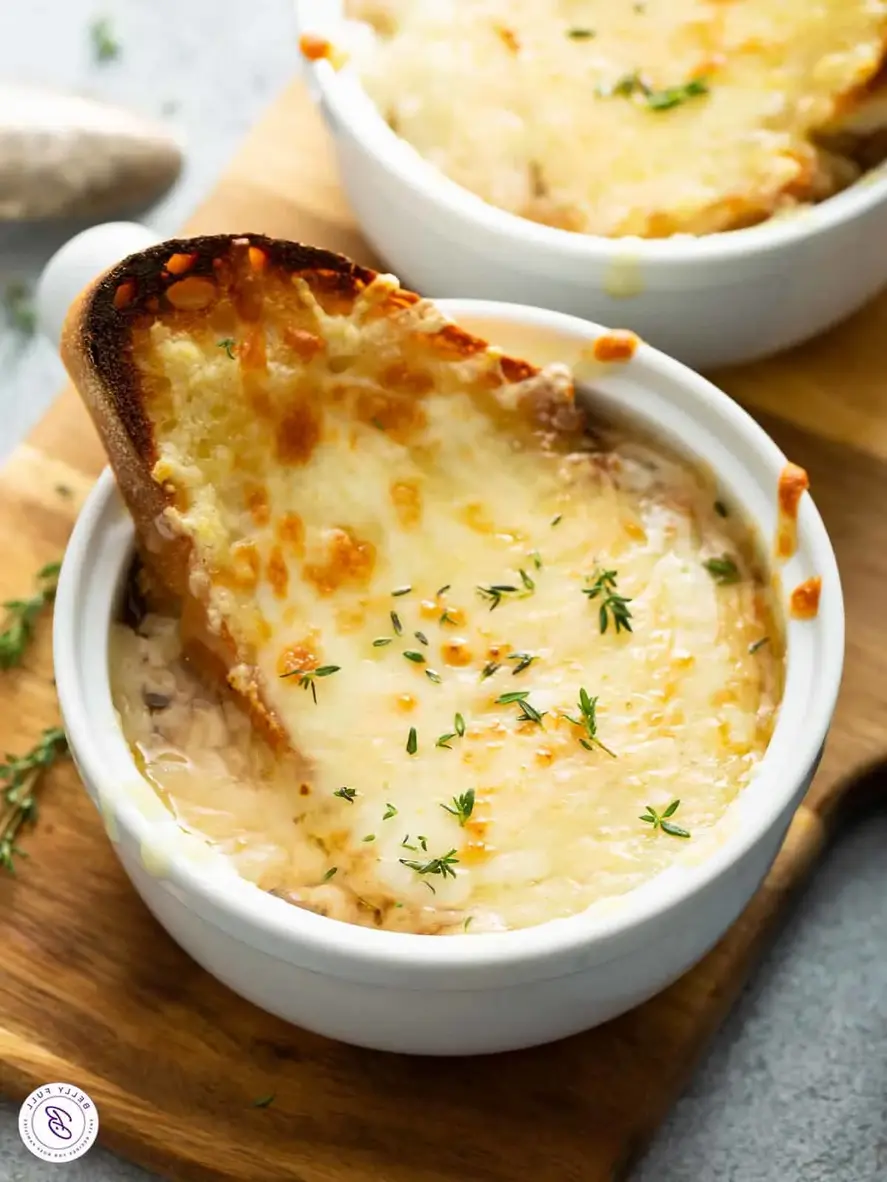
I still remember the first time I truly understood what a bowl of soup could be. I was in Paris, studying at culinary school, and a classmate took me to this tiny bistro in the 6th arrondissement. The waiter placed a bubbling crock in front of me, and when I broke through that golden cheese crust with my spoon, I nearly cried. That is the moment this French Onion Soup recipe was born in my heart. Growing up in Morocco, my mother made hearty broths with caramelized onions and warm spices, but this French version — with its deep, wine-kissed broth and three melted cheeses — was something else entirely. Now, living in New York City, I make this soup every winter, especially after a long day at the Union Square Greenmarket. It is the ultimate comfort food: rich, savory, and deeply satisfying. This homemade French Onion Soup recipe will knock your socks off! Made with the richest broth, perfect caramelized onions, and topped with three different types of melted cheese, it is a meal that feels like a warm hug.
The beauty of this French Onion Soup lies in the caramelization. Those five large yellow onions, sliced thin and cooked low and slow until they are almost syrupy, create a sweetness that balances the savory beef and chicken broths. The aroma that fills your kitchen — a mix of butter, thyme, and balsamic vinegar — is nothing short intoxicating. When you add the red wine and deglaze the pot, scraping up all those browned bits, you are building layers of flavor that simply cannot be rushed. And then, the finishing touch: a slice of crusty French bread, toasted golden, topped with Gruyère, mozzarella, and Parmesan, all broiled until bubbly and forming that iconic crusty seal. Every spoonful is a perfect balance of rich broth, sweet onions, and gooey cheese.
What sets my version apart is my professional chef’s approach to layering flavors. I trained in Paris, so I know the importance of technique — but I also learned from my mother in Morocco that the best food comes from patience and love. I use a combination of beef and chicken broth for a more complex base, a touch of Worcestershire sauce for umami depth, and balsamic vinegar right at the end to brighten everything up. My pro tip? Do not skimp on the stirring during caramelization. That thirty-five minutes is where the magic happens. A common mistake is rushing this step, ending up with burnt onions rather than sweet, jammy ones. Trust me, the wait is worth it. From my NYC kitchen, I promise this will become your go-to French Onion Soup recipe.
Why This French Onion Soup Recipe Is the Best
The flavor secret is in the dual-broth method. Most recipes use just beef broth, which can taste one-dimensional. My French Onion Soup combines low-sodium beef broth and chicken broth for a more rounded, savory foundation. The chicken broth adds a lightness that keeps the soup from being too heavy, while the beef provides the deep, meaty notes you crave. This is a technique I picked up in Paris — layering broths to create a richer, more elegant result. It is the same principle behind a great stock: balance is everything.
Perfected texture comes from my careful caramelization process. I start by sautéing the onions over medium-high heat for ten minutes to soften them, then I reduce the heat to medium and add salt and sugar. The sugar is key — a small amount helps the onions develop that deep, golden color and almost syrupy texture. I stir every five minutes for thirty-five minutes total. This patience ensures every strand of onion is evenly caramelized, not burnt or crunchy. My chef training taught me that proper caramelization is a controlled process, not a race. When you get it right, the onions melt into the broth, giving the soup a silky, luxurious body.
This recipe is foolproof and fast enough for a weeknight, even with the longer cook time. The active hands-on time is only about 15 minutes for the initial sauté, then mostly stirring and simmering. I have tested this recipe dozens of times in my NYC apartment, and it works beautifully for home cooks of all levels. The instructions are clear, with visual cues like “syrupy consistency” and “golden and bubbly cheese.” Whether you are making it for a cozy dinner or a dinner party, this French Onion Soup delivers restaurant-quality results without stress. Plus, it comes together with simple, everyday ingredients you can find at any US grocery store.
French Onion Soup Ingredients
I love shopping for these ingredients at the Fairway Market on the Upper West Side or the Union Square Greenmarket. The yellow onions from local farms are sweet and firm, perfect for caramelizing. The Gruyère Swiss cheese — I always look for a block that smells nutty and slightly fruity. It reminds me of the cheese shops in Paris, where I used to buy wedges wrapped in brown paper. If I cannot find Gruyère, I sometimes mix in a bit of Emmental, which melts just as beautifully. The key is to use room-temperature cheese for even melting.
Ingredients List
4 tablespoons unsalted butter
5 large yellow onions (thinly sliced)
1 teaspoon salt
1 teaspoon granulated sugar
2 cloves garlic (minced)
1/2 cup dry red wine (see note)
32 ounces low-sodium beef broth
24 ounces low-sodium chicken broth
1 tablespoon Worcestershire sauce
2 sprigs fresh thyme
1 bay leaf
1/2 tablespoon balsamic vinegar
pinch of salt and freshly ground black pepper (to taste)
Yellow onions are the heart of this soup. They have a perfect balance of sweetness and pungency, which breaks down into rich, jammy goodness. When I buy them, I look for firm, heavy onions with tight, papery skin. Avoid any with soft spots or green sprouts. If you only have white onions, they work too, though the flavor will be a bit sharper.
Gruyère Swiss cheese is my top choice for the topping. It melts smoothly, has a nutty flavor, and browns beautifully under the broiler. Look for a block of Gruyère and shred it yourself — pre-shredded cheese often has anti-caking agents that affect melting. If Gruyère is hard to find, a good-quality Swiss cheese like Emmental or Comté works wonderfully.
Dry red wine — I recommend a Pinot Noir or a Merlot. The wine deglazes the pot and adds depth to the broth. You want something dry, not sweet. If you do not cook with wine, you can substitute an equal amount of additional beef broth mixed with 1 tablespoon of red wine vinegar for acidity.
Balsamic vinegar is my secret finisher. A half-tablespoon stirred in at the end brightens the soup and balances the richness. I buy a mid-range balsamic for cooking — save the expensive aged stuff for salads. This small addition makes a huge difference in the final flavor profile.
Pairing Type
Suggestions
Why It Works
Side Dish
Mixed green salad with vinaigrette, roasted asparagus
Acidity and crunch balance the rich soup
Sauce / Dip
Dijon mustard, extra Gruyère for dipping bread
Adds tangy contrast and cheese indulgence
Beverage
Sauvignon Blanc, Pinot Noir, hard cider
Wine mirrors the wine in the soup; cider adds apple brightness
Original Ingredient
Best Substitution
Flavor / Texture Impact
Gruyère Swiss cheese
Emmental or Comté
Similar nutty, creamy melt; slightly milder with Comté
Dry red wine
Beef broth + 1 tbsp red wine vinegar
Less depth but still bright; acidic lift remains
French bread
Sourdough or ciabatta
Sourdough adds tangy note; ciabatta is softer
Low-sodium beef broth
Vegetable broth (for vegetarian version)
Lighter, less savory; add 1 tbsp soy sauce for umami
How to Make French Onion Soup — Step-by-Step
Trust me when I say this: making French Onion Soup at home is not hard, but it does require a bit of patience and love. Follow these steps, and you will be rewarded with the most incredible bowl of soup. I have broken it down into simple steps with clear visual cues.
Step 1: Sauté the Onions
In a large pot over medium-high heat, melt the 4 tablespoons of unsalted butter. Add the 5 thinly sliced yellow onions and sauté, stirring often, until they soften. This takes about 10 minutes. The onions will release moisture and shrink down significantly. Do not rush this initial softening — it sets the stage for perfect caramelization.
⚠️ Common Mistake to Avoid: Adding the onions to cold butter or oil. Always melt the butter first over medium-high heat. Cold butter will make the onions steam instead of sauté, delaying the process and preventing proper browning.
Step 2: Caramelize the Onions
Reduce heat to medium. Stir in 1 teaspoon of salt and 1 teaspoon of granulated sugar. Cook for another 35 minutes, stirring occasionally — every 5 minutes or so. The onions will turn a deep golden brown and become almost syrupy. This is the most important step. The sugar helps accelerate caramelization, but the salt also draws out moisture, creating a rich, complex flavor. Patience here is everything.
💡 emy’s Pro Tip: Do not walk away from the pot. Set a timer for every 5 minutes and give the onions a good stir. This prevents burning and ensures even caramelization. If you see any dark spots forming, reduce the heat slightly and scrape them up with your wooden spoon — those browned bits are flavor gold!
Step 3: Add Garlic and Deglaze
Add the minced garlic and cook until fragrant, about 20 seconds. Then pour in the 1/2 cup of dry red wine. Use a wooden spoon to scrape up all the brown bits on the bottom and sides of the pot — this is called deglazing. Those bits are packed with flavor, and the wine lifts them into the broth. Let the wine bubble for about 30 seconds to cook off the alcohol.
⚠️ Common Mistake to Avoid: Pouring the wine into a too-hot pot. Reduce the heat to medium before adding the wine to prevent it from splattering or burning off too quickly. The deglazing should be a gentle fizz, not a violent steam explosion.
Step 4: Simmer the Broth
Add the 32 ounces of low-sodium beef broth, 24 ounces of low-sodium chicken broth, 1 tablespoon of Worcestershire sauce, 2 sprigs of fresh thyme, and 1 bay leaf. Stir everything together. Bring the soup to a gentle simmer over medium/medium-low heat. Let it cook for about 20 minutes, stirring occasionally. Do not let it boil hard — a gentle simmer allows the flavors to meld without clouding the broth.
💡 emy’s Pro Tip: Taste the broth after 15 minutes of simmering. The flavors should be rich and savory. If it tastes flat, add another splash of Worcestershire sauce or a pinch of salt. Remember, you are building layers, so adjust as you go.
Step 5: Finish the Soup
Remove and discard the thyme sprigs and bay leaf. Stir in the 1/2 tablespoon of balsamic vinegar. Taste the soup again and season with a pinch of salt and freshly ground black pepper as needed. Reduce heat to low, cover the pot, and keep it hot while you prepare the bread and cheese. The balsamic vinegar adds a final touch of brightness that cuts through the richness.
⚠️ Common Mistake to Avoid: Adding the balsamic vinegar too early. It should be added only at the end, after the herbs are removed. Adding it during the simmer can make the flavor flat and dull. The vinegar needs to stay bright and vibrant.
Step 6: Toast the Bread
Preheat your oven broiler with the rack 6 inches from the heat source. Arrange the 5 slices of French bread on a baking sheet. Brush both sides with the 2 tablespoons of olive oil. Broil for 2-3 minutes total, flipping once, until the bread is well toasted on both sides. Keep a close eye on the bread — it can burn in seconds under a hot broiler. Every oven is different, so watch carefully. Remove from heat but leave the broiler on.
💡 emy’s Pro Tip: Do not skip toasting the bread. If you add untoasted bread to the soup, it will become soggy and fall apart before the cheese melts. Toasted bread holds its structure and creates a sturdy platform for the cheese. I like to toast it until just golden — it will continue to brown under the broiler with the cheese.
Step 7: Assemble and Broil
Arrange oven-safe bowls or crocks on a rimmed baking sheet. Fill each bowl 2/3 full with the hot soup. Top each bowl with one slice of toasted bread. Sprinkle evenly with the 1 & 1/2 cups shredded Gruyère, 1/4 cup shredded mozzarella, and 2 tablespoons grated Parmesan. Make sure the cheese covers the bread entirely and extends slightly over the edges of the bowl — this will create a wonderful crusty seal as it melts.
Broil the assembled bowls until the cheese is bubbly and golden brown. As it melts and softens, the cheese will fall over the sides of the crock, forming that irresistible crusty seal. This usually takes 2-4 minutes, but watch closely. Remove from the oven and let the bowls cool for 2-3 minutes before serving — the soup inside is extremely hot!
⚠️ Common Mistake to Avoid: Using cold cheese straight from the fridge. Always let the shredded cheese come to room temperature before assembling. Cold cheese takes longer to melt and can burn on top while remaining unmelted underneath. Take the cheese out 20 minutes before you need it.
This homemade French Onion Soup recipe will knock your socks off! Made with the richest broth, perfect caramelized onions, and topped with three different types of melted cheese!Step-by-step photos can be seen below the recipe card.
Ingredients
Scale
4 tablespoons unsalted butter
5 large yellow onions (thinly sliced)
1 teaspoon salt
1 teaspoon granulated sugar
2 cloves garlic (minced)
1/2 cup dry red wine ((see note))
32 ounces low-sodium beef broth
24 ounces low-sodium chicken broth
1 tablespoon Worcestershire sauce
2 sprigs fresh thyme
1 bay leaf
1/2 tablespoon balsamic vinegar
pinch of salt and freshly ground black pepper (to taste)
In a large pot over medium-high heat, melt the butter. Add in the onions and sauté, stirring often, until softened, about 10 minutes.
Reduce heat to medium, stir in the salt and sugar; cook for another 35 minutes, stirring occasionally (every 5 minutes or so), until onions are caramelized and almost syrupy.
Add in the garlic and cook until fragrant, about 20 seconds.
Pour in the red wine to deglaze the pot, scraping up any brown bits on the bottom and sides.
Add in the beef broth, chicken broth, Worcestershire sauce, thyme, and bay leaf.
Gently simmer over medium/medium-low heat for about 20 minutes, stirring occasionally.
Remove and discard the herbs.
Mix in balsamic vinegar and taste. Season with additional salt and pepper, if necessary.
Reduce heat to low, cover to keep hot while you prepare the bread.
Preheat oven broiler, with rack 6 inches from the heat source. Arrange bread slices on a baking sheet and brush both sides with the olive oil. Broil 2-3 minutes total, flipping once, until well toasted on both sides. (NOTE: keep an eye on the bread the entire time to ensure it doesn't burn. Every oven is different.) Remove from heat; leave broiler on.
Arrange oven safe bowls or crocks on a rimmed baking sheet. Fill each bowl 2/3 full with hot soup. Top each bowl with 1 slice toasted bread, and sprinkle with the Swiss, Mozzarella, and Parmesan cheeses.
Broil until bubbly and golden brown. As it softens, the cheese will fall over the sides of the crock and form a wonderful crusty seal.
Serve and enjoy!
Easy Homemade Hoisin Sauce Recipe
Table of Contents
Easy Homemade Hoisin Sauce Recipe – A Sweet, Salty, and Spicy Pantry Staple
⚖️
Difficulty
Easy
⏲️
Prep Time
5 mins
🕒
Cook Time
5 mins
⏱️
Total Time
10 mins
🍽️
Servings
About ¾ cup
My mom’s kitchen in Morocco always smelled like slow-cooked tagines and earthy spices, but when I moved to New York for culinary school, I fell hard for the bold, sticky-sweet sauces of Chinatown. This easy homemade hoisin sauce recipe is my love letter to that pantry staple. I wanted a version that I could whip up in minutes with ingredients I always have on hand—soy sauce, peanut butter, honey, and a splash of rice vinegar. The unique angle here is that I add a bit of Sriracha for heat, making it as spicy as you like. It’s sweet, salty, and infinitely customizable, just like the sauces I used to dream about during my pastry classes in Paris.
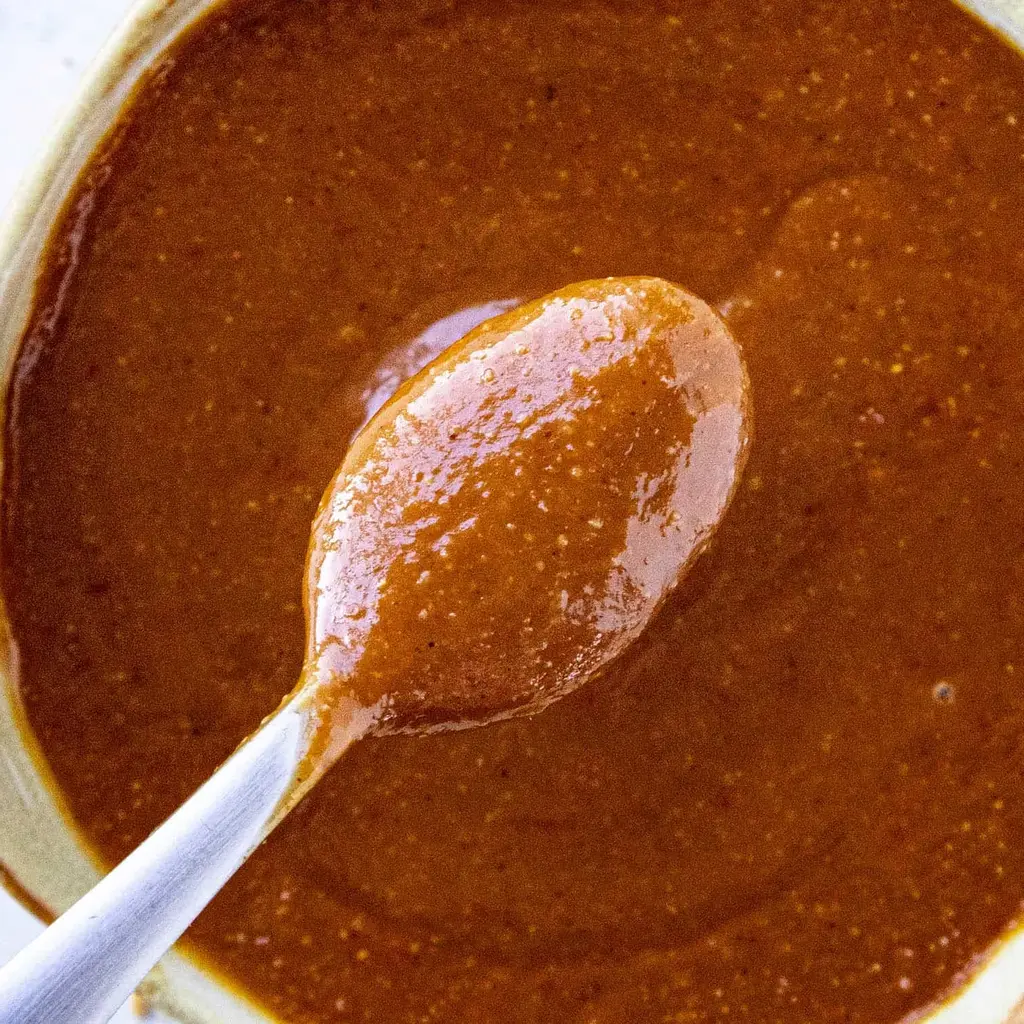
Imagine the deep, savory aroma of soy sauce mingling with the nutty richness of peanut butter, all balanced by the floral notes of Chinese five spice powder. A hint of garlic cuts through the sweetness of honey, while the rice vinegar adds a bright tang that wakes up your taste buds. The sauce is glossy and thick, perfect for glazing ribs, coating stir-fried noodles, or dipping spring rolls. I love how the Sriracha (or your favorite chili paste) gives it a slow-building warmth that makes you want to keep tasting. It’s a sauce that transforms simple dishes into something magical.
As a trained chef who has spent years perfecting sauce work in Paris and now cooks daily for my NYC family, I can tell you that this recipe is a game-changer. Most store-bought hoisin sauces are loaded with preservatives and high-fructose corn syrup—my version uses real ingredients and lets you control the spice level entirely. 💡 emy’s Pro Tip: The secret is to thicken the sauce with a cornstarch slurry, which gives it that perfect cling without being gluggy. Avoid the common mistake of simmering it too high and too fast—that will make the cornstarch clump. This recipe is foolproof and fast, ready in just 10 minutes.
Why This Homemade Hoisin Sauce Recipe Is the Best
The flavor secret is in the balance. Growing up in Morocco, I learned to layer spices with patience—a philosophy I brought to my Parisian training and now to my NYC kitchen. Here, the Chinese five spice powder (cinnamon, cloves, fennel, star anise, and Szechuan peppercorns) dances with the umami of soy sauce and the natural sweetness of honey. Peanut butter adds a creamy, nutty depth that traditional hoisin sauce gets from fermented soybean paste, but without needing hard-to-find ingredients. This unique twist makes it both accessible and unforgettable.
Perfected texture comes from a chef’s trick: the cornstarch slurry. I whisk a teaspoon of cornstarch with cold water and stir it into the warm sauce. This technique, which I learned in a Parisian pastry kitchen for thickening fruit coulis, creates a silky, glossy finish that clings beautifully to food. Unlike store-bought sauces that can be runny or pasty, this homemade version is just right—lush and pourable. It’s the same precision I use when making a classic French beurre blanc.
This recipe is foolproof and fast, making it ideal for busy weeknights. You don’t need to hunt for obscure ingredients or slave over a hot stove. With just 10 minutes and common pantry items (soy sauce, peanut butter, honey, garlic, rice vinegar, Chinese five spice, Sriracha, and cornstarch), you have a versatile sauce that beats any jarred version. It’s also naturally gluten-free if you use tamari, and easily vegan with maple syrup. Whether you’re a beginner or a seasoned cook, this is a recipe you’ll turn to again and again.
Homemade Hoisin Sauce Ingredients
I love shopping for these ingredients at the Union Square Greenmarket or my local Asian market in Chinatown. There’s something special about picking up fresh garlic and a good soy sauce—it reminds me of the spice markets in Marrakech where my mom would haggle for the best cinnamon. You don’t need anything fancy, just a well-stocked pantry.
Ingredients List
4 tablespoons soy sauce
2 tablespoons rice vinegar
2 tablespoons peanut butter (or try it with tahini or black bean sauce)
½ teaspoon Chinese five spice powder (use more as desired)
2 teaspoons Sriracha (or any Chinese hot sauce, chili paste, or your favorite hot sauce)
1 teaspoon cornstarch
Ingredient Spotlight
Soy Sauce: This provides the salty, umami backbone. I recommend using naturally brewed soy sauce like Kikkoman or San-J—avoid the cheap imitation stuff that’s just salt and color. For a gluten-free version, swap in tamari or coconut aminos. The flavor will be slightly milder but still delicious.
Peanut Butter: This is my favorite shortcut for richness. Using creamy peanut butter (not the chunky kind) gives the sauce a smooth, luscious texture. If you’re allergic to peanuts, try tahini (sesame paste) or Chinese black bean sauce. Tahini adds a nutty, slightly bitter note that works beautifully with the honey. Black bean sauce will make it saltier, so go easy on the soy sauce.
Chinese Five Spice Powder: This blend is the soul of the sauce. It combines star anise, cloves, cinnamon, Szechuan peppercorns, and fennel seeds. You can find it in any supermarket’s spice aisle, but for the freshest flavor, try a specialty spice shop in NYC like Kalustyan’s. Start with ½ teaspoon and adjust—too much can be overpowering.
Original Ingredient
Best Substitution
Flavor / Texture Impact
Soy Sauce
Tamari or coconut aminos
Less salty, slightly sweeter; gluten-free option
Peanut Butter
Tahini or black bean sauce
Tahini: nuttier, slightly bitter. Black bean sauce: saltier, fermented flavor
Honey
Brown sugar or maple syrup
Brown sugar: deeper molasses note. Maple syrup: thinner, woodsy sweetness
Sriracha
Chili garlic sauce, sambal oelek, or gochujang
Chili garlic sauce: more garlicky. Gochujang: sweeter, fermented heat
How to Make Homemade Hoisin Sauce — Step-by-Step
Making this sauce is so easy, you’ll wonder why you ever bought it from a jar. Just follow these simple steps, and you’ll have a thick, glossy, and deeply flavorful sauce in under 10 minutes.
Step 1: Combine the Base
Add all of the ingredients to a small pot, except for the cornstarch. That means the soy sauce, rice vinegar, peanut butter, minced garlic, honey, Chinese five spice powder, and Sriracha. Use a small whisk to stir everything together until the peanut butter is mostly incorporated. It’s okay if there are a few tiny lumps—they’ll melt as it heats.
💡 emy’s Pro Tip: For a deeper flavor, let the garlic sit in the soy sauce for a minute before heating—it will bloom the aroma.
Step 2: Warm It Up
Place the pot on the stove over medium heat. Warm the mixture, stirring constantly, until the peanut butter fully melts and the sauce comes together into a smooth, fragrant liquid. This should take about 2–3 minutes. Don’t let it boil—just a gentle simmer. Watch for small bubbles around the edges, which is your cue that it’s ready for the next step.
⚠️ Common Mistake to Avoid: If you heat the sauce too high, the honey can burn and the garlic can become bitter. Keep it at medium heat and stir frequently.
Step 3: Make the Cornstarch Slurry
In a small bowl, whisk the cornstarch with 2 tablespoons of cold water until the cornstarch completely dissolves. You’re looking for a milky, white liquid with no lumps. This slurry is what will give your hoisin sauce that gorgeous, glossy thickness.
💡 emy’s Pro Tip: Use cold water, not hot—hot water will cause the cornstarch to clump immediately. Whisk vigorously until it’s smooth like cream.
Step 4: Thicken the Sauce
Pour the cornstarch and water mixture into the hoisin sauce pot while whisking constantly. Keep whisking for about 30 seconds until the slurry is fully incorporated. You’ll see the sauce start to thicken and become more viscous almost immediately.
⚠️ Common Mistake to Avoid: Pouring the slurry in all at once without stirring can create lumps. Slowly stream it in while whisking to ensure a silky-smooth texture.
Step 5: Simmer and Serve
Heat the sauce for another 1–2 minutes, continuing to stir, until it reaches your desired thickness. The sauce should coat the back of a spoon—think thick maple syrup consistency. Remove it from the heat immediately to prevent over-thickening. Taste and adjust: add more Sriracha for heat, or a pinch of salt for saltiness. Serve warm or at room temperature.
💡 emy’s Pro Tip: The sauce will continue to thicken slightly as it cools. If it becomes too thick, whisk in a teaspoon of warm water to loosen it up.
Step
Action
Duration
Key Visual Cue
1
Combine all ingredients except cornstarch
1 min
Peanut butter partially mixed in; small lumps visible
2
Heat over medium, stirring
2–3 mins
Smooth, fragrant liquid with small bubbles at edges
3
Whisk cornstarch with cold water
30 secs
Milky white, lump-free slurry
4
Add slurry, whisk constantly
30 secs
Sauce begins to thicken visibly
5
Simmer until thickened
1–2 mins
Coats back of spoon; glossy, thick maple syrup consistency
Serving & Presentation
This homemade hoisin sauce is incredibly versatile. Brush it on grilled chicken thighs or pork ribs during the last few minutes of cooking for a sticky, caramelized glaze. I love drizzling it over a bowl of steaming ramen or soba noodles, topped with scallions and sesame seeds. It also makes a fantastic dipping sauce for spring rolls, dumplings, or roasted cauliflower. For a Moroccan twist, try it with lamb meatballs—the sweetness and spice pair beautifully with harissa.
When I’m hosting a dinner party in my NYC apartment, I serve this sauce in a small, rustic bowl alongside a platter of crispy tofu and vegetable skewers. The deep brown color and glossy sheen catch the light, and the aroma of Chinese five spice fills the room. I like to garnish with a sprinkle of sesame seeds and a few thin slices of red chili. It’s simple, elegant, and always gets compliments.
Pairing Type
Suggestions
Why It Works
Side Dish
Steamed jasmine rice, stir-fried bok choy, roasted broccoli
Absorbs sauce well; neutral base for bold flavors
Sauce / Dip
Spring rolls, dumplings, chicken skewers, egg rolls
Sticky, flavorful coating; a perfect balance of sweet and salty
Beverage
Crisp lager like Sapporo, dry Riesling, iced green tea
Cuts through richness; refreshes the palate between bites
Garnish
Toasted sesame seeds, finely sliced scallions, fresh cilantro, red chili flakes
Adds texture, freshness, and visual pop
Make-Ahead, Storage & Reheating
As a busy NYC professional cook, I often double this recipe on Sunday so I have hoisin sauce ready for the week. It stores beautifully and actually develops more depth of flavor overnight as the spices meld. It’s a total game-changer for meal-prepping everything from weekday stir-fries to last-minute glaze for salmon.
This homemade hoisin sauce recipe is easy to whip together with common pantry ingredients. It’s sweet and salty and you can make it as spicy as you want it.
Ingredients
Scale
4 tablespoons soy sauce
2 tablespoons rice vinegar
2 tablespoons peanut butter ((Or try it with tahini or black bean sauce – peanut butter is more readily available and easier))
3 cloves garlic (minced – 1 teaspoon garlic powder is good instead)
2 tablespoons honey ((you can use brown sugar instead))
1/2 teaspoon Chinese Five Spice Powder (use more as desired)
2 teaspoons Sriracha ((or use any Chinese hot sauce, red chili sauce, chili paste or try your favorite hot sauce))
1 teaspoon cornstarch
Instructions
Add all of the ingredients to a small pot, except for the cornstarch.
Heat to medium heat and warm through, stirring, until the ingredients combine.
In a small bowl, whisk the cornstarch with 2 tablespoons of cold water, until the cornstarch dissolves.
Pour the cornstarch and water mixture into the hoisin sauce pot and whisk until well combined.
Heat for another 1-2 minutes, until the hoisin sauce thickens.
Serve!
BEST Sweet and Sour Sauce
Table of Contents
BEST Sweet and Sour Sauce – Better Than Store-Bought in 10 Minutes
⚖️
Difficulty
Easy
⏲️
Prep Time
3 mins
🕒
Cook Time
7 mins
⏱️
Total Time
10 mins
🍽️
Servings
about 1.5 cups
I still remember the first time I made this BEST sweet and sour sauce from scratch. It was a rainy Tuesday in my tiny New York City apartment, and I was craving the tangy, glossy sauce from my favorite Chinese takeout spot. But as a trained pastry chef from Le Cordon Bleu in Paris, I knew I could make it better. So I rummaged through my pantry, grabbed some pineapple juice I had leftover from a Moroccan breakfast, and started experimenting. The result? A sauce so vibrant, so perfectly balanced, that my husband declared it “better than takeout.” This isn’t just any sweet and sour sauce—it’s the one that will make you never buy a bottle from the store again.
Close your eyes and imagine it: a brilliant, jewel-toned sauce that clings to crispy chicken or shrimp like a second skin. The first hit is pure pineapple sweetness, followed by a bright tang from rice vinegar that makes your mouth water. There’s a savory depth from soy sauce and a faint tomato note from ketchup that rounds everything out. It’s thick enough to coat a spoon but not syrupy—a velvety texture that I perfected by using a cornstarch slurry, a technique I learned from my French training. The aroma? Like a walk through the night market in Marrakech, where smoky and sweet meet in the most delicious way.
What makes my version truly the BEST is that it’s completely free of artificial colors, high-fructose corn syrup, and preservatives. I use real pineapple juice for authentic fruit flavor, and I’ll show you how to get that iconic restaurant color naturally. Plus, I’m sharing a 💡 emy’s Pro Tip for avoiding a common mistake that ruins many homemade sauces: a lumpy texture. One simple trick and you’ll have a silky, smooth sweet and sour sauce every single time. Ready to ditch the bottled stuff? Let’s get cooking.
Why This Sweet and Sour Sauce Recipe Is the Best
The Flavor Secret: The magic here lies in using canned pineapple juice as the base. It’s naturally sweeter and more acidic than fresh pineapple at most grocery stores, giving you a consistent result every time. Growing up in Morocco, we always had cans of pineapple in the pantry for a family treat. Now in my NYC kitchen, I combine that sweetness with light brown sugar and a splash of rice vinegar to create a sweet and sour sauce that’s complex, not cloying. This is the unique angle that sets my recipe apart.
Perfected Texture: A great sweet and sour sauce needs to be thick enough to coat, but not so thick it turns into jelly. The trick, which I learned in Paris, is to dissolve your cornstarch completely in cold water before adding it to the hot liquid. This “slurry” method prevents lumps and guarantees a glossy, smooth sauce that looks as good as it tastes. I’ll guide you through the exact moment to add it—right when the sauce reaches a boil—for perfect results.
Foolproof & Fast: With just three minutes of prep and seven minutes on the stove, this sweet and sour sauce is practically effortless. It’s a 10-minute recipe that even a beginner can master. No weird ingredients, no complicated techniques—just a saucepan, a whisk, and a few pantry staples. This is the kind of sauce that makes you feel like a chef, even on a busy weeknight.
Sweet and Sour Sauce Ingredients
I find all of these ingredients at my local New York City grocery store—no specialty Asian market needed (unless you want to explore!). The rice vinegar is usually in the international foods aisle, and the canned pineapple juice is next to the fruit juices. It reminds me of my mother’s kitchen in Morocco, where she’d always have a can of pineapple waiting for a special occasion. Here’s exactly what you need for this BEST sweet and sour sauce.
Ingredients List
1 cup canned pineapple juice (see note)
3/4 cup packed light brown sugar OR brown sugar alternative (for low sugar option)
1/3 cup rice vinegar (found in the Asian or general vinegar section of any grocery store, or you can substitute apple cider vinegar)
3 tablespoons ketchup
2 tablespoons soy sauce or tamari (GF)
For the Cornstarch Slurry: 1 1/2 tablespoons cornstarch dissolved in 2 tablespoons water
Optional: 2-3 drops natural red food coloring
Ingredient Spotlight
Pineapple Juice: This is the backbone of your sweet and sour sauce. Use canned, unsweetened pineapple juice for the most reliable flavor. Fresh pineapple juice can work, but it’s less consistent in sweetness. Look for a brand with no added sugar. For a tested substitution, you can use a 20-ounce can of crushed pineapple and strain out the juice, but you’ll get a slightly pulpy texture.
Rice Vinegar: This mild, slightly sweet vinegar is what gives the sauce its authentic tang. It’s milder than white vinegar, so the result is less harsh. Substitute with apple cider vinegar in a pinch—just use 1/4 cup plus 1 teaspoon, as it’s stronger. The flavor will be slightly fruitier, but still delicious.
Ketchup: Don’t skip this! It adds a subtle tomato flavor and helps develop that iconic red-orange color. Use a good quality brand like Heinz. For a cleaner option, use tomato paste (1 tablespoon) mixed with 2 teaspoons of honey and 1 teaspoon of vinegar.
Method
Container
Duration
Reheating Tip
Original Ingredient
Best Substitution
Flavor / Texture Impact
Canned pineapple juice
Fresh pineapple juice (strained, from about 1/2 pineapple)
More variable sweetness; slightly thinner
Light brown sugar
Coconut sugar or brown sugar alternative (like Swerve)
Deeper, more caramel-like flavor; slightly lower sweetness
Rice vinegar
Apple cider vinegar (use 1/4 cup + 1 tsp)
Fruitier, slightly sharper tang
Soy sauce
Coconut aminos (for soy-free)
Slightly sweeter, less salty; still savory
How to Make Sweet and Sour Sauce — Step-by-Step
Trust me, this is the easiest homemade sauce you’ll ever make. Just follow these simple steps and you’ll have a restaurant-quality sweet and sour sauce in minutes.
Step 1: Combine Base Ingredients
Place 1 cup of canned pineapple juice, 3/4 cup packed light brown sugar, 1/3 cup rice vinegar, 3 tablespoons ketchup, and 2 tablespoons soy sauce in a small saucepan. Whisk everything together until the sugar is mostly dissolved. Don’t worry if it looks a little cloudy—it will clear as it heats.
💡 emy’s Pro Tip: Use a small saucepan (about 2 quarts) so the liquid doesn’t spread too thin. This helps the sauce heat evenly and thicken faster.
Step 2: Bring to a Boil
Set the saucepan over medium-high heat and bring the mixture to a rolling boil. Stir occasionally to prevent the sugar from burning on the bottom. You’ll see large bubbles breaking the surface—that’s your cue to move to the next step. This takes about 4-5 minutes.
⚠️ Common Mistake to Avoid: Don’t walk away! Once it starts boiling, it can foam up quickly. Keep an eye on it to prevent a sticky mess on your stove.
Step 3: Add the Cornstarch Slurry
In a small bowl, whisk 1 1/2 tablespoons cornstarch with 2 tablespoons cold water until completely smooth. This is your slurry. With the boiling sauce still on the heat, pour the slurry in a steady stream while whisking constantly. The sauce will thicken almost immediately.
💡 emy’s Pro Tip: Make sure the slurry is smooth before adding it—any lumps of dry cornstarch will create lumpy sauce. I like to use a fork to whisk it thoroughly.
Step 4: Simmer and Finish
Reduce the heat to low and simmer the sweet and sour sauce for 1 minute, stirring constantly. You’ll see it go from a thin liquid to a glossy, thick sauce that coats the back of a spoon. If using natural red food coloring (like from beet juice), stir in 2-3 drops now. Remove from heat and let it cool completely.
⚠️ Common Mistake to Avoid: Don’t overcook after adding the slurry! Over-simmering can break down the cornstarch and make the sauce thin again. One minute is all you need.
Step
Action
Duration
Key Visual Cue
1
Whisk base ingredients in saucepan
1 min
Sugar mostly dissolved, liquid cloudy
2
Bring to a boil
4-5 min
Large, rolling bubbles cover the surface
3
Add cornstarch slurry while whisking
10 sec
Sauce thickens instantly
4
Simmer and finish
1 min
Glossy, coats the back of a spoon
Serving & Presentation
This BEST sweet and sour sauce is incredibly versatile. In my NYC kitchen, I love to pair it with crispy fried chicken or shrimp for a classic restaurant-style dish. Just toss the hot, crispy protein in the sauce right after frying, and watch the magic happen—the sauce clings beautifully. For a vegetarian option, try it with crispy tofu or tempura vegetables. The contrast of crunchy and sticky is absolutely addictive.
For a beautiful presentation, drizzle the sauce over your main dish with a spoon, then garnish with thinly sliced green onions and toasted sesame seeds. I like to serve it alongside steamed jasmine rice and a simple side of steamed broccoli or snow peas. The sauce also works as a dipping sauce for spring rolls, wontons, or even chicken nuggets. It brings back memories of my mother’s table in Morocco, where a sweet and tangy sauce was always the star of the meal.
Spring rolls, fried wontons, chicken nuggets, egg rolls
Crispy textures contrast with the glossy sauce
Beverage
Iced green tea, crisp lager, or a light Riesling
Refreshing drinks cut through the sweetness
Garnish
Green onions, toasted sesame seeds, fresh cilantro
Adds color, freshness, and crunch
Make-Ahead, Storage & Reheating
This sweet and sour sauce is a meal-prepper’s dream. In my busy NYC schedule, I always make a double batch on Sunday and keep it in the fridge for quick stir-fries and dipping sauces all week. Let the sauce cool completely before storing—this prevents condensation from diluting it. Here’s how to keep it fresh.
Method
Container
Duration
Reheating Tip
Refrigerator
Airtight glass jar or container
2-3 weeks
Reheat gently in a saucepan over low heat, whisking. Add 1-2 teaspoons of water if too thick.
Freezer
Freezer-safe jar or zip-top bag (leave 1/2 inch headroom)
Making your own sweet and sour sauce couldn’t be any easier! Plus it’s free of junk ingredients and tastes MUCH better than store-bought!
Ingredients
Scale
1 cup canned pineapple juice (, see note)
3/4 cup packed light brown sugar
OR brown sugar alternative ((for low sugar option))
1/3 cup rice vinegar (, found in the Asian or general vinegar section of any grocery store, or you can substitute apple cider vinegar)
3 tablespoons ketchup
2 tablespoons soy sauce or tamari (GF)
For the Cornstarch Slurry: 1 1/2 tablespoons cornstarch dissolved in 2 tablespoons water
Optional: 2-3 drops natural red food coloring
Instructions
Place all of the ingredients, except for the cornstarch slurry, in a small saucepan and bring to a boil. Stir in the cornstarch slurry and simmer for another minute until thickened, stirring constantly. If using red food coloring, stir it in.
Let the sauce cool completely and store in an airtight container in the refrigerator where it will keep for 2-3 weeks.
Garlic Sauce
Table of Contents
Garlic Sauce: The Creamy Dip That Goes with Everything — A Foolproof, 5-Minute Recipe
⚖️
Difficulty
Easy
⏲️
Prep Time
5 mins
🕒
Cook Time
0 mins
⏱️
Total Time
5 mins
🍽️
Servings
16
Let me tell you about the first time I truly understood garlic sauce. It was in my mother’s kitchen in Morocco—a tiny, sun-drenched room filled with the scent of cumin and fresh herbs. She was making a simple dip for warm, crusty bread, using garlic smashed with a mortar and pestle, a splash of lemon, and thick yogurt that came from a neighbor’s goat. That sauce was magic: creamy, pungent, and impossibly bright. Now, living in New York City and having trained at Le Cordon Bleu in Paris, I’ve taken that memory and turned it into this Garlic Sauce—a creamy, garlicky, sour cream-based sauce that I whip up in under five minutes. It’s the kind of versatile condiment that makes everything taste better, whether you’re dipping crispy french fries, slathering it on a grilled chicken wrap, or drizzling it over a slice of homemade pizza.
What makes this Garlic Sauce so special is the texture. It’s not thin or watery—it’s luscious and spoonable, with a velvety richness that clings to whatever you dip into it. The garlic is smashed, not minced, which releases the oils gently, ensuring a robust but not overwhelming heat. The sour cream and mayonnaise combine to create a tangy base that feels both indulgent and refreshing, while a hint of lemon juice brightens everything up. The first time I made this for friends here in NYC, they asked if I’d spent hours on it. I just laughed—it took me exactly the time it takes to toast a bagel. That’s the beauty of this recipe: it delivers restaurant-quality flavor with zero cooking and minimal effort.
As a professional cook and a busy mom, I’ve tested this sauce dozens of times to get it just right. The secret? A perfect balance of salt and lemon, and the simple trick of smashing the garlic instead of chopping it. In this post, I’ll show you how to nail it on your first try, share a pro tip for making the flavor even deeper, and caution you against a common mistake—using too much water, which can ruin the texture. Whether you’re new to cooking or a seasoned pro, this Garlic Sauce recipe will become a staple in your kitchen. Let’s get started!
Why This Garlic Sauce Recipe Is the Best
The flavor secret here lies in the technique: smashing the garlic. When you smash garlic cloves with the flat side of a knife (or use a mortar and pestle, like my mother did), you rupture the cells and release allicin—the compound that gives garlic its punch—without the bitterness that can come from slicing. This creates a mellow, aromatic foundation that infuses the sour cream beautifully. I learned this trick in Paris, where we’d smash garlic for sauces to keep them elegant and smooth. Combined with the natural tang of sour cream and the richness of mayonnaise, this Garlic Sauce has a depth that bottled versions simply can’t match. It’s the kind of creamy, garlicky sauce you’ll want to put on everything from roasted vegetables to a simple piece of grilled fish.
Perfected texture is what sets this sauce apart from others. The ratio of sour cream to mayonnaise is key: too much sour cream and it becomes too tangy and thin; too much mayo and it’s overly heavy and greasy. I’ve calibrated this recipe so that it’s thick enough to stay on a chip without dripping, yet spreadable enough to coat a slice of bread evenly. A single teaspoon of water is all you need to loosen the mixture to the ideal consistency—just enough to make it smooth without diluting the flavor. In my NYC kitchen, I often test it by dipping a cold carrot stick—if it clings without sliding off, it’s perfect. This foolproof method works every time, even if you’re making it for the first time.
And it’s foolproof and fast—truly. You don’t need a stove, a knife (well, just for smashing the garlic), or any special equipment. A bowl and a spoon are all you require. I’ve had neighbors in Brooklyn ask me for this recipe after a potluck, and they’re always shocked at how simple it is. There’s no cooking, no waiting, and the results are consistent, batch after batch. For beginners, this is the perfect gateway to making your own sauces. Once you taste how vibrant and customizable homemade garlic sauce is, you’ll never go back to store-bought.
Garlic Sauce Ingredients
One of the things I love most about this recipe is that you can find every ingredient in any regular American grocery store—and they’re all budget-friendly. On my shopping trips to the Union Square Greenmarket or the bodega around the corner, I always keep these staples on hand. The smell of fresh garlic reminds me of the spice souk in Marrakech, where vendors would pile heads of garlic like jewels. For the best results, choose ingredients that are fresh and high-quality, because this simple sauce lets every flavor shine.
Ingredients List
2 cloves garlic, peeled and smashed
1½ cups (345 g) sour cream
½ cup (116 g) mayonnaise
1 teaspoon water
1 teaspoon kosher salt
½ teaspoon black pepper
1 teaspoon lemon juice, freshly squeezed
Ingredient Spotlight
Garlic: This is the star of the sauce, so use fresh cloves, not pre-chopped jarred garlic. When you smash the clove, you get a mellow, slightly sweet flavor that melds into the sauce. At the store, choose plump, firm heads of garlic with no green sprouts. If you only have pre-minced garlic (from a jar), use about ½ teaspoon, but expect a sharper, more pungent taste—it’s okay for a quick fix, but not as nuanced. Also, for a roasted garlic variation, see the swaps section below!
Sour cream: This gives the sauce its tangy creaminess and helps balance the richness of the mayonnaise. I recommend full-fat sour cream for the best texture; low-fat or Greek yogurt can be substituted (see the substitutions table), but the sauce will be thinner and less luxurious. In a pinch, you can use crème fraîche, which adds a slightly nutty flavor.
Mayonnaise: This adds body and silkiness. Use a good-quality mayo like Hellmann’s or Duke’s; avoid light or fat-free versions, as they can make the sauce taste bland and watery. For a vegan option, see the variations section. The combination of sour cream and mayo is what gives this sauce its signature luscious mouthfeel.
Lemon juice: A small amount of fresh lemon juice brightens the sauce and cuts through the fat. Bottled lemon juice can be used, but fresh is much more vibrant. For a different tang, you could substitute with white wine vinegar, but it changes the flavor profile slightly—lemon is classic and works best.
Original Ingredient
Best Substitution
Flavor / Texture Impact
Sour cream
Greek yogurt (plain, full-fat)
More tangy, slightly thinner; still creamy
Mayonnaise
Vegan mayo (e.g., Just Mayo)
Slightly less rich; good for dairy-free diets
Kosher salt
Sea salt (use less—start with ½ teaspoon)
Same flavor, adjust to taste
Lemon juice
White wine vinegar (1 teaspoon)
Sharper acidity; less fruity
How to Make Garlic Sauce — Step-by-Step
This might just be the easiest sauce you’ll ever make. The whole process takes about five minutes from start to finish—no heat required, just a little elbow grease for smashing the garlic. I’ll walk you through each step so you feel confident and get a perfect result every time.
Step 1: Smash the Garlic
Peel two cloves of garlic and place them on a cutting board. Using the flat side of a chef’s knife (or a heavy skillet), press down firmly on each clove until it cracks open. You want it flattened, not completely pulverized—this releases the garlic oils without making a paste. Transfer the smashed cloves to a medium mixing bowl.
💡 emy’s Pro Tip: If you have a mortar and pestle, smash the garlic with a pinch of salt to create a smooth paste. This integrates the garlic even more fully into the sauce and gives a more intense, yet still smooth, flavor.
Step 2: Combine the Base Ingredients
Add the sour cream, mayonnaise, water, kosher salt, black pepper, and lemon juice to the bowl with the smashed garlic. Stir with a spoon or whisk until everything is well combined and creamy. Scrape the sides of the bowl to incorporate all ingredients evenly.
⚠️ Common Mistake to Avoid: Don’t over-stir! You want a smooth, homogenous sauce, but vigorous whisking can make the sauce too thin. Mix gently until just combined.
Step 3: Taste and Adjust
Take a small spoonful and taste the sauce. Adjust the seasoning: add more salt if needed, a pinch more pepper for heat, or an extra drop of lemon juice for brightness. Remember that the garlic flavor will intensify slightly after sitting for 10 minutes, so keep that in mind when tasting now.
💡 emy’s Pro Tip: For a more mellow, roasted garlic flavor, you can use roasted garlic cloves instead of fresh. The texture will be creamier, and the taste will be sweeter and more subtle—perfect for a gourmet twist.
Step 4: Refrigerate and Serve
Transfer the sauce to a serving bowl or a glass jar with a lid. Cover and refrigerate for at least 10 minutes before serving to allow the flavors to meld. This sauce tastes even better the next day. Store any leftovers in the refrigerator for up to a week.
⚠️ Common Mistake to Avoid: Never leave this sauce at room temperature for more than 2 hours. Because it contains dairy, it can spoil quickly. Always keep it chilled until ready to serve.
Step
Action
Duration
Key Visual Cue
1
Smash garlic
30 seconds
Cloves are flattened, not minced
2
Combine all ingredients
2 minutes
Smooth, creamy, no lumps
3
Taste and adjust
1 minute
Flavor balanced to your liking
4
Refrigerate and serve
10+ minutes
Chilled, thickened slightly
Serving & Presentation
This Garlic Sauce is a true chameleon in the kitchen. I love serving it as a dip for crispy potato wedges or fresh vegetable crudités—it’s a hit at every party I throw. Drizzle it over a warm piece of grilled chicken or use it as a spread for a turkey and avocado wrap; it adds a creamy, garlicky kick that elevates any meal. In my house, we even use it as a pizza sauce substitute for white pizza—just spread a thin layer over the dough before adding cheese and toppings. The tangy notes pair perfectly with earthy mushrooms and salty prosciutto.
For a beautiful presentation, transfer the sauce to a small bowl and garnish with a swirl of extra-virgin olive oil and a sprinkle of fresh chopped parsley or chives. A pinch of smoked paprika on top adds color and a subtle warmth. When I’m entertaining, I set out a platter of warm pita bread, grilled skewers, and seasonal veggies, with this sauce in the center—it always disappears first. The sauce looks lovely served in a rustic ceramic bowl, which reminds me of the tagine bowls my mother used in Morocco.
Iced tea with mint, light beer (e.g., pilsner), sparkling water with lemon
Cuts through the richness and refreshes the palate
Garnish
Fresh parsley, smoked paprika, drizzle of olive oil
Adds color, aroma, and a touch of elegance
Make-Ahead, Storage & Reheating
One of the best things about this Garlic Sauce is that it’s designed to be made ahead. I often prepare a double batch on Sunday and use it throughout the week for salads, sandwiches, and quick snacks. Since there’s no cooking involved, it’s the perfect meal-prep condiment—and it actually tastes better after the flavors have had time to meld overnight. I store mine in a glass jar with a tight-fitting lid, ready to grab from the fridge whenever I need it.
Garlic Sauce is a creamy, garlicky, sour cream-based sauce that can be used as a dipping sauce or as a flavorful kick that would be delicious on everything from bread to chicken to pizza!
Ingredients
Scale
2 cloves garlic, (peeled and smashed)
1½ cups (345 g) sour cream
½ cup (116 g) mayonnaise
1 teaspoon water
1 teaspoon kosher salt
½ teaspoon pepper
1 teaspoon lemon juice
Instructions
In a medium bowl, combine all the ingredients until creamy and smooth. Store in the refrigerator.
Dragon Sauce
Table of Contents
Dragon Sauce – The Perfect Balance of Sweet, Tangy & Spicy – A 5-Minute Pantry Staple
⚖️
Difficulty
Easy
⏲️
Prep Time
5 mins
🕒
Cook Time
3 mins
⏱️
Total Time
8 mins
🍽️
Servings
About ¾ cup
When I was growing up in Morocco, my mother had a way of transforming simple pantry ingredients into something magical. She’d whisk together a quick sauce for grilled meats or roasted vegetables, and the whole kitchen would fill with a scent that pulled everyone to the table. Years later, after training at Le Cordon Bleu in Paris and settling into my tiny but mighty NYC kitchen, I started experimenting with a sauce that could capture that same warmth and versatility. This Dragon Sauce is the result – a perfect balance of sweet, tangy, and spicy that comes together in just 5 minutes. I use it on everything from chicken wings to stir-fried greens, and it’s become my go-to dipping sauce for spring rolls and dumplings.
Let me describe what makes this Dragon Sauce so special. The first hit is pure honey sweetness – rich and floral, coating your tongue gently. Then comes the tangy brightness of rice vinegar, bright and clean like a splash of citrus. The heat sneaks in next, not a punch but a slow, warm build from the sriracha that lingers pleasantly. The soy sauce brings an umami depth, while fresh garlic and grated ginger add a fragrant, aromatic layer that makes your mouth water. The texture is smooth and glossy, thick enough to cling to a spoon but pourable enough to drizzle over a bowl of rice or noodles.
What sets my version apart is the technique I learned in Paris – a simple cornstarch slurry that gives the sauce a velvety, professional finish without any weird additives. It’s the same technique I use for French sauces, but here it makes the Dragon Sauce irresistibly smooth. 💡 I’ll share my pro tip for getting that perfect glossy consistency without clumps. And I’ll also warn you about a common mistake – rushing the thickening step – that can leave you with a watery sauce instead of this luxurious nectar. Trust me, once you make this, you’ll never buy bottled Asian-style sauce again.
Why This Dragon Sauce Recipe Is the Best
The flavor secret is in the balance. Growing up in Morocco, I learned that a great sauce is never about one dominant flavor – it’s about harmony. The honey and sriracha play together like old friends. The garlic and ginger add depth without overwhelming. My training in Paris taught me to let each ingredient shine, and that’s exactly what happens here. This isn’t just a spicy sauce – it’s a symphony of sweet, tangy, and heat that works beautifully on everything from grilled chicken to roasted vegetables.
The perfected texture comes from a classic French technique: the cornstarch slurry. Instead of cooking the cornstarch directly into the sauce (which can create lumps), I dissolve it in cold water first, then whisk it into the simmering liquid. This guarantees a silky, glossy finish every time. It’s the same method I use for my béchamel and velouté sauces – simple, reliable, and transformative. The result is a Dragon Sauce that clings to every bite without being gluey.
This recipe is foolproof and fast, making it perfect for busy weeknights. From start to finish, you’re looking at under 10 minutes. No hard-to-find ingredients, no special equipment – just a small saucepan and a whisk. As a busy NYC food blogger and mom, I rely on recipes that deliver big flavor with minimal effort. This Dragon Sauce is exactly that. Whether you’re a seasoned cook or a complete beginner, you’ll nail this on your first try.
Dragon Sauce Ingredients
I love how these ingredients are all pantry staples – things I always have in my NYC kitchen. Sometimes I grab fresh ginger from the Union Square Greenmarket, and the honey I use is from a local apiary upstate. But honestly, even shelf-stable versions work beautifully. This Dragon Sauce is forgiving and flexible.
Ingredients List
½ cup soy sauce
¼ cup honey
2 tbsp rice vinegar
2 cloves garlic, minced
1 tsp fresh ginger, grated
1 tbsp sriracha sauce (adjust to spice preference)
1 tbsp cornstarch
2 tbsp water
Ingredient Spotlight
Soy Sauce: This is the salty-umami backbone of the Dragon Sauce. I use a regular Japanese-style soy sauce (like Kikkoman) – not light or low-sodium, as we need the full flavor. Look for one with a deep, rich color and no added caramel coloring. If you’re gluten-free, swap with tamari or coconut aminos. Tamari gives a slightly thicker consistency, while coconut aminos will make the sauce a bit sweeter and less salty.
Honey: The sweet counterbalance to the heat and salt. I prefer a mild honey like clover or orange blossom – nothing too assertive, as we want the sweetness to support, not dominate. You can substitute with maple syrup or agave nectar. Maple syrup will add a slight woody note, which actually works beautifully in fall pairings with roasted root vegetables.
Sriracha: This is the heat source, but it’s also got a garlicky tang that deepens the sauce. The rooster-brand sriracha is classic and reliable. For a different flavor profile, try gochujang (Korean chili paste) – it’s thicker and has a fermented depth. Or use sambal oelek if you want pure heat without the garlic. Adjust the amount to your spice tolerance – start with 1 tbsp for a mild warmth, or go up to 2-3 tbsp for a serious kick.
Fresh Garlic & Ginger: These two are the aromatic heart of the sauce. Always use fresh – pre-minced garlic in a jar or powdered ginger won’t give the same bright, punchy flavor. I grate the ginger on a microplane for a fine paste that melts into the sauce. The garlic gets minced finely so it distributes evenly. If you’re in a real pinch, you can use ½ tsp garlic powder and ½ tsp ground ginger, but the fresh versions really elevate this Dragon Sauce to something special.
Method
Container
Duration
Reheating Tip
Refrigerator
Airtight glass jar or container
Up to 7 days
Stir before using—no reheating needed. Serve cold.
Freezer
Freezer-safe jar or zip-top bag (remove air)
Original Ingredient
Best Substitution
Flavor / Texture Impact
Soy Sauce
Tamari (gluten-free) or coconut aminos
Tamari is slightly thicker; coconut aminos are sweeter and less salty.
Honey
Maple syrup or agave nectar
Maple adds woody depth; agave is neutral and slightly thinner.
Sriracha
Gochujang or sambal oelek
Gochujang is thicker, fermented, sweeter; sambal oelek is pure heat.
Fresh garlic + ginger
½ tsp garlic powder + ½ tsp ground ginger (in a pinch)
Less aromatic, but still delivers a similar flavor profile.
How to Make Dragon Sauce — Step-by-Step
Making this Dragon Sauce is almost embarrassingly easy – but the results are anything but basic. Follow these steps, and you’ll have a restaurant-quality sauce in under 10 minutes.
Step 1: Mix the Slurry
In a small bowl, whisk together 1 tablespoon cornstarch and 2 tablespoons cold water until completely smooth. There should be no lumps at all. This is your thickening agent. Set it aside.
💡 emy’s Pro Tip: Use cold water – not warm or hot – to prevent the cornstarch from clumping. And whisk it just before you add it to the pan, since the starch settles quickly.
Step 2: Combine the Sauce Base
In a small saucepan, combine ½ cup soy sauce, ¼ cup honey, 2 tablespoons rice vinegar, 2 minced garlic cloves, 1 teaspoon grated fresh ginger, and 1 tablespoon sriracha. Whisk everything together to combine.
⚠️ Common Mistake to Avoid: Don’t add the cornstarch slurry yet. If you add it to the cold liquid, the starch will not dissolve properly and you’ll get lumps. The slurry always goes in when the sauce is simmering.
Step 3: Simmer
Place the saucepan over medium heat and bring the mixture to a gentle simmer. You’ll see small bubbles forming at the edges – this takes about 2 minutes. Stir occasionally to prevent the honey from sticking.
💡 emy’s Pro Tip: Don’t let it boil vigorously – a gentle simmer is key. A hard boil can make the honey caramelize too quickly and throw off the sweet-tangy balance.
Step 4: Thicken
Give your cornstarch slurry a quick whisk (it will have settled), then pour it into the simmering sauce while whisking constantly. Continue whisking for about 30-60 seconds. The sauce will transform from a thin liquid to a glossy, pourable consistency that coats the back of a spoon.
⚠️ Common Mistake to Avoid: Pouring the slurry in without whisking – you’ll get one big clump of cooked cornstarch. Whisk as you pour to ensure even distribution.
Step 5: Cool and Store
Remove the saucepan from the heat. Let the Dragon Sauce cool completely in the pan – it will thicken a bit more as it cools. Once at room temperature, transfer to a glass jar or airtight container. It will keep in the fridge for up to two weeks.
💡 emy’s Pro Tip: For an even smoother sauce, pour it through a fine-mesh strainer before storing. This catches any tiny bits of ginger or garlic that didn’t dissolve completely.
Step
Action
Duration
Key Visual Cue
1
Mix cornstarch + cold water
30 seconds
Smooth, white liquid with no lumps
2
Combine base ingredients
1 minute
Uniform dark brown liquid
3
Bring to a gentle simmer
2 minutes
Small bubbles at edges, steam rising
4
Whisk in slurry, cook until thickened
30-60 seconds
Glossy, coats spoon
5
Cool and store
15-20 minutes
Room temperature, thickened further
Serving & Presentation
This Dragon Sauce is incredibly versatile. I use it as a marinade for chicken thighs or salmon – just coat the protein and let it sit for 30 minutes before cooking. It’s also my go-to dipping sauce for spring rolls, dumplings, and crispy tofu. Drizzle it over a bowl of steamed rice with roasted broccoli and a fried egg for the easiest weeknight dinner. The sweet-tangy-spicy notes pair beautifully with grilled meats, stir-fried noodles, or even as a glaze for roasted vegetables like Brussels sprouts or carrots.
For presentation, I like to serve the Dragon Sauce in a small ceramic bowl with a drizzle of sesame oil on top and a sprinkle of toasted sesame seeds. It adds a beautiful contrast and a nutty aroma that complements the heat. Sometimes I add a few thin slices of red chili for an extra pop of color. This is a trick I picked up at a market in Marrakech – the visual appeal makes the sauce even more inviting.
When I’m cooking for friends in my NYC kitchen, I often set up a “sauce bar” with this Dragon Sauce alongside a cooling yogurt dip (like my Moroccan yogurt sauce with mint) and a simple soy-vinegar dip. It lets everyone choose their adventure – and the Dragon Sauce is always the first to disappear.
The sauce clings to these mild bases and adds a punch of flavor.
Sauce / Dip
Dumplings, spring rolls, chicken wings, crispy tofu
Thick enough to coat, tangy enough to cut through richness.
Beverage
Iced green tea, crisp lager, sparkling water with lime
Clean, refreshing drinks balance the bold, spicy sauce.
Garnish
Toasted sesame seeds, sliced green onions, fresh cilantro
Adds texture, color, and fresh herbal notes.
Make-Ahead, Storage & Reheating
This Dragon Sauce is a meal-prep dream. I often make a double batch on Sunday and store it in a squeeze bottle in the fridge – it makes weekday cooking so much faster. Being a busy mom and blogger in NYC, I rely on ready-to-go sauces to turn simple proteins and vegetables into exciting meals in minutes.
Method
Container
Duration
Reheating Tip
Refrigerator
Glass jar with tight lid or squeeze bottle
Hi I'm Emy
I’m passionate about sharing a diverse collection of sweet and savory recipes that I’ve meticulously tested and perfected in my own kitchen.