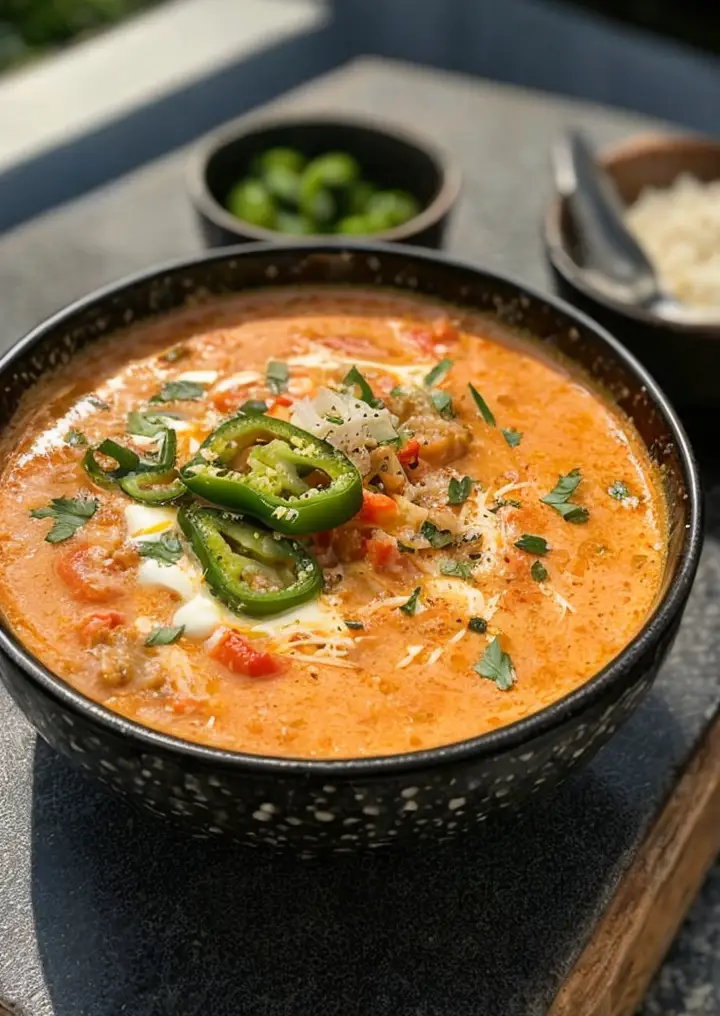
Hearty Parmesan Sausage Soup: A Comforting Recipe for Cozy Evenings

Hearty Parmesan Sausage Soup: A Comforting Delight

⚖️
Difficulty
Easy

⏲️
Prep Time
15 mins

🕒
Cook Time
30 mins

⏱️
Total Time
45 mins

🍽️
Servings
6

Rich in flavor and loaded with savory ingredients, the Hearty Parmesan Sausage Soup is a dish that warms both the heart and the soul. Perfect for cold winter nights, this soup brings together the delicious taste of sausage, the creaminess of Parmesan, and the wholesome goodness of vegetables for a comforting meal. With its aromatic appeal and rich texture, this soup not only satisfies your hunger but also impresses your taste buds, making it a favorite among families and friends.

Imagine sitting by the fireplace with a warm bowl of this soup, the aroma of roasted garlic and fresh herbs filling the air. Each spoonful teases your senses with the umami essence of Parmesan and the peppery undertones of Italian sausage. The combination is exquisite, creating a soup that’s hearty enough to be a meal on its own.

Quick Recipe Highlights

  • Flavor Profile: The rich, savory taste of sausage paired with creamy Parmesan sets a delightful base, accentuated by fresh herbs.
  • Texture: Chunky vegetables offer a satisfying bite, while the soup remains creamy and smooth, courtesy of the melted cheese.
  • Aroma: The enticing smell of sautéed garlic mingles with the sweet earthiness of herbs, creating an intoxicating fragrance.
  • Visual Appeal: A vibrant mix of colors from the vegetables, contrasted against the hearty broth, make for an appetizing presentation.
  • Skill Level Needed: Suitable for beginners with basic chopping and sautéing skills.
  • Special Equipment: Requires a heavy-bottomed pot for even cooking and heat retention.

Recipe Overview

  • Difficulty Level: This recipe is rated easy due to its straightforward steps and common cooking techniques like chopping and simmering.
  • Category: Ideal for lunch or dinner; it can also serve as an appetizer for a formal meal.
  • Cuisine: Though rooted in Italian culinary tradition, this soup adopts a global appeal through its versatile ingredients and flavor profile.
  • Cost: Moderate, as it relies on pantry staples like canned tomatoes, along with fresh produce and sausages.
  • Season: Best during fall and winter when hearty, warming meals are most appreciated.
  • Occasion: Perfect for family gatherings, potlucks, or a quiet dinner at home.

Why You’ll Love This Recipe


The Hearty Parmesan Sausage Soup offers a robust flavor, satisfying even the most discerning palates. This soup’s combination of sausage, Parmesan, and vegetables brings a balanced mix of salty, savory, and sweet flavors, making each bite a delightful experience. The textures are just as varied, with crisp vegetables sitting comfortably in a rich broth, making every spoonful a treat.

For those who cherish convenience, this soup comes together with minimal effort. With just a few essential steps, you can prepare a nutritious meal that requires little attention while cooking. As the ingredients simmer together, their flavors marry and deepen, allowing you time to relax.

In terms of nutrition, this soup provides a good dose of protein from the sausage and cheese while the vegetables add vitamins and fiber. It’s a wholesome meal that doesn’t sacrifice taste for health, ideal for those looking to maintain a balanced diet.

This dish is a social creature, perfect for sharing with loved ones. The vibrant colors and delicious scent are sure to draw people in and inspire conversation. It’s a crowd-pleaser that’s both filling and flavorful, making it excellent for entertaining.

Cost-effectiveness is another reason to love this soup. Its base ingredients are affordable, easily available, and often already in the kitchen, making it an accessible recipe for most home cooks. With a few simple items, you can create a gourmet-tasting dish without breaking the bank.

Historical Background and Cultural Significance


Originating from the heart of Italian cuisine, sausage and cheese have been paired for centuries due to their complementary flavors. The pungent saltiness of Parmesan provides a balance to the rich, fatty texture of sausage, and together they have been used in a variety of traditional dishes.

This soup has traveled far from its origins in Italy, influenced by regional cooking styles and ingredient availability. Across Europe and America, variations of this dish have been made, each with its unique local twist, from adding beans to incorporating a wider array of spices.

In Italy, soups that combine these hearty ingredients have traditionally been seen as peasant food, designed to be flavorful and filling, perfect for long, demanding workdays in the fields or vineyards. This cultural significance has lent the dish its hearty reputation, meant to nourish both body and spirit.

Globally, the adaptability of this soup is celebrated. Regional adaptations have embraced diverse ingredients, making it a universal symbol of comfort that transcends cultural boundaries. Whether adding a touch of cream for smoothness or a hit of spice, its core remains true to its Italian roots.

Ingredient Deep Dive


Sausage plays a star role in this soup, offering robust flavor and depth. Originating from Italian tradition, where sausage-making is an art form, it provides fat and umami, ensuring the soup remains rich and inviting. Selecting quality sausage is key; look for those with a balance of herbs and spices for best results.

Parmesan cheese, known historically as the ‘King of Cheese’, adds a distinct nutty taste and creamy texture that softens the boldness of the sausage. Choose freshly grated Parmesan for superior melting and flavor integration. Store in a cool, dry place and use within a few days for optimal freshness.

When it comes to vegetables, carrots and celery are foundational, providing sweetness and earthiness. They also contribute essential nutrients like beta carotene and fiber. For these veggies, choose firm, bright-looking options and store in the refrigerator’s crisper drawer to maintain their crunch.

For substitutions, turkey sausage can serve as a leaner option, while cheddar can offer a sharper, deeper flavor if you’re looking to experiment. Keep these ingredients fresh and use them within their shelf life to ensure maximum flavor and quality in the soup.

Common Mistakes to Avoid

  • Overcooking the vegetables can result in a mushy texture. Instead, aim for a tender finish while maintaining some bite.
  • Adding too much salt early can be problematic; remember the Parmesan and sausage also contribute their own saltiness.
  • Not browning the sausage enough can lead to less flavorful broth. Take time to achieve a good sear before adding other ingredients.
  • Skipping the Parmesan rind during cooking can mean missing out on added depth of flavor. If you have it, toss it in and remove it before serving.
  • Using pre-grated cheese might introduce anti-caking agents, which can affect the soup’s texture; freshly grate your cheese for optimal results.
  • Choosing the wrong pot size: too small can cause spillage and uneven cooking, so ensure you use a pot that accommodates all ingredients with room to stir.
  • Over-boiling the soup can lead to a cloudy appearance and tough meat; keep it at a gentle simmer.
  • Ignoring the need to taste and adjust; always give it a final taste to ensure the balance of flavors is right.

Essential Techniques


The art of browning sausage well enriches the soup’s flavor profile. Aim for a deep caramelization; this step creates a fond at the bottom of the pot, a flavor cornerstone for the broth. Use medium-high heat and allow the meat to brown without excessive stirring.

Simmering instead of boiling is crucial for a clear broth and tender ingredients. A gentle simmer allows flavors to meld harmoniously, without the agitation that can lead to muddied flavors or a cloudy soup. Keep the heat low and watch for small bubbles, indicating a successful simmer.

Sautéing vegetables until soft ensures they release their sweetness and develop flavor without becoming mushy. Start with medium heat and use a stirring motion that scrapes up the browned bits from the sausage, integrating those flavors evenly.

Balancing flavors is essential; tasting for salt and adjusting seasoning towards the end of cooking ensures a well-rounded final dish. Allow the soup to cool slightly before tasting, as high heat can muddle flavor recognition.

Pro Tips for Perfect Hearty Parmesan Sausage Soup


Adding a Parmesan rind during cooking can enhance the soup’s flavor. Remember to discard it before serving for a smooth texture.

Consider elevating the flavor by introducing a splash of white wine to deglaze the pot after browning the sausage. It adds complexity and depth.

If using pre-packaged broth, opt for low sodium to control the saltiness better as the sausage and cheese contribute plenty.

For a creamier version, stir in a dollop of sour cream or heavy cream just before serving. This creates a richer texture without changing the core flavors.

A pinch of red pepper flakes can be added for a touch of heat if you prefer a spicier edge to the soup.

For vegetarian adaptation, swap out the sausage for a plant-based alternative and add extra vegetables or beans for protein.

Variations and Adaptations


Different regions might incorporate beans or lentils for additional heartiness and protein, making the soup a complete meal in a single bowl. Northern interpretations may add potatoes or kale, reflecting local harvests and seasonal availability.

In the summer months, lighter vegetables like zucchini or squash can be used, keeping the soup fresh and colorful. Conversely, winter calls for root vegetables such as turnips or parsnips, adding depth and warmth.

For those on a gluten-free diet, ensure your sausage and broth are certified gluten-free. This ensures the dish remains inclusive without sacrificing flavor.

Enhance the soup with diverse herbs like basil or thyme for a fresh taste twist. Each herb brings its own unique aromatic note, allowing you to customize the base recipe.

For a thicker, creamier soup, blend half the cooked vegetables before adding them back into the pot, creating a smooth and chunky sauce hybrid.

When it comes to presentation, sprinkling with fresh herbs or grated Parmesan before serving adds color and flavor, enticing your guests visually and olfactorily.

Serving and Presentation Guide


For an elegant presentation, use individual bowls with a final touch of fresh parsley and a sprinkle of grated Parmesan. This touch not only adds flavor but presents a visually appealing dish.

Garnishing with freshly crumbled croutons or a drizzle of balsamic reduction adds texture contrast and nuanced flavor.

Traditionally, this soup pairs well with a slice of crusty bread, perfect for soaking up the flavorful broth and creating a heartwarming meal.

For modern serving suggestions, consider offering the soup in a rustic bread bowl, adding novelty and additional flavor as the bread absorbs the soup’s essence.

The soup is best served hot, which preserves its layered flavors and textures. To maintain the correct temperature, serve it in warmed bowls, keeping the meal inviting.

Control portions by serving with a soup ladle, ensuring each bowl receives equal amounts of sausage, vegetables, and broth for a balanced dining experience.

Wine and Beverage Pairing


A robust red wine such as Chianti complements the richness of the Hearty Parmesan Sausage Soup, its tannins cutting through the fat of the sausage and cheese and providing a balanced backdrop.

Non-alcoholic options include sparking water or a citrus-based tonic which refreshes the palate and balances the soup’s bold flavors, cleansing the experience between bites.

For a unique pairing, a strong brewed black tea can complement the soup’s flavors, its natural tannins offering a sophisticated balance.

Serving suggestions for wine include a slight chill before serving, enhancing the refreshing contrast against the hot soup. Temperatures should be moderate, allowing the wine’s bouquet to unfold gradually.

When choosing beverages, aim for ones that enhance the soup’s savory depth, providing contrast without overpowering the core flavors. Such harmonies elevate the dining experience significantly.

Storage and Shelf Life


Store leftover soup in airtight containers to maintain freshness, ensuring minimal exposure to air. This helps preserve the flavors and texture of the dish.

Refrigerate within two hours of cooking. The soup will stay good for up to three days when kept in a cold area of the fridge. For longer storage, freezing is preferable.

Use freezer-safe containers for longer storage, ensuring an inch of space at the top for expansion. The soup can be frozen for up to two months without significant loss of flavor or texture.

Signs of spoilage include an off smell or a sour taste. If in doubt, discard the soup to avoid foodborne illness risks and maintain safety.

When reheating, do so gently over medium heat, stirring occasionally to ensure even heat distribution and prevent sticking or scorching at the bottom.

For freezing, consider portioning the soup into individual servings, allowing for easy reheating and minimizing waste.

Make Ahead Strategies


Prepare components such as chopped vegetables and grated cheese ahead of time, storing them in separate containers to streamline assembly when ready to cook.

Cooking the soup a day in advance allows the flavors to meld and deepen, enhancing taste when served later. Reheat gently before serving for the best experience.

Layer ingredients in the pot, storing them covered in the refrigerator. Simply bring to a simmer when you are ready to enjoy, reducing day-of prep time.

Assembly tips include layering flavors for maximum impact—start by browning meats and slowly build with vegetables, spices, and broth for a more robust taste.

Adding fresh herbs or a splash of cream right before serving refreshing the dish and bringing a touch of brightness and softness to the overall flavor profile.

Reheating instructions: thaw overnight in the refrigerator for frozen soup, and heat on the stove until warmed through, ensuring not to boil to maintain texture quality.

Scaling Instructions


When halving the recipe, ensure that the sausage’s browning time is adjusted to prevent burning due to less content in the pot. Keep a watchful eye and stir frequently.

Doubling or tripling the soup requires using appropriately larger cookware to avoid spillage or uneven cooking. Consider breaking ingredients into batches for browning before combining.

Adjusting timing involves checking for doneness more frequently as larger volumes can affect heat distribution and consistency.

Storage considerations for larger batches include ensuring proper cooldown mechanisms before refrigeration or freezing to avoid bacterial growth and spoilage.

For smaller households, freezing individual portions allows for convenient future meals without the need for recooking, minimizing waste and maximizing efficiency.

Nutritional Deep Dive


This soup is rich in protein from the sausage and cheese, providing essential building blocks for muscle and tissue repair.

Carbohydrates come from vegetables, offering energy while fibers aid digestion and promote gastrointestinal health.

The fat from sausage and cheese, while flavorful, is something to watch if you’re following a low-fat diet. Adjust the quantities of these ingredients as needed.

Portion control is warranted to enjoy the full texture and flavor profile without excessive calorie intake, particularly concerning the indulgent cheese.

Weight management tips include adding more vegetables or a side salad to increase fullness and satisfaction while maintaining low caloric intake.

Alternatively, swapping ingredients with light versions, such as turkey sausage or reduced-fat cheese, can accommodate more restricted dietary standards.

Dietary Adaptations


For a gluten-free version, ensure all ingredients, particularly sausages and broth, are certified gluten-free to avoid cross-contamination, aiding those with allergies or digestive issues.

A dairy-free variation might incorporate plant-based cheeses and use olive oil instead of butter, ensuring a creamy consistency without lactose involvement.

Vegans can swap sausage with plant-based alternatives and use nutritional yeast for a cheesy flavor, ensuring compliance with vegan dietary standards.

Low-carb or keto adaptations encourage using zucchini noodles instead of pasta and focusing on fatty ingredients like sausage to satisfy dietary requirements.

Paleo recipes can forego dairy and legumes, emphasizing meats and vegetables, enhancing authenticity while adhering to nutritional guidelines.

For a low-FODMAP version, tone down onions and garlic, substituting with infusions of oil for flavor without the digestive discomforts.

Troubleshooting Guide


Texture issues like mushy vegetables stem from overcooking. Keep a careful watch for desired tenderness while maintaining a slight bite.

Balancing flavor involves tasting frequently and adjusting with small increments of salt or spices, ensuring no one note dominates.

Temperature problems are solvable by maintaining a simmer and not allowing to boil vigorously, ensuring even cooking and preventing meat toughness.

Equipment challenges can emerge from underestimation of pot size. Use one that’s appropriately sized to prevent overcrowding and ensure even temperature distribution.

Ingredient substitutions require understanding flavor profiles—if swapping one sausage for another, pay attention to differing spice profiles or fat contents.

Timing concerns arise from not uniformly pre-cooking components. Correct this by ensuring meats are thoroughly prepared and vegetables tenderized before full assembly.

Recipe Success Stories


Community feedback often highlights the warm, welcoming nature of this soup, perfect for family meals or potluck contributions where sharing is key.

Readers frequently enjoy experimenting, introducing new sausages or cheese selections to customize flavor profiles while maintaining the essence of the dish.

Adaptations thrive in regions with diverse ingredient availability, encouraging flexibility and creativity while respecting the original taste and texture balance.

User suggestions often include incorporating additional vegetables or grains, enhancing nutritional value and accommodating larger gatherings with ease.

Photography tips suggest capturing the soup against a rustic background, highlighting ingredient details and capturing the vibrant colors of fresh produce for aesthetic appeal.

Frequently Asked Questions

Can I use pre-cooked sausage?

Yes, pre-cooked sausage can be used and added towards the end of cooking. Since it won’t render much flavor into the soup, consider intensifying other spices or herbs to balance the taste.

What if my soup is too salty?

Adding a peeled potato and simmering can help absorb excess salt. If further adjustments are needed, a touch of cream or a splash of unsalted stock can also balance excessive saltiness.

How can I make the soup thicker?

Blending a portion of the soup and returning it to the pot can naturally thicken the broth. Alternatively, adding a slurry of cornstarch or flour in water and simmering can achieve desired consistency.

Is it possible to make this with chicken instead of sausage?

Ground chicken can be used for a leaner protein option. Ensure spices are adjusted to maintain the same flavor depth and pre-cooked for color and flavor depth before assembly.

Can I prepare the soup in a slow cooker?

Certainly. Brown sausage and sauté vegetables beforehand, then transfer everything to a slow cooker for a fuss-free simmer of about 4–5 hours on low.

How spicy is this soup?

The soup has a mild spice profile suitable for most palates. Adjusting chili flakes or pepper quantities allows personal customization for those seeking more heat.

What’s the best way to store leftovers?

Keep leftovers in an airtight container in the refrigerator for up to three days. For longer storage, freeze individual portions, ensuring a quarter-inch gap to account for expansion when frozen.

How can I increase the fiber content?

Adding more fibrous vegetables like kale, spinach, or beans increases fiber content. Opt for whole foods rather than processed ingredients for a natural boost of nutrition.

Can I make the soup taste richer without more cheese?

A trick is to add a small piece of Parmesan rind during simmering, providing a depth of flavor without additional cheese. For a vegan option, reserve the rind and incorporate more umami-rich spices.

How can I prevent the cheese from clumping?

Grate cheese finely and add it gradually over low heat, continuously stirring to promote even melting. Ensure no drastic temperature changes to maintain smooth texture integration.

Can I add pasta to this soup?

Pasta is a great addition, but it should be cooked separately and added just before serving to prevent it from absorbing too much broth and overcooking.

What are some good bread pairings?

Crusty artisan bread, garlic knots, or herbed focaccia pair wonderfully, enhancing texture and complementing the soup’s hearty flavors. Serve bread with a touch of olive oil or balsamic for dipping.

Additional Resources


Explore related recipes such as Zuppa Toscana or Sausage and White Bean Stew, both echoing similar wholesome, flavorful profiles with varied ingredient lists for new experiences.

Technique guides highlighting sausage preparation or stock enhancing tips can further elevate your cooking, refining processes that impact soup making.

Ingredient information, such as selecting the best sausage or storing Parmesan efficiently, provides foundational insights that improve long-term culinary quality.

Equipment recommendations stress the importance of having reliable, durable cookware like a heavy-bottomed Dutch oven, ensuring even cooking and flavor development.

Seasonal variations, such as winter for heavier soups or summer for lighter, brothy versions, guide cooking adjustments according to environmental factors and ingredient availability.

Join the Conversation


Engage with the culinary community by sharing your recipe successes and flavor modifications on social media, allowing interaction with a global network of foodies and fellow enthusiasts.

Encourage feedback through photography tips, showcasing your creativity and presentation flair, allowing others to view and inspire through visual expression.

Invite new ideas by writing recipe reviews, offering constructive commentary that aids future iterations and improvements in both home cooking and shared spaces.

Driving community engagement, consider contributions to communal magazines or blogs, broadening the understanding of diverse culinary perspectives.

Open pathways for interaction, inviting recipe variations, and sharing experience narratives that build around this comforting, versatile dish.

The Recipe

Hearty Parmesan Sausage Soup

Serves: 6

Prep Time: 15 mins

Cook Time: 30 mins

Total Time: 45 mins

Kitchen Equipment Needed

  • Large heavy-bottomed pot
  • Wooden spoon
  • Sharp knife
  • Chopping board
  • Grater

Ingredients

  • 1 lb Italian sausage
  • 1 tbsp olive oil
  • 1 onion, diced
  • 2 carrots, diced
  • 2 celery stalks, diced
  • 3 cloves garlic, minced
  • 1 can (14 oz) diced tomatoes
  • 4 cups chicken broth
  • 1/2 cup grated Parmesan cheese
  • Salt and pepper to taste
  • 1 tsp dried oregano
  • 1 tsp dried basil
  • Parmesan rind (optional)
  • Fresh parsley, chopped for garnish

Directions

  1. In a large pot, heat olive oil over medium heat. Add the sausage and cook until browned, about 5 minutes. Remove and set aside.
  2. In the same pot, add onion, carrots, and celery. Sauté for 5 minutes, until softened.
  3. Add garlic and cook for another 1 minute, until fragrant.
  4. Return the sausage to the pot along with diced tomatoes and chicken broth. Stir to combine.
  5. Add oregano, basil, and Parmesan rind (if using). Season with salt and pepper.
  6. Bring to a boil, then reduce to a simmer. Cook for 20 minutes, stirring occasionally.
  7. Stir in grated Parmesan cheese, allowing it to melt through the soup.
  8. Remove Parmesan rind before serving.
  9. Serve hot, garnished with fresh parsley and additional Parmesan if desired.

Recipe Notes

  • Substitute vegetable broth for chicken broth to make the soup vegetarian.
  • Russet or red potatoes can be added for additional heartiness.
  • If you don’t have a Parmesan rind, simply add more grated cheese for flavor.

Indulge in Irresistible Beef & Parmesan Tortellini with Creamy Sauce

Beef & Parmesan Tortellini in Creamy Sauce: A Comforting Delight

⚖️
Difficulty
Medium

⏲️
Prep Time
20 mins

🕒
Cook Time
30 mins

⏱️
Total Time
50 mins

🍽️
Servings
4

Indulge in the rich flavors of Beef & Parmesan Tortellini in Creamy Sauce, a dish that captures the essence of comfort and culinary delight. The combination of succulent beef and cheese-filled tortellini enveloped in a luxurious Parmesan cream sauce is irresistible. As you take each delicious bite, the robust flavors meld together, bringing an unrivaled experience of taste that warms the heart. Whether you’re hosting a dinner party or simply enjoying a family meal, this recipe promises satisfaction and delight.

Let the inviting aroma of garlic and freshly grated Parmesan fill your kitchen, sparking an appetite and gathering loved ones around the table. The creamy sauce perfectly complements the tender beef and pillowy tortellini, ensuring each mouthful is as satisfying as the last. Prepare yourself for an extraordinary culinary journey that pays homage to the classic flavors of Italian cuisine.

This comforting recipe holds a special place in the hearts of many who cherish hearty and flavorful meals. It’s an ideal choice when you want to impress guests with a dish that’s both elegant and homey. Enjoy the process of creating this culinary masterpiece, revel in the joy it brings, and share the recipe with those who appreciate the finer tastes of life.

Quick Recipe Highlights

  • Flavor Profile: The dish combines savory beef with a rich and creamy Parmesan sauce, creating a perfectly balanced flavor that’s indulgent and satisfying.
  • Texture: The tortellini provides a tender bite that complements the succulent beef, all embraced by a velvety sauce.
  • Aroma: Infused with the scent of garlic and Parmesan, this dish fills your home with an inviting and mouthwatering aroma.
  • Visual Appeal: Creamy sauce coats the tortellini and beef, providing a pleasing golden hue contrasted by the fresh greenery of garnish.
  • Skill Level Needed: This recipe requires moderate skill, involving basic sauce-making and pasta-cooking techniques, making it accessible to home cooks.
  • Special Equipment: A large skillet and a pasta pot are essential to prepare this delightful meal efficiently and effectively.

Recipe Overview

  • Difficulty Level: Moderately challenging due to the need to balance cooking the sauce with pasta preparation, but approachable with guided instructions.
  • Category: This dish fits well into the main course category, offering a substantial and fulfilling portion that can stand alone.
  • Cuisine: Inspired by the rich traditions of Italian cuisine, this recipe brings cross-cultural appreciation to classic Italian flavors.
  • Cost: With ingredients such as beef and Parmesan cheese, the dish is moderately priced, providing quality and value for the investment.
  • Season: Best enjoyed during cooler months when hearty and warming dishes are most cherished for their comfort factor.
  • Occasion: Perfect for casual family dinners or more formal gatherings, offering something delicious that fits almost any event.

Why You’ll Love This Recipe

Taste and texture are at the heart of Beef & Parmesan Tortellini in Creamy Sauce. Complete with succulent, tender tortellini paired with a silky, cheesy sauce, it offers a taste adventure that satisfies the palate. This dish brings the rich, warm flavors of beef and creamy Parmesan sauce together seamlessly, inviting you to delight in every bite.

When it comes to convenience, this recipe excels. With straightforward instructions, it’s an excellent choice for cooks looking to create a flavorful meal without an intricate process. It ensures time in the kitchen is well spent, bridging the gap between preparation and presentation with ease.

Nutritional value is another highlight, with protein-rich beef and the hearty goodness of Parmesan cheese. With potential modifications such as adding leafy greens or using whole wheat tortellini, you can adjust the meal to meet various dietary preferences and requirements.

From a social perspective, this recipe encourages communal dining experiences filled with laughter and connection. Its versatility allows it to be a star at family dinners or the main attraction for gatherings with friends, enticing everyone to come together around a delicious meal.

Cost-effectiveness and accessibility mark this dish as a practical choice. With readily available ingredients found in most grocery stores, you can recreate this luxurious dining experience in the comfort of your own home without breaking the bank.

Historical Background and Cultural Significance

The origin of tortellini is steeped in Italian history, believed to have originated in the region of Emilia-Romagna. This pasta shape, reminiscent of a small ring or navel, has fascinated both locals and international food lovers alike. The pairing with beef and Parmesan is a classic combination that pays homage to Italy’s rich culinary heritage.

In Italian culture, pasta dishes are not merely sustenance but a symbol of familial bonds and traditions. Sharing tortellini, particularly in a rich, creamy sauce, represents communal dining and the nurturing of relationships in Italian households.

Over time, this recipe has evolved, with different regions adding their unique touch. The tortellini filling can vary significantly from meat to cheese, reflecting local tastes and ingredient availability. Today, variations abound, showcasing the adaptability and enduring appeal of this beloved pasta dish.

Regional adaptations also showcase how ingredients like beef and Parmesan have become integral to the character of the dish. The creamy, rich sauce concept crosses cultural boundaries, making this a globally appreciated marvel of culinary ingenuity.

Ingredient Deep Dive

Beef, a primary ingredient, holds cultural significance across many cuisines. In this dish, it provides a rich, savory base that aligns perfectly with the creamy sauce. Rich in protein and essential vitamins, beef is a nutritional powerhouse that sustains energy and promotes muscle health. Choosing lean beef cuts enhances the health benefits while reducing saturated fats, ensuring a balanced approach to nutrition in this recipe.

When selecting beef, aim for cuts like sirloin or flank for their tenderness and flavor. Store beef in a cool environment, ideally refrigerated, and consume within a few days to maintain freshness. Alternatives such as ground turkey or chicken can provide a lighter option, adapting to varying dietary needs without compromising on flavor.

Parmesan cheese, famous for its bold and nutty flavor, is crucial to the creamy sauce. It adds depth and umami, enhancing the overall taste profile. Holding a place of honor in Italian cuisine, Parmesan is both a seasoning and a feature ingredient offering notable health benefits, including calcium and protein.

Choosing high-quality, aged Parmesan is critical for achieving the best flavor. Store in a cool, dry place or refrigerate it for prolonged freshness. If Parmesan isn’t available, Pecorino Romano or Grana Padano serve as excellent substitutes without losing the savory essence of the sauce.

Common Mistakes to Avoid

  • Overcooking the tortellini can lead to a mushy texture. It’s essential to follow timing instructions closely and aim for al dente.
  • Neglecting to season the pasta water could result in bland tortellini. Always generously salt the water before boiling pasta.
  • Cooking sauce over high heat may cause it to separate. Maintain a steady, moderate heat to ensure a smooth texture.
  • Using pre-grated Parmesan might affect the sauce’s flavor and texture due to added preservatives and anti-caking agents.
  • Skipping the resting time after cooking the beef can lead to loss of juiciness. Allow the beef to rest for a few minutes before slicing.
  • Failing to taste before serving may mean the dish lacks seasoning. Adjust salt, pepper, and Parmesan to your taste preferences before final plating.
  • Making too much without freezing portions may result in leftovers going to waste. Store unused tortellini appropriately to enjoy later.
  • Using low-fat substitutes in the sauce could lessen its richness. Balance with full-fat cream or alternate ingredients as needed to maintain flavor.
  • Not using fresh garlic could result in less aromatic depth. Fresh garlic boosts flavor and enhances the sauce’s aroma significantly.
  • Serving straight from the pot without garnishes can impact presentation. Consider fresh herbs or additional cheese as finishing touches.

Essential Techniques

To master the art of cooking Beef & Parmesan Tortellini, balancing sauce thickness is crucial. Maintain a steady simmer for the creamy sauce to reach its ideal consistency without breaking or becoming too thick, ensuring an even coating over the pasta and beef.

Proper boiling of tortellini is equally important, a process that defines texture perfection. Stir occasionally while cooking to prevent sticking, and aim for al dente by tasting a piece near the end of boil time.

Beef preparation should not be overlooked, as it strongly affects the final outcome. Sear the beef in a hot pan to achieve a crust while locking in juices, and allow resting time before slicing to maintain tenderness.

Striking the right blend of flavors elevates this dish. Taste the sauce frequently during preparation, refining seasoning levels to suit your taste preferences. Incorporating fresh ingredients like garlic and herbs can dramatically enhance taste.

Lastly, understanding timing stages assists in efficient preparation. Organize ingredient preparation alongside cooking processes to streamline workflow, ensuring all components are freshly served and perfectly integrated.

Pro Tips for Perfect Beef & Parmesan Tortellini in Creamy Sauce

Aim to use freshly grated Parmesan to achieve a creamier sauce texture and more pronounced flavor. Pre-packaged grated cheese can alter the sauce’s consistency due to added anti-caking agents.

Timing is crucial; ensure simultaneous preparation of the beef and tortellini to match cook times, enabling an even melding of flavors without delays.

Don’t be afraid to play with added vegetables like spinach or mushrooms. They’re perfect complementary ingredients, blending well with the sauce.

Consider using a touch of nutmeg in the sauce to enhance its complexity, offering a subtle warmth that pairs wonderfully with the cheese.

Searing the beef on high heat ensures a delicious crust, so ensure the pan or skillet is sufficiently hot before adding the meat to caramelize the exterior.

If you’re in a pinch, pre-made tortellini can significantly reduce prep time while still delivering a flavorful result.

Exploring different pasta shapes like fettucine can provide a delightful variation and texture contrast to traditional tortellini.

Ensure garnishing with freshly chopped parsley or basil for added color and freshness, uplifting the dish’s presentation and flavor.

Variations and Adaptations

Regional variations introduce a variety of fillings for tortellini, such as ricotta and spinach, offering new flavor dimensions while maintaining a familiar comfort.

Seasonal adaptations with squash or root vegetables during fall provide warmth and depth to the existing recipe, highlighting season-specific produce.

For dietary modifications, switch to cheese-filled tortellini and use a meatless version of the sauce for a vegetarian delight.

Experimenting with flavors can involve a sprinkle of truffle oil or a hint of chili for added kick, appealing to adventurous palates seeking a modern twist.

Texture modifications can include a crispy topping of bread crumbs with melted cheese, introducing a contrasting crunch to the creamy sauce.

From a presentation standpoint, serving tortellini in individual ramekins or pasta bowls accentuates portion control and adds a touch of elegance.

Serving and Presentation Guide

Thoughtful plating elevates the dining experience. Serve tortellini in shallow bowls to highlight the creamy sauce’s coverage and maintain warmth.

Garnish with freshly cracked black pepper, or finely chop herbs such as parsley or chives for a fresh, vibrant appeal.

Traditional accompaniments like garlic bread or a crisp green salad complement the richness of the dish, offering balanced contrast.

Modern serving suggestions include spiralized vegetables as a side, adding color and nutritional value to the plate.

Serving temperature should be considered critical; ensure your dish is served hot to maximize enjoyment and maintain sauce consistency.

Portion control tips involve predetermined servings sourced from the original yield, offering balance without excess and encouraging second helpings wisely.

Wine and Beverage Pairing

A full-bodied red wine like Chianti or Sangiovese pairs beautifully with the hearty beef, enhancing the robustness of the flavors.

Non-alcoholic alternatives such as a zesty sparkling grape juice or a lightly carbonated mocktail can provide a refreshing contrast.

If serving with coffee or tea is appropriate, choose a mild roast or a fruity, herbal tea to offset the dish’s richness.

Consider beverage temperature for a harmonious experience; slightly chilled wine or juice allows palate cleansing after each savory bite.

Serving suggestions include delicate wine glasses or elegant carafes, which can enhance the overall dining atmosphere and presentation.

Storage and Shelf Life

To retain freshness, store leftover tortellini in airtight containers in the refrigerator, maintaining its quality for up to three days.

Ideal storage temperature ranges from 32°F to 40°F (0°C to 4°C), ensuring that flavors remain intact and bacteria growth is minimized.

Use BPA-free, airtight containers to safeguard against any odor absorption and prolong freshness.

Signs of spoilage may include sour smell, sauce separation, or discoloration, compelling timely consumption for utmost flavor preservation.

Reheating instructions involve gently warming in a skillet over low heat or using a microwave with frequent stirring to maintain texture.

Freezing guidelines indicate separately freezing tortellini and sauce if needed; thaw overnight in the refrigerator for best results before reheating.

Make Ahead Strategies

Prepare sauce and cook pasta ahead as separate components, combining shortly before serving for freshness and flavor harmony.

Storing the sauce refrigerated can prolong freshness for a couple of days, allowing it to be reheated when needed without compromising quality.

Consider the quality impact, where make-ahead components like the sauce may intensify in flavor over time while maintaining desirable consistency.

When assembling, combine freshly cooked or reheated components for perfect results, ensuring the sauce clings to the tortellini, covering each bite.

Reheat gently to avoid texture changes, reducing the risk of ingredient separation while preserving the dish’s creamy consistency.

Add fresh elements, such as herbs or last-minute garnishes, right before serving to enhance the overall dish appeal and presentation quality.

Scaling Instructions

When halving the recipe, precisely adjust ingredient measurements to maintain flavor balance without compromising the dish’s integrity.

Doubling or tripling demands calculated increases in core components, mindful of pot size and handling to ensure efficient cooking.

Equipment adjustments may include larger pots or skillets to accommodate increased quantities without overcrowding, aiding even cooking.

Consider timing modifications, as increased recipes may require extended cooking or simmering times to achieve desired outcomes.

Storage considerations for scaled recipes include ensuring sufficient container space, allowing for easy freezing or refrigeration for leftovers.

Nutritional Deep Dive

This dish offers a macro breakdown that includes ample protein from beef, carbohydrates from pasta, and fats from the creamy sauce.

Micronutrient analysis highlights the presence of essential vitamins in beef and minerals like calcium from Parmesan, contributing to dietary balance.

Health benefits focus on the muscle-building properties of beef and bone-strengthening attributes of cheese, offering a nutritious dining option.

Dietary considerations recognize the dish’s richness, prompting moderation and potential adaptations for lighter alternatives if desired.

Portion analysis promotes mindful eating, perfecting serving sizes to fit within daily caloric needs and optimizing nutrient intake.

For those focused on weight management, consider serving alongside a salad or roasted vegetables for a well-rounded, fulfilling meal.

Dietary Adaptations

For a gluten-free option, substitute with gluten-free tortellini and check that all sauce components are free from gluten-bearing ingredients.

To create a dairy-free version, replace Parmesan with nutritional yeast and use dairy-free cream alternatives to maintain creamy texture.

For vegan adaptation, utilize plant-based tortellini and a cashew cream sauce, ensuring robust flavor while respecting dietary limits.

For low-carb adaptations, replace tortellini with spiralized zucchini, offering a lighter alternative while maintaining delicious sauce flavors.

Keto adjustments may involve using cheese-based crusts or replacements, reducing carb content while preserving indulgent elements.

Paleo variations focus on whole foods, incorporating compliant ingredients like coconut cream for a rich and flavorful sauce.

Low-FODMAP adjustments can involve selecting ingredients with reduced fermentable sugars, maintaining flavor while limiting irritance.

Specific diets can guide ingredient selections, supporting personal health needs without compromising on culinary richness.

Troubleshooting Guide

Encountering texture issues like overly soft pasta can be managed by adhering to specific boiling times and testing for al-dente readiness.

To counterbalance flavor issues, like overly salty sauce, incorporate a dash of cream or additional pasta water to remediate seasoning.

Address temperature problems by maintaining medium heat for sauce preparation, allowing even heating and consistent viscosity.

Equipment challenges like improper pans can be resolved by choosing nonstick or heavy-bottomed pans for stable cooking environments.

Ingredient substitutions should be considered safely, consulted for maintaining flavor and texture balance across components.

For timing concerns, organize tasks logically, allowing necessary focusing moments for each component without overlapping distractions.

Recipe Success Stories

Joyful community feedback centers around this dish’s rich flavors and satisfying preparation experience, resonating with food lovers everywhere.

Successful variations, like adding mushrooms or utilizing seasonal greens, highlight the recipe’s adaptability and creative potential.

Reader adaptation stories showcase families integrating this dish into weekly menus, impressing guests with gourmet home cooking.

Suggestions from readers promote engaging twists, like adding spice or regional ingredients, enriching both dining pleasure and culinary exploration.

Photography tips encourage capturing the dish’s elegant presentation, focusing on natural lighting and garnishes for a visually appealing conclusion.

Frequently Asked Questions

What type of beef works best with this recipe?

For the best results, choose tender cuts like sirloin or flank steak which are renowned for their flavor and tenderness when cooked quickly. These cuts enhance the overall dish by offering a succulent texture alongside the rich sauce without overpowering it.

Can I replace Parmesan cheese with another variety?

Yes, if Parmesan isn’t available, Pecorino Romano or Grana Padano can be excellent substitutes. They each bring a unique flavor profile but continue to complement the creamy sauce’s integrity.

How can I make this dish vegetarian?

To make it vegetarian, opt for cheese-filled tortellini and use vegetable broth instead of meat stock. Omitting beef and focusing on plant-based flavors ensures a satisfying meal for vegetarian diners.

What are the best side dishes to serve with tortellini?

Garlic bread or a simple green salad pairs beautifully with this dish, offering a fresh contrast to the richness while complementing the pasta’s flavors harmoniously.

Can I freeze the leftovers?

Yes, freeze the cooked pasta and sauce in separate containers to prevent texture changes. When ready to use, thaw overnight in the refrigerator and gently reheat to maintain quality.

How can I ensure the sauce doesn’t become too thick?

Maintaining moderate heat and slowly incorporating ingredients prevents over-thickening, achieving a smooth sauce. If it becomes too thick, adding a splash of reserved pasta water can help reach the perfect consistency.

What wine pairs best with this dish?

A medium to full-bodied red wine like Chianti or Merlot pairs nicely, accentuating the savory flavors of beef and cheese without overpowering the dish’s essence.

How can I add more vegetables to the recipe?

Incorporate vegetables like spinach, zucchini, or mushrooms to enhance the nutritional profile. These can be added to the sauce during cooking to blend naturally with the overall flavors.

How can I keep my pasta from sticking together?

Ensure the water is boiling before adding pasta and stir occasionally while cooking. Adding a touch of oil or sufficient salt can also aid in preventing sticking.

Is it possible to make this dish ahead of time?

Yes, you can prepare the sauce and tortellini ahead, storing them separately. Reheat gently before combining to preserve flavors and textures closest to freshly made.

What type of cream is best for the sauce?

Heavy cream is ideal due to its rich consistency and ability to form a smooth, stable sauce. It complements the cheese while preventing separation during cooking.

Can I use store-bought tortellini?

Absolutely, high-quality store-bought tortellini works well to save time. They offer convenience without sacrificing flavor, enabling quick meal preparation with excellent results.

Additional Resources

For those interested in further culinary exploration, consider related recipes featuring tortellini, such as spinach and ricotta variations for a different flavor profile.

Explore guides on sauce-making techniques to enhance your skills in creating creamy, rich toppings that elevate pasta dishes and beyond.

Delve into ingredient information, particularly cheese profiles, to understand best preparations and complementary uses across recipes.

Seek equipment recommendations for kitchen essentials like skillets and pots that streamline the cooking process and yield superior outcomes.

Experiment with seasonal variations, integrating fresh produce like seasonal fruits and herbs to create dishes that evolve with nature’s offerings.

Join the Conversation

Engage with our community by sharing your own take on Beef & Parmesan Tortellini in Creamy Sauce, welcoming feedback and new ideas.

Use social media platforms to post pictures of your dish, accompanied by personalized tips on mastering presentation and flavor.

Contributing to recipe reviews enriches collective understanding, fostering a space where diverse tastes and approaches enhance communal dining experiences.

Join forums or comment sections to discuss variations, adaptations, or challenges, improving upon the original recipe through shared wisdom and creativity.

Consider capturing your culinary journey with photography tips, spotting natural lighting and intentional composition to highlight your dish’s allure.

The Recipe

Beef & Parmesan Tortellini in Creamy Sauce

Serves: 4

Prep Time: 20 mins

Cook Time: 30 mins

Total Time: 50 mins

Kitchen Equipment Needed

  • Large skillet
  • Medium pot
  • Colander
  • Grater
  • Mixing spoons

Ingredients

  • 1 pound beef sirloin, thinly sliced
  • 4 cups cheese tortellini
  • 1 cup heavy cream
  • 1 cup grated Parmesan cheese
  • 2 cloves garlic, minced
  • 2 tablespoons olive oil
  • Salt and pepper to taste
  • Fresh parsley for garnish

Directions

  1. Heat olive oil in a large skillet over medium-high heat. Add sliced beef and cook until browned and tender. Remove beef from skillet and set aside.
  2. In the same skillet, add minced garlic and sauté for 1-2 minutes until fragrant.
  3. Reduce heat to medium and pour in heavy cream, stirring frequently until it begins to simmer.
  4. Stir in grated Parmesan cheese, allowing it to melt into a smooth, creamy sauce. Season with salt and pepper.
  5. Meanwhile, cook tortellini in a pot of boiling salted water until al dente. Drain and add to the creamy sauce.
  6. Return beef to the skillet, combining with the tortellini and sauce. Stir to ensure everything is well coated and heated through.
  7. Garnish with fresh parsley before serving. Enjoy!

Recipe Notes

  • For a more robust flavor, consider adding a dash of red pepper flakes for spice.
  • Store leftovers in an airtight container in the fridge for up to three days.
  • Use gluten-free tortellini to adapt for gluten sensitivities.

Deliciously Fresh and Crunchy Asian Sesame Chicken Salad Recipe

Crunchy Asian Sesame Chicken Salad: A Flavorful Delight

⚖️
Difficulty
Medium

⏲️
Prep Time
20 mins

🕒
Cook Time
10 mins

⏱️
Total Time
30 mins

🍽️
Servings
4

Imagine biting into a delightful mix of crunchy textures and vibrant flavors with every forkful of this Crunchy Asian Sesame Chicken Salad. This enticing dish combines the savory quality of succulent grilled chicken with the fresh crunch of colorful, vibrant vegetables. Completed with a delicious homemade sesame dressing, the result is a symphony of flavors that will linger on your palate. This Asian-inspired recipe is perfect for a quick lunch or a light dinner that’s both satisfying and nutritious. Whether you’re new to Asian cuisine or a seasoned traveler of its flavors, this salad will quickly become a favorite in your culinary collection.

Quick Recipe Highlights

  • Flavor Profile: The salad features a blend of sweet, savory, and slightly spicy flavors. The sesame dressing adds richness, while ginger and soy sauce provide depth to the taste profile.
  • Texture: Enjoy a satisfying crunch from fresh vegetables complemented by tender, juicy chicken bites, creating a delightful contrast in every mouthful.
  • Aroma: The fragrant dressing offers nutty and spicy aromas, filled with notes of toasted sesame seeds and fresh ginger, enticing your senses even before the first bite.
  • Visual Appeal: This salad is a vibrant feast for the eyes, with a lively mix of greens, oranges, and purples, accented by a drizzle of dark sesame dressing.
  • Skill Level Needed: Basic cooking skills are sufficient, as the recipe involves simple chopping, grilling, and mixing techniques.
  • Special Equipment: While not essential, a grill pan for the chicken enhances the smokiness, and a mandoline slicer can ensure uniform vegetable slices.

Recipe Overview

  • Difficulty Level: Moderately easy, yet the dish offers complexity in flavor and texture that elevates the end result without complicated techniques.
  • Category: This versatile recipe fits perfectly under salads, light meals, or Asian cuisine categories, catering to various meal occasions.
  • Cuisine: Drawing on Asian culinary traditions, this recipe showcases the blend of healthful, flavorful components central to many Asian dishes.
  • Cost: Affordable yet lavishly flavorful, requiring mostly pantry staples with a few fresh veggies and chicken, making it economical for regular enjoyment.
  • Season: Suitable year-round, though its refreshing nature makes it an especially fitting choice in spring and summer when fresh produce is abundant.
  • Occasion: Ideal for casual lunches, picnics, or as an impressive addition to a buffet table at a social gathering.

Why You’ll Love This Recipe

The Crunchy Asian Sesame Chicken Salad is delightfully satisfying, pairing the subtle smokiness of grilled chicken with the crisp freshness of cabbage and bell peppers. The contrasting textures make every bite interesting. Prepare it quickly, thanks to minimal cooking steps: grill the chicken while prepping your vegetables and mixing the dressing, which means less time in the kitchen and more enjoying the meal. This salad is rich in nutrients, balancing protein from chicken with fiber and vitamins from vegetables, making it a wholesome choice.

If entertaining, this salad becomes a centerpiece conversation starter – its visual appeal and complex flavors will have guests savoring each bite. Budget-friendly thanks to its reliance on everyday ingredients, this recipe offers great taste without overextending your grocery bill. Its accessibility makes it a go-to, achievable family meal any night of the week.

Historical Background and Cultural Significance

The Crunchy Asian Sesame Chicken Salad roots stem from a fusion of Asian culinary practices, embracing the continent’s love for fresh, vibrant vegetable salads coupled with simple, flavorful proteins. Salads with sesame dressing have long been staples in East Asian cuisines, where sesame seed paste and oil are frequent salad dressings due to their rich flavor and health benefits.

Over time, chefs have tailored these lovely salads to include more diverse ingredients, drawing upon the multitude of vegetables available globally. This adaptation shows the increasing globalization and cultural exchange in culinary practices, making such recipes incredibly versatile. The salad’s evolution now brings a blend of traditional and contemporary Asian flavors to kitchens worldwide, showcasing the harmonious possibilities of ingredient integration.

Regional variations have sprung up, with parts of Southeast Asia adding a citrus zest or a heat kick with local spices, offering myriad takes based on locally available ingredients. Such adaptability makes the Crunchy Asian Sesame Chicken Salad not just a recipe but a blueprint for creativity.

Ingredient Deep Dive

Chicken breast, a staple across cuisines for its versatility, serves as the protein base of this salad. In Asian cuisine, chicken often symbolizes prosperity and joy, and its use in salads allows for a lean protein addition without overwhelming the dish’s other flavors. Boneless, skinless chicken breasts are ideal for quick cooking and easy incorporation.

Cabbage adds the notorious crunch, embodying traditional health benefits recognized in Asian herbal medicine for centuries, providing antioxidant and anti-inflammatory properties. When selecting cabbage, opt for heads that are firm with vibrant green leaves, and store in a cool, dry place to maintain freshness.

The sesame seeds and oil enrich the dressing, delivering essential vitamins while contributing a deeply nutty flavor. Their historic use in Asian diets reflects their cultural value, viewed as symbols of immortality in some cultures. These can be stored in an airtight container in a cool environment to prevent oil rancidity.

Common Mistakes to Avoid

  • Overcooking the chicken results in dry and tough meat; instead, grill just until cooked through for tenderness.
  • Using non-fresh vegetables can dull the salad’s flavor and texture; always opt for fresh, crisp produce for the best results.
  • Under-seasoning the dressing dilutes flavor impact; taste as you mix and adjust seasoning for balance.
  • Skipping the toasting step for sesame seeds decreases aromatic complexity; toast them for enhanced aroma and flavor depth.
  • Failing to evenly coat the salad with dressing can result in inconsistent flavor distribution.
  • Missing out on marinating the chicken briefly sacrifices potential flavor absorption.
  • Improper slicing technique affects texture consistency; slice vegetables uniformly to ensure an even crunch.
  • Storing dressed salad sees vegetable wilting; dress just before serving to maintain crispness.

Essential Techniques

Grilling the chicken effectively is crucial. Preheat the grill pan for a delightful sear while cooking over medium heat ensures even doneness without burning. Mastering this technique ensures juicy, flavorful meat that enhances the entire salad experience. Also, mastering the art of creating emulsified dressings is key. This involves maintaining a steady whisk while slowly drizzling sesame oil into the mixture, ensuring the blend doesn’t separate and retains a cohesive texture.

Pro Tips for Perfect Crunchy Asian Sesame Chicken Salad

Ensure your grill pan is sufficiently hot before adding chicken, creating distinct grill marks for enhanced flavor. Experiment with mixing in other sturdy vegetables like carrots or snap peas for a diversified texture profile. Toast sesame seeds gently over low heat to release their aroma without risking burning. To add extra flavor, allow the chicken to rest for a few minutes after grilling before slicing. Accompany the salad with a sprinkle of freshly cut cilantro for added freshness. For meal prep, keep the dressing separate until consumption to preserve vegetable integrity.

Variations and Adaptations

For regional variations, consider incorporating Thai chilis or lemongrass for a Southeast Asian flair or using different citrus fruits like lime. Seasonal adaptations could range from adding citrus fruits like oranges in the winter to cucumbers in the summer. Dietary modifications include using tofu for a plant-based version or substituting gluten-free soy sauce for a gluten-free option. Experimenting with toasted almond slivers instead of sesame seeds offers a delightful flavor twist. For presentation, layering the salad ingredients creates appealing visual depth while emphasizing color contrast in your plating.

Serving and Presentation Guide

When plating, start with a vibrant base of cabbage and layer with chicken slices and colorful vegetables for an attractive presentation. Garnish with sesame seeds and fresh herbs like cilantro or mint for added visual interest. Traditional accompaniments like steamed jasmine rice can round the meal. For a modern twist, serve in individual bowls for personalized portions, keeping temperature considerations in hand to maintain the crisp, refreshing taste profile.

Wine and Beverage Pairing

A bright, acidic wine such as Sauvignon Blanc pairs beautifully with the salad by complementing its fresh ingredients. Non-alcoholic alternatives like sparkling water with a splash of citrus would be both refreshing and palate-cleansing. Green tea, served warm or as a chilled infusion, could provide a gently earthy contrast, cutting through the richness of the sesame. Maintain chilled beverage temperatures to match the salad’s fresh vibe and offer an overall balanced meal experience.

Storage and Shelf Life

Store undressed salad components in airtight containers separately from the sesame dressing to maximize freshness, keeping both in the refrigerator for up to three days. Use glass containers to prevent contamination and preserve flavors. Dress the salad shortly before serving to avoid wilting. Recognize spoilage by any off-odor or change in texture. When reheating chicken, do so slowly and evenly to prevent drying, via methods such as foil-wrapped oven warming.

Make Ahead Strategies

Chicken can be grilled a day in advance, while salad ingredients can be chopped and stored, ready for quick assembly. If elements are separated into containers, freshness and flavor are maintained until meal time. Recipes like this offer the freedom to prep well ahead, catering to busy weekday schedules. Only add fresh herbs at the last minute for a burst of lifted flavors that redefine the entire eating experience.

Scaling Instructions

For halving, simply reduce all ingredients proportionally, maintaining flavor intensity. Doubling requires larger equipment like a bigger grill pan to accommodate chicken evenly and extra prep time for vegetable chopping. Proper storage becomes more crucial with scaling up, as does ensuring freshness. Adjust seasoning thoughtfully to keep the taste balance, mindful of the bigger batch size’s dilution effect on the dressing.

Nutritional Deep Dive

The salad boasts a lean protein profile from the chicken, while vegetables deliver valuable dietary fiber and antioxidants. Sesame-based dressing offers healthy fats, contributing to a balanced macronutrient mix that nurtures without excess calories—great for maintaining healthful eating habits. Micronutrients from fresh produce bolster the body’s defenses and vital functions, ensuring every bite contributes to overall wellness in an appealing way.

Dietary Adaptations

For gluten-free versions, ensure all seasonings, especially soy sauce, are confirmed gluten-free. A dairy-free adaptation comes naturally as the original recipe doesn’t involve dairy components. To go vegan, favorite plant proteins like grilled tofu can replace chicken, maintaining protein intake with subtle flavor differences. Low-carb enthusiasts might replace bell peppers with extra leafy greens for reduced carbohydrate content without sacrificing crunch and freshness.

Troubleshooting Guide

If texture feels off, investigate the freshness of your ingredients: Cabbage and bell peppers should be crisp. For flavor imbalances where one element overpowers, tweak the dressing, gradually adjusting sweetness or acidity. Temperature troubleshooting involves ensuring that chicken is thoroughly but not overly chilled if refrigerated before serving. Equipment challenges could be addressed by pre-testing appliances to maintain cook times. Ingredient substitutions like varying oils or alternative proteins might alter taste slightly and need mindful management of additional seasonings.

Recipe Success Stories

Many readers rave about incorporating their local touches, such as swapping regular cabbage for Napa cabbage, which enhances the salad’s traditional Asian authenticity. Successes in incorporating lightly sautéed mushrooms or water chestnuts led to greatly enhanced textures, as shared by our community enthusiasts. Suggestions also include using roasted seaweed as a garnish for a classic Asian twist that pairs naturally with the existing flavor palette, proven successful in many adaptations by experimenting cooks.

Frequently Asked Questions

Can I substitute the chicken in this salad? Yes, options like tofu, grilled shrimp, or tempeh offer great alternatives while accommodating diverse dietary preferences.

What if I don’t have sesame oil? While sesame oil adds depth, you can use olive oil with a drop of sesame seeds as a substitution.

Is the dressing spicy? It has subtle heat thanks to ginger but is mild overall. Feel free to add chili flakes to adjust spice levels.

Can I prepare this salad in advance? Pre-assemble the components without the dressing to maintain freshness and prevent sogginess.

How long does this salad stay fresh? When stored properly, components can remain fresh for up to three days, though it’s best when served freshly assembled.

Should the salad be served cold? Yes, serving cold preserves texture and flavors while making it a refreshing option.

Can I make a bigger batch for a party? Definitely, simply increase ingredient amounts proportionally while maintaining balance in dressing flavor.

What’s a suitable dessert pairing? Light desserts like fruit sorbets or green tea panna cotta complement the salad’s fresh profile without overpowering it.

How can I add more crunch? Extra nuts or fried wonton strips can provide additional textural contrast.

Are there low-sodium options? Use low-sodium soy sauce and balance seasoning with lemon or lime juice.

Additional Resources

For those looking to expand their culinary repertoire, consider exploring our collection of salad recipes ranging from classic Cobb to Mediterranean chickpea salads offering delicious global options. Technique guides on effective grilling and dressing making can help hone your basic prep skills, ensuring a seamless execution of this and any salad recipe.

Join the Conversation

Engage with us on social media by sharing your creations, using #CrunchyAsianSalad, inspiring others with your variations and garnishing ideas. Participate in recipe reviews, offering helpful tips from your kitchen experiences. Lastly, collaborate with our vibrant community by suggesting ingredient spins that bring personal touches to this delicious salad.

The Recipe

Crunchy Asian Sesame Chicken Salad

Serves: 4

Prep Time: 20 mins

Cook Time: 10 mins

Total Time: 30 mins

Kitchen Equipment Needed

  • Grill pan
  • Mandoline slicer (optional)
  • Mixing bowls
  • Whisk
  • Knife and cutting board

Ingredients

  • 2 boneless, skinless chicken breasts
  • 1 tablespoon sesame oil
  • 1 1/2 tablespoons soy sauce
  • 1 tablespoon rice vinegar
  • 1 tablespoon honey
  • 1 tablespoon grated fresh ginger
  • 2 cups shredded cabbage
  • 1 red bell pepper, thinly sliced
  • 1/4 cup sliced almonds
  • 2 tablespoons sesame seeds, toasted
  • 1/4 cup cilantro leaves

Directions

  1. Preheat your grill pan over medium heat and lightly oil the surface.
  2. Season chicken breasts with salt and pepper, then grill for 5 minutes on each side until cooked through.
  3. Let chicken rest, then slice into thin strips.
  4. In a mixing bowl, whisk sesame oil, soy sauce, rice vinegar, honey, and ginger to prepare the dressing.
  5. In a large salad bowl, combine cabbage, bell pepper, almonds, and chicken slices.
  6. Toss salad with dressing until evenly coated.
  7. Sprinkle toasted sesame seeds and garnish with cilantro leaves before serving.

Recipe Notes

  • For added spice, consider adding a pinch of chili flakes to the dressing.
  • Grilled shrimp or tofu can be used as alternate protein options.
  • Prepare the components separately in advance and combine just before serving to maintain freshness.

Discover the Secret to Perfect Olive Oil Bread Dip.

Irresistible Olive Oil Bread Dip: A Flavorful Delight for Every Occasion

⚖️
Difficulty
Easy

⏲️
Prep Time
10 mins

🕒
Cook Time
0 mins

⏱️
Total Time
10 mins

🍽️
Servings
6

If there’s one dish that brings people together, it’s an irresistible Olive Oil Bread Dip. This simple yet delicious appetizer combines premium olive oil with a vibrant blend of herbs and spices, creating a dip that’s perfect for sharing. Imagine tearing into a warm slice of bread and dipping it into this aromatic mixture, where each bite explodes with notes of garlic, rosemary, and a hint of chili. It’s not just a recipe; it’s an experience that engages the senses and captures the essence of culinary simplicity.

The Olive Oil Bread Dip is ideal for busy hosts who crave convenience without sacrificing taste. In just 10 minutes, you can whip up a dip that impresses guests at parties or complements a quiet, cozy dinner at home. Whether it’s the centerpiece of a holiday spread or a quick appetizer for unexpected company, this dish always pleases.

Quick Recipe Highlights

  • Flavor Profile: This dip captures the rich, fruity flavors of high-quality olive oil, enhanced by earthy herbs and a subtle kick from crushed red pepper.
  • Texture: The dip has a smooth, slick texture from the oil, punctuated by the crunch of herbs and spices.
  • Aroma: Fresh garlic and aromatic rosemary dominate, with a backdrop of other fragrant herbs enhancing the sensory experience.
  • Visual Appeal: Golden olive oil glistens beautifully, dotted with vibrant green specks of herbs and red chili flakes, inviting a dip.
  • Skill Level Needed: An extremely beginner-friendly recipe, requiring minimal culinary skill and readily available ingredients.
  • Special Equipment: No special equipment is needed—this recipe can be made perfectly with a simple mixing bowl.

Recipe Overview

  • Difficulty Level: The Olive Oil Bread Dip is mapped at an easy difficulty level due to its straightforward preparation, lack of cooking, and simple ingredient list.
  • Category: It falls under appetizers and snacks, perfect for both casual and formal occasions.
  • Cuisine: Drawing on Mediterranean influences, it showcases the use of olive oil, garlic, and herbs prevalent in this region’s cooking.
  • Cost: With its basic, affordable ingredients, this recipe is budget-friendly, making it accessible for everyday use without compromising taste.
  • Season: While perfect for any season, this dip particularly shines in summer and autumn when fresh herbs are in abundance.
  • Occasion: From elegant dinner parties to casual gatherings, the Olive Oil Bread Dip is versatile, serving well at any social event.

Why You’ll Love This Recipe

Firstly, the taste is a celebration of classic Mediterranean flavors that perfectly balance fruity olive oil with the earthiness of herbs like rosemary and thyme. Each bite delivers a touch of heat from red pepper flakes and a comforting hint of garlic that finishes wonderfully on the palate.

Beyond taste, this Olive Oil Bread Dip is exceptionally convenient. It requires no cooking, just a quick gathering, and mixing of ingredients. With only 10 minutes needed, even the busiest home chefs can produce this appetizer. It’s also highly adaptable; you can adjust flavors to personal preference, making it the perfect option for varied palates.

Nutritionally, this dip leverages the health benefits of olive oil, rich in good fats and antioxidants. The herbs and garlic provide additional nutrients and health benefits, making it a guilt-free indulgence that doesn’t compromise on health values.

Socially, this dish is a surefire hit at gatherings. Its vibrant colors and robust taste make it a conversation piece. It’s designed to be shared, offering guests a fun and interactive dining experience. It encourages the breaking of bread among friends, a timeless tradition that strengthens bonds.

Finally, it’s cost-effective and easy on the wallet. Using pantry staples and fresh herbs, it delivers gourmet flavor without the high price tag. The accessibility of ingredients ensures that you can make it anytime without a trip to the specialty store.

Historical Background and Cultural Significance

The tradition of dipping bread in oil has ancient roots, tracing back to the Mediterranean basin where olive oil has been a staple for thousands of years. Connotations of this practice can be found in Roman times, where olive oil was akin to liquid gold and even used as currency in trade.

Culturally, this simple dish holds a significant place in Mediterranean dining experiences, often served as a prelude to meals. Bread and oil are symbolic, reflecting abundance and hospitality, crucial elements in culinary traditions across the region. The pairing of bread with olive oil often punctuates family gatherings and festive celebrations, spanning from Italy to Greece and beyond.

The recipe’s evolution sees its adaption and embrace in various countries, particularly those known for olive oil production. As global trade expanded and olive oil became a worldwide commodity, its use in culinary practices, including bread dipping, found its way to numerous culinary traditions around the globe.

Regional variations see different herbs and additions used, based on local flavors and agricultural offerings. In Italy, you might find it with balsamic vinegar for sweetness; in Greece, flavored with mint or oregano. This adaptability showcases its universal appeal and deep-rooted versatility in enhancing communal dining experiences.

Ingredient Deep Dive

**Olive Oil:** A pillar in Mediterranean cuisine, olive oil has been cherished for millennia for both its flavor and health benefits. It’s rich in monounsaturated fats and antioxidants, contributing to heart health. For an authentic experience, choose extra virgin olive oil with a fruity and robust flavor. Store it in a cool, dark place to maintain quality. Alternatives include other oils such as avocado or grapeseed, though they bring different flavor profiles.

**Garlic:** Known for its potent flavor, garlic adds depth and aroma to the dip. Beyond its culinary prowess, garlic boasts significant health benefits including immune support. Choose firm cloves with no sprouts for the freshest taste. Stored in a cool, dry place, whole bulbs can last several months. For adaptation, shallots or onion powder can substitute garlic when needed.

**Herbs (Rosemary & Thyme):** These herbs offer a green, earthy scent essential to the recipe. Rosemary is particularly herbaceous and aromatic, while thyme provides a slightly peppery flavor. Both are excellent choices for flavoring and garnish. Fresh herbs should be stored in a fridge wrapped in a damp paper towel and can be substituted with dried versions at a reduced quantity.

Common Mistakes to Avoid

  • Using low-quality olive oil: It’s the star ingredient, so opt for extra virgin varieties to ensure premium flavor.
  • Overloading with garlic: Balancing flavors is key; too much garlic can overpower the dip.
  • Inadequate herb preparation: Chop herbs finely to release oils without making them overpowering.
  • Spoiling with too much salt: Season gently as the natural flavors should shine through.
  • Improper herb ratio: Balance between rosemary and thyme is crucial for an even taste.
  • Storing improperly: Keep the dip in an airtight container to maintain freshness if not serving immediately.
  • Incorrect bread choice: Use fresh crusty bread to complement the dip’s smooth qualities.
  • Skipping pepper: A hint of chili or black pepper is necessary to give the dip a subtle kick.
  • Not mixing well: Thorough mixing ensures every bite has balanced flavor.
  • Not tasting before serving: Always taste and adjust seasoning before serving to guests.

Essential Techniques

**Mixing Herbs and Spices:** Proper mixing is vital to integrate flavors effectively. Ensure even distribution of garlic, herbs, and spices, so each serving has the intended taste.

**Choosing the Right Oil:** Selecting quality olive oil is fundamental since it is the primary flavor. Look for oils with a fruity note and minimal acidity, often found in premium extra virgins.

**Balancing Flavor:** Taste and adjust seasoning as necessary, paying attention to balance. Too much of any single flavor can overpower the dish.

Pro Tips for Perfect Olive Oil Bread Dip

**Chill for Enhanced Flavor:** Allow the dip to sit for an hour or refrigerate to intensify flavors as the herbs and spices meld.

**Season Gradually:** Add salt and spices incrementally and taste as you mix for precise flavor control.

**Use Fresh Bread:** The dip shines when paired with fresh, crusty artisan bread, enhancing the overall experience.

**Experiment with Herbs:** Feel free to customize by adding herbs like basil or parsley for additional freshness.

**Vary the Spice Level:** Adjust red pepper according to your preference for mildness or heat.

**Add a Zesty Kick:** Try including a squeeze of lemon juice for added brightness and acidity if desired.

Variations and Adaptations

**Regional Variations:** Explore rosemary’s pairing with balsamic vinegar in Italian renditions or a Greek take with added oregano.

**Seasonal Adaptations:** Fresh summer tomatoes can be diced, adding texture and a burst of natural sweetness.

**Dietary Modifications:** Seek gluten-free breads for guests with dietary restrictions, maintaining inclusivity without altering flavor.

Serving and Presentation Guide

**Plating Techniques:** Use a shallow dish for serving to highlight the beautiful layers of oil and herbs.

**Garnishing Ideas:** Sprinkle additional fresh herbs atop or add edible flower petals for a gourmet look.

**Traditional Accompaniments:** Serve alongside olives, fresh cheeses, and cured meats to complement and enhance the Mediterranean theme.

Wine and Beverage Pairing

**Wine Pairings:** A crisp, white wine such as Sauvignon Blanc or a dry rosé pairs well with the herbaceous notes of the dip.

**Non-Alcoholic Alternatives:** Sparkling water with lemon slices or a fresh herbal iced tea can offer a refreshing balance.

Storage and Shelf Life

**Storage Methods:** Store in a sealed container and refrigerate to preserve freshness for up to 3 days. Mix well before serving again.

**Temperature Requirements:** Keep at cool temperatures to avoid separation and flavor degradation.

Make Ahead Strategies

**Prep Timeline:** Create the mixture a day ahead but leave adding fresh herbs till the last moment to retain their vibrancy.

**Reheating Guidelines:** Allow the dip to come to room temperature before serving for optimal consistency and flavor.

Scaling Instructions

**Doubling or Tripling:** Proportionally increase all ingredients. Taste as you go to ensure proper seasoning balance.

**Equipment Adjustments:** A larger mixing bowl may be required for increased quantities to ensure thorough mixing.

Nutritional Deep Dive

**Health Benefits:** Olive oil provides heart-healthy fats, and combined with herbs, contributes to a balanced, nutritious appetizer.

**Dietary Considerations:** This recipe is naturally vegan and can be adapted for other dietary needs by adjusting serving accompaniments.

Dietary Adaptations

**Vegan:** Naturally vegan, ensure accompaniments align with guests’ preferences, such as vegan bread options.

**Low-Carb:** Pair with keto-friendly bread or crispy veggies for a delicious low-carbohydrate option.

Troubleshooting Guide

**Flavor Balance:** Adding a squeeze of citrus can lift overly flat flavors, while a little extra salt can enhance where needed.

**Temperature Problems:** Always let cold ingredients rest at room temperature briefly for optimum serving temperature.

**Equipment Challenges:** Ensure clean bowls and utensils to prevent unwanted flavors from tainting the delicate oil taste.

Recipe Success Stories

**Community Feedback:** Many readers have praised the recipe for its simplicity and adaptability, quickly becoming a household favorite.

**Adaptation Stories:** Some have added sun-dried tomatoes for a pop of color and sweetness with great success.

Frequently Asked Questions

1. Can I use flavored olive oil?
Yes, flavored olive oils can add an interesting twist; just ensure they complement the herb blend.

2. Is it okay to prepare the dip a day in advance?
Absolutely, the flavors meld beautifully overnight, just be sure to mix again before serving.

3. What bread should I use?
Crusty artisan breads such as baguette or ciabatta pair wonderfully, but any fresh bread works well.

4. Can I omit the red chili flakes?
Yes, they are optional and more for a hint of heat; feel free to adjust to your spice preference.

5. How long can I store the leftover dip?
Store in the fridge for up to 3 days in an airtight container; mix well before serving again.

6. Can I use dried herbs?
Yes, but remember the flavor is more concentrated, so use sparingly, and consider rehydrating slightly in water or oil first.

7. Is this dip gluten-free?
The dip itself is naturally gluten-free; just choose appropriate bread or accompaniments.

8. How can I keep the dip looking fresh on the table?
Give it a gentle stir occasionally to keep ingredients from settling and separate oil from pooling.

9. Does it pair with only bread?
Feel free to use crispy vegetable sticks for dipping as a gluten-free alternative.

10. Can it be customized?
Absolutely, experiment with your favorite spices or add-ins to personalize it to your taste.

Additional Resources

**Related Recipes:** Explore further into the world of dips with variations like sun-dried tomato tapenade or roasted red pepper hummus.

**Technique Guides:** Learn more about selecting and using olive oil with in-depth guides on flavor profiles and culinary uses.

Join the Conversation

Share your creations and variations with us on Instagram using the hashtag #OliveOilBreadDip. We love seeing how you make it your own and join our community of fellow food enthusiasts who embrace creativity and simplicity in cooking.

Savor Crispy Chicken Paired with Decadent Creamy Dijon Sauce

Crispy Chicken with Creamy Dijon Sauce: A Delicious Comfort Meal

⚖️
Difficulty
Medium

⏲️
Prep Time
20 mins

🕒
Cook Time
30 mins

⏱️
Total Time
50 mins

🍽️
Servings
4

Step into the kitchen and prepare a delightful crispy chicken dish accompanied by a creamy Dijon sauce that is guaranteed to tantalize your taste buds. This Crispy Chicken with Creamy Dijon Sauce recipe is a perfect blend of textures and flavors. The succulent chicken pieces offer a satisfying crunch, while the rich and tangy sauce elevates the meal to gourmet territory. Whether you’re hosting a dinner party or simply indulging yourself in a comforting dish, this recipe is bound to become a favorite.

The harmonious pairing of crispy chicken with the smooth, savory Dijon sauce provides a delightful contrast that brings out the best in both elements. Imagine the satisfying crunch with every bite, followed by a wave of tangy creaminess that lingers on your palette. Ideal for both casual weeknight dinners and special occasions, this dish offers versatility and upscale flavor without requiring extensive cooking techniques.

Quick Recipe Highlights

  • Flavor Profile: The dish offers a harmonious blend of savory chicken with a tart and creamy kick from the Dijon sauce.
  • Texture: Expect a delightful crunch from the chicken coating, contrasted with a smooth, rich sauce.
  • Aroma: Infused with aromatic herbs and mustard, giving a warm and inviting scent that enhances the overall dining experience.
  • Visual Appeal: A beautiful golden brown chicken alongside the creamy, speckled sauce creates an inviting plate presentation.
  • Skill Level Needed: Intermediate skill level, comfortable with shallow frying and sauce reduction techniques.
  • Special Equipment: A shallow frying pan for best results in crisping your chicken to perfection.

Recipe Overview

  • Difficulty Level: This dish presents a medium difficulty level as it requires precision in frying and sauce preparation to achieve the desired crispy texture and creamy consistency.
  • Category: Perfect for main courses, this recipe caters to those in search of wholesome, comfort food.
  • Cuisine: Features influences from Western culinary traditions, particularly French cuisine with its classic use of Dijon mustard.
  • Cost: Moderate cost, primarily driven by fresh chicken and high-quality mustard, with accessible complementary ingredients.
  • Season: Best enjoyed in cooler months, where hearty and warm dishes are preferred for comfort and satisfaction.
  • Occasion: Suitable for both everyday dining and more elaborate dinners with guests where elegance meets comfort.

Why You’ll Love This Recipe


The Crispy Chicken with Creamy Dijon Sauce offers an incredible combination of taste and texture that is hard to resist. The crispy, golden chicken serves as the perfect vessel for the savory creaminess of the Dijon sauce, creating a taste explosion that captivates the senses. Each bite promises mouthfuls of comfort and delight, a testament to the harmonious flavor pairing of crunchy and tangy elements.

Convenience is another reason to adore this recipe. With a straightforward cooking process, this dish can be made without excessive hassle, making it perfect for a quick yet satisfying meal. The preparation time is reasonable, allowing you to savor home-cooked goodness without sacrificing precious hours in the kitchen.

Nutritional benefits from this dish come from using lean chicken as the protein source, offering essential nutrients and amino acids. The recipe can be adapted to include additional vegetables, making it a balanced meal that caters to different dietary needs.

Entertaining friends or family with this dish is a joy due to its impressive presentation and refined flavors. It’s a crowd-pleaser that appeals to different taste preferences and can easily enhance your dining experience, bringing social gatherings to life with its rich, inviting aroma and delicate flavors.

Cost-effectiveness makes this dish appealing, as the main ingredients are readily available and budget-friendly while still providing a gourmet dining experience. This ensures that you can enjoy a high-quality meal professionally presented without breaking the bank.

Historical Background and Cultural Significance


The crispy chicken and creamy Dijon sauce combination finds its roots in classic French culinary tradition, where Dijon mustard is a staple known for its aromatic and tangy properties. Originating in the city of Dijon, France, the condiment has long been used to enhance the depth of traditional chicken dishes, creating an iconic fusion of crispiness and creaminess.

The cultural importance of this dish lies in its ability to combine comfort and sophistication, a hallmark of French cuisine that emphasizes quality and finesse. Over the years, adapted versions of this recipe have appeared in numerous countries, each adding local nuances while maintaining the core essence of the original flavors.

Recipe evolution has seen the inclusion of various herbs and spices to enhance the chicken’s seasoning and introduce subtle notes to balance the sauce’s richness. Modern takes on this dish often incorporate healthier cooking methods, such as air frying, to achieve the crispy texture without excessive oil usage.

Regional variations around the world include infusions of local ingredients, from basil in Italy to wasabi in Japan, illustrating the recipe’s versatility and universal appeal. Each adaptation brings a unique twist while respecting the foundational aspects of the crispy chicken and creamy sauce.

Ingredient Deep Dive


Chicken is the star of this dish, providing a lean protein source that’s rich in essential nutrients like niacin and vitamin B6. Historically, chicken has been a versatile staple in many cultures due to its accessibility and adaptability in various dishes. Selecting fresh, high-quality chicken is crucial, with an emphasis on clean, pink flesh and minimal odor. Refrigerate immediately to preserve freshness and use within two days for optimal quality.

Dijon mustard’s cultural significance originates from its namesake city in France, where it has been a culinary staple due to its rich flavor and smooth texture. Nutritionally, Dijon offers a low-calorie option with a range of minerals and antioxidants. Store mustard in a cool, dark place to maintain its quality. If Dijon is unavailable, whole grain mustard can be an excellent substitute, offering a heartier texture and similar flavor profile.

Common Mistakes to Avoid

  • Not patting the chicken dry before coating can prevent a crisp surface due to retained moisture.
  • Using too little oil for frying will fail to create the desired crispy exterior, while too much can make the dish greasy.
  • Overcooking the chicken results in dryness; ensure a golden hue rather than dark brown.
  • Inconsistent slicing of chicken leads to uneven cooking, affecting texture and flavor balance.
  • Not whisking the sauce can lead to lumps and an uneven distribution of flavors.
  • Using a cold pan won’t properly seal in the chicken juices or provide adequate crispening.
  • Skipping the resting phase for the chicken post-frying can result in moisture loss and less tenderness.
  • Adding sauce too soon to the chicken can make the coating soggy; serve it alongside or drizzle just before serving.
  • Ignoring temperature checks may inadvertently lead to dry outcomes or rare meat in preparation.
  • Storing leftover chicken without proper ventilation can compromise crunchiness due to moisture accumulation.

Essential Techniques


Master the art of achieving perfectly crispy chicken by ensuring the chicken pieces are thoroughly dried before coating. Moisture is the enemy of crispiness, so blot the chicken with paper towels to prevent steam from softening the crust once cooked. Mastery of this technique ensures you’re a step closer to achieving that satisfying crunch.

Achieving the ideal creamy Dijon sauce lies in the patience of reduction. Allowing the sauce to simmer gently thickens it, concentrating the flavors. Avoid boiling as it risks splitting the sauce. Consistency cues include a smooth texture that coats the back of a spoon without dripping heavily.

Temperature management when frying is crucial for crispy results. Use a thermometer to ensure the oil is at an optimal frying temperature, typically between 350°F to 375°F, which ensures even cooking and prevents oil saturation in the chicken, maintaining a crispy exterior with tender internal meat.

Pro Tips for Perfect Crispy Chicken with Creamy Dijon Sauce


Enhance the crispiness by double-coating the chicken in the flour mixture, allowing it to rest briefly between coats, as this solidifies the adhesion for a perfect golden crust.

A squeeze of lemon over the finished dish accentuates the Dijon’s tang and contrasts the chicken’s savory profile, enriching the overall flavor dimension.

Substitute panko bread crumbs for regular if available, offering a lighter, airier crust that remains crispy longer and adds a subtle textural variance.

Incorporate fresh herbs like tarragon or thyme into the sauce for additional aromatic depth, enriching the dish with complex flavor layers that complement the mustard’s tang.

Use a splatter guard when frying to minimize mess and ensure safety. It also reduces the amount of oil required, maintaining a healthier cooking approach.

When plating, garnish with finely chopped fresh parsley for a dash of color and a hint of brightness that balances the rich flavors.

Variations and Adaptations


Regional variations can involve the introduction of spices such as smoked paprika or cayenne in the chicken coating for a little heat, popular in Southern and Creole cuisines.

Adapt the dish seasonally by incorporating roasted autumn vegetables or crisp spring asparagus to complement the flavors and balance the meal nutritionally.

For dietary-specific needs, such as gluten-free diets, substitute almond flour or gluten-free breadcrumbs in the coating, maintaining crispy consistency without compromising the dietary restriction.

Enhance the flavor diversity with the addition of finely chopped scallions or caramelized onions in the sauce for a savory sweetness, offering additional texture and nuanced depth.

For a more rustic, homestyle presentation, serve the chicken with the sauce on the side, allowing guests to choose their level of creaminess and maintain the chicken’s crisp integrity.

Serving and Presentation Guide


Enhance visual appeal with precise plating techniques: stack the chicken and sauce in a layered fashion to create a professional presentation that captures attention. Garnish the perimeter with finely chopped chives or slivers of green onion for a pop of color and additional aromatic note.

Include traditional accompaniments like buttery mashed potatoes or a fresh green salad to balance the dish’s richness with contrasting textures and flavors. Consider serving on warmed plates to maintain the dish’s temperature and showcase the golden crust and creamy dip.

Present in individual portions at formal dinners, showcasing each guest’s serving in a unique style, or serve family-style for a more casual, shared dining experience, enhancing communal appeal and making the meal feel more intimate and comforting.

For a modern twist, integrate microgreens as a garnish to add a stylish, fresh component and incorporate their mild peppery flavor to counterbalance the richness of the chicken and sauce dynamically.

Wine and Beverage Pairing


Pair this delectable dish with a crisp, dry white wine like Chardonnay or Sauvignon Blanc, known for their ability to enhance the chicken’s crispy texture and amplify the tangy notes of the Dijon sauce without overwhelming the palate.

Non-alcoholic alternatives such as an elderflower sparkling water offer a refreshing contrast that complements the dish’s richness, bringing out the best in the Dijon’s subtle elegance.

For a whimsical meal conclusion, consider serving green or jasmine tea, adding a fragrant finish aligned with the dish’s Dijon notes, which provide a calming end and help cleanse the palate post-meal.

Ensure beverages are chilled appropriately to upliftingly contrast the dish’s hearty flavors and textures, thereby making each mouthful an immersive and pleasant experience.

Storage and Shelf Life


Store leftover crispy chicken separately from sauce in airtight containers to retain the chicken’s crunch. Refrigeration is recommended, keeping the chicken fresh for up to 3 days and the sauce for 4 days without quality loss.

Follow appropriate reheating methods to retain crispiness, using an oven or air fryer to warm the chicken and gently reheating the sauce in a pan, preventing separation and retaining full flavors.

Observe signs of spoilage before consumption: ensure the sauce has not become discolored or developed an off-smell, which indicates spoilage and should be discarded to maintain food safety.

Freezing the cooked chicken is possible, provided it’s cooled and spaced appropriately within an airtight, freezer-safe container or bag. Reheat directly from frozen to preserve texture, making meal prep even more efficient and practical.

Make Ahead Strategies


Maximize efficiency by preparing components ahead of time: coat and store chicken a day in advance, allowing the flavors to meld for enhanced taste upon cooking. Prepare the sauce a day before serving, storing covered to let the flavors develop, making the dish even more delectable.

Strategize preparation to quickly assemble upon serving by cooking the chicken and sauce individually and combining just before mealtime, ensuring an impeccable dining experience with no compromise on texture or taste.

To maintain freshness, add a fresh squeeze of lemon juice or touch of cream to the sauce before serving, revitalizing flavors after storage and ensuring the dish retains its intended richness.

Scaling Instructions


Halve the recipe effortlessly by measuring ingredients proportionally, ensuring seasoning and sauce balance is maintained, and keeping chicken pieces uniform for even cooking processes.

Doubling or tripling the recipe is straightforward with adjustments to cooking techniques: fry chicken in batches to maintain oil temperature and ensure consistent cooking across all pieces.

Modify equipment according to scale, utilizing larger pans or two pans if necessary for efficient cooking spaces that prevent overcrowding and allow each piece to receive even heat.

Determine timing modifications by observing visual and aroma cues throughout cooking rather than relying entirely on timing, permitting room for adjustments based on ingredient mass and cooking surface.

Nutritional Deep Dive


The Crispy Chicken with Creamy Dijon Sauce provides a balanced macro content, including a substantial protein source from the chicken, moderate fat from lean fry techniques, and carbohydrates from the crust.

Micronutrient content features selenium, phosphorus, and vitamins in chicken supporting immune health, alongside antioxidants in mustard that offer cellular protection.

Portion control is central to maintaining balance and addressing dietary needs, with optional accompaniments like vegetables enriching the meal with vitamins and dietary fibers.

Create dietary consideration by moderating portion sizes and incorporating whole grains or additional vegetables, supporting weight management personalized to individual meal plans.

Dietary Adaptations


Gluten-free adaptations include substituting gluten-free flour or breadcrumbs without compromising the coveted crispy exterior, ensuring inclusivity without sacrificing quality.

Dairy-free iterations replace cream with coconut or almond milk for equally creamy results, maintaining texture and flavor while catering to lactose-sensitive dietary requirements.

Vegan alternatives involve substituting chicken for firm tofu or seitan, creating a plant-based rendition that aligns with ethical and dietary preferences without sacrificing satisfaction.

Low-carb considerations feature almond flour in the coating process alongside cauliflower mash as an accompaniment, aligning the meal for ketogenic adaptations without losing core appeal.

Troubleshooting Guide


Address texture issues such as soggy crust by ensuring oil is heated properly before use and patting the chicken dry before coating, creating an optimal frying surface.

Balance flavors by adjusting the seasoning in the sauce and maintaining proportionality of mustard to cream, ensuring a cohesive flavor profile without overpowering or diminishing notes.

Solve temperature problems during cooking by maintaining steady heat and adjusting based on indicators like aroma and visual cues to achieve optimal fried chicken textures.

Navigate ingredient substitutions by carefully considering the desired outcome, such as using almond milk over coconut for subtler flavors in dairy-free iterations.

Rescue timing concerns by preparing elements simultaneously: allow sauce preparation during chicken frying, maximizing efficiency while ensuring continual oversight over cooking progress.

Recipe Success Stories


Community feedback highlights the dish’s ability to adapt seamlessly to different palettes, with users incorporating personalized seasoning blends to complement their meal with cultural twists.

Reader suggestions popularized the inclusion of complementary sides like garlic roasted vegetables, showcasing the dish’s versatility in pairing and appeal to broader dining occasions.

Photography tips from fellow chefs emphasize capturing the chicken’s golden crispy texture and contrasting the sauce’s creamy hues, achieving a mouthwatering visual for food photography enthusiasts.

Readers have successfully adapted this recipe for air fryers, noting it preserves crispiness while reducing oil, catering to health-conscious cooking trends without diminishing enjoyment.

Frequently Asked Questions

What is the best way to keep the chicken crispy longer? Ensure thorough drying of the chicken pre-coating and consider using an air fryer or oven to reheat if necessary, preserving the desired crispiness.

Can I prepare the sauce ahead of time? Yes, the sauce can be prepared a day in advance and refrigerated; just gently reheat before serving, adding a little cream if needed to restore consistency.

What can I do if the sauce is too tangy? Balance the acidity by adding a dash of honey or a tablespoon of cream; these help mellow the flavors into a smooth, rich blend.

How can I make the dish more kid-friendly? Reduce mustard concentration in the sauce and introduce sweeter elements like honey mustard to suit a youthful palette, offering a mild flavor that appeals to children.

What sides pair well with this dish? Classic pairings such as seasoned greens, mashed potatoes, or roasted root vegetables align nicely with the flavor profile, balancing the dish.

Are there alternative proteins that work for this recipe? Certainly! Consider tofu, tempeh, or seitan for a vegetarian twist, or substitute with turkey for a leaner meat option maintaining the mouthfeel and flavor dynamics.

Can I freeze the dish after cooking? Yes, store fully cooked chicken in freezer-safe packaging when completely cool and reheat directly from frozen for best results, preserving the texture.

What herbs enhance Dijon sauce? Fresh herbs like thyme, tarragon, or chives can introduce subtle enhancements, aligning with Dijon’s profile and offering aromatic complexity.

How can I lighten up the sauce without losing flavor? Substitute cream with a mixture of Greek yogurt and coconut milk; these introduce creaminess with fewer calories while retaining the traditional essence.

What can I do if the coating detaches during frying? It might be a sign of insufficient coating dryness; ensure moisture is removed from chicken before flour coating, creating adherence.

Additional Resources


Explore related recipes that enhance culinary skill sets, such as mastering classic sauces which complement and refine texture-focused meals like this crispy chicken recipe.

Deepen ingredient knowledge with guides on spices and herbs, broadening understanding of how flavor pairings transform dishes significantly without losing traditions.

Consider essential kitchen equipment recommendations for home chefs, aiding the execution of recipes like this one with confidence and precision.

Investigate seasonal variations to broaden adaptability, offering further suggestions on aligning dish choices with temporal produce and thematic dining opportunities.

Join the Conversation


Engage with our community across social media platforms, sharing personal twists on this classic dish and learning from fellow culinary enthusiasts. Exchange photography tips and insights to capture the perfect shot of your masterpiece, inspiring others with your creative flair.

Submit reviews and experiences in the comment sections, contributing to a rich dialogue that educates and connects you with readers who share similar passions and culinary ambitions. Share your unique adaptations, and discover new ways to elevate this dish further.

The Recipe

Crispy Chicken with Creamy Dijon Sauce

Serves: 4

Prep Time: 20 mins

Cook Time: 30 mins

Total Time: 50 mins

Kitchen Equipment Needed

  • Shallow frying pan
  • Mixing bowls
  • Whisk
  • Cooling rack
  • Tongs

Ingredients

  • 4 chicken breasts
  • 1 cup all-purpose flour
  • Salt and pepper to taste
  • 2 eggs
  • 1 cup breadcrumbs
  • 2 tablespoons Dijon mustard
  • 1 cup heavy cream
  • 2 tablespoons butter
  • Olive oil for frying

Directions

  1. Preheat your frying pan with a thin layer of olive oil over medium heat.
  2. Mix flour with salt and pepper in one bowl, beat the eggs in another, and place breadcrumbs in a third bowl.
  3. Coat each chicken breast in flour, dip in eggs, and coat with breadcrumbs. Let rest for a few minutes to set.
  4. Fry each breast for 5-6 minutes on each side, until golden brown and cooked through. Place on a cooling rack.
  5. In the same pan, melt butter, add Dijon mustard and stir to combine.
  6. Slowly add cream while continuously whisking, letting the sauce thicken slightly.
  7. Serve the chicken with the sauce on the side or drizzled lightly over the top.

Recipe Notes

  • For a more robust flavor, marinate chicken in buttermilk and Dijon overnight.
  • Substitute panko breadcrumbs for added crunch if desired.
  • Add a splash of white wine to the sauce for an extra touch of elegance.

Irresistibly Crispy Chicken Paired with a Luxurious Creamy Dijon Sauce

Crispy Chicken with Creamy Dijon Sauce: A Delightful Culinary Experience

⚖️
Difficulty
Medium

⏲️
Prep Time
20 mins

🕒
Cook Time
30 mins

⏱️
Total Time
50 mins

🍽️
Servings
4

The crispy chicken with creamy Dijon sauce is a delightful culinary creation that promises a burst of flavors with every bite. This recipe combines tender chicken breast with a crunchy crust and a rich, tangy cream sauce that elevates your dining experience. Not only is it visually appealing, but the dish also excites the palate with its perfect balance of crisp texture and velvety mouthfeel. Whether you’re hosting a dinner party or preparing a special meal for family, this dish is sure to impress with its sophisticated flavors and elegant presentation.

Quick Recipe Highlights

  • Flavor Profile: The savory taste of crispy chicken is perfectly complemented by the creamy and tangy notes of Dijon sauce, lending a gentle hint of mustard without overpowering the palate.
  • Texture: Expect a delightful contrast between the crunch of the chicken coating and the silky smoothness of the sauce, making each bite an interesting experience.
  • Aroma: The aroma of fried chicken mingling with the rich scent of Dijon provides a fragrant and inviting atmosphere, perfect for any meal setting.
  • Visual Appeal: This dish boasts a golden-brown crisp exterior that pairs beautifully with the creamy sauce drizzled on top, accented by a sprinkle of herbs.
  • Skill Level Needed: While moderately challenging, this recipe only requires basic frying techniques and sauce-making skills, achievable for those with some experience in the kitchen.
  • Special Equipment: A skillet and whisk are essential, with a thermometer recommended for ensuring perfect frying temperature.

Recipe Overview

  • Difficulty Level: With its need for precise frying and sauce preparation, this recipe is considered medium in difficulty. However, following steps carefully ensures a rewarding outcome.
  • Category: Best classified under main dishes, this recipe suits both family meals and gourmet dinners, providing versatility in serving occasions.
  • Cuisine: Drawing influences from French cuisine, this dish with creamy Dijon sauce reflects classic flavors with a contemporary twist.
  • Cost: While slightly on the higher end due to quality chicken and Dijon mustard, the cost is justified by the premium flavors the ingredients deliver.
  • Season: Ideal for any season, this recipe particularly shines during cooler months when comfort food is highly appreciated.
  • Occasion: Suitable for special occasions such as gatherings and dinner parties, it also works as a lovely weekend meal to treat your loved ones.

Why You’ll Love This Recipe


The crispy chicken with creamy Dijon sauce recipe is a testament to flavors and textures working in unison. The crispy coating offers an irresistible crunch, juxtaposed by the subtle creaminess of the sauce that is both rich and subtly tangy. Not only is it a dish of contrasts, but it’s also convenient to prepare with readily available ingredients. The recipe’s nutritional offering is bolstered by lean protein from chicken and healthy fats from cream, making it a balanced meal option.

From a social standpoint, this dish is an absolute show-stopper. Its presentation, paired with the tantalizing aroma that fills your kitchen, makes it ideal for entertaining guests or creating a memorable family dinner experience. Despite its sophisticated appearance, the cost-effectiveness of these ingredients—especially when compared to dining out—adds to its appeal, making it a preferred choice for home cooks looking for an affordable, gourmet meal solution.

Historical Background and Cultural Significance


The concept of pairing crispy chicken with a tangy sauce dates back to traditional French cuisine where mustard often served as a key flavor agent. It’s believed that Dijon, famous for its mustard production, heavily influenced this recipe’s popularity. Over the years, creamy Dijon sauce has been adapted into various culinary traditions around the world, each infusing their own regional twists.

The crispy chicken component takes inspiration from global fried chicken recipes, where achieving a perfect golden crust is considered an art. As global palates expanded, such recipes evolved to incorporate the creamy, tangy delights we love today, reflecting an amalgamation of local tastes and international influences.

Ingredient Deep Dive


Chicken breasts serve as the foundation for this recipe, valued for their lean profile and versatility. Historically, chicken has been a staple in diets worldwide, prized for its adaptability and nutritional benefits. High in protein and low in fat, it supports muscle maintenance and weight management, highlighting its value in balanced diets.

Dijon mustard provides the distinctive flavor within the cream sauce, linked to its namesake city in France. Known for its moderate heat level and tangy zest, Dijon mustard enhances recipes without overpowering them. It’s filled with natural antioxidants and is often hailed for cardiovascular health benefits. When selecting mustard, opt for jars labeled with actual ‘Dijon’ for authenticity, and store in a cool, dry place to preserve its robust flavor.

Common Mistakes to Avoid

  • Overheating the oil can lead to burnt crust, so always monitor oil temperature with a thermometer before frying.
  • Using cold chicken may lower oil temperature, causing under- or uneven-cooking—ensure chicken is at room temperature before frying.
  • Skipping the sauce thickening step may result in a watery rather than creamy sauce, therefore, be patient during the sauce reduction process.
  • Using regular mustard instead of Dijon alters the intended flavor profile, so ensure to use authentic Dijon mustard.
  • Ignoring resting time post-frying can lead to lackluster crunch—allow chicken to rest briefly on a wire rack.

Essential Techniques


Mastering the art of frying involves maintaining consistent oil temperature, typically around 350°F, to ensure an evenly cooked, golden chicken crust. Using a thermometer provides a reliable measure to maintain this temperature.

Creating a silky, creamy sauce demands careful attention during reduction. Simmering rather than boiling retains the sauce’s velvety texture while preventing separation. Constant stirring with a whisk helps achieve that smooth, homogenous feel critical for a luscious gourmet sauce.

Pro Tips for Perfect Crispy Chicken with Creamy Dijon Sauce


When coating the chicken, make sure the pieces are patted dry to allow the coating to adhere evenly and maintain a strong crunch through frying.

For the sauce, deglaze your pan after frying the chicken to enhance flavor depth, incorporating the fond left behind these browned bits.

To enhance the mustard flavor, gently toast the Dijon sauce with garlic before adding cream; it releases the mustard seeds’ natural oils, enriching the aromatic profile.

Strong, fresh herbs such as thyme or parsley can be incorporated into the breading mixture or sauce for an aromatic accent, adding an earthy freshness to the dish.

Allow the sauce to cool slightly before drizzling over chicken—this helps preserve the coating’s texture and offers a measured blend of warmth.

Always sample the sauce’s seasoning prior to serving; adjust salt and pepper levels in small increments to complement the crunch and inherent mustard tang.

Variations and Adaptations


For a regional variation, replace cream with coconut milk in the sauce to lend an exotic twist, adding a hint of sweetness that complements the mustard beautifully.

To adapt seasonally, take advantage of spring’s fresh herbs for garnishing—chive flowers or nasturtium blossoms enhance both visual and flavor appeal.

Whether aiming for dietary modifications or exploring new flavors, consider replacing chicken with tofu or tempeh for a plant-based twist on this traditional favorite.

Serving and Presentation Guide


Plating this dish can transform a good meal into an exquisite dining experience. For an elegant presentation, slice the chicken diagonally after resting to showcase its juicy interior.

Garnish with a sprinkle of finely chopped parsley or chives for a pop of color and additional freshness. Traditional accompaniments might include a light green salad or roasted vegetables, balancing the richness of the dish.

For modern serving updates, try serving atop a bed of grilled asparagus or alongside a vibrant ratatouille, playing with complementary textures and colors.

Wine and Beverage Pairing


For wine enthusiasts, a crisp, chilled Chardonnay complements the creamy Dijon sauce, enhancing the dish’s rich notes without overpowering them.

Should you seek a non-alcoholic option, sparkling water with a splash of lemon provides a refreshing contrast to the crispy chicken’s richness.

Storage and Shelf Life


To store leftovers, keep the chicken separate from the sauce in airtight containers—this helps preserve the coating’s crispness. Refrigeration maintains quality for up to two days.

If reheating, avoid the microwave as it can cause the chicken to become soggy. Opt instead to warm leftovers in the oven, ensuring a return to delicious crispness.

Make Ahead Strategies


To facilitate meal preparation, complete the breading in advance. Place breaded chicken in the refrigerator for up to a day before frying.

Craft the Dijon sauce ahead of time, storing it in a separate container. Gently reheat on the stovetop while whisking to achieve a fresh consistency.

Scaling Instructions


Effortlessly adapt the recipe by simply doubling ingredients to serve more guests. Ensure the frying oil accommodates additional chicken by using a larger skillet or frying pan.

Adjust seasoning proportions accordingly when scaling, maintaining flavor balance for larger or smaller batches.

The Recipe

Crispy Chicken with Creamy Dijon Sauce

Serves: 4

Prep Time: 20 mins

Cook Time: 30 mins

Total Time: 50 mins

Kitchen Equipment Needed

  • Skillet
  • Whisk
  • Tongs
  • Thermometer
  • Wire rack

Ingredients

  • 4 chicken breasts
  • 1 cup all-purpose flour
  • 2 eggs
  • 1 cup breadcrumbs
  • 2 tbsp olive oil
  • 1 cup heavy cream
  • 2 tbsp Dijon mustard
  • Salt and pepper to taste
  • Fresh parsley for garnish

Directions

  1. Pat chicken breasts dry and season with salt and pepper.
  2. Prepare three bowls: one with flour, another with beaten eggs, and the last with breadcrumbs.
  3. Coat each chicken breast in flour, dip in egg, then cover with breadcrumbs evenly.
  4. Heat olive oil in the skillet over medium-high heat.
  5. Cook chicken for 5-6 minutes per side until golden and fully cooked (internal temperature of 165°F).
  6. Transfer cooked chicken to a wire rack to maintain crispness.
  7. In the same skillet, add cream and Dijon mustard, stirring to combine. Simmer for 5 minutes or until thickened.
  8. Serve chicken drizzled with creamy Dijon sauce, garnished with parsley.

Recipe Notes

  • For a gluten-free version, substitute flour and breadcrumbs with gluten-free alternatives.
  • Dijon mustard can be enhanced with a pinch of garlic powder for an extra kick.

Savor Crispy Chicken Paired with Rich and Creamy Dijon Sauce

Crispy Chicken with Creamy Dijon Sauce: An Irresistible Delight

⚖️
Difficulty
Medium

⏲️
Prep Time
20 mins

🕒
Cook Time
30 mins

⏱️
Total Time
50 mins

🍽️
Servings
4

Craving a dish that’s crispy, succulent, and packed with flavor? This Crispy Chicken with Creamy Dijon Sauce is your answer. A delightful combination of perfectly breaded chicken with a luscious, tangy sauce, this dish is guaranteed to impress. Imagine golden-brown chicken cutlets topped with a sauce made from rich cream and piquant Dijon mustard. This recipe elevates any meal with its complex flavors and satisfying textures.

The first bite offers a symphony of tastes as the crispy coating melds beautifully with the creamy, slightly spicy sauce. A hint of garlic and a squeeze of lemon brighten the dish, making each bite more engaging than the last. Whether you’re hosting a dinner party or creating a special weeknight dinner, this dish is versatile and sure to win praises from family and friends alike.

Quick Recipe Highlights

  • Flavor Profile: A perfect balance of savory, tangy, and slightly spicy elements make this dish a standout.
  • Texture: Enjoy a satisfying crunch from the chicken whisked with the smooth, creamy consistency of the sauce.
  • Aroma: Inviting scents of garlic, mustard, and sizzling chicken waft through your kitchen, setting the stage for a delicious meal.
  • Visual Appeal: A palette of golden yellows and creamy whites, highlighted with fresh herbs for a touch of green.
  • Skill Level Needed: Intermediate—you’ll need basic breading techniques and sauce-making skills.
  • Special Equipment: A sturdy skillet and a whisk will ensure the chicken crisps and the sauce emulsifies perfectly.

Recipe Overview

  • Difficulty Level: Medium. The recipe requires moderate skills in breading and sauce preparation, making it accessible for home cooks looking to challenge themselves slightly.
  • Category: Perfect as a main course, this dish can be a center feature of a hearty family meal or an elegant dinner party.
  • Cuisine: Drawing from classic French influences, this dish brings a bit of culinary tradition with modern convenience.
  • Cost: Medium budget-friendly with readily available ingredients, mostly found in your kitchen pantry.
  • Season: Best enjoyed year-round; the sauce’s creaminess is comforting in cold months but light enough for spring and summer.
  • Occasion: Ideal for family dinners, special occasions, or when you simply crave a restaurant-quality meal at home.

Why You’ll Love This Recipe

This Crispy Chicken with Creamy Dijon Sauce recipe offers a fusion of flavors and textures that pleases most palates. The mouthwatering combination of a crispy exterior with a creamy interior ensures each bite is delightful and memorable. Preparing the dish takes less than an hour, making it an efficient choice for weekday dinners without compromising quality. Nutritionally, chicken is a lean protein, which, combined with the flavonoid-rich mustard, offers health benefits within a balanced diet.

The recipe is perfect for entertaining; its elegant presentation makes it a feast for the eyes as well as the taste buds. Guests will be impressed by its sophistication, and yet the ingredients are common enough for easy access—ideal for cooks who seek excellence without complexity. Furthermore, the affordability of the ingredients makes it a budget-friendly option for families.

Historical Background and Cultural Significance

The concept of combining crispy chicken with sauces has roots in classical French cuisine, where sauces are pivotal. Over the decades, this dish has evolved, taking on global adaptations and flavors while maintaining its French essence. The creamy Dijon sauce invokes traditional French flavors but has found a place in modern kitchens given its bold and mustard-forward profile. Regional variations showcase local ingredients, such as different herbs or spice infusions, while retaining the core elements of crunch and creaminess.

Ingredient Deep Dive

Chicken breasts form the backbone of this dish. Over centuries, chicken has held a place of significance in culinary history, known for its versatility and ability to absorb different flavors. Dijon mustard, another key ingredient, contributes a nutty, sharp contrast integral to the sauce. It is not only famous for its taste but also for its health benefits, including antioxidant properties.

Common Mistakes to Avoid

  • Skipping the resting period can cause the coating to fall off. Allow the breaded chicken to rest before frying.
  • Overcrowding the pan will reduce the heat, leading to soggy chicken. Cook in batches if necessary.
  • Inadequate seasoning can lead to a bland dish—ensure each chicken piece is seasoned generously.
  • Incorrect sauce consistency is a common issue—use a moderate heat to ensure the sauce thickens but doesn’t break.
  • High heat when frying can burn the coating before the chicken cooks thoroughly. Maintain medium heat for even cooking.
  • Neglecting to pat the chicken dry can lead to a coating that doesn’t adhere properly.

Essential Techniques

Mastering the breading station is crucial for crispy chicken. Set up a three-step breading station with flour, beaten eggs, and breadcrumbs to ensure smooth workflow and even coating. Practice keeping one hand dry and the other wet to avoid clumping. The secret to a brilliant sauce is its emulsion—slowly incorporate cream into the mustard on low heat, whisking continuously, to prevent the sauce from splitting.

Pro Tips for Perfect Crispy Chicken with Creamy Dijon Sauce

Invest in a kitchen thermometer to ensure the oil reaches the ideal frying temperature. Fresh breadcrumbs can offer a lighter, airier crunch than store-bought varieties. A splash of white wine in the sauce can enhance flavor depth and balance the sauce’s creaminess. For extra color and taste, incorporate fresh herbs like parsley at the end.

Variations and Adaptations

Regional variations might include swapping Dijon for spicy brown mustard or adding local spices for heat. For a dairy-free adaptation, use coconut cream instead of heavy cream. Adjust the recipe to suit the season by adding spring vegetables, such as asparagus or peas, to the plate. To make it more heart-friendly, oven-bake the chicken instead of frying.

Serving and Presentation Guide

Achieve a restaurant-quality presentation by slicing the chicken at an angle and arranging it over a bed of mashed potatoes or green beans. Garnish with chopped parsley or chives for a touch of freshness and color. Serve hot, right after finishing the sauce, to enjoy the textures and flavors at their peak.

Wine and Beverage Pairing

Opt for a Chardonnay or Sauvignon Blanc to complement the creamy, tangy sauce without overshadowing the chicken. Non-alcoholic options like a citrus-infused sparkling water can add a refreshing contrast. Light herbal teas or a classic iced tea also suit the dish’s profile, especially for brunch.

Storage and Shelf Life

Store leftovers in the refrigerator in an airtight container for up to three days. The best way to reheat is in the oven, which helps restore some crispness to the chicken. Avoid freezing, as the sauce may split upon thawing, affecting its creamy texture.

Make Ahead Strategies

Bread the chicken up to a day ahead and store it covered in the refrigerator. Make the sauce up to two days prior, storing it in an airtight container. Reheat gently, adding a splash of water if necessary to regain the correct consistency.

Scaling Instructions

To double the recipe, maintain the same cooking times and ensure your kitchen equipment—particularly pans and oven racks—can accommodate the increased volume without overcrowding. If halving, closely monitor cooking times, as thinner portions may cook faster.

Nutritional Deep Dive

Each serving offers a balanced mix of protein and fats, with lean chicken providing essential amino acids. Mustard adds negligible calories and no sugar, contributing antioxidants and flavor without added guilt. Cream, a richer calorie source, can be adjusted based on dietary preferences by substituting with lighter options.

Dietary Adaptations

For a gluten-free version, use gluten-free flour and breadcrumbs. To adapt for a low-carb diet, substitute breadcrumbs with crushed pork rinds or almond flour. For a vegan alternative, replace chicken with large portobello mushrooms and heavy cream with coconut milk, skipping the egg wash.

Troubleshooting Guide

If your chicken coating keeps falling off, ensure the chicken is dry and the breading was rested. For a broken sauce, whisk vigorously with a splash more cream over low heat to bring it back together. Adjust the salt and pepper balance if the flavors appear flat—sometimes a pinch makes all the difference.

Recipe Success Stories

Joy from Seattle shared how she impressed her dinner guests by adding a touch of sage to the Dijon sauce. She found it added an earthy, aromatic layer to the dish. Another home cook discovered that using panko breadcrumbs led to a superior crunch, earning the dish rave reviews from family and neighbors.

Frequently Asked Questions

What type of mustard is best? Opt for a smooth, high-quality Dijon mustard for the best flavor and texture in the sauce.
Can I use chicken thighs instead of breasts? Absolutely, thighs will add a richer flavor, though they may require a bit more cooking time.
Does the chicken have to be fried? For a healthier version, bake at 425°F (220°C) for about 25 minutes until golden.
Is there an alternative to cream? For a lighter sauce, try half-and-half or whole milk, adjusting the sauce’s viscosity with a bit of cornstarch.

Additional Resources

Explore more chicken recipes by browsing through our Chicken Category section, offering a variety of techniques and flavors to match your taste. For technique tips, check out our frying and sauce-making guide videos. Discover more about Dijon mustard varieties and history in our Ingredients Spotlight series.

Join the Conversation

Engage with our community by sharing your version of Crispy Chicken with Creamy Dijon Sauce on social media using the hashtag #CrispyChickenDelight. Find photography tips for showcasing your culinary creations and read reviews to see how others have made this recipe uniquely theirs.

The Recipe

Crispy Chicken with Creamy Dijon Sauce

Serves: 4

Prep Time: 20 mins

Cook Time: 30 mins

Total Time: 50 mins

Kitchen Equipment Needed

  • Heavy-bottom skillet
  • Whisk
  • Sharp knife
  • Shallow bowls for breading
  • Tongs

Ingredients

  • 4 chicken breasts
  • 1 cup all-purpose flour
  • 2 eggs, beaten
  • 2 cups breadcrumbs
  • 1 cup heavy cream
  • 2 tablespoons Dijon mustard
  • 2 tablespoons olive oil
  • Salt and pepper to taste
  • Lemon wedges, for serving

Directions

  1. Preheat a skillet over medium heat, adding olive oil until hot.
  2. Pound chicken breasts to an even thickness and season with salt and pepper.
  3. Set up a breading station: flour bowl, beaten eggs, and breadcrumbs.
  4. Dip each chicken breast into the flour, then egg, then breadcrumbs, coating fully.
  5. Fry the chicken in the skillet until golden brown and cooked through, about 6-7 minutes per side.
  6. Remove chicken from skillet, keeping warm, and start the sauce.
  7. In the same skillet, add cream and Dijon mustard, whisking over low heat until blended and smooth.
  8. Spoon sauce over chicken before serving, garnishing with lemon wedges and fresh herbs.

Recipe Notes

  • For a gluten-free option, substitute flour and breadcrumbs with gluten-free alternatives.
  • Add an herb like thyme or rosemary for extra flavor in the sauce.

Delicious Maple-Glazed Bacon-Wrapped Carrots Recipe You’ll Love

Maple-Glazed Bacon-Wrapped Carrots: A Sweet and Savory Delight

⚖️
Difficulty
Easy

⏲️
Prep Time
15 mins

🕒
Cook Time
20 mins

⏱️
Total Time
35 mins

🍽️
Servings
4 servings

Carrots wrapped in crispy bacon and drizzled with rich maple syrup create a perfect balance of sweet and savory flavors that elevate any meal. This Maple-Glazed Bacon-Wrapped Carrots recipe is not just a culinary dish; it’s an experience that tantalizes your taste buds and warms your heart. Imagine the smoky aroma of perfectly cooked bacon mingling with the sweetness of maple syrup while the carrots become tender yet retain a satisfying crunch. It’s an indulgent side dish that can turn a simple dinner into something extraordinary.

Perfect for holiday gatherings or a cozy weeknight dinner, these bacon-wrapped carrots are a crowd-pleaser. Serving them with your favorite protein not only adds visual appeal to your plate but also enhances the overall dining experience. Each bite offers a delightful contrast between the crunchy exterior and the soft, sweet carrot within. Whether you’re hosting friends or enjoying a quiet evening, these will quickly become a favorite on your table.

Quick Recipe Highlights

  • Flavor Profile: The combination of salty bacon, sweet maple syrup, and fresh carrots creates a harmonious flavor experience.
  • Texture: Enjoy the crispiness of the bacon enveloping the tender carrots, resulting in a perfect mouthfeel.
  • Aroma: The irresistible scent of baking bacon intertwined with the sweet fragrance of maple syrup will fill your kitchen.
  • Visual Appeal: The vibrant orange of the carrots against the crispy brown of the bacon makes for a beautiful presentation.
  • Skill Level Needed: This recipe is easy to make, requiring simple techniques that even novice cooks can master.
  • Special Equipment: All you need are a baking sheet and parchment paper, making for easy cleanup.

Recipe Overview

  • Difficulty Level: This recipe is categorized as easy, perfect for beginner cooks looking to impress their guests without complicated techniques.
  • Category: These bacon-wrapped carrots make for an excellent side dish, suitable for any main course or holiday feast.
  • Cuisine: This dish beautifully merges elements from American cuisine, particularly the classic pairing of bacon and maple syrup.
  • Cost: The approximate cost of ingredients is budget-friendly, making this dish accessible for families.
  • Season: Maple-Glazed Bacon-Wrapped Carrots shine in fall and winter, coinciding with the harvest season for fresh carrots.
  • Occasion: Ideal for celebrations, potlucks, or even casual weeknights, they can elevate any meal.

Why You’ll Love This Recipe

These Maple-Glazed Bacon-Wrapped Carrots are a perfect blend of taste and texture that makes them a standout dish. The savory crunch of bacon combined with the sweetness of maple-coated carrots creates an exciting flavor combination that appeals to both children and adults. Each bite offers a delightful contrast, satisfying cravings for something unique and delicious.

Convenience is another reason to love this recipe. With a preparation time of just 15 minutes and a total cook time of only 20 minutes, you can whip up these gourmet treats without spending hours in the kitchen. This dish is easy to prepare ahead of time and simply requires baking, which makes it a fantastic option for busy weeknights or last-minute entertaining.

On the nutritional front, carrots are a great source of vitamins and minerals, including beta-carotene, which promotes eye health. When wrapped in protein-rich bacon and glazed with maple, this recipe strikes a balance between indulgence and nutrition, making it an excellent side dish for any meal.

Socially, this recipe allows for engagement and interaction during meals, inviting conversations about the unique flavor combination. It also serves as a captivating dish that guests will remember, enhancing your reputation as a home chef among friends and family.

Lastly, Maple-Glazed Bacon-Wrapped Carrots are incredibly cost-effective. Using everyday ingredients, you can create a dish that feels gourmet without breaking the bank, making it accessible for everyone to enjoy.

Historical Background and Cultural Significance

The use of bacon and maple syrup dates back to early American cuisine, rooted in the traditions of Native American cooking. Native Americans were known to harvest sap from maple trees, creating syrup, while bacon became a staple of American cuisine with European settlers. The combination of these two ingredients has grown in popularity, especially in the northeastern United States, where bacon and maple syrup are widely celebrated in regional dishes.

Culturally, bacon represents comfort and indulgence in American cooking, often featured in breakfasts and hearty meals. Meanwhile, maple syrup has a seasonal allure, promoting dishes that celebrate the harvest and the warmth of home cooking. This dual appreciation makes Maple-Glazed Bacon-Wrapped Carrots a dish that resonates with many.

Over time, the recipe has evolved from simple bacon-wrapped vegetables to an artistic presentation that showcases both the ingredients and the cooking technique. This evolution reflects changing cooking styles and preferences for combining flavors and textures in imaginative ways.

Regional variations of bacon-wrapped carrots can be found across America, with some incorporating different glazes, such as brown sugar or honey, to enhance sweetness. Each version brings a unique twist to the classic preparation and encourages experimentation in home kitchens.

Ingredient Deep Dive

Carrots:
Carrots are a popular root vegetable known for their vibrant color and natural sweetness. They are considered highly nutritious, rich in vitamins such as A, K, and C, as well as minerals like potassium. When selecting carrots, look for those that are firm and smooth without blemishes or soft spots. Proper storage involves keeping them in the fridge, ideally in a crisper drawer, where they can last for a couple of weeks. For substitutions, consider using parsnips or sweet potatoes for a different flavor profile.

Bacon:
Bacon is more than just a breakfast item; it holds historical significance as a preserved meat that extends its shelf life through curing and smoking processes. Nutritious in terms of protein content, bacon also includes fats that contribute to its rich flavor. When selecting bacon, look for thick-cut varieties that offer a satisfying crunch. Storing unopened packages in the fridge can last a week, but once opened, be sure to consume within a few days. Alternative options could include turkey bacon for a leaner version or vegetarian bacon for those avoiding meat.

Maple Syrup:
Maple syrup has deep cultural significance in North America, especially during springtime when sap from maple trees is harvested to produce this sweet liquid. It is largely valued for its unique flavor and lower glycemic index compared to refined sugars. When choosing maple syrup, look for grade A or B syrups, as they indicate the rich flavor and quality. Store maple syrup in a cool, dark place and refrigerate after opening to preserve freshness. For sweeteners, honey or agave can serve as excellent substitutions, bringing their own taste variations to the recipe.

Common Mistakes to Avoid

  • Using stale bacon: Always ensure your bacon is fresh, as stale bacon can ruin the flavor.
  • Overcooking the carrots: Avoid cooking the carrots too long, or they will turn mushy instead of retaining a slight crunch.
  • Not preheating the oven: Failing to preheat can lead to uneven cooking and inconsistent flavor.
  • Skipping the glaze: Don’t forget to coat your bacon-wrapped carrots in maple syrup; it’s the star of the dish!
  • Rushing the preparation: Take your time to properly wrap each carrot to ensure even cooking and a deliciously balanced flavor.
  • Using too much glaze: While maple syrup is sweet, balance is key; too much can make the dish overly sweet.
  • Piling up on the baking sheet: Spread the carrots out to allow for even cooking and crispiness.
  • Not monitoring cook time: Keep a close watch while baking, as overcooking can lead to burnt bacon or soggy carrots.
  • Neglecting prep work: Always wash and peel carrots to enhance the overall texture and flavor experience.
  • Ignoring bacon fat: Utilize the rendered bacon fat on your baking sheet to further enhance the flavor of the dish.

Essential Techniques

Wrapping the Carrots:
Wrapping carrots in bacon not only adds flavor but also creates a visually appealing dish. For perfect wraps, start at one end of the carrot and spiral the bacon around tightly, but avoid overlaps. This method ensures even cooking and a crispy texture. The common pitfall here is wrapping too loosely, leading to fall-apart wraps. Visual cues for success include bacon that crisps up nicely in the oven while remaining attached to the carrot.

Glazing:
Drizzling maple syrup over your bacon-wrapped carrots enhances the flavor significantly. To achieve the best glaze, apply the maple syrup during the last few minutes of cooking to prevent burning. Always look for a beautiful caramelization on the bacon; this adds to the depth of flavor. The key challenge is ensuring you don’t add syrup too early, leading to a potential burnt sugar taste.

Pro Tips for Perfect Maple-Glazed Bacon-Wrapped Carrots

1. Choose uniform carrots to ensure even cooking time throughout the batch and consistent texture for every bite.
2. For extra flavor, consider using a mix of smoked bacon and regular bacon, which adds depth to the dish.
3. Try marinating the bacon in maple syrup for 30 minutes before wrapping; it intensifies the flavor as it cooks.
4. Add a touch of black pepper or chili flakes for a spicy kick that balances the sweetness of the syrup.
5. Use parchment paper on the baking sheet to facilitate cleanup and prevent sticking.
6. Flip the carrots halfway through cooking for even crispiness on both sides of the bacon.
7. Allow the dish to rest for a few minutes post-baking before serving; it enhances the flavor and lets the syrup set.
8. For a touch of freshness, garnish with chopped parsley or chives before serving.

Variations and Adaptations

Maple-Glazed Bacon-Wrapped Carrots can be easily adapted to suit different palettes and occasions. For regional variations, you can incorporate spices or herbs native to specific cuisines, such as smoked paprika for a Spanish twist. Seasonal adaptations include using butternut squash in the fall or asparagus in the spring for a fresh take. Dietary modifications can cater to those seeking gluten-free options by using gluten-free bacon or maple syrup.

Flavor variations may be explored by adding citrus zest, such as orange or lemon, for a bright finish that contrasts the rich maple syrup. In terms of texture modifications, try adding a layer of breadcrumbs on top just before serving to provide extra crunch. Lastly, consider presentation alternatives by serving these on a bed of mixed greens or drizzling with a balsamic reduction for visual flair.

Serving and Presentation Guide

Plating your Maple-Glazed Bacon-Wrapped Carrots can enhance their visual appeal. For elegant presentations, arrange them elegantly on a serving platter in a circular motion, allowing the vibrant colors to shine. Garnishing with fresh herbs, such as thyme or parsley, elevates the dish further.

Traditional accompaniments might include mashed potatoes or a hearty grain salad, balancing the richness of the carrots. While serving hot is recommended, consider letting them cool slightly for easy handling during gatherings. Portion control can be managed by slicing the wrapped carrots into bite-sized pieces for easy sharing, ensuring your guests enjoy a taste of flavor without overwhelming portions.

Wine and Beverage Pairing

For an exceptional wine pairing, consider a light-bodied Pinot Noir or a fruity Riesling that complements the sweetness of the maple syrup and the saltiness of the bacon. These options enhance the dish’s flavors without overpowering them. For non-alcoholic alternatives, a sparkling apple cider or ginger ale can provide a refreshing contrast to the richness of the meal.

If enjoying this dish as part of a brunch spread, consider pairing it with coffee, as the robust flavors of dark roast can offset the sweetness beautifully. Keep in mind temperature considerations; warm wines might not match well with this dish when served hot, so consider chilling your beverages before the meal.

Storage and Shelf Life

To properly store leftover Maple-Glazed Bacon-Wrapped Carrots, let them cool completely before transferring them to an airtight container. Storing them in the refrigerator allows for a fresh taste for about 3-4 days. If you want to extend their shelf life, freezing them is also an option; simply make sure they are wrapped tightly to prevent freezer burn.

Signs of spoilage include an off-putting smell or a change in texture; if carrots feel mushy or the bacon looks unappetizing, it’s time to discard them. When reheating, place them back in the oven at 350°F until warmed through, and for best results, re-crisp the bacon for a few minutes to restore texture. If you choose to freeze, consumption within three months is advisable for optimal flavor.

Make Ahead Strategies

To make your preparation smoother, consider prepping the bacon-wrapped carrots a day in advance. Simply wrap the carrots in bacon and secure with toothpicks, then refrigerate until you are ready to bake. This not only saves time but allows the flavors to meld.

Quality can be impacted if left too long, so aim to prepare them the day before to ensure peak freshness. Assembly tips include figuration in a baking dish that fits in your refrigerator tightly. When ready to bake, just pop them in the oven straight from the fridge and adjust cooking time as necessary. Fresh elements like garnishes can be added just before serving for a beautiful finish.

Scaling Instructions

If you wish to halve the recipe, adjust the number of carrots and bacon accordingly; this allows for a simpler version while maintaining flavor balance. For doubling or tripling the recipe, consider using multiple baking sheets to avoid overcrowding, which ensures even cooking.

Equipment adjustments may include using larger baking trays or rotating sheets in the oven if limited on space. It’s important to monitor the cook time as larger quantities may take longer to achieve that desired crispiness, while smaller batches may cook faster. Leftover storage considerations remain the same regardless of batch size; ensure proper cooling and airtight containers for best taste retention.

Nutritional Deep Dive

Focusing on the nutritional composition of Maple-Glazed Bacon-Wrapped Carrots reveals significant benefits from each ingredient. Carrots provide a healthy dose of fiber and essential vitamins, promoting good digestive health and supporting immune function. On the other hand, bacon delivers protein, a crucial macronutrient for muscle maintenance, while maple syrup offers antioxidants that can support overall health.

Micronutrient analysis shows that vitamin A from carrots is vital for vision and skin health, while bacon contributes zinc, important for metabolic functions. It’s essential to consider portion sizes, as larger servings can lead to higher calorie counts. Weight management can still be achieved by savoring this dish as part of a balanced diet, keeping ingredient quality in mind to maximize health benefits.

Dietary Adaptations

Adjusting the Maple-Glazed Bacon-Wrapped Carrots for dietary needs can ensure everyone at the table can enjoy them. For gluten-free options, ensure the bacon and maple syrup are free from gluten additives.

Dairy-free eaters can rest assured, as this recipe does not contain dairy products inherently. If you’re considering vegan adaptations, substitute bacon with tempeh or coconut bacon, using maple syrup as the glaze while maintaining flavor integrity. Low-carb or Keto dieters can still enjoy this dish, as carrots offer moderate carbs; pairing it with a protein-rich vegetarian alternative can sustain the diet.

For those on a Paleo diet, maintain the core ingredients while ensuring that the bacon is unprocessed and sourced from pasture-raised pigs. A low-FODMAP approach might mean adjusting the portions of carrots, as larger servings might lead to digestive discomfort.

Troubleshooting Guide

If you encounter texture issues with your bacon-wrapped carrots, it could be due to overcooking or undercooking. Aim for crispy bacon while ensuring the carrots remain firm yet tender. If the flavor balance seems off, consider adjusting the amount of maple syrup; too much sweetness can overwhelm the dish.

For temperature problems, this can often happen if the oven isn’t well preheated or if there is overcrowding; spreading the carrots out can help with even cooking. Equipment challenges like unevenly baking sheets can be addressed by rotating them halfway through cooking for uniform crisping.

Ingredient substitutions might alter the expected flavor, so be cautious about making significant changes. Timing concerns may arise for larger batches; always check for doneness by poking through the bacon to ensure it has rendered fully and caramelized nicely.

Recipe Success Stories

Readers have shared their enthusiasm for the Maple-Glazed Bacon-Wrapped Carrots with feedback about the unique flavor combination and ease of preparation. Many have experimented with variations, such as switching out regular bacon for applewood-smoked bacon, leading to delightful twists on the recipe that they raved about.

Photography tips shared by enthusiasts detail how capturing the vibrant colors of carrots against the golden brown of bacon can be a highlight in any food blogger’s collection. Community members highlight that the dish has become a staple at family gatherings, praised for its crowd-pleasing characteristics and simplicity.

Adaptation stories showcase that substituting other vegetables, like asparagus, also resulted in favorable outcomes and satisfied diners. Overall, these positive experiences reflect the recipe’s flexibility and broad appeal across various culinary preferences.

Frequently Asked Questions

Can I make this dish in advance?

Yes, you can prepare the bacon-wrapped carrots the night before and simply bake them when you’re ready. This saves time and allows the flavors to meld together beautifully.

What can I use instead of bacon?

For a vegetarian or vegan alternative, consider using tempeh, coconut bacon, or other meat substitutes that have similar flavor profiles.

How do I ensure the bacon is crispy?

Make sure to wrap the bacon tightly around the carrots and avoid overcrowding in the baking dish, allowing the fat to render properly and create crispy edges.

Can I use pre-cooked bacon?

You can, but be aware that cooking time may need to be adjusted, as the bacon is already partially cooked and shouldn’t be overdone.

What kind of maple syrup should I use?

Grade A or B maple syrups are recommended for their rich flavor; avoid imitation syrups for best results.

How should leftovers be stored?

Allow the leftovers to cool completely before transferring to an airtight container. They can last in the fridge for 3-4 days.

Can I freeze the leftovers?

Yes, you can freeze them. Ensure they are stored in airtight containers and consumed within three months for best quality.

What are some side dishes to serve with this recipe?

These bacon-wrapped carrots pair beautifully with mashed potatoes, a fresh salad, or roasted meats, enhancing any meal.

Is this a kid-friendly recipe?

Absolutely! The combination of sweet and savory flavors makes them appealing to both kids and adults alike.

What’s the best way to reheat these carrots?

Reheat in the oven at 350°F to restore crispness, or you can microwave them briefly, but the bacon will lose its crunch.

Additional Resources

If you’re interested in more delectable ideas like Maple-Glazed Bacon-Wrapped Carrots, check out other carrot recipes or explore other bacon-themed delights. Additionally, consider browsing through sauce and glaze guides to elevate ordinary dishes. Seasonal variations incorporate fresh produce to inspire new cooking delights throughout the year.

Food blogs often detail techniques that can further enhance your culinary skills. Consider investing in quality kitchen equipment, like sharp knives and a strong cutting board, as they simplify prep work, which is crucial for achieving tasty results.

Join the Conversation

We’d love to hear your feedback and experiences with the Maple-Glazed Bacon-Wrapped Carrots. Don’t hesitate to share photographs of your culinary creations on social media using our hashtag. Additionally, engaging with other readers in the comments below can spark exciting discussions about adaptations and tips for perfection.

Share your recipe variations to inspire others in the community! Joining with fellow cooking enthusiasts not only enhances your culinary journey but creates lasting memories filled with flavor and joy.

The Recipe

Maple-Glazed Bacon-Wrapped Carrots

Serves: 4 servings

Prep Time: 15 mins

Cook Time: 20 mins

Total Time: 35 mins

Kitchen Equipment Needed

  • Baking sheet
  • Parchment paper (optional)
  • Mixing bowl
  • Measuring spoons
  • Sharp knife
  • Toothpicks (for securing bacon)

Ingredients

  • 1 lb carrots, peeled and cut into sticks
  • 8 slices of bacon
  • 1/4 cup pure maple syrup
  • Salt and black pepper to taste

Directions

  1. Preheat the oven to 400°F (200°C) and line a baking sheet with parchment paper.
  2. Wrap each carrot stick with a slice of bacon, securing it with a toothpick if necessary.
  3. Place bacon-wrapped carrots on the prepared baking sheet.
  4. Drizzle maple syrup over the carrots and season with salt and black pepper.
  5. Bake in the preheated oven for 20 minutes, flipping halfway through, until bacon is crispy and carrots are tender.
  6. Remove from oven and let cool slightly before serving.

Recipe Notes

  • For extra flavor, try using smoked bacon.
  • Can substitute carrots with parsnips for a different taste.
  • Adjust the amount of maple syrup based on your sweetness preference.
  • Serve warm, garnished with fresh herbs if desired.

Delicious Maple-Glazed Bacon-Wrapped Carrots for a Unique Appetizer

Maple-Glazed Bacon-Wrapped Carrots: A Sweet and Savory Delight

⚖️
Difficulty
Easy

⏲️
Prep Time
15 mins

🕒
Cook Time
30 mins

⏱️
Total Time
45 mins

🍽️
Servings
4

This Maple-Glazed Bacon-Wrapped Carrots recipe perfectly blends the sweetness of maple syrup with the savory flavor of bacon, creating an irresistible treat that will have everyone coming back for more. Each carrot is elegantly wrapped in crispy bacon, drizzled with maple syrup, and roasted to perfection, making them both a visual and a culinary delight. This dish is not only easy to prepare but also offers a unique combination of flavors that elevate your normal vegetable side dish into something truly extraordinary.

These delightful bites are not just a treat for the taste buds but also for the eyes. The vibrant orange of the carrots contrasts beautifully with the golden, caramelized edges of the bacon when roasted. Whether you serve them at a family dinner, holiday gathering, or a casual barbecue, they are bound to impress your guests and turn heads. Making perfect Maple-Glazed Bacon-Wrapped Carrots is a fun and straightforward cooking adventure that fits into any cuisine type.

Quick Recipe Highlights

  • Flavor Profile: A delicious balance of sweet maple syrup and savory bacon creates a rich, mouthwatering taste.
  • Texture: The tender carrots contrast with the crispy bacon, offering a satisfying crunch with every bite.
  • Aroma: The tempting aroma of caramelizing bacon combined with maple notes fills your kitchen with warmth.
  • Visual Appeal: The glossy, caramelized finish of the bacon wrapping around vibrant carrots makes for a stunning presentation.
  • Skill Level Needed: This is beginner-friendly, requiring basic wrapping and roasting techniques.
  • Special Equipment: A sturdy baking sheet and aluminum foil for easy cleanup are recommended.

Recipe Overview

  • Difficulty Level: This recipe is rated easy, perfect for both novice and seasoned cooks looking to add a fun twist to their meal.
  • Category: Suitable as a side dish, appetizer, or even a snack, these Maple-Glazed Bacon-Wrapped Carrots fit into any meal category.
  • Cuisine: This dish is inspired by American cuisine, where unique dishes bridge the gap between savory and sweet.
  • Cost: With budget-friendly ingredients like carrots, bacon, and maple syrup, this recipe is economical yet impressive.
  • Season: Ideal for all seasons, especially in fall when fresh carrots are abundant and maple flavors resonate.
  • Occasion: Perfect for gatherings, Thanksgiving, or any festive occasion, elevating the dining experience effortlessly.

Why You’ll Love This Recipe

The captivating taste and texture of Maple-Glazed Bacon-Wrapped Carrots are an irresistible combination that will leave you craving more. The sweetness of the maple syrup beautifully contrasts with the savory crispiness of the bacon, creating a mouthful that excites the palate. Each bite brings the vibrant crunch of fresh carrots wrapped delicately in smoky bacon flavor, making it an instant favorite among vegetable dishes.

The convenience of this recipe is a significant advantage. With simple ingredients and a straightforward process, you can have these delicious bites ready in no time. It requires minimal prep work and can be easily scaled for gatherings or parties, ensuring that you can always cater to your guests without excessive hassle. This simplicity does not compromise flavor, as each carrot delivers a punch of taste.

From a nutritional standpoint, carrots are a fantastic source of vitamins and minerals, including beta-carotene, fiber, and antioxidants. When paired with the protein and fats from bacon, this dish not only satisfies hunger but also contributes beneficial nutrients to your meal. The maple syrup, while predominantly used for flavor, adds an extra layer of antioxidants, making it a well-rounded choice.

Socially, these Maple-Glazed Bacon-Wrapped Carrots make a delectable conversation starter. Friends and families can bond over their shared experience of enjoying this unique dish, enhancing the overall dining experience. They fit perfectly at any get-together, where people gather, share stories, and indulge in delicious food.

Finally, the cost-effectiveness of this recipe is noteworthy. You can create a luxurious-tasting dish without breaking the bank. With readily available ingredients, it pairs effortlessly with other simple sides or main dishes, making it a practical addition to your cooking repertoire.

Historical Background and Cultural Significance

The origin of bacon-wrapped vegetables can be traced back to various cultures that embraced the art of preserving meats with fat. Historically, bacon has been a favorite in cuisines around the world, symbolizing indulgence and flavor. Wrapped around fresh carrots, it creates a fusion that highlights the sweetness of vegetables and the savory depth of cured meats.

In American culture, dishes that marry sweet and savory tones have grown in popularity, particularly in holiday settings. The combination of maple syrup and bacon is emblematic of comfort food in North America, where both ingredients are celebrated for their rich flavors. This pairing has become symbolic of home-cooked goodness available during autumn celebrations like Thanksgiving.

As recipes evolve, the bacon-wrapped concept has adapted to include various vegetables, with carrots being a prime choice due to their natural sweetness. Over time, variations have emerged, incorporating different marinades and dipping sauces to accompany these tasty bites, showcasing the versatility and creativity within standard culinary practices.

Regionally, variations of this recipe exist, influenced by local traditions and preferences. Some might include spices or other ingredients like brown sugar or honey for extra sweetness, while others may opt for different herb marinades. These adaptations further the cultural significance of bacon-wrapped vegetables, celebrating local flavors and seasonal ingredients.

Ingredient Deep Dive

Carrots: Carrots have played a significant role in various cuisines, prized for their natural sweetness and versatility. Nutritively, they are abundant in beta-carotene, supporting eye health and providing essential vitamins. When selecting carrots, look for firm, smooth-skinned varieties without blemishes. Store them in a cool, dark place to maintain freshness, and they can last up to a month. If needing substitutes, parsnips or sweet potatoes will offer a similar texture and sweetness.

Bacon: Bacon can be traced back to various cultures, symbolizing celebration and rich flavor. Nutritionally, it provides a substantial amount of protein, though it is high in fat and should be consumed in moderation. To select quality bacon, look for one with a good meat-to-fat ratio and minimal preservatives. Store in the fridge or freeze for extended shelf life. Alternatives such as turkey bacon or plant-based bacon can be used for different flavor profiles or dietary needs.

Maple Syrup: Maple syrup has a deep cultural significance, revered especially in Canada and the Northeastern United States. It’s packed with antioxidants and contains minerals such as manganese and zinc, promoting overall health benefits. When purchasing maple syrup, opt for 100% pure varieties for the best flavor. Store it in a cool, dark place and refrigerate after opening for extended freshness. Honey can be an option for substitutions, albeit it alters the flavor profile slightly.

Common Mistakes to Avoid

  • Using old or limp carrots can lead to a less appealing texture; always select fresh carrots for best results.
  • Overcooking can make the bacon rubbery and the carrots mushy; watch the roasting time closely to maintain the perfect balance.
  • Not preheating the oven may affect cooking time and texture; always preheat for optimal results.
  • Using too much maple syrup can overwhelm the dish; a drizzle is all that’s needed to provide sweet notes without overshadowing the carrots.
  • Forgetting to wrap the bacon tightly can cause it to unravel during cooking; ensure the bacon is secured firmly around each carrot.
  • Improper spacing on the baking sheet can lead to uneven cooking; ensure there is enough room for each piece to crisp without overcrowding.
  • Not using parchment paper can make clean-up difficult; line your baking sheet for easy removal and cleanup.
  • Skipping the cooling time may prevent the bacon from achieving the perfect crispy finish; allow the dish to rest before serving.

Essential Techniques

Roasting: Roasting is key for bringing out the natural sweetness of the carrots while achieving crispy bacon. To master this technique, ensure your oven is preheated and the carrots are laid out in a single layer. Look for visual cues like golden edges on the bacon before pulling them out. Common pitfalls include not checking them early on, which may result in burning.

Wrapping: Properly wrapping the bacon around the carrots ensures an even cook and balanced flavor. Secure the end of the bacon with a toothpick if necessary, and make sure each carrot is tightly wrapped. This step is crucial in enhancing the flavor and achieving the desired texture without bacon falling off.

Pro Tips for Perfect Maple-Glazed Bacon-Wrapped Carrots

Use thicker slices of bacon for a heartier bite, ensuring the carrots are fully covered for maximum flavor. Consider soaking the skewers in water before use if you decide to grill this dish, preventing burning. Experiment with different spices on the bacon before wrapping, such as pepper or smoked paprika, to introduce unique flavor profiles. Allowing the dish to rest post-cooking enhances the flavors and improves texture. Ensuring carrots are very dry before wrapping will help the bacon become crispier as they roast. Using fresh herbs as a garnish adds a bright visual touch and enhances the overall taste.

Variations and Adaptations

For regional variations, you can try using locally grown vegetables such as zucchini or asparagus instead of carrots, adapting the recipe to what’s in season. Seasonal adaptations might include adding cranberries during fall or nuts like pecans for extra crunch. Consider dietary modifications such as using turkey bacon for a leaner alternative or opting for vegan bacon products if desired. Flavor variations like adding garlic powder or chili flakes can bring a unique twist to the dish. Texture modifications could involve baking the carrots longer for a crunchier result or using thick-cut bacon for more chew. Presentation alternatives, such as serving with a sweet dipping sauce or adorned with chopped parsley, can further enhance the appeal.

Serving and Presentation Guide

For plating, arrange the Maple-Glazed Bacon-Wrapped Carrots on a vibrant platter to showcase their color. Garnishing with freshly chopped parsley adds an aromatic touch and elevates the presentation. Traditional accompaniments include serving with a sage or garlic aioli, adding depth to the flavors. For modern serving suggestions, consider skewering them for easy handling at parties or events. Ensure the dish is served warm for the best experience, and portion control tips suggest serving about 3-4 carrots per person as a side.

Wine and Beverage Pairing

For wine pairings, a light Chardonnay or Sauvignon Blanc complements the sweetness without overpowering the dish. Non-alcoholic options like sparkling apple cider can bring a refreshing contrast to the maple sweetness. When considering coffee or tea pairings, a herbal tea with hints of citrus would enhance the fresh carrot flavors. Ensure beverages are served chilled or at room temperature for the best taste experience, allowing guests to fully enjoy their meal.

Storage and Shelf Life

For effective storage, keep leftover bacon-wrapped carrots in an airtight container in the fridge for up to 3 days. If you opt for freezing, individually wrap each carrot in plastic wrap, then place them in a freezer bag; they can last up to three months. Ensure the carrots are completely cooled before storage to prevent moisture buildup, which can lead to spoilage. To reheat, warm them in the oven at 350°F until heated through, preserving their texture. Signs of spoilage include off odors or visible mold, indicating it’s time to discard.

Make Ahead Strategies

Consider prepping the carrots by peeling and cutting them a day in advance for smooth assembly. Storing them submerged in water can help retain freshness and crispness. Assemble the wrapped bacon ahead of time, placing them on the baking sheet and covering with plastic wrap until ready to cook, ensuring they maintain their shape and texture. When reheating, adding a few extra minutes in the oven can give them that crispy finish without sacrificing flavor. Fresh herbs and condiments should be added just before serving to ensure optimal freshness and vibrancy.

Scaling Instructions

When halving the recipe, adjust cooking time as the volume may change how quickly they roast. For doubling or tripling, use two baking sheets to maintain space and ensure even cooking. Consider using larger roasting pans if making significant quantities, keeping in mind the total timing may need adjustments to cook fully. When scaling, always ensure that all ingredients maintain their proportions, but feel free to adjust seasonings based on taste preferences.

Nutritional Deep Dive

The macro breakdown of these Maple-Glazed Bacon-Wrapped Carrots reveals a hearty serving of protein from bacon, combined with carbohydrates and fiber from carrots. Micronutrient analysis shows a rich presence of vitamins A and K in the carrots, while bacon contributes iron and B vitamins. Health benefits include aiding vision and boosting metabolism, making this appetizer a flavorful yet nutritious option. Portion analysis suggests that 4 pieces make a perfect side for balanced meals without overseasoning or overly fattening choices.

Dietary Adaptations

Making this recipe gluten-free is achievable by verifying that all ingredients, such as bacon and maple syrup, are gluten-free. A dairy-free version is naturally achieved since the recipe does not include any dairy. For a vegan adaptation, consider replacing bacon with a plant-based bacon alternative and ensuring the maple syrup used is free from additives that include animal products. Low-carb diets can utilize fewer carrots or substitute with cauliflower for a compliant dish. The Keto and Paleo diet followers can also indulge with minimal adjustments by staying within carbohydrate limits and emphasizing whole meats.

Troubleshooting Guide

If the texture of your bacon-wrapped carrots is too chewy, it may be due to using thin bacon or overcooking at a high temperature. Adjust your slicing technique or monitor cooking closely for balance. If flavors seem off, ensure you aren’t oversaturating the dish with maple syrup, as that can mask the vegetable’s natural taste. If tasks seem challenging due to unfamiliar equipment, ensure you’re comfortable with your kitchen tools beforehand. Timing concerns usually stem from overcrowding the baking sheet, so give each carrot batch sufficient space for even roasting.

Recipe Success Stories

Readers have shared their experiences adapting the Maple-Glazed Bacon-Wrapped Carrots to different occasions, highlighting the dish’s flexibility and universal appeal. Feedback often praises how simple it is to impress guests while gathering around with loved ones, fostering a lively atmosphere. Success stories frequently note the ability to customize flavors, whether opting for spicier bacon or adding seasonal herbs, encouraging other cooks to experiment. Additionally, many users have provided photography tips, showcasing their stunning presentations inspired by this delightful recipe.

Frequently Asked Questions

Can I use different vegetables in this recipe? Yes, you can substitute carrots with other vegetables such as asparagus, zucchini, or bell peppers, tailoring to your taste preferences while maintaining the flavorful concept of the dish.

How do I know when the carrots are done? The carrots should be tender when pierced with a fork and the bacon should appear crispy, indicating they are fully cooked.

Can I make these in advance? Absolutely! You can wrap the carrots ahead of time and store them in the refrigerator until you are ready to roast them. This makes it easy to prepare for gatherings.

What can I serve with these bacon-wrapped carrots? They pair wonderfully with roasted meats, salads, or even as a stand-alone appetizer. Consider serving with dipping sauces for added flair.

How should I store leftovers? Store any leftovers in an airtight container in the refrigerator for up to three days. For longer storage, freeze them, wrapped individually.

Can I grill these instead of baking them? Yes! You can grill them for a smoky flavor, adjusting cooking times to ensure the bacon crisps up properly.

How much maple syrup should I use? Generally, a tablespoon or two drizzled over the wrapped carrots is sufficient for flavor without overwhelming the dish.

Are there any dietary concerns with this recipe? For specific dietary needs, such as gluten-free or vegan, simply adjust the ingredients accordingly and consider alternatives that fit within those guidelines.

What’s the best way to serve these carrots? For optimal presentation, arrange them on a colorful platter, garnished with fresh herbs for an inviting look.

How can I make these spicier? You can sprinkle red pepper flakes or use spicy bacon to introduce some heat to this otherwise sweet dish.

Additional Resources

For more delicious recipes, explore options like roasted vegetables, stuffed peppers, or even creative salad ideas to complement your meal. Enhance your cooking techniques by diving into instructional guides on roasting and grilling vegetables. Check out information on choosing fresh produce to ensure every dish is made with the best ingredients. Explore essential kitchen equipment recommendations to assist in your cooking adventures further, allowing for better results with each recipe.

Join the Conversation

We love to hear your thoughts on this delicious Maple-Glazed Bacon-Wrapped Carrots recipe. Share your experiences on social media, showcasing your culinary creations with community hashtags. Join our photography tips sessions where you can learn to capture your food beautifully, enticing everyone around you. Leave a review and discuss necessary variations you’ve tried, fostering a community filled with creative ideas and culinary inspiration.

The Recipe

Maple-Glazed Bacon-Wrapped Carrots

Serves: 4

Prep Time: 15 mins

Cook Time: 30 mins

Total Time: 45 mins

Kitchen Equipment Needed

  • Baking sheet
  • Parchment paper
  • Aluminum foil
  • Knife
  • Cutting board
  • Toothpicks (optional)

Ingredients

  • 1 pound fresh carrots, peeled and cut into sticks
  • 8 slices of bacon
  • 2 tablespoons pure maple syrup
  • Salt and pepper to taste
  • Optional: red pepper flakes for added spice

Directions

  1. Preheat your oven to 400°F (200°C) and line a baking sheet with parchment paper.
  2. Take each carrot stick and wrap a slice of bacon around it, securing with a toothpick if needed.
  3. Place the wrapped carrots on the prepared baking sheet, ensuring they are spaced evenly.
  4. Drizzle the maple syrup over the bacon-wrapped carrots and sprinkle with salt, pepper, and optional red pepper flakes.
  5. Bake for 25-30 minutes or until the bacon is crispy and the carrots are tender.
  6. Remove from the oven and let cool slightly before serving. Enjoy warm!

Recipe Notes

  • For a healthier option, consider using turkey bacon instead of regular bacon.
  • Feel free to add other spices to your liking for an extra flavor punch.
  • Leftovers can be stored in an airtight container in the fridge for up to 3 days.

Delicious Maple-Glazed Bacon-Wrapped Carrots Recipe to Impress Guests

Delicious Maple-Glazed Bacon-Wrapped Carrots: A Sweet and Savory Delight

⚖️
Difficulty
Easy

⏲️
Prep Time
15 mins

🕒
Cook Time
25 mins

⏱️
Total Time
40 mins

🍽️
Servings
4

Carrots wrapped in crispy bacon and glazed with sweet maple syrup create an irresistible combination that makes this Maple-Glazed Bacon-Wrapped Carrots recipe a standout choice for any gathering. The warm, sweet, and smoky flavors meld beautifully, enticing taste buds and elevating your dining experience. Each bite delivers a satisfying crunch from the bacon, complemented by the tender, juicy carrots that are bursting with flavor. Perfect as an appetizer or a side dish, this recipe is sure to become a favorite in your culinary repertoire.

As you prepare this dish, the aroma of sizzling bacon mingling with maple syrup will fill your kitchen, making it hard to resist diving right in! This sweet and savory dish comes together quickly, offering a delectable option that is both aesthetically pleasing and packed with flavor. Ideal for family dinners, holiday feasts, or casual get-togethers, these bacon-wrapped carrots promise to impress your guests and bring smiles to everyone’s faces.

Quick Recipe Highlights

  • Flavor Profile: The rich, smoky taste of bacon harmonizes beautifully with the sweet, deep notes of maple syrup, creating a delightful flavor contrast.
  • Texture: The outer layer of crispy bacon provides a satisfying crunch, while the carrots are tender and succulent, making for a multi-dimensional eating experience.
  • Aroma: The enticing scent of cooked bacon paired with sweet maple will have mouths watering in anticipation.
  • Visual Appeal: Bright orange carrots wrapped in golden brown bacon make for a stunning presentation on any dinner table.
  • Skill Level Needed: This recipe is easy enough for novice cooks, requiring only basic skills like wrapping and baking.
  • Special Equipment: A baking sheet and parchment paper are recommended to ensure easy cooking and cleanup.

Recipe Overview

  • Difficulty Level: This Maple-Glazed Bacon-Wrapped Carrots recipe is classified as easy. The preparation requires minimal effort, making it accessible for cooks of all experience levels.
  • Category: Perfect for appetizers or side dishes, this recipe transitions seamlessly from casual settings to elegant dinners.
  • Cuisine: Rooted in American cuisine, this dish showcases the classic combination of sweet and savory flavors typical of many traditional holiday meals.
  • Cost: Expected costs are relatively low, as ingredients like carrots and bacon are widely available and affordable at local grocery stores.
  • Season: Best enjoyed in the fall and winter, these carrots are an excellent choice for holiday parties and gatherings.
  • Occasion: Ideal for holiday feasts, potlucks, or any festive occasion where you want to impress your guests with something out of the ordinary.

Why You’ll Love This Recipe

The delightful combination of flavors and textures makes this recipe a standout. The sweetness of the maple syrup contrasts with the salty, rich bacon, providing a well-rounded flavor. Each bite of tender carrot is encased in crispy bacon, creating an indulgent feel. Furthermore, this dish introduces veggies in a delicious way, appealing even to those who may be picky about their greens.

Preparation for Maple-Glazed Bacon-Wrapped Carrots is quick and convenient, allowing you to spend more time enjoying the company of your guests than slaving away in the kitchen. With simple steps, you can have an impressive dish ready in no time, making it ideal for busy weeknights or last-minute gatherings.

This dish offers nutritional benefits as well. Carrots are rich in vitamins, particularly vitamin A, and the addition of bacon provides a satisfying protein source. As such, it satisfies both hunger and nutrition, making it a balanced option alongside other dishes on your table.

From a social perspective, Maple-Glazed Bacon-Wrapped Carrots serves as a conversational centerpiece at gatherings. Guests will bond over flavors as they savor each bite. Not to mention its cost-effective preparation, which ensures that you can stay within budget while serving a treat that feels indulgent.

Accessibility is another reason you will fall in love with this recipe. The ingredients are easy to find, and the straightforward steps mean that even novice cooks can successfully replicate this dish, delighting friends and family alike.

Historical Background and Cultural Significance

The origins of bacon-wrapped vegetables can be traced back to various culinary traditions, where the use of fat (like bacon) enhances flavors and preserves moisture. In particular, American cuisine has embraced this technique in various forms, making it a popular choice in households nationwide.

Culturally, dishes that combine sweet and savory flavors highlight a fundamental aspect of comfort food. Maple syrup, a staple in American cooking, embodies the spirit of harvest season, celebrating the bounty of nature and the sweetness of life. It connects us to a sense of nostalgia, particularly during gatherings around holidays.

The evolution of wrapped vegetables dates back centuries, where what began as a means of food preservation transformed into gourmet presentations, like those seen in upscale dining. With Maple-Glazed Bacon-Wrapped Carrots, this humble dish has taken center stage, turning ordinary ingredients into extraordinary flavors.

Regionally, variations exist where different meats may be substituted for bacon or alternate vegetables used to wrap. These adaptations contribute to the culinary landscape that influences how we enjoy our food across various communities.

Ingredient Deep Dive

**Carrots**: A staple in many diets, carrots have a rich history that dates back thousands of years. They offer significant nutritional benefits, including high levels of beta-carotene, which converts to vitamin A in the body, supporting vision and immune function. When selecting carrots, it’s essential to choose those that are firm and bright in color. Store them in a cool, dark place to maintain freshness. If you need to substitute, consider parsnips for a sweeter flavor or sweet potatoes for a heartier alternative.

**Bacon**: A beloved ingredient in many cuisines, bacon adds a level of savory richness to dishes. Its history is long and storied, dating back to ancient civilizations that sought to preserve meat through curing. Bacon provides protein and can contain essential vitamins and minerals. When selecting bacon, look for a balanced ratio of meat to fat; ideally, it should be thick-cut for optimal texture. To store bacon, keep it refrigerated in its original packaging or an airtight container. For substitutions, prosciutto or pancetta can lend a similar flavor profile.

**Maple Syrup**: Traditional maple syrup has roots in Native American culture and is an iconic symbol of North American sweeteners. It’s packed with antioxidants and has a lower glycemic index compared to refined sugars, making it a slightly better choice for those mindful of their sugar intake. Look for pure maple syrup, as many store-bought varieties are often diluted or contain additives. Store in a cool, dark place and refrigerate after opening to maintain freshness. For a healthier alternative, honey or agave syrup can be used, offering similar sweetness.

Common Mistakes to Avoid

  • Overcooking the carrots, which can lead to mushy textures instead of a pleasant crunch. Aim for tender, yet firm carrots.
  • Wrapping the bacon too tightly, causing it to cook unevenly. Ensure that the bacon wraps snugly, but not overly tight.
  • Using low-quality bacon, which can result in excessive grease and a less appetizing dish. Opt for thick-cut, high-quality bacon for better flavor.
  • Neglecting to preheat the oven. Failing to do so can lead to uneven cooking and affect the caramelization of the maple glaze.
  • Not using parchment paper, which helps to avoid a sticky mess and makes for easier cleanup.
  • Forgetting to season the vegetables prior to wrapping. A sprinkle of salt and pepper enhances the overall flavor dramatically.
  • Using imitation maple syrup, which lacks the depth of flavor found in pure maple syrup. Always opt for natural products.
  • Underestimating the bacon-to-carrot ratio. Use enough bacon to ensure proper coverage, or the dish may taste unbalanced.
  • Skipping the glaze step. The glaze not only adds sweetness but also promotes a beautiful caramelization.
  • Failing to check for doneness. Always use a meat thermometer to ensure the bacon is cooked through and crispy.

Essential Techniques

**Wrapping**: Proper wrapping of the bacon around the carrots is key to achieving the desired balance of flavors. Start from one end and spiral the bacon around the vegetable, ensuring a consistent layer without overlaps. This technique helps achieve even cooking and crispiness, preventing exposed portions of the carrot from drying.

**Glazing**: The glazing process introduces an aromatic layer of flavor. Mixing maple syrup with a pinch of salt and pepper before applying ensures that each carrot is covered adequately, which enhances the taste. To master the glaze, apply it towards the end of cooking, allowing the syrup to caramelize without burning.

Pro Tips for Perfect Maple-Glazed Bacon-Wrapped Carrots

1. Pre-cook the bacon slightly to render some fat, which helps in achieving crispy results when roasting with the carrots.
2. Choose uniformly sized carrots to ensure even cooking without some becoming overbearing in texture.
3. Experiment with spices by adding garlic powder, smoked paprika, or brown sugar to enhance flavors further.
4. Serve these delicious morsels warm, as their flavor and texture may diminish when cooled.
5. To elevate presentation, drizzle some extra maple syrup over the finished dish for a glossy effect before serving.
6. Consider grilling these instead of baking for a smokey twist, which adds another layer of flavor.
7. Use freshly ground black pepper for an additional kick that complements the sweetness of the maple glaze.
8. Do not overcrowd the baking sheet; leave enough space between each piece to promote even cooking and browning.

Variations and Adaptations

One exciting take on this recipe is to incorporate seasonal variations, such as using zucchini or asparagus during spring and summer months, alongside carrots. This adds freshness and diversity to the dish while maintaining the foundational flavors of bacon and maple syrup.

For those with dietary modifications, consider using turkey bacon for a lighter alternative, retaining the same flavor essence, albeit with slightly different textures and taste. Alternatively, opting for a vegetarian approach can include using mushrooms or eggplant as substitutes, complemented with an enticing maple-honey glaze.

Flavor variations are also possible. Adding a splash of balsamic vinegar to the maple syrup can create a delightful tang, balancing the sweetness with acidity. For a spicy twist, consider incorporating chili powder or a dash of hot sauce into the glaze for a kick.

Serving and Presentation Guide

When plating Maple-Glazed Bacon-Wrapped Carrots, consider using a rectangular dish that allows for strategic positioning of each piece. Overlapping the carrots slightly can create an elegant presentation. Garnish the dish with fresh parsley or thyme to introduce a pop of green color and a fresh aroma that complements the dish’s flavors nuances.

Traditional accompaniments might include roasted potatoes or a fresh garden salad, providing a variety of textures and flavors. Consider serving on a wooden charcuterie board for a rustic appearance during gatherings. Regarding temperature, serve warm to provide the best taste and texture contrast.

For portion control, slice the wrapped pieces in halves or quarters for easy sharing among guests, allowing them to sample without overwhelming their plates.

Wine and Beverage Pairing

A crisp white wine like Sauvignon Blanc pairs harmoniously with Maple-Glazed Bacon-Wrapped Carrots, as the acidity cuts through the richness of the bacon. Alternatively, a light-bodied red, such as Pinot Noir, brings out the sweet notes of the maple syrup while matching the dish’s earthy undertones.

For non-alcoholic options, sparkling apple cider offers refreshing sweetness that complements the dish perfectly. Additionally, herbal teas, particularly those featuring fruit notes, can create a delightful pairing that enhances the overall dining experience.

When serving, ensure the wine is slightly chilled, allowing for the flavors to shine without overpowering the dish.

Storage and Shelf Life

Storing Maple-Glazed Bacon-Wrapped Carrots requires careful attention to maintain their texture and flavor. Allow the dish to cool completely before transferring it to an airtight container, which prevents moisture build-up. Store them in the refrigerator for up to 3-4 days to ensure freshness.

For reheating, consider using the oven at a low temperature to restore crispness, as microwaving may lead to a soggy texture. Alternatively, quickly sautéing them in a skillet will revitalize the flavors and slightly caramelize the bacon once more.

If you wish to freeze, do so before baking, ensuring a firm seal in a freezer-safe bag. Use within 2-3 months for best results.

Make Ahead Strategies

For busy cooks, prepping Maple-Glazed Bacon-Wrapped Carrots a day ahead can smoothen your day-of cooking routine. Prepare the carrots and wrap them in bacon, refrigerating them until you’re ready to bake. This way, you can quickly pop them into the oven while you focus on completing the rest of your meal preparations.

In terms of quality impact, flavors develop beautifully as they sit, allowing the maple glaze to permeate the bacon and carrots. When ready to cook, simply increase the baking time slightly to ensure they heat through thoroughly.

A great assembly tip is to place everything in a single container, prepping each layer, which streamlines the process and minimizes dishwashing after the meal.

Scaling Instructions

Scaling this recipe up or down is straightforward. Halving the ingredient amounts is perfect for smaller gatherings or lunches, while increasing the quantities for parties can be as simple as doubling or tripling the recipe. Ensure that you also adjust cooking time, especially if you’re using larger baking sheets.

Monitor the bacon closely; since it can vary in thickness, larger quantities might require a slight increase in cooking duration or even a shift in oven placement to ensure uniform cooking. Always keep an eye on the texture and prevent overcooking by checking earlier than expected.

For leftovers, consider making a batch of maple glaze to add to future servings to renew flavor without additional effort.

Nutritional Deep Dive

In terms of macro breakdown, each serving offers significant levels of protein from the bacon alongside the benefits of fiber and vitamin A from the carrots. The balance of healthy fat and carbohydrates makes it an ideal dish for fueling energy needs.

Micronutrient analysis reveals that this dish provides essential nutrients, including potassium and antioxidants found in carrots and healthy fatty acids from the bacon. These components promote a balanced diet when enjoyed in moderation.

The health benefits of carrots, particularly their beta-carotene content, include improved vision and a lower risk of chronic diseases. The addition of maple syrup lends energy through natural sugars, making this both satisfying and nutritious when served in balanced portions.

Finally, for weight management tips, enjoy these carrots as a side dish alongside proteins or grains to enhance fullness while keeping calories in check.

Dietary Adaptations

To adapt this recipe for gluten-free needs, ensure that your maple syrup is certified gluten-free and select gluten-free bacon. For a dairy-free version, this recipe is inherently dairy-free, so no changes are necessary.

Vegan adaptations can involve using tempeh bacon or seitan wrapped around the carrots alongside a maple soy glaze that provides sweetness and flavor. For low-carb or keto diets, consider using zucchini and bacon while replacing maple syrup with a sugar-free syrup.

In the case of the paleo diet, exclude maple syrup and use honey to maintain natural sweetness. For low-FODMAP modifications, using small quantities of garlic-infused oil instead of whole garlic can make this recipe more digestible.

Troubleshooting Guide

In the case of texture issues, achieving the perfect bacon crispiness can be tricky. If undercooked, simply return the dish to the oven at a higher temperature for a few final minutes until desired texture is reached.

Flavor balance can be affected if the maple syrup is overwhelming; counteract this by adding a bit of vinegar or citrus juice to decrease sweetness.

Temperature problems may arise if the bacon cooks too quickly; adjusting the oven temperature or ensuring even spacing between each piece can lead to better outcomes.

Equipment challenges can surface with improper baking sheets; opt for a sturdy baking sheet and consider using parchment paper to prevent sticking and create easier cleaning.

If you encounter a shortage of bacon, using an equal volume of prosciutto or diced pancetta can create delightful alternatives.

Recipe Success Stories

Community feedback on this delicious recipe has been overwhelmingly positive, with many readers sharing personal adaptations that showcased regional flavors and family traditions. Some have included spicy versions featuring jalapeños, while others have incorporated herbs like rosemary to elevate the flavor even further.

People have also enjoyed sending in their photography tips, encouraging others to experiment with angles and lighting, which enhances the vibrant colors of the carrots and the richness of the bacon.

Unique variations also circulate, showcasing alternate glazes or a meatless take, demonstrating the dish’s versatility. Many readers have openly shared their success stories, celebrating the joy of cooking and sharing this delightful dish with loved ones.

Frequently Asked Questions

Q: Can I prepare this dish a day in advance?

A: Absolutely! You can assemble the wrapped carrots a day ahead and refrigerate them. Just pop them in the oven when you’re ready to cook.

Q: Is it possible to use other vegetables?

A: Yes! While carrots are the star of this dish, you can substitute with other sturdy vegetables like zucchini or bell peppers for different flavors.

Q: Can I make this dish without bacon?

A: Certainly! Using tempeh bacon or a similar substitute can yield delicious results. Try a maple glaze to achieve that sweet-savory flavor.

Q: How do I store leftovers?

A: Place any leftovers in an airtight container and store them in the refrigerator for up to 4 days. Reheat gently in the oven to maintain crispiness.

Q: What can I serve with Maple-Glazed Bacon-Wrapped Carrots?

A: These carrots pair well with roasted meats, salads, or as part of a charcuterie board for entertaining.

Q: How can I make this a low-carb option?

A: Substitute carrots with zucchini or other low-carb vegetables, keeping the bacon and glaze the same for a satisfying alternative.

Q: How long will these keep in the fridge?

A: When properly stored, you can enjoy these for up to 4 days in the refrigerator. Just ensure to keep them sealed to maintain flavor.

Q: Can I freeze Maple-Glazed Bacon-Wrapped Carrots?

A: Yes! Freeze them before baking to retain quality. When you’re ready, cook them straight from the freezer, adding time as necessary.

Q: Are there any healthy substitutes for maple syrup?

A: Honey or agave syrup can be used in place of maple syrup, though they will alter the flavor slightly.

Q: Is there a vegan version of this recipe?

A: Yes! Use non-meat alternatives for the bacon and maintain a similar flavor profile with a glaze made from maple syrup and vegan options.

Additional Resources

Explore related recipes such as roasted Brussels sprouts with bacon, honey-glazed carrots, or peek into the world of glazed vegetables. Technique guides on perfect roasting or mastering your oven can elevate your cooking abilities for a variety of dishes. For ingredient information, check out tips for selecting high-quality bacon or organic maple syrup. Equipment recommendations may also enhance your cooking experience, with options ranging from baking sheets to essential kitchen tools. Lastly, consider seasonal variations to embrace fresh produce while incorporating flavors that represent each time of year.

Join the Conversation

We invite you to share your cooking experiences! Engage with us on social media by sharing your photos and variations of this Maple-Glazed Bacon-Wrapped Carrots recipe. Whether you’ve made your tweaks or enjoyed it just as guided, your feedback inspires our cooking community. Consider providing reviews and suggestions to inspire fellow cooks aiming to impress their guests. Together, we can diversify and enrich our culinary adventures, creating a supportive environment for all passionate food enthusiasts!

The Recipe

Maple-Glazed Bacon-Wrapped Carrots

Serves: 4

Prep Time: 15 mins

Cook Time: 25 mins

Total Time: 40 mins

Kitchen Equipment Needed

  • Baking sheet
  • Parchment paper
  • Knife
  • Measuring spoons
  • Oven mitts

Ingredients

  • 1 lb baby carrots
  • 8 slices of bacon
  • 1/3 cup pure maple syrup
  • Salt and pepper to taste

Directions

  1. Preheat your oven to 400°F (200°C) and line a baking sheet with parchment paper.
  2. Wrap each carrot in a slice of bacon, securing it with a toothpick if needed.
  3. Place the wrapped carrots on the prepared baking sheet.
  4. Drizzle maple syrup over the bacon-wrapped carrots, and season with salt and pepper.
  5. Bake in the preheated oven for 25 minutes, or until the bacon is crispy and the carrots are tender.
  6. If desired, broil for an additional 2-3 minutes for extra crispiness.
  7. Remove from oven and let cool slightly before serving.

Recipe Notes

  • For an extra kick, try adding cayenne pepper to the maple syrup glaze.
  • Feel free to replace baby carrots with larger carrots, adjusting the cooking time accordingly.