“`html

Virgin Strawberry Mojito Recipe – No Muddler? No Problem! ✨

⚖️
Difficulty
Easy
⏲️
Prep Time
5 mins
🕒
Cook Time
0 mins
⏱️
Total Time
5 mins
🍽️
Servings
1 glass

I still remember the first time I made a virgin strawberry mojito — it was a sweltering July afternoon in my tiny NYC apartment, and I was craving something cold, fruity, and utterly refreshing. Growing up in Morocco, my mother would crush fresh mint with sugar for a post-souk tea ritual, and that same motion — the gentle pressing of leaves to release their oils — is exactly what this drink calls for. This Virgin Strawberry Mojito recipe is my go-to mocktail when I want big flavor with zero effort.

Imagine this: juicy, ripe strawberries muddled with fragrant mint and zesty lime, then topped with bubbly seltzer over a tumble of ice. The first sip hits you with bright citrus, then the berry sweetness rolls in, and finally that cool minty finish lingers. It’s the kind of drink that instantly makes you feel like you’re lounging on a Mediterranean terrace, even if you’re just sitting on your fire escape. The texture is light and effervescent, with tiny bits of strawberry and mint floating through every sip.

What I love most about this strawberry mocktail is that it’s endlessly adaptable — and you absolutely do not need a muddler to make it. In this post, I’ll show you my chef-tested method for extracting maximum flavor using common kitchen tools, plus my favorite trick for balancing sweetness without overpowering the fruit. Whether you’re hosting a summer party or just treating yourself on a Tuesday, this non-alcoholic strawberry mojito comes together in under five minutes. From my Paris pastry training to my Moroccan roots, I’ve packed every detail into this guide so you get a perfect glass every time.

Why This Virgin Strawberry Mojito Recipe Is the Best

The Flavor Secret: Most virgin mojito recipes rely on simple syrup or plain sugar, but I use a splash of maple syrup — a trick I picked up from a Parisian bartender friend. Maple syrup’s subtle caramel notes complement the strawberries without masking their natural brightness, and it dissolves instantly in cold liquid. This one swap elevates the entire drink.

Perfected Texture: The key to a great strawberry mint drink is not over-muddling the mint. In culinary school, we learned that crushing mint too aggressively releases bitter chlorophyll compounds. I teach you the gentle press-and-twist method that keeps the mint bright and the drink smooth — no stringy bits floating around.

Foolproof & Fast: With just six ingredients and two steps, this recipe is practically impossible to mess up. I’ve tested it with frozen strawberries, different sweeteners, and even without a muddler (a wooden spoon handle works beautifully). Whether you’re a seasoned home cook or a total beginner, you’ll have a gorgeous, Instagram-worthy mocktail on the table in five minutes flat.

Virgin Strawberry Mojito Recipe Ingredients

I source my strawberries from the Union Square Greenmarket when they’re in season — the smell alone stops me in my tracks. But even grocery-store berries work beautifully here. The trick is to let them sit at room temperature for an hour before using; cold strawberries don’t release their juice as readily. Here’s everything you need for one tall glass.

Ingredients List

  • 1/2 cup fresh strawberries (2–4 medium), sliced
  • 10–12 fresh mint leaves
  • 1 lime, juiced (about 2 tablespoons)
  • 1/2 tbsp sweetener to taste (optional — I use maple syrup)
  • Ice cubes, for serving
  • 1 to 1 1/2 cups soda water or seltzer (chilled)

Ingredient Spotlight

Strawberries: Look for berries that are deep red all the way through — no white shoulders. Fragrant ones will smell sweet even before you cut them. If strawberries aren’t in season, frozen work fine; just thaw them slightly so they’re soft enough to muddle. The natural pectin in ripe berries gives the drink a lovely silky mouthfeel.

Mint: Spearmint is the classic choice for mojitos — it’s milder and sweeter than peppermint. I buy mine at the farmers market and store it with stems in a glass of water on the counter. Never refrigerate mint; it turns black overnight. If you have a windowsill, grow your own — it’s nearly impossible to kill and tastes infinitely better.

Lime: Always use fresh lime juice. The bottled stuff has a metallic bitterness that ruins the delicate balance of this strawberry mocktail. Roll the lime on the counter before cutting to get the most juice out of it. One medium lime typically yields about 2 tablespoons — exactly what you need.

Original Ingredient Best Substitution Flavor / Texture Impact
Fresh strawberries Frozen strawberries (thawed) Slightly softer texture; still excellent flavor — thaw completely and drain excess liquid
Fresh mint Lemon balm or basil (if you must) Lemon balm is gentler; basil adds a peppery note — not traditional but surprisingly good
Maple syrup Agave nectar or simple syrup Agave is neutral and lighter; simple syrup works but add 1 tsp extra for same sweetness
Seltzer / soda water Club soda or sparkling mineral water Club soda has added minerals (slightly saltier); mineral water adds a distinctive terroir
Lime Lemon (in a pinch) Less floral, more tart — add 1/2 tsp honey to balance

How to Make Virgin Strawberry Mojito — Step-by-Step

Trust me when I say this is the easiest drink you’ll make all summer. I’ve broken it into two simple steps so you can nail it on your first try. The whole process takes about as long as it takes to toast a bagel, and the result is so much more rewarding.

Step 1: Muddle the Base

In a tall glass (at least 16 ounces), add the sliced strawberries, mint leaves, fresh lime juice, and your sweetener of choice (I use maple syrup). Using a muddler — or in a pinch, the handle of a wooden spoon — gently press and twist the ingredients 6–8 times. You want the strawberries to break down and the mint to release its aroma, but avoid crushing the mint into tiny shreds. The goal is a fragrant, chunky mash, not a purée. Stop when the strawberries look like a coarse jam and the mint is still in visible pieces.

💡 emy’s Pro Tip: If you don’t have a muddler, place the ingredients in a small bowl and use the bottom of a sturdy drinking glass or a wooden spoon handle. The key is a gentle pressing motion — not aggressive pounding — to avoid bitter mint notes. You’ll get the same bright, fresh flavor without any special equipment.

⚠️ Common Mistake to Avoid: Over-muddling the mint. If you crush the leaves into a paste, they’ll release bitter chlorophyll and your drink will taste grassy instead of fresh. Stop as soon as you smell the mint strongly — that’s your cue that it’s ready.

Step 2: Assemble and Serve

Fill the glass to the brim with ice cubes — the more ice, the less dilution, so don’t be shy. Pour the chilled seltzer or soda water over the ice, starting with about 1 cup and adding more if you prefer a lighter flavor. Give everything a gentle stir with a long spoon (or a chopstick!) to distribute the muddled ingredients evenly. Watch the color swirl from deep red to a beautiful rosy pink — that’s how you know it’s working. Garnish with a strawberry slice on the rim and a sprig of mint if you’re feeling fancy. Sip immediately while the bubbles are at their liveliest.

💡 emy’s Pro Tip: For the most dramatic presentation, fill your glass with ice first, then pour the muddled mixture over the top before adding seltzer. This keeps the strawberry bits suspended throughout the drink rather than settling at the bottom. Your guests will think you spent ten minutes on it — I won’t tell.

Step Action Duration Key Visual Cue
1 Muddle strawberries, mint, lime juice, and sweetener 30–45 seconds Strawberries break into a coarse, jammy consistency; mint is fragrant but still in visible pieces
2 Fill glass with ice, add seltzer, stir gently 1 minute Drink turns a uniform rosy pink; bubbles rise steadily from the bottom

Serving & Presentation

I love serving this virgin strawberry mojito in a tall highball or a mason jar — the layers of pink and green are just gorgeous through clear glass. For a party, I set up a DIY mocktail bar with a pitcher of the muddled strawberry-mint base (minus the seltzer) and let guests top their own glasses with sparkling water. It’s always the first thing to disappear, even when there’s a full bar nearby.

Garnish each glass with a thin lime wheel, a whole strawberry sliced partway through and perched on the rim, and a sprig of mint that you’ve gently slapped between your palms to release its oils. The aroma hits before the first sip — it’s pure theater, and so simple. For an extra touch, freeze small strawberries or mint leaves into ice cubes. They look stunning and keep the drink cold without watering it down.

Pairing Type Suggestions Why It Works
Light Snack Cucumber sandwiches, goat cheese crostini, watermelon feta skewers Cool, fresh flavors mirror the mocktail’s brightness; creamy elements balance the acidity
Main Dish Grilled shrimp tacos, citrus-herb chicken, Moroccan couscous salad The mint and lime echo common marinade ingredients; the bubbles cut through rich proteins
Beverage Iced green tea, sparkling lemonade, coconut water Layers of refreshment without competing flavors; all are light and hydrating
Garnish Lime wheel, whole strawberry, mint sprig, edible flower Visual appeal signals freshness; the mint sprig adds aroma with every sip

Make-Ahead, Storage & Reheating

On busy NYC mornings, I often prep the strawberry-mint base the night before so I can have a mocktail ready in 30 seconds when I walk through the door after work. The key is to keep the seltzer separate until you’re ready to serve — otherwise you’ll end up with flat, sad bubbles. Here’s exactly how to store everything.

Method Container Duration Reheating / Finishing Tip
Refrigerator Airtight jar (muddled base only) Up to 2 days Stir well, then pour over ice and top with fresh seltzer — the mint will darken slightly but flavor stays bright
Freezer Ice cube tray (muddled base frozen into cubes) Up to 3 months Drop 2–3 cubes into a glass, top with seltzer, and stir — the cubes act as both flavor base and ice
Make-Ahead (Party Prep) Pitcher with lid (base + water, no seltzer) 1 day ahead Keep refrigerated; when serving, pour 1/3 cup base over ice and top with seltzer — stir gently to combine

One thing I learned the hard way: never store the completed drink with seltzer in it. Even in an airtight container, the carbonation will dissipate within a couple of hours. Always keep the fizzy water separate and add it at the last moment. If you’re prepping for a party, muddle the fruit, mint, lime, and sweetener in a large pitcher up to a day ahead, then let guests build their own glasses with ice and seltzer. It’s faster than a punch and twice as elegant.

Variations & Easy Swaps

One of the things I adore about this strawberry mocktail is how easily it bends to whatever you have on hand. Here are three of my favorite riffs, each tested in my own kitchen so you can swap with confidence.

Variation Key Change Best For Difficulty Impact
Sparkling Raspberry Mojito Replace strawberries with raspberries + 1 tsp extra sweetener A tarter, more vibrant twist — gorgeous deep ruby color Easy (same method)
Simple Syrup Swap Use 1 tbsp honey or agave instead of maple syrup Those who prefer a neutral sweetener or have dietary preferences Easy (no change)
Frozen Strawberry Mojito Slush Add 1/2 cup frozen strawberries + blend with 1/2 cup seltzer A frosty, spoonable treat on scorching days Medium (requires blender)

Sparkling Raspberry Mojito

This variation is my nod to the market stalls in Marrakech, where tart berries are often paired with minty tea. Swap the strawberries for an equal amount of fresh raspberries, and add an extra half-tablespoon of sweetener to balance the raspberries’ natural tartness. The result is a brilliantly ruby-red drink with a sharper, more complex flavor profile. I like to garnish it with a strip of lime zest twisted over the glass — the oils perfume every sip. If you can find golden raspberries, they make a stunning pale pink version that tastes like summer in slow motion.

Simple Syrup Swap

Not everyone keeps maple syrup on hand, and that’s perfectly okay. A classic simple syrup (equal parts sugar and water, simmered until dissolved) works beautifully here. Use 1 tablespoon of simple syrup instead of the maple syrup, and you’ll get a cleaner, more neutral sweetness that lets the strawberry and mint shine through even more. If you’re using honey, warm it slightly before adding so it incorporates smoothly. Agave nectar can be used straight from the bottle — it’s thinner and dissolves instantly even in cold liquid.

Frozen Strawberry Mojito Slush

On the days when the NYC humidity is absolutely relentless, I turn this mocktail into a slush. Add 1/2 cup frozen strawberries to the muddled base, then pour everything into a blender with 1/2 cup of the seltzer. Blend on low until smooth — you want a thick, spoonable texture, not a watery smoothie. Pour into a chilled glass and top with a splash of fresh seltzer for a frothy head. It’s like a strawberry-mint snow cone for grown-ups, and it’s become my go-to for rooftop hangs. The French in me insists on a little mint sprig on top, even for the slush version.

Can I make a virgin strawberry mojito without a muddler?

Absolutely — this is one of the most common questions I get, and the answer is yes, with zero compromise on flavor. If you don’t have a muddler, grab a wooden spoon handle or the bottom of a sturdy drinking glass. Place the strawberries, mint, lime juice, and sweetener in a small bowl or directly in your serving glass, then press and twist with your tool of choice for about 30 seconds. The key is a gentle, rotating motion rather than aggressive pounding — this releases the juices and oils without pulverizing the mint into bitter bits. You can even use a mortar and pestle if you have one. I’ve tested every method in my NYC kitchen, and the flavor difference is genuinely negligible. So muddler or not, you’re getting a perfect glass.

What can I use instead of mint leaves in a strawberry mojito mocktail?

If you’re out of mint or simply not a fan, you have several excellent options. Lemon balm is the closest substitute — it has a gentle citrus-mint flavor that complements strawberries beautifully. Basil, especially the smaller-leaf Genovese variety, adds a peppery, slightly sweet note that’s surprisingly delightful. For a more dramatic twist, try fresh cilantro (use the tender leaves only) — it pairs wonderfully with lime and berries, though it’s definitely a love-it-or-hate-it choice. Keep in mind that each substitute will change the character of the drink, so start with half the amount and taste as you go. The method remains exactly the same: gently muddle to release the oils without breaking the leaves into pieces.

How do you make a virgin strawberry mojito less sweet?

This is an easy fix, and I actually prefer my mojitos on the less sweet side. The simplest approach is to reduce or omit the sweetener entirely — ripe strawberries and fresh lime juice already provide plenty of flavor. If you want to keep a hint of sweetness without the sugar, try using a squeeze of orange juice or a splash of unsweetened coconut water instead of maple syrup. Another trick I learned in Paris: add a tiny pinch of sea salt. It sounds counterintuitive, but salt suppresses bitterness and enhances the fruit’s natural sweetness, so you need less added sugar. Start with a small pinch, stir, and taste — you’ll be amazed at how much brighter the drink becomes without any extra calories.

Can I prepare a virgin strawberry mojito ahead of time for a party?

Yes, and I do this all the time for summer gatherings. The best make-ahead strategy is to prepare the strawberry-mint base (muddled fruit, mint, lime juice, and sweetener) up to 24 hours in advance and store it in an airtight jar in the refrigerator. When guests arrive, set out a pitcher of the base, a separate pitcher of chilled seltzer, and a bucket of ice. Let everyone build their own glass: 1/4 cup base, fill with ice, top with seltzer, and stir. This DIY setup is not only practical but also a conversation starter. For larger parties, you can also freeze the muddled base into ice cube trays — pop 2–3 cubes per glass, add seltzer, and you’re done in seconds. Just never add the seltzer ahead of time or you’ll lose all the bubbles.

What type of strawberries work best for a strawberry mocktail?

For the best flavor, look for strawberries that are deep red all the way through with no white or green shoulders — this indicates they were allowed to ripen fully on the vine. The smell test is your best friend: if they smell intensely sweet and strawberry-like, they’ll taste that way too. When strawberries are in season (typically April through July in the US), local farmers market berries are unbeatable. Out of season, I actually prefer frozen strawberries over bland, pale grocery store ones. Thaw them slightly until they’re soft enough to muddle, and drain any excess liquid. The frozen berries are picked at peak ripeness, so their flavor is often superior to out-of-season fresh. Either way, this mocktail delivers.

Is this non-alcoholic strawberry mojito kid-friendly?

Absolutely — this is the perfect drink for kids, designated drivers, and anyone who wants a delicious refreshment without alcohol. It’s simply fruit, herbs, citrus, and sparkling water, so there’s nothing to worry about. My nieces and nephews go crazy for it at family gatherings, and I love that it’s naturally sweetened with maple syrup and fruit rather than artificial flavors or tons of refined sugar. For a kid-friendly presentation, serve it in a fun glass with a colorful straw and a strawberry perched on the rim. You can even let the little ones help muddle the fruit — it’s a great way to get them excited about fresh ingredients. The recipe is naturally vegan, gluten-free, and dairy-free as written.

Can I use frozen strawberries for a virgin strawberry mojito?

Yes, frozen strawberries work beautifully in this recipe, and I often use them myself during winter months when fresh berries are lackluster. The key is to let them thaw for about 15–20 minutes at room temperature before muddling — you want them soft enough to break down easily but still cold. If you muddle them while fully frozen, you’ll end up with icy chunks instead of a jammy base. Drain any excess liquid that accumulates during thawing to avoid a watery drink. One bonus: frozen strawberries are typically flash-frozen at peak ripeness, so their flavor can actually be more intense than out-of-season fresh berries. I’ve used frozen berries in taste tests with friends and nobody could tell the difference.

What is the best sweetener for a strawberry mint drink?

After testing dozens of batches in my kitchen, I’ve found that maple syrup is the best all-around sweetener for this specific drink. Its subtle caramel-woody notes complement the strawberry’s natural sweetness without overpowering it, and it dissolves instantly in cold liquid — no need to heat anything. If you prefer a neutral sweetener, agave nectar is my second choice; it’s thinner than honey and mixes effortlessly. Simple syrup (equal parts sugar and water simmered together) is another fine option, though you’ll need about 1 tablespoon compared to 1/2 tablespoon of maple syrup. Honey works but can dominate the delicate strawberry flavor, so use a mild variety like clover or orange blossom. Stevia and monk fruit sweeteners can be used, but start with a small amount and taste — they can have an aftertaste that competes with the fruit.

How many calories are in a virgin strawberry mojito?

This strawberry mocktail is surprisingly light. One serving made with 1/2 tablespoon of maple syrup contains approximately 77 calories, 21 grams of carbohydrates, 0.4 grams of fat, 1 gram of protein, and 11 grams of sugar. The majority of the sugar comes naturally from the strawberries and lime, with only about 6 grams from the maple syrup. If you’re watching your sugar intake, you can reduce or omit the sweetener — ripe strawberries are naturally quite sweet, especially when muddled. I’ve made this drink for friends who are counting calories and they’re always delighted that something this delicious is so low in calories. It’s also naturally free of fat, cholesterol, and sodium, making it a smart choice for just about any dietary plan.

Can I add other fruits to this non-alcoholic strawberry mojito?

Absolutely — this recipe is a fantastic base for fruit experimentation. Muddled blueberries add a lovely earthy sweetness and turn the drink a beautiful deep purple. Sliced peaches or nectarines bring a velvety texture and floral notes that pair wonderfully with mint. For a tropical twist, add a few chunks of fresh pineapple or mango — their acidity balances the lime beautifully. I recommend sticking to one or two fruits maximum so the flavors stay clear and recognizable. If you’re adding a second fruit, reduce the strawberry amount slightly to keep the proportions balanced. The muddling technique remains the same: press gently to release juices without turning everything into a paste. My current favorite combo is half strawberry, half peach with a tiny pinch of grated ginger — it’s like summer in a glass.

📌

Love This Recipe? Save It to Pinterest!

If you enjoyed this Virgin Strawberry Mojito recipe, don’t let it get lost in your browser tabs! 😄 Pin it now so you can find it again anytime — and explore hundreds more tried-and-tested recipes waiting for you on my Pinterest boards.

👉 Follow emy on Pinterest @cookingwithemy

📌 Pin this recipe · 🔁 Re-pin your favorites · 💬 Tag me when you make it — I love seeing your creations!

“`

Print

clock clock iconcutlery cutlery iconflag flag iconfolder folder iconinstagram instagram iconpinterest pinterest iconfacebook facebook iconprint print iconsquares squares iconheart heart iconheart solid heart solid icon

Virgin Strawberry Mojito (Mocktail)


  • Author: Chef Emy

Description

This virgin strawberry mojito is done within minutes and one of my favorite refreshing drink to enjoy on a hot day. It’s a perfect blend between sweet strawberries, zesty lime and fresh minty flavors… everything you need in a glass to get you in a summer mood!


Ingredients

Scale
  • 1/2 cup fresh strawberries (2-4) (sliced)
  • 1012 fresh mint leaves
  • 1 lime (juiced)
  • 1/2 tbsp sweetener to taste (optional, I used maple syrup)
  • ice cubes (for serving)
  • soda water or seltzer (I used about 1 – 1 1/2 cup)

Instructions

  1. In a glass (at least 16 oz), add the strawberries, mint, lime juice and sweetener, if using. Then, using a muddler, crush the ingredients to help them release their juice and oil (avoid crushing the mint so small so it is more pleasant to drink).
  2. Then, fill the glass with ice cubes and top with seltzer. Stir and enjoy!

Nutrition

  • Calories: 77 kcal
  • Sugar: 11 g
  • Fat: 0.4 g
  • Carbohydrates: 21 g
  • Protein: 1 g


Virgin Strawberry Mojito (Mocktail)

Creamy Italian Cucumber Salad – Easy Summertime Staple

⚖️
Difficulty
Easy
⏲️
Prep Time
15 mins
🕒
Cook Time
0 mins
⏱️
Total Time
15 mins (plus optional chill time)
🍽️
Servings
6

Growing up in Morocco, my mother would make a simple cucumber salad with fresh herbs and a tangy dressing. But after my pastry training in Paris, I discovered how a creamy Italian cucumber salad could be both elegant and effortless. Now living in New York City, I’ve blended those influences into this creamy Italian cucumber salad that’s become my go-to summer side. It’s crisp, refreshing, and comes together in just 15 minutes — no cooking required.

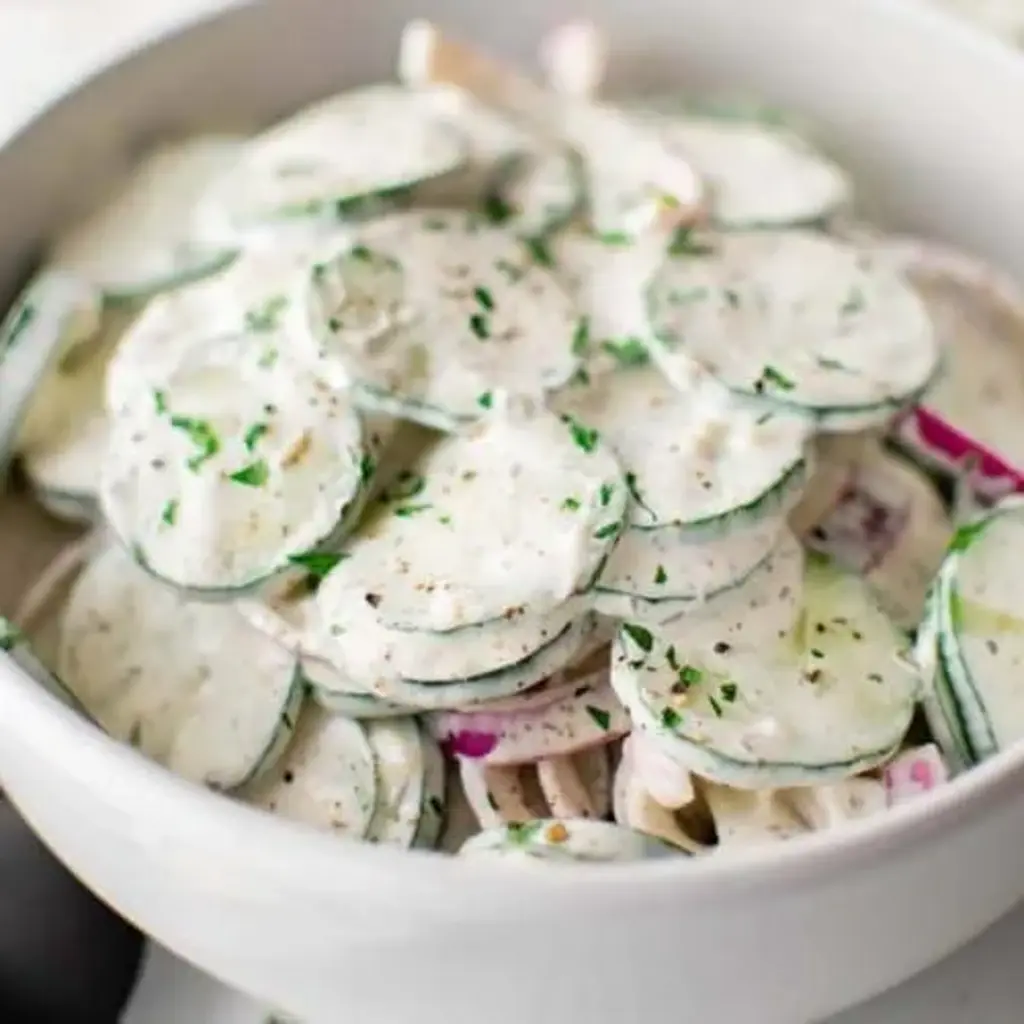
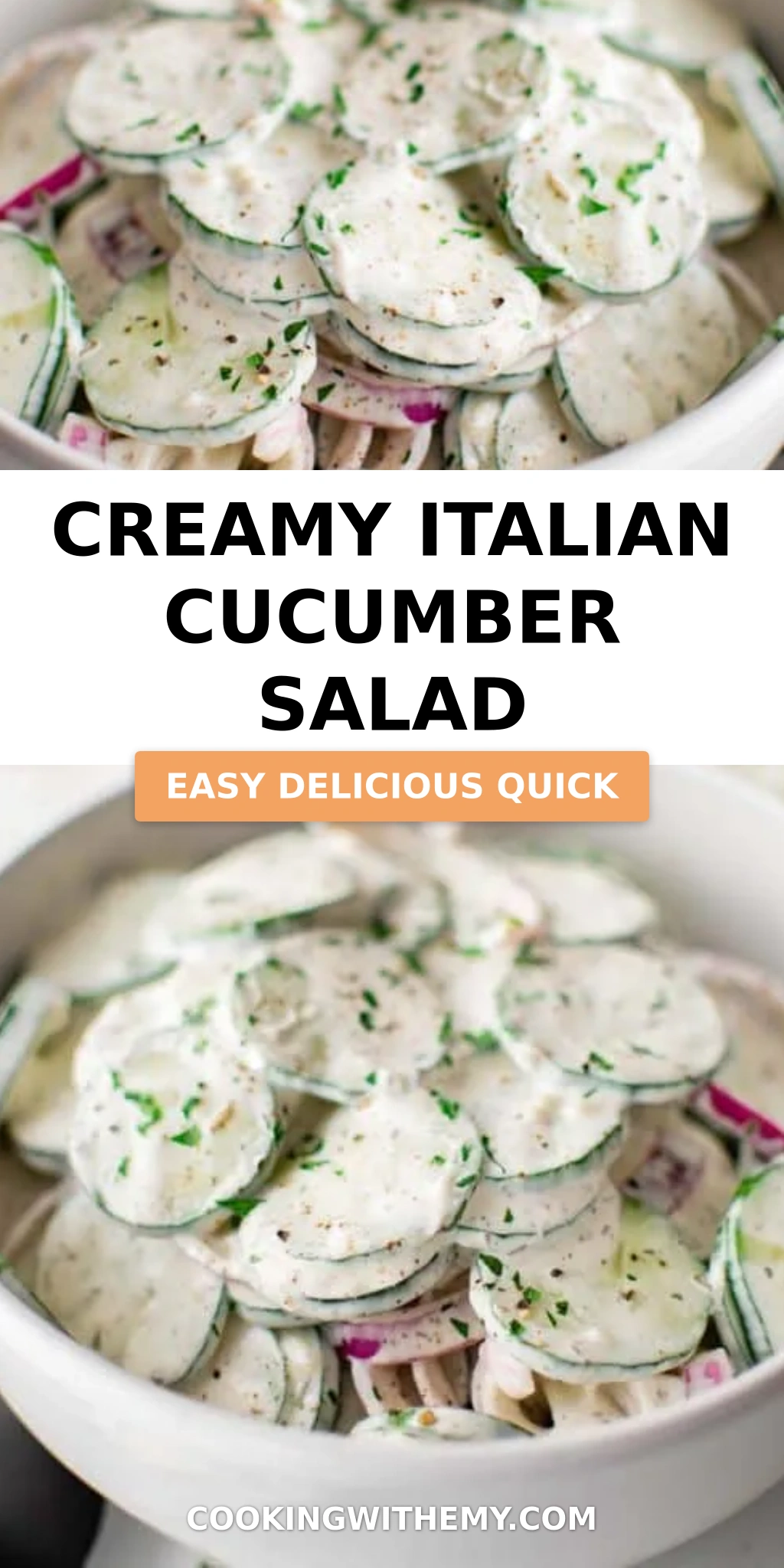
Imagine this: thin slices of cool cucumber, ruby rings of red onion, all coated in a luscious, herb-flecked dressing. The mayonnaise and sour cream give it a velvety richness, while the wine vinegar and Italian seasoning add a bright, tangy kick. Each bite is a contrast of crunchy and creamy, with just a whisper of garlic. It’s the kind of salad that disappears at barbecues and makes you feel like a summer wizard.

I’ve tested this version countless times in my NYC kitchen, and I’ve honed a few tricks to keep it from turning watery or bland. The secret is in the dressing — letting it chill so the flavors meld — and using a simple salt-and-squeeze technique for the cucumbers if you’re making it ahead. 💡 emy’s Pro Tip: One common mistake is slicing the cucumbers too thick; aim for ⅛-inch rounds for the best texture. Trust me, this easy cucumber salad will become your favorite no-fuss dish.

Why This Creamy Italian Cucumber Salad Recipe Is the Best

The Flavor Secret
My secret lies in the dressing: a base of mayonnaise and sour cream balanced with a splash of white wine vinegar and a pinch of sugar. The Italian seasoning adds a floral, herbal note that elevates this salad far beyond a standard creamy cucumber salad. I learned this balance while making vinaigrettes in Paris — always a little acid, a little fat, and a little sweetness.

Perfected Texture
Texture is everything. I slice the cucumbers and onions paper-thin (use a mandoline if you have one) so they soak up just enough dressing without becoming soggy. And here’s my chef’s trick: after slicing, I gently salt the cucumbers and let them sit for 10 minutes, then rinse and pat dry. This draws out excess moisture without sacrificing crunch.

Foolproof & Fast
With no cooking and minimal prep, this recipe is perfect for beginners and busy weeknights. Even if you forget to chill the dressing, it still tastes fantastic. The ingredients are pantry staples — you likely have mayo, sour cream, vinegar, and Italian seasoning on hand. It’s the kind of recipe you can whip up in the time it takes to grill your main course.

Creamy Italian Cucumber Salad Ingredients

I find the best cucumbers at the Union Square Greenmarket in summer — they’re so fresh and crisp. But even a grocery store cucumber works beautifully here. Let’s gather everything you need.

Ingredients List

  • 3/4 Cup Mayonnaise
  • 1/4 Cup Sour Cream
  • 1 Tablespoon Red or White Wine Vinegar
  • 2 Teaspoons Italian Seasoning
  • 1 teaspoon Olive Oil
  • 2 Cloves Garlic, minced
  • 1/2 teaspoon Salt
  • 1/4 teaspoon Pepper
  • 1 Pinch Granulated Sugar (about 1/8 teaspoon)
  • 3 Large Cucumbers
  • 1 Medium Red Onion

Ingredient Spotlight

Cucumbers: The star. English cucumbers (long, thin-skinned) are best — they have fewer seeds and stay crunchier. Garden cucumbers work too but need peeling. Look for firm, dark green cucumbers without soft spots.

Mayonnaise: Full-fat mayo gives the creamiest result. If you’re using a light mayo, it will be a bit thinner; still good, but less indulgent.

Sour Cream: Adds tang and richness. You can sub Greek yogurt for a lighter version with a similar texture.

Italian Seasoning: A blend of dried basil, oregano, rosemary, and thyme. If you don’t have it, use 1 tsp dried oregano + 1 tsp dried basil.

Red Onion: Adds bite and color. For a milder flavor, soak sliced onions in cold water for 10 minutes before using.

Original Ingredient Best Substitution Flavor / Texture Impact
Mayonnaise Vegan mayo (e.g., Just Mayo) Slightly tangier, still creamy
Sour Cream Plain Greek yogurt Tangier, a bit less rich
Wine Vinegar Apple cider vinegar or lemon juice Fruity vs. sharp; still bright
Italian Seasoning 1 tsp dried oregano + 1 tsp dried basil Similar herbaceous profile
Garlic (cloves) 1/2 tsp garlic powder Milder, no raw garlic bite

How to Make Creamy Italian Cucumber Salad — Step-by-Step

This salad is almost too easy — but I promise it’s packed with flavor. Just follow these simple steps.

Step 1: Whisk the Dressing

In a medium bowl, combine 3/4 cup mayonnaise, 1/4 cup sour cream, 1 tablespoon wine vinegar, 2 teaspoons Italian seasoning, 1 teaspoon olive oil, 2 minced garlic cloves, 1/2 teaspoon salt, 1/4 teaspoon pepper, and a pinch of sugar. Whisk until smooth and creamy.

💡 emy’s Pro Tip: Let the dressing chill for at least an hour — the flavors meld together beautifully. You can even make it a day ahead.

Step 2: Prep the Vegetables

Wash the cucumbers and peel them if desired (I leave the skin on for color and texture). Thinly slice 3 large cucumbers into rounds about 1/8 to 1/4 inch thick. Slice 1 medium red onion into thin rings or half-moons.

⚠️ Common Mistake to Avoid: Slicing cucumbers too thick — thick slices don’t absorb the dressing well and can be watery. Use a sharp knife or mandoline.

Step 3: Combine and Mix

Add the sliced cucumbers and red onion to the bowl with the dressing. Toss gently until everything is evenly coated. Taste and adjust seasoning if needed — I often add another pinch of salt or a splash more vinegar.

💡 emy’s Pro Tip: If you have time, let the salad sit for 10-15 minutes at room temperature before serving. The flavors marry and the vegetables soften slightly.

Step 4: Serve or Chill

You can serve immediately, but for the best flavor, chill the salad for at least 30 minutes. Garnish with fresh herbs like parsley or dill if you like. This makes an excellent make-ahead side for picnics and potlucks.

⚠️ Common Mistake to Avoid: Don’t mix the salad too far in advance without salting the cucumbers first — they release water and dilute the dressing. If making ahead, toss cucumbers with 1/2 tsp salt, let sit 15 min, rinse and pat dry before adding dressing.

Step Action Duration Key Visual Cue
1 Whisk dressing 3 minutes Smooth, pale, herb-flecked
2 Slice cucumbers & onion 5 minutes Even rounds, about credit-card thick
3 Toss with dressing 2 minutes Evenly coated, no dry spots
4 Chill (optional) 30 min – overnight Slightly wilted but still crunchy

Serving & Presentation

This Italian cucumber salad is perfect as a side dish for grilled chicken, fish, or burgers. I love serving it in a large shallow bowl so the creamy dressing pools at the bottom — perfect for dipping. A sprinkle of fresh parsley or chives adds a pop of green, and a few cracks of black pepper finish it off.

In my Moroccan home, we would serve a similar salad alongside spicy grilled meats. Here in NYC, I pair it with everything from lamb kebabs to a simple roast chicken. It’s also wonderful as a topping for wraps or tacos — the creamy tang complements bold flavors.

Pairing Type Suggestions Why It Works
Side Dish Grilled chicken, salmon, burgers, kebabs Creamy coolness balances charred, smoky flavors
Sauce / Dip Wrap filling, pita sandwich, falafel Acts like a tangy slaw, adds moisture
Beverage Crisp white wine (Pinot Grigio), iced tea, lemonade The acidity of the wine mirrors the vinegar
Garnish Fresh parsley, dill, chives, or basil Adds freshness and color

Make-Ahead, Storage & Reheating

As a busy New Yorker, I often meal-prep this salad for the week. The key is to keep the dressing separate if you plan to eat it over multiple days, but if you’re serving it within 6 hours, it’s fine to toss everything together.

Method Container Duration Reheating Tip
Refrigerator Airtight container Up to 2 days Serve cold, no reheating needed
Freezer Not recommended N/A Freezing ruins cucumber texture
Make-Ahead (dressing) Sealed jar or container Up to 3 days Whisk before tossing with veggies

If you do refrigerate the dressed salad, you may notice the cucumbers release liquid. Simply drain off excess liquid and give it a stir before serving. The flavor actually deepens overnight — a trick I learned from making French salads in pastry school.

Variations & Easy Swaps

Variation Key Change Best For Difficulty Impact
Dairy-Free / Vegan Vegan mayo + coconut yogurt or silken tofu Dairy-free diets, vegans No change in difficulty
Spicy Italian Add 1/2 tsp red pepper flakes or 1 tbsp Calabrian chili paste Heat lovers, BBQ sides Easy (just add ingredient)
Greek-Inspired Replace Italian seasoning with oregano + mint; add olives Mediterranean meal pairing Easy (minor swaps)

Dairy-Free / Vegan

For my dairy-free friends, swap the mayonnaise with a quality vegan mayo (like Just Mayo) and replace the sour cream with thick coconut yogurt or a silken tofu blended smooth. The texture will be slightly lighter but still creamy. I love this version because it keeps the bright, tangy vibe without any dairy. A pinch of nutritional yeast can add an umami boost.

Spicy Italian

Add a kick to your creamy cucumber salad recipe with red pepper flakes or Calabrian chili paste. This variation nods to the fiery side of Italian cooking — something I discovered at a little trattoria in Rome. The heat cuts through the richness of the dressing, making it even more addictive. Serve it alongside grilled sausages or pork chops.

Greek-Inspired

Swap the Italian seasoning for dried oregano and a handful of fresh mint. Add a handful of diced cucumber, tomato, and Kalamata olives for a Greek twist. This version reminds me of summer markets in Athens. It’s fantastic with grilled lamb or as a topping for pita bread.

Share Your Version!

I hope this creamy Italian cucumber salad becomes your new go-to. It’s simple, versatile, and always a crowd-pleaser. If you try it, please leave a star rating and comment below — I read every single one. And don’t forget to snap a picture and tag me on Instagram or Pinterest @cookingwithemy — I love seeing your creations!

Have you tried making this with a different herb blend or added a surprise ingredient? Let me know in the comments! Until next time, keep cooking with love. From my NYC kitchen to yours — I hope this recipe brings as much warmth to your table as it does to mine. — emy 🧡

📌

Love This Recipe? Save It to Pinterest!

If you enjoyed this Creamy Italian Cucumber Salad recipe, don’t let it get lost in your browser tabs! 😄 Pin it now so you can find it again anytime — and explore hundreds more tried-and-tested recipes waiting for you on my Pinterest boards.

👉 Follow emy on Pinterest @cookingwithemy

📌 Pin this recipe · 🔁 Re-pin your favorites · 💬 Tag me when you make it — I love seeing your creations!

How do you keep cucumber salad from getting watery?

The best way to prevent a watery cucumber salad is to salt the cucumbers before mixing. After slicing, toss them with about 1/2 teaspoon of salt and let them sit in a colander for 10–15 minutes. You’ll see droplets of water form. Rinse the cucumbers briefly with cold water and pat them dry with paper towels. This draws out excess moisture so your creamy dressing stays thick and flavorful. Another tip: use English cucumbers, which have fewer seeds and less water content than standard garden cucumbers.

What is the best type of cucumber to use for creamy Italian cucumber salad?

For the best texture, I recommend English (or hothouse) cucumbers. They have thin skin that doesn’t need peeling, very few seeds, and a firm, crunchy flesh that holds up well in creamy dressings. If you can’t find English cucumbers, use Persian cucumbers — they’re similar but smaller. Regular garden cucumbers work too, but you should peel them and scoop out the seeds with a spoon to reduce wateriness. Avoid waxed cucumbers if possible, as the skin can be tough.

Can I make creamy Italian cucumber salad ahead of time?

Yes, you can make this salad up to 6 hours ahead if you follow my technique. Prepare the dressing and slice the veggies, but keep them separate in the fridge. About 30 minutes before serving, toss the dressing with the cucumbers and onions. Alternatively, you can make the full salad and refrigerate it for up to 2 days, but expect some liquid to release. Just drain off the excess and stir before serving. The flavor deepens nicely overnight, so it’s still delicious.

What can I substitute for sour cream or mayonnaise in this cucumber salad?

You have several great options. For a lighter version, replace sour cream with plain Greek yogurt (full-fat or low-fat) — it keeps the creaminess and adds protein. For a dairy-free swap, use vegan mayonnaise and a thick plant-based yogurt like coconut or almond yogurt. If you want to cut back on both, you can use a 50/50 mix of mayonnaise and buttermilk (or dairy-free buttermilk made with lemon juice and plant milk). Each substitution changes the flavor slightly: Greek yogurt is tangier, vegan options are milder, but all work beautifully.

Can I use dried herbs in place of Italian seasoning?

Absolutely. Italian seasoning is just a blend of dried basil, oregano, rosemary, and thyme. If you have those individually, you can mix your own. A good ratio is 1 teaspoon dried basil, 1 teaspoon dried oregano, 1/2 teaspoon dried rosemary (crushed), and 1/2 teaspoon dried thyme. For a fresher taste, you can use 1 tablespoon each of fresh basil and fresh oregano, finely chopped. Just reduce the vinegar slightly if using fresh herbs because they release moisture.

Is creamy Italian cucumber salad healthy?

This salad can definitely fit into a balanced diet. Cucumbers are low in calories and high in water content, making them hydrating and refreshing. The dressing does contain mayonnaise and sour cream, so it’s not low-fat, but you can lighten it by using half the amount of mayo and replacing the other half with Greek yogurt. I also use just a pinch of sugar. The salad is a good source of vitamin K from cucumbers and antioxidants from the herbs. It’s a satisfying side that won’t weigh you down.

Can I add other vegetables to this cucumber salad?

Definitely! This recipe is a great base for adding more crunch and color. Try thinly sliced bell peppers, cherry tomatoes halved, or even thin carrot ribbons. For a Mediterranean twist, add Kalamata olives and crumbled feta cheese. If you want some heat, toss in chopped pepperoncini. Keep in mind that watery vegetables like tomatoes should be added just before serving to avoid diluting the dressing. The amounts are flexible — aim for about 1 cup of extra veggies total.

How long does creamy Italian cucumber salad last in the fridge?

When stored in an airtight container, this salad stays fresh in the refrigerator for up to 2 days. After that, the cucumbers begin to soften and the dressing may separate slightly. I recommend consuming it within the first 24 hours for the best crunch. If you plan to keep it longer, store the dressing separately and toss just before serving. The dressing itself keeps well for up to a week in the fridge. If the salad seems watery after a day, simply drain off the excess liquid and give it a stir.

Print

clock clock iconcutlery cutlery iconflag flag iconfolder folder iconinstagram instagram iconpinterest pinterest iconfacebook facebook iconprint print iconsquares squares iconheart heart iconheart solid heart solid icon

Creamy Italian Cucumber Salad


  • Author: Chef Emy

Description

Creamy Cucumber Salad is a true summertime staple! Fresh, crisp cucumbers are thinly sliced and served with red onions in a tangy creamy sauce. This simple, inexpensive, and refreshing salad comes together with ingredients you likely already have in your kitchen in just about 15 minutes.


Ingredients

Scale
  • 3/4 Cup Mayonnaise
  • 1/4 Cup Sour Cream
  • 1 Tablespoon Red or White Wine Vinegar
  • 2 Teaspoons Italian Seasoning
  • 1 teaspoon Olive Oil
  • 2 Cloves Garlic, (Minced)
  • 1/2 teaspoon Salt
  • 1/4 teaspoon Pepper
  • 1 Pinch Granulated Sugar, (About 1/8 teaspoon)
  • 3 Large Cucumbers
  • 1 Medium Red Onion

Instructions

  1. In a medium bowl whisk together the mayonnaise, sour cream, red or white wine vinegar, Italian seasoning, olive oil, garlic, salt, pepper, and sugar.
  2. For best results, cover and chill the dressing for at least one hour, and up to a full day before making the salad.
  3. Thinly slice the cucumbers and red onions about 1/8-1/4 inch thick.
  4. Mix the dressing together with the onion and cucumber. Serve immediately, or chill until ready to serve.


Creamy Italian Cucumber Salad

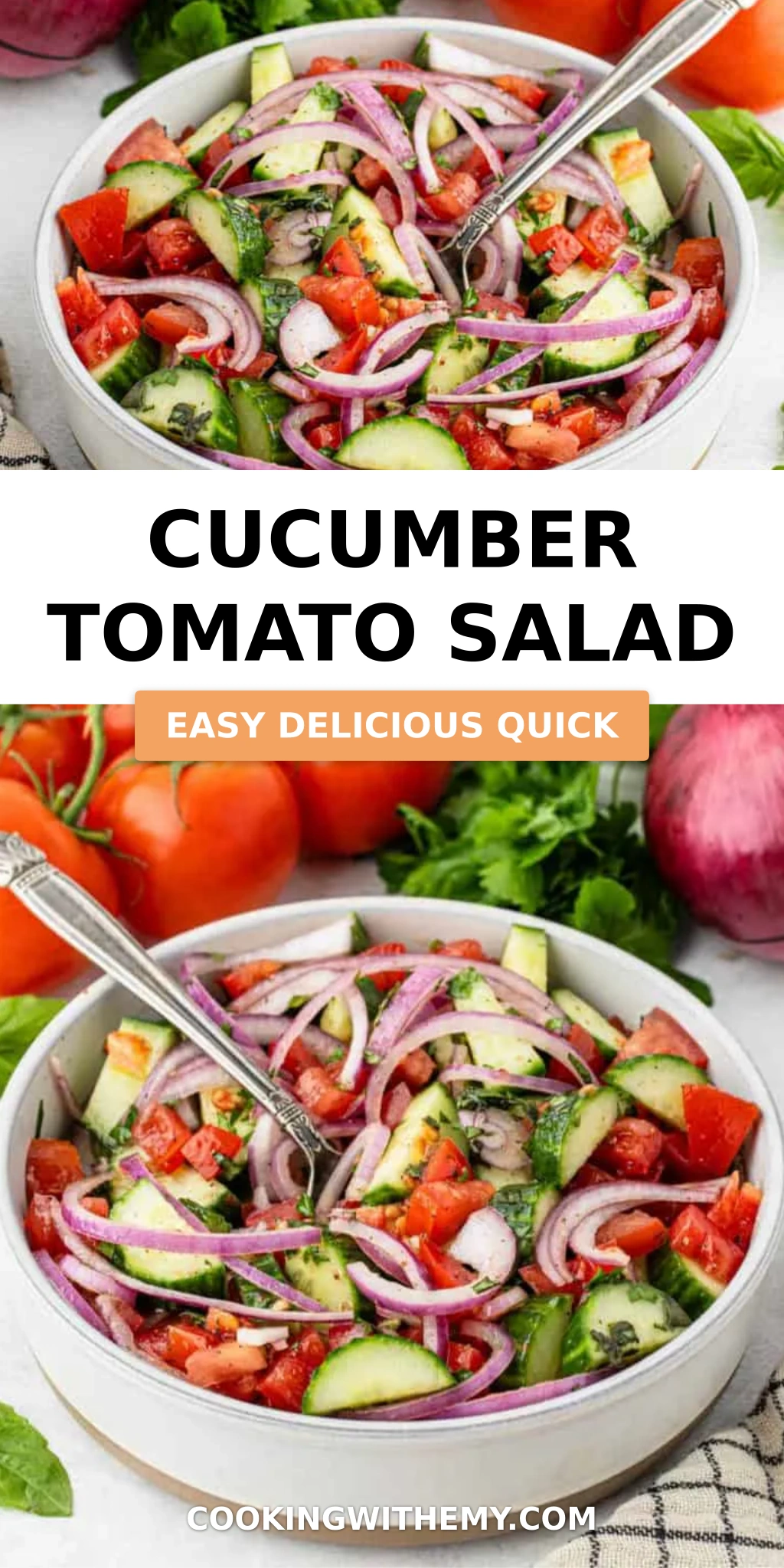
Cucumber Tomato Salad – Quick & Easy Summer Recipe

⚖️
Difficulty
Easy
⏲️
Prep Time
10 mins
🕒
Cook Time
0 mins
⏱️
Total Time
35 mins
🍽️
Servings
4

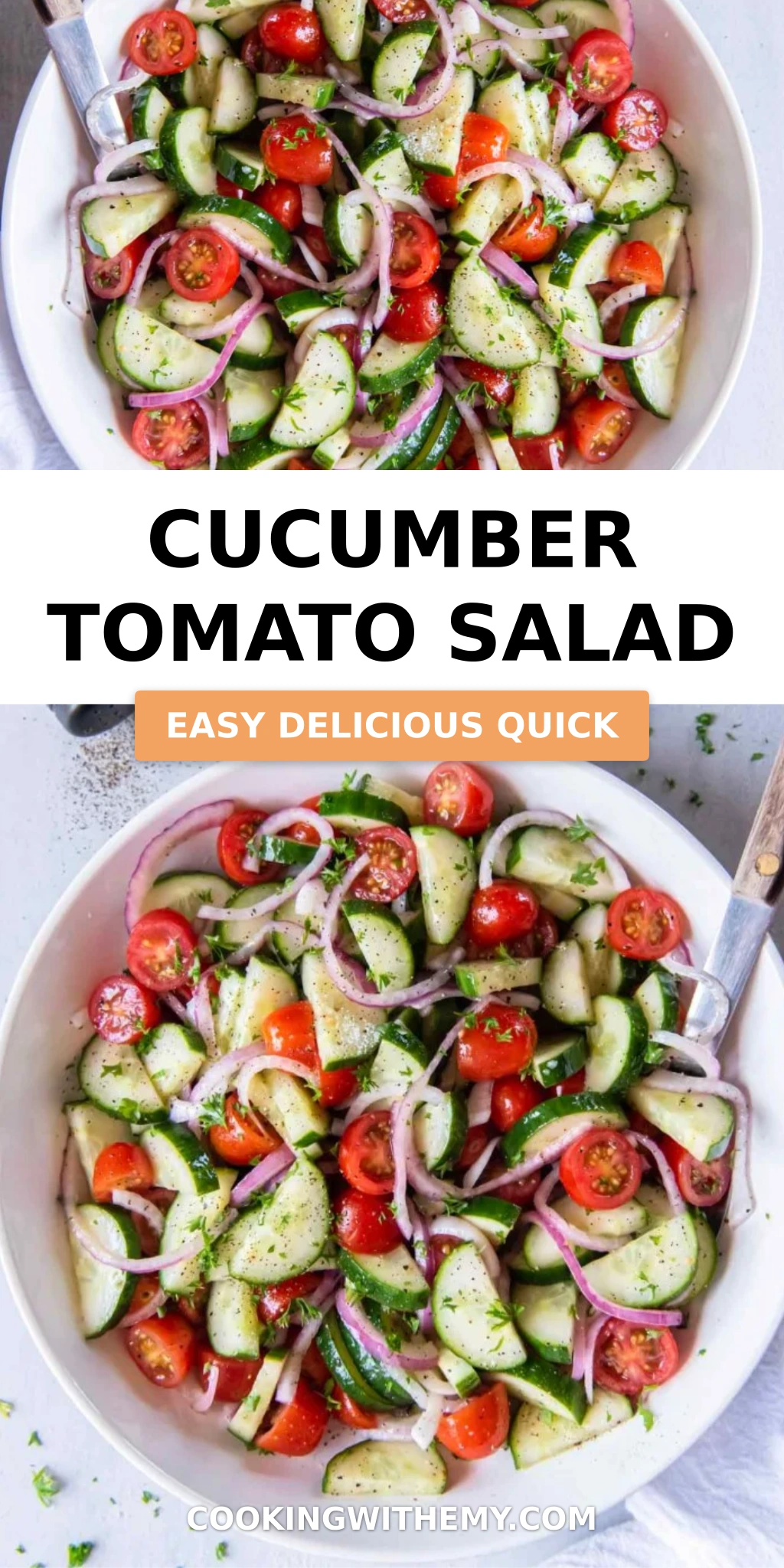
Growing up in Morocco, summers meant long, lazy afternoons on the terrace with a bowl of the simplest, most refreshing salad you can imagine. My mother would take cucumbers and tomatoes straight from the market, still warm from the sun, and toss them with a brilliant red wine vinegar dressing. That memory is the soul of this Cucumber Tomato Salad. It’s the quickest, easiest summer salad you’ll ever make, and once you taste that bright, herby dressing, you’ll understand why I call it my “sunshine in a bowl.”

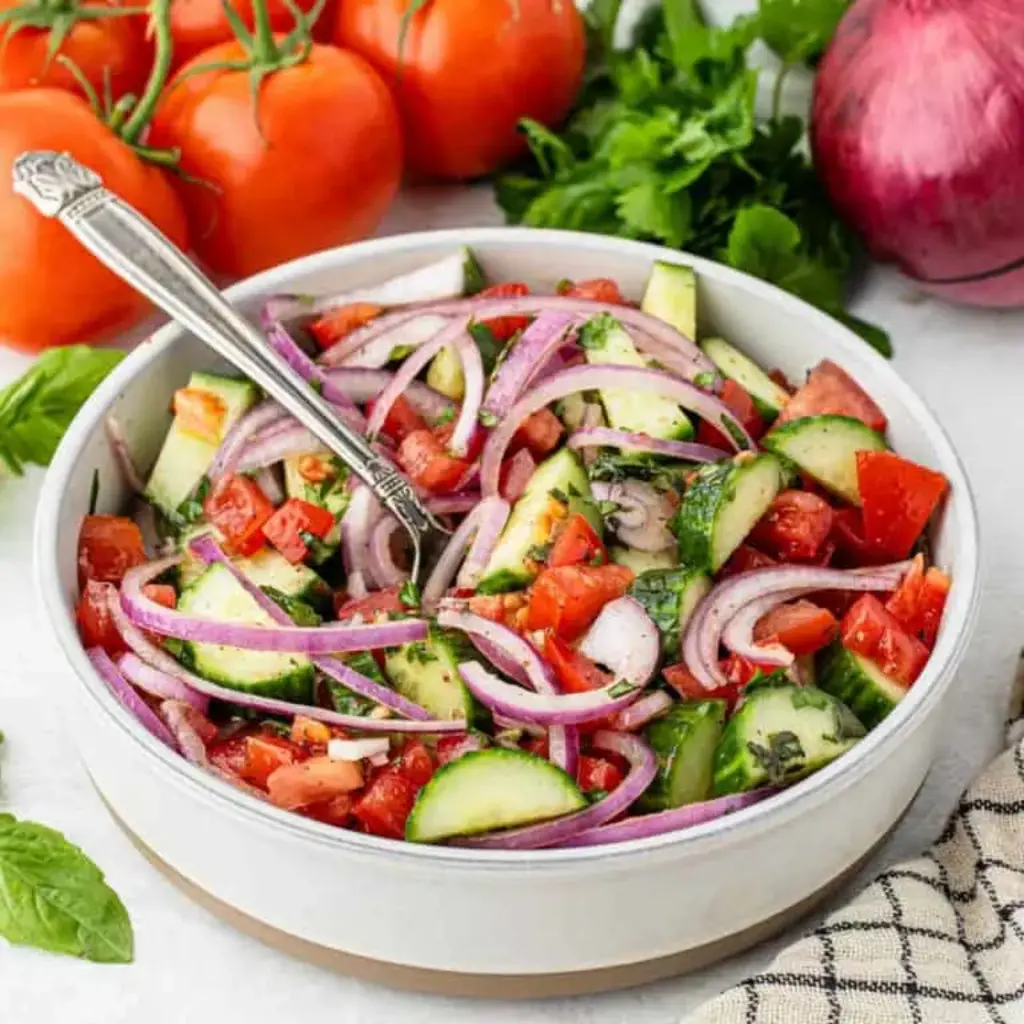
This easy cucumber tomato salad recipe is a study in contrasts: cool, crisp cucumber against juicy, sweet tomato; sharp red onion mellowed by a tangy red wine vinegar dressing; and a whisper of fresh basil and parsley that lifts every bite. The colors alone – vibrant red, deep green, pale white – are a feast for the eyes. I love to serve it alongside grilled lamb or fish, or just eat it straight from the bowl as a light lunch.

What makes my version different? I trained in Paris, so I bring a little French precision to every “simple” dish. For this healthy cucumber tomato salad, the secret is salting the cucumber slices briefly before assembling. It draws out excess moisture so the salad stays crisp and never turns watery – a common mistake I’ll help you avoid. Plus, I’ll share my trick for the perfectly balanced vinaigrette that coats every piece without drowning it. From my NYC kitchen to yours, this is the only cucumber tomato salad recipe you’ll ever need.

Why This Cucumber Tomato Salad Recipe Is the Best

The Flavor Secret – I spent years perfecting the ratio of olive oil to red wine vinegar in this dressing. The secret? A touch of salt and pepper whisked in until emulsified, then fresh herbs stirred in at the very end. It’s a technique I learned in Paris – simple, but game‑changing. The result is a dressing that clings to every vegetable and brightens the whole salad without overwhelming it.

Perfected Texture – I salt the cucumber slices and let them rest for 10 minutes before adding the tomatoes. This one step, passed down from my mother in Morocco, ensures every bite stays crunchy. The tomatoes remain juicy and intact, and the onion slices soften just enough in the dressing without becoming floppy. It’s textural perfection.

Foolproof & Fast – This recipe comes together in under 15 minutes of active work. It’s ideal for beginners because there’s no cooking, no complicated techniques, and you can adjust every ingredient to your taste. The only rule: let it chill for 30 minutes before serving so the flavors marry. That’s it – a restaurant‑quality side dish with zero stress.

Easy Cucumber Tomato Salad Recipe Ingredients

I pick up my cucumbers and tomatoes at the Union Square Greenmarket in New York City, where the summer produce is absolutely bursting with flavor. But honestly, this salad works beautifully with any good‑quality supermarket ingredients. Here’s what you need.

Ingredients List

  • 1 English cucumber
  • 2 large tomatoes, diced
  • ½ red onion, thinly sliced
  • 2 tablespoons olive oil
  • 1 tablespoon red wine vinegar
  • ½ teaspoon salt
  • ½ teaspoon black pepper
  • 1 tablespoon fresh parsley, chopped
  • 1 tablespoon fresh basil, chopped

Ingredient Spotlight

Cucumber – I always use English cucumbers (the long, thin‑skinned ones) because they have fewer seeds and stay crisp longer. In a pinch, you can use 2 Persian cucumbers or 1 standard garden cucumber, but be sure to peel and seed it first. Tested substitution: chopped fennel bulb – adds a licorice note that’s lovely.

Tomatoes – Ripe, in‑season tomatoes make this salad sing. I use beefsteak or Roma tomatoes when I can find them. Cherry tomatoes are fantastic too (see FAQ), but if you swap, halve them to keep the dressing-to-vegetable ratio right.

Red Onion – Thinly sliced red onion adds a punchy bite. If raw onion is too strong for you, soak the slices in ice water for 10 minutes before using. That’s a trick I learned in Paris to tame the sharpness.

Fresh Herbs – Basil and parsley are my go‑to. Don’t skip them – they’re not garnish, they’re integral. If you only have dried, use 1 teaspoon each, but fresh is worlds better.

Original Ingredient Best Substitution Flavor / Texture Impact
English cucumber 2 Persian cucumbers or 1 peeled, seeded garden cucumber Slightly more seeds, still crisp. Peel if skin is thick.
Large tomatoes 1 pint cherry tomatoes, halved Sweeter, less seedy. Halve to keep salad balanced.
Red onion Shallot, finely sliced Milder, more delicate. Use 2 shallots.
Fresh herbs Dried herbs (1 tsp each) or omit Less vibrant. Still tasty. Add a squeeze of lemon to boost.

How to Make Cucumber Tomato Salad — Step‑by‑Step

Making this salad is almost embarrassingly easy, but a few small touches make all the difference. Follow along and you’ll have a side dish that tastes like summer.

Step 1: Prep the Cucumber

Cut the ends off the English cucumber, then slice it in half lengthwise. Cut each half crosswise into ½‑inch‑thick half‑moons. Place the slices in a colander, sprinkle with a pinch of salt, and let sit for 10 minutes. This draws out excess moisture. Pat dry with paper towels before proceeding.

💡 emy’s Pro Tip: Don’t skip the salting step – it’s the key to a non‑watery salad. Even 5 minutes helps!

Step 2: Combine Vegetables

In a large bowl, combine the drained cucumber slices, diced tomatoes, and thinly sliced red onion. Gently toss to distribute.

⚠️ Common Mistake to Avoid: Don’t over‑mix the tomatoes – they can break down and make the salad mushy. Use a gentle hand.

Step 3: Whisk the Dressing

In a small bowl, whisk together olive oil, red wine vinegar, salt, and black pepper until well combined and slightly thickened. Taste and adjust seasoning – it should be tangy and bright.

💡 emy’s Pro Tip: Use a good‑quality red wine vinegar – it’s the backbone of the dressing. If it’s too sharp, add a tiny pinch of sugar.

Step 4: Assemble and Chill

Pour the dressing over the vegetable mixture. Add the chopped parsley and basil. Gently fold everything together until evenly coated. Cover the bowl with plastic wrap and refrigerate for 30–60 minutes. This resting time is crucial – the flavors meld and the onion softens slightly.

⚠️ Common Mistake to Avoid: Don’t skip the chill time. A freshly dressed salad won’t have that marinated, harmonious taste. Plan ahead!

Step 5: Serve

Remove from the fridge. Give it a gentle stir, taste, and adjust salt or pepper if needed. Serve cold – it’s perfect as is. If you want extra color, garnish with a few whole basil leaves or a sprinkle of red pepper flakes.

💡 emy’s Pro Tip: This salad tastes even better the next day (if it lasts that long!). The flavors continue to develop overnight.

Step Action Duration Key Visual Cue
1 Slice and salt cucumber 10 min (resting) Cucumber pieces release clear liquid
2 Combine vegetables 2 min Even distribution with no crushing
3 Whisk dressing 1 min Emulsified, slightly thick, tastes tangy
4 Toss and chill 30–60 min Dressing coats all pieces; herbs visible
5 Serve cold 1 min Bright, crisp, beautifully dressed

Serving & Presentation

This summer tomato salad is incredibly versatile. I love serving it in a wide, shallow white bowl so the colors really pop. For a Moroccan‑French twist, top with a few crumbled feta cheese or a drizzle of harissa oil – the creamy saltiness or spicy kick is divine. In New York, I’ll sometimes throw in a handful of chopped kalamata olives for extra brininess.

It’s the perfect side for grilled chicken, lamb chops, or a simple piece of fish. Leftovers? They make an amazing topping for crusty bread or tossed with cooked quinoa for a light grain bowl. This salad also holds up beautifully at picnics and potlucks – just keep it chilled until serving.

Pairing Type Suggestions Why It Works
Side Dish Grilled chicken, lamb chops, seared fish, veggie burger Acidity cuts through rich proteins; crunch adds contrast
Sauce / Dip Tzatziki, hummus, baba ganoush Cool, creamy dips complement the tangy dressing
Beverage Dry rosé, crisp Sauvignon Blanc, lemonade Bright, herbaceous flavors match the wine’s acidity
Garnish Fresh basil leaves, crumbled feta, olives, red pepper flakes Adds pop of color, saltiness, or heat

Make‑Ahead, Storage & Reheating

For busy weeknights, I often prep the vegetables and dressing separately and assemble just before serving. But this salad actually improves after a few hours – the flavors meld beautifully. In my NYC apartment, I always make a double batch on Sunday and enjoy it all week.

Method Container Duration Reheating Tip
Refrigerator Airtight container Up to 3 days Serve cold; no need to reheat. Stir before serving.
Freezer Not recommended N/A Freezing will make the vegetables limp and watery when thawed.
Make‑Ahead Prep vegetables & dressing separately Up to 1 day in advance Combine and chill 30 min before serving. Add fresh herbs just before.

If you must store dressed salad, expect a little liquid at the bottom – that’s normal. Just stir it back in or drain it off before serving. And never, ever microwave this salad! It’s meant to be eaten cold, and reheating ruins the texture.

Variations & Easy Swaps

This recipe is a fantastic base for endless creativity. Here are three of my favorite ways to dress it up.

Variation Key Change Best For Difficulty Impact
Moroccan Zaalouk Style Add 1 tsp ground cumin and ½ tsp smoked paprika to dressing; garnish with preserved lemon. North African flavor lovers No extra work
Mediterranean Feta Add ½ cup crumbled feta and ¼ cup Kalamata olives. Rich, salty twist No extra work
Herb Blast Add 1 Tbsp each fresh mint and dill, plus 2 Tbsp chopped chives. Fresh, garden‑fresh flavor No extra work

Moroccan Zaalouk Style

This variation nods to my Moroccan roots. Add a teaspoon of ground cumin and half a teaspoon of smoked paprika to the dressing. Then, top the salad with a few slivers of preserved lemon rind (or a squeeze of fresh lemon if you don’t have preserved). The warm, earthy spices transform the salad into something deeply satisfying. It’s wonderful with lamb kofta.

Mediterranean Feta

For a heartier, more substantial salad, add ½ cup crumbled feta cheese and ¼ cup pitted Kalamata olives. The saltiness from the feta and olives balances the tangy dressing perfectly. This version is almost a main dish – just add a piece of grilled chicken or shrimp. It’s one of my most‑requested recipes for barbecues.

Herb Blast

If you love fresh herbs as much as I do, double the parsley and basil and add a tablespoon each of fresh mint and fresh dill, plus two tablespoons of chopped chives. This makes the salad incredibly aromatic and bright. I especially love this version in early summer when the herb garden is overflowing. Serve it with grilled fish or a simple roast chicken.

How do you keep cucumber tomato salad from getting watery?

The number‑one trick is to salt the cucumber slices and let them sit for 10–15 minutes before adding them to the salad. Place the cut cucumber in a colander, sprinkle with a pinch of salt, and let it rest. You’ll see beads of moisture on the surface – that’s the excess water being drawn out. Pat the slices dry with paper towels before assembling the salad. This simple step, which I learned in my mother’s Moroccan kitchen, guarantees a crisp, non‑watery salad every time. Additionally, don’t dress the salad too far in advance if you can avoid it – the salt in the dressing can also pull liquid from the tomatoes over time. If you do make it ahead, just give it a stir before serving, and if there’s extra liquid, you can drain it off.

Can I use cherry tomatoes instead of regular tomatoes in cucumber tomato salad?

Absolutely! Cherry tomatoes are a fantastic substitute, especially when large tomatoes aren’t at their peak. They’re sweeter and have a firmer texture, which holds up well in the dressing. Use about 1 pint of cherry or grape tomatoes, and halve them (or quarter them if they’re large) so they’re bite‑sized and easier to coat with dressing. The main difference is that cherry tomatoes have less juice and seeds, so your salad will be slightly less saucy – but that’s not a bad thing. The presentation is also lovely: those little red jewels mixed with green cucumber slices look gorgeous. If you’re using cherry tomatoes, you may want to add an extra tablespoon of olive oil to the dressing to compensate for the lack of tomato juice.

What is the best dressing for cucumber tomato salad?

In my opinion, the best dressing is a simple red wine vinaigrette. The recipe I use in this post – 2 tablespoons olive oil, 1 tablespoon red wine vinegar, ½ teaspoon salt, and ½ teaspoon black pepper – is perfectly balanced. The acidity of the red wine vinegar cuts through the creamy olive oil and brightens the vegetables without overwhelming them. If you prefer a lemonier dressing, you can substitute fresh lemon juice for the vinegar. For a creamier version, whisk in a teaspoon of Dijon mustard to emulsify the dressing – that’s a classic French technique. But for a fresh summer salad, I always come back to this simple vinaigrette. It lets the quality of the produce shine.

How long does cucumber tomato salad last in the fridge?

This cucumber tomato salad will keep well in the refrigerator for up to 3 days when stored in an airtight container. The flavors actually meld and deepen overnight, making it even more delicious the next day. However, the texture will gradually soften as the salt and acid continue to work on the vegetables. The cucumber will lose some of its initial crunch, and the tomatoes may release some liquid. If you’re planning to make it ahead for a party, I recommend keeping the dressing separate and combining everything no more than an hour before serving for the freshest texture. If you have leftovers, simply give them a good stir, drain off any excess liquid if you like, and enjoy – it’s still wonderful!

Can I add feta cheese to cucumber tomato salad?

Yes, feta cheese is a wonderful addition to cucumber tomato salad. I often add ½ cup of crumbled feta along with a handful of Kalamata olives for a Mediterranean twist. The salty, creamy feta contrasts beautifully with the tangy dressing and crisp vegetables. If you’re adding feta, you may want to reduce the salt in the dressing slightly, as the cheese is already salty. Goat cheese or queso fresco would also work well. Just fold the cheese in gently after you’ve dressed the salad so it doesn’t break apart too much.

What can I use instead of red wine vinegar?

If you don’t have red wine vinegar, there are several excellent substitutes. White wine vinegar is the closest in flavor and acidity. Apple cider vinegar works beautifully and adds a subtle fruity note. Fresh lemon juice is also a great option – it brightens the salad in a slightly different way. For each tablespoon of red wine vinegar called for, use an equal amount of any of these substitutes. I’ve also used sherry vinegar or champagne vinegar in a pinch, and both are lovely. Just avoid balsamic vinegar unless you want a sweeter, darker dressing – it will change the character of the salad completely.

Should I peel the cucumber for cucumber tomato salad?

It depends on the type of cucumber you use. For English (hothouse) cucumbers, the skin is thin and tender, so there’s no need to peel it – I never do. The dark green skin adds color and a bit of texture. For regular garden cucumbers, the skin can be tough and sometimes bitter, so I recommend peeling them, or at least peeling stripes (alternating strips of skin and flesh) for a prettier look. If you’re using Persian or mini cucumbers, the skin is very thin and can be left on. A good rule of thumb: if the skin looks thick or waxy, peel it. If it’s thin and dark green, you can leave it on.

Can I make cucumber tomato salad without onions?

Of course – this salad is very forgiving. If you’re not a fan of raw onion or you’re serving someone who can’t eat it, simply omit it. The salad will still be delicious. You can replace the red onion with a milder option like shallot (use 1 or 2 finely sliced shallots) or even a few thinly sliced green onions (scallions) for a milder onion flavor. If you’re avoiding all alliums, add a teaspoon of dried chives or just leave it out entirely. The cucumber, tomato, and herby dressing are still a perfect combination.

How do I make this salad more filling?

To turn this side salad into a satisfying main dish, add a protein and a grain. I love adding 1 cup of cooked chickpeas or white beans for plant‑based protein. Grilled chicken, shrimp, or flaked tuna also work beautifully. For grains, cooked quinoa, farro, or couscous are excellent – just stir them in with the vegetables before adding the dressing. You can also add avocado for creaminess and healthy fats. The beauty of this recipe is its adaptability; it’s a perfect base for a hearty summer bowl.

What herbs go well in cucumber tomato salad?

Fresh basil and parsley are my classic choices, but the herb possibilities are endless. Fresh mint adds a cool, refreshing note – perfect with the cucumber. Dill is another great option, especially if you’re serving the salad with fish. Chives or tarragon (use sparingly) can add a delicate, anise‑like flavor. For a more robust herb profile, try oregano or marjoram. A rule of thumb: use soft, leafy herbs – woody herbs like rosemary or thyme are too strong and don’t work as well in this fresh salad. I always recommend fresh over dried, but if you must use dried, use about one‑third of the amount and add them to the dressing so they have time to rehydrate.

Share Your Version!

I can’t wait for you to try this fresh cucumber salad in your own kitchen. Whether you stick with the classic or play with one of the variations, please leave a star rating and a comment below – it means the world to me. And if you snap a photo and share it on Instagram or Pinterest, don’t forget to tag @cookingwithemy. I love seeing how you make these recipes your own!

Here’s a question for you: do you prefer your cucumber tomato salad with a tangy vinaigrette or a creamy dressing? Drop your answer in the comments – I’m genuinely curious! From my NYC kitchen to yours – I hope this recipe brings as much warmth to your table as it does to mine. — emy 🧡

📌

Love This Recipe? Save It to Pinterest!

If you enjoyed this Cucumber Tomato Salad recipe, don’t let it get lost in your browser tabs! 😄 Pin it now so you can find it again anytime — and explore hundreds more tried-and-tested recipes waiting for you on my Pinterest boards.

👉 Follow emy on Pinterest @cookingwithemy

📌 Pin this recipe · 🔁 Re-pin your favorites · 💬 Tag me when you make it — I love seeing your creations!

Print

clock clock iconcutlery cutlery iconflag flag iconfolder folder iconinstagram instagram iconpinterest pinterest iconfacebook facebook iconprint print iconsquares squares iconheart heart iconheart solid heart solid icon

Cucumber Tomato Salad


  • Author: Chef Emy

Description

You are going to love this Cucumber Tomato Salad recipe. This quick and easy cucumber tomato onion salad recipe is perfect for a Summer salad recipe.


Ingredients

Scale
  • 1 English cucumber
  • 2 large tomatoes ((diced) )
  • 1/2 red onion ((sliced) )
  • 2 Tablespoons Olive oil
  • 1 Tablespoon red wine vinegar
  • 1/2 teaspoon Salt
  • 1/2 teaspoon black pepper
  • 1 Tablespoon fresh parsley ((chopped) )
  • 1 Tablespoon fresh basil ((chopped) )

Instructions

  1. Cut the ends off 1 English cucumber. Slice it in half lengthwise and cut into ½-inch slices.
  2. Place the cucumber, 2 diced tomatoes, and ½ sliced red onion in a large bowl.
  3. In a small bowl, whisk together 2 tablespoons olive oil, 1 tablespoon red wine vinegar, ½ teaspoon salt, and ½ teaspoon black pepper.
  4. Pour the dressing over the vegetables.
  5. Gently stir in 1 tablespoon chopped fresh parsley and 1 tablespoon chopped fresh basil.
  6. Refrigerate for 3060 minutes before serving.
  7. Serve cold and enjoy!

Nutrition

  • Calories: 97 kcal
  • Sugar: 4 g
  • Fat: 7 g
  • Carbohydrates: 8 g
  • Protein: 2 g


Cucumber Tomato Salad

Cucumber Tomato Salad with Tangy Vinaigrette – A Refreshing Summer Classic

⚖️
Difficulty
Easy
⏲️
Prep Time
10 mins
🕒
Cook Time
0 mins
⏱️
Total Time
10 mins
🍽️
Servings
4-6

This cucumber tomato salad is the recipe I turn to more than any other during New York City’s sweltering summer months. I learned the magic of balancing cool, crisp vegetables with a bright, tangy dressing back in my mother’s kitchen in Morocco — she would always say that the best salads let each ingredient shine. This fresh cucumber tomato salad recipe is my love letter to that philosophy: simple, honest, and absolutely bursting with flavor. The honey in the dressing is my little Parisian-trained touch — a whisper of sweetness that tames the red wine vinegar and makes every bite sing.

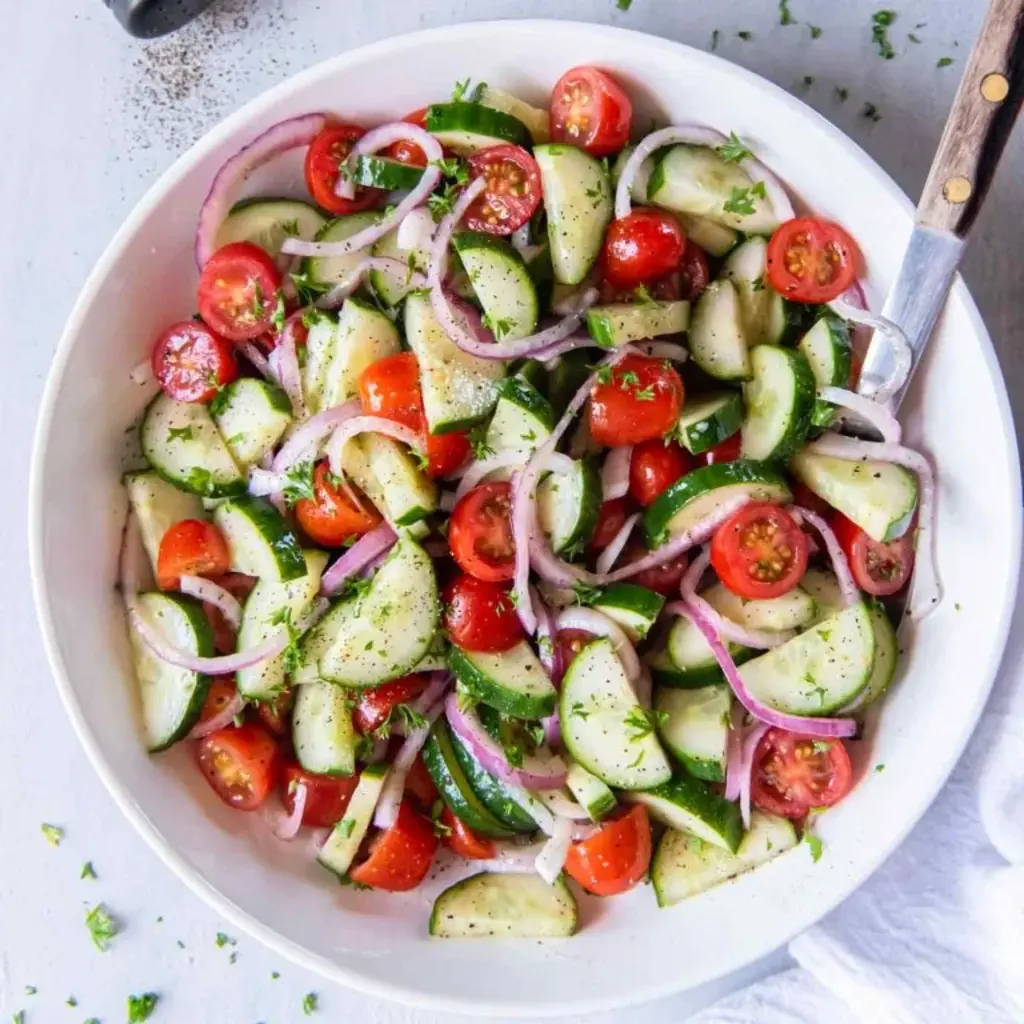
Picture this: thick half-moons of English cucumber, their flesh so crisp they almost snap when you bite into them, mingling with juicy cherry tomatoes that pop with sweetness. Thin slivers of red onion add a gentle bite, while the dressing — a simple emulsion of olive oil, red wine vinegar, honey, salt, and pepper — coats each piece in a glossy, tangy sheen. Fresh parsley, dill, or basil (I often use all three) bring a herby brightness that reminds me of the herb gardens I used to visit at the Marché d’Aligre in Paris. It’s a bowl of pure summer, ready in ten minutes flat.

What makes my easy cucumber tomato salad different? It’s the technique I honed during my years at Le Cordon Bleu — salting the cucumber just enough to draw out excess water without making it limp, and making the dressing separately so every component is perfectly seasoned. The result is a healthy summer salad that stays crisp for hours, never watery, and never dull. I’ll show you my pro trick for avoiding a soggy salad, plus the one mistake I see home cooks make over and over. Let’s dive in!

Why This Cucumber Tomato Salad Recipe Is the Best

The Flavor Secret. My version of this cucumber and tomato salad with vinegar uses a delicate balance of red wine vinegar and honey — a trick I picked up while making vinaigrettes in a Parisian bistro. The honey doesn’t make the salad sweet; it rounds out the acidity and helps the dressing cling to every piece of cucumber and tomato. A pinch of good Kosher salt pulls the flavors together, and a crack of black pepper adds just enough warmth. This isn’t just a salad — it’s a masterclass in balance.

Perfected Texture. No one likes a watery salad, right? I use English cucumbers (no need to peel them — their thin skin is tender and beautiful) and a quick salting technique that draws out moisture without leaving the cucumber limp. The cherry tomatoes are halved just so — not too small, not too large — and the red onion is sliced paper-thin so it adds flavor without overwhelming. Every forkful has crunch, juiciness, and just the right amount of tang.

Foolproof & Fast. This is truly the easiest cucumber tomato salad you’ll ever make — no cooking, no complicated steps, and just one bowl to wash. But don’t let the simplicity fool you. The technique matters, and I’ll walk you through every detail so your salad turns out perfectly crisp, flavorful, and never soggy. Whether you’re a seasoned cook or brand new to the kitchen, this recipe will become your go-to for every summer barbecue, picnic, and weeknight dinner.

Cucumber Tomato Salad Ingredients

I buy my English cucumbers and cherry tomatoes at the Union Square Greenmarket in NYC during the summer — the flavor is incredible. But even when I’m picking up produce at my local bodega, the same technique works beautifully. The ingredients are simple, so quality matters. Here’s what you’ll need:

Ingredients List

  • 1 English cucumber (no need to peel)
  • 10 ounces grape or cherry tomatoes* (halved)
  • ½ small red onion (thinly sliced, about ½ cup*)
  • 2 tablespoons olive oil
  • 2 tablespoons red wine vinegar
  • 1 teaspoon honey
  • ½ teaspoon Kosher salt or fine sea salt
  • ¼ teaspoon black pepper
  • 1 tablespoon chopped fresh parsley, dill and/or basil (optional)

Ingredient Spotlight

English Cucumber: This is my go-to for this healthy summer salad because the skin is thin and tender — no peeling needed! The flesh is firm and less watery than standard garden cucumbers, which means your salad stays crisp longer. In a pinch, you can use 2 regular cucumbers; just peel them and scoop out the seeds with a spoon before slicing.

Cherry or Grape Tomatoes: I prefer these over large slicing tomatoes because they’re sweeter, less watery, and hold their shape beautifully in the dressing. In the summer, I use Sun Gold cherry tomatoes from the farmers market — they’re like little bursts of honey. Regular Roma tomatoes work too; just dice them and drain off any excess juice.

Red Wine Vinegar: This is the backbone of the tangy dressing. It’s bright and sharp, but the honey mellows it into something that dances on your tongue, rather than overwhelms. White wine vinegar or apple cider vinegar can substitute, though the flavor will be slightly different. I wouldn’t recommend balsamic here — it’s too heavy and sweet for this light salad.

Fresh Herbs: Parsley is the classic choice — flat-leaf Italian parsley has the best flavor. Dill adds a lovely, almost anise-like freshness that pairs beautifully with cucumber, and basil brings a sweet, peppery note that says summer in every leaf. I often use a combination of all three, which is how I’d serve this at a dinner party in my NYC apartment.

Original Ingredient Best Substitution Flavor / Texture Impact
English cucumber 2 regular cucumbers (peeled, seeded) Slightly more watery; peel and seed to compensate
Red wine vinegar White wine vinegar or apple cider vinegar Slightly different acidity profile; still delicious
Honey Maple syrup or agave nectar Maple adds a subtle earthiness; agave is neutral
Fresh herbs 1 tsp dried herbs (oregano or thyme) Less bright, but still flavorful; add with the dressing

How to Make Cucumber Tomato Salad — Step-by-Step

This fresh cucumber tomato salad recipe comes together in about 10 minutes — it’s truly that quick and easy. I’ll walk you through each step with my best tips so your salad turns out perfectly every time.

Step 1: Prep the Cucumber

Trim off the two ends of the English cucumber and then halve it lengthwise. Slice it into ¼-inch thick half rounds. If you’re using a regular cucumber, peel it first, then cut it in half lengthwise and scoop out the seeds with a small spoon before slicing. This prevents the salad from turning watery later.

💡 emy’s Pro Tip: After slicing the cucumber, lay the pieces on a clean kitchen towel and pat them gently dry. This extra step removes surface moisture and helps the dressing cling to every piece.

Step 2: Combine the Vegetables

Place the cucumber, halved tomatoes, and thinly sliced red onion in a medium bowl. Toss them gently with your hands or a spoon to distribute everything evenly. The red onion should be sliced as thin as possible — I use a mandoline on the thinnest setting, but a sharp knife works beautifully too.

⚠️ Common Mistake to Avoid: Don’t slice the red onion too thick! Thick slices will overpower the delicate cucumber and tomato. Aim for paper-thin rings that you can almost see through. If the onion tastes too sharp, soak the slices in cold water for 10 minutes, then drain and pat dry.

Step 3: Make the Dressing

In a small bowl, whisk together the olive oil, red wine vinegar, honey, salt, and pepper. Whisk vigorously until the honey is fully dissolved and the dressing looks slightly emulsified — it should be pale and almost creamy. This only takes about 30 seconds. Taste it and adjust the salt or honey if needed.

💡 emy’s Pro Tip: Use a good-quality extra virgin olive oil here — you’ll taste it! I love a peppery Sicilian oil or a buttery Greek one. The dressing is simple, so each ingredient matters. If you want to get ahead, the dressing can be made up to 3 days in advance and stored in the fridge.

Step 4: Dress and Toss

Pour the dressing over the salad and toss gently to mix. Use a rubber spatula or two large spoons to turn the vegetables gently, making sure every piece gets coated. Don’t overmix — you want the dressing to cling to the vegetables, not pool at the bottom of the bowl.

⚠️ Common Mistake to Avoid: Pouring the dressing on too early! If you dress this salad more than 2 hours before serving, the salt in the dressing will draw moisture out of the cucumbers and tomatoes, making the salad watery. Dress it just before you plan to serve it, or at most 1-2 hours ahead for the flavors to meld.

Step 5: Add Herbs and Finish

Gently stir in the fresh herbs, if using. I love a combination of parsley, dill, and basil — but even just one of them will add lovely freshness. Serve immediately, or cover and chill in the refrigerator for an hour or two to let the flavors meld together. If you chill it, give it a gentle stir before serving and taste to see if it needs an extra pinch of salt.

💡 emy’s Pro Tip: If you’re making this easy cucumber tomato salad for a crowd, keep the dressing separate and add it just before serving. The vegetables can be prepped up to 6 hours ahead and stored in a covered bowl in the fridge — just add the dressing and herbs when you’re ready to serve. This is my go-to trick for summer parties!

Step Action Duration Key Visual Cue
1 Prep the cucumber 2 mins Even ¼-inch half rounds
2 Combine vegetables 2 mins Evenly distributed in bowl
3 Make the dressing 1 min Pale, slightly emulsified
4 Dress and toss 1 min All pieces glossy and coated
5 Add herbs and finish 1 min Herbs evenly distributed

Serving & Presentation

This healthy summer salad is so versatile! I love serving it in a wide, shallow bowl so all the colors — the deep green of the cucumber, the bright red of the tomatoes, the purple-pink of the onion, and the fresh green of the herbs — can really shine. A drizzle of extra olive oil and a sprinkle of flaky sea salt right before serving makes it look like a restaurant dish.

In my NYC apartment, I serve this cucumber tomato salad alongside grilled lamb chops with chermoula (my Moroccan heritage shining through!) or with a simple roasted chicken. It’s also the perfect side for any summer cookout — think burgers, hot dogs, or grilled fish. The acidity cuts through rich meats beautifully, and the crunch is so refreshing on a hot day.

If I’m feeling fancy, I’ll add a few dollops of fresh ricotta or crumbled feta on top (a little Parisian-meets-Mediterranean twist), or scatter some toasted pine nuts for extra texture. But honestly, this salad is perfect just as it is — simple, fresh, and full of summer flavor.

Pairing Type Suggestions Why It Works
Side Dish Grilled chicken, steak, lamb chops, fish, burgers The tangy vinegar cuts through rich, smoky flavors
Sauce / Dip Tahini dressing, labneh, Greek yogurt with garlic Creamy elements contrast the crunchy, tangy salad
Beverage Crisp white wine (Sauvignon Blanc), lemonade, iced tea Bright, refreshing drinks echo the salad’s freshness
Garnish Flaky sea salt, extra drizzle of olive oil, feta, pine nuts Adds texture, saltiness, and visual appeal

Make-Ahead, Storage & Reheating

One of the best things about this easy cucumber tomato salad is how well it works for meal prep — and trust me, in my busy NYC life, meal prep is everything! The key is to store the dressing separately and add it just before serving. Here’s how I do it:

Method Container Duration Reheating Tip
Refrigerator Airtight container (dressing separate) Up to 3 days No reheating needed — serve cold or at room temp
Freezer Not recommended Vegetables will become limp and watery upon thawing
Make-Ahead Prep vegetables, store separately from dressing Up to 6 hours in advance Toss with dressing and herbs just before serving

If you’ve already dressed the salad and have leftovers, they’ll keep in the fridge for about 24 hours — the cucumbers will soften slightly, but the flavors will actually meld and deepen. I love eating leftover cucumber tomato salad the next day spooned over a bed of arugula or with a piece of crusty bread to soak up the tangy dressing. Just know that the texture won’t be as crisp as when it was fresh, so it’s best to dress only what you plan to eat if you can.

One more thing from my Paris training: never, ever microwave this salad! The heat will turn the cucumbers into mush and make the tomatoes release all their liquid. Just let it sit at room temperature for about 15 minutes to take the chill off if it’s been in the fridge, and serve — this is a salad that’s meant to be enjoyed cold or at room temperature, never hot.

Variations & Easy Swaps

This cucumber and tomato salad with vinegar is endlessly adaptable! Here are my favorite variations — each one is tested and approved in my own kitchen:

Variation Key Change Best For Difficulty Impact
Mediterranean Style Add crumbled feta, kalamata olives, and oregano A heartier side or light lunch Easy (no extra cooking)
Asian-Inspired Swap red wine vinegar for rice vinegar, add sesame oil and seeds Pairing with Asian dishes Easy (simple swap)
Avocado & Lime Add diced avocado, lime juice instead of vinegar A creamy, tropical twist Easy (add just before serving)

Mediterranean Style

This variation is inspired by the salads I used to eat in the South of France during my culinary school breaks. Add ½ cup of crumbled feta cheese, ¼ cup of halved kalamata olives, and a teaspoon of dried oregano to the finished salad. The saltiness of the feta and the brine of the olives take this healthy summer salad to a whole new level. It’s hearty enough to serve as a light lunch with some warm pita bread on the side.

Asian-Inspired

For the dressing, substitute the red wine vinegar with 2 tablespoons of rice vinegar and add 1 teaspoon of toasted sesame oil. Omit the honey — the rice vinegar is mild enough on its own. Toss in a tablespoon of toasted sesame seeds and a handful of fresh cilantro instead of the parsley. This version is incredibly refreshing and pairs beautifully with grilled salmon or sesame chicken. It’s become one of my favorite quick recipes for busy weeknights in NYC.

Avocado & Lime

When I find beautiful, creamy avocados at the farmers market, I love this twist. Replace the red wine vinegar with 2 tablespoons of fresh lime juice (about 1 lime), and add ½ teaspoon of lime zest to the dressing. Fold in 1 diced ripe avocado just before serving — the creaminess against the crunch of the cucumber is divine. This version is best eaten immediately, as avocado can brown. I like to serve it alongside fish tacos or grilled shrimp — it’s like summer in a bowl!

How do you keep cucumber tomato salad from getting watery?

The best way to prevent a watery cucumber tomato salad is to start with English cucumbers — they have fewer seeds and a firmer flesh than regular cucumbers, so they release less liquid. After slicing, lay the cucumber pieces on a clean kitchen towel and pat them gently dry. Also, never dress the salad more than 2 hours before serving; the salt in the dressing draws moisture out of the vegetables over time. If you’re making it ahead, store the dressing separately and toss everything together just before you’re ready to serve. This keeps every bite crisp and flavorful.

What is the best dressing for cucumber tomato salad?

The best dressing for a classic cucumber tomato salad is a simple vinaigrette made with extra virgin olive oil, red wine vinegar, a touch of honey, salt, and pepper. The honey is the secret — it mellows the sharpness of the vinegar and helps the dressing cling to the vegetables. For a variation, white wine vinegar or apple cider vinegar work beautifully too. I don’t recommend creamy dressings like ranch or blue cheese for this salad because they overpower the delicate flavors of the fresh cucumber and tomato. The beauty of this recipe is that it’s all about freshness, and a light, tangy vinaigrette lets the vegetables shine.

Can you make cucumber tomato salad ahead of time?

Yes, you can absolutely make cucumber tomato salad ahead of time, but with one important trick: keep the dressing separate until you’re ready to serve. The vegetables can be prepped up to 6 hours in advance — slice the cucumber, halve the tomatoes, and thinly slice the red onion, then store them together in a covered bowl in the refrigerator. Make the dressing separately and store it in a jar. When you’re ready to serve, just pour the dressing over the vegetables, toss gently, and add the herbs. This way your salad stays perfectly crisp and never turns watery. If you’ve already dressed the salad, it will keep for about 24 hours in the fridge, but the texture will be softer.

What can I add to cucumber tomato salad for more flavor?

There are so many ways to add more flavor to this already delicious cucumber tomato salad! My favorite additions include crumbled feta cheese and kalamata olives for a Mediterranean twist, or diced avocado and a squeeze of lime for creaminess and brightness. Toasted pine nuts or slivered almonds add a lovely crunch, and fresh herbs like dill, basil, or mint bring a whole new layer of freshness. For a spicy kick, add a thinly sliced jalapeño or a pinch of red pepper flakes to the dressing. You can also swap the red wine vinegar for fresh lemon juice or add a clove of minced garlic to the dressing. Each addition creates a new flavor profile while keeping the salad fresh and vibrant.

What type of cucumber is best for cucumber tomato salad?

English cucumbers (also called hothouse or seedless cucumbers) are the best choice for cucumber tomato salad. Their skin is thin and tender, so there’s no need to peel them, and their flesh is firm with very small, undeveloped seeds — which means they’re less watery than regular garden cucumbers. The result is a crunchier, more visually appealing salad. If you can’t find English cucumbers, you can use regular cucumbers; just peel them first, cut them in half lengthwise, and scoop out the seeds with a spoon before slicing. This simple preparation will help your salad stay crisp and not become watery.

Is cucumber tomato salad healthy?

Absolutely — this cucumber tomato salad is incredibly healthy and nutritious! Cucumbers are low in calories and high in water content, making them hydrating and refreshing. Tomatoes are packed with lycopene, vitamin C, and antioxidants. The olive oil provides heart-healthy monounsaturated fats, and the red wine vinegar has been shown to help with blood sugar regulation. With just 99 calories per serving, this salad is a fantastic addition to any balanced diet. It’s naturally gluten-free, dairy-free, and vegan friendly. The only thing to watch is the sodium from the salt, but you can easily adjust that to your preference. It’s truly a feel-good recipe you can enjoy every single day.

What goes well with cucumber tomato salad?

Cucumber tomato salad is incredibly versatile and pairs beautifully with so many dishes! It’s the perfect side for any grilled protein — think juicy burgers, hot dogs, grilled chicken, steak, lamb chops, or fish like salmon or cod. The bright, tangy dressing cuts through rich, smoky flavors beautifully. It’s also wonderful alongside Mediterranean dishes like grilled halloumi, falafel, or shawarma. For a light lunch, serve it with crusty bread and a bowl of soup. In my NYC kitchen, I love serving it with Moroccan-spiced lamb chops — the combination of the cool, tangy salad and the warm, spiced meat is absolutely divine. It also makes a fantastic topping for grain bowls or a filling for pita sandwiches.

How long does cucumber tomato salad last in the fridge?

If stored properly with the dressing kept separate, cucumber tomato salad will last in the refrigerator for up to 3 days. Simply keep the prepped vegetables in an airtight container and the dressing in a jar, then combine them just before eating. If the salad has already been dressed, it’s best within 24 to 48 hours — the cucumbers will soften over time as the salt continues to draw out moisture, and the tomatoes will release some liquid. But the flavors will actually meld and deepen, so leftovers can still be delicious! I love spooning leftover dressed salad over a bed of arugula or adding it to a grain bowl the next day. Just remember that this salad does not freeze well at all.

Share Your Version!

I truly believe this fresh cucumber tomato salad recipe is one of those dishes that brings people together — it’s simple enough for a Tuesday night dinner yet elegant enough for a summer party. I would absolutely love to hear how it turns out in your kitchen! Did you add feta like the Mediterranean version? Or go with the avocado and lime twist? Maybe you came up with your own variation — I’d be honored if you shared it.

Please leave a star rating and a comment below — your feedback helps other home cooks find and fall in love with this recipe too. And if you snap a photo of your cucumber tomato salad, tag me on Instagram or Pinterest @cookingwithemy. I love seeing your creations and featuring them on my stories. Now tell me: what’s the one summer flavor you can’t live without? I can’t wait to read your answer in the comments!

From my NYC kitchen to yours — I hope this recipe brings as much warmth to your table as it does to mine. — emy 🧡

📌

Love This Recipe? Save It to Pinterest!

If you enjoyed this Cucumber Tomato Salad recipe, don’t let it get lost in your browser tabs! 😄 Pin it now so you can find it again anytime — and explore hundreds more tried-and-tested recipes waiting for you on my Pinterest boards.

👉 Follow emy on Pinterest @cookingwithemy

📌 Pin this recipe · 🔁 Re-pin your favorites · 💬 Tag me when you make it — I love seeing your creations!

Print

clock clock iconcutlery cutlery iconflag flag iconfolder folder iconinstagram instagram iconpinterest pinterest iconfacebook facebook iconprint print iconsquares squares iconheart heart iconheart solid heart solid icon

Cucumber Tomato Salad


  • Author: Chef Emy

Description

This cucumber tomato salad is my favorite simple salad recipe! It has crisp cucumber, juicy tomatoes and red onion, all tossed in a tangy dressing. Quick and easy to make, it’s the best refreshing summer salad recipe!


Ingredients

Scale
  • 1 English cucumber (no need to peel)
  • 10 ounces grape or cherry tomatoes* (halved)
  • ½ small red onion (thinly sliced, about ½ cup*)
  • 2 tablespoons olive oil
  • 2 tablespoons red wine vinegar
  • 1 teaspoon honey
  • ½ teaspoon Kosher salt or fine sea salt
  • ¼ teaspoon black pepper
  • 1 tablespoon chopped fresh parsley, dill and/or basil (optional)

Instructions

  1. Trim off the two ends of the cucumber and then halve it lengthwise. Then slice it into ¼-inch thick half rounds.
  2. Place the cucumber, halved tomatoes and sliced red onion in a medium bowl.
  3. To make the dressing, in a small bowl, whisk together the olive oil, red wine vinegar, honey, salt and pepper.
  4. Pour the dressing over the salad and toss gently to mix.
  5. Gently stir in the fresh herbs, if using. Serve immediately or chill in the refrigerator for an hour or two to let the flavors meld together and then serve.

Nutrition

  • Calories: 99 kcal
  • Sugar: 5 g
  • Fat: 7 g
  • Carbohydrates: 8 g
  • Protein: 1 g


Cucumber Tomato Salad

Viral TikTok Cucumber & Bell Pepper Salad – A Sweet, Spicy & Savory 10-Minute Trend!

⚖️
Difficulty
Easy
⏲️
Prep Time
10 mins
🕒
Cook Time
0 mins
⏱️
Total Time
10 mins
🍽️
Servings
4

I first stumbled upon this Viral TikTok Cucumber Bell Pepper Salad while scrolling through my NYC feed, and it immediately transported me back to my mother’s kitchen in Morocco. She would always prepare a vibrant, crunchy salad to balance the rich, slow-cooked tagines. This version is crisp, refreshing, and absolutely delicious. The Viral TikTok Cucumber Bell Pepper Salad trend took off for a reason — it’s a perfect harmony of sweet, spicy, and savory flavors that comes together in just 10 minutes with 5 simple ingredients. It has become my go-to summer side dish for every barbecue and weeknight dinner.

What I love most about this dish is the incredible contrast in textures. The mini cucumbers offer a cool, hydrating crunch while the mini bell peppers provide a sweet, almost fruity snap. The magic truly happens when you toss them with chili crisp oil — my favorite is Fly By Zing — which adds a deep, toasty warmth without overwhelming the fresh vegetables. The Ginger Sesame Dressing brings a nutty tang that ties everything together, and a generous sprinkle of Everything But The Bagel Seasoning adds that final savory punch. Every bite is a symphony of flavors and crunch.

As a Paris-trained chef, I love deconstructing viral food trends to see what makes them work, and this one is an absolute winner. The secret lies in the mise en place — slicing everything uniformly so each piece absorbs the dressing perfectly. My differentiated version includes a resting period in the fridge, which allows the flavors to meld beautifully. A common mistake is serving it immediately; trust me, letting it chill for just 30 minutes transforms it into something truly special. Let me show you how to make this crunchy, crave-worthy salad!

Why This Viral TikTok Cucumber & Bell Pepper Salad Recipe Is the Best

The flavor secret of this cucumber bell pepper salad lies in the bold combination of chili crisp oil and ginger sesame dressing. While most viral recipes rely on just rice vinegar and soy sauce, I use a creamy, complex ginger sesame dressing that clings beautifully to the vegetables. The chili crisp oil adds a layer of heat and texture that keeps you coming back for more. This unique flavor profile is what sets this easy summer salad recipe apart from all the others, making it a staple in my NYC kitchen from spring through fall.

From a chef’s perspective, the perfected texture is what makes this crunchy cucumber salad truly exceptional. The key technique is slicing the cucumbers and bell peppers into thin, uniform circles. This maximizes the surface area for the dressing while ensuring every bite has the perfect crunch-to-veg ratio. I also recommend a 30-minute chill time, which allows the vegetables to slightly pickle in the dressing, becoming more flavorful while maintaining their essential crispness. It is a simple technique that yields spectacular results every single time.

This TikTok viral salad is completely foolproof and incredibly fast, making it perfect for beginner cooks and busy professionals alike. With only 5 ingredients and 10 minutes of active prep time, there is practically no way to go wrong. I love that it requires no cooking, so it doesn’t heat up your kitchen on a hot summer day. Whether you are making it for a quick lunch or as a side dish for a large gathering, this recipe is virtually impossible to mess up, which is why it has become one of the most popular recipes on my blog.

Viral TikTok Cucumber & Bell Pepper Salad Ingredients

Whenever I’m preparing this easy summer salad recipe, I make a trip to the Union Square Greenmarket to pick up the freshest mini cucumbers and vibrant mini bell peppers. The quality of the produce truly makes a difference here, as they are the stars of the show. Below is exactly what you will need to make this crunchy, refreshing dish.

Ingredients List

  • 3-4 mini cucumbers (sliced into thin circles)
  • 6-7 mini bell peppers (a mix of orange, red, and yellow, sliced into thin circles)
  • 2 tablespoons chili crisp oil (I use Fly By Zing)
  • 1/4 cup Ginger Sesame Dressing (I used Braggs)
  • 2 1/2 teaspoons Everything But The Bagel Seasoning (add more to taste)

Ingredient Spotlight

Mini Cucumbers: These are ideal for their thin skins and small seeds, which means less prep work and a cleaner crunch. Look for firm, unwrinkled cucumbers at your local grocery store. If you can only find English cucumbers, they work perfectly too — just peel them partially and scoop out some of the seeds to prevent the salad from becoming watery.

Mini Bell Peppers: I love the rainbow variety — orange, red, and yellow — because they make the salad visually stunning. These are sweeter and more tender than full-sized bell peppers, which works beautifully with the spicy dressing. They should feel heavy for their size and have a glossy exterior. You can substitute with one large bell pepper if needed, but the texture will be slightly different.

Chili Crisp Oil: This is the ingredient that takes the salad from good to unforgettable. Fly By Zing is my brand of choice because it has the perfect balance of crispy garlic, shallots, and chilies. It adds a unique texture and a deep, savory heat. If you don’t have chili crisp, you can substitute with Gochujang or a simple drizzle of toasted sesame oil and red pepper flakes.

Ginger Sesame Dressing: I use Braggs for its perfectly balanced flavor profile — it’s tangy, sweet, and savory all at once. This dressing is the binder that coats the crunchy veggies and brings the whole dish together. If you prefer a lighter option, you can make a simple dressing with rice vinegar, toasted sesame oil, a touch of honey, and grated fresh ginger.

Original Ingredient Best Substitution Flavor / Texture Impact
Chili Crisp Oil Gochujang (Korean chili paste) More savory, less oily, with a thicker, stickier texture.
Ginger Sesame Dressing Rice Vinegar + Toasted Sesame Oil + Honey Brighter, more acidic flavor. Lighter consistency without the creamy texture.
Everything But The Bagel Toasted Sesame Seeds + Flaky Sea Salt Provides the essential crunch and salt, but without the garlic and onion undertones.

How to Make Viral TikTok Cucumber & Bell Pepper Salad — Step-by-Step

Making this crunchy cucumber salad is incredibly straightforward. Follow these simple steps, and you will have a delicious, refreshing side dish ready in no time. I promise you, the hardest part is waiting for it to chill!

Step 1: Slice the Vegetables

Wash the mini cucumbers and mini bell peppers thoroughly. Carefully slice them into thin, uniform circles. Aim for about 1/8-inch thickness so they are delicate enough to absorb the dressing but sturdy enough to retain their crunch.

💡 emy’s Pro Tip: Use a mandoline slicer for perfectly even cuts. This is a classic French technique for ensuring uniform cooking and dressing absorption.

Step 2: Combine & Dress

Add the sliced cucumbers and bell peppers to a large mixing bowl. Drizzle the 2 tablespoons of chili crisp oil and 1/4 cup of Ginger Sesame Dressing over the vegetables. Sprinkle the 2 1/2 teaspoons of Everything But The Bagel Seasoning evenly on top.

⚠️ Common Mistake to Avoid: Do not dump all the dressing in one spot. Drizzle it around the bowl to ensure every piece of vegetable gets evenly coated.

Step 3: Toss & Chill

Toss everything together gently but thoroughly until all the vegetables are well coated. Cover the bowl and place it in the refrigerator to chill for at least 30 minutes. This resting period is crucial for the flavors to meld and develop.

💡 emy’s Pro Tip: This salad tastes even better the next day! The flavors continue to deepen as it sits, making it a perfect make-ahead option for busy weeks.

Step 4: Serve

Give the salad a final stir before serving. Taste and adjust the seasoning, adding more Everything But The Bagel Seasoning if desired. For a high-protein twist, serve the salad over a cup of cottage cheese. This is my favorite way to enjoy it as a light lunch!

Step Action Duration Key Visual Cue
1 Slice veggies into thin circles 5 minutes Uniform, 1/8-inch thick rings
2 Add chili oil, dressing, seasoning 2 minutes All ingredients added to bowl
3 Toss and chill in fridge 30 minutes Veggies are well-coated and slightly translucent
4 Serve cold, optionally over cottage cheese 1 minute Bright, glossy vegetables

Serving & Presentation

I love serving this cucumber bell pepper salad in a large, shallow ceramic bowl so the vibrant colors of the bell peppers can truly shine. A final sprinkle of Everything But The Bagel Seasoning and a light drizzle of extra chili crisp oil on top make for a stunning presentation. It’s simple yet elegant — exactly how we do it in Paris.

This easy summer salad recipe is incredibly versatile. It pairs beautifully with grilled lamb chops (a nod to my Moroccan heritage), a simple seared salmon, or even alongside a classic American cheeseburger. In my NYC apartment, I often enjoy it as a refreshing snack straight from the fridge on a hot day.

Pairing Type Suggestions Why It Works
Side Dish Grilled Kebabs, Fried Chicken, Fish Tacos The cool, crunchy salad balances the richness of grilled or fried proteins.
Sauce / Dip Tzatziki, Hummus, Avocado Crema Creamy dips complement the acidic, tangy dressing and crunchy veggies.
Beverage Sparkling Water with Lime, Sauvignon Blanc, Iced Green Tea Light, crisp beverages echo the freshness of the salad without overpowering it.
Garnish Fresh Cilantro, Toasted Sesame Seeds, Sliced Green Onions Adds a fresh herbal note and an extra layer of texture.

Make-Ahead, Storage & Reheating

As a busy NYC food blogger, I am a huge fan of make-ahead recipes. This crunchy cucumber salad is perfect for meal prep because it actually tastes better after it has had time to marinate. I usually make a double batch on Sunday to keep in my refrigerator for quick lunches and easy sides throughout the week.

Method Container Duration Reheating Tip
Refrigerator Airtight glass container Up to 4 days Serve cold directly from the fridge. Do not microwave.
Freezer Not recommended N/A The vegetables will become mushy and lose their crunch.
Make-Ahead Store dressing separately 2 days in advance Combine dressing and veggies up to 2 hours before serving for best texture.

Since this is a no-cook salad, there is no need to reheat it. In fact, I strongly recommend serving it cold. If the salad has been in the fridge for a day or two, you might notice some liquid at the bottom of the bowl. Simply give it a good stir to redistribute the dressing, and it will be as good as new. The flavors will be even more melded and delicious!

Variations & Easy Swaps

One of the best things about this TikTok viral salad is how easily it adapts to different palates and dietary needs. Whether you want to add more protein or switch up the flavor profile entirely, there is a variation here for everyone. I have tested all of these in my own kitchen, and they are all absolutely delicious.

Variation Key Change Best For Difficulty Impact
Spicy Thai Crunch Add peanuts, cilantro, and lime juice Adding nutty crunch and fresh herbs Easy
High-Protein Power Add edamame, shredded chicken, or serve over cottage cheese A complete, satisfying meal Easy
Mediterranean Twist Swap chili crisp for lemon vinaigrette, add feta and olives A tangy, briny flavor profile Easy

Spicy Thai Crunch Variation

This is my personal favorite variation! Simply add a generous handful of chopped roasted peanuts or cashews, a big squeeze of fresh lime juice, and a handful of fresh cilantro leaves. The lime juice beautifully brightens the ginger sesame dressing, while the nuts add an incredible crunch. It is a wonderful nod to the vibrant street food I love discovering in NYC.

High-Protein Power Salad

To make this easy summer salad recipe a complete meal, I love adding 1/2 cup of shelled edamame or some shredded rotisserie chicken. Another fantastic option is to serve the tangy, crunchy salad over a generous bed of cottage cheese. This has become my go-to high-protein lunch, and it keeps me full and energized through my busy afternoons in the city.

Mediterranean Twist

For a taste of the Mediterranean, simply swap the chili crisp oil for a simple lemon-herb vinaigrette made with olive oil, lemon juice, dried oregano, and salt. Toss the vegetables in this dressing, then crumble some feta cheese and add a handful of Kalamata olives on top. It is a completely different flavor profile that is equally delicious and reminds me of my travels along the Mediterranean coast.

What is the best way to slice cucumbers and bell peppers for a viral TikTok salad?

The best way to slice them for this Viral TikTok Cucumber Bell Pepper Salad is into thin, uniform circles, about 1/8-inch thick. I highly recommend using a mandoline slicer for this task, as it ensures every slice is exactly the same thickness. Uniform slicing is a fundamental technique I learned in culinary school in Paris, and it is crucial here because it allows the vegetables to absorb the dressing at the same rate. If you don’t have a mandoline, a sharp chef’s knife will work perfectly — just take your time to keep the slices even.

Can I use a different dressing if I don’t have rice vinegar for this cucumber and bell pepper salad?

Absolutely. This cucumber bell pepper salad is incredibly versatile. If you don’t have a specific ginger sesame dressing, you can easily make a substitute. Whisk together 2 tablespoons of rice vinegar (or apple cider vinegar), 1 tablespoon of toasted sesame oil, 1 teaspoon of honey or maple syrup, and a pinch of salt and pepper. If you don’t have rice vinegar at all, apple cider vinegar or even fresh lime juice are excellent substitutes that will still give you that bright, acidic balance needed to cut through the richness of the chili crisp oil.

How long does this cucumber and bell pepper salad stay fresh in the fridge?

This crunchy cucumber salad stays fresh in the refrigerator for up to 4 days when stored properly in an airtight container. In fact, the flavor often improves after a day or two as the vegetables continue to marinate in the ginger sesame dressing. The key to maintaining its crunch is to keep it sealed and cold. After about 4 days, the vegetables will start to lose their crispness and release more water, so I recommend enjoying it within that window for the best texture and taste.

What can I add to this viral TikTok salad to make it more filling for a meal?

There are so many wonderful ways to make this viral TikTok salad more filling! My favorite method is to serve it over a cup of cottage cheese for a high-protein, low-carb meal. You can also add 1/2 cup of shelled edamame, a handful of shredded rotisserie chicken, or some chickpeas for extra protein and fiber. For a heartier version, I sometimes toss in some cooked and cooled quinoa or soba noodles. The crunchy, tangy base of the salad pairs exceptionally well with these additions.

Can I use regular cucumbers instead of mini cucumbers for this recipe?

Yes, you can definitely use regular cucumbers, but I recommend using English (hothouse) cucumbers rather than standard garden cucumbers. English cucumbers have thinner skins and smaller seeds, which means you won’t need to peel or seed them as heavily. If you are using standard garden cucumbers, I suggest peeling them partially and scooping out the watery seeds with a spoon before slicing. This will prevent your salad from becoming too watery and ensure you still get that perfect, satisfying crunch.

What is chili crisp oil and where can I find it?

Chili crisp oil is a fantastic condiment made from fried chili flakes, garlic, shallots, and often other aromatics, all suspended in vegetable oil. It has a deep, toasty, savory flavor with a gentle heat and an incredible crunchy texture. My personal favorite brand is Fly By Zing, which I find at specialty grocery stores in NYC or online. You can also find excellent versions of chili crisp at most major supermarkets, often in the international or condiment aisle, or at your local Asian market.

Is this Viral TikTok Cucumber & Bell Pepper Salad gluten-free?

Yes, this recipe is naturally gluten-free! The main ingredients — cucumbers, bell peppers, chili crisp oil, ginger sesame dressing, and Everything But The Bagel Seasoning — are typically free from gluten-containing grains. However, I always recommend checking the labels on your specific brands of chili crisp oil and salad dressing, as some manufacturers may add soy sauce or other gluten-containing ingredients. Most high-quality brands, like the ones I use from Braggs and Fly By Zing, are gluten-free.

Share Your Version!

I absolutely love seeing how you make this recipe your own! This Viral TikTok Cucumber Bell Pepper Salad has become such a staple in my home, and I hope it brings just as much joy and flavor to your table. It is the perfect canvas for creativity — whether you add extra veggies, a different protein, or a new twist on the dressing, I want to hear all about it.

Please leave a star rating and a comment below sharing how it turned out for you. Did you try the Spicy Thai Crunch variation or the Mediterranean twist? What did you serve it with? Your feedback helps other readers in our community, and I personally read every single comment! Also, don’t forget to snap a photo of your creation and tag me @cookingwithemy on Pinterest or Instagram. I love sharing my favorite reader versions on my stories!

From my NYC kitchen to yours — I hope this recipe brings as much warmth to your table as it does to mine. — emy 🧡

📌

Love This Recipe? Save It to Pinterest!

If you enjoyed this Viral TikTok Cucumber & Bell Pepper Salad recipe, don’t let it get lost in your browser tabs! 😄 Pin it now so you can find it again anytime — and explore hundreds more tried-and-tested recipes waiting for you on my Pinterest boards.

👉 Follow emy on Pinterest @cookingwithemy

📌 Pin this recipe · 🔁 Re-pin your favorites · 💬 Tag me when you make it — I love seeing your creations!

Print

clock clock iconcutlery cutlery iconflag flag iconfolder folder iconinstagram instagram iconpinterest pinterest iconfacebook facebook iconprint print iconsquares squares iconheart heart iconheart solid heart solid icon

Viral TikTok Cucumber & Bell Pepper Salad


  • Author: Chef Emy

Description

The ultimate summer side! This viral TikTok Cucumber Bell Pepper Salad is crisp, refreshing, and absolutely delicious. 5 ingredients and 10 minutes are all you need to make this sweet, spicy, and savory trend.


Ingredients

Scale
  • 34 mini cucumbers (sliced)
  • 67 mini bell peppers (organge, red, yellow (sliced))
  • 2 tablespoons chili crisp oil (I use Fly By Zing)
  • 1/4 cup Ginger Sesame Dressing* ((I used Braggs))
  • 2 1/2 teaspoons Everything But The Bagel Seasoning ((add more to taste))

Instructions

  1. Slice the cucumbers and bell peppers into thin circles.
  2. Add all ingredients to a large bowl and combine.
  3. Chill for 30 minutes before serving. Lasts up to 4 days in the refrigerator.
  4. OPTIONAL: Serve over 1 cup of cottage cheese if not dairy-free for a high-protein snack!

Nutrition

  • Calories: 132 kcal
  • Sugar: 1 g
  • Fat: 14 g
  • Carbohydrates: 1 g
  • Protein: 1 g


Viral TikTok Cucumber & Bell Pepper Salad


Garlic Broccoli Stir Fry Recipe

Garlic Broccoli Stir Fry Recipe – One-Pan Vegan Magic in 25 Minutes

⚖️
Difficulty
Easy
⏲️
Prep Time
10 mins
🕒
Cook Time
15 mins
⏱️
Total Time
25 mins
🍽️
Servings
4

I still remember the first time I made a garlic broccoli stir fry that actually tasted like something from a real takeout spot — it was a rainy Tuesday in my tiny Parisian apartment, and I was missing the bold, punchy flavors of my mother’s North African kitchen back in Morocco. She always said garlic and ginger were the soul of any good dish, and that night, standing over a single hot pan with broccoli florets sizzling in fragrant oil, I finally understood what she meant. This easy broccoli stir fry is the recipe I now turn to again and again in my NYC kitchen — it’s vegan, deeply savory, and comes together in about 25 minutes flat. The secret? A glossy garlic ginger sauce that clings to every floret like it was made for it.

When you take that first bite, you get the bright, almost sweet crunch of broccoli that’s been cooked just until tender — never mushy — wrapped in a sauce that’s tangy from rice vinegar, lightly sweet from maple syrup, and anchored by rich, caramelized garlic and warm, zesty ginger. The chickpeas add a soft, buttery texture that makes this healthy broccoli recipe feel satisfyingly complete, even without any meat. I love the way the smoked paprika and cayenne give it a subtle warmth that lingers on your palate, while the onion and garlic powders build a savory depth that tastes like it’s been simmering for hours — even though it hasn’t.

What sets my version apart from other quick garlic broccoli recipes is the technique I picked up during my French culinary training: building the flavor foundation by sautéing the aromatics and spices before adding the broccoli, then deglazing with vegetable broth to lift all those caramelized bits into the sauce. It’s a small step that makes a world of difference. And the chickpeas? That’s a touch from my Moroccan roots — legumes in savory stir-fries are a staple in North African home cooking. I’ll show you exactly how to keep the broccoli perfectly crisp, how to adjust the sauce to your taste, and one common mistake that can turn this garlic broccoli stir fry recipe into a soggy mess — and how to avoid it.

Why This Garlic Broccoli Stir Fry Recipe Is the Best

The flavor secret here is layering. Most stir-fry recipes dump everything into the pan at once and hope for the best, but I’ve learned — from both my mom’s patient hand in Morocco and my chef instructors in Paris — that building flavor in stages is the only way to get that deep, restaurant-quality taste. I start by sautéing fresh garlic, ginger, and onion with a blend of spices, letting them bloom in the oil until your kitchen smells like a cozy market alley. That base is what gives this easy broccoli stir fry its soul. The chickpeas aren’t just filler either — they soak up the sauce and add a creamy counterpoint to the broccoli’s crunch, making the dish feel hearty without being heavy.

Texture is everything in a stir-fry, and I’ve perfected the timing so the broccoli comes out bright green and tender-crisp every time. The trick is to cook it in vegetable broth — not water — which adds flavor while steaming the florets from the outside in. You want the stalks to yield slightly when pierced with a fork, but the crowns should still have a little bite. That’s the sweet spot. Then, when you pour in the sauce, it should simmer just long enough to thicken and coat everything without making the broccoli limp. That’s the chef’s touch I brought back from Paris — patience and attention to visual cues.

This recipe is also foolproof and fast, which is exactly what you need on a busy weeknight. There’s no blanching, no marinating, no complicated steps — just one pan, a handful of ingredients, and about 25 minutes from start to finish. Even if you’re new to cooking, the visual cues I share in the step-by-step guide will help you nail it on the first try. And because it’s naturally vegan, gluten-free (with tamari or coconut aminos), and low in fat, it fits almost any eating style. I’ve had readers tell me this is the first healthy broccoli recipe their kids actually asked for seconds of — and that’s the kind of win that makes my day.

Garlic Broccoli Stir Fry Recipe Ingredients

I source most of my produce from the Union Square Greenmarket on Saturday mornings — that’s where I find the freshest broccoli, with tight, deep-green crowns and firm stalks. The garlic and ginger I buy in bulk from a little spice shop in Chinatown that my friend introduced me to. There’s something about knowing where your ingredients come from that makes even a simple quick garlic broccoli stir fry feel special. Here’s everything you’ll need.

Ingredients List

  • 1 tablespoon oil (avocado, grapeseed, or any neutral oil — see notes)
  • 1 onion, diced
  • 5 garlic cloves, minced
  • 1 heaped tablespoon fresh ginger, minced
  • 1 teaspoon onion powder
  • 1 teaspoon paprika
  • 1/2 teaspoon smoked paprika
  • Black pepper & sea salt, to taste
  • Pinch of cayenne pepper (optional — for heat lovers)
  • 1 medium head of broccoli, cut into small florets
  • 1/3 cup vegetable broth
  • 1 (15 oz) can of chickpeas, rinsed and drained
  • Cooked rice of choice (for serving)
  • 1/2 cup water
  • 3 tablespoons soy sauce (use tamari or coconut aminos for gluten-free)
  • 2 tablespoons rice vinegar or balsamic vinegar
  • 2 tablespoons maple syrup (or any sweetener)
  • 1 tablespoon cornstarch

Ingredient Spotlight

Broccoli is the star here, so choose wisely. Look for heads that are dark green with tightly closed florets — no yellowing or soft spots. The stalks should feel firm and snap when bent. If you’re at a standard US grocery store, the pre-cut florets in bags work in a pinch, but I find they’re often unevenly sized, which leads to uneven cooking. I recommend buying a whole head and cutting it yourself so you can control the size. For the best texture, cut the florets into similar-sized pieces — about 1 to 1½ inches across — and don’t forget to peel and slice the tender part of the stalk, too. That’s where a lot of the sweetness lives.

Garlic and ginger are the backbone of this dish. Fresh is non-negotiable here — jarred minced garlic or ginger paste will give you a dull, muted flavor. I go through a lot of garlic in my kitchen, so I buy whole heads from the farmers market and store them in a cool, dark cabinet. For the ginger, look for pieces that are firm, with smooth skin and a spicy, bright aroma. If the skin is wrinkled or the ginger feels soft, it’s past its prime. To make mincing easier, I use the flat side of my chef’s knife to smash the ginger first — it releases the juices and makes it much faster to chop.

The sauce ingredients might look humble, but each one plays a critical role. Soy sauce brings umami and saltiness; rice vinegar adds a mild tang that brightens everything; maple syrup balances the savory notes with a hint of sweetness; and cornstarch is the thickening agent that gives the sauce that glossy, clingy finish. If you’re gluten-free, swap the soy sauce for tamari or coconut aminos — both work beautifully. And if you don’t have rice vinegar, balsamic vinegar is a wonderful substitute that adds a slightly deeper, fruitier note. Just use a little less because it’s more concentrated.

Original Ingredient Best Substitution Flavor / Texture Impact
Soy Sauce Tamari or coconut aminos Slightly less salty with aminos; tamari is closest to original
Rice Vinegar Balsamic vinegar (use 1.5 tbsp) Deeper, fruitier tang; slightly less bright
Maple Syrup Agave nectar or brown sugar Similar sweetness; brown sugar adds slight molasses note
Cornstarch Arrowroot powder or potato starch Similar thickening power; arrowroot gives a shinier finish
Chickpeas Edamame or white beans Edamame stays firmer; white beans are creamier

How to Make Garlic Broccoli Stir Fry — Step-by-Step

This is one of those recipes where the rhythm of cooking is almost meditative — each step builds on the last, and within 25 minutes, you’ll have a vibrant, saucy stir-fry that tastes like it came from a skilled takeout kitchen. I’ll walk you through each step with the exact cues I use in my own kitchen.

Step 1: Sauté the Aromatics

Heat 1 tablespoon of oil in a large pan or wok over medium heat. Add the diced onion, minced garlic, minced ginger, onion powder, paprika, smoked paprika, black pepper, salt, and a pinch of cayenne. Sauté for 3 to 4 minutes, stirring frequently, until the onion is translucent and the garlic is fragrant but not browned. The spices should bloom in the oil — you’ll smell them becoming toastier and more aromatic. If the garlic starts to stick or brown too quickly, turn the heat down slightly.

💡 emy’s Pro Tip: Keep the garlic moving in the pan. Garlic can go from fragrant to burnt in seconds, and burnt garlic will make the whole dish taste bitter. Use medium heat and stir constantly for the first few minutes.

Step 2: Cook the Broccoli

Add the broccoli florets and 1/3 cup of vegetable broth to the pan. Stir to coat the broccoli in the aromatic mixture, then spread it into an even layer. Let it cook for about 10 minutes, stirring every 2 to 3 minutes, until the broccoli is tender but still has a bright green color and a slight crunch when you bite into it. The broth will steam the broccoli as it evaporates, keeping it moist without making it soggy. If the pan looks dry at any point, add a splash more broth or water.

⚠️ Common Mistake to Avoid: Overcrowding the pan. If your pan is too small, the broccoli will steam instead of sauté, and you’ll lose that lovely browned edge. Use a wide skillet or wok, and if needed, cook the broccoli in two batches.

Step 3: Make the Sauce

While the broccoli cooks, prepare the sauce. In a medium bowl, combine 1/2 cup water, 3 tablespoons soy sauce, 2 tablespoons rice vinegar, 2 tablespoons maple syrup, and 1 tablespoon cornstarch. Whisk thoroughly until the cornstarch is completely dissolved. There should be no lumps at all — otherwise, the sauce will thicken unevenly. I like to use a small whisk or a fork for this. Set the bowl aside near the stove so it’s ready when you need it.

💡 emy’s Pro Tip: Whisk the sauce just before you’re ready to pour it in, because the cornstarch will settle at the bottom if it sits too long. Give it one more quick stir right before adding it to the pan.

Step 4: Combine and Simmer

Pour the sauce into the pan with the cooked broccoli and add the rinsed and drained chickpeas. Stir everything together gently so the chickpeas don’t break apart. Bring the mixture to a boil — you’ll see the sauce start to bubble and thicken almost immediately. Let it simmer for 2 to 3 minutes, stirring occasionally, until the sauce is glossy and coats the back of a spoon. The chickpeas will warm through and begin to absorb some of the sauce’s flavor.

⚠️ Common Mistake to Avoid: Boiling the sauce too vigorously. A gentle simmer is all you need — a rolling boil can cause the cornstarch to break down and thin out the sauce. Keep it at a steady, gentle bubble.

Step 5: Adjust and Serve

Taste the stir-fry and adjust the seasonings to your liking. Add more salt or black pepper for depth, another pinch of cayenne for heat, or a few drops of extra maple syrup if you prefer a sweeter sauce. If the sauce is too thick, stir in a tablespoon of water at a time until it reaches your desired consistency. Serve immediately on its own or over cooked rice. I like to use jasmine rice or basmati — both soak up the sauce beautifully.

💡 emy’s Pro Tip: For the best texture, don’t let the finished dish sit in the pan for more than a few minutes before serving. The broccoli will continue to cook from the residual heat, and the sauce will thicken further. Serve right away for that perfect tender-crisp bite.

Step Action Duration Key Visual Cue
1 Sauté aromatics & spices 3–4 mins Translucent onion, fragrant garlic, spices deepening in color
2 Cook broccoli in broth ~10 mins Bright green, tender-stem, slight resistance when pierced
3 Whisk sauce ingredients 2 mins Smooth, no lumps, uniform brown color
4 Add sauce & chickpeas; simmer 2–3 mins Sauce bubbling gently, glossy, coats the back of a spoon
5 Taste and adjust seasonings 1 min Balanced flavor — salty, tangy, slightly sweet, with a hint of heat

Serving & Presentation

This garlic broccoli stir fry is stunning in its simplicity — the deep green of the broccoli against the rich brown of the sauce, with the chickpeas nestled in between like little golden gems. I love serving it in a wide, shallow bowl so you can see all the texture. Spoon a generous portion of rice (jasmine, basmati, or even brown rice) onto one side of the bowl, then pile the stir-fry next to it. Garnish with a sprinkle of sesame seeds, a few thinly sliced green onions, and maybe a drizzle of extra maple syrup if you like it a touch sweeter. The contrast of colors and textures makes it feel like a restaurant plate.

For a complete meal, I often pair this with a simple cucumber salad — just sliced cucumbers, a splash of rice vinegar, a pinch of salt, and a few sesame seeds. The cool, crunchy cucumbers are the perfect foil to the warm, saucy stir-fry. Sometimes I’ll also add a side of steamed edamame or a light miso soup if I’m feeding a crowd. And if you’re serving this at a dinner party (yes, it’s impressive enough for guests!), a bottle of crisp riesling or a light sake pairs beautifully with the garlic-ginger sauce.

One of my favorite ways to serve this reminds me of my mom’s kitchen in Morocco — she would always place a small bowl of harissa or chili crisp on the table for anyone who wanted extra heat. I do the same here. A spoonful of spicy chili oil or sriracha on top takes this easy broccoli stir fry to a whole new level. The heat cuts through the sweetness of the sauce and wakes up every flavor. Just be sure to offer it on the side so everyone can adjust to their own preference.

Pairing Type Suggestions Why It Works
Side Dish Cucumber salad, steamed edamame, miso soup Cool, fresh contrast to the warm, savory stir-fry
Sauce / Dip Chili crisp, sriracha, extra maple-soy glaze Adds heat or sweetness; lets everyone customize their plate
Beverage Crisp riesling, light sake, iced green tea Bold flavors stand up to garlic, ginger, and soy
Garnish Sesame seeds, green onions, cilantro, lime wedges Adds freshness, crunch, and bright color

Make-Ahead, Storage & Reheating

I know how busy life gets — between recipe testing, teaching cooking classes, and exploring NYC’s food scene, I’ve learned to meal-prep smart. This healthy broccoli recipe is actually one of my go-to make-ahead lunches for the week. The key is to store the stir-fry and rice separately, so the rice doesn’t soak up all the sauce and turn mushy. I also recommend slightly undercooking the broccoli if you know you’ll be reheating it — that extra minute of crunch will be lost during reheating, so you want to start from a firmer point.

Method Container Duration Reheating Tip
Refrigerator Airtight container 3–4 days Reheat in a skillet over medium heat with a splash of water or broth to revive the sauce
Freezer Freezer-safe container or bag Up to 2 months Thaw overnight in the fridge, then reheat in a pan with a splash of water — sauce may need a quick re-thickening with a little cornstarch slurry
Make-Ahead Store components separately Up to 2 days in advance Cook broccoli and sauce, cool completely, then store separately. Combine and reheat when ready to serve.

When reheating, I always use a stovetop skillet rather than a microwave if I can help it. The microwave tends to make the broccoli a little too soft and can break the sauce’s emulsion. A hot skillet with a tiny splash of water or vegetable broth brings the sauce back to life, and the broccoli regains some of its original texture as it warms through. If the sauce seems too thick after refrigeration, just stir in a tablespoon of water as it heats — it will loosen right up. This is one of those quick garlic broccoli recipes that tastes almost as good on day three as it does fresh, which is the mark of a truly great weeknight staple.

Variations & Easy Swaps

One of the things I love most about this garlic broccoli stir fry recipe is how adaptable it is. Over the years, I’ve tested countless variations — some inspired by my Moroccan roots, some by my French training, and others by the incredible variety of produce I find at NYC markets. Here are three of my favorite twists, each one tested and tweaked until perfect.

Variation Key Change Best For Difficulty Impact
Moroccan Spiced Add 1 tsp cumin, 1/2 tsp turmeric, pinch of cinnamon Warm, earthy flavor lovers Easy (no extra steps)
Protein Boost Add cubed tofu or tempeh with the chickpeas Post-workout meals, heartier dinner Easy (adds 2 mins prep)
Pepper & Snow Pea Add 1 bell pepper (sliced) and 1 cup snow peas Extra crunch, colorful plate Easy (adds 3 mins cook time)

Moroccan Spiced Variation

This variation is a little love letter to my childhood. Add 1 teaspoon of ground cumin, 1/2 teaspoon of turmeric, and a pinch of cinnamon to the aromatic stage (step 1). The cumin and turmeric bring a warm, earthy depth that pairs beautifully with the broccoli and chickpeas, while the cinnamon adds a subtle sweetness that rounds out the sauce. I also like to swap the rice vinegar for lemon juice in this version — the acidity of lemon is more common in Moroccan cooking and brightens the dish beautifully. Garnish with fresh cilantro and a handful of toasted almonds for crunch. This is the version I make when I’m feeling homesick for my mother’s table.

Protein Boost Variation — Tofu & Tempeh

For an even heartier meal, add 8 ounces of cubed extra-firm tofu or tempeh along with the chickpeas in step 4. If using tofu, I recommend pressing it for 15 minutes first to remove excess water, then tossing it in a little cornstarch and pan-frying it until golden before adding it to the stir-fry. The cornstarch gives the tofu a light, crispy edge that holds up beautifully in the sauce. Tempeh doesn’t need pressing — just cube it and add it directly with the chickpeas. It has a nuttier, firmer texture that I really love. This version has become my go-to post-yoga dinner — it’s satisfying, protein-packed, and leaves me feeling energized, not heavy.

Pepper & Snow Pea Crunch Variation

When I’m at the farmers market in summer and see bell peppers in every color of the rainbow, I can’t resist adding them to this stir-fry. Slice one bell pepper (any color — red is my favorite for sweetness) into thin strips and add it to the pan along with the broccoli in step 2. Then, in the last 2 minutes of cooking, toss in a cup of snow peas. The bell pepper softens slightly and adds sweetness, while the snow peas stay crisp and bright. This variation is a feast for the eyes as well as the palate — the green, red, and orange against the dark sauce is absolutely gorgeous. I serve it with a squeeze of lime and a sprinkle of black sesame seeds for extra flair.

How do you keep broccoli crunchy in a garlic stir fry?

The key to keeping broccoli crunchy in a garlic stir fry is to control the cooking environment. First, cut your florets into uniform, bite-sized pieces — about 1 to 1½ inches — so they cook evenly. Cook the broccoli in a hot pan with a small amount of vegetable broth (or water) rather than fully submerging it, and keep the lid off to allow steam to escape. You want the broccoli to be tender-crisp, meaning it yields slightly when pierced with a fork but still has a distinct bite. Cook it for about 8 to 10 minutes, stirring every few minutes, and remove it from heat the moment it turns bright green. The residual heat will continue to cook it slightly, so erring on the side of underdone is your safest bet. Another pro tip: if you’re adding the broccoli back to a sauce later, cook it for just 7 minutes initially, then finish it in the sauce for the last 2 minutes — that way it never gets a chance to go soft.

Do you need to blanch broccoli before stir frying with garlic?

No, you absolutely do not need to blanch broccoli before stir-frying it with garlic — and in fact, I recommend skipping that step for this recipe. Blanching (boiling briefly then shocking in ice water) is a technique used to preserve color and soften vegetables before a final cook, but it can also waterlog the florets and make it harder for the sauce to cling to them. In this garlic broccoli stir fry, we cook the broccoli directly in the pan with vegetable broth, which seasons it from the outside in and keeps the texture firm. The broth steams the broccoli just enough to soften the stalks while leaving the crowns with a satisfying crunch. If you do blanch ahead of time, make sure to pat the broccoli very dry before adding it to the pan, and reduce the broth by half to compensate for the extra moisture. But honestly, with the 10-minute pan method in this recipe, you’ll get perfect results without the extra step or dirty dish.

What can I substitute for soy sauce in garlic broccoli stir fry?

If you need a substitute for soy sauce in this garlic broccoli stir fry, you have several excellent options. For a gluten-free alternative, tamari is the closest match — it’s made from soybeans but without wheat, and it has a slightly richer, less salty flavor. Coconut aminos is another great choice; it’s made from coconut sap and has a milder, slightly sweeter taste that works beautifully with the maple syrup and ginger in this recipe. If you’re not avoiding gluten but just ran out of soy sauce, you can use liquid aminos or Bragg’s Liquid Aminos, which have a very similar umami profile. For a completely soy-free option, try using a combination of 2 tablespoons of fish sauce (if not vegetarian) or 1½ tablespoons of Worcestershire sauce (check for anchovies) mixed with 1½ tablespoons of water. Each substitution will change the flavor slightly, but all will give you a savory, salty base that makes the stir-fry delicious. Start with a little less than called for, then taste and adjust — you can always add more, but you can’t take it out.

Can I add other vegetables to garlic broccoli stir fry?

Absolutely — this garlic broccoli stir fry recipe is a wonderful base for adding other vegetables. I’ve tested many combinations and can share what works best. Thinly sliced bell peppers (any color) add sweetness and a vibrant pop of color; add them at the same time as the broccoli so they soften slightly. Snow peas and snap peas are fantastic for extra crunch — toss them in during the last 2 minutes of cooking so they stay bright and crisp. Carrots, cut into thin matchsticks or ribbons, can go in with the broccoli and will soften to a tender-crunch in about 8 minutes. Mushrooms (cremini or shiitake) add an earthy, meaty note; sauté them with the aromatics for the first 4 minutes before adding the broccoli. If you want to include leafy greens like bok choy or spinach, add them in the last 2 minutes — they’ll wilt into the sauce beautifully. Just be mindful of total volume: don’t overcrowd the pan, or the vegetables will steam instead of sauté. If you’re adding more than one extra vegetable, cook them in batches or use a larger wok.

Can I make garlic broccoli stir fry without oil?

Yes, you can make this garlic broccoli stir fry without oil, though the texture and flavor will be slightly different. Water or vegetable broth sautéing works well: use 2 to 3 tablespoons of broth instead of oil to cook the onion, garlic, ginger, and spices in step 1. You’ll need to stir more frequently and add small splashes of broth to prevent sticking. The result will be a lighter, less rich dish — but still very flavorful. For the broccoli, you may need to add a little extra broth during cooking to keep things from drying out. The sauce itself contains cornstarch, which will help give the finished dish some body even without oil. If you’re oil-free but still want a bit of richness, try adding 1 tablespoon of tahini or almond butter to the sauce — it will add a creamy texture and a subtle nutty flavor that pairs beautifully with ginger and garlic. I’ve tested this version multiple times for readers who follow oil-free diets, and it’s always been a hit.

How do I thicken the sauce if it’s too thin?

If your sauce for the garlic broccoli stir fry turns out thinner than you’d like, don’t worry — it’s an easy fix. The most reliable method is to make a cornstarch slurry: mix 1 teaspoon of cornstarch with 2 teaspoons of cold water in a small bowl until completely smooth, then stir it into the simmering sauce. Let it cook for 30 to 60 seconds, and you’ll see it thicken almost immediately. If you don’t have cornstarch, arrowroot powder or potato starch work the same way. You can also let the sauce simmer uncovered for a few extra minutes to reduce and concentrate naturally — this works especially well if your sauce is only slightly thin. Another trick I learned in culinary school: mash a few of the chickpeas against the side of the pan and stir them into the sauce. The starch from the chickpeas acts as a natural thickener and adds body and flavor at the same time. Just be careful not to over-thicken — the sauce should coat the back of a spoon but still flow freely. Remember, it will continue to thicken as it cools, so stop a little short of your desired consistency.

What type of rice goes best with this garlic broccoli stir fry?

The best rice for this garlic broccoli stir fry really depends on the texture and flavor you’re after, but I have clear favorites. Jasmine rice is my top pick — it has a delicate floral aroma and a slightly fluffy, separate grain that soaks up the sauce without becoming mushy. Basmati rice is another excellent choice, with its nutty fragrance and light, fluffy texture. For a healthier option, brown rice adds a chewy texture and earthy flavor that stands up well to the bold sauce, though it takes longer to cook. If you’re short on time, quick-cooking brown rice or pre-cooked rice pouches work in a pinch. Cauliflower rice is a great low-carb alternative; just sauté it in a separate pan with a little salt and garlic powder for 3 to 4 minutes before serving, and pile the stir-fry on top. In my NYC kitchen, I usually keep a batch of jasmine rice cooked and ready in the fridge for quick dinners like this one — it reheats beautifully with a splash of water in the microwave or a steamer.

Can I use frozen broccoli for this stir fry recipe?

Yes, you can use frozen broccoli for this garlic broccoli stir fry, but there are a few adjustments you’ll need to make for the best texture. Frozen broccoli has already been blanched, so it’s much softer than fresh and will cook faster — I recommend adding it directly from frozen (don’t thaw it first, or it will be mushy) in step 2, but reduce the cooking time to about 5 to 6 minutes instead of 10. You’ll also need to skip the vegetable broth or reduce it to just 2 tablespoons, because frozen broccoli releases a lot of water as it cooks, which can make the sauce watery. If you end up with extra liquid in the pan, let it simmer uncovered for an extra minute or two before adding the sauce, or make a double batch of cornstarch slurry to thicken it back up. The flavor will still be delicious, but the texture will be noticeably softer than with fresh broccoli. For the crispiest results with frozen, I recommend pan-frying the florets in a single layer with a little oil for 2 minutes before adding any liquid — that helps brown the edges and improve texture. But honestly, for this recipe, fresh broccoli really shines, so I always grab a head when I can.

How can I make this garlic broccoli stir fry spicier?

There are several ways to turn up the heat in this garlic broccoli stir fry, depending on the type of spiciness you want. The simplest method is to increase the cayenne pepper in step 1 — start with 1/4 teaspoon instead of a pinch, and you’ll get a noticeable warmth throughout the dish. If you want a more complex, layered heat, add 1 to 2 teaspoons of sriracha or chili garlic sauce when you pour in the sauce mixture; these add both heat and a fermented depth that’s really nice. For a smoky, fiery kick, stir in 1 tablespoon of gochujang (Korean fermented chili paste) along with the soy sauce — it will thicken the sauce slightly and give it a beautiful reddish tint. My personal favorite is to finish the dish with a drizzle of chili crisp oil (like Lao Gan Ma) right before serving. The crunchy chili flakes add texture and a burst of heat in every bite. If you’re serving a mix of heat preferences, I recommend making the base recipe as written and offering a few spicy condiments on the table — that way everyone can customize their own bowl to their exact tolerance level.

Is this garlic broccoli stir fry recipe meal-prep friendly?

Yes, this garlic broccoli stir fry is absolutely meal-prep friendly — it’s one of my favorite recipes to batch-prep for busy weeks. The key is to store the components separately: keep the cooked stir-fry (broccoli, chickpeas, and sauce) in one airtight container and the cooked rice in another. This prevents the rice from absorbing all the sauce and becoming soggy. In the refrigerator, the stir-fry will keep well for 3 to 4 days. When you’re ready to eat, reheat the stir-fry in a skillet over medium heat with a splash of water or broth to revive the sauce — about 3 to 4 minutes. Reheat the rice separately in the microwave with a damp paper towel over it for 1 to 2 minutes. You can also freeze the stir-fry portion for up to 2 months; thaw it overnight in the fridge before reheating. One pro tip from my own meal-prep routine: slightly undercook the broccoli if you know you’ll be reheating it, so it stays tender-crisp after being warmed up. I also like to double the sauce recipe and keep half in the fridge — it’s great for drizzling over grain bowls or roasted vegetables later in the week.

Share Your Version!

I absolutely love hearing how this garlic broccoli stir fry recipe turns out in your kitchen — every time someone tells me they’ve made it their own, it feels like a little piece of my cooking journey has found a new home. If you try this recipe, would you do me a favor? Leave a star rating and a comment below telling me how it went. Did you add extra spice? Throw in some bell peppers? Serve it over coconut rice? I genuinely read every single comment, and your feedback helps me create even better recipes for you.

And if you snap a photo of your beautiful creation, tag me on Instagram or Pinterest @cookingwithemy — there’s nothing that makes me smile more than seeing your plates come to life. I also have a question for you: what’s one ingredient you always keep in your pantry that makes any stir-fry feel like your own? For me, it’s a jar of chili crisp — but I’d love to know what yours is. Drop it in the comments, and let’s keep this conversation going!

From my NYC kitchen to yours — I hope this recipe brings as much warmth to your table as it does to mine. — emy 🧡

📌

Love This Recipe? Save It to Pinterest!

If you enjoyed this Garlic Broccoli Stir Fry recipe, don’t let it get lost in your browser tabs! 😄 Pin it now so you can find it again anytime — and explore hundreds more tried-and-tested recipes waiting for you on my Pinterest boards.

👉 Follow emy on Pinterest @cookingwithemy

📌 Pin this recipe · 🔁 Re-pin your favorites · 💬 Tag me when you make it — I love seeing your creations!


Print

clock clock iconcutlery cutlery iconflag flag iconfolder folder iconinstagram instagram iconpinterest pinterest iconfacebook facebook iconprint print iconsquares squares iconheart heart iconheart solid heart solid icon

Garlic Broccoli Stir Fry


  • Author: Chef Emy

Description

Flavorful broccoli stir fry with chickpeas and a delicious garlic ginger sauce! This vegan weeknight dinner is easy to make in just one pan and it’s ready in about 25 minutes. The healthy takeout recipe is meat-free, gluten-free, low in fat, and very simple!


Ingredients

Scale
  • 1 tablespoon oil ((*see recipe notes))
  • 1 onion (diced)
  • 5 garlic cloves (minced)
  • 1 heaped tablespoon fresh ginger (minced)
  • 1 teaspoon onion powder
  • 1 teaspoon paprika
  • 1/2 teaspoon smoked paprika
  • Black pepper & sea salt (to taste)
  • Pinch of cayenne pepper
  • 1 medium head of broccoli (cut into small florets)
  • 1/3 cup vegetable broth
  • 1 (15 oz) can of chickpeas (rinsed and drained)
  • Cooked rice of choice (for serving)
  • 1/2 cup of water
  • 3 tablespoons soy sauce ((gluten-free if needed))
  • 2 tablespoons rice vinegar or balsamic vinegar
  • 2 tablespoons maple syrup (or any other sweetener)
  • 1 tablespoon cornstarch

Instructions

  1. Heat oil in a pan over medium heat. Add onion, ginger, garlic, and all spices. Sauté for 3-4 minutes.
  2. Add broccoli florets and vegetable broth. Fry until the broccoli is tender but not soft, about 10 minutes.
  3. Meanwhile, prepare the sauce: In a medium bowl, combine water, soy sauce, vinegar, maple syrup, and cornstarch. Whisk.
  4. Pour the sauce in the pan and add chickpeas.
  5. Bring to a boil until the sauce simmers. Fry for a further few minutes.
  6. Taste and adjust seasonings. Add more salt/pepper/cayenne pepper if needed.
  7. Serve alone or with cooked rice. Enjoy!

Nutrition

  • Calories: 213 kcal
  • Sugar: 11.7 g
  • Fat: 5.6 g
  • Carbohydrates: 27 g
  • Protein: 9.1 g


Garlic Broccoli Stir Fry

“`html

Avgolemono Greek Lemon Chicken Soup – Silky, Citrusy Comfort with a Chef’s Touch

⚖️
Difficulty
Medium
⏲️
Prep Time
15 mins
🕒
Cook Time
30 mins
⏱️
Total Time
45 mins
🍽️
Servings
4–6

I’ll never forget the first time I made avgolemono soup recipe in my own NYC kitchen. It was a gray, drizzly afternoon — the kind that makes you crave something yellow and bright — and I wanted the Greek lemon chicken soup my friend’s yiayia used to make. But I also wanted to bring something of myself to it. So I stood there, whisk in hand, thinking about my mother in Morocco, who taught me how to temper eggs with hot liquid for her famed harira. And I thought about my years in Paris, learning how liaison — the classic French technique of thickening sauces with egg yolks and cream — works on a molecular level. Right there, between three continents and a lifetime of kitchen memories, this traditional avgolemono was born. It’s silky, it’s tangy, it’s deeply comforting, and it’s absolutely foolproof when you know the right technique.

Imagine a bowl of soup that’s simultaneously bright and cozy — the lemon hits you first, clean and cheerful, followed by a rich, velvety mouthfeel that only egg yolks can provide. The tender shreds of chicken nestle among tiny orbs of orzo, while fresh dill adds a delicate, anise-like lift. Every spoonful is a study in contrasts: sharp and mellow, brothy and creamy, simple yet sophisticated. The broth itself is pale gold, almost glowing, with a texture that’s neither thin nor heavy but somewhere in between — like liquid sunshine you can eat with a spoon. When I serve this lemon chicken soup with rice (or orzo, in this case) at my table, I watch faces soften, shoulders drop, and suddenly everyone is talking a little slower, smiling a little more.

What makes my version of Greek chicken soup different from the rest? It’s the technique. I spent years perfecting the tempering process — that crucial moment when hot broth meets whisked egg yolks and lemon juice — so you never end up with scrambled eggs floating in your soup. I also insist on using orzo instead of rice because I love how it catches the broth in its tiny curves, and I finish every batch with a generous handful of fresh dill, which brightens the whole dish. In this post, I’ll share my best pro tip for avoiding curdling, the one common mistake I see home cooks make, and a few easy swaps so you can make this soup your own. Let’s dive in.

Why This Avgolemono Soup Recipe Is the Best

The Flavor Secret — Most avgolemono recipes rely on just lemon and egg, and that’s lovely, but I layer in a deeper savory note by browning the vegetables in olive oil until they’re deeply softened and barely caramelized. This is a trick I picked up in Paris: building a fond (that’s the French term for the browned bits on the bottom of the pot) even for a soup. It adds a subtle richness that makes the lemon taste brighter by contrast. I also finish with both dill and a crack of black pepper — a combination that feels unmistakably Greek yet universally comforting.

Perfected Texture — The texture of traditional avgolemono is everything. Too thin and it’s just lemon water; too thick and it’s more like a sauce. My version hits the sweet spot thanks to two things: first, I cook the orzo directly in the broth so it releases just enough starch to give the soup body without making it gummy. Second, I temper the egg-lemon mixture slowly and patiently, adding hot broth in a thin stream while whisking constantly. This is the same technique I used in pastry school for crème anglaise — and it works every single time. The result is a soup that’s luscious but not heavy, with a satiny finish that clings to the back of a spoon.

Foolproof & Fast — I know that the idea of adding eggs to hot soup makes some people nervous, but I promise you: if you follow the steps — especially the tempering — you will get a perfect result on your first try. The hands-on time is about 15 minutes, and the total time is under an hour. This Greek lemon chicken soup is forgiving, adaptable, and deeply satisfying. Whether you’re cooking for a weeknight dinner or a Sunday meal prep, it’s the kind of recipe that makes you look like you spent all day in the kitchen — when really, you had plenty of time to put your feet up.

Avgolemono Soup Recipe Ingredients

I pick up my vegetables for this avgolemono soup recipe at the Union Square Greenmarket — the carrots are so sweet this time of year, and the dill is always fragrant. In my mother’s kitchen in Morocco, we used similar aromatics for our soups, though we’d add turmeric and ginger. For this Greek lemon chicken soup, I keep the ingredient list simple and let each component shine. Here’s everything you’ll need:

Ingredients List

  • 1 tablespoon olive oil
  • 1 medium onion, diced
  • 1 medium carrot, diced
  • 2-3 celery stalks, diced
  • 2-3 garlic cloves, finely chopped
  • 2 bay leaves
  • 2 chicken breasts (about 12 oz / 350 g total)
  • 6 cups (1.5 liter) chicken stock
  • 3/4 cup (175 g) orzo
  • Juice of 1 lemon
  • 2 egg yolks
  • A handful fresh dill
  • Salt and freshly ground black pepper to taste

Ingredient Spotlight

Lemon — Use a medium, heavy lemon with bright yellow skin. You’ll want about 3 tablespoons of fresh juice. Never use bottled lemon juice here — it has a flat, metallic taste that will dull the whole soup. A good lemon should feel firm but give slightly when pressed. If you want extra lemon flavor, add a strip of lemon zest with the bay leaves and remove it before serving.

Egg Yolks — The yolks are what give this Greek chicken soup its signature velvety texture. Use large eggs from a trusted source. Separate the eggs while they’re cold straight from the fridge, but let the yolks come to room temperature before whisking with the lemon juice — this helps them incorporate more smoothly. Save the whites for an omelet or meringue.

Orzo — This small rice-shaped pasta is my preferred starch for lemon chicken soup with rice vibes, but it’s actually pasta. It absorbs broth beautifully and holds its shape without turning mushy. You can substitute with arborio rice or even pastina. If using rice, be aware that it may absorb more liquid, so you might need to add a splash of extra broth when reheating.

Chicken Stock — A good stock makes all the difference. I use a low-sodium store-bought brand (I like Kitchen Basics or homemade when I have it) so I can control the salt. If you’re using homemade stock that’s already salted, be careful with additional salt. The stock is the backbone of this traditional avgolemono, so don’t skimp on quality.

Original Ingredient Best Substitution Flavor / Texture Impact
Chicken breast Chicken thighs (boneless, skinless) Richer flavor, slightly more fat, stays juicier
Orzo Arborio rice, pastina, or gluten-free orzo Rice absorbs more liquid; pastina looks like little stars
Fresh dill Fresh parsley + 1 tsp dried dill Less anise flavor but still fresh and herbal
Chicken stock Vegetable stock or mushroom broth Lighter flavor, less savory depth
Egg yolks 1 whole egg + 1 extra yolk (for richer texture) Slightly more body, similar richness

How to Make Avgolemono Greek Lemon Chicken Soup — Step-by-Step

Making this avgolemono soup recipe is a beautiful, calming process. I’ll walk you through each step with the exact cues I use in my own kitchen. Trust the process — especially the tempering — and you’ll be rewarded with the most luxurious bowl of Greek lemon chicken soup.

Step 1: Sauté the Vegetables

Heat the olive oil in a large stock pot or Dutch oven over medium heat. Add the diced onion, carrot, and celery. Cook for 8-10 minutes, stirring occasionally, until the vegetables are softened and the onion is translucent. The edges of the carrot should just start to take on a tiny bit of golden color — that’s where the flavor lives. Add the chopped garlic and cook for another minute, just until fragrant. Be careful not to brown the garlic; it should taste sweet, not bitter.

⚠️ Common Mistake to Avoid: Don’t rush the vegetable sauté. If you undercook the aromatics, the soup will lack depth. Those 8-10 minutes are where the flavor foundation is built. If the pot starts to look dry, add a splash of stock instead of more oil.

Step 2: Simmer the Chicken

Add the bay leaves, chicken breasts, and chicken stock to the pot. Bring to a boil over high heat, then immediately lower the heat to medium-low. Cover with a lid and let it simmer gently for 15 minutes. The surface should show small, lazy bubbles — no roaring boil. This gentle cooking keeps the chicken tender and the broth clear. After 15 minutes, the chicken should be cooked through and easily liftable with tongs.

💡 emy’s Pro Tip: If you have extra time, use bone-in chicken thighs instead of breasts. Simmer them for 25 minutes, then shred. The cartilage adds even more body to the stock. Just remove the bones before shredding.

Step 3: Shred and Cook the Orzo

Remove the chicken breasts and bay leaves from the pot with tongs. Discard the bay leaves. Place the chicken on a cutting board and, when cool enough to handle, shred it with two forks. While you’re shredding, add the orzo to the pot and increase the heat slightly to maintain a gentle simmer. Cook the orzo for 10 minutes, stirring occasionally to prevent sticking. The orzo should be tender but still have a tiny bite in the center — al dente.

⚠️ Common Mistake to Avoid: Don’t overcook the orzo! It will continue to soften slightly after you add the egg-lemon mixture and during reheating. Cook it just to al dente — about 1 minute less than the package directions — so it stays pleasant in the finished soup.

Step 4: Temper and Finish

While the orzo cooks, whisk the egg yolks and lemon juice together in a medium bowl until smooth and slightly pale. This is the magic step. Just before the orzo is done, take out 1-2 ladles of hot broth from the pot. Very slowly — in a thin, steady stream — pour the hot broth over the egg-lemon mixture while whisking constantly. This is called tempering, and it gently raises the temperature of the eggs so they don’t scramble when you add them to the pot. Pour the tempered mixture back into the pot, stir well, and cook for 5 more minutes over low heat. Do not let it boil after adding the eggs, or you’ll end up with lemony scrambled eggs.

💡 emy’s Pro Tip: If you’re nervous about curdling, strain the tempered egg-lemon mixture through a fine-mesh strainer before adding it to the pot. This catches any tiny bits of cooked egg that might have formed and gives you a perfectly silky texture every time.

Step 5: Finish and Serve

Stir in the shredded chicken and most of the fresh dill, reserving a little for garnish. Taste and adjust the seasoning with salt and freshly ground black pepper. I usually find this Greek chicken soup needs a surprising amount of salt — about 1 teaspoon, depending on your stock — so taste carefully. Serve immediately in warm bowls, topped with the remaining fresh dill. This is a soup that waits for no one; it’s at its absolute best right after it’s made.

⚠️ Common Mistake to Avoid: Don’t let the soup sit on the stove after adding the eggs. The residual heat can cause the egg-lemon emulsion to break. If you need to keep it warm, use the lowest possible heat and stir occasionally, but understand that the texture will change slightly. It’s still delicious — just not quite as silky.

Step Action Duration Key Visual Cue
1 Sauté onion, carrot, celery 8–10 min Vegetables softened, edges of carrot slightly golden
2 Add garlic, bay leaves, chicken, stock 1 min + 15 min simmer Small lazy bubbles at surface; chicken is firm to touch
3 Remove chicken, add orzo, cook 10 min Orzo is al dente — tender but with a white center dot
4 Temper egg yolks with lemon + hot broth 2–3 min Mixture is smooth, pale, and slightly thickened
5 Combine, add dill, season, serve 5 min Soup is pale gold, thick enough to coat a spoon

Serving & Presentation

This traditional avgolemono is a star on its own, but it loves company. I like to serve it in wide, shallow bowls so the broth catches the light and the fresh dill on top stays visible. A drizzle of good olive oil — the peppery, green kind — right before serving is a lovely touch that adds richness. In my NYC apartment, I often pair this Greek lemon chicken soup with a simple side of crusty bread for dipping, or a small Greek salad with oregano and feta on the side.

The soup is also wonderful with a spoonful of yogurt swirled in just before serving — it adds another layer of tang and makes the soup even creamier. If you’re serving a crowd, set out a small dish of extra lemon wedges and a bowl of fresh dill so everyone can customize their bowl. For a truly Mediterranean spread, serve it alongside roasted vegetables, warm pita, and a glass of crisp Assyrtiko wine.

Pairing Type Suggestions Why It Works
Side Dish Crusty sourdough, warm pita, Greek salad, roasted lemon potatoes Bread soaks up the silky broth; salad adds crunch and freshness
Sauce / Dip Tzatziki, whipped feta dip, olive tapenade Creamy dips complement the tangy broth; salty feta adds contrast
Beverage Assyrtiko white wine, lemon-infused sparkling water, ouzo spritz Crisp, acidic wines mirror the lemon; ouzo adds an herbal anise note
Garnish Extra fresh dill, a drizzle of olive oil, lemon zest, flaky sea salt, cracked black pepper Each garnish adds a layer of freshness, texture, and visual appeal

Make-Ahead, Storage & Reheating

I know life in New York is busy — between work, errands, and the never-ending to-do list, dinner sometimes needs to be ready in minutes. This avgolemono soup recipe is actually wonderful for meal prep, but there’s one thing you should know: the texture is best within 2 days of making it. The orzo will continue to absorb broth as it sits, so I often cook the orzo separately and add it per serving if I’m planning to have leftovers for longer. Here’s my complete guide to storing and reheating this Greek lemon chicken soup so it stays as close to day-one perfection as possible.

Method Container Duration Reheating Tip
Refrigerator Airtight container (glass or plastic) 3–4 days Reheat gently over medium-low, stirring often. Add a splash of broth or water to loosen. Do not boil.
Freezer Freezer-safe container (leave 1-inch headspace) Up to 2 months Thaw overnight in the fridge. Reheat gently on the stovetop. The texture may be slightly grainier after freezing. Whisk in 1 tsp lemon juice and 1 egg yolk before serving to refresh.
Make-Ahead Store soup base + orzo separately Soup base: 3 days; orzo: cook fresh Cook orzo separately, rinse with cold water, and toss with a tiny bit of olive oil. Add to individual bowls before ladling hot soup over it.

My favorite trick for reviving leftover traditional avgolemono: bring it to a gentle simmer over medium-low heat, then whisk in a fresh egg yolk that’s been mixed with a teaspoon of lemon juice. This refreshes the silky texture and brightens the flavor as if you just made it. It’s a little extra step, but it makes leftovers taste like a brand-new pot of soup.

Variations & Easy Swaps

One of the things I love most about this Greek chicken soup is how flexible it is. Over the years, I’ve tested countless variations — some inspired by my travels, some by what I find at the farmers market, and some by readers with dietary needs. Here are my favorite ways to change it up, along with clear guidance on what to expect.

Variation Key Change Best For Difficulty Impact
Vegetarian Avgolemono Use vegetable stock, omit chicken, add chickpeas or cannellini beans Meatless Monday, vegetarian guests Same difficulty; cooking time is shorter
Gluten-Free Avgolemono Substitute orzo with arborio rice or gluten-free pastina Celiac or gluten-sensitive family members Same difficulty; rice may need 2–3 extra minutes
Spicy North African Twist Add 1 tsp harissa paste, 1/2 tsp turmeric, and a cinnamon stick with the stock Adventurous palates, North African flavor lovers Same difficulty; adds warmth without heat

Vegetarian Avgolemono

This version is near and dear to my heart — it reminds me of the lentil soups my mother would make in Morocco, brightened with lemon. Simply replace the chicken stock with a good-quality vegetable stock and omit the chicken. For protein, add 1 can of drained and rinsed chickpeas or cannellini beans along with the orzo. The beans add heartiness and a creamy texture that works beautifully with the egg-lemon sauce. If you want even more depth, sauté a diced potato with the vegetables — it will break down slightly and thicken the broth naturally.

Gluten-Free Avgolemono

Making this lemon chicken soup with rice (or another gluten-free grain) is incredibly simple. Use arborio rice, jasmine rice, or a gluten-free pastina in place of orzo. Arborio rice is my top pick because it releases a little starch that mimics the body orzo gives the soup. Cook the rice according to package directions in the broth before adding the egg-lemon mixture. Note that rice absorbs more liquid than orzo, so you may need to use 7 cups of stock instead of 6, or add an extra cup of water if the soup gets too thick.

Spicy North African Twist

This is my personal secret variation — the one I make when I’m craving the flavors of my childhood. Add 1 teaspoon of harissa paste (or more if you like heat), 1/2 teaspoon of turmeric, and a whole cinnamon stick to the pot along with the chicken stock. The harissa adds a gentle, smoky heat, the turmeric gives the broth a deeper golden color, and the cinnamon lends a warm, sweet note that makes the lemon taste even brighter. Remove the cinnamon stick before serving. Top with fresh cilantro instead of dill for a complete North African-Greek fusion. It’s unexpected, but absolutely magical.

FAQ

Here are answers to the most common questions I get about making this traditional avgolemono at home. If you don’t see your question here, drop it in the comments — I answer every single one! 🧡

What is the best way to keep my avgolemono soup from curdling when I add the eggs?

The most important step is tempering the eggs — and the key is patience. Whisk your egg yolks and lemon juice together in a bowl until smooth. Then, very slowly, add hot broth from the pot in a thin, steady stream while whisking constantly. This gradually raises the temperature of the eggs so they don’t shock and scramble when they hit the pot. I like to use a ladle and pour with one hand while whisking with the other. Use 1-2 ladles of broth (about 1/2 to 1 cup total), and pour slowly enough that the mixture stays smooth and doesn’t steam up. After the eggs are tempered, pour the mixture back into the pot while stirring gently, and keep the heat on low — never let it boil after adding the eggs. If you’re still nervous, strain the tempered mixture through a fine-mesh strainer before adding it to the pot for an extra layer of safety.

Can I use chicken thighs instead of chicken breast in Greek lemon chicken soup?

Absolutely! Chicken thighs are a fantastic substitute in this traditional avgolemono. They have a higher fat content than breasts, which means they stay juicier and add a deeper, richer flavor to the broth. Boneless, skinless thighs work best — use about 12-16 ounces (3-4 thighs) in place of the 2 chicken breasts. Because thighs are a bit thicker and more forgiving, you can simmer them for 18-20 minutes instead of 15 to ensure they’re tender and easy to shred. After shredding, you’ll notice the meat is darker and more flavorful. If you have bone-in thighs, even better — simmer for 25 minutes, then remove the bones before shredding. The extra collagen from the bones will make the broth even more luscious.

How do you thicken avgolemono soup without using orzo or rice?

If you want to thicken this Greek chicken soup without orzo or rice, you have several excellent options. The most straightforward method is to purée a portion of the cooked vegetables (onion, carrot, celery) with a cup of the broth before adding the egg-lemon mixture — this creates a naturally thick, creamy base without adding any extra ingredients. Alternatively, you can whisk in a slurry of 1 tablespoon cornstarch mixed with 2 tablespoons cold water after the chicken is removed, letting it simmer for 2-3 minutes until thickened. For a low-carb approach, add a small grated potato (about 1/2 cup) along with the stock — it will cook down and release starch that thickens the broth beautifully. Finally, you can simply use 1 whole egg + 2 egg yolks instead of just yolks; the extra white adds a bit more body, though the texture will be slightly less silky.

Is it better to serve avgolemono soup hot or at room temperature?

I recommend serving this avgolemono soup recipe hot — just below piping hot, actually. The ideal serving temperature is warm enough that the broth feels soothing and the lemon flavor is vibrant, but not so hot that the delicate egg emulsion breaks or that you burn your tongue. In Greece, avgolemono is traditionally served as a first course at lunch or dinner, hot from the pot. However, I’ve also enjoyed it at room temperature during the summer months, especially when I’ve added extra lemon juice and fresh herbs — it takes on a lighter, more refreshing character. If you’re serving it at room temperature, make sure it hasn’t been sitting out for more than 2 hours for food safety reasons. One thing I don’t recommend is serving it cold straight from the fridge — the texture becomes gelatinous and the flavors flatten.

Can I freeze avgolemono soup for later?

Yes, you can freeze this Greek lemon chicken soup, but with a few important caveats. The egg-lemon emulsion can become slightly grainy after freezing and thawing, and the orzo will continue to absorb broth and become quite soft. For the best results, freeze the soup base (the broth with chicken and vegetables) without the orzo and without the egg-lemon mixture. When you’re ready to serve, thaw the base in the refrigerator overnight, bring it to a gentle simmer, cook fresh orzo in the broth, and then add a freshly made egg-lemon tempering mixture. If you must freeze the fully assembled soup, expect the texture to be less silky — but it will still taste delicious. Reheat it gently over medium-low heat, and stir in a fresh egg yolk mixed with a teaspoon of lemon juice to help restore some of the velvety texture.

Can I use bottled lemon juice instead of fresh lemons?

I strongly recommend using fresh lemon juice for this avgolemono soup recipe. Bottled lemon juice has a flat, metallic, and sometimes slightly bitter taste that comes from preservatives and prolonged storage. The fresh, bright, floral quality of a real lemon is one of the defining characteristics of traditional avgolemono, and bottled juice simply can’t replicate it. That said, if fresh lemons are absolutely unavailable, look for a brand of bottled lemon juice that contains no preservatives or added sugars — but even then, use about 1 tablespoon less than the recipe calls for, and add a tiny pinch of sugar to balance the acidity. For the best flavor, always use fresh lemons and roll them firmly on the counter before juicing to get the most juice out of them.

How can I make avgolemono soup dairy-free?

This traditional avgolemono is naturally dairy-free as written! There is no milk, cream, butter, or cheese in the classic recipe — the silky texture comes entirely from the egg yolks and the natural starch from the orzo. So you can serve it to dairy-sensitive family members without any modifications. Just double-check that your chicken stock is dairy-free (some store-bought brands add cream or milk solids; read the label carefully). If you want to add a creamy element without dairy, swirl in a spoonful of full-fat coconut milk or a dollop of dairy-free yogurt (plain, unsweetened) right before serving. Both options add richness without compromising the lemon flavor.

Why does my avgolemono taste flat, even though I added enough lemon?

A flat-tasting avgolemono is almost always a salt issue, not a lemon issue. Lemon and salt work together: salt enhances and brightens acidity, while lemon cuts through richness. If you’re using low-sodium chicken stock and haven’t added enough salt, the soup will taste dull no matter how much lemon you add. I recommend tasting the soup after adding the egg-lemon mixture and the dill, then adding salt in 1/4-teaspoon increments. You’ll be surprised how much salt it needs — I often add 3/4 to 1 full teaspoon of kosher salt for a 6-cup batch. Another possible cause is using bottled lemon juice (see above). Finally, make sure your lemon is actually tart and flavorful — some lemons are sweeter than others. If your lemon is mild, squeeze half a lemon extra and add it at the end.

Share Your Version!

I absolutely love hearing from you — it’s the best part of running my little corner of the internet! If you make this avgolemono soup recipe, please leave a star rating and a comment below. Tell me: did you use orzo or rice? Did you add the North African twist with harissa? Did your family go back for seconds? Every comment makes my day.

And if you’re on Instagram or Pinterest, snap a photo of your Greek lemon chicken soup and tag me @cookingwithemy — I re-share my favorites in my stories! Seeing your beautiful bowls of traditional avgolemono from kitchens all over the world is truly the best feeling. From my NYC kitchen to yours — I hope this recipe brings as much warmth to your table as it does to mine. — emy 🧡

📌

Love This Recipe? Save It to Pinterest!

If you enjoyed this Avgolemono Greek Lemon Chicken Soup recipe, don’t let it get lost in your browser tabs! 😄 Pin it now so you can find it again anytime — and explore hundreds more tried-and-tested recipes waiting for you on my Pinterest boards.

👉 Follow emy on Pinterest @cookingwithemy

📌 Pin this recipe · 🔁 Re-pin your favorites · 💬 Tag me when you make it — I love seeing your creations!

“`

Print

clock clock iconcutlery cutlery iconflag flag iconfolder folder iconinstagram instagram iconpinterest pinterest iconfacebook facebook iconprint print iconsquares squares iconheart heart iconheart solid heart solid icon

Avgolemono Greek Lemon Chicken Soup


  • Author: Chef Emy

Description

Avgolemono is a traditional Greek lemon chicken soup that’s simply comfort in a bowl! It’s a gorgeous, delicious soup made with egg yolks and loads of lemon juice for a warming and satisfying meal.


Ingredients

Scale
  • 1 tablespoon olive oil
  • 1 medium onion, diced
  • 1 medium carrot, diced
  • 23 celery stalks, diced
  • 23 garlic cloves, finely chopped
  • 2 bay leaves
  • 2 chicken breasts (about 12 oz / 350 g total)
  • 6 cups (1.5 liter) chicken stock
  • 3/4 cup (175 g) orzo
  • Juice of 1 lemon
  • 2 egg yolks
  • A handful fresh dill
  • Salt and freshly ground black pepper to taste

Instructions

  1. Heat the olive oil in a large stock pot or Dutch oven and cook the onion, carrot and celery for 8-10 minutes over medium heat until softened.
  2. Add the garlic and cook for another minute, then add the bay leaves, chicken and chicken stock.
  3. Bring to a boil, then lower the heat to medium-low, cover with a lid and simmer for 15 minutes.
  4. Take out the chicken breasts and bay leaves. Add the orzo to the pot and continue to cook for 10 minutes.
  5. Shred the chicken with two forks and add it back to the pot.
  6. While the orzo is cooking, whisk the egg yolks and lemon juice in a bowl. Take out 1-2 ladles of soup and pour it over the egg-lemon mixture to temper it. Add this mix to the pot and continue to cook for 5 minutes.
  7. Stir in the fresh dill, adjust the seasoning and serve immediately, with some extra fresh dill on top if you like.

Nutrition

  • Calories: 377 calories
  • Sugar: 8 grams sugar
  • Fat: 13 grams fat
  • Carbohydrates: 32 grams carbohydrates
  • Protein: 32 grams protein


Avgolemono Greek Lemon Chicken Soup

Chicken Caesar Sandwiches

“`html

Chicken Caesar Sandwiches – Crispy Chicken, Garlic Butter Toast & Homemade Caesar in 30 Minutes

⚖️
Difficulty
Easy
⏲️
Prep Time
15 mins
🕒
Cook Time
15 mins
⏱️
Total Time
30 mins
🍽️
Servings
4

I still remember the first time I made these Chicken Caesar Sandwiches in my tiny NYC apartment kitchen. It was one of those evenings when I craved something hearty yet fresh — and I wanted it fast. Growing up in Morocco, my mother always taught me that the best meals come from bold contrasts: crispy and creamy, warm and cool, simple and layered. That same philosophy is alive in every bite of this Chicken Caesar Sandwiches recipe. The well-seasoned, crispy chicken cutlets are the star, paired with a tangy homemade Caesar dressing and cool, crunchy romaine, all tucked into a soft hoagie that is toasted to golden perfection with garlic butter. It is a 30-minute meal that tastes like you spent all afternoon in the kitchen.

What I love most about this Chicken Caesar Sandwiches recipe is the way the textures play together. The chicken cutlets are pounded thin, breaded in a mix of regular breadcrumbs and Panko, then pan-fried until they are shatteringly crisp on the outside but still juicy within. The bread is slathered with a garlic butter that gets bubbly and toasted under the broiler — a trick I picked up during my pastry training in Paris, where we would brush brioche with browned butter before baking. The homemade Caesar dressing is the real deal: rich with Parmesan, bright with lemon, and anchored by just a hint of anchovy paste that adds depth without being fishy. Layered together with fresh romaine and extra Parmesan, this sandwich is an absolute showstopper.

I have tested this recipe over a dozen times to make sure it is foolproof for home cooks of any skill level. The technique that sets my version apart is the double-breading method using both fine breadcrumbs and Panko, which gives you that extra-crunchy crust that holds up beautifully against the dressing. One common mistake I see is skipping the step of pounding the chicken to an even thickness — if you do that, the cutlets cook unevenly and you lose that perfect crispy-to-juicy balance. 💡 emy’s Pro Tip: let the breaded chicken rest for 5 minutes before frying so the coating adheres better. This small step makes a big difference. I will walk you through every detail so you can nail it on your first try.

Why This Chicken Caesar Sandwiches Recipe Is the Best

The Flavor Secret. My Chicken Caesar Sandwiches recipe leans on a homemade Caesar dressing that is creamy, tangy, and packed with umami. Instead of using a bottled dressing, I whisk together mayo, sour cream, Parmesan, lemon juice, Dijon mustard, anchovy paste, Worcestershire sauce, and fresh garlic. The anchovy paste is the key — it melts into the dressing and gives that signature savory depth that makes Caesar dressing so addictive. This is the same technique I learned from a chef in a Paris bistro, where the dressing was always made fresh tableside.

Perfected Texture. The chicken cutlets are pounded thin, breaded in a blend of fine breadcrumbs and Panko, then fried in shallow oil until golden brown and crispy. The Panko adds an airy, shattery crunch that the fine breadcrumbs alone cannot deliver. The bread is toasted with garlic butter under the broiler — the butter soaks into the cut sides and creates a rich, savory base that does not get soggy when you add the dressing. Every bite is a contrast of crisp, creamy, cool, and warm.

Foolproof & Fast. This entire meal comes together in under 30 minutes, and I have designed every step to be beginner-friendly. The ingredients are easy to find at any US grocery store — no obscure spices or specialty items. The steps are straightforward: make the chicken, toast the bread, whisk the dressing, and assemble. If you can bread chicken and stir a dressing, you can make this recipe. It is the kind of meal that saves a busy weeknight but still feels like a treat.

Chicken Caesar Sandwiches Ingredients

When I shop for these ingredients at my local farmers market in Brooklyn, I look for the freshest romaine, the best Parmesan I can find, and good-quality chicken breasts. The garlic butter and homemade dressing are what make this recipe sing, so do not skip the fresh parsley and real Parmesan. Here is everything you will need.

Ingredients List

  • 2 chicken breasts (about 1 lb total)
  • 1 egg whisked with a splash of milk
  • ¼ teaspoon EACH garlic powder, salt, pepper
  • ½ cup breadcrumbs
  • ½ cup Panko
  • Vegetable oil for frying
  • 4 Tablespoons salted butter (slightly melted)
  • 2 Tablespoons mayo
  • 2–3 cloves garlic (minced)
  • 2–3 Tablespoons chopped fresh parsley
  • ¼ cup finely grated Parmesan
  • ½ cup mayo (for dressing)
  • ¼ cup sour cream or Greek yogurt
  • ¼ cup finely grated Parmesan cheese (for dressing)
  • 1 Tablespoon lemon juice
  • 1 teaspoon Dijon Mustard
  • 1 teaspoon anchovy paste
  • 1 teaspoon Worcestershire sauce
  • 1 clove garlic (grated)
  • Salt & pepper (to taste)
  • 4 hoagies or baguette (about 6–8 inches each)
  • 3–4 cups romaine lettuce (chopped or shredded)

Ingredient Spotlight

Chicken breasts: Look for breasts that are similar in size so they cook evenly. If they are very thick, butterfly them before pounding. For the best texture, I prefer air-chilled chicken — it has a cleaner flavor and better texture than water-chilled options. A good substitute is chicken thighs, which stay even juicier, though you will need to adjust the cooking time slightly.

Panko breadcrumbs: These Japanese-style breadcrumbs create a lighter, crispier crust than regular breadcrumbs. I use a 50/50 mix of Panko and fine breadcrumbs so the coating is both crunchy and adherent. If you cannot find Panko, crushed cornflakes or crushed crackers work in a pinch, but the texture will be different.

Anchovy paste: This is the secret ingredient that gives Caesar dressing its signature savory depth. It comes in a tube and keeps in the fridge for months. Do not worry — it does not taste fishy. It just adds umami. If you cannot find anchovy paste, you can mash 2–3 anchovy fillets from a tin, or substitute with 1 teaspoon of fish sauce mixed with ¼ teaspoon of salt.

Fresh Parmesan: Please buy a wedge and grate it yourself. Pre-shredded Parmesan contains anti-caking agents that prevent it from melting smoothly into the dressing. A good domestic or imported Parmesan works beautifully — look for one that feels dense and has a nutty, salty aroma.

Original Ingredient Best Substitution Flavor / Texture Impact
Chicken breasts Chicken thighs (boneless, skinless) Juicier, slightly richer flavor; cook 1–2 mins longer
Salted butter Unsalted butter + ¼ tsp salt Nearly identical; adjust salt to taste
Sour cream Greek yogurt (full-fat) Slightly tangier, equally creamy
Anchovy paste Fish sauce (1 tsp) + pinch of salt Similar umami punch; slightly more liquid
Hoagies / baguette Ciabatta rolls or sourdough sub rolls Chewier texture; adjust toasting time slightly

How to Make Chicken Caesar Sandwiches — Step-by-Step

This recipe comes together quickly, so I recommend having all your ingredients prepped before you start. Trust me — once that chicken starts sizzling, you will not want to step away to chop parsley. Let us dive in.

Step 1: Prepare the Chicken Cutlets

On a clean cutting board, place one chicken breast at a time. Hold it flat with your palm and use a sharp knife to slice it horizontally into two or three thin cutlets, each about ½-inch thick. If the cutlets are uneven, place them between two sheets of plastic wrap and gently pound them with a rolling pin or skillet until they are an even thickness. This ensures they cook uniformly and stay juicy.

💡 emy’s Pro Tip: For extra-tender cutlets, brine the chicken in salted water (1 tablespoon salt per 2 cups water) for 15 minutes before breading. Pat dry before proceeding. It makes a noticeable difference.

Step 2: Bread the Chicken

In a shallow bowl, whisk together the egg, milk, garlic powder, salt, and pepper. In a second shallow bowl, combine the breadcrumbs and Panko. Working with one cutlet at a time, dip it into the egg mixture, letting the excess drip off, then press it firmly into the breadcrumb mixture, coating both sides. Place the breaded cutlets on a plate and let them rest for 5 minutes — this helps the breading stick during frying.

⚠️ Common Mistake to Avoid: Do not skip the rest time after breading. If you fry immediately, the breading can slide off in the oil. A 5-minute rest sets the coating so it stays locked on.

Step 3: Fry the Chicken

Pour about 1 inch of vegetable oil into a large, heavy skillet (cast iron is ideal). Heat the oil over medium-high heat until it shimmers — a breadcrumb dropped in should sizzle immediately. Carefully lay the breaded cutlets in the oil without crowding the pan (work in batches if needed). Fry for 2–3 minutes per side, until deep golden brown and cooked through. Transfer to a paper towel-lined pan to drain. The internal temperature should reach 165ºF.

💡 emy’s Pro Tip: Use a instant-read thermometer to check doneness. Chicken cutlets this thin cook fast — 165ºF is perfect. Overcooking makes them dry.

Step 4: Make the Garlic Butter and Toast the Bread

In a small bowl, combine the slightly melted butter, 2 tablespoons mayo, minced garlic, fresh parsley, and ¼ cup finely grated Parmesan. Split each hoagie or baguette in half lengthwise. Spread the garlic butter mixture evenly on the cut sides of all four hoagies. Place them on a baking sheet and put them under a preheated broiler (or in a 450ºF oven) for 3–4 minutes, until the edges are golden brown and the butter is bubbly. Watch closely so they do not burn.

⚠️ Common Mistake to Avoid: Do not walk away from the broiler. Bread toasts fast — it can go from golden to black in 30 seconds. Set a timer for 3 minutes and check.

Step 5: Whisk the Caesar Dressing

In a medium bowl or a mason jar, combine ½ cup mayo, ¼ cup sour cream (or Greek yogurt), ¼ cup finely grated Parmesan, lemon juice, Dijon mustard, anchovy paste, Worcestershire sauce, and one grated clove of garlic. Whisk until smooth and creamy. Season with salt and pepper to taste. The dressing can be made up to 3 days ahead and stored in the fridge.

💡 emy’s Pro Tip: If the dressing is too thick, thin it with 1–2 teaspoons of milk or water. If it is too thin, add another tablespoon of sour cream. Adjust to your preferred consistency.

Step 6: Toss the Romaine and Assemble

In a large salad bowl, place the chopped romaine lettuce. Add about 3–4 tablespoons of the dressing and toss well to coat every leaf. To assemble each sandwich, place one or two chicken cutlets on the bottom half of the toasted bread. Pile a generous amount of dressed romaine on top of the chicken. Grate or shave extra Parmesan over the salad. Close the sandwich with the top half of the bread, press gently, and serve immediately.

⚠️ Common Mistake to Avoid: Do not overdress the lettuce. You want the leaves to be lightly coated, not soggy. Start with 3 tablespoons and add more only if needed. Soggy lettuce ruins the crunch contrast.

Step Action Duration Key Visual Cue
1 Prepare & pound chicken cutlets 5 mins Even ½-inch thickness across all pieces
2 Bread chicken (egg wash + crumbs) 5 mins + 5 mins rest Even coating, no bare spots; crumbs hold firmly
3 Fry chicken in shallow oil 4–6 mins total Deep golden brown; internal temp 165ºF
4 Make garlic butter & toast bread 3–4 mins Golden edges, bubbly butter, fragrant garlic
5 Whisk Caesar dressing 3 mins Smooth, creamy, pale ivory color
6 Toss romaine with dressing & assemble 5 mins Leaves lightly coated, not dripping

Serving & Presentation

These Chicken Caesar Sandwiches are a full meal in themselves, but I love serving them with a side of crispy french fries or a handful of kettle-cooked potato chips for extra crunch. For a lighter accompaniment, a simple cucumber and tomato salad with lemon vinaigrette cuts through the richness beautifully. In my house, I often set out extra dressing on the side for dipping — because who does not love a little extra?

When I make these for guests, I slice each sandwich in half on a bias and secure it with a toothpick so the layers stay intact. It makes for a gorgeous platter presentation. My Moroccan roots also inspired me to occasionally add a sprinkle of toasted cumin seeds on the salad for an earthy, unexpected note — it is a subtle touch that always sparks conversation at the table.

Pairing Type Suggestions Why It Works
Side Dish Crispy fries, potato chips, cucumber salad Adds crunch or freshness to balance richness
Sauce / Dip Extra Caesar dressing, ranch, spicy mayo Enhances moisture and adds flavor variety
Beverage Iced tea, lemonade, crisp lager, sparkling water Refreshing palate cleansers that cut through richness
Garnish Extra Parmesan shavings, lemon wedges, parsley Adds brightness, color, and a finishing touch

Make-Ahead, Storage & Reheating

Living in NYC means my schedule is always packed, so I often prep components of this Chicken Caesar Sandwiches recipe in advance. The dressing and the breaded chicken can be made ahead, but I recommend assembling the sandwiches fresh for the best texture. Here is my tested system for keeping everything delicious.

Method Container Duration Reheating Tip
Refrigerator Airtight container, layers separated Up to 3 days Reheat chicken in a 375ºF oven for 8 mins to restore crispness
Freezer Freezer-safe bag or container with parchment between layers Up to 2 months Thaw overnight in fridge; reheat chicken in a 400ºF oven for 10 mins
Make-Ahead Dressing in a jar; breaded chicken on a tray, covered Dressing: 5 days; breaded chicken: 1 day Assemble sandwiches just before serving for best texture

For the crispiest reheated chicken, skip the microwave entirely. I place the leftover cutlets on a wire rack set over a baking sheet and reheat them in a 375ºF oven for about 8 minutes. The wire rack lets hot air circulate so the breading stays crunchy. The bread can be re-toasted under the broiler for 1–2 minutes, but I prefer to toast fresh bread and just reheat the chicken and dressing separately.

Variations & Easy Swaps

One of the things I love most about this Chicken Caesar Sandwiches recipe is how adaptable it is. Whether you are cooking for dietary needs or just want to change things up, here are some of my favorite variations. I have tested each one so you can swap with confidence.

Variation Key Change Best For Difficulty Impact
Grilled Chicken Version Grill chicken instead of frying Lighter meal, smoky flavor Same difficulty
Gluten-Free Use gluten-free breadcrumbs & Panko, GF hoagie Celiac or gluten sensitivity Easy (swap only)
Spicy Southwest Twist Add chipotle powder to breading, pepper jack cheese Bold flavor lovers Easy (add spice)

Grilled Chicken Version

If you prefer a lighter approach, skip the breading and frying. Season the chicken cutlets with garlic powder, salt, pepper, and a drizzle of olive oil, then grill them over medium-high heat for 4–5 minutes per side. The charred, smoky flavor pairs beautifully with the creamy Caesar dressing. I often do this version in the summer when I am already grouting on the fire escape in my little NYC backyard. The texture is different — less shatter-crisp, more tender and smoky — but equally delicious.

Gluten-Free Version

To make this recipe gluten-free, substitute the regular breadcrumbs and Panko with gluten-free versions (many brands work well — look for one that lists rice flour or cornstarch as the first ingredient). Use a gluten-free hoagie or sturdy gluten-free sub roll. The rest of the recipe remains unchanged, including the dressing, which is naturally gluten-free as long as you check your Worcestershire sauce label. The texture is slightly less crispy but still very satisfying. One thing I have learned: let the breaded chicken rest for a full 10 minutes before frying — gluten-free breading needs a little extra time to adhere.

Spicy Southwest Twist

When I want to shake things up, I add ½ teaspoon of chipotle powder and ½ teaspoon of cumin to the breadcrumb mixture. I also swap the Parmesan for shredded pepper jack cheese on the sandwich. The smoky heat from the chipotle and the creamy, spicy cheese create a completely different flavor profile that is still perfectly at home with the Caesar dressing. It is a fun variation that I discovered during one of my farmers market trips in NYC, where I found a local vendor selling smoked paprika and chipotle blends.

Can I use store-bought Caesar dressing instead of homemade?

Absolutely, you can use store-bought Caesar dressing in a pinch, and I have tested this recipe with several brands. That said, the homemade dressing in this recipe comes together in just 3 minutes and makes a huge difference in flavor. The anchovy paste, fresh garlic, and lemon juice create a brightness and depth that bottled dressings rarely match. If you do use store-bought, look for one that lists Parmesan and anchovy as real ingredients, not just flavorings. I recommend adding an extra squeeze of lemon and a pinch of black pepper to brighten it up.

How do I keep the bread from getting soggy?

The key to avoiding a soggy sandwich is the garlic butter toast. By spreading the garlic butter mixture on the cut sides of the bread and toasting it under the broiler, you create a flavorful, crispy barrier that the dressing cannot penetrate. I also recommend tossing the romaine with just enough dressing to coat it lightly — no extra liquid pooling at the bottom of the bowl. Assemble the sandwiches right before serving, and if you are packing them for lunch, store the dressed salad separately and add it just before eating.

Can I make this recipe with chicken thighs instead of breasts?

Yes, boneless skinless chicken thighs work beautifully in this recipe. They are naturally juicier and more forgiving if you cook them a minute or two longer. To use thighs, pound them to an even ½-inch thickness just like you would with breasts. The breading and frying times remain about the same — look for golden brown coating and an internal temperature of 175ºF for thighs (they are safe at 165ºF but taste best at 175ºF). The flavor is slightly richer, which pairs wonderfully with the Caesar dressing.

Is there a way to make this recipe dairy-free?

Yes, you can make a dairy-free version of these Chicken Caesar Sandwiches with a few thoughtful swaps. Use a good-quality dairy-free butter or olive oil for the garlic toast instead of salted butter. For the dressing, substitute the Parmesan with a dairy-free grated alternative (look for one made from cashews or almonds) and replace the sour cream with a dairy-free yogurt or cashew cream. The flavor will be slightly different but still delicious. I recommend adding an extra teaspoon of lemon juice and a pinch of salt to compensate for the missing umami from the Parmesan.

What is the best oil for frying the chicken cutlets?

For shallow-frying chicken cutlets, I recommend a neutral oil with a high smoke point, such as vegetable oil, canola oil, or peanut oil. These oils can handle medium-high heat without burning or imparting off flavors. Olive oil is not ideal for this application — it has a lower smoke point and a distinct flavor that can compete with the garlic butter and dressing. Peanut oil is my personal favorite because it gives the breading a very clean, crisp finish. Whichever oil you choose, heat it to about 350ºF before adding the chicken.

Can I bake the chicken instead of frying it?

Yes, you can bake the breaded chicken cutlets if you prefer a lighter cooking method. Place them on a wire rack set over a baking sheet, spray or brush both sides with oil, and bake at 400ºF for 15–18 minutes, flipping halfway through. The crust will be less shatteringly crispy than pan-fried, but still satisfying. For a more golden finish, switch the oven to broil for the last 2 minutes. Keep an eye on them so the breading does not burn. This method is great for meal prep since you can bake a larger batch at once.

How do I get the breading to stay on the chicken?

The two most important steps for keeping breading in place are drying the chicken well before breading and letting the breaded cutlets rest for 5–10 minutes before frying. Pat the chicken dry with paper towels to remove surface moisture — this helps the egg wash cling evenly. After breading, place the cutlets on a plate and let them sit at room temperature. This resting time allows the breadcrumbs to absorb some moisture from the egg wash, which creates a bond that resists slipping off during frying. Also, do not crowd the pan; frying in batches ensures the oil stays hot enough to set the crust quickly.

What type of bread works best for Chicken Caesar Sandwiches?

I recommend using hoagie rolls or a crusty baguette for these sandwiches. The bread needs to be sturdy enough to hold the chicken and salad without falling apart, but soft enough to be enjoyable. Hoagie rolls are my top choice because they have a slightly soft interior that soaks up the garlic butter beautifully, while the exterior toasts to a crisp finish. A good-quality French baguette works as well — look for one that is about 6 inches long per person. Avoid very soft sandwich bread or brioche buns, as they will not hold up to the moisture from the dressing.

Can I add bacon to this sandwich?

Absolutely, bacon is a fantastic addition to these Chicken Caesar Sandwiches. Cook 4–6 strips of bacon until crisp, let them drain on paper towels, and crumble or chop them into the salad before assembling. The smoky, salty crunch of bacon complements the creamy Caesar dressing and the crispy chicken beautifully. This is actually a variation I make often when I want an extra-indulgent version. If you add bacon, consider reducing the salt in the dressing slightly, as bacon brings its own saltiness to the sandwich.

How can I make the Caesar dressing without anchovy paste?

If you do not have anchovy paste, you have several good options. The simplest substitute is 1 teaspoon of fish sauce mixed with a pinch of salt — it provides the same umami depth without a fishy flavor. Alternatively, you can mash 2–3 anchovy fillets from a tin with the back of a fork before whisking them into the dressing. If you want to keep it vegetarian, you can add 1 tablespoon of capers (rinsed and minced) plus an extra ¼ teaspoon of salt, though the flavor will be slightly different. The anchovy paste is traditional, but the dressing is still delicious without it.

Share Your Version!

I hope you love these Chicken Caesar Sandwiches as much as I do. They are one of those recipes that feels special enough for a weekend lunch but comes together fast enough for a busy weeknight dinner. When you make them — and I know you will — I would love to hear how they turn out. Did you try one of the variations? Did you add your own twist with a spice or a sauce? Drop a star rating and a comment below to let me know. Your feedback helps me create better recipes and also helps other readers know what to expect.

If you share a photo on Instagram or Pinterest, be sure to tag me @cookingwithemi so I can see your beautiful creation. I love scrolling through my feed and spotting your homemade sandwiches — it honestly makes my day every single time. And if you have a question about any step, just ask. I read every comment and answer as quickly as I can. From my NYC kitchen to yours — I hope this recipe brings as much warmth to your table as it does to mine. — emy 🧡

📌

Love This Recipe? Save It to Pinterest!

If you enjoyed this Chicken Caesar Sandwiches recipe, don’t let it get lost in your browser tabs! 😄 Pin it now so you can find it again anytime — and explore hundreds more tried-and-tested recipes waiting for you on my Pinterest boards.

👉 Follow emy on Pinterest @exorecipe

📌 Pin this recipe · 🔁 Re-pin your favorites · 💬 Tag me when you make it — I love seeing your creations!

“`

Print

clock clock iconcutlery cutlery iconflag flag iconfolder folder iconinstagram instagram iconpinterest pinterest iconfacebook facebook iconprint print iconsquares squares iconheart heart iconheart solid heart solid icon

Chicken Caesar Sandwiches


  • Author: Chef Emy

Description

Chicken Caesar Sandwiches feature well-seasoned, crispy chicken, Caesar salad and Parmesan cheese layered on soft bread toasted with garlic butter. Perfect for a hearty lunch or dinner that’s packed with incredible flavor in under 30 minutes!


Ingredients

Scale
  • 2 chicken breasts
  • 1 egg whisked with a splash of milk
  • ¼ teaspoon EACH garlic powder, salt, pepper
  • 1/2 cup breadcrumbs
  • 1/2 cup Panko
  • Vegetable oil for frying
  • 4 Tablespoons salted butter (slightly melted)
  • 2 Tablespoons mayo
  • 23 cloves garlic (minced)
  • 23 Tablespoons chopped fresh parsley
  • 1/4 cup finely grated Parmesan
  • 1/2 cup mayo
  • 1/4 cup sour cream or Greek yogurt
  • 1/4 cup finely grated parmesan cheese
  • 1 Tablespoon lemon juice
  • 1 teaspoon Dijon Mustard
  • 1 teaspoon anchovy paste
  • 1 teaspoon Worcestershire sauce
  • 1 clove garlic (grated)
  • Salt & pepper (to taste)
  • 4 hoagies or baguette
  • 34 cups romaine lettuce (chopped or shredded)

Instructions

  1. Make the chicken cutlets. On a cutting board or flat surface, slice the chicken cutlets in half or third horizontally to make 4-6 thin cutlets. In a small bowl whisk an egg with a splash of milk, garlic powder, salt, and pepper. In another bowl, combine the breadcrumbs. Bread your chicken by dipping it into the eggs then breadcrumbs, and fry in a shallow pan in 1-inch deep oil over medium-high heat until golden brown and crispy (about 5 minutes), set aside on a paper towel-lined pan.
  2. In a small bowl, combine all the ingredients for the garlic butter. Split your bread in half lengthwise, Spread the garlic butter on each half from inside. Place in a 450ºF oven or under a broiler to toast (about 3-4 minutes).
  3. Whisk all the ingredients for the dressing in a bowl or mason jar. In a large salad bowl, toss 3-4 tablespoons of the dressing with the chopped romaine.
  4. When ready to serve, build the sandwich by layering chicken cutlets, salad, and extra grating of parmesan cheese on the bread. Enjoy immediately!

Best Coleslaw

Best Coleslaw – Zesty, Creamy Crunchy Twist – A Fresh Summer Salad

⚖️
Difficulty
Easy
⏲️
Prep Time
10 mins
🕒
Cook Time
0 mins
⏱️
Total Time
10 mins
🍽️
Servings
4

Growing up on a bustling street in Marrakech, I learned to tease flavors even before my kitchen was polished. Now at a modern kitchen in New York, I blend the earthy cumin of Morocco, the meticulous precision of French technique, and the vibrant street‑food spirit of NYC to create what I call the “Best Coleslaw”. In this zesty, creamy, crunchy recipe, that balance shines—making a humble slaw feel like a festival on a plate.

Imagine a bright, tart kick from freshly added vinegar, a silky finish from whipped mayo, and a light salt and pepper lift that reminds you of a cool NYC summer evening. Each bite offers a snap of crisp cabbage, a silky caress of dressing, and a gentle zing that dissolves right in the mouth—like the aroma of spices drifting from a Moroccan souk mixed with the freshness of a Manhattan farmer’s market. The sight is a paint of pale green and white, speckled with amber specks that glisten under the sunlight.

I’ve tested this dressing in over a dozen batch dishes, and every time it turns out marvelous—everything from barbecue to a quick picnic collection. A pro tip is to whisk the mayo and sour cream together until they are light and airy; this gives the dressing a silky texture that clings to every leaf. A common mistake is adding too much sugar; taste as you go and adjust—half a teaspoon is plenty for a mild sweetness that doesn’t distract the fresh cabbage.

Why This Best Coleslaw Cream Is the Best

The secret to this coleslaw’s acceptance is the “whipped dressing” technique borrowed from French pastry paraphernalia. Switching from most standard mixtures to a light, airy whisked base creates a silky mouthfeel that lingers without clumping, a texture that I first mastered in my Patisserie class.

The crunch comes from two steps: fresh, high­temperature shredded cabbage and a quick sauté of the carrots that keeps them bright. This simple technique ensures that each forkful is peppered with that initial bite before the dressing softly cocoons the veggies.

Because the ingredients are clear, minimal, and approachable, it is perfect for busy New Yorkers who want a sophisticated slaw in minutes. No elaborate equipment, no endless time—just toss and enjoy.

Best Coleslaw Ingredients

I source the voodoo of mayo from a small artisan shop on Orchard Street, grab fresh sour cream from a local co‑op, and pick up the finest white vinegar and Dijon mustard in the Queens market. The cabbage mix hails from a trusted brand that offers 14‑16 ounces of pure crispness—perfect size for four.

Ingredients List

  • 3/4 cup mayonnaise
  • 1/4 cup sour cream
  • 2.5 tablespoons white vinegar
  • 1 tablespoon granulated sugar
  • 1 teaspoon celery salt
  • 1/2 teaspoon Dijon mustard
  • 1/4 teaspoon onion powder
  • Pepper to taste
  • 14‑16 ounces coleslaw mix (see note)

Ingredient Spotlight

Mayonnaise: The backbone of any creamy dressing. Opt for a light, high‑quality mayo; a hearty brand like Hellmann’s “Done Right” offers smoothness that pairs well with the sour cream. Substitution: If you’re allergic, I use a blend of vegan mayo (e.g., Just‑Soy) and cashew cream for the same silky texture.

Sour Cream: Adds tang and balances the sweetness. The best choice is a 2% curd with a creamy snap. If you find yourself lactose‑free, Greek yogurt with a splash of lemon lends the same tang but a higher protein content.

White Vinegar: The acidity anchor. A clean, sharp vinegar such as balsamic rag rather than apple cider keeps the flavor crisp. Substitute with rice vinegar for a milder, sweeter profile.

Original Ingredient Best Substitution Flavor/Texture Impact
Mayonnaise Vegan mayo + cashew cream Creamy, milder tang
Sour Cream Greek yogurt + lemon Tang, higher protein
White Vinegar Rice vinegar Milder sweetness, less sharpness

How to Make Best Coleslaw – Step by Step

Let’s get chopping and mixing—my kitchen is ready! The key is to keep it simple yet flavorful.

Step 1: Mix Dressing

In a medium bowl, whisk the mayo and sour cream together until smooth. Add the white vinegar, granulated sugar, celery salt, Dijon mustard, onion powder, and pepper. Blend until fully incorporated and the dressing looks uniform. Taste and adjust seasoning—balance should feel bright yet rounded.

💡 emy’s Pro Tip: Whisk the mixture until it’s light and airy; the air binds the ingredients, ensuring a silky coat that clings to every leaf.

Step 2: Toss Salad

Transfer the coleslaw mix to a large bowl. Drizzle the prepared dressing over the mix. Toss gently, ensuring every cabbage, carrot, and leaf gets a light coating. If you prefer a richer salad, keep a splash reserved to pour later.

⚠️ Common Mistake to Avoid: Over‑tossing the salad. Toss briefly; a gentle mix keeps the crunch intact.

Step 3: Rest

Cover the bowl with plastic wrap and refrigerate for at least 2 hours so the flavors meld. If you’re short on time, serve immediately—just a slight chill brings out the crunch.

💡 emy’s Pro Tip: Let the salad sit in the fridge; even a short rest intensifies the dressing’s bite and solidifies the flavor.

Step Action Duration Key Visual Cue
1 Whisk dressing 3 min Smooth, cloud‑like consistency
2 Toss salad 2 min Even coat, no clumps
3 Rest 2‑4 hrs / 0‑hrs (quick) Colors deepen, texture smooth

Serving & Presentation

The most striking presentation is a pyramid of coarsely shredded cabbage on a white plate, with the dressing artfully dusted over as a drizzle. I like to dust a sprinkle of paprika or a pinch of smoked salt on top, giving a subtle smokiness reminiscent of my father’s smoked fish at the Moroccan market.

Pair the coleslaw with grilled burgers or a fresh tuna sandwich to absorb the dressing’s tang. In a New York lunch crowd, serve it in a hand‑pan with a crisp lettuce base, providing a contrast between the crunchy greens and the creamy finish.

Pairing Type Suggestions Why It Works
Side Dish Grilled steak, baked fish, or simple grilled veggies Balancing proteins with a fresh, citrusy counterpoint
Sauce / Dip Hummus, tzatziki, or a light citrus aioli Adding texture and complementary acidity
Beverage Crisp white wine, sparkling water with lemon, or chilled grapefruit soda Refreshing palate cleanser that accents the dressing
Garnish Fresh herbs (cilantro or parsley), toasted pumpkin seeds, or a dust of smoked paprika Adds aroma, texture, and a pop of color

Make‑Ahead Storage & Reheating

A busy Mecca morning means I prep my coleslaw in advance, using the fridge for up to five days. I love having a freshly chilled slaw ready to pair with whatever urban lunch hack you pick that day.

Method Container Duration Reheating Tip
Refrigerator Sealed glass jar or airtight Tupperware 5 days Keep chilled; no reheating needed
Freezer Foil bag or freezer container 3 months Thaw overnight in fridge; stir well before serving
Make‑Ahead Separate dressing in a clamshell container 2 weeks Gather salad before, add dressing when ready to serve

When I have to rehearse, I simply give the salad a quick sip of cool water over the ingredients—this balances the dressing, minus the heaviness that might come from direct heat. I never microwave; the texture degrades and the crispness disappears.

Variations & Easy Swaps

Variation Key Change Best For Difficulty Impact
Moroccan‑Flavored Coleslaw Add 1 tsp ras el hanout and 2 tsp lemon zest to dressing Spicy, aromatic meals that crave a hint of North Africa Easy
Gluten‑Free & Dairy‑Free Use coconut milk mayo substitute and oat milk yogurt Meal‑preppers needing clean eating Easy
Summer Berry Twist Fold in dried cranberries and a splash of ginger‑infused syrup Picnic or summer barbecue crowd Easy

Moroccan‑Flavored Coleslaw

Post the dressing mix into the bowl, then whisk in a teaspoon of ras el hanout and zest of a fresh lemon. The aromatic spices echo my memories of the bustling spice stalls in Marrakech, yet they’re tempered by the creamy base so the salad remains familiar yet exotic.

Gluten‑Free & Dairy‑Free

Swap mayo for a ripe avocado plus a splash of oat milk, and replace sour cream with Greek yogurt made from oat milk. The result is silky, non‑dairy, yet delivers the same creamy crunch with a subtle nutty undertone. I’ve tasted the difference and can’t believe it’s dairy‑free.

Summer Berry Twist

Drop in a handful of dried cranberries after the dressing is blended. Add a teaspoon of ginger‑infused maple syrup tied to a subtle sweetness that pairs perfectly for backyard cookouts. It creates a bright, fresh contrast that I bought from Brooklyn’s organic market.

How long can I store coleslaw in the fridge?

Typically, plain coleslaw can last 3–5 days when stored in an airtight container in the refrigerator. The crispness of the cabbage will gradually soften, but the dressing remains creamy. For best flavor, consume it within 3 days, especially if the mixture contains fresh ingredients like mayo and sour cream.

Can I make coleslaw ahead of time?

Yes! The dressing can be prepared up to 2 weeks in advance and kept refrigerated. To assemble, simply toss the shredded cabbage with the pre‑made dressing just before serving to maintain the crunch. This method is my go‑to for busy weekday lunches and allows the flavors to marry beautifully.

What’s the best dressing for coleslaw?

The classic combo of mayonnaise and sour cream, balanced with white vinegar, Dijon mustard, and a hint of sugar, creates a silky sauce with a bright kick. Adding a pinch of celery salt and pepper rounds it out. For a lighter version, replace mayo with Greek yogurt and keep the vinegar for that sharpness.

Is coleslaw good for summer barbecues?

Absolutely! Coleslaw is the perfect side for hot grill days because it’s cool, refreshing, and pairs well with burgers, hot dogs, and grilled fish. The creamy dressing prevents dryness and its crisp texture offers a delightful contrast to char‑grilled foods.

How do I keep my coleslaw crunchy?

Use fresh cabbage and carrots, shred them evenly, and avoid over‑tossing. Keep the dressing in a separate container if you’re storing ahead, then mix just before serving. Lightly chill the salad and keep it cold—temperature helps preserve crispness.

What are some easy coleslaw variations?

Add a sprinkle of smoked paprika for a smoky flavor, toss fresh herbs like mint or cilantro for a fresh note, or introduce granola for extra crunch. For a sweet twist, fold in a handful of dried cranberries or raisins. These simple swaps keep the dish interesting while maintaining a quick prep time.

Is it okay to add salad greens to coleslaw?

Yes, mixing greens such as spinach, arugula, or kale into the slaw adds nutrition and a burst of color. Keep the greens separate when storing, then combine just before serving so they don’t wilt or become soggy. This enhances flavor and visual appeal.

Can I use a different vinegar?

You can experiment with apple‑cider, rice, or even white wine vinegar. Each type brings a distinct acidity profile—apple‑cider adds subtle sweetness, rice vinegar offers milder flavor, and white wine vinegar gives nuance while keeping the dish bright and balanced.

Do I need to chill coleslaw before serving?

Chilling enhances texture and melds flavors, especially for a creamy dressing. If you’re short on time, a quick 15‑minute chill in the fridge or a few minutes resting on a cool surface will refresh the salad and keep the dressing from becoming runny.

Can coleslaw be made entirely vegetarian?

Definitely! A fully vegetarian version uses plant‑based mayo, non‑dairy yogurt, and perhaps a splash of nutritional yeast for depth. Avoid any animal‑based gel for thickening; instead, mince and let the dressing naturally bind the veggies, ensuring a decent consistency.

Share Your Version!

Feel free to leave a star rating and a comment below—your feedback brightens my day. Whenever you make this coleslaw, drop a snap on Instagram or Pinterest and tag me @cookingwithemi. It’s so fun to see how you adapt the recipe for your own palette. What unique ingredient would you add to give it a personal twist? I’ll be excited to hear!

From my NYC kitchen to yours — I hope this recipe brings as much warmth to your table as it does to mine. — emy 🧡

📌

Love This Recipe? Save It to Pinterest!

If you enjoyed this Best Coleslaw recipe, don’t let it get lost in your browser tabs! 😄 Pin it now so you can find it again anytime — and explore hundreds more tried-and-tested recipes waiting for you on my Pinterest boards.

Follow emy on Pinterest @exorecipe

📌 Pin this recipe · 🔁 Re-pin your favorites · 💬 Tag me when you make it — I love seeing your creations!

Print
clock clock iconcutlery cutlery iconflag flag iconfolder folder iconinstagram instagram iconpinterest pinterest iconfacebook facebook iconprint print iconsquares squares iconheart heart iconheart solid heart solid icon

Best Coleslaw


  • Author: Chef Emy

Description

This zesty, crunchy, and creamy coleslaw recipe isn’t your average coleslaw! It’s the perfect balance of exciting flavors so that you’ll crave it all summer long.


Ingredients

Scale
  • 3/4 cup mayo
  • 1/4 cup sour cream
  • 2.5 tablespoons white vinegar
  • 1 tablespoon granulated sugar
  • 1 teaspoon celery salt
  • 1/2 teaspoon Dijon mustard
  • 1/4 teaspoon onion powder
  • Pepper (to taste)
  • 1416 ounces coleslaw mix (see note)

Instructions

  1. Add all the ingredients except for the coleslaw mix to a medium bowl, and combine until smooth. Taste and adjust if needed.
  2. Add the coleslaw mix to a large bowl. Pour the dressing over and toss. Depending how creamy you want the salad, you may have a little dressing left over.
  3. I recommend letting the flavors meld for a few hours in the fridge prior to serving, but you could serve right away if needed.

Grilled Vegetables Marinade

Grilled Vegetables Marinade: Marinated Balsamic‑Honey Glaze for Easy Summer Sides

⚖️
Difficulty
Easy
⏲️
Prep Time
10 mins
🕒
Cook Time
10 mins
⏱️
Total Time
20 mins
🍽️
Servings
4

Growing up in a bustling Moroccan kitchen, I learned early that the secret to great cooking lies in simple, high‑quality ingredients and a touch of love. A few years later, I carried that lesson to the streets of Paris, where the skillful hands of a chef taught me how to marry bold flavors with precise technique. Today, I blend those worlds in my New York City loft, and the result is this grilled vegetables marinade — a sweet, tangy sauce that deep‑infuses each veggie with an unforgettable taste.

Imagine a vinaigrette that sings: crisp olive oil balanced with the deep, caramelized notes of balsamic vinegar, a mellow kick from Dijon mustard, and a whisper of honey that draws out the vegetables’ natural sweetness. When you grill these layered cucumbers, zucchini, and carrots, the grill marks sear the surfaces to a beautiful caramel, while the steam unlocks a fragrant bouquet reminiscent of a summer picnic in Marseille.

This version is a testament to my philosophy: keep it simple, but pack it with depth. I’ll share a pro tip: keep the vegetables and sauce separate until just before grilling to avoid sogginess, and let me tell you — the biggest mistake people make is cutting veggies too thin; that pulls flavor out too fast. Holding taller, thicker slices preserves color and texture.

Why This Grilled Vegetables Marinade Recipe Is the Best

The flavor secret is the caramelizing honey‑balsamic base, a result of a technique I first perfected at the School of French Cuisine in Paris by simmering the dressing until it thickened just enough to cling to each bite. That glossy finish elevates even humble carrots to a gourmet feel.

Texture also matters: I use a grid‑shaped cutting board so the veggies fall neatly onto the grill, preventing them from sliding off. Grilling them over moderate heat gives wavy lines that make each forkful a work of art — a visual appeal straight from my mother’s cedar‑smoked hearth.

Foolproof for beginners: you can prepare the sauce a day ahead in a sealed jar, grab the veggies, and grill within 15 minutes. No funky taste, no knife skill, just the confidence that comes from making something flavorful with 10 minutes on the clock.

Grilled Vegetables Ingredients

I source the sweet carrots from a farmers market on Lexington Avenue, slick zucchini and yellow squash from the Brooklyn bracero coop, and the rub‑gold red bell pepper I pick from the Times Square stall that doubles as a vegan café. Inserted into the familiar rhythm of city living, these produce items create a truly local flavor spectrum.

Ingredients List

  • 1/3 cup olive oil
  • ¼ cup balsamic vinegar
  • 3 tablespoons Dijon mustard
  • 3 tablespoons honey
  • 1 ½ teaspoon dried thyme
  • 1 teaspoon garlic powder
  • 1 teaspoon salt
  • ½ teaspoon ground black pepper
  • 1 pound carrots (halved or quartered)
  • 1 pound asparagus (trimmed)
  • 2 zucchini (cut into sixths)
  • 2 yellow squash (cut into sixths)
  • 1 large red bell pepper (cut into ½ inch strips)

Ingredient Spotlight

Olive Oil: The elixir that balances sweetness. Choose a light‑bodied extra virgin for better flavor diffusion. Substitute with avocado oil for a higher smoke point, but be aware the aroma will change to a buttery note.

Dijon Mustard: Adds tangy depth and helps emulsify the sauce. If you’re out of Dijon, replace it with grainy mustard or a dash of horseradish for a different punch.

Honey: Brings natural sweetness and prevents the balsamic from drying. Try locally harvested wildflower honey for a subtle floral finish; if that’s unavailable, a swirl of maple syrup works as a unique twist.

Original Ingredient Best Substitution Flavor / Texture Impact
Olive Oil Avocado Oil Smoother, buttery aroma; higher smoke point for hotter grill
Dijon Mustard Horseradish Spicy kick, slightly sharper bite
Honey Maple Syrup Slightly woody sweetness; less syrupy texture

How to Make Grilled Vegetables Marinade — Step‑by‑Step

When I set up my kitchen for this dish, I always keep the sauce separate from the veggies until grilling, which guarantees a crunchy finish.

Step 1: Preparing the Marinade

Set out a 1‑2 cup measuring pitcher. Measure all dressing ingredients in, whisk until a velvety emulsion forms. Store in a sealed jar for up to 3 days. For a fresher taste, use it immediately.

💡 emy’s Pro Tip: Whisk vigorously until you see foam; this makes the sauce cling tightly to each slice.

Step 2: Slicing the Vegetables

Trim and cut all veggies into long, even strips. Lengthy pieces guard against falling through the grill bars and keep heat within the face of the vegetable.

⚠️ Common Mistake to Avoid: Cutting thin slices that melt into the grill, losing crispness.

Step 3: Tossing the Vegetables

Arrange the sliced veggies evenly on a rimmed baking sheet. Drizzle the marinara over them. Gently toss to coat each piece uniformly — aim for halos of glossy drizzle.

💡 emy’s Pro Tip: Sprinkle a pinch of sea salt after tossing to perk up flavors.

Step 4: Marinating

Let the seasoned vegetables rest for 30 minutes, or up to 2 hours for a fuller flavor infusion. The longer they marinate, the more they absorb the sweet‑balsamic warmth.

⚠️ Common Mistake to Avoid: Marinating for too long beyond 4 hours; the carrots soften into a mush.

Step 5: Preheating the Grill

Set your grill to medium (about 350 °F). A steady medium prevents flare‑ups and gives the veggies a tender, fragrant char.

💡 emy’s Pro Tip: Place a sheet of parchment paper beneath the grill grates; this stops veggies from sticking.

Step 6: Grilling the Vegetables

First, lay carrots across the grill to avoid curling. Grill for 3‑4 minutes, flip, and then add asparagus, zucchinis, and squash. Cook an additional 8‑10 minutes, flipping once more. Use tongs to serve.

⚠️ Common Mistake to Avoid: Overcrowding the grill; ensure space for heat to circulate.

Step Action Duration Key Visual Cue
1 Whisk dressing 5 min Gentle froth appears
2Slice veggies 7 min Uniform strips, same thickness
3 Toss with sauce 3 min Even glaze coating
4 Marinate 30–120 min Darkened, fragrant aroma
5 Preheat grill 10 min Smoky scent, until shimmering
6 Grill veggies 10–12 min Char lines, occasional hiss

Serving & Presentation

Serve the grilled vegetables hot, arranged on a wooden board, and shower with a light drizzle of extra balsamic glaze. Sprinkle toasted almond slivers or fresh parsley for an extra crunch and herb note reminiscent of a Moroccan tagine garnish.

Pair this dish with a crisp Sauvignon Blanc or a light, citrus‑infused lager. For a New York twist, top with a dollop of ricotta and a sprinkle of smoked paprika. The colors—bright orange, green, red—make it a perfect centerpiece for summer picnics or rooftop dinners.

When your guests marvel at the shimmering glaze, let them know a dash of zest from freshly grated lemon can elevate every bite, bringing a pop of acidity that balances the honey’s sweetness.

Pairing Type Suggestions Why It Works
Side Dish Grilled corn sticks, quinoa salad, roasted sweet potatoes Cohesive sweet‑savory flavor profile
Sauce / Dip Hummus, garlic aioli, tahini‑lemon sauce Crunchy, protein‑rich complement
Beverage Prosecco, house‑made iced tea with mint, light rosé Refreshing contrast to the smoky sweetness
Garnish Crushed pistachios, dried thyme, edible flowers Texture and visual pop, echoes North African accents

Make‑Ahead, Storage & Reheating

I love prepping the mash in a 5‑day “chef‑station” routine. Slice veggies, pour the dressing into a jar, store in the fridge, and the next day the prep is a breeze. Just fire up the grill for a minute or two to embrace the fresh char before serving.

Method Container Duration Reheating Tip
Refrigerator airtight glass jar 3‑4 days Heat in a skillet over medium for 2‑3 min.
Freezer zip‑lock bag 2‑3 months Reheat in microwave, 1‑2 min, stir.
Make‑Ahead serving tin up to 1 week Assemble the day before, grill briefly when ready.

During rush days, I pre‑seal the marinades, store in a “morning kit” bag, and simply toss the veggies and open the bag just before grilling. The reheating tip for soups or roasts is to drizzle fresh lemon juice post‑heat; it brightens the caramel sugars and keeps them from turning to syrup.

Variations & Easy Swaps

Variation Key Change Best For Difficulty Impact
Spicy Harissa‑Marinated Veggies Replace mustard with harissa paste and add smoked paprika For adventurous diners craving heat Easy
Gluten‑Free/Dairy‑Free Use coconut‑based glaze, skip honey for agave Allergy‑friendly crowd Medium
Spring Greens With Lemon Zest Swap carrots for baby spinach, add lemon zest Light, brunch‑ready Easy

Spicy Harissa‑Marinated Veggies

Infuse the dressing with harissa paste, drizzle with olive oil, and finish with a sprinkle of smoked paprika. The North African cousin of my couscous kitchen brings an earthy spiciness that complements the sweet base, perfect for a bold summer BBQ.

Gluten‑Free/Dairy‑Free

Swap the Dijon mustard for a gluten‑free blend and use agave nectar to keep the sugar uniform. The texture stays firm, the color gleams, and you keep the dish free from hidden allergens without sacrificing flavor.

Spring Greens With Lemon Zest

Replace carrots with baby spinach, add a generous zesty lemon rind, and finish with a splash of extra‑virgin olive oil. This airy version is a low‑carbon, protein‑rich topping for salads and a quick pint of green at your salad bar.

How long does it take to marinate the vegetables?

Marinating for 30 minutes gives the veggies a subtle yet noticeable flavor boost, while extending the window up to two hours deepens the sweet‑balsamic punch. If you marinate longer than four hours, the carrots begin to soften noticeably, though the taste remains lush. For quick prep, whisk the sauce and let the veggies rest in the refrigerator for 15 minutes.

Can I use fresh herbs instead of dried thyme?

Absolutely! Fresh thyme or even rosemary can replace dried thyme. Because fresh herbs are more volatile, use three times the amount (about 1½ teaspoons) to match the strength of the dried version. A pinch of fresh oregano or basil would bring a herby brightness to the glaze.

What grill temperature works best for these vegetables?

The ideal grill temperature is about 350 °F (175 °C). Medium heat prevents flaring and gives the veggies a steady, charred crust while keeping the inside tender. A higher heat may char the sugars too fast, and lower heat might leave you with a soggy, under‑seasoned plate.

Can I grill these veggies in a pan instead of an outdoor grill?

Yes! Use a stainless‑steel or cast‑iron skillet on medium‑high heat. Lay the veggies in a single layer, avoiding overlap. A sheet of parchment paper on the skillet can help prevent sticking, and the skillet will provide a comparable sear to an outdoor grill.

How can I keep the vegetables from falling through grill grates?

Trim the veggies into long, uniform strips that sit upright on the grill bars. Using a baking sheet or a grill mat creates a stable base and keeps them from sliding. Add an extra ½ inch thickness as a protection line against the grill lines.

What’s a quick way to reheat leftovers?

The best technique is a quick sauté in a hot skillet for 2‑3 minutes. If you opt for microwave, place the veggies in a shallow dish, cover, heat for 30 seconds, and stir. A splash of fresh lemon juice or a pinch of salt before reheating restores brightness.

Can I use this recipe for a protein‑rich meal?

Yes, this marinaded veggie base pairs wonderfully with grilled chicken, steak, or tofu. Pour a few additional tablespoons of the glaze over the protein as it finishes cooking for a cohesive flavor orchestra. Alternatively, a scoop of Greek yogurt or a dollop of tahini dips provides protein without altering vegetable texture.

What’s a good sweet‑savory sauce to serve on the side?

A tahini‑lemon dressing, abbreviated as Yogurt‑Tahini Bowl on my Instagram, offers a creamy contrast. It’s made by whisking tahini, lemon juice, garlic, and a dash of honey until smooth. The tangy dip complements the sweet glaze while adding a satisfying depth of flavor.

Are there any storage hacks for large batches of marinated veggies?

Store the sauce in small mason jars, then pour the marinated veggies over the lid. That way, once you’re ready for a quick roast, you have all ingredients pre‑assembled. Keep them in the fridge for up to four days. For longer storage, freeze the sauce and veggies separately and bring them to room temperature before cooking.

What’s the nutritional value per serving?

Each serving delivers roughly 137 kcal, 16 g of carbs, 3 g of protein, 8 g of fat, with 4 g of fiber, 12 g of sugars, and 322 mg of sodium. This profile suits a light, balanced lunch or side, especially when paired with lean protein or in a salad that’s high in greens.

Share Your Version!

Do you sprinkle a dash of cayenne or swap honey for agave? Share your tweaks in the comments below and give this recipe a star rating. Post a photo on Instagram or Pinterest and tag @cookingwithemi—I love seeing how your plate looks, especially when it feels a little global and a lot gourmet.

How did the sweet‑balsamic glaze taste to you? Did you discover another herb that pairs well? Let me know—I thrive on your creative twists!

From my NYC kitchen to yours — I hope this recipe brings as much warmth to your table as it does to mine. — emy 🧡

📌

Love This Recipe? Save It to Pinterest!

If you enjoyed this Grilled Vegetables Marinade recipe, don’t let it get lost in your browser tabs! 😄 Pin it now so you can find it again anytime — and explore hundreds more tried‑and‑tested recipes waiting for you on my Pinterest boards.

👉 Follow emy on Pinterest @exorecipe

📌 Pin this recipe · 🔁 Re-pin your favorites · 💬 Tag me when you make it — I love seeing your creations!

Print
clock clock iconcutlery cutlery iconflag flag iconfolder folder iconinstagram instagram iconpinterest pinterest iconfacebook facebook iconprint print iconsquares squares iconheart heart iconheart solid heart solid icon

Grilled Vegetables Marinade


  • Author: Chef Emy

Description

This Grilled Vegetables Marinade recipe is the best for making marinated grilled veggies as a healthy, hearty, and flavorful summer side dish!


Ingredients

Scale
  • 1/3 cup olive oil
  • ¼ cup balsamic vinegar
  • 3 tablespoons dijon mustard
  • 3 tablespoons honey
  • 1 ½ teaspoon dried thyme
  • 1 teaspoon garlic powder
  • 1 teaspoon salt
  • ½ teaspoon ground black pepper
  • 1 pound carrots (halved or quartered)
  • 1 pound asparagus (trimmed)
  • 2 zucchini (cut into sixths)
  • 2 yellow squash (cut into sixths)
  • 1 large red bell pepper (cut into ½ inch strips)

Instructions

  1. Set out a 1-2 cup measuring pitcher. Measure all ingredients into the pitcher. Whisk until smooth. (Use immediately or cover and refrigerate for later use.)
  2. Trim and slice all the vegetables into long strips. This makes them less likely to fall through the grill grates.
  3. Place the vegetables on a large rimmed baking sheet. Pour the marinade over the vegetables. Then gently toss the veggies to coat in the marinade.
  4. Allow the vegetables to marinate for 30+ minutes. (Or up to several hours.)
  5. Meanwhile, preheat the grill to medium heat, about 350 degrees F.
  6. Once the grill is hot, place the carrots on first, laying them across the grates so they dont fall through. Let the carrots grill for 3-4 minutes, then flip them over. Then lay the rest of the vegetables on the grill. Grill another 8-10 minutes, flipping once. Remove with tongs.