End your day with a delicious, comforting, and satisfying dinner! Whether you’re looking for quick and easy weeknight meals, cozy comfort food, or elegant dishes for special occasions, we have the perfect recipes for you.
From hearty casseroles and one-pan wonders to savory pastas, juicy meats, and flavorful vegetarian options, our collection is designed to make dinnertime effortless and enjoyable.
Busy schedule? No problem! Try our slow cooker meals, sheet pan dinners, and 30-minute recipes to save time without sacrificing flavor. Whatever your craving, these recipes will bring warmth and joy to your table every night. 🍽️✨
Teriyaki Chicken Skewers
Table of Contents
Teriyaki Chicken Skewers with a Perfectly Sticky Sauce – Juicy, Glazed, and Better Than Takeout
⚖️
Difficulty
Easy
⏲️
Prep Time
35 mins
🕒
Cook Time
25 mins
⏱️
Total Time
60 mins
🍽️
Servings
4
I still remember the first time I made a teriyaki chicken skewers recipe that truly tasted like the ones from my favorite NYC hole-in-the-wall spot. I had just moved to New York after my Paris training, and I was craving that deep, salty-sweet glaze that only comes from a sauce that’s been simmered with care. My mother’s kitchen in Morocco taught me patience with marinades, and my French chef instructors drilled into me the importance of a perfectly balanced sauce. This recipe is the marriage of those worlds: a homemade teriyaki sauce that clings to every chunk of chicken like a sticky, glossy hug. The unique angle here is my double-sauce technique — you marinate the chicken in half the sauce, then baste with the other half during the last few minutes of grilling. This builds layers of flavor that no store-bought bottle can touch.
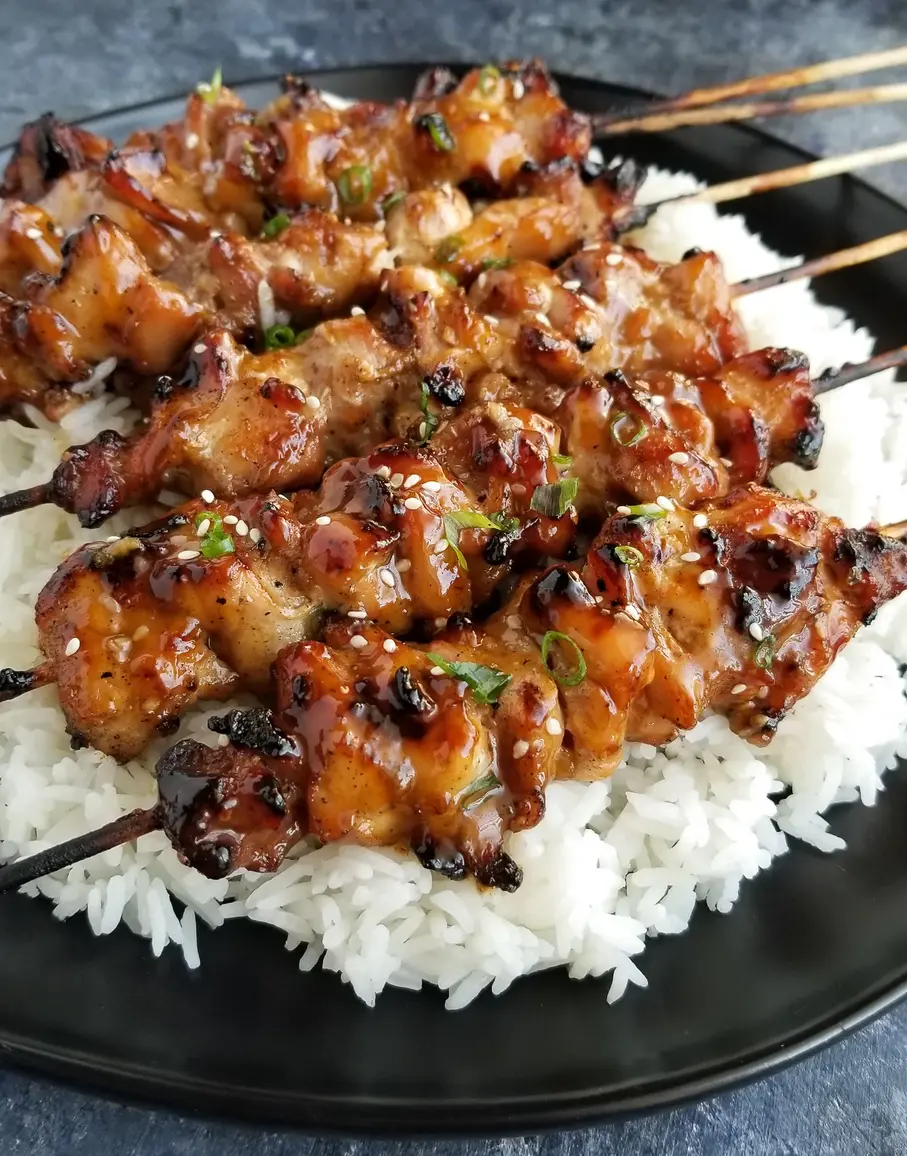
Imagine pulling a skewer off the grill: the chicken is charred at the edges, glistening with a dark, caramelized teriyaki glaze. The aroma of soy, ginger, and garlic mingles with the faint smokiness from the grill. When you take a bite, the chicken is incredibly tender and juicy, the sauce coating your lips with that irresistible blend of sweet brown sugar and savory soy. The sesame seeds add a nutty crunch, while the sliced green onions provide a fresh, sharp contrast. It’s a dish that sings with umami, and it’s deceptively simple to pull off.
This isn’t just any skewer recipe. As a trained chef, I’ve tested this a dozen times to get the sauce consistency just right — not too thin, not a sticky brick. My secret? A touch of rice vinegar and honey in the sauce balances the soy and brown sugar beautifully. The biggest common mistake people make is skipping the cornstarch slurry, which gives the sauce that signature cling. But don’t worry, I’ll walk you through every step. And if you’re short on time, I’ll share a 💡 emy’s Pro Tip for speeding up the marinade without losing flavor.
Why This Teriyaki Chicken Skewers Recipe Is the Best
The Flavor Secret: This recipe uses a homemade teriyaki sauce that’s deeply savory with a perfect hit of sweetness. My French training taught me the art of reduction, so I simmer the sauce until it lightly coats a spoon — not too thick, but with just enough body to stick to the meat. The ginger and garlic are fresh, not powdered, which makes all the difference. It’s a sauce that tastes complex but comes together in one saucepan.
Perfected Texture: The key to juicy chicken skewers is not just the marinade but the cooking method. I grill them over medium heat, turning every 3–4 minutes, which allows the chicken to cook through without burning the sugars in the sauce. By basting with reserved sauce during the last few turns, you get that sticky, caramelized exterior while the inside stays moist. This technique, straight from my Parisian sauce training, ensures every bite is perfect.
Foolproof & Fast: Even for a beginner, this recipe is forgiving. The chicken marinates in just 30 minutes (though longer is better), and the grilling time is precise. I’ve designed this to be a weeknight dinner that feels special. The sauce can be made ahead, and the skewers cook quickly. Plus, the cleanup is minimal — it’s all done on one grill and in one saucepan.
Teriyaki Chicken Skewers Ingredients
I source my chicken thighs from the Union Square Greenmarket, where the pasture-raised birds have so much more flavor. The soy sauce I always keep on hand is a good-quality low-sodium brand from a Japanese market near my Brooklyn apartment — it’s richer without being too salty. The ginger and garlic I buy fresh from my local produce stand, because they really make the sauce sing. It reminds me of the bustling spice souks in Marrakech, where every ingredient is chosen for its peak potency.
Ingredients List
2 lbs. chicken thighs (or breasts), cut into 1-inch cubes
2 tbsp cornstarch
1 cup water
1/3 cup brown sugar
1/3 cup low-sodium soy sauce (recommended)
2 cloves garlic, minced
1 tbsp rice vinegar
1/2 tbsp fresh ginger, minced
1 tbsp honey
1/2 tsp sesame oil
8 skewers (soaked in water for 30 minutes if wooden)
Sesame seeds, for garnish (optional)
Chopped green onions, for garnish
Ingredient Spotlight
Chicken Thighs: They are more forgiving than breasts and stay juicy even when marinated and grilled. Look for boneless, skinless thighs for easy cubing. If you use breasts, reduce cooking time by a few minutes to avoid drying them out.
Low-Sodium Soy Sauce: This is critical for controlling the saltiness of the sauce. If you only have regular soy sauce, reduce it slightly or add a touch more water. In a pinch, tamari works beautifully for a gluten-free option.
Fresh Ginger: Never substitute dried ginger here. The fresh kind provides a bright, peppery warmth that is essential to a true teriyaki flavor. Peel it with a spoon and mince it finely. I keep a knob in the freezer for easy grating.
Original Ingredient
Best Substitution
Flavor / Texture Impact
Chicken Thighs
Chicken Breast (cubed)
Slightly leaner, can be drier if overcooked; reduce cooking time by 5-10 minutes.
Low-Sodium Soy Sauce
Tamari (gluten-free) or Coconut Aminos
Tamari is nearly identical; coconut aminos are slightly sweeter and less salty — reduce sugar by 1 tbsp.
Brown Sugar
Honey or Maple Syrup
Honey adds floral notes; maple syrup gives a woodsy sweetness. Both may make the sauce slightly thinner — simmer a minute longer.
How to Make Teriyaki Chicken Skewers — Step-by-Step
This process is so straightforward, you’ll wonder why you ever bought bottled teriyaki sauce. Let’s make the most incredible grilled chicken skewers at home, starting with the heart of the recipe: the sauce.
Step 1: Make the Teriyaki Sauce
In a small bowl, whisk together 2 tbsp cornstarch and 1 cup water until smooth. In a medium saucepan, combine the cornstarch mixture with 1/3 cup brown sugar, 1/3 cup low-sodium soy sauce, 2 minced garlic cloves, 1 tbsp rice vinegar, 1/2 tbsp fresh minced ginger, 1 tbsp honey, and 1/2 tsp sesame oil. Stir everything together. Place the saucepan over medium heat and bring it to a simmer, stirring frequently. You’ll see the mixture begin to darken and thicken after about 3-4 minutes. Once it’s thick enough to lightly coat the back of a spoon (like a syrup), remove from heat. Let the sauce cool completely — you can speed this up by placing the pan in the fridge for 15 minutes.
💡 emy’s Pro Tip: To avoid lumps in your sauce, make sure the cornstarch is fully dissolved in the cold water before adding it to the hot pan. A whisk is your best friend here!
Step 2: Marinate the Chicken
Once the sauce is completely cool, place your 2 lbs. of cubed chicken thighs into a large ziplock bag. Pour half of the cooled teriyaki sauce over the chicken (about 1/2 cup). Seal the bag and gently shake to coat every piece evenly. Place the bag in the refrigerator and let the chicken marinate for at least 30 minutes. Reserve the remaining sauce in a sealed container and set it aside — you’ll use it for basting later.
⚠️ Common Mistake to Avoid: Never marinate with warm or hot sauce. It will partially cook the chicken and make the texture rubbery. Always let the sauce cool completely, even if you have to speed-chill it in the freezer for 10 minutes.
Step 3: Skewer and Prep the Grill
When the chicken is done marinating, thread the cubes onto 8 skewers. Don’t pack them too tightly — leave a tiny gap between pieces to allow for even cooking. Preheat your grill to medium heat (about 350°F to 375°F). Lightly oil the grill grates using a paper towel soaked in vegetable oil and held with tongs. This prevents sticking and helps you get those beautiful grill marks.
💡 emy’s Pro Tip: If using wooden skewers, soak them in water for at least 30 minutes before threading the chicken. This prevents them from catching fire on the grill. You can also use metal skewers — just cut the chicken into slightly larger cubes so they don’t fall off.
Step 4: Grill and Baste
Place the skewers on the hot, oiled grill. Cook for 20-30 minutes total, turning them every 3-4 minutes to ensure all sides get even heat and those beautiful char marks. The chicken is done when an internal thermometer reads 165°F. During the last 5-6 minutes of grilling, brush each skewer generously with the reserved teriyaki sauce. This final basting is what gives them that irresistible, sticky glaze.
⚠️ Common Mistake to Avoid: Don’t baste with the sauce too early! The sugar in the sauce will burn and turn bitter if it’s exposed to direct high heat for too long. Always reserve the basting for the last 5-6 minutes of cooking.
Step 5: Rest and Serve
Remove the skewers from the grill and let them rest for 2-3 minutes on a cutting board. This allows the juices to redistribute. Arrange the skewers on a serving platter, then sprinkle with sesame seeds and chopped green onions. Serve immediately over steamed rice with extra sauce on the side, if you like.
Step
Action
Duration
Key Visual Cue
1
Make Sauce
10 mins
Sauce darkens & coats spoon
2
Marinate Chicken
30+ mins
Chicken is evenly coated
3
Skewer & Grill
20-30 mins
Char marks, internal temp 165°F
4
Rest & Serve
3 mins
Juices settle, glaze sets
Serving & Presentation
I love serving these Teriyaki Chicken Skewers family-style on a large wooden board, like the one I picked up at the Brooklyn Flea market. The contrast of the dark, glossy chicken against the white sesame seeds and bright green onions is stunning. For a complete meal, I pile the skewers on a bed of fluffy steamed jasmine rice, which soaks up any extra sauce. A side of quick-pickled cucumber salad — a nod to the fresh salads my mother made in Morocco — adds a bright, acidic contrast to the rich chicken.
For a summer cookout, I thread the chicken onto skewers and serve them with grilled pineapple wedges and a cold soba noodle salad. The sweetness of the pineapple echoes the sauce, and the nutty soba noodles are a perfect canvas for a miso-ginger dressing. If you want to go full NYC fusion, serve them with a side of miso-glazed eggplant or crispy rice paper rolls. And don’t forget a big squeeze of fresh lime over everything just before serving — it brightens the whole plate.
Sesame seeds, sliced green onions, pickled ginger, lime wedges
Adds crunch, freshness, and acidity to balance the rich glaze.
Make-Ahead, Storage & Reheating
As a busy NYC mom and food blogger, I rely on make-ahead meals to keep my week running smoothly. This Teriyaki Chicken Skewers recipe is perfect for that. I often make the sauce on Sunday and marinate the chicken overnight (or even for 24 hours for deeper flavor). Then on a weeknight, all I have to do is skewer and grill. It’s a lifesaver when I’m rushing to get dinner on the table after a long day.
Method
Baked Parmesan Zucchini Fries
Table of Contents
Baked Parmesan Zucchini Fries: Extra Crispy & Cheesy – The Best Way to Eat Your Veggies!
⚖️
Difficulty
Easy
⏲️
Prep Time
15 mins
🕒
Cook Time
20 mins
⏱️
Total Time
35 mins
🍽️
Servings
4
I still remember the first time I made these Baked Parmesan Zucchini Fries in my tiny Parisian apartment, fresh out of culinary school. I was homesick for Morocco, missing my mother’s vegetable tagine, and craving something — anything — that felt like home. But I had a pile of summer zucchini from the market and a block of real Parmesan. That night, I created a recipe that blended my French training in breading technique with the bold, cheesy comfort I grew up loving. These Baked Parmesan Zucchini Fries became an instant staple: crispy, golden, and absolutely irresistible. They are not just another vegetable side dish — they’re the star of the table.
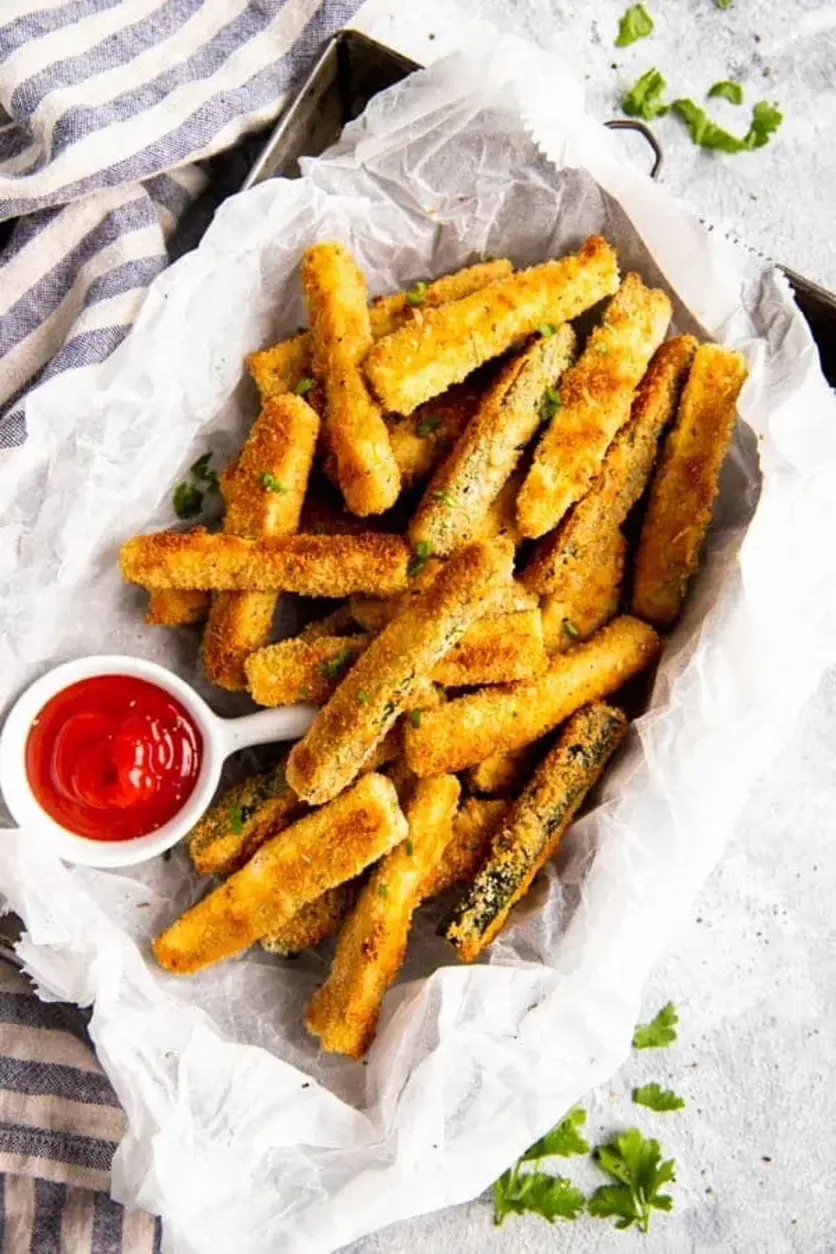
Imagine this: you bite through a perfectly crispy, golden-brown crust that shatters slightly, giving way to a tender, sweet zucchini interior. The Parmesan adds a nutty, salty depth that lingers on your tongue, while the Italian seasoning whispers of oregano and basil. There’s no sogginess here — just pure, satisfying crunch. The key is in the three-step breading process I learned in Paris: a light flour dusting to seal in moisture, a quick dip in egg to bind, and a thick, generous coating of Parmesan-spiked breadcrumbs that bakes into a shatteringly crisp shell. Each fry is a contrast of textures and a celebration of simple, honest ingredients.
Now, cooking in my New York City kitchen, I’ve perfected this recipe for busy weeknights and entertaining alike. My version is foolproof because I’ve tested every variable: the oven temperature, the breadcrumb-to-cheese ratio, and the trick to avoiding sticky pans. Here’s my promise: no silicone mats, no parchment paper that steals your crunch. Just a well-oiled sheet pan and a chef’s know-how. I’ll share my pro tip for the crispiest results and the common mistake that ruins most homemade zucchini fries. Get ready to make the best Baked Parmesan Zucchini Fries of your life — crispy, cheesy, and baked to perfection.
Why This Baked Parmesan Zucchini Fries Recipe Is the Best
The flavor secret here is the double dose of Parmesan — I use it both in the breadcrumb mixture and as a finish. This isn’t just a sprinkle on top; it’s a core component that melts and browns into a craggy, golden crust. Growing up in Morocco, I learned that cheese, when used properly, elevates any dish from simple to spectacular. Here, the Parmesan brings a savory, umami kick that zucchini, a naturally mild vegetable, absolutely craves. Combined with garlic powder and Italian seasoning, every fry is packed with flavor from the inside out.
Perfected texture is my obsession, and this recipe delivers because of a technique I mastered in Parisian pastry kitchens: the three-step breading method. First, a thin coating of seasoned flour creates a dry surface for the egg to cling to. Then, the egg wash acts as glue. Finally, the breadcrumb-Parmesan mixture provides a thick, crunchy armor. The flour prevents the zucchini from releasing too much moisture during baking, which is the #1 cause of soggy fries. I also insist on baking at a high 425°F, which creates steam that escapes quickly, leaving a crisp exterior and tender interior — never mushy.
This recipe is foolproof and fast because it requires only 20 minutes of baking time and uses basic pantry staples. I designed it for the home cook who wants impressive results without deep-frying. You don’t need any special equipment — just a sheet pan and three shallow dishes. Plus, it’s naturally gluten-free adaptable (I’ll show you how) and can be prepped ahead for parties. Whether you’re a novice or a seasoned cook, these Baked Parmesan Zucchini Fries will come out perfectly every time. Trust me — I’ve made them dozens of times for my NYC food blog readers, and the feedback is unanimous: they’re the best.
Baked Parmesan Zucchini Fries Ingredients
I love sourcing my ingredients from the Union Square Greenmarket in NYC, especially during summer when zucchini is at its peak. My mother in Morocco always said the best dishes start with the freshest produce — and here, the star is the humble zucchini. I pair it with good-quality Parmesan, which I grate myself from a block (the pre-grated stuff just doesn’t melt the same way). For the breadcrumbs, I use plain panko-style for extra crunch, a trick I picked up from a French chef who insisted on texture in every dish. Let’s gather what you’ll need.
Ingredients List
cooking spray OR oil (for the pan)
1/3 cup flour
1/2 teaspoon garlic powder
1/4 teaspoon salt
1 large egg
3/4 cup breadcrumbs (panko preferred)
1/3 cup grated Parmesan cheese
1 tablespoon Italian seasoning
1/2 teaspoon garlic powder (for breadcrumb mix)
1/4 teaspoon salt (for breadcrumb mix)
ground black pepper (to taste)
1 pound zucchini (cut into 1/2-inch sticks)
Ingredient Spotlight
Zucchini is the foundation. Look for firm, medium-sized zucchini with shiny skin — avoid giant ones that are watery and seedy. The flour acts as a moisture barrier, crucial for crispiness. I use all-purpose, but you can substitute with rice flour for a gluten-free option; it works beautifully because it creates a very light, crunchy coating. The Parmesan is the MVP — always use freshly grated Parmigiano-Reggiano from a block, not the canister. It melts evenly and has a far superior flavor. For a dairy-free alternative, use nutritional yeast combined with finely ground almonds, but expect a different, still delicious, nutty profile. Finally, the breadcrumbs: panko gives the crispiest result; if you only have regular breadcrumbs, the texture will be less crunchy but still good.
Original Ingredient
Best Substitution
Flavor / Texture Impact
All-purpose flour
Rice flour or cornstarch
Gluten-free; lighter, crispier coating; no flavor change
Parmesan cheese
Nutritional yeast + almond flour (dairy-free)
Nutty, cheesy flavor; less melting; slightly different texture
Panko breadcrumbs
Regular breadcrumbs or crushed pork rinds (low-carb)
Less crunchy with regular crumbs; pork rinds add extra crisp and savory flavor
Italian seasoning
Dried oregano + dried basil + dried thyme mixed
Very similar; customize herb intensity to taste
Large egg
Buttermilk or plain yogurt (thinned)
Similar binding; buttermilk adds tang; yogurt makes coating slightly thicker
How to Make Baked Parmesan Zucchini Fries — Step-by-Step
Making these fries is easier than you think. I’ve broken it down into simple steps so you can follow along without any fuss. Remember, the key is organization: set up your breading station like a pro, and you’ll have crispy, golden fries in no time.
Step 1: Prep the Oven and Pan
Preheat your oven to 425°F. Coat a large baking sheet generously with cooking spray or a thin layer of oil. I recommend using a light-colored, heavy-gauge sheet pan for even browning. For easy cleanup, you can line the pan with aluminum foil, but be aware that the fries may be slightly less crispy than directly on the oiled metal. Do NOT use silicone baking mats or parchment paper — I’ve tested both, and they trap steam, resulting in soggy, sad fries.
💡 emy’s Pro Tip: For the crispiest results, place the prepared baking sheet in the oven while it preheats. The hot oil will immediately start crisping the bottom of the fries once they hit the pan.
Step 2: Set Up Your Breading Station
In a shallow dish or a large zip-loc bag, combine the flour, 1/2 teaspoon garlic powder, and 1/4 teaspoon salt. In a second shallow dish, beat the egg until frothy. In a third shallow dish (I love using a 7×11 baking pan for this), mix the breadcrumbs, Parmesan, Italian seasoning, remaining 1/2 teaspoon garlic powder, 1/4 teaspoon salt, and a generous grind of black pepper. Arrange them in order: flour, egg, breadcrumbs.
⚠️ Common Mistake to Avoid: Don’t skip the flour step! Many recipes skip it, but this is what prevents the egg from making the zucchini soggy. Without the flour, the moisture from the zucchini will seep through and ruin your crisp coating.
Step 3: Coat the Zucchini Fries
Working with a few zucchini sticks at a time, first toss them in the flour mixture until lightly coated. Shake off any excess. Then dip each floured stick into the beaten egg, letting any excess drip off. Finally, press them firmly into the breadcrumb mixture, turning to coat thickly on all sides. Place the coated fries on the prepared baking sheet in a single layer, not touching.
💡 emy’s Pro Tip: Use one hand for the wet ingredients (egg) and one hand for the dry (flour and breadcrumbs) to keep your hands from getting clumpy. This mess-free French technique speeds up the whole process!
Step 4: Bake to Crispy Perfection
Bake the zucchini fries for 20 minutes total, turning them once halfway through. Use an offset spatula to carefully flip each fry — if you used enough oil, they shouldn’t stick. If they do, don’t rip them away; gently loosen them with the spatula. They are done when golden brown and crispy on the outside, with a tender interior. Serve immediately with your favorite dipping sauce.
⚠️ Common Mistake to Avoid: Overcrowding the pan! If the fries are too close together, they’ll steam instead of bake, leading to a soft, un-crisp texture. Use two pans if necessary, or bake in batches.
Step
Action
Duration
Key Visual Cue
1
Prep oven & pan
5 mins
Preheated to 425°F, pan oiled
2
Set up breading station
5 mins
Three shallow dishes in order
3
Coat zucchini fries
10 mins
Evenly coated, no bare spots
4
Bake & flip
20 mins
Golden brown, crispy, slightly puffed
Serving & Presentation
These Baked Parmesan Zucchini Fries are best served immediately, fresh from the oven, while they’re still wonderfully crisp. I like to pile them on a large wooden platter or a white serving board for contrast — it reminds me of the rustic tables at my mother’s home in Morocco. For a touch of NYC sophistication, I garnish with a sprinkle of flaky sea salt, a few fresh basil leaves, and a light dusting of extra grated Parmesan. The visual appeal is irresistible: golden-brown sticks with flecks of green herbs and melted cheese.
As for pairings, these fries are incredibly versatile. In my Parisian-trained mind, they’re a perfect side for a grilled steak or a roasted chicken. But in my NYC weeknight reality, I love them alongside a juicy burger or a simple salad with a tangy vinaigrette. For dips, you can’t go wrong with classic marinara sauce, creamy ranch, or a spicy sriracha mayo. I also love a cool, herbed yogurt dip — a nod to the Middle Eastern and North African flavors of my childhood. No matter how you serve them, they’ll disappear fast.
Not just another vegetable side dish: Crispy Baked Parmesan Zucchini Fries are the best way to make this summer star!
Ingredients
Scale
cooking spray OR oil
1/3 cup flour
1/2 teaspoon garlic powder
1/4 teaspoon salt
1 large egg
3/4 cup breadcrumbs
1/3 cup grated Parmesan cheese
1 tablespoon Italian seasoning
1/2 teaspoon garlic powder
1/4 teaspoon salt
ground black pepper (to taste)
1 pound zucchini (cut into 1/2-inch sticks)
Instructions
Prep: Preheat the oven to 425°Coat a baking sheet with oil or cooking spray (you can line it with aluminum foil for easier clean up, the fries could turn out a little less crispy though – do NOT use silicone baking mats or parchment, or the fries will be soggy).
Prepare breading: Mix all ingredients for the flour mix in a shallow dish OR in a large zip-loc bag. Place the egg in a separate shallow dish and beat well. Mix all ingredients for the parmesan breadcrumbs in a third shallow dish – I like using a 7×11 baking pan.
Coat zucchini: Thinly coat the zucchini fries first with the flour mix, then coat with beaten egg. Finally, thickly coat with the breadcrumb mix.
Bake: Bake on the prepared baking sheet for 20 minutes, or until crispy, turning once. If the zucchini sticks to the pan, don't just rip it away – use an offset spatula to loosen it (if you use enough oil or cooking spray, it will not stick). Serve immediately with your favorite dips.
Skillet Zucchini and Mushrooms
Table of Contents
Skillet Zucchini and Mushrooms – Seared to Perfection
⚖️
Difficulty
Easy
⏲️
Prep Time
10 mins
🕒
Cook Time
20 mins
⏱️
Total Time
30 mins
🍽️
Servings
4
My mother’s kitchen in Morocco always smelled like sizzling butter and warm spices, and this skillet zucchini and mushrooms with a perfectly seared finish brings me right back to those golden afternoons. Growing up, vegetables were never an afterthought—they were the centerpiece of many meals, often cooked low and slow with aromatic herbs. When I moved to New York City after my classical training in Paris, I knew I wanted to create a quick side dish that captured that same soulful depth. This recipe does exactly that: it’s the sauteed mushrooms and zucchini my family craves on busy weeknights, and it comes together in under 30 minutes.
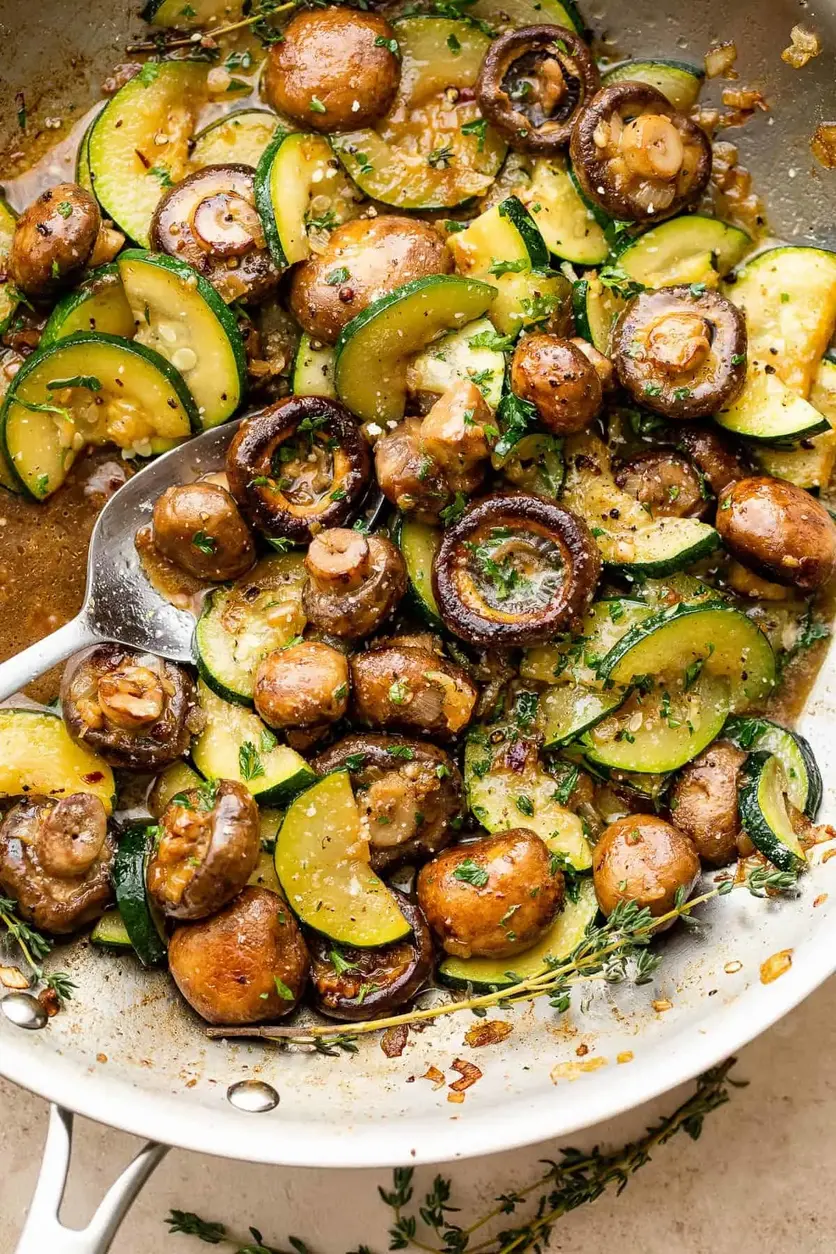
The beauty of this dish lies in the contrast—the zucchini stays tender but never mushy, while the mushrooms develop those deep, nutty, browned edges that make you want to eat them straight from the pan. A silky butter sauce, fragrant with garlic and fresh herbs, coats every piece. The aroma that fills your kitchen is pure comfort: earthy, savory, with just a whisper of sweetness from the onions. I love serving this alongside a simple roast chicken or grilled fish, but honestly, I’ve eaten it straight from the skillet as a light supper more times than I can count.
What makes my version different is a two-step cooking method I learned during my pastry and sauce work in Paris. By searing the zucchini first and setting it aside, then browning the mushrooms in plenty of butter, each vegetable keeps its distinct texture and flavor. You avoid the dreaded soggy zucchini or rubbery mushroom. This foolproof technique, combined with a splash of vegetable broth at the end to create a quick pan sauce, ensures a restaurant-quality result every time. 💡 emy’s Pro Tip: Pat your mushrooms completely dry before cooking—any moisture will prevent that gorgeous golden browning.
Why This Skillet Zucchini and Mushrooms Recipe Is the Best
The flavor secret here is the marriage of butter and olive oil. I start with a touch of olive oil for its high smoke point, then finish with butter for that rich, nutty, unmistakable French-style finish. It’s a technique I rely on in my NYC kitchen every day, and it transforms simple zucchini and mushrooms into something truly crave-worthy. The garlic is added at the very end—just 20 seconds—so it perfumes the dish without turning bitter.
Perfected texture comes from the sear-and-set-aside method. By cooking the zucchini slices until they’re fork-tender but still hold their shape, then returning them only at the end to heat through, you avoid overcooking. The mushrooms get their own time in the pan to release their moisture and then brown deeply. This is a classic chef’s trick for multi-vegetable sautés, and it works every single time.
This recipe is foolproof and fast, even for beginner cooks. You don’t need any special equipment—just a large skillet and a knife. The steps are straightforward, the timing is forgiving, and the result is consistently delicious. Plus, it’s endlessly adaptable: throw in whatever herbs you have, swap the broth for white wine, or add a pinch of red pepper flakes for heat. It’s the kind of recipe you’ll memorize after making it once.
Sauteed Mushrooms and Zucchini Ingredients
I pick up my zucchini and mushrooms at the Union Square Greenmarket in NYC, where the summer squash is always firm and glossy, and the button mushrooms are earthy and fresh. The smell of the market in July—tomato vines, basil, and damp soil—reminds me of the souks in Marrakech. For the best results, choose ingredients that look and feel vibrant.
Ingredients List
1 tablespoon olive oil
3 tablespoons butter (divided)
2 small zucchini (cut into thin, half moon slices)
Salt and black pepper (to taste)
1 small yellow onion (finely diced)
1 pound small button mushrooms (cleaned and patted dry)
3 to 4 cloves garlic (minced)
2 teaspoons fresh chopped herbs (or 1 teaspoon dried herbs; thyme and oregano are great)
¼ cup vegetable broth
Chopped fresh parsley (for garnish)
Grated parmesan (for garnish, optional)
Ingredient Spotlight
Zucchini: This is the star summer squash that gives the dish its tender, mild backbone. Look for small to medium zucchini that feel heavy for their size, with shiny, unblemished skin. If your zucchini is larger, it may be watery—halve it lengthwise and scoop out the seeds before slicing. In a pinch, yellow summer squash works perfectly and adds a pretty color contrast.
Button Mushrooms: These little umami bombs are the earthier half of the duo. Choose firm, white or tan mushrooms with closed caps—that’s a sign of freshness. Never wash them under running water; they’ll absorb moisture and steam instead of brown. Instead, wipe them clean with a damp paper towel. Cremini mushrooms are a great substitute if you want a deeper, meatier flavor.
Butter: This is the backbone of the rich, silky sauce. I use unsalted butter so I can control the salt level. During my pastry training in Paris, I learned to use good-quality butter—it makes a real difference. If you need a dairy-free option, use a high-quality vegan butter or substitute all olive oil (about 3 tablespoons total), though the flavor will be less rich.
Fresh Herbs: Thyme and oregano are my go-to for this dish—they’re robust enough to stand up to the mushrooms without overwhelming the zucchini. If you’re using dried herbs, add them with the garlic, as they need heat to release their oils. A mix of fresh parsley, chives, or even a pinch of dried basil also works beautifully.
Original Ingredient
Best Substitution
Flavor / Texture Impact
Zucchini
Yellow summer squash
Similar texture; slightly sweeter flavor. No adjustment needed.
Button mushrooms
Cremini or baby bella mushrooms
Deeper, earthier flavor. Same cooking time.
Butter
Vegan butter or olive oil
Less rich and creamy. Use 3 tbsp olive oil if omitting butter entirely.
Vegetable broth
Dry white wine or chicken broth
Wine adds acidity and complexity; chicken broth adds richness.
How to Make Skillet Zucchini and Mushrooms — Step-by-Step
This recipe is so straightforward you’ll memorize it after one go. Follow these steps for perfect results every time.
Step 1: Sear the Zucchini
Add olive oil and 1/2-tablespoon butter to a large skillet over medium-high heat. Once the butter foams, add the zucchini slices in a single layer if possible. Season with salt and pepper. Cook for 3 to 4 minutes, flipping once halfway, until they’re tender and lightly golden on the edges. Remove the zucchini to a plate and set aside. If there’s any liquid in the skillet, carefully wipe it out with a paper towel.
💡 emy’s Pro Tip: Don’t overcrowd the skillet. If your pan is small, cook the zucchini in two batches. Crowding lowers the temperature and causes steaming instead of searing.
Step 2: Sauté the Onions
Return the skillet to the burner and add the remaining 2.5 tablespoons of butter. Melt over medium-high heat. Stir in the finely diced yellow onion and cook for 2 minutes, until just softened and translucent. The butter will start to smell nutty.
⚠️ Common Mistake to Avoid: Don’t let the onions brown too deeply at this stage. They should soften but remain pale—they’ll continue cooking with the mushrooms.
Step 3: Brown the Mushrooms
Add the cleaned and patted-dry button mushrooms to the skillet. Cook for 5 to 7 minutes, stirring occasionally, until they release their moisture and then begin to brown nicely. The mushrooms will shrink and develop deep golden patches. This is where the real flavor builds.
💡 emy’s Pro Tip: Patience is key here. Let the mushrooms sit undisturbed for a minute or two between stirs to encourage browning. If you stir constantly, they’ll steam.
Step 4: Add Garlic and Herbs
Stir in the minced garlic and your chopped fresh herbs (or dried herbs). Cook for just 20 seconds, stirring constantly, until fragrant. Garlic burns quickly, so keep a close eye on it.
Step 5: Combine and Finish
Return the reserved zucchini to the skillet. Gently mix everything together and cook for 1 minute, until the zucchini is heated through. Pour in the vegetable broth and let it bubble for 2 minutes, scraping up any browned bits from the bottom of the pan. Taste and adjust salt and pepper. Remove from heat. Sprinkle generously with fresh parsley and grated parmesan if desired. Serve immediately.
Step
Action
Duration
Key Visual Cue
1
Sear zucchini
3–4 mins
Lightly golden edges, fork-tender
2
Sauté onions
2 mins
Softened and translucent
3
Brown mushrooms
5–7 mins
Deep golden patches, moisture released
4
Add garlic & herbs
20 seconds
Fragrant, garlic is pale
5
Combine & finish
3 mins
Broth bubbles, zucchini hot
Serving & Presentation
I love serving this skillet zucchini and mushrooms in a wide, shallow bowl so the buttery sauce pools at the bottom. A generous sprinkle of fresh parsley and a shower of grated parmesan add color and a salty, savory finish. It’s the kind of side dish that looks rustic and elegant at once—perfect for a weeknight dinner or a holiday table.
This dish pairs beautifully with so many mains. I often serve it alongside a simple roasted chicken, grilled salmon, or a seared steak. It also works wonderfully as a topping for creamy polenta, tossed with pasta, or spooned over crusty bread for a light vegetarian meal. A squeeze of lemon juice just before serving brightens everything up.
The mild, buttery vegetables complement rich proteins without overpowering them.
Sauce / Dip
Spoon over creamy polenta, toss with pasta, serve on crusty bread
The pan sauce soaks into carbs, making the dish a satisfying vegetarian main.
Beverage
Crisp Sauvignon Blanc, dry rosé, or a light lager
Acidity in wine cuts the butter; a light beer refreshes the palate.
Garnish
Fresh parsley, grated parmesan, lemon zest, red pepper flakes
Adds freshness, saltiness, brightness, or heat to balance richness.
Make-Ahead, Storage & Reheating
I love meal-prepping this side for my busy NYC week. It stores beautifully, and with the right reheating method, it tastes almost as good as fresh. Here’s how I handle it.
Method
Container
Duration
Reheating Tip
Refrigerator
Airtight container
3–4 days
Reheat in a skillet over medium heat with a splash of broth or water. Cover for 1 minute to steam, then uncover to crisp the edges.
Freezer
Freezer-safe airtight container
Up to 2 months
Thaw overnight in the fridge, then reheat in a skillet. Texture will be softer; best used in pasta or omelets.
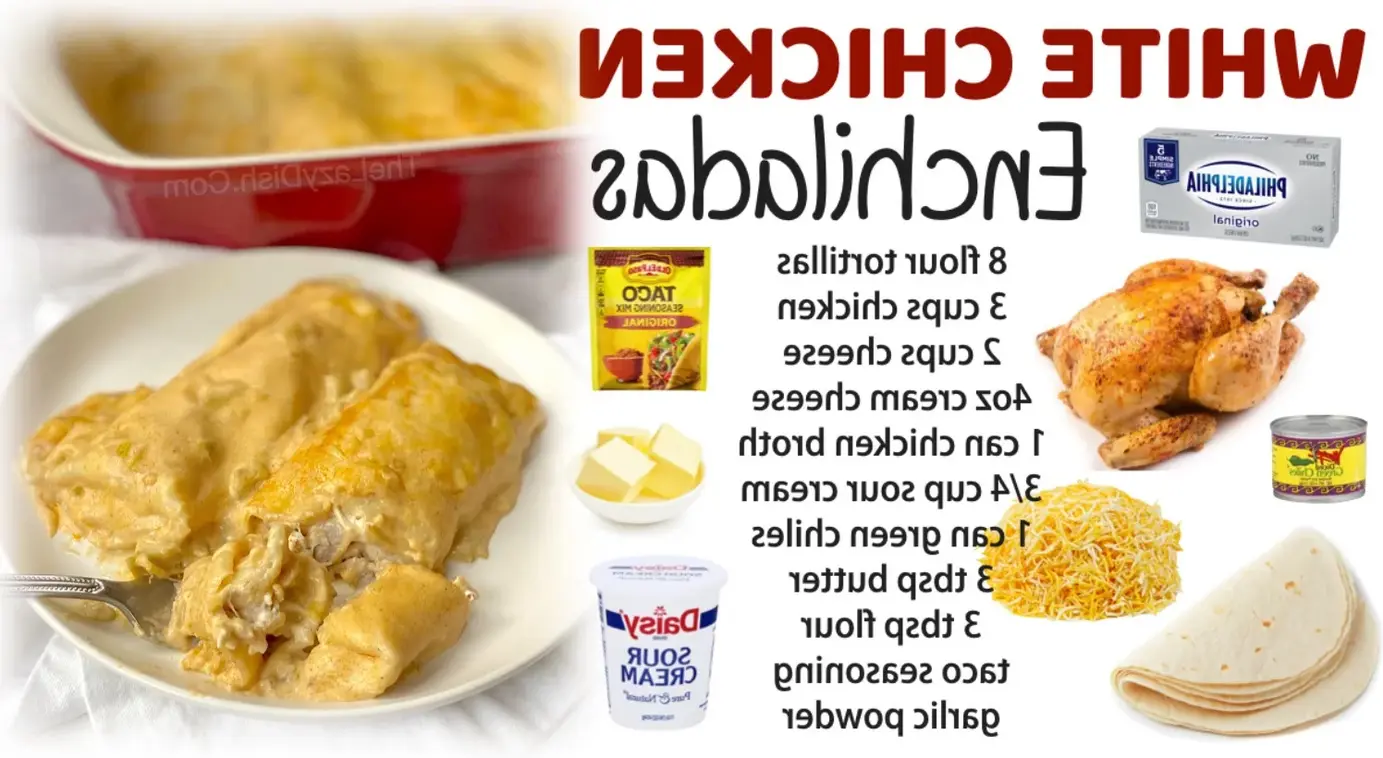
Easy Creamy White Chicken Enchiladas
Table of Contents
Easy Creamy White Chicken Enchiladas – A Quick Dinner Saver
⚖️
Difficulty
Easy
⏲️
Prep Time
15 mins
🕒
Cook Time
25 mins
⏱️
Total Time
40 mins
🍽️
Servings
8 enchiladas
Are you looking for quick and easy dinner recipes that your whole family will actually devour? These Easy Creamy White Chicken Enchiladas are my go-to for those chaotic weeknights when I need something fast, comforting, and utterly delicious. Growing up in Morocco, my mother taught me that the best meals don’t have to be complicated—they just need to be made with love and the right shortcuts. Now that I’m a busy NYC food blogger and mom, I rely on rotisserie chicken for this dish, and it never fails. The magic of these cream cheese chicken enchiladas lies in their simplicity: a handful of pantry staples come together to create a rich, creamy sauce that tastes like you’ve been simmering it for hours. I first made this version after a long day at the Union Square farmers market, craving something that felt like a warm hug. Trust me, this is the kind of meal that makes picky eaters ask for seconds.
I’ll never forget the first time I made these for a dinner party in my tiny Parisian apartment. My French-trained chef instructor would be proud—I took a classic Mexican-inspired dish and gave it a creamy, decadent twist that feels both familiar and elevated. The aroma of the white sauce, with garlic powder and taco seasoning, fills your kitchen with a promise of something special. Each bite is a perfect harmony: the tender, shredded chicken folded into a creamy filling, all wrapped in a soft flour tortilla and blanketed with a luscious, velvety white sauce. The Monterey Jack cheese melts into bubbly golden pockets on top, while the diced green chiles add a subtle, earthy heat that balances the richness beautifully. It’s the kind of dinner that makes everyone at the table pause and smile, even after a long day.
What sets my Easy Creamy White Chicken Enchiladas apart is the technique I learned in culinary school—building a simple roux with butter and flour to create a perfectly smooth, thick white sauce without any heavy cream. This French method ensures your sauce clings to every enchilada without getting runny or separating. I also use a generous amount of cream cheese mixed directly into the chicken, which adds a tangy richness that you just can’t get from other recipes. My special secret? A single tablespoon of taco seasoning—not the whole packet—that adds depth without overpowering. If you’ve ever struggled with soggy enchiladas or a watery sauce, I’ll show you exactly how to avoid those pitfalls. Whether you’re a beginner cook or a seasoned home chef, these enchiladas are foolproof and ready in about 40 minutes from start to finish.
Why This Easy Creamy White Chicken Enchiladas Recipe Is the Best
The Flavor Secret: The combination of cream cheese and Monterey Jack cheese is pure genius. The cream cheese, softened and mixed directly into the chicken, brings a tangy creaminess that makes the filling irresistible. It’s a trick I picked up from a pastry chef in Paris, where they taught me to incorporate soft cheeses into savory bakes for body and flavor. Unlike many recipes that rely on heavy cream or canned soup, this white sauce is made from scratch with a simple roux, chicken broth, sour cream, and green chiles. The result is a sauce that’s rich, smooth, and deeply flavorful, with just the right amount of zip from the chiles and taco seasoning.
Perfected Texture: The key to flawless enchiladas is avoiding that dreaded soggy bottom. By mixing the cream cheese directly into the chicken (instead of melting it into the sauce), you get a firm, cohesive filling that holds its shape. The sauce, thickened with the roux, clings beautifully to the tortillas without making them mushy. When you bake them, the tortillas stay perfectly tender, and the cheese on top melts into a bubbling, golden crust. It’s the kind of texture that makes you want to eat every last bite with a spoon—no sad, water-logged enchiladas here!
Foolproof & Fast: This recipe is practically my MVP for weeknight dinners. Because we use rotisserie chicken, there’s zero effort involved—just shred, mix, and roll. The sauce comes together in a single saucepan in under 10 minutes, while you’re prepping the tortillas. Everything bakes in a 9×13 dish, making cleanup a breeze. I’ve tested this dozens of times for my NYC cooking classes, and even kids can manage the rolling part with a little guidance. Whether you’re feeding a crowd on a Tuesday or meal-prepping for the week, these enchiladas deliver on taste, texture, and speed every single time.
Easy Creamy White Chicken Enchiladas Ingredients
I always pick up my ingredients from the Fairway market on the Upper West Side—they have the best rotisserie chickens and fresh peppers. The beauty of this recipe is that most items are pantry staples you probably already have on hand. Let me walk you through everything you’ll need.
Ingredients List
8 flour tortillas (soft taco size)
3 cups shredded chicken (I use Rotisserie)
2 cups shredded Monterey Jack cheese (or pepper jack)
4 ounces softened cream cheese
2 tsp garlic powder
3 tbsp butter
3 tbsp flour
1 tbsp taco seasoning (NOT the whole packet)
1 (14.5oz) can of chicken broth (2 cups)
3/4 cup sour cream
1 (4oz) can of diced green chiles
Ingredient Spotlight
Monterey Jack cheese is my top choice for this recipe because it melts beautifully and has a mild, buttery flavor that lets the cream cheese and seasonings shine. If you want a little more kick, swap in pepper jack for a spicy twist. Cream cheese is non-negotiable here—it’s what gives the filling that luscious, tangy richness. Make sure it’s softened to room temperature so it blends smoothly with the chicken. Rotisserie chicken is my ultimate shortcut for quick weeknight meals, but leftover cooked chicken or shredded turkey works just as well. As for the flour, all-purpose is fine, but if you’re gluten-free, a 1:1 gluten-free flour blend works beautifully in the roux.
Original Ingredient
Best Substitution
Flavor / Texture Impact
Monterey Jack cheese
Pepper jack or cheddar
Adds heat (pepper jack) or sharper flavor (cheddar)
Rotisserie chicken
Leftover cooked chicken, turkey, or canned shredded chicken
Slightly drier if using canned; otherwise similar texture
Sour cream
Plain Greek yogurt
Thicker, slightly more tangy; use full-fat for best results
Cream cheese
Neufchâtel cheese
Slightly lower fat, same tangy creaminess
How to Make Easy Creamy White Chicken Enchiladas — Step-by-Step
Don’t worry—this is easier than you think! Let me walk you through each step with all my chef-trained tips so you get perfect results every time.
Step 1: Preheat and Prep
Preheat your oven to 350°F (175°C) and grease a 9×13 baking dish with butter or nonstick spray. This step ensures your enchiladas won’t stick to the bottom, and it helps the tortillas crisp up slightly on the edges. While the oven heats, take your cream cheese out of the fridge so it softens—this is crucial for a smooth filling.
💡 emy’s Pro Tip: If you’re short on time, soften the cream cheese in the microwave for about 15–20 seconds on low power. Just be careful not to melt it—you want it soft, not liquid.
Step 2: Mix the Filling
In a medium bowl, combine the shredded chicken with the softened cream cheese, garlic powder, and about half of the shredded cheese (around 1 cup). Stir everything together until the cream cheese is fully incorporated and the mixture is creamy and evenly distributed. This filling will be wonderfully rich and flavorful.
⚠️ Common Mistake to Avoid: Don’t overmix the filling or add too much liquid. The filling should be thick and hold together—if it’s too wet, your enchiladas will get soggy. Also, make sure the cream cheese is evenly mixed so every bite has that tangy goodness.
Step 3: Stuff the Tortillas
Evenly divide the chicken mixture among your 8 flour tortillas. Spoon about a generous 1/3 cup of filling down the center of each tortilla, then roll them up tightly. Place them seam-side down in your prepared baking dish, nestling them close together so they hold each other in place.
💡 emy’s Pro Tip: To make rolling easier, warm the tortillas in the microwave for about 20 seconds wrapped in a damp paper towel. This makes them pliable and less likely to crack.
Step 4: Make the White Sauce
In a saucepan over medium heat, melt the butter. Once it’s bubbling, whisk in the flour and taco seasoning until a smooth paste forms—this is your roux. Let it cook for about 1 minute to remove the raw flour taste. Gradually pour in the chicken broth while whisking constantly to avoid lumps. Continue whisking until the mixture thickens and becomes smooth, about 3–4 minutes. Then add 1/2 cup of the shredded cheese and whisk until fully melted and incorporated.
⚠️ Common Mistake to Avoid: Don’t add the sour cream or green chiles until after the sauce has thickened and is off the heat. Adding them too early or boiling the sauce can cause the sour cream to curdle, leaving you with a lumpy, separated sauce. Also, keep whisking the roux continuously—lumps are your enemy here!
Step 5: Finish the Sauce
Remove the saucepan from the heat. Stir in the sour cream and the can of diced green chiles, whisking gently until everything is completely dissolved and the sauce is silky smooth. Do not let it boil—just warm it through for about 1 minute. The sauce will be thick, creamy, and studded with little bits of green chile.
💡 emy’s Pro Tip: For a smoother sauce, drain the green chiles slightly before adding them. This prevents excess liquid from thinning out your sauce. If you prefer a little more heat, use the undrained version for extra chili flavor.
Step 6: Assemble and Bake
Pour the prepared white sauce evenly over the enchiladas, making sure every tortilla gets a generous coating. Sprinkle the remaining cheese (about 1/2 cup) over the top for that golden, bubbly crust. Bake in the preheated oven for 22–25 minutes, until the sauce is bubbling and the edges are lightly golden. Then, switch the oven to broil for 2–3 minutes to brown the cheese on top—watch it carefully so it doesn’t burn.
⚠️ Common Mistake to Avoid: Don’t skip the broiling step! It gives you that beautiful, slightly crispy cheese layer that makes these enchiladas irresistible. But stay close to the oven—broilers work fast, and burnt cheese is a sad thing.
Step
Action
Duration
Key Visual Cue
1
Preheat & grease dish
5 mins
Oven at 350°F
2
Mix filling
5 mins
Creamy, thick mixture
3
Stuff & roll tortillas
10 mins
Tight rolls, seam-side down
4
Make white sauce
8 mins
Thick, smooth, no lumps
5
Add sour cream & chiles
1 min
Silky, pale cream color
6
Pour sauce, top with cheese, bake & broil
25–28 mins
Bubbling sauce, golden brown cheese top
Serving & Presentation
I love serving these enchiladas straight from the oven, when the cheese is still bubbling and the sauce is perfectly creamy. A classic presentation is to place two enchiladas on a warm plate, spoon a little extra sauce from the dish over the top, and finish with a sprinkle of fresh cilantro or sliced green onions for a pop of color. The adults in my family always reach for the hot sauce—Cholula or Valentina are my favorites—but you could also serve with a dollop of sour cream or a drizzle of crema. In my NYC kitchen, I often pair these with a simple side salad dressed with lime juice and olive oil, or a bowl of black beans for extra protein. If you’re feeding a crowd, set out bowls of refried beans, Spanish rice, and warm tortilla chips with salsa to complete the feast.
Growing up in Morocco, my mother would serve hearty fillings wrapped in bread, so enchiladas always remind me of her hands in the kitchen. Now, as a trained chef, I appreciate how this dish bridges my past and present—it’s comfort food elevated with technique. The creamy white sauce contrasts beautifully with the golden cheese crust, and the soft tortillas soak up all that goodness. For a special touch, add a squeeze of fresh lime over each serving—the acidity cuts through the richness and brightens every bite. This is the kind of meal that makes you feel like a culinary hero, even on the busiest of nights.
Pairing Type
Suggestions
Why It Works
Side Dish
Spanish rice, refried beans, black beans, green salad with lime dressing
Adds texture, protein, and color; rice absorbs any extra sauce
Sauce / Dip
Hot sauce (Cholula, Valentina, Sriracha), sour cream, cilantro-lime crema
Are you looking for quick and easy dinner recipes for your family? These cream cheese chicken enchiladas never disappoint! They are so simple to make thanks to rotisserie chicken. This is a great last minute meal for busy weeknights and picky kids.
Ingredients
Scale
8 flour tortillas ((soft taco size))
3 cups shredded chicken ((I use Rotisserie))
2 cups shredded monterey jack cheese ((or pepper jack))
4 ounces softened cream cheese
2 tsp garlic powder
3 tbsp butter
3 tbsp flour
1 tbsp taco seasoning ((NOT the whole packet))
1 (14.5oz) can of chicken broth ((2 cups))
3/4 cup sour cream
1 (4oz) can of diced green chiles
Instructions
Preheat oven to 350° F and grease a 9×13 baking dish.
In a medium size bowl, mix the chicken with the cream cheese, garlic powder, and HALF of the shredded cheese (about 1 cup).
Evenly stuff the mixture into your flour tortillas and place them into your prepared pan.
In a sauce pan over medium heat, melt the butter and then stir in the flour and taco seasoning. Add the chicken broth and whisk until smooth; allow the mixture to heat up for a few minutes until warm. Add 1/2 a cup of the shredded cheese and whisk until well incorporated.
Stir in the sour cream and can of chiles; whisk for just a minute or until the sour cream is completely dissolved, but do not allow it to boil.
Pour the sauce over the enchiladas and top with remaining cheese.
Bake for 22-25 minutes and then switch the broiler on for a few minutes to brown the cheese.
The adults in the family like to serve these with hot sauce! Refried beans and spanish rice are also delicious on the side.
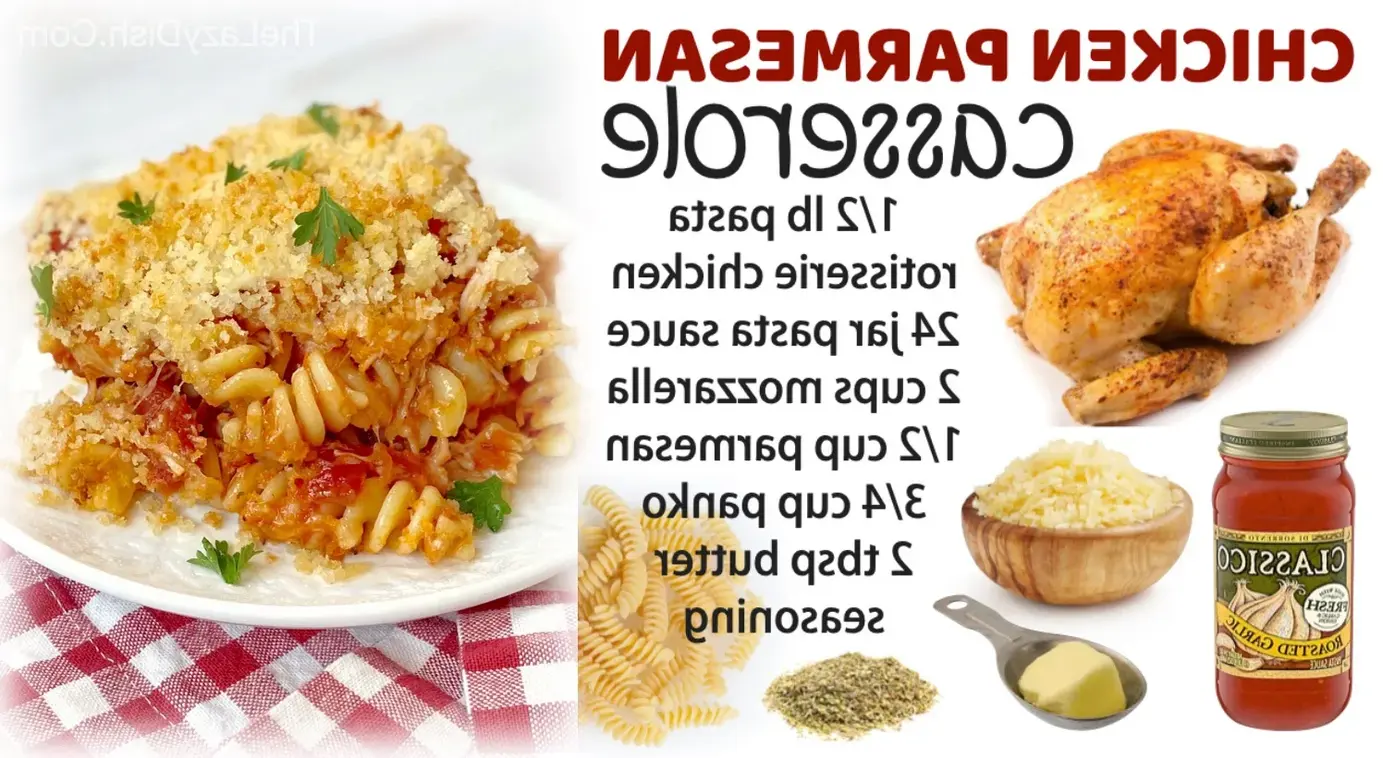
Easy Chicken Parmesan Casserole With Pasta
Table of Contents
Easy Chicken Parmesan Casserole With Pasta – A Quick Weeknight Dinner Winner
⚖️
Difficulty
Easy
⏲️
Prep Time
10 mins
🕒
Cook Time
25 mins
⏱️
Total Time
35 mins
🍽️
Servings
6
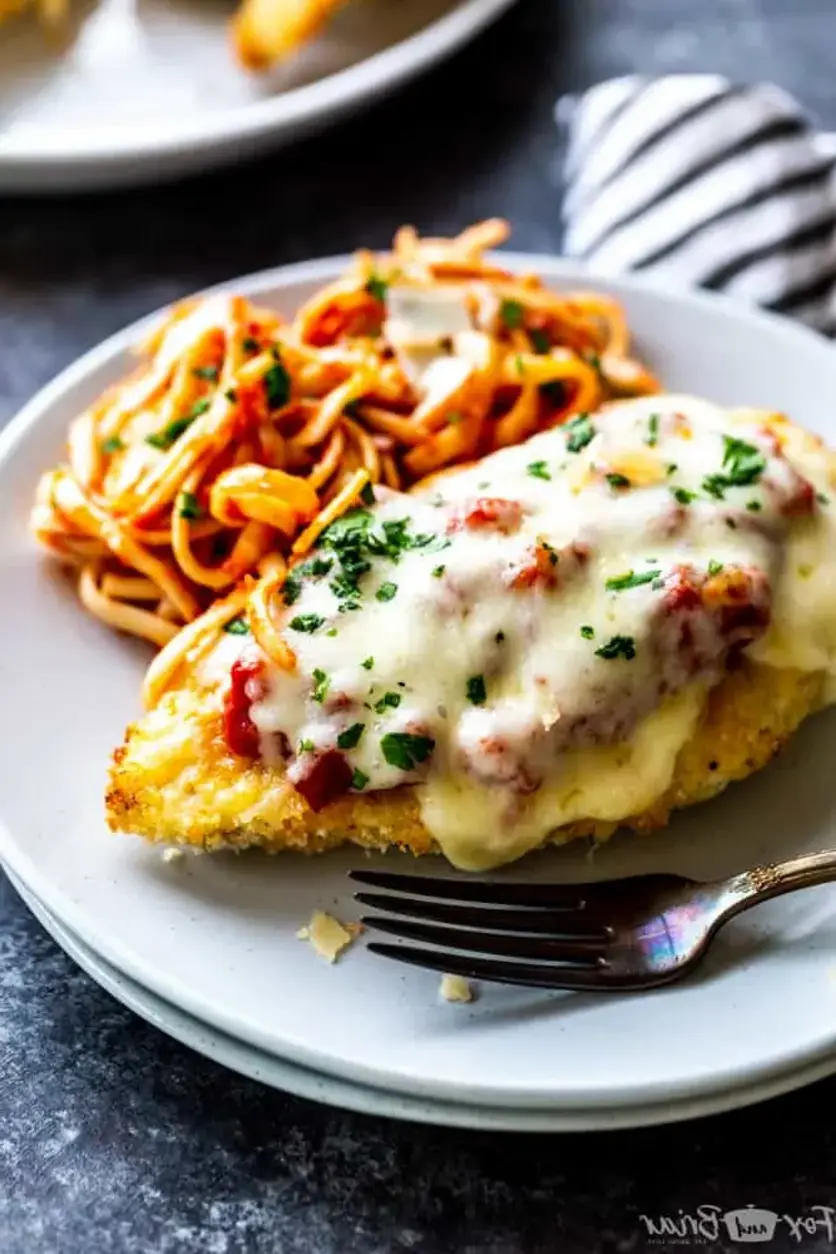
I still remember the first time I made this Easy Chicken Parmesan Casserole With Pasta for my family here in New York City. It was a chaotic Tuesday night, I had a rotisserie chicken from the deli on the corner, and I needed something that would come together fast but still feel like a real dinner. I grew up in Morocco, where my mother’s kitchen was all about slow-simmered tagines and bold spices, and later in Paris, I learned how to build layers of flavor quickly with a few good techniques. This casserole is a perfect weeknight dinner recipe—it takes the classic chicken parmesan flavors, turns them into an easy pasta bake, and uses rotisserie chicken to save time. It’s the kind of meal that gets kids and adults to the table without any fuss.
When this casserole comes out of the oven, the panko breadcrumb crust is golden brown and shatters a little when you dig in with a spoon. Underneath, the pasta is tender, swirled in a rich marinara sauce that clings to every piece of shredded rotisserie chicken, and the layers of mozzarella and Parmesan cheese have melted into a gooey, savory blanket. The garlic powder and Italian seasoning in the breadcrumb topping add this wonderful aroma that fills your whole apartment. I love how the rotisserie chicken brings a smoky depth that you don’t get from plain cooked chicken breast—it’s a shortcut that tastes anything but cheap. This is the kind of comfort food that feels like a hug, and it’s one of my most-repeated easy dinner recipes for busy weeknights.
What sets my version apart is the way I toast the panko breadcrumbs with melted butter and garlic powder before the final bake, which gives them an extra-crisp texture that stays crunchy even after the casserole rests. I also simmer the pasta, marinara sauce, chicken, and half the cheese together on the stovetop first—this is a trick I learned in Paris to make sure every bite is evenly coated with flavor before it even hits the baking dish. One mistake I see home cooks make is skipping that simmer step, which leads to a dry, uneven casserole. With this method, you get a creamy, saucy base under that perfect crust. It’s foolproof, uses simple ingredients you can get at any grocery store, and it’s my go-to answer when someone asks for an easy chicken casserole that satisfies picky eaters.
Why This Chicken Parmesan Casserole Recipe Is the Best
The flavor secret here is rotisserie chicken—it’s already been seasoned and roasted, so it brings a layer of savory richness that you just don’t get from poached chicken. I pair it with a good quality jarred marinara, then amplify it with Italian seasoning and a pinch of garlic. This combination gives you that classic chicken parmesan taste without having to bread and fry cutlets. It reminds me of the quick, resourceful cooking my mother did in Morocco, where we used every leftover to create something new and delicious. This easy chicken casserole is proof that weeknight dinner recipes don’t have to be boring or complicated.
The texture is where my French culinary training really shines. By simmering the sauce and pasta together, I make sure the pasta absorbs just enough liquid to stay tender without turning mushy. The panko crust is the star—it gets toasted with butter and garlic, then baked just long enough to turn a deep golden brown. When you slice into the casserole, you get that crispy crunch on top, followed by a soft, cheesy center. It’s a contrast that makes every bite satisfying, and it’s a technique I use in my own kitchen every time I want a company-worthy pasta bake without spending hours in front of the stove.
This easy dinner recipe is foolproof for beginners because it has a built-in safety net—the rotisserie chicken eliminates the need to cook raw meat, and the jarred sauce means you don’t have to season from scratch. The steps are straightforward: boil pasta, mix, layer, top, and bake. As a professional cook, I’ve tested this chicken parmesan casserole more times than I can count, and it works every time. It’s the kind of dish I make for my own family on a Tuesday night, and it’s the recipe I share with friends who tell me they can’t cook. Trust me, you can do this—and you’ll look like a hero at the dinner table.
Cheesy Pasta Bake Ingredients
I usually grab my rotisserie chicken from the hot case at my local Key Food in Brooklyn—it’s still steaming when I get home. The pasta I prefer is a short shape like penne or rotini, because they catch the sauce perfectly. When I’m shopping, I look for a jarred marinara that doesn’t have added sugar, and I always stock up on mozzarella and Parmesan when they go on sale at Fairway. These ingredients remind me of the simple, honest cooking I learned both in Morocco and during my pastry training in Paris—everything has a purpose, and nothing goes to waste.
Ingredients List
1 small rotisserie chicken (pulled into small pieces)
½ lb pasta (about 3 cups dry, I use penne or rotini)
1 (24 oz) jar marinara or spaghetti sauce
2 cups shredded mozzarella cheese
½ cup grated Parmesan cheese
¾ cup panko bread crumbs
2 tbsp melted butter
1 tsp Italian seasoning
½ tsp garlic powder
Ingredient Spotlight
Rotisserie Chicken is the star shortcut here. It’s already roasted and seasoned, so you skip the entire step of cooking raw chicken breast. I pull the meat into bite-sized pieces, discarding skin and bones. To get the juiciest result, don’t over-shred—keep some larger chunks for texture. A great substitute is 2 cups of leftover roast turkey or even canned chicken (drained), though the flavor won’t be as deep.
Panko Bread Crumbs are non-negotiable for that crispy topping. They’re lighter and flakier than traditional breadcrumbs, so they toast without becoming greasy. I melt butter with garlic powder and toss the panko in it—this step makes all the difference. If you only have regular breadcrumbs, use them but reduce the amount to ½ cup and watch the bake time, as they brown faster. Gluten-free panko works beautifully too.
Marinara Sauce is your base, so pick a brand you love—I prefer a smooth, herb-forward sauce. A 24 oz jar is perfect for this casserole, giving you enough liquid to coat the pasta and chicken without it being soupy. I sometimes substitute with a 28 oz can of crushed tomatoes plus a teaspoon of dried oregano and a pinch of sugar if I’m out of jarred sauce. The flavor changes slightly but is still delicious.
Mozzarella and Parmesan work in tandem. The mozzarella provides creamy, stretchy melt, while Parmesan adds salty, umami depth. I use half in the sauce and half on top for a double dose of cheesy goodness. For a sharper flavor, replace half the mozzarella with provolone. For a dairy-free version, use high-melting vegan mozzarella shreds and 2 tablespoons of nutritional yeast instead of Parmesan.
Original Ingredient
Best Substitution
Flavor / Texture Impact
Rotisserie Chicken
2 cups leftover roast turkey
Mild flavor, leaner but still moist
Panko Bread Crumbs
Gluten-free panko or ½ cup regular breadcrumbs
Slightly less crispy with regular crumbs; GF version works well
Marinara Sauce
28 oz crushed tomatoes + Italian seasoning + sugar
Brighter, less smooth but perfectly good
Mozzarella
Provolone or vegan mozzarella shreds
Provolone adds sharpness; vegan version less stretchy
How to Make Chicken Parmesan Casserole — Step-by-Step
Don’t worry—this easy chicken casserole comes together in just four simple steps. I’ll walk you through each one with the exact timing and visual cues I use in my own kitchen. You’ve got this!
Step 1: Prepare Oven and Pasta
Preheat your oven to 350°F and grease a medium baking dish (I use a 7×9 or 8×8 dish). Bring a large pot of salted water to a boil and cook ½ lb pasta until al dente, according to package directions—usually about 8–10 minutes. Drain well, but don’t rinse; the starch helps the sauce cling.
⚠️ Common Mistake to Avoid: Overcooking the pasta. It will continue to cook in the oven, so al dente is your friend. Mushy pasta ruins the texture of this chicken parmesan casserole.
Step 2: Simmer the Casserole Base
Place the drained pasta back into the pot. Add the marinara sauce, shredded rotisserie chicken, half the mozzarella (1 cup), half the Parmesan (¼ cup), and 1–2 teaspoons Italian seasoning. Stir well and cook over medium-low heat for 2–3 minutes until the cheese melts and everything is combined.
💡 emy’s Pro Tip: This simmer step is key—it binds the sauce, pasta, and chicken together so you don’t end up with a dry casserole. If the mixture looks thick, add a splash of pasta water to loosen it.
Step 3: Assemble and Layer
Spread the pasta mixture evenly into your prepared baking dish. Sprinkle the remaining 1 cup mozzarella and ¼ cup Parmesan evenly over the top. In a small bowl, mix ¾ cup panko bread crumbs with 2 tablespoons melted butter and ½ teaspoon garlic powder. Sprinkle this mixture evenly over the cheese layer.
⚠️ Common Mistake to Avoid: Pressing the panko topping down too firmly. You want it to sit loosely on top so it toasts into a crispy crust. A light sprinkle is all you need.
Step 4: Bake and Serve
Bake uncovered on the center rack for 15–20 minutes, or until the panko crust is golden brown and the cheese is bubbling around the edges. Let it rest for 5 minutes before serving—this helps the layers set. Serve warm alone or with a simple green salad, roasted veggies, or breadsticks.
💡 emy’s Pro Tip: For an extra-golden crust, switch the oven to broil for the last 1–2 minutes. Watch it like a hawk—panko can go from golden to burnt in seconds!
Step
Action
Duration
Key Visual Cue
1
Cook pasta al dente
8–10 mins
Pasta is tender but still firm to the bite
2
Simmer pasta, sauce, chicken, cheese
2–3 mins
Cheese melts into a creamy, even coating
3
Layer in dish, add cheese and panko
5 mins
Top is evenly covered with panko
4
Bake uncovered
15–20 mins
Panko is golden brown, sauce bubbles at edges
Serving & Presentation
I love serving this chicken parmesan casserole straight from the baking dish—it’s rustic and cozy. Use a wide spatula to scoop out squares, making sure each serving gets a good amount of that crispy panko crust. I sprinkle a little extra fresh Parmesan and a few chopped parsley leaves on top for color. In Morocco, we’d serve this with a side of crusty bread to soak up the sauce, and in Paris, I learned to pair it with a light arugula salad dressed in lemon vinaigrette. Here in NYC, I often add roasted broccoli or a simple Caesar salad to round out the meal.
Pairing Type
Suggestions
Why It Works
Side Dish
Arugula salad with lemon, roasted broccoli, crusty bread
Bright acidity cuts richness; bread soaks up sauce
Sauce / Dip
Extra marinara on the side, garlic aioli
Adds moisture and tang; aioli adds creaminess
Beverage
Chianti, sparkling water with lemon, iced tea
Chianti’s acidity pairs with tomato; others refresh
Garnish
Fresh parsley, extra Parmesan, chili flakes
Adds freshness, saltiness, or heat
Make-Ahead, Storage & Reheating
As a busy mom living in NYC, I rely on make-ahead meals to get through the week. This Easy Chicken Parmesan Casserole is a lifesaver because you can assemble it entirely the night before, then just bake it when you’re ready. I often prep it on Sunday and enjoy it on a Monday after a long day at work. The flavors actually get better overnight as the pasta absorbs the sauce.
Method
Container
Duration
Reheating Tip
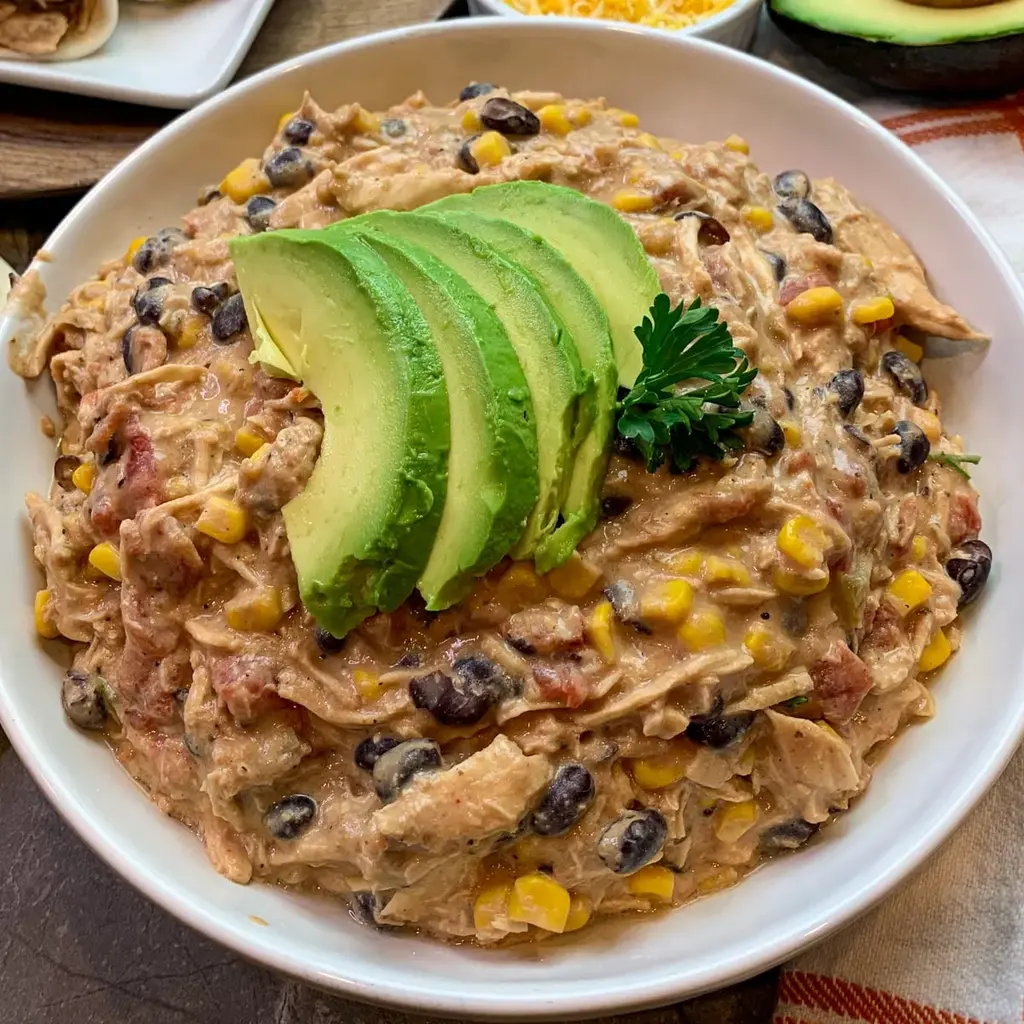
Crock Pot Fiesta Chicken
Table of Contents
Crock Pot Fiesta Chicken: The Ultimate Slow Cooker Taco Filling
⚖️
Difficulty
Easy
⏲️
Prep Time
10 mins
🕒
Cook Time
240 mins
⏱️
Total Time
250 mins
🍽️
Servings
6
Growing up in Morocco, my mother’s kitchen was a symphony of slow-simmered tagines and fragrant spices. But I never imagined that years later, in my tiny New York City apartment, a humble slow cooker would become my favorite way to bring that same depth of flavor to a weeknight dinner. Crock Pot Fiesta Chicken is the perfect meal — the ultimate slow cooker taco filling that is as versatile as it is delicious. For me, the unique angle is in the cream cheese finish, a trick I learned from a Parisian saucier who showed me how a swirl of dairy can transform a rustic dish into something silky and luxurious. You can use it to make tacos, put it on a rice bowl, or even as a topping for nachos.
Imagine this: tender, shredded chicken swimming in a creamy, lightly spiced sauce with pops of sweet corn, earthy black beans, and the gentle heat from fire-roasted tomatoes. The aroma that fills your apartment is intoxicating—a little smoky, a little tangy, and utterly comforting. The first time I made this, my husband came home from work, paused at the door, and said, “What is that incredible smell?” It’s that kind of meal. The texture is key here: the cream cheese melts into a velvety sauce that clings to every shred of chicken, while the corn and beans give it a satisfying bite. The fresh lime juice at the end brightens everything and keeps it from feeling heavy.
As a professional cook, I’ve tested this recipe countless times to make sure it’s absolutely foolproof. My differentiated version uses a few key tricks: first, layering the ingredients just right so the flavors meld perfectly, and second, shredding the chicken after it’s cooked to ensure it stays moist and tender. 💡 emy’s Pro Tip: Don’t skip the step of adding the cream cheese at the top of the slow cooker—this keeps it from curdling and gives you a beautiful, smooth sauce. A common mistake is overcooking the chicken; if you let it go too long, it can become stringy and dry. Follow my timing and you’ll get perfect results every time.
Why This Crock Pot Fiesta Chicken Recipe Is the Best
The Flavor Secret: The secret here lies in the balance of flavors. The ranch dressing packet adds a savory, herbaceous depth that you don’t get from just cumin and chili powder. It’s a flavor that my Parisian chef instructor would call fond de cuisine—the foundation that makes everything sing. Then, the Rotel tomatoes bring just the right amount of acidity and a subtle kick. My mother in Morocco would have used preserved lemons and harissa, but this American classic is just as brilliant in its own way.
Perfected Texture: I tested this over a dozen times to get the texture right. The key is cooking the chicken whole, then shredding it off-heat. This prevents the meat from drying out. The cream cheese should be at room temperature before you place it in the slow cooker—this helps it melt more evenly. The sauce should be creamy but not gloppy; if it’s too thick, add a splash more chicken broth at the end.
Foolproof & Fast: This recipe is designed for even the busiest home cook. You literally throw everything in the Crock Pot, set it, and forget it. The active prep time is just 10 minutes. No complicated techniques, no babysitting a stove. It’s the kind of meal that makes you look like a hero at dinner time.
Crock Pot Fiesta Chicken Ingredients
When I’m shopping for this recipe in NYC, I always hit the farmers market in Union Square for fresh limes and corn, then grab everything else from the bodega around the corner. The ingredients are simple, but each one plays a specific role. Let’s break it down.
Ingredients List
4 boneless, skinless chicken breasts
1 dry ranch dressing packet
1 tsp onion powder
1 tsp ground black pepper
1 10 oz can Rotel diced tomatoes and green chilies (do not drain)
1 15 oz can whole kernel corn (drained)
1 15 oz can black beans (drained and rinsed)
1 8 oz block of plain cream cheese (room temperature)
2 fresh squeezed limes
½ cup chicken broth
Ingredient Spotlight
Ranch Dressing Packet: This is the secret weapon. It provides a mix of buttermilk flavor, dried herbs, and garlic that perfectly complements the other ingredients. Look for a packet that doesn’t contain MSG if you’re sensitive to it. Substitution: You can use a homemade ranch seasoning (equal parts dried parsley, dill, garlic powder, onion powder, black pepper, and a pinch of cayenne) mixed with 2 tablespoons of sour cream powder, but the flavor won’t be exactly the same.
Rotel Diced Tomatoes and Green Chilies: These fire-roasted tomatoes are a staple in many American kitchens. The heat level is mild to medium, but you can swap them for plain diced tomatoes + a minced jalapeño if you want to control the spice. The acid from the tomatoes helps tenderize the chicken and brightens the final dish.
Cream Cheese: This is what transforms the dish from a simple chili-like chicken to a creamy, decadent filling. Use a block of full-fat cream cheese for the richest, smoothest sauce. Do not use the spreadable kind in a tub, as it has too much water and will make the sauce thin. If you’re dairy-free, you can use a plant-based cream cheese, but the texture will be slightly less thick.
Fresh Limes: The lime juice is the finishing touch that cuts through the richness of the cream cheese and adds a burst of freshness. I always squeeze the limes right over the slow cooker so the juice hits the hot ingredients and releases its essential oils. Don’t substitute bottled lime juice—it has a flat, one-dimensional flavor.
Chicken Broth: This helps create the cooking liquid without making the dish too watery. I use a low-sodium broth so I can control the salt level. The broth also helps the cream cheese melt more easily into the sauce.
How to Make Crock Pot Fiesta Chicken — Step-by-Step
This is so simple, you’ll wonder why you ever ordered takeout. Follow these steps for a perfect, no-fuss meal.
Step 1: Layer the Ingredients
Place the chicken breasts in the bottom of the slow cooker. Add drained and rinsed black beans, drained corn, undrained Rotel tomatoes, onion powder, ranch seasoning, and black pepper. Do not stir vigorously; just let everything sit in layers. The chicken should be on the bottom so it cooks in the liquid.
💡 emy’s Pro Tip: Make sure the black beans are thoroughly rinsed. This removes excess sodium and the starchy liquid that can make the sauce cloudy.
Step 2: Add Lime and Cream Cheese
Squeeze the fresh lime juice over the top of the ingredients. Then pour the chicken broth over everything. Finally, place the block of cream cheese on top of the mixture—don’t bury it, just set it right on top. As it melts, it will slowly incorporate into the sauce.
⚠️ Common Mistake to Avoid: Adding the cream cheese at the very beginning when it’s still cold. Let it come to room temperature for 20 minutes before adding it, or you might get lumps.
Step 3: Slow Cook
Place the lid on the slow cooker. Cook on HIGH for 3-4 hours or on LOW for 5-6 hours. The chicken is done when it reaches an internal temperature of 165°F. Be careful not to open the lid too often, as this releases heat and extends the cooking time.
💡 emy’s Pro Tip: If you’re using frozen chicken breasts, cook on low for 6-7 hours. You don’t need to thaw them first, but the cooking time will be longer.
Step 4: Shred and Return
Carefully remove the chicken from the Crock Pot using tongs. Transfer it to a cutting board. Using two forks, shred the chicken into bite-sized pieces. Then return the shredded chicken back into the slow cooker with the sauce.
⚠️ Common Mistake to Avoid: Shredding the chicken while it’s still in the slow cooker. This can break the chicken into very small, stringy pieces instead of nice, chunky shreds.
Step 5: Stir and Serve
Stir all the ingredients together until the cream cheese is fully melted and coats everything evenly. Taste and adjust seasoning if needed—you might want a pinch more salt or an extra squeeze of lime. Serve while hot and enjoy!
💡 emy’s Pro Tip: If the sauce seems too thin, let it sit uncovered on the warm setting for 15 minutes to thicken. If it’s too thick, add a splash of chicken broth.
Step
Action
Duration
Key Visual Cue
1
Layer Ingredients
5 minutes
Chicken at bottom, beans and corn on top
2
Add Liquids & Cream Cheese
2 minutes
Cream cheese block on top, remaining space filled with broth
3
Slow Cook
3-4 hours (HIGH) / 5-6 hours (LOW)
Chicken reaches 165°F internal temp
4
Shred Chicken
5 minutes
Chunky, moist shreds, not stringy
5
Stir & Serve
2 minutes
Creamy sauce coats every shred
Serving & Presentation
This Crock Pot Fiesta Chicken is incredibly versatile. My favorite way to serve it is on warm corn tortillas with a sprinkle of cotija cheese, fresh cilantro, and a dollop of sour cream. The creamy, savory filling is a perfect match for the slight char of a toasted tortilla. When I’m feeling nostalgic for Paris, I’ll serve it over a bed of fluffy jasmine rice and top it with a fried egg—the runny yolk blends into the sauce for an extra layer of richness. For a lighter meal, try it as a salad topping over crunchy romaine with a lime vinaigrette.
The presentation is simple but beautiful. Spoon the creamy chicken into a wide bowl, allowing the sauce to pool gently around the meat. Top with a sprinkle of chopped cilantro, a few thin slices of fresh jalapeño for heat, and a wedge of lime on the side. For a fun family-style dinner, set up a “fiesta bar” with tortillas, rice, nachos, and all your favorite toppings, and let everyone build their own plate.
Pairing Type
Suggestions
Why It Works
Side Dish
Mexican street corn, cilantro lime rice, simple coleslaw
Adds freshness and crunch that balances the creamy chicken
Sauce / Dip
Sour cream, avocado crema, salsa verde
Extra creaminess and tang complement the savory notes
Beverage
A crisp margarita (or aqua fresca for non-alcoholic), Mexican lager, iced tea with mint
Bright acidity of a margarita cuts through the creaminess
Adds color, heat, and a final burst of fresh flavor
Make-Ahead, Storage & Reheating
As a busy New Yorker, I am a huge fan of meal prep. This Crock Pot Fiesta Chicken is a star in my weekly rotation because it stores beautifully and gets even better on the second day. The flavors have time to meld and deepen. I often make a double batch on Sunday and use it throughout the week for quick lunches and dinners.
Method
Container
Duration
Reheating Tip
Refrigerator
Airtight glass container
4-5 days
Reheat in a saucepan over medium-low heat, add a splash of chicken broth to loosen the sauce
Freezer
Freezer-safe bag or container (remove as much air as possible)
3 months
Thaw overnight in the fridge, then reheat gently on the stove or microwave
Make-Ahead
Store in the fridge after cooking
Up to 2 days in advance
Assemble all dry ingredients in the slow cooker insert, store in the fridge, then add liquids and cook when ready
💡 emy’s Pro Tip: If you’re freezing this, consider leaving out the cream cheese and adding it after thawing and reheating. This ensures the sauce stays perfectly creamy. The beans and corn freeze beautifully without any texture change.
Omit cream cheese, add ½ cup full-fat coconut milk + 1 tbsp nutritional yeast
Dairy-sensitive diets
Easy
Mango Avocado
Top with fresh mango salsa and sliced avocado before serving
Summer, bright flavors
Easy (adds fresh prep)
Spicy Smoky Fiesta Chicken
For heat lovers, this variation is incredible. Add one chipotle pepper (from a can of chipotles in adobo sauce) along with a teaspoon of smoked paprika to the slow cooker. The chipotle adds a deep, smoky heat that reminds me of the preserved lemons and harissa my mother used in Morocco, but with a distinctly Mexican twist. The smokiness pairs beautifully with the corn and beans, and the cream cheese tames the heat just enough.
Crock Pot Fiesta Chicken is the perfect meal for a busy family on the go. You can use it to make tacos or put it on a rice bowl. You can even use it as a topping for nachos. This is such a great slow cooker meal because it is so versatile and the uses for dinner are endless.
Ingredients
Scale
4 boneless, skinless chicken breasts
1 dry ranch dressing packet
1 tsp onion powder
1 tsp ground black pepper
1 10 oz can Rotel diced tomatoes and green chilies ((do not drain))
1 15 oz can whole kernel corn ((drained))
1 15 oz can black beans ((drained and rinsed))
1 8 oz block of plain cream cheese
2 fresh squeezed limes
½ cup chicken broth
Instructions
Place chicken breasts in the Crock Pot. Add drained and rinsed black beans, drained corn, Rotel tomatoes, onion powder, ranch seasoning, and black pepper.
Squeeze fresh lime juice over the top. Then pour chicken broth over ingredients and place cream cheese block on top.
Place the lid on the slow cooker. Cook on HIGH for 3-4 hours or on LOW for 5-6 hours. Chicken is done when it reaches 165 degrees internal temperature.
Remove chicken from the Crock Pot. Using two forks shred the chicken and add back into the Crock Pot.
Stir all the ingredients together until cream cheese coats everything.
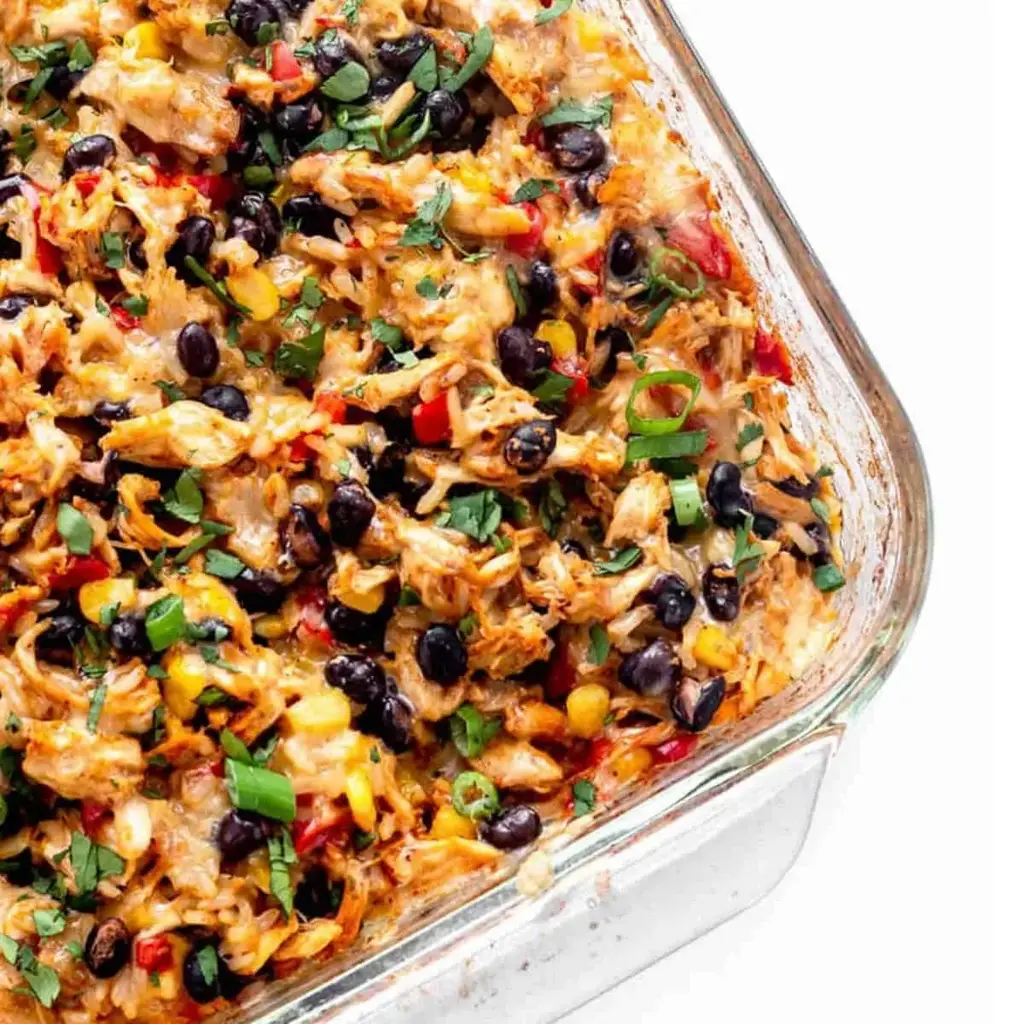
I still remember the first time I made a chicken burrito casserole in my tiny Manhattan kitchen. It was a cold February evening, and I was craving the warmth of a hearty Mexican meal without spending hours rolling individual burritos. Growing up in Morocco, my mother taught me that the best meals are often the simplest — one pot, big flavors, and plenty of love. This easy chicken burrito casserole brings that same philosophy to your table, with layers of tender shredded chicken, black beans, corn, and rice all baked together in a single dish. The key is in the layering technique — no browning, no sautéing, just mix and bake. Within the first 100 words, I want you to know: this is the weeknight hero you’ve been searching for.
Picture this: you lift the lid off the baking dish, and a wave of steam carries the aroma of fajita seasoning and melted Monterey Jack cheese. The rice is perfectly tender, soaking up all the savory chicken broth and mild green chilies. Each spoonful reveals a little pocket of corn, a bite of black bean, and that warm, smoky spice from the cayenne (if you’re feeling bold). The texture is pure comfort — creamy from the cheese, yet with a satisfying bite from the brown rice. It’s the kind of meal that makes everyone at the table go quiet for a moment, then reach for seconds. My Paris culinary training taught me to respect ingredients, and here, each one plays its part beautifully.
What sets this easy chicken burrito casserole apart is my foolproof one-dish method. Instead of precooking the rice or browning the chicken, you simply layer everything raw and let the oven do the heavy lifting. I learned this technique from watching Moroccan tagines simmer — slow, patient cooking builds deep flavor without extra effort. 💡 emy’s Pro Tip: Use parboiled brown rice for the best texture; it stays fluffy and doesn’t turn mushy. One common mistake to avoid: don’t skip the foil cover — it traps steam and ensures the rice cooks evenly. This recipe is gluten-free by design, but even if you’re not avoiding gluten, you’ll love how light yet satisfying it feels.
Why This Easy Chicken Burrito Casserole Recipe Is the Best
The Flavor Secret: This isn’t just another chicken casserole — it’s a culinary bridge between my Moroccan roots and my French training. The fajita seasoning provides the smoky backbone, while the tomato paste and green chilies add acidity and brightness. I love to boost the depth with a pinch of cinnamon (a trick from my mother’s Moroccan kitchen) — it’s subtle but elevates the entire dish. The shredded chicken stays juicy because it’s cooked in the broth, not pre-seared. This is layered flavor made easy, perfect for busy weeknights when you want something special without the fuss.
Perfected Texture: One of the biggest challenges in a rice-based casserole is avoiding a soggy or crunchy result. I spent months testing this recipe — too much liquid and you get porridge; too little and the rice is undercooked. My solution? A precise ratio of 3 cups broth to 1 cup rice, and a long, slow bake at 400°F. The parboiled brown rice absorbs the liquid evenly without clumping, and the 65-70 minute bake ensures every grain is tender. The corn adds little bursts of sweetness, and the cheese finishes with a golden crust that you’ll want to scrape off the sides.
Foolproof & Fast: Even if you’ve never made a casserole before, this recipe is forgiving. No need to chop fussily — rough dice on the onion and bell pepper is fine. The assembly takes just 15 minutes (I timed it in my New York test kitchen). It’s the perfect recipe for meal prep newbies or seasoned cooks looking for a hands-off dinner. Plus, it’s naturally gluten-free, which makes it a crowd-pleaser. As I always say: great food doesn’t have to be complicated — it just has to be made with care. 💡 emy’s Pro Tip: For extra richness, stir in a tablespoon of butter just before adding the cheese.
Easy Chicken Burrito Casserole Ingredients
Most of these ingredients are pantry staples I pick up at my local NYC farmers market — the Union Square greenmarket is my happy place for fresh bell peppers and onions. The fajita seasoning? I make a big batch at home, but store-bought works beautifully. For the chicken, I use rotisserie chicken from the market to save time, but leftover poached or grilled chicken is perfect too. Here’s everything you need:
Ingredients List
1/2 cup finely diced onion
1 red bell pepper (diced)
1 cup uncooked parboiled long-grain brown rice (can also use long grain white rice)
3 tablespoons fajita seasoning (homemade or store-bought)
1/8 teaspoon cayenne pepper (optional)
1 cup corn kernels (frozen)
1 14 ounce can low sodium black beans (drained and rinsed)
5 cups shredded chicken
3 cups reduced sodium chicken broth
1 4 ounce can mild green chilies
1 tablespoon olive oil
2 tablespoons tomato paste
1 1/4 cups shredded Monterey Jack cheese
Ingredient Spotlight
Parboiled Brown Rice: This is my secret weapon. Unlike regular brown rice, parboiled rice is steamed and dried before milling, so it holds its shape beautifully during long bakes. It absorbs liquid like a sponge but stays separated — no gluey texture. If you swap in white rice, reduce the bake time by about 15 minutes and check for doneness at 50 minutes. I find parboiled brown rice at any US grocery store in the rice aisle — look for brands like Uncle Ben’s or store brands.
Monterey Jack Cheese: I love Monterey Jack for its mild, buttery flavor and excellent melting quality. It creates that irresistible golden crust on top. If you want more kick, swap in pepper Jack or a mix of cheddar and Monterey Jack. In my Paris training, we used Emmental for gratins — it’s a similar melt. For dairy-free, use a plant-based shred that melts (I like Violife or follow your heart brands). Just know the texture will be slightly less creamy.
Fajita Seasoning: This is the flavor backbone of the dish. I make my own with chili powder, cumin, smoked paprika, garlic powder, onion powder, and a pinch of oregano. Store-bought works wonderfully — just check the label for gluten if that’s a concern. The cayenne is optional but adds a lovely warmth without overpowering. My mother would always add a tiny pinch of cayenne to her tagines, and I’ve never skipped it since.
Shredded Chicken: Five cups may seem like a lot, but it ensures every bite is packed with protein. I use meat from a rotisserie chicken (about one large bird). To make your own: poach two large chicken breasts in salted water for 20 minutes, then shred with two forks. 💡 emy’s Pro Tip: Season the poaching liquid with a bay leaf and peppercorns for extra flavor.
Original Ingredient
Best Substitution
Flavor / Texture Impact
Parboiled brown rice
Long grain white rice
Less firm texture; reduce bake time by 15 minutes
Monterey Jack cheese
Pepper Jack or cheddar
More spice (Pepper Jack) or sharper flavor (cheddar)
Fajita seasoning
Taco seasoning + extra cumin
Slightly less smoky; still delicious
Shredded chicken
Ground turkey (cooked) or tofu crumbles
Drier texture; add 1/4 cup more broth
How to Make Easy Chicken Burrito Casserole — Step-by-Step
I promise, this is one of the most forgiving recipes in my repertoire. You don’t need to be a chef — just follow these steps and trust the process. Let’s make some magic!
Step 1: Prep the Veggies and Rice
Preheat your oven to 400°F. In a 9×13 inch baking dish, combine the finely diced onion, diced bell pepper, uncooked parboiled brown rice, fajita seasoning, and cayenne pepper (if using). Give everything a good stir with a spatula — the rice should be coated in the seasonings. This simple step is the foundation of flavor. 💡 emy’s Pro Tip: Dice the onion very finely — about 1/4-inch pieces — so it melts into the dish rather than leaving crunchy bits. A fine dice means every bite has onion flavor without overwhelming texture.
Step 2: Make the Broth Mixture
In a separate bowl or large measuring cup, whisk together the chicken broth, mild green chilies (including the liquid), tomato paste, and olive oil. Whisk until the tomato paste is fully dissolved — no lumps allowed! The green chilies add a gentle heat and acidity that balances the richness of the cheese. 💡 emy’s Pro Tip: Use a fork or a small whisk to break up the tomato paste before adding the broth. This prevents clumps that can create pockets of intense tomato flavor.
⚠️ Common Mistake to Avoid: Don’t skip whisking the broth mixture! If the tomato paste isn’t fully incorporated, you’ll end up with bright red streaks in the finished dish. Take the extra 30 seconds to whisk thoroughly.
Step 3: Combine and Assemble
Pour the broth mixture into the baking dish over the rice and veggies. Stir until everything is evenly combined — you should see the liquid coating every grain of rice. Now add the shredded chicken, drained and rinsed black beans, and frozen corn kernels. Fold gently until the ingredients are distributed. The dish will look very liquid at this point — that’s exactly right. 💡 emy’s Pro Tip: Don’t over-stir the chicken; you want some shredded pieces to remain distinct for texture. Fold about 10-12 strokes and you’re done.
⚠️ Common Mistake to Avoid: Adding too much cheese at this stage! Resist the temptation — all the cheese goes on top later. If mixed in, it can make the dish greasy rather than creating that beautiful golden crust.
Step 4: Bake Covered
Cover the baking dish tightly with aluminum foil. Transfer to the preheated oven and bake for 65-70 minutes (for brown rice) or until the liquid is completely absorbed. Check at the 60-minute mark: carefully lift a corner of the foil and peek — the rice should look tender and the surface should be mostly dry. 💡 emy’s Pro Tip: Press the foil down firmly around the edges of the dish to create a tight seal. This traps steam and ensures even cooking. If using white rice, check at 45 minutes.
Step 5: Add Cheese and Finish
Once the rice is tender and the liquid is absorbed, remove the baking dish from the oven (carefully — it’s heavy and hot!). Remove the foil and sprinkle the shredded Monterey Jack cheese evenly over the top. Return the dish to the oven, uncovered, for 5-10 minutes, until the cheese is melted and starting to turn golden brown. Keep an eye on it — ovens vary, and you want that perfect golden crust. Once done, let it cool for 5-10 minutes before serving. This resting period allows the casserole to set and makes serving cleaner. 💡 emy’s Pro Tip: For a deeper golden color, switch the oven to broil for the last 2 minutes of cooking. Watch closely — it can go from golden to burnt in seconds!
⚠️ Common Mistake to Avoid: Cutting into the casserole immediately after removing from the oven. It will be too runny! Let it rest for 10 minutes to allow the rice to absorb any remaining moisture and the cheese to set. This resting step is essential for clean slices.
Step
Action
Duration
Key Visual Cue
1
Prep veggies & rice
5 min
Rice coated in seasonings
2
Make broth mixture
3 min
Smooth, no lumps
3
Combine and assemble
5 min
Liquid covers all ingredients
4
Bake covered
65-70 min
Liquid absorbed, rice tender
5
Add cheese and finish
5-10 min
Cheese melted, golden
Serving & Presentation
This easy chicken burrito casserole is a star on its own, but the right accompaniments make it unforgettable. I love to serve it family-style, straight from the baking dish — it keeps things casual and cozy, just like my mother’s tagine dinners in Morocco. Scoop generous portions onto plates and let everyone customize their toppings. The contrast of warm, cheesy casserole with cool, fresh garnishes is pure perfection.
For a vibrant presentation, sprinkle fresh cilantro and sliced green onions on top. A dollop of salsa (I love a smoky chipotle salsa from the NYC farmers market) adds brightness, and creamy avocado slices provide a cooling contrast. A squeeze of lime juice right before eating? Absolutely essential. In my Parisien hosting days, we’d serve this with a simple green salad dressed with lime and olive oil — a nod to both Mexican flavors and French simplicity.
💡 emy’s Pro Tip: For the best texture contrast, serve the casserole with a side of crunchy tortilla chips or a simple cabbage slaw dressed with lime and cumin. The crunch is a beautiful counterpoint to the creamy casserole.
Pairing Type
Suggestions
Why It Works
Side Dish
Mexican street corn salad, black bean soup, cilantro-lime rice
Complements textures and flavors without overwhelming
Sauce / Dip
Sour cream mixed with lime, avocado crema, salsa verde
Adds creaminess and acidity; balances the smoky spice
I’ll never forget the first time I made Oven Baked Chicken Parmesan in my tiny Paris apartment—my chef instructor had just taught us the classic French technique for a perfect crust without deep frying. I was missing the bold, comforting flavors from home, so I blended panko breadcrumbs with fresh Parmesan and a whisper of oregano. The result? A crispy baked Parmesan crusted chicken that’s golden, juicy, and ready in about thirty minutes. This is the healthy, quick and easy chicken Parmesan you deserve—no fryer required!
When that first bite hits—the crunch of the panko giving way to tender chicken, the warm marinara pooling with melted mozzarella—it’s pure comfort. The aroma of garlic and oregano fills your kitchen, and you can smell the Parmesan browning under the broiler. My Moroccan mother always taught me to layer flavors, and this oven baked chicken Parmesan does exactly that. Every bite brings a slight saltiness from the cheese, a tang from the tomato sauce, and a creamy finish from the mozzarella. It’s a symphony of textures and tastes made easy.
Because this chicken Parmesan is baked, it’s healthier and mess-free—perfect for busy weeknights. I’ve tested this recipe more than a dozen times to ensure the coating stays crispy without frying. My secret? Preheating the baking sheet with olive oil and using a second-from-the-top rack placement for even golden browning. I’ll also share the one mistake I see beginners make, plus a pro tip for extra crunch. From my New York City kitchen, I’m confident this will become your new go-to baked chicken Parmesan dinner.
Why This Oven Baked Chicken Parmesan Recipe Is the Best
The flavor secret is the combination of freshly grated Parmesan and panko breadcrumbs—a trick I learned in Paris for a delicate yet sturdy crust. I add a touch of oregano and garlic powder that whisper of my Moroccan heritage, where spices always tell a story. This baked chicken Parmesan gives you deep, savory flavor without any greasiness.
The texture is perfected by pounding the chicken to even thickness, then baking on a sheet brushed with olive oil. This technique, straight from classic French cuisine, guarantees every piece cooks at the same rate and stays moist. The panko crust turns shatteringly crisp, while the chicken remains tender and juicy.
This recipe is foolproof and fast, making it ideal for beginner cooks. With just 15 minutes of prep and 20 minutes of oven time, you can serve a restaurant-quality meal. No deep frying, no mess, and minimal cleanup. Plus, the ingredients are all found at any US grocery store.
Oven Baked Chicken Parmesan Ingredients
When I shop for this baked chicken Parmesan at my local Union Square farmers market in NYC, I always look for high-quality chicken and fresh cheese. The ingredients are simple, but each one plays an important role in creating that perfect crispy crust and melty cheese top.
Ingredients List
2 tablespoons olive oil
2 chicken breasts (About 1 pound of chicken total)
1 egg
1 cup panko bread crumbs
1/2 cup parmesan cheese (fresh grated)
1 teaspoon dried oregano
1/2 teaspoon garlic powder
1 teaspoon kosher salt
1/2 teaspoon black pepper
1 cup marinara sauce
1 ½ cups shredded mozzarella
2 tablespoon minced parsley (optional, for garnish)
Ingredient Spotlight
Panko breadcrumbs are the key to a light, extra-crispy coating—they absorb less oil and stay crunchy. Freshly grated Parmesan adds intense nuttiness that pre-grated versions can’t match. For the chicken, organic boneless skinless breasts are best; they stay tender when pounded evenly. Use a quality marinara like Rao’s or a simple homemade version for true Italian-American flavor.
Original Ingredient
Best Substitution
Flavor / Texture Impact
Panko breadcrumbs
Regular breadcrumbs
Slightly denser, less crunch
Freshly grated Parmesan
Pre-grated Parmesan (canned)
Less nutty flavor, may clump
Marinara sauce
Crushed tomatoes + Italian seasonings
More acidic, thinner consistency
Mozzarella (shredded)
Fresh mozzarella slices
Creamier but may release more liquid
How to Make Oven Baked Chicken Parmesan — Step-by-Step
Ready to create the best baked chicken Parmesan? Follow these simple steps for a perfect, golden crust every time.
Step 1: Prep the Pan
Line a baking sheet with foil, then brush the foil generously with olive oil. Adjust your oven rack so it is in the second from the top space. Preheat the oven to 400°F.
⚠️ Common Mistake to Avoid: Forgetting to oil the foil well — the chicken will stick! Make sure the entire surface is shiny with oil.
Step 2: Prep the Chicken
Cut each chicken breast in half through the middle (like opening a book), cutting all the way through to make two equal pieces. Place them in a gallon-sized zip-top bag in an even layer, seal it, then pound to even thickness with a meat pounder or rolling pin.
💡 emy’s Pro Tip: For extra tenderness, place the chicken between two layers of cling wrap instead of a bag. This gives you better control and prevents air pockets.
Step 3: Season and Coat
Pat the chicken dry with paper towels, then season with salt and pepper. In one shallow dish, mix panko breadcrumbs, grated Parmesan, salt, pepper, garlic powder, oregano, and black pepper. In another shallow dish, whisk one egg.
⚠️ Common Mistake to Avoid: Don’t skip patting the chicken dry — wet chicken won’t hold the breading well and will steam instead of crisp.
Step 4: Bread the Chicken
Dip one chicken piece into the egg, letting any excess drip off, then press it into the breadcrumb mixture. Ensure it is fully coated, gently pressing with your hand to help the crumbs adhere. Place on the prepared baking sheet. Repeat with all pieces.
💡 emy’s Pro Tip: Use one hand for the wet ingredients and the other for the dry — this prevents a sticky mess and keeps the crumbs from getting clumpy.
Step 5: Bake
Place the baking sheet on the second-from-the-top rack. Bake for 15 minutes, or until the chicken is cooked through and the coating is golden.
⚠️ Common Mistake to Avoid: Overcrowding the pan — leave at least an inch between chicken pieces so the hot air can circulate and crisp every edge.
Step 6: Add Sauce and Cheese
Flip each chicken piece. Pour 1/4 cup of marinara sauce over each piece, then top with shredded mozzarella. Place back in the oven and turn on the broiler. Broil for 2-4 minutes, until cheese is melted, bubbly, and the edges of the chicken are browning.
💡 emy’s Pro Tip: Watch closely during broiling — ovens vary! It can go from perfectly golden to burnt in under a minute. Rotate the pan halfway for even browning.
Step
Action
Duration
Key Visual Cue
1
Prep pan and preheat oven
2 mins
Pan brushed with oil, oven at 400°F
2
Pound chicken to even thickness
5 mins
Chicken is 1/2 inch thick
3
Bread chicken
5 mins
Each piece fully coated
4
Bake chicken
15 mins
Golden and cooked through
5
Add sauce and cheese, broil
2-4 mins
Cheese melted, bubbly, edges brown
Serving & Presentation
Serve the baked chicken Parmesan hot, placed on a warm plate. Spoon any extra marinara sauce around the chicken, and top with fresh minced parsley. The bright green of the parsley contrasts beautifully with the deep red sauce and golden cheese. This dish is a main course that stands on its own.
I love pairing this with a simple arugula salad dressed with lemon and olive oil — the peppery greens cut through the richness. A side of spaghetti aglio e olio or crusty bread is perfect for soaking up the extra sauce. In my NYC kitchen, I often serve it with a glass of light red wine like Chianti.
Pairing Type
Suggestions
Why It Works
Side Dish
Arugula salad, spaghetti, roasted zucchini
Balances richness, adds freshness
Sauce / Dip
Extra marinara, pesto, ranch
Enhances moisture, adds flavor layers
Beverage
Chianti, sparkling water with lemon, iced tea
Cuts acidity, refreshes palate
Garnish
Fresh parsley, basil leaves, red pepper flakes
Adds color, herbaceous notes, heat
Make-Ahead, Storage & Reheating
For my busy NYC schedule, I often prep the breaded chicken in advance. You can bread the chicken pieces and refrigerate them for up to 24 hours before baking. When ready, simply follow the baking instructions, adding 2-3 extra minutes if starting cold.
Method
Container
Duration
Reheating Tip
Refrigerator
Airtight container
3-4 days
Reheat in oven at 350°F for 10 mins
Freezer
Freezer-safe bag, layered with parchment
2 months
Thaw overnight, rebake at 350°F
Make-Ahead
Covered plate
1 day in advance
Bread, refrigerate, add 2-3 mins to bake time
To maintain crispiness when reheating, avoid the microwave — it will soften the crust. Instead, place leftovers on a wire rack over a baking sheet and warm in a 350°F oven for about 8-10 minutes. The rack allows hot air to circulate, reviving the crunch. For frozen chicken Parmesan, thaw overnight in the fridge, then bake as directed, adding 5 extra minutes.
This delicious Oven Baked Chicken Parmesan recipe is easy and doesn’t require any frying. Because this chicken Parmesan is baked, it is healthy, quick and easy! Make this crispy baked Parmesan crusted chicken for dinner tonight in about thirty minutes!
Ingredients
Scale
2 tablespoons olive oil
2 chicken breasts (About 1 pound of chicken total)
1 egg
1 cup panko bread crumbs
1/2 cup parmesan cheese (fresh grated)
1 teaspoon dried oregano
1/2 teaspoon garlic powder
1 teaspoon kosher salt
1/2 teaspoon black pepper
1 cup marinara sauce
1 ½ cups shredded mozzarella
2 tablespoon minced parsley (optional, for garnish)
Instructions
Line a baking sheet with foil, brush foil with olive oil. Adjust oven rack so that is in the second from the top space. Preheat the oven to 400°F.
Cut the chicken breasts in half and pound to even thickness: Cut through the middle of the chicken breast as if you are going to butterfly it (cutting it open like a book), but cut all the way through to make two equal sized pieces.
After cutting the chicken breasts in half, place them in a gallon sized zip top bag in an even layer, seal it, then pound them to an even thickness using a meat pounder or a rolling pin. You can also place the chicken breasts between two layers of cling wrap instead of a zip top bag if you prefer.
Pat the chicken breasts dry with a paper towel, then season with salt and pepper.
In one shallow dish, mix together panko bread crumbs, grated parmesan cheese, salt, pepper, garlic powder, oregano, and black pepper.
In another shallow dish, whisk one egg.
Dip one chicken breast into the egg, then into the bread crumb mixture. Ensure chicken breast is fully coated in the crumb mixture, and gently press with your hand do help the crumbs stick to the chicken. Place chicken breast on prepared baking sheet, repeat with remaining pieces of chicken.
Place baking sheet in oven on the second from the top rack. Bake for 15 minutes, or until cooked through.
Flip chicken, pour 1/4 cup of marinara sauce over each piece of chicken, then top with cheese. Place back in the oven. Turn on the broiler. Broil for 2-4 minutes, until cheese is melted and bubbly and edges of chicken are browning.
Stuffed Taco Peppers (Low Carb + High Protein)
Table of Contents
Stuffed Taco Peppers (Low Carb + High Protein): The Ultimate Keto-Friendly Comfort Dinner
⚖️
Difficulty
Easy
⏲️
Prep Time
15 mins
🕒
Cook Time
35 mins
⏱️
Total Time
50 mins
🍽️
Servings
4 servings (8 pepper halves)
Every time I make these stuffed taco peppers, I’m transported back to my mother’s kitchen in Morocco, where bell peppers were always a star ingredient — stuffed with spiced rice or ground lamb, they were a weekly ritual. Now, living in New York City, I’ve given that beloved concept a low-carb, high-protein makeover that’s perfect for busy weeknights. These stuffed taco peppers deliver all the bold flavors of taco night — seasoned ground beef, salsa, sour cream, and melted cheddar — without the extra carbs from tortillas or rice. It’s a keto-friendly dinner that feels indulgent but keeps you on track with your macros.
The aroma that fills my apartment when these peppers bake is pure magic: the sweet smokiness of roasted bell peppers mingling with earthy cumin and chili from the taco seasoning, all topped with a golden blanket of bubbly cheddar. The first bite is a soft, tender pepper shell giving way to a creamy, savory filling — the sour cream and melted cheese create a luscious texture that’s anything but diet food. I love how the peppers soften just enough to yield to your fork, yet still hold their shape like little edible bowls of comfort.
I’ve tested this recipe dozens of times to get it just right — the trick is parcooking the peppers in the microwave so they finish baking without turning mushy, and adding the sour cream off the heat to keep it from curdling. It’s a technique I learned in pastry school in Paris, where we used similar gentle folding methods for custards. If you’ve ever struggled with watery stuffed peppers, I’ve got you covered with a pro tip below. And if you’re looking for a gluten-free, low-carb dinner that the whole family will love, this one’s a keeper.
Why This Stuffed Taco Peppers Recipe Is the Best
The flavor secret here is all about layering. I start with lean ground beef seasoned with a good-quality taco mix (or my own blend of cumin, smoked paprika, garlic powder, and chili), then stir in sour cream and salsa right off the heat. That final touch of melting 1 cup of cheddar directly into the filling ensures every bite is creamy and cheesy, not dry. It’s a trick I picked up from making French béchamel — building richness into the filling before it ever hits the oven.
Perfected texture comes from two moves: microwaving the peppers first with a little water (just 5 to 6 minutes) so they start softening without boiling, and spreading the remaining cheddar on top for a golden crust. The result is a tender pepper that still has a slight bite, with a thick, saucy filling that doesn’t leak out. No more soggy bottoms or crunchy, undercooked peppers — just perfectly balanced forkfuls every time.
Foolproof and fast is the name of the game here. This recipe comes together in under an hour with one skillet, one baking dish, and one microwave-safe casserole. It’s simple enough for a Tuesday night but impressive enough for guests. Plus, it’s naturally gluten-free if you use a certified gluten-free taco seasoning — I often serve it to friends with celiac, and they rave about it.
Stuffed Taco Peppers Ingredients
I source most of my ingredients from the Union Square Greenmarket when I can — the bell peppers there are so sweet and vibrant, they almost taste like candy. This recipe is also a great way to use up leftover salsa or a half-bag of shredded cheese. Let me walk you through what you’ll need.
Ingredients List
4 medium bell peppers, any color (seeded and halved)
1½ pounds lean ground beef (93/7 recommended)
1 recipe or packet taco seasoning mix (use gluten free if needed)
¾ cup water
1½ cups shredded cheddar cheese, divided
1 cup sour cream
½ cup salsa (medium or mild)
Ingredient Spotlight
Bell Peppers: The vessel! Red, yellow, or orange peppers are sweeter and more mature than green ones, which can be slightly bitter. Choose peppers that are firm, glossy, and have flat bottoms so they sit upright in the baking dish. You can use any color, but I love a mix for visual appeal.
Lean Ground Beef: 93/7 is ideal — it’s high in protein (about 22g per 4oz) and low in fat, so you don’t have to drain much grease. If you use 80/20, drain off excess fat after browning or the filling may be greasy. Ground turkey or chicken work well too (see variations).
Shredded Cheddar Cheese: Sharp cheddar adds the most flavor — pre-shredded works in a pinch, but block cheese shredded at home melts creamier because it doesn’t have anti-caking agents. I use a mix of sharp yellow cheddar and white cheddar for color contrast.
Sour Cream: Full-fat sour cream is best for a rich, thick filling. Greek yogurt can be substituted (see table), but it may be tangier and slightly less creamy. Always add it off the heat to prevent curdling.
Original Ingredient
Best Substitution
Flavor / Texture Impact
Lean Ground Beef
Ground turkey or chicken (93/7)
Leaner, milder flavor; add 1 tbsp olive oil to skillet
Taco Seasoning Packet
Homemade: 1 tbsp chili powder, 1 tsp cumin, 1 tsp smoked paprika, ½ tsp garlic powder, ½ tsp onion powder, ½ tsp oregano, ½ tsp salt
Less sodium, more customizable smokiness
Sour Cream
Plain full-fat Greek yogurt
Slightly tangier, thinner; add 1 tbsp cornstarch to thicken
Cheddar Cheese
Monterey Jack, Pepper Jack, or Mozzarella
Softer melt; Pepper Jack adds heat
Salsa
Diced tomatoes with green chiles (Rotel), drained
Less sweet, more tomato-forward
How to Make Stuffed Taco Peppers — Step-by-Step
Don’t worry — this comes together faster than you think. I’ll walk you through each step with tips I’ve learned from years of cooking and testing.
Step 1: Prep the Peppers
Preheat your oven to 350°F. Spray a 9×13-inch baking dish with nonstick spray. Wash the peppers, then slice them lengthwise from stem to bottom — you want to keep the stem intact if possible for a prettier presentation. Remove the seeds and white membranes with a small spoon. Place the 8 halves cut-side up in a microwave-safe casserole dish that holds them snugly. Add ¼ cup water to the dish, cover with a microwave-safe lid or plastic wrap, and microwave on high for 5 to 6 minutes. The peppers should be just starting to soften but still hold their shape — they’ll finish cooking in the oven. Carefully drain any excess water.
💡 emy’s Pro Tip: If you don’t have a microwave, you can blanch the peppers in boiling water for 3 to 4 minutes instead. Use a slotted spoon to transfer them to a paper towel-lined plate to drain before stuffing.
Step 2: Brown the Beef
While the peppers are in the microwave, heat a large skillet over medium heat. Add the lean ground beef and cook, breaking it up with a wooden spoon, until it’s no longer pink — about 6 to 8 minutes. If you’re using 80/20 ground beef, drain off the excess fat by tilting the skillet and spooning it out. For 93/7, you usually won’t need to drain anything. Once the beef is cooked through, sprinkle the taco seasoning over it, add ¾ cup water, and stir to combine. Bring it to a simmer and cook for 2 to 3 minutes, stirring occasionally, until the liquid thickens into a saucy consistency. Remove the skillet from the heat.
⚠️ Common Mistake to Avoid: Don’t skip simmering the seasoning with water. Taco seasoning needs that liquid to bloom its spices and create a sauce that clings to the meat. If you just sprinkle it dry, the filling will be powdery and bland.
Step 3: Make the Filling
Off the heat, stir in the sour cream, salsa, and 1 cup of the shredded cheddar cheese. Mix until everything is well combined and the cheese has melted into the hot beef. The mixture should look creamy and cohesive — if it seems dry, add a tablespoon more salsa. Taste and adjust seasoning with salt and pepper if needed (most taco seasonings are salty enough, but it’s always good to check).
💡 emy’s Pro Tip: Always add the sour cream after the skillet is off the heat. If you add it while the pan is still on the burner, the sour cream can separate and curdle, leaving you with a grainy texture. This is a tip I learned in Paris while making creamy sauces — gentle heat is the secret.
Step 4: Fill and Bake
Arrange the parcooked pepper halves in your prepared baking dish. Spoon the beef mixture evenly into each half, mounding it slightly — there should be enough for generous filling in all 8 halves. Sprinkle the remaining ½ cup cheddar cheese evenly over the tops. Bake for 20 to 30 minutes, until the peppers are soft (you can pierce them easily with a fork), the filling is heated through, and the cheese is bubbly and golden in spots. If you want extra browning, switch the oven to broil for the last 1 to 2 minutes — watch closely so the cheese doesn’t burn.
⚠️ Common Mistake to Avoid: Don’t overstuff the peppers — you want the filling to sit nicely inside without overflowing. If the peppers are small (some mediums are petite), you may only get 6 to 7 filled halves. That’s fine: just bake the extra filling in a small ramekin alongside the peppers and serve it on the side.
Step
Action
Duration
Key Visual Cue
1
Microwave peppers
5–6 mins
Peppers are pliable, not falling apart
2
Brown beef
6–8 mins
No pink remains, liquid thickens
3
Make filling
2–3 mins
Cheese melted, mixture creamy
4
Fill and bake
20–30 mins
Peppers soft, cheese bubbly golden
Serving & Presentation
I love serving these stuffed taco peppers family-style straight from the baking dish — it feels like a cozy taco night at home in NYC. Place 2 pepper halves on each plate (one serving) and top with your favorite taco garnishes: a dollop of sour cream or Greek yogurt, fresh pico de gallo, sliced avocado, chopped cilantro, and a squeeze of lime. For extra crunch, add a few crushed tortilla chips (if you’re not strict low carb) or toasted pepitas.
When I make these for friends, I often set up a little taco bar with bowls of toppings — it’s a fun way to let everyone customize their plate. The peppers are sturdy enough to hold lots of extras without falling apart. For a pop of color and freshness, I scatter a handful of thinly sliced radishes and some pickled jalapeños on top.
Pairing Type
Suggestions
Why It Works
Side Dish
Cauliflower rice with lime, Mexican street corn salad, or black beans (if not strict keto)
Adds bulk and fiber; keeps the meal low carb
Sauce / Dip
Extra sour cream, guacamole, or chipotle crema
Cools the heat, adds creamy richness
Beverage
Agua fresca (hibiscus or lime), light Mexican beer, or sparkling water with lime
Refreshing acidity cuts the richness
Garnish
Fresh cilantro, sliced avocado, pickled red onions, cotija cheese
Adds color, texture, and bright flavors
Make-Ahead, Storage & Reheating
As a busy mom and food blogger in NYC, meal prep is my survival strategy. These stuffed taco peppers are a dream for that — you can assemble them a day ahead or freeze them for busy weeks. Sunday prep means Tuesday dinner is a 10-minute oven reheat.
Method
Container
Duration
Reheating Tip
Refrigerator
Airtight container or baking dish covered with foil
I still remember the first time I made these pesto chicken pull apart sliders. It was a chilly autumn evening in my tiny NYC apartment, and I was craving something that felt like a hug — warm, cheesy, and effortless. The smell of pesto and melted mozzarella filled every corner, reminding me of the Sunday lunches my mother used to prepare in Morocco, where fresh herbs and good bread were always the heart of the meal. These easy to make, pesto chicken pull apart sliders are the perfect quick and easy dinner — they come together in just 30 minutes and taste like you spent hours in the kitchen.
The magic of these sliders lies in the contrast of textures. The soft, pull-apart rolls soak up the garlic butter topping and get beautifully golden on the edges, while the inside stays tender and loaded with shredded chicken, bright pesto, and gooey mozzarella. Each bite is a symphony of herby, savory, and buttery notes. I love how the pesto adds a burst of freshness that cuts through the richness of the cheese — it’s a balance I learned to perfect during my pastry training in Paris, where every element on the plate has a purpose.
What sets my version apart is a simple trick I picked up from a little trattoria in Brooklyn: brushing the tops of the sliders with melted butter infused with garlic salt and dried parsley before baking. That extra step creates a crisp, flavorful crust that makes these sliders absolutely irresistible. Whether you’re feeding a hungry family or hosting game day, this recipe delivers big flavor with minimal effort. And trust me — the leftovers are even better the next day.
Why This Pesto Chicken Sliders Recipe Is the Best
The Flavor Secret: Growing up in Morocco, I learned that fresh herbs are everything. In this recipe, I use a quality store-bought or homemade pesto — the basil and pine nut combination instantly elevates the dish. But the real secret is the garlic butter glaze: it seeps into the rolls while baking, creating a savory, aromatic finish that makes each slider taste like a gourmet creation. This is the kind of flavor that brings people back to the table for seconds.
Perfected Texture: My culinary training in Paris taught me the importance of texture in every dish. For these sliders, the key is not overbaking — the rolls should be golden on top but still soft and pillowy inside. I also shred the chicken finely so it distributes evenly, ensuring every bite has a perfect balance of meat, cheese, and pesto. The mozzarella melts into a luscious, stretchy layer that holds everything together beautifully.
Foolproof & Fast: This recipe is designed for busy weeknights when you need dinner on the table in under 30 minutes. It’s nearly impossible to mess up — just layer, brush, and bake. The only “mistake” would be skipping the foil cover during the first 15 minutes of baking, which traps steam and ensures the cheese melts evenly. It’s a small detail that makes a big difference, and it’s exactly the kind of tip I share with my home cooking students here in New York.
Pesto Chicken Sliders Ingredients
When I shop for these ingredients, I head straight to my favorite stall at the Union Square Greenmarket. The pesto I grab from a local Italian deli nearby, and the rolls come from a family-run bakery in Queens that makes the softest slider buns you’ll ever taste. It’s these little connections to my adopted city that make cooking feel like home.
Ingredients List
9 Slider Rolls, or tray buns
1/4 cup Pesto
2 cups Cooked Shredded Chicken
1 cup Shredded Mozzarella Cheese
2 tablespoons Butter, melted
1/2 teaspoon Garlic Salt
1 teaspoon Dried Parsley
Ingredient Spotlight
Slider Rolls: These are the backbone of the recipe. Look for soft, pull-apart dinner rolls in the bakery section of your grocery store. Hawaiian sweet rolls work beautifully because they add a subtle sweetness that complements the savory pesto and garlic butter. Avoid crusty or dense rolls, as they won’t absorb the butter or stay tender.
Pesto: I prefer a basil pesto made with olive oil, pine nuts, Parmesan, and garlic. You can use jarred pesto from a trusted brand (De Cecco or Barilla are great options) or whip up a batch of your own in a food processor. For a dairy-free version, look for vegan pesto — it works just as well.
Shredded Chicken: Rotisserie chicken is my go-to for convenience — it’s flavorful, moist, and shreds easily. You can also use leftover grilled or baked chicken. If you’re starting from raw, poach boneless, skinless chicken breasts in salted water for 15 minutes, then shred with two forks.
Mozzarella: Low-moisture, part-skim mozzarella is best for this recipe — it melts beautifully without making the sliders soggy. Fresh mozzarella can be used if you squeeze out the excess liquid and pat it dry, but I find the shredded version more consistent for even melting.
Original Ingredient
Best Substitution
Flavor / Texture Impact
Slider Rolls
Soft dinner rolls (e.g., Hawaiian sweet rolls)
Same soft pull-apart texture; adds slight sweetness.
Pesto
Sun-dried tomato pesto or dairy-free vegan pesto
Bolder, tangier flavor with sun-dried tomato; vegan option is milder but still herby.
Shredded Chicken
Shredded cooked turkey or canned chicken (drained)
Turkey is slightly leaner; canned chicken works but is softer — pat dry before using.
Mozzarella
Provolone, fontina, or dairy-free shredded cheese
Provolone adds a sharper, saltier flavor; fontina is creamier. Dairy-free versions may not melt as smoothly.
Butter
Olive oil or vegan butter
Olive oil gives a slightly different flavor; vegan butter works well for dairy-free diets.
How to Make Pesto Chicken Pull Apart Sliders — Step-by-Step
These sliders are so simple, you’ll wonder why you ever ordered takeout. Follow these easy steps, and you’ll have a warm, cheesy dinner in no time.
Step 1: Preheat and Prep
Preheat the oven to 375°F. Lightly spray an 8×8-inch baking dish with cooking spray. If your rolls are in a connected tray, keep them together — this makes slicing and layering much easier. Use a serrated knife to slice horizontally through all the rolls at once.
💡 emy’s Pro Tip: Spray the dish even if it’s nonstick — it ensures the buttery bottoms don’t stick and makes cleanup a breeze.
Step 2: Layer the Bottom Rolls
Place the bottom halves of the rolls into the prepared dish, cut side up. Spread the pesto evenly over the surface — I like to use a small offset spatula or the back of a spoon to get every nook. Don’t skimp on the pesto; it’s the flavor star here.
⚠️ Common Mistake to Avoid: Don’t spread pesto all the way to the edges of the rolls — leave a tiny border so it doesn’t ooze out during baking and burn.
Step 3: Add the Chicken and Cheese
Spread the shredded chicken evenly over the pesto layer. Make sure it’s in an even layer so every slider gets a good amount. Sprinkle the shredded mozzarella cheese on top, covering the chicken completely.
💡 emy’s Pro Tip: For an extra cheesy pull, add a little more mozzarella — up to 1.5 cups. The cheese is what makes these so satisfying.
Step 4: Cover and Brush
Place the top halves of the dinner rolls over the cheese layer. In a small bowl, whisk together the melted butter, garlic salt, and dried parsley. Brush this mixture generously over the tops of the sliders — use all of it for a flavorful, golden crust. Cover the dish tightly with aluminum foil.
⚠️ Common Mistake to Avoid: Don’t skip the foil cover! Without it, the tops will brown too quickly before the cheese inside has a chance to melt properly.
Step 5: Bake and Serve
Bake for 15-20 minutes, or until the cheese is melted and the tops are golden. Remove the foil for the last 2-3 minutes if you want a darker, crisper top. Let the sliders rest for 2 minutes before serving to allow the cheese to set slightly. Serve warm — pull apart and enjoy!
💡 emy’s Pro Tip: For an extra touch, sprinkle a few fresh basil leaves on top after baking. It adds a pop of color and fresh flavor that takes these over the top.
Step
Action
Duration
Key Visual Cue
1
Preheat oven & prep dish
5 mins
Oven reaches 375°F
2
Layer bottom rolls with pesto
2 mins
Even green pesto layer
3
Add chicken and cheese
2 mins
Cheese covers chicken completely
4
Cover with tops & brush butter
2 mins
Tops fully coated in butter mixture
5
Bake covered
15-20 mins
Cheese melted, tops golden
Serving & Presentation
These sliders are best served warm, straight from the oven, when the cheese is still stretchy and the tops are crisp. I like to arrange them on a large wooden board or a cast iron skillet for a rustic look that invites everyone to grab one. The pull-apart nature makes them perfect for sharing — no plates needed!
For a complete meal, I pair these sliders with a simple arugula salad dressed with lemon juice and olive oil — the peppery leaves balance the richness of the cheese and pesto. If I’m feeling nostalgic for my Parisian café days, I add a small bowl of cornichons or pickled red onions on the side for a tangy crunch. In the summer, I serve them alongside grilled vegetables from the farmers market — zucchini and bell peppers work beautifully.
Light, fresh sides cut through the richness of the sliders.
Sauce / Dip
Extra pesto, marinara sauce, or garlic aioli
Adds moisture and an extra layer of flavor.
Beverage
Iced tea, lemonade, or a light Chardonnay
Refreshing drinks balance the savory, buttery flavors.
Garnish
Fresh basil leaves, red pepper flakes, flaky sea salt
Adds color, aroma, and a touch of heat or crunch.
Make-Ahead, Storage & Reheating
Living in New York means my schedule is always packed, so I love that these sliders can be prepped ahead. On busy Sundays, I assemble the entire dish (without baking), cover it tightly with foil, and pop it in the refrigerator. When I get home from work, I just bake it — dinner is ready in 20 minutes. It’s a lifesaver for weeknights.
Method
Container
Duration
Hi I'm Emy
I’m passionate about sharing a diverse collection of sweet and savory recipes that I’ve meticulously tested and perfected in my own kitchen.