Garlic Butter Pasta (One Pot!)

Garlic Butter Pasta (One Pot!) – Easy Herb-Infused One-Pot Pasta

⚖️
Difficulty
Easy
⏲️
Prep Time
5 mins
🕒
Cook Time
20 mins
⏱️
Total Time
25 mins
🍽️
Servings
4

Growing up in Morocco, I watched my mother effortlessly toss fragrant spices into bubbling pots — no measuring spoons, just instinct. That instinct stayed with me through culinary school in Paris and now follows me around my New York City kitchen. This Garlic Butter Pasta (One Pot!) is the kind of easy, weeknight dish that bridges all those worlds: it’s deeply flavorful, ridiculously simple, and the whole thing comes together in a single pot. The secret? A whisper of lemon juice and Parmesan lifts the rich butter and garlic into something truly special — and the one-pot method means minimum cleanup, maximum flavor.

Imagine this: tender shellbow pasta swirled in a luscious, creamy sauce that’s been infused with fresh garlic, a medley of dried herbs, and a touch of mustard powder for a warm, earthy kick. The butter foams just right, carrying the aromas of basil, oregano, and parsley through your kitchen. Every bite is silky, with a subtle tang from fresh lemon juice brightening the finish and a gentle nuttiness from Parmesan. The sauce clings to every curve of the pasta — it’s pure comfort, but with a chef’s polish.

I’ve tested this recipe more times than I can count, and the version I’m sharing today is foolproof. Unlike many one-pot pastas that end up gummy or bland, mine uses a simple technique: cook the pasta uncovered in seasoned broth and cream, then finish with butter and cheese off the heat. That keeps the texture al dente and the sauce perfectly emulsified. I’ll also share an emy’s Pro Tip for preventing pasta from sticking and a common mistake that can make your sauce split. Stick with me — I promise you’ll never go back to boiled-and-drained pasta again.

Why This Garlic Butter Pasta Recipe Is the Best

The Flavor Secret – My Moroccan roots taught me that spice blends are the heart of a dish. Here, a careful mix of basil, oregano, parsley, mustard powder, thyme, onion powder, and pepper creates an herbaceous depth that’s amplified when bloomed in foaming butter. A splash of soy sauce (yes, you read that right) adds an umami backbone without tasting like soy — it’s a trick I picked up in Paris from a saucier friend. And fresh lemon juice and Parmesan finish it with brightness and saltiness that balance the richness.

Perfected Texture – Cooking the pasta directly in the seasoned liquid (chicken broth, half and half, and a touch of bouillon) means the pasta absorbs all those flavors while releasing starch that naturally thickens the sauce. Running a silicone spatula along the bottom of the pot while it boils prevents any sticking, and removing the pot from heat before adding the cheese and final butter ensures a silky, non-greasy sauce. This is technique I learned in Paris: always finish sauces off the heat.

Foolproof & Fast – Even if you’ve never made a one-pot pasta before, this recipe works. There’s no draining, no separate pans, and no complicated steps. Just measure everything first (trust me, the recipe moves quickly), then let the pasta do its thing. The hardest part is waiting for it to cook. In under 30 minutes, you’ll have a meatless main or a stellar side dish that tastes like it simmered for hours.

Garlic Butter Pasta Ingredients

When I’m shopping for this dish in my neighborhood in Brooklyn, I head to the Italian deli on Court Street for fresh Parmigiano-Reggiano and a good half and half. The dried herbs I keep in bulk from the Spice House — they’re the same ones my mother used to buy at the souk in Marrakech, but in a New York way. Fresh garlic is non-negotiable; jarred minced garlic won’t do the trick here.

Ingredients List

  • ¾ teaspoon EACH: dried basil, oregano, parsley, mustard powder
  • ¼ teaspoon EACH: dried thyme, onion powder, pepper
  • 4 tablespoons butter (divided)
  • 4 cloves fresh garlic (minced)
  • 2 ¾ cups chicken broth
  • ¾ cup half and half
  • 1 teaspoon soy sauce
  • ½ chicken bouillon cube
  • ¾ cup Parmesan cheese (freshly grated)
  • 2 tablespoons fresh lemon juice
  • ½ lb. Shellbow pasta (see notes)

Ingredient Spotlight

Butter – Use unsalted European-style butter for the best flavor. It has a higher fat content, which gives the sauce a richer mouthfeel and helps the garlic and spices bloom without burning. Salted butter can also work, but omit the salt in the recipe if you use it.

Parmesan – Freshly grated Parmesan from a block is essential. Pre-grated cheese often contains cellulose and anti-caking agents that can make the sauce grainy. It melts into the sauce beautifully, adding umami and a silky thickness.

Shellbow Pasta – This medium shell shape (conchiglie) or any short pasta like penne, rotini, or farfalle works well. The curves hold the sauce perfectly. Avoid long strands like spaghetti; they don’t cook as evenly in the one-pot method.

Lemon Juice – Always use fresh lemon juice (about half a lemon yields 2 tablespoons). Bottled lemon juice adds a metallic, acidic note that can throw off the balance.

Original Ingredient Best Substitution Flavor / Texture Impact
Butter Olive oil + 1 tbsp vegan butter Less rich, slightly fruitier, still good but not as creamy
Half and half Whole milk + 2 tbsp heavy cream Similar consistency, slightly less richness; avoid skim milk
Chicken broth Vegetable broth or water + extra bouillon Slightly less savory; add ½ tsp more soy sauce to compensate
Parmesan Pecorino Romano or nutritional yeast (for dairy-free) Pecorino is saltier and sharper; nutritional yeast gives a cheesy, nutty flavor but won’t melt

How to Make Garlic Butter Pasta — Step-by-Step

Don’t be intimidated by the steps — this recipe is designed to flow quickly once you have your ingredients ready. I’ll walk you through each stage with visual cues and pro tips to guarantee success.

Step 1: Prepare the Seasonings

Combine the ¾ teaspoon each of dried basil, oregano, parsley, and mustard powder with ¼ teaspoon each of dried thyme, onion powder, and pepper in a small bowl. Measure out all other ingredients (chicken broth, half and half, soy sauce, bouillon cube, Parmesan, lemon juice, and butter). Everything moves fast once you start, so being organized is key.

💡 emy’s Pro Tip: Place the bouillon cube in a small dish and crumble it with your fingers before adding to the pot — this helps it dissolve evenly without clumps.

Step 2: Bloom Garlic and Spices

Add 3 tablespoons of the butter to a soup pot over medium heat. Once it melts and starts to foam (but not brown), add the minced garlic and the seasoning blend. Stir continuously for about 60–90 seconds until the butter is fragrant and the garlic turns pale golden. Do not let the garlic brown, as that will introduce bitterness.

⚠️ Common Mistake to Avoid: Stirring too slowly or using high heat will quickly burn the garlic. Keep the heat at medium and move the spatula constantly.

Step 3: Add Liquids

Pour in the chicken broth, half and half, soy sauce, and crumbled bouillon cube. Stir to combine, scraping any bits from the bottom of the pot. The liquid will appear slightly cloudy — that’s fine.

💡 emy’s Pro Tip: For a richer sauce, use a full ½ cup of half and half and reduce the chicken broth by ¼ cup. Adjust accordingly if you want a creamier consistency.

Step 4: Cook the Pasta

Bring the liquid to a boil, then add the pasta. Return to a gentle boil and cook uncovered according to package instructions (usually 10–12 minutes for shellbow). Stir occasionally and run a silicone spatula along the bottom of the pot to prevent sticking. Taste-test the pasta for doneness before proceeding. It should be al dente — tender but with a slight bite.

⚠️ Common Mistake to Avoid: Overcooking will make the pasta mushy and absorb too much liquid, leaving the sauce too thick. Start testing 2 minutes before the package says.

Step 5: Finish the Sauce

Reduce heat to low. Gradually sprinkle in the grated Parmesan cheese, stirring constantly until it melts completely. Remove the pot from the heat and add the fresh lemon juice. Stir gently to incorporate.

💡 emy’s Pro Tip: Always add cheese off the heat to prevent curdling. The residual heat is enough to melt it perfectly.

Step 6: Rest and Serve

Add the remaining 1 tablespoon of butter to the pot and cover immediately. Let it sit for 2–3 minutes — the butter will melt and gently emulsify into the sauce. Uncover, give it a final gentle stir, and serve. The sauce will continue to thicken as it stands.

Step Action Duration Key Visual Cue
1 Prepare seasonings and measure all ingredients 5 mins Spices combined in a small bowl, all liquids measured
2 Bloom garlic and spices in butter 1–2 mins Butter foams, garlic turns pale golden
3 Add broth, half and half, soy sauce, bouillon 1 min Liquid simmers and combines
4 Cook pasta in liquid 10–12 mins (al dente) Pasta is tender with a slight bite; liquid reduces slightly
5 Stir in Parmesan and lemon juice off heat 2 mins Cheese melts into a silky sauce
6 Add remaining butter, cover, rest 3 mins Butter melts, sauce becomes glossy

Serving & Presentation

This Garlic Butter Pasta is incredibly versatile. As a meatless main, I love serving it with a crisp green salad dressed with a simple lemon vinaigrette — the brightness cuts through the creamy pasta. As a side dish, it pairs beautifully with grilled chicken, seared salmon, or a juicy steak. In my home, I often serve it in big shallow bowls, topped with an extra shower of freshly grated Parmesan and a few cracks of black pepper. A sprinkle of fresh parsley or basil adds a pop of color and freshness.

If I’m feeling nostalgic for Morocco, I’ll dust the top with a touch of sumac — that tangy, deep red spice that reminds me of my mother’s tagines. For a Parisian touch, a drizzle of high-quality extra-virgin olive oil just before serving adds a lovely fruitiness. And because I’m in NYC, I sometimes add a pinch of red pepper flakes for heat — it’s amazing with the garlic butter.

Pairing Type Suggestions Why It Works
Side Dish Grilled chicken, seared salmon, roasted vegetables The creamy sauce complements lean proteins and veggies
Sauce / Dip Extra lemon wedges, garlic bread, crusty bread Adds acidity and crunch to scoop up sauce
Beverage Dry white wine (Pinot Grigio), sparkling water with lemon Crisp acidity balances richness
Garnish Fresh parsley, basil, sumac, red pepper flakes Adds color, freshness, or heat

Make-Ahead, Storage & Reheating

Living in NYC means my schedule is always packed, so I’m a big fan of prepping this pasta ahead. It keeps beautifully in the fridge for up to 4 days, and the flavors actually deepen overnight. Here’s how to store and reheat for best results.

Method Container Duration Reheating Tip
Refrigerator Airtight container (preferably glass) Up to 4 days Add a splash of milk or broth when reheating to restore creaminess
Freezer Freezer-safe bag or container, remove as much air as possible Up to 3 months Thaw overnight in fridge, then reheat gently with a little extra liquid
Make-Ahead Prepare up to step 4 (cook pasta), but undercook by 1 minute 1 day in advance When ready, reheat liquid, add pasta, finish cooking then add cheese and butter

To reheat, I always opt for the stovetop over the microwave: place the pasta in a skillet with a splash of milk or broth over medium-low heat, stirring often until warmed through. The sauce reconstitutes beautifully, and you won’t get any graininess. Avoid boiling — that can cause the sauce to separate. For leftovers, you might find the pasta has absorbed more liquid, so adding that splash is essential.

One of my favorite ways to use up leftover Garlic Butter Pasta is to turn it into a frittata: whisk eggs, add the cold pasta, pour into a buttered skillet, and bake until set. It’s a genius brunch or quick dinner hack!

Variations & Easy Swaps

This recipe is a fantastic canvas for creativity. Here are some of my go-to variations, each tested in my kitchen and approved by my family. Feel free to experiment!

Variation Key Change Best For Difficulty Impact
Moroccan Spiced Add 1 tsp ras el hanout and ½ tsp turmeric A warming, aromatic twist Easy
Gluten-Free / Dairy-Free Use gluten-free pasta, replace butter with vegan butter, half and half with oat cream Dietary restrictions Medium (pasta texture varies)
Add Protein Sauté 8 oz sliced mushrooms or add shredded rotisserie chicken Hearty main dish Easy

Moroccan Spiced Variation

When I want to bring a taste of home, I stir in 1 teaspoon of ras el hanout (a Moroccan spice blend) and ½ teaspoon of turmeric along with the dried herbs. The floral, slightly sweet notes of the ras el hanout pair beautifully with the garlic butter and lemon. Finish with toasted sesame seeds and fresh cilantro — it’s like a tagine in pasta form. This is a version I often make for dinner parties; everyone asks for the recipe.

Gluten-Free / Dairy-Free Option

I’ve tested this with gluten-free pasta (I recommend lentil or brown rice pasta) and it works beautifully. Use a good quality vegan butter (like Miyoko’s) and an oat-based creamer or full-fat coconut cream for the half and half. The sauce may be slightly less rich, so add an extra tablespoon of nutritional yeast for a cheesy note. Be sure to cook the gluten-free pasta only until al dente — it softens faster and can become mushy if overcooked.

Add Protein for a Hearty Meal

This pasta is fantastic as is, but sometimes I want a complete meal in a bowl. Fold in 8 ounces of sautéed cremini mushrooms (sliced and browned in a little butter) or 1½ cups of shredded rotisserie chicken after adding the Parmesan. The mushrooms add an earthy depth reminiscent of a Parisian forest, while chicken makes it a family-friendly weeknight staple. Both options take less than 5 minutes to incorporate.

Can I use pre-minced garlic from a jar instead of fresh?

I really don’t recommend jarred minced garlic for this recipe. Fresh garlic is one of the main flavor components, and jarred garlic tends to be less pungent and can have a slightly sour aftertaste due to preservatives. Sauteing fresh garlic in butter creates that iconic aroma that makes this dish so special. If you’re in a pinch, you can use garlic paste from a tube — it’s closer to fresh but still a step down.

Why is my sauce not creamy? It looks separated.

The most common reason for a separated sauce is adding the Parmesan over high heat. Always remove the pot from the heat before stirring in the cheese. Another culprit is using pre-shredded Parmesan that contains cellulose, which doesn’t melt smoothly. Finally, make sure you’re using full-fat half and half — low-fat or skim products have less emulsifying power and can curdle. If your sauce does separate, whisk in a splash of cold half and half or a teaspoon of mustard powder — it often brings it back together.

Can I make this pasta without chicken broth? What can I substitute?

Absolutely! You can swap the chicken broth for vegetable broth, or even use water plus an additional bouillon cube (vegetable or mushroom). The flavor profile will change slightly — chicken broth adds savory depth, while vegetable broth is lighter and more herb-forward. For an ultra-vegetable version, I sometimes use water plus a teaspoon of miso paste (dissolved in a little hot water). The miso brings umami similar to the bouillon.

How do I keep the pasta from sticking together while it cooks?

This is one of the most common questions I get about one-pot pasta. The key is to stir and scrape the bottom of the pot every few minutes with a silicone spatula. Using a pasta shape with ridges (like shellbow or penne) also helps because the ridges create space between the pieces. Also, be sure the liquid is at a gentle boil — not a violent boil — before adding the pasta. And always cook uncovered; covering traps steam and makes the pasta gluey.

Can I double this recipe for a crowd?

Yes! This recipe scales beautifully. Use a large Dutch oven or stockpot and increase all ingredients by half or double. Be aware that cooking time may increase by a few minutes because the larger volume of liquid takes longer to come back to a boil. Also, keep the heat at medium — you don’t want to rush and risk burning the garlic. The rest of the steps remain the same. You can serve it as a main for 8 people or a side for 12.

Is it necessary to add soy sauce? I don’t have any.

The soy sauce might seem odd in an Italian-style pasta, but it’s a secret flavor enhancer that adds savory depth without tasting like soy. You can skip it, but the dish will be less complex. A good substitute is ½ teaspoon of Worcestershire sauce (if not vegetarian) or an extra pinch of salt plus a splash of balsamic vinegar. For a completely neutral alternative, use a pinch of MSG or an additional ¼ teaspoon of mustard powder.

Can I use milk instead of half and half?

You can, but the results are different. Whole milk (3.25% fat) is the closest option — it will still be creamy, though slightly thinner. Skim or 2% milk will result in a much thinner sauce that may not coat the pasta as well. If using milk, I recommend adding an extra tablespoon of butter to compensate for the lost richness. Also, be careful not to boil the milk; it can curdle more easily than half and half.

What is the best pasta shape for this recipe?

I love shellbow (conchiglie) because the shells trap the sauce beautifully, but any short, sturdy pasta works. Penne, rotini, farfalle, or cavatappi are all excellent choices. Avoid delicate shapes like angel hair or long strands like spaghetti — they don’t cook evenly in the one-pot method and can break apart. If you use a different shape, cook it for the time indicated on the package minus 1 minute, as the residual heat will continue cooking it off the stove.

Share Your Version!

I hope this Garlic Butter Pasta becomes a beloved staple in your kitchen, just as it is in mine. If you make it, I’d love to hear how it turned out. Leave a star rating and a comment below — did you add a twist? Did your family ask for seconds? That’s the best compliment a cook can get.

Snap a photo of your pasta and tag me on Instagram or Pinterest @cookingwithemi. I can’t wait to see your creations! And if you’re wondering about one specific thing: how did the lemon and Parmesan balance in your version? Let me know — I’m always learning from your kitchens.

From my NYC kitchen to yours — I hope this recipe brings as much warmth to your table as it does to mine. — emy 🧡

📌

Love This Recipe? Save It to Pinterest!

If you enjoyed this Garlic Butter Pasta recipe, don’t let it get lost in your browser tabs! 😄 Pin it now so you can find it again anytime — and explore hundreds more tried-and-tested recipes waiting for you on my Pinterest boards.

👉 Follow emy on Pinterest @exorecipe

📌 Pin this recipe · 🔁 Re-pin your favorites · 💬 Tag me when you make it — I love seeing your creations!

Print
clock clock iconcutlery cutlery iconflag flag iconfolder folder iconinstagram instagram iconpinterest pinterest iconfacebook facebook iconprint print iconsquares squares iconheart heart iconheart solid heart solid icon

Garlic Butter Pasta (One Pot!)


  • Author: Chef Emy

Description

This one pot Garlic Butter Pasta recipe has the best herb-infused sauce with fresh garlic and a hint of Parmesan and lemon juice. It’s a great meatless meal or side dish recipe!


Ingredients

Scale
  • ¾ teaspoon EACH: dried basil, oregano, parsley, mustard powder
  • ¼ teaspoon EACH: dried thyme, onion powder, pepper
  • 4 tablespoons butter (divided)
  • 4 cloves fresh garlic (minced)
  • 2 ¾ cups chicken broth
  • ¾ cup half and half
  • 1 teaspoon soy sauce
  • ½ chicken bouillon cube
  • ¾ cup Parmesan cheese (freshly grated)
  • 2 tablespoons fresh lemon juice
  • ½ lb. Shellbow pasta (see notes)

Instructions

  1. Combine the seasonings and set aside. Measure out remaining ingredients before beginning. This recipe goes quick, so you want to be ready.
  2. Add 3 tbsps. of the butter to a soup pot over medium heat. Add the garlic and seasonings. Stir continuously until the butter starts to foam.
  3. Add the chicken broth, half and half, soy sauce, and bouillon cube.
  4. Bring to a boil and add the pasta. Bring back to a gentle boil and cook uncovered according to package instructions. Run a silicone spatula along the bottom of the pot throughout cooking to lift any pasta that may be settling to the bottom. Taste-test the pasta for doneness before proceeding.
  5. Reduce heat to low and gradually stir in the Parmesan cheese. Remove from heat and add the lemon juice.
  6. Add the remaining 1 tablespoon of butter and cover the pot to let it melt. Gently stir it into the pasta and serve!

Air Fryer Chicken Wings

“`html

Air Fryer Chicken Wings – Crispiest Ever! Ready in 20 Minutes

⚖️
Difficulty
Easy
⏲️
Prep Time
10 mins
🕒
Cook Time
20 mins
⏱️
Total Time
30 mins
🍽️
Servings
4

I still remember the first time I made chicken wings in my tiny Parisian apartment, using a clunky convection oven that barely fit on my counter. My chef instructor had just taught us the secret to perfectly crispy skin—dry the poultry thoroughly and use high, direct heat. Now, years later, living in my New York City kitchen with a sleek air fryer, I’ve perfected that technique into something truly special. These Air Fryer Chicken Wings are the crispiest wings I’ve ever made, and the best part is they’re done in less than 20 minutes of cooking time. You’ll never turn on your oven for wings again after trying this method.

Imagine biting through a golden, shatteringly crisp exterior that gives way to juicy, tender meat inside. The paprika and garlic powder toast slightly in the circulating hot air, releasing an aroma that fills your kitchen with warmth. A whisper of smoked paprika (my little nod to the spice markets of Marrakech) adds a subtle depth that makes these wings utterly addictive. The air fryer does something magical here—it crisps every inch of skin evenly, without the greasy mess of deep-frying, and in a fraction of the time.

What sets my version apart is the technique I learned in pastry school: patting the wings bone-dry and letting the seasoning meld for a few minutes before cooking. This simple step guarantees that signature crunch. I’ll also share a pro tip for arranging the wings in the basket so they crisp rather than steam. Plus, I’ll point out a common mistake that can leave you with soggy skin—and how to avoid it every single time. Ready to make the best Air Fryer Chicken Wings of your life? Let’s dive in!

Why This Air Fryer Chicken Wings Recipe Is the Best

The flavor secret lies in a simple but cleverly balanced dry rub. I use garlic powder, onion powder, and paprika—a combination I learned from my mother’s spice cabinet in Morocco, where every dish starts with a warm, aromatic base. The olive oil helps the seasoning cling to every nook and cranny, while the high heat of the air fryer caramelizes the spices into a savory crust that’s pure gold. It’s the same principle I used for confit at the French Laundry, but way easier and faster.

Texture is everything with wings. By patting the chicken completely dry and cooking at 400°F in a single layer, the air fryer creates that ultra-crisp skin without any breading. The circulating hot air hits every surface, rendering the fat and leaving the skin shatteringly crisp. In my Parisian training, we called this technique “cuisson à l’air sec”—dry heat cooking—and it’s the foundation of perfect wings.

This recipe is foolproof even for beginners because the air fryer does the heavy lifting. With just 5 minutes of hands-on prep and a 20-minute cook time, you get restaurant-quality wings without the deep fryer or the mess. Whether you’re hosting game day or just craving a quick weeknight treat, these wings deliver every single time. No flipping halfway through? I’ve got you covered with a simple trick.

Air Fryer Chicken Wings Ingredients

I source my chicken wings from the Union Square Greenmarket in NYC, where the poultry is always pasture-raised and incredibly flavorful. The dry rub spices come from a little Middle Eastern market in Astoria that reminds me of the souks back home. For this recipe, you only need seven simple ingredients—each one plays a crucial role in building that perfect wing.

Ingredients List

  • 2 lbs chicken wings (drums and flats), defrosted if frozen
  • 1 TBS olive oil
  • 1 tsp garlic powder
  • 1 tsp onion powder
  • 1 tsp paprika (smoked or sweet)
  • 1 tsp salt
  • 1/2 tsp black pepper

Ingredient Spotlight

Chicken wings are the star here. Look for wings that are fresh, with plump drumettes and flats that have even skin coverage. If using frozen, thaw them overnight in the fridge. The olive oil is key—it helps the seasoning stick and aids in browning. Use a good-quality extra virgin olive oil for the best flavor. Garlic powder and onion powder provide that savory backbone; avoid garlic salt as it will over-salt the dish. Paprika adds color and a subtle sweetness—smoked paprika will give you a deeper, more complex flavor. Salt and pepper are essential to bring everything together.

Original Ingredient Best Substitution Flavor / Texture Impact
Olive oil Avocado oil or melted coconut oil Slightly different flavor, similar crispiness; avocado oil has higher smoke point
Paprika Smoked paprika or mild chili powder Smoked adds deeper flavor; chili powder adds heat
Garlic powder 1 clove fresh garlic, minced Fresh garlic is more pungent and may burn; use 1/2 the amount and add halfway through cooking
Onion powder 1 tsp granulated onion or 1 TBS dried minced onion Granulated works similarly; dried minced may not distribute as evenly

How to Make Air Fryer Chicken Wings — Step-by-Step

Follow these simple steps for perfectly crisp and juicy wings every time. I’ve broken it down with visual cues so you know exactly what to look for at each stage.

Step 1: Prep the Wings

If your chicken wings are whole, separate them into drums and flats using a sharp chef’s knife. Make sure they are completely defrosted. Pat every piece dry with paper towels—this is the most important step for crispiness. The drier the skin, the crunchier the result. I usually pat each wing individually and then lay them on a clean towel for 5 minutes to air-dry.

⚠️ Common Mistake to Avoid: Don’t skip the pat-drying step. Any moisture on the skin will steam instead of crisp, leaving you with soft, rubbery wings. Take the extra minute to blot them well.

Step 2: Season the Wings

Place the wings in a large mixing bowl. Drizzle the olive oil over them and toss gently with your hands or a spatula to coat evenly. Add the garlic powder, onion powder, paprika, salt, and pepper. Toss again until every piece is completely covered in seasoning. Let them sit for about 5 minutes so the flavors absorb into the meat.

💡 emy’s Pro Tip: Use your hands to massage the seasoning into the wings. The slight warmth of your hands helps the spices adhere better and penetrates the surface for deeper flavor.

Step 3: Air Fry the Wings

Preheat your air fryer to 400°F for 2 minutes. Place the wings in the basket in a single layer, making sure they are not touching. If you have a smaller air fryer, you may need to work in batches. Overcrowding will trap steam and prevent crisping. Cook at 400°F for 10 minutes.

💡 emy’s Pro Tip: For extra-crispy wings, spray the basket lightly with olive oil before adding the wings. This prevents sticking and adds another layer of crunch.

Step 4: Flip and Finish

After 10 minutes, carefully open the air fryer and use tongs to flip each wing over. This ensures even browning on both sides. Cook for an additional 8 minutes at 400°F. The wings should be golden brown, with the skin visibly crispy and the internal temperature reaching 165°F. Remove them immediately and serve hot.

⚠️ Common Mistake to Avoid: Forgetting to flip the wings halfway through will result in uneven cooking—one side may be pale while the other is perfect. Set a timer for the flip so you don’t forget.

Step Action Duration Key Visual Cue
1 Prep & pat dry 5 minutes Skin appears dry, no visible moisture
2 Season & rest 5 minutes Evenly coated, spices visible
3 First air fry 10 minutes Golden brown on top, edges starting to crisp
4 Flip & finish 8 minutes Deep golden all over, skin visibly crisp

Serving & Presentation

I love serving these wings on a large wooden platter, piled high with fresh celery sticks and carrot ribbons. In my NYC apartment, I often set them out with a trio of dipping sauces and watch them disappear within minutes. The contrast of the crisp, spiced skin against a cool, creamy dip is absolutely irresistible. For a touch of Moroccan flair, I sometimes sprinkle the finished wings with fresh cilantro and a squeeze of lemon.

These wings are perfect for game day, backyard barbecues, or a cozy night in. They’re also incredible when tossed in your favorite sauce after cooking—just be sure to serve them immediately so the crispiness stays intact. I like to arrange them on a bed of arugula for a pop of green, or alongside sweet potato fries for a complete meal.

Pairing Type Suggestions Why It Works
Side Dish Celery sticks, carrot ribbons, sweet potato fries, coleslaw Crisp veggies balance richness; fries add heartiness
Sauce / Dip Ranch, blue cheese, honey sriracha, harissa yogurt Creamy dips cool the spice; harissa adds a North African twist
Beverage Cold beer (IPA or lager), sparkling water with lime, lemonade Crisp, cold drinks cut through the richness and refresh the palate
Garnish Fresh cilantro, lemon wedges, sesame seeds, green onions Fresh herbs add brightness; sesame seeds add a nutty crunch

Make-Ahead, Storage & Reheating

In my busy New York City life, I often prep these wings the night before. I season them and keep them covered in the fridge, then pop them in the air fryer when I get home. They also reheat beautifully—far better than oven-baked wings—thanks to the air fryer’s high heat. Here’s how to store and reheat for the best results.

Method Container Duration Reheating Tip
Refrigerator Airtight container or zip-top bag Up to 4 days Reheat at 375°F for 4-5 minutes until hot and crisp
Freezer Freezer-safe bag or container Up to 3 months Reheat from frozen at 375°F for 8-10 minutes; no need to thaw
Make-Ahead Seasoned, uncooked wings in a covered bowl Up to 24 hours in advance Cook directly from fridge; add 1-2 minutes to cook time

To reheat, I always use the air fryer—never the microwave. A quick 4-5 minute blast at 375°F brings back that just-cooked crunch. If you’re reheating saucy wings, add the sauce after reheating to keep the skin crispy. I also like to give the basket a quick spray of oil before reheating for extra crispness.

Variations & Easy Swaps

Variation Key Change Best For Difficulty Impact
Buffalo Wings Toss cooked wings in hot sauce + melted butter Classic game-day favorite Easy (no extra cooking)
Lemon Herb Wings Add 1 tsp dried oregano + 1/2 tsp lemon zest to rub Fresh, bright flavor for spring Easy
Spicy Harissa Wings Replace paprika with 1 TBS harissa paste mixed with oil North African twist, bold heat Easy

Buffalo Wings

After cooking, toss the wings in a mixture of 1/4 cup hot sauce (like Frank’s RedHot) and 2 tablespoons melted butter. This classic Buffalo wing coating is tangy, spicy, and utterly addictive. Serve with blue cheese dip and celery sticks. It’s the quintessential American wing experience, and the air fryer makes it so much healthier than deep-frying.

Lemon Herb Wings

Add 1 teaspoon dried oregano and 1/2 teaspoon lemon zest to the dry rub. The citrus note brightens the wings beautifully, and the herbs toast gently in the air fryer. This variation is gluten-free and dairy-free as written. It’s perfect for a lighter meal or when you want something less heavy than traditional Buffalo wings.

Spicy Harissa Wings

Replace the paprika with 1 tablespoon harissa paste mixed into the olive oil before tossing. Harissa, a North African chili paste, adds a smoky, complex heat that I grew up with in Morocco. It’s a fantastic way to dial up the flavor without extra effort. This version is also gluten-free and dairy-free.

How do you get chicken wings crispy in an air fryer?

The key to ultra-crispy wings is patting them completely dry before seasoning. Any moisture on the skin will steam instead of crisp. Also, arrange the wings in a single layer without touching each other, and preheat the air fryer. Flipping halfway through ensures even browning. I also recommend lightly spraying the basket with oil to boost crispiness.

Do you need to flip chicken wings in the air fryer?

Yes, flipping the wings halfway through the cooking process is important for even browning. After the first 10 minutes at 400°F, open the basket and use tongs to flip each wing. This allows the underside to get just as crispy as the top. It only takes a few seconds and makes a noticeable difference in the final texture.

How long do you cook chicken wings in the air fryer?

For 2 pounds of wings, I cook them at 400°F for 10 minutes, flip, then cook for another 8 minutes. That’s a total of 18 minutes. If you’re cooking a smaller batch or using larger wings, adjust the time by 2-3 minutes. Always check that the internal temperature reaches 165°F and that the skin is golden and crisp.

What temperature is best for air fryer chicken wings?

400°F is the sweet spot for chicken wings. This high temperature renders the fat quickly and crisps the skin without drying out the meat. I’ve tested temperatures from 350°F to 420°F, and 400°F consistently gives the best balance of crispy exterior and juicy interior. Always preheat the air fryer for 2 minutes before adding the wings.

Can you put frozen chicken wings in the air fryer?

You can, but I recommend defrosting them first for the crispiest results. Frozen wings release a lot of moisture as they cook, which can lead to steaming rather than crisping. If you cook from frozen, pat them dry as best you can, add 5-7 minutes to the cook time, and flip more frequently. The texture won’t be quite as perfect as with thawed wings.

Do you need oil for air fryer chicken wings?

Yes, a small amount of oil helps the seasoning stick and promotes browning. I use 1 tablespoon of olive oil for 2 pounds of wings. You can also use avocado oil or a neutral oil. The oil helps the skin crisp up beautifully. Without it, the spices may burn and the skin may not achieve that golden, crunchy finish.

How do you reheat chicken wings in the air fryer?

Reheat wings in the air fryer at 375°F for 4-5 minutes. This brings back the crispiness without drying them out. I spray the basket lightly with oil first for extra crunch. If the wings have sauce on them, add the sauce after reheating so the skin stays crisp. Never use a microwave—it will make them rubbery and soggy.

What’s the best seasoning for air fryer chicken wings?

My go-to blend is garlic powder, onion powder, paprika, salt, and black pepper. It’s simple but balanced. For a smoky twist, use smoked paprika. For heat, add cayenne or chili powder. You can also try lemon pepper, Cajun seasoning, or a dry ranch mix. The key is to use a dry rub rather than a wet marinade, which can prevent crisping.

Can you cook drumettes and flats together in the air fryer?

Absolutely! Drumettes and flats cook at the same rate, so you can cook them together. I recommend separating them before cooking if they come as whole wings. Just make sure all pieces are similar in size so they cook evenly. Arrange them in a single layer without overlapping. If you have a mix of sizes, check the larger pieces first.

How do you prevent chicken wings from sticking to the air fryer basket?

Lightly spray the air fryer basket with olive oil or avocado oil before adding the wings. You can also use a non-stick cooking spray. I always use my refillable oil mister for even coverage. Also, avoid overcrowding—wings that touch each other may stick together. Flipping halfway through also helps release any spots that might be sticking.

📌

Love This Recipe? Save It to Pinterest!

If you enjoyed these Air Fryer Chicken Wings, don’t let them get lost in your browser tabs! 😄 Pin it now so you can find it again anytime — and explore hundreds more tried-and-tested recipes waiting for you on my Pinterest boards.

👉 Follow emy on Pinterest @exorecipe

📌 Pin this recipe · 🔁 Re-pin your favorites · 💬 Tag me when you make it — I love seeing your creations!

“`

Print

clock clock iconcutlery cutlery iconflag flag iconfolder folder iconinstagram instagram iconpinterest pinterest iconfacebook facebook iconprint print iconsquares squares iconheart heart iconheart solid heart solid icon

Air Fryer Chicken Wings


  • Author: Chef Emy

Description

Air Fryer Chicken Wings are the best and crispiest wings ever! Done in less than 20 minutes, you’ll never make wings another way again!


Ingredients

Scale
  • 2 lbs chicken wings (drums and flats) ((defrosted if frozen))
  • 1 TBS olive oil
  • 1 tsp garlic powder
  • 1 tsp onion powder
  • 1 tsp paprika
  • 1 tsp salt
  • 1/2 tsp black pepper

Instructions

  1. Prep the chicken wings. If full wings, separate them into drums and flats. Make sure they are defrosted. Pat them dry completely dry (this will help them get crispy).
  2. Place the wings into a bowl and drizzle olive oil oven them. Toss to coat. Add garlic powder, onion powder, paprika, salt, and pepper. Toss to completely coat the wings.
  3. Preheat the Air Fryer at 400 F degrees for 2 minutes. Add wings in a single layer to the air fryer (they should NOT be touching), and cook for 10 minutes at 400 F degrees.
  4. After the timer goes off, open and carefully flip over the chicken wings. Cook for 8 more minutes. Remove the chicken wings and serve.

Keto Turkey Meatballs In A Creamy Sauce

Keto Turkey Meatballs in a Creamy Parmesan Sauce – Easy Low-Carb Dinner

⚖️
Difficulty
Easy
⏲️
Prep Time
15 mins
🕒
Cook Time
20 mins
⏱️
Total Time
35 mins
🍽️
Servings
4

Growing up in Morocco, my mother’s kitchen was filled with the aroma of simmering spices and fresh herbs. When I moved to Paris for culinary training, I fell in love with the magic of French sauces — silk, butter, cream. Now, here in New York City, I bring those worlds together in this recipe for keto turkey meatballs in a creamy sauce. These parmesan keto turkey meatballs have just the right amount of spice and savory flavors — perfect for an easy low-carb dinner that feels indulgent without the carbs.

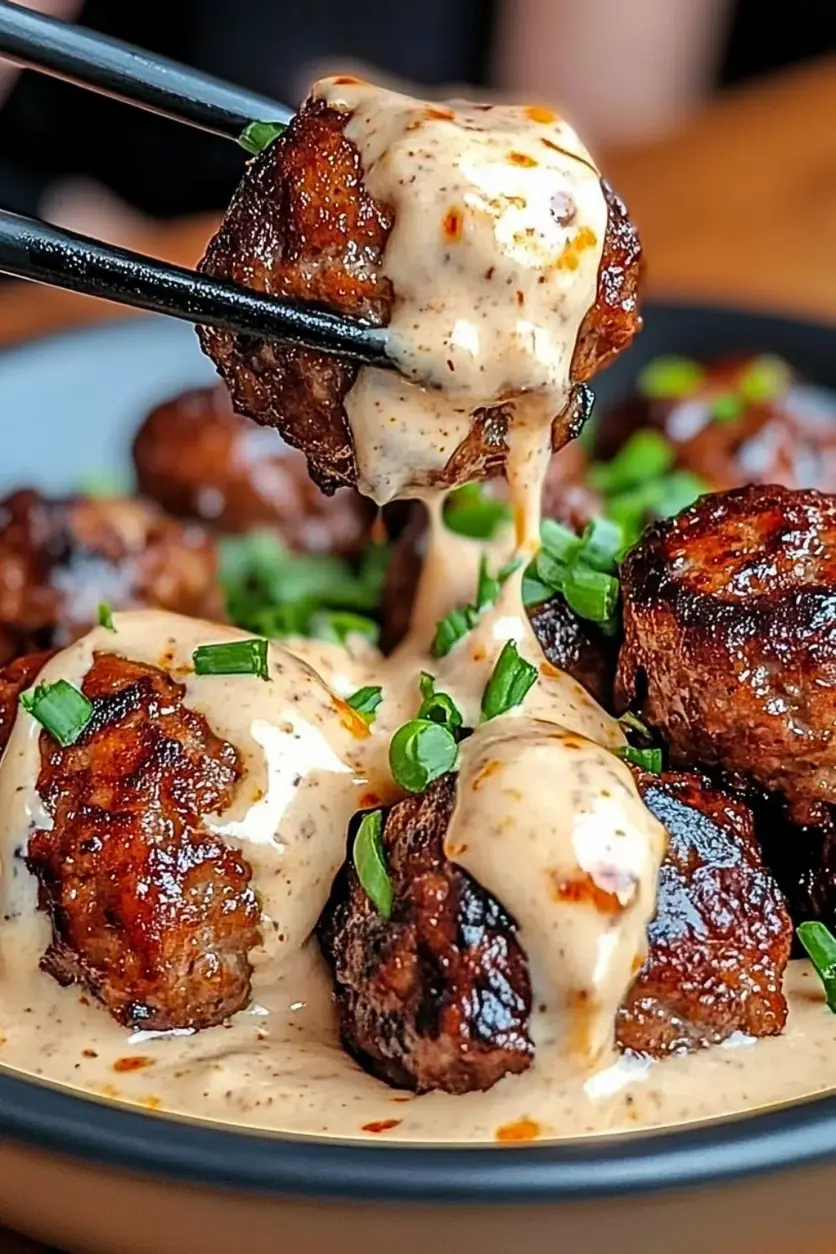
Imagine tender, golden-brown turkey meatballs, laced with garlic and parsley, resting in a luscious, velvety cream sauce enriched with real Parmesan. Each bite delivers a satisfying balance of savory turkey, sharp cheese, and a whisper of heat from the black pepper. The sauce clings to the meatballs, and when you cut into one, it’s juicy and perfectly cooked. The aroma alone will draw everyone to the table — it’s comfort food reimagined for a keto lifestyle.

I’ve tested this recipe dozens of times to get the texture just right. The secret? Oiling your hands before rolling the sticky turkey mixture ensures perfectly round meatballs that hold together. And instead of simmering the sauce for ages, I let the Parmesan do the thickening — keep stirring as it melts. Avoid the common mistake of adding the meatballs too soon; the sauce needs to be thick enough to coat them. Ready to make the best keto turkey meatballs of your life? Let’s cook.

Why This Keto Turkey Meatballs Recipe Is the Best

Flavor Secret — I draw on my Moroccan roots by using fresh parsley and garlic in the meatball mix. That bright, herbaceous note cuts through the rich cream sauce exactly the way we did in my mother’s tagine. Then I add just a touch of black pepper for warmth, not heat. It’s subtle, but it makes these keto turkey meatballs sing. No boring diet food here.

Perfected Texture — French culinary school taught me the art of binding without breadcrumbs. Here, one egg holds the ground turkey together. The trick is to not overmix — you want tender, not tough. And don’t skip oiling your hands! That step prevents sticking and gives you uniform meatballs that brown evenly. A quick broil at the end creates a beautiful crust on top while keeping the inside moist.

Foolproof & Fast — Even beginners can nail this recipe. No lengthy marinades or complicated techniques. You prep the meatballs, brown them in a skillet, whip up the creamy Parmesan sauce in the same pan, and finish under the broiler. Twenty minutes of active time, and dinner is on the table. That’s the kind of weeknight win I live for in my busy NYC kitchen.

Keto Turkey Meatballs Ingredients

I source my ground turkey from the Union Square Greenmarket when I can — free-range, pasture-raised is ideal. For the Parmesan, I always buy a block from Murray’s Cheese in the West Village and grate it fresh. The heavy cream comes from a local dairy; it makes a huge difference. And the garlic? I think of the little souk spice stalls in Marrakech. Every ingredient matters.

Ingredients List

  • 1 pound ground turkey (93% lean works best)
  • 1 large egg
  • ½ teaspoon salt (for meatballs)
  • ½ teaspoon black pepper (for meatballs)
  • 1 teaspoon minced garlic (or 2 cloves, pressed)
  • 2 teaspoons fresh parsley, finely chopped (plus more for garnish)
  • 1¾ cups heavy cream
  • 1 cup freshly grated Parmesan cheese (from a block)
  • 1 teaspoon salt (for sauce)
  • 1 teaspoon garlic powder (for sauce)
  • ¼ teaspoon black pepper (for sauce)
  • Oil for cooking (avocado or light olive oil)

Ingredient Spotlight

Ground Turkey — 93% lean is ideal; too lean (99%) will be dry. The fat keeps the meatballs juicy. Look for packages labeled “ground turkey” not “ground turkey breast.” Substitution: ground chicken works equally well, with a slightly milder flavor.

Parmesan Cheese — Always use a block! Pre-shredded contains starches that prevent smooth melting. I grate mine fine on a Microplane for quick dissolution. For a dairy‑free option, use a vegan Parmesan-style shred, but the sauce will be thinner — increase cream by 2 tablespoons.

Heavy Cream — Also called heavy whipping cream. Don’t substitute half‑and‑half or milk; the sauce won’t thicken properly. For a lighter option, use full‑fat coconut cream — it adds a subtle sweetness that pairs beautifully with the garlic and Parmesan.

Original Ingredient Best Substitution Flavor / Texture Impact
Ground turkey Ground chicken Very similar; slightly milder flavor
Parmesan (block) Pecorino Romano More salty, tangy; reduce added salt
Heavy cream Coconut cream (full fat) Adds subtle sweetness; sauce less thick
Fresh parsley Fresh cilantro More aromatic, slightly citrusy twist

How to Make Keto Turkey Meatballs — Step-by-Step

Don’t let the list of steps intimidate you — this recipe moves quickly and you’ll have dinner on the table in about 35 minutes. Here’s exactly how to nail it every time.

Step 1: Prep Oven and Mix

Preheat your oven to broil (high). In a large bowl, combine ground turkey, egg, ½ teaspoon salt, ½ teaspoon black pepper, minced garlic, and 2 teaspoons parsley. Mix with your hands just until combined — overworking makes the meatballs tough. The mixture will be very sticky.

💡 emy’s Pro Tip: Keep a small bowl of oil near you. Dip your hands in the oil before each meatball — the mixture won’t stick, I promise.

Step 2: Form Meatballs

Oil your hands, then roll the mixture into balls about the diameter of a quarter (roughly 1.5 inches). You want them compact enough to hold shape but not so thick they won’t cook through. I use a meatball maker and get exactly 15 meatballs. Place them on a plate.

⚠️ Common Mistake to Avoid: Making meatballs too large. They’ll brown on the outside before the middle cooks. Keep them uniform and small for even cooking.

Step 3: Brown Meatballs

Heat 2 tablespoons of oil in a large oven‑safe skillet over medium heat. Add the meatballs in a single layer — don’t crowd them (cook in batches if needed). Sear on all sides until deep golden brown and cooked through, about 8 minutes total. Transfer meatballs to a plate and discard any excess fat from the pan, leaving about 1 tablespoon.

💡 emy’s Pro Tip: Use a meat thermometer to check internal temperature — 165°F is safe. I always pull them at 160°F and let carryover cooking finish the job.

Step 4: Make Creamy Sauce

Reduce heat to low. Add heavy cream, Parmesan, garlic powder, 1 teaspoon salt, and ¼ teaspoon black pepper to the same skillet. Stir constantly as the cheese melts and the sauce thickens — this takes about 3 minutes. The sauce should coat the back of a spoon before you add the meatballs back.

⚠️ Common Mistake to Avoid: Adding meatballs before the sauce thickens. If the sauce is too thin, the meatballs will release liquid and you’ll end up with soup. Patience pays off!

Step 5: Combine and Broil

Return the meatballs to the skillet, nestling them into the sauce. Transfer the skillet to the oven and broil for 2–3 minutes until the top is golden and bubbly. Watch closely — broilers vary. Remove carefully; the pan handle will be hot. Garnish with additional chopped parsley and a sprinkle of fresh Parmesan. Let cool for 5 minutes before serving.

💡 emy’s Pro Tip: For an extra‑rich finish, drizzle a teaspoon of truffle oil over the top before broiling. It’s a little Parisian touch that elevates the whole dish.

Step Action Duration Key Visual Cue
1 Mix ingredients 5 min Sticky, uniform color
2 Form meatballs 5 min Uniform, quarter‑size balls
3 Brown meatballs 8 min Deep golden crust on all sides
4 Make sauce 3 min Sauce coats spoon thickly
5 Broil & serve 2–3 min Top is bubbly and golden

Serving & Presentation

I love serving these keto turkey meatballs over a bed of zucchini noodles or simply alongside steamed broccoli. The creamy sauce acts as a natural dressing — toss the zoodles right in the pan with the meatballs for extra flavor. If you’re not strictly low‑carb, they’re gorgeous over cauliflower mash or even a small bowl of high‑quality pasta for the non‑keto eaters at the table.

For a Moroccan twist, sprinkle a pinch of smoked paprika and a few toasted pine nuts over the top. The nutty crunch complements the richness perfectly. And always finish with more fresh parsley — it adds a pop of green that makes the dish look as good as it tastes.

At dinner parties in my Harlem apartment, I serve these meatballs in a shallow white bowl with the sauce pooling around them. A sprinkle of flaky sea salt and a drizzle of good olive oil just before serving takes it from homey to elegant. Trust me, no one will guess it’s a keto recipe.

Pairing Type Suggestions Why It Works
Side Dish Zucchini noodles, cauliflower mash, green beans Low‑carb options that soak up the sauce beautifully
Sauce / Dip Extra cream sauce, sugar‑free ketchup Enhances the creamy richness
Beverage Dry white wine (Pinot Grigio), sparkling water with lemon Cuts through the richness, cleanses palette
Garnish Fresh parsley, Parmesan flakes, paprika, pine nuts Adds color, texture, and aromatic appeal

Make-Ahead, Storage & Reheating

Between recipe testing, writing, and chasing my daughter around Brooklyn, I rely on make‑ahead meals. These keto turkey meatballs are perfect for that. I often prep the meatballs and sauce separately the night before, then finish under the broiler right before serving. Here’s how to store and reheat them without losing that creamy magic.

Method Container Duration Reheating Tip
Refrigerator Airtight glass container 4 days Reheat gently on stovetop over low heat, add a splash of cream or broth to loosen the sauce
Freezer Freezer‑safe gallon bag (vacuum seal if possible) 3 months Thaw overnight in fridge, then reheat in a skillet with lid, stirring occasionally
Make-Ahead Separate containers for meatballs & sauce 1 day in fridge Combine in skillet, heat through, then broil for 2 minutes for best texture

The key to reheating without breaking the sauce is low, slow heat and a splash of liquid. If you use a microwave, do it in 30‑second bursts on 50% power and stir in between. I prefer the stovetop because it keeps the meatballs tender. And whatever you do, don’t boil the sauce — it will separate and become grainy.

Variations & Easy Swaps

Variation Key Change Best For Difficulty Impact
Spicy Moroccan Twist Add ½ tsp cumin + ¼ tsp cinnamon to meatball mix Adventurous eaters Easy
Dairy‑Free Use coconut cream + vegan Parmesan Lactose‑free / keto with a twist Easy
Italian Herb Variation Sub parsley with basil + oregano Classic Italian flavor profile Easy

Spicy Moroccan Twist

This is my favorite variation — a nod to my roots. Add ½ teaspoon ground cumin and ¼ teaspoon cinnamon to the meatball mixture. The warm spices bloom when seared, creating an incredible aroma. Finish the sauce with a pinch of cayenne for gentle heat. Serve with a side of harissa yogurt (if not strict keto) or extra greens.

Dairy‑Free Version

For those avoiding dairy, use full‑fat coconut cream in place of heavy cream and a high‑quality vegan Parmesan (I like the one from Miyoko’s). The coconut adds a subtle sweetness that pairs wonderfully with the garlic and parsley. The sauce will be slightly thinner, so let it simmer an extra minute to reduce. It’s still luscious and keto‑friendly.

Italian Herb Variation

Swap the parsley in the meatballs for 1 teaspoon dried basil and ½ teaspoon dried oregano. Add 2 tablespoons of tomato paste to the sauce for a rosy, Italian‑style cream sauce. This version reminds me of the trattorias in Paris that served veal meatballs in a pink sauce. It’s a lovely change of pace and still low‑carb.

Can I use ground beef instead of turkey for these keto meatballs?

Absolutely! Ground beef (80/20) will make the meatballs richer and more flavorful. The higher fat content also helps keep them super juicy. Just note that the final carb count may vary slightly, but it will still be keto. You can use the same cooking method; just drain any excess fat after browning before making the sauce.

How do I prevent the cream sauce from curdling?

Curdling happens when cream is overheated or meets acid too quickly. To prevent it, always use full‑fat heavy cream, keep the heat on low once you add the cream, and stir continuously. If your sauce looks grainy, remove it from heat immediately and whisk in a tablespoon of cold cream or a pinch of xanthan gum to bring it back together.

Can I make these meatballs without the egg for an egg‑free version?

Yes, you can substitute the egg with 1 tablespoon of ground flaxseed mixed with 3 tablespoons of water (let it sit for 5 minutes to gel). The texture will be slightly less tender, but the meatballs will still hold together. You could also use 2 tablespoons of mayonnaise — it adds moisture and fat, keeping them keto.

How many net carbs are in these keto turkey meatballs?

Each serving (about 4–5 meatballs with sauce) contains roughly 5 grams of total carbohydrates and about 0.5 grams of fiber, giving you around 4.5 grams of net carbs. The exact number depends on the brands of cream and Parmesan you use, but it’s well within keto limits. Always check nutritional labels for accuracy.

Can I freeze the creamy sauce separately?

Yes, you can freeze the sauce on its own in a sealed container for up to 3 months. However, cream‑based sauces can separate after thawing. To fix it, thaw in the fridge overnight, then gently reheat over low heat while whisking constantly. If it’s still grainy, an immersion blender can help re‑emulsify it.

What can I use instead of fresh parsley?

Dried parsley works in a pinch — use 1 teaspoon dried for the 2 teaspoons fresh. For a different flavor, try fresh chives or basil. If you use dried herbs, add them to the meatball mixture and also sprinkle some on the finished dish for color. Cilantro is also a great swap if you enjoy its bold taste.

How do I know when the meatballs are fully cooked?

The safest and most reliable method is to use a food thermometer. Insert it into the center of a meatball; it should read 165°F (74°C). If you don’t have a thermometer, cut into one meatball — the center should be opaque, no pink, and juices should run clear. They should also feel firm to the touch.

Can I use half‑and‑half instead of heavy cream?

Half‑and‑half has less fat and will not thicken the same way. If you’re not strictly keto and want a lighter sauce, you can use half‑and‑half, but you’ll need to simmer it longer and add a thickener like xanthan gum (start with ¼ teaspoon). The sauce will be thinner and less luxurious, but still tasty.

What if I don’t have an oven‑safe skillet?

No problem! After you’ve made the sauce and added the meatballs back, simply transfer everything to a baking dish (greased) and broil it in the oven. Use a 9×13 or similar. The broiling step adds nice color but isn’t essential — you can skip it and just serve the meatballs straight from the skillet.

Can I double this recipe?

Yes, this recipe doubles beautifully. Use a larger skillet or cook the meatballs in batches. Double the ingredient quantities and make sure not to overcrowd the pan during browning. If you’re serving a crowd, keep the meatballs warm in a low oven (200°F) while you finish the sauce batch by batch.

Share Your Version!

I hope this recipe becomes a favorite in your kitchen the way it is in mine. If you try it, please leave a star rating below and share your thoughts in the comments — I read every single one. Did you make the Moroccan spice version? Or did you go dairy‑free? I’d love to know.

Tag me on Instagram @cookingwithemi when you make these keto turkey meatballs. I love seeing your photos and hearing how you made them your own. And if you have a question I haven’t answered, drop it in the comments — I’ll reply personally. From my NYC kitchen to yours — I hope this recipe brings as much warmth to your table as it does to mine. — emy 🧡

📌

Love This Recipe? Save It to Pinterest!

If you enjoyed this Keto Turkey Meatballs in a Creamy Parmesan Sauce recipe, don’t let it get lost in your browser tabs! 😄 Pin it now so you can find it again anytime — and explore hundreds more tried-and-tested recipes waiting for you on my Pinterest boards.

👉 Follow emy on Pinterest @exorecipe

📌 Pin this recipe · 🔁 Re-pin your favorites · 💬 Tag me when you make it — I love seeing your creations!

Print
clock clock iconcutlery cutlery iconflag flag iconfolder folder iconinstagram instagram iconpinterest pinterest iconfacebook facebook iconprint print iconsquares squares iconheart heart iconheart solid heart solid icon

Keto Turkey Meatballs In A Creamy Sauce


  • Author: Chef Emy

Description

These parmesan keto turkey meatballs have just the right amount of spice and savory flavors. Making these the perfect option for a easy low carb dinner.


Ingredients

Scale
  • 1 pound ground turkey
  • 1 large egg
  • 1/2 teaspoon Salt
  • 1/2 teaspoon black pepper
  • 1 teaspoon garlic
  • 2 teaspoon parsley
  • 1 3/4 cup Heavy cream
  • 1 cup Parmesan cheese (cut from the block)
  • 1 teaspoon Salt
  • 1 teaspoon garlic powder
  • 1/4 teaspoon black pepper

Instructions

  1. Preheat oven on broil.
  2. Combine ground turkey with egg, salt, pepper, garlic and parsley. Note, this will be sticky. In order to form meatballs be sure to oil your hands before rolling them.
  3. Roll seasoned ground turkey into meatballs with the diameter of a quarter but thick enough to be considered a meatball. Not super tiny but not so thick they will have a hard time cooking through. I used a meatball maker and I got 15 meatballs.
  4. In a skillet on medium heat add oil and meatballs. Don't crowd them, if you need to cook in batches do so. Cook them on all sides possible for browning until they are cooked through.
  5. Remove meatballs and then adjust heat to low to medium heat. Remove any excess grease/fat left in the pan. Add in heavy cream, parmesan cheese, garlic powder, salt and pepper. Start stirring, allow the sauce to simmer a little, just slightly. Continue to stir as the cheese melt and starts to thicken the sauce. Sauce should be thick before adding in meatballs. After sauce is right then add meatballs back in
  6. Place in oven just to brown the top slightly. Remove, garnish with parsley and and a bit of parmesan then serve. Careful, the cream sauce will be hot. Allow to cool slightly before serving.

Crockpot Chicken Enchilada Casserole

Crockpot Chicken Enchilada Casserole – The Hearty Slow Cooker Dinner You Need

⚖️
Difficulty
Easy
⏲️
Prep Time
15 mins
🕒
Cook Time
3-4 hrs (High) or 4-6 hrs (Low)
⏱️
Total Time
~4 hrs 30 mins
🍽️
Servings
6-8

Every time I make this Crockpot Chicken Enchilada Casserole, I’m transported back to my mother’s kitchen in Morocco, where slow-cooked tagines filled the house with the kind of deep, layered aromas that meant something truly comforting was on the way. Now, living in New York City and juggling a busy schedule, I rely on the slow cooker to capture that same magic—without standing over a stove for hours. This casserole layers tender shredded chicken with fire-roasted tomatoes, green chiles, black beans, corn, and tortillas in a rich enchilada sauce, all finished with melted cheese. It’s the kind of one-pot meal that feels like a warm hug on a hectic weeknight.

The beauty of this dish lies in the texture: the tortilla strips soften into the sauce without becoming mushy, the beans add a creamy bite, and the fire-roasted tomatoes bring a subtle smokiness that reminds me of the grilling techniques I learned in Paris. Every spoonful is a balance of tangy, savory, and slightly sweet flavors, with just a hint of heat from the green chiles. The aroma alone will have your family circling the kitchen before dinner is even announced.

As a trained chef who’s worked in Michelin-starred kitchens, I’ve learned that the best weeknight dinners don’t need to be complicated—they just need to be built with smart technique. In this recipe, I’ll show you how to layer flavors so every component shines, even in a slow cooker. One of my favorite tricks? Adding a dollop of cream cheese at the end (yes, really!) for an extra velvety finish. And watch out for the common mistake of overcooking the tortillas—I’ll explain exactly how to avoid that. Let’s dive in!

Why This Crockpot Chicken Enchilada Casserole Recipe Is the Best

The Flavor Secret: My Moroccan heritage taught me that the key to a great stew is layering spices. Here, taco seasoning is just the start—the fire-roasted tomatoes and green chiles add a smoky depth that you don’t get from plain sauce. And that optional cream cheese? It balances the acidity beautifully, creating a luxurious consistency reminiscent of a French sauce velouté.

Perfected Texture: The worst thing you can do to tortillas in a slow cooker is turn them into a gummy mess. My trick: slice them into strips and only add them in the last 30 minutes of cooking. This way they soften enough to absorb the sauce but still hold their shape, giving you distinct layers—just like a proper lasagna, but with a Tex-Mex twist.

Foolproof & Fast: This recipe is designed for real life. You can prep everything in 15 minutes, let the slow cooker do the work, and come back to a dinner that tastes like you’ve been simmering it all day. Even if you’re a beginner, the forgiving timing (High 3–4 hours, Low 4–6 hours) means you have a wide window for success. No pressure, just delicious results.

Crockpot Chicken Enchilada Casserole Ingredients

I pick up most of these ingredients at my local farmers market in NYC or the well-stocked aisles of Whole Foods. The fire-roasted tomatoes remind me of the sun-drenched tomatoes my mother would roast on the rooftop in Marrakech—only here, the can does the work for us. Let’s look at what you’ll need.

Ingredients List

  • 2 lbs boneless, skinless chicken breasts
  • 2 cups red enchilada sauce
  • 1 can (14.5 oz) fire-roasted tomatoes
  • 1 can (4 oz) diced green chiles
  • 1 packet taco seasoning
  • 2 cups shredded Mexican cheese blend
  • 1 can (15 oz) black beans, drained and rinsed
  • 1 cup sweet corn kernels (fresh, frozen, or canned)
  • 6 gluten-free tortillas or corn tortillas, sliced into strips
  • Optional: 8 oz cream cheese for extra creaminess
  • Fresh cilantro for garnish

Ingredient Spotlight

Fire-Roasted Tomatoes: These bring a smoky, slightly charred flavor that elevates the enchilada sauce. I recommend Muir Glen or Hunt’s fire-roasted. If you can’t find them, substitute with regular diced tomatoes plus ½ teaspoon smoked paprika.

Gluten-Free Tortillas / Corn Tortillas: Corn tortillas hold up better than flour in a slow cooker—they soften but don’t disintegrate. For a gluten-free version, use certified GF corn tortillas (like Mission white corn). If using flour tortillas, add them even later (10 minutes before serving) to avoid mushiness.

Mexican Cheese Blend: A mix of Monterey Jack, Cheddar, and Queso Quesadilla melts beautifully. Pre-shredded is fine but toss with a teaspoon of cornstarch to prevent clumping. For a dairy-free swap, use Violife shredded mozzarella-style shreds.

Cream Cheese (Optional): This is my secret weapon! Whisk in 8 oz of room-temperature cream cheese during the last step for a rich, tangy creaminess. It’s not traditional, but it mimics the silky finish of a French cream sauce—trust me, you’ll love it.

Original Ingredient Best Substitution Flavor / Texture Impact
Fire-roasted tomatoes Regular diced + ½ tsp smoked paprika Slightly less smoky, still good; add extra cumin
Taco seasoning (1 packet) Homemade: 1 tbsp chili powder, 1 tsp cumin, 1 tsp garlic powder, 1 tsp onion powder, ½ tsp oregano, ½ tsp salt Less sodium, can adjust heat level
Shredded Mexican cheese Vegan shreds (Violife mozzarella) or dairy-free cheddar Less meltiness; add a splash of plant milk to help
Corn tortillas Flour tortillas (add 10 min before serving) Softer, more tender; risk of sogginess if added too early

How to Make Crockpot Chicken Enchilada Casserole — Step-by-Step

Follow these simple steps, and you’ll have a comforting, cheesy casserole ready with minimal effort. The slow cooker does all the heavy lifting!

Step 1: Prep the Pot

Spray the inside of your slow cooker with nonstick spray (or use a liner for easy cleanup). Arrange the chicken breasts in a single layer at the bottom—this ensures even cooking.

💡 emy’s Pro Tip: Use chicken breasts of similar thickness. If some are thicker, pound them to 1 inch thickness so they cook at the same rate.

Step 2: Build the Base

Pour enchilada sauce, fire-roasted tomatoes (with juices), diced green chiles, and taco seasoning over the chicken. Stir gently to coat the chicken—don’t worry if the seasoning isn’t fully dissolved; it will meld during cooking.

⚠️ Common Mistake to Avoid: Don’t add extra water. The chicken and tomatoes release plenty of liquid. Adding water will thin the sauce and make the final casserole watery.

Step 3: Slow Cook

Cover and cook on High for 3–4 hours or on Low for 4–6 hours. The chicken is done when it shreds easily with a fork and registers 165°F internally. If your slow cooker runs hot, check at the lower end of the time range.

💡 emy’s Pro Tip: For the most tender results, use Low. The longer, gentler cooking breaks down the chicken fibers without drying them out.

Step 4: Shred the Chicken

Transfer the cooked chicken to a cutting board (or a large bowl). Use two forks to shred it into bite-sized pieces. Return the shredded chicken to the slow cooker and stir into the sauce.

⚠️ Common Mistake to Avoid: Shredding while the chicken is still hot is easier and prevents stringy pieces. Don’t let it cool completely before shredding.

Step 5: Add the Layers

Stir in half of the shredded cheese, the drained black beans, and the corn. Then add the sliced tortilla strips and gently fold everything together until the tortillas are evenly distributed. Sprinkle the remaining cheese over the top.

💡 emy’s Pro Tip: If using cream cheese, cut it into small cubes and stir it in now along with the other add-ins. It will melt into a luscious sauce during the final cook.

Step 6: Final Melt

Cover and cook for another 20–30 minutes on High, or until the cheese is bubbly and melted and the tortillas have softened. Do not overcook—if you keep going beyond 30 minutes, the tortillas can turn mushy. Garnish with fresh cilantro and serve.

⚠️ Common Mistake to Avoid: Lifting the lid too often! Each time you open the slow cooker, you lose heat and extend cooking time. If you need to peek, do it quickly.

Step Action Duration Key Visual Cue
1 Spray pot & add chicken 5 mins Chicken in single layer
2 Add sauce, tomatoes, chiles, seasoning 5 mins Sauce pools around chicken
3 Slow cook 3-4 hrs (High) / 4-6 hrs (Low) Chicken shreds easily
4 Shred & return chicken 5 mins Shredded chicken coated in sauce
5 Add beans, corn, half cheese, tortillas 5 mins Evenly mixed, tortillas visible
6 Top with remaining cheese & cook 20-30 mins Cheese melted, bubbling edges

Serving & Presentation

Serve this Crockpot Chicken Enchilada Casserole piping hot, straight from the slow cooker. I like to spoon it into shallow bowls, allowing the layers to show—the golden cheese crust, the tender chicken, and the soft tortilla strips. A generous sprinkle of fresh cilantro adds a pop of green and freshness. For a touch of heat, add sliced jalapeños or a drizzle of crema Mexicana.

In my NYC kitchen, I often pair this casserole with a simple side of Mexican rice or a crisp green salad dressed with lime vinaigrette. The acidity cuts through the richness perfectly. If you have leftover tortilla chips, sprinkle them on top for extra crunch right before serving—it’s a trick I picked up from a street-food vendor in Mexico City.

For a Moroccan-French twist, I sometimes serve a dollop of harissa-spiked yogurt on the side—it brings back memories of my mother’s table. But the classic avocado slices and sour cream are always welcome.

Pairing Type Suggestions Why It Works
Side Dish Mexican rice, cilantro-lime rice, crisp green salad Absorbs sauce; adds freshness and texture contrast
Sauce / Dip Sour cream, crema Mexicana, avocado crema, harissa yogurt Cool, creamy elements balance the smoky-spicy flavors
Beverage Lager (Modelo), margarita, tart lemonade, iced tea Crisp, cold drinks refresh the palate
Garnish Fresh cilantro, sliced jalapeños, diced avocado, chopped red onion Adds color, crunch, and fresh herbal notes

Make-Ahead, Storage & Reheating

This casserole is a dream for meal prep. I often make a double batch on Sunday and portion it out for busy weekdays. The flavors actually deepen overnight, making leftovers even more delicious. Here’s how to store and reheat it properly.

Method Container Duration Reheating Tip
Refrigerator Airtight container or glass meal-prep jars Up to 4 days Reheat in microwave in 30-second bursts, or in a skillet with a splash of water to revive sauce
Freezer Freezer-safe airtight container or zip-top bag (flatten to save space) Up to 3 months Thaw overnight in fridge, then reheat in a 350°F oven for 20-25 minutes, covered with foil
Make-Ahead Assemble in slow cooker insert, cover, and refrigerate Up to 1 day before cooking Add 30-45 minutes to cooking time if starting from cold. Do not add tortillas until final step

When reheating, keep in mind that the tortillas will continue to soften. If you like a firmer texture, reheat individual portions in a skillet over medium heat, stirring occasionally, until heated through. The cheese will re-melt and the sauce will tighten up nicely. Avoid the microwave if you want to preserve the layer integrity.

Variations & Easy Swaps

Variation Key Change Best For Difficulty Impact
Smoky Chipotle Add 2–3 chopped chipotle peppers in adobo Spice lovers, deeper smokiness Easy – just mix in with the sauce
Vegetarian Omit chicken, double the black beans, add 2 cups roasted sweet potato cubes Meatless Monday, plant-based meals Easy – same timing
Creamy Green Enchilada Substitute green enchilada sauce for red, add ½ cup sour cream at end Milder, tangier flavor Easy – quick swap

Smoky Chipotle Variation

For a deeper, smokier kick, mince 2–3 chipotle peppers from a can of adobo and stir them into the sauce in Step 2. This brings a heat that builds slowly, reminiscent of a French sauce with piment d’Espelette but with a Mexican soul. If you like extra fire, add a tablespoon of the adobo sauce too.

Vegetarian Variation

Skip the chicken entirely and double the black beans. Add 2 cups of diced, roasted sweet potato (tossed with olive oil and salt, roasted at 400°F for 20 minutes) along with the beans and corn. The sweet potato holds up beautifully in the slow cooker and adds a creamy, sweet counterpoint to the smoky sauce. This version is one of my go-to meatless meals, inspired by the root vegetables I’d find at the Union Square Greenmarket.

Creamy Green Enchilada Variation

Swap the red enchilada sauce for 2 cups of green enchilada sauce (like Hatch or Herdez). In the final melt step, stir in ½ cup of sour cream or Mexican crema along with the cheese. The result is a tangy, creamy casserole that’s milder but incredibly comforting. I like to add a handful of sliced green olives for a briny twist—a trick I learned from a tapas bar in Paris.

Can I use frozen chicken breasts in a crockpot for this recipe?

Yes, you can use frozen chicken breasts, but you’ll need to adjust the cooking time. Add about 1 extra hour on High or 2 extra hours on Low. However, for the best texture and food safety, I recommend thawing the chicken in the refrigerator overnight before cooking. Frozen chicken can release more water, which may thin the sauce—so you might want to reduce the enchilada sauce by ¼ cup to compensate. Always check that the internal temperature reaches 165°F.

Can I make this Crockpot Chicken Enchilada Casserole dairy-free?

Absolutely! To make this dairy-free, omit the cheese and cream cheese. Instead, stir in ½ cup of dairy-free sour cream (like Tofutti or Kite Hill) and ½ cup of nutritional yeast for a cheesy flavor. You can also top the casserole with sliced avocado at serving for richness. For the cheese topping, use a vegan shred that melts well, such as Violife cheddar style shreds. The tortillas and sauce are naturally dairy-free, so this swap works beautifully.

How do I prevent the tortillas from getting mushy in the slow cooker?

The key is to add the tortilla strips only in the last 30 minutes of cooking. Corn tortillas are more forgiving than flour, but even they can turn to mush if overcooked. Slice them into 1-inch strips and distribute them evenly. If you’re using flour tortillas, add them even later—about 10 minutes before serving. Also, make sure your sauce isn’t overly watery; if it seems thin, leave the lid slightly ajar during the final melt to let some steam escape.

Can I use chicken thighs instead of chicken breasts?

Yes, boneless, skinless chicken thighs are a fantastic substitute. They are a bit higher in fat, which makes them even more tender and flavorful in the slow cooker. You can use the same amount (2 lbs) and follow the same cooking time. Thighs may need slightly less time to become shreddable—check after 2.5 hours on High. If you prefer white meat, stick with breasts. Both work well, so choose what you have on hand.

What can I use instead of taco seasoning?

You can easily make your own taco seasoning blend with pantry spices. Combine 1 tablespoon chili powder, 1 teaspoon ground cumin, 1 teaspoon garlic powder, 1 teaspoon onion powder, ½ teaspoon dried oregano, ½ teaspoon smoked paprika (optional), and ½ teaspoon salt. This blend gives you control over the salt and heat levels. For a spicier version, add ¼ teaspoon cayenne. This homemade mix is also great for seasoning ground beef or roasted vegetables.

Can I prepare this casserole in advance and cook it later?

Yes, you can assemble the casserole in the slow cooker insert (without the tortillas) up to 24 hours in advance and store it in the refrigerator. When you’re ready to cook, place the insert into the slow cooker (or let it come to room temperature for 30 minutes to avoid thermal shock). Add the tortilla strips during the final 30 minutes as directed. Note that the cooking time may be extended by about 30–45 minutes if the mixture is cold from the fridge.

How do I store leftovers and how long do they last?

Leftover Crockpot Chicken Enchilada Casserole keeps well in the refrigerator for up to 4 days. Store it in an airtight container to prevent it from drying out. For longer storage, you can freeze it for up to 3 months—portion it into individual servings for easy reheating. When reheating from frozen, thaw overnight in the fridge and then warm in a skillet or microwave. The flavors actually meld and deepen overnight, so leftovers taste even better the next day.

Can I add rice or quinoa to the slow cooker?

I do not recommend adding uncooked rice or quinoa directly to the slow cooker with this casserole, because they require different cooking times and liquid ratios. If you want to serve it with rice, cook it separately and serve the casserole over it. For a one-pot version, you could use precooked rice or quinoa—stir in 2 cups at the final melt step along with the beans and corn, but be aware that the texture will be softer and the dish will be thicker.

What size slow cooker do I need for this recipe?

A 6-quart slow cooker is ideal for this recipe. It provides enough room for the chicken, sauce, beans, corn, and tortillas without overcrowding. If you have a 5-quart cooker, it will still work, but you may need to reduce the tortillas to 4 or skip the optional cream cheese to avoid overflowing. A 7-quart or larger will also work fine—just make sure the ingredients are submerged enough to cook evenly. Always fill your slow cooker between half and three-quarters full for best results.

Is this Crockpot Chicken Enchilada Casserole gluten-free?

Yes, it can be easily made gluten-free! The key is to use certified gluten-free corn tortillas (most corn tortillas are naturally gluten-free, but check labels for cross-contamination). The enchilada sauce should also be gluten-free—many brands like Las Palmas or Old El Paso are GF, but verify. Taco seasoning packets sometimes contain flour as an anti-caking agent, so either choose a GF brand (like Simply Organic) or use the homemade blend I suggested above. All other ingredients are naturally gluten-free.

Share Your Version!

I hope this Crockpot Chicken Enchilada Casserole becomes a staple in your kitchen like it has in mine. There’s something so satisfying about coming home to a warm, fragrant meal that takes almost no effort—and tastes like you spent hours perfecting it. Whether you stick with the classic or try one of the variations, I’d love to hear how it turns out for you.

Leave a star rating and a comment below—your feedback helps other readers decide what to cook! And if you snap a photo, tag me on Instagram or Pinterest @cookingwithemy. My favorite thing is seeing your creations. Tell me: did you go for the chipotle version? Or did the green sauce call your name? Let me know in the comments!

From my NYC kitchen to yours — I hope this recipe brings as much warmth to your table as it does to mine. — emy 🧡

📌

Love This Recipe? Save It to Pinterest!

If you enjoyed this Crockpot Chicken Enchilada Casserole recipe, don’t let it get lost in your browser tabs! 😄 Pin it now so you can find it again anytime — and explore hundreds more tried-and-tested recipes waiting for you on my Pinterest boards.

👉 Follow emy on Pinterest @chefrecipes2

📌 Pin this recipe · 🔁 Re-pin your favorites · 💬 Tag me when you make it — I love seeing your creations!

Print
clock clock iconcutlery cutlery iconflag flag iconfolder folder iconinstagram instagram iconpinterest pinterest iconfacebook facebook iconprint print iconsquares squares iconheart heart iconheart solid heart solid icon

Crockpot Chicken Enchilada Casserole


  • Author: Chef Emy

Description

A hearty and flavorful chicken enchilada casserole made in a slow cooker, perfect for busy weekdays and meal prep.


Ingredients

Scale
  • 2 lbs boneless, skinless chicken breasts
  • 2 cups red enchilada sauce
  • 1 can (14.5 oz) fire-roasted tomatoes
  • 1 can (4 oz) diced green chiles
  • 1 packet taco seasoning
  • 2 cups shredded Mexican cheese blend
  • 1 can (15 oz) black beans, drained and rinsed
  • 1 cup sweet corn kernels
  • 6 gluten-free tortillas or corn tortillas, sliced into strips
  • Optional: 8 oz cream cheese for extra creaminess
  • Fresh cilantro for garnish

Instructions

  1. Spray your slow cooker with nonstick spray if desired.
  2. Place chicken breasts in the bottom of the slow cooker.
  3. Add enchilada sauce, fire-roasted tomatoes, green chiles, and taco seasoning. Stir gently to combine.
  4. Cover and cook on High for 3-4 hours or on Low/Medium for 4-6 hours. You can stretch cooking time to 6-8 hours on Low if needed.
  5. Once the chicken is tender, remove it from the slow cooker and shred with two forks.
  6. Return shredded chicken to the slow cooker.
  7. Stir in half of the shredded cheese, black beans, and corn.
  8. Add the sliced tortillas and gently mix everything together.
  9. Sprinkle the remaining cheese over the top.
  10. Cover and cook an additional 20-30 minutes until cheese is melted and everything is heated through.
  11. If desired, add cream cheese during this final step for extra creaminess.
  12. Garnish with chopped cilantro and serve!

Air Fryer Buffalo Cauliflower Recipe

Air Fryer Buffalo Cauliflower – Perfect Crispy Plant‑Based Wings

⚖️
Difficulty
Easy
⏲️
Prep Time
15 mins
🕒
Cook Time
15 mins
⏱️
Total Time
30 mins
🍽️
Servings
4

Growing up in Morocco, my mother would fry vegetables in a light chickpea flour batter until they were impossibly crispy. Later, in Paris, my chef instructor taught me the magic of a quick, sharp sauce that cuts through richness. Now, in my NYC kitchen, I’ve married those lessons into this Air Fryer Buffalo Cauliflower. The key? A thin, seasoned batter that clings to each floret and air‑fries to a shatter‑crisp finish, then a toss in classic buffalo sauce. It’s the perfect plant‑based game‑day snack that even die‑hard wing fans will fight over.

The first bite hits you with that tangy, spicy buffalo kick – cayenne, vinegar, butter – and then the cauliflower’s own sweet, nutty flavor shines through. The air fryer gives you a deep golden crust in minutes, with no greasy fingers. I love serving these piled high on a wooden board alongside celery sticks and a cool ranch dip. The contrast of hot and cold, spicy and creamy – that’s the kind of balance I learned to respect in Paris.

What sets my version apart? First, I use a batter that incorporates onion and garlic powder plus a hint of smoked paprika – a trick from my mother’s kitchen – to build layers of flavor before the sauce even hits. Second, I par‑steam the cauliflower lightly before battering (don’t worry, it’s optional) for an extra‑tender interior. And a pro tip: never skip shaking the basket halfway through; that’s the secret to even browning. One common mistake? Overcrowding – if you crowd the basket, you’ll get steamed cauliflower instead of crispy buffalo bites. Trust me, batch cooking is worth it.

Why This Air Fryer Buffalo Cauliflower Recipe Is the Best

The Flavor Secret: I draw on my French training to build a sauce that’s not just hot, but complex. A touch of smoked paprika in the batter echoes the smokiness of a traditional wing rub. And I add a little melted butter to the buffalo sauce – just like the original – for that silky, clingy finish that coats every nook of the cauliflower. It’s a small detail, but it makes all the difference.

Perfected Texture: After years of testing, I’ve found that a light batter (flour + water + spices) yields a crisp that stays crunchy even after tossing in sauce. The air fryer’s rapid air circulation mimics the high‑heat blast of a commercial fryer, but with 90% less oil. And my trick of letting the battered florets rest for 5 minutes before air frying? That lets the batter set, so it adheres better and doesn’t slide off.

Foolproof & Fast: Even if you’re new to air frying, this recipe works. I’ve made it with my kids (they love dipping), and with friends who claim they don’t like cauliflower. The key is simple: uniform florets, a single layer, and a shake at 7 minutes. Start to finish, you’re about 30 minutes away from a platter of irresistible buffalo “wings” that will disappear in seconds.

Air Fryer Buffalo Cauliflower Ingredients

I pick up my cauliflower at the Union Square Greenmarket on Saturdays – the heads are massive and fragrant. The rest I grab from my pantry: these are all‑star ingredients you probably already have. That’s the beauty of this dish – simple, affordable, and anything but boring.

Ingredients List

  • 1 medium head cauliflower – cut into bite‑sized florets
  • 1/2 cup all‑purpose flour
  • 1/2 cup water
  • 1/2 tsp garlic powder
  • 1/2 tsp onion powder
  • 1/4 tsp smoked paprika (optional, but so good)
  • 1/4 tsp salt
  • 1/4 tsp black pepper
  • 3/4 cup buffalo sauce (store‑bought or homemade)
  • 1 tbsp unsalted butter – melted
  • Cooking spray

Ingredient Spotlight

Cauliflower: The heart of the dish. Look for a head that’s firm, creamy white, with tightly packed florets. No brown spots. If you can find orange or purple cauliflower, it adds a fun color pop, but white is classic. Substitution: Broccoli works in a pinch, but the texture is less tender.

Buffalo sauce: I use Frank’s RedHot Original – that’s the gold standard. But any cayenne‑based hot sauce will do. To make your own, combine 1/2 cup hot sauce + 1/4 cup melted butter + 1 tbsp white vinegar + a pinch of garlic powder. That’s it.

Smoked paprika: This is my secret weapon. It adds a subtle, smoky earthiness that reminds me of the wood‑fired dishes I loved in Essaouira. It’s optional, but I beg you to try it – it elevates the whole dish.

Original Ingredient Best Substitution Flavor / Texture Impact
All‑purpose flour Gluten‑free 1:1 blend (with xanthan gum) Slightly denser but still crispy; use same amount
Buffalo sauce (Frank’s) Homemade: hot sauce + butter + vinegar + garlic More control over heat; slightly richer
Smoked paprika Regular paprika + 1/8 tsp cayenne Less smokiness; extra heat
Butter (for sauce) Vegan butter or olive oil Slightly less creamy; still works

How to Make Air Fryer Buffalo Cauliflower — Step-by-Step

I promise you this is easier than ordering takeout. Just follow these steps and you’ll have a platter of irresistible buffalo cauliflower in half an hour.

Step 1: Prepare the Cauliflower

Cut the cauliflower into bite‑sized florets, aiming for uniform pieces about 1–1½ inches across. This ensures even cooking. Rinse and pat very dry – moisture is the enemy of crispiness. If you have time, let them air‑dry on a towel for 10 minutes.

💡 emy’s Pro Tip: For extra‑tender florets, steam them for 2 minutes first, then cool completely before battering. This step isn’t required, but it gives a melt‑in‑your‑mouth interior.

Step 2: Make the Batter

In a medium bowl, whisk together the flour, water, garlic powder, onion powder, smoked paprika, salt, and pepper until smooth. The consistency should be like thin pancake batter – thick enough to coat the back of a spoon but still runny. If it’s too thick, add a tablespoon more water.

⚠️ Common Mistake to Avoid: Don’t over‑whisk – a few small lumps are fine. Overmixing develops gluten, making the coating tough instead of crispy.

Step 3: Coat the Cauliflower

Drop the florets into the batter and toss gently with a spatula until each piece is fully coated. Let any excess drip off before placing on a wire rack or plate. Let them rest 5 minutes – this helps the batter adhere.

💡 emy’s Pro Tip: Use one hand for wet and one for dry to keep things clean. Or use tongs – it’s less messy and you get better control.

Step 4: Air Fry the Cauliflower

Preheat your air fryer to 375°F (190°C) for 3 minutes. Lightly spray the basket with cooking spray. Arrange the battered florets in a single layer, leaving a little space between each – overcrowding leads to steaming. Cook in batches if needed. Air fry for 12–15 minutes, shaking the basket at the 7‑minute mark, until the coating is golden brown and crispy.

⚠️ Common Mistake to Avoid: Don’t skip the shake – it ensures even browning. Also, never stack florets on top of each other. Work in batches, it’s worth the extra few minutes.

Step 5: Prepare the Buffalo Sauce

While the cauliflower cooks, mix the buffalo sauce with the melted butter in a small bowl. Stir until combined. Taste and adjust – add a pinch of sugar if you like it sweeter, or more hot sauce for extra kick.

💡 emy’s Pro Tip: Warm the sauce gently (15 seconds in the microwave) so it coats the hot cauliflower more evenly. Cold sauce can make the crispy coating soggy.

Step 6: Toss and Serve

Transfer the hot, crispy cauliflower to a large bowl. Pour the buffalo sauce over the top and toss gently until every floret is glazed. Serve immediately with ranch or blue cheese dressing and celery sticks – my husband likes a side of carrot sticks too.

⚠️ Common Mistake to Avoid: Don’t let the sauced cauliflower sit around. Serve right away for maximum crunch. If you wait, the steam will soften the batter.

Step Action Duration Key Visual Cue
1 Cut & dry cauliflower 5 mins Florets dry, uniform
2 Whisk batter 2 mins Smooth, no lumps
3 Coat & rest 5 mins Batter clings evenly
4 Air fry 12–15 mins Golden brown, crisp
5 Make sauce 1 min Butter melted, combined
6 Toss & serve 1 min All florets coated

Serving & Presentation

I like to arrange the buffalo cauliflower on a large, rustic platter – something I picked up at a flea market in the East Village. Line the platter with celery sticks and carrot ribbons, then pile the hot, saucy florets in the center. Sprinkle with a little chopped fresh parsley or scallions for color. Serve with small bowls of ranch dressing and blue cheese dip. In my house, we sometimes add a side of sweet potato fries – a great contrast to the spicy heat.

This recipe is perfect for game day, a casual dinner party, or even a weeknight snack. The first time I made it for my French chef friend, he asked for the recipe and said it reminded him of the buffalo wings he’d discovered in Buffalo, New York – but lighter and more vegetable‑forward. I took that as a huge compliment.

Pairing Type Suggestions Why It Works
Side Dish Celery & carrot sticks, sweet potato fries, coleslaw Cool, crunchy contrasts
Sauce / Dip Ranch, blue cheese, vegan garlic aioli Creamy tames the heat
Beverage IPA, crisp lager, sparkling water with lime Bubbles cut through richness
Garnish Fresh parsley, chopped scallions, sesame seeds Adds freshness and color

Make-Ahead, Storage & Reheating

Because I’m often juggling a busy NYC schedule – food blogging, market runs, and family – I love that these can be partially prepped. You can batter the florets up to 4 hours ahead and keep them in the fridge, then air fry just before serving. Cooked leftovers? They store beautifully, though they lose a little crispness. The trick is reheating in the air fryer (never the microwave!) to bring back that crunch.

Method Container Duration Reheating Tip
Refrigerator Airtight container (uncoated or coated but not sauced) Up to 3 days Air fry at 375°F for 3-4 minutes; add sauce after reheating
Freezer Freezer bag, flattened Up to 2 months Thaw in fridge, then air fry 5-6 min at 375°F
Make-Ahead Batter in bowl, florets separate Up to 4 hours Dip & air fry just before serving

Word to the wise: if you’ve already tossed the leftovers in sauce, they’ll be softer when reheated. That’s still delicious – think of it as a saucy casserole texture – but if you want that original crunch, store the fried florets without sauce and toss right before serving again.

Variations & Easy Swaps

This recipe is a canvas – feel free to play with flavors. I’ve tested these variations in my own kitchen, and they’re all winners. The table gives you a quick overview, then I dive into my three favorites below.

Variation Key Change Best For Difficulty Impact
Moroccan Spiced Add 1 tsp ras el hanout to batter; replace buffalo sauce with harissa‑yogurt North African flavor lovers Easy
Gluten‑Free Use 1:1 gluten‑free flour blend instead of all‑purpose GF diners Easy
Spicy Mango Habanero Use mango habanero hot sauce; reduce butter to 1/2 tbsp Sweet‑heat fans Easy

Moroccan Spiced Cauliflower

This takes me straight back to my mother’s kitchen in Marrakech. Swap the buffalo sauce for a quick harissa‑yogurt: 1/4 cup Greek yogurt + 2 tbsp harissa paste + squeeze of lemon. The batter gets a teaspoon of ras el hanout (a fragrant Moroccan spice blend). The result is warm, aromatic, and utterly addictive – serve with couscous or a simple tomato salad.

Gluten‑Free / Dairy‑Free Version

A dear friend with celiac disease inspired this. Simply replace the all‑purpose flour with a cup‑for‑cup gluten‑free flour blend (I like King Arthur Measure for Measure). For dairy‑free, use vegan butter or a splash of olive oil in the sauce. The texture stays beautifully crispy – just don’t let the batter sit too long (GF flours thicken faster).

Spicy Mango Habanero Version

When I want a sweet‑heat punch, I reach for mango habanero hot sauce (Melinda’s is my go‑to). The fruitiness pairs brilliantly with the caramelized cauliflower. Reduce the butter to half a tablespoon to let the fruit shine. I serve these with a cooling avocado crema – just blend 1 avocado + 1/2 cup sour cream + lime juice + salt.

Can I make air fryer buffalo cauliflower without batter?

Yes, you can! For a lighter, lower‑carb version, simply toss the cauliflower florets in a little oil and your spices (garlic powder, paprika, salt, pepper), then air fry until tender and slightly charred. Toss with buffalo sauce afterward. The texture won’t be as crispy as the battered version – it’s more like roasted cauliflower with a spicy glaze – but it’s still delicious and takes only 10 minutes of cooking time. I often make this as a quick side dish.

How do I keep the batter from falling off the cauliflower?

The trick is to make sure your cauliflower is very dry before battering. Pat it thoroughly with a clean kitchen towel after washing. Also, let the battered florets rest on a wire rack for 5 minutes before air frying – this lets the batter set and adhere. If you’re using a gluten‑free flour blend, you may need to let it rest a bit longer (8‑10 minutes) because GF flours absorb moisture differently. And don’t crowd the air fryer basket – busy florets will steam and the batter can slide off.

What is the best temperature to air fry buffalo cauliflower?

375°F (190°C) is the sweet spot. At this temperature, the batter crisps up beautifully without burning, and the cauliflower becomes tender in the same time frame (12‑15 minutes). If your air fryer runs hot, you can drop it to 360°F and add a minute or two. Avoid temperatures above 400°F – the outside will brown too fast while the inside stays raw. Always preheat your air fryer for 3‑5 minutes for the best crust.

Can I use frozen cauliflower florets for this recipe?

I don’t recommend it for the battered version. Frozen cauliflower releases a lot of moisture as it thaws, which will make the batter soggy and cause it to slide off. If you’re determined, thaw the florets completely, then press them between paper towels to remove as much liquid as possible before battering. Even then, the texture won’t be as crisp. For the oil‑only version (no batter), frozen works fine – just increase air fry time by 3‑4 minutes and shake well.

How do I make the buffalo sauce less spicy?

There are three easy ways to tame the heat. First, use a mild hot sauce or mix Frank’s RedHot with a little ketchup or honey. Second, increase the amount of melted butter in the sauce – the fat will mellow the heat. Third, serve the cauliflower with a generous amount of cooling dip like ranch or blue cheese. The combination of spicy and creamy is classic for a reason. I also sometimes add a splash of apple cider vinegar to brighten the flavor without extra heat.

Can I bake buffalo cauliflower instead of air frying?

Absolutely! To bake, place the battered florets on a parchment‑lined baking sheet and spray with cooking oil. Bake at 425°F (220°C) for 20‑25 minutes, flipping halfway through, until golden and crispy. The result will be slightly less crunchy than air‑fried, but still very good. I recommend using a wire rack on top of the baking sheet to allow air to circulate underneath – that helps with crispness. Just watch the time: ovens vary, and you want the coating to be deep golden brown.

Is it necessary to use smoked paprika? What can I substitute?

Smoked paprika is not essential, but it adds a wonderful depth that reminds me of wood‑fired roasting. If you don’t have it, use regular sweet paprika – the flavor will be milder but still nice. You can also add a pinch of cumin for earthiness or a dash of cayenne for extra heat. If you’re looking for that smoky note without paprika, try 1/8 teaspoon of liquid smoke (use sparingly, it’s potent).

Can I meal prep buffalo cauliflower for the week?

Yes, with a few caveats. I recommend battering and air frying the cauliflower up to 2 days ahead, but store the florets without sauce in an airtight container in the fridge. When you’re ready to eat, re‑crisp them in the air fryer at 375°F for 3‑4 minutes, then toss with warmed sauce. The sauce itself can be made up to a week ahead and stored in the fridge. If you already sauced the leftovers, they’ll soften – still tasty, but more like a saucy casserole than crispy wings.

What dipping sauces go best with buffalo cauliflower?

Classic ranch and blue cheese are the top contenders – their creamy, tangy profiles perfectly complement the spicy buffalo sauce. I also love a simple garlic aioli (mix 1/2 cup mayo + 1 clove minced garlic + lemon juice) or a vegan cashew cream for a dairy‑free option. If you want to lean into the Moroccan variation, a harissa‑yogurt dip (see above) is incredible. And for something completely different, try a sweet chili sauce – the sweet‑heat combo is addictive.

Why is my air fryer buffalo cauliflower not crispy?

There are four common culprits. 1) Overcrowding – the florets need space for hot air to circulate; cook in batches if needed. 2) Wet batter or wet cauliflower – moisture is the enemy of crispiness; pat the florets very dry. 3) Not enough oil spray – a light coating of cooking spray on the basket and on the battered florets helps browning. 4) Not shaking halfway through – shaking redistributes the florets and ensures even crispness. Also, check that your air fryer is fully preheated – a cold start can lead to less crunch.

Share Your Version!

I’d love to hear how this Air Fryer Buffalo Cauliflower turns out in your kitchen. Did you add your own twist? Try one of my variations? Leave a star rating and a comment below – I read every single one and answer questions personally. And if you snap a photo of your platter, tag me @cookingwithemi on Instagram or Pinterest – seeing your creations is the best part of my day.

From my NYC kitchen to yours – I hope this recipe brings as much warmth to your table as it does to mine. — emy 🧡

📌

Love This Recipe? Save It to Pinterest!

If you enjoyed this Air Fryer Buffalo Cauliflower recipe, don’t let it get lost in your browser tabs! 😄 Pin it now so you can find it again anytime – and explore hundreds more tried‑and‑tested recipes waiting for you on my Pinterest boards.

👉 Follow emy on Pinterest @chefrecipes2

📌 Pin this recipe · 🔁 Re‑pin your favorites · 💬 Tag me when you make it – I love seeing your creations!

Print
clock clock iconcutlery cutlery iconflag flag iconfolder folder iconinstagram instagram iconpinterest pinterest iconfacebook facebook iconprint print iconsquares squares iconheart heart iconheart solid heart solid icon

Air Fryer Buffalo Cauliflower Recipe


  • Author: Chef Emy

Description

Buffalo Cauliflower has taken the culinary world by storm, and it’s easy to see why. This plant-based dish delivers all the bold flavors and satisfying crunch of buffalo wings but without the meat. Cauliflower, with its mild flavor and hearty texture, is the ideal vegetable to soak up that spicy buffalo sauce. And with the convenience of an air fryer, you can achieve that perfect crispiness in a fraction of the time and with a lot less oil.


Ingredients

Scale
  • 1 medium head of cauliflower – cut into bite-sized florets
  • 1/2 cup all-purpose flour
  • 1/2 cup water
  • 1/2 tsp garlic powder
  • 1/2 tsp onion powder
  • 1/4 tsp smoked paprika
  • 1/4 tsp salt
  • 1/4 tsp black pepper
  • 3/4 cup buffalo sauce (store-bought or homemade)
  • 1 tbsp unsalted butter – melted
  • Cooking spray

Instructions

  1. Prepare the Cauliflower:Cut the cauliflower into bite-sized florets, ensuring they are uniform in size for even cooking.
  2. Make the Batter:In a large bowl, whisk together the flour, water, garlic powder, onion powder, smoked paprika, salt, and black pepper until smooth. The batter should be thick enough to coat the cauliflower but still pourable.
  3. Coat the Cauliflower:Add the cauliflower florets to the batter, ensuring each piece is fully coated. Shake off any excess batter before placing them in the air fryer.
  4. Air Fry the Cauliflower:Preheat the air fryer to 375°F (190°C) for about 3 minutes. Lightly spray the air fryer basket with cooking spray.Place the battered cauliflower florets in a single layer in the air fryer basket, making sure they are not overcrowded. You may need to cook them in batches.Air fry for 12-15 minutes, shaking the basket halfway through cooking, until the cauliflower is golden brown and crispy.
  5. Prepare the Buffalo Sauce:While the cauliflower is cooking, mix the buffalo sauce with the melted butter in a small bowl.
  6. Toss the Cauliflower in Buffalo Sauce:Once the cauliflower is done, place it in a large bowl. Pour the buffalo sauce over the cauliflower and toss until each floret is evenly coated.
  7. Serve:Serve the buffalo cauliflower immediately with your favorite dipping sauce, such as ranch or blue cheese, and some celery sticks on the side.

Easy Crock Pot Cream Cheese Chicken Chili

“`html

Easy Crock Pot Cream Cheese Chicken Chili – The Creamiest One-Pot Comfort Food

⚖️
Difficulty
Easy
⏲️
Prep Time
10 mins
🕒
Cook Time
420 mins
⏱️
Total Time
430 mins
🍽️
Servings
6

I still remember the first time I made this Easy Crock Pot Cream Cheese Chicken Chili — it was a chilly Sunday afternoon in my tiny NYC apartment, and the smell that filled my kitchen transported me straight back to my mother’s home in Morocco. She would simmer spiced chicken with tomatoes and beans for hours, and the cream cheese I added here gives it that same velvety richness she achieved with cultured butter and slow cooking. This crock pot cream cheese chicken chili has become my family’s most-requested meal, and I know it will become a staple in your home too.

Imagine coming home after a long day to a chili that is thick, creamy, and brimming with tender shredded chicken, sweet corn, and earthy black beans — all infused with cumin, chili powder, and a whisper of ranch seasoning. The cream cheese melts into the broth as it simmers low and slow, creating a luscious, silky texture that coats every spoonful. A pinch of onion powder ties everything together with a subtle sweetness, while the Rotel tomatoes add a gentle tang and just enough heat to keep things interesting.

What sets my version apart is how I layer the ingredients: chicken on the bottom, beans and tomatoes on top, and the cream cheese placed whole on the very top — never stirred in until the end. This technique, which I learned during my French culinary training, allows the cream cheese to soften gradually and emulsify into the chili naturally, giving you a perfectly smooth consistency every time. I’ll share my best pro tip for shredding the chicken and one common mistake that can make your chili watery — avoid that, and you’re golden.

Why This Easy Crock Pot Cream Cheese Chicken Chili Recipe Is the Best

The Flavor Secret: Growing up in Morocco, I learned that the best dishes build flavor in layers — and this Easy Crock Pot Cream Cheese Chicken Chili does exactly that. The ranch dressing mix brings a tangy, herbaceous backbone that echoes the spice blends my mother used. Combined with cumin and chili powder, it creates a warm, North African-inspired depth that feels both comforting and exciting.

Perfected Texture: In Paris, I learned that patience is the secret to a silky sauce. By placing the cream cheese on top and never stirring it in until the very end, it melts slowly and emulsifies into the broth without curdling. The result is a chili that is thick and creamy — not watery or greasy — with every ingredient suspended in a velvety, luxurious sauce.

Foolproof & Fast: This crock pot cream cheese chicken chili is genuinely impossible to mess up. You simply dump the ingredients in, set the slow cooker, and walk away. It is forgiving enough for a beginner cook yet delivers the kind of complex, slow-simmered flavor that impresses even seasoned food lovers. Plus, it makes the best leftovers — the flavors deepen overnight, and it freezes beautifully for busy weeks.

Easy Crock Pot Cream Cheese Chicken Chili Ingredients

I source most of my ingredients from the Union Square Greenmarket and my local bodega in Brooklyn — but everything here is easily found at any US grocery store. The ingredient list is short, honest, and designed for maximum flavor with minimum fuss. This is the kind of shopping list that takes five minutes to gather and delivers a meal that tastes like you simmered it all day.

Ingredients List

  • 1 (15 oz.) can black beans, drained and rinsed
  • 1 (15.25 oz.) can corn, undrained
  • 1 (10 oz.) can Rotel tomatoes (original or mild), undrained
  • 1 (1 oz.) package ranch dressing mix
  • 1 tsp. ground cumin
  • 1 Tbsp. chili powder
  • 1 tsp. onion powder
  • 1 (8 oz.) package light cream cheese, softened slightly
  • 2 boneless, skinless chicken breasts (about 1 lb total)

Ingredient Spotlight

Light Cream Cheese: This is the heart of the chili. The reduced-fat version works beautifully because it has a lower moisture content, which helps the chili thicken without becoming greasy. Full-fat cream cheese also works — your chili will be slightly richer, so you may want to add an extra splash of broth. I recommend Philadelphia brand for consistent melting. Never use nonfat cream cheese — it contains stabilizers that can turn grainy when heated.

Rotel Tomatoes: These fire-roasted tomatoes with green chilies add a smoky tang and gentle heat that brightens the cream cheese richness. If you can’t find Rotel, substitute one (14.5 oz.) can of diced tomatoes plus one (4 oz.) can of diced green chilies. For a spicier chili, choose the Hot variety — my NYC palate loves the extra kick.

Chicken Breasts: Boneless, skinless chicken breasts are ideal because they shred into perfect, tender strands after hours in the slow cooker. You can use boneless thighs for a juicier, more flavorful alternative — just shred them finely and expect a slightly richer chili. For a vegetarian version, swap in 2 cans of chickpeas or jackfruit and reduce the cook time to 4 hours on low.

Ranch Dressing Mix: This is my secret weapon — a packet of powdered ranch seasoning brings buttermilk tang, dill, garlic, and onion notes in one convenient blend. It is the shortcut that makes this crock pot cream cheese chicken chili taste like you simmered it for hours with fresh herbs. If you are sensitive to sodium, look for a reduced-sodium ranch mix or make your own at home.

Original Ingredient Best Substitution Flavor / Texture Impact
Light cream cheese Full-fat cream cheese Richer, thicker; may need extra liquid
Rotel tomatoes Diced tomatoes + green chilies Similar tang and mild heat
Chicken breasts Boneless chicken thighs Juicier, more flavorful; shreds easily
Ranch dressing mix Homemade ranch seasoning Less sodium; customizable herbs
Black beans Pinto or kidney beans Slightly earthier; same creamy texture

How to Make Easy Crock Pot Cream Cheese Chicken Chili — Step-by-Step

Trust me when I say this is the easiest dinner you will make all week — and the results taste like a slow-simmered labor of love. Follow these steps, and you will have a creamy, crowd-pleasing chili that your whole family will beg for again and again.

Step 1: Prep and Layer

Drain and rinse the black beans well under cold water. Place the two chicken breasts in a single layer at the bottom of your crock pot. Pour the entire can of corn (undrained), the Rotel tomatoes (undrained), and the rinsed black beans on top of the chicken. Do not stir yet — keep the chicken on the bottom so it cooks evenly.

⚠️ Common Mistake to Avoid: Adding the beans without draining and rinsing them first. The starchy liquid in the can will make your chili cloudy and can affect the flavor. Always rinse black beans in a colander until the water runs clear.

Step 2: Season and Top

Sprinkle the ranch dressing mix, cumin, chili powder, and onion powder evenly over the beans and tomatoes. Use a spoon to gently stir everything together — but keep the chicken still nestled at the bottom. Place the block of cream cheese on top of the mixture, right in the center. Do not break it up or stir it in.

💡 emy’s Pro Tip: Let the cream cheese sit at room temperature for 15 to 20 minutes before adding it to the crock pot. This slight softening helps it melt more evenly during the first hour of cooking, so you don’t end up with separated bits of cream cheese floating in the chili.

Step 3: Slow Cook

Cover the crock pot with the lid and cook on low for 6 to 8 hours. During this time, the chicken will become fork-tender and the cream cheese will melt into the chili, creating a luscious, creamy sauce. Resist the urge to lift the lid — every time you do, you release heat and add about 30 minutes to the cooking time.

⚠️ Common Mistake to Avoid: Cooking on high instead of low. While you can cook this chili on high for 3 to 4 hours in a pinch, the cream cheese may not emulsify as smoothly, and the chicken won’t be as tender. Low and slow is the way to go for the creamiest texture and the deepest flavor.

Step 4: Shred and Finish

After the cooking time is up, carefully remove the chicken breasts from the crock pot and place them on a cutting board. Using two forks, shred the chicken into bite-sized pieces. Return the shredded chicken to the chili and stir everything together thoroughly — the cream cheese will fully incorporate into the sauce, creating a rich, velvety finish. Taste and adjust seasoning with salt and pepper if needed.

💡 emy’s Pro Tip: For extra creamy chili, use an immersion blender to give the chili two or three quick pulses after stirring in the shredded chicken. This breaks down some of the beans and corn, releasing their starches and making the chili even thicker and more luxurious — just be careful not to over-blend.

Step Action Duration Key Visual Cue
1 Layer chicken, beans, corn, tomatoes 5 minutes Chicken fully covered by beans and corn
2 Add seasonings and cream cheese 3 minutes Cream cheese block sits undisturbed on top
3 Slow cook on low 6–8 hours Cream cheese melted; chicken fork-tender
4 Shred chicken and stir 5 minutes Chili turns uniformly creamy and thick

Serving & Presentation

I love serving this Easy Crock Pot Cream Cheese Chicken Chili in deep, rustic bowls with a generous sprinkle of fresh cilantro and a wedge of lime on the side — a trick I picked up at a taco stand in Brooklyn that brightens the creamy richness beautifully. A dollop of sour cream, a handful of shredded cheddar, and a few pickled jalapeños take it over the top. My Moroccan roots also love a dusting of smoked paprika for a subtle, smoky warmth.

For a complete meal, I pair this chili with warm cornbread slathered in honey butter, or with crispy tortilla chips for scooping. A simple green salad with a zesty cilantro-lime vinaigrette cuts through the creaminess and adds freshness. In my NYC kitchen, I often serve it with a side of fluffy white rice or quinoa to make it even heartier — perfect for soaking up every last drop of that velvety sauce.

This chili is also a fantastic topping for baked potatoes, nachos, or even hot dogs — a fun twist my family loves on game days. However you serve it, this crock pot cream cheese chicken chili is guaranteed to be the star of the table. Just be prepared for everyone to ask for the recipe.

Pairing Type Suggestions Why It Works
Side Dish Cornbread, tortilla chips, steamed rice Absorbs the creamy sauce; adds crunch
Sauce / Dip Sour cream, hot sauce, crema Adds tangy contrast to the richness
Beverage Mexican lager, iced tea, sparkling lime water Crisp and refreshing against creamy chili
Garnish Fresh cilantro, lime wedges, shredded cheese, jalapeños Adds brightness, color, and texture

Make-Ahead, Storage & Reheating

This Easy Crock Pot Cream Cheese Chicken Chili is a meal-prepper’s dream. I often make a double batch on Sunday and portion it out for busy weeknights when I am teaching cooking classes or running errands around the city. The flavors actually deepen and improve after a day or two in the fridge, making it one of those rare dishes that tastes even better as leftovers.

Method Container Duration Reheating Tip
Refrigerator Airtight container Up to 5 days Reheat in a saucepan over medium-low heat, stirring occasionally; add a splash of milk or broth if too thick
Freezer Freezer-safe zip-top bag or container Up to 3 months Thaw overnight in the fridge; reheat gently on the stove, stirring in a splash of broth to revive the creamy texture
Make-Ahead Crock pot insert (refrigerated) Up to 2 days in advance Assemble all ingredients in the crock pot insert, cover, and refrigerate; place in the base and cook on low for 7 hours

When reheating, I always add a tablespoon or two of milk or chicken broth to bring back the silky consistency — the chili thickens as it sits, and a little liquid helps it bloom again. If reheating in the microwave, cover the bowl with a damp paper towel to trap steam and stir every 30 seconds for even heating. My favorite trick? Reheat individual portions in a small saucepan with a sprinkle of extra cumin and a squeeze of lime — it tastes like you just made it fresh.

For make-ahead convenience, you can also freeze the chili in individual portions for easy lunches. Just thaw overnight in the fridge and reheat as directed. The cream cheese sauce may look slightly separated after freezing, but a vigorous stir and a splash of milk bring it right back to velvety perfection. I cannot tell you how many times this chili has saved me on a busy weeknight.

Variations & Easy Swaps

This Easy Crock Pot Cream Cheese Chicken Chili is endlessly adaptable — I have made it for friends with dietary restrictions, for potlucks, and for cozy date nights at home. Here are three of my favorite variations, each tested in my own kitchen and approved by my family.

Variation Key Change Best For Difficulty Impact
Smoky Chipotle Add 1–2 chipotles in adobo, minced Spice lovers; fall dinners Easy
Dairy-Free / Vegan Use vegan cream cheese and omit chicken Dairy-free and vegan households Easy
Southwest Black Bean & Corn Add ½ cup diced bell pepper and ½ tsp smoked paprika Summer meals; extra veggies Easy

Smoky Chipotle Variation

For a deeper, smokier heat, add 1 to 2 chipotle peppers in adobo sauce (minced) along with the other seasonings. This variation is inspired by the smoky salsas I loved at a taqueria in Harlem. The chipotle adds a subtle, smoky warmth that dances beautifully with the creamy richness of the cream cheese. Start with one pepper and taste after shredding the chicken — you can always add more.

Dairy-Free / Vegan Variation

To make this chili dairy-free and vegan, substitute the cream cheese with a high-quality vegan cream cheese (I like Kite Hill or Miyoko’s) and replace the chicken with two cans of chickpeas or jackfruit. The cooking time reduces to 4 hours on low, since the chickpeas just need to warm through. The texture is still wonderfully creamy, and the ranch seasoning provides all the savory depth you need. My dairy-free friends in NYC rave about this version.

Southwest Black Bean & Corn Variation

When summer produce hits the Union Square Greenmarket, I love adding diced bell pepper and a pinch of smoked paprika to this chili. Simply stir in ½ cup of diced red or green bell pepper along with the beans and corn, and add ½ teaspoon of smoked paprika to the seasoning mix. It adds a subtle sweetness and a gorgeous pop of color. This variation tastes like a sunny Southwest afternoon — even in the middle of a NYC winter.

Can I use frozen chicken breasts in the crock pot for this cream cheese chicken chili?

Yes, you can use frozen chicken breasts, but I recommend thawing them first for the best texture and food safety. If you must use frozen chicken, add 1 to 2 hours to the cooking time on low and make sure the internal temperature reaches 165°F before shredding. Keep in mind that frozen chicken releases more liquid, which can make your chili slightly thinner — you may need to simmer it uncovered for 15 to 20 minutes at the end to thicken it up.

Can I make this crock pot cream cheese chicken chili in an Instant Pot or on the stovetop?

Absolutely. For the Instant Pot, use the sauté function to soften the cream cheese and seasonings for 2 minutes, then add the chicken, beans, corn, and tomatoes. Pressure cook on high for 15 minutes, then do a natural release for 10 minutes before shredding the chicken. For the stovetop, simmer everything in a heavy-bottomed pot over low heat for about 1 hour, stirring occasionally, until the chicken is tender and the chili is thick and creamy.

How can I make this cream cheese chicken chili healthier?

This chili is already quite balanced, but there are a few easy swaps to lighten it further. Use fat-free cream cheese or Greek yogurt in place of light cream cheese — just stir the yogurt in at the end to avoid curdling. You can also reduce the sodium by using a low-sodium ranch dressing mix and no-salt-added canned beans and corn. For extra fiber, add a diced zucchini or a handful of spinach during the last 30 minutes of cooking. I often make this lighter version when I am training for a 5K.

Can I use Greek yogurt or another substitute for cream cheese in this chili?

Yes, plain Greek yogurt can replace cream cheese, but it behaves differently. Stir in ½ cup of full-fat Greek yogurt at the very end — after the chili has finished cooking and has been removed from the heat — to prevent curdling. The flavor will be tangier and the texture slightly thinner. For the best result, I recommend using a block-style cream cheese (light or full-fat) for the signature velvety texture that defines this crock pot cream cheese chicken chili.

How do I thicken this cream cheese chicken chili if it is too watery?

If your chili turns out thinner than you would like, there are several easy fixes. First, try mashing about ½ cup of the beans with a fork or a potato masher and stirring them back into the chili — the bean starch is a natural thickener. You can also let the chili simmer uncovered on the stovetop for 15 to 20 minutes to evaporate excess liquid. Another trick from my Paris training: whisk 1 tablespoon of cornstarch with 2 tablespoons of cold water into a slurry and stir it into the chili; cook for 5 more minutes until thickened.

Can I add more vegetables to this crock pot cream cheese chicken chili?

Definitely. This chili is a fantastic canvas for extra vegetables. I love adding diced bell peppers, zucchini, or even frozen spinach. If you are adding firmer vegetables like carrots or celery, dice them small and add them at the beginning so they soften during the long cook time. For delicate vegetables like zucchini or spinach, stir them in during the last 30 minutes of cooking. My favorite addition is a cup of frozen corn in addition to the canned corn — it adds sweetness and texture.

What can I serve with this cream cheese chicken chili?

This chili is incredibly versatile and pairs well with so many sides. I love serving it with warm cornbread and honey butter, crispy tortilla chips for scooping, or a simple green salad with a cilantro-lime vinaigrette. It is also fantastic over rice, quinoa, or even baked potatoes. For a fun twist, use it as a topping for nachos, hot dogs, or loaded fries. However you serve it, this Easy Crock Pot Cream Cheese Chicken Chili is guaranteed to be a crowd-pleaser at any table.

Can I freeze this crock pot cream cheese chicken chili?

Yes, this chili freezes beautifully — I always make a double batch and stash individual portions for busy weeks. Let the chili cool completely, then transfer it to freezer-safe bags or containers. It will keep for up to 3 months. When you are ready to enjoy it, thaw overnight in the refrigerator and reheat gently on the stovetop or in the microwave. The cream cheese sauce may look slightly separated after thawing, but a vigorous stir and a splash of milk or broth bring it right back to its velvety consistency.

How can I add more protein to this cream cheese chicken chili?

This chili is already packed with protein from the chicken and black beans, but if you want to boost it further, there are several easy options. Add a can of drained and rinsed pinto or kidney beans along with the black beans. You can also stir in a scoop of unflavored collagen peptides or whey protein powder at the end of cooking — just mix it with a little broth first to prevent clumps. For a heartier meal, top each serving with a fried egg or a spoonful of Greek yogurt.

Can I use a different type of cheese instead of cream cheese in this chili?

While cream cheese is the star of this recipe, you can experiment with other cheeses for a different flavor profile. For a tangier, more traditional chili, substitute ½ cup of shredded Monterey Jack or pepper jack cheese — stir it in at the end until melted. For a richer, more decadent chili, try mascarpone cheese, which has a similar texture to cream cheese but is even silkier. Keep in mind that cream cheese provides the signature velvety thickness that defines this Easy Crock Pot Cream Cheese Chicken Chili.

Share Your Version!

I truly hope this Easy Crock Pot Cream Cheese Chicken Chili becomes as beloved in your kitchen as it is in mine. There is something so special about a meal that fills your home with warmth and your family with joy — and this chili does exactly that. If you try it, I would love to hear how it turned out. Leave a star rating and a comment below, and let me know which variation you tried or what you served alongside it. Your feedback helps other home cooks discover this recipe and make it their own.

If you share a photo on Instagram or Pinterest, be sure to tag @cookingwithemi — I love scrolling through my feed and seeing your beautiful bowls of chili. And here is a question for you: did you try the smoky chipotle variation or the dairy-free version? I am always testing new twists in my NYC kitchen, and your ideas might just inspire my next recipe. Thank you for being here, for cooking with love, and for making every meal a little warmer.

From my NYC kitchen to yours — I hope this recipe brings as much warmth to your table as it does to mine. — emy 🧡

📌

Love This Recipe? Save It to Pinterest!

If you enjoyed this Easy Crock Pot Cream Cheese Chicken Chili recipe, don’t let it get lost in your browser tabs! 😄 Pin it now so you can find it again anytime — and explore hundreds more tried-and-tested recipes waiting for you on my Pinterest boards.

👉 Follow emy on Pinterest @exorecipe

📌 Pin this recipe · 🔁 Re-pin your favorites · 💬 Tag me when you make it — I love seeing your creations!

“`

Print

clock clock iconcutlery cutlery iconflag flag iconfolder folder iconinstagram instagram iconpinterest pinterest iconfacebook facebook iconprint print iconsquares squares iconheart heart iconheart solid heart solid icon

Easy Crock Pot Cream Cheese Chicken Chili


  • Author: Chef Emy

Description

You will love this Easy Crock Pot Cream Cheese Chicken Chili Recipe! It’s my family’s favorite chili!


Ingredients

Scale
  • 1 15- oz. can black beans
  • 1 15.25- oz. can corn (undrained)
  • 1 10- oz. can Rotel tomatoes (undrained)
  • 1 package ranch dressing mix
  • 1 tsp. cumin
  • 1 Tbsp. chili powder
  • 1 tsp. onion powder
  • 1 8- oz package light cream cheese
  • 2 chicken breasts

Instructions

  1. Drain and rinse the black beans. Place chicken at the bottom of the crock pot, then pour out the whole can of corn (undrained), Rotel tomatoes, and black beans on top of chicken.
  2. Top with seasonings and ranch dressing mix. Stir together.
  3. Place cream cheese block on top. Cover with lid and cook on low for 6-8 hours.
  4. After the cooking time is over, take chicken breasts from crock pot and shred and add back to the chili. Stir together and enjoy!

Tri Tip (2 Ways)

Tri Tip (2 Ways) – The Ultimate Guide to Grilling or Oven-Roasting

⚖️
Difficulty
Easy
⏲️
Prep Time
15 mins
🕒
Cook Time
30 mins
⏱️
Total Time
45 mins + marinate
🍽️
Servings
6–8

If you have never had tri tip, you haven’t lived. I mean that from the bottom of my heart. Growing up in Morocco, my mother would slow-roast tough cuts of beef with warm spices until they turned into something magical. But tri tip? I didn’t discover that beauty until I moved to California as a young cook. This cut, also called a bottom sirloin butt or triangle roast, is everything you want in beef: deep flavor, tender texture, and a price tag that won’t make you wince. And now, living in New York City, I make tri tip two ways — on the grill when the weather cooperates, or in the oven when the city is buried in snow. I’ll show you both methods, plus my secret to a foolproof pan sauce that’ll have everyone licking their plates.

This roast has a gorgeous crust after searing, thanks to a simple rub of garlic salt, Lawry’s, kosher salt, pepper, sugar, garlic powder, and parsley. The sugar caramelizes against the heat, creating a mahogany bark that gives way to juicy, pink meat inside. Whether you cook it over charcoal or in a 400°F oven, the aroma fills your kitchen with that unmistakable scent of a special occasion. My grandmother would have called it lham mcharmel — meat cooked with love and patience. And honestly, that’s exactly what this is.

What sets my version apart is that I give you both paths — grilling and oven-roasting — with the exact same rub and technique, so you can choose based on your mood and your kitchen. Plus, I’ll walk you through exactly how to slice against the grain (with photos in the full post) and how to turn those drippings into a silky, buttery pan sauce that makes the whole dish taste like a steakhouse dinner. I’ve tested this recipe dozens of times in my tiny NYC kitchen and on my friend’s backyard grill in Brooklyn. Trust me — this one’s a keeper.

Why This Tri Tip (2 Ways) Recipe Is the Best

The Flavor Secret — The rub is a masterful balance of three salts (garlic salt, Lawry’s, and kosher salt) with just a whisper of sugar to help with caramelization. This isn’t just a spice blend; it’s a technique I learned at culinary school in Paris, where we were taught that salt draws out moisture, and sugar helps create a crust. By letting the meat marinate for at least an hour (or up to three days!), the seasoning penetrates deep into the fibers, so every bite is flavorful, not just the outside.

Perfected Texture — Tri tip is naturally tender when cooked to medium-rare, but it can turn tough if you overcook it. I use a two-zone cooking method — sear over high heat, then finish over indirect low heat — which is exactly how the best steakhouses in NYC handle their prime cuts. The result is a roast that’s evenly cooked from edge to center, with a red-pink heart and a crisp exterior. No gray bands, no dry edges.

Foolproof & Fast — Even if you’ve never cooked a tri tip before, you can nail this recipe. I give you exact temperatures (135°F for rare, 145°F for medium-rare), visual cues, and a detailed step-by-step. Whether you’re using a gas grill, charcoal, or a standard oven, the principles are the same. And because tri tip is smaller than a brisket or prime rib, it cooks in under 30 minutes. Perfect for a weeknight dinner that feels like a holiday feast.

Tri Tip (2 Ways) Ingredients

I buy my tri tip from a local butcher in the West Village — they know me by name and always set aside a well-marbled “prime” cut for me. If you don’t have a butcher nearby, go to a high-end grocery store and ask for a “California cut” or “triangle roast.” The quality of the meat makes a huge difference here, so don’t skimp. In my mother’s kitchen in Morocco, we’d use a similar cut called l’ham from the sirloin, and she’d always say, “The meat tells you what it needs.” Listen to your meat — look for marbling, a fresh red color, and even shape.

Ingredients List

  • 2 ½ pound tri tip roast (also called bottom sirloin butt or triangle roast)
  • 1 ½ teaspoons garlic salt
  • 1 tablespoon Lawry’s seasoning salt
  • 1 ½ teaspoons kosher salt (Diamond Crystal preferred)
  • 1 teaspoon black pepper
  • ½ teaspoon sugar
  • 2 teaspoons garlic powder
  • 1 tablespoon dried parsley (or 2–3 tablespoons fresh)
  • ¼ cup olive oil
  • For the pan sauce (optional): 2 cups beef broth, 3 tablespoons flour, ⅓ cup cold water, 2 tablespoons butter, salt and pepper to taste

Ingredient Spotlight

Tri Tip Roast: This triangular cut comes from the bottom sirloin. Look for one that’s at least 2 pounds and has good marbling — thin white lines of fat running through the meat. If you can, ask for a “prime” grade, which has more fat and will take a little longer to cook but rewards you with incredible flavor. A standard choice or select grade will cook faster but may shrink more.

Lawry’s Seasoning Salt: This is my secret weapon for a reason. It’s a blend of salt, sugar, paprika, turmeric, onion powder, and garlic powder. It adds complexity that you can’t get from just kosher salt alone. In a pinch, you can substitute with a mix of 1 teaspoon salt, ½ teaspoon paprika, and ¼ teaspoon onion powder.

Kosher Salt (Diamond Crystal): Not all salts are created equal. Diamond Crystal has a light, flaky texture that dissolves evenly and sticks to the meat without making it too salty. Table salt is much denser and will over-salt your roast. If you only have Morton’s kosher, use about half the amount I call for, or adjust to taste.

Substitutions Table

Original Ingredient Best Substitution Flavor / Texture Impact
Lawry’s Seasoning Salt 1 tsp salt + ½ tsp paprika + ¼ tsp onion powder Slightly less complex but still very good
Diamond Crystal Kosher Salt Morton’s kosher salt (use ½ amount) Denser salt, easier to over-salt; adjust carefully
Dried Parsley 2–3 tbsp fresh parsley, chopped fine Brighter, fresher flavor; more vibrant color
Olive Oil (for marinade) Avocado oil or grapeseed oil Neutral flavor, works perfectly; no significant difference
Beef Broth (for pan sauce) Chicken broth + 1 tsp beef bouillon Lighter color, still savory; add bouillon for depth

How to Make Tri Tip (2 Ways) — Step-by-Step

Don’t worry — this recipe is simpler than it looks. Whether you choose the grill or the oven, you’ll follow the same first five steps. I’ll guide you through each one with the exact timing and visual cues you need to nail it every time.

Step 1: Choose Your Meat

If you can, get your tri tip from a local butcher. They will have what are called “prime” cuts, which have more fat and marbling than what you’ll find at the grocery store. Prime cuts take a little longer to cook because of the extra fat — but fat equals flavor, and the result is a noticeably juicier roast. If you buy from a high-end grocery store, look for a roast that’s deep red with thin white streaks of fat. Avoid discount stores for this cut; the meat will be leaner, shrink more during cooking, and won’t have the same tenderness.

💡 emy’s Pro Tip: Ask your butcher for a “California cut” or “triangle roast.” If they still look confused, just say “bottom sirloin butt (subprimal cut).” That usually does the trick.

Step 2: Make the Dry Rub

In a small bowl, combine the garlic salt, Lawry’s seasoning salt, kosher salt (Diamond Crystal only!), black pepper, sugar, garlic powder, and parsley. If you’re using fresh parsley, chop it fine and use 2–3 tablespoons. The dried version works beautifully, too — just rub it in well so it sticks to the meat.

⚠️ Common Mistake to Avoid: Don’t use table salt. It’s much denser than kosher salt and will over-salt your roast. Trust me — I learned this one the hard way at culinary school in Paris!

Step 3: Marinate

Rub the spice mixture all over the roast with your hands. Place it in a large ziplock bag, add ¼ cup olive oil, seal the bag, and massage the oil into the meat. Pop it in the fridge and marinate for at least 1 hour — but ideally 8 hours, turning the bag a couple of times. You can leave it for up to 3 days for maximum flavor. Even 15 minutes will give you a good roast, so don’t stress if you’re short on time.

💡 emy’s Pro Tip: If you marinate for less than 4 hours, consider poking a few small holes in the meat with a fork before rubbing. This helps the seasoning penetrate a little faster.

Step 4: Bring to Room Temp

Remove the meat from the fridge 30 minutes before you plan to cook it. This is crucial for even cooking — a cold roast will cook unevenly, with the outside overcooking before the center is done. Let it sit on the counter, still in the bag, while you preheat your grill or oven.

⚠️ Common Mistake to Avoid: Don’t leave it out for more than 45 minutes. You want it at room temperature, not warm. And never leave raw meat out for more than 2 hours total.

Step 5: Sear

For the grill: Preheat your grill to high heat (15–20 minutes). Remove the roast from the bag, discard the marinade (or save it for the pan sauce), and pat the meat dry. Grease the grill grates or brush oil directly onto the meat. Sear over high heat for 2–3 minutes per side, keeping the lid shut as much as possible. You’re looking for a deep, mahogany-brown crust.

For the oven: Preheat your oven to 400°F. Heat a large skillet over medium-high heat with 2 tablespoons olive oil. When the oil shimmers, place the roast in the pan, fat side down. Sear for 3–4 minutes until a brown crust forms. Flip and sear the other side. Then transfer the roast to a foil-lined baking sheet with an oven-safe cooling rack on top.

💡 emy’s Pro Tip: If you’re grilling, trim the fat cap before searing. For oven-roasting, leave the fat cap on — it bastes the meat as it cooks and adds incredible flavor to the pan drippings.

Step 6: Cook Indirectly

For the grill: After searing, turn off the heat on the side of the grill where the meat is. You’re cooking over indirect heat now. Lower the other side to low heat. Close the lid and cook for 20–25 minutes (about 10–15 minutes per pound), without opening the lid. Use a meat thermometer to check: 135°F for rare, 145°F for medium-rare.

For the oven: Place the seared roast (on the cooling rack over the baking sheet) in the 400°F oven. Bake for 20–30 minutes (10–15 minutes per pound). Check the temperature — rare is 130–135°F, medium-rare is 135–145°F. Do not cook past 145°F; the meat doesn’t have enough fat for medium-well or well.

⚠️ Common Mistake to Avoid: Don’t rely on cooking time alone. Every roast is different — a well-marbled prime cut will take longer than a lean choice cut. Always use a meat thermometer inserted in the center of the thickest part.

Step 7: Rest

Remove the roast from the grill or oven and place it on a rimmed serving platter. Cover it well with foil and let it rest for 10–15 minutes. This is not optional — resting allows the juices to redistribute throughout the meat, so every slice is moist and tender. If you skip this step, all those beautiful juices will run out onto the cutting board.

💡 emy’s Pro Tip: While the meat rests, make the pan sauce (see Step 9). Use the drippings from the platter — they’re pure gold.

Step 8: Slice Against the Grain

Tri tip has a unique shape — it’s a triangle, and the grain changes direction in the middle. Look at the meat carefully: you’ll see lines of muscle fibers running in one direction on the wider end and in a different direction on the narrower end. Slice perpendicular to those lines (against the grain) for the most tender pieces. If you slice with the grain, you’ll end up with chewy, stringy meat.

⚠️ Common Mistake to Avoid: Not identifying the grain before you slice. Take a moment to look at the roast. If you see the lines running one way, cut across them. If you’re not sure, make a small cut on the end — you’ll see the grain clearly once you start.

Step 9: Optional Pan Sauce (The Best Part)

While the meat rests, save all the drippings from the platter and any leftover marinade. In a small saucepan, bring 2 cups beef broth to a boil. In a small bowl, whisk ⅓ cup cold water with 3 tablespoons flour until smooth. Slowly pour the flour mixture into the boiling broth, whisking constantly. Simmer for 5–10 minutes until thickened to your liking. Remove from heat, stir in 2 tablespoons butter, and season with salt and pepper. Pour over the sliced tri tip — it’s heaven.

💡 emy’s Pro Tip: For an even richer sauce, add a splash of heavy cream or a teaspoon of Dijon mustard at the end. This is how we make sauce in Paris — simple, elegant, and deeply flavorful.

Step Action Duration Key Visual Cue
1 Sear (grill or stovetop) 2–4 mins per side Deep mahogany-brown crust
2 Cook indirectly (grill) or oven-roast 20–30 mins (10–15 mins/lb) Internal temp: 135°F rare / 145°F med-rare
3 Rest 10–15 mins Juices recede, meat firms slightly
4 Slice against the grain Immediate Clean, even slices; meat doesn’t shred
5 Make pan sauce (optional) 5–10 mins Sauce coats the back of a spoon

Serving & Presentation

Slice the rested tri tip against the grain and arrange the pieces on a large wooden board or a white platter — the contrast of the pink meat against the dark crust is absolutely stunning. Drizzle a little of the pan sauce over the top and serve the rest on the side in a small gravy boat. I like to scatter a few fresh parsley leaves over the meat for color, and maybe a sprinkle of flaky sea salt (like Maldon) right before serving.

In my family, tri tip is always served with Santa Maria Pinquito Beans — it’s the traditional California pairing and it’s absolutely perfect. But in my NYC kitchen, I also love serving it with roasted potatoes (tossed in olive oil and rosemary), a crisp arugula salad with lemon vinaigrette, or creamy polenta. The pan sauce ties everything together beautifully.

For a Moroccan twist, serve the tri tip with a side of warm couscous tossed with raisins, toasted almonds, and a pinch of cinnamon. The sweetness of the raisins and the nuttiness of the almonds complement the savory, smoky meat in a way that feels both familiar and exciting. My mother would approve.

Pairing Type Suggestions Why It Works
Side Dish Santa Maria beans, roasted potatoes, couscous, arugula salad Earthy, creamy, or acidic sides balance the rich beef
Sauce / Dip Pan sauce, chimichurri, horseradish cream Adds moisture, brightness, or heat to each bite
Beverage Zinfandel, Malbec, dark lager, iced tea with mint Bold reds match the beef; crisp beer cuts the richness
Garnish Fresh parsley, flaky sea salt, lemon wedges Freshness and crunch elevate the presentation

Make-Ahead, Storage & Reheating

Tri tip is one of the best meats to meal-prep for a busy week. I often cook two roasts at once — one for dinner that night and one to slice and use in lunches. The key is to store the meat properly so it stays juicy and doesn’t dry out. Here’s my system, tested through countless NYC winters and summer barbecues.

Method Container Duration Reheating Tip
Refrigerator Airtight container or wrapped tightly in foil 3–4 days Reheat slices in a skillet with a splash of beef broth over medium heat, 2–3 mins per side
Freezer Vacuum-sealed or freezer-safe bag, sliced or whole 2–3 months Thaw overnight in fridge, then reheat in a 300°F oven with foil tent, 10–15 mins
Make-Ahead Cook and slice, store separate from sauce 2 days in advance Reheat sauce separately to avoid sogginess

My favorite way to reheat leftover tri tip is to slice it thin and quickly sear it in a hot cast-iron skillet with a little butter. The butter adds richness and helps restore the crust. If you’re reheating the whole roast, wrap it in foil with a tablespoon of beef broth and warm it in a 300°F oven for 12–15 minutes. Don’t use the microwave — it will toughen the meat and make it dry.

For lunches, I use leftover tri tip in sandwiches (on a crusty roll with horseradish cream and arugula), in tacos (with salsa verde and pickled onions), or sliced cold over a salad with blue cheese and walnuts. It’s honestly just as delicious cold as it is hot — maybe even better the next day, when the flavors have fully melded.

Variations & Easy Swaps

Variation Key Change Best For Difficulty Impact
Moroccan Spice Rub Add 1 tsp cumin, 1 tsp paprika, ½ tsp cinnamon, ½ tsp ginger Aromatic, warm, exotic flavor Easy
Garlic Herb Butter Baste After searing, baste with 3 tbsp butter + 2 cloves garlic + rosemary Extra richness, steakhouse flavor Easy (adds 2 mins)
Spicy Chipotle Tri Tip Add 1 tsp chipotle powder + ½ tsp cayenne to rub Smoky heat, Southwestern vibe Easy

Moroccan Spice Rub Variation

This is my personal favorite — it takes me straight back to my mother’s kitchen in Morocco. Add 1 teaspoon ground cumin, 1 teaspoon sweet paprika, ½ teaspoon cinnamon, and ½ teaspoon ground ginger to the dry rub. The cinnamon and ginger add a warmth that pairs beautifully with the smoky grill flavor. Serve this version with couscous and a side of roasted carrots drizzled with honey and harissa. The combination is absolutely magical.

Garlic Herb Butter Baste

After you sear the tri tip and move it to indirect heat (or into the oven), melt 3 tablespoons of butter in a small saucepan with 2 crushed garlic cloves and a sprig of fresh rosemary. Baste the roast with this butter every 5 minutes during cooking. The butter adds richness and helps form an even more luxurious crust. This is the technique I learned at culinary school in Paris — it’s how they finish a steak at Le Cordon Bleu. It takes just a few extra minutes but makes the meat taste like it came from a high-end steakhouse.

Spicy Chipotle Tri Tip

For a smoky, Southwestern spin, add 1 teaspoon chipotle powder and ½ teaspoon cayenne pepper to the dry rub. The chipotle gives the meat a subtle smokiness that pairs perfectly with a tangy lime crema (sour cream + lime juice + salt). I discovered this combination at a taco stand in Brooklyn’s Smorgasburg market, and it was love at first bite. Serve this variation with warm corn tortillas, pickled red onions, and a sprinkle of cotija cheese.

What is tri tip and where does it come from?

Tri tip is a triangular cut of beef from the bottom sirloin, also called a “California cut” or “triangle roast.” It originated in California — specifically, it was popularized by Santa Maria-style barbecues in the central coast region. The cut is known for its excellent marbling, rich beefy flavor, and tender texture when cooked to medium-rare. It’s smaller than a brisket or prime rib, making it perfect for a weeknight dinner that feels special. You can find it at butcher shops and high-end grocery stores; ask for a well-marbled one for the best results.

How long should I marinate tri tip?

Ideally, marinate your tri tip for 8 hours in the refrigerator. This gives the salt and spices enough time to penetrate the meat and season it all the way through. However, even 15 minutes will give you a flavorful roast — it’s just that the longer you marinate (up to 3 days), the deeper the flavor will be. If you’re short on time, poke a few small holes in the meat with a fork before adding the rub to help the seasoning absorb faster. Always marinate in a sealed ziplock bag and turn it a couple of times during the process.

What temperature should tri tip be cooked to?

For tri tip, the ideal internal temperature is 135°F for rare, and 145°F for medium-rare. Use a meat thermometer inserted into the thickest part of the roast to check. Do not cook it past 145°F — tri tip doesn’t have enough fat to stay tender at medium-well or well-done. If you prefer your meat more done, I recommend choosing a different cut (like chuck roast or brisket) that benefits from longer cooking. After you pull the roast from the heat, remember to let it rest for 10–15 minutes so the juices redistribute.

How do I slice tri tip against the grain?

Tri tip has a unique shape — it’s a triangle — and the grain (the lines of muscle fibers) changes direction in the middle. To slice against the grain, first look at the roast and identify the direction of the fibers. On the wider end, the grain usually runs one way; on the narrower end, it runs a different way. Slice perpendicular to those lines. If you slice with the grain, the meat will be chewy and tough. A good trick: make a small test cut at one end — if the fibers are running parallel to your knife, you’re going the wrong way. Adjust and slice across the fibers for the most tender pieces.

Can I cook tri tip in the oven instead of on the grill?

Absolutely! This recipe gives you both methods. For the oven, preheat to 400°F, sear the roast in a hot skillet with olive oil (3–4 minutes per side), then transfer it to a foil-lined baking sheet with an oven-safe cooling rack on top. Bake for 20–30 minutes (10–15 minutes per pound) until it reaches 135°F for rare or 145°F for medium-rare. The oven method produces a beautifully even cook and leaves you with delicious pan drippings for a sauce. It’s perfect for colder months or when you don’t have access to a grill.

What is the best way to reheat leftover tri tip?

My favorite way to reheat leftover tri tip is to slice it thin and quickly sear it in a hot cast-iron skillet with a little butter. This takes about 2–3 minutes per side and restores that gorgeous crust. For larger pieces, wrap the roast in foil with a tablespoon of beef broth and warm it in a 300°F oven for 12–15 minutes. Avoid the microwave — it will toughen the meat and make it dry. Leftover tri tip is also delicious cold in sandwiches, tacos, or salads, so don’t feel like you have to reheat it at all.

What are the best side dishes to serve with tri tip?

The traditional California pairing is Santa Maria Pinquito Beans — small pink beans cooked with bacon, garlic, and spices. But there are so many great options! I love roasted potatoes (tossed with olive oil and rosemary), a crisp arugula salad with lemon vinaigrette, creamy polenta, or grilled vegetables like asparagus and bell peppers. For a Moroccan twist (my personal favorite), serve the tri tip with warm couscous tossed with raisins, toasted almonds, and a pinch of cinnamon. The pan sauce from the drippings ties everything together beautifully.

Can I freeze cooked tri tip?

Yes, cooked tri tip freezes very well. Slice it or leave it whole, then wrap it tightly in foil or place it in a freezer-safe bag. It will keep for 2–3 months. When you’re ready to use it, thaw overnight in the refrigerator. To reheat, wrap in foil with a splash of beef broth and warm in a 300°F oven for 10–15 minutes. I recommend storing the pan sauce separately to avoid sogginess. Frozen and reheated tri tip is perfect for quick weeknight meals — just slice and add to tacos, salads, or sandwiches.

Is tri tip the same as brisket?

No, tri tip and brisket are different cuts. Tri tip comes from the bottom sirloin (the back of the cow), while brisket comes from the chest area. Tri tip is smaller (usually 2–3 pounds), cooks much faster (20–30 minutes), and is best served medium-rare. Brisket is larger (10–15 pounds), requires low-and-slow cooking (8–12 hours), and is typically cooked to well-done for barbecue. Tri tip has more marbling than brisket and a more intense beef flavor. Both are delicious, but they require completely different cooking methods.

Why does my tri tip turn out tough?

Tri tip turns out tough for one of two reasons: overcooking or slicing incorrectly. If you cook it past 145°F, the meat becomes dry and chewy because it doesn’t have enough fat to stay tender at higher temperatures. Always use a meat thermometer and pull the roast at 135–145°F. The second reason is slicing with the grain instead of against it. Tri tip has a distinctive grain pattern that changes direction — take a moment to identify the fibers and slice perpendicular to them. If you follow these two rules, your tri tip will be tender every time.

Share Your Version!

I absolutely love hearing how my recipes turn out in your kitchen! If you made this Tri Tip (2 Ways) recipe, please leave a star rating and a comment below — tell me which method you tried (grill or oven) and how you served it. Did you make the pan sauce? Did you try the Moroccan spice variation? I read every single comment and I love learning about your twists and discoveries.

And if you’re on social media, snap a photo of your beautiful tri tip and share it with me! Tag @cookingwithemi on Instagram or Pinterest — I’d love to feature your creation in my stories. And here’s a question for you: what’s your favorite side dish to serve with tri tip? I’m always looking for new ideas to try in my NYC kitchen! 🧡

From my NYC kitchen to yours — I hope this recipe brings as much warmth to your table as it does to mine. — emy 🧡

📌

Love This Recipe? Save It to Pinterest!

If you enjoyed this Tri Tip (2 Ways) recipe, don’t let it get lost in your browser tabs! 😄 Pin it now so you can find it again anytime — and explore hundreds more tried-and-tested recipes waiting for you on my Pinterest boards.

👉 Follow emy on Pinterest @exorecipe

📌 Pin this recipe · 🔁 Re-pin your favorites · 💬 Tag me when you make it — I love seeing your creations!

Print
clock clock iconcutlery cutlery iconflag flag iconfolder folder iconinstagram instagram iconpinterest pinterest iconfacebook facebook iconprint print iconsquares squares iconheart heart iconheart solid heart solid icon

Tri Tip (2 Ways)


  • Author: Chef Emy

Description

If you have never had tri tip, you haven’t lived! I will show you how to cook tri tip on the grill or in the oven, it’s SO easy and the flavor is unbeatable! We always had tri tip for Christmas dinner growing up, it’s an impressive main dish!


Ingredients

Scale
  • 2 & 1/2 pound tri tip roast
  • 1 & 1/2 teaspoons garlic salt
  • 1 tablespoon Lawry's seasoning salt
  • 1 & 1/2 teaspoons kosher salt (Diamond Crystal)
  • 1 teaspoon black pepper
  • 1/2 teaspoon sugar
  • 2 teaspoons garlic powder
  • 1 tablespoon dried or fresh parsley
  • 1/4 cup olive oil

Instructions

  1. If you can, get your tri tip from a local butcher. They will have what is called "prime" cuts, which has more fat and marbling than you can find at the grocery store. It will take longer to cook because of all the fat. (Fat=flavor)
  2. If you buy your tri tip at the grocery store, make sure that you go to a high-end grocery store. High-end grocery stores are going to have mid-range cuts of meat. A discount store is going to have discount meat, and it will not be marbled well. Your roast will shrink a lot more and it will take a shorter time to cook.
  3. Ask the butcher or grocery clerk for a well marbled tri tip roast, or "California cut" or a "triangle roast." If they still don't know what you mean, ask for the bottom sirloin butt (subprimal cut).
  4. In a small bowl, combine all the spices: galic salt, seasoning salt, kosher salt (only kosher salt, never table salt, and preferably Diamond Crystal!), pepper, sugar, garlic powder, and parsley. 1 tablespoons of dried parsley is fine, you can use 2-3 tablespoons if you are using fresh parsley.
  5. If you are grilling, trim the fat cap from the roast. If you are oven roasting, leave it on.
  6. Rub the spice mixture all over the roast with your hands. Place in a large ziplock bag and add 1/4 cup olive oil. Seal the bag and massage the oil into the meat. Place in the fridge and marinate, turning a couple times, for about 8 hours. (This is ideal. If you only have an hour or even 15 minutes, guess what, you're still going to get a great roast. But the longer you marinate, the more flavor there will be. You can leave it in the fridge for up to 3 days.)
  7. Remove the meat from the fridge 30 minutes before you plan to cook it. It should start cooking at room temperature.
  8. Preheat your grill to high heat. Make sure you give it a good 15-20 minutes to heat up.
  9. Place the roast on a plate and discard the marinade (or save it to add to a pan sauce if you plan to make one).
  10. Grease the grill (or brush oil directly on the meat).
  11. Sear the roast over high heat for about 2-3 minutes, until it is nicely browned. Flip over (grease again if necessary) and sear the other side for 2-3 minutes. Keep the lid shut as much as you can.
  12. Turn off the heat on the side of the grill that your meat is on. We are cooking it over INDIRECT heat. Lower the other side of the grill to low heat. If you are cooking over charcoals, arrange the meat and charcoals so that the meat is off to the side, not cooking directly above the charcoal.
  13. Grill without opening the lid for about 20-25 minutes, or about 10-15 minutes per pound, depending on how rare you want it. Rare is 135 degrees F. Medium rare is 145 degrees F. Use a meat thermometer inserted in the center of the roast to check the temperature.
  14. Remove the roast from the grill, and place on a rimmed serving platter. Cover well with foil and let rest for 10-15 minutes.
  15. Slice against the grain and serve (see photos). Try this tri tip with it's traditional side dish, Santa Maria Pinquito Beans!
  16. Remove the meat from the fridge 30 minutes before you plan to cook it. It should start cooking at room temperature.
  17. Preheat your oven to 400 degrees F.
  18. Line a rimmed baking sheet with foil and place an oven-safe cooling rack on top, and set aside.
  19. Heat a large skillet over medium high heat. Add 2 tablespoons olive oil. When the oil shimmers, place the roast in the pan, fat side down. Sear the roast for about 3-4 minutes, until a brown crust has developed. Flip and sear the other side.
  20. Place the roast on the cooling rack. Save the marinade and oil from searing for a pan sauce, if you choose to make one.
  21. Put the roast in the oven and bake at 400 degrees for about 20-30 minutes, or about 10-15 minutes per pound, depending on how rare you want it. Rare is 130-135 degrees F. Medium rare is 135-145 degrees F. Don't cook it past 145; the meat doesn't have enough fat for medium well or well. Use a meat thermometer inserted in the center of the roast to check the temperature.
  22. Remove the roast from the oven, and cover well with foil. Let rest for 10-15 minutes.
  23. Slice against the grain and serve (see photos). Try this tri tip with it's traditional side dish, Santa Maria Pinquito Beans!
  24. Save all meat drippings* and excess marinade. Add to a small saucepan with 2 cups beef broth.* Bring to a boil. In a small bowl, combine 1/3 cup cold water and 3 tablespoons flour. Whisk until smooth, and then slowly pour into the boiling broth. Continue simmering for 5-10 minutes until thickened. Add 2 tablespoons butter, season with salt and pepper, and serve with meat.

High Protein Chicken Pot Pie Soup

High Protein Chicken Pot Pie Soup – Creamy, Hearty & Protein-Packed Comfort

⚖️
Difficulty
Easy
⏲️
Prep Time
10 mins
🕒
Cook Time
25 mins
⏱️
Total Time
35 mins
🍽️
Servings
6

I still remember the first time I made a pot pie soup — it was a gray, drizzly afternoon in my little NYC apartment, and I was craving the cozy warmth of my mother’s Moroccan chicken tagine but wanted something faster and heartier. That day, this High Protein Chicken Pot Pie Soup was born, and it’s been a staple in my kitchen ever since. With a rich, creamy broth packed with tender shredded chicken, sweet carrots, and bright peas, this soup delivers all the comfort of a classic pot pie but with a serious protein boost — and none of the fuss of pastry crimping.

The first spoonful hits you with that velvety, herb-flecked broth — thyme and rosemary mingle with the sweetness of sautéed carrots and onion, while the chicken adds a satisfying, meaty richness. A whisper of garlic lingers in the background, and the creamy finish is just enough to feel indulgent without being heavy. It’s the kind of soup that fills your kitchen with the kind of aroma that makes everyone wander in asking, “What’s cooking?” The texture is silky but substantial — every spoonful carries chunks of vegetable and shreds of chicken, all suspended in a luscious, lightly thickened cream base.

What I love most about this recipe is how it uses a classic French technique — a simple flour-and-cream liaison — to achieve that signature pot pie thickness without needing a roux or heavy cream. It’s a trick I learned during my pastry training in Paris, and it makes this soup surprisingly light yet deeply satisfying. I’ll show you my pro tip for avoiding lumps every time, plus a common mistake that can turn your soup grainy. Whether you’re meal-prepping for a busy week or feeding a family on a chilly evening, this high protein chicken pot pie soup is your new go-to.

Why This High Protein Chicken Pot Pie Soup Recipe Is the Best

The Flavor Secret — Growing up in Morocco, my mother taught me that the best dishes start with a slow-sweated mirepoix. Here, I take that same care, cooking the onion, garlic, carrots, and celery until they’re soft and translucent before adding any liquid. This builds a deep, sweet, savory base that no store-bought broth can mimic. The dried thyme and rosemary reinforce that earthy, herbal note that defines the best chicken pot pie flavor.

Perfected Texture — The secret to this soup’s luxurious mouthfeel is the liaison technique: whisking flour into cold cream before adding it to the pot. This classic French method prevents lumps and gives you a silky-smooth thickening without the floury taste. Unlike a heavy roux-based soup, this one stays light enough to sip but thick enough to coat a spoon — exactly where I want it.

Foolproof & Fast — With just 10 minutes of prep and a single pot, this recipe comes together in 35 minutes flat. It’s forgiving enough for a beginner (the liaison is almost impossible to mess up) but yields a depth of flavor that tastes like it simmered all afternoon. I’ve tested this with both shredded rotisserie chicken and leftover roasted chicken — both work beautifully, making it one of the easiest high-protein meals you can make on a busy weeknight.

High Protein Chicken Pot Pie Soup Ingredients

I love sourcing my vegetables from the Union Square Greenmarket in NYC — the carrots there are so sweet they almost taste like candy. But whatever you find at your local grocery store will work beautifully. Here’s what you’ll need for this high protein chicken pot pie soup.

Ingredients List

  • 1 tablespoon olive oil
  • 1 medium onion, diced
  • 2 cloves garlic, minced
  • 2 carrots, diced
  • 2 celery stalks, diced
  • 1 pound cooked chicken breast, shredded
  • 4 cups low-sodium chicken broth
  • 1 cup frozen peas
  • 1 teaspoon dried thyme
  • 1 teaspoon dried rosemary
  • 1 cup heavy cream or milk
  • 1/4 cup all-purpose flour
  • Salt and pepper to taste
  • Fresh parsley, chopped (for garnish)

Ingredient Spotlight

Cooked Chicken Breast — This is the protein powerhouse of the dish. Use shredded rotisserie chicken for convenience, or leftover poached or roasted chicken breast. For the best texture, shred it by hand while it’s still warm — it stays juicier and more tender than diced chicken. If you’re starting from raw, simply poach 1 pound of chicken breasts in the broth for 15 minutes, then shred and return the liquid to the pot.

Heavy Cream — The cream gives this soup its signature velvety richness. I recommend heavy cream (35% milk fat) for the lushest texture, but whole milk works well too — just expect a slightly thinner consistency. Half-and-half is a nice middle ground. Avoid skim milk, as it may curdle when simmered with the flour liaison.

All-Purpose Flour — The flour acts as the thickener, creating that classic pot pie texture. Use regular all-purpose flour; gluten-free all-purpose blends also work (I’ve tested Bob’s Red Mill 1:1 with great results). The key is to whisk the flour into cold cream before adding it to the hot soup — this prevents lumps and ensures even thickening.

Dried Thyme & Rosemary — These two herbs are the backbone of the pot pie flavor profile. Dried herbs work beautifully here because they rehydrate in the simmering broth and release their oils gradually. If you have fresh, use 1 tablespoon each of fresh thyme and rosemary leaves — add them with the broth for the best infusion.

Original Ingredient Best Substitution Flavor / Texture Impact
Heavy cream Whole milk + 1 tbsp butter Slightly thinner, still rich
All-purpose flour Gluten-free all-purpose blend Same texture, slightly nutty note
Chicken breast Turkey breast or shredded rotisserie chicken Nearly identical, turkey slightly leaner
Dried thyme & rosemary 1 tbsp each fresh thyme & rosemary Brighter, more aromatic flavor
Frozen peas Frozen green beans or edamame Different texture, still colorful

How to Make High Protein Chicken Pot Pie Soup — Step-by-Step

Trust me — if you can stir a pot, you can make this soup. The whole process is straightforward, but I’ve sprinkled in my best tips from years of cooking to help you nail it on the first try.

Step 1: Sauté the Aromatics

Heat the olive oil in a large pot over medium heat. Add the diced onion, garlic, carrots, and celery. Cook, stirring occasionally, until the vegetables are softened and the onion is translucent — about 5 to 7 minutes. You want them tender but not browned; this builds the sweet, savory foundation of the soup.

💡 emy’s Pro Tip: Cut your carrots and celery into uniform 1/4-inch dice. This ensures they cook evenly and give you a perfect bite every time.

Step 2: Build the Broth

Stir in the shredded chicken, chicken broth, frozen peas, thyme, and rosemary. Bring the mixture to a gentle simmer — you should see small bubbles breaking the surface, not a rolling boil. This allows the flavors to meld without overcooking the chicken or vegetables.

⚠️ Common Mistake to Avoid: Adding the peas frozen is perfect — don’t thaw them first. They’ll warm through in the simmer and stay bright green and tender. Thawed peas can turn mushy.

Step 3: Create the Creamy Base

In a small bowl, whisk together the flour and heavy cream until the mixture is completely smooth with no lumps. This takes about 30 seconds of vigorous whisking. The cold cream helps the flour disperse evenly, which is the key to a silky texture.

💡 emy’s Pro Tip: Use a fork or a small whisk to combine the flour and cream. A fork breaks up clumps more effectively than a spoon. Make sure the cream is cold — this prevents the flour from forming lumps when it hits the hot liquid.

Step 4: Thicken and Simmer

Gradually pour the cream mixture into the simmering pot while stirring constantly with a wooden spoon or whisk. This is the critical moment — stirring as you pour ensures the liaison incorporates evenly and thickens without clumping. Let the soup simmer gently for 10 to 15 minutes, stirring occasionally, until it thickens to your liking.

⚠️ Common Mistake to Avoid: Pouring the cream mixture in all at once. Always add it in a slow, steady stream while stirring. Adding it too quickly can cause the flour to clump and create a grainy texture.

Step 5: Season and Serve

Remove the pot from the heat. Season generously with salt and pepper — start with 1 teaspoon of salt and 1/2 teaspoon of pepper, then adjust to taste. Ladle the soup into bowls and garnish each serving with a generous sprinkle of fresh chopped parsley. Serve hot, with crusty bread or flaky biscuits on the side.

💡 emy’s Pro Tip: Taste the soup before adding the final salt — the chicken broth and chicken both contribute salt, so you may need less than you think. I always add salt in two stages: a pinch with the aromatics, and the rest at the end.

Step Action Duration Key Visual Cue
1 Sauté aromatics 5–7 min Onion translucent, carrots tender
2 Build broth 3–5 min Gentle simmer, herbs fragrant
3 Make liaison 30 sec Smooth, no lumps
4 Thicken soup 10–15 min Soup coats back of spoon
5 Season & serve 2 min Parsley bright green on top

Serving & Presentation

I love serving this soup in wide, shallow bowls — it lets the creamy broth shine and makes the colorful vegetables pop. A generous sprinkle of fresh parsley on top isn’t just garnish; it adds a bright, herbaceous note that cuts through the richness. For a true pot pie experience, serve with a flaky buttermilk biscuit or a slice of crusty sourdough for dipping.

In my NYC kitchen, I often pair this soup with a simple green salad dressed with a lemon vinaigrette — the acidity balances the creamy soup beautifully. If I’m feeling nostalgic for my Parisian training, I’ll float a puff pastry round on top and broil it for 2 minutes until golden brown and puffed. It’s an easy way to get that classic pot pie top without any complicated assembly.

Pairing Type Suggestions Why It Works
Side Dish Buttermilk biscuit, crusty sourdough, garlic bread Soaks up the creamy broth perfectly
Sauce / Dip Drizzle of olive oil, sprinkle of flaky salt Enhances the savory depth
Beverage Crisp white wine like Sauvignon Blanc, sparkling water with lemon Acidity cuts through the richness
Garnish Fresh parsley, chives, a pinch of smoked paprika Adds color and a flavor boost

Make-Ahead, Storage & Reheating

Living in NYC means my schedule is always packed — so I’m a big fan of making a batch of this soup on Sunday and enjoying it throughout the week. It actually gets better as the flavors meld, making it an ideal make-ahead meal. Here’s how to store and reheat it perfectly.

Method Container Duration Reheating Tip
Refrigerator Airtight container 4–5 days Reheat gently on stovetop over medium-low, stirring occasionally
Freezer Freezer-safe container or zip-top bag 2–3 months Thaw overnight in fridge, then reheat as above
Make-Ahead Pot with lid 3 days in advance Add the cream liaison just before serving for freshest texture

When reheating, add a splash of milk or broth if the soup has thickened too much in the fridge — it naturally continues to thicken as it sits. Reheat on the stovetop over medium-low heat, stirring often, and avoid boiling, which can cause the cream to separate. For the freezer, I recommend leaving out the cream liaison until you’re ready to serve — freeze the base (broth, chicken, vegetables) and stir in the cream mixture after reheating for the freshest texture and flavor.

One more thing from my own experience: portion the soup into individual containers before freezing. That way you can grab just what you need for a quick lunch or dinner without thawing the whole batch. Label each container with the date — you’ll thank yourself later!

Variations & Easy Swaps

Variation Key Change Best For Difficulty Impact
Moroccan Spiced Add 1 tsp cumin, 1/2 tsp turmeric, pinch of cinnamon Adventurous palates, North African flair No change
Gluten-Free Use gluten-free all-purpose flour blend Celiac or gluten sensitivity No change
Dairy-Free Use full-fat coconut milk + 2 tbsp cornstarch Dairy intolerance, vegan option Slight change

Moroccan Spiced Variation

This is my personal favorite — it pays homage to my roots. Add 1 teaspoon of ground cumin, 1/2 teaspoon of turmeric, and a pinch of cinnamon along with the dried herbs in Step 2. The warm, aromatic spices transform the soup into something deeply fragrant and comforting, with a subtle complexity that pairs beautifully with the creamy base. I love serving this version with a dollop of harissa on top for an extra kick.

Gluten-Free Version

Making this soup gluten-free is as simple as swapping the all-purpose flour for a high-quality gluten-free all-purpose blend. I’ve tested this with Bob’s Red Mill 1:1 Gluten-Free Baking Flour, and it thickens just as smoothly as regular flour. The texture is slightly less elastic, but the flavor is identical. Be sure to whisk the gluten-free flour into the cold cream just as you would with regular flour — no additional steps needed.

Dairy-Free Version

For a dairy-free version, substitute the heavy cream with full-fat coconut milk. The coconut flavor is subtle and actually complements the herbs beautifully — it’s a trick I learned from a chef friend in Paris who specialized in plant-based French cuisine. Use 2 tablespoons of cornstarch instead of flour, whisked into the coconut milk before adding to the pot. The soup will be slightly thinner and have a hint of coconut flavor, but it’s absolutely delicious and completely dairy-free.

Can I use raw chicken instead of cooked chicken for this high protein chicken pot pie soup?

Absolutely — and it’s actually a great way to build even more flavor. If you’re starting with raw chicken breasts, simply add them to the pot after sautéing the aromatics. Pour in the broth, then simmer the chicken for 15 to 18 minutes until cooked through. Remove the chicken, shred it with two forks, and return it to the pot before adding the cream liaison. The poaching liquid becomes your broth, and it picks up all the savory flavors from the vegetables and herbs. Just make sure the chicken reaches an internal temperature of 165°F before shredding.

How can I thicken chicken pot pie soup without flour or cream?

If you’re looking for a flour-free and cream-free thickening method, you have a few excellent options. The easiest is to mash some of the cooked vegetables — take a potato masher or immersion blender and pulse the soup a few times to break down the carrots and celery, which releases natural starches that thicken the broth. You can also stir in 2 tablespoons of cornstarch mixed with 3 tablespoons of cold water (a slurry) and simmer for 2 to 3 minutes until thickened. Another option is to add a cup of cooked, mashed potatoes or cauliflower — both blend seamlessly into the soup and add body without altering the flavor.

Can I freeze chicken pot pie soup with cream in it?

Yes, you can freeze this soup with the cream, but there’s a small trade-off. Cream-based soups can sometimes separate slightly upon thawing, meaning the texture may be a little grainy after reheating. To avoid this entirely, I recommend freezing the soup base (broth, chicken, vegetables, and herbs) without the cream liaison. When you’re ready to serve, thaw the base, reheat it, and stir in the cream-flour mixture at the end. That said, if you’ve already added the cream, it’s still perfectly fine to freeze — just reheat gently over low heat and whisk vigorously to bring the texture back together.

What can I use instead of heavy cream in chicken pot pie soup?

There are several excellent substitutes for heavy cream in this soup, depending on your dietary needs. Whole milk is the simplest swap — it will give you a thinner broth but still a nice creamy texture; add 1 tablespoon of melted butter per cup to boost richness. Half-and-half works beautifully and yields a consistency very close to the original. For a dairy-free option, full-fat coconut milk is my favorite — it adds a subtle sweetness that pairs wonderfully with the thyme and rosemary. You can also use evaporated milk for a richer, slightly caramel-like flavor that works surprisingly well in savory soups.

How do I keep the flour from clumping in my creamy chicken soup?

The secret to lump-free cream soup is the liaison technique — always whisk the flour into cold liquid before adding it to the hot pot. In this recipe, you whisk the flour into cold heavy cream until absolutely smooth. The cold fat coats the flour particles and prevents them from clumping when they hit the hot broth. Never add the flour directly to the simmering soup — that’s the fastest way to get lumps. Pour the cream mixture in a slow, steady stream while stirring constantly. If you do spot a lump, don’t worry — a quick whisk or an immersion blender will smooth it right out.

Is this high protein chicken pot pie soup actually high in protein?

Yes — this soup packs a serious protein punch. With 1 pound of shredded chicken breast, each serving provides roughly 25 to 30 grams of protein, depending on the exact portion size. The chicken is the primary source, but the heavy cream and even the peas contribute a small amount as well. For an even higher protein boost, you can stir in a scoop of unflavored collagen powder or bone broth protein at the end — just dissolve it in a little warm broth first to prevent clumping. This makes it an excellent option for post-workout meals or anyone looking to increase their protein intake without resorting to shakes.

Can I add potatoes to this chicken pot pie soup?

Absolutely — potatoes are a wonderful addition and make the soup even heartier. I recommend Yukon Gold or Russet potatoes, peeled and cut into 1/2-inch cubes. Add them at the same time as the broth in Step 2, and let them simmer until tender — about 12 to 15 minutes. The potatoes will release some starch as they cook, which actually helps thicken the soup naturally. If you’re adding potatoes, you may want to reduce the flour in the liaison slightly (use 3 tablespoons instead of 1/4 cup) to avoid an overly thick texture. Sweet potatoes are also delicious here — they add a subtle sweetness that pairs beautifully with the herbs.

How do I make chicken pot pie soup taste more like traditional pot pie?

To get that classic pot pie flavor in soup form, focus on three key elements. First, the herbs — use a generous amount of dried thyme and rosemary, and add a bay leaf to the broth as it simmers (remove it before serving). Second, the vegetables — keep the carrots and celery in a small dice so they’re tender but still have a slight bite, just like in a pot pie filling. Third, the creamy thickness — make sure the soup coats the back of a spoon without being pasty. For the ultimate pot pie experience, serve the soup with a flaky biscuit or puff pastry round on top, and pop it under the broiler for 2 minutes until golden and puffed. That buttery, flaky top is pure nostalgia.

Share Your Version!

I truly believe the best recipes are the ones we make our own — and I’d love to see how this high protein chicken pot pie soup turns out in your kitchen. Did you add a Moroccan spice twist? Serve it with flaky biscuits? Make it dairy-free? Whatever you did, I want to hear about it! Leave a star rating and a comment below to let me and other readers know how it went. Your feedback helps this little cooking community grow, and it might just inspire someone else’s dinner tonight.

Snap a photo of your soup and tag me on Instagram or Pinterest @cookingwithemi — I love seeing your beautiful bowls and creative variations. And if you have a question I didn’t cover above, drop it in the comments and I’ll answer personally. From my NYC kitchen to yours — I hope this recipe brings as much warmth to your table as it does to mine. — emy 🧡

📌

Love This Recipe? Save It to Pinterest!

If you enjoyed this High Protein Chicken Pot Pie Soup recipe, don’t let it get lost in your browser tabs! 😄 Pin it now so you can find it again anytime — and explore hundreds more tried-and-tested recipes waiting for you on my Pinterest boards.

👉 Follow emy on Pinterest @exorecipe

📌 Pin this recipe · 🔁 Re-pin your favorites · 💬 Tag me when you make it — I love seeing your creations!

Print
clock clock iconcutlery cutlery iconflag flag iconfolder folder iconinstagram instagram iconpinterest pinterest iconfacebook facebook iconprint print iconsquares squares iconheart heart iconheart solid heart solid icon

High Protein Chicken Pot Pie Soup


  • Author: Chef Emy

Description

A creamy and hearty chicken pot pie soup packed with protein, vegetables, and comforting flavors, perfect for a cozy meal.


Ingredients

Scale
  • 1 tablespoon olive oil
  • 1 medium onion, diced
  • 2 cloves garlic, minced
  • 2 carrots, diced
  • 2 celery stalks, diced
  • 1 pound cooked chicken breast, shredded
  • 4 cups low-sodium chicken broth
  • 1 cup frozen peas
  • 1 teaspoon dried thyme
  • 1 teaspoon dried rosemary
  • 1 cup heavy cream or milk
  • 1/4 cup all-purpose flour
  • Salt and pepper to taste
  • Fresh parsley, chopped (for garnish)

Instructions

  1. In a large pot, heat olive oil over medium heat.
  2. Add the diced onion, garlic, carrots, and celery, cooking until softened, about 5-7 minutes.
  3. Stir in the shredded chicken, chicken broth, peas, thyme, and rosemary. Bring to a simmer.
  4. In a small bowl, whisk together the flour and heavy cream until smooth.
  5. Gradually add the cream mixture to the pot, stirring constantly to avoid lumps.
  6. Simmer for an additional 10-15 minutes, until the soup thickens. Season with salt and pepper to taste.
  7. Serve hot, garnished with fresh parsley.

Instant Pot Stuffed Bell Peppers Recipe

Instant Pot Stuffed Bell Peppers – No Pre-Baking, Juicy & Perfect

⚖️
Difficulty
Easy
⏲️
Prep Time
15 mins
🕒
Cook Time
13 mins
⏱️
Total Time
28 mins
🍽️
Servings
4

I still remember the first time I made stuffed peppers in my tiny Parisian kitchen. I was a culinary student, missing the bold, sun-drenched flavors of my mother’s cooking in Morocco. She would make a version with lamb and couscous, slow-cooked in a fragrant tomato sauce until the peppers were meltingly tender. That memory stayed with me. When I moved to New York and discovered the Instant Pot, I knew I had to recreate that comfort — but faster, without sacrificing an ounce of flavor. This Instant Pot Stuffed Bell Peppers recipe is that dream realized: no pre-baking, no fuss, and plenty of that luscious sauce to spoon over every bite.

Imagine cutting into a perfectly tender bell pepper — the flesh is soft but still holds its shape, cradling a savory, herby filling of ground beef and rice. The aroma hits you first: sweet bell pepper mingling with earthy marjoram and garlic. Then the sauce — a simple, silky tomato blend that pools around the peppers on your plate, ready to be sopped up with crusty bread or spooned over a side of mashed potatoes. It’s the kind of meal that feels both humble and deeply satisfying. The pressure cooker locks in all the juices, so every bite is infused with flavor, not steamed out into the water like older methods.

What I love most about this version is how it honors the classic dish while making it genuinely weeknight-friendly. No parboiling the peppers, no pre-baking the filling, no standing over a hot oven. The Instant Pot does the heavy lifting in just 8 minutes of pressure cooking, and the natural release keeps everything moist and tender. 💡 emy’s Pro Tip: Use a mix of ground beef and pork if you can — the added richness takes the filling to another level. And here’s the one mistake I see home cooks make: overfilling the peppers. Leave a little room at the top, because the rice will expand slightly, and you want the filling to be tender, not dense.

Why This Instant Pot Stuffed Bell Peppers Recipe Is the Best

The Flavor Secret — Marjoram is the unsung hero here. It’s a spice I grew up with in Morocco (similar to oregano but sweeter and more floral), and it pairs beautifully with bell peppers and tomatoes. My French training taught me to use herbs in layers — so we add some to the filling and a pinch to the sauce. That double hit makes the flavor feel complex and rounded without any extra work. The sugar in the sauce (just a half teaspoon) balances the acidity of the canned tomatoes, a classic French technique called suer — to sweeten and deepen.

Perfected Texture — The trivet is your best friend here. By elevating the peppers above the sauce instead of letting them sit in it, you allow steam to circulate evenly. The peppers cook through gently, the filling stays moist but not waterlogged, and the sauce reduces slightly to a perfect consistency. I learned this trick from a pressure-cooker class I took in Chelsea Market — it’s a game-changer for stuffed vegetables. The 8-minute cook time is precise: any longer and the peppers would be mushy; any shorter and they’d be crunchy in the center.

Foolproof & Fast — This recipe is designed for busy cooks. The prep is straightforward: chop an onion, mix the filling, stuff the peppers, and let the Instant Pot take over. No hovering over a stove, no checking a hot oven. The natural pressure release for 5 minutes then quick release means you get perfectly cooked peppers every time. I’ve tested this with beginner friends in my NYC kitchen, and it works like a charm. Even if you’ve never used an Instant Pot before, you can nail this on the first try.

Instant Pot Stuffed Bell Peppers Ingredients

When I shop for this recipe at the Union Square Greenmarket in the summer, I look for bell peppers that are squat and wide — they sit steady on the trivet and hold more filling. If I’m buying them at my local grocery store in Brooklyn, I look for peppers with firm, glossy skin and a deep, vibrant color. The ingredients here are simple, but each one has a role to play. Let me walk you through my choices and a few smart substitutions I’ve tested over the years.

Ingredients List

  • 4 medium bell peppers (see notes)
  • 1 small onion, finely chopped
  • ½ pound ground beef (or pork, 220 grams)
  • 2 cups cooked rice (300 grams)
  • 1½ tablespoons marjoram, divided
  • 1½ teaspoons salt, divided
  • ¼ teaspoon black pepper
  • 2 garlic cloves, minced
  • 3 tablespoons breadcrumbs
  • 1 can tomato sauce, divided (14 ounces/400 grams)
  • ½ cup water or chicken stock
  • ½ teaspoon sugar (optional)
  • 1 teaspoon olive oil (optional)

Ingredient Spotlight

Bell Peppers: Use any color — red, yellow, orange, or green. Red peppers are the sweetest and most tender when cooked; green peppers have a firmer texture and a slightly bitter edge that some people love. Choose peppers that are squat and wide so they stand up on the trivet without tipping over. Avoid peppers with thin, wrinkled skin — they’ll collapse during pressure cooking.

Marjoram: This is my secret weapon. It’s more delicate than oregano, with a slight floral sweetness that melds beautifully with bell peppers and tomatoes. You can find it in the spice aisle of any US grocery store. If you’re in a pinch, dried oregano works as a substitute, but use a little less — oregano is stronger. I always keep marjoram in my pantry because it’s the spice that reminds me of my mother’s kitchen in Marrakech.

Ground Beef (or Pork): I use 80/20 ground beef for the best flavor and moisture. Leaner meat can dry out in the pressure cooker. Ground pork is a wonderful alternative — it’s naturally a bit fattier and adds a subtle sweetness. A mix of half beef and half pork is my favorite for a more complex flavor. If you use turkey or chicken, add a tablespoon of olive oil to the filling to keep it moist.

Cooked Rice: Use leftover rice or cook a fresh batch — day-old rice works perfectly because it’s drier and absorbs the flavors better. Long-grain white rice, jasmine, or basmati all work well. Brown rice will add a nutty flavor and more fiber, but make sure it’s fully cooked before adding to the filling, since the pressure time is too short to cook raw rice.

Original Ingredient Best Substitution Flavor / Texture Impact
Ground Beef Ground Pork (or half-and-half) Pork adds sweetness and juiciness; half-and-half gives more complex flavor.
Marjoram Dried Oregano (use 1 tbsp) More pungent and minty; reduce by ½ tsp for balance.
Breadcrumbs Gluten-free breadcrumbs or rolled oats Oats add a slightly nutty flavor and work well as a binder.
Tomato Sauce (14 oz) Crushed tomatoes + ¼ cup water Slightly chunkier texture; still works beautifully.
Cooked White Rice Cooked Brown Rice or Quinoa Brown rice adds nuttiness and chew; quinoa adds protein and a lighter texture.

How to Make Instant Pot Stuffed Bell Peppers — Step-by-Step

Trust me when I say this is one of the easiest meals you’ll make in your Instant Pot. The steps are simple, the timing is forgiving, and the result is deeply satisfying. I always think of this as a “set it and forget it” dinner — perfect for busy weeknights or when you just want a comforting meal without the cleanup. Let’s get started!

Step 1: Prepare the Peppers

Rinse all 4 bell peppers under cold water. Using a sharp knife, cut off the tops (about ½ inch from the top) and set the tops aside for another use, or discard them if you prefer. Carefully remove the white membranes and seeds from inside each pepper using your hands or a small spoon. Take your time here — any leftover seeds can be bitter. Rinse the inside of the peppers again to remove any stray seeds.

⚠️ Common Mistake to Avoid: Don’t cut the peppers too low — if you cut off more than the top ½ inch, the peppers won’t stand up properly on the trivet and the filling might leak out.

Step 2: Make the Filling

In a medium bowl, combine the finely chopped onion, ground beef (or pork), cooked rice, 1 tablespoon of marjoram, 1 teaspoon of salt, ¼ teaspoon of black pepper, the minced garlic, breadcrumbs, and 4 tablespoons of the tomato sauce (reserve the rest for the pot). Use a fork or your hands to mix until everything is evenly incorporated. The mixture should be moist but not wet — if it feels too dry, add another tablespoon of tomato sauce. If it feels loose, add a spoonful more breadcrumbs.

💡 emy’s Pro Tip: Use your hands to mix the filling — you can feel when the texture is right. The mixture should hold together when pressed gently, like a meatball.

Step 3: Stuff the Peppers

Divide the filling evenly among the 4 peppers. Use a small spoon to gently pack the filling down, but don’t overpack it — leave about ½ inch of space at the top. The rice will expand slightly during cooking, and you want the filling to be tender, not dense. The peppers should feel full but not bursting.

⚠️ Common Mistake to Avoid: Overfilling the peppers is the top mistake I see. Leave that half-inch of space! If the filling is packed too tight, the peppers can crack open during pressure cooking.

Step 4: Make the Sauce and Assemble the Pot

Pour the water (or chicken stock) and the remaining tomato sauce into the inner pot of your 6-quart Instant Pot. Stir in the optional sugar (to balance acidity), the remaining ½ tablespoon of marjoram, a generous pinch of salt (skip if using salty stock), and a drizzle of olive oil if you like. Place the trivet inside the pot, then carefully arrange the stuffed peppers on the trivet, standing upright. They should fit snugly enough to not tip over.

💡 emy’s Pro Tip: If your peppers are wobbly on the trivet, tuck a small piece of crumpled foil between them to help them stand up straight. A steady pepper cooks more evenly.

Step 5: Pressure Cook

Lock the lid on the Instant Pot and set the steam release valve to SEALING. Press the MANUAL button (on older models) or PRESSURE COOK (on newer models) and set to 8 minutes on High Pressure. When the cooking time ends, let the pressure release naturally for 5 minutes — this is important for the peppers to finish cooking gently. After 5 minutes, carefully turn the valve to VENTING to release the remaining steam. Or, if you have time, you can let the pressure come down completely on its own (natural release) for about 15 minutes.

⚠️ Common Mistake to Avoid: Don’t skip the natural release! If you quick-release immediately, the sudden pressure drop can cause the peppers to collapse. The 5-minute wait keeps them plump and intact.

Step 6: Rest and Serve

Carefully open the lid (watch out for any remaining steam). Let the peppers rest in the pot for 3–5 minutes — this helps them firm up slightly and makes them easier to handle. Use tongs to lift the peppers out of the pot and place them on a serving plate or in shallow bowls. Spoon the sauce generously over each pepper. The sauce will be thin and brothy; if you prefer a thicker sauce, you can simmer it on the sauté function for a few minutes before serving.

💡 emy’s Pro Tip: A generous spoonful of sauce over each pepper is non-negotiable in my kitchen. That tomato broth is liquid gold — it soaks into the rice and keeps every bite moist and flavorful.

Step Action Duration Key Visual Cue
1 Prepare peppers 5 mins Peppers are clean, seeds removed, tops trimmed
2 Make filling 5 mins Mixture is moist, holds together when pressed
3 Stuff peppers 5 mins Peppers are full; ½ inch space at top
4 Assemble pot + sauce 3 mins Peppers stand upright on trivet in sauce
5 Pressure cook 8 min + 5 min NPR Valve drops; peppers are tender, sauce is fragrant
6 Rest and serve 5 mins rest Peppers are tender but hold shape; sauce spooned on top

Serving & Presentation

When I serve these Instant Pot Stuffed Bell Peppers in my NYC kitchen, I like to keep the presentation rustic and inviting. Place one pepper in the center of a shallow bowl or rimmed plate, then ladle a generous amount of the tomato sauce over and around it. The sauce should pool slightly — that’s your canvas. I often sprinkle a pinch of fresh parsley or chives on top for a pop of green, and sometimes a light dusting of grated Parmesan for an umami boost that my French training absolutely approves of.

For a complete meal that satisfies, I pair these peppers with something to soak up that gorgeous sauce. My Moroccan roots call for warm crusty bread to tear and dip, but a side of garlic mashed potatoes or buttered egg noodles works beautifully too. In the summer, I serve them alongside a simple green salad with lemon vinaigrette — the acidity cuts through the richness and lightens the meal. And if I’m channeling my Paris bistro days, a glass of light red wine like a Beaujolais or a Pinot Noir makes everything sing.

Pairing Type Suggestions Why It Works
Side Dish Crusty bread, garlic mashed potatoes, buttered egg noodles, or couscous Each soaks up the tomato sauce beautifully and adds texture contrast.
Sauce / Dip Extra sauce from the pot, a dollop of sour cream or Greek yogurt The sauce is the star; sour cream adds a cooling, tangy contrast.
Beverage Light red wine (Beaujolais, Pinot Noir), sparkling water with lemon Wine complements the tomato and beef; sparkling water cleanses the palate.
Garnish Fresh parsley, chives, grated Parmesan, or a drizzle of olive oil Adds freshness, color, and a final layer of flavor.

Make-Ahead, Storage & Reheating

As a busy cook in New York City, I rely on meals that work with my schedule, not against it. This Instant Pot Stuffed Bell Peppers recipe is a dream for meal prep. I often make a double batch on Sunday and enjoy them throughout the week — they actually get better as the flavors meld. Here’s everything you need to know about storing, freezing, and reheating them so they taste just as good as the day you made them.

Method Container Duration Reheating Tip
Refrigerator Airtight container, peppers covered in sauce Up to 5 days Reheat in the microwave for 2-3 mins, or in a 350°F oven for 15 mins with a splash of water.
Freezer Freezer-safe container or zip-top bag with sauce Up to 3 months Thaw overnight in the fridge, then reheat in a 350°F oven for 20 mins covered.
Make-Ahead Assemble peppers uncooked, store in fridge Up to 2 days in advance Add 2 extra minutes to the pressure cooking time if cooking from cold.

My favorite way to reheat these peppers is in the oven — it brings back the texture of the peppers and lets the sauce thicken slightly. Place the peppers in a baking dish with a little of the sauce, cover with foil, and warm at 350°F for about 15 minutes (or 20 if from frozen). The microwave works in a pinch: 2–3 minutes on high, but the pepper skin might be slightly softer. If you’re reheating from frozen, I recommend the oven method for the best texture. One more thing: I always make extra sauce to store separately, so I can refresh the dish when reheating — just a tablespoon per pepper makes it feel freshly made.

Variations & Easy Swaps

One of the things I love most about this recipe is how adaptable it is. Whether you’re feeding a vegetarian friend, avoiding gluten, or just craving a flavor twist, there’s a version here for you. These are all variations I’ve tested in my own kitchen and served to happy guests. Let me share my favorites.

Variation Key Change Best For Difficulty Impact
Moroccan Spiced Add cumin, cinnamon, and cilantro; use lamb Aromatic, exotic twist Easy
Vegetarian / Vegan Replace meat with lentils + mushrooms Plant-based meal Easy
Italian-Inspired Add Italian seasoning, Parmesan, and mozzarella on top Cheesy, comforting twist Easy

Moroccan Spiced Stuffed Bell Peppers

This variation takes me straight back to my mother’s kitchen in Marrakech. Replace the marjoram with 1 teaspoon of ground cumin, ½ teaspoon of ground cinnamon, and a handful of chopped fresh cilantro. Swap the beef for ground lamb if you can find it — lamb’s richness pairs beautifully with the warm spices. The sauce gets a pinch of saffron threads (steeped in a tablespoon of hot water) for an extra layer of luxury. Serve with couscous instead of bread, and you’ve got a meal that tastes like a celebration. My mother always said that cinnamon in savory food is the secret to making people ask for seconds. She was right.

Vegetarian / Vegan Lentil and Mushroom Stuffed Peppers

This version is so hearty, even meat-eaters love it. Replace the ground beef with 1 cup of cooked brown or green lentils (about ½ cup dry) and 8 ounces of finely chopped cremini mushrooms, sautéed until they release their liquid. The mushrooms bring the umami and the lentils add protein and a satisfying texture. Use vegan breadcrumbs or rolled oats as the binder. The rest of the recipe stays the same — the tomato sauce and marjoram work beautifully with the earthy flavors. I often make this for my vegetarian friends at dinner parties, and the peppers always disappear first.

Italian-Inspired Stuffed Peppers with Mozzarella

For a taste of my Paris bistro days, I make this Italian-inspired version. Replace the marjoram with 1 tablespoon of Italian seasoning (or a mix of dried basil, oregano, and thyme). Stir ¼ cup of grated Parmesan into the filling, and after pressure cooking, top each pepper with a slice of fresh mozzarella and pop them under the broiler for 2–3 minutes until bubbly and golden. The sauce gets a tablespoon of tomato paste stirred in for extra depth. It’s indulgent, cheesy, and absolutely delicious. Serve with a simple arugula salad dressed with lemon and olive oil to cut through the richness.

Do I need to pre-cook the rice before stuffing the peppers?

Yes, the rice must be fully cooked before you add it to the filling. The pressure cooking time of 8 minutes is not long enough to cook raw rice. I recommend using leftover rice from a previous meal, or cooking a fresh batch and letting it cool slightly. Day-old rice works especially well because it’s drier and absorbs the flavors of the tomato sauce and seasonings without becoming mushy. If you’re in a hurry, you can use instant rice that’s been pre-cooked according to the package directions.

Can I use a different color of bell pepper?

Absolutely! Red, yellow, orange, and green bell peppers all work beautifully in this Instant Pot Stuffed Bell Peppers recipe. Red peppers are the sweetest and most tender after cooking, while green peppers have a firmer texture and a slightly more bitter, grassy flavor that some people love. Orange and yellow fall somewhere in between. For a colorful presentation, I often use a mix of colors. Just make sure whichever peppers you choose are firm, squat, and wide enough to stand upright on the trivet without tipping over.

How do I keep the peppers from tipping over in the Instant Pot?

This is a common question! The key is to choose peppers that are naturally squat and wide — they have a flat bottom that sits stable on the trivet. If your peppers are still a bit wobbly, crumple a small piece of aluminum foil into a coil and tuck it between the peppers to help them stand up straight. You can also arrange them snugly so they support each other. Another trick I use: trim the very bottom of the pepper (just a sliver) to create a flat surface, but be careful not to cut through the bottom or the filling will leak during cooking.

Can I make these stuffed peppers in a 3-quart Instant Pot?

Yes, you can make this recipe in a 3-quart Instant Pot, but you’ll need to adjust a few things. A 3-quart pot uses the same trivet (it fits), but the pot is smaller in diameter, so you may only fit 3 medium peppers instead of 4. You can also use smaller bell peppers. The cooking time stays the same — 8 minutes on high pressure with a 5-minute natural release. The sauce amount can be reduced slightly if needed, but make sure there’s enough liquid at the bottom of the pot to create steam. The 3-quart is actually great for this recipe if you’re cooking for two.

Can I freeze stuffed bell peppers before cooking them?

Yes, you can assemble the stuffed peppers raw and freeze them for later. Place the uncooked stuffed peppers in a freezer-safe container or zip-top bag, and freeze for up to 3 months. When you’re ready to cook, thaw them overnight in the refrigerator. Then pressure cook as directed, but add 2 extra minutes to the cooking time (so 10 minutes instead of 8) to account for the colder filling. You can also cook them directly from frozen — add about 4 extra minutes of pressure time and use a longer natural release of 10 minutes for the best texture.

What can I use instead of breadcrumbs in the filling?

There are several excellent substitutes for breadcrumbs in this recipe. Rolled oats (old-fashioned or quick-cooking) work wonderfully — they absorb moisture and add a subtle nutty flavor. Crushed crackers or crushed pork rinds (for a keto option) also work. Gluten-free breadcrumbs are a direct 1:1 swap. If you’re avoiding grains, you can use 2 tablespoons of almond flour plus 1 tablespoon of grated Parmesan cheese. All of these options act as a binder, helping the filling hold together. I’ve tested each one, and they all produce a delicious result.

How do I thicken the sauce after pressure cooking?

After you remove the peppers from the Instant Pot, you can easily thicken the sauce if you prefer a thicker consistency. Press the Sauté button and let the sauce simmer for 5–8 minutes, stirring occasionally, until it reduces to your desired thickness. If you want it even thicker, mix 1 tablespoon of cornstarch with 2 tablespoons of cold water to make a slurry, then stir it into the simmering sauce — it will thicken almost immediately. Season with salt and pepper to taste. This is a classic French technique I learned in culinary school, and it works perfectly here.

Can I make this recipe without an Instant Pot?

Yes, you can absolutely make stuffed bell peppers in a conventional oven or on the stovetop. For the oven: stuff the peppers, place them in a baking dish with the sauce, cover with foil, and bake at 375°F for 45–50 minutes, then uncover and bake for 10 more minutes. For the stovetop: place the stuffed peppers in a large pot with the sauce, bring to a simmer, cover, and cook on low heat for about 40 minutes, basting occasionally. The Instant Pot version is faster and uses less energy, but the traditional methods work beautifully too.

What type of rice works best for stuffed peppers?

Any cooked rice works well, but my top recommendations are long-grain white rice, jasmine rice, or basmati rice. These varieties have a light, fluffy texture that holds up well in the filling without becoming gummy. Brown rice adds a nutty flavor and more fiber, but make sure it’s fully cooked before mixing it in — brown rice takes longer to cook than white rice. I personally love jasmine rice for its subtle floral aroma, which pairs beautifully with the marjoram and tomato sauce. Avoid sticky or short-grain rice, as it can make the filling too dense.

Can I add cheese to the filling or on top of the peppers?

Absolutely! Cheese is a wonderful addition to stuffed bell peppers. You can stir ¼ cup of grated Parmesan, pecorino, or cheddar into the filling for extra flavor and richness. After pressure cooking, you can also top each pepper with a slice of mozzarella or a sprinkle of shredded cheese and place them under the broiler for 2–3 minutes until bubbly and golden. This is a popular variation in my NYC kitchen — the melted cheese adds a comforting, indulgent element. If you add cheese, consider slightly reducing the salt in the filling to account for the saltiness of the cheese.

Share Your Version!

I hope this Instant Pot Stuffed Bell Peppers recipe becomes as beloved in your home as it is in mine. There’s something truly special about a dish that brings together the warmth of home cooking, the efficiency of modern tools, and the joy of sharing a meal with people you love. I would love to hear how it turned out for you — your wins, your tweaks, your favorite way to serve it. Did you try the Moroccan spice version? Did you add a cheesy topping? Let me know in the comments below!

If you make this recipe, please leave a star rating and a comment to help other home cooks discover it. Snap a photo of your beautiful peppers and tag me on Instagram or Pinterest — I love seeing your creations and sharing them with our community. And if you have a question I didn’t answer here, ask away. I read every comment and I’m always happy to help. From my NYC kitchen to yours — I hope this recipe brings as much warmth to your table as it does to mine. — emy 🧡

📌

Love This Recipe? Save It to Pinterest!

If you enjoyed this Instant Pot Stuffed Bell Peppers recipe, don’t let it get lost in your browser tabs! 😄 Pin it now so you can find it again anytime — and explore hundreds more tried-and-tested recipes waiting for you on my Pinterest boards.

👉 Follow emy on Pinterest @exorecipe

📌 Pin this recipe · 🔁 Re-pin your favorites · 💬 Tag me when you make it — I love seeing your creations!

Print
clock clock iconcutlery cutlery iconflag flag iconfolder folder iconinstagram instagram iconpinterest pinterest iconfacebook facebook iconprint print iconsquares squares iconheart heart iconheart solid heart solid icon

Instant Pot Stuffed Bell Peppers Recipe


  • Author: Chef Emy

Description

Instant Pot stuffed bell peppers with ground beef and cooked rice, simmered in a simple tomato sauce. No pre-baking, and plenty of sauce to spoon over.


Ingredients

Scale
  • 4 medium bell peppers (see notes 1 and 2)
  • 1 small onion (finely chopped)
  • ½ pound ground beef (or pork, (220 grams))
  • 2 cups cooked rice ((300 grams))
  • 1½ tablespoons marjoram (divided, see note 3)
  • 1½ teaspoons salt (divided)
  • ¼ teaspoon black pepper
  • 2 garlic cloves (minced)
  • 3 tablespoons breadcrumbs
  • 1 can tomato sauce (divided, (14 ounces/400 grams), see note 4)
  • ½ cup water (or chicken stock)
  • ½ teaspoon sugar (optional)
  • 1 teaspoon olive oil (optional)

Instructions

  1. Rinse all the peppers. Cut off the tops, then remove the membranes and seeds.
  2. In a medium bowl, combine 1 small finely chopped onion, ½ pound ground meat, 2 cups cooked rice, 1 tablespoon marjoram, 1 teaspoon salt, ¼ teaspoon black pepper, 2 minced cloves garlic, 3 tablespoons breadcrumbs and 4 tablespoons of tomato sauce (reserve the rest for later). Mix with a fork or hand until well combined.
  3. Fill each pepper with the mixture.
  4. Pour water (or chicken stock) and the remaining tomato sauce to the inner pot of a 6-quart (6-liter) Instant Pot. Stir in ½ teaspoon sugar (optional), ½ teaspoon marjoram, generous pinch of salt (skip it if using salty stock) and a drizzle of olive oil (optional).
  5. Insert the trivet and arrange the stuffed peppers on top.
  6. Lock the lid and set the steam release valve to SEALING. Press MANUAL (older models) or PRESSURE COOK (newer models) and set to 8 minutes on High Pressure. When done, let the pressure release naturally for 5 minutes, then carefully turn the valve to VENTING to release the remaining pressure. Or wait until the pin drops itself (natural release).
  7. Let the peppers rest for a few minutes before serving.
  8. Serve the peppers in the sauce or ladle the sauce over each portion.

Garlic Sesame Noodles

Garlic Sesame Noodles – Ready in 15 Minutes, Gluten-Free, and So Satisfying

⚖️
Difficulty
Easy
⏲️
Prep Time
10 mins
🕒
Cook Time
10 mins
⏱️
Total Time
20 mins
🍽️
Servings
4

Growing up in Morocco, my mother would make a simple bowl of noodles with garlic and olive oil that I still dream about. Years later, after training at Le Cordon Bleu in Paris and settling in New York City, I set out to recreate that magic with a twist. These Garlic Sesame Noodles are the result—they come together in just 15 minutes, are naturally gluten-free thanks to brown rice noodles, and taste incredible whether served hot or cold. The secret? A rich, savory sauce that’s packed with tahini, toasted sesame oil, and fresh garlic. It’s the kind of meal that feels both quick for a weeknight and special enough for company.

Picture this: tender noodles coated in a glossy, nutty sauce that clings to every strand. The aroma of sautéed garlic fills your kitchen—the edges just golden, not burnt—while the toasted sesame oil adds a deep, warm fragrance. A kick of sriracha and a touch of honey balance the savory soy and tangy rice vinegar. Every bite is a little treasure: silky noodles, crunchy peanuts, fresh scallions. It’s the perfect harmony of textures and flavors that I learned to appreciate in Parisian brasseries and later recreated in my tiny NYC apartment kitchen.

I’ve tested this recipe dozens of times to make it foolproof. My version skips the blender—you whisk everything by hand—which makes cleanup a breeze. Plus, I’ll share my pro tip for avoiding a clumpy tahini sauce (it’s all in the order you whisk). The one common mistake I see people make is overcooking the garlic—you want it just golden, not browned. Trust me, this dish will become your new weeknight hero. Let’s get cooking!

Why This Garlic Sesame Noodles Recipe Is the Best

The Flavor Secret – Most garlic sesame noodle recipes rely on bottled sauces or too much soy sauce. I use a bold combination of fresh garlic, tahini, and toasted sesame oil that creates a creamy, nutty depth without any dairy. That French-trained touch? I apply the same attention to balance: a pinch of ginger, a hint of sweetness from honey or maple syrup, and just enough sriracha for warmth. It’s a flavor that reminds me of the souks in Marrakech but feels perfectly at home in a Brooklyn kitchen.

Perfected Texture – Brown rice noodles can be tricky—they’re delicate and prone to turning mushy. I learned from my Parisian chef instructor that cooking pasta *al dente* is an art. For these noodles, I boil them just until tender, then toss them immediately with the hot sauce so they absorb the flavor without getting gummy. The sauce itself is thickened stovetop for a few minutes, so it clings beautifully to every strand. The result? A satisfying, slurp-worthy bowl every time.

Foolproof & Fast – This recipe was designed for busy nights. Everything happens in one pot (for the pasta) and one pan (for the sauce). No blender, no complicated steps. Even if you’re a beginner, you’ll feel like a pro. I’ve included my visual cues and timing in the step-by-step below, so you’ll know exactly when the garlic is golden, when the sauce is thick enough, and how to combine everything without a mess.

Garlic Sesame Noodles Ingredients

I pick up most of these ingredients at the Union Square Greenmarket or my local Asian grocery. The fresh garlic from the farmers market is always punchier, and I love using the brown rice noodles that I discovered in a tiny shop in Chinatown. This ingredient list is short but mighty—each one plays a crucial role.

Ingredients List

  • 12 ounces brown rice noodles
  • 1 tablespoon neutral oil (avocado, olive, or refined coconut)
  • 6 cloves garlic, finely minced
  • ¼–⅓ cup low sodium soy sauce or tamari (to taste)
  • 2 tablespoons veggie broth
  • 1½ tablespoons rice vinegar
  • 2 tablespoons toasted sesame oil
  • 1 tablespoon honey or maple syrup
  • 2 tablespoons tahini
  • 2 teaspoons sriracha (adjust heat to preference)
  • ½ teaspoon ground ginger
  • For garnish: scallions, red pepper flakes, crushed peanuts

Ingredient Spotlight

Brown Rice Noodles – Look for thin or medium-width brown rice noodles (like pad Thai noodles). They cook quickly and stay tender without becoming gummy. If you can’t find them, gluten-free spaghetti or even ramen noodles work—just adjust cooking time. The texture will be a bit different, but the sauce still slaps.

Tahini – This is the secret to the creamy, nutty body of the sauce. Use a well-stirred, runny tahini (like the kind from Soom or Seed + Mill). If your tahini is thick or separated, whisk it with a spoon before measuring. A good substitution is sunflower seed butter—less authentic but still delicious.

Toasted Sesame Oil – Not the same as regular sesame oil. Toasted sesame oil is dark amber and intensely nutty. It’s used as a finishing oil here to flavor the sauce, not for cooking. You can find it in most grocery stores. Store it in a cool, dark place.

Garlic – Fresh garlic is non-negotiable. Mince it super fine (a garlic press helps) because we’re not blending the sauce—you want the flavor to melt into the sauce, not leave big chunks.

Original Ingredient Best Substitution Flavor / Texture Impact
Brown rice noodles Gluten-free spaghetti or soba noodles Slightly different bite; soba are earthier
Tahini Sunflower seed butter Less complex, still creamy, nutty
Honey Maple syrup Slightly thinner, floral sweetness
Sriracha Chili garlic paste or red pepper flakes+oil Different heat; chili garlic paste adds more garlic flavor

How to Make Garlic Sesame Noodles – Step-by-Step

Ready to make the best garlic sesame noodles of your life? Follow these simple steps, and you’ll have a bowl of comfort in under 20 minutes.

Step 1: Cook Noodles

Bring a large pot of water to a rolling boil. Add the brown rice noodles and cook according to package instructions (usually 7–9 minutes). Drain, but do not rinse—the residual starch helps the sauce cling.

💡 emy’s Pro Tip: Set a timer for 1 minute less than the package says. You want the noodles firm because they’ll continue cooking slightly when you toss them with the hot sauce.

Step 2: Mince Garlic

Peel and mince the garlic very finely. I like to use a garlic press for the best results—it releases the oils without leaving chunky bits.

⚠️ Common Mistake to Avoid: Don’t chop garlic too coarsely. Big pieces won’t meld into the sauce and can burn when sautéed.

Step 3: Sauté Garlic

Heat 1 tablespoon of neutral oil in a pan over medium heat. Add the minced garlic and sauté, stirring constantly, until the edges turn golden brown—about 1–2 minutes. Do not walk away; garlic burns fast.

💡 emy’s Pro Tip: Use a pan that’s wide enough to hold the sauce later. A 10-inch skillet works perfectly.

Step 4: Whisk Sauce

While the garlic cooks, whisk together all remaining sauce ingredients (soy sauce, veggie broth, rice vinegar, toasted sesame oil, honey/maple syrup, tahini, sriracha, ginger) in a bowl until smooth and no lumps remain.

⚠️ Common Mistake to Avoid: Whisk the tahini separately with a little soy sauce first to prevent clumps. Add the rest of the liquids gradually.

Step 5: Combine & Simmer

Pour the sauce into the pan with the sautéed garlic. Stir well, then let it simmer for 2–3 minutes until it thickens slightly. It should coat the back of a spoon.

💡 emy’s Pro Tip: If the sauce thickens too much, add a tablespoon of water or extra veggie broth to loosen it.

Step 6: Toss and Garnish

Add the drained noodles to the pan with the sauce. Toss everything together using tongs until every strand is coated. Serve immediately, garnished with sliced scallions, red pepper flakes, and crushed peanuts.

⚠️ Common Mistake to Avoid: Don’t skip the garnish—it adds crunch and freshness that balance the rich sauce.

Step Action Duration Key Visual Cue
1 Cook noodles 7–9 min Tender but firm when bitten
2 Mince garlic 2 min Uniform paste-like consistency
3 Sauté garlic 1–2 min Edges golden brown, not dark
4 Whisk sauce 2 min Smooth, no lumps
5 Simmer sauce 2–3 min Coats the back of a spoon
6 Toss & garnish 1 min Noodles evenly coated, shiny

Serving & Presentation

These garlic sesame noodles shine as a solo meal or a side dish. I love to pile them into a bowl, top with a generous shower of scallions, red pepper flakes, and crushed peanuts, and serve with a wedge of lime on the side. The lime adds a burst of acidity that cuts through the richness.

For a dinner party, I often serve these alongside a simple cucumber salad with rice vinegar and sesame seeds—a classic Moroccan-inspired cooling contrast. In the summer, I’ll throw in some blanched edamame for extra protein. And because I’m always thinking like a Paris-trained cook, I like to drizzle a tiny bit of extra toasted sesame oil right before serving for that final aromatic touch.

On a cold NYC evening, nothing beats a bowl of these noodles with a side of roasted broccoli and a glass of chilled sake. The possibilities are endless!

Pairing Type Suggestions Why It Works
Side Dish Cucumber salad, roasted vegetables, edamame Crisp, fresh contrast to the rich, savory noodles
Sauce / Dip Extra sriracha, chili oil, soy sauce dip Adds customizable heat and umami
Beverage Sake, cold beer, jasmine iced tea Light, crisp drinks cut through the fat and spice
Garnish Scallions, peanuts, red pepper flakes, sesame seeds, lime wedge Adds texture, color, and brightness

Make-Ahead, Storage & Reheating

This recipe is perfect for meal prep. I often make a double batch on Sunday and enjoy it throughout the week—it keeps beautifully. The key is to store the sauce and noodles separately if you’re planning to eat it over several days, but they’re also fine combined.

Method Container Duration Reheating Tip
Refrigerator Airtight container Up to 4 days Microwave with a splash of water, or reheat in a pan with a little oil
Freezer Freezer-safe bag or container Up to 2 months Thaw overnight in fridge, then reheat in pan; sauce may need a little water
Make-Ahead Store sauce and noodles separately Up to 2 days in advance Combine just before serving; reheat sauce then toss with cold noodles

My favorite way to reheat is in a nonstick skillet over medium heat with a tiny splash of veggie broth or water. The steam refreshes the noodles, and the sauce re-coats everything perfectly. If you’re eating it cold straight from the fridge, you might want to add an extra drizzle of sesame oil to revive the flavor.

Variations & Easy Swaps

Variation Key Change Best For Difficulty Impact
Spicy Peanut Noodles Replace tahini with peanut butter Peanut lovers, extra richness Easy
Vegan & Gluten-Free Use tamari and maple syrup (already GF with brown rice noodles) Dietary restrictions No change
Extra Veggie Load Add shredded carrots, bell peppers, and snap peas Boosting nutrition and color Easy (add raw or quickly sauté)

Spicy Peanut Noodles

This is my go-to when I crave a more Southeast Asian vibe. I swap the tahini for 2 tablespoons of creamy peanut butter and add a tablespoon of lime juice. The peanut butter makes the sauce thicker and more decadent. Top with cilantro instead of scallions. It’s like a quick satay noodle bowl!

Vegan & Gluten-Free (Already)

This recipe is naturally vegan and gluten-free as written—just choose tamari instead of soy sauce and maple syrup instead of honey. I tested it both ways, and the maple version is slightly thinner but still luscious. If you’re strictly gluten-free, make sure your sriracha brand is GF (most are).

Extra Veggie Load

On days I want more greens, I toss in a handful of shredded carrots, thinly sliced bell peppers, and snow peas right after sautéing the garlic. Let them soften for a minute before adding the sauce. This turns the dish into a complete vegetable-packed meal that’s still ready in 20 minutes. I love grabbing whatever’s fresh at the Union Square Market.

Can I make garlic sesame noodles ahead of time?

Absolutely! This dish is great for meal prep. You can cook the noodles and prepare the sauce separately, then combine and reheat when you’re ready. Or you can make the full recipe, store it in an airtight container in the fridge for up to 4 days, and reheat with a splash of water or broth to loosen the sauce. The noodles may absorb some liquid, so don’t be shy with the extra moisture.

What can I use instead of tahini?

If you don’t have tahini, the best substitution is sunflower seed butter for a similar creamy, nutty profile. Peanut butter also works but gives a more pronounced peanut flavor (which is lovely in the spicy peanut variation). Almond butter or cashew butter are other great options. Keep in mind that the sauce will taste distinctly of whatever nut/seed butter you use, so pick one that complements the other flavors.

Are garlic sesame noodles gluten-free?

Yes, as written, this recipe is gluten-free. Brown rice noodles are naturally gluten-free, and we use tamari instead of regular soy sauce (or ensure your soy sauce is gluten-free). Always check labels on sriracha, tahini, and other condiments to be sure no wheat or gluten is added. Most brands are safe, but it’s good practice to verify.

How do I keep noodles from sticking together?

The key is to toss the noodles with the sauce immediately after draining—don’t let them sit. The sauce acts as a coating that prevents sticking. If you’re making them ahead, toss the cooked noodles with a tiny drizzle of toasted sesame oil to keep them separated before adding the sauce later. Also, make sure you drain them well; excess water makes the sauce watery and can cause clumping.

Can I freeze garlic sesame noodles?

Yes, you can freeze them for up to 2 months. Place the cooled noodles in a freezer-safe bag or container. When you’re ready to eat, thaw overnight in the fridge, then reheat in a pan over medium heat with a splash of water or broth. The sauce may separate slightly—just stir well and add a bit more sesame oil if needed. Freezing works best if you plan to reheat on the stove rather than microwave, as the texture stays more consistent.

What protein goes well with garlic sesame noodles?

These noodles are incredibly versatile. I often add pan-seared tofu (crispy or silken), grilled chicken thighs, or shrimp. For a vegetarian boost, try edamame, sliced hard-boiled eggs, or even leftover rotisserie chicken. The nutty, savory sauce pairs beautifully with any protein. In Morocco, we sometimes add grilled lamb skewers on the side—the flavors surprise you in the best way.

How do I make the sauce less salty?

Use low-sodium soy sauce or tamari, start with ¼ cup, and taste before adding more. The veggie broth and water from cooking will also dilute the saltiness. If you accidentally oversalt, add a squeeze of lemon or a bit more honey/maple syrup to balance. You can also stir in a dollop of unsweetened yogurt or extra tahini to mellow the salt.

Can I use regular pasta instead of rice noodles?

Absolutely. Any long pasta works well—spaghetti, linguine, or even udon noodles. Cook according to package directions, and be sure to reserve a little pasta water before draining. If using regular wheat pasta, the flavors will still be wonderful, though the dish won’t be gluten-free. The sauce clings nicely to all types of noodles.

What is the best way to reheat cold garlic sesame noodles?

I prefer reheating in a skillet over medium heat. Add the noodles to the pan along with a tablespoon of water or broth, cover, and let steam for 1–2 minutes, then toss until hot. This method revives the sauce without making the noodles mushy. Alternatively, you can microwave them with a damp paper towel over the bowl for 45–60 seconds—just stir halfway through.

How can I make this dish spicier?

Easy! Increase the sriracha to 1 tablespoon or more, or add a teaspoon of chili oil or red pepper flakes along with the sauce. I also love adding a thinly sliced fresh bird’s eye chili when sautéing the garlic. For a smoky heat, try a dash of chipotle powder or a spoonful of gochujang (Korean chili paste). Adjust to your tolerance—no judgment!

Share Your Version!

I hope these Garlic Sesame Noodles become a staple in your kitchen like they have in mine. If you make them, I’d love to hear how it went! Leave a rating and a comment below—let me know if you stuck to the original or tried one of the variations. Did you add extra veggies? Amp up the heat? Share your twist!

And don’t forget to snap a photo and tag me on Instagram @cookingwithemi or share it on Pinterest. Seeing your creations always makes my day. I’m curious—what’s your all-time favorite noodle recipe? Let’s talk in the comments.

From my NYC kitchen to yours — I hope this recipe brings as much warmth to your table as it does to mine. — emy 🧡

📌

Love This Recipe? Save It to Pinterest!

If you enjoyed these Garlic Sesame Noodles, don’t let them get lost in your browser tabs! 😄 Pin it now so you can find it again anytime — and explore hundreds more tried-and-tested recipes waiting for you on my Pinterest boards.

👉 Follow emy on Pinterest @exorecipe

📌 Pin this recipe · 🔁 Re-pin your favorites · 💬 Tag me when you make it — I love seeing your creations!

Print
clock clock iconcutlery cutlery iconflag flag iconfolder folder iconinstagram instagram iconpinterest pinterest iconfacebook facebook iconprint print iconsquares squares iconheart heart iconheart solid heart solid icon

Garlic Sesame Noodles


  • Author: Chef Emy

Description

Noodles are a girls best friend and these easy garlic sesame noodles are without a doubt my favorite noodle recipe to date! They require just a few ingredients, are gluten free, ready in 15 minutes, and can be eaten hot or cold!


Ingredients

Scale
  • 12 ounces brown rice noodles
  • 1 tablespoon oil
  • 6 cloves garlic
  • 1/41/3 cup low sodium soy sauce or tamari
  • 2 tablespoons veggie broth
  • 1 1/2 tablespoons rice vinegar
  • 2 tablespoons toasted sesame oil
  • 1 tablespoon honey or maple syrup
  • 2 tablespoons tahini
  • 2 teaspoon sriracha
  • 1/2 teaspoon ground ginger

Instructions

  1. Bring a large pot of water to a boil and cook the pasta according to package instructions.
  2. Mince the garlic very finely or use a garlic press to get it super small since we won't be blending up this sauce.
  3. Add the minced garlic to a pan with the neutral oil. This can be avocado, olive, or refined coconut oil.
  4. Saute until the edges of the garlic look golden brown.
  5. Meanwhile, whisk together all of the remaining sauce ingredients in a bowl until there are no visible clumps of ginger and the tahini is spread throughout.
  6. Pour the sauce into the pan with the garlic and mix well.
  7. Let simmer for 2-3 minutes or until the sauce thickens slightly.
  8. When the pasta is done cooking, combine with the sauce.
  9. Garnish with scallions, red pepper flakes, crushed peanuts and enjoy!